WO2024257523A1 - 二次電池 - Google Patents
二次電池 Download PDFInfo
- Publication number
- WO2024257523A1 WO2024257523A1 PCT/JP2024/017587 JP2024017587W WO2024257523A1 WO 2024257523 A1 WO2024257523 A1 WO 2024257523A1 JP 2024017587 W JP2024017587 W JP 2024017587W WO 2024257523 A1 WO2024257523 A1 WO 2024257523A1
- Authority
- WO
- WIPO (PCT)
- Prior art keywords
- sulfur
- magnesium
- polymer compound
- secondary battery
- positive electrode
- Prior art date
- Legal status (The legal status is an assumption and is not a legal conclusion. Google has not performed a legal analysis and makes no representation as to the accuracy of the status listed.)
- Ceased
Links
Images

Classifications
-
- H—ELECTRICITY
- H01—ELECTRIC ELEMENTS
- H01M—PROCESSES OR MEANS, e.g. BATTERIES, FOR THE DIRECT CONVERSION OF CHEMICAL ENERGY INTO ELECTRICAL ENERGY
- H01M10/00—Secondary cells; Manufacture thereof
- H01M10/05—Accumulators with non-aqueous electrolyte
- H01M10/056—Accumulators with non-aqueous electrolyte characterised by the materials used as electrolytes, e.g. mixed inorganic/organic electrolytes
- H01M10/0564—Accumulators with non-aqueous electrolyte characterised by the materials used as electrolytes, e.g. mixed inorganic/organic electrolytes the electrolyte being constituted of organic materials only
- H01M10/0566—Liquid materials
- H01M10/0569—Liquid materials characterised by the solvents
-
- H—ELECTRICITY
- H01—ELECTRIC ELEMENTS
- H01M—PROCESSES OR MEANS, e.g. BATTERIES, FOR THE DIRECT CONVERSION OF CHEMICAL ENERGY INTO ELECTRICAL ENERGY
- H01M10/00—Secondary cells; Manufacture thereof
- H01M10/05—Accumulators with non-aqueous electrolyte
- H01M10/052—Li-accumulators
-
- H—ELECTRICITY
- H01—ELECTRIC ELEMENTS
- H01M—PROCESSES OR MEANS, e.g. BATTERIES, FOR THE DIRECT CONVERSION OF CHEMICAL ENERGY INTO ELECTRICAL ENERGY
- H01M10/00—Secondary cells; Manufacture thereof
- H01M10/05—Accumulators with non-aqueous electrolyte
- H01M10/054—Accumulators with insertion or intercalation of metals other than lithium, e.g. with magnesium or aluminium
-
- H—ELECTRICITY
- H01—ELECTRIC ELEMENTS
- H01M—PROCESSES OR MEANS, e.g. BATTERIES, FOR THE DIRECT CONVERSION OF CHEMICAL ENERGY INTO ELECTRICAL ENERGY
- H01M10/00—Secondary cells; Manufacture thereof
- H01M10/05—Accumulators with non-aqueous electrolyte
- H01M10/056—Accumulators with non-aqueous electrolyte characterised by the materials used as electrolytes, e.g. mixed inorganic/organic electrolytes
- H01M10/0564—Accumulators with non-aqueous electrolyte characterised by the materials used as electrolytes, e.g. mixed inorganic/organic electrolytes the electrolyte being constituted of organic materials only
- H01M10/0566—Liquid materials
- H01M10/0568—Liquid materials characterised by the solutes
-
- H—ELECTRICITY
- H01—ELECTRIC ELEMENTS
- H01M—PROCESSES OR MEANS, e.g. BATTERIES, FOR THE DIRECT CONVERSION OF CHEMICAL ENERGY INTO ELECTRICAL ENERGY
- H01M4/00—Electrodes
- H01M4/02—Electrodes composed of, or comprising, active material
- H01M4/36—Selection of substances as active materials, active masses, active liquids
- H01M4/38—Selection of substances as active materials, active masses, active liquids of elements or alloys
-
- H—ELECTRICITY
- H01—ELECTRIC ELEMENTS
- H01M—PROCESSES OR MEANS, e.g. BATTERIES, FOR THE DIRECT CONVERSION OF CHEMICAL ENERGY INTO ELECTRICAL ENERGY
- H01M4/00—Electrodes
- H01M4/02—Electrodes composed of, or comprising, active material
- H01M4/36—Selection of substances as active materials, active masses, active liquids
- H01M4/38—Selection of substances as active materials, active masses, active liquids of elements or alloys
- H01M4/46—Alloys based on magnesium or aluminium
- H01M4/466—Magnesium based
-
- H—ELECTRICITY
- H01—ELECTRIC ELEMENTS
- H01M—PROCESSES OR MEANS, e.g. BATTERIES, FOR THE DIRECT CONVERSION OF CHEMICAL ENERGY INTO ELECTRICAL ENERGY
- H01M4/00—Electrodes
- H01M4/02—Electrodes composed of, or comprising, active material
- H01M4/36—Selection of substances as active materials, active masses, active liquids
- H01M4/58—Selection of substances as active materials, active masses, active liquids of inorganic compounds other than oxides or hydroxides, e.g. sulfides, selenides, tellurides, halogenides or LiCoFy; of polyanionic structures, e.g. phosphates, silicates or borates
- H01M4/581—Chalcogenides or intercalation compounds thereof
- H01M4/5815—Sulfides
-
- H—ELECTRICITY
- H01—ELECTRIC ELEMENTS
- H01M—PROCESSES OR MEANS, e.g. BATTERIES, FOR THE DIRECT CONVERSION OF CHEMICAL ENERGY INTO ELECTRICAL ENERGY
- H01M4/00—Electrodes
- H01M4/02—Electrodes composed of, or comprising, active material
- H01M4/36—Selection of substances as active materials, active masses, active liquids
- H01M4/60—Selection of substances as active materials, active masses, active liquids of organic compounds
-
- H—ELECTRICITY
- H01—ELECTRIC ELEMENTS
- H01M—PROCESSES OR MEANS, e.g. BATTERIES, FOR THE DIRECT CONVERSION OF CHEMICAL ENERGY INTO ELECTRICAL ENERGY
- H01M4/00—Electrodes
- H01M4/02—Electrodes composed of, or comprising, active material
- H01M4/36—Selection of substances as active materials, active masses, active liquids
- H01M4/60—Selection of substances as active materials, active masses, active liquids of organic compounds
- H01M4/602—Polymers
- H01M4/606—Polymers containing aromatic main chain polymers
- H01M4/608—Polymers containing aromatic main chain polymers containing heterocyclic rings
-
- H—ELECTRICITY
- H01—ELECTRIC ELEMENTS
- H01M—PROCESSES OR MEANS, e.g. BATTERIES, FOR THE DIRECT CONVERSION OF CHEMICAL ENERGY INTO ELECTRICAL ENERGY
- H01M4/00—Electrodes
- H01M4/02—Electrodes composed of, or comprising, active material
- H01M2004/026—Electrodes composed of, or comprising, active material characterised by the polarity
- H01M2004/027—Negative electrodes
-
- H—ELECTRICITY
- H01—ELECTRIC ELEMENTS
- H01M—PROCESSES OR MEANS, e.g. BATTERIES, FOR THE DIRECT CONVERSION OF CHEMICAL ENERGY INTO ELECTRICAL ENERGY
- H01M4/00—Electrodes
- H01M4/02—Electrodes composed of, or comprising, active material
- H01M2004/026—Electrodes composed of, or comprising, active material characterised by the polarity
- H01M2004/028—Positive electrodes
-
- Y—GENERAL TAGGING OF NEW TECHNOLOGICAL DEVELOPMENTS; GENERAL TAGGING OF CROSS-SECTIONAL TECHNOLOGIES SPANNING OVER SEVERAL SECTIONS OF THE IPC; TECHNICAL SUBJECTS COVERED BY FORMER USPC CROSS-REFERENCE ART COLLECTIONS [XRACs] AND DIGESTS
- Y02—TECHNOLOGIES OR APPLICATIONS FOR MITIGATION OR ADAPTATION AGAINST CLIMATE CHANGE
- Y02E—REDUCTION OF GREENHOUSE GAS [GHG] EMISSIONS, RELATED TO ENERGY GENERATION, TRANSMISSION OR DISTRIBUTION
- Y02E60/00—Enabling technologies; Technologies with a potential or indirect contribution to GHG emissions mitigation
- Y02E60/10—Energy storage using batteries
Definitions
- This technology relates to secondary batteries.
- secondary batteries are being developed as a power source that is small, lightweight, and has a high energy density. These secondary batteries have a positive electrode, a negative electrode, and an electrolyte, and various studies are being conducted on the configuration of these secondary batteries.
- the positive electrode contains sulfur
- the negative electrode contains magnesium metal
- the electrolyte contains lithium chloride (see, for example, Patent Document 1).
- the positive electrode contains a sulfur copolymer
- the negative electrode contains magnesium metal (see, for example, Patent Document 2).
- the secondary battery according to one embodiment of the present technology comprises a positive electrode containing a sulfur-containing polymer compound, a negative electrode containing a magnesium-containing material, and an electrolyte solution containing an electrolyte salt.
- the sulfur-containing polymer compound contains carbon, nitrogen, and sulfur as constituent elements, and has carbon-nitrogen bonds and carbon-sulfur bonds.
- the electrolyte salt contains magnesium ions and lithium ions as cations, and halogen ions as anions.
- sulfur-containing polymer compound is a general term for polymer compounds that contain carbon, nitrogen, and sulfur as constituent elements and have carbon-nitrogen bonds and carbon-sulfur bonds.
- magnesium-containing material is a general term for materials that contain magnesium as a constituent element. The respective compositions of the sulfur-containing polymer compound and the magnesium-containing material will be described in detail below.
- the positive electrode contains a sulfur-containing polymer compound
- the negative electrode contains a magnesium-containing material
- the electrolyte contains an electrolyte salt.
- the sulfur-containing polymer compound contains carbon, nitrogen, and sulfur as constituent elements and has carbon-nitrogen bonds and carbon-sulfur bonds
- the electrolyte salt contains magnesium ions and lithium ions as cations and halogen ions as anions, so that excellent battery characteristics can be obtained.
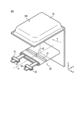
- FIG. 1 is a perspective view illustrating a configuration of a secondary battery according to an embodiment of the present technology.
- FIG. 2 is an enlarged cross-sectional view showing the configuration of the battery element shown in FIG.
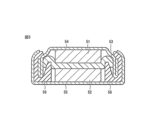
- FIG. 3 is a cross-sectional view showing the structure of a test secondary battery.
- Secondary battery 1-1 Structure 1-2. Operation 1-3. Manufacturing method 1-4. Actions and effects 2. Uses of secondary batteries
- the secondary battery described here uses the precipitation and dissolution of magnesium to drive the charge and discharge reactions, and is a secondary battery that uses these charge and discharge reactions to obtain battery capacity.
- the secondary battery is a so-called magnesium-sulfur secondary battery, since the positive electrode contains sulfur as a constituent element and the negative electrode contains magnesium as a constituent element.
- magnesium is precipitated and dissolved at the negative electrode, and is absorbed and released in an ionic state at the positive electrode. Details of the configurations of the positive and negative electrodes will be described later.
- Fig. 1 shows a perspective view of a secondary battery
- Fig. 2 shows an enlarged cross-sectional view of a battery element 20 shown in Fig. 1.
- Fig. 1 shows a state in which an exterior film 10 and the battery element 20 are separated from each other, and shows a cross section of the battery element 20 along the XZ plane by a broken line.
- Fig. 2 shows only a part of the battery element 20.
- this secondary battery includes an exterior film 10, a battery element 20, a positive electrode lead 31, a negative electrode lead 32, and sealing films 41 and 42.
- the secondary battery described here uses a flexible or pliable exterior film 10 as an exterior member for housing the battery element 20. Therefore, the secondary battery shown in Figures 1 and 2 is a so-called laminate film type secondary battery.
- the exterior film 10 has a bag-like structure that is sealed when the battery element 20 is housed therein.
- the exterior film 10 houses a positive electrode 21, a negative electrode 22, a separator 23, and an electrolyte (not shown), which will be described later.
- the exterior film 10 is a single film-like member that is folded in the folding direction F.
- This exterior film 10 is provided with a recessed portion 10U (a so-called deep drawn portion) for accommodating the battery element 20.
- the exterior film 10 is a three-layer laminate film in which a fusion layer, a metal layer, and a surface protection layer are laminated in this order from the inside, and when the exterior film 10 is folded, the outer peripheral edges of the opposing fusion layers are fused to each other.
- the fusion layer contains a polymer compound such as polypropylene.
- the metal layer contains a metallic material such as aluminum.
- the surface protection layer contains a polymer compound such as nylon.
- the configuration (number of layers) of the exterior film 10 is not particularly limited, so it may be one or two layers, or four or more layers.
- the battery element 20 is housed in an exterior film 10.
- the battery element 20 is a so-called power generating element, and includes a positive electrode 21, a negative electrode 22, a separator 23, and an electrolyte (not shown), as shown in Figures 1 and 2 .
- the battery element 20 is a so-called wound electrode body, so that the positive electrode 21 and the negative electrode 22 are wound around the winding axis P while facing each other via the separator 23.
- This winding axis P is a virtual axis extending in the Y-axis direction, as shown in FIG. 1.
- the three-dimensional shape of the battery element 20 is not particularly limited.
- the battery element 20 has a flat three-dimensional shape, so that the shape of the cross section (cross section along the XZ plane) of the battery element 20 intersecting the winding axis P is a flat shape defined by the major axis J1 and the minor axis J2.
- the long axis J1 is an imaginary axis extending in the X-axis direction and has a length greater than that of the short axis J2.
- the short axis J2 is an imaginary axis extending in the Z-axis direction intersecting the X-axis direction and has a length less than that of the long axis J1.
- the three-dimensional shape of the battery element 20 is a flattened cylinder, and therefore the cross-sectional shape of the battery element 20 is a flattened, approximately elliptical shape.
- the positive electrode 21 contains a positive electrode active material that absorbs and releases magnesium in an ionic state, and the positive electrode active material contains one or more types of sulfur-containing polymer compounds. This is because magnesium is more likely to be absorbed and released in an ionic state in the positive electrode 21. This makes it easier for a charge/discharge reaction that utilizes the precipitation and dissolution of magnesium to proceed, compared to when the positive electrode active material contains other materials such as elemental sulfur and sulfur compounds.
- This sulfur-containing polymer compound contains sulfur as a constituent element. More specifically, as mentioned above, sulfur-containing polymer compounds are a general term for polymer compounds that contain carbon, nitrogen, and sulfur as constituent elements and have carbon-nitrogen bonds and carbon-sulfur bonds.
- This carbon-nitrogen bond is what is known as a covalent bond between carbon and nitrogen, and sulfur-containing polymer compounds have multiple carbon-nitrogen bonds.
- carbon-sulfur bonds are what is known as covalent bonds between carbon and sulfur, and sulfur-containing polymer compounds have multiple carbon-sulfur bonds.
- the composition of the sulfur-containing polymer compound is not particularly limited, so long as it contains carbon, nitrogen, and sulfur as constituent elements and has carbon-nitrogen bonds and carbon-sulfur bonds.
- the portion of the sulfur-containing polymer compound having a carbon-nitrogen bond may be either chain-like or cyclic.
- the portion of the sulfur-containing polymer compound having a carbon-sulfur bond may be either chain-like or cyclic.
- the chain-like may be either linear or branched.
- the sulfur-containing polymer compound includes a first annular portion, a second annular portion, and a connecting portion.
- the configuration of the first annular portion and the configuration of the second annular portion may be the same as each other, or may be different from each other.
- a sulfur-containing polymer compound including a first annular portion, a second annular portion, and a connecting portion is referred to as a "first sulfur-containing polymer compound.”
- first annular portion and the second annular portion are spaced apart from each other.
- Each of the first annular portion and the second annular portion contains carbon and nitrogen as constituent elements.
- each of the first annular portion and the second annular portion may further contain one or more of other elements, such as hydrogen, as constituent elements.
- each of the first and second cyclic parts is a heterocyclic compound containing a nitrogen atom as a heteroatom (an atom other than carbon and hydrogen atoms).
- This heterocyclic compound may be a three-membered ring, a four-membered ring, a five-membered ring, a six-membered ring, or a seven or more-membered ring.
- the heterocyclic compound may be a heterocyclic aromatic compound or a heterocyclic aliphatic compound.
- the heterocyclic compound is a heterocyclic aromatic compound. This is because multiple heterocyclic aromatic compounds are more likely to undergo polymerization reactions with each other, making it easier to synthesize a sulfur-containing compound with a sufficient molecular weight.
- heterocyclic aromatic compound is pyridine, a six-membered ring that contains one heteroatom (nitrogen atom).
- the first sulfur-containing polymer compound includes a plurality of first cyclic parts, and the plurality of first cyclic parts may be condensed with each other.
- the first sulfur-containing polymer compound includes a plurality of second cyclic parts, and the plurality of second cyclic parts may be condensed with each other. This is because it becomes easier to synthesize a first sulfur-containing compound having a sufficient molecular weight.
- the linking portion is a divalent group that is disposed between the first annular portion and the second annular portion and is linked to each of the first annular portion and the second annular portion. As a result, the first annular portion and the second annular portion are linked to each other via the linking portion.
- This linking portion contains sulfur as a constituent element. However, the linking portion may further contain any one or more of other elements such as hydrogen, carbon, and nitrogen as constituent elements. As the first annular portion and the second annular portion are separated from each other as described above, the linking portion is interposed between the first annular portion and the second annular portion.
- the connecting portion contains only sulfur as a constituent element. This is because magnesium can be sufficiently absorbed and released in an ionic state in the first sulfur-containing polymer compound.
- linking portion examples include -S n - (n is an integer of 1 or more), and more specific examples include -S 2 - (-S--S--) and -S 3 - (-S--S--S--).
- the first sulfur-containing polymer compound contains a plurality of first cyclic portions and a plurality of second cyclic portions
- the first sulfur-containing polymer compound contains a plurality of linking portions.
- first annular portions and second annular portions of all sets may be connected to each other via a connecting portion, or only the first annular portions and second annular portions of some sets may be connected to each other via a connecting portion.
- the molecular weight of the first sulfur-containing polymer compound is not particularly limited and can be set arbitrarily.
- the molecular weight described here is the so-called weight average molecular weight.
- the first sulfur-containing polymer compound is a polymer compound represented by formula (1). This is because magnesium is easily absorbed and released sufficiently in an ionic state in the positive electrode 21.
- n1 is an integer of 1 or more.
- An asterisk (*) represents a dangling bond.
- the polymer compound shown in formula (1) has the structure described below.
- First, the first cyclic portion (pyridine) and the second cyclic portion (pyridine) are connected to each other via a linking portion (-S 3 -).
- only two pairs of first cyclic portions and second cyclic portions out of three pairs of first cyclic portions and second cyclic portions are connected to each other via a linking portion.
- the sulfur-containing polymer compound includes a plurality of ring portions and linking portions.
- the configurations of the plurality of ring portions may be the same as each other or may be different from each other. Of course, the configurations of only some of the plurality of ring portions may be the same as each other.
- the sulfur-containing polymer compound including a plurality of ring portions and linking portions is referred to as the "second sulfur-containing polymer compound.”
- each of the multiple ring parts are condensed with each other, and each of the multiple bicyclic parts contains carbon and nitrogen as constituent elements. However, each of the multiple ring parts may further contain one or more of other elements, such as hydrogen, as constituent elements.
- each of the multiple cyclic parts is a heterocyclic compound containing a nitrogen atom as a heteroatom, similar to each of the first and second cyclic parts described above. Details regarding this heterocyclic compound are as described above.
- the configuration of the connecting part is the same as that of the connecting part described above, except as described below.
- the linking portion is connected to any two of the multiple ring portions, and contains sulfur as a constituent element. As described above, the multiple ring portions are condensed with each other, so that the linking portion extends from any one of the multiple ring portions to another one of the multiple ring portions.
- the two ring portions connected by the linking portion may be two adjacent ring portions, or may be two non-adjacent ring portions.
- the number of linking parts is not particularly limited, so the sulfur-containing polymer compound may contain only one linking part or may contain multiple linking parts.
- the molecular weight of the second sulfur-containing polymer compound is not particularly limited and can be set arbitrarily.
- the molecular weight described here is the so-called weight average molecular weight.
- the second sulfur-containing polymer compound is a polymer compound represented by formula (2). This is because magnesium is easily absorbed and released sufficiently in an ionic state in the positive electrode 21.
- n2 is an integer of 1 or more.
- An asterisk (*) represents a dangling bond.
- the polymer compound shown in formula (2) has the structure described below. First, multiple cyclic moieties (pyridine) are condensed with each other, and two of the multiple cyclic moieties are connected to a linking moiety (-S-S-). Second, the two cyclic moieties connected to the linking moiety are adjacent to each other.
- the first sulfur-containing polymer compound may be a polymer compound other than the polymer compound shown in formula (1).
- the second sulfur-containing polymer compound may be a polymer compound other than the polymer compound shown in formula (2).
- the sulfur-containing polymer compound may be a polymer compound other than the first sulfur-containing polymer compound and the second sulfur-containing polymer compound.
- the positive electrode 21 is analyzed using one or more of the following analytical methods: infrared spectroscopy (IR), Raman spectroscopy, X-ray photoelectron spectroscopy (XPS), X-ray absorption fine structure analysis (XAFS), etc.
- IR infrared spectroscopy
- Raman spectroscopy Raman spectroscopy
- XPS X-ray photoelectron spectroscopy
- XAFS X-ray absorption fine structure analysis
- the positive electrode 21 may include a positive electrode current collector and a positive electrode active material layer.
- the positive electrode current collector is a conductive support that supports the positive electrode active material layer, and has a pair of surfaces on which the positive electrode active material layer is provided.
- This positive electrode current collector contains a conductive material such as a metal material, and a specific example of the conductive material is nickel.
- the positive electrode active material layer is supported by the positive electrode current collector and contains one or more types of sulfur-containing polymer compounds that are positive electrode active materials.
- the positive electrode active material layer may also contain one or more types of other materials such as a positive electrode binder and a positive electrode conductive agent.
- the positive electrode active material layer may be provided on both sides of the positive electrode current collector, or on only one side of the positive electrode current collector.
- the method for forming the positive electrode active material layer is not particularly limited, but may be, for example, a coating method.
- the positive electrode binder contains one or more of the following resin materials: fluororesin, polyvinyl alcohol resin, and styrene-butadiene copolymer rubber.
- fluororesin include polyvinylidene fluoride and polytetrafluoroethylene.
- the positive electrode binder may contain a conductive polymer compound.
- the conductive polymer compound include polyaniline, polypyrrole, and polythiophene, and may be copolymers of two or more of these. This conductive polymer compound may be unsubstituted or substituted with any one or more types of functional groups.
- the positive electrode conductive agent contains one or more conductive materials such as carbon materials, metal materials, and conductive polymer compounds.
- carbon materials include graphite, carbon fiber, carbon black, and carbon nanotubes.
- Graphite may be natural graphite or artificial graphite.
- Carbon fiber includes vapor grown carbon fiber (VGCF).
- Carbon black includes acetylene black and ketjen black.
- Carbon nanotubes include single wall carbon nanotubes (SWCNT) and multi wall carbon nanotubes (MWCNT), and the multi wall carbon nanotubes include double wall carbon nanotubes (DWCNT).
- metal materials include nickel.
- the negative electrode 22 contains one or more types of magnesium-containing materials, which are negative electrode active materials, because this facilitates the progress of charge/discharge reactions that utilize the deposition and dissolution of magnesium.
- this magnesium-containing material is a general term for materials that contain magnesium as a constituent element.
- the magnesium-containing material may be magnesium alone (so-called magnesium metal), a magnesium alloy, a magnesium compound, or a mixture of two or more of these.
- the purity of the magnesium metal is not particularly limited, so the magnesium metal may contain any amount of impurities.
- the types of metal elements (excluding magnesium) contained as constituent elements in magnesium alloys are not particularly limited, as long as they are any one or more of any metal elements.
- the metal elements are lithium, aluminum, zinc, etc.
- the magnesium content in the magnesium alloy is not particularly limited, but is specifically 90 mol% or more. This is because it facilitates the charge/discharge reaction that utilizes the precipitation and dissolution of magnesium.
- the lithium and aluminum contents in the magnesium alloy are not particularly limited, but are specifically 10 mol% or less.
- the zinc content in the magnesium alloy is not particularly limited, but are specifically 2 mol% or less. This is because sufficient battery capacity can be obtained since the voltage during discharge is guaranteed.
- the magnesium-containing material contains magnesium metal, because this facilitates sufficient progress of the charge/discharge reaction that utilizes the precipitation and dissolution of magnesium.
- the thickness of the negative electrode 22 is not particularly limited, but is specifically 1 ⁇ m to 50 ⁇ m. This is because it improves the energy density per volume.
- the negative electrode 22 may have a configuration similar to that of the positive electrode 21. That is, although not specifically illustrated here, the negative electrode 22 may include a negative electrode current collector and a negative electrode active material layer.
- the negative electrode current collector is a conductive support that supports the negative electrode active material layer, and has a pair of surfaces on which the negative electrode active material layer is provided.
- This negative electrode current collector contains a conductive material such as a metal material, and a specific example of the conductive material is nickel.
- the negative electrode active material layer may be provided on both sides of the negative electrode current collector, or on only one side of the negative electrode current collector.
- the method for forming the negative electrode active material layer is not particularly limited, but may be, for example, a coating method.
- the separator 23 is an insulating porous film interposed between the positive electrode 21 and the negative electrode 22, and allows magnesium to pass through in an ionic state while preventing a short circuit between the positive electrode 21 and the negative electrode 22.
- the separator 23 contains one or more types of insulating polymer compounds, and a specific example of the insulating polymer compound is polyethylene.
- the electrolytic solution is a liquid electrolyte, and is impregnated into each of the positive electrode 21 and the separator 23. However, the electrolytic solution may also be impregnated into the negative electrode 22.
- the electrolyte contains an electrolyte salt.
- the electrolyte may further contain a solvent, which is a medium for dissolving and ionizing the electrolyte salt.
- the electrolyte salt contains one or more of the metal salts containing a cation and an anion.
- the electrolyte salt contains magnesium ions and lithium ions as cations, and halogen ions as anions. That is, the electrolyte salt contains magnesium halide, which is a magnesium salt, and lithium halide, which is a lithium salt.
- the electrolyte salt contains halogen ions as anions because the voltage during discharge increases compared to when the electrolyte salt does not contain halogen ions as anions.
- the electrolyte salt includes magnesium chloride (MgCl 2 ) and lithium chloride (LiCl), because the voltage during discharge increases sufficiently, and a sufficiently high battery capacity can be obtained.
- the electrolyte may further contain one or more of the other electrolyte salts.
- the electrolyte salts containing magnesium ions and lithium ions as the cations and halogen ions as the anions are excluded from the other electrolyte salts described here.
- the type of cation in the other electrolyte salt is not particularly limited, as long as it is any one or more types of any positive ions (metal ions). Also, the type of anion in the other electrolyte salt is not particularly limited, as long as it is any one or more types of any negative ions.
- anions in other electrolyte salts include perchlorate, nitrate, sulfate, acetate, trifluoroacetate, tetrafluoroborate, tetraphenylborate, hexafluorophosphate, hexafluoroarsenate, bis(hexamethyldisilazide), bis(trifluoromethanesulfonyl)imide, and bis[tetra(hexafluoroisopropyl)]borate.
- the halogen ions include fluorine, chloride, bromide, and iodine.
- electrolyte salts are as follows:
- magnesium salts include magnesium perchlorate (Mg( ClO4 ) 2 ), magnesium nitrate (Mg( NO3 ) 2 ), magnesium sulfate ( MgSO4 ), magnesium acetate (Mg( CH3COO ) 2 ), magnesium trifluoroacetate (Mg( CF3COO ) 2 ), magnesium tetrafluoroborate (Mg( BF4 ) 2 ), magnesium tetraphenylborate (Mg(B( C6H5 ) 4 ) 2 ), magnesium hexafluorophosphate (Mg( PF6 ) 2 ), magnesium hexafluoroarsenate (Mg( AsF6 ) 2 ), magnesium bis(hexamethyldisilazide) (Mg[N(Si( CH3 ) 3 ) 2 ] 2 ), magnesium bis (trifluoromethanesulfonyl)imide (Mg[N(CF
- lithium salts include lithium perchlorate ( LiClO4 ), lithium nitrate ( LiNO3 ), lithium sulfate ( Li2SO4 ), lithium acetate ( LiCH3COO ), magnesium trifluoroacetate ( LiCF3COO ), lithium tetrafluoroborate ( LiBF4 ), magnesium tetraphenylborate (Li(B ( C6H5 ) 4 ), lithium hexafluorophosphate ( LiPF6 ), lithium hexafluoroarsenate ( LiAsF6 ), magnesium bis(hexamethyldisilazide) (Li[N(Si( CH3 ) 3 ) 2 ]) , magnesium bis(trifluoromethanesulfonyl)imide (Li[N( CF3SO2 ) 2 , and lithium bis[tetra(hexafluoroisopropyl)]borate (Li[B(OCH
- the chloride ion content in the anions is not particularly limited.
- the chloride ion content in the anions is preferably 20 mol% or more. This is because the voltage during discharge increases sufficiently to obtain a sufficiently high battery capacity.
- the solvent contains one or more types of non-aqueous solvents (organic solvents).
- An electrolyte that contains a non-aqueous solvent is known as a non-aqueous electrolyte.
- non-aqueous solvent is not particularly limited.
- the non-aqueous solvent contains an ether compound. This is because the electrolyte salt is easily dissolved in the ether compound, which stabilizes the state of the electrolyte solution.
- ether compound is a general term for compounds that contain an ether bond (-O-).
- the ether compound may be either chain-like or cyclic.
- the chain may be either linear or branched.
- the number of ether bonds may be either one or two or more.
- ether compounds include dimethoxyethane, diethylene glycol dimethyl ether, tetraethylene glycol dimethyl ether, and tetrahydrofuran.
- the positive electrode lead 31 is a positive electrode wiring connected to the positive electrode 21, and is led out of the exterior film 10.
- the positive electrode lead 31 is connected to the positive electrode current collector.
- the positive electrode lead 31 includes a conductive material such as a metal material, and a specific example of the conductive material is aluminum.
- the shape of the positive electrode lead 31 is either a thin plate shape or a mesh shape.
- the negative electrode lead 32 is a negative electrode wiring connected to the negative electrode 22, and is led out of the exterior film 10.
- the negative electrode 22 includes a negative electrode current collector
- the negative electrode lead 32 is connected to the negative electrode current collector.
- the lead-out direction of the negative electrode lead 32 is the same as the lead-out direction of the positive electrode lead 31.
- the negative electrode lead 32 includes a conductive material such as a metal material, and a specific example of the conductive material is copper. Details regarding the shape of the negative electrode lead 32 are the same as the details regarding the shape of the positive electrode lead 31.
- the sealing film 41 is inserted between the exterior film 10 and the positive electrode lead 31, and the sealing film 42 is inserted between the exterior film 10 and the negative electrode lead 32.
- the sealing films 41 and 42 may be omitted.
- the sealing film 41 is a sealing member that prevents outside air from entering the interior of the exterior film 10.
- This sealing film 41 contains a polymer compound such as polyolefin that has adhesion to the positive electrode lead 31, and a specific example of the polymer compound is polypropylene.
- the configuration of the sealing film 42 is the same as that of the sealing film 41, except that the sealing film 42 is a sealing member that has adhesion to the negative electrode lead 32.
- the sealing film 42 contains a polymer compound such as polyolefin that has adhesion to the negative electrode lead 32.
- This secondary battery operates in the battery element 20 as follows.
- the negative electrode active material (magnesium-containing material) dissolves in the negative electrode 22, causing magnesium to dissolve into the electrolyte and be absorbed in an ionic state in the positive electrode 21.
- magnesium is released in an ionic state from the positive electrode active material (sulfur-containing polymer compound) in the positive electrode 21 into the electrolyte and precipitates in the negative electrode 22.
- the positive electrode 21 and the negative electrode 22 are each produced using the procedure described below as an example, and an electrolyte solution is prepared. Then, the positive electrode 21, the negative electrode 22, and the electrolyte solution are mixed together. The resulting mixture is used to assemble a secondary battery.
- a positive electrode active material sulfur-containing polymer compound
- a positive electrode binder a positive electrode binder
- a positive electrode conductive agent a positive electrode conductive agent
- the positive electrode mixture is molded into a layer using a molding machine to form a positive electrode active material layer.
- the positive electrode active material layer is pressed onto both sides of the positive electrode current collector using a compression device such as a molding machine and a roll press machine. This produces the positive electrode 21.
- a negative electrode active material (magnesium metal, which is a magnesium-containing material) is prepared as the negative electrode 22.
- magnesium foil is used as the magnesium-containing material.
- An electrolyte solution is prepared by adding an electrolyte salt to a solvent.
- the positive electrode lead 31 is connected to the positive electrode current collector of the positive electrode 21 by using a joining method such as welding, and the negative electrode lead 32 is connected to the negative electrode 22 by using a joining method such as welding.
- the positive electrode 21 and the negative electrode 22 are stacked on top of each other with the separator 23 interposed therebetween, and the positive electrode 21, the negative electrode 22, and the separator 23 are wound to form a wound body (not shown).
- the wound body is then pressed using a compression device such as a press to form the wound body into a flat shape.
- the wound body after this formation has a configuration similar to that of the battery element 20, except that the positive electrode 21, the negative electrode 22, and the separator 23 are not impregnated with the electrolyte.
- the exterior film 10 (adhesive layer/metal layer/surface protection layer) is folded so that the exterior films 10 face each other.
- the outer edges of two of the opposing adhesive layers are joined to each other using an adhesive method such as heat fusion, thereby housing the roll in the bag-shaped exterior film 10.
- a sealing film 41 is inserted between the exterior film 10 and the positive electrode lead 31, and a sealing film 42 is inserted between the exterior film 10 and the negative electrode lead 32.
- the wound body is impregnated with the electrolyte, and the battery element 20, which is a wound electrode body, is produced.
- the battery element 20 is then enclosed in the bag-shaped exterior film 10, and the secondary battery is completed.
- the positive electrode 21 contains a sulfur-containing polymer compound
- the negative electrode 22 contains a magnesium-containing material
- the electrolyte contains an electrolyte salt.
- the sulfur-containing polymer compound contains carbon, nitrogen, and sulfur as constituent elements and has carbon-nitrogen bonds and carbon-sulfur bonds.
- the electrolyte salt contains magnesium ions and lithium ions as cations and halogen ions as anions.
- the positive electrode 21 contains a sulfur-containing polymer compound, magnesium is more likely to be absorbed and released in an ionic state in the positive electrode 21. This makes it easier for the charge/discharge reaction to proceed using the precipitation and dissolution of magnesium compared to when the positive electrode 21 contains other materials such as elemental sulfur and sulfur compounds.
- the positive electrode 21 contains elemental sulfur, sulfur is more likely to dissolve from the positive electrode 21 into the electrolyte. This causes a side reaction between the sulfur dissolved in the electrolyte and the negative electrode 22, which tends to inhibit the charge/discharge reaction that utilizes the precipitation and dissolution of magnesium.
- the positive electrode 21 contains a sulfur-containing polymer compound, sulfur is less likely to dissolve from the positive electrode 21 into the electrolyte. This prevents the above-mentioned side reaction from occurring, which tends to allow the charge/discharge reaction that utilizes the precipitation and dissolution of magnesium to proceed stably.
- the negative electrode 22 contains a magnesium-containing material, the charge/discharge reaction that utilizes the precipitation and dissolution of magnesium is more likely to proceed.
- the electrolyte salt contains magnesium ions and lithium ions as cations, the voltage during discharge increases compared to when the electrolyte salt contains only magnesium ions as cations.
- the voltage during discharge increases more than when the electrolyte salt does not contain halogen ions as anions.
- the electrolyte salt contains magnesium ions and lithium ions as cations and halogen ions as anions, the voltage during discharge increases significantly. This makes it easier for the charging reaction to proceed smoothly by utilizing the precipitation and dissolution of magnesium, resulting in a high battery capacity.
- the sulfur-containing polymer compound includes a first annular portion, a second annular portion, and a connecting portion, each of which includes carbon and nitrogen as constituent elements, and the connecting portion includes sulfur as a constituent element (first sulfur-containing polymer compound), magnesium can be easily and sufficiently absorbed and released in an ionic state in the positive electrode 21, thereby achieving a greater effect.
- the sulfur-containing polymer compound contains a plurality of first cyclic parts, a plurality of second cyclic parts, and a plurality of linking parts, and the plurality of first cyclic parts are condensed with each other, and the plurality of second cyclic parts are condensed with each other, it becomes easier to synthesize a sulfur-containing compound with a sufficient molecular weight, and an even greater effect can be obtained.
- magnesium can be absorbed and released sufficiently in an ionic state in the positive electrode 21, resulting in even greater effectiveness.
- the sulfur-containing polymer compound includes a plurality of ring portions and connecting portions, each of the plurality of ring portions includes carbon and nitrogen as constituent elements, and the connecting portions includes sulfur as a constituent element (second sulfur-containing polymer compound), magnesium can be easily absorbed and released sufficiently in an ionic state in the positive electrode 21, thereby achieving a greater effect.
- magnesium can be absorbed and released sufficiently in an ionic state in the positive electrode 21, resulting in even greater effectiveness.
- halogen ions contain chloride ions, the voltage during discharge increases sufficiently, resulting in even greater effectiveness.
- the solvent of the electrolyte contains an ether compound
- the electrolyte salt is more easily dissolved in the ether compound. This stabilizes the state of the electrolyte, resulting in greater effectiveness.
- the charge/discharge reaction that utilizes the precipitation and dissolution of magnesium can proceed more easily, resulting in even greater effectiveness.
- the use (application example) of the secondary battery is not particularly limited.
- the secondary battery used as a power source may be a main power source or an auxiliary power source in electronic devices, electric vehicles, etc.
- the main power source is a power source that is used preferentially regardless of the presence or absence of other power sources.
- the auxiliary power source may be a power source used in place of the main power source or a power source that is switched from the main power source.
- Secondary batteries are as follows: Electronic devices such as video cameras, digital still cameras, mobile phones, notebook computers, headphone stereos, portable radios, and portable information terminals. Storage devices such as backup power sources and memory cards. Power tools such as electric drills and power saws. Battery packs installed in electronic devices. Medical electronic devices such as pacemakers and hearing aids. Electric vehicles such as electric cars (including hybrid cars). Power storage systems such as home or industrial battery systems that store power in preparation for emergencies. In these applications, only one secondary battery may be used, or two or more secondary batteries may be used.
- the battery pack may use a single cell or a battery pack.
- the electric vehicle is a vehicle that runs on a secondary battery as a driving power source, and may be a hybrid vehicle that also has a driving source other than the secondary battery.
- a home power storage system it is possible to use home electrical appliances, etc., by using the power stored in the secondary battery, which is a power storage source.
- the physical properties of the electrolyte and the battery characteristics of the secondary battery were evaluated.
- Example 1 and Comparative Examples 1 to 3> A secondary battery was produced according to the procedure described below, and the battery characteristics of the secondary battery were then evaluated.
- a test secondary battery was fabricated to perform a simple evaluation of the battery characteristics.
- Fig. 3 shows the cross-sectional structure of the test secondary battery, which is a coin-type magnesium-sulfur secondary battery.
- the test secondary battery includes a test electrode 51, a counter electrode 52, a separator 53, an exterior cup 54, an exterior can 55, a gasket 56, and an electrolyte (not shown).
- the test electrode 51 is housed in an exterior cup 54, and the counter electrode 52 is housed in an exterior can 55.
- the test electrode 51 and the counter electrode 52 are stacked together with a separator 53 in between, and the electrolyte is impregnated into the test electrode 51, the counter electrode 52, and the separator 53.
- the exterior cup 54 and the exterior can 55 are crimped together with a gasket 56, so that the test electrode 51, the counter electrode 52, and the separator 53 are sealed by the exterior cup 54 and the exterior can 55.
- the procedure for manufacturing the test secondary battery is as follows.
- a positive electrode active material sulfur-containing polymer compound
- 30 parts by mass of a positive electrode binder polytetrafluoroethylene, manufactured by AGC Corporation
- 60 parts by mass of a positive electrode conductive agent Ketjen Black, manufactured by Lion Corporation, ECP600JD
- test electrode 51 was prepared in the same manner except that elemental sulfur (S 8 ) was used instead of the sulfur-containing polymer compound.
- the solvent used was the ether compound tetrahydrofuran (TH, manufactured by Toyama Pharmaceutical Co., Ltd.).
- magnesium chloride MgCl 2 , manufactured by Sigma-Aldrich Co.
- lithium chloride LiCl, manufactured by Sigma-Aldrich Co.
- an electrolyte solution was prepared in the same manner, except that another electrolyte salt, bis(trifluoromethanesulfonyl)imide magnesium (MgTFSI 2 ), was used instead of the electrolyte salt lithium chloride.
- diethylene glycol dimethyl ether is used as the solvent instead of tetrahydrofuran because bis(trifluoromethanesulfonyl)imide magnesium will not dissolve without diethylene glycol dimethyl ether.
- test electrode 51 was placed in the exterior cup 54, and the counter electrode 52 was placed in the exterior can 55. Then, the test electrode 51 placed in the exterior cup 54 and the counter electrode 52 placed in the exterior can 55 were stacked together with a separator 53 (glass fiber having a thickness of 200 ⁇ m, GC50 manufactured by Advantec Co., Ltd.) impregnated with an electrolyte. In this case, the test electrode 51 was arranged so that the positive electrode active material layer faced the counter electrode 52 with the separator 53 in between. Finally, with the test electrode 51 and the counter electrode 52 stacked together with the separator 53 in between, the exterior cup 54 and the exterior can 55 were crimped together with the gasket 56. As a result, the test electrode 51 and the counter electrode 52 were sealed in the exterior cup 54 and the exterior can 55, and a test secondary battery was completed.
- a separator 53 glass fiber having a thickness of 200 ⁇ m, GC50 manufactured by Advantec Co., Ltd.
- the battery When discharging, the battery was discharged at a constant current of 0.5 mA until the voltage reached 0.1 V, and when charging, the battery was charged at a constant current of 0.5 mA until the voltage reached 2.4 V.
- the electrolyte contained electrolyte salts (magnesium chloride and lithium chloride), but when the test electrode 51 contained elemental sulfur (Comparative Example 1), the number of charge/discharge cycles was zero, meaning that charging and discharging was fundamentally impossible.
- test electrode 51 contained a sulfur-containing polymer compound but the electrolyte contained an electrolyte salt (only magnesium chloride) (Comparative Example 2)
- electrolyte salt only magnesium chloride
- test electrode 51 contained a sulfur-containing polymer compound
- electrolyte contained an electrolyte salt (magnesium chloride) and another electrolyte salt (magnesium bis(trifluoromethanesulfonyl)imide)
- electrolyte salt magnesium chloride
- electrolyte salt magnesium bis(trifluoromethanesulfonyl)imide
- test electrode 51 contained a sulfur-containing polymer compound and the electrolyte contained an electrolyte salt (magnesium chloride and lithium chloride (Example 1)), the number of charge/discharge cycles was 32, and charging/discharging was possible.
- electrolyte salt magnesium chloride and lithium chloride (Example 1)
- the battery structure of the secondary battery has been described as being of a laminate film type and a coin type.
- the battery structure of the secondary battery is not particularly limited, and may be of a cylindrical type, a square type, a button type, etc.
- the battery element has been described as having a wound structure.
- the structure of the battery element is not particularly limited, and may be a stacked type or a zigzag type.
- the positive and negative electrodes are stacked on top of each other, and in the zigzag type, the positive and negative electrodes are folded in a zigzag pattern.
- the present technology can also be configured as follows. ⁇ 1> a positive electrode including a sulfur-containing polymer compound; a negative electrode including a magnesium-containing material; and an electrolyte solution containing an electrolyte salt,
- the sulfur-containing polymer compound contains carbon, nitrogen, and sulfur as constituent elements, has a carbon-nitrogen bond and a carbon-sulfur bond,
- the electrolyte salt contains magnesium ions and lithium ions as cations and halogen ions as anions. Secondary battery.
- the sulfur-containing polymer compound is a first annular portion and a second annular portion spaced apart from each other; a connecting portion disposed between the first annular portion and the second annular portion and connected to each of the first annular portion and the second annular portion, each of the first annular portion and the second annular portion contains carbon and nitrogen as constituent elements;
- the connecting portion contains sulfur as a constituent element.
- the sulfur-containing polymer compound includes a plurality of the first cyclic portions, a plurality of the second cyclic portions, and a plurality of the linking portions, the first annular portions are condensed together; The second annular portions are condensed with each other.
- the sulfur-containing polymer compound includes a compound represented by formula (1): The secondary battery according to ⁇ 2> or ⁇ 3>. (n1 is an integer of 1 or more.) ⁇ 5>
- the sulfur-containing polymer compound is A plurality of cyclic portions condensed together; a connecting portion connected to any two of the plurality of annular portions, each of the plurality of annular portions contains carbon and nitrogen as constituent elements; The connecting portion contains sulfur as a constituent element.
- the sulfur-containing polymer compound includes a compound represented by formula (2): The secondary battery according to ⁇ 5>. (n2 is an integer of 1 or more.) ⁇ 7>
- the halogen ion includes a chloride ion.
- the electrolyte solution includes a solvent, The solvent comprises an ether compound.
- the magnesium-containing material includes elemental magnesium.
Landscapes
- Chemical & Material Sciences (AREA)
- Chemical Kinetics & Catalysis (AREA)
- Electrochemistry (AREA)
- General Chemical & Material Sciences (AREA)
- Engineering & Computer Science (AREA)
- Manufacturing & Machinery (AREA)
- Inorganic Chemistry (AREA)
- Condensed Matter Physics & Semiconductors (AREA)
- General Physics & Mathematics (AREA)
- Physics & Mathematics (AREA)
- Materials Engineering (AREA)
- Secondary Cells (AREA)
- Battery Electrode And Active Subsutance (AREA)
Abstract
優れた電池特性を得ることが可能である二次電池を提供する。二次電池は、硫黄含有高分子化合物を含む正極と、マグネシウム含有材料を含む負極と、電解質塩を含む電解液とを備える。硫黄含有高分子化合物は、炭素、窒素および硫黄を構成元素として含むと共に、炭素窒素間結合および炭素硫黄間結合を有する。電解質塩は、カチオンとしてマグネシウムイオンおよびリチウムイオンを含むと共に、アニオンとしてハロゲンイオンを含む。
Description
本技術は、二次電池に関する。
携帯電話機などの多様な電子機器が普及しているため、小型かつ軽量であると共に高エネルギー密度が得られる電源として二次電池の開発が進められている。この二次電池は、正極、負極および電解液を備えており、その二次電池の構成に関しては、様々な検討がなされている。
具体的には、正極が硫黄を含んでおり、負極がマグネシウム金属を含んでおり、電解液が塩化リチウムを含んでいる(例えば、特許文献1参照。)。また、正極が硫黄コポリマーを含んでおり、負極がマグネシウム金属を含んでいる(例えば、特許文献2参照。)。
二次電池の構成に関する様々な検討がなされているが、その二次電池の電池特性は未だ十分でないため、改善の余地がある。
優れた電池特性を得ることが可能である二次電池が望まれている。
本技術の一実施形態の二次電池は、硫黄含有高分子化合物を含む正極と、マグネシウム含有材料を含む負極と、電解質塩を含む電解液とを備えたものである。硫黄含有高分子化合物は、炭素、窒素および硫黄を構成元素として含むと共に、炭素窒素間結合および炭素硫黄間結合を有する。電解質塩は、カチオンとしてマグネシウムイオンおよびリチウムイオンを含むと共に、アニオンとしてハロゲンイオンを含む。
ここで、「硫黄含有高分子化合物」は、上記したように、炭素、窒素および硫黄を構成元素として含んでいると共に炭素窒素間結合および炭素硫黄間結合を有している高分子化合物の総称である。また、「マグネシウム含有材料」は、マグネシウムを構成元素として含んでいる材料の総称である。なお、硫黄含有高分子化合物およびマグネシウム含有材料のそれぞれの構成の詳細に関しては、後述する。
本技術の一実施形態の二次電池は、正極が硫黄含有高分子化合物を含んでおり、負極がマグネシウム含有材料を含んでおり、電解液が電解質塩を含んでおり、その硫黄含有高分子化合物が炭素、窒素および硫黄を構成元素として含んでいると共に炭素窒素間結合および炭素硫黄間結合を有しており、その電解質塩がカチオンとしてマグネシウムイオンおよびリチウムイオンを含んでいると共にアニオンとしてハロゲンイオンを含んでいるので、優れた電池特性を得ることができる。
なお、本技術の効果は、必ずしもここで説明された効果に限定されるわけではなく、後述する本技術に関連する一連の効果のうちのいずれの効果でもよい。
以下、本技術の一実施形態に関して、図面を参照しながら詳細に説明する。なお、説明する順序は、下記の通りである。
1.二次電池
1-1.構成
1-2.動作
1-3.製造方法
1-4.作用および効果
2.二次電池の用途
1.二次電池
1-1.構成
1-2.動作
1-3.製造方法
1-4.作用および効果
2.二次電池の用途
<1.二次電池>
まず、本技術の一実施形態の二次電池に関して説明する。
まず、本技術の一実施形態の二次電池に関して説明する。
ここで説明する二次電池は、マグネシウムの析出溶解を利用して充放電反応が進行するため、その充放電反応を利用して電池容量が得られる二次電池である。
より具体的には、二次電池は、正極が硫黄を構成元素として含んでいると共に、負極がマグネシウムを構成元素として含んでいるため、いわゆるマグネシウム硫黄二次電池である。
このマグネシウム硫黄二次電池では、負極においてマグネシウムが析出溶解されると共に、正極においてマグネシウムがイオン状態で吸蔵放出される。なお、正極および負極のそれぞれの構成の詳細に関しては、後述する。
<1-1.構成>
図1は、二次電池の斜視構成を表していると共に、図2は、図1に示した電池素子20の断面構成を拡大して表している。ただし、図1では、外装フィルム10と電池素子20とが互いに分離された状態を示していると共に、XZ面に沿った電池素子20の断面を破線で示している。図2では、電池素子20の一部だけを示している。
図1は、二次電池の斜視構成を表していると共に、図2は、図1に示した電池素子20の断面構成を拡大して表している。ただし、図1では、外装フィルム10と電池素子20とが互いに分離された状態を示していると共に、XZ面に沿った電池素子20の断面を破線で示している。図2では、電池素子20の一部だけを示している。
この二次電池は、図1および図2に示したように、外装フィルム10と、電池素子20と、正極リード31と、負極リード32と、封止フィルム41,42とを備えている。
ここで説明する二次電池は、上記したように、電池素子20を収納するための外装部材として、可撓性または柔軟性を有する外装フィルム10を用いている。よって、図1および図2に示した二次電池は、いわゆるラミネートフィルム型の二次電池である。
[外装フィルム]
外装フィルム10は、図1に示したように、電池素子20が収納された状態において封止された袋状の構造を有している。これにより、外装フィルム10は、後述する正極21、負極22、セパレータ23および電解液(図示せず)を収納している。
外装フィルム10は、図1に示したように、電池素子20が収納された状態において封止された袋状の構造を有している。これにより、外装フィルム10は、後述する正極21、負極22、セパレータ23および電解液(図示せず)を収納している。
ここでは、外装フィルム10は、1枚のフィルム状の部材であり、折り畳み方向Fに折り畳まれている。この外装フィルム10には、電池素子20を収容するための窪み部10U(いわゆる深絞り部)が設けられている。
具体的には、外装フィルム10は、融着層、金属層および表面保護層が内側からこの順に積層された3層のラミネートフィルムであり、その外装フィルム10が折り畳まれた状態において、互いに対向する融着層のうちの外周縁部同士が互いに融着されている。融着層は、ポリプロピレンなどの高分子化合物を含んでいる。金属層は、アルミニウムなどの金属材料を含んでいる。表面保護層は、ナイロンなどの高分子化合物を含んでいる。
ただし、外装フィルム10の構成(層数)は、特に、限定されないため、1層または2層でもよいし、4層以上でもよい。
[電池素子]
電池素子20は、外装フィルム10に収納されている。この電池素子20は、いわゆる発電素子であり、図1および図2に示したように、正極21、負極22、セパレータ23および電解液(図示せず)を含んでいる。
電池素子20は、外装フィルム10に収納されている。この電池素子20は、いわゆる発電素子であり、図1および図2に示したように、正極21、負極22、セパレータ23および電解液(図示せず)を含んでいる。
ここでは、電池素子20は、いわゆる巻回電極体であるため、正極21および負極22は、セパレータ23を介して互いに対向しながら巻回軸Pを中心として巻回されている。この巻回軸Pは、図1に示したように、Y軸方向に延在する仮想軸である。
電池素子20の立体的形状は、特に限定されない。ここでは、電池素子20は、扁平状の立体的形状を有しているため、巻回軸Pと交差する電池素子20の断面(XZ面に沿った断面)の形状は、長軸J1および短軸J2により規定される扁平形状である。
長軸J1は、X軸方向に延在する仮想軸であり、短軸J2の長さよりも大きい長さを有している。短軸J2は、X軸方向と交差するZ軸方向に延在する仮想軸であり、長軸J1の長さよりも小さい長さを有している。ここでは、電池素子20の立体的形状は、扁平な円筒状であるため、その電池素子20の断面の形状は、扁平な略楕円形状である。
(正極)
正極21は、マグネシウムをイオン状態で吸蔵放出する正極活物質を含んでおり、その正極活物質は、硫黄含有高分子化合物のうちのいずれか1種類または2種類以上を含んでいる。正極21においてマグネシウムがイオン状態で吸蔵放出されやすくなるからである。これにより、正極活物質が硫黄の単体および硫黄の化合物などの他の材料を含んでいる場合と比較して、マグネシウムの析出溶解を利用した充放電反応が進行しやすくなる。
正極21は、マグネシウムをイオン状態で吸蔵放出する正極活物質を含んでおり、その正極活物質は、硫黄含有高分子化合物のうちのいずれか1種類または2種類以上を含んでいる。正極21においてマグネシウムがイオン状態で吸蔵放出されやすくなるからである。これにより、正極活物質が硫黄の単体および硫黄の化合物などの他の材料を含んでいる場合と比較して、マグネシウムの析出溶解を利用した充放電反応が進行しやすくなる。
この硫黄含有高分子化合物は、硫黄を構成元素として含んでいる。より具体的には、硫黄含有高分子化合物は、上記したように、炭素、窒素および硫黄を構成元素として含んでいると共に、炭素窒素間結合および炭素硫黄間結合を有している高分子化合物の総称である。
この炭素窒素間結合は、いわゆる炭素と窒素との共有結合であり、硫黄含有高分子化合物は、複数の炭素窒素間結合を有している。同様に、炭素硫黄間結合は、いわゆる炭素と硫黄との共有結合であり、硫黄含有高分子化合物は、複数の炭素硫黄間結合を有している。
硫黄含有高分子化合物の構成は、炭素、窒素および硫黄を構成元素として含んでいると共に、炭素窒素間結合および炭素硫黄間結合を有していれば、特に限定されない。
硫黄含有高分子化合物のうちの炭素窒素間結合を有している部分は、鎖状でもよいし、環状でもよい。同様に、硫黄含有高分子化合物のうちの炭素硫黄間結合を有している部分は、鎖状でもよいし、環状でもよい。なお、鎖状は、直鎖状でもよいし、分岐状でもよい。
具体的には、硫黄含有高分子化合物は、第1環状部、第2環状部および連結部を含んでいる。第1環状部の構成と第2環状部の構成とは、互いに同じでもよいし、互いに異なってもよい。以下では、第1環状部、第2環状部および連結部を含んでいる硫黄含有高分子化合物を「第1硫黄含有高分子化合物」と呼称する。
第1環状部および第2環状部は、互いに離隔されている。第1環状部および第2環状部のそれぞれは、炭素および窒素を構成元素として含んでいる。ただし、第1環状部および第2環状部のそれぞれは、さらに、水素などの他の元素のうちのいずれか1種類または2種類以上を構成元素として含んでいてもよい。
すなわち、第1環状部および第2環状部のそれぞれは、ヘテロ原子(炭素原子および水素原子以外の原子)として窒素原子を含んでいる複素環式化合物である。この複素環式化合物は、三員環でもよいし、四員環でもよいし、五員環でもよいし、六員環でもよいし、七員環以上の環でもよい。また、複素環式化合物は、複素環式芳香族化合物でもよいし、複素環式脂肪族化合物でもよい。
中でも、複素環式化合物は、複素環式芳香族化合物であることが好ましい。複数の複素環式芳香族化合物が互いに重合反応しやすくなるため、十分な分子量を有する硫黄含有化合物が合成されやすくなるからである。
複素環式芳香族化合物の具体例は、1個のヘテロ原子(窒素原子)を含んでいる六員環であるピリジンなどである。
なお、第1硫黄含有高分子化合物は、複数の第1環状部を含んでおり、その複数の第1環状部は、互いに縮合されていてもよい。同様に、第1硫黄含有高分子化合物は、複数の第2環状部を含んでおり、その複数の第2環状部は、互いに縮合されていてもよい。十分な分子量を有する第1硫黄含有化合物が合成されやすくなるからである。
連結部は、第1環状部と第2環状部との間に配置されていると共に、その第1環状部および第2環状部のそれぞれに連結されている2価の基である。これにより、第1環状部および第2環状部は、連結部を介して互いに連結されている。この連結部は、硫黄を構成元素として含んでいる。ただし、連結部は、さらに、水素、炭素および窒素などの他の元素のうちのいずれか1種類または2種類以上を構成元素として含んでいてもよい。第1環状部および第2環状部は、上記したように、互いに離隔されているため、連結部は、第1環状部と第2環状部との間に介在している。
中でも、連結部は、硫黄だけを構成元素として含んでいることが好ましい。第1硫黄含有高分子化合物においてマグネシウムがイオン状態で十分に吸蔵放出されやすくなるからである。
連結部の具体例は、-Sn -(nは、1以上の整数である。)などであり、より具体的には、-S2 -(-S-S-)および-S3 -(-S-S-S-)などである。
なお、上記したように、第1硫黄含有高分子化合物が複数の第1環状部および複数の第2環状部を含んでいる場合には、その第1硫黄含有高分子化合物は、複数の連結部を含んでいる。
この場合には、複数組の第1環状部および第2環状部のうち、全ての組の第1環状部および第2環状部が連結部を介して互いに連結されていてもよいし、一部の組の第1環状部および第2環状部だけが連結部を介して互いに連結されていてもよい。
第1硫黄含有高分子化合物の分子量は、特に限定されないため、任意に設定可能である。ここで説明する分子量は、いわゆる重量平均分子量である。
ここで、第1硫黄含有高分子化合物の具体例は、式(1)により表される高分子化合物である。正極21においてマグネシウムがイオン状態で十分に吸蔵放出されやすくなるからである。
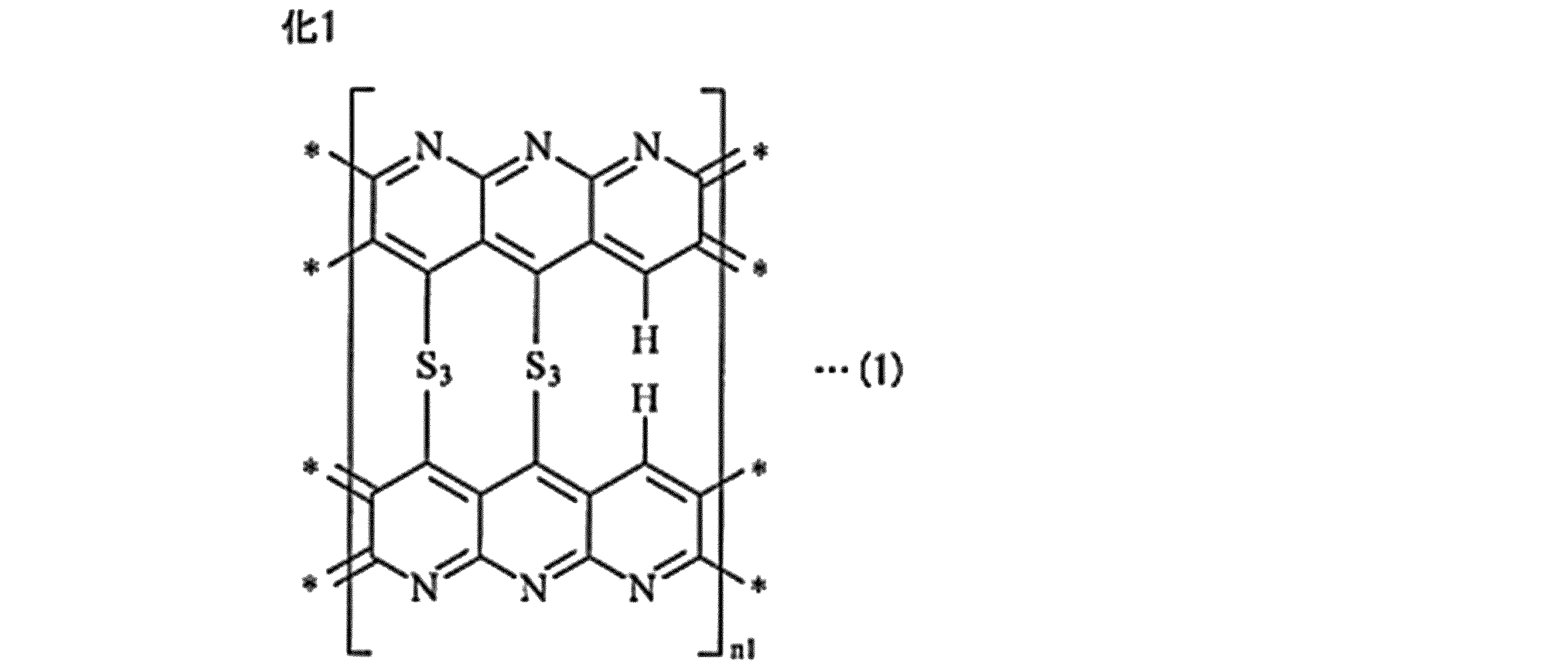
式(1)に示した高分子化合物は、以下で説明する構成を有している。第1に、第1環状部(ピリジン)および第2環状部(ピリジン)が連結部(-S3 -)を介して互いに連結されている。第2に、複数の第1環状部が互いに縮合されていると共に、複数の第2環状部が互いに縮合されており、複数の連結部が存在している。第3に、複数組の第1環状部および第2環状部のうちの一部の組の第1環状部および第2環状部だけが連結部を介して互いに連結されている。ここでは、3組の第1環状部および第2環状部のうちの2組の第1環状部および第2環状部だけが連結部を介して互いに連結されている。
または、硫黄含有高分子化合物は、複数の環状部および連結部を含んでいる。複数の環状部のそれぞれの構成は、互いに同じでもよいし、互いに異なってもよい。もちろん、複数の環状部のうちの一部の環状部の構成だけが互いに同じでもよい。以下では、複数の環状部および連結部を含んでいる硫黄含有高分子化合物を「第2硫黄含有高分子化合物」と呼称する。
複数の環状部は、互いに縮合されており、その複数の2環状部のそれぞれは、炭素および窒素を構成元素として含んでいる。ただし、複数の環状部のそれぞれは、さらに、水素などの他の元素のうちのいずれか1種類または2種類以上を構成元素として含んでいてもよい。
すなわち、複数の環状部のそれぞれは、上記した第1環状部および第2環状部のそれぞれと同様に、ヘテロ原子として窒素原子を含んでいる複素環式化合物である。この複素環式化合物に関する詳細は、上記した通りである。
連結部の構成は、以下で説明することを除いて、上記した連結部の構成と同様である。
連結部は、複数の環状部のうちの任意の2つの環状部に連結されており、硫黄を構成元素として含んでいる。複数の環状部は、上記したように、互いに縮合されているため、連結部は、複数の環状部のうちの任意の1つの環状部から、その複数の環状部のうちの他の1つの環状部まで延在している。連結部が連結されている2つの環状部は、互いに隣り合っている2つの環状部でもよいし、互いに隣り合っていない2つの環状部でもよい。
なお、連結部の数は、特に限定されないため、硫黄含有高分子化合物は、1つの連結部だけを含んでいてもよいし、複数の連結部を含んでいてもよい。
第2硫黄含有高分子化合物の分子量は、特に限定されないため、任意に設定可能である。ここで説明する分子量は、いわゆる重量平均分子量である。
ここで、第2硫黄含有高分子化合物の具体例は、式(2)により表される高分子化合物である。正極21においてマグネシウムがイオン状態で十分に吸蔵放出されやすくなるからである。
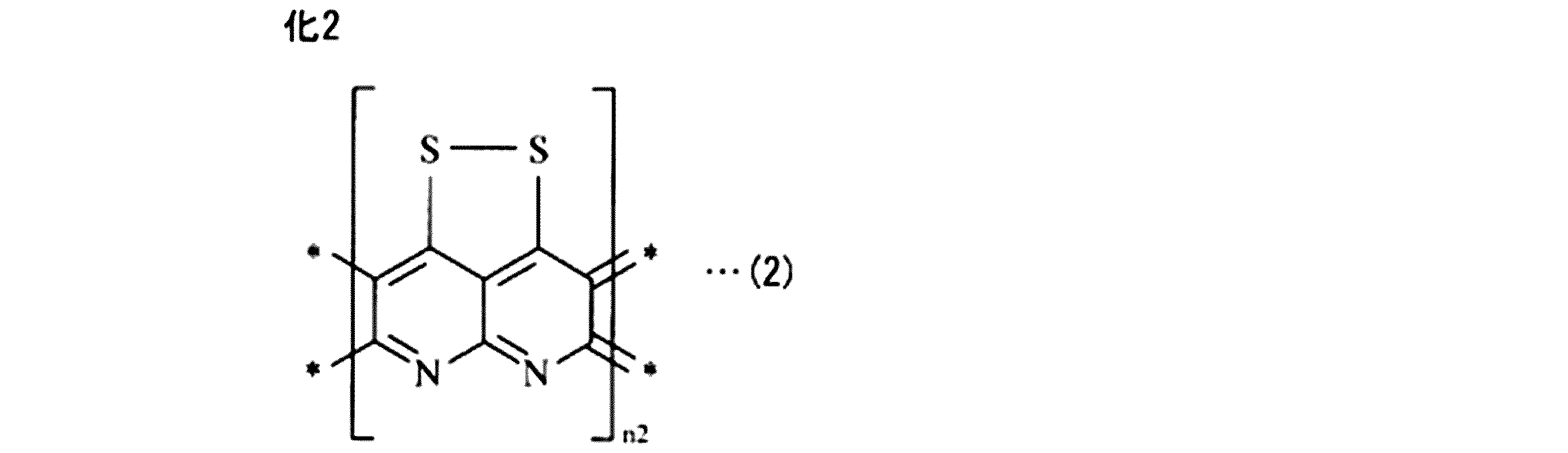
式(2)に示した高分子化合物は、以下で説明する構成を有している。第1に、複数の環状部(ピリジン)が互いに縮合されており、その複数の環状部のうちの2つの環状部に連結部(-S-S-)が連結されている。第2に、連結部が連結されている2つの環状部は、互いに隣り合っている。
もちろん、第1硫黄含有高分子化合物は、式(1)に示した高分子化合物以外の他の高分子化合物でもよい。また、第2硫黄含有高分子化合物は、式(2)に示した高分子化合物以外の他の高分子化合物でもよい。さらに、硫黄含有高分子化合物は、第1硫黄含有高分子化合物および第2硫黄含有高分子化合物以外の他の高分子化合物でもよい。
正極21が硫黄含有高分子化合物を含んでいるかを確認すると共に、その硫黄含有高分子化合物の組成を確認するためには、赤外分光法(IR)、ラマン分光法、X線光電子分光法(XPS)、X線吸収微細構造解析(XAFS)などの分析方法のうちのいずれか1種類または2種類以上を用いて正極21を分析する。
なお、ここでは具体的に図示しないが、正極21は、正極集電体および正極活物質層を含んでいてもよい。
正極集電体は、正極活物質層を支持する導電性の支持体であり、その正極活物質層が設けられる一対の面を有している。この正極集電体は、金属材料などの導電性材料を含んでおり、その導電性材料の具体例は、ニッケルなどである。
正極活物質層は、正極集電体により支持されており、正極活物質である硫黄含有高分子化合物のうちのいずれか1種類または2種類以上を含んでいる。ただし、正極活物質層は、さらに、正極結着剤および正極導電剤などの他の材料のうちのいずれか1種類または2種類以上を含んでいてもよい。
正極活物質層は、正極集電体の両面に設けられていてもよいし、正極集電体の片面だけに設けられていてもよい。正極活物質層の形成方法は、特に限定されないが、具体的には、塗布法などである。
正極結着剤は、フッ素系樹脂、ポリビニルアルコール系樹脂およびスチレンブタジエン共重合ゴムなどの樹脂材料のうちのいずれか1種類または2種類以上を含んでいる。フッ素系樹脂の具体例は、ポリフッ化ビニリデンおよびポリテトラフルオロエチレンなどである。
なお、正極結着剤は、導電性高分子化合物を含んでいてもよい。導電性高分子化合物の具体例は、ポリアニリン、ポリピロールおよびポリチオフェンなどであり、それらの2種類以上の共重合体でもよい。この導電性高分子化合物は、無置換でもよいし、任意の1種類または2種類以上の官能基により置換されていてもよい。
正極導電剤は、炭素材料、金属材料および導電性高分子化合物などの導電性材料のうちのいずれか1種類または2種類以上を含んでいる。
炭素材料の具体例は、黒鉛、炭素繊維、カーボンブラックおよびカーボンナノチューブなどである。黒鉛は、天然黒鉛でもよいし、人造黒鉛でもよい。炭素繊維は、気相成長炭素繊維(VGCF)などである。カーボンブラックは、アセチレンブラックおよびケッチェンブラックなどである。カーボンナノチューブは、シングルウォールカーボンナノチューブ(SWCNT)およびマルチウォールカーボンナノチューブ(MWCNT)などであり、そのマルチウォールカーボンナノチューブは、ダブルウォールカーボンナノチューブ(DWCNT)などである。金属材料の具体例は、ニッケルなどである。
(負極)
負極22は、負極活物質であるマグネシウム含有材料のうちのいずれか1種類または2種類以上を含んでいる。マグネシウムの析出溶解を利用した充放電反応が進行しやすくなるからである。
負極22は、負極活物質であるマグネシウム含有材料のうちのいずれか1種類または2種類以上を含んでいる。マグネシウムの析出溶解を利用した充放電反応が進行しやすくなるからである。
このマグネシウム含有材料は、上記したように、マグネシウムを構成元素として含んでいる材料の総称である。すなわち、マグネシウム含有材料は、マグネシウムの単体(いわゆるマグネシウム金属)でもよいし、マグネシウムの合金でもよいし、マグネシウムの化合物でもよいし、それらの2種類以上の混合物でもよい。なお、マグネシウム金属の純度は、特に限定されないため、そのマグネシウム金属は、任意量の不純物を含んでいてもよい。
マグネシウムの合金に構成元素として含まれる金属元素(マグネシウムを除く。)の種類は、任意の金属元素のうちのいずれか1種類または2種類以上であれば、特に限定されない。具体的には、金属元素は、リチウム、アルミニウムおよび亜鉛などである。
マグネシウムの合金におけるマグネシウムの含有量は、特に限定されないが、具体的には、90mol%以上である。マグネシウムの析出溶解を利用した充放電反応が進行しやすくなるからである。
マグネシウムの合金におけるリチウムおよびアルミニウムのそれぞれの含有量は、特に限定されないが、具体的には、10mol%以下である。また、マグネシウムの合金における亜鉛の含有量は、特に限定されないが、具体的には、2mol%以下である。放電時の電圧が担保さるため、十分な電池容量が得られるからである。
中でも、マグネシウム含有材料は、マグネシウム金属を含んでいることが好ましい。マグネシウムの析出溶解を利用した充放電反応が十分に進行しやすくなるからである。
負極22の厚さは、特に限定されないが、具体的には、1μm~50μmである。体積当たりのエネルギー密度が向上するからである。
なお、負極22は、正極21の構成と類似する構成を有していてもよい。すなわち、ここでは具体的に図示しないが、負極22は、負極集電体および負極活物質層を含んでいてもよい。
負極集電体は、負極活物質層を支持する導電性の支持体であり、その負極活物質層が設けられる一対の面を有している。この負極集電体は、金属材料などの導電性材料を含んでおり、その導電性材料の具体例は、ニッケルなどである。
負極活物質層は、負極集電体により支持されており、負極活物質であるマグネシウム含有材料のうちのいずれか1種類または2種類以上を含んでいる。ただし、負極活物質層は、さらに、負極結着剤および負極導電剤などの他の材料のうちのいずれか1種類または2種類以上を含んでいてもよい。
負極活物質層は、負極集電体の両面に設けられていてもよいし、負極集電体の片面だけに設けられていてもよい。負極活物質層の形成方法は、特に限定されないが、具体的には、塗布法などである。
負極結着剤に関する詳細は、正極結着剤に関する詳細と同様であると共に、負極導電に関する詳細は、正極導電剤に関する詳細と同様である。
(セパレータ)
セパレータ23は、図2に示したように、正極21と負極22との間に介在している絶縁性の多孔質膜であり、その正極21と負極22との短絡を防止しながらマグネシウムをイオン状態で通過させる。このセパレータ23は、絶縁性高分子化合物のうちのいずれか1種類または2種類以上を含んでおり、その絶縁性高分子化合物の具体例は、ポリエチレンなどである。
セパレータ23は、図2に示したように、正極21と負極22との間に介在している絶縁性の多孔質膜であり、その正極21と負極22との短絡を防止しながらマグネシウムをイオン状態で通過させる。このセパレータ23は、絶縁性高分子化合物のうちのいずれか1種類または2種類以上を含んでおり、その絶縁性高分子化合物の具体例は、ポリエチレンなどである。
(電解液)
電解液は、液状の電解質であり、正極21およびセパレータ23のそれぞれに含浸されている。ただし、電解液は、さらに、負極22に含浸されていてもよい。
電解液は、液状の電解質であり、正極21およびセパレータ23のそれぞれに含浸されている。ただし、電解液は、さらに、負極22に含浸されていてもよい。
この電解液は、電解質塩を含んでいる。ただし、電解液は、さらに、電解質塩を溶解および電離させるための媒質である溶媒を含んでいてもよい。
電解質塩は、カチオンおよびアニオンを含む金属塩のうちのいずれか1種類または2種類以上を含んでいる。
具体的には、電解質塩は、カチオンとしてマグネシウムイオンおよびリチウムイオンを含んでいると共に、アニオンとしてハロゲンイオンを含んでいる。すなわち、電解質塩は、マグネシウム塩であるハロゲン化マグネシウムを含んでいると共に、リチウム塩であるハロゲン化リチウムを含んでいる。
電解質塩がカチオンとしてマグネシウムイオンおよびリチウムイオンを含んでいるのは、電解質塩がカチオンとしてマグネシウムイオンだけを含んでいる場合と比較して、放電時の電圧が増加するからである。
また、電解質塩がアニオンとしてハロゲンイオンを含んでいるのは、電解質塩がアニオンとしてハロゲンイオンを含んでいない場合と比較して、放電時の電圧が増加するからである。
これらのことから、電解質塩がカチオンとしてマグネシウムイオンおよびリチウムイオンを含んでいると共にアニオンとしてハロゲンイオンを含んでいると、放電時の電圧が著しく増加する。これにより、マグネシウムの析出溶解を利用して充電反応が円滑に進行しやすくなるため、高い電池容量が得られる。
ハロゲンイオンの種類は、特に限定されないが、具体的には、フッ素イオン、塩素イオン、臭素イオンおよびヨウ素イオンなどである。
中でも、ハロゲンイオンは、塩素イオンを含んでいるため、電解質塩は、塩化マグネシウム(MgCl2 )および塩化リチウム(LiCl)を含んでいることが好ましい。放電時の電圧が十分に増加するため、十分に高い電池容量が得られるからである。
なお、電解液は、さらに、他の電解質塩のうちのいずれか1種類または2種類以上を含んでいてもよい。ただし、上記したカチオンとしてマグネシウムイオンおよびリチウムイオンを含んでいると共にアニオンとしてハロゲンイオンを含んでいる電解質塩は、ここで説明する他の電解質塩から除かれる。
他の電解質塩におけるカチオンの種類は、任意の正イオン(金属イオン)のうちのいずれか1種類または2種類以上であれば、特に限定されない。また、他の電解質塩におけるアニオンの種類は、任意の負イオンのうちのいずれか1種類または2種類以上であれば、特に限定されない。
他の電解質塩におけるアニオンの具体例は、過塩素酸イオン、硝酸イオン、硫酸イオン、酢酸イオン、トリフルオロ酢酸イオン、テトラフルオロホウ酸イオン、テトラフェニルホウ酸イオン、ヘキサフルオロリン酸イオン、ヘキサフルオロヒ酸イオン、ビス(ヘキサメチルジシラジド)イオン、ビス(トリフルオロメタンスルホニル)イミドイオンおよびビス[テトラ(ヘキサフルオロイソプロピル)]ホウ酸イオンなどである。このハロゲンイオンは、フッ素イオン、塩素イオン、臭素イオンおよびヨウ素イオンなどである。
他の電解質塩の具体例は、以下の通りである。
マグネシウム塩である他の電解質塩の具体例は、過塩素酸マグネシウム(Mg(ClO4 )2 )、硝酸マグネシム(Mg(NO3 )2 )、硫酸マグネシム(MgSO4 )、酢酸マグネシウム(Mg(CH3 COO)2 )、トリフルオロ酢酸マグネシウム(Mg(CF3 COO)2 )、テトラフルオロホウ酸マグネシウム(Mg(BF4 )2 )、テトラフェニルホウ酸マグネシウム(Mg(B(C6 H5 )4 )2 )、ヘキサフルオロリン酸マグネシウム(Mg(PF6 )2 )、ヘキサフルオロヒ酸マグネシウム(Mg(AsF6 )2 )、ビス(ヘキサメチルジシラジド)マグネシウム(Mg[N(Si(CH3 )3 )2 ]2 )、ビス(トリフルオロメタンスルホニル)イミドマグネシウム(Mg[N(CF3 SO2 )2 ]2 およびビス[テトラ(ヘキサフルオロイソプロピル)]ホウ酸マグネシウム(Mg[B(OCH(CF3 )2 )4 ]2 )などである。
リチウム塩である他の電解質塩の具体例は、過塩素酸リチウム(LiClO4 )、硝酸リチウム(LiNO3 )、硫酸リチウム(Li2 SO4 )、酢酸リチウム(LiCH3 COO)、トリフルオロ酢酸マグネシウム(LiCF3 COO)、テトラフルオロホウ酸リチウム(LiBF4 )、テトラフェニルホウ酸マグネシウム(Li(B(C6 H5 )4 )、ヘキサフルオロリン酸リチウム(LiPF6 )、ヘキサフルオロヒ酸リチウム(LiAsF6 )、ビス(ヘキサメチルジシラジド)マグネシウム(Li[N(Si(CH3 )3 )2 ])、ビス(トリフルオロメタンスルホニル)イミドマグネシウム(Li[N(CF3 SO2 )2 およびビス[テトラ(ヘキサフルオロイソプロピル)]ホウ酸リチウム(Li[B(OCH(CF3 )2 )4 )などである。
電解質塩がアニオンとして塩素イオンと共に他の負イオンを含んでいる場合において、そのアニオンにおける塩素イオンの含有量は、特に限定されない。中でも、アニオンにおける塩素イオンの含有量は、20mol%以上であることが好ましい。放電時の電圧が十分に増加するため、十分に高い電池容量が得られるからである。
電解液中における電解質塩の含有量(mol/l(=mol/dm3 ))は、特に限定されないため、任意に設定可能である。ただし、ここで説明した電解質塩の含有量は、溶媒に対する電解質塩の含有量である。
溶媒は、非水溶媒(有機溶剤)のうちのいずれか1種類または2種類以上を含んでいる。非水溶媒を含んでいる電解液は、いわゆる非水電解液である。
非水溶媒の種類は、特に限定されない。中でも、非水溶媒は、エーテル化合物を含んでいることが好ましい。エーテル化合物中において電解質塩が溶解されやすくなるため、電解液の状態が安定化するからである。
このエーテル化合物は、エーテル結合(-O-)を含んでいる化合物の総称である。なお、エーテル化合物は、鎖状でもよいし、環状でもよい。この鎖状は、直鎖状でもよいし、分岐状でもよい。また、エーテル結合の数は、1個だけでもよいし、2個以上でもよい。
エーテル化合物の具体例は、ジメトキシエタン、ジエチレングリコールジメチルエーテル、テトラエチレングリコールジメチルエーテルおよびテトラヒドロフランなどである。
[正極リード]
正極リード31は、図1および図2に示したように、正極21に接続されている正極配線であり、外装フィルム10の外部に導出されている。なお、正極21が正極集電体を含んでいる場合には、正極リード31は正極集電体に接続されている。この正極リード31は、金属材料などの導電性材料を含んでおり、その導電性材料の具体例は、アルミニウムなどである。正極リード31の形状は、薄板状および網目状などのうちのいずれかである。
正極リード31は、図1および図2に示したように、正極21に接続されている正極配線であり、外装フィルム10の外部に導出されている。なお、正極21が正極集電体を含んでいる場合には、正極リード31は正極集電体に接続されている。この正極リード31は、金属材料などの導電性材料を含んでおり、その導電性材料の具体例は、アルミニウムなどである。正極リード31の形状は、薄板状および網目状などのうちのいずれかである。
[負極リード]
負極リード32は、図1および図2に示したように、負極22に接続されている負極配線であり、外装フィルム10の外部に導出されている。なお、負極22が負極集電体を含んでいる場合には、負極リード32は負極集電体に接続されている。ここでは、負極リード32の導出方向は、正極リード31の導出方向と同様である。この負極リード32は、金属材料などの導電性材料を含んでおり、その導電性材料の具体例は、銅などである。負極リード32の形状に関する詳細は、正極リード31の形状に関する詳細と同様である。
負極リード32は、図1および図2に示したように、負極22に接続されている負極配線であり、外装フィルム10の外部に導出されている。なお、負極22が負極集電体を含んでいる場合には、負極リード32は負極集電体に接続されている。ここでは、負極リード32の導出方向は、正極リード31の導出方向と同様である。この負極リード32は、金属材料などの導電性材料を含んでおり、その導電性材料の具体例は、銅などである。負極リード32の形状に関する詳細は、正極リード31の形状に関する詳細と同様である。
[封止フィルム]
封止フィルム41は、外装フィルム10と正極リード31との間に挿入されていると共に、封止フィルム42は、外装フィルム10と負極リード32との間に挿入されている。ただし、封止フィルム41,42のうちの一方または双方は、省略されてもよい。
封止フィルム41は、外装フィルム10と正極リード31との間に挿入されていると共に、封止フィルム42は、外装フィルム10と負極リード32との間に挿入されている。ただし、封止フィルム41,42のうちの一方または双方は、省略されてもよい。
封止フィルム41は、外装フィルム10の内部に外気などが侵入することを防止する封止部材である。この封止フィルム41は、正極リード31に対して密着性を有するポリオレフィンなどの高分子化合物を含んでおり、その高分子化合物の具体例は、ポリプロピレンなどである。
封止フィルム42の構成は、負極リード32に対して密着性を有する封止部材であることを除いて、封止フィルム41の構成と同様である。すなわち、封止フィルム42は、負極リード32に対して密着性を有するポリオレフィンなどの高分子化合物を含んでいる。
<1-2.動作>
この二次電池は、電池素子20において、以下のように動作する。
この二次電池は、電池素子20において、以下のように動作する。
放電時には、負極22において負極活物質(マグネシウム含有材料)が溶解するため、電解液中にマグネシウムが溶出されると共に、そのマグネシウムが正極21においてイオン状態で吸蔵される。一方、充電時には、正極21において正極活物質(硫黄含有高分子化合物)から電解液中にマグネシウムがイオン状態で放出されると共に、そのマグネシウムが負極22において析出する。
<1-3.製造方法>
二次電池を製造する場合には、以下で説明する一例の手順を用いて、正極21および負極22のそれぞれを作製すると共に、電解液を調製したのち、その正極21、負極22および電解液を用いて二次電池を組み立てる。
二次電池を製造する場合には、以下で説明する一例の手順を用いて、正極21および負極22のそれぞれを作製すると共に、電解液を調製したのち、その正極21、負極22および電解液を用いて二次電池を組み立てる。
以下では、マグネシウム含有材料としてマグネシウム金属を用いる場合に関して説明する。
[正極の作製]
最初に、正極活物質(硫黄含有高分子化合物)、正極結着剤および正極導電剤を互いに混合させることにより、正極合剤とする。続いて、成形機を用いて層状となるように正極合剤を成形することにより、正極活物質層を形成する。最後に、成形機およびロールプレス機などの圧縮装置を用いて正極集電体の両面に正極活物質層を圧着させる。これにより、正極21が作製される。
最初に、正極活物質(硫黄含有高分子化合物)、正極結着剤および正極導電剤を互いに混合させることにより、正極合剤とする。続いて、成形機を用いて層状となるように正極合剤を成形することにより、正極活物質層を形成する。最後に、成形機およびロールプレス機などの圧縮装置を用いて正極集電体の両面に正極活物質層を圧着させる。これにより、正極21が作製される。
[負極の作製]
続いて、負極22として、負極活物質(マグネシウム含有材料であるマグネシウム金属)を準備する。この場合には、マグネシウム含有材料としてマグネシウム箔を用いる。
続いて、負極22として、負極活物質(マグネシウム含有材料であるマグネシウム金属)を準備する。この場合には、マグネシウム含有材料としてマグネシウム箔を用いる。
[電解液の調製]
溶媒に電解質塩を投入することにより、電解液を調製する。
溶媒に電解質塩を投入することにより、電解液を調製する。
[二次電池の組み立て]
最初に、溶接法などの接合方法を用いて、正極21のうちの正極集電体に正極リード31を接続させると共に、溶接法などの接合方法を用いて、負極22に負極リード32を接続させる。
最初に、溶接法などの接合方法を用いて、正極21のうちの正極集電体に正極リード31を接続させると共に、溶接法などの接合方法を用いて、負極22に負極リード32を接続させる。
続いて、セパレータ23を介して正極21および負極22を互いに積層させたのち、その正極21、負極22およびセパレータ23を巻回させることにより、巻回体(図示せず)を形成する。続いて、プレス機などの圧縮装置を用いて巻回体を押圧することにより、扁平形状となるように巻回体を成形する。この成形後の巻回体は、正極21、負極22およびセパレータ23のそれぞれに電解液が含浸されていないことを除いて、電池素子20の構成と同様の構成を有している。
続いて、窪み部10Uに巻回体を収容したのち、外装フィルム10(融着層/金属層/表面保護層)を折り畳むことにより、その外装フィルム10同士を互いに対向させる。続いて、熱融着法などの接着方法を用いて、互いに対向する融着層のうちの2辺の外周縁部同士を互いに接合させることにより、袋状の外装フィルム10に巻回体を収納する。
最後に、袋状の外装フィルム10に電解液を注入したのち、熱融着法などの接着方法を用いて、互いに対向する融着層のうちの残りの1辺の外周縁部同士を互いに接合させる。この場合には、外装フィルム10と正極リード31との間に封止フィルム41を挿入すると共に、外装フィルム10と負極リード32との間に封止フィルム42を挿入する。
これにより、巻回体に電解液が含浸されるため、巻回電極体である電池素子20が作製される。よって、袋状の外装フィルム10に電池素子20が封入されるため、二次電池が完成する。
<1-4.作用および効果>
この二次電池によれば、正極21が硫黄含有高分子化合物を含んでおり、負極22がマグネシウム含有材料を含んでおり、電解液が電解質塩を含んでいる。硫黄含有高分子化合物は、炭素、窒素および硫黄を構成元素として含んでいると共に、炭素窒素間結合および炭素硫黄間結合を有している。電解質塩は、カチオンとしてマグネシウムイオンおよびリチウムイオンを含んでいると共に、アニオンとしてハロゲンイオンを含んでいる。
この二次電池によれば、正極21が硫黄含有高分子化合物を含んでおり、負極22がマグネシウム含有材料を含んでおり、電解液が電解質塩を含んでいる。硫黄含有高分子化合物は、炭素、窒素および硫黄を構成元素として含んでいると共に、炭素窒素間結合および炭素硫黄間結合を有している。電解質塩は、カチオンとしてマグネシウムイオンおよびリチウムイオンを含んでいると共に、アニオンとしてハロゲンイオンを含んでいる。
この場合には、上記したように、以下で説明する一連の作用が得られる。
第1に、正極21が硫黄含有高分子化合物を含んでいるため、その正極21においてマグネシウムがイオン状態で吸蔵放出されやすくなる。これにより、正極21が硫黄の単体および硫黄の化合物などの他の材料を含んでいる場合と比較して、そのマグネシウムの析出溶解を利用した充放電反応が進行しやすくなる。
詳細には、正極21が硫黄の単体を含んでいる場合には、その正極21から電解液に硫黄が溶出されやすくなる。これにより、電解液に溶出された硫黄と負極22との副反応が発生するため、マグネシウムの析出溶解を利用した充放電反応が阻害されやすくなる。これに対して、正極21が硫黄含有高分子化合物を含んでいる場合には、その正極21から電解液に硫黄が溶出されにくくなる。これにより、上記した副反応が発生しないため、マグネシウムの析出溶解を利用した充放電反応が安定に進行しやすくなる。
第2に、負極22がマグネシウム含有材料を含んでいるため、マグネシウムの析出溶解を利用した充放電反応がより進行しやすくなる。
第3に、電解質塩がカチオンとしてマグネシウムイオンおよびリチウムイオンを含んでいるため、電解質塩がカチオンとしてマグネシウムイオンだけを含んでいる場合と比較して、放電時の電圧が増加する。
第4に、電解質塩がアニオンとしてハロゲンイオンを含んでいるため、電解質塩がアニオンとしてハロゲンイオンを含んでいない場合と比較して、放電時の電圧がより増加する。
これにより、電解質塩がカチオンとしてマグネシウムイオンおよびリチウムイオンを含んでいると共にアニオンとしてハロゲンイオンを含んでいると、放電時の電圧が著しく増加する。よって、マグネシウムの析出溶解を利用して充電反応が円滑に進行しやすくなるため、高い電池容量が得られる。
これらのことから、マグネシウムの析出溶解を利用した充放電反応が十分かつ安定に進行しやすくなるため、優れた電池特性を得ることができる。
特に、硫黄含有高分子化合物が第1環状部、第2環状部および連結部を含んでおり、その第1環状部および第2環状部のそれぞれが炭素および窒素を構成元素として含んでおり、その連結部が硫黄を構成元素として含んでいれば(第1硫黄含有高分子化合物)、正極21においてマグネシウムがイオン状態で十分に吸蔵放出されやすくなるため、より高い効果を得ることができる。
この場合には、硫黄含有高分子化合物が複数の第1環状部、複数の第2環状部および複数の連結部を含んでおり、その複数の第1環状部が互いに縮合されており、その複数の第2環状部が互いに縮合されていれば、十分な分子量を有する硫黄含有化合物が合成されやすくなるため、さらに高い効果を得ることができる。
より具体的には、硫黄含有化合物が式(1)に示した高分子化合物を含んでいれば、正極21においてマグネシウムがイオン状態で十分に吸蔵放出されやすくなるため、さらに高い効果を得ることができる。
また、硫黄含有高分子化合物が複数の環状部および連結部を含んでおり、その複数の環状部のそれぞれが炭素および窒素を構成元素として含んでおり、その連結部が硫黄を構成元素として含んでいれば(第2硫黄含有高分子化合物)、正極21においてマグネシウムがイオン状態で十分に吸蔵放出されやすくなるため、より高い効果を得ることができる。
より具体的には、硫黄含有化合物が式(2)に示した高分子化合物を含んでいれば、正極21においてマグネシウムがイオン状態で十分に吸蔵放出されやすくなるため、さらに高い効果を得ることができる。
また、ハロゲンイオンが塩素イオンを含んでいれば、放電時の電圧が十分に増加するため、より高い効果を得ることができる。
また、電解液の溶媒がエーテル化合物を含んでいれば、そのエーテル化合物中において電解質塩が溶解されやすくなる。よって、電解液の状態が安定化するため、より高い効果を得ることができる。
また、マグネシウム含有材料がマグネシウム金属を含んでいれば、マグネシウムの析出溶解を利用した充放電反応が十分に進行しやすくなるため、より高い効果を得ることができる。
<2.二次電池の用途>
二次電池の用途(適用例)は、特に限定されない。電源として用いられる二次電池は、電子機器および電動車両などにおいて、主電源でもよいし、補助電源でもよい。主電源とは、他の電源の有無に関係なく、優先的に用いられる電源である。補助電源は、主電源の代わりに用いられる電源でもよいし、主電源から切り替えられる電源でもよい。
二次電池の用途(適用例)は、特に限定されない。電源として用いられる二次電池は、電子機器および電動車両などにおいて、主電源でもよいし、補助電源でもよい。主電源とは、他の電源の有無に関係なく、優先的に用いられる電源である。補助電源は、主電源の代わりに用いられる電源でもよいし、主電源から切り替えられる電源でもよい。
二次電池の用途の具体例は、以下で説明する通りである。ビデオカメラ、デジタルスチルカメラ、携帯電話機、ノート型パソコン、ヘッドホンステレオ、携帯用ラジオおよび携帯用情報端末などの電子機器である。バックアップ電源およびメモリーカードなどの記憶用装置である。電動ドリルおよび電動鋸などの電動工具である。電子機器などに搭載される電池パックである。ペースメーカおよび補聴器などの医療用電子機器である。電気自動車(ハイブリッド自動車を含む。)などの電動車両である。非常時などに備えて電力を蓄積しておく家庭用または産業用のバッテリシステムなどの電力貯蔵システムである。これらの用途では、1個の二次電池だけが用いられてもよいし、2個以上の二次電池が用いられてもよい。
電池パックは、単電池を用いてもよいし、組電池を用いてもよい。電動車両は、駆動用電源として二次電池を用いて走行する車両であり、その二次電池以外の他の駆動源を併せて備えたハイブリッド自動車でもよい。家庭用の電力貯蔵システムでは、電力貯蔵源である二次電池に蓄積された電力を利用して、家庭用の電気製品などを使用可能である。
本技術の実施例に関して説明する。
以下で説明するように、電解液および二次電池を製造したのち、その電解液の物性および二次電池の電池特性を評価した。
<実施例1および比較例1~3>
以下で説明する手順により、二次電池を製造したのち、その二次電池の電池特性を評価した。
以下で説明する手順により、二次電池を製造したのち、その二次電池の電池特性を評価した。
[二次電池の製造]
ここでは、電池特性の評価として簡易評価を行うために、試験用の二次電池を作製した。図3は、試験用の二次電池の断面構成を表しており、その試験用の二次電池は、コイン型のマグネシウム硫黄二次電池である。
ここでは、電池特性の評価として簡易評価を行うために、試験用の二次電池を作製した。図3は、試験用の二次電池の断面構成を表しており、その試験用の二次電池は、コイン型のマグネシウム硫黄二次電池である。
以下では、試験用の二次電池の構成を説明したのち、その試験用の二次電池の製造手順を説明する。
(試験用の二次電池の構成)
試験用の二次電池は、図3に示したように、試験極51と、対極52と、セパレータ53と、外装カップ54と、外装缶55と、ガスケット56と、電解液(図示せず)とを備えている。
試験用の二次電池は、図3に示したように、試験極51と、対極52と、セパレータ53と、外装カップ54と、外装缶55と、ガスケット56と、電解液(図示せず)とを備えている。
試験極51は、外装カップ54に収容されていると共に、対極52は、外装缶55に収容されている。試験極51および対極52は、セパレータ53を介して互いに積層されていると共に、電解液は、試験極51、対極52およびセパレータ53のそれぞれに含浸されている。外装カップ54および外装缶55は、ガスケット56を介して互いに加締められているため、試験極51、対極52およびセパレータ53は、外装カップ54および外装缶55により封入されている。
(試験用の二次電池の製造手順)
試験用の二次電池の製造手順は、以下で説明する通りである。
試験用の二次電池の製造手順は、以下で説明する通りである。
最初に、正極活物質(硫黄含有高分子化合物)10質量部と、正極結着剤(ポリテトラフルオロエチレン,AGC株式会社製)30質量部と、正極導電剤(ケッチェンブラック,ライオン株式会社製のECP600JD)60質量部とを互いに混合させることにより、正極合剤とした。
硫黄含有高分子化合物としては、第1硫黄含有高分子化合物である式(1)に示した化合物(SIP,東京化成工業株式会社の硫化ポリアクリロニトリル,硫黄含有高分子化合物における硫黄の含有量=36重量%)を用いた。
続いて、ロールプレス機を用いて層状となるように正極合剤を成形することにより、正極活物質層を形成したのち、円盤状(直径=15mm)となるように正極活物質層を打ち抜いた。
最後に、円盤状(直径=15mm)である正極集電体の片面に正極活物質層を重ねたのち、成形機を用いて正極集電体に正極活物質層を圧着させた。これにより、試験極51(試験極51における硫黄の含有量=10重量%)が作製された。
なお、比較のために、硫黄含有高分子化合物の代わりに硫黄の単体(S8 )を用いたことを除いて同様の手順により、試験極51を作製した。
続いて、負極活物質(マグネシウム含有材料であるマグネシウム金属)としてマグネシウム箔(厚さ=200μm)を準備したのち、円盤状(直径=16mm)となるように負極活物質を打ち抜いた。これにより、対極52が作製された。
続いて、溶媒に電解質塩を添加したのち、その溶媒を撹拌した。これにより、電解液が調製された。
溶媒としては、エーテル化合物であるテトラヒドロフラン(TH),富山薬品工業株式会社製)を用いた。
電解質塩としては、ハロゲン化マグネシウムである塩化マグネシウム(MgCl2 ,シグマアルドリッチ社製)と、ハロゲン化リチウムである塩化リチウム(LiCl,シグマアルドリッチ社製)とを用いた。
電解液における電解質塩の含有量に関しては、塩化マグネシウムの含有量を溶媒に対して1mol/l(=1mol/dm3 )としたと共に、塩化リチウムの含有量を溶媒に対して1mol/l(=1mol/dm3 )とした。
なお、比較のために、電解質塩として塩化リチウムを用いずに塩化マグネシウムだけを用いたことを除いて同様の手順により、電解液を調製した。電解液における電解質塩の含有量に関しては、塩化マグネシウムの含有量を溶媒に対して2mol/l(=2mol/dm3 )とした。
また、比較のために、電解質塩である塩化リチウムの代わりに他の電解質塩であるビス(トリフルオロメタンスルホニル)イミドマグネシウム(MgTFSI2 )を用いたことを除いて同様の手順により、電解液を調製した。電解液における電解質塩の含有量に関しては、塩化マグネシウムの含有量を溶媒に対して0.4mol/l(=0.4mol/dm3 )とした。電解液における他の電解質塩の含有量に関しては、ビス(トリフルオロメタンスルホニル)イミドマグネシウムの含有量を溶媒に対して0.4mol/l(=0.4mol/dm3 )とした。
この場合において、溶媒としてテトラヒドロフランの代わりにジエチレングリコールジメチルエーテルを用いているのは、そのジエチレングリコールジメチルエーテルを用いないとビス(トリフルオロメタンスルホニル)イミドマグネシウムが溶解しないからである。
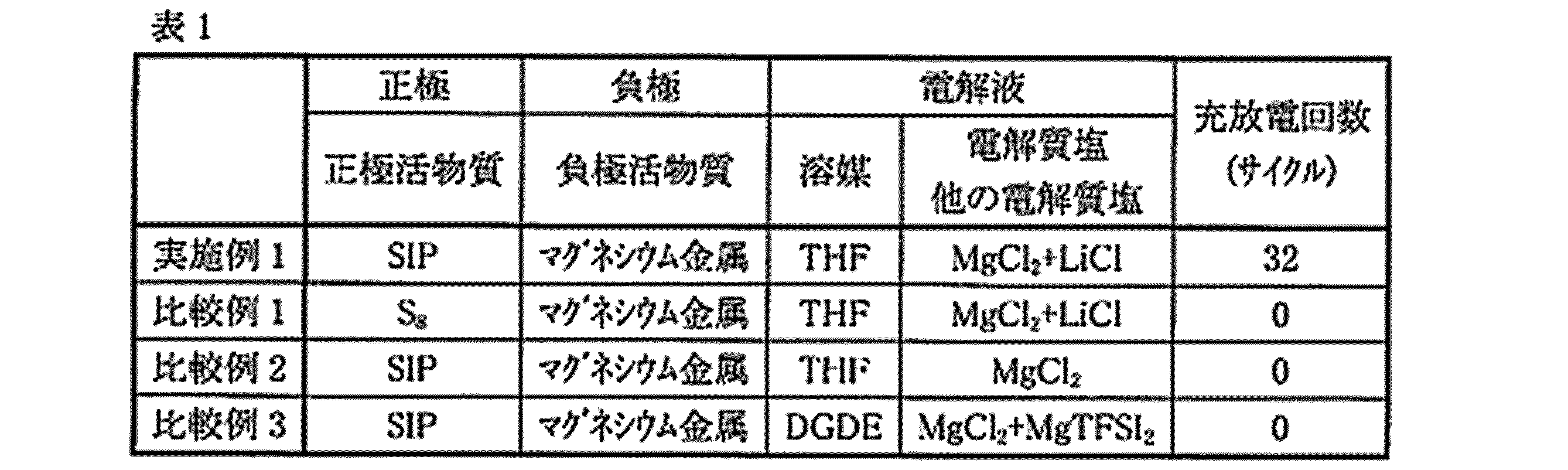
溶媒と電解質塩との組み合わせに関する詳細は、表1に示した通りである。
電解液の調製後、高周波誘導結合プラズマ(ICP)発光分光分析法を用いて電解液を分析した結果、電解質塩の含有量および他の電解質塩の含有量のそれぞれが上記した通りであることを確認した。
続いて、外装カップ54に試験極51を収容したと共に、外装缶55に対極52を収容した。続いて、電解液が含浸されたセパレータ53(厚さ=200μmであるグラスファイバー,株式会社アドバンテック製のGC50)を介して、外装カップ54に収容された試験極51と、外装缶55に収容された対極52とを互いに積層させた。この場合には、正極活物質層がセパレータ53を介して対極52と対向するように、試験極51を配置した。最後に、試験極51および対極52がセパレータ53を介して互いに積層されている状態において、ガスケット56を介して外装カップ54および外装缶55を互いに加締めた。これにより、外装カップ54および外装缶55に試験極51および対極52が封入されたため、試験用の二次電池が完成した。
[電池特性の評価]
電池特性として充放電特性を評価したところ、表1に示した結果が得られた。
電池特性として充放電特性を評価したところ、表1に示した結果が得られた。
充放電特性を評価する場合には、常温環境中(温度=25℃)において試験用の二次電池を繰り返して充放電させることにより、その充放電特性を評価するための指標である充放電回数(サイクル)を調べた。この充放電回数は、電池容量を得ながら試験用の二次電池を充放電できた回数である。
なお、放電時には、0.5mAの電流で電圧が0.1Vに到達するまで定電流放電したと共に、充電時には、0.5mAの電流で電圧が2.4Vに到達するまで定電流充電した。
[考察]
表1に示したように、対極52がマグネシウム含有材料を含んでいる場合における充放電回数は、試験極51の構成および電解液の構成に応じて変動した。
表1に示したように、対極52がマグネシウム含有材料を含んでいる場合における充放電回数は、試験極51の構成および電解液の構成に応じて変動した。
具体的には、電解液は電解質塩(塩化マグネシウムおよび塩化リチウム)を含んでいるが、試験極51は硫黄の単体を含んでいる場合(比較例1)には、充放電回数が0サイクルであったため、根本的に充放電を行うことができなかった。
また、試験極51は硫黄含有高分子化合物を含んでいるが、電解液は電解質塩(塩化マグネシウムのみ)を含んでいる場合(比較例2)においても同様に、充放電回数が0サイクルであったため、根本的に充放電を行うことができなかった。
また、試験極51は硫黄含有高分子化合物を含んでいるが、電解液は電解質塩(塩化マグネシウム)および他の電解質塩(ビス(トリフルオロメタンスルホニル)イミドマグネシウム)を含んでいる場合(比較例3)においても同様に、充放電回数が0サイクルであったため、根本的に充放電を行うことができなかった。
これに対して、試験極51は硫黄含有高分子化合物を含んでおり、電解液は電解質塩(塩化マグネシウムおよび塩化リチウムを含んでいる場合(実施例1)には、充放電回数が32サイクルであったため、充放電を行うことができた。
この場合には、特に、以下で説明する一連の傾向が得られた。第1に、硫黄含有高分子化合物として第1硫黄含有高分子化合物を用いると、充放電回数が十分に増加した。この場合には、硫黄含有高分子化合物として第2硫黄含有高分子化合物を用いても、同様の傾向が得られるはずである。第2に、電解質塩がアニオン(ハロゲンイオン)として塩素イオンを含んでいると、充放電回数が十分に増加した。第3に、溶媒がエーテル化合物を含んでいると、十分な充放電回数が得られた。第4に、マグネシウム含有材料がマグネシウム金属を含んでいると、十分な充放電回数が得られた。
[まとめ]
表1に示した結果から、正極21が硫黄含有高分子化合物を含んでおり、負極がマグネシウム含有材料を含んでおり、電解液の電解質塩がカチオンとしてマグネシウムイオンおよびリチウムイオンを含んでいると共にアニオンとしてハロゲンイオンを含んでいると、充放電回数が増加した。よって、充放電特性が改善されたため、優れた電池特性が得られた。
表1に示した結果から、正極21が硫黄含有高分子化合物を含んでおり、負極がマグネシウム含有材料を含んでおり、電解液の電解質塩がカチオンとしてマグネシウムイオンおよびリチウムイオンを含んでいると共にアニオンとしてハロゲンイオンを含んでいると、充放電回数が増加した。よって、充放電特性が改善されたため、優れた電池特性が得られた。
以上、一実施形態および実施例を挙げながら本技術に関して説明したが、その本技術の構成は、一実施形態および実施例において説明された構成に限定されないため、種々に変形可能である。
具体的には、二次電池の電池構造がラミネートフィルム型およびコイン型である場合に関して説明した。しかしながら、二次電池の電池構造は、特に限定されないため、円筒型、角型およびボタン型などでもよい。
また、電池素子の素子構造が巻回型である場合に関して説明した。しかしながら、電池素子の素子構造は、特に限定されないため、積層型および九十九折り型などでもよい。この積層型では、正極および負極が互いに積層されていると共に、九十九折り型では、正極および負極がジグザグに折り畳まれている。
本明細書中に記載された効果は、あくまで例示であるため、本技術の効果は、本明細書中に記載された効果に限定されない。よって、本技術に関して、他の効果が得られてもよい。
なお、本技術は、以下のような構成を取ることもできる。
<1>
硫黄含有高分子化合物を含む正極と、
マグネシウム含有材料を含む負極と、
電解質塩を含む電解液と
を備え、
前記硫黄含有高分子化合物は、炭素、窒素および硫黄を構成元素として含むと共に、炭素窒素間結合および炭素硫黄間結合を有し、
前記電解質塩は、カチオンとしてマグネシウムイオンおよびリチウムイオンを含むと共に、アニオンとしてハロゲンイオンを含む、
二次電池。
<2>
前記硫黄含有高分子化合物は、
互いに離隔された第1環状部および第2環状部と、
前記第1環状部と前記第2環状部との間に配置されると共に、前記第1環状部および前記第2環状部のそれぞれに連結された連結部と
を含み、
前記第1環状部および前記第2環状部のそれぞれは、炭素および窒素を構成元素として含み、
前記連結部は、硫黄を構成元素として含む、
<1>に記載の二次電池。
<3>
前記硫黄含有高分子化合物は、複数の前記第1環状部、複数の前記第2環状部および複数の前記連結部を含み、
前記複数の第1環状部は、互いに縮合されており、
前記複数の第2環状部は、互いに縮合されている、
<2>に記載の二次電池。
<4>
前記硫黄含有高分子化合物は、式(1)により表される化合物を含む、
<2>または<3>に記載の二次電池。
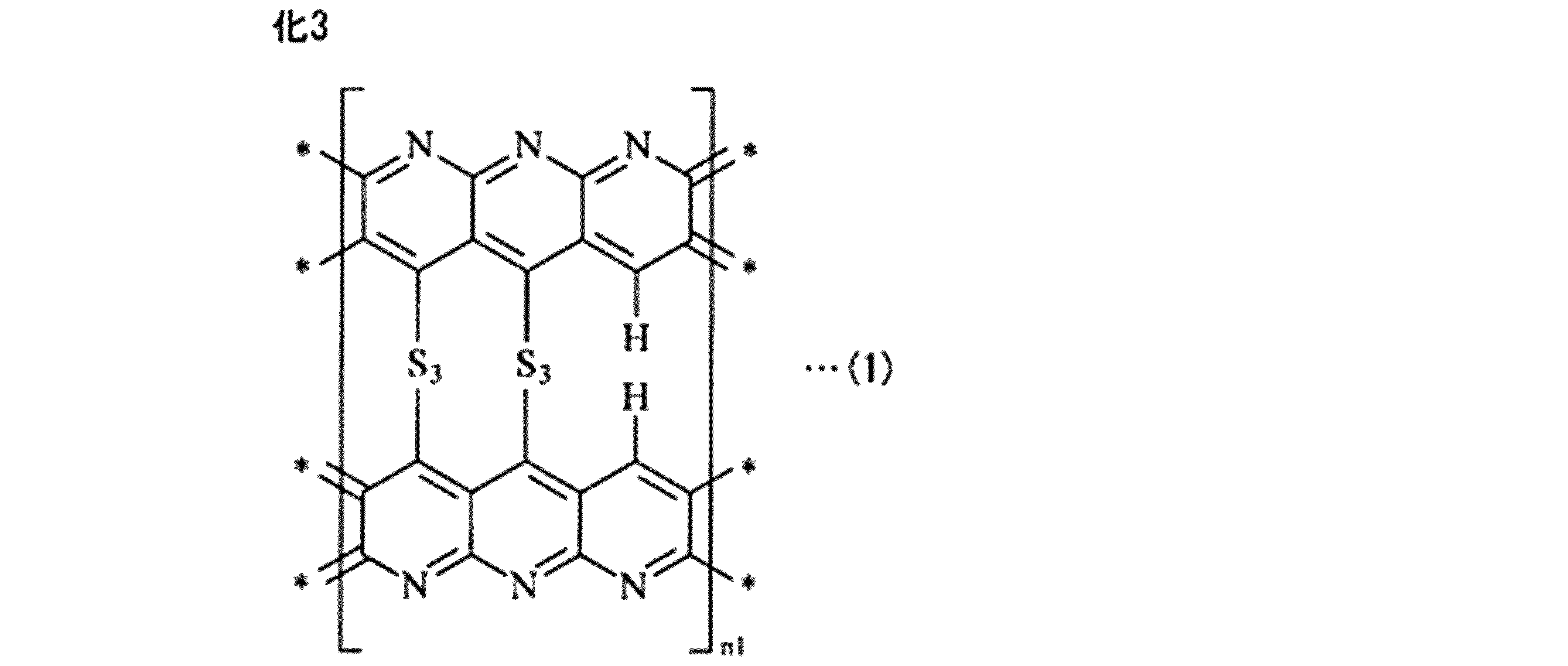
(n1は、1以上の整数である。)
<5>
前記硫黄含有高分子化合物は、
互いに縮合された複数の環状部と、
前記複数の環状部のうちの任意の2つの前記環状部に連結された連結部と
を含み、
前記複数の環状部のそれぞれは、炭素および窒素を構成元素として含み、
前記連結部は、硫黄を構成元素として含む、
<1>に記載の二次電池。
<6>
前記硫黄含有高分子化合物は、式(2)により表される化合物を含む、
<5>に記載の二次電池。
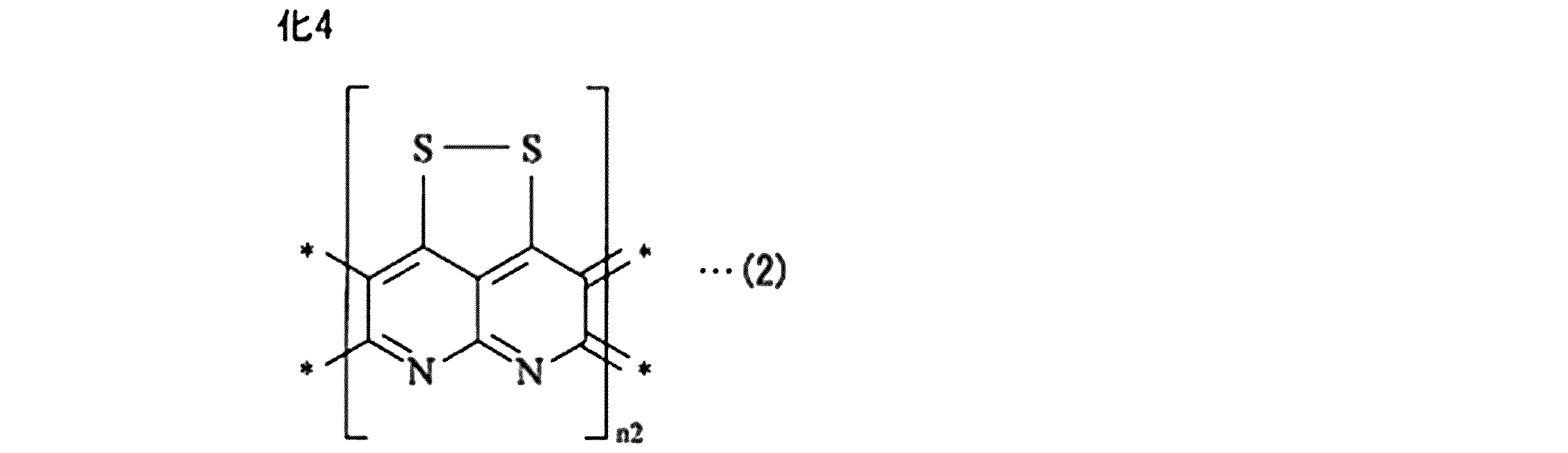
(n2は、1以上の整数である。)
<7>
前記ハロゲンイオンは、塩素イオンを含む、
<1>ないし<6>のいずれか1つに記載の二次電池。
<8>
前記電解液は、溶媒を含み、
前記溶媒は、エーテル化合物を含む、
<1>ないし<7>のいずれか1つに記載の二次電池。
<9>
前記マグネシウム含有材料は、マグネシウムの単体を含む。
<1>ないし<8>のいずれか1つに記載の二次電池。
<1>
硫黄含有高分子化合物を含む正極と、
マグネシウム含有材料を含む負極と、
電解質塩を含む電解液と
を備え、
前記硫黄含有高分子化合物は、炭素、窒素および硫黄を構成元素として含むと共に、炭素窒素間結合および炭素硫黄間結合を有し、
前記電解質塩は、カチオンとしてマグネシウムイオンおよびリチウムイオンを含むと共に、アニオンとしてハロゲンイオンを含む、
二次電池。
<2>
前記硫黄含有高分子化合物は、
互いに離隔された第1環状部および第2環状部と、
前記第1環状部と前記第2環状部との間に配置されると共に、前記第1環状部および前記第2環状部のそれぞれに連結された連結部と
を含み、
前記第1環状部および前記第2環状部のそれぞれは、炭素および窒素を構成元素として含み、
前記連結部は、硫黄を構成元素として含む、
<1>に記載の二次電池。
<3>
前記硫黄含有高分子化合物は、複数の前記第1環状部、複数の前記第2環状部および複数の前記連結部を含み、
前記複数の第1環状部は、互いに縮合されており、
前記複数の第2環状部は、互いに縮合されている、
<2>に記載の二次電池。
<4>
前記硫黄含有高分子化合物は、式(1)により表される化合物を含む、
<2>または<3>に記載の二次電池。
<5>
前記硫黄含有高分子化合物は、
互いに縮合された複数の環状部と、
前記複数の環状部のうちの任意の2つの前記環状部に連結された連結部と
を含み、
前記複数の環状部のそれぞれは、炭素および窒素を構成元素として含み、
前記連結部は、硫黄を構成元素として含む、
<1>に記載の二次電池。
<6>
前記硫黄含有高分子化合物は、式(2)により表される化合物を含む、
<5>に記載の二次電池。
<7>
前記ハロゲンイオンは、塩素イオンを含む、
<1>ないし<6>のいずれか1つに記載の二次電池。
<8>
前記電解液は、溶媒を含み、
前記溶媒は、エーテル化合物を含む、
<1>ないし<7>のいずれか1つに記載の二次電池。
<9>
前記マグネシウム含有材料は、マグネシウムの単体を含む。
<1>ないし<8>のいずれか1つに記載の二次電池。
21…正極、22…負極
Claims (9)
- 硫黄含有高分子化合物を含む正極と、
マグネシウム含有材料を含む負極と、
電解質塩を含む電解液と
を備え、
前記硫黄含有高分子化合物は、炭素、窒素および硫黄を構成元素として含むと共に、炭素窒素間結合および炭素硫黄間結合を有し、
前記電解質塩は、カチオンとしてマグネシウムイオンおよびリチウムイオンを含むと共に、アニオンとしてハロゲンイオンを含む、
二次電池。 - 前記硫黄含有高分子化合物は、
互いに離隔された第1環状部および第2環状部と、
前記第1環状部と前記第2環状部との間に配置されると共に、前記第1環状部および前記第2環状部のそれぞれに連結された連結部と
を含み、
前記第1環状部および前記第2環状部のそれぞれは、炭素および窒素を構成元素として含み、
前記連結部は、硫黄を構成元素として含む、
請求項1に記載の二次電池。 - 前記硫黄含有高分子化合物は、複数の前記第1環状部、複数の前記第2環状部および複数の前記連結部を含み、
前記複数の第1環状部は、互いに縮合されており、
前記複数の第2環状部は、互いに縮合されている、
請求項2に記載の二次電池。 - 前記硫黄含有高分子化合物は、式(1)により表される化合物を含む、
請求項2又は3に記載の二次電池。
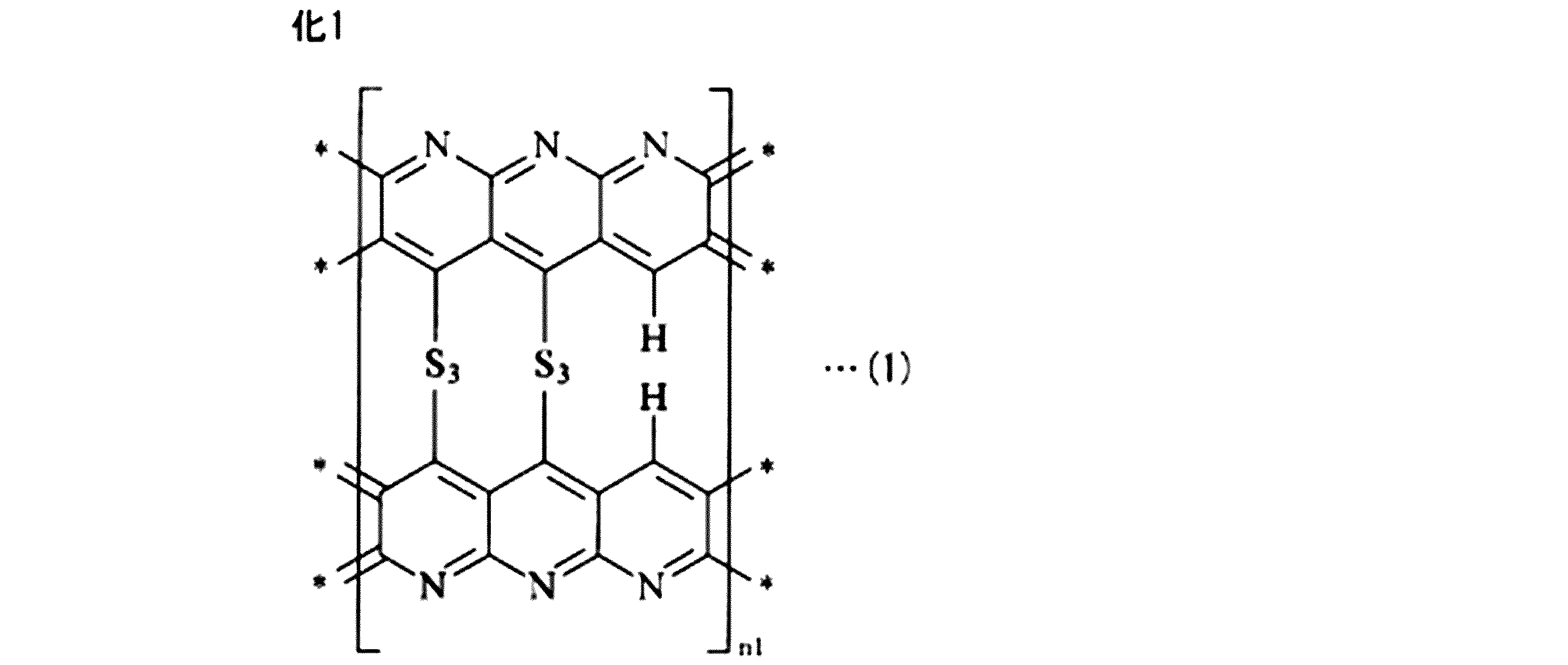
- 前記硫黄含有高分子化合物は、
互いに縮合された複数の環状部と、
前記複数の環状部のうちの任意の2つの前記環状部に連結された連結部と
を含み、
前記複数の環状部のそれぞれは、炭素および窒素を構成元素として含み、
前記連結部は、硫黄を構成元素として含む、
請求項1に記載の二次電池。 - 前記硫黄含有高分子化合物は、式(2)により表される化合物を含む、
請求項5に記載の二次電池。
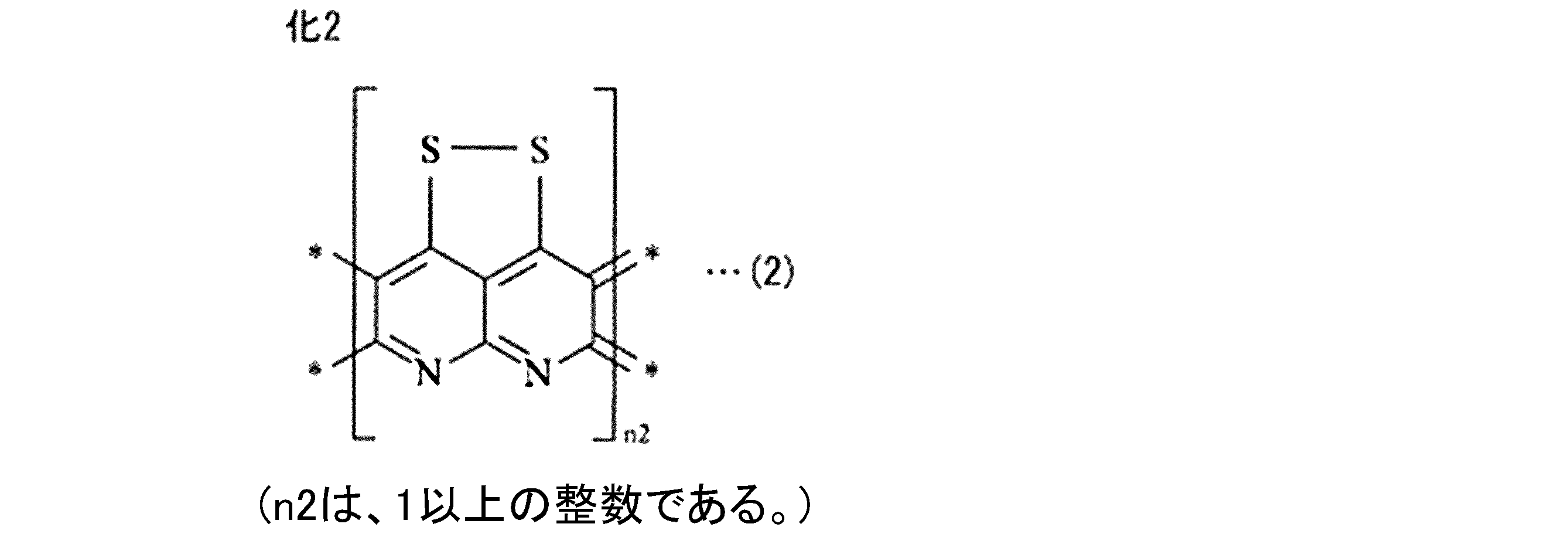
- 前記ハロゲンイオンは、塩素イオンを含む、
請求項1ないし6のいずれか1項に記載の二次電池。 - 前記電解液は、溶媒を含み、
前記溶媒は、エーテル化合物を含む、
請求項1ないし7のいずれか1項に記載の二次電池。 - 前記マグネシウム含有材料は、マグネシウムの単体を含む。
請求項1ないし8のいずれか1項に記載の二次電池。
Priority Applications (3)
| Application Number | Priority Date | Filing Date | Title |
|---|---|---|---|
| JP2025527562A JPWO2024257523A1 (ja) | 2023-06-13 | 2024-05-13 | |
| CN202480015606.4A CN120712669A (zh) | 2023-06-13 | 2024-05-13 | 二次电池 |
| US19/279,120 US20250349852A1 (en) | 2023-06-13 | 2025-07-24 | Secondary battery |
Applications Claiming Priority (2)
| Application Number | Priority Date | Filing Date | Title |
|---|---|---|---|
| JP2023096693 | 2023-06-13 | ||
| JP2023-096693 | 2023-06-13 |
Related Child Applications (1)
| Application Number | Title | Priority Date | Filing Date |
|---|---|---|---|
| US19/279,120 Continuation US20250349852A1 (en) | 2023-06-13 | 2025-07-24 | Secondary battery |
Publications (1)
| Publication Number | Publication Date |
|---|---|
| WO2024257523A1 true WO2024257523A1 (ja) | 2024-12-19 |
Family
ID=93851931
Family Applications (1)
| Application Number | Title | Priority Date | Filing Date |
|---|---|---|---|
| PCT/JP2024/017587 Ceased WO2024257523A1 (ja) | 2023-06-13 | 2024-05-13 | 二次電池 |
Country Status (4)
| Country | Link |
|---|---|
| US (1) | US20250349852A1 (ja) |
| JP (1) | JPWO2024257523A1 (ja) |
| CN (1) | CN120712669A (ja) |
| WO (1) | WO2024257523A1 (ja) |
Citations (7)
| Publication number | Priority date | Publication date | Assignee | Title |
|---|---|---|---|---|
| CN103531748A (zh) * | 2012-07-06 | 2014-01-22 | 清华大学 | 锂离子电池电极活性物质的制备方法 |
| JP2014165185A (ja) * | 2013-02-21 | 2014-09-08 | Aisin Seiki Co Ltd | 蓄電デバイス用電解液 |
| US8865346B2 (en) * | 2012-08-09 | 2014-10-21 | Tsinghua University | Cathode electrode and lithium ion battery |
| US20180138502A1 (en) * | 2016-11-17 | 2018-05-17 | Korea Institute Of Science And Technology | Cathode material for rechargeable magnesium battery and method for preparing the same |
| JP2020202115A (ja) * | 2019-06-12 | 2020-12-17 | Eneos株式会社 | 正極材および蓄電デバイス |
| JP2023511906A (ja) * | 2020-01-24 | 2023-03-23 | ハイドロ-ケベック | イオン性モノマーをベースとするポリマー、これを含む組成物、これを製造する方法、および電気化学的用途におけるその使用 |
| JP2023071082A (ja) * | 2021-11-10 | 2023-05-22 | 富士フイルム和光純薬株式会社 | マグネシウムイオン/アルカリ金属イオン-ハイブリッド型二次電池、及びその非水電解液 |
-
2024
- 2024-05-13 WO PCT/JP2024/017587 patent/WO2024257523A1/ja not_active Ceased
- 2024-05-13 JP JP2025527562A patent/JPWO2024257523A1/ja active Pending
- 2024-05-13 CN CN202480015606.4A patent/CN120712669A/zh active Pending
-
2025
- 2025-07-24 US US19/279,120 patent/US20250349852A1/en active Pending
Patent Citations (7)
| Publication number | Priority date | Publication date | Assignee | Title |
|---|---|---|---|---|
| CN103531748A (zh) * | 2012-07-06 | 2014-01-22 | 清华大学 | 锂离子电池电极活性物质的制备方法 |
| US8865346B2 (en) * | 2012-08-09 | 2014-10-21 | Tsinghua University | Cathode electrode and lithium ion battery |
| JP2014165185A (ja) * | 2013-02-21 | 2014-09-08 | Aisin Seiki Co Ltd | 蓄電デバイス用電解液 |
| US20180138502A1 (en) * | 2016-11-17 | 2018-05-17 | Korea Institute Of Science And Technology | Cathode material for rechargeable magnesium battery and method for preparing the same |
| JP2020202115A (ja) * | 2019-06-12 | 2020-12-17 | Eneos株式会社 | 正極材および蓄電デバイス |
| JP2023511906A (ja) * | 2020-01-24 | 2023-03-23 | ハイドロ-ケベック | イオン性モノマーをベースとするポリマー、これを含む組成物、これを製造する方法、および電気化学的用途におけるその使用 |
| JP2023071082A (ja) * | 2021-11-10 | 2023-05-22 | 富士フイルム和光純薬株式会社 | マグネシウムイオン/アルカリ金属イオン-ハイブリッド型二次電池、及びその非水電解液 |
Also Published As
| Publication number | Publication date |
|---|---|
| CN120712669A (zh) | 2025-09-26 |
| US20250349852A1 (en) | 2025-11-13 |
| JPWO2024257523A1 (ja) | 2024-12-19 |
Similar Documents
| Publication | Publication Date | Title |
|---|---|---|
| JP7115557B2 (ja) | 電解液および電気化学デバイス | |
| JP7632590B2 (ja) | 電解液およびその製造方法ならびに二次電池 | |
| WO2019049826A1 (ja) | リチウム硫黄電池 | |
| JP2020532057A (ja) | リチウム二次電池用正極及びこの製造方法 | |
| JP7314087B2 (ja) | 二次電池、電池パック、車両及び定置用電源 | |
| CN110537282A (zh) | 电化学装置用构件和电化学装置 | |
| US20160268607A1 (en) | Secondary battery | |
| CN103959519B (zh) | 电池 | |
| US20250309351A1 (en) | Electrolytic solution for secondary battery, and secondary battery | |
| WO2022070326A1 (ja) | リチウム2次電池、及びアノードフリー電池 | |
| JP6739941B2 (ja) | リチウムイオン二次電池用電解質 | |
| JP7424488B2 (ja) | 電気化学デバイス | |
| CN112534621B (zh) | 电解液及电化学器件 | |
| WO2024257523A1 (ja) | 二次電池 | |
| WO2000025373A1 (fr) | Pile electrolytique non aqueuse | |
| JP5799999B2 (ja) | マグネシウムイオン二次電池及びこれを用いた電池パック、並びにマグネシウムイオン二次電池用電解液 | |
| US20240014378A1 (en) | Positive electrode and electrochemical device | |
| JP7718488B2 (ja) | 二次電池用負極および二次電池 | |
| JP6875818B2 (ja) | 電解液ならびにそれを用いた電気化学デバイス | |
| JP6776933B2 (ja) | 二次電池用電極及び二次電池 | |
| CN113614952B (zh) | 含有镁的电极及其制造方法、以及电化学设备 | |
| WO2024116533A1 (ja) | 二次電池 | |
| JP7827171B2 (ja) | 二次電池用正極および二次電池 | |
| JP7800688B2 (ja) | 二次電池用電極および二次電池 | |
| JP7732580B2 (ja) | 二次電池用負極活物質、二次電池用負極および二次電池 |
Legal Events
| Date | Code | Title | Description |
|---|---|---|---|
| 121 | Ep: the epo has been informed by wipo that ep was designated in this application |
Ref document number: 24823145 Country of ref document: EP Kind code of ref document: A1 |
|
| ENP | Entry into the national phase |
Ref document number: 2025527562 Country of ref document: JP Kind code of ref document: A |
|
| WWE | Wipo information: entry into national phase |
Ref document number: 2025527562 Country of ref document: JP |
|
| NENP | Non-entry into the national phase |
Ref country code: DE |