WO2024252467A1 - 導電性ゲル及び導電性ゲルの製造方法 - Google Patents
導電性ゲル及び導電性ゲルの製造方法 Download PDFInfo
- Publication number
- WO2024252467A1 WO2024252467A1 PCT/JP2023/020811 JP2023020811W WO2024252467A1 WO 2024252467 A1 WO2024252467 A1 WO 2024252467A1 JP 2023020811 W JP2023020811 W JP 2023020811W WO 2024252467 A1 WO2024252467 A1 WO 2024252467A1
- Authority
- WO
- WIPO (PCT)
- Prior art keywords
- conductive gel
- group
- naturally occurring
- polymer
- occurring polymer
- Prior art date
- Legal status (The legal status is an assumption and is not a legal conclusion. Google has not performed a legal analysis and makes no representation as to the accuracy of the status listed.)
- Ceased
Links
Images

Classifications
-
- C—CHEMISTRY; METALLURGY
- C08—ORGANIC MACROMOLECULAR COMPOUNDS; THEIR PREPARATION OR CHEMICAL WORKING-UP; COMPOSITIONS BASED THEREON
- C08J—WORKING-UP; GENERAL PROCESSES OF COMPOUNDING; AFTER-TREATMENT NOT COVERED BY SUBCLASSES C08B, C08C, C08F, C08G or C08H
- C08J3/00—Processes of treating or compounding macromolecular substances
- C08J3/02—Making solutions, dispersions, lattices or gels by other methods than by solution, emulsion or suspension polymerisation techniques
- C08J3/03—Making solutions, dispersions, lattices or gels by other methods than by solution, emulsion or suspension polymerisation techniques in aqueous media
- C08J3/075—Macromolecular gels
Definitions
- the present invention relates to a conductive gel and a method for producing a conductive gel.
- Regenerative medicine aims to regenerate tissues and organs that have lost their function.
- Regenerative medicine involves transplanting cells from healthy donors or the patient's own cells. For example, when blood flow is significantly reduced due to myocardial infarction, necrosis of myocardial tissue progresses, leading to a decline in cardiac function. To promote the regeneration of myocardial tissue and prevent the decline in cardiac function, cell sheet therapy and stem cell transplantation are being performed.
- Non-Patent Document 1 discloses research into the use of scaffold materials in which conductive polymers are introduced by polymerizing monomers into polymers in solution, and the proliferation and differentiation of neural stem cells are induced by electrical stimulation.
- Non-Patent Document 2 suggests that low molecular weight impurities contained in conductive polymers have an effect of inhibiting the proliferation and differentiation of fibroblasts and embryonic stem cells.
- the low molecular weight impurities disclosed in Non-Patent Document 2 may be unreacted monomers that are generated when the conductive scaffold material is obtained by polymerization reaction. In order to remove such unreacted monomers from the conductive scaffold material, a process of washing the material in advance is required. However, since the washing process needs to be carried out after the conductive scaffold material is crosslinked, it is not effective in methods in which cells are suspended in the raw material before crosslinking or in methods in situ crosslinking is performed within the affected area for the purpose of minimally invasive treatment.
- the object of the present invention is to provide a conductive gel with low cytotoxicity and a method for producing the conductive gel.
- a conductive gel comprising a naturally occurring polymer having a plurality of modifying groups and a metal ion, the modifying groups being bonded to each other in a network structure.
- the present invention includes the following embodiment.
- a method for producing a conductive gel comprising the steps of: bonding a modifying group to a naturally occurring polymer to form a modified form of the naturally occurring polymer; and polymerizing the modifying groups together.
- the above aspect makes it possible to provide a conductive gel with low cytotoxicity and a method for producing the conductive gel.
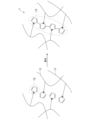
- FIG. 2 is a schematic diagram of a conductive gel in one embodiment in which the modifying group is a group derived from pyrrole.
- FIG. 1 is a schematic diagram showing an example of an electrical stimulation experiment using neural stem cells according to one embodiment.
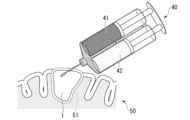
- FIG. 1 is a schematic diagram of a brain tissue regeneration experiment in which a conductive gel is formed in a defective portion of brain tissue using a conductive gel precursor in one embodiment.
- the conductive gel of this embodiment contains a naturally occurring polymer having multiple modifying groups and metal ions, and has a network structure in which the modifying groups are bonded to each other.
- naturally occurring polymers refer to polymeric compounds that are naturally occurring.
- the conductive gel may contain one or more naturally occurring polymers. More specifically, the naturally occurring polymer may be at least one selected from the group consisting of collagen, gelatin, glycosaminoglycan, chitosan, alginic acid, ⁇ -polyglutamic acid, cellulose, lignin, and derivatives thereof.
- the collagen may be type I collagen.
- the collagen may be derived from a mammal or may be derived from a fish. Examples of glycosaminoglycans include hyaluronic acid, chondroitin, chondroitin sulfate, keratan sulfate, dermatan sulfate, heparan sulfate, and heparin.
- the sulfo group may function as a dopant when forming a conductive gel.
- the dopant is a component that improves the conductivity of the conductive gel after the modification group is polymerized.
- the dopant may contribute as a polymerization promoter in the polymerization reaction.
- the naturally derived polymer may be at least one selected from the group consisting of untreated naturally derived polymers, oxidatively cleaved naturally derived polymer derivatives, and fiberized naturally derived polymer derivatives.
- Untreated means that the naturally derived polymer is not chemically modified.
- Oxidatively cleaved means that, when the naturally derived polymer is a polysaccharide, the glycol moiety is oxidatively cleaved to a dialdehyde by Malapprade cleavage.
- “Fiberized” means that the naturally derived polymer is physically or chemically treated to form nanofibers. Examples of physical treatments include ultrasonic treatment.
- a naturally derived polymer prepared by the method described in Japanese Patent No. 5791065 can be used.
- the mass ratio of the naturally derived polymer contained in the conductive gel is, for example, preferably 2 to 20 mass% relative to the total mass of the conductive gel, and more preferably 5 to 15 mass%.
- the mass ratio of the naturally derived polymer is 2 to 20 mass% relative to the total mass of the conductive gel, it can function as a scaffold for the supported cells and promote cell proliferation and cell differentiation.
- the modifying groups are capable of bonding to each other and polymerizing, and are either modifying groups that result in a polymer that is conductive, or modifying groups that are themselves conductive.
- the modifying group is preferably a group derived from one selected from the group consisting of pyrrole, thiophene, aniline, and derivatives thereof.
- pyrrole derivatives include 1-aminopyrrole and 1H-pyrrole-1-propionic acid.
- the mass ratio of the modifying group contained in the conductive gel is, for example, preferably 0.5 to 20 mass% relative to the dry mass of the naturally derived polymer, and more preferably 1 to 10 mass%.
- the mass ratio of the modifying group is 1 to 10 mass% relative to the dry mass of the naturally derived polymer, a conductive polymer in which the modifying groups are bonded together is sufficiently formed, improving the conductivity and increasing the cell proliferation effect.
- FIG. 1 is a schematic diagram of a conductive gel in which the modifying group is a group derived from pyrrole.
- the modifying group 12 bonded to a plurality of naturally derived polymers 11 is polymerized to form a polymer 13.
- polypyrrole is formed as the polymer 13
- the conductive gel 1 is formed.
- the plurality of naturally derived polymers 11 are randomly connected to each other by the formation of polypyrrole.
- the "mesh structure" means a state in which the plurality of naturally derived polymers 11 are randomly connected to each other by the polymer 13 of the modifying group 12.
- the plurality of naturally derived polymers 11 may be one type or two or more types.
- the plurality of naturally derived polymers 11 may be one type of untreated naturally derived polymer, oxidatively cleaved naturally derived polymer derivative, and fiberized naturally derived polymer derivative, or a combination of two or more types of these.
- the naturally derived polymer 11 includes an oxidatively cleaved naturally derived polymer derivative
- the modifying group may be bonded to an aldehyde of the oxidatively cleaved naturally derived polymer.
- the conductive gel contains metal ions.
- the metal ions are components that are added as a polymerization initiator or polymerization accelerator when polymerizing the modifying groups in the production of the conductive gel.
- the ratio of metal ions to the total mass of the conductive gel is preferably 0.01 to 0.1 mass%, and more preferably 0.02 to 0.05 mass%.
- the modifying group is appropriately polymerized in the conductive gel.
- the ratio of at least one of the metal ions and the dopant to the conductive polymer precursor modified with a naturally occurring polymer is preferably 0.5 to 2 molar equivalents, and more preferably 1.0 to 1.5 molar equivalents.
- the conductive gel may contain a dispersion medium such as water, potassium dihydrogen phosphate-sodium hydroxide buffer solution of pH 6 to 8, or boric acid-potassium chloride-sodium hydroxide buffer solution of pH 8 to 10.
- the proportion of the dispersion medium contained in the conductive gel is preferably 70 to 95 mass % relative to the total mass of the conductive gel, and more preferably 80 to 90 mass %.
- the conductive gel may further contain cells.
- the cells include myoblasts, cardiomyocytes, neural stem cells, fibroblasts, embryonic stem cells, and adipose-derived stem cells.
- FIG. 2 is a schematic diagram showing an example of an electrical stimulation experiment using neural stem cells.
- a conductive gel containing neural stem cells 31 is placed on two electrodes 21 arranged in parallel.
- the encapsulated neural stem cells are electrically stimulated through the conductive gel.
- neural stem cells can be proliferated and differentiated into neurons by electrical stimulation.
- the neural stem cells can be differentiated into neurons while maintaining a high survival rate.
- the neurons in the conductive gel can be stained and observed using a confocal microscope.
- the conductive gel described above is extremely useful as a medical material because it has both low cytotoxicity and electrical conductivity.
- it can be used as a conductive scaffolding material for cell proliferation and differentiation.
- it is useful as a medical material for treating central nervous system damage caused by trauma, ischemic diseases caused by cerebral infarction, and ischemic heart disease caused by myocardial infarction.
- the present embodiment relates to a method for producing a conductive gel, which includes a step of bonding a modifying group to a naturally occurring polymer to form a modified form of the naturally occurring polymer, and a step of polymerizing the modifying groups together.
- the naturally occurring polymer and modifying group are the same as those in the first embodiment, so the description will be omitted. Below, we will explain the case where the naturally occurring polymer is gelatin and the modifying group is a group derived from pyrrole.
- 1H-pyrrole-1-propionic acid a pyrrole derivative
- a suitable solvent is ethanol.
- This is reacted with a condensate and an amine activator to obtain an active ester of the pyrrole derivative.
- An example of the condensate is (1-ethyl-3-(3-dimethylaminopropyl)carbodiimide hydrochloride (also known as EDC).
- EDC (1-ethyl-3-(3-dimethylaminopropyl)carbodiimide hydrochloride
- an example of the amine activator is N-hydroxysuccinimide (also known as NHS).
- Gelatin is dissolved in a buffer solution, and then an active ester of a pyrrole derivative is added, causing a reaction between the amino groups in the gelatin and the active ester of the pyrrole derivative.
- Buffer solutions for dissolving gelatin include potassium dihydrogen phosphate-sodium hydroxide buffer solution with a pH of 6-8, or boric acid-potassium chloride-sodium hydroxide buffer solution with a pH of 8-10. After removing unreacted monomers and reaction reagents by subjecting the reaction solution to dialysis or other treatment, the solution is freeze-dried to obtain pyrrole-modified gelatin, i.e., a dried modified naturally occurring polymer.
- metal ions When metal ions are added as a polymerization initiator or accelerator to a modified naturally occurring polymer dissolved in a liquid, the modifying group polymerizes and gels.
- Sodium peroxodisulfate can also be added instead of metal ions.
- pyrrole undergoes a polymerization reaction as shown in formula (1) when exposed to iron (III) ions or an electric field.
- metal ions examples include iron (III) ions and aluminum (III) ions.
- the naturally occurring polymer is gelatin and the modifying group is a group derived from pyrrole, but this embodiment is not limited to this.
- the naturally occurring polymer may be hyaluronic acid and the modifying group may be a group derived from 1-aminopyrrole.
- the carboxyl group of hyaluronic acid may be modified with 1-aminopyrrole using EDC and NHS.
- the naturally occurring polymer may be oxidatively cleaved chondroitin sulfate and the modifying group may be a group derived from 1-aminopyrrole.
- 1-aminopyrrole may be reacted with the aldehyde group contained in the oxidatively cleaved product of chondroitin sulfate and reduced with a hydride reducing agent such as 2-picoline borane.
- the method for producing a conductive gel according to this embodiment makes it possible to easily produce a conductive gel that has both low cytotoxicity and electrical conductivity.
- the method for producing a conductive gel of this embodiment may further include the steps of preparing a liquid containing a modified naturally occurring polymer and suspending cells in the liquid.
- cells are added to the liquid in which the modified naturally occurring polymer has been dissolved, and are suspended in the liquid.
- the cells used in the first embodiment may be used as the cells.
- the cells may also be added to the liquid at the same time that the modified naturally occurring polymer is dissolved in the liquid.
- the present embodiment relates to a conductive gel precursor that is a naturally occurring polymer having a plurality of modifying groups, the modifying groups being groups derived from one selected from the group consisting of pyrrole, thiophene, aniline, and derivatives thereof.
- the conductive gel precursor is the same as the naturally occurring polymer having a modifying group in the first embodiment, and the modified naturally occurring polymer in the second embodiment. Therefore, the naturally occurring polymer and the modifying group are the same as the naturally occurring polymer and the modifying group described in the first embodiment, and therefore the description is omitted.
- the conductive gel precursor of this embodiment can be used to produce a conductive gel containing cells.
- the cells used can be the cells described in the first embodiment.
- a conductive gel precursor in which the modifying group is a group derived from pyrrole and the naturally occurring polymer is gelatin, that is, pyrrole-modified gelatin.
- the modifying group is a group derived from pyrrole and the naturally occurring polymer is gelatin, that is, pyrrole-modified gelatin.
- pyrrole undergoes a polymerization reaction as shown in formula (1) when exposed to iron (III) ions or an electric field.
- FIG. 3 is a schematic diagram of a brain tissue regeneration experiment in which a conductive gel is formed in a defective portion of brain tissue using the conductive gel precursor of this embodiment.
- One side of a double syringe 40 holds a suspension 41 in which neural stem cells are suspended in a solution containing a conductive gel precursor, and the other side holds a polymerization initiator or polymerization accelerator 42 for the modification group.
- the suspension 41 and the polymerization initiator or polymerization accelerator 42 By simultaneously injecting the suspension 41 and the polymerization initiator or polymerization accelerator 42 into the defective portion 51 of brain tissue 50 using the double syringe 40, the conductive gel precursor gels due to a polymerization reaction of the modification group, and a conductive gel 1 containing cells can be produced. This allows in situ crosslinking to be performed in the defective portion 51 using a low-toxicity conductive gel.
- one side of a double syringe holds a suspension of neural stem cells suspended in a solution containing pyrrole-modified gelatin, and the other holds an aqueous solution of iron (III) chloride.
- a brain-injured model rat is created with a cavity drilled in the brain, and the suspension and polymerization initiator or polymerization accelerator are simultaneously injected into the defective area of brain tissue to create a conductive gel.
- the mouse brain is removed and the blood vessels and neurons are stained to observe the vascular network structure and neural network around the gel injection site.
- angiogenesis is induced from the host brain tissue, i.e. the model rat brain tissue, into the conductive gel, oxygen and nutrients are supplied to the neural stem cells inside the conductive gel.
- the neural stem cells differentiate and mature, a neural network is formed that connects the host brain tissue with the inside of the conductive gel.
- the scaffold material is a conductive gel, when a neural network is formed using the conductive gel containing neural stem cells, it is possible not only to record the activity of the neural cells but also to stimulate the brain from the outside with electrical signals.
- a double syringe 40 is used as an example, but the present invention is not limited to this.
- a device capable of injecting a suspension and a polymerization initiator or a polymerization accelerator into the area where the conductive gel is to be produced can be used.
- the naturally occurring polymer is gelatin and the modifying group is a group derived from pyrrole, but this embodiment is not limited to this.
- the naturally occurring polymer may be hyaluronic acid and the modifying group may be a group derived from 1-aminopyrrole.
- the naturally occurring polymer may be oxidatively cleaved chondroitin sulfate and the modifying group may be a group derived from 1-aminopyrrole.
- the present invention includes the following embodiments.
- a conductive gel precursor which is a naturally occurring polymer having a plurality of modifying groups, the modifying groups being groups derived from one selected from the group consisting of pyrrole, thiophene, aniline, and derivatives thereof.
- the naturally occurring polymer is at least one selected from the group consisting of an untreated naturally occurring polymer, an oxidatively cleaved naturally occurring polymer derivative, and a fiberized naturally occurring polymer derivative.
- Use of a conductive gel for at least one of cell proliferation and differentiation the conductive gel comprising a naturally occurring polymer having a plurality of modifying groups and a metal ion, and having a mesh structure in which the modifying groups are bonded to each other.
- [7] Use of the conductive gel described in [6], wherein the naturally occurring polymer is at least one selected from the group consisting of collagen, gelatin, glycosaminoglycan, chitosan, alginic acid, ⁇ -polyglutamic acid, cellulose, lignin, and derivatives thereof.
- the naturally occurring polymer is at least one selected from the group consisting of an untreated naturally occurring polymer, an oxidatively cleaved naturally occurring polymer derivative, and a fiberized naturally occurring polymer derivative.
- [9] Use of the conductive gel described in any one of [6] to [8], wherein the modifying group is a group derived from one selected from the group consisting of pyrrole, thiophene, aniline, and derivatives thereof.
- the metal ion is at least one of an iron (III) ion and an aluminum (III) ion.
- Use of the conductive gel according to any one of [6] to [10], wherein the cells are at least one selected from the group consisting of myoblasts, neural stem cells, fibroblasts, embryonic stem cells, and adipose-derived stem cells.
- a conductive gel precursor for producing a conductive gel encapsulating cells the conductive gel being a naturally occurring polymer having a plurality of modifying groups, the modifying groups being groups derived from one selected from the group consisting of pyrrole, thiophene, aniline, and derivatives thereof.
- the naturally occurring polymer is at least one selected from the group consisting of collagen, gelatin, glycosaminoglycan, chitosan, alginic acid, ⁇ -polyglutamic acid, cellulose, lignin, and derivatives thereof.
- [14] Use of the conductive gel precursor according to [12] or [13], wherein the naturally occurring polymer is at least one selected from the group consisting of an untreated naturally occurring polymer, an oxidatively cleaved naturally occurring polymer derivative, and a fiberized naturally occurring polymer derivative.
- the present invention can provide a conductive gel with low cytotoxicity and a method for producing the conductive gel.
- the conductive gel of the present invention is both highly safe and conductive, and is extremely useful as a medical material for treating not only central nervous system damage caused by trauma and ischemic diseases caused by cerebral infarction, but also ischemic heart disease caused by myocardial infarction.
Landscapes
- Chemical & Material Sciences (AREA)
- Dispersion Chemistry (AREA)
- Health & Medical Sciences (AREA)
- Chemical Kinetics & Catalysis (AREA)
- Medicinal Chemistry (AREA)
- Polymers & Plastics (AREA)
- Organic Chemistry (AREA)
- Materials For Medical Uses (AREA)
Abstract
この導電性ゲルは、複数の修飾基を有する天然由来高分子と、金属イオンとを含み、前記修飾基同士が結合している網目構造を有する。天然由来高分子が、コラーゲン、ゼラチン、グリコサミノグリカン、キトサン、アルギン酸、γ-ポリグルタミン酸、セルロース、リグニン及びこれらの誘導体からなる群から選択される少なくとも1つであってもよい。
Description
本発明は、導電性ゲル及び導電性ゲルの製造方法に関する。
再生医療は、機能を失った組織や臓器を再生することを目的としている。再生医療として、健康なドナー由来の細胞、又は患者自身の細胞を移植する手法が行われている。例えば、心筋梗塞により血流が著しく低下すると、心筋組織の壊死が進行し、心機能の低下につながってしまう。心筋組織の再生を促し、心機能の低下を抑制するために、細胞シート治療や、幹細胞移植が行われている。
他方、中枢神経系組織の損傷は、未だ有効な治療法が確立されておらず、基礎研究から臨床研究まで様々な試みがなされている。特に、脊髄損傷部位に対する神経幹細胞の移植により、神経組織の再生が報告されるなど、幹細胞を用いた再生医療に注目が集まっている。しかし、従来の幹細胞移植法では、生着率が極めて低いことに加え、機能を失った組織が幹細胞の分化制御を行うことができず、心筋組織の形成や、神経ネットワークの再構築が困難である。
これらを解決するために、幹細胞を移植するとともに生着及び分化の足場となる材料が多数報告されており、成長因子を担持することで幹細胞の分化を誘導するといった工夫がなされている。他方、筋芽細胞及び神経幹細胞に対して電気刺激を行うと、細胞増殖、炎症性、及び成長因子産生等の制御が促進され、筋管形成や神経ネットワークの再構築を行うことが知られている。非特許文献1は、導電性高分子を溶液内においてモノマーから高分子へ重合することで導入した足場材料を用い、電気刺激により神経幹細胞の増殖及び分化誘導を行う研究を開示している。
非特許文献2は、導電性高分子に含まれる低分子量の不純物が線維芽細胞及び胚性幹細胞の増殖並びに分化の阻害に影響を与えることを示唆している。
Xinzhong Xu et al., Conductive Collagen-Based Hydrogel Combined With Electrical Stimulation to Promote Neural Stem Cell Proliferation and Differentiation" Mater. Sci. Eng. Front Bioeng Biotechnol 10, 912497 (2022)
Petr Humpolicek et al., The biocompatibility of polyaniline and polypyrrole: A comparative study of their cytotoxicity, embryotoxicity and impurity profile" Mater. Sci. Eng. C Mater. Biol. Appl. 91, 303-310 (2018)
非特許文献2で開示されるような低分子量の不純物は、導電性足場材料を重合反応により得る際に生じる未反応モノマーである可能性がある。このような未反応モノマーを導電性足場材料中から除去するには、予め材料を洗浄するプロセスが必要である。一方で、洗浄プロセスは、導電性足場材料を架橋後に行う必要があるため、架橋前の原料にあらかじめ細胞を懸濁させておく方法や、低侵襲治療を目的として患部内でin situ架橋を行う方法では有効でない。
本発明の目的は、細胞毒性の低い導電性ゲル及び導電性ゲルの製造方法を提供することにある。
本発明は、以下の態様を包含する。
[1]複数の修飾基を有する天然由来高分子と、金属イオンとを含み、前記修飾基同士が結合している網目構造を有する、導電性ゲル。
[1]複数の修飾基を有する天然由来高分子と、金属イオンとを含み、前記修飾基同士が結合している網目構造を有する、導電性ゲル。
本発明は、もう一つの側面として以下の態様を包含する。
[2]天然由来高分子に修飾基を結合させて前記天然由来高分子の修飾体を形成する工程と、前記修飾基同士を重合させる工程と、を含む導電性ゲルの製造方法。
[2]天然由来高分子に修飾基を結合させて前記天然由来高分子の修飾体を形成する工程と、前記修飾基同士を重合させる工程と、を含む導電性ゲルの製造方法。
上記態様によれば、細胞毒性の低い導電性ゲル及び導電性ゲルの製造方法を提供することができる。
〈第1の実施形態〉
以下、本発明に係る導電性ゲルの好ましい実施の形態について説明する。なお、以下に説明する実施形態は、本発明の代表的な実施形態の一例を示したものであり、これにより本発明の範囲が狭く解釈されることはない。
以下、本発明に係る導電性ゲルの好ましい実施の形態について説明する。なお、以下に説明する実施形態は、本発明の代表的な実施形態の一例を示したものであり、これにより本発明の範囲が狭く解釈されることはない。
本実施形態の導電性ゲルは、複数の修飾基を有する天然由来高分子と、金属イオンとを含み、前記修飾基同士が結合している網目構造を有する。
本明細書において、天然由来高分子とは、天然に産出する高分子化合物を意味する。
導電性ゲルに含まれる天然由来高分子は、一種であってもよく、2種以上であってもよい。より具体的には、天然由来高分子は、コラーゲン、ゼラチン、グリコサミノグリカン、キトサン、アルギン酸、γ-ポリグルタミン酸、セルロース、リグニン及びその誘導体からなる群から選択される少なくとも1つであってもよい。
コラーゲンとしては、I型コラーゲンが挙げられる。コラーゲンは、哺乳類由来のコラーゲンでもよく、魚類由来のコラーゲンでもよい。
グリコサミノグリカンとしては、ヒアルロン酸、コンドロイチン、コンドロイチン硫酸、ケラタン硫酸、デルマタン硫酸、ヘパラン硫酸及びヘパリンが挙げられる。スルホ基を有する天然由来高分子は、導電性ゲルを形成する際にスルホ基がドーパントとして機能してもよい。ドーパントは、修飾基が重合後、導電性ゲルの導電性を向上させる成分である。ドーパントは、重合反応において重合促進剤として寄与してもよい。
コラーゲンとしては、I型コラーゲンが挙げられる。コラーゲンは、哺乳類由来のコラーゲンでもよく、魚類由来のコラーゲンでもよい。
グリコサミノグリカンとしては、ヒアルロン酸、コンドロイチン、コンドロイチン硫酸、ケラタン硫酸、デルマタン硫酸、ヘパラン硫酸及びヘパリンが挙げられる。スルホ基を有する天然由来高分子は、導電性ゲルを形成する際にスルホ基がドーパントとして機能してもよい。ドーパントは、修飾基が重合後、導電性ゲルの導電性を向上させる成分である。ドーパントは、重合反応において重合促進剤として寄与してもよい。
天然由来高分子は、未処理の天然由来高分子、酸化開裂されている天然由来高分子誘導体及びファイバー化されている天然由来高分子誘導体からなる群から選択される少なくとも1つであってもよい。「未処理の」とは、天然由来高分子が化学修飾されていない状態を意味する。「酸化開裂されている」とは、天然由来高分子が多糖類である場合に、グリコール部分がマラプラード酸化開裂されジアルデヒド化された状態を意味する。「ファイバー化されている」とは、天然由来高分子を物理的又は化学的に処理してナノファイバー化した状態を意味する。物理的処理としては、超音波処理等が挙げられる。ナノファイバー化された天然由来高分子は、例えば特許第5791065号公報に記載される方法で調製された天然由来高分子を用いることができる。
導電性ゲルに含まれる天然由来高分子の質量割合は、例えば、導電性ゲルの総質量に対し2~20質量%であることが好ましく、5~15質量%であることがより好ましい。天然由来高分子の質量割合が導電性ゲルの総質量に対し2~20質量%であると、担持細胞の足場として機能し、細胞増殖および細胞分化を促進させることができる。
修飾基は、互いに結合して重合可能であり、重合体が導電性を有するような修飾基、もしくは修飾基自体が導電性を有するような修飾基である。具体的には、修飾基は、ピロール、チオフェン、アニリン及びこれらの誘導体からなる群から選択される1つに由来する基であることが好ましい。例えば、ピロールの誘導体としては、1-アミノピロール及び1H-ピロール-1-プロピオン酸等が挙げられる。
「修飾基同士が結合している」とは、修飾基が重合して重合体となっている状態を意味する。例えば、修飾基がそれぞれピロールとその誘導体、チオフェンとその誘導体及びアニリンとその誘導体に由来する基である場合、ポリピロール、ポリチオフェン、ポリアニリンが形成されている状態を意味する。
導電性ゲルに含まれる修飾基の質量割合は、例えば、天然由来高分子の乾燥質量に対し0.5~20質量%であることが好ましく、1~10質量%であることがより好ましい。修飾基の質量割合が天然由来高分子の乾燥質量に対し1~10質量%であると、修飾基同士が結合した導電性の重合体が十分に形成されるため、導電性が向上し、細胞の増殖効果が高い。
図1は、修飾基がピロールに由来する基である場合の導電性ゲルの概略図である。図1に示すように、複数の天然由来高分子11に結合している修飾基12が重合し重合体13が形成される。本例においては、重合体13としてポリピロールが形成され、導電性ゲル1が形成される。複数の天然由来高分子11は、ポリピロールが形成されることで互いにランダムに繋ぎ合わされている。「網目構造」とは、このように修飾基12の重合体13により複数の天然由来高分子11同士がランダムに繋ぎ合わされている状態を意味する。ここで、複数の天然由来高分子11は、1種であってもよく、2種以上であってもよい。つまり、複数の天然由来高分子11は、未処理の天然由来高分子、酸化開裂されている天然由来高分子誘導体及びファイバー化されている天然由来高分子誘導体のうちの1種であってもよいし、これらのうちの2種以上の組み合わせであってもよい。また、天然由来高分子11が、酸化開裂されている天然由来高分子誘導体を含む場合、修飾基と酸化開裂されている天然由来高分子のアルデヒドとが結合していてもよい。
導電性ゲルは、金属イオンを含む。金属イオンは、導電性ゲルの作製において修飾基同士を重合する際に重合開始材又は重合促進剤として添加される成分である。
金属イオンとしては、鉄(III)イオン、アルミニウム(III)イオン等が挙げられ、塩化鉄(III)イオンであることが好ましい。
導電性ゲルの総質量に対する金属イオンの割合は、0.01~0.1質量%であることが好ましく、0.02~0.05質量%であることがより好ましい。導電性ゲルの総質量に対する金属イオンの割合が0.01~0.1質量%であると、導電性ゲルにおいて修飾基が適切に重合されている。
天然由来高分子に修飾された導電性高分子前駆体に対する金属イオン及びドーパントの少なくとも一方の割合は、0.5~2モル等量であることが好ましく、1.0~1.5モル等量であることがより好ましい。
導電性ゲルは、水、pH6~8のリン酸二水素カリウム-水酸化ナトリウム緩衝液又はpH8~10のホウ酸-塩化カリウム-水酸化ナトリウム緩衝液等の分散媒を含んでいてもよい。導電性ゲルに含まれる分散媒の割合は、導電性ゲルの総質量に対して70~95質量%であることが好ましく、80~90質量%であることがより好ましい。
導電性ゲルは、さらに細胞を含んでいてもよい。細胞としては、筋芽細胞、心筋細胞、神経幹細胞、線維芽細胞、胚性幹細胞及び脂肪由来幹細胞等が挙げられる。
図2は、神経幹細胞を用いた電気刺激実験の一例を表す概略図である。図2に示すように、平行に配置された2本の電極21上に作製した神経幹細胞31を内包している導電性ゲルを配置する。電極リード22に接続されている電極21間に電場を印加することで、導電性ゲルを通して内包した神経幹細胞へ電気刺激を行う。神経幹細胞は、電気刺激により増殖及びニューロンへの分化が促進されることが知られている。本実施形態の導電性ゲル内において、神経幹細胞は、高い生存率を維持しつつニューロンへ分化することが可能である。導電性ゲル中のニューロンを染色し、共焦点顕微鏡を用いて観察することができる。
以上のような導電性ゲルは、低い細胞毒性と導電性を併せ持つため、医療材料として大変有用である。例えば、細胞の増殖及び分化等のための導電性足場材料として使用することができる。特に、外傷による中枢神経系の損傷治療や、脳梗塞による虚血性疾患だけでなく、心筋梗塞による虚血性心疾患を治療するための医療材料としても有用である。
〈第2の実施形態〉
本実施形態は、天然由来高分子に修飾基を結合させて前記天然由来高分子の修飾体を形成する工程と、前記修飾基同士を重合させる工程と、を含む導電性ゲルの製造方法に関する。
本実施形態は、天然由来高分子に修飾基を結合させて前記天然由来高分子の修飾体を形成する工程と、前記修飾基同士を重合させる工程と、を含む導電性ゲルの製造方法に関する。
天然由来高分子及び修飾基については、第1の実施形態と同じであるので記載を省略する。以下、天然由来高分子がゼラチンであり、修飾基がピロールに由来する基である場合について説明する。
まずピロール誘導体である1H-pyrrole-1-propionic acidを適切な溶媒に溶解させる。溶媒としては、エタノールが挙げられる。これに対して縮合体及びアミン活性剤を反応させ、ピロール誘導体の活性エステル体を得る。縮合体としては、(1-ethyl-3-(3-dimethylaminopropyl)carbodiimide hydrochloride(EDCともいう)等が挙げられる。アミン活性剤としては、N-hydroxysuccinimide(NHSともいう)等が挙げられる。
ゼラチンは、緩衝液中に溶解させた後、ピロール誘導体の活性エステル体を添加することで、ゼラチン中のアミノ基とピロール誘導体の活性エステル体が反応する。これにより、ピロール修飾ゼラチン、つまり天然由来高分子の修飾体が合成される。ゼラチンを溶解させる緩衝液としては、pH6~8のリン酸二水素カリウム-水酸化ナトリウム緩衝液又はpH8~10のホウ酸-塩化カリウム-水酸化ナトリウム緩衝液が挙げられる。反応溶液の透析処理等を行うことにより未反応モノマーや反応試薬を除いた後、凍結乾燥を行うことでピロール修飾ゼラチン、即ち天然由来高分子の修飾体の乾燥体が得られる。
合成した天然由来高分子の修飾体を、蒸留水、生理食塩水及び無機塩緩衝液等の液体に溶解させる。この液体に含まれる天然由来高分子の修飾体の質量割合は、天然由来高分子の修飾体がゲル化する割合であれば限定されないが、例えば液体の体積に対し300~3000mg/Lであることが好ましく、1000~2000mg/Lであることがより好ましい。
液体に溶解した天然由来高分子の修飾体に、重合開始材又は重合促進剤として金属イオンを添加することで修飾基が重合し、ゲル化する。金属イオンの代わりにペルオキソ二硫酸ナトリウムを添加することもできる。例えばピロールは、鉄(III)イオンや電場により、式(1)のような重合反応が起きることが知られている。

金属イオンとしては、鉄(III)イオン、アルミニウム(III)イオン等が挙げられる。
天然由来高分子の修飾体をゲル化させる際の重合開始剤又は重合促進剤の濃度、及び反応pHは、適宜決定することができる。天然由来高分子の修飾体がピロール修飾ゼラチンである場合、塩化鉄(III)イオンは、修飾されたピロールに対し1~2モル等量となるよう添加することが好ましく、pHは6.0~8.0であることが好ましい。
以上の工程により、導電性ゲルを製造することができる。上記例では、天然由来高分子がゼラチンであり、修飾基がピロールに由来する基である場合について説明したが、本実施形態はこれに限定されない。例えば、天然由来高分子がヒアルロン酸であり、修飾基が1-アミノピロールに由来する基であってもよい。この場合、ヒアルロン酸のカルボキシル基に対してEDC及びNHSを用いて1-アミノピロールを修飾してもよい。他の例として、天然由来高分子が酸化開裂されているコンドロイチン硫酸であり、修飾基が1-アミノピロールに由来する基であってもよい。この場合、コンドロイチン硫酸の酸化開裂体に含まれるアルデヒド基に1-アミノピロールを反応させ、2-ピコリンボラン等のヒドリド還元剤により還元すればよい。
本実施形態の導電性ゲルの製造方法によれば、低い細胞毒性と導電性を併せもつ導電性ゲルを簡便に作製することができる。
本実施形態の導電性ゲルの製造方法は、天然由来高分子の修飾体を含む液体を調製し、前記液体に細胞を懸濁させる工程をさらに含んでいてもよい。この場合、天然由来高分子の修飾体を溶解させた液体に、細胞を添加して液体に懸濁させる。細胞としては、第1の実施形態で挙げた細胞を使用することができる。なお、細胞は、天然由来高分子の週食滞を液体に溶解させる際に同時に液体に添加することもできる。
細胞を懸濁させた天然由来高分子の修飾体を含む液体に重合開始材又は重合促進剤を添加することで修飾基が重合し、天然由来高分子の修飾体が細胞を内包した状態でゲル化する。これにより、細胞を内包した導電性ゲルを作製することができる。
〈第3の実施形態〉
本実施形態は、複数の修飾基を有する天然由来高分子であって、前記修飾基がピロール、チオフェン、アニリン及びこれらの誘導体からなる群から選択される1つに由来する基である、導電性ゲル前駆体に関する。
本実施形態は、複数の修飾基を有する天然由来高分子であって、前記修飾基がピロール、チオフェン、アニリン及びこれらの誘導体からなる群から選択される1つに由来する基である、導電性ゲル前駆体に関する。
導電性ゲル前駆体は、第1の実施形態における修飾基を有する天然由来高分子、第2の実施形態における天然由来高分子の修飾体と同一である。よって、天然由来高分子及び修飾基は、第1実施形態に記載の天然由来高分子及び修飾基と同一であるため、記載を省略する。
本実施形態の導電性ゲル前駆体は、細胞を内包している導電性ゲルの作製に使用することができる。用いる細胞としては、第1の実施形態に記載の細胞を用いることができる。
例えば、修飾基がピロールに由来する基であり、天然由来高分子がゼラチンである導電性ゲル前駆体、つまりピロール修飾ゼラチンの例について説明する。上述の通り、ピロールは、鉄(III)イオンや電場により、式(1)のような重合反応が起きることが知られている。
従って、ピロール修飾ゼラチンは、塩化鉄(III)水溶液と混合することで図1のようなピロールに由来する基の重合反応により重合体が形成され、ゲル化が進行する。そのため、ピロール修飾ゼラチンを含む溶液に細胞を懸濁させ、この懸濁液と塩化鉄(III)水溶液とを混合することで細胞を内包している導電性ゲルを作製できる。
図3は、本実施形態の導電性ゲル前駆体を用いて、脳組織の欠損部分に導電性ゲルを形成する脳組織再生実験の概略図である。ダブルシリンジ40の一方に導電性ゲル前駆体を含む溶液に神経幹細胞を懸濁させた懸濁液41を保持し、他方に修飾基の重合開始材又は重合促進剤42を保持する。ダブルシリンジ40を用いて脳組織50の欠損部分51に、同時に懸濁液41と重合開始材又は重合促進剤42を注入することで、修飾基の重合反応により導電性ゲル前駆体がゲル化し、細胞を内包している導電性ゲル1を作製することができる。これにより、毒性の低い導電性ゲルを用いて欠損部分51でin situ架橋を行うことができる。
例えば、動物を用いた神経組織再生実験において、ダブルシリンジの一方にピロール修飾ゼラチンを含む溶液に神経幹細胞を懸濁させた懸濁液を保持し、他方に塩化鉄(III)水溶液を保持する。脳に空洞を開けた脳損傷モデルラットを作成し、脳組織の欠損部分に同時に懸濁液と重合開始材又は重合促進剤を注入し、導電性ゲルを作製する。
注入から約2~3週間後、マウスの脳を取り出し、血管及びニューロンを染色することで、ゲル注入部位周辺での血管網構造及び神経ネットワークを観察する。ホスト脳組織、即ちモデルラットの脳組織から導電性ゲル中への血管新生が誘導されると、導電性ゲル内部の神経幹細胞への酸素及び栄養素の供給がなされる。神経幹細胞が分化及び成熟すると、ホスト脳組織と導電性ゲル内部を繋ぐ神経ネットワークが形成される。さらに、足場材料が導電性ゲルであることから、神経幹細胞を内包した導電性ゲルを用いた神経ネットワークが形成されると神経細胞の活動を記録するだけでなく、外部から脳に電気信号による刺激を与えることが可能となる。
なお図3では、一例としてダブルシリンジ40を用いているが、本発明はこれに限定されない。ダブルシリンジ40に代えて、導電性ゲルを作製しようとする部位に懸濁液と重合開始剤又は重合促進剤とを注入できる装置を用いることができる。
本実施形態では、天然由来高分子がゼラチンであり、修飾基がピロールに由来する基である場合について説明したが、本実施形態はこれに限定されない。天然由来高分子がヒアルロン酸であり、修飾基が1-アミノピロールに由来する基であってもよい。他の例として、天然由来高分子が酸化開裂されているコンドロイチン硫酸であり、修飾基が1-アミノピロールに由来する基であってもよい。
もう一つの側面として、本発明は、以下の態様を包含する。
[3]複数の修飾基を有する天然由来高分子であって、前記修飾基がピロール、チオフェン、アニリン及びこれらの誘導体からなる群から選択される1つに由来する基である、導電性ゲル前駆体。
[4]前記天然由来高分子が、コラーゲン、ゼラチン、グリコサミノグリカン、キトサン、アルギン酸、γ-ポリグルタミン酸、セルロース、リグニン及びこれらの誘導体からなる群から選択される少なくとも1つである、[3]に記載の導電性ゲル前駆体。
[5]天然由来高分子が、未処理の天然由来高分子、酸化開裂されている天然由来高分子誘導体及びファイバー化されている天然由来高分子誘導体からなる群から選択される少なくとも1つである、[3]又は[4]に記載の導電性ゲル前駆体。
[6]細胞の増殖及び分化の少なくとも一方のための導電性ゲルの使用であって、前記導電性ゲルが、複数の修飾基を有する天然由来高分子と、金属イオンとを含み、前記修飾基同士が結合している網目構造を有する、前記導電性ゲルの使用。
[7]前記天然由来高分子が、コラーゲン、ゼラチン、グリコサミノグリカン、キトサン、アルギン酸、γ-ポリグルタミン酸、セルロース、リグニン及びこれらの誘導体からなる群から選択される少なくとも1つである、[6]に記載の前記導電性ゲルの使用。
[8]天然由来高分子が、未処理の天然由来高分子、酸化開裂されている天然由来高分子誘導体及びファイバー化されている天然由来高分子誘導体からなる群から選択される少なくとも1つである、[6]又は[7]に記載の前記導電性ゲルの使用。
[9]前記修飾基がピロール、チオフェン、アニリン及びこれらの誘導体からなる群から選択される1つに由来する基である、[6]~[8]の何れか一項に記載の前記導電性ゲルの使用。
[10]前記金属イオンが鉄(III)イオン及びアルミニウム(III)イオンのうちの少なくとも1つである、[6]~[9]の何れか一項に記載の前記導電性ゲルの使用。
[11]前記細胞が、筋芽細胞、神経幹細胞、線維芽細胞、胚性幹細胞、及び脂肪由来幹細胞からなる群から選択される少なくとも1つである、[6]~[10]の何れか一項に記載の前記導電性ゲルの使用。
[12]細胞を内包している導電性ゲルを作製するための導電性ゲル前駆体の使用であって、前記導電性ゲルが、複数の修飾基を有する天然由来高分子であって、前記修飾基がピロール、チオフェン、アニリン及びこれらの誘導体からなる群から選択される1つに由来する基である、前記導電性ゲル前駆体の使用。
[13]前記天然由来高分子が、コラーゲン、ゼラチン、グリコサミノグリカン、キトサン、アルギン酸、γ-ポリグルタミン酸、セルロース、リグニン及びこれらの誘導体からなる群から選択される少なくとも1つである、[12]に記載の前記導電性ゲル前駆体の使用。
[14]天然由来高分子が、未処理の天然由来高分子、酸化開裂されている天然由来高分子誘導体及びファイバー化されている天然由来高分子誘導体からなる群から選択される少なくとも1つである、[12]又は[13]に記載の前記導電性ゲル前駆体の使用。
[15]前記細胞が、筋芽細胞、神経幹細胞、線維芽細胞、胚性幹細胞、及び脂肪由来幹細胞からなる群から選択される少なくとも1つである、[12]~[14]の何れか一項に記載の前記導電性ゲル前駆体の使用。
[3]複数の修飾基を有する天然由来高分子であって、前記修飾基がピロール、チオフェン、アニリン及びこれらの誘導体からなる群から選択される1つに由来する基である、導電性ゲル前駆体。
[4]前記天然由来高分子が、コラーゲン、ゼラチン、グリコサミノグリカン、キトサン、アルギン酸、γ-ポリグルタミン酸、セルロース、リグニン及びこれらの誘導体からなる群から選択される少なくとも1つである、[3]に記載の導電性ゲル前駆体。
[5]天然由来高分子が、未処理の天然由来高分子、酸化開裂されている天然由来高分子誘導体及びファイバー化されている天然由来高分子誘導体からなる群から選択される少なくとも1つである、[3]又は[4]に記載の導電性ゲル前駆体。
[6]細胞の増殖及び分化の少なくとも一方のための導電性ゲルの使用であって、前記導電性ゲルが、複数の修飾基を有する天然由来高分子と、金属イオンとを含み、前記修飾基同士が結合している網目構造を有する、前記導電性ゲルの使用。
[7]前記天然由来高分子が、コラーゲン、ゼラチン、グリコサミノグリカン、キトサン、アルギン酸、γ-ポリグルタミン酸、セルロース、リグニン及びこれらの誘導体からなる群から選択される少なくとも1つである、[6]に記載の前記導電性ゲルの使用。
[8]天然由来高分子が、未処理の天然由来高分子、酸化開裂されている天然由来高分子誘導体及びファイバー化されている天然由来高分子誘導体からなる群から選択される少なくとも1つである、[6]又は[7]に記載の前記導電性ゲルの使用。
[9]前記修飾基がピロール、チオフェン、アニリン及びこれらの誘導体からなる群から選択される1つに由来する基である、[6]~[8]の何れか一項に記載の前記導電性ゲルの使用。
[10]前記金属イオンが鉄(III)イオン及びアルミニウム(III)イオンのうちの少なくとも1つである、[6]~[9]の何れか一項に記載の前記導電性ゲルの使用。
[11]前記細胞が、筋芽細胞、神経幹細胞、線維芽細胞、胚性幹細胞、及び脂肪由来幹細胞からなる群から選択される少なくとも1つである、[6]~[10]の何れか一項に記載の前記導電性ゲルの使用。
[12]細胞を内包している導電性ゲルを作製するための導電性ゲル前駆体の使用であって、前記導電性ゲルが、複数の修飾基を有する天然由来高分子であって、前記修飾基がピロール、チオフェン、アニリン及びこれらの誘導体からなる群から選択される1つに由来する基である、前記導電性ゲル前駆体の使用。
[13]前記天然由来高分子が、コラーゲン、ゼラチン、グリコサミノグリカン、キトサン、アルギン酸、γ-ポリグルタミン酸、セルロース、リグニン及びこれらの誘導体からなる群から選択される少なくとも1つである、[12]に記載の前記導電性ゲル前駆体の使用。
[14]天然由来高分子が、未処理の天然由来高分子、酸化開裂されている天然由来高分子誘導体及びファイバー化されている天然由来高分子誘導体からなる群から選択される少なくとも1つである、[12]又は[13]に記載の前記導電性ゲル前駆体の使用。
[15]前記細胞が、筋芽細胞、神経幹細胞、線維芽細胞、胚性幹細胞、及び脂肪由来幹細胞からなる群から選択される少なくとも1つである、[12]~[14]の何れか一項に記載の前記導電性ゲル前駆体の使用。
本発明によれば、細胞毒性の低い導電性ゲル及び導電性ゲルの製造方法を提供することができる。本発明の導電性ゲルは、高い安全性と導電性を併せもち、外傷による中枢神経系の損傷治療及び脳梗塞による虚血性疾患だけでなく、心筋梗塞による虚血性心疾患を治療するための医療材料として大変有用である。
1…導電性ゲル、11…天然由来高分子、12…修飾基、13…重合体、21…電極、22…電極リード、31…神経幹細胞、40…ダブルシリンジ、41…懸濁液、42…重合開始材又は重合促進剤、50…脳組織、51…欠損部分。
Claims (8)
- 複数の修飾基を有する天然由来高分子と、金属イオンとを含み、前記修飾基同士が結合している網目構造を有する、導電性ゲル。
- 前記天然由来高分子が、コラーゲン、ゼラチン、グリコサミノグリカン、キトサン、アルギン酸、γ-ポリグルタミン酸、セルロース、リグニン及びこれらの誘導体からなる群から選択される少なくとも1つである、請求項1に記載の導電性ゲル。
- 天然由来高分子が、未処理の天然由来高分子、酸化開裂されている天然由来高分子誘導体及びファイバー化されている天然由来高分子誘導体からなる群から選択される少なくとも1つである、請求項1又は2に記載の導電性ゲル。
- 前記修飾基がピロール、チオフェン、アニリン及びこれらの誘導体からなる群から選択される1つに由来する基である、請求項1又は2に記載の導電性ゲル。
- 天然由来高分子に修飾基を結合させて前記天然由来高分子の修飾体を形成する工程と、前記修飾基同士を重合させる工程と、を含む導電性ゲルの製造方法。
- 前記天然由来高分子が、コラーゲン、ゼラチン、グリコサミノグリカン、キトサン、アルギン酸、γ-ポリグルタミン酸、セルロース、リグニン及びこれらの誘導体からなる群から選択される少なくとも1つである、請求項5に記載の導電性ゲルの製造方法。
- 天然由来高分子が、未処理の天然由来高分子、酸化開裂されている天然由来高分子誘導体及びファイバー化されている天然由来高分子誘導体からなる群から選択される少なくとも1つである、請求項5又は6に記載の導電性ゲルの製造方法。
- 前記修飾基がピロール、チオフェン、アニリン及びこれらの誘導体からなる群から選択される1つに由来する基である、請求項5又は6に記載の導電性ゲルの製造方法。
Priority Applications (2)
| Application Number | Priority Date | Filing Date | Title |
|---|---|---|---|
| PCT/JP2023/020811 WO2024252467A1 (ja) | 2023-06-05 | 2023-06-05 | 導電性ゲル及び導電性ゲルの製造方法 |
| JP2025525443A JPWO2024252467A1 (ja) | 2023-06-05 | 2023-06-05 |
Applications Claiming Priority (1)
| Application Number | Priority Date | Filing Date | Title |
|---|---|---|---|
| PCT/JP2023/020811 WO2024252467A1 (ja) | 2023-06-05 | 2023-06-05 | 導電性ゲル及び導電性ゲルの製造方法 |
Publications (1)
| Publication Number | Publication Date |
|---|---|
| WO2024252467A1 true WO2024252467A1 (ja) | 2024-12-12 |
Family
ID=93795159
Family Applications (1)
| Application Number | Title | Priority Date | Filing Date |
|---|---|---|---|
| PCT/JP2023/020811 Ceased WO2024252467A1 (ja) | 2023-06-05 | 2023-06-05 | 導電性ゲル及び導電性ゲルの製造方法 |
Country Status (2)
| Country | Link |
|---|---|
| JP (1) | JPWO2024252467A1 (ja) |
| WO (1) | WO2024252467A1 (ja) |
Citations (4)
| Publication number | Priority date | Publication date | Assignee | Title |
|---|---|---|---|---|
| CN109651624A (zh) * | 2018-12-13 | 2019-04-19 | 福建农林大学 | 一种高韧性抗冻/抗热/抗菌植物多酚纳米纤维素导电水凝胶的制备方法 |
| CN112742358A (zh) * | 2021-01-07 | 2021-05-04 | 东华大学 | 一种聚苯胺/纤维素复合纳米纤维气凝胶及其制备和应用 |
| CN113861450A (zh) * | 2021-10-09 | 2021-12-31 | 武夷学院 | 一种聚丙烯酰胺/壳聚糖接枝聚噻吩互穿网络水凝胶制备方法 |
| CN116019977A (zh) * | 2021-10-25 | 2023-04-28 | 中国科学院苏州纳米技术与纳米仿生研究所 | 明胶基导电水凝胶、其制备方法及应用 |
-
2023
- 2023-06-05 WO PCT/JP2023/020811 patent/WO2024252467A1/ja not_active Ceased
- 2023-06-05 JP JP2025525443A patent/JPWO2024252467A1/ja active Pending
Patent Citations (4)
| Publication number | Priority date | Publication date | Assignee | Title |
|---|---|---|---|---|
| CN109651624A (zh) * | 2018-12-13 | 2019-04-19 | 福建农林大学 | 一种高韧性抗冻/抗热/抗菌植物多酚纳米纤维素导电水凝胶的制备方法 |
| CN112742358A (zh) * | 2021-01-07 | 2021-05-04 | 东华大学 | 一种聚苯胺/纤维素复合纳米纤维气凝胶及其制备和应用 |
| CN113861450A (zh) * | 2021-10-09 | 2021-12-31 | 武夷学院 | 一种聚丙烯酰胺/壳聚糖接枝聚噻吩互穿网络水凝胶制备方法 |
| CN116019977A (zh) * | 2021-10-25 | 2023-04-28 | 中国科学院苏州纳米技术与纳米仿生研究所 | 明胶基导电水凝胶、其制备方法及应用 |
Also Published As
| Publication number | Publication date |
|---|---|
| JPWO2024252467A1 (ja) | 2024-12-12 |
Similar Documents
| Publication | Publication Date | Title |
|---|---|---|
| Zhang et al. | A self-doping conductive polymer hydrogel that can restore electrical impulse propagation at myocardial infarct to prevent cardiac arrhythmia and preserve ventricular function | |
| Silva et al. | Ionic liquids in the processing and chemical modification of chitin and chitosan for biomedical applications | |
| Cui et al. | In vitro study of electroactive tetraaniline-containing thermosensitive hydrogels for cardiac tissue engineering | |
| CN103877617B (zh) | 可注射蚕丝素蛋白-海藻酸盐双交联水凝胶及其制备方法和使用方法 | |
| Deng et al. | Delivery of alginate‐chitosan hydrogel promotes endogenous repair and preserves cardiac function in rats with myocardial infarction | |
| Liu et al. | An electroconductive hydrogel scaffold with injectability and biodegradability to manipulate neural stem cells for enhancing spinal cord injury repair | |
| US12454602B2 (en) | Process for efficient cross-linking of hyaluronic acid | |
| CN111905152B (zh) | 具有自愈合特性的硅基生物活性玻璃复合水凝胶及其制备方法与其在心肌修复中的应用 | |
| Feng et al. | Biomimicking 3D soft scaffold combined with electrical stimulation to manipulate neural stem cell differentiation for guidance spinal cord injury repair | |
| CN112812329B (zh) | 巯基改性高分子化合物的水凝胶及其制备方法和用途 | |
| CN103251980A (zh) | 全氟三丁胺与纤维蛋白水凝胶复合的神经导管制备方法 | |
| KR20160025026A (ko) | 가교된 히알루론산 생성물의 제조 방법 | |
| CN107854729A (zh) | 一种丝素蛋白基自愈合水凝胶及其制备方法 | |
| CN114904049A (zh) | 含透明质酸和胶原蛋白的聚己内酯微球凝胶及其制备方法 | |
| Orasugh et al. | Utilization of cellulose nanocrystals (CNC) biopolymer nanocomposites in ophthalmic drug delivery system (ODDS) | |
| Mengyuan et al. | Modification and preparation of four natural hydrogels and their application in biopharmaceutical delivery | |
| CN106668950A (zh) | 一种可用于中枢神经修复的丝素三维支架 | |
| Haki et al. | In situ gelling silk fibroin/ECM hydrogel with sustained oxygen release for neural tissue engineering applications | |
| CN121243471B (zh) | 一种羟基磷灰石基面部填充材料及其制备工艺 | |
| CN103342759B (zh) | 酶催化可控释放一氧化氮的生物材料及其制备方法 | |
| CN119345119B (zh) | 多功能水凝胶、载药水凝胶及其制备方法和应用 | |
| CN107096065B (zh) | 含多聚唾液酸复合纳米纤维膜及制备方法和应用 | |
| CN104841012B (zh) | 一种仿软骨细胞外基质可注射水凝胶的制备方法 | |
| Ciolacu | Hydrogels from Renewable Resources: Advances in 3D Networks Based on Cellulose and Hemicellulose | |
| Kobayashi | Cellulosic medicine hydrogels with cyto-and biocompatible properties for ultrasound stimuli—drug release materials |
Legal Events
| Date | Code | Title | Description |
|---|---|---|---|
| 121 | Ep: the epo has been informed by wipo that ep was designated in this application |
Ref document number: 23940574 Country of ref document: EP Kind code of ref document: A1 |
|
| ENP | Entry into the national phase |
Ref document number: 2025525443 Country of ref document: JP Kind code of ref document: A |
|
| NENP | Non-entry into the national phase |
Ref country code: DE |