WO2024241573A1 - 反射型ビーム径可変光学系、レーザ加工ヘッドおよびレーザ加工機 - Google Patents
反射型ビーム径可変光学系、レーザ加工ヘッドおよびレーザ加工機 Download PDFInfo
- Publication number
- WO2024241573A1 WO2024241573A1 PCT/JP2023/019519 JP2023019519W WO2024241573A1 WO 2024241573 A1 WO2024241573 A1 WO 2024241573A1 JP 2023019519 W JP2023019519 W JP 2023019519W WO 2024241573 A1 WO2024241573 A1 WO 2024241573A1
- Authority
- WO
- WIPO (PCT)
- Prior art keywords
- parabolic mirror
- axis parabolic
- axis
- mirror
- optical system
- Prior art date
- Legal status (The legal status is an assumption and is not a legal conclusion. Google has not performed a legal analysis and makes no representation as to the accuracy of the status listed.)
- Ceased
Links
Images


Classifications
-
- B—PERFORMING OPERATIONS; TRANSPORTING
- B23—MACHINE TOOLS; METAL-WORKING NOT OTHERWISE PROVIDED FOR
- B23K—SOLDERING OR UNSOLDERING; WELDING; CLADDING OR PLATING BY SOLDERING OR WELDING; CUTTING BY APPLYING HEAT LOCALLY, e.g. FLAME CUTTING; WORKING BY LASER BEAM
- B23K26/00—Working by laser beam, e.g. welding, cutting or boring
- B23K26/02—Positioning or observing the workpiece, e.g. with respect to the point of impact; Aligning, aiming or focusing the laser beam
- B23K26/06—Shaping the laser beam, e.g. by masks or multi-focusing
- B23K26/064—Shaping the laser beam, e.g. by masks or multi-focusing by means of optical elements, e.g. lenses, mirrors or prisms
-
- B—PERFORMING OPERATIONS; TRANSPORTING
- B23—MACHINE TOOLS; METAL-WORKING NOT OTHERWISE PROVIDED FOR
- B23K—SOLDERING OR UNSOLDERING; WELDING; CLADDING OR PLATING BY SOLDERING OR WELDING; CUTTING BY APPLYING HEAT LOCALLY, e.g. FLAME CUTTING; WORKING BY LASER BEAM
- B23K26/00—Working by laser beam, e.g. welding, cutting or boring
- B23K26/70—Auxiliary operations or equipment
Definitions
- This disclosure relates to a reflective variable beam diameter optical system that uses a reflective optical element to vary the beam diameter of laser light, a laser processing head, and a laser processing machine.
- the incident laser light is reflected by the first off-axis parabolic mirror and enters the second off-axis parabolic mirror while diverging.
- the second off-axis parabolic mirror is moved along the optical axis of the reflected light from the first off-axis parabolic mirror to change the distance between the first off-axis parabolic mirror and the second off-axis parabolic mirror, thereby making it possible to vary the beam diameter of the laser light emitted from the second off-axis parabolic mirror.
- Patent Document 1 the distance between the first off-axis parabolic mirror and the second off-axis parabolic mirror is changed to vary the beam diameter of the laser light emitted from the second off-axis parabolic mirror, so the focal point of the first off-axis parabolic mirror and the focal point of the second off-axis parabolic mirror cannot always be made to coincide. Therefore, under conditions in which the focal points of the first off-axis parabolic mirror and the second off-axis parabolic mirror do not coincide, there is an issue in that significant aberration occurs in the laser light emitted from the second off-axis parabolic mirror.
- the present disclosure has been made in consideration of the above, and aims to provide a reflective variable beam diameter optical system that can vary the beam diameter while suppressing the occurrence of aberrations and changes in the beam divergence angle.
- the reflective beam diameter variable optical system disclosed herein comprises a first off-axis parabolic mirror to which parallel light is incident in the same direction as the direction of the rotational axis of the first off-axis parabolic mirror, a second off-axis parabolic mirror arranged so that the focal point of the second off-axis parabolic mirror coincides with the focal point of the first off-axis parabolic mirror, and a first movable base that translates the first off-axis parabolic mirror and the second off-axis parabolic mirror in a direction different from the direction of the rotational axis of the first off-axis parabolic mirror, and is characterized in that it varies the beam diameter of the light emitted from the second off-axis parabolic mirror.
- the reflective variable beam diameter optical system disclosed herein has the advantage of being able to vary the beam diameter while suppressing the occurrence of aberration and changes in the beam divergence angle.
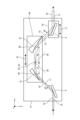
- FIG. 1 is a schematic diagram showing a configuration of a reflective variable beam diameter optical system according to a first embodiment
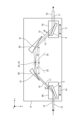
- FIG. 1 is a schematic diagram showing a state in which a movable base is translated in a reflective variable beam diameter optical system according to the first embodiment
- FIG. 13 is a schematic diagram showing a configuration of a reflective variable beam diameter optical system according to a second embodiment.
- FIG. 11 is a schematic diagram showing a state in which a movable base is translated in a reflective variable beam diameter optical system according to a second embodiment
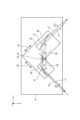
- FIG. 13 is a schematic diagram showing a configuration of a reflective variable beam diameter optical system according to a third embodiment.
- FIG. 13 is a schematic diagram showing a state in which the movable base is translated in the ⁇ z direction in the reflective variable beam diameter optical system according to the third embodiment.
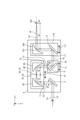
- FIG. 13 is a schematic diagram showing a configuration of a reflective variable beam diameter optical system according to a fourth embodiment.
- FIG. 13 is a schematic diagram showing a configuration of a reflective variable beam diameter optical system according to a fifth embodiment.
- FIG. 13 is a schematic diagram showing a configuration of a reflective variable beam diameter optical system according to a sixth embodiment.
- FIG. 13 is a schematic diagram showing the configuration of a reflective variable beam diameter optical system according to the seventh embodiment.
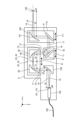
- FIG. 13 is a schematic diagram showing a configuration of a laser processing head according to an eighth embodiment.
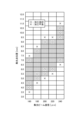
- a processing tolerance table showing the range of possible focal point positions when cutting mild steel.
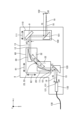
- FIG. 13 is a schematic diagram showing a configuration of a laser processing head according to a ninth embodiment.
- FIG. 23 is a schematic diagram showing a configuration of a laser processing head according to
- Embodiment 1. 1 is a schematic diagram showing the configuration of a reflective beam diameter variable optical system according to the first embodiment.
- the reflective beam diameter variable optical system includes a first off-axis concave parabolic mirror 20, a second off-axis concave parabolic mirror 30, and a movable base 40 as a first movable base.
- the first off-axis parabolic mirror 20 and the second off-axis parabolic mirror 30 are fixed on the movable base 40 such that the position of the focal point 23 of the first off-axis parabolic mirror 20 coincides with the position of the focal point 33 of the second off-axis parabolic mirror 30.
- the movable base 40 includes a mechanism that is movable in a movable direction indicated by an arrow 41, i.e., in the z direction.
- the incident light 10 incident on the reflective type variable beam diameter optical system of the first embodiment is collimated in advance.
- the incident light 10, which is parallel light, is incident on the first off-axis parabolic mirror 20 with the direction of the optical axis 11 of the incident light 10 coinciding with the direction of the rotational axis 22 of the first off-axis parabolic mirror 20.
- the light beam incident on the parabolic mirror with the optical axis direction coinciding with the direction of the rotational axis of the parabolic mirror is, in principle, reflected on the surface of the parabolic mirror and passes through the focal point of the parabolic mirror. Therefore, the incident light 10 is focused on the focal point 23 of the first off-axis parabolic mirror 20 by the first off-axis parabolic mirror 20.
- the incident light 10 is collected at the focal point 23 of the first off-axis parabolic mirror 20, then diverges and enters the second off-axis parabolic mirror 30. After passing through the focal point of the parabolic mirror, the light rays that enter the parabolic mirror itself are reflected by the surface of the parabolic mirror and are emitted from the parabolic mirror with the optical axis direction aligned with the direction of the main axis of rotation of the parabolic mirror.
- the incident light 10 that enters the second off-axis parabolic mirror 30 while diverging is collimated by the reflection action of the second off-axis parabolic mirror 30, and the direction of the optical axis 13 of the emitted light 12 is aligned with the direction of the main axis of rotation 32 of the second off-axis parabolic mirror 30, and it exits the second off-axis parabolic mirror 30.
- the beam diameter d1 of the incident light 10 and the beam diameter d2 of the outgoing light 12 have the relationship expressed by the following equation (2).
- the distance from the incident point 21 of the chief ray of the light 10 incident on the first off-axis parabolic mirror 20 to the focal point 23 of the first off-axis parabolic mirror 20 corresponds to the focal length f1 of the first off-axis parabolic mirror 20, and the distance from the focal point 33 of the second off-axis parabolic mirror 30 to the incident point 31 of the chief ray of the light incident on the second off-axis parabolic mirror 30 corresponds to the focal length f2 of the second off-axis parabolic mirror 30.
- Figure 2 is a schematic diagram showing the state in which the movable base 40 is translated in the reflective variable beam diameter optical system according to embodiment 1. Note that the beam diameter d1 of the incident light 10 and the position and direction of the optical axis 11 of the incident light 10 are the same as those in Figure 1.
- the direction of the rotational axis 22 of the first off-axis parabolic mirror 20 does not change.
- the focal point 23 of the first off-axis parabolic mirror 20 and the focal point 33 of the second off-axis parabolic mirror 30 are maintained in a coincident state. Therefore, the direction of the optical axis 11 coincides with the direction of the rotational axis 22 of the first off-axis parabolic mirror 20, and the optical system formed by the first off-axis parabolic mirror 20 and the second off-axis parabolic mirror 30 remains an afocal optical system with respect to the incident light 10, which is a parallel light beam incident on the first off-axis parabolic mirror 20.
- the position of the incidence point 21, at which the chief ray of the incident light 10 is incident changes on the surface of the first off-axis parabolic mirror 20.
- the focal length f1 from the incidence point 21 on the first off-axis parabolic mirror 20 to the focal point 23 of the first off-axis parabolic mirror 20 and the focal length f2 from the incidence point 31 on the second off-axis parabolic mirror 30 to the focal point 33 of the second off-axis parabolic mirror 30 change.
- the focal length f1 increases and the focal length f2 decreases compared to the state in Figure 1, so the lateral magnification ⁇ of the afocal optical system decreases, and the beam diameter d2 of the emitted light 12 can be reduced compared to the state in Figure 1.
- a reflective, variable magnification afocal optical system can be constructed with only two optical elements, the first off-axis parabolic mirror 20 and the second off-axis parabolic mirror 30.
- the beam diameter can be varied by simply translating the first off-axis parabolic mirror 20 and the second off-axis parabolic mirror 30, which have the same focal point. This not only makes it easier to adjust the beam diameter, but also simplifies the drive mechanism for varying the beam diameter, making it possible to reduce the manufacturing costs of the variable beam diameter optical system, whether reflective or transmissive, and further improves the reliability of the optical system.
- the direction in which the first off-axis parabolic mirror 20 and the second off-axis parabolic mirror 30 are moved by the movable base 40 may be any direction as long as it is different from the direction of the main axis of rotation 22 of the first off-axis parabolic mirror 20 and the direction of the optical axis 11 of the incident light 10 can be aligned with the main axis of rotation 22 of the first off-axis parabolic mirror 20.
- the reflective beam diameter variable optical system shown in embodiment 1 even if a glass material with a high laser light absorption rate is used for the off-axis parabolic mirror, the effect of the thermal lens that occurs inside the glass material due to laser light absorption can be effectively suppressed, making it possible to vary the beam diameter while maintaining the beam quality.
- Embodiment 2. 3 is a schematic diagram showing the configuration of a reflective variable beam diameter optical system according to embodiment 2.
- a convex off-axis parabolic mirror having a negative focal length is used as the second off-axis parabolic mirror 30.
- the focal point 23 of the first off-axis parabolic mirror 20 and the focal point 33 of the second off-axis parabolic mirror 30 are arranged to coincide with each other, similar to embodiment 1.
- the direction of the optical axis 11 of the incident light 10, which is parallel light, is aligned with the direction of the main axis of rotation 22 of the first off-axis parabolic mirror 20, and the incident light 10 is made incident on the first off-axis parabolic mirror 20.
- the incident light 10 that is incident on the parabolic mirror with the direction of the optical axis 11 aligned with the direction of the main axis of rotation 22 of the first off-axis parabolic mirror 20 is reflected on the surface of the first off-axis parabolic mirror 20 and focused toward the focal point 23 of the first off-axis parabolic mirror 20.
- the incident light 10 reflected by the first off-axis parabolic mirror 20 is incident on the convex second off-axis parabolic mirror 30 before reaching the focal point 23 of the first off-axis parabolic mirror 20, and is reflected by the second off-axis parabolic mirror 30.
- the convex parabolic mirror reflects the light beam incident toward the focal point of the convex parabolic mirror in a direction that aligns the optical axis with the direction of the main axis of rotation of the convex parabolic mirror.
- the focal point 23 of the first off-axis parabolic mirror 20 and the focal point 33 of the second off-axis parabolic mirror 30 are arranged to coincide with each other, and the incident light 10 reflected by the first off-axis parabolic mirror 20 is focused toward the focal point 23 of the first off-axis parabolic mirror 20 arranged to coincide with the focal point 33 of the second off-axis parabolic mirror 30. Therefore, the outgoing light 12 reflected by the second off-axis parabolic mirror 30 is collimated by the second off-axis parabolic mirror 30 and reflected in the direction of the main axis of rotation 32 of the second off-axis parabolic mirror 30. In other words, the direction of the optical axis 13 of the outgoing light 12 coincides with the direction of the main axis of rotation 32 of the second off-axis parabolic mirror 30.
- the incident light 10 is parallel and the output light 12 is parallel, so the first off-axis parabolic mirror 20 and the second off-axis parabolic mirror 30 form an afocal optical system.
- the afocal optical system of the first embodiment which uses the concave second off-axis parabolic mirror 30, is a Keplerian afocal optical system that forms a focal point inside the optical system
- the afocal optical system of the second embodiment which uses the convex second off-axis parabolic mirror 30, forms a Galilean afocal optical system that does not form a focal point inside the optical system.
- Figure 4 is a schematic diagram showing the state in which the movable base 40 is translated in a reflective type variable beam diameter optical system according to embodiment 2. Note that the beam diameter d1 of the incident light 10 and the position and direction of the optical axis 11 of the incident light 10 are the same as those in Figure 3.
- the movable base 40 is translated in the +z direction from the reflective beam diameter variable optical system shown in FIG. 3, so the direction of the rotation axis 22 of the first off-axis parabolic mirror 20 does not change.
- the focal point 23 of the first off-axis parabolic mirror 20 and the focal point 33 of the second off-axis parabolic mirror 30 are also maintained in a coincident state.
- the optical system formed by the first off-axis parabolic mirror 20 and the second off-axis parabolic mirror 30 maintains an afocal system for the incident light 10, which is a parallel light beam that enters the first off-axis parabolic mirror 20 with the direction of the optical axis 11 coinciding with the direction of the rotation axis 22 of the first off-axis parabolic mirror 20.
- the position of the incidence point 21, at which the chief ray of the incident light 10 is incident changes on the surface of the first off-axis parabolic mirror 20.
- the focal length f1 from the incidence point 21 on the first off-axis parabolic mirror 20 to the focal point 23 of the first off-axis parabolic mirror 20 and the focal length f2 from the incidence point 31 on the second off-axis parabolic mirror 30 to the focal point 33 of the second off-axis parabolic mirror 30 change.
- the value of the focal length f1 from the incident point 21 of the chief ray on the first off-axis parabolic mirror 20 to the focal point 23 of the first off-axis parabolic mirror 20 is always larger than the value of the focal length f2 from the incident point 31 of the chief ray on the second off-axis parabolic mirror 30 to the focal point 33 of the second off-axis parabolic mirror 30.
- the lateral magnification ⁇ of the afocal optical system is always 1 or less, and the beam diameter d2 of the exiting light 12 is always smaller than the beam diameter d1 of the incident light 10.
- an afocal optical system with a variable beam diameter can also be constructed by using a convex parabolic mirror for the first off-axis parabolic mirror 20 on the entrance side and a concave parabolic mirror for the second off-axis parabolic mirror 30 on the exit side, and arranging the focal point 23 of the first off-axis parabolic mirror 20 and the focal point 33 of the second off-axis parabolic mirror 30 so that they coincide with each other.
- the lateral magnification ⁇ of the afocal optical system is always 1 or more, and the beam diameter d2 of the exiting light 12 is always greater than the beam diameter d1 of the incident light 10.
- a concave parabolic mirror is used for one off-axis parabolic mirror and a convex parabolic mirror is used for the other off-axis parabolic mirror, so not only can the same effects as in the first embodiment be obtained, but also the distance between the first off-axis parabolic mirror 20 and the second off-axis parabolic mirror 30 can be made shorter than when both the first off-axis parabolic mirror 20 and the second off-axis parabolic mirror 30 are concave parabolic mirrors, which makes it possible to miniaturize the reflective variable beam diameter optical system.
- Embodiment 3. 5 is a schematic diagram showing the configuration of a reflective type variable beam diameter optical system according to embodiment 3.
- the first off-axis parabolic mirror 20 and the second off-axis parabolic mirror 30 are arranged so that the focal point 23 of the first off-axis parabolic mirror 20 and the focal point 33 of the second off-axis parabolic mirror 30 coincide with each other, and the main axis of rotation 22 of the first off-axis parabolic mirror 20 and the main axis of rotation 32 of the second off-axis parabolic mirror 30 coincide with each other.
- the optical axis 11 of the incident light 10, which is a parallel light, the optical axis 13 of the emitted light 12, which is a parallel light, the main axis of rotation 22 of the first off-axis parabolic mirror 20, and the main axis of rotation 32 of the second off-axis parabolic mirror 30 are all arranged so that they coincide with the x-axis.
- the focal point 23 of the first off-axis parabolic mirror 20 and the focal point 33 of the second off-axis parabolic mirror 30 are aligned, and the first off-axis parabolic mirror 20 and the second off-axis parabolic mirror 30 are aligned so that the main axis of rotation 22 of the first off-axis parabolic mirror 20 and the main axis of rotation 32 of the second off-axis parabolic mirror 30 also match, so that the optical axis 11 of the incident light 10, which is a parallel light, and the optical axis 13 of the emitted light 12, which is a parallel light, can be aligned parallel along the x-axis.
- FIG. 6 is a schematic diagram showing a state in which the movable base 40 is translated in the -z direction in the reflective beam diameter variable optical system according to the third embodiment.
- the beam diameter can be varied by translating the first and second off-axis parabolic mirrors 20 and 30 while maintaining the alignment of the focal point 23 of the first off-axis parabolic mirror 20 and the focal point 33 of the second off-axis parabolic mirror 30 and the alignment of the rotational axis 22 of the first off-axis parabolic mirror 20 and the rotational axis 32 of the second off-axis parabolic mirror 30, thereby changing the position of the incident point 21 at which the incident light 10 enters the first off-axis parabolic mirror 20.
- first off-axis parabolic mirror 20 and the second off-axis parabolic mirror 30 may be a convex parabolic mirror.
- the focal point 23 of the first off-axis parabolic mirror 20 and the focal point 33 of the second off-axis parabolic mirror 30 are aligned, and the main axis of rotation 22 of the first off-axis parabolic mirror 20 and the main axis of rotation 32 of the second off-axis parabolic mirror 30 are aligned.
- This not only achieves the same effects as the first and second embodiments, but also makes the optical axis 11 of the incident light 10 and the optical axis 13 of the outgoing light 12 parallel, which makes it much easier to design, install, and adjust the angle of the reflective variable beam diameter optical system.
- Embodiment 4. 7 is a schematic diagram showing the configuration of a reflective variable beam diameter optical system according to embodiment 4.
- the first off-axis parabolic mirror 20 and the second off-axis parabolic mirror 30 are disposed such that the focal point 23 of the first off-axis parabolic mirror 20 and the focal point 33 of the second off-axis parabolic mirror 30 coincide with each other, and the main axis of rotation 22 of the first off-axis parabolic mirror 20 and the main axis of rotation 32 of the second off-axis parabolic mirror 30 coincide with each other in the x direction.
- the optical axis 15 of the incident light 14, which is a parallel light incident in the +z direction, is bent by 90° in the -x direction parallel to the rotation axis 22 of the first off-axis parabolic mirror 20 by the first bending mirror 5, which is a plane mirror, and is made incident on the first off-axis parabolic mirror 20.
- the incident light 10 which is a parallel light incident on the first off-axis parabolic mirror 20, passes through the afocal optical system composed of the first off-axis parabolic mirror 20 and the second off-axis parabolic mirror 30, and is emitted as a parallel light in the +x direction parallel to the rotation axis 32 of the second off-axis parabolic mirror 30.
- the second bending mirror 6 is fixed on a second movable base 70 that is movable in the z direction.
- the incident light 14 is a parallel light that has been collimated in advance, and the optical axis 15 of the incident light 14 is fixed at a certain position and direction.
- the first bending mirror 5, which is a plane mirror, is also fixed at a certain position and angle on the fixed base 8.
- the movable mechanisms of the movable base 40 to which the first off-axis parabolic mirror 20 and the second off-axis parabolic mirror 30 are fixed and which can move freely in the z direction, and the second movable base 70 to which the second bending mirror 6 is fixed and which can also move freely in the z direction, are both provided on the fixed base 8, and the movable base 40 and the second movable base 70 move parallel to the fixed base 8 in the z direction.
- the z direction position of the second movable base 70 is set so that the optical axis 15 of the incident light 14 and the optical axis 17 of the outgoing light 16 to the optical system coincide.
- the position of the optical axis 13 of the output light 12 emitted from the second off-axis parabolic mirror 30 also shifts in parallel in the z direction.
- the second movable base 70 also moves in conjunction with the amount of parallel shift ⁇ z of the optical axis 13 of the output light 12, and by translating in the z direction by ⁇ z, the optical axis 17 of the output light 16 from the optical system can always be maintained at a constant position and angle (direction).
- first off-axis parabolic mirror 20 and the second off-axis parabolic mirror 30 are parabolic mirrors with a principal axis focal length of 25 mm, and explain a specific example.
- the distance between the optical axis 11 of the incident light 10 entering the first off-axis parabolic mirror 20 and the optical axis 13 of the outgoing light 12 exiting from the second off-axis parabolic mirror 30 is 100 mm.
- the movable base 40 to which the first off-axis parabolic mirror 20 and the second off-axis parabolic mirror 30 are fixed is moved in parallel by 14.65 mm in the -z direction, in which case the distance between the optical axis 11 of the incident light 10 entering the first off-axis parabolic mirror 20 and the optical axis 13 of the outgoing light 12 emerging from the second off-axis parabolic mirror 30 is 106.07 mm.
- the amount of parallel shift ⁇ z of the optical axis 13 of the outgoing light 12 emerging from the second off-axis parabolic mirror 30 is 6.07 mm in the +z direction. Therefore, by translating the second movable base 70 to which the second folding mirror 6 is fixed by 6.07 mm in the +z direction, the optical axis 17 of the emitted light 16 from the optical system, whose direction has been folded 90° in the +z direction by the second folding mirror 6, can be maintained at a constant position and angle.
- the movable direction 71 of the second movable base 70 is not limited to the z direction.
- the optical axis 17 of the outgoing light 16 emitted from the second bending mirror 6 can be kept constant even if the second movable base 70 is translated 6.07 mm in the -x direction.
- the movable direction 71 of the second movable base 70 is a direction other than parallel to the mirror surface of the second bending mirror 6, the effect of the optical axis shift of the outgoing light 12 emitted from the second off-axis parabolic mirror 30 due to the change in magnification of the afocal optical system can be compensated for in principle, and the optical axis 17 of the outgoing light 16 from the optical system emitted from the second bending mirror 6 can be kept at a constant position and angle.
- Embodiment 5. 8 is a schematic diagram showing the configuration of a reflective beam diameter variable optical system according to embodiment 5.
- the reflective beam diameter variable optical system is shown in which the rotational axis 22 of the first off-axis parabolic mirror 20 and the rotational axis 32 of the second off-axis parabolic mirror 30 are made to coincide with each other, and the optical axis 17 of the output light 16 from the optical system is kept constant.
- a second bending mirror 6 fixed on a second movable base 70 is used, and the second bending mirror 6 is installed at an appropriate position according to the magnification of the afocal optical system.
- the influence of the optical axis shift of the output light 12 exiting the second off-axis parabolic mirror 30 can be compensated for, and the position and direction (angle) of the optical axis 17 of the output light 16 from the optical system exiting the second folding mirror 6 can be maintained constant, thereby obtaining the same effect as in embodiment 4.
- the angle between the rotational axis 22 of the first off-axis parabolic mirror 20 and the rotational axis 32 of the second off-axis parabolic mirror 30 can be adjusted to an appropriate value to allow for beam diameter variation with low aberration, and the optical transmission efficiency of the afocal optical system composed of the first off-axis parabolic mirror 20 and the second off-axis parabolic mirror 30 can be maintained at a high level.
- Embodiment 6 In the first to fifth embodiments, the first off-axis parabolic mirror 20 and the second off-axis parabolic mirror 30 are fixed on the same movable base 40, and the first off-axis parabolic mirror 20 and the second off-axis parabolic mirror 30 are translated to vary the magnification of the afocal optical system composed of the first off-axis parabolic mirror 20 and the second off-axis parabolic mirror 30, thereby varying the beam diameter d2 of the output light 12.
- the beam diameter varying method is not limited to this.
- FIG. 9 is a schematic diagram showing the configuration of a reflective type variable beam diameter optical system according to embodiment 6.
- the first off-axis parabolic mirror 20 and the second off-axis parabolic mirror 30 are fixed on a fixed base 8 with the focal point 23 of the first off-axis parabolic mirror 20 and the focal point 33 of the second off-axis parabolic mirror 30 aligned.
- the first folding mirror 5 is fixed on a third movable base 80 that is movable in the z direction.
- the movable mechanism of the third movable base 80 that is movable in the z direction is provided on the fixed base 8, and the third movable base 80 moves in parallel in the z direction relative to the fixed base 8.
- the second folding mirror 6 is fixed on a second movable base 70 that is movable in the z direction.
- the first off-axis parabolic mirror 20 and the second off-axis parabolic mirror 30 are fixed on the fixed base 8, and the third movable base 80 to which the first folding mirror 5 is fixed is translated in the movable direction 81 (z direction).
- the magnification of the afocal optical system composed of the first off-axis parabolic mirror 20 and the second off-axis parabolic mirror 30 can be changed and the beam diameter d2 of the output light 12 can be varied while effectively suppressing the occurrence of coma aberration and astigmatism, as in embodiments 1 to 5.
- the third movable base 80 to which the first folding mirror 5 is fixed is moved in parallel in the z direction, but the movable direction 81 of the parallel movement is not limited to the z direction. If the movable direction 81 of the third movable base 80 is a direction other than parallel to the mirror surface of the first folding mirror 5, the position of the incident point 21 on the first off-axis parabolic mirror 20 can be changed while moving the third movable base 80 in parallel. This changes the magnification of the afocal optical system composed of the first off-axis parabolic mirror 20 and the second off-axis parabolic mirror 30, and makes it possible to vary the beam diameter d2 of the output light 12, which is parallel light.
- the configuration in which the first off-axis parabolic mirror 20 and the second off-axis parabolic mirror 30 are fixed with their focal points aligned, and the first folding mirror 5 is translated to change the magnification of the afocal optical system composed of the first off-axis parabolic mirror 20 and the second off-axis parabolic mirror 30 is not limited to the configuration of the sixth embodiment shown in FIG. 9, but can be applied to any of the reflective variable beam diameter optical systems shown in the second to fifth embodiments, and in addition to obtaining the same effects as those of the second to fifth embodiments, there is also the effect of making it easier to adjust the position of the incident light 10 incident on the first off-axis parabolic mirror 20.
- Embodiment 7. 10 is a schematic diagram showing the configuration of a reflective beam diameter variable optical system according to embodiment 7.
- a fourth movable base 60 for translating the first off-axis parabolic mirror 20 and the second off-axis parabolic mirror 30 includes a movable mechanism that is movable in two directions: a direction indicated by an arrow 61 parallel to the main rotation axis 32 of the second off-axis parabolic mirror 30; and a direction indicated by an arrow 62 parallel to the main rotation axis 22 of the first off-axis parabolic mirror 20.
- the fourth movable base 60 When the fourth movable base 60 is translated in a direction parallel to the rotation axis 32 of the second off-axis parabolic mirror 30 as indicated by the arrow 61, the point of incidence 21 at which the optical axis 11 of the incident light 10, which is parallel light, enters the first off-axis parabolic mirror 20 changes, so the focal length f1 of the first off-axis parabolic mirror 20 and the focal length f2 of the second off-axis parabolic mirror 30 change, and the magnification of the afocal optical system formed by the first off-axis parabolic mirror 20 and the second off-axis parabolic mirror 30 can be changed.
- the fourth movable base 60 is translated in a direction parallel to the main axis of rotation 22 of the first off-axis parabolic mirror 20 as indicated by arrow 62, the point of incidence 21 at which the optical axis 11 of the incident light 10 enters the first off-axis parabolic mirror 20 does not change, so the magnification of the afocal optical system formed by the first off-axis parabolic mirror 20 and the second off-axis parabolic mirror 30 is maintained constant.
- the fourth movable base 60 is translated in the direction of arrow 62, the optical axis 13 of the outgoing light 12 is translated.
- a movable mechanism capable of translation in at least two or more directions is provided on the fourth movable base 60 for translating the first off-axis parabolic mirror 20 and the second off-axis parabolic mirror 30 arranged with their focal points aligned, as in the reflective variable beam diameter optical system of embodiment 7, it becomes possible to adjust the position of the optical axis 13 of the emitted light 12 in addition to adjusting the magnification of the afocal optical system composed of the first off-axis parabolic mirror 20 and the second off-axis parabolic mirror 30 by translating the fourth movable base 60.
- the reflective variable beam diameter optical system of embodiment 7 if one of the directions of parallel movement of the fourth movable base 60 is selected to be parallel to the main axis of rotation 22 of the first off-axis parabolic mirror 20, it becomes possible to adjust the position of the optical axis 13 of the emitted light 12 while maintaining the magnification of the afocal optical system constant. This has the effect of making it much easier to adjust the optical system by independently adjusting the magnification of the afocal optical system and the position of the optical axis 13 of the emitted light 12.
- the direction in which the first off-axis parabolic mirror 20 and the second off-axis parabolic mirror 30 move the fourth movable base 60, which is fixed with the focal points aligned, is not limited to this. If a movable mechanism capable of moving in parallel in any two different directions is provided within a plane including the rotation axis 22 of the first off-axis parabolic mirror 20 and the rotation axis 32 of the second off-axis parabolic mirror 30, it becomes possible to both change the lateral magnification of the afocal optical system formed by the first off-axis parabolic mirror 20 and the second off-axis parabolic mirror 30 and adjust the position of the optical axis 13 of the outgoing light 12 that leaves the second off-axis parabolic mirror 30.
- the two appropriate directions can be selected according to the desired optical system configuration and spatial restrictions around the optical system.
- Embodiment 8 In the first to seventh embodiments, the configuration of a reflective variable beam diameter optical system that uses a reflective optical element and can vary the beam diameter while effectively suppressing the occurrence of aberration has been described. From the eighth embodiment, the configuration of a laser processing head used for laser processing in a laser processing machine will be described as a specific practical example of the reflective variable beam diameter optical system.
- FIG. 11 is a schematic diagram showing the configuration of a laser processing head according to embodiment 8.
- the laser processing head according to embodiment 8 is equipped with a reflective variable beam diameter optical system having the same configuration as that of embodiment 4 shown in FIG. 7.
- Incident light 14 to the optical system which is a parallel light that is previously parallelized and enters the first folding mirror 5, which is a plane mirror, in the +z direction, passes through the reflective variable beam diameter optical system consisting of the first folding mirror 5, the first off-axis parabolic mirror 20, the second off-axis parabolic mirror 30, and the second folding mirror 6, and is emitted as parallel light in the +z direction.
- the emitted light 16 which is a parallel light emitted from the reflective type variable beam diameter optical system in the +z direction, enters the third bending mirror 9, which is a plane mirror, and bends the optical axis direction by 90° in the -x direction, and enters the collecting mirror 100.
- the collecting mirror 100 is a first aspheric mirror that bends the optical axis direction of the incident light incident in the -x direction by 90° in the +z direction, and has a focusing performance with a focal length of f3 in the +z direction.
- the collecting mirror 100 is a 90° off-axis parabolic mirror with a main axis focal length of f3/2 and a reflection focal length of f3.
- the irradiation light 18 reflected by the collecting mirror 100 is focused toward the focusing point 102, which is a focal length f3 away from the collecting mirror 100. If a workpiece is placed near the focusing point 102, laser processing such as cutting, drilling, and welding can be performed.
- the third folding mirror 9 and the focusing mirror 100 are fixed on a fifth movable base 110 that is movable in the z direction.
- the movable mechanism of the fifth movable base 110 that is movable in the z direction indicated by the arrow 111 is provided on the fixed base 8, and the fifth movable base 110 moves parallel to the fixed base 8 in the z direction relative to the fixed base 8.
- the incident light 14 to the optical system which is a parallel light having a beam diameter d1
- the second movable base 70 to which the second folding mirror 6 is fixed has its translation amount in the z direction adjusted so that the optical axis 17 of the emitted light from the optical system is always at a constant position, regardless of the magnification of the reflective variable beam diameter optical system, i.e., the translation amount of the movable base 40 in the z direction.
- the chief ray of the emitted light 16 from the optical system is incident on the incident point 101 on the collecting mirror 100, which is always at a constant position on the collecting mirror 100, and the optical axis 19 of the irradiation light 18 is also always maintained at a constant position and direction.
- the focused beam diameter d3 at the focusing point 102 is inversely proportional to the beam diameter d2 of the incident light entering the focusing mirror 100. In other words, if the beam diameter d2 of the incident light increases, the focused beam diameter d3 decreases, and if the beam diameter d2 decreases, the focused beam diameter d3 increases. Therefore, by changing the beam diameter d2 of the output light 12 using a reflective beam diameter variable optical system, it is possible to adjust the focused beam diameter d3 to an appropriate value depending on the application.
- the fifth movable base 110 to which the third folding mirror 9 and the focusing mirror 100 are fixed can be freely moved in the z direction indicated by the arrow 111, and by translating the fifth movable base 110 in the z direction, the position of the focusing point 102 can also be freely adjusted in the z direction.
- FIG 12 is a diagram showing a processing tolerance table showing the range of focal point positions that are possible when cutting mild steel.
- Figure 12 shows a processing tolerance table obtained by experimentation for the range of focal point positions that are possible (good processing) for the focused beam diameter when cutting mild steel with a plate thickness of 9 mm.
- the focal point position indicates the distance from the surface of the material to be processed to the focal point.
- gray areas other than the white background indicate good processing, indicated by ⁇ .
- the larger the focused beam diameter the more the optimal focal point position shifts away from the non-processed material.
- a fifth movable base 110 is provided to which the third bending mirror 9 and the focusing mirror 100 are fixed, and the fifth movable base 110 is configured to be freely movable in the z direction in which the laser light is focused by the focusing mirror 100.
- a laser processing head configured with a reflective optical element as shown in embodiment 8, even if a glass material that has high absorption of laser light is used as the reflective optical element, the effects of the thermal lens that occurs inside the optical element due to laser light absorption can be effectively suppressed, and high processing performance can be stably maintained while suppressing focus shift, which is an exceptional effect.
- the laser processing head of embodiment 8 effectively suppresses the occurrence of coma aberration and astigmatism while using a reflective optical element, and also makes it possible to change the focused beam diameter, making it possible to select an appropriate focused beam diameter depending on the application, effectively expanding the field of application of the laser processing head.
- the optimal focused beam diameter and focal point position change depending on the type of non-processed material and its thickness.
- a smaller focused beam diameter allows for faster cutting speeds.
- a larger focused beam diameter provides better cutting quality from the perspective of removing molten material.
- the focal point is generally set outside the material, whereas when cutting stainless steel using nitrogen as the assist gas, the focal point is set inside the material.
- the third folding mirror 9 and the focusing mirror 100 are mounted on a fifth movable base 110 that is movable in the z direction.
- the focusing point 102 can be set to an appropriate position depending on the application or the shape of the material being processed.
- the laser processing head of embodiment 8 is configured with mirrors, which are reflective optical elements, in the main optical system, making it possible to use opaque metal mirrors.
- a cooling water pipe can be formed inside the mirror, facilitating direct water cooling of the mirror. This effectively improves the mirror's cooling performance, making it possible to improve the light resistance strength, and also reducing the manufacturing costs of the mirror compared to using a dielectric material such as quartz for the mirror's glass material.
- a configuration was shown in which a 90° off-axis parabolic mirror was used as the collecting mirror 100, but the type of collecting mirror 100 is not limited to this, and for example, a toroidal mirror with a focal length f3 designed to bend the optical axis by 90° may be used.
- a toroidal mirror Compared to an off-axis parabolic mirror, a toroidal mirror inevitably generates coma aberration, but has the advantage that it is easier to manufacture and cheaper to obtain, and the adjustment tolerance when installing the collecting mirror 100 is relaxed.
- protective glass may be installed between the focusing mirror 100 and the focusing point 102 to prevent contamination of the optical elements inside the laser processing head due to vaporized matter (fumes) or molten matter (spatters) generated at the processing point.
- a gas nozzle may be installed between the focusing mirror 100 and the focusing point 102 to supply assist gas for laser processing or shield gas to prevent oxidation of the workpiece.
- Fig. 13 is a schematic diagram showing the configuration of a laser processing head according to embodiment 9.
- a laser light is transmitted from the laser light source to the laser processing head using an optical fiber 130 having a core diameter d0.
- the laser processing head of embodiment 9 uses a fiber laser with a wavelength of 1070 nm as the laser light source.
- An optical fiber connector 132 is attached to the end of the optical fiber 130, and the optical fiber connector 132 is fixed on the fixed base 8.
- the incident light 14 into the optical system which is a laser beam emitted from the optical fiber 130, travels in the +z direction while expanding its beam diameter, and is incident on the collimating mirror 120.
- the collimating mirror 120 is fixed on the fixed base 8, and is a second aspheric mirror that bends the optical axis direction of the incident light 14 incident in the +z direction by 90 degrees to the -x direction, and has a focusing performance with a focal length of f0 in the -z direction.
- a 90° off-axis parabolic mirror with a main axis focal length of f0/2 and a reflection focal length of f0 is used as the collimating mirror 120.
- the exit end surface 131 of the optical fiber connector 132 is fixed so as to coincide with the focal point 121 of the parallelizing mirror 120, and the incident light 10, which is the laser light reflected by the parallelizing mirror 120, is parallelized (collimated) so that the beam diameter is constant at d1, and the optical axis direction is bent by 90° in the -x direction, which is the same direction as the rotational axis 22 of the first off-axis parabolic mirror 20, and enters the first off-axis parabolic mirror 20.
- the optical system configuration from the first off-axis parabolic mirror 20 to the collecting mirror 100 is the same as that of the laser processing head of embodiment 8.
- the direction of the optical axis (optical axis 11 of the incident light) of the laser light (incident light 10) that has been collimated by the collimating mirror 120 and turned into parallel light coincides with the direction of the main rotation axis 22 of the first off-axis parabolic mirror 20, so the first off-axis parabolic mirror 20 and the second off-axis parabolic mirror 30, which are arranged with their foci coincident, satisfy the conditions of an afocal optical system.
- the magnification of the afocal optical system can be changed, and the beam diameter d2 of the outgoing light 12 that exits the second off-axis parabolic mirror 30 can be made variable.
- the focal length f1 of the first off-axis parabolic mirror 20 and the focal length f2 of the second off-axis parabolic mirror 30 are changed by translating the movable base 40 to which the first off-axis parabolic mirror 20 and the second off-axis parabolic mirror 30 are fixed, so that the focused beam diameter d3 can be made variable.
- the same effect as the laser processing head shown in embodiment 8 can be obtained by using the laser processing head shown in embodiment 9.
- the divergent light emitted from the optical fiber 130 can be collimated to form parallel light, and the optical axis (optical axis 11 of the incident light) of the parallel laser light (incident light 10) can be made incident on the first off-axis parabolic mirror 20 parallel to the main rotation axis 22 of the first off-axis parabolic mirror 20.
- a 90° off-axis parabolic mirror is also used for the parallelizing mirror 120, and the output end face 131 of the optical fiber 130 is located at the focal position of the parallelizing mirror 120, so that the occurrence of aberration can also be effectively suppressed for the incident light 10 entering the first off-axis parabolic mirror 20.
- the type of laser light source is not limited to this. It goes without saying that similar effects can be obtained with any laser light source that can be transmitted through optical fiber, such as a solid-state laser or semiconductor laser.
- protective glass may be installed between the optical fiber connector 132 and the collimating mirror 120. Installing protective glass between the optical fiber connector 132 and the collimating mirror 120 can effectively prevent dust from entering the inside of the laser processing head when the optical fiber 130 is attached or detached.
- Embodiment 10. 14 is a schematic diagram showing the configuration of a laser processing head according to embodiment 10.
- a configuration is adopted in which a laser light is transmitted from a laser light source to a laser processing head using an optical fiber 130 having a core diameter d0.
- the incident light 14, which is a laser light emitted from the optical fiber 130 is converted into a parallel light using a parallelizing mirror 120, and the optical axis is bent in the direction of the rotation axis 22 of the first off-axis parabolic mirror 20, similar to embodiment 9.
- the laser processing head of the tenth embodiment employs the reflective type variable beam diameter optical system shown in the seventh embodiment.
- the focal point 23 of the first off-axis parabolic mirror 20 and the focal point 33 of the second off-axis parabolic mirror 30 are aligned, the direction of the rotational axis 22 of the first off-axis parabolic mirror 20 is arranged in the x direction, and the direction of the rotational axis 32 of the second off-axis parabolic mirror 30 is arranged in the z direction.
- the first off-axis parabolic mirror 20 and the second off-axis parabolic mirror 30 are fixed on the fourth movable base 60 with their focal points aligned and their rotational axes at an angle of 90°.
- the fourth movable base 60 of the tenth embodiment is provided on the fixed base 8, and is provided with a mechanism that allows it to move freely in two directions, the z direction indicated by the arrow 61 and the x direction indicated by the arrow 62.
- the first off-axis parabolic mirror 20 and the second off-axis parabolic mirror 30 are also arranged with their focal points aligned, and the optical axis 11 of the incident light 10, which is a parallel light that has been collimated, is aligned with the direction of the main axis of rotation 22 of the first off-axis parabolic mirror 20 and is incident on the first off-axis parabolic mirror 20, so that the first off-axis parabolic mirror 20 and the second off-axis parabolic mirror 30 form an afocal optical system.
- the position at which the incident light 10 enters the first off-axis parabolic mirror 20 is changed by translating the fourth movable base 60 in the z direction shown by arrow 61, thereby making it possible to vary the magnification of the afocal optical system.
- the magnification of the afocal optical system is changed by translating the fourth movable base 60 in the z direction shown by arrow 61, the optical axis 13 of the outgoing light 12 exiting the second off-axis parabolic mirror 30 is adjusted to be maintained at a constant position by translating the fourth movable base 60 in the x direction shown by arrow 62.
- the direction of parallel movement of the fourth movable base 60 indicated by the arrow 62 coincides with the direction of the main rotation axis 22 of the first off-axis parabolic mirror 20. Therefore, when the fourth movable base 60 is translated in the x direction indicated by the arrow 62, it is possible to adjust the position of the optical axis 13 of the emitted light 12 while maintaining the magnification of the afocal optical system formed by the first off-axis parabolic mirror 20 and the second off-axis parabolic mirror 30 constant.
- the third folding mirror 9 and the collecting mirror 100 are fixed on a fifth movable base 110 that is movable in the z direction indicated by the arrow 111, which is the same direction as the optical axis 13 of the outgoing light 12 that leaves the second off-axis parabolic mirror 30.
- the collecting direction by the collecting mirror 100 also coincides with the direction of the optical axis 13 of the outgoing light 12 that leaves the second off-axis parabolic mirror 30.
- the configuration of the laser processing head shown in embodiment 10 not only provides the same effects as those of embodiments 8 to 9, but also eliminates the need for the second bending mirror 6 and second movable base 70 used in the laser processing heads of embodiments 8 and 9 to correct the optical axis shift that occurs when the magnification of the afocal optical system consisting of the first off-axis parabolic mirror 20 and the second off-axis parabolic mirror 30 changes, simplifying the configuration of the laser processing head and reducing the manufacturing costs of the laser processing head.
- the reduced number of drive units improves the robustness and reliability of the laser processing head.
- a configuration is shown in which the main axis of rotation 22 of the first off-axis parabolic mirror 20 and the main axis of rotation 32 of the second off-axis parabolic mirror 30 are arranged at an angle of 90°, but the angle formed by the main axis of rotation 22 of the first off-axis parabolic mirror 20 and the main axis of rotation 32 of the second off-axis parabolic mirror 30 is not limited to this.
- the rotation axis 22 of the first off-axis parabolic mirror 20 and the rotation axis 32 of the second off-axis parabolic mirror 30 are arranged so as not to coincide with each other, and if a movable mechanism capable of translation in at least two or more directions is provided on the fourth movable base 60 to which the first off-axis parabolic mirror 20 and the second off-axis parabolic mirror 30 are fixed, it is in principle possible to maintain a constant position of the optical axis 13 of the outgoing light 12 emitted from the second off-axis parabolic mirror 30 while changing the magnification of the afocal optical system composed of the first off-axis parabolic mirror 20 and the second off-axis parabolic mirror 30.
- the angle formed by the rotation axis 22 of the first off-axis parabolic mirror 20 and the rotation axis 32 of the second off-axis parabolic mirror 30 may be selected as an optimal value, taking into consideration the optical system configuration, spatial constraints, etc.
- First folding mirror 6 Second folding mirror, 8 Fixed base, 9 Third folding mirror, 10, 14 Incident light, 11, 13, 15, 17, 19 Optical axis, 12, 16 Emitted light, 18 Irradiated light, 20 First off-axis parabolic mirror, 21, 31, 101 Incident point, 22, 32 Rotation axis, 23, 33, 121 Focus, 30 Second off-axis parabolic mirror, 40 Movable base (first movable base), 60 Fourth movable base, 70 Second movable base, 80 Third movable base, 100 Concentrating mirror, 102 Concentrating point, 110 Fifth movable base, 120 Parallelizing mirror, 130 Optical fiber, 131 Emitting end face, 132 Optical fiber connector.
Landscapes
- Physics & Mathematics (AREA)
- Engineering & Computer Science (AREA)
- Optics & Photonics (AREA)
- Plasma & Fusion (AREA)
- Mechanical Engineering (AREA)
- Lenses (AREA)
- Laser Beam Processing (AREA)
Priority Applications (4)
| Application Number | Priority Date | Filing Date | Title |
|---|---|---|---|
| JP2023553732A JP7399367B1 (ja) | 2023-05-25 | 2023-05-25 | 反射型ビーム径可変光学系、レーザ加工ヘッドおよびレーザ加工機 |
| PCT/JP2023/019519 WO2024241573A1 (ja) | 2023-05-25 | 2023-05-25 | 反射型ビーム径可変光学系、レーザ加工ヘッドおよびレーザ加工機 |
| JP2024507142A JP7504321B1 (ja) | 2023-05-25 | 2023-11-15 | 反射型ビーム径可変光学系、レーザ加工ヘッドおよびレーザ加工機 |
| PCT/JP2023/041104 WO2024241606A1 (ja) | 2023-05-25 | 2023-11-15 | 反射型ビーム径可変光学系、レーザ加工ヘッドおよびレーザ加工機 |
Applications Claiming Priority (1)
| Application Number | Priority Date | Filing Date | Title |
|---|---|---|---|
| PCT/JP2023/019519 WO2024241573A1 (ja) | 2023-05-25 | 2023-05-25 | 反射型ビーム径可変光学系、レーザ加工ヘッドおよびレーザ加工機 |
Publications (1)
| Publication Number | Publication Date |
|---|---|
| WO2024241573A1 true WO2024241573A1 (ja) | 2024-11-28 |
Family
ID=89122217
Family Applications (2)
| Application Number | Title | Priority Date | Filing Date |
|---|---|---|---|
| PCT/JP2023/019519 Ceased WO2024241573A1 (ja) | 2023-05-25 | 2023-05-25 | 反射型ビーム径可変光学系、レーザ加工ヘッドおよびレーザ加工機 |
| PCT/JP2023/041104 Ceased WO2024241606A1 (ja) | 2023-05-25 | 2023-11-15 | 反射型ビーム径可変光学系、レーザ加工ヘッドおよびレーザ加工機 |
Family Applications After (1)
| Application Number | Title | Priority Date | Filing Date |
|---|---|---|---|
| PCT/JP2023/041104 Ceased WO2024241606A1 (ja) | 2023-05-25 | 2023-11-15 | 反射型ビーム径可変光学系、レーザ加工ヘッドおよびレーザ加工機 |
Country Status (2)
| Country | Link |
|---|---|
| JP (1) | JP7399367B1 (https=) |
| WO (2) | WO2024241573A1 (https=) |
Families Citing this family (1)
| Publication number | Priority date | Publication date | Assignee | Title |
|---|---|---|---|---|
| DE102024111974A1 (de) * | 2024-04-29 | 2025-10-30 | Oliver Scheifinger | Lichtbündelungseinrichtung zum Konzentrieren von Licht für photoelektrische, photothermische und faseroptische Anwendungen, Einrichtung zum Ausrichten zumindest einer Lichtbündelungseinrichtung |
Citations (5)
| Publication number | Priority date | Publication date | Assignee | Title |
|---|---|---|---|---|
| JPH07154018A (ja) * | 1993-11-29 | 1995-06-16 | Tokyo Electric Power Co Inc:The | レーザビーム伝送装置 |
| JPH11501738A (ja) * | 1995-03-06 | 1999-02-09 | ジョン マッケン | 反射光学付きレーザー走査装置 |
| JP2010135769A (ja) * | 2008-11-06 | 2010-06-17 | Komatsu Ltd | 極端紫外光源装置、極端紫外光源装置の制御方法 |
| JP2012137510A (ja) * | 2009-07-27 | 2012-07-19 | Chihiro Suzuki | 光学ユニット |
| US20170325325A1 (en) * | 2015-01-21 | 2017-11-09 | Trumpf Lasersystems For Semiconductor Manufacturing Gmbh | Adjusting a Beam Diameter and an Aperture Angle of a Laser Beam |
-
2023
- 2023-05-25 WO PCT/JP2023/019519 patent/WO2024241573A1/ja not_active Ceased
- 2023-05-25 JP JP2023553732A patent/JP7399367B1/ja active Active
- 2023-11-15 WO PCT/JP2023/041104 patent/WO2024241606A1/ja not_active Ceased
Patent Citations (5)
| Publication number | Priority date | Publication date | Assignee | Title |
|---|---|---|---|---|
| JPH07154018A (ja) * | 1993-11-29 | 1995-06-16 | Tokyo Electric Power Co Inc:The | レーザビーム伝送装置 |
| JPH11501738A (ja) * | 1995-03-06 | 1999-02-09 | ジョン マッケン | 反射光学付きレーザー走査装置 |
| JP2010135769A (ja) * | 2008-11-06 | 2010-06-17 | Komatsu Ltd | 極端紫外光源装置、極端紫外光源装置の制御方法 |
| JP2012137510A (ja) * | 2009-07-27 | 2012-07-19 | Chihiro Suzuki | 光学ユニット |
| US20170325325A1 (en) * | 2015-01-21 | 2017-11-09 | Trumpf Lasersystems For Semiconductor Manufacturing Gmbh | Adjusting a Beam Diameter and an Aperture Angle of a Laser Beam |
Also Published As
| Publication number | Publication date |
|---|---|
| WO2024241606A1 (ja) | 2024-11-28 |
| JP7399367B1 (ja) | 2023-12-15 |
| JPWO2024241573A1 (https=) | 2024-11-28 |
Similar Documents
| Publication | Publication Date | Title |
|---|---|---|
| JP2720811B2 (ja) | レーザ集光方法及び装置 | |
| US9446478B2 (en) | Device for applying laser radiation and device for reproducing a linear light distribution | |
| CN104379296B (zh) | 激光加工装置 | |
| CN215545785U (zh) | 一种光学系统及激光加工设备 | |
| US9945792B2 (en) | Generating an array of spots on inclined surfaces | |
| CN101784939A (zh) | 多光束扫描装置 | |
| CN120891626B (zh) | 一种深紫外球面折反射式检测物镜 | |
| CN116047777A (zh) | 变倍数均匀激光产生装置 | |
| WO2024241606A1 (ja) | 反射型ビーム径可変光学系、レーザ加工ヘッドおよびレーザ加工機 | |
| JP2002519715A (ja) | 孔部連動レーザー走査装置 | |
| JP7504321B1 (ja) | 反射型ビーム径可変光学系、レーザ加工ヘッドおよびレーザ加工機 | |
| US12147020B2 (en) | Laser device including lens assembly | |
| US9217853B2 (en) | Divergence-changing device | |
| US12298526B2 (en) | Laser system for generating a linear laser marking | |
| CN107150180A (zh) | 一种基于自适应镜可调双焦点双光路光学系统 | |
| JP2005512151A (ja) | カタジオプトリック縮小対物レンズ | |
| CN207013876U (zh) | 一种基于自适应镜可调双焦点双光路光学系统 | |
| CN110614430A (zh) | 一种基于自适应镜调焦反射式光学系统及其工作方法 | |
| CN119846850B (zh) | 一种空间激光合束器及激光器 | |
| US12440921B2 (en) | Laser processing apparatus and laser processing method | |
| JP6949289B1 (ja) | レーザ装置 | |
| CN119758567B (zh) | 一种多波段紫外光学镜头 | |
| CN212043123U (zh) | 一种基于自适应镜调焦反射式光学系统 | |
| CN118655103A (zh) | 一种基于金属反射光学元件的宽谱激光显微系统 | |
| KR102425179B1 (ko) | 라인빔 형성장치 |
Legal Events
| Date | Code | Title | Description |
|---|---|---|---|
| WWE | Wipo information: entry into national phase |
Ref document number: 2023553732 Country of ref document: JP |
|
| 121 | Ep: the epo has been informed by wipo that ep was designated in this application |
Ref document number: 23938535 Country of ref document: EP Kind code of ref document: A1 |
|
| NENP | Non-entry into the national phase |
Ref country code: DE |