WO2024236730A1 - 集積回路試験システム、集積回路試験装置、集積回路試験方法、及びプログラム - Google Patents
集積回路試験システム、集積回路試験装置、集積回路試験方法、及びプログラム Download PDFInfo
- Publication number
- WO2024236730A1 WO2024236730A1 PCT/JP2023/018258 JP2023018258W WO2024236730A1 WO 2024236730 A1 WO2024236730 A1 WO 2024236730A1 JP 2023018258 W JP2023018258 W JP 2023018258W WO 2024236730 A1 WO2024236730 A1 WO 2024236730A1
- Authority
- WO
- WIPO (PCT)
- Prior art keywords
- integrated circuit
- unit
- variable function
- function unit
- input signal
- Prior art date
- Legal status (The legal status is an assumption and is not a legal conclusion. Google has not performed a legal analysis and makes no representation as to the accuracy of the status listed.)
- Ceased
Links
Images



Classifications
-
- G—PHYSICS
- G01—MEASURING; TESTING
- G01R—MEASURING ELECTRIC VARIABLES; MEASURING MAGNETIC VARIABLES
- G01R31/00—Arrangements for testing electric properties; Arrangements for locating electric faults; Arrangements for electrical testing characterised by what is being tested not provided for elsewhere
- G01R31/28—Testing of electronic circuits, e.g. by signal tracer
-
- G—PHYSICS
- G01—MEASURING; TESTING
- G01R—MEASURING ELECTRIC VARIABLES; MEASURING MAGNETIC VARIABLES
- G01R31/00—Arrangements for testing electric properties; Arrangements for locating electric faults; Arrangements for electrical testing characterised by what is being tested not provided for elsewhere
- G01R31/28—Testing of electronic circuits, e.g. by signal tracer
- G01R31/317—Testing of digital circuits
- G01R31/3177—Testing of logic operation, e.g. by logic analysers
-
- G—PHYSICS
- G06—COMPUTING OR CALCULATING; COUNTING
- G06F—ELECTRIC DIGITAL DATA PROCESSING
- G06F11/00—Error detection; Error correction; Monitoring
- G06F11/22—Detection or location of defective computer hardware by testing during standby operation or during idle time, e.g. start-up testing
Definitions
- This disclosure relates to an integrated circuit testing system, an integrated circuit testing device, an integrated circuit testing method, and a program.
- Patent Document 1 describes a semiconductor testing device having a first FPGA (Field-Programmable Gate Array) that serves as a simulation model of the integrated circuit to be verified, and a second FPGA that serves as a peripheral circuit equipped with circuits necessary for verification.
- the first FPGA configures a simulation model of the integrated circuit to be verified
- the second FPGA configures the peripheral circuit. Test signals are then sequentially supplied from the second FPGA to the first FPGA, and a process is performed to verify the operation and functions of the simulation model.
- a peripheral circuit is configured using a second FPGA to generate a signal to be supplied to the first FPGA. For this reason, it is necessary to design not only the first FPGA to be verified, but also the second FPGA using a hardware description language. This makes circuit design difficult and time-consuming, and makes testing of the verification FPGA difficult and lengthy.
- This disclosure has been made in consideration of these problems, and aims to provide an integrated circuit testing system, integrated circuit testing device, integrated circuit testing method, and program that can test integrated circuits more easily and in a shorter time.
- the integrated circuit testing system comprises an integrated circuit testing device and a terminal device.
- the integrated circuit testing device includes an integrated circuit including a variable function unit whose response to an input signal can be changed by a user and which outputs an output signal in response to the input signal and a virtual input unit which inputs a simulated input signal based on simulated data as an input signal to the variable function unit, a storage unit which stores the output signal output by the variable function unit as logging data, and a processing device.
- the terminal device includes a virtual input setting unit which defines the simulated data, and a display unit which presents the logging data and the simulated data to the user.
- the processing device transmits the simulated data defined by the virtual input setting unit to the virtual input unit, and transfers the logging data stored in the storage unit to the terminal device.
- a terminal device generates simulated data and further presents logging data and the simulated data, making it possible to provide an integrated circuit testing system, integrated circuit testing device, integrated circuit testing method, and program that can simplify and shorten the testing of integrated circuits.
- FIG. 1 is a block diagram showing a configuration of an integrated circuit test system according to an embodiment
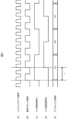
- FIG. 2 is a diagram showing a system clock and a signal input from a virtual input unit to a variable function unit in the embodiment.
- FIG. 1 shows (A) analog input and output, and (B) pulse input and output displayed on a display unit according to an embodiment.
- 1 is a flowchart showing an integrated circuit test process executed by an integrated circuit test system according to an embodiment
- an integrated circuit testing system 1 When testing the configuration and functions of an integrated circuit, an integrated circuit testing system 1 according to an embodiment sets simulated data representing a signal to be input to the integrated circuit in a terminal device, and supplies a signal based on the simulated data to the integrated circuit.
- the integrated circuit testing system 1 displays the output of the integrated circuit and the simulated data to a user so that they can be compared.
- test has a broad meaning that includes inspection, evaluation, confirmation, investigation, analysis, and the like, and generally includes checking the configuration, functions, operation, etc. of an integrated circuit.
- FIG. 1 is a block diagram showing the configuration of an integrated circuit testing system 1 according to an embodiment.
- the integrated circuit testing system 1 includes an integrated circuit testing device 100 that inputs simulated data to an integrated circuit and acquires an output, and a terminal device 200 that sets the simulated data and displays the input and output of the integrated circuit to a user.
- the integrated circuit testing device 100 comprises an integrated circuit 150 including a variable function unit 101 that outputs an output signal in response to an input signal, a virtual input unit 102 that inputs simulated data to the variable function unit 101, a timer 103 that generates a system clock, a transfer notification unit 104 that instructs the transfer of logging data, and a selector 105 that selects a signal to be input to the variable function unit 101, a memory unit 111 that stores the output of the variable function unit 101, a processing device 112 that transmits signals between the integrated circuit 150 and the terminal device 200, a pulse/analog input circuit 113 that inputs signals to the variable function unit 101, and a pulse/analog output circuit 114 that outputs a signal transmitted from the variable function unit 101.
- the integrated circuit 150 is a semiconductor integrated circuit that outputs an output signal in response to an input signal, and is an integrated circuit whose response to the input signal can be changed by user settings or programming, and in this embodiment is an FPGA.
- the variable function unit 101 is a circuit that outputs an output signal in response to an input signal, and the user can change the program using a hardware description language to change the output for the input.
- the variable function unit 101 may be programmed with the same configuration and function as the FPGA to be tested, or may be programmed with a configuration and function that simulates the integrated circuit to be tested.
- the input and output signals of the variable function unit 101 are pulse input/output or, for example, 16-bit digital input/output, but are not limited to this.
- a pulse input signal or a digital input signal from outside the integrated circuit 150 via the pulse/analog input circuit 113 or simulation data from the virtual input unit 102 is selectively supplied to the variable function unit 101 via the selector 105.
- the variable function unit 101 processes the input signal according to the function designed inside, and outputs a pulse output signal or a digital output signal to an external circuit via the pulse/analog output circuit 114.
- the output signal of the variable function unit 101 is also supplied to the memory unit 111.
- the variable function unit 101 also has a function of outputting a transfer instruction signal, described later, to the transfer notification unit 104 and a function of adding a signal indicating the state of the internal circuitry of the variable function unit 101 to the output signal.
- the virtual input unit 102 is a circuit that is connected to the variable function unit 101 via the selector 105 and supplies a simulated input signal including a pulse signal or a digital signal and a control signal to the variable function unit 101 as an input signal.
- the virtual input unit 102 inputs a signal to the variable function unit 101 at a period that can be changed in units of the system clock of the integrated circuit 150.
- the virtual input unit 102 is connected to a virtual input setting unit 203 (described later) of the terminal device 200 via the processing device 112, and acquires simulated data from the virtual input setting unit 203 via the processing device 112.
- FIG. 2A to 2E are diagrams showing examples of signals supplied from the system clock and the virtual input unit 102 to the variable function unit 101.
- the signals shown in FIG. 2 are (A) the system clock signal of the integrated circuit 150, (B) the operation clock signal of the variable function unit 101, (C) an input control signal A indicating a division of the digital input signal, (D) an input control signal B indicating the read timing of the digital input signal, and (E) a digital input signal.
- FIG. 2B to 2E are examples of virtual input signals supplied from the virtual input unit 102 to the variable function unit 101.
- the operation clock signal shown in FIG. 2B is generated by dividing the system clock signal, and the period T can be changed by multiplying the system clock signal. In the examples shown in FIGS.
- the period T of the operation clock signal is twice the period of the system clock signal.
- the variable function unit 101 operates in response to the operation clock signal.
- the input control signal A shown in FIG. 2C indicates a division of digital data
- the input control signal B shown in FIG. 2D indicates the latch timing of digital data.
- 2(C) and (D) are examples of control signals generated by the virtual input unit 102 and supplied to the variable function unit 101.
- the variable function unit 101 latches and acquires the digital input signal shown in FIG. 2(E), which is separated by the rising and falling edges of the input control signal A shown in FIG. 2(C), at the timing of the rising and falling edges of the input control signal B shown in FIG. 2(D).
- the timer 103 is a circuit that generates a system clock for the integrated circuit 150.
- the timer 103 is also connected to the memory unit 111 and provides time information to the memory unit 111.
- the period of the system clock is, for example, 10 ns, but is not limited to this.
- the memory unit 111 is connected to the variable function unit 101 and is a circuit that stores the output of the variable function unit 101.
- the memory unit 111 may store any signal inside the variable function unit 101, or time information generated inside the integrated circuit 150.
- the period during which the memory unit 111 stores the output of the variable function unit 101, the signal inside the integrated circuit 150, or data including time information, i.e., logs, can be set in units of 1 ⁇ s within a range of 1-65535 ⁇ s, but the setting range and unit are not limited to this.
- the logging period can be set and changed via the processing device 112 by the user operating the terminal device 200.
- the memory unit 111 can include a FIFO (First In First Out) memory, but is not limited to this.
- the transfer notification unit 104 is a circuit that is connected to the variable function unit 101 and the processing device 112, receives a transfer instruction signal from the variable function unit 101, and when it receives a transfer instruction signal, instructs the processing device 112 to transfer the data logged by the memory unit 111 to the terminal device 200.
- the selector 105 is connected to the virtual input unit 102, the pulse/analog input circuit 113, and the variable function unit 101, and selects one of the output signals of the virtual input unit 102 and the pulse/analog input circuit 113, and supplies it to the variable function unit 101.
- the processing device 112 is connected to the virtual input unit 102 of the integrated circuit 150 and the virtual input setting unit 203 of the terminal device 200, and transmits simulated data acquired from the virtual input setting unit 203 to the virtual input unit 102.
- the processing device 112 is connected to the transfer notification unit 104 and the memory unit 111, and when instructed by the transfer notification unit 104 to transfer data logged by the memory unit 111, the processing device 112 acquires the data logged by the memory unit 111 from the memory unit 111 and transfers the acquired data to the terminal device 200 in the order in which it was logged.
- the communication protocol for transferring data may be, for example, File Transfer Protocol (FTP), but is not limited to this.
- the processing device 112 is, for example, a data transfer device composed of a microprocessor equipped with a CPU (Central Processing Unit) and memory. However, is not limited to this.
- the pulse/analog input circuit 113 is a circuit used when, for example, testing the variable function unit 101 using a device external to the integrated circuit testing system 1.
- the pulse/analog input circuit 113 is connected to the device external to the integrated circuit testing system 1 and the selector 105.
- the pulse/analog input circuit 113 receives a pulse signal from a device external to the integrated circuit testing system 1, it supplies the received pulse signal to the variable function unit 101 via the selector 105.
- the pulse signal includes a digital signal.
- the pulse/analog input circuit 113 receives an analog signal from a device external to the integrated circuit testing system 1, it A/D converts the received analog signal into a digital signal and supplies the digital signal to the variable function unit 101 via the selector 105.
- the pulse/analog output circuit 114 is connected to a device external to the integrated circuit test system 1 and to the variable function unit 101 of the integrated circuit 150, and outputs the pulse signal output from the variable function unit 101 to the outside of the integrated circuit test system 1. If the output destination circuit is an analog circuit, the pulse/analog output circuit 114 D/A converts the pulse signal and outputs it to the outside of the integrated circuit test system 1 as an analog signal.
- the pulse/analog input circuit 113 does not need to supply a signal to the variable function unit 101, and the pulse/analog output circuit 114 does not need to output a signal from the variable function unit 101.
- the integrated circuit testing system 1 includes an integrated circuit 150 that includes a variable function unit 101 that mimics an integrated circuit whose performance is to be tested, a virtual input unit 102, a timer 103, and a transfer notification unit 104, and is designed to transmit a signal output by the variable function unit 101 to a memory unit 111.
- the terminal device 200 comprises an operation unit 201 that accepts user operations, a display unit 202 that visually presents information to the user, and a virtual input setting unit 203 that defines simulated data.
- the terminal device 200 may be a personal computer that comprises a CPU, memory, an input device, a display device, and a communication device, but is not limited to this.
- the terminal device 200 functions as an engineering tool that sets the simulated data and displays data indicating the input and output of the variable function unit 101.
- the operation unit 201 is a user interface that accepts user operations including power on/off, setting simulation data, and instructions to start or end processing.
- the operation unit 201 may include, but is not limited to, a keyboard, a mouse, and a touch panel.
- the display unit 202 visually presents to the user the logging data acquired from the processing device 112 of the integrated circuit testing device 100 and the simulation data output by the virtual input setting unit 203.
- the display unit 202 may display the digital signal output by the virtual input setting unit 203 as an analog signal that has been D/A converted, or may display the digital signal as is. The same applies to the digital signal contained in the logging data.
- the display unit 202 may include a monitor, but is not limited to this.
- FIG. 3A shows an example of (A) an analog input signal and an analog output signal, and (B) a pulse input signal and a pulse output signal displayed by the display unit 202.
- FIG. 3A shows an example of a display in the case where the variable function unit 101 has a function of performing phase offset processing of an analog signal represented by a PCM (Pulse Code Modulation) signal.
- a digital input signal for testing is generated in the terminal device 200 and supplied to the virtual input unit 102.
- the virtual input unit 102 supplies this digital input signal to the variable function unit 101.
- the variable function unit 101 performs phase offset processing on the supplied digital signal and outputs it.
- the display unit 202 displays the D/A converted digital input input from the virtual input unit 102 to the variable function unit 101 and the D/A converted digital output output from the variable function unit 101 side by side, with the time axes aligned, the units of the vertical axis aligned, and the size adjusted so that the entirety can be seen, so that the user can easily compare and consider them.
- Figure 3 (B) shows an example of a display when the variable function unit 101 has a PWM (Pulse Width Modulation) conversion function, which includes a function to start counting the number of pulses of the operating clock signal when the rising edge of a pulse input signal is used as a trigger, and to reset when the count value reaches a certain value, and a function to output a pulse signal when the count value reaches or exceeds a threshold value.
- PWM Pulse Width Modulation
- the display unit 202 displays the pulse input input to the variable function unit 101 from the virtual input unit 102 of the integrated circuit testing device 100, the sawtooth wave indicated by the count value output from the variable function unit 101, the threshold value, and the PWM pulse output, aligning the time axis, adding links to related timing, and adjusting the size so that the entire display fits.
- the user can adjust the display.
- the virtual input setting unit 203 is connected to the processing unit 112 of the integrated circuit testing device 100, defines simulated data, and outputs the simulated data to the processing unit 112.
- the simulated data may be any data set by the user via the operation unit 201, or may be a standard waveform including a sine wave stored in the virtual input setting unit 203.
- FIG. 4 is a flowchart showing an integrated circuit test process executed by the integrated circuit test system 1 according to the embodiment. The integrated circuit test process will be described with reference to the flowchart in FIG. 4.
- variable function unit 101 is designed using a hardware description language for the configuration and functions to be tested.
- the designed configuration and functions may be the configuration and functions of the FPGA to be tested, or may simulate the configuration and functions of another integrated circuit.
- the selector 105 is set to select the output of the virtual input unit 102 and supply it to the variable function unit 101.
- the operation unit 201 of the terminal device 200 accepts a user operation that defines the simulation data to be output by the virtual input setting unit 203 (step S101).
- the virtual input setting unit 203 When the operation unit 201 accepts a user operation to define the simulation data, the virtual input setting unit 203 outputs the simulation data and transmits it to the processing device 112 of the integrated circuit testing device 100 (step S102).
- the processing device 112 transmits the acquired simulation data to the virtual input unit 102 (step S103).
- the processing device 112 transmits the simulated data to the virtual input unit 102
- the virtual input unit 102 inputs a simulated input signal based on the acquired simulated data to the variable function unit 101 at each sampling timing (step S104).
- variable function unit 101 When the virtual input unit 102 inputs a signal to the variable function unit 101, the variable function unit 101 outputs a signal in response to the input signal (step S105).
- the memory unit 111 acquires the signal output by the variable function unit 101 and stores it as logging data for each logging period (step S106).
- the memory unit 111 may store any signal inside the variable function unit 101 and time information generated inside the integrated circuit 150 as logging data.
- variable function unit 101 When the memory unit 111 stores the logging data, the variable function unit 101 outputs a transfer instruction signal to the transfer notification unit 104 (step S107).
- the transfer notification unit 104 instructs the processing device 112 to transfer the logging data to the terminal device 200 (step S108).
- the processing device 112 acquires the logging data from the storage unit 111 and transfers the acquired logging data to the terminal device 200 in the order in which it was logged (step S109).
- the display unit 202 acquires the transferred logging data, acquires the simulated data from the virtual input setting unit 203, and displays the simulated input signal contained in the simulated data and the output signal contained in the logging data to the user (step S110).
- the processing device 112 judges whether the virtual input unit 102 has input all signals based on all the simulation data to the variable function unit 101 (step S111). If it is judged that the signals have not been input (step S111: NO), the processing device 112 returns to step S104. If it is judged that the signals have been input (step S111: YES), the integrated circuit test processing ends.
- variable function unit 101 outputs a signal in step S105 in response to a signal input to the variable function unit 101 at a certain sampling timing in step S104
- a signal may be input to the variable function unit 101 at the next sampling timing in step S104 of the next loop.
- the selector 105 can be switched to select the output signal of the pulse/analog input circuit 113, and the variable function unit 101 can be tested using an input signal from an external device. Also, if necessary, the output signal of the pulse/analog output circuit 114 can be used to test the variable function unit 101 with an external device.
- the integrated circuit test system 1 can simplify and shorten the testing time of the integrated circuit 150 by having the integrated circuit 150, which is an FPGA, generate a simulated input signal based on simulated data.
- the display unit of the terminal device 200 displays simulation data and logging data, so that the input and output of the integrated circuit 150 can be observed without using a measuring device including a logic analyzer, and the variable function unit 101 of the integrated circuit 150 can be easily evaluated.
- the memory unit 111 stores any signal inside the variable function unit 101 and time information generated inside the integrated circuit 150, so that the input timing and output timing inside the integrated circuit 150 can be grasped in detail, and if there is a problem with the variable function unit 101, the location of the problem can be easily identified.
- the terminal device 200 can be connected to the processing device 112 of the integrated circuit test system 1 by wire or wirelessly.
- the terminal device 200 may be connected to the processing device 112 via a network including the Internet.
- the transfer notification unit 104 receives a transfer instruction signal from the variable function unit 101, and when the transfer instruction signal is received, instructs the processing device 112 to transfer the data logged by the storage unit 111 to the terminal device 200; however, this is not limited to the above.
- the transfer instruction signal may be received from the terminal device 200 via the processing device 112.
- the processing device 112 may receive an instruction from the terminal device 200 to transfer the logging data, and transfer the logging data without going through the transfer notification unit 104.
- the means and methods for performing various processes in the integrated circuit testing system 1 can be realized by either a dedicated hardware circuit or a programmed computer.
- the program for the computer may be provided by a computer-readable recording medium, such as a flexible disk or a CD-ROM, or may be provided online via a network, such as the Internet.
- the program recorded on the computer-readable recording medium is usually transmitted to and stored in a storage unit, such as a hard disk.
- the program may also be provided as a standalone application software, or may be incorporated into the software of the device as one of its functions.
- This disclosure can be used in integrated circuit testing systems, integrated circuit testing devices, integrated circuit testing methods, and programs.
- Integrated circuit test system 100 Integrated circuit test device, 101 Variable function section, 102 Virtual input section, 103 Timer, 104 Transfer notification section, 105 Selector, 111 Memory section, 112 Processing device, 113 Pulse/analog input circuit, 114 Pulse/analog output circuit, 150 Integrated circuit, 200 Terminal device, 201 Operation section, 202 Display section, 203 Virtual input setting section.
Landscapes
- Engineering & Computer Science (AREA)
- General Engineering & Computer Science (AREA)
- Physics & Mathematics (AREA)
- General Physics & Mathematics (AREA)
- Theoretical Computer Science (AREA)
- Computer Hardware Design (AREA)
- Quality & Reliability (AREA)
- Tests Of Electronic Circuits (AREA)
- Test And Diagnosis Of Digital Computers (AREA)
Priority Applications (2)
| Application Number | Priority Date | Filing Date | Title |
|---|---|---|---|
| PCT/JP2023/018258 WO2024236730A1 (ja) | 2023-05-16 | 2023-05-16 | 集積回路試験システム、集積回路試験装置、集積回路試験方法、及びプログラム |
| JP2023579132A JP7483165B1 (ja) | 2023-05-16 | 2023-05-16 | 集積回路試験システム、集積回路試験装置、集積回路試験方法、及びプログラム |
Applications Claiming Priority (1)
| Application Number | Priority Date | Filing Date | Title |
|---|---|---|---|
| PCT/JP2023/018258 WO2024236730A1 (ja) | 2023-05-16 | 2023-05-16 | 集積回路試験システム、集積回路試験装置、集積回路試験方法、及びプログラム |
Publications (1)
| Publication Number | Publication Date |
|---|---|
| WO2024236730A1 true WO2024236730A1 (ja) | 2024-11-21 |
Family
ID=91030969
Family Applications (1)
| Application Number | Title | Priority Date | Filing Date |
|---|---|---|---|
| PCT/JP2023/018258 Ceased WO2024236730A1 (ja) | 2023-05-16 | 2023-05-16 | 集積回路試験システム、集積回路試験装置、集積回路試験方法、及びプログラム |
Country Status (2)
| Country | Link |
|---|---|
| JP (1) | JP7483165B1 (https=) |
| WO (1) | WO2024236730A1 (https=) |
Citations (4)
| Publication number | Priority date | Publication date | Assignee | Title |
|---|---|---|---|---|
| JP2006048677A (ja) * | 2004-07-29 | 2006-02-16 | Temento Systems | 電子回路をデバッグするデバイス及び方法 |
| JP2007292492A (ja) * | 2006-04-21 | 2007-11-08 | Aoi Electronics Co Ltd | 回路検証装置及び回路検証方法 |
| JP2008060819A (ja) * | 2006-08-30 | 2008-03-13 | Fujitsu Ltd | 集積回路の試験方法 |
| JP2022162860A (ja) * | 2021-04-13 | 2022-10-25 | 日立Astemo株式会社 | 演算装置、演算システム、テスト方法 |
-
2023
- 2023-05-16 JP JP2023579132A patent/JP7483165B1/ja active Active
- 2023-05-16 WO PCT/JP2023/018258 patent/WO2024236730A1/ja not_active Ceased
Patent Citations (4)
| Publication number | Priority date | Publication date | Assignee | Title |
|---|---|---|---|---|
| JP2006048677A (ja) * | 2004-07-29 | 2006-02-16 | Temento Systems | 電子回路をデバッグするデバイス及び方法 |
| JP2007292492A (ja) * | 2006-04-21 | 2007-11-08 | Aoi Electronics Co Ltd | 回路検証装置及び回路検証方法 |
| JP2008060819A (ja) * | 2006-08-30 | 2008-03-13 | Fujitsu Ltd | 集積回路の試験方法 |
| JP2022162860A (ja) * | 2021-04-13 | 2022-10-25 | 日立Astemo株式会社 | 演算装置、演算システム、テスト方法 |
Also Published As
| Publication number | Publication date |
|---|---|
| JPWO2024236730A1 (https=) | 2024-11-21 |
| JP7483165B1 (ja) | 2024-05-14 |
Similar Documents
| Publication | Publication Date | Title |
|---|---|---|
| CN104504187B (zh) | 一种基于串行通信接口的fpga在线验证结构和方法 | |
| US9116785B2 (en) | Embedded tester | |
| JP4620771B2 (ja) | Fpgaエミュレーションシステム | |
| US6295623B1 (en) | System for testing real and simulated versions of an integrated circuit | |
| CN110058147B (zh) | 基于fpga的芯片测试系统及方法 | |
| US8489381B1 (en) | Method and system for simulating test instruments and instrument functions | |
| US8788882B2 (en) | Customizing code modules of software and programmable hardware for a test instrument | |
| JPS6063644A (ja) | デイジタル装置の動作のモデリング方法及び装置 | |
| Francesconi et al. | UVM based testbench architecture for unit verification | |
| US8639853B2 (en) | Programmable waveform technology for interfacing to disparate devices | |
| Harutyunyan et al. | Configurable verification IP for UART | |
| JP7483165B1 (ja) | 集積回路試験システム、集積回路試験装置、集積回路試験方法、及びプログラム | |
| US12197837B2 (en) | Information processing system, information processing apparatus, use method of information processing apparatus, user terminal, and program therefor | |
| Ara et al. | A proposal for transaction-level verification with component wrapper language | |
| US20020188432A1 (en) | Circuit model generation and circuit model testing | |
| CN114548027B (zh) | 在验证系统中追踪信号的方法、电子设备及存储介质 | |
| Velegalati et al. | Introducing fobos: Flexible open-source board for side-channel analysis | |
| CN117572206A (zh) | 可跨周期比较的测试系统及方法 | |
| Dhar et al. | Coverage driven verification of I2C protocol using System Verilog | |
| US6651038B1 (en) | Architecture for simulation testbench control | |
| CN103176120A (zh) | 信号模拟装置、信号录制与模拟测试方法 | |
| CN113539026A (zh) | 一种远程数字电子技术实验系统 | |
| CN119045459B (zh) | 车身控制器自动化冒烟测试方法、装置及存储介质 | |
| JP2003256493A (ja) | テスタシミュレーション装置及びテスタシミュレーション方法 | |
| JPWO2024236730A5 (https=) |
Legal Events
| Date | Code | Title | Description |
|---|---|---|---|
| WWE | Wipo information: entry into national phase |
Ref document number: 2023579132 Country of ref document: JP |
|
| 121 | Ep: the epo has been informed by wipo that ep was designated in this application |
Ref document number: 23937472 Country of ref document: EP Kind code of ref document: A1 |
|
| NENP | Non-entry into the national phase |
Ref country code: DE |