WO2024225111A1 - 農用組成物 - Google Patents
農用組成物 Download PDFInfo
- Publication number
- WO2024225111A1 WO2024225111A1 PCT/JP2024/015100 JP2024015100W WO2024225111A1 WO 2024225111 A1 WO2024225111 A1 WO 2024225111A1 JP 2024015100 W JP2024015100 W JP 2024015100W WO 2024225111 A1 WO2024225111 A1 WO 2024225111A1
- Authority
- WO
- WIPO (PCT)
- Prior art keywords
- agricultural composition
- fatty acid
- acid ester
- composition according
- polyoxyethylene sorbitan
- Prior art date
- Legal status (The legal status is an assumption and is not a legal conclusion. Google has not performed a legal analysis and makes no representation as to the accuracy of the status listed.)
- Ceased
Links
Images

Classifications
-
- A—HUMAN NECESSITIES
- A01—AGRICULTURE; FORESTRY; ANIMAL HUSBANDRY; HUNTING; TRAPPING; FISHING
- A01G—HORTICULTURE; CULTIVATION OF VEGETABLES, FLOWERS, RICE, FRUIT, VINES, HOPS OR SEAWEED; FORESTRY; WATERING
- A01G7/00—Botany in general
- A01G7/06—Treatment of growing trees or plants, e.g. for preventing decay of wood, for tingeing flowers or wood, for prolonging the life of plants
-
- A—HUMAN NECESSITIES
- A01—AGRICULTURE; FORESTRY; ANIMAL HUSBANDRY; HUNTING; TRAPPING; FISHING
- A01N—PRESERVATION OF BODIES OF HUMANS OR ANIMALS OR PLANTS OR PARTS THEREOF; BIOCIDES, e.g. AS DISINFECTANTS, AS PESTICIDES OR AS HERBICIDES; PEST REPELLANTS OR ATTRACTANTS; PLANT GROWTH REGULATORS
- A01N25/00—Biocides, pest repellants or attractants, or plant growth regulators, characterised by their forms, or by their non-active ingredients or by their methods of application, e.g. seed treatment or sequential application; Substances for reducing the noxious effect of the active ingredients to organisms other than pests
- A01N25/02—Biocides, pest repellants or attractants, or plant growth regulators, characterised by their forms, or by their non-active ingredients or by their methods of application, e.g. seed treatment or sequential application; Substances for reducing the noxious effect of the active ingredients to organisms other than pests containing liquids as carriers, diluents or solvents
- A01N25/04—Dispersions, emulsions, suspoemulsions, suspension concentrates or gels
-
- A—HUMAN NECESSITIES
- A01—AGRICULTURE; FORESTRY; ANIMAL HUSBANDRY; HUNTING; TRAPPING; FISHING
- A01N—PRESERVATION OF BODIES OF HUMANS OR ANIMALS OR PLANTS OR PARTS THEREOF; BIOCIDES, e.g. AS DISINFECTANTS, AS PESTICIDES OR AS HERBICIDES; PEST REPELLANTS OR ATTRACTANTS; PLANT GROWTH REGULATORS
- A01N25/00—Biocides, pest repellants or attractants, or plant growth regulators, characterised by their forms, or by their non-active ingredients or by their methods of application, e.g. seed treatment or sequential application; Substances for reducing the noxious effect of the active ingredients to organisms other than pests
- A01N25/30—Biocides, pest repellants or attractants, or plant growth regulators, characterised by their forms, or by their non-active ingredients or by their methods of application, e.g. seed treatment or sequential application; Substances for reducing the noxious effect of the active ingredients to organisms other than pests characterised by the surfactants
-
- A—HUMAN NECESSITIES
- A01—AGRICULTURE; FORESTRY; ANIMAL HUSBANDRY; HUNTING; TRAPPING; FISHING
- A01N—PRESERVATION OF BODIES OF HUMANS OR ANIMALS OR PLANTS OR PARTS THEREOF; BIOCIDES, e.g. AS DISINFECTANTS, AS PESTICIDES OR AS HERBICIDES; PEST REPELLANTS OR ATTRACTANTS; PLANT GROWTH REGULATORS
- A01N37/00—Biocides, pest repellants or attractants, or plant growth regulators containing organic compounds containing a carbon atom having three bonds to hetero atoms with at the most two bonds to halogen, e.g. carboxylic acids
- A01N37/44—Biocides, pest repellants or attractants, or plant growth regulators containing organic compounds containing a carbon atom having three bonds to hetero atoms with at the most two bonds to halogen, e.g. carboxylic acids containing at least one carboxylic group or a thio analogue, or a derivative thereof, and a nitrogen atom attached to the same carbon skeleton by a single or double bond, this nitrogen atom not being a member of a derivative or of a thio analogue of a carboxylic group, e.g. amino-carboxylic acids
- A01N37/46—N-acyl derivatives
-
- A—HUMAN NECESSITIES
- A01—AGRICULTURE; FORESTRY; ANIMAL HUSBANDRY; HUNTING; TRAPPING; FISHING
- A01N—PRESERVATION OF BODIES OF HUMANS OR ANIMALS OR PLANTS OR PARTS THEREOF; BIOCIDES, e.g. AS DISINFECTANTS, AS PESTICIDES OR AS HERBICIDES; PEST REPELLANTS OR ATTRACTANTS; PLANT GROWTH REGULATORS
- A01N43/00—Biocides, pest repellants or attractants, or plant growth regulators containing heterocyclic compounds
- A01N43/02—Biocides, pest repellants or attractants, or plant growth regulators containing heterocyclic compounds having rings with one or more oxygen or sulfur atoms as the only ring hetero atoms
- A01N43/04—Biocides, pest repellants or attractants, or plant growth regulators containing heterocyclic compounds having rings with one or more oxygen or sulfur atoms as the only ring hetero atoms with one hetero atom
- A01N43/14—Biocides, pest repellants or attractants, or plant growth regulators containing heterocyclic compounds having rings with one or more oxygen or sulfur atoms as the only ring hetero atoms with one hetero atom six-membered rings
- A01N43/16—Biocides, pest repellants or attractants, or plant growth regulators containing heterocyclic compounds having rings with one or more oxygen or sulfur atoms as the only ring hetero atoms with one hetero atom six-membered rings with oxygen as the ring hetero atom
-
- A—HUMAN NECESSITIES
- A01—AGRICULTURE; FORESTRY; ANIMAL HUSBANDRY; HUNTING; TRAPPING; FISHING
- A01N—PRESERVATION OF BODIES OF HUMANS OR ANIMALS OR PLANTS OR PARTS THEREOF; BIOCIDES, e.g. AS DISINFECTANTS, AS PESTICIDES OR AS HERBICIDES; PEST REPELLANTS OR ATTRACTANTS; PLANT GROWTH REGULATORS
- A01N43/00—Biocides, pest repellants or attractants, or plant growth regulators containing heterocyclic compounds
- A01N43/48—Biocides, pest repellants or attractants, or plant growth regulators containing heterocyclic compounds having rings with two nitrogen atoms as the only ring hetero atoms
- A01N43/56—1,2-Diazoles; Hydrogenated 1,2-diazoles
-
- A—HUMAN NECESSITIES
- A01—AGRICULTURE; FORESTRY; ANIMAL HUSBANDRY; HUNTING; TRAPPING; FISHING
- A01N—PRESERVATION OF BODIES OF HUMANS OR ANIMALS OR PLANTS OR PARTS THEREOF; BIOCIDES, e.g. AS DISINFECTANTS, AS PESTICIDES OR AS HERBICIDES; PEST REPELLANTS OR ATTRACTANTS; PLANT GROWTH REGULATORS
- A01N47/00—Biocides, pest repellants or attractants, or plant growth regulators containing organic compounds containing a carbon atom not being member of a ring and having no bond to a carbon or hydrogen atom, e.g. derivatives of carbonic acid
- A01N47/02—Biocides, pest repellants or attractants, or plant growth regulators containing organic compounds containing a carbon atom not being member of a ring and having no bond to a carbon or hydrogen atom, e.g. derivatives of carbonic acid the carbon atom having no bond to a nitrogen atom
- A01N47/06—Biocides, pest repellants or attractants, or plant growth regulators containing organic compounds containing a carbon atom not being member of a ring and having no bond to a carbon or hydrogen atom, e.g. derivatives of carbonic acid the carbon atom having no bond to a nitrogen atom containing —O—CO—O— groups; Thio analogues thereof
-
- A—HUMAN NECESSITIES
- A01—AGRICULTURE; FORESTRY; ANIMAL HUSBANDRY; HUNTING; TRAPPING; FISHING
- A01P—BIOCIDAL, PEST REPELLANT, PEST ATTRACTANT OR PLANT GROWTH REGULATORY ACTIVITY OF CHEMICAL COMPOUNDS OR PREPARATIONS
- A01P13/00—Herbicides; Algicides
-
- A—HUMAN NECESSITIES
- A01—AGRICULTURE; FORESTRY; ANIMAL HUSBANDRY; HUNTING; TRAPPING; FISHING
- A01P—BIOCIDAL, PEST REPELLANT, PEST ATTRACTANT OR PLANT GROWTH REGULATORY ACTIVITY OF CHEMICAL COMPOUNDS OR PREPARATIONS
- A01P3/00—Fungicides
-
- A—HUMAN NECESSITIES
- A01—AGRICULTURE; FORESTRY; ANIMAL HUSBANDRY; HUNTING; TRAPPING; FISHING
- A01P—BIOCIDAL, PEST REPELLANT, PEST ATTRACTANT OR PLANT GROWTH REGULATORY ACTIVITY OF CHEMICAL COMPOUNDS OR PREPARATIONS
- A01P7/00—Arthropodicides
- A01P7/04—Insecticides
Definitions
- the present invention relates to an agricultural composition that allows for efficient spraying of pesticides and the like. More specifically, it is an agricultural composition that is characterized by containing polyoxyethylene sorbitan fatty acid ester, which is classified as a food additive and highly safe, and fatty acid amide, which corresponds to a green solvent.
- This agricultural composition allows for spraying of a high concentration of pesticide ingredients with a small amount of water. Furthermore, even if the distance between the agricultural crop and the sprayer is great, the spraying target can be sprayed evenly, and the pesticide ingredients can be reliably applied to the target. For this reason, it is suitable as an agricultural composition for aerial spraying.
- drone spraying The characteristic of drone spraying is that it can spray highly concentrated pesticides using a small amount of water, which reduces the labor and time required for work, and it is expected that the precise spraying by the drone will reduce the amount of pesticide used.
- some pesticide formulations intended for use at high dilution rates disperse the active ingredients in the circulation and mixing functions in the tank of the spraying equipment.
- the water evaporates due to strong friction at the air-liquid interface during the droplet falling process, and the sprayed droplets tend to become small. This makes the sprayed liquid more likely to be blown away by the wind, and there is a concern that the efficacy of the drug may become unstable because a sufficient amount of liquid is not coated on the crop surface.
- the penetration efficiency decreases when the pesticide ingredients are sprayed at a high concentration with a small amount of water, which is also an issue.
- Patent Document 1 reports that an adjuvant composition containing dialkylsulfosuccinic acid and polyoxyethylene alkyl ether stabilizes efficacy by imparting stable adhesion.
- Patent Document 2 reports that N-substituted pyrrolidones promote the penetration of pesticide active ingredients into plants.
- Patent Document 3 reports a method for reducing drift by using an alcohol ethoxylate having a characteristic structure with a medium HLB (hydrophile-lipophile balance) of 7 to 9, thereby suppressing the generation of fine particles in the spray solution.
- HLB hydrophile-lipophile balance
- Fatty acid esters are emulsifiers obtained from plant-derived raw materials, and because the only components generated by decomposition are low-toxicity fatty acids and alcohols, they have low environmental impact and biotoxicity, and are also used as food additives.
- methods have been developed to improve agricultural chemical spraying techniques using these fatty acid esters.
- Patent Literature 4 reports that by using two different types of polyglycerol fatty acid esters, a spreader can be obtained that has high adhesiveness while reducing the risk of phytotoxicity compared to conventional spreaders.
- Patent Literature 5 reports that it has been found that various fatty acid esters suppress the evaporation of water from the spray solution, and that this is also effective in drone spraying.
- these conventional technologies do not meet the performance standards required for drone spraying, and there is a demand for higher volatility suppression, adhesion, penetration, and dispersibility.
- the present invention was made in consideration of the problems in the prior art, and aims to provide an agricultural composition that allows for uniform spraying of pesticide ingredients and provides a stable pest control effect.
- the objective of the present invention is to provide an agricultural composition that can suppress drift during mechanical spraying of pesticides, improve adhesion of pesticide ingredients, reduce adverse effects such as the penetration of pesticides, etc.
- an agricultural composition containing a polyoxyethylene sorbitan fatty acid ester composed of linear and/or branched saturated fatty acids and/or unsaturated fatty acids having 8 to 22 carbon atoms and an amide compound has excellent solubility and dispersibility of pesticide ingredients and can provide uniformity in the application of the spray solution, which led to the present invention.
- An agricultural composition comprising (a) a polyoxyethylene sorbitan fatty acid ester and (b) an amide compound, (a) the polyoxyethylene sorbitan fatty acid ester is composed of linear and/or branched saturated fatty acids and/or unsaturated fatty acids having 8 to 22 carbon atoms; (b) The amide compound is an amide compound represented by formula (1) and/or formula (2).
- R is a linear or branched, saturated or unsaturated hydrocarbon having 9 to 14 carbon atoms, Ra and Rb each independently represent a hydrogen atom and/or an alkyl group having 1 to 4 carbon atoms, and x is an integer of 0 to 4.]
- amide compound (b) is one or more selected from the group consisting of N,N-dimethylcapric acid amide, N,N-dimethyllauric acid amide, N,N-dimethylmyristic acid amide, and N-lauryl-2-pyrrolidone.
- the fatty acid constituting the polyoxyethylene sorbitan fatty acid ester (a) is lauric acid and/or oleic acid.
- the present invention provides a spray solution with excellent miscibility with pesticide components, enabling uniform spraying of the pesticide components.
- the present invention can suppress drift during mechanical spraying of pesticides, improve adhesion of the pesticide components, and reduce adverse effects such as the penetration of the pesticide.
- the fatty acid esters used in the present invention are all low in toxicity to living organisms, and many of them have been used as food additives, so the agricultural composition of the present invention is considered to be extremely safe.
- the agricultural composition of the present invention can be efficiently sprayed even in situations where the agricultural chemical components are highly concentrated and require a small amount of water, such as aerial spraying using a drone, and as a result, it is expected that the labor required for spraying pesticides, the amount of sprayed pesticide, the cost of control, and the environmental load will be reduced.
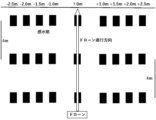
- FIG. 1 is a schematic diagram of the water-sensitive paper installation in the water-sensitive paper covering evaluation test of Test Example 3.
- FIG. 2 is a schematic diagram of the arrangement of rice pots in the adhesion test of Test Example 4.
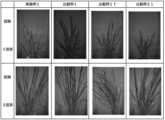
- FIG. 3 shows rice specimens in which the adhesion state of the sprayed agent in the adhesion test of Test Example 4 was visualized using a fluorescent pigment.
- the agricultural composition of the present invention is an agricultural composition containing (a) a polyoxyethylene sorbitan fatty acid ester and (b) an amide compound.
- the polyoxyethylene sorbitan fatty acid ester (a) of the present invention is a nonionic surfactant containing at least one fatty acid selected from linear and/or branched saturated and/or unsaturated fatty acids having 8 to 22 carbon atoms.
- fatty acids include caprylic acid, capric acid, lauric acid, myristic acid, palmitic acid, stearic acid, isostearic acid, oleic acid, linoleic acid, ricinoleic acid, behenic acid, and erucic acid.
- caprylic acid, lauric acid, and oleic acid are preferred, lauric acid and oleic acid are more preferred, and lauric acid is particularly preferred.
- Polyoxyethylene sorbitan fatty acid ester is a sorbitan fatty acid ester to which ethylene oxide is added.
- the degree of polymerization of the ethylene oxide (i.e., the polyoxyethylene portion) of the (a) polyoxyethylene sorbitan fatty acid ester of the present invention is not particularly limited, but in consideration of the effects of the invention, it is preferably 1 to 100, more preferably 3 to 50, and particularly preferably 5 to 25.
- HLB Hydrophilicity-Lipophile Balance
- a low HLB indicates a surfactant with high lipophilicity
- a high HLB indicates a surfactant with high hydrophilicity. Therefore, a surfactant with a low HLB is more compatible with hydrophobic systems, and a surfactant with a high HLB is more compatible with hydrophilic systems.
- the HLB value is a value calculated by the following method, which is Griffin's empirical formula:
- the saponification value and acid value used are values analyzed according to the general test methods of the standards for food additives and quasi-drug ingredients.
- the HLB of the polyoxyethylene sorbitan fatty acid ester is preferably 3 to 20, more preferably 5 to 19, and particularly preferably 7 to 17.
- the polyoxyethylene sorbitan fatty acid ester may be used alone or in combination of two or more kinds in any amount.
- the content of (a) polyoxyethylene sorbitan fatty acid ester is preferably 10 to 20,000 ppm.
- the agricultural composition is diluted with water 2 to 10,000 times, preferably 2 to 1,000 times, more preferably 2 to 500 times, when used for spraying, the content of (a) polyoxyethylene sorbitan fatty acid ester in the agricultural composition of the present invention is preferably 0.0005 to 99% by mass, more preferably 5 to 95% by mass, and particularly preferably 10 to 90% by mass.
- the agricultural composition of the present invention contains an amide compound (b) represented by formula (1) and/or formula (2).
- the amide compound (b) adjusts the physical properties of the composition and has the function of improving handling during use and enhancing storage stability. Furthermore, by combining with the polyoxyethylene sorbitan fatty acid ester (a), it is used to improve the solubility and dispersibility of the agricultural chemical ingredients, as well as to improve the spray solution, adhesion, and penetration.
- R is a linear or branched, saturated or unsaturated hydrocarbon having 9 to 14 carbon atoms
- Ra and Rb are each independently a hydrogen atom and/or an alkyl group having 1 to 4 carbon atoms
- x is an integer from 0 to 4.
- Ra and Rb are hydrogen atoms or alkyl groups having 1 to 4 carbon atoms which may have a substituent, such as hydrogen atoms, methyl, ethyl, propyl, butyl, hydroxyethyl, polyoxyalkylene, etc.
- Ra and Rb are preferably alkyl groups having 1 to 4 carbon atoms, and more preferably both are methyl groups.
- the cyclic amide moiety in formula (2) can be, for example, ⁇ -lactam, ⁇ -lactam, ⁇ -lactam, ⁇ -lactam, ⁇ -lactam, etc.
- x is 2 or 3
- ⁇ -lactam (2-pyrrolidone) or ⁇ -lactam (2-piperidone) is particularly preferred.
- Amide compounds specifically, for example, N,N-dimethylcapric acid amide, N,N-dimethyllauric acid amide, N,N-dimethylmyristic acid amide, N-lauryl-2-pyrrolidone and the like are preferred, with N,N-dimethylcapric acid amide being particularly preferred.
- the amide compound (b) may be used alone or in any combination of two or more kinds in any amount.
- the mass ratio of the components (a) and (b) in the agricultural composition of the present invention is not particularly limited, but in consideration of the effects of the invention, it is preferable that (a) polyoxyethylene sorbitan fatty acid ester/(b) amide compound ((a)/(b)) is 0.01 to 100. (a)/(b) is more preferably 0.1 to 10, and even more preferably 1 to 10.
- the agricultural composition of the present invention may contain any additive component within the range that does not impair the physicochemical properties.
- Optional additives include surfactants, solvents, solid carriers, thickeners, antifreeze agents, preservatives, defoamers, colorants, fragrances, etc. These additive components are not particularly limited as long as they are generally used in agricultural chemicals, and they can be used in any amount, either alone or in a mixture of two or more types.
- the surfactant is used for the purpose of increasing the storage stability of the composition, as well as improving emulsifying and dispersing properties when the composition is diluted with water for use, and improving handling.
- the surfactant include nonionic surfactants, anionic surfactants, cationic surfactants, and amphoteric surfactants.
- nonionic surfactants include polyoxyethylene-polyoxypropylene block polymers, polyoxyalkylene alkyl ethers, polyoxyalkylene fatty acid esters, propylene glycol fatty acid esters, (polyoxyalkylene)glycerin fatty acid esters, polyglycerin fatty acid esters, sucrose fatty acid esters, polyoxyalkylene phenyl ethers, polyoxyalkylene alkyl phenyl ethers, polyoxyalkylene styryl phenyl ethers, polyoxyalkylene alkyl amines, polyoxyalkylene alkyl amides, and polyoxyalkylene-modified silicones.
- anionic surfactant examples include (polyoxyalkylene) alkyl or aryl sulfates, phosphates, or fatty acid salts, and formaldehyde polymers thereof.
- counter cations include sodium ions, potassium ions, calcium ions, and ammonium ions.
- examples of the cationic surfactant include alkyl ammonium salts, aryl ammonium salts, pyridinium salts, etc.
- the counter anions thereof examples include chloride ions, bromide ions, alkyl sulfonate ions, aryl sulfonate ions, etc.
- amphoteric surfactants include alkylamide-alkyl betaines, alkylamide-alkyl sultaine betaines, and the like.
- the solvent examples include animal and vegetable oils, mineral oils, paraffin, water, polyethylene glycol, and alcohol.
- solid carriers include minerals or organic substances such as silica gel, clay, silt, bentonite, lactose, and cyclodextrin. By impregnating, adsorbing, or retaining liquid components on these solid carriers, the agricultural composition of the present invention can also be used as a solid formulation.
- the total content of the above-mentioned solvents or solid carriers excluding water is usually 0 to 90% by weight, preferably 0 to 50% by weight, and more preferably 0 to 30% by weight, based on the total amount of the composition of the present invention.
- thickeners examples include xanthan gum, welan gum, guar gum, carboxymethyl cellulose, hydroxymethyl cellulose, hydroxyethyl cellulose, hydroxymethylpropyl cellulose, cellulose nanofiber, aluminum silicate, and magnesium silicate.
- antifreeze agents include ethylene glycol, diethylene glycol, polyethylene glycol, propylene glycol, polypropylene glycol, glycerin, methanol, and ethanol.
- preservatives examples include benzisothiazolinone, methylisothiazolinone, triazine, thiabendazole, vitamin B, and the like.
- the antifoaming agent examples include fatty acids, fatty acid esters, higher alcohols, silicones, and modified silicones.
- the agricultural composition of the present invention is an adjuvant composition that imparts an efficient spraying function to pesticides, fertilizers, and biostimulants, and is applied by mixing with pesticides, fertilizers, and biostimulants. Therefore, the present invention also includes a composition that contains the agricultural composition and one or more selected from the group consisting of pesticides, fertilizers, and biostimulants.
- the content of the pesticide, fertilizer, and biostimulant can be appropriately set in consideration of the efficacy of the application agent.
- a preferred use of the agricultural composition of the present invention is as an adjuvant composition that imparts an efficient spraying function to an agricultural chemical, and is applied by mixing with an agricultural chemical ingredient or an agricultural chemical formulation. Therefore, the present application also includes an invention having an embodiment that includes an agricultural chemical ingredient.
- the pesticide components to be applied include the active ingredients of chemical pesticides such as insecticides, fungicides, herbicides, miticides, and plant growth regulators.
- the pesticide active ingredient may be applied to the agricultural composition of the present invention, or the agricultural composition of the present invention may be mixed with an agricultural chemical formulation containing an active ingredient and an additive.
- the insecticides, fungicides, herbicides, miticides, and plant growth regulators are not particularly limited, but are exemplified below as suitable examples.
- Insecticides include acrinathrin, acequinocyl, acetamiprid, acephate, amitraz, alanycarb, allethrin, isoxathion, imidacloprid, indoxacarb MP, esfenvalerate, ethiofencarb, ethiprole, ethylthiometon, etoxazole, etofenprox, emamectin benzoate, levamisole hydrochloride, oxamyl, cadusafos, and cartap hydrochloride.
- Examples include lufenpyrad, novaluron, halfenprox, bifenazate, bifenthrin, pymetrozine, pyraclofos, pyridaphenthion, pyridaben, pyridalyl, pyriproxyfen, pyrimidifen, pirimiphos-methyl, pyrethrin, fipronil, phenisobromoate, fenothiocarb, fluacrypyrim, flucythrinate, fluvalinate, flufenoxuron, propafos, profenofos, hexythiazox, permethrin, bensultap, benzoepine, benfuracarb, Beauveria bassiana, Beauveria brongiatii, phosalone, machine oil, malathion, mesulfenphos, methomyl, methoxyfenozide, lu
- Fungicides include acibenzolane S-methyl, azoxystrobin, ambam, sulfur, isoprothiolane, ipconazole, iprodione, iminoctadine albesilate, iminoctadine acetate, imibenconazole, eclonazole, oxadixyl, oxytetracycline, oxpoconazole fumarate, oxolinic acid, kasugamycin, carpropamid, quinomethionate, captan, kresoxim-methyl, chloroneb, cyazofamid, diethofencarb, and dicloxin.
- Herbicides include ioxynil, azimsulfuron, asuram, atrazine, anilofos, alachlor, isouron, isoxaben, imazaquin, imazapyr, imazosulfuron, indanofan, esprocarb, ethoxysulfone, etobenzanide, chlorate, oxadiazon, oxadiargyl, oxaziclomefone, orthobencarb, oryzalin, cafenstrole, carfentrazone ethyl, carbutilate, quizalofop methyl, cumyluron, glyphosate ammonium salt, glyphosate isopropylamine salt, glyphosate kalium sodium salt, glyphosate trimesium salt, glufosinate, clethodim, clomeprop, chlorphthalim, cyanazine, cyanate, cyclosulfamuron, di
- the agricultural composition of the present invention can be used as an agricultural spreader as a composition that does not contain the active ingredients of chemical pesticides such as insecticides, fungicides, herbicides, miticides, and plant growth regulators.
- chemical pesticides such as insecticides, fungicides, herbicides, miticides, and plant growth regulators.
- pesticide active ingredients such as fungicides, insecticides, miticides, herbicides, and plant growth regulators
- the agricultural composition of the present invention is used by preparing an agricultural spray solution by diluting with water 2 to 10,000 times, preferably 2 to 1,000 times, more preferably 2 to 500 times.
- the concentration of the polyoxyethylene sorbitan fatty acid ester (a) in the spray solution is preferably 100 to 100,000 ppm, more preferably 100 to 10,000 ppm.
- a preferred use of the agricultural composition of the present invention is as a spreading agent for aerial spraying.
- “Aerial spraying” refers to a method of applying pesticides and other chemicals to target plants from a position in the sky above the ground using an aircraft such as an industrial helicopter or drone.
- aerial spraying is a method of spraying a high concentration of chemicals with a small amount of water compared to normal chemical application methods, since the size of the tank that can be mounted on the aircraft is limited.
- the agricultural composition of the present invention has excellent chemical properties that do not interfere with the solubility or dispersibility of the chemicals even when the chemicals are in a high concentration, low water volume solution.
- the aerial spray solution provides uniform spraying characteristics when sprayed mechanically. For this reason, the present application includes an invention relating to the use of the agricultural composition used for aerial spraying.
- the agricultural composition of the present invention can also be used as an efficacy enhancer for pesticides.
- the agricultural composition of the present invention can improve the adhesion of the target pesticide while solubilizing the pesticide active ingredient, thereby improving its uptake by the target plant and pests.
- the spray solution preferably has a concentration of (a) polyoxyethylene sorbitan fatty acid ester of 100 to 100,000 ppm.
- Group A (a) a raw material containing a polyoxyethylene sorbitan fatty acid ester according to the present invention.
- Group B (b) a raw material containing an amide compound according to the present invention.
- Example 1 The agricultural composition of the present invention was obtained by uniformly mixing 75 parts by mass of polyoxyethylene (20) sorbitan laurate (Takemoto Oil & Fat Co., Ltd.; product name Newkalgen D-941, HLB 16.7) and 25 parts by mass of N,N-dimethylcapric acid amide (SOLVAY; product name Rhodiasolv (registered trademark) ADMA10) at room temperature.
- polyoxyethylene (20) sorbitan laurate Takemoto Oil & Fat Co., Ltd.; product name Newkalgen D-941, HLB 16.7
- SOLVAY product name Rhodiasolv (registered trademark) ADMA10
- Example 2 The agricultural composition of the present invention was obtained by uniformly mixing 75 parts by mass of polyoxyethylene (4) sorbitan laurate (Kao Corporation; product name Rheodor (registered trademark) TW-L106, HLB 13.3) and 25 parts by mass of N,N-dimethylcapric acid amide (SOLVAY; product name Rhodiasolv (registered trademark) ADMA10) at room temperature.
- polyoxyethylene (4) sorbitan laurate Kelzan (registered trademark) TW-L106, HLB 13.3)
- SOLVAY product name Rhodiasolv (registered trademark) ADMA10
- Example 3 The agricultural composition of the present invention was obtained by uniformly mixing 75 parts by mass of polyoxyethylene (20) sorbitan oleate (Takemoto Oil Co., Ltd.; product name Newkalgen D-945, HLB 15.0) and 25 parts by mass of N,N-dimethylcapric acid amide (SOLVAY; product name Rhodiasolv (registered trademark) ADMA10) at room temperature.
- polyoxyethylene (20) sorbitan oleate Takemoto Oil Co., Ltd.; product name Newkalgen D-945, HLB 15.0
- SOLVAY product name Rhodiasolv (registered trademark) ADMA10
- Example 4 The agricultural composition of the present invention was obtained by uniformly mixing 75 parts by mass of polyoxyethylene (20) sorbitan laurate (Takemoto Oil & Fat Co., Ltd.; product name Newkalgen D-941, HLB 16.7) and 25 parts by mass of N,N-dimethyllaurin/myristic acid amide (Stepan; product name Hallcomid M-12-15) at room temperature.
- polyoxyethylene (20) sorbitan laurate Takemoto Oil & Fat Co., Ltd.; product name Newkalgen D-941, HLB 16.7
- N,N-dimethyllaurin/myristic acid amide (Stepan; product name Hallcomid M-12-15) at room temperature.
- Example 5 The agricultural composition of the present invention was obtained by uniformly mixing 75 parts by mass of polyoxyethylene (20) sorbitan laurate (Takemoto Oil & Fat Co., Ltd.; product name Newkalgen D-941, HLB 16.7) and 25 parts by mass of N-laurylpyrrolidone (Ashland; product name AgsolEx 12) at room temperature.
- polyoxyethylene (20) sorbitan laurate Takemoto Oil & Fat Co., Ltd.; product name Newkalgen D-941, HLB 16.7
- N-laurylpyrrolidone Ashland; product name AgsolEx 12
- Example 6 The agricultural composition of the present invention was obtained by uniformly mixing 90 parts by mass of polyoxyethylene (20) sorbitan laurate (Takemoto Oil Co., Ltd.; product name Newkalgen D-941, HLB 16.7) and 10 parts by mass of N,N-dimethylcapric acid amide (SOLVAY; product name Rhodiasolv (registered trademark) ADMA10) at room temperature.
- polyoxyethylene (20) sorbitan laurate Takemoto Oil Co., Ltd.; product name Newkalgen D-941, HLB 16.7
- SOLVAY product name Rhodiasolv (registered trademark) ADMA10
- Example 7 The agricultural composition of the present invention was obtained by uniformly mixing 50 parts by mass of polyoxyethylene (20) sorbitan laurate (Takemoto Oil & Fat Co., Ltd.; product name Newkalgen D-941, HLB 16.7) and 50 parts by mass of N,N-dimethylcapric acid amide (SOLVAY; product name Rhodiasolv (registered trademark) ADMA10) at room temperature.
- polyoxyethylene (20) sorbitan laurate Takemoto Oil & Fat Co., Ltd.; product name Newkalgen D-941, HLB 16.7
- SOLVAY product name Rhodiasolv (registered trademark) ADMA10
- Example 8 The agricultural composition of the present invention was obtained by uniformly mixing 10 parts by mass of polyoxyethylene (20) sorbitan laurate (Takemoto Oil & Fat Co., Ltd.; product name Newkalgen D-941, HLB 16.7) and 90 parts by mass of N,N-dimethylcapric acid amide (SOLVAY; product name Rhodiasolv (registered trademark) ADMA10) at room temperature.
- polyoxyethylene (20) sorbitan laurate Takemoto Oil & Fat Co., Ltd.; product name Newkalgen D-941, HLB 16.7
- SOLVAY product name Rhodiasolv (registered trademark) ADMA10
- Comparative Example 1 In Comparative Example 1, distilled water was used.
- N,N-dimethylcapric acid amide (SOLVAY; product name Rhodiasolv (registered trademark) ADMA10) was used.
- Comparative Example 4 A comparative agricultural composition was obtained by uniformly mixing 75 parts by mass of polyoxyethylene lauryl ether (Kao Corporation; product name Emulgen (registered trademark) 108, HLB 12.1) and 25 parts by mass of N,N-dimethylcapric acid amide (SOLVAY; product name Rhodiasolv (registered trademark) ADMA10) at room temperature.
- Comparative Example 5 A comparative agricultural composition was obtained by uniformly mixing 75 parts by mass of polyoxyethylene laurate (NOF Corporation; product name Nonion L-4, HLB 13.3) and 25 parts by mass of N,N-dimethylcapric acid amide (SOLVAY; product name Rhodiasolv (registered trademark) ADMA10) at room temperature.
- NOF Corporation polyoxyethylene laurate
- SOLVAY product name Rhodiasolv (registered trademark) ADMA10
- Comparative Example 6 A comparative agricultural composition was obtained by uniformly mixing 75 parts by mass of glyceryl caprylate (Kao Corporation; product name Homotex (registered trademark) PT, HLB 5.0) and 25 parts by mass of N,N-dimethylcapric acid amide (SOLVAY; product name Rhodiasolv (registered trademark) ADMA10) at room temperature.
- Comparative Example 7 A comparative agricultural composition was obtained by uniformly mixing 75 parts by mass of sorbitan laurate (Takemoto Oil Co., Ltd.; trade name New Calgen D-931, HLB 8.6) and 25 parts by mass of N,N-dimethylcapric acid amide (SOLVAY; trade name Rhodiasolv (registered trademark) ADMA10) at room temperature.
- sorbitan laurate Takemoto Oil Co., Ltd.; trade name New Calgen D-931, HLB 8.6
- SOLVAY trade name Rhodiasolv (registered trademark) ADMA10
- Comparative Example 8 A comparative agricultural composition was obtained by uniformly mixing 75 parts by mass of polyglycerol laurate (Sakamoto Yakuhin Kogyo Co., Ltd.; product name SY Glyster (registered trademark) ML-310, HLB 10.4) and 25 parts by mass of N,N-dimethylcapric acid amide (SOLVAY; product name Rhodiasolv (registered trademark) ADMA10) at room temperature.
- polyglycerol laurate Sakamoto Yakuhin Kogyo Co., Ltd.
- SOLVAY product name Rhodiasolv (registered trademark) ADMA10
- Comparative Example 9 A comparative agricultural composition was obtained by uniformly mixing 75 parts by mass of polyoxyethylenated castor oil (Takemoto Oil Co., Ltd.; trade name New Calgen D-236, HLB 12.9) and 25 parts by mass of N,N-dimethylcapric acid amide (SOLVAY; trade name Rhodiasolv (registered trademark) ADMA10) at room temperature.
- polyoxyethylenated castor oil Takemoto Oil Co., Ltd.; trade name New Calgen D-236, HLB 12.9
- SOLVAY trade name Rhodiasolv (registered trademark) ADMA10
- Comparative Example 10 A comparative agricultural composition was obtained by uniformly mixing 75 parts by mass of polyoxyethylene (20) sorbitan laurate (Takemoto Oil Co., Ltd.; product name Newcalgen D-941, HLB 16.7) and 25 parts by mass of N,N-dimethylcaprylamide at room temperature.
- Comparative Example 11 A comparative agricultural composition was obtained by uniformly mixing 75 parts by mass of polyoxyethylene (20) sorbitan laurate (Takemoto Oil Co., Ltd.; trade name Newcalgen D-941, HLB 16.7) and 25 parts by mass of N-caprylpyrrolidone (Ashland; trade name AgsolEx 8) at room temperature.
- polyoxyethylene (20) sorbitan laurate Takemoto Oil Co., Ltd.; trade name Newcalgen D-941, HLB 16.7
- N-caprylpyrrolidone Ashland; trade name AgsolEx 8
- Comparative Example 12 A comparative agricultural composition was obtained by uniformly mixing 75 parts by mass of polyoxyethylene (20) sorbitan laurate (Takemoto Oil & Fat Co., Ltd.; product name New Calgen D-941, HLB 16.7) and 25 parts by mass of corn oil (Nisshin Oillio Co., Ltd.) at room temperature.
- Comparative Example 13 A comparative agricultural composition was obtained by uniformly mixing 75 parts by mass of polyoxyethylene (20) sorbitan laurate (Takemoto Oil & Fat Co., Ltd.; product name Newkalgen D-941, HLB 16.7) and 25 parts by mass of methyl decanoate (Tokyo Chemical Industry Co., Ltd.; reagent) at room temperature.
- polyoxyethylene (20) sorbitan laurate Takemoto Oil & Fat Co., Ltd.; product name Newkalgen D-941, HLB 16.7
- methyl decanoate Tokyo Chemical Industry Co., Ltd.; reagent
- Comparative Example 14 A comparative agricultural composition was obtained by uniformly mixing 75 parts by mass of polyoxyethylene (20) sorbitan laurate (Takemoto Oil Co., Ltd.; product name New Calgen D-941, HLB 16.7) and 25 parts by mass of decanol (Tokyo Chemical Industry Co., Ltd.; reagent) at room temperature.
- polyoxyethylene (20) sorbitan laurate Takemoto Oil Co., Ltd.; product name New Calgen D-941, HLB 16.7
- decanol Tokyo Chemical Industry Co., Ltd.; reagent
- Comparative Example 15 A comparative agricultural composition was obtained by uniformly mixing 75 parts by mass of polyoxyethylene (20) sorbitan laurate (Takemoto Oil & Fat Co., Ltd.; product name Newkalgen D-941, HLB 16.7) and 25 parts by mass of polyoxyethylene lauryl ether (Kao Corporation; product name Emulgen (registered trademark) 108) at room temperature.
- Comparative Example 16 A comparative agricultural composition was obtained by uniformly mixing 75 parts by mass of polyoxyethylene (20) sorbitan laurate (Takemoto Oil & Fat Co., Ltd.; product name Newkalgen D-941, HLB 16.7) and 25 parts by mass of polyoxyethylene laurate (NOF Corporation; product name Nonion L-4) at room temperature.
- polyoxyethylene (20) sorbitan laurate Takemoto Oil & Fat Co., Ltd.; product name Newkalgen D-941, HLB 16.7
- NOF Corporation product name Nonion L-4
- Makupika registered trademark
- product name Ishihara Biosciences Co., Ltd., polyoxyethylene methylpolysiloxane 93.0%
- Test Example 1 Solubilization Test The compositions of the Examples and Comparative Examples were added to a 100-fold diluted solution of various pesticides in an amount equivalent to a 500-fold dilution, and mixed well to prepare test solutions. The test solutions were transferred to test tubes and stored at 20°C for one day. A portion of the solution after storage was extracted and passed through a syringe filter (0.22 ⁇ m mesh, made of PTFE). The amount of pesticide active ingredient in the passed solution was analyzed by HPLC, and the active ingredient content was calculated as a ratio to the condition without addition.
- Pesticide 1 Flometoquin 10% flowable (trade name: Finesave (registered trademark) flowable, Nippon Kayaku Co., Ltd.)
- Pesticide 2 Chlorantraniliprole 5% flowable (trade name: Prevason (registered trademark) Flowable 5, Nissan Chemical Industries, Ltd.)
- Test Example 2 Dispersion Stability Test The compositions of the Examples and Comparative Examples were added to 100-fold diluted solutions of various pesticides in an amount equivalent to 500-fold dilution and mixed thoroughly to prepare test solutions. The test solutions were transferred to test tubes and stored at 20°C for one day. The amount of sedimentation in the solutions after storage was compared with that in the absence of added solutions.
- Pesticide 1 Chromafenozide 5% flowable (product name: Matric (registered trademark) flowable, Nippon Kayaku Co., Ltd.)
- Pesticide 2 Broflanilide 5% flowable (product name: Broflare (registered trademark) SC, Mitsui Chemicals Crop & Life Solutions, Inc.) Evaluation criteria Good: Almost no sediment was observed. ⁇ : The amount of settling was reduced compared to the case where no additive was added. ⁇ : Sedimentation equal to or greater than that of the untreated sample was observed.
- test compositions and test results for Test Examples 1 and 2 are summarized in Table 3.
- Test Examples 1 and 2 show that Examples 1 to 8 all impart relatively high solubilization and dispersion stability to the pesticide ingredients.
- Comparative Examples 1 to 21 all showed inferior solubilization or dispersion stability, or both, to the agricultural composition of the present invention.
- Test Example 3 Water-sensitive Paper Coverage Evaluation Test The compositions of Example 1, Comparative Example 1 (without additives), and Comparative Example 17 were diluted 100 times with water to prepare test solutions. Water-sensitive papers were lined up on a flat outdoor site as shown in FIG. 1, and the test solution was sprayed from a height of 2 m above the papers using a drone. After spraying, the water-sensitive papers were promptly collected, and the coverage rate of each water-sensitive paper was classified into five stages (low amount of sprayed water droplets: rating 1 to high amount of sprayed water droplets: rating 5...see the evaluation criteria sample shown in Table 4).
- Spraying conditions Aircraft used: DJI, AGRAS MG-1 Spraying water amount: 0.8L/10a Spray width: 2m on both sides from the center of the machine The amount of water sprayed and the width of spraying were controlled using the aircraft's automatic spraying function.
- test compositions and test results for Test Example 3 are summarized in Table 5.
- Example 1 it was confirmed that the test liquid was sprayed over a width of ⁇ 2.5 m from the center of the test area ( ⁇ 0 m point). On the other hand, in Comparative Examples 1 and 17, the test liquid was scattered when sprayed from the air, and only a small amount reached the ground, and a sufficient amount of sprayed liquid could not be secured at observation points ( ⁇ 2.5 m) away from the center.
- the results of Example 1 are thought to be due to the formation of a surfactant coating on the gas-liquid surface of the sprayed droplets, suppressing evaporation.
- Comparative Example 17 the droplets became finer when sprayed due to the influence of the composition, the surface area of the droplets increased, and evaporation of water was promoted, which is thought to have led to a decrease in the amount of adhesion in the + direction from the center due to the influence of the wind.
- Test Example 4 Adhesion test Test solutions were prepared by adding the compositions of Example 1 and Comparative Examples 1, 17, and 21 in amounts equivalent to a 100-fold dilution to aqueous solutions containing a 5% chromafenozide flowable formulation (product name: Matric (registered trademark) flowable, Nippon Kayaku Co., Ltd.) and a red fluorescent pigment (product name: SINLOIHI SW-111, Shinloihi Co., Ltd.) in amounts equivalent to a 16-fold dilution.
- Rice pots were lined up on flat ground outdoors as shown in Figure 2, and the test solution was sprayed from a height of 2 m above the pots using a drone.
- Test Example 4 the test composition and the test results of the amount of drug adhered to the rice plant ( ⁇ g/g) are summarized in Table 6.
- Figure 3 shows the state of drug adherence to the rice plant, visualized using fluorescent pigments.
- Example 1 When the state of fluorescent pigment adhesion was visually confirmed, it was confirmed that the fluorescent pigment adhered to the entire rice plant in Example 1 compared to the Comparative Example. This is thought to be due to the maintenance of the liquid volume by suppressing the evaporation of the sprayed droplets, and the suppression of the rebound of the droplets due to the reduction in interfacial tension with the leaves. On the other hand, the fluorescent pigment adhered poorly to Comparative Examples 17 and 21, and no significant difference was observed from Comparative Example 1 where no additive was added (diluted spray solution with distilled water only). Furthermore, the amount of the drug (chromafenozide) adhered in Example 1 was far greater than that in the Comparative Example.
- Test Example 5 Evaluation test of penetration and migration To a 32-fold diluted solution of a 5% chlorantraniliprole flowable preparation (product name: Prevason (registered trademark) flowable 5, Nissan Chemical Industries, Ltd.), the compositions of the Examples and Comparative Examples were added in an amount equivalent to a 100-fold dilution and mixed well to prepare a test solution.
- the fourth leaf counting from the top of the developing cabbage seedlings (variety: Shogun, 9-10 leaf stage) was covered with a plastic bag. The cabbage seedlings were sprayed with the spray using a drone and stored at room temperature. 48 hours after treatment, the covered leaves and uncovered control leaves were collected, and 10 third-instar larvae of the diamondback moth were released onto each leaf.
- test compositions and test results for Test Example 5 are summarized in Table 7.
- Example 1 was confirmed to have a higher insecticidal effect than Comparative Examples 1 and 17. On the other hand, Comparative Examples 1 and 17 showed no insecticidal effect at all. Since 100% of the larvae were abnormal or dead on the uncovered leaves, it is believed that a sufficient amount of the drug was sprayed. Chlorantraniliprole has a penetrating and translocating property, and in normal use, the drug adheres to a part of the crop, allowing the drug to penetrate into the plant body, and the drug can be distributed throughout the plant, thereby exerting a stable insecticidal effect.
- the composition of the example is thought to have efficiently penetrated the drug into the leaves by solubilizing the drug even under the conditions of spraying with a small amount of water using a drone.
- the agricultural composition of the present invention has excellent adhesion and solubilization properties, so that the drug is expected to act efficiently on the target plants and pests, and stabilize the effect of the pesticide.
- the agricultural composition of the present invention can suppress the evaporation of water in the spray solution, it is expected that the effect of uneven spraying due to wind can be reduced even when spraying from a high place away from the ground, such as with a drone, and as a result, spraying accuracy can be improved.
- the agricultural composition of the present invention can impart high dispersion stability to the pesticide active ingredient, it maintains a dispersed state for a long period of time even in a highly concentrated diluted solution of the pesticide, improving handling during spraying of the pesticide.
- the polyoxyethylene sorbitan fatty acid ester used in the agricultural composition of the present invention has low toxicity to living organisms, and many of them have a track record of use as food additives, and the fatty acid amide also corresponds to a green solvent, so that it has a low environmental load, so that the safety and environmental compatibility of the agricultural composition of the present invention is considered to be extremely high.
- the agricultural composition of the present invention can be efficiently sprayed in situations where pesticides and other substances are sprayed at high concentrations and in small amounts of water, such as when spraying from the air using a drone, and as a result, it is expected that the labor required for spraying pesticides, the amount of pesticide sprayed, control costs, and environmental burden will be reduced, and food supply will be stabilized.
Landscapes
- Life Sciences & Earth Sciences (AREA)
- Wood Science & Technology (AREA)
- Engineering & Computer Science (AREA)
- Environmental Sciences (AREA)
- Pest Control & Pesticides (AREA)
- Plant Pathology (AREA)
- Zoology (AREA)
- Health & Medical Sciences (AREA)
- General Health & Medical Sciences (AREA)
- Dentistry (AREA)
- Agronomy & Crop Science (AREA)
- Chemical & Material Sciences (AREA)
- Chemical Kinetics & Catalysis (AREA)
- General Chemical & Material Sciences (AREA)
- Toxicology (AREA)
- Biodiversity & Conservation Biology (AREA)
- Forests & Forestry (AREA)
- Ecology (AREA)
- Insects & Arthropods (AREA)
- Dispersion Chemistry (AREA)
- Mycology (AREA)
- Microbiology (AREA)
- Botany (AREA)
- Agricultural Chemicals And Associated Chemicals (AREA)
Priority Applications (3)
| Application Number | Priority Date | Filing Date | Title |
|---|---|---|---|
| JP2025516746A JPWO2024225111A1 (https=) | 2023-04-27 | 2024-04-16 | |
| CN202480028040.9A CN121013647A (zh) | 2023-04-27 | 2024-04-16 | 农用组合物 |
| KR1020257033020A KR20260005218A (ko) | 2023-04-27 | 2024-04-16 | 농용 조성물 |
Applications Claiming Priority (2)
| Application Number | Priority Date | Filing Date | Title |
|---|---|---|---|
| JP2023-073808 | 2023-04-27 | ||
| JP2023073808 | 2023-04-27 |
Publications (1)
| Publication Number | Publication Date |
|---|---|
| WO2024225111A1 true WO2024225111A1 (ja) | 2024-10-31 |
Family
ID=93256519
Family Applications (1)
| Application Number | Title | Priority Date | Filing Date |
|---|---|---|---|
| PCT/JP2024/015100 Ceased WO2024225111A1 (ja) | 2023-04-27 | 2024-04-16 | 農用組成物 |
Country Status (5)
| Country | Link |
|---|---|
| JP (1) | JPWO2024225111A1 (https=) |
| KR (1) | KR20260005218A (https=) |
| CN (1) | CN121013647A (https=) |
| TW (1) | TW202448328A (https=) |
| WO (1) | WO2024225111A1 (https=) |
Citations (9)
| Publication number | Priority date | Publication date | Assignee | Title |
|---|---|---|---|---|
| US3268397A (en) * | 1963-10-04 | 1966-08-23 | Gen Aniline & Film Corp | Method of controlling nematodes with nu-(branched-chained-alkyl) lactams |
| JPS5557506A (en) * | 1978-10-24 | 1980-04-28 | Kao Corp | Agricultural and horticultural blight and pest control composition |
| JPH01503044A (ja) * | 1986-06-27 | 1989-10-19 | ジーエイエフ・コーポレーション | 農業用乳剤組成物 |
| JPH02500436A (ja) * | 1986-09-29 | 1990-02-15 | ネルソン リサーチ アンド デベロプメント カンパニー | N,n‐ジアルキルアルカンアミドを含む組成物とその用途 |
| JP2008239560A (ja) * | 2007-03-28 | 2008-10-09 | Sumitomo Chemical Co Ltd | 保存安定性に優れた航空散布用の水性懸濁状農薬組成物 |
| JP2016065043A (ja) * | 2014-09-16 | 2016-04-28 | 住友化学株式会社 | 植物病害防除組成物 |
| JP2021095365A (ja) * | 2019-12-18 | 2021-06-24 | アグロカネショウ株式会社 | 高濃度農薬希釈液の調製方法 |
| WO2023176614A1 (ja) * | 2022-03-15 | 2023-09-21 | 日本化薬株式会社 | 農用組成物 |
| JP2023134388A (ja) * | 2022-03-14 | 2023-09-27 | 日本化薬株式会社 | フロメトキン乳化性組成物 |
Family Cites Families (4)
| Publication number | Priority date | Publication date | Assignee | Title |
|---|---|---|---|---|
| JP4802975B2 (ja) | 2006-10-30 | 2011-10-26 | 住友金属工業株式会社 | 鉄道車両用歯車装置の温度予測方法 |
| US20130150241A1 (en) | 2011-04-20 | 2013-06-13 | Huntsman Petrochemical Llc | Spray drift reduction agents comprising low hydrophilic-lipophilic balance surfactants |
| JP6095513B2 (ja) | 2012-07-20 | 2017-03-15 | 日本化薬株式会社 | 農薬用展着剤組成物 |
| DE102016210164A1 (de) | 2016-06-08 | 2017-12-14 | Clariant International Ltd | Verwendung von N-substituierten Pyrrolidonen zur Förderung der Penetration von agrochemischen Wirkstoffen |
-
2024
- 2024-04-16 WO PCT/JP2024/015100 patent/WO2024225111A1/ja not_active Ceased
- 2024-04-16 JP JP2025516746A patent/JPWO2024225111A1/ja active Pending
- 2024-04-16 CN CN202480028040.9A patent/CN121013647A/zh active Pending
- 2024-04-16 KR KR1020257033020A patent/KR20260005218A/ko active Pending
- 2024-04-22 TW TW113114950A patent/TW202448328A/zh unknown
Patent Citations (9)
| Publication number | Priority date | Publication date | Assignee | Title |
|---|---|---|---|---|
| US3268397A (en) * | 1963-10-04 | 1966-08-23 | Gen Aniline & Film Corp | Method of controlling nematodes with nu-(branched-chained-alkyl) lactams |
| JPS5557506A (en) * | 1978-10-24 | 1980-04-28 | Kao Corp | Agricultural and horticultural blight and pest control composition |
| JPH01503044A (ja) * | 1986-06-27 | 1989-10-19 | ジーエイエフ・コーポレーション | 農業用乳剤組成物 |
| JPH02500436A (ja) * | 1986-09-29 | 1990-02-15 | ネルソン リサーチ アンド デベロプメント カンパニー | N,n‐ジアルキルアルカンアミドを含む組成物とその用途 |
| JP2008239560A (ja) * | 2007-03-28 | 2008-10-09 | Sumitomo Chemical Co Ltd | 保存安定性に優れた航空散布用の水性懸濁状農薬組成物 |
| JP2016065043A (ja) * | 2014-09-16 | 2016-04-28 | 住友化学株式会社 | 植物病害防除組成物 |
| JP2021095365A (ja) * | 2019-12-18 | 2021-06-24 | アグロカネショウ株式会社 | 高濃度農薬希釈液の調製方法 |
| JP2023134388A (ja) * | 2022-03-14 | 2023-09-27 | 日本化薬株式会社 | フロメトキン乳化性組成物 |
| WO2023176614A1 (ja) * | 2022-03-15 | 2023-09-21 | 日本化薬株式会社 | 農用組成物 |
Also Published As
| Publication number | Publication date |
|---|---|
| JPWO2024225111A1 (https=) | 2024-10-31 |
| KR20260005218A (ko) | 2026-01-09 |
| CN121013647A (zh) | 2025-11-25 |
| TW202448328A (zh) | 2024-12-16 |
Similar Documents
| Publication | Publication Date | Title |
|---|---|---|
| RU2632959C2 (ru) | Уменьшение сноса при опрыскивании | |
| EP2183968B1 (en) | Pesticide composition potentiated in efficacy and method for potentiating the efficacy of pesticidal active ingredients | |
| CN101374412B (zh) | 包含亚烷基二醇修饰的聚硅氧烷的农用化学组合物 | |
| US8247350B2 (en) | Adjuvant composition, agrochemical spray aqueous solution containing the same and control method using the same | |
| EP2334172B1 (en) | Agrochemical oil compositions comprising alkylpolysiloxane adjuvants of high silicone character | |
| RU2631235C2 (ru) | Комбинация вспомогательных веществ | |
| CA2826833C (en) | Uses of choline chloride in agrochemical formulations to increase the penetration of the agrochemical active ingredient in a plant | |
| CN111919841A (zh) | 农业化学浓缩物 | |
| JP2014524481A (ja) | 強化された有効成分保持を害虫抑制域において有する農薬組成物 | |
| US20140249032A1 (en) | Crop Oil Concentrate Adjuvants Containing Amine Surfactants | |
| CN105228452A (zh) | 生物杀灭剂组合物、制备方法和使用方法 | |
| RU2708158C2 (ru) | Добавки алкоксилированного сложного эфира полисорбата | |
| CN115397239B (zh) | 植物处理剂用蒸发抑制剂 | |
| WO2024225111A1 (ja) | 農用組成物 | |
| CA2992119C (en) | Agricultural adjuvant compositions of oil/surfactant/salt emulsions and methods for use | |
| JP7152428B2 (ja) | 農薬電解質組成物 | |
| US20070196413A1 (en) | Surfactant enhanced quick release pesticide granules | |
| JP7768983B2 (ja) | 農用組成物及びその用途 | |
| WO2024071367A1 (ja) | 有用物質効果増強用組成物 | |
| JP2024508874A (ja) | スタキボトリス・チャータラムからの農薬アジュバント | |
| JP2025505252A (ja) | 農薬補助剤 | |
| JP2025505248A (ja) | 農薬補助剤 | |
| JP2023538047A (ja) | 農薬アジュバント | |
| CN121986778A (zh) | 喷雾漂移减少 |
Legal Events
| Date | Code | Title | Description |
|---|---|---|---|
| 121 | Ep: the epo has been informed by wipo that ep was designated in this application |
Ref document number: 24796865 Country of ref document: EP Kind code of ref document: A1 |
|
| WWE | Wipo information: entry into national phase |
Ref document number: 2025516746 Country of ref document: JP |
|
| REG | Reference to national code |
Ref country code: BR Ref legal event code: B01A Ref document number: 112025020593 Country of ref document: BR |
|
| WWE | Wipo information: entry into national phase |
Ref document number: 2501007130 Country of ref document: TH |
|
| WWE | Wipo information: entry into national phase |
Ref document number: 202547113711 Country of ref document: IN |
|
| NENP | Non-entry into the national phase |
Ref country code: DE |
|
| WWP | Wipo information: published in national office |
Ref document number: 202547113711 Country of ref document: IN |