WO2024219362A1 - 非水電解質電池用の非水電解質および非水電解質電池 - Google Patents
非水電解質電池用の非水電解質および非水電解質電池 Download PDFInfo
- Publication number
- WO2024219362A1 WO2024219362A1 PCT/JP2024/015018 JP2024015018W WO2024219362A1 WO 2024219362 A1 WO2024219362 A1 WO 2024219362A1 JP 2024015018 W JP2024015018 W JP 2024015018W WO 2024219362 A1 WO2024219362 A1 WO 2024219362A1
- Authority
- WO
- WIPO (PCT)
- Prior art keywords
- group
- positive electrode
- battery
- electrolyte
- additive
- Prior art date
- Legal status (The legal status is an assumption and is not a legal conclusion. Google has not performed a legal analysis and makes no representation as to the accuracy of the status listed.)
- Ceased
Links
Images


Classifications
-
- H—ELECTRICITY
- H01—ELECTRIC ELEMENTS
- H01M—PROCESSES OR MEANS, e.g. BATTERIES, FOR THE DIRECT CONVERSION OF CHEMICAL ENERGY INTO ELECTRICAL ENERGY
- H01M4/00—Electrodes
- H01M4/02—Electrodes composed of, or comprising, active material
- H01M4/36—Selection of substances as active materials, active masses, active liquids
- H01M4/48—Selection of substances as active materials, active masses, active liquids of inorganic oxides or hydroxides
- H01M4/52—Selection of substances as active materials, active masses, active liquids of inorganic oxides or hydroxides of nickel, cobalt or iron
- H01M4/525—Selection of substances as active materials, active masses, active liquids of inorganic oxides or hydroxides of nickel, cobalt or iron of mixed oxides or hydroxides containing iron, cobalt or nickel for inserting or intercalating light metals, e.g. LiNiO2, LiCoO2 or LiCoOxFy
-
- H—ELECTRICITY
- H01—ELECTRIC ELEMENTS
- H01M—PROCESSES OR MEANS, e.g. BATTERIES, FOR THE DIRECT CONVERSION OF CHEMICAL ENERGY INTO ELECTRICAL ENERGY
- H01M10/00—Secondary cells; Manufacture thereof
- H01M10/05—Accumulators with non-aqueous electrolyte
- H01M10/052—Li-accumulators
- H01M10/0525—Rocking-chair batteries, i.e. batteries with lithium insertion or intercalation in both electrodes; Lithium-ion batteries
-
- H—ELECTRICITY
- H01—ELECTRIC ELEMENTS
- H01M—PROCESSES OR MEANS, e.g. BATTERIES, FOR THE DIRECT CONVERSION OF CHEMICAL ENERGY INTO ELECTRICAL ENERGY
- H01M4/00—Electrodes
- H01M4/02—Electrodes composed of, or comprising, active material
- H01M4/36—Selection of substances as active materials, active masses, active liquids
- H01M4/48—Selection of substances as active materials, active masses, active liquids of inorganic oxides or hydroxides
- H01M4/50—Selection of substances as active materials, active masses, active liquids of inorganic oxides or hydroxides of manganese
- H01M4/505—Selection of substances as active materials, active masses, active liquids of inorganic oxides or hydroxides of manganese of mixed oxides or hydroxides containing manganese for inserting or intercalating light metals, e.g. LiMn2O4 or LiMn2OxFy
-
- Y—GENERAL TAGGING OF NEW TECHNOLOGICAL DEVELOPMENTS; GENERAL TAGGING OF CROSS-SECTIONAL TECHNOLOGIES SPANNING OVER SEVERAL SECTIONS OF THE IPC; TECHNICAL SUBJECTS COVERED BY FORMER USPC CROSS-REFERENCE ART COLLECTIONS [XRACs] AND DIGESTS
- Y02—TECHNOLOGIES OR APPLICATIONS FOR MITIGATION OR ADAPTATION AGAINST CLIMATE CHANGE
- Y02E—REDUCTION OF GREENHOUSE GAS [GHG] EMISSIONS, RELATED TO ENERGY GENERATION, TRANSMISSION OR DISTRIBUTION
- Y02E60/00—Enabling technologies; Technologies with a potential or indirect contribution to GHG emissions mitigation
- Y02E60/10—Energy storage using batteries
Definitions
- This disclosure relates to nonaqueous electrolytes for nonaqueous electrolyte batteries and nonaqueous electrolyte batteries.
- Non-aqueous electrolyte batteries such as lithium-ion secondary batteries, are equipped with a positive electrode, a negative electrode, and a non-aqueous electrolyte.
- Metallic foreign matter such as copper or iron may be mixed into the positive electrode of a non-aqueous electrolyte battery. In such cases, the metallic foreign matter may dissolve and deposit on the negative electrode when the battery is charged and discharged. If metallic foreign matter deposits on the negative electrode, the battery's characteristics (e.g. voltage) are likely to deteriorate.
- Patent Document 1 Patent Publication No. 59352278 discloses "a lithium ion secondary battery containing an electrolyte, the electrolyte containing a lithium salt, an electrolyte solvent, and methanethiol, the methanethiol being contained in an amount of 1 to 10 parts by weight per 100 parts by weight of the electrolyte, the methanethiol reacting with copper ions generated during operation of the battery to prevent the formation of dendrites due to reduction of copper on the surface of the negative electrode.”
- one of the objectives of this disclosure is to provide a nonaqueous electrolyte that can suppress the deterioration of the characteristics of nonaqueous electrolyte batteries due to the dissolution and precipitation of metallic foreign matter.
- the nonaqueous electrolyte includes a nonaqueous solvent, an electrolyte salt, and an additive, the additive containing two electron-withdrawing groups R having the same structure, and the electron-withdrawing group R containing at least one element selected from the group consisting of oxygen, nitrogen, and sulfur.
- the nonaqueous electrolyte battery includes a positive electrode containing a positive electrode active material, a negative electrode facing the positive electrode, and a nonaqueous electrolyte according to the present disclosure.
- FIG. 1 is a partially cutaway perspective view that typically illustrates a non-electrolytic battery according to one embodiment of the present disclosure.
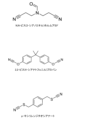
- FIG. 2A shows the structures of the three additives (A) used in the examples.
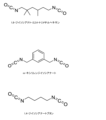
- FIG. 2B shows the structures of the three additives (A) used in the examples.
- FIG. 3 shows the structures of the four compounds used in the comparative examples.
- the expression "numerical value A to numerical value B" includes numerical value A and numerical value B and can be read as "numerical value A or more and numerical value B or less.”
- any of the exemplified lower limits and any of the exemplified upper limits can be arbitrarily combined, as long as the lower limit is not equal to or greater than the upper limit.
- the expression “comprising A” can include "a form substantially consisting of A” and "a form consisting of A.”
- the nonaqueous electrolyte is a nonaqueous electrolyte for a nonaqueous electrolyte battery.
- the nonaqueous electrolyte includes a nonaqueous solvent, an electrolyte salt, and an additive.
- the additive may be referred to as "additive (A)" below.
- the additive (A) contains two electron-withdrawing groups R having the same structure.
- the electron-withdrawing group R contains at least one element selected from the group consisting of oxygen, nitrogen, and sulfur.
- the additive (A) contains only two electron-withdrawing groups R having the same structure. In other words, the additive (A) does not contain three or more electron-withdrawing groups R having the same structure.
- it is particularly preferable that the electron-withdrawing group R contains a nitrogen atom.
- metal ions may dissolve from the foreign metal objects into the non-aqueous electrolyte. These metal ions dissolved into the non-aqueous electrolyte move from the positive electrode side to the negative electrode side and precipitate on the negative electrode side. As this dissolution-precipitation reaction progresses, the precipitated metal grows into a dendrite shape, causing a decrease in the characteristics (e.g. voltage) of the non-aqueous electrolyte battery. For this reason, it is important to suppress the decrease in characteristics due to the dissolution and precipitation of foreign metal objects in non-aqueous electrolyte batteries.
- additive (A) captures metal ions (e.g. copper ions) in the non-aqueous electrolyte with its electron-withdrawing group R, suppressing the reductive precipitation reaction of the metal ions at the negative electrode.
- metal ions e.g. copper ions
- the electron-withdrawing group R not only captures metal ions, but can also coordinate to the surface of the positive electrode active material. As a result, it is thought that the dissolution and precipitation of metal foreign matter and the like is significantly suppressed.
- the content of additive (A) in the non-aqueous electrolyte may be 0.01% by mass or more and 10.0% by mass or less.
- the content may be 0.01% by mass or more, 0.1% by mass or more, 0.5% by mass or more, 1.0% by mass or more, 2.0% by mass or more, or 5.0% by mass or more, and may be 10.0% by mass or less, 5.0% by mass or less, 2.0% by mass or less, 1.0% by mass or less, 0.5% by mass or less, or 0.1% by mass or less.
- the content may be in the range of 0.01 to 10.0% by mass, 0.1 to 10.0% by mass, 0.5 to 10.0% by mass, 1.0 to 10.0% by mass, 2.0 to 10.0% by mass, or 5.0 to 10.0% by mass.
- the upper limit may be 5.0 mass%, 2.0 mass%, 1.0 mass%, 0.5 mass%, or 0.1 mass%, as long as the lower limit is not equal to or greater than the upper limit.
- the content in the range of 0.1 to 5.0 mass% (for example, in the range of 1.0 to 5.0 mass%), a particularly high effect can be obtained.
- the content By setting the content to 5.0 mass% or less, the adverse effect on the charge/discharge characteristics of the battery due to the addition of additive (A) can be mitigated.
- the nonaqueous electrolyte may contain only one type of compound as the additive (A), or may contain multiple types of compounds.
- the additive (A) may contain only any one selected from the group consisting of a nitrile group, a cyanate group, a thiocyanate group, an isocyanate group, and an isothiocyanate group as an electron-withdrawing group.
- the electron-withdrawing group R may be any one selected from the group consisting of a nitrile group, a cyanate group, an isocyanate group, and an isothiocyanate group.
- the electron-withdrawing group R may contain at least one element selected from the group consisting of oxygen and nitrogen, and may contain nitrogen.
- the additive (A) may be a compound (A') containing two functional groups having the same structure.
- the functional group is any one selected from the group consisting of a nitrile group, a cyanate group, a thiocyanate group, an isocyanate group, and an isothiocyanate group.
- the present disclosure discloses a nonaqueous electrolyte containing a nonaqueous solvent, an electrolyte salt, and a compound (A'). The matters described for the additive (A) can be applied to the compound (A').
- Additive (A) may be a compound that dissolves in the non-aqueous solvent of the non-aqueous electrolyte.
- the molecular weight of additive (A) may be in the range of 100 to 300.
- the number of atoms constituting the chain portion connecting the two electron-withdrawing groups R at the shortest distance may be in the range of 3 to 10 (e.g., in the range of 4 to 9).
- the portion X of the additive (A) other than the electron-withdrawing group R is not particularly limited as long as the above-mentioned effects can be obtained.
- the portion X may be a saturated hydrocarbon chain or an unsaturated hydrocarbon chain.
- the portion X may contain an aromatic ring.
- Additive (A) preferably contains at least one selected from the group consisting of N,N-bis(2-cyanoethyl)formamide, 2,2-bis(4-cyanatophenyl)propane, p-xylylene dithiocyanate, 1,6-diisocyanato-2,2,4-trimethylhexane, m-xylylene diisocyanate, and 1,4-diisocyanatobutane, and may be any one selected from the group. These compounds are particularly effective as additive (A).
- the content of the additive (A) in the non-aqueous electrolyte is determined, for example, by gas chromatography under the following conditions.
- Equipment used GC-2010 Plus manufactured by Shimadzu Corporation
- Column temperature 50° C. to 90° C. at a rate of 5° C./min, maintained at 90° C. for 15 minutes, then 90° C. to 250° C. at a rate of 10° C./min, maintained at 250° C. for 15 minutes.
- Split ratio 1/50 Linear speed: 30.0cm/sec
- Inlet temperature 270°C
- Injection volume 1 ⁇ L
- Detector FID 290°C (sens. 10 1 )
- the nonaqueous electrolyte battery according to the present embodiment includes a positive electrode including a positive electrode active material, a negative electrode facing the positive electrode, and a nonaqueous electrolyte.
- the nonaqueous electrolyte is the nonaqueous electrolyte according to the present embodiment.
- the nonaqueous electrolyte battery may include other components.
- the nonaqueous electrolyte battery usually further includes a separator and an exterior body.
- the separator is disposed between the positive electrode and the negative electrode.
- the exterior body houses the electrode group including the positive electrode, the negative electrode, and the separator, and the nonaqueous electrolyte.
- There are no particular limitations on the positive electrode, the negative electrode, the separator, and the exterior body, and known ones may be used.
- nonaqueous electrolyte battery is not particularly limited as long as the effects of the present disclosure can be obtained.
- nonaqueous electrolyte batteries include nonaqueous electrolyte secondary batteries and nonaqueous electrolyte primary batteries.
- nonaqueous electrolyte secondary batteries include lithium ion secondary batteries.
- nonaqueous electrolyte primary batteries include metal lithium primary batteries.
- shape of the nonaqueous electrolyte battery and it may be cylindrical or rectangular.
- the form of the electrode group of the nonaqueous electrolyte battery and it may be wound or stacked.
- the positive electrode active material may contain a lithium transition metal composite oxide having a layered rock salt structure, the lithium transition metal composite oxide containing at least one element selected from the group consisting of Co, Mn, and Al, and Ni.
- the proportion of Ni in the elements other than Li and oxygen (O) contained in the lithium transition metal composite oxide may be 80 atomic % or more.
- nonaqueous electrolyte and nonaqueous electrolyte battery of this embodiment are described below. However, the components of this embodiment are not limited to the following examples. Components of the nonaqueous electrolyte battery other than the nonaqueous electrolyte are not limited to the following examples, and known components may be used. Below, the case where the nonaqueous electrolyte battery is a lithium ion secondary battery is mainly described, but the components of the nonaqueous electrolyte battery other than the lithium ion secondary battery may be selected according to the battery.
- non-aqueous electrolyte As described above, the non-aqueous electrolyte includes a non-aqueous solvent, an electrolyte salt, and an additive (A).
- the additive (A) is the additive described above. Examples of the non-aqueous solvent and the electrolyte salt are described below.
- Non-aqueous solvent examples include cyclic carbonate esters, chain carbonate esters, cyclic carboxylate esters, and chain carboxylate esters.
- examples of the cyclic carbonate esters include propylene carbonate (PC), ethylene carbonate (EC), and the like.
- Examples of the chain carbonate esters include diethyl carbonate (DEC), ethyl methyl carbonate (EMC), dimethyl carbonate (DMC), and the like.
- Examples of the cyclic carboxylate esters include ⁇ -butyrolactone (GBL), ⁇ -valerolactone (GVL), and the like.
- chain carboxylate esters examples include methyl formate, ethyl formate, propyl formate, methyl acetate (MA), ethyl acetate, propyl acetate, methyl propionate, ethyl propionate, propyl propionate, and the like.
- the non-aqueous electrolyte may contain only one type of non-aqueous solvent, or may contain two or more types of non-aqueous solvents.
- Lithium salts are suitable as the electrolyte salt.
- lithium salts include LiClO4 , LiBF4 , LiPF6 , LiAlCl4 , LiSbF6 , LiSCN, LiCF3SO3 , LiCF3CO2 , LiAsF6 , LiB10Cl10 , lower aliphatic lithium carboxylate, LiCl, LiBr , LiI, borate salts, and imide salts.
- borate salts include lithium difluorooxalate borate and lithium bisoxalate borate.
- imide salts include lithium bisfluorosulfonylimide (LiN (FSO2)2), lithium bistrifluoromethanesulfonate imide (LiN(CF3SO2)2 ) .
- the non - aqueous electrolyte may contain only one electrolyte salt, or may contain two or more electrolyte salts.
- the concentration of the electrolyte salt in the non-aqueous electrolyte is, for example, 0.5 mol/L or more and 2 mol/L or less.
- the non-aqueous electrolyte may contain other additives.
- other additives include at least one selected from the group consisting of vinylene carbonate, fluoroethylene carbonate, and vinylethylene carbonate.
- the positive electrode includes a positive electrode active material.
- the positive electrode usually includes a positive electrode current collector and a layered positive electrode mixture (hereinafter referred to as a "positive electrode mixture layer") held by the positive electrode current collector.
- a positive electrode slurry is prepared by dispersing the components of the positive electrode mixture in a dispersion medium.
- the positive electrode slurry is applied to the surface of the positive electrode current collector to form a coating film, and then the coating film is dried to form the positive electrode mixture layer.
- the coating film after drying may be rolled as necessary.
- the positive electrode mixture includes a positive electrode active material as an essential component, and may include a binder, a thickener, and the like as optional components.
- the positive electrode active material is not particularly limited as long as it can be used as a positive electrode active material for a non-aqueous electrolyte battery (e.g., a lithium ion secondary battery).
- a preferred positive electrode active material is, for example, a lithium transition metal composite oxide having a layered rock salt structure and containing at least one element selected from the group consisting of Co, Mn, and Al, and Ni.
- the ratio Rni of Ni to the elements other than Li and oxygen contained in the lithium transition metal composite oxide is 80 atomic % or more.
- the ratio Rni may be 85 atomic % or more, or 90 atomic % or more. It is desirable that the ratio Rni is 95 atomic % or less.
- a lithium transition metal composite oxide that satisfies the following conditions (1) to (3) may be referred to as a "composite oxide HN".
- the composite oxide HN has a layered rock-salt structure.
- the composite oxide HN contains Ni and at least one selected from the group consisting of Co, Mn, and Al.
- the proportion Rni of Ni in the elements other than Li and oxygen is 80 atomic % or more.
- Li ions can be reversibly inserted and removed between the layers of the layered rock-salt structure of the composite oxide HN.
- a complex oxide HN with a low Co content or no Co may contain Mn and Al.
- the ratio Rco of Co to elements other than Li and oxygen is preferably 10 atomic % or less, more preferably 5 atomic % or less, and Co may not be contained. From the viewpoint of stabilizing the crystal structure of the complex oxide HN, the ratio Rco of Co may be 1 atomic % or more, or 1.5 atomic % or more.
- the ratio Rmn of Mn to elements other than Li and oxygen may be 10 atomic % or less, or 5 atomic % or less.
- the ratio Rmn of Mn may be 1 atomic % or more, 3 atomic % or more, or 5 atomic % or more.
- the proportion Ral of Al in the elements other than Li and oxygen may be 10 atomic % or less, or 5 atomic % or less.
- the proportion Ral of Al may be 1 atomic % or more, 3 atomic % or more, or 5 atomic % or more.
- the composite oxide HN is represented, for example, by the formula: Li ⁇ Ni (1-x1-x2-yz) Cox1Mnx2AlyMzO2 + ⁇ , where the element M is an element other than Li, Ni, Co, Mn, Al, and oxygen .
- ⁇ which indicates the atomic ratio of lithium
- ⁇ is, for example, 0.95 ⁇ 1.05.
- ⁇ increases or decreases due to charging and discharging.
- (2+ ⁇ ) which indicates the atomic ratio of oxygen
- ⁇ satisfies -0.05 ⁇ 0.05.
- x1 which indicates the atomic ratio of Co, is, for example, 0.1 or less (0 ⁇ x1 ⁇ 0.1), and may be 0.08 or less, 0.05 or less, or 0.01 or less. When x1 is 0, this includes cases where Co is below the detection limit.
- x2 which indicates the atomic ratio of Mn, is, for example, 0.1 or less (0 ⁇ x2 ⁇ 0.1), and may be 0.08 or less, 0.05 or less, or 0.03 or less. x2 may be 0.01 or more, or 0.03 or more. Mn contributes to stabilizing the crystal structure of the complex oxide HN. Furthermore, since the complex oxide HN contains inexpensive Mn, it is advantageous for reducing costs.
- y which indicates the atomic ratio of Al, is, for example, 0.1 or less (0 ⁇ y ⁇ 0.1), and may be 0.08 or less, 0.05 or less, or 0.03 or less. y may be 0.01 or more, or 0.03 or more. Al contributes to stabilizing the crystal structure of the complex oxide HN.
- z which indicates the atomic ratio of element M, satisfies, for example, 0 ⁇ z ⁇ 0.10, and may also satisfy 0 ⁇ z ⁇ 0.05 or 0.001 ⁇ z ⁇ 0.01.
- the lower and upper limits of these ranges may be combined in any combination.
- the element M may be at least one selected from the group consisting of Ti, Zr, Nb, Mo, W, Fe, Zn, B, Si, Mg, Ca, Sr, Sc, and Y.
- Nb, Sr, and Ca When at least one selected from the group consisting of Nb, Sr, and Ca is contained in the complex oxide HN, it is believed that the surface structure of the complex oxide HN is stabilized, the resistance is reduced, and the elution of metals is further suppressed. It is more effective if the element M is unevenly distributed in the vicinity of the particle surface of the complex oxide HN.
- the content of the elements that make up the composite oxide HN can be measured using an inductively coupled plasma atomic emission spectroscopy (ICP-AES), an electron probe microanalyzer (EPMA), or an energy dispersive X-ray spectroscopy (EDX), etc.
- ICP-AES inductively coupled plasma atomic emission spectroscopy
- EPMA electron probe microanalyzer
- EDX energy dispersive X-ray spectroscopy
- the complex oxide HN may be a secondary particle formed by agglomeration of multiple primary particles.
- the particle size of the primary particles may be 0.05 ⁇ m or more and 1 ⁇ m or less.
- the average particle size of the secondary particles of the complex oxide HN may be 3 ⁇ m or more and 30 ⁇ m or less, or 5 ⁇ m or more and 25 ⁇ m or less.
- the average particle size of secondary particles means the particle size (volume average particle size) at which the volume cumulative value is 50% in the particle size distribution measured by the laser diffraction scattering method.
- a particle size is sometimes called D50.
- the "LA-750" manufactured by Horiba Ltd. can be used as a measuring device.
- the positive electrode active material may contain lithium transition metal composite oxides other than the composite oxide HN, but it is preferable that the proportion of the composite oxide HN is high.
- the proportion of the composite oxide HN in the positive electrode active material is, for example, 90% by mass or more, may be 95% by mass or more, or may be 100%.
- binder for example, a resin material is used.
- the binder include fluororesin, polyolefin resin, polyamide resin, polyimide resin, acrylic resin, vinyl resin, and rubber-like material (for example, styrene butadiene copolymer (SBR)).
- SBR styrene butadiene copolymer
- One type of binder may be used alone, or two or more types may be used in combination.
- Thickeners include, for example, cellulose derivatives such as cellulose ether.
- cellulose derivatives include carboxymethylcellulose (CMC) and its modified forms, methylcellulose, etc.
- CMC carboxymethylcellulose
- One type of thickener may be used alone, or two or more types may be used in combination.
- Conductive materials include carbon nanotubes (CNTs), carbon fibers other than CNTs, and conductive particles (e.g., carbon black and graphite).
- CNTs carbon nanotubes
- conductive particles e.g., carbon black and graphite
- the dispersion medium used in the positive electrode slurry is not particularly limited, but examples include water, alcohol, N-methyl-2-pyrrolidone (NMP), and mixed solvents thereof.
- the positive electrode current collector may be, for example, a metal foil.
- the positive electrode current collector may be porous. Examples of porous current collectors include nets, punched sheets, and expanded metals. Examples of the material of the positive electrode current collector include stainless steel, aluminum, aluminum alloys, and titanium.
- the thickness of the positive electrode current collector is not particularly limited, and may be in the range of 1 to 50 ⁇ m (for example, in the range of 5 to 30 ⁇ m).
- the negative electrode includes a negative electrode active material.
- the negative electrode usually includes a negative electrode current collector and a layer of a negative electrode mixture (hereinafter referred to as a negative electrode mixture layer) held by the negative electrode current collector.
- the negative electrode mixture layer can be formed by applying a negative electrode slurry, in which the components of the negative electrode mixture are dispersed in a dispersion medium, to the surface of the negative electrode current collector and drying it. The coating film after drying may be rolled as necessary.
- the negative electrode mixture contains a negative electrode active material as an essential component, and can contain optional components such as a binder, a thickener, and a conductive agent.
- the negative electrode active material may be metallic lithium, a lithium alloy, or the like, but a material capable of electrochemically absorbing and releasing lithium ions is preferably used. Examples of such materials include carbonaceous materials and Si-containing materials.
- the negative electrode may contain one type of negative electrode active material, or may contain two or more types in combination.
- carbonaceous materials include graphite, easily graphitized carbon (soft carbon), and difficult to graphitize carbon (hard carbon).
- One type of carbonaceous material may be used alone, or two or more types may be used in combination.
- Graphite is preferred as the carbonaceous material because it has excellent charge/discharge stability and low irreversible capacity. Examples of graphite include natural graphite, artificial graphite, and graphitized mesophase carbon particles.
- the Si-containing material examples include a simple substance of Si, a silicon alloy, a silicon compound (such as silicon oxide), and a composite material in which a silicon phase is dispersed in a lithium ion conductive phase (matrix).
- the silicon oxide examples include SiO x particles.
- x is 0.5 ⁇ x ⁇ 2, and may be 0.8 ⁇ x ⁇ 1.6.
- the lithium ion conductive phase at least one selected from the group consisting of a SiO 2 phase, a silicate phase, and a carbon phase may be used.
- the binder thickener, conductive agent, and dispersion medium used in the negative electrode slurry
- the materials exemplified for the positive electrode may be used.
- the negative electrode current collector may be, for example, a metal foil.
- the negative electrode current collector may be porous.
- Examples of the material of the negative electrode current collector include stainless steel, nickel, nickel alloy, copper, and copper alloy.
- the thickness of the negative electrode current collector is not particularly limited, and may be in the range of 1 to 50 ⁇ m (for example, in the range of 5 to 30 ⁇ m).
- Separator It is preferable to place a separator between the positive electrode and the negative electrode. It is preferable to use a separator that has high ion permeability and has appropriate mechanical strength and insulation. As the separator, a microporous thin film, a woven fabric, a nonwoven fabric, etc. can be used. As the material of the separator, polyolefin (polypropylene, polyethylene, etc.) may be used, or other materials may be used.
- Nonaqueous electrolyte battery is a structure in which an electrode group formed by winding a positive electrode and a negative electrode with a separator between them is housed in an exterior body together with a nonaqueous electrolyte.
- this is not limited to this, and other types of electrode groups may be applied.
- it may be a stacked type electrode group in which a positive electrode and a negative electrode are stacked with a separator between them.
- the shape of the nonaqueous electrolyte battery is also not limited, and may be, for example, a cylindrical type, a square type, a coin type, a button type, a laminate type, etc.
- the nonaqueous electrolyte battery may be a primary battery or a secondary battery.
- nonaqueous electrolyte battery As an example of a nonaqueous electrolyte battery according to the present disclosure, the structure of a prismatic nonaqueous electrolyte secondary battery will be described with reference to FIG. 1.
- the nonaqueous electrolyte battery shown in FIG. 1 includes a bottomed rectangular battery case 4, an electrode group 1 and a nonaqueous electrolyte (not shown) housed in the battery case 4.
- the electrode group 1 includes a long strip-shaped negative electrode, a long strip-shaped positive electrode, and a separator disposed between them.
- the negative electrode current collector of the negative electrode is electrically connected to a negative electrode terminal 6 provided on a sealing plate 5 via a negative electrode lead 3.
- the negative electrode terminal 6 is insulated from the sealing plate 5 by a resin gasket 7.
- the positive electrode current collector of the positive electrode is electrically connected to the back surface of the sealing plate 5 via a positive electrode lead 2. In other words, the positive electrode is electrically connected to the battery case 4, which also serves as the positive electrode terminal.
- the periphery of the sealing plate 5 fits into the open end of the battery case 4, and the fitting portion is laser welded.
- the sealing plate 5 has an injection hole for the nonaqueous electrolyte. The injection hole is closed by a seal 8 after the nonaqueous electrolyte is injected.
- the nonaqueous electrolyte used is the nonaqueous electrolyte according to this embodiment.
- a non-aqueous electrolyte for a non-aqueous electrolyte battery comprising: A non-aqueous solvent; An electrolyte salt; and an additive,
- the additive contains two electron-withdrawing groups R having the same structure as each other,
- the electron-withdrawing group R contains at least one element selected from the group consisting of oxygen, nitrogen, and sulfur.
- a non-aqueous electrolyte for a non-aqueous electrolyte battery (Technique 2) The content of the additive is 0.01% by mass or more and 10.0% by mass or less. 2.
- the electron-withdrawing group R is any one selected from the group consisting of a nitrile group, a cyanate group, a thiocyanate group, an isocyanate group, and an isothiocyanate group. 3.
- the additive includes at least one selected from the group consisting of N,N-bis(2-cyanoethyl)formamide, 2,2-bis(4-cyanatophenyl)propane, p-xylylene dithiocyanate, 1,6-diisocyanato-2,2,4-trimethylhexane, m-xylylene diisocyanate, and 1,4-diisocyanatobutane; 3.
- a positive electrode including a positive electrode active material; a negative electrode facing the positive electrode;
- a nonaqueous electrolyte battery comprising: the nonaqueous electrolyte according to any one of claims 1 to 4.
- the positive electrode active material contains a lithium transition metal composite oxide having a layered rock salt structure and containing Ni and at least one element selected from the group consisting of Co, Mn, and Al;
- the proportion of Ni in the elements other than Li and oxygen contained in the lithium transition metal composite oxide is 80 atomic % or more.
- a non-aqueous electrolyte secondary battery was produced and evaluated according to the following procedure.
- the positive electrode slurry was then mixed with methyl-2-pyrrolidone (NMP) to prepare a positive electrode slurry.
- NMP methyl-2-pyrrolidone
- the positive electrode slurry was then applied to one side of an aluminum foil to form a coating film.
- the coating film was then dried, and then In this manner, a positive electrode including the aluminum foil and a positive electrode mixture layer (thickness: 95 ⁇ m, density: 3.6 g/cm 3 ) formed on the aluminum foil was obtained.
- additive (A) a compound shown in Table 1 was used as additive (A), a compound shown in Table 1 was used. The content (concentration) of additive (A) in the electrolyte was the value shown in Table 1.
- the positive electrode was cut into a predetermined shape. Next, a part of the positive electrode mixture layer was scraped off to expose the positive electrode current collector, which was used as a connection area with the positive electrode lead. In this way, a positive electrode including a region (size: 20 mm x 20 mm) that functions as a positive electrode and a connection area with the positive electrode lead was obtained. Spherical copper particles (diameter: about 100 ⁇ m) were intentionally embedded near the center of the positive electrode mixture layer. Next, the exposed part of the positive electrode current collector was connected to the positive electrode lead. Next, a predetermined area on the periphery of the positive electrode lead was covered with an insulating tab film. In this way, a positive electrode for evaluation was obtained.
- the negative electrode was cut into the same shape as the positive electrode. Next, the same processing as for the positive electrode was carried out to obtain a negative electrode including an area to function as a negative electrode and an area to connect to the negative electrode lead. Next, the exposed part of the negative electrode current collector was connected to the negative electrode lead. Next, a specified area on the outer periphery of the negative electrode lead was covered with an insulating tab film. In this manner, a negative electrode for evaluation was obtained.
- a battery was prepared using the positive and negative electrodes for evaluation.
- the positive and negative electrodes were arranged with a separator between them so that the positive electrode mixture layer and the negative electrode mixture layer faced each other to obtain an electrode group.
- a polyethylene separator (thickness: 12 ⁇ m) was used as the separator.
- an Al laminate film (thickness: 100 ⁇ m) cut into a rectangle (size: 60 mm x 90 mm) was folded in half.
- the end of the 60 mm long side of the folded laminate film was heat sealed to form a cylinder with a size of 60 mm x 45 mm.
- the prepared electrode group was placed in the cylinder.
- evaluation batteries A1 to A30 were obtained using an exterior body made of aluminum laminate film.
- Battery C1 Comparative Example Battery C1 was produced in the same manner and under the same conditions as Battery A1, except that the electrolyte solution (non-aqueous electrolyte) was changed.
- the electrolyte solution of Battery C1 was prepared in the same manner and under the same conditions as Battery A1, except that the additive (A) was not added.
- a reference battery R1 was prepared for reference.
- the configuration of the reference battery R1 was the same as that of the battery A1, except that no metallic copper balls were embedded in the positive electrode and no additive (A) was added to the non-aqueous electrolyte.
- the obtained reference battery R1 was charged at a constant current of 0.05C in a temperature environment of 25°C until the battery voltage reached 4.2V.
- 1C is the 1-hour rate current, which is the current value at which the entire battery capacity can be used up in 1 hour.
- the battery was discharged at a constant current of 0.05C until the battery voltage reached 2.5V, and a charge/discharge curve was obtained. Between charging and discharging, the battery was left to stand for 20 minutes in an open circuit state.
- the prepared evaluation battery A1 was clamped with a pair of clamps made of stainless steel (thickness: 2 mm) and fixed at a pressure of 0.2 MPa. Next, after 3 hours from the preparation of the battery A1, the battery A1 was charged at a constant current of 0.05 C in a temperature environment of 25 ° C until the battery voltage reached 4.2 V. Next, the battery A1 was discharged at a constant current of 0.05 C until the battery voltage reached 2.5 V. Next, the battery A1 was charged until the battery voltage reached 3.58 V. Then, the battery A1 was left in an environment of 25 ° C. Then, the battery voltage V1 after 48 hours and the battery voltage V2 after 72 hours were measured after leaving the battery in an environment of 25 ° C.
- the state of charge SOC 1 (%) after 48 hours and the state of charge SOC 2 (%) after 72 hours were calculated based on the charge/discharge curve of the reference battery R1 from the battery voltages V1 and V2 and the charge/discharge curve of the reference battery R1.
- the self-discharge rate sd per day was calculated based on the following formula. A low self-discharge rate sd indicates a small deterioration in the battery characteristics.
- Self-discharge rate sd (%) SOC 1 (%) - SOC 2 (%)
- Batteries A1 to A30 are nonaqueous electrolyte batteries according to the present disclosure. Batteries C1 to C9 are comparative examples. The structures of the three types of compounds used as additives (A) in batteries A1 to A15 are shown in Figure 2A. The structures of the three types of compounds used as additives (A) in batteries A16 to A30 are shown in Figure 2B. The structures of the four types of compounds added in batteries C2 to C9 are shown in Figure 3.
- the batteries A1 to A30 containing additive (A) had a lower self-discharge rate sd than the comparative batteries C1 to C9. This is believed to be because additive (A) captured the dissolved copper ions.
Landscapes
- Chemical & Material Sciences (AREA)
- Chemical Kinetics & Catalysis (AREA)
- Electrochemistry (AREA)
- General Chemical & Material Sciences (AREA)
- Engineering & Computer Science (AREA)
- Inorganic Chemistry (AREA)
- Materials Engineering (AREA)
- Manufacturing & Machinery (AREA)
- Secondary Cells (AREA)
Priority Applications (3)
| Application Number | Priority Date | Filing Date | Title |
|---|---|---|---|
| EP24792636.3A EP4700891A1 (en) | 2023-04-20 | 2024-04-15 | Nonaqueous electrolyte for nonaqueous-electrolyte cell, and nonaqueous-electrolyte cell |
| CN202480026164.3A CN120958630A (zh) | 2023-04-20 | 2024-04-15 | 非水电解质电池用的非水电解质和非水电解质电池 |
| JP2025515221A JPWO2024219362A1 (https=) | 2023-04-20 | 2024-04-15 |
Applications Claiming Priority (2)
| Application Number | Priority Date | Filing Date | Title |
|---|---|---|---|
| JP2023069376 | 2023-04-20 | ||
| JP2023-069376 | 2023-04-20 |
Publications (1)
| Publication Number | Publication Date |
|---|---|
| WO2024219362A1 true WO2024219362A1 (ja) | 2024-10-24 |
Family
ID=93152555
Family Applications (1)
| Application Number | Title | Priority Date | Filing Date |
|---|---|---|---|
| PCT/JP2024/015018 Ceased WO2024219362A1 (ja) | 2023-04-20 | 2024-04-15 | 非水電解質電池用の非水電解質および非水電解質電池 |
Country Status (4)
| Country | Link |
|---|---|
| EP (1) | EP4700891A1 (https=) |
| JP (1) | JPWO2024219362A1 (https=) |
| CN (1) | CN120958630A (https=) |
| WO (1) | WO2024219362A1 (https=) |
Citations (13)
| Publication number | Priority date | Publication date | Assignee | Title |
|---|---|---|---|---|
| JP2009054319A (ja) * | 2007-08-23 | 2009-03-12 | Toshiba Corp | 非水電解液電池 |
| WO2010021236A1 (ja) * | 2008-08-20 | 2010-02-25 | 三洋電機株式会社 | 非水電解質二次電池 |
| JP2011044339A (ja) * | 2009-08-21 | 2011-03-03 | Sony Corp | 非水電解質二次電池 |
| WO2012105404A1 (ja) * | 2011-01-31 | 2012-08-09 | 三菱化学株式会社 | 非水系電解液及びそれを用いた非水系電解液二次電池 |
| WO2012108270A1 (ja) * | 2011-02-10 | 2012-08-16 | 三菱化学株式会社 | 非水系電解液及びそれを用いた非水系電解液二次電池 |
| JP2015144104A (ja) * | 2014-01-31 | 2015-08-06 | 株式会社デンソー | 非水電解質二次電池 |
| JP5935228B2 (ja) | 2012-08-28 | 2016-06-15 | エルジー・ケム・リミテッド | 内部ショートが抑制されたリチウムイオン二次電池、電池モジュール及び電池パック |
| US20210249689A1 (en) * | 2020-02-03 | 2021-08-12 | Enevate Corporation | Silicon-based energy storage devices with electrolyte containing cyanate based compounds |
| JP2021119560A (ja) * | 2020-01-29 | 2021-08-12 | 三菱ケミカル株式会社 | 非水系電解液及び非水系電解液二次電池 |
| WO2022091520A1 (ja) * | 2020-10-28 | 2022-05-05 | パナソニックIpマネジメント株式会社 | 非水系二次電池およびこれに用いる非水電解質 |
| WO2022138855A1 (ja) * | 2020-12-25 | 2022-06-30 | パナソニックIpマネジメント株式会社 | 二次電池用正極および二次電池 |
| WO2023032799A1 (ja) * | 2021-08-30 | 2023-03-09 | パナソニックIpマネジメント株式会社 | 非水電解質電池およびこれに用いる非水電解質 |
| WO2023033890A1 (en) * | 2021-09-01 | 2023-03-09 | Enevate Corporation | Nitrogen-containing compounds as additives for silicon-based li-ion batteries |
-
2024
- 2024-04-15 JP JP2025515221A patent/JPWO2024219362A1/ja active Pending
- 2024-04-15 WO PCT/JP2024/015018 patent/WO2024219362A1/ja not_active Ceased
- 2024-04-15 CN CN202480026164.3A patent/CN120958630A/zh active Pending
- 2024-04-15 EP EP24792636.3A patent/EP4700891A1/en active Pending
Patent Citations (13)
| Publication number | Priority date | Publication date | Assignee | Title |
|---|---|---|---|---|
| JP2009054319A (ja) * | 2007-08-23 | 2009-03-12 | Toshiba Corp | 非水電解液電池 |
| WO2010021236A1 (ja) * | 2008-08-20 | 2010-02-25 | 三洋電機株式会社 | 非水電解質二次電池 |
| JP2011044339A (ja) * | 2009-08-21 | 2011-03-03 | Sony Corp | 非水電解質二次電池 |
| WO2012105404A1 (ja) * | 2011-01-31 | 2012-08-09 | 三菱化学株式会社 | 非水系電解液及びそれを用いた非水系電解液二次電池 |
| WO2012108270A1 (ja) * | 2011-02-10 | 2012-08-16 | 三菱化学株式会社 | 非水系電解液及びそれを用いた非水系電解液二次電池 |
| JP5935228B2 (ja) | 2012-08-28 | 2016-06-15 | エルジー・ケム・リミテッド | 内部ショートが抑制されたリチウムイオン二次電池、電池モジュール及び電池パック |
| JP2015144104A (ja) * | 2014-01-31 | 2015-08-06 | 株式会社デンソー | 非水電解質二次電池 |
| JP2021119560A (ja) * | 2020-01-29 | 2021-08-12 | 三菱ケミカル株式会社 | 非水系電解液及び非水系電解液二次電池 |
| US20210249689A1 (en) * | 2020-02-03 | 2021-08-12 | Enevate Corporation | Silicon-based energy storage devices with electrolyte containing cyanate based compounds |
| WO2022091520A1 (ja) * | 2020-10-28 | 2022-05-05 | パナソニックIpマネジメント株式会社 | 非水系二次電池およびこれに用いる非水電解質 |
| WO2022138855A1 (ja) * | 2020-12-25 | 2022-06-30 | パナソニックIpマネジメント株式会社 | 二次電池用正極および二次電池 |
| WO2023032799A1 (ja) * | 2021-08-30 | 2023-03-09 | パナソニックIpマネジメント株式会社 | 非水電解質電池およびこれに用いる非水電解質 |
| WO2023033890A1 (en) * | 2021-09-01 | 2023-03-09 | Enevate Corporation | Nitrogen-containing compounds as additives for silicon-based li-ion batteries |
Non-Patent Citations (1)
| Title |
|---|
| See also references of EP4700891A1 |
Also Published As
| Publication number | Publication date |
|---|---|
| CN120958630A (zh) | 2025-11-14 |
| JPWO2024219362A1 (https=) | 2024-10-24 |
| EP4700891A1 (en) | 2026-02-25 |
Similar Documents
| Publication | Publication Date | Title |
|---|---|---|
| JP5783425B2 (ja) | 非水電解質二次電池の製造方法 | |
| CN105990576A (zh) | 电极、非水电解质电池和电池包 | |
| WO2016136211A1 (ja) | 非水電解質二次電池 | |
| US20130045417A1 (en) | Non-aqueous electrolyte lithium ion secondary battery | |
| JP7675382B2 (ja) | 非水電解質二次電池 | |
| US20250158123A1 (en) | Nonaqueous electrolyte for nonaqueous-electrolyte cell, and nonaqueous-electrolyte cell | |
| US20240356074A1 (en) | Nonaqueous electrolyte battery and nonaqueous electrolyte used in same | |
| WO2018150843A1 (ja) | 非水電解質二次電池 | |
| CN107112527B (zh) | 正极活性物质和非水电解质二次电池 | |
| JP2007123251A (ja) | 非水電解質二次電池 | |
| JP7818193B2 (ja) | 二次電池用正極および二次電池 | |
| WO2024219365A1 (ja) | 非水電解質電池用の非水電解質および非水電解質電池 | |
| CN111656576B (zh) | 二次电池用正极、二次电池用正极集电体和二次电池 | |
| JP7780768B2 (ja) | 非水電解液二次電池用負極、非水電解液二次電池用セパレータ、および非水電解液二次電池 | |
| US12580191B2 (en) | Non-aqueous electrolyte secondary battery | |
| US20240291033A1 (en) | Nonaqueous electrolyte secondary battery | |
| WO2024219362A1 (ja) | 非水電解質電池用の非水電解質および非水電解質電池 | |
| WO2022091939A1 (ja) | 非水電解質二次電池 | |
| WO2024219364A1 (ja) | 非水電解質電池用の非水電解質および非水電解質電池 | |
| EP4475255A1 (en) | Nonaqueous electrolyte for nonaqueous-electrolyte cell, and nonaqueous-electrolyte cell | |
| WO2026014378A1 (ja) | 非水電解質電池用の非水電解質および非水電解質電池 | |
| JP7724466B2 (ja) | 非水電解質二次電池および非水電解質二次電池用の負極合剤の製造方法 | |
| EP4366014A1 (en) | Nonaqueous electrolyte secondary battery | |
| WO2026071173A1 (ja) | 非水電解質二次電池用正極及び非水電解質二次電池 | |
| WO2025154416A1 (ja) | 負極およびリチウムイオン二次電池 |
Legal Events
| Date | Code | Title | Description |
|---|---|---|---|
| 121 | Ep: the epo has been informed by wipo that ep was designated in this application |
Ref document number: 24792636 Country of ref document: EP Kind code of ref document: A1 |
|
| ENP | Entry into the national phase |
Ref document number: 2025515221 Country of ref document: JP Kind code of ref document: A |
|
| WWE | Wipo information: entry into national phase |
Ref document number: 2025515221 Country of ref document: JP |
|
| WWE | Wipo information: entry into national phase |
Ref document number: 2024792636 Country of ref document: EP |
|
| NENP | Non-entry into the national phase |
Ref country code: DE |
|
| ENP | Entry into the national phase |
Ref document number: 2024792636 Country of ref document: EP Effective date: 20251120 |
|
| ENP | Entry into the national phase |
Ref document number: 2024792636 Country of ref document: EP Effective date: 20251120 |
|
| ENP | Entry into the national phase |
Ref document number: 2024792636 Country of ref document: EP Effective date: 20251120 |
|
| ENP | Entry into the national phase |
Ref document number: 2024792636 Country of ref document: EP Effective date: 20251120 |
|
| ENP | Entry into the national phase |
Ref document number: 2024792636 Country of ref document: EP Effective date: 20251120 |
|
| ENP | Entry into the national phase |
Ref document number: 2024792636 Country of ref document: EP Effective date: 20251120 |
|
| ENP | Entry into the national phase |
Ref document number: 2024792636 Country of ref document: EP Effective date: 20251120 |
|
| ENP | Entry into the national phase |
Ref document number: 2024792636 Country of ref document: EP Effective date: 20251120 |
|
| ENP | Entry into the national phase |
Ref document number: 2024792636 Country of ref document: EP Effective date: 20251120 |
|
| WWP | Wipo information: published in national office |
Ref document number: 2024792636 Country of ref document: EP |