WO2024214525A1 - 車載中継装置、車載装置および車載システム - Google Patents
車載中継装置、車載装置および車載システム Download PDFInfo
- Publication number
- WO2024214525A1 WO2024214525A1 PCT/JP2024/011671 JP2024011671W WO2024214525A1 WO 2024214525 A1 WO2024214525 A1 WO 2024214525A1 JP 2024011671 W JP2024011671 W JP 2024011671W WO 2024214525 A1 WO2024214525 A1 WO 2024214525A1
- Authority
- WO
- WIPO (PCT)
- Prior art keywords
- frame
- vehicle
- value
- periodic
- data length
- Prior art date
- Legal status (The legal status is an assumption and is not a legal conclusion. Google has not performed a legal analysis and makes no representation as to the accuracy of the status listed.)
- Ceased
Links
Images





Classifications
-
- H—ELECTRICITY
- H04—ELECTRIC COMMUNICATION TECHNIQUE
- H04L—TRANSMISSION OF DIGITAL INFORMATION, e.g. TELEGRAPHIC COMMUNICATION
- H04L12/00—Data switching networks
- H04L12/28—Data switching networks characterised by path configuration, e.g. LAN [Local Area Networks] or WAN [Wide Area Networks]
Definitions
- the present disclosure relates to an in-vehicle relay device, an in-vehicle device, and an in-vehicle system.
- This application claims priority based on Japanese Patent Application No. 2023-64542, filed on April 12, 2023, the disclosure of which is incorporated herein in its entirety.
- Patent Document 1 JP Patent Publication 2015-67187A discloses the following technology. That is, the vehicle control system is a vehicle control system (100, 100a) that controls a plurality of functional units of a vehicle (900), and includes a plurality of function ECUs (11-15, 21-25, 31-34) that are arranged in a plurality of areas (Ar1, Ar2, Ar3) of the vehicle and control the plurality of functional units, and are classified into a plurality of groups (Gr1, Gr2, Gr3) according to the functions of the functional units to be controlled, a plurality of relay ECUs (51, 52, 53) that are arranged in each of the plurality of areas, a first network (NW10) that connects the plurality of relay ECUs to each other, and a plurality of relay ECUs (51, 52, 53) that are arranged in each of the plurality of areas.
- a vehicle control system 100, 100a
- the vehicle control system is a vehicle control system (100, 100a) that controls a plurality of
- a second network (NW1, NW2, NW3, NW4, NW5) that connects the functional ECU and the relay ECU in each area, and when each functional ECU communicates with a functional ECU that is located in an area different from the area in which the functional ECU is located and that is classified in the same group as the functional ECU, data is transmitted or received via the second network and the relay ECU in the area in which the functional ECU is located, the first network, and the relay ECU and the second network in the area in which the functional ECU with which it is communicating is located.
- the in-vehicle relay device disclosed herein is an in-vehicle relay device used in an in-vehicle system equipped with a plurality of in-vehicle devices, and includes a relay unit that receives a periodic frame, which is a frame periodically transmitted from the in-vehicle device, and a processing unit that performs a reduction process to set the value of data length information indicating the data length of the data field in the periodic frame received by the relay unit to a first predetermined value, set the value of the data field to a second predetermined value, and change the data length of the data field to a data length corresponding to the first predetermined value.
- the processing unit decides to perform the reduction process of the first frame, and the relay unit transmits the first frame, on which the reduction process has been performed, to the destination in-vehicle device.
- One aspect of the present disclosure may be realized not only as an in-vehicle relay device equipped with such characteristic processing units, but also as a method having such characteristic processing steps, or as a program for causing a computer to execute such steps. Furthermore, one aspect of the present disclosure may be realized as a semiconductor integrated circuit that realizes part or all of the in-vehicle relay device.
- One aspect of the present disclosure may be realized not only as an in-vehicle device equipped with such characteristic processing units, but also as a method having such characteristic processing steps, or as a program for causing a computer to execute such steps. Furthermore, one aspect of the present disclosure may be realized as a semiconductor integrated circuit that realizes part or all of the in-vehicle device.
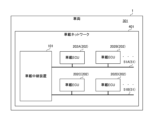
- FIG. 1 is a diagram illustrating an example of a configuration of an in-vehicle system according to an embodiment of the present disclosure.
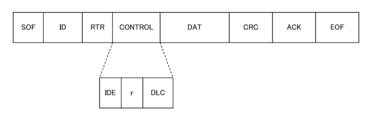
- FIG. 2 is a diagram illustrating an example of a CAN frame transmitted by an in-vehicle ECU in the in-vehicle system according to the embodiment of the present disclosure.
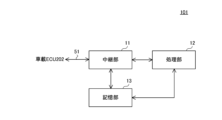
- FIG. 3 is a diagram illustrating an example of a configuration of an in-vehicle relay device according to an embodiment of the present disclosure.
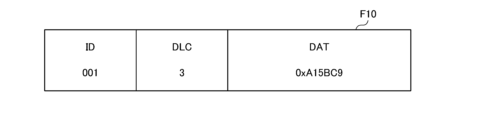
- FIG. 4 is a diagram illustrating a portion of a CAN frame stored by an in-vehicle relay device according to an embodiment of the present disclosure.
- FIG. 5 is a diagram showing a part of a periodic frame after reduction processing by the vehicle-mounted relay device according to an embodiment of the present disclosure.
- FIG. 6 is a diagram illustrating a portion of a CAN frame received by an in-vehicle relay device according to an embodiment of the present disclosure.
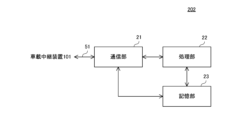
- FIG. 7 is a diagram illustrating an example of a configuration of an in-vehicle ECU according to an embodiment of the present disclosure.
- FIG. 8 is a diagram illustrating an example of a management table stored in the in-vehicle device according to the embodiment of the present disclosure.
- FIG. 9 is a diagram illustrating an example of a management table after a registration process by the in-vehicle device according to the embodiment of the present disclosure.
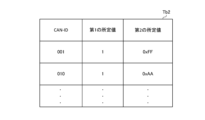
- FIG. 10 is a diagram illustrating an example of a correspondence table stored in the in-vehicle device according to the embodiment of the present disclosure.
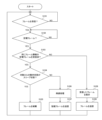
- FIG. 11 is a flowchart that defines an operation procedure when the vehicle-mounted relay device according to the embodiment of the present disclosure performs the reduction process.
- FIG. 12 is a flowchart that defines an operation procedure when an in-vehicle ECU according to an embodiment of the present disclosure receives a frame.
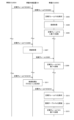
- FIG. 13 is a diagram illustrating an example of a processing sequence of the vehicle relay device and each vehicle ECU according to an embodiment of the present disclosure.
- This disclosure has been made to solve the above-mentioned problems, and its purpose is to provide an in-vehicle relay device, an in-vehicle device, and an in-vehicle system that can realize an in-vehicle system with a reduced communication load.
- An in-vehicle relay device is an in-vehicle relay device used in an in-vehicle system including a plurality of in-vehicle devices, and includes a relay unit that receives a periodic frame, which is a frame transmitted periodically from the in-vehicle device, and a processing unit that performs a reduction process to set a value of data length information indicating the data length of a data field in the periodic frame received by the relay unit to a first predetermined value, set the value of the data field to a second predetermined value, and change the data length of the data field to a data length corresponding to the first predetermined value.
- the processing unit decides to perform the reduction process of the first frame, and the relay unit transmits the first frame on which the reduction process has been performed to the destination in-vehicle device.
- the processing unit may decide not to perform the reduction process on the third frame, and the relay unit may transmit the third frame on which the reduction process has not been performed to the destination in-vehicle device.
- the processing unit may perform the reduction process for the first frame if the frame information of the first frame is the same as the frame information of the second frame and the operating state of the in-vehicle device that is the destination of the first frame is not in a sleep state.
- This configuration makes it possible to prevent unnecessary reduction processing from being performed even if the frame information of the first frame is the same as the frame information of the second frame, thereby reducing the processing load on the vehicle-mounted relay device.
- the periodic frame may be a frame for display processing based on measurement results in a vehicle in which the in-vehicle system is installed.
- event frames which are frames that are sent irregularly
- the content of the data contained in frames for display processing is unlikely to change frequently, so by performing reduction processing on these frames, the amount of communication can be effectively reduced.
- the periodic frame may be reserved for use in the in-vehicle system, the periodic frame including predetermined identification information and the data field having a predetermined data length and a predetermined value.
- This configuration can prevent frames with the same content as frames reserved for use in the reduction process from being transmitted for other purposes in the in-vehicle system, resulting in a more stable in-vehicle system.
- An in-vehicle device is an in-vehicle device used in an in-vehicle system, and includes a communication unit that receives a periodic frame, which is a frame periodically transmitted from another in-vehicle device, and a processing unit.
- the processing unit determines that the first frame corresponds to a frame in which the data length of a second frame, which is the periodic frame received by the communication unit prior to the first frame, has been reduced, and when the value of the data length information of the first frame differs from the first predetermined value or the value of the data field differs from the second predetermined value, the processing unit performs an update process of storing the first frame in the storage unit as a new second frame.
- the destination in-vehicle device can correctly identify the periodic frame. Furthermore, when the in-vehicle device to which the periodic frame is addressed receives a new periodic frame in which at least one of the values of the data length information and the data field is different compared to a periodic frame that has already been received, it can store the correct periodic frame as the periodic frame to be used for comparison from the next time onwards. Therefore, it is possible to realize an in-vehicle system with a reduced communication load.
- the processing unit may store information contained in a specified field in the first frame in the storage unit during the update process.
- the in-vehicle device to which the periodic frame is addressed receives a periodic frame with a reduced data length, it can easily execute the processing that should be performed upon receiving the periodic frame using the stored information.
- the processing unit may perform a predetermined process based on the second frame.
- the periodic frame may be a frame for display processing based on measurement results in a vehicle in which the in-vehicle system is installed.
- event frames which are frames that are sent irregularly
- the content of the data contained in frames for display processing is unlikely to change frequently, so by performing reduction processing on these frames, the amount of communication can be effectively reduced.
- the periodic frame may be reserved for use in the in-vehicle system, the periodic frame including predetermined identification information and the data field having a predetermined data length and a predetermined value.
- This configuration can prevent frames with the same content as frames reserved for use in the reduction process from being transmitted for other purposes in the in-vehicle system, resulting in a more stable in-vehicle system.
- An in-vehicle system includes a plurality of in-vehicle devices and an in-vehicle relay device that relays a periodic frame, which is a frame periodically transmitted from a first in-vehicle device, to a second in-vehicle device, and when frame information, which is at least one of a value of a data field and data length information indicating a data length of the data field, of a first frame, which is the received periodic frame, is the same as the frame information of a second frame, which is the periodic frame received before the first frame, the in-vehicle relay device sets the value of the data length information of the first frame to a first predetermined value, sets the value of the data field in the first frame to a second predetermined value, and sets the data length of the data field in the first frame to a data length corresponding to the first predetermined value.
- the in-vehicle relay device transmits the first frame after the reduction process to the second in-vehicle device, and if the value of the data length information of the third frame, which is the periodic frame including the identification information of the frame that the in-vehicle relay device is to receive, is the first predetermined value and the value of the data field in the third frame is the second predetermined value, the second in-vehicle device determines that the third frame corresponds to a frame with the data length of the fourth frame, which is the periodic frame received before the third frame, reduced, and if the value of the data length information of the third frame is different from the first predetermined value or if the value of the data field is different from the second predetermined value, the second in-vehicle device performs an update process to store the third frame in a memory unit as a new fourth frame.
- a configuration that performs reduction processing makes it possible, for example, to transmit a periodic frame with the data length of the data field reduced to the destination in-vehicle device, thereby reducing the communication volume of periodic frames. Furthermore, in a configuration in which a periodic frame with a reduced data length is transmitted, the destination in-vehicle device can correctly identify the periodic frame.
- an in-vehicle device that is the destination of a periodic frame receives a new periodic frame in which at least one of the values of the data length information and the data field is different compared to a periodic frame that has already been received, it is possible to store the correct periodic frame as the periodic frame to be used for comparison from the next time onwards. Therefore, an in-vehicle system with a further reduced communication load can be realized.
- FIG. 1 is a diagram showing an example of a configuration of an in-vehicle system according to an embodiment of the present disclosure.
- the in-vehicle system 301 includes, for example, one in-vehicle relay device 101 and a plurality of in-vehicle ECUs 202.
- the in-vehicle system 301 is mounted on a vehicle 1.
- the in-vehicle relay device 101 is used in the in-vehicle system 301 including the plurality of in-vehicle ECUs 202.
- the in-vehicle ECU (Electronic Control Unit) 202 is an example of an in-vehicle device.
- the in-vehicle system 301 includes the in-vehicle ECUs 202A, 202B, 202C, and 202D that are the in-vehicle ECU 202.
- the in-vehicle system 301 is not limited to a configuration having four in-vehicle ECUs 202, but may be a configuration having two, three, or four or more in-vehicle ECUs 202.
- the in-vehicle ECU 202 is a TCU (Telematics Communication Unit), an engine ECU, an automatic driving ECU, an ECU for door locks, etc.
- the in-vehicle system 301 may include in-vehicle devices such as sensors, a navigation device, a human-machine interface, and a camera.
- the in-vehicle relay device 101 and the multiple in-vehicle ECUs 202 constitute an in-vehicle network 401.
- the multiple in-vehicle ECUs 202 are connected to the in-vehicle relay device 101 via a communication bus 51 that conforms to the CAN (Controller Area Network) standard, for example.
- CAN Controller Area Network
- the in-vehicle relay device 101 relays frames between multiple in-vehicle ECUs 202 connected to it.
- the in-vehicle relay device 101 and each in-vehicle ECU 202 transmits a CAN frame including various information such as information to assist the autonomous driving performed by the vehicle 1 and information used for entertainment, and a CAN-ID (Identifier) indicating the type of data, etc., to another in-vehicle ECU 202 or in-vehicle relay device 101.
- the CAN-ID is an example of identification information.
- FIG. 2 is a diagram showing an example of a CAN frame transmitted by an in-vehicle ECU in an in-vehicle system according to an embodiment of the present disclosure.
- the CAN frame has, in this order from the beginning of the frame, a SOF (Start Of Frame) field, an ID field, an RTR (Remote Transmission Request) field, a CONTROL field, a data field (hereinafter also referred to as a DAT field), a CRC (Cyclic Redundancy Check) field, an ACK field, and an EOF (End Of Frame) field.
- the CONTROL field includes an IDE (Identifier Extension), a reserved bit "r”, and a DLC (Data Length Code).
- the DLC value is an example of data length information, and indicates the data length of the DAT field.
- the CAN-ID, the value of the DAT field, and the DLC of a CAN frame are each also referred to as "frame information”.
- the in-vehicle ECU 202 transmits CAN frames to other in-vehicle ECUs 202 or the in-vehicle relay device 101, for example, periodically or irregularly.
- CAN frames transmitted periodically from the in-vehicle ECU 202 are also referred to as "periodic frames.”
- the periodic frame is a frame for display processing based on the measurement results in the vehicle 1.
- the periodic frame is a frame for displaying the vehicle speed on a meter of the vehicle 1, a frame for displaying the temperature outside the vehicle 1 on the meter, etc.
- the in-vehicle system 301 is not limited to a configuration in which two communication buses 51 are provided, and may be a configuration in which one or three or more communication buses 51 are provided.
- the multiple in-vehicle ECUs 202 are not limited to being connected to the in-vehicle relay device 101 via a communication bus 51 conforming to the CAN standard, but may be connected to the in-vehicle relay device 101 via a communication bus conforming to the CAN FD (CAN with Flexible Data Rate) standard, for example.
- CAN FD CAN with Flexible Data Rate
- the in-vehicle ECU 202 transitions from a wake-up mode to a sleep mode, or from the sleep mode to the wake-up mode.
- the wake-up mode the in-vehicle ECU 202 communicates with other devices in the in-vehicle system 301, and in the sleep mode, the in-vehicle ECU 202 stops communication with other devices in the in-vehicle system 301.
- the sleep mode is a mode in which power consumption is smaller than that in the wake-up mode due to the stopping of some functions of the in-vehicle ECU 202, the stopping of power supply to the in-vehicle ECU 202, or a decrease in the clock frequency of the in-vehicle ECU 202, or the like.
- the in-vehicle ECU 202 transmits a CAN frame (hereinafter also referred to as an "NM frame") that stores an NM (Network Management) message conforming to the AUTOSAR (AUTOmotive Open System Architecture) (registered trademark) to each device in the in-vehicle system 301.
- NM Network Management
- AUTOSAR AUTOmotive Open System Architecture
- the in-vehicle ECU 202 broadcasts an NM frame to each device for alive monitoring, for example.
- the vehicle ECU 202 when the vehicle ECU 202's operation mode transitions from wake-up mode to sleep mode, it stops transmitting NM frames.
- FIG. 3 is a diagram showing an example of the configuration of an in-vehicle relay device according to an embodiment of the present disclosure.
- the in-vehicle relay device 101 includes a relay unit 11, a processing unit 12, and a storage unit 13.
- One or both of the relay unit 11 and the processing unit 12 are realized by, for example, a processing circuit including one or more processors.
- the storage unit 13 is, for example, a non-volatile memory included in the processing circuit.
- the relay unit 11 receives a periodic frame transmitted from one vehicle-mounted ECU 202 and relays it to another vehicle-mounted ECU 202.
- the memory unit 13 stores a type table that indicates the correspondence between a CAN-ID and type information indicating whether a CAN frame including the CAN-ID is a periodic frame.
- the relay unit 11 When the relay unit 11 receives a CAN frame from the in-vehicle ECU 202, it reads the type table in the storage unit 13. The relay unit 11 then refers to the type table to check whether the received CAN frame is a periodic frame.
- the memory unit 13 further stores a routing table that indicates the correspondence between the CAN-ID and the CAN bus to which the destination of the CAN frame is connected (hereinafter also referred to as the "destination bus").
- the relay unit 11 If the received CAN frame is not a periodic frame, the relay unit 11 reads the routing table in the storage unit 13. The relay unit 11 then refers to the routing table to identify the destination bus that corresponds to the CAN-ID included in the CAN frame, and outputs the CAN frame to the identified destination bus.
- the relay unit 11 performs a confirmation process to check whether the same periodic frame has already been received.
- the memory unit 13 stores the received CAN frames for each CAN-ID.
- the relay unit 11 checks whether a periodic frame containing the same CAN-ID as the CAN frame is stored in the memory unit 13.
- the relay unit 11 determines that the CAN frame has not been received and reads the routing table in the memory unit 13. The relay unit 11 then refers to the routing table to identify the destination bus corresponding to the CAN-ID contained in the CAN frame, and outputs the CAN frame to the identified destination bus. The relay unit 11 also stores the CAN frame in association with the CAN-ID.
- FIG. 4 is a diagram showing a portion of a CAN frame stored by an in-vehicle relay device according to an embodiment of the present disclosure.
- FIG. 4 shows a portion of a periodic frame F10, which is an example of a periodic frame.
- the memory unit 13 stores a periodic frame F10 whose CAN-ID is "001", whose DLC (Data Length Code) value is "3”, and whose DAT field value is "0xA15BC9".
- the processing unit 12 performs a reduction process in which the DLC value in the periodic frame received by the relay unit 11 is set to a first predetermined value, the value of the DAT field in the periodic frame is set to a second predetermined value, and the data length of the DAT field is changed to a data length corresponding to the first predetermined value.
- the processing unit 12 decides to perform a reduction process for the periodic frame F11.
- the periodic frame F10 is the periodic frame previously received by the relay unit 11.
- the periodic frame F11 is a periodic frame that includes the same frame information as the periodic frame F10.
- the relay unit 11 confirms in the above confirmation process that it has received a periodic frame F10 that contains the same CAN-ID as the periodic frame F11, it outputs the periodic frame F11 to the processing unit 12.
- the processing unit 12 When the processing unit 12 receives a periodic frame F11 from the relay unit 11, it checks whether the DLC value and the DAT field value of the periodic frame F11 are the same as the DLC value and the DAT field value of the periodic frame F10 stored in the memory unit 13.
- the processing unit 12 decides not to perform reduction processing. Then, the processing unit 12 outputs the periodic frame F11 to the relay unit 11.
- the relay unit 11 When the relay unit 11 receives the periodic frame F11 from the processing unit 12, it outputs the periodic frame F11 to the destination bus using the routing table as described above.
- the processing unit 12 checks whether the in-vehicle ECU 202 that is the destination of the periodic frame F11 is in a sleep state.
- the memory unit 13 stores a CAN table that indicates the correspondence between CAN-IDs, the source of a CAN frame, and the destination of a CAN frame.
- the processing unit 12 When the processing unit 12 receives the periodic frame F11 from the relay unit 11, it reads the CAN table in the storage unit 13. Then, the processing unit 12 refers to the CAN table to identify the in-vehicle ECU 202 (hereinafter also referred to as the "target ECU") to which the periodic frame F11 is to be sent.
- the processing unit 12 refers to the CAN table to identify the in-vehicle ECU 202 (hereinafter also referred to as the "target ECU") to which the periodic frame F11 is to be sent.
- the storage unit 13 further stores a state check list indicating whether the operating state of each in-vehicle ECU 202 in the in-vehicle system 301 is in a sleep state or not.
- the processing unit 12 When the processing unit 12 receives an NM frame from an on-board ECU 202, it registers in the state confirmation list in the memory unit 13 that the on-board ECU 202 is not in a sleep state. On the other hand, if a new NM frame does not arrive from an on-board ECU 202 even after a certain time has elapsed since the processing unit 12 received an NM frame from the on-board ECU 202, it registers in the state confirmation list that the operating state of the on-board ECU 202 is in a sleep state.
- the processing unit 12 When the processing unit 12 identifies the target ECU, it checks whether the operating state of the target ECU is in a sleep state by referring to the state confirmation list in the memory unit 13.
- the processing unit 12 decides not to perform the reduction process and discards the periodic frame F11 received from the relay unit 11.
- the processing unit 12 decides to perform the reduction process.
- the processing unit 12 sets the DLC value to a first predetermined value and the DAT field value to a second predetermined value in the periodic frame F11 received from the relay unit 11.
- FIG. 5 shows a portion of a periodic frame after reduction processing by an in-vehicle relay device according to an embodiment of the present disclosure.
- the DLC value is "1" and the DAT field value is "0xFF".
- the data length of the DAT field of the periodic frame F11 after the reduction process is 2 bytes, which is a reduction in data length compared to the periodic frame F10 shown in FIG. 4, in which the data length of the DAT field is 6 bytes.
- the use of a periodic frame including a specified CAN-ID and a DAT field of a specified data length and value is reserved.
- the use of a periodic frame including a CAN-ID of "001", a DLC value of "2”, and a DAT field value of "0xFF" is reserved in the in-vehicle system 301.
- the relay unit 11 transmits the periodic frame F11 for which the reduction process has been performed (hereinafter, also referred to as a “shortened frame”) to the in-vehicle ECU 202 as the destination.
- the processing unit 12 when the processing unit 12 creates a shortened frame, it outputs the created shortened frame to the relay unit 11.
- the relay unit 11 When the relay unit 11 receives a shortened frame from the processing unit 12, it outputs the shortened frame to the destination bus using the routing table as described above.
- periodic frame F12 a periodic frame
- the processing unit 12 decides not to perform reduction processing of the periodic frame F12.
- the relay unit 11 when the relay unit 11 receives the periodic frame F12, it checks in the above confirmation process whether or not a periodic frame containing the same CAN-ID as the periodic frame F12 has already been received.
- the CAN-ID of the periodic frame F12 is the same as the CAN-ID of the periodic frame F10.
- the relay unit 11 When the relay unit 11 confirms that it has received the periodic frame F10 containing the same CAN-ID as the periodic frame F12, it outputs the periodic frame F12 to the processing unit 12.
- the processing unit 12 When the processing unit 12 receives the periodic frame F12 from the relay unit 11, it refers to the periodic frame F10 stored in the memory unit 13 to check whether the DLC value and the DAT field value of the periodic frame F12 are the same as the DLC value and the DAT field value of the periodic frame F10, respectively.
- FIG. 6 is a diagram showing a portion of a CAN frame received by an in-vehicle relay device according to an embodiment of the present disclosure.
- FIG. 6 shows a portion of a periodic frame F12.
- the CAN-ID is "001", the DLC value is "2”, and the DAT field value is "0xAC31". That is, in periodic frame F12, the CAN-ID is the same as that of periodic frame F10 shown in Figure 3, but the DLC value and the DAT field value are different from the DLC value and the DAT field value, respectively, of periodic frame F10.
- the processing unit 12 decides not to perform the reduction process. Then, the processing unit 12 outputs the periodic frame F12 to the relay unit 11.
- the relay unit 11 transmits the periodic frame F12, for which reduction processing has not been performed, to the destination in-vehicle ECU 202.
- the processing unit 12 decides to perform the reduction process.
- the communication unit 21 receives periodic frames transmitted from other vehicle-mounted ECUs 202. More specifically, for example, the storage unit 23 stores a reception list indicating the correspondence between the CAN-ID included in a CAN frame that the vehicle-mounted ECU 202 should receive and type information indicating whether the CAN frame is a periodic frame.
- the communication unit 21 discards the periodic frame that includes that CAN-ID. On the other hand, if the CAN-ID is registered in the reception list, the communication unit 21 checks whether the CAN frame that includes that CAN-ID is a periodic frame.
- the communication unit 21 If the received CAN frame is not a periodic frame, the communication unit 21 outputs the CAN frame to the processing unit 22.
- the processing unit 22 receives the CAN frame from the communication unit 21, it performs a predetermined process based on the CAN frame.
- the communication unit 21 checks whether the same periodic frame has already been received.
- the memory unit 23 stores periodic frames for each CAN-ID.
- the communication unit 21 checks whether or not a periodic frame that includes the same CAN-ID as the CAN frame is stored in the memory unit 23.
- the communication unit 21 determines that the CAN frame has not been received.
- FIG. 8 shows an example of a management table stored in an in-vehicle device according to an embodiment of the present disclosure.
- the memory unit 23 stores a management table Tb1 that indicates the correspondence between the CAN-ID, DLC value, and DAT field value of a received periodic frame.
- management table Tb1 a periodic frame containing CAN-ID "010", DLC “3” and DAT field "0xA23FE6" is registered.
- the communication unit 21 If a periodic frame containing the same CAN-ID as the received CAN frame is not stored, the communication unit 21 reads out the management table Tb1 in the storage unit 23. Then, the communication unit 21 performs a registration process to register the CAN-ID, DLC value, and DAT field value of the CAN frame in the management table Tb1.
- FIG. 9 shows an example of a management table after registration processing by an in-vehicle device according to an embodiment of the present disclosure.
- the communication unit 21 stores the received CAN frame in the storage unit 23.
- the communication unit 21 then outputs a first reception notification to the processing unit 22 indicating that the periodic frame has been received and indicating that this is the first time that the periodic frame has been received.
- the processing unit 22 When the processing unit 22 receives an initial reception notification from the communication unit 21, it performs a predetermined process based on the periodic frame stored in the memory unit 23.
- a periodic frame containing the same CAN-ID as the received CAN frame is stored, the communication unit 21 determines that the periodic frame has already been received. The processing unit 22 then outputs the received periodic frame to the processing unit 22.
- a periodic frame that has already been received in the on-board ECU 202 is also referred to as periodic frame F20.
- a periodic frame that is received after periodic frame F20 and contains the same CAN-ID as periodic frame F20 is also referred to as periodic frame F21.
- the processing unit 22 performs a judgment process on the periodic frame F21. Specifically, when the DLC value of the periodic frame F21 including the CAN-ID of the CAN frame that should be received by its own in-vehicle ECU 202 is a first predetermined value and the value of the DAT field is a second predetermined value, the processing unit 22 judges that the periodic frame F21 corresponds to, for example is the same as, a CAN frame with a reduced data length of the periodic frame F20 including the CAN-ID of the periodic frame F21 that was received by the communication unit 21 prior to the periodic frame F21.
- the processing unit 22 when the processing unit 22 receives a periodic frame F21 from the communication unit 21, it checks the DLC value and the DAT field value of the periodic frame F21.
- FIG. 10 shows an example of a correspondence table stored in an in-vehicle device according to an embodiment of the present disclosure.
- the storage unit 23 further stores a correspondence table Tb2 indicating the correspondence between the CAN-ID, the first predetermined value, and the second predetermined value.
- the correspondence table Tb2 is registered in the storage unit 23 by the manufacturer of the vehicle 1, for example, when the vehicle 1 is shipped.
- the first predetermined value corresponding to CAN-ID "001” is “1” and the second predetermined value is "0xFF.”
- the first predetermined value corresponding to CAN-ID "010” is “1” and the second predetermined value is "0xAA.”
- the processing unit 22 When the processing unit 22 receives the periodic frame F21 from the communication unit 21, it reads out the correspondence table Tb2 in the memory unit 23. Then, in the judgment process, the processing unit 22 checks the first predetermined value and the second predetermined value corresponding to the CAN-ID included in the periodic frame F21 received from the communication unit 21 by referring to the correspondence table Tb2.
- the processing unit 22 determines that the periodic frame F21 corresponds to a frame in which the data length of the periodic frame F20 has been reduced.
- the processing unit 22 determines that the periodic frame F21 corresponds to a frame in which the data length of the periodic frame F20 has been reduced, it performs a predetermined process based on the periodic frame F20.
- the processing unit 22 determines that the periodic frame F21 corresponds to a frame in which the data length of the periodic frame F20 has been reduced, the processing unit 22 performs a predetermined process based on the periodic frame F20 stored in the storage unit 23.
- the processing unit 22 performs an update process to store the periodic frame F21 in the storage unit 23 as a new periodic frame F20. That is, in the update process, the processing unit 22 stores information contained in a predetermined field in the periodic frame F21, in this case all fields, in the storage unit 23. Then, the processing unit 22 discards the received periodic frame F20 stored in the storage unit 23.
- the processing unit 22 updates the management table Tb1 when the DLC value of the periodic frame F21 received from the communication unit 21 differs from the specified first predetermined value, or when the value of the DAT field differs from the specified second predetermined value.
- the processing unit 22 reads out the management table Tb1 in the storage unit 23. Then, the processing unit 22 updates the DLC value and DAT field value in the management table Tb1 that correspond to the same CAN-ID as the CAN-ID included in the periodic frame F21 to the DLC value and DAT field value of the periodic frame F21.
- FIG. 11 is a flowchart that defines an operation procedure when the vehicle-mounted relay device according to the embodiment of the present disclosure performs the reduction process.
- the in-vehicle relay device 101 waits to receive a frame from the in-vehicle ECU 202 (NO in step S101).
- the in-vehicle relay device 101 when the in-vehicle relay device 101 receives a frame from the in-vehicle ECU 202 (YES in step S101), it checks whether the frame is a periodic frame. For example, as described above, the in-vehicle relay device 101 checks whether the frame received from the in-vehicle ECU 202 is a periodic frame by referring to the type table in the memory unit 13 (step S102).
- the in-vehicle relay device 101 checks whether a periodic frame containing the same frame information as the frame has already been received. For example, as described above, the in-vehicle relay device 101 checks whether the CAN-ID, DLC value, and data field value of the received frame are the same as the CAN-ID, DLC value, and data field value of the previously received periodic frame (step S103).
- the in-vehicle relay device 101 checks whether the operating state of the target ECU, which is the in-vehicle ECU 202 that is the destination of the frame, is in a sleep state (step S104).
- the in-vehicle relay device 101 discards the frame received from the in-vehicle ECU 202 (step S105).
- the in-vehicle relay device 101 performs a reduction process. For example, as described above, the in-vehicle relay device 101 sets the DLC value of the received frame to a first predetermined value and sets the value of the DAT field to a second predetermined value (step S106).
- the in-vehicle relay device 101 transmits the shortened frame, which is the periodic frame that has been subjected to the reduction process, to the destination in-vehicle ECU 202 (step S107).
- the in-vehicle relay device 101 stores the frame in the memory unit 13. For example, as described above, the in-vehicle relay device 101 associates the frame with the CAN-ID and stores it in the memory unit 13 (step S108).
- the in-vehicle relay device 101 transmits the frame received from the in-vehicle ECU 202 to the destination in-vehicle ECU 202 (step S109). Note that steps S108 and S109 may be executed in reverse order or in parallel.
- FIG. 12 is a flowchart that defines the operational procedure when an in-vehicle ECU according to an embodiment of the present disclosure receives a frame.
- the in-vehicle ECU 202 waits to receive a frame from the in-vehicle relay device 101 (step S201).
- step S202 when the in-vehicle ECU 202 receives a frame from another in-vehicle ECU 202 via the in-vehicle relay device 101 (YES in step S201), it checks whether the frame is a regular frame (step S202).
- step S202 if the frame received from the vehicle relay device is a periodic frame (YES in step S202), the vehicle ECU 202 checks whether a periodic frame containing the same CAN-ID as the frame has already been received (step S203).
- the in-vehicle ECU 202 checks whether the DLC value of the frame is a first predetermined value and the DAT field value is a second predetermined value.
- the in-vehicle ECU 202 checks whether the DLC value is "1" and the DAT field value is "0xFF" (step S204).
- the in-vehicle ECU 202 retrieves the received periodic frame F20 stored in the memory unit 23 from the memory unit 23 (step S205).
- the in-vehicle ECU 202 performs a predetermined process based on the acquired periodic frame F20 (step S206).
- the in-vehicle ECU 202 performs an update process to store the frame in the memory unit 23 as a new periodic frame F20 (step S207), and updates the DLC value and DAT field value in the management table Tb1 that correspond to the same CAN-ID as the CAN-ID contained in the frame to the DLC value and DAT field value of the frame (step S208).
- the in-vehicle ECU 202 stores the frame in the memory unit 23 (step S209) and performs a registration process to register the CAN-ID, DLC, and DAT fields of the frame in the management table Tb1 (step S210).
- step S211 the in-vehicle ECU 202 performs a predetermined process based on the received frame. Note that the processes from step S209 to step S211 may be executed in a different order or in parallel.
- step S211 If the frame received from the vehicle relay device 101 is not a periodic frame (NO in step S202), the vehicle ECU 202 performs a predetermined process based on the received frame (step S211).
- FIG. 13 is a diagram showing an example of a processing sequence of the vehicle relay device and each vehicle ECU according to an embodiment of the present disclosure.
- FIG. 13 shows the processing sequence of the vehicle relay device 101, the vehicle ECU 202A, and the vehicle ECU 202C.
- the in-vehicle ECU 202A transmits a periodic frame F10 addressed to the in-vehicle ECU 202C (step S301).
- the in-vehicle relay device 101 relays the periodic frame F10 received from the in-vehicle ECU 202A to the in-vehicle ECU 202C. For example, as described above, the in-vehicle relay device 101 confirms that the periodic frame F10 is not a periodic frame that has already been received, associates the periodic frame F10 with the CAN-ID, stores the periodic frame F10 in the memory unit 13, and transmits the periodic frame F10 to the in-vehicle ECU 202C (step S302).
- the in-vehicle ECU 202C receives the periodic frame F10 from the in-vehicle relay device 101, it stores the received periodic frame 10 in the memory unit 23 (step S303) and performs a registration process to register the CAN-ID, DLC, and DAT fields of the periodic frame F10 in the management table Tb1 (step S304).
- the in-vehicle ECU 202C performs a predetermined process based on the received periodic frame F10 (step S305).
- the in-vehicle ECU 202A transmits a periodic frame F11 that includes the same CAN-ID as the periodic frame F10 and is addressed to the in-vehicle ECU 202C (step S306).
- the in-vehicle relay device 101 receives the periodic frame F11 from the in-vehicle ECU 202A, it performs the reduction process. For example, as described above, when the in-vehicle relay device 101 confirms that it has already received the periodic frame F10 including the same CAN-ID as the periodic frame F11 and that the in-vehicle ECU 202C, which is the destination of the periodic frame F11, is not in a sleep state, it performs the reduction process. In the reduction process, the in-vehicle relay device 101 sets the DLC value of the periodic frame F11 to a first predetermined value and sets the value of the DAT field to a second predetermined value (step S307).
- the in-vehicle relay device 101 transmits the shortened frame, which is the periodic frame F11 that has been subjected to the reduction process, to the in-vehicle ECU 202C (step S308).
- the in-vehicle ECU 202C receives the shortened frame from the in-vehicle relay device 101, it performs a predetermined process based on the received regular frame F10 (step S309).
- the in-vehicle ECU 202A transmits a periodic frame F12 addressed to the in-vehicle ECU 202C (step S310).
- the in-vehicle relay device 101 receives the periodic frame F12 from the in-vehicle ECU 202A and checks whether the CAN-ID, DLC value, and DAT field value of the periodic frame F12 are the same as the CAN-ID, DLC value, and DAT field value of the periodic frame F10, respectively.
- the DLC value and DAT field value of the periodic frame F12 are different from the DLC value and DAT field value of the periodic frame F10, respectively. Therefore, the in-vehicle relay device 101 decides not to perform reduction processing (step S311).
- the in-vehicle relay device 101 transmits the periodic frame F12 for which reduction processing has not been performed to the in-vehicle ECU 202C (step S312).
- the in-vehicle ECU 202C receives the periodic frame F12 from the in-vehicle relay device 101, it performs an update process to store the received periodic frame F12 in the memory unit 23 as a new periodic frame F10 (step S313), and updates the DLC value and DAT field value corresponding to the same CAN-ID as the CAN-ID included in the periodic frame F12 in the management table Tb1 to the DLC value and DAT field value of the frame (step S314).
- the in-vehicle ECU 202C performs a predetermined process based on the received periodic frame F12 (step S315).
- the in-vehicle system 301 is configured to include one in-vehicle relay device 101, this is not limited to this.
- the in-vehicle system 301 may be configured to include multiple in-vehicle relay devices 101.
- the in-vehicle relay device 101 that is the destination of the periodic frame is an example of an in-vehicle device, and may perform the determination process and update process as described above.
- the processing unit 12 is configured to check three pieces of frame information, the CAN-ID, the DLC value, and the DAT field value, when performing the reduction process, but this is not limited to this.
- the processing unit 12 may be configured to check the CAN-ID and DLC values, or check the CAN-ID and DAT field values.
- the in-vehicle system 301 has been described as having a configuration in which multiple in-vehicle ECUs 202 are connected to each of the communication buses 51A and 51B, this is not limited to this.
- the in-vehicle system 301 may also have a configuration in which one in-vehicle ECU 202 is connected to each of the communication buses 51A and 51B. In this case, for example, one type of CAN-ID is used in the in-vehicle system 301.
- the in-vehicle relay device 101 that receives a periodic frame and the in-vehicle ECU 202 that is the destination of the periodic frame may check whether or not they have already received a periodic frame with the same DLC value and DAT field value as the received periodic frame, without checking the CAN-ID of the periodic frame.
- the processing unit 12 is configured to perform the reduction process when the frame information of the periodic frame F11 is the same as the frame information of the periodic frame F10 and the operating state of the in-vehicle ECU 202 that is the destination of the periodic frame F11 is not in a sleep state, but this is not limited to this.
- the processing unit 12 may be configured to perform the reduction process regardless of the operating state of the in-vehicle ECU 202 that is the destination of the periodic frame F11 when the frame information of the periodic frame F11 is the same as the frame information of the periodic frame F10.
- the processing unit 22 is configured to store information contained in all fields in the periodic frame F21 in the storage unit 23 during the update process, but this is not limited to the above.
- the processing unit 22 may also be configured to store information contained in some fields in the periodic frame F21 in the storage unit 23.
- the processing unit 22 may be configured to store the CAN-ID, DLC value, and DAT field value of the periodic frame F21 in the storage unit 23.
- the periodic frame is a frame for display processing based on the measurement results in the vehicle 1, but this is not limited to this.
- the periodic frame may be a frame for other processing.
- Each process (each function) in the above-mentioned embodiments is realized by a processing circuit including one or more processors.
- the processing circuit may be composed of an integrated circuit or the like that combines one or more memories, various analog circuits, and various digital circuits in addition to the one or more processors.
- the one or more memories store programs (instructions) that cause the one or more processors to execute each of the above processes.
- the one or more processors may execute each of the above processes according to the programs read from the one or more memories, or may execute each of the above processes according to a logic circuit designed in advance to execute each of the above processes.
- the processor may be any of various processors suitable for computer control, such as a CPU (Central Processing Unit), a GPU (Graphics Processing Unit), a DSP (Digital Signal Processor), an FPGA (Field Programmable Gate Array), and an ASIC (Application Specific Integrated Circuit).
- the physically separated processors may cooperate with each other to execute the above processes.
- the processors mounted on each of the physically separated computers may cooperate with each other via a network such as a LAN (Local Area Network), a WAN (Wide Area Network), or the Internet to execute the above processes.
- the above program may be installed into the memory from an external server device or the like via the network, or may be distributed in a state stored on a recording medium such as a CD-ROM (Compact Disc Read Only Memory), DVD-ROM (Digital Versatile Disc Read Only Memory), or semiconductor memory, and installed into the memory from the recording medium.
- a recording medium such as a CD-ROM (Compact Disc Read Only Memory), DVD-ROM (Digital Versatile Disc Read Only Memory), or semiconductor memory, and installed into the memory from the recording medium.
- An in-vehicle relay device used in an in-vehicle system including a plurality of in-vehicle devices A processing circuit is provided, The processing circuitry includes: receiving a periodic frame which is a frame periodically transmitted from the in-vehicle device; performing a reduction process in which a value of data length information indicating a data length of a data field in the received periodic frame is set to a first predetermined value, the value of the data field is set to a second predetermined value, and the data length of the data field is changed to a data length corresponding to the first predetermined value; determining to perform the reduction process when frame information, which is at least one of the value of the data field and the data length information, of a first frame, which is the received periodic frame, is the same as the frame information of a second frame, which is the periodic frame received before the first frame; The vehicle-mounted relay device transmits the first frame after the reduction process to the vehicle-mounted device as a destination.
- a relay method in an in-vehicle relay device used in an in-vehicle system including a plurality of in-vehicle devices comprising: receiving a periodic frame which is a frame periodically transmitted from the in-vehicle device; and performing a reduction process of setting a value of data length information indicating a data length of a data field in the received periodic frame to a first predetermined value, setting the value of the data field to a second predetermined value, and changing the data length of the data field to a data length corresponding to the first predetermined value, determining, in the step of performing the reduction process, to perform the reduction process on the first frame when frame information, which is at least one of the value of the data field and the data length information, of a first frame, which is the received periodic frame, is the same as the frame information of a second frame, which is the periodic frame received prior to the first frame;
- the relay method further comprises: a step of transmitting the first frame, on which the reduction process has been performed, to a destination
- a relay program used in an in-vehicle relay device used in an in-vehicle system having a plurality of in-vehicle devices, Computer a relay unit that receives a periodic frame that is a frame periodically transmitted from the in-vehicle device; a processing unit that performs a reduction process of setting a value of data length information indicating a data length of a data field in the periodic frame received by the relay unit to a first predetermined value, setting the value of the data field to a second predetermined value, and changing the data length of the data field to a data length corresponding to the first predetermined value; It is a program to function as the processing unit determines to perform the reduction process of the first frame when frame information, which is at least one of the value of the data field and the data length information, of a first frame, which is the periodic frame received by the relay unit, is the same as the frame information of a second frame, which is the periodic frame received by the relay unit prior to the first frame;
- the relay unit transmits
- An in-vehicle device A processing circuit is provided, The processing circuitry includes: receiving a periodic frame which is a frame periodically transmitted from another in-vehicle device; when a value of data length information indicating a data length of a data field in a first frame, which is the periodic frame, is a first predetermined value and a value of the data field is a second predetermined value, determining that the first frame corresponds to a frame obtained by reducing the data length of a second frame, which is the periodic frame received before the first frame; An in-vehicle device that performs an update process to store the first frame in a memory unit as a new second frame when the value of the data length information of the first frame is different from the first specified value or when the value of the data field is different from the second specified value.
- a frame processing method in an in-vehicle device used in an in-vehicle system comprising: receiving a periodic frame which is a frame periodically transmitted from another in-vehicle device; determining that, when a value of data length information indicating a data length of a data field in a first frame, which is the periodic frame, is a first predetermined value and a value of the data field is a second predetermined value, the first frame corresponds to a frame obtained by reducing the data length of a second frame, which is the periodic frame received before the first frame; and performing an update process to store the first frame in a memory unit as a new second frame when the value of the data length information of the first frame is different from the first specified value or when the value of the data field is different from the second specified value.
- a frame processing program for use in an in-vehicle device for use in an in-vehicle system comprising: Computer, a communication unit that receives a periodic frame that is a frame periodically transmitted from another in-vehicle device; Processing section, It is a program to function as a when a value of data length information indicating a data length of a data field in a first frame, which is the periodic frame, is a first predetermined value and a value of the data field is a second predetermined value, the processing unit determines that the first frame corresponds to a frame obtained by reducing the data length of a second frame, which is the periodic frame received by the communication unit prior to the first frame, The processing unit is a frame processing program that performs an update process to store the first frame in a memory unit as a new second frame when the value of the data length information of the first frame is different from the first specified value or when the value of the data field is different from the second specified value.
Landscapes
- Engineering & Computer Science (AREA)
- Computer Networks & Wireless Communication (AREA)
- Signal Processing (AREA)
- Small-Scale Networks (AREA)
- Electric Propulsion And Braking For Vehicles (AREA)
- Mobile Radio Communication Systems (AREA)
Priority Applications (1)
| Application Number | Priority Date | Filing Date | Title |
|---|---|---|---|
| CN202480024542.4A CN121002817A (zh) | 2023-04-12 | 2024-03-25 | 车载中继装置、车载装置及车载系统 |
Applications Claiming Priority (2)
| Application Number | Priority Date | Filing Date | Title |
|---|---|---|---|
| JP2023-064542 | 2023-04-12 | ||
| JP2023064542A JP2024151355A (ja) | 2023-04-12 | 2023-04-12 | 車載中継装置、車載装置および車載システム |
Publications (1)
| Publication Number | Publication Date |
|---|---|
| WO2024214525A1 true WO2024214525A1 (ja) | 2024-10-17 |
Family
ID=93059095
Family Applications (1)
| Application Number | Title | Priority Date | Filing Date |
|---|---|---|---|
| PCT/JP2024/011671 Ceased WO2024214525A1 (ja) | 2023-04-12 | 2024-03-25 | 車載中継装置、車載装置および車載システム |
Country Status (3)
| Country | Link |
|---|---|
| JP (1) | JP2024151355A (https=) |
| CN (1) | CN121002817A (https=) |
| WO (1) | WO2024214525A1 (https=) |
Citations (3)
| Publication number | Priority date | Publication date | Assignee | Title |
|---|---|---|---|---|
| JP2014080176A (ja) * | 2012-09-25 | 2014-05-08 | Tokai Rika Co Ltd | タイヤ位置判定システム |
| WO2022190811A1 (ja) * | 2021-03-10 | 2022-09-15 | 株式会社オートネットワーク技術研究所 | 車載装置、車載システム、情報処理方法、及びプログラム |
| WO2023276746A1 (ja) * | 2021-06-29 | 2023-01-05 | 株式会社オートネットワーク技術研究所 | 車載中継装置、車載装置およびスリープ通知方法 |
-
2023
- 2023-04-12 JP JP2023064542A patent/JP2024151355A/ja active Pending
-
2024
- 2024-03-25 WO PCT/JP2024/011671 patent/WO2024214525A1/ja not_active Ceased
- 2024-03-25 CN CN202480024542.4A patent/CN121002817A/zh active Pending
Patent Citations (3)
| Publication number | Priority date | Publication date | Assignee | Title |
|---|---|---|---|---|
| JP2014080176A (ja) * | 2012-09-25 | 2014-05-08 | Tokai Rika Co Ltd | タイヤ位置判定システム |
| WO2022190811A1 (ja) * | 2021-03-10 | 2022-09-15 | 株式会社オートネットワーク技術研究所 | 車載装置、車載システム、情報処理方法、及びプログラム |
| WO2023276746A1 (ja) * | 2021-06-29 | 2023-01-05 | 株式会社オートネットワーク技術研究所 | 車載中継装置、車載装置およびスリープ通知方法 |
Also Published As
| Publication number | Publication date |
|---|---|
| JP2024151355A (ja) | 2024-10-25 |
| CN121002817A (zh) | 2025-11-21 |
Similar Documents
| Publication | Publication Date | Title |
|---|---|---|
| JP5255579B2 (ja) | 車内データ中継装置、車両制御システム | |
| JPWO2018079008A1 (ja) | 制御装置、プログラム更新方法、およびコンピュータプログラム | |
| CN107920007B (zh) | 车辆网络中的多个通信节点的第一通信节点及其操作方法 | |
| US20200167307A1 (en) | In-vehicle relay device, control program, and memory sharing method | |
| CN114615103B (zh) | 车载网络系统 | |
| WO2018189975A1 (ja) | 中継装置、転送方法、およびコンピュータプログラム | |
| KR102109125B1 (ko) | Autosar 기반 차량 ecu 상태 관리 방법 | |
| JP2024003056A (ja) | 車載装置およびスリープ制御方法 | |
| KR101612825B1 (ko) | Can 컨트롤러, 차량 내부 통신을 위한 게이트웨이 및 그 제어 방법 | |
| WO2024214525A1 (ja) | 車載中継装置、車載装置および車載システム | |
| JP7525571B2 (ja) | 車載中継装置、スリープ制御方法およびスリープ制御プログラム | |
| WO2024177007A1 (ja) | 車載制御装置、給電制御方法および給電制御プログラム | |
| JP7542042B2 (ja) | 車載装置、接続先通知方法および接続先通知プログラム | |
| JP7487693B2 (ja) | 通信システム、および中継装置 | |
| US20260128925A1 (en) | Vehicle-mounted device, connection destination notification method, and connection destination notification program | |
| US20240411546A1 (en) | Vehicle control apparatus | |
| US20260082333A1 (en) | In-vehicle apparatus, connection destination notification method, and connection destination notification program | |
| JP4361540B2 (ja) | ゲートウェイ装置、データ転送方法及びプログラム | |
| US20260056835A1 (en) | In-vehicle network system and management method of in-vehicle network system | |
| CN115460028B (zh) | 车载网络休眠管理方法、装置、车载网络系统及车辆 | |
| WO2024101115A1 (ja) | 車載装置、機能制御方法および機能制御プログラム | |
| US20260084638A1 (en) | In-vehicle network system and control method | |
| CN121625986A (zh) | 车载网络系统以及车载网络系统的控制方法 | |
| WO2025164388A1 (ja) | 異常判定装置、異常判定方法および異常判定プログラム | |
| WO2025110002A1 (ja) | 車載中継装置、設定変更方法および設定変更プログラム |
Legal Events
| Date | Code | Title | Description |
|---|---|---|---|
| 121 | Ep: the epo has been informed by wipo that ep was designated in this application |
Ref document number: 24787045 Country of ref document: EP Kind code of ref document: A1 |
|
| NENP | Non-entry into the national phase |
Ref country code: DE |
|
| 122 | Ep: pct application non-entry in european phase |
Ref document number: 24787045 Country of ref document: EP Kind code of ref document: A1 |