WO2024203945A1 - 造形用金属粉末および造形物 - Google Patents
造形用金属粉末および造形物 Download PDFInfo
- Publication number
- WO2024203945A1 WO2024203945A1 PCT/JP2024/011470 JP2024011470W WO2024203945A1 WO 2024203945 A1 WO2024203945 A1 WO 2024203945A1 JP 2024011470 W JP2024011470 W JP 2024011470W WO 2024203945 A1 WO2024203945 A1 WO 2024203945A1
- Authority
- WO
- WIPO (PCT)
- Prior art keywords
- mass
- content
- metal powder
- less
- present
- Prior art date
- Legal status (The legal status is an assumption and is not a legal conclusion. Google has not performed a legal analysis and makes no representation as to the accuracy of the status listed.)
- Ceased
Links
Images
Classifications
-
- B—PERFORMING OPERATIONS; TRANSPORTING
- B22—CASTING; POWDER METALLURGY
- B22F—WORKING METALLIC POWDER; MANUFACTURE OF ARTICLES FROM METALLIC POWDER; MAKING METALLIC POWDER; APPARATUS OR DEVICES SPECIALLY ADAPTED FOR METALLIC POWDER
- B22F1/00—Metallic powder; Treatment of metallic powder, e.g. to facilitate working or to improve properties
-
- B—PERFORMING OPERATIONS; TRANSPORTING
- B22—CASTING; POWDER METALLURGY
- B22F—WORKING METALLIC POWDER; MANUFACTURE OF ARTICLES FROM METALLIC POWDER; MAKING METALLIC POWDER; APPARATUS OR DEVICES SPECIALLY ADAPTED FOR METALLIC POWDER
- B22F10/00—Additive manufacturing of workpieces or articles from metallic powder
- B22F10/20—Direct sintering or melting
- B22F10/28—Powder bed fusion, e.g. selective laser melting [SLM] or electron beam melting [EBM]
-
- B—PERFORMING OPERATIONS; TRANSPORTING
- B22—CASTING; POWDER METALLURGY
- B22F—WORKING METALLIC POWDER; MANUFACTURE OF ARTICLES FROM METALLIC POWDER; MAKING METALLIC POWDER; APPARATUS OR DEVICES SPECIALLY ADAPTED FOR METALLIC POWDER
- B22F10/00—Additive manufacturing of workpieces or articles from metallic powder
- B22F10/30—Process control
- B22F10/36—Process control of energy beam parameters
-
- B—PERFORMING OPERATIONS; TRANSPORTING
- B22—CASTING; POWDER METALLURGY
- B22F—WORKING METALLIC POWDER; MANUFACTURE OF ARTICLES FROM METALLIC POWDER; MAKING METALLIC POWDER; APPARATUS OR DEVICES SPECIALLY ADAPTED FOR METALLIC POWDER
- B22F10/00—Additive manufacturing of workpieces or articles from metallic powder
- B22F10/30—Process control
- B22F10/36—Process control of energy beam parameters
- B22F10/366—Scanning parameters, e.g. hatch distance or scanning strategy
-
- B—PERFORMING OPERATIONS; TRANSPORTING
- B22—CASTING; POWDER METALLURGY
- B22F—WORKING METALLIC POWDER; MANUFACTURE OF ARTICLES FROM METALLIC POWDER; MAKING METALLIC POWDER; APPARATUS OR DEVICES SPECIALLY ADAPTED FOR METALLIC POWDER
- B22F10/00—Additive manufacturing of workpieces or articles from metallic powder
- B22F10/60—Treatment of workpieces or articles after build-up
- B22F10/64—Treatment of workpieces or articles after build-up by thermal means
-
- B—PERFORMING OPERATIONS; TRANSPORTING
- B33—ADDITIVE MANUFACTURING TECHNOLOGY
- B33Y—ADDITIVE MANUFACTURING, i.e. MANUFACTURING OF THREE-DIMENSIONAL [3D] OBJECTS BY ADDITIVE DEPOSITION, ADDITIVE AGGLOMERATION OR ADDITIVE LAYERING, e.g. BY 3D PRINTING, STEREOLITHOGRAPHY OR SELECTIVE LASER SINTERING
- B33Y70/00—Materials specially adapted for additive manufacturing
-
- B—PERFORMING OPERATIONS; TRANSPORTING
- B33—ADDITIVE MANUFACTURING TECHNOLOGY
- B33Y—ADDITIVE MANUFACTURING, i.e. MANUFACTURING OF THREE-DIMENSIONAL [3D] OBJECTS BY ADDITIVE DEPOSITION, ADDITIVE AGGLOMERATION OR ADDITIVE LAYERING, e.g. BY 3D PRINTING, STEREOLITHOGRAPHY OR SELECTIVE LASER SINTERING
- B33Y80/00—Products made by additive manufacturing
-
- C—CHEMISTRY; METALLURGY
- C22—METALLURGY; FERROUS OR NON-FERROUS ALLOYS; TREATMENT OF ALLOYS OR NON-FERROUS METALS
- C22C—ALLOYS
- C22C38/00—Ferrous alloys, e.g. steel alloys
-
- C—CHEMISTRY; METALLURGY
- C22—METALLURGY; FERROUS OR NON-FERROUS ALLOYS; TREATMENT OF ALLOYS OR NON-FERROUS METALS
- C22C—ALLOYS
- C22C38/00—Ferrous alloys, e.g. steel alloys
- C22C38/60—Ferrous alloys, e.g. steel alloys containing lead, selenium, tellurium, or antimony, or more than 0.04% by weight of sulfur
Definitions
- the present invention relates to metal powder for molding and molded objects using the same.
- Age-hardened austenitic tool steels are non-magnetic and highly hard, and are therefore used in plastic molds and jigs that require non-magnetic properties.
- Patent Document 1 proposes an age-hardened austenitic tool steel.
- Age-hardened austenitic tool steels are also required to be machinable, and Patent Document 1 optimizes high strength and machinability through component design.
- Such age-hardened austenitic tool steels are manufactured by the so-called smelting process, in which steel material is obtained by hot plastic processing of steel ingots obtained by an ingot-making process such as normal casting or remelting casting.
- the age-hardened austenitic tool steel of Patent Document 1 has a composition that allows the formation of carbides and MnS in order to obtain high strength and machinability.
- carbides and MnS that crystallize from the molten metal during normal casting or remelt casting are deformed by hot plastic processing to form the steel into its final shape.
- These carbides and MnS remain in the subsequent heat treatment process, making it difficult to refine them while still in the steel state.
- the object of the present invention is to provide a metal powder for molding capable of producing objects that have both high strength and machinability, and objects made using the same.
- the inventors investigated methods for controlling the structure of age-hardened austenitic tool steel, and discovered that by adopting a process for solidifying and molding metal powder for molding, it is possible to obtain molded products that combine high strength and machinability by refining the structure, thus arriving at the present invention.
- the present invention provides a useful technology for manufacturing objects that combine high strength and machinability by refining the microstructural morphology of age-hardened austenitic tool steel.
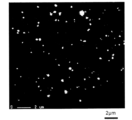
- FIG. 2 is an elemental mapping image of S obtained by analyzing a cross section of a metal powder for molding according to an embodiment of the present invention using an electron probe microanalyzer (EPMA).
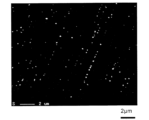
- FIG. 13 is a diagram showing an element mapping image of S obtained by analyzing a cross section parallel to the layering direction of a shaped object according to an example of the present invention by EPMA.
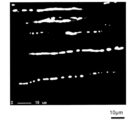
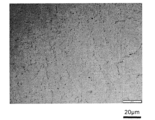
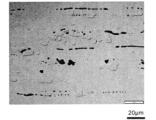
- FIG. 2 is a diagram showing an element mapping image of S when a cross section of a steel material serving as a comparative example is analyzed by EPMA. 13 is an optical microscope photograph of a molded object according to an embodiment of the present invention after solution treatment. 4 is an optical microscope photograph of a comparative steel material after solution treatment.
- C is an austenite-forming element together with Mn and Ni, and is an element necessary for maintaining the structure of the shaped article of the present invention as austenite.
- C forms carbides together with Cr, Mo, and V.
- C is an element necessary for improving hardness and wear resistance.
- the C content is set to 0.40 mass % or more.
- the C content is preferably 0.45 mass % or more, and more preferably 0.50 mass % or more.
- the C content is set to 0.70 mass% or less.
- the C content is preferably 0.65 mass % or less, and more preferably 0.60 mass % or less.
- Si 1.40% by mass or less
- Si is an element necessary for improving oxidation resistance. However, if there is too much Si, segregation may occur inside the shaped object, which may reduce the strength. For this reason, the Si content is set to 1.40% by mass or less.
- the Si content is preferably set to 1.00% by mass or less, and more preferably 0.60% by mass or less.
- the Si content is preferably 0.1 ppm by mass or more, and more preferably 0.5 ppm by mass or more.
- Mn 5.00-15.00% by mass Mn, together with C and Ni, is an austenite-forming element and is necessary for maintaining the structure of the shaped article of the present invention as austenite. If the Mn content is too low, ferrite will be generated, and the aging treatment will cause the formation of ferrite. There is a risk of lowering the maximum hardness. For this reason, the Mn content is set to 5.00 mass% or more. In the present invention, for the same reason as above, the Mn content is set to 5.50 mass% or more. It is preferable that the content of the Cr content is 6.00 mass % or more, and more preferable that the content of the Cr content is 6.00 mass % or more.
- the Mn content is set to 15.00 mass% or less.
- the Mn content is preferably 10.00 mass % or less.
- Ni 2.00 to 10.00% by mass Ni, together with C and Mn, is an element necessary for maintaining the structure of the shaped article of the present invention as austenite.
- Ni forms fine intermetallic particles with Al during aging treatment after solution treatment.
- Ni is an element necessary for forming a compound and obtaining the hardness required for an age-hardened austenitic tool steel. Therefore, the Ni content is set to 2.00 mass % or more.
- the Ni content is preferably 3.00 mass % or more, and more preferably 5.00 mass % or more.
- the Ni content is set to 10.00 mass% or less.
- the Ni content is preferably 9.00 mass % or less, and more preferably 8.00 mass % or less.
- the Cr content is preferably 8.00 mass% or more, and more preferably 9.00 mass% or more.
- the Cr content is set to 14.00 mass% or less.
- the Cr content is preferably set to 13.00 mass% or less, and 12. 00% by mass or less is more preferable.
- the Mo content is preferably 1.30 mass% or more, and more preferably 1.80 mass% or more. is more preferred.
- the Mo content is set to 5.00 mass% or less.
- the Mo content is preferably 4.00 mass % or less, and more preferably 3.00 mass % or less.
- V 1.00-2.50% by mass
- Vanadium (V) is an element necessary for forming carbides and suppressing the coarsening of crystal grains during solution treatment.
- V precipitates fine carbides during aging treatment, and is particularly effective in preventing coarsening of grains during high aging.
- V is an element necessary for obtaining hardness. Therefore, the V content is set to 1.00 mass % or more. In the present invention, for the same reason as above, the V content is set to 1.20 mass %. % is preferable.
- the V content is set to 2.50 mass% or less.
- the V content is preferably 2.00 mass % or less, and more preferably 1.50 mass % or less.
- Cu 0.60-4.00% by mass
- Cu is an element necessary for forming fine intermetallic compounds with Fe during aging treatment after solution treatment, and for obtaining the hardness required for age-hardening austenitic tool steel.
- Cu is an element that has the effect of enhancing corrosion resistance. Therefore, the Cu content is set to 0.60 mass % or more. In the present invention, for the same reason as above, the Cu content is set to 0.80 mass %. % or more, and more preferably 1.00% by mass or more. On the other hand, if the Cu content is too high, there is a concern that the hardness may decrease. For this reason, the Cu content is set to 4.00 mass% or less. The content is preferably 3.50% by mass or less, and more preferably 3.00% by mass or less.
- Al 0.60-4.00% by mass
- Al is an element necessary for forming fine intermetallic compounds with Ni during aging treatment after solution treatment, and for obtaining the hardness required for age-hardenable austenitic tool steel.
- the Al content is set to 0.60 mass % or more. In the present invention, for the same reason as above, the Al content is preferably set to 0.90 mass % or more. On the other hand, if the Al content is too high, it will lead to the formation of ferrite. Therefore, the Al content is set to 4.00 mass% or less. For the same reason as above, in the present invention, the Al content is set to 4.00 mass% or less. It is preferably 3.00% by mass or less, and more preferably 2.00% by mass or less.
- S 0.0500 to 0.1500% by mass
- S (sulfur) is an element necessary for forming sulfides together with Mn and improving machinability. If the S content is too high, the toughness of the obtained shaped article is reduced. For this reason, the S content is set to 0.0500 to 0.1500 mass%. In the present invention, for the same reason as above, the S content is set to 0.0500 to 0.1000 mass%. preferable.
- the metal powder of the present invention can be produced by, for example, gas atomization, water atomization, disk atomization, plasma atomization, rotating electrode atomization, or the like.
- the gas atomization method can use scrap metal, raw metal materials, etc. as the melting raw material, and can be manufactured at a lower cost than the plasma atomization method, the rotating electrode method, etc., which require the preparation of a raw material with a desired composition and shape in advance, and is therefore preferable as a manufacturing method for obtaining the metal powder of the present invention.
- the metal powder of the present invention preferably has a 50% particle size (hereinafter referred to as "D50") of a cumulative particle size distribution based on volume of 10 to 250 ⁇ m.
- D50 50% particle size
- the cumulative particle size distribution of the metal powder of the present invention is represented by a cumulative volumetric particle size distribution, and its D50 is represented by a value measured by the laser diffraction scattering method defined in JIS Z 8825.
- the particle size of the metal powder of the present invention is preferably adjusted by sieving classification using a mesh or air current classification in accordance with the molding method.
- the metal powder is melted by the laser beam as a heat source, while coarse powder that is difficult to melt must be removed in order to minimize the range of the thermal effect.
- fine powder with high adhesion must be removed. Therefore, when the metal powder of the present invention is applied to the powder bed fusion method, it is preferable to adjust D50 to the range of 10 to 53 ⁇ m.
- the maximum length of MnS included in the observation field in a cross section parallel to the stacking direction is less than 1 ⁇ m.
- the cross section parallel to the stacking direction refers to, for example, a cross section parallel to the filling direction of the metal powder in the case of a shaped product obtained by a pressure sintering method, or a cross section parallel to the direction in which multiple laminar solidified layers are formed in the case of a shaped product obtained by an additive manufacturing method.
- An example of an elemental mapping image of S when MnS confirmed in a cross section parallel to the layering direction of a molded object was analyzed by EPMA is shown in Figure 2.
- the dot-like inclusions shown in gray in the base material shown in black are MnS.
- the maximum length of MnS less than 1 ⁇ m, internal defects such as cracks can be reduced, and deterioration of mechanical properties such as ductility and toughness can be suppressed.
- EPMA for example, can be used to perform surface analysis of the S concentration distribution in a cross section parallel to the stacking direction. First, a cross section parallel to the stacking direction of the molded object is taken from an arbitrary position on the molded object. Then, an arbitrary area can be analyzed with EPMA at, for example, 5000x magnification to obtain the S distribution.
- the shaped object of the present invention has an S content of 0.0500 to 0.1500 mass%. And, in the present invention, for the same reasons as above, it is preferable that the S content be 0.0500 to 0.1000 mass%.
- the shaped object of the present invention can be obtained, for example, by a powder sintering method.
- the shaped object can be obtained by pressure sintering the above-mentioned metal powder.
- pressure sintering for example, a HIP method, a hot pressing method, an electric current sintering method, etc. can be applied.
- the object of the present invention can also be applied to an additive manufacturing method in which a step of spreading metal powder in layers and a step of forming solidified layers by successively melting and solidifying the spread metal powder with a scanning heat source to form a solidified layer are repeated to form a plurality of solidified layers.
- a laser or an electron beam can be used as the scanning heat source.
- the laser output is too high, the molten part of the metal during laser irradiation will become deeper, making it easier for strong segregation to form during solidification.
- the laser output is too low, the metal powder will not melt sufficiently, and many voids resulting from gaps in the metal powder will form in the molded object after solidification. For this reason, it is preferable to set the laser output to 50 to 350 W.
- the metal powder will not receive enough heat, making it difficult to melt the powder as needed for shaping, and many voids will likely form in the solidified component.
- the laser scanning speed is too slow, the molten part of the metal will become deep during laser irradiation, making it more likely for segregation to form.
- excess heat will be applied to the metal powder, causing the molten part to flow vigorously, which will entrain gas and make it more likely for air bubbles to become mixed into the solidified component. For this reason, it is preferable to set the scanning speed to 200 to 2000 mm/sec.
- the scanning pitch is the distance between the scanning beams. If the scanning pitch becomes too small, the molten part of the metal becomes deep during laser irradiation, making it easier for segregation to form. For this reason, it is preferable to set the scanning pitch to 0.02 to 0.20 mm.
- the “layer thickness per scan” refers to the "thickness of each metal powder layer” that is laid out when shaping each layer. If the layer thickness per scan is too small, the number of layers required to reach the desired size of the object will increase, and the time required for shaping will increase. For this reason, it is preferable to set the layer thickness per scan to 10 to 200 ⁇ m.
- the molded product of the present invention is preferably further subjected to a heat treatment process including a solution treatment and an aging treatment.
- the age-hardened austenitic tool steel is used as a product after the component is subjected to a solution treatment and an aging treatment.
- a solution treatment By performing a solution treatment, the intermetallic compounds precipitated by the heat during molding are put into solution, and further, by recrystallizing the anisotropic structure formed by the pressure sintering method or the molten pool or solidified structure formed by the additive manufacturing method, a structure with equiaxed crystal grains is obtained, and the anisotropy of the mechanical properties can be suppressed.
- the solution treatment temperature is preferably 1100°C or higher, and more preferably 1150°C or higher. Increasing the solution treatment temperature improves the effect of eliminating segregation formed during shaping. However, if the solution treatment temperature is too high, the main body of the shaped object melts, and the strength and toughness of the shaped object decrease. For this reason, the solution treatment temperature is preferably 1250°C or lower, and more preferably 1200°C or lower.
- the solution treatment time (maintenance time at the solution treatment temperature) is preferably 10 minutes or more, and more preferably 15 minutes or more. By increasing the solution treatment time, the effect of eliminating segregation formed during shaping is improved. However, if the solution treatment time is too long, the prior austenite grain size becomes coarse. For this reason, the solution treatment time is preferably 120 minutes or less, and more preferably 90 minutes or less.
- the aging temperature is preferably 400°C or higher, more preferably 450°C or higher, and even more preferably 500°C or higher.
- the aging temperature is particularly preferably 550°C or higher. Increasing the aging temperature further improves the effect of improving strength. However, if the aging temperature is too high, the intermetallic compounds become coarse, and sufficient strength commensurate with the amount of precipitation of the intermetallic compounds cannot be obtained. For this reason, the aging temperature is preferably 900°C or lower, and more preferably 800°C or lower.
- the aging treatment time (maintenance time at the aging treatment temperature) is preferably 30 minutes or more, and more preferably 60 minutes or more.
- the aging treatment time is preferably 600 minutes or less, and more preferably 400 minutes or less.
- each metal raw material so as to have the composition of Sample No. 1-1 in Table 1
- the raw materials were charged into a high-frequency induction melting furnace and melted, and the molten metal was pulverized with argon gas to obtain an atomized powder.
- the resulting atomized powder was subjected to sieving classification using a mesh and air flow classification to adjust the powder particle size, thereby obtaining a metal powder of the present invention having a D50 of 28.8 ⁇ m.
- a molded object was produced using this metal powder.
- an EOS-M290 manufactured by EOS was used to produce the molded object under the molding conditions shown in Table 2.
- Figure 1 shows elemental mapping images of S when a cross section of a metal powder according to an example of the present invention, a shaped product according to an example of the present invention, and a steel material according to a comparative example were analyzed by EPMA.
- a large number of MnS particles having a maximum length exceeding 10 ⁇ m were confirmed, as shown in the gray areas in FIG.
- the maximum length of all MnS particles was less than 1 ⁇ m, and it was confirmed that the MnS particles were finely dispersed.
- Fig. 4 shows the optical micrographs of the shaped article according to the present invention
- Fig. 5 shows the optical micrographs of the steel material according to the comparative example.
- the steel material of the comparative example a large number of MnS particles with a maximum length exceeding 10 ⁇ m were confirmed.
- the maximum length of all MnS particles was less than 1 ⁇ m, and it was confirmed that the MnS particles were finely dispersed.
- Such fine dispersion of MnS and carbides is expected to have a favorable effect on the mechanical properties and machinability required for a tool steel.
Landscapes
- Engineering & Computer Science (AREA)
- Chemical & Material Sciences (AREA)
- Materials Engineering (AREA)
- Manufacturing & Machinery (AREA)
- Mechanical Engineering (AREA)
- Metallurgy (AREA)
- Organic Chemistry (AREA)
- Physics & Mathematics (AREA)
- Automation & Control Theory (AREA)
- Thermal Sciences (AREA)
- Plasma & Fusion (AREA)
- Powder Metallurgy (AREA)
Priority Applications (1)
| Application Number | Priority Date | Filing Date | Title |
|---|---|---|---|
| JP2025510772A JPWO2024203945A1 (https=) | 2023-03-31 | 2024-03-22 |
Applications Claiming Priority (2)
| Application Number | Priority Date | Filing Date | Title |
|---|---|---|---|
| JP2023057799 | 2023-03-31 | ||
| JP2023-057799 | 2023-03-31 |
Publications (1)
| Publication Number | Publication Date |
|---|---|
| WO2024203945A1 true WO2024203945A1 (ja) | 2024-10-03 |
Family
ID=92905143
Family Applications (1)
| Application Number | Title | Priority Date | Filing Date |
|---|---|---|---|
| PCT/JP2024/011470 Ceased WO2024203945A1 (ja) | 2023-03-31 | 2024-03-22 | 造形用金属粉末および造形物 |
Country Status (2)
| Country | Link |
|---|---|
| JP (1) | JPWO2024203945A1 (https=) |
| WO (1) | WO2024203945A1 (https=) |
Citations (3)
| Publication number | Priority date | Publication date | Assignee | Title |
|---|---|---|---|---|
| JPH05302149A (ja) * | 1992-02-25 | 1993-11-16 | Hitachi Metals Ltd | 時効硬化型オーステナイト系工具鋼 |
| JP2010222661A (ja) * | 2009-03-24 | 2010-10-07 | Seiko Epson Corp | 金属粉末および焼結体 |
| JP2020172674A (ja) * | 2019-04-09 | 2020-10-22 | セイコーエプソン株式会社 | 積層造形用粉末、積層造形体および積層造形体の製造方法 |
-
2024
- 2024-03-22 JP JP2025510772A patent/JPWO2024203945A1/ja active Pending
- 2024-03-22 WO PCT/JP2024/011470 patent/WO2024203945A1/ja not_active Ceased
Patent Citations (3)
| Publication number | Priority date | Publication date | Assignee | Title |
|---|---|---|---|---|
| JPH05302149A (ja) * | 1992-02-25 | 1993-11-16 | Hitachi Metals Ltd | 時効硬化型オーステナイト系工具鋼 |
| JP2010222661A (ja) * | 2009-03-24 | 2010-10-07 | Seiko Epson Corp | 金属粉末および焼結体 |
| JP2020172674A (ja) * | 2019-04-09 | 2020-10-22 | セイコーエプソン株式会社 | 積層造形用粉末、積層造形体および積層造形体の製造方法 |
Also Published As
| Publication number | Publication date |
|---|---|
| JPWO2024203945A1 (https=) | 2024-10-03 |
Similar Documents
| Publication | Publication Date | Title |
|---|---|---|
| JP6974607B2 (ja) | 積層造形熱間工具およびその製造方法、ならびに、積層造形熱間工具用金属粉末 | |
| CN113862543A (zh) | 合金部件的制造方法 | |
| KR20170084142A (ko) | 철, 규소, 바나듐 및 구리를 갖는 알루미늄 합금 | |
| WO2023083899A1 (en) | Steel powder for use in additive manufacturing processes | |
| JPWO2020110891A1 (ja) | 造形用粉末 | |
| JPH07232256A (ja) | マルテンサイト熱間加工工具鋼ダイブロック物体及び製造方法 | |
| JP2022148950A (ja) | Fe基合金粉末を用いた造形物の製造方法 | |
| EP4310215A1 (en) | Metal powder for additive manufacturing and additively manufactured product using same | |
| WO2022244701A1 (ja) | 鉄系合金箔及びその製造方法、並びにそれを用いた部品 | |
| CN103890207A (zh) | 生物体用Co-Cr-Mo合金 | |
| KR102797374B1 (ko) | 용융 응고 성형용 Fe기 합금 및 금속 분말 | |
| WO2023157965A1 (ja) | Fe基合金、合金部材、製造物及び合金部材の製造方法 | |
| WO2024203945A1 (ja) | 造形用金属粉末および造形物 | |
| CN116732444B (zh) | 一种增材制造的马氏体时效钢及其制备方法 | |
| WO2023182416A1 (ja) | 積層造形用マルエージング鋼粉末、マルエージング鋼積層造形品、およびその製造方法 | |
| WO2024070987A1 (ja) | Fe基合金、合金部材、製造物及び合金部材の製造方法 | |
| US7553383B2 (en) | Method for fabricating a martensitic steel without any melting | |
| JP2003055747A (ja) | 焼結工具鋼及びその製造方法 | |
| JP7821561B2 (ja) | Ni基合金製積層造形物 | |
| WO2025110086A1 (ja) | 造形用粉末および造形物 | |
| WO2025238158A1 (en) | Steel powder for additive manufacturing processes | |
| WO2025070373A1 (ja) | 積層造形用マルエージング鋼粉末、マルエージング鋼積層造形品およびその製造方法 | |
| WO2024260616A1 (en) | Steel powder for use in additive manufacturing processes | |
| WO2025197625A1 (ja) | 積層造形用熱間工具鋼粉末および熱間工具鋼積層造形品 | |
| WO2025197624A1 (ja) | 積層造形用熱間工具鋼粉末および熱間工具鋼積層造形品 |
Legal Events
| Date | Code | Title | Description |
|---|---|---|---|
| 121 | Ep: the epo has been informed by wipo that ep was designated in this application |
Ref document number: 24780063 Country of ref document: EP Kind code of ref document: A1 |
|
| ENP | Entry into the national phase |
Ref document number: 2025510772 Country of ref document: JP Kind code of ref document: A |
|
| WWE | Wipo information: entry into national phase |
Ref document number: 2025510772 Country of ref document: JP |
|
| NENP | Non-entry into the national phase |
Ref country code: DE |
|
| 122 | Ep: pct application non-entry in european phase |
Ref document number: 24780063 Country of ref document: EP Kind code of ref document: A1 |