WO2024203181A1 - ゲーム玩具 - Google Patents
ゲーム玩具 Download PDFInfo
- Publication number
- WO2024203181A1 WO2024203181A1 PCT/JP2024/009141 JP2024009141W WO2024203181A1 WO 2024203181 A1 WO2024203181 A1 WO 2024203181A1 JP 2024009141 W JP2024009141 W JP 2024009141W WO 2024203181 A1 WO2024203181 A1 WO 2024203181A1
- Authority
- WO
- WIPO (PCT)
- Prior art keywords
- game
- type
- card
- information
- area
- Prior art date
- Legal status (The legal status is an assumption and is not a legal conclusion. Google has not performed a legal analysis and makes no representation as to the accuracy of the status listed.)
- Ceased
Links
Images






Classifications
-
- A—HUMAN NECESSITIES
- A63—SPORTS; GAMES; AMUSEMENTS
- A63F—CARD, BOARD, OR ROULETTE GAMES; INDOOR GAMES USING SMALL MOVING PLAYING BODIES; VIDEO GAMES; GAMES NOT OTHERWISE PROVIDED FOR
- A63F1/00—Card games
- A63F1/02—Cards; Special shapes of cards
-
- A—HUMAN NECESSITIES
- A63—SPORTS; GAMES; AMUSEMENTS
- A63F—CARD, BOARD, OR ROULETTE GAMES; INDOOR GAMES USING SMALL MOVING PLAYING BODIES; VIDEO GAMES; GAMES NOT OTHERWISE PROVIDED FOR
- A63F1/00—Card games
-
- A—HUMAN NECESSITIES
- A63—SPORTS; GAMES; AMUSEMENTS
- A63F—CARD, BOARD, OR ROULETTE GAMES; INDOOR GAMES USING SMALL MOVING PLAYING BODIES; VIDEO GAMES; GAMES NOT OTHERWISE PROVIDED FOR
- A63F1/00—Card games
- A63F1/04—Card games combined with other games
-
- A—HUMAN NECESSITIES
- A63—SPORTS; GAMES; AMUSEMENTS
- A63F—CARD, BOARD, OR ROULETTE GAMES; INDOOR GAMES USING SMALL MOVING PLAYING BODIES; VIDEO GAMES; GAMES NOT OTHERWISE PROVIDED FOR
- A63F1/00—Card games
- A63F1/04—Card games combined with other games
- A63F2001/0408—Card games combined with other games with text
-
- A—HUMAN NECESSITIES
- A63—SPORTS; GAMES; AMUSEMENTS
- A63F—CARD, BOARD, OR ROULETTE GAMES; INDOOR GAMES USING SMALL MOVING PLAYING BODIES; VIDEO GAMES; GAMES NOT OTHERWISE PROVIDED FOR
- A63F1/00—Card games
- A63F1/04—Card games combined with other games
- A63F2001/0416—Card games combined with other games with numbers
-
- A—HUMAN NECESSITIES
- A63—SPORTS; GAMES; AMUSEMENTS
- A63F—CARD, BOARD, OR ROULETTE GAMES; INDOOR GAMES USING SMALL MOVING PLAYING BODIES; VIDEO GAMES; GAMES NOT OTHERWISE PROVIDED FOR
- A63F1/00—Card games
- A63F1/04—Card games combined with other games
- A63F2001/0475—Card games combined with other games with pictures or figures
-
- A—HUMAN NECESSITIES
- A63—SPORTS; GAMES; AMUSEMENTS
- A63F—CARD, BOARD, OR ROULETTE GAMES; INDOOR GAMES USING SMALL MOVING PLAYING BODIES; VIDEO GAMES; GAMES NOT OTHERWISE PROVIDED FOR
- A63F1/00—Card games
- A63F1/04—Card games combined with other games
- A63F2001/0475—Card games combined with other games with pictures or figures
- A63F2001/0483—Card games combined with other games with pictures or figures having symbols or direction indicators for playing the game
Definitions
- the present invention relates to a game toy and a program.
- Patent Document 1 In competitive card games, there are games in which players combine different types of cards placed on the play sheet to exert special effects (for example, Patent Document 1).
- an object of the present invention is to provide a game toy and a program that can improve the entertainment value of card games.
- One aspect of the present invention is a game toy comprising a play sheet including a first placement area and a second placement area in which game items are placed, a first type of game item bearing first information indicating information for placement in the first placement area and second information indicating an attack value against an opponent's game item, and a second type of game item performing a first function that is an element of the first information and a second function that increases the second information.
- the present invention makes it possible to provide a game toy that enhances entertainment value.
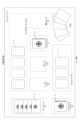
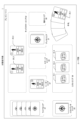
- FIG. 1 is a schematic diagram of a game toy according to this embodiment.
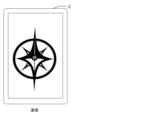
- FIG. 2 is a diagram showing an example of the back side of a game card.
- FIG. 3 is a diagram showing an example of the front side of a cost card.
- FIG. 4 is a diagram showing an example of the front side of a character card.
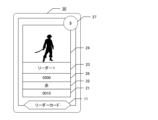
- FIG. 5 is a diagram showing an example of the front side of a leader card.
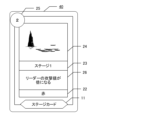
- FIG. 6 is a diagram showing an example of the front side of a stage card.
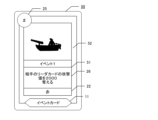
- FIG. 7 is a diagram showing an example of the front side of an event card.
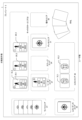
- FIG. 8 is an example for explaining the state of the field in the main phase in the first embodiment.
- FIG. 9 is an example for explaining the state of the field in the main phase in the first embodiment.
- FIG. 8 is an example for explaining the state of the field in the main phase in the first embodiment.
- FIG. 10 is an example for explaining the state of the field in the main phase in the first embodiment.
- FIG. 11 is an example for explaining the state of the field in the main phase in the second embodiment.
- FIG. 12 is an example for explaining the state of the field in the main phase in the second embodiment.
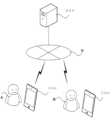
- FIG. 13 is an example of the overall configuration for explaining a game system according to the second embodiment.
- FIG. 14 is a block diagram of the player terminal 500.
- the present invention is a game toy, and the game is a battle-type game in which a player battles an opponent by placing game items on a play sheet. Characters are associated with the game items, and the play sheet is assigned a plurality of areas in which the game items can be placed. The player places a game item in any area of the play sheet, and plays the game using the abilities of the character associated with the game item.
- First Embodiment 1 is a schematic diagram for explaining a game toy 1 according to this embodiment. As shown in FIG. 1, the game toy 1 includes a game card 2 and a play sheet 3.
- the game card 2 corresponds to the game item described above, and is a card that is owned by the player. Players can obtain the game card 2 by purchasing it, exchanging it with other players, or distributing it to players who meet certain conditions.
- a game card 2 is made up of a front and a back. Regardless of the type, the back of the game card 2 has one of the same pictures, letters, etc. printed on it. In other words, the front of the game card 2 cannot be distinguished from the back.
- Figure 2 shows an example of the back of a game card 2.
- the game card 2 has a normal position, and the normal position is the state in which the contents written on the surface of the game card 2 can be read as is from the user's perspective.
- the state in which the game card 2 is in the normal position is called the active state.
- the state in which the game card 2 is rotated 90 degrees from the normal position and facing sideways is called the rest state.
- a specific orientation may be determined in advance as the active state, and the state in which the orientation of the game card is changed from the specific orientation may be determined as the rest state.
- a plurality of types of game cards 2 are prepared.
- the surfaces of the game cards 2 differ depending on the type of information written on them.
- the cost cards 10 (corresponding to a second type of game item) are used as game cards 2 that do not have color information
- the character cards 20 corresponding to a first type of game item
- the leader cards 30 corresponding to a third type of game item
- the stage cards 40 corresponding to a third type of game item
- the event cards 50 are used as game cards 2 that have color information.
- any number of types of game cards 2 may be provided.
- the user prepares a predetermined number of game cards 2 and cost cards 10 that belong to the same color information to build a deck.
- This color information means the type of character associated with the game card 2.
- characters associated with game cards 2 having the same color information are the same type of character, and the type is a team (comrade), episode, etc.
- characters associated with game cards 2 belonging to the same color information mean the same team (comrade).
- a deck constructed from game cards 2 belonging to the same color information is also a collection of characters and skills associated with the same team (comrade).
- one game card 2 may have multiple types of color information. In this case, the game card 2 is associated with one character, but the character belongs to multiple types (for example, teams, episodes).
- players may use game cards 2 belonging to the same color information or game cards 2 belonging to different color information.
- FIG. 3 is a diagram showing an example of a cost card.
- the cost card 10 is a card that fulfills a first function and a second function.
- the first function is a function that serves as an element of the condition for placing the character card 20, the stage card 40, and the event card 50 from the user's hand on the play sheet 3.
- the game cards 2 that can be placed on the play sheet 3 from the hand are limited according to the number of cost cards 10 placed on the play sheet 3. That is, in order to place the game cards 2 from the hand on the play sheet 3, the number of cost cards 10 that meet the condition of the game cards 2 is required. Therefore, the cost card 10 serves as an element of the condition for placing the game cards 2 from the hand on the play sheet 3, which is the first function of the cost card 10.
- the second function is to increase the attack value information of the character card 20 or leader card 30 that is combined with the cost card 10.
- the cost card 10 placed on the play sheet 3 can be used in combination with the character card 20 or leader card 30.
- the attack value of the game card increases.
- the cost card 10 has card type information 11, which identifies it as a cost card, and second function information 12, which is information about the second function of the cost card 10.
- second function information 12 is information about the second function of the cost card 10.
- "+1000 on your turn” is written as the second function information 12. In this example, this means that when the character card 20 or leader card 30 is combined with the cost card 10, the attack value of the character card 20 or leader card 30 increases by "1000".
- ⁇ Character card> 4 is a diagram showing an example of a character card 20.
- the character card 20 includes card type information 11, card identification information 21, color information 22, character name 23, character image 24, cost information 25 (corresponding to first information), and power information 26 (corresponding to second information).
- the card type information 11 contains information that identifies the card as a character card.
- the card identification information 21 contains information that uniquely identifies the game card 2.
- the color information 22 contains information that identifies the color of the game card 2.
- the character name 23 contains the name of the character associated with the game card.
- the character image 24 contains an image of the character associated with the game card.
- the cost information 25 contains a required cost value that is a condition for the user to place the character card 20 from his/her hand on the play sheet 3. In the example of FIG. 4, the cost information 25 is "2", indicating that two cost cards 10 are required to place the character card 20 on the play sheet 3.
- the power information 26 contains a value that indicates the attack value of the opponent's game card 2.
- ⁇ Leader Card 30> 5 is a diagram showing an example of a leader card 30.
- the leader card 30 has card type information 11, card identification information 21, color information 22, character name 23, character image 24, life information 27, and power information 26 (corresponding to second information) written thereon.
- the card type information 11 contains information that identifies the card as a leader card.
- the card identification information 21 contains information that uniquely identifies the game card 2, just like the character card 20.
- the color information 22 contains information that identifies the color of the game card, just like the character card 20.
- the character name 23 contains the name of the character associated with the game card, just like the character card 20.
- the character image 24 contains a picture of the character associated with the game card, just like the character card 20.
- the life information 27 contains the number of character cards 20 that can be placed in the life area of the play sheet 3 at the start of the game, which will be described later.
- the power information 26 contains a numerical value that indicates the attack value against the opponent's game card 2, just like the character card 20.
- the leader card 30 is associated with a character that will be the leader of the characters associated with the character cards 20 with the same color information.
- ⁇ Stage card> 6 is a diagram for explaining an example of the front side of a stage card 40.
- the stage card 40 is written with card type information 11, card identification information 21, color information 22, stage name 41, stage image 42, cost information 26, and effect information 43.
- the card type information 11 contains information that identifies the card as a stage card.
- the card identification information 21 contains information that uniquely identifies the game card 2.
- the color information 22 contains information that identifies the color of the game card.
- the stage name 41 contains the name of the stage associated with the game card.
- the stage image 42 contains a picture of the stage associated with the game card.
- the stage image 42 is preferably a picture that allows at least a part of the effect of the stage card 40 to be intuitively understood. By doing so, even if the player does not remember the effects of each stage card 40, they can intuitively understand part of the effect, so there is no possibility that the game progress will be delayed due to understanding the effects of the cards, and the interest of the game will not be lost.
- the cost information 25 contains the required cost value, which is a condition for the user to place the stage card 40 from his/her hand on the play sheet 3.
- the effect information 43 contains information regarding the effect of the stage card when it is placed on the play sheet 3.
- ⁇ Event Card> 7 is a diagram illustrating an example of the front side of an event card 50.
- the event card 50 is written with card type information 11, card identification information 21, color information 22, event name 51, event image 52, cost information 26, and effect information 53.
- the card type information 11 contains information that identifies the card as an event card.
- the card identification information 21 contains information that uniquely identifies the game card 2.
- the color information 22 contains information that identifies the color of the game card.
- the event name 51 contains the name of the event associated with the game card.
- the event image 52 contains a picture of the event associated with the game card.
- the event image 52 is preferably a picture that allows at least a part of the effect of the event card 50 to be intuitively understood. By doing so, even if the player does not remember the effects of each event card 50, they can intuitively understand part of the effect, so there is no possibility that the game progress will be delayed due to understanding the effect of the card, and the interest of the game will not be lost.
- the cost information 25 contains a required cost value that is a condition for the user to place the event card 50 from his/her hand on the play sheet 3.
- the effect information 53 contains information regarding the effect of the event card 50 when it is placed on the play sheet 3.
- the play sheet 3 will be described with reference to FIG. 1.
- the top of the play sheet 3 faces the opponent.
- the play sheet 3 is formed in a rectangular shape, for example, a rectangular shape.
- the play sheet 3 is preferably formed to be foldable so that it can be carried around. Furthermore, it is preferable that the play sheet 3 is formed so that the size of the folded sheet is the same as that of the game card 2, so that it can be carried together with the game card 2.
- the play sheet 3 has multiple areas (regions). These multiple areas indicate the locations where the player places the game cards 2.
- areas there are eight areas named: deck area 31, character area 32, leader area 33, stage area 34, cost deck area 35, cost area 36, life area 37, and outside area 38. Note that these eight areas only need to have different roles, and the names of the areas can be any names that the player can understand when playing.
- the character area 32 is formed along the end (corresponding to the first end) of the play sheet 3 on the opponent's side.
- the cost area 36 is formed along the end (corresponding to the second end) on the user's side opposite the opponent's side.
- the deck area 31, leader area 33, stage area 34, and off-field area 38 are formed between the character area 32 and the cost area 36.
- the life area 37 and cost deck area 35 are formed along the end (corresponding to the third end) sandwiched between the opponent's end and the user's end. In the example shown in FIG. 1, the life area 37 and cost deck area 35 are formed along the left edge of the play sheet.
- the deck area 31 is an area where the decks constructed by the user are stacked so that the game cards 20 cannot be identified. In other words, the game cards 20 are placed face down in the deck area 31.
- the character area 32 is an area in which the cost cards 10 and the character cards 20 can be placed.
- the character cards 20 are placed from the user's hand when the value of the cost information 25 is equal to or less than the total number of the cost cards 10 placed in the cost area 36.
- the cost cards 10 placed in the character area 32 are placed by moving them from the cost area 36, but the cost cards 10 placed in the cost area 36 in an active state can be moved.
- the cost cards 10 placed in the character area 32 are placed under the character cards 20 so that they are partially hidden.
- placing the cost card 10 under the character card 20 is described as "granting power to the character card 20". The granting of this power increases the attack value of the character card 20.
- an example will be used in which the attack value of the character card 20 increases by "1000" every time a cost card 10 is stacked.
- the character card 20 placed in the character area 32 can attack either the character card 20 placed in the opponent's character area 32 or the leader card 30 placed in the leader area 33.
- the leader area 33 is an area where the leader cards 30 and cost cards 10 are placed.
- the leader cards 30 in the leader area 33 are placed from the start of the game.
- the cost cards 10 placed in the leader area 33 are placed by moving them from the cost area 36, but the cost cards 10 placed in the cost area 36 in an active state can be moved.
- the cost cards placed in the leader area 33 are placed under the leader card 30 so that they are partially hidden.
- placing a cost card 10 under the leader card 30 is described as "granting power to the leader card 30". The granting of this power increases the attack value of the leader card 30.
- an example will be used in which the attack value of the leader card 30 increases by "1000" every time one cost card 10 is stacked.
- the stage area 34 is an area in which a stage card 40 can be placed.
- a stage card 40 is placed from the user's hand if the value of the cost information 25 is equal to or less than the total number of cost cards 10 placed in the cost area 36.
- the cost deck area 35 is an area in which cost cards 10 can be placed. At the start of the game, a predetermined number of cost cards 10 are placed in a stack in the cost deck area 35. For simplicity's sake, the following explanation will be given assuming that 10 cost cards 10 are placed in a stack in the cost deck area at the start of the game.
- the cost area 36 is an area where a predetermined number of cost cards 10 are placed from the cost deck area 35.
- a predetermined number of cost cards 10 are placed from the cost deck area 35.
- the life area 37 is an area in which at least one of the game cards, namely, the character card 20, the stage card 130, and the event card 50, is placed in an amount equal to the numerical value written in the life information 27 of the leader card 30 placed in the leader area 33.
- the outside area 38 is an area where used game cards 2 are placed.
- the user places his/her own play sheet 3 and the opponent's play sheet 3 facing each other.
- the user selects character cards 20, stage cards 40, and event cards 50 that have the same color information attached to them, and constructs a deck to be placed in the deck area 31.
- the number of cards in the deck to be constructed is determined in advance. In the following explanation, a deck containing 50 cards is used as an example.
- the constructed deck is placed in the deck area 31 with its face down.
- the user selects one leader card 30 having the same color information as the constructed deck and places it face up in the leader area 33.
- a predetermined number of cost cards 10 are placed in the cost deck area 35. In the following explanation, 10 cards will be used as an example.
- the user draws a predetermined number of game cards as a hand from the game cards arranged in the deck area 31. Here, it is assumed that the user draws five game cards 2.
- the user subtracts the number of game cards 2 placed in the deck area 31 from the number written in the life information 27 of the leader card 30 placed in the leader area 33 and places them face down in the life area 37.
- the game cards 2 placed on the play sheet 3 are made active, and the cost cards placed in the character area 32 and leader area 33 are returned to the cost area 36 in an active state.
- draw 1 Game Card 2 from Deck Area 31 and add it to your hand.
- two cost cards 10 are drawn from the cost deck area 35 and placed in the cost area 36 in an active state.
- At least one of the following is performed: placing a character card 20 from the hand in the character area 32; placing a stage card 40 from the hand in the stage area 34; and placing an event card 50 on the play sheet 3.
- the character cards 20, stage cards 40, and event cards 50 whose cost information 25 values are equal to or less than the number of active cost cards 10 placed in the cost area 36 are placed in an active state from the hand on the play sheet 3.
- the main phase it is possible to activate the effects of the stage cards 40 and the event cards 50.
- the stage cards 40 that have activated their effects are changed from the active state to the rest state.
- the event cards 50 that have activated their effects are moved to the outside area 38.
- an attack is carried out against the opponent.
- the user determines the game card 2 (attack card) to be used in the attack from among the character cards 20 placed in the character area 32 of the user's area, or the leader cards 30 placed in the leader area 33.
- the user determines the character card 20 placed in the character area 32 of the opponent, which will be the target of the attack, or the leader card 30 placed in the leader area 33 (target card).
- the target card is attacked using the attack card.
- the outcome of the battle is determined by whether the numerical value of the power information 26 of the attack card is higher than the numerical value of the power information of the target card. If the numerical value of the power information 26 of the attack card is higher than the numerical value of the target card, the user wins.
- the attacked card is a character card 20 and the numerical value of the power information 26 of the attacking card exceeds the numerical value of the power information of the attacked card, the user wins the battle during that turn.
- the attacked opponent places the attacked character card 20 in the outside area 38.
- the attacked card is the leader card 30 and the numerical value of the power information 26 of the attacking card exceeds the numerical value of the power information of the attacked card, the user wins the battle in that turn.
- the attacked opponent adds one game card placed in the life area 37 to his/her hand. At this time, if there is no game card in the life area 37 that the opponent wants to add to his/her hand, the user wins and the game ends. In the end phase, the game cards 2 placed in the rest state on the play sheet 3 are changed to the active state, and the game ends.
- Example 1 In Example 1 of this embodiment, an example will be described in which the hand is placed on the play sheet 3 in the main phase, and a cost is further assigned to the character card 20.
- the hand contains a character card 20_1
- the play sheet 3 contains the following:
- An example will be described in which two character cards 20_2 and 20_3 are placed in the character area 32, one leader card 30 is placed in the leader area 37, and three active cost cards 10_1 to 10_3 are placed in the cost area 36.
- the user attempts to place the character card 20_1 in his/her hand, whose cost information 25 is "2" and whose attack value information 25 is "3000", in the character area 32.
- the cost information 25 of the character card 20_1 is "2”
- two of the three active cost cards 10 placed in the cost area 36 are placed in the rest state, and the character card 20_1 is placed in the character area 32.
- the placement of the game cards 2 on the play sheet 3 at this time is as follows, as shown in FIG.
- Three character cards 20_1 to 20_3 are placed in the character area 32; one leader card 30 is placed in the leader area 37; and two cost cards 10_1 and 10_2 in a rest state and one cost card 10_3 in an active state are placed in the cost area 36.
- the user assigns a cost to the character card 20_1.
- the game cards 2 on the play sheet 3 are arranged as shown in FIG. 10, with the cost card 10_3, which was in an active state, being placed below the character card 20_1. Since the attack value increases by 1000 each time power is assigned, the attack value information 25 of the character card 20_1, which is placed above the cost card 10_3, increases from 2000 to 3000.
- Example 2 In Example 2 of this embodiment, an example will be described in which a plurality of powers are given to the leader card 20.
- the play sheet 3 has the following: An example will be described in which two character cards 20_1 and 20_2 are placed in the character area 32, one leader card 30_1 is placed in the leader area 37, and three active cost cards 10_1 to 10_3 are placed in the cost area 36.
- the user grants two costs to the leader card 20_1.
- the game cards 2 on the play sheet 3 are arranged as shown in FIG. 12, with the active cost cards 10_1 and 10_2 placed below the leader card 30_1. Since the attack value increases by 1000 each time power is granted, the attack value information 25 of the leader card 30_1, which is placed above the cost cards 10_1 and 10_2, increases from 5000 to 7000.
- the color information 22 is described as information that identifies which color the game card belongs to, but the color to which the game card belongs may be colored on one of the surfaces. With this configuration, the color to which the card belongs can be intuitively grasped by the color of the colored portion, making it easier for the user to assemble a deck.
- the power information 26 is described as an attack value against the opponent, but it may be at least one of the attack value and the defense value of the attack from the opponent against the player's own game guard 2. This increases the variety of the battle content and makes the game more interesting.
- the cost card 10 is configured to perform a second function of increasing the attack value of the game card that is combined with the cost card 10, so the game progress becomes more diverse depending on the game cards that are combined, making the game more interesting.
- Fig. 13 is a diagram showing an example of the overall configuration of a game system in this embodiment. As shown in Fig. 13, the game system is configured with a player terminal 500 prepared for each of players A and B of the game, and a game server 600.
- the player terminal 500 is a computer capable of executing a game program, and is connected to a communication line N via a wireless communication base station or the like, and can perform data communication with the game server 600.
- the player terminal 500 is, for example, a smartphone, a mobile phone, a portable game device, a stationary home game device, an arcade game device, a personal computer, a tablet computer, a controller for a stationary home game device, etc. Basically, there are multiple player terminals 500, and each is operated by a player.
- the game server 600 is a server system that includes one or more server devices and storage devices.
- the game server 600 controls the card game of the above embodiment, provides various services for operating the card game, manages data required for operating the game, and distributes game programs and data required for running the game on the player terminals 500.
- FIG. 14 is a block diagram showing an example of the configuration of a player terminal 500. As shown in FIG. 14, the player terminal 500 has a communication unit 501, a storage unit 502, and a control unit 503.
- the communication unit 501 is a processing unit that controls communications with other devices such as the game server 600 and other player terminals 500, and is, for example, a communication interface such as a network interface card.
- the storage unit 502 stores various data and programs executed by the control unit 503, and is, for example, a memory or a hard disk.
- the control unit 503 is a processing unit that controls the entire player terminal 500, and is, for example, a processor.
- the control unit 503 includes a game card management unit 531, a play sheet display unit 532, a game information calculation unit 533, and a game execution unit 534.
- Each processing unit is an example of an electronic circuit that the processor has, or an example of a process that the processor executes.
- the game card management unit 531 manages the cost cards 10, character cards 20, leader cards 30, stage cards 40, and event cards 50 described above.
- the play sheet display unit 532 displays the play sheets 3 of the player and the opposing players on the player terminal 500.
- the game information calculation unit 533 performs calculations necessary for the progress of the game using the above-mentioned cost information 25 and power information 26, etc.
- the game execution unit 534 manages and executes the direction and progress of the match. With such a terminal, a game can be played without using a physical game card.
- the control of the card game described in embodiment 1 is executed by the player terminal 500, and matching of opponent players and overall game management are performed by the game server 600, so that the card game can be played online, thereby increasing the interest of players.
- the game is played via the game server 600, but it is also possible to execute the game using only the player terminal 500.
- a game toy a play sheet including a first placement area and a second placement area in which game items are placed; a first type of game item on which first information indicating information for placement in the first placement area and second information indicating an attack value against an opponent's game item are written; a second type of game item having a first function that is an element of the first information and a second function that increases the second information;
- a game toy comprising:
- the second type of game item can be placed on top of the first type of game item placed in the first placement area during a user's turn. 3.
- the first placement area is formed along a first edge of the playsheet;
- the second placement area is formed along a second end opposite the first end. 5.
- the play sheet includes a third placement area formed between the first placement area and the second placement area, The third placement area is capable of placing a plurality of the first type of game items. 7. A game toy according to any one of claims 1 to 6.
- the first type of game items can be arranged in the third arrangement area so as to overlap at least a portion of the first type of game items. 8. A game toy according to any one of claims 1 to 7.
- the play sheet includes a fourth placement area formed along a fourth end portion opposite a third end portion sandwiched between the first end portion and the second end portion, the fourth arrangement area is formed so that a plurality of the first type game items can be arranged in a stacked manner while the first information and the second information cannot be identified; 9.
- a third type of game item is included;
- the play sheet includes a fifth placement area in which one of the third type game items can be placed, the first type of game item and the third type of game item have color information;
- the first type of game item and the third type of game item that can be arranged on the play sheet have the same color information.
- a first deck is formed from the first type of game items having the same color information as the third type of game items;
- a second deck is formed from the second type of game items. 13.
- a game toy according to any one of claims 1 to 12.
- Each first type of game item is associated with a different character;
- the characters associated with the first type of game item belong to the same type;
- the character associated with the third type of game item is a leader character of the third type. 14.
- a gaming device a display means for displaying a play sheet including a first placement area and a second placement area in which game items are placed, a first type of game item bearing first information indicating information to be placed in the first placement area and second information indicating an attack value against an opponent's game item, and a second type of game item having a first function that is an element of the first information and a second function that increases the second information;
- a control means for controlling a game Equipped with the control means combines the first type of game item with the second type of game item to increase a second information of the first type of game element; Gaming device.
Landscapes
- Engineering & Computer Science (AREA)
- Multimedia (AREA)
- Toys (AREA)
Abstract
Description
そこで、本発明はカードゲームの興趣性を向上させるゲーム玩具及びプログラムを提供することにある。
本発明はゲーム玩具であり、そのゲームはゲーム物品をプレイシートに配置することにより対戦相手とバトルする対戦型のゲームである。ゲーム物品にはキャラクターが対応付けられており、プレイシートにはゲーム物品を配置する複数の領域(エリア)が割り当てられている。プレーヤはゲーム物品をプレイシートのいずれかの領域(エリア)に配置し、ゲーム物品に対応付けられているキャラクターが持つ能力を用いてゲームを実行する。
図1は本実施形態に係るゲーム玩具1を説明するための概略図である。図1に示すように、ゲーム玩具1は、ゲームカード2と、プレイシート3とが含まれる。
この色情報は、ゲームカード2に対応付けられているキャラクターの種別を意味しており、例えば、同一の色情報を有するゲームカード2に対応付けられているキャラクターは同一種別のキャラクターであり、種別はチーム(仲間)、エピソード等である。すなわち、同一の色情報に属するゲームカード2に対応付けられているキャラクターは同一のチーム(仲間)を意味する。同一の色情報に属するゲームカード2から構築されるデッキは、同一のチーム(仲間)に対応付けられているキャラクターやスキルの集まりでもある。尚、ひとつのゲームカード2が複数の種別の色情報を持っていても良い。この場合、そのゲームカード2はひとつのキャラクターに対応付けられるが、そのキャラクターが複数の種別(例えば、チーム、エピソード)に属する場合である。また、対戦相手と対戦するにあたって、プレーヤ同士が同一の色情報に属するゲームカード2を用いても、異なる色情報に属するゲームカード2を用いても良いものとする。
図3は、コストカードの一例を示す図である。コストカード10は、第1機能及び第2機能を果たすカードである。第1機能は、キャラクターカード20、ステージカード40、及びイベントカード50をユーザの手札からプレイシート3に配置するための条件の要素となる機能である。本カードゲームでは、プレイシート3に配置されているコストカード10の枚数に応じて、手札からプレイシート3に配置できるゲームカード2が制限される。即ち、手札からゲームカード2をプレイシート3に配置するには、ゲームカード2の条件に合致した枚数分のコストカード10が必要となる。ゆえに、コストカード10は、手札からプレイシート3にゲームカード2を配置するための条件の要素となり、これがコストカード10の第1機能である。
図4は、キャラクターカード20の一例を示す図である。キャラクターカード20には、カード種別情報11、カード識別情報21、色情報22、キャラクター名23、キャラクター画像24、コスト情報25(第1情報に相当する)、及びパワー情報26(第2情報に相当する)が記されている。
図5は、リーダーカード30の一例を示す図である。リーダーカード30には、カード種別情報11、カード識別情報21、色情報22、キャラクター名23、キャラクター画像24、ライフ情報27、及びパワー情報26(第2情報に相当する)が記されている。
図6は、ステージカード40の表面の一例を説明するための図である。ステージカード40は、プレイシート3に配置する(場に登場させる)ことによって、ステージカード40に記されている効果がゲーム進行において発揮される。ステージカード40には、カード種別情報11、カード識別情報21、色情報22、ステージ名41、ステージ画像42、コスト情報26、及び効果情報43が記されている。
図7は、イベントカード50の表面の一例を説明するための図である。イベントカード50は、プレイシート3に配置することによって、イベントカード50に記されている効果がゲーム進行において発揮される。イベントカード50には、カード種別情報11、カード識別情報21、色情報22、イベント名51、イベント画像52、コスト情報26、及び効果情報53が記されている。
次に、プレイシート3について図1を用いて説明する。図1に示した例では、プレイシート3の上部が対戦相手側になるように示している。図1に示す通り、プレイシート3は矩形、例えば長方形の形で形成されている。プレイシート3は、持ち運びが可能なように、折りたたみ可能に形成されているのが好ましい。更に、折りたたんだ結果のサイズがゲームカード2と同等の大きさになるように形成されていると、ゲームカード2と一体にして持ち運べるため好ましい。
場外エリア38は、使用済みのゲームカード2が配置されるエリアである。
ユーザは、自身のプレイシート3と対戦相手のプレイシート3とを対面させて配置する。
ユーザは同一の色情報が付されているキャラクターカード20、ステージカード40、及びイベントカード50を選択して、デッキエリア31に配置するデッキを構築する。構築するデッキの枚数は予め定められている。以下の説明では一例として50枚を例にして説明する。構築したデッキは表面を伏せた状態でデッキエリア31に配置する。
ユーザは、構築したデッキと同一の色情報が付されているリーダーカード30を1枚選択して、リーダーエリア33に表向きで配置する。
所定数のコストカード10をコストデッキエリア35に配置する。以下の説明では一例として10枚を例にして説明する。
ユーザはデッキエリア31の配置されているゲームカードから手札として所定の枚数のゲームカードを引く。ここでは5枚のゲームカード2を引くものとする。
ゲームが開始されると、対戦相手との間で先攻と後攻とが決められ、先攻のプレーヤから交互にターンが繰り返される。
各ターンは、リフレッシュフェイズ、ドローフェイズ、コストフェイズ、メインフェイズ、及びエンドフェイズ等の複数のフェイズから構成される。以下の説明では説明の簡略化のために5つのフェイズを例にして説明するが、各ターンのフェイズの種類はいくつでもよい。
ドローフェイズでは、デッキエリア31からゲームカード2を1枚引いて手札に加える。
コストフェイズでは、コストデッキエリア35からコストカード10を2枚引いてコストエリア36にアクティブ状態で配置する。
メインフェイズでは、
・手札からキャラクターカード20をキャラクターエリア32に配置する
・手札からステージカード40をステージエリア34に配置する
・イベントカード50をプレイシート3に出す
の少なくともいずれか1つを行う。このとき、コスト情報25の値がコストエリア36に配置されているアクティブ状態のコストカード10の枚数以下であるキャラクターカード20、ステージカード40、及びイベントカード50を、手札からプレイシート3にアクティブ状態で配置する。
更に、メインフェイズでは、キャラクターカード20及びリーダーカード30にパワーを付与することが可能である。
エンドフェイズでは、プレイシート3にレスト状態で配置されているゲームカード2をアクティブ状態に変更して終了する。
本実施の形態における実施例1では、メインフェイズにて手札がプレイシート3に配置され、更にキャラクターカード20にコストが付与される例を用いて説明する。本実施例では、図8に示す通り、手札にキャラクターカード20_1があり、プレイシート3には、
・キャラクターエリア32にキャラクターカード20_2と20_3との2枚
・リーダーエリア37にリーダーカード30が1枚
・コストエリア36にアクティブ状態のコストカード10_1から10_3の3枚
が配置されている状態の例を用いて説明する。
・キャラクターエリア32にキャラクターカード20_1から20_3の3枚
・リーダーエリア37にリーダーカード30が1枚
・コストエリア36にレスト状態のコストカード10_1及び10_2の2枚と、アクティブ状態のコストカード10_3が1枚
が配置されている状態になる。
本実施の形態における実施例2では、リーダーカード20に複数のパワーが付与される例を説明する。本実施例では、図11に示す通り、プレイシート3には、
・キャラクターエリア32にキャラクターカード20_1と20_2との2枚
・リーダーエリア37にリーダーカード30_1が1枚
・コストエリア36にアクティブ状態のコストカード10_1から10_3の3枚
が配置されている状態の例を用いて説明する。
次に第2の実施の形態について説明する。上記実施の形態1のゲーム玩具は、対戦ゲームとしてコンピュータに実行させることが可能である。図13は、本実施の形態におけるゲームシステムの全体構成例を示す図である。図13に示すように、ゲームシステムは、ゲームのプレーヤA、B毎に用意されるプレーヤ端末500とゲームサーバ600とを備えて構成される。
記憶部502は、各種データや、制御部503が実行するプログラムを記憶し、例えば、メモリやハードディスクなどである。
プレイシート表示部532は、プレーヤ端末500に、プレーヤ及び対戦プレーヤのプレイシート3を表示する。
ゲーム情報計算部533は、上述したコスト情報25及びパワー情報26等を用いて、ゲームの進行に必要な計算を行う。
ゲーム実行部534は、対戦の演出、進行を管理し、実行する。
このような端末によれば、有体物ためゲームカードを用いなくても、ゲームを実行することができる。
尚、上述した例では、ゲームサーバ600を介したゲームの例を説明したが、プレーヤ端末500だけで、ゲームを実行することも可能である。
ゲーム玩具であって、
ゲーム物品が配置される第1配置エリア及び第2配置エリアを含むプレイシートと、
前記第1配置エリアに配置するための情報を示す第1情報と、対戦相手のゲーム物品に対する攻撃値を示す第2情報と、が記されている第1種別ゲーム物品と、
前記第1情報の要素となる第1機能と、前記第2情報を上昇させる第2機能と、を有する第2種別ゲーム物品と、
を備えるゲーム玩具。
前記第1機能は、前記第1種別ゲーム物品を前記第1配置エリアに配置する際に発揮する
付記1に記載のゲーム玩具。
前記第2種別ゲーム物品は、ユーザの自ターン時に、前記第1配置エリアに配置されている第1種別ゲーム物品に重ねて配置することが可能である、
付記1又は付記2に記載のゲーム玩具。
前記プレイシートは、矩形を成し、折り畳み可能に形成されている、
付記1から付記3のいずれかに記載のゲーム玩具。
前記第1配置エリアは、前記プレイシートの第1端部に沿って形成され、
前記第2配置エリアは、前記第1端部の反対側の第2端部に沿って形成されている、
付記1から付記4のいずれかに記載のゲーム玩具。
前記第1端部は、対戦相手側の端部であり、
前記第2端部は、ユーザ側の端部である、
付記1から付記5のいずれかに記載のゲーム玩具。
前記プレイシートは、前記第1配置エリアと前記第2配置エリアとの間に形成されている第3配置エリアを含み、
前記第3配置エリアは前記第1種別ゲーム物品を複数配置可能である、
付記1から付記6のいずれかに記載のゲーム玩具。
前記第1種別ゲーム物品は、少なくとも一部が重なるようにして、前記第3配置エリアに配置可能である、
付記1から付記7のいずれかに記載のゲーム玩具。
前記プレイシートは、前記第1端部と前記第2端部とに挟まれている第3端部の反対側の第4端部に沿って形成されている第4配置エリアを含み、
前記第4配置エリアは、前記第1情報及び前記第2情報を識別不可能な状態で、複数の前記第1種別ゲーム物品を重ねて配置可能に形成されている、
付記1から付記8のいずれかに記載のゲーム玩具。
対戦相手への攻撃又は対戦相手からの攻撃に対する防御の時に、前記第1配置エリアの第1種別ゲーム物品は、第1の方向から第2の方向に変化可能である、
付記1から付記9のいずれかに記載のゲーム玩具。
前記1種別ゲーム物品は、前記第2配置エリアに配置され、該第1種別ゲーム物品の第1情報に応じた数の前記第2種別ゲーム物品が、第1の方向から第2の方向に変化可能である場合、前記第1配置エリアに配置可能である、
付記1から付記10のいずれかに記載のゲーム玩具。
第3種別ゲーム物品を含み、
前記プレイシートは、前記第3種別ゲーム物品がひとつ配置可能な第5配置エリアを含み、
前記第1種別ゲーム物品及び前記第3種別ゲーム物品は、色情報を有し、
前記プレイシートに配置可能な前記第1種別ゲーム物品と前記第3種別ゲーム物品とは、同一の色情報を有している、
付記1から付記11のいずれかに記載のゲーム玩具。
前記第3種別ゲーム物品と同一の色情報を有している前記第1種別ゲーム物品から第1デッキが構成され、
前記第2種別ゲーム物品から第2デッキが構成される、
付記1から付記12のいずれかに記載のゲーム玩具。
各第1種別ゲーム物品は、異なるキャラクターに対応付けられ、
前記第1種別ゲーム物品に対応付けられるキャラクターは、同一の種別に属し、
前記第3種別ゲーム物品に対応付けられるキャラクターは、前記種別のリーダーとなるキャラクターである、
付記1から付記13のいずれかに記載のゲーム玩具。
ゲーム装置であって、
ゲーム物品が配置される第1配置エリア及び第2配置エリアを含むプレイシートと、前記第1配置エリアに配置するための情報を示す第1情報と、対戦相手のゲーム物品に対する攻撃値を示す第2情報と、が記されている第1種別ゲーム物品と、前記第1情報の要素となる第1機能と、前記第2情報を上昇させる第2機能と、を有する第2種別ゲーム物品と、を表示する表示手段と、
ゲームを制御する制御手段と、
を備え、
前記制御手段は、前記第1種別ゲーム物品と、前記第2種別ゲーム物品と、を組み合わせて、該第1種別ゲーム要素の第2情報を上昇させる、
ゲーム装置。
2 カードゲーム
3 プレイシート
10 コストカード10
20 キャラクターカード
30 リーダーカード
40 ステージカード
50 イベントカード
31 デッキエリア
32 キャラクターエリア
33 リーダーエリア
34 ステージエリア
35 コストデッキエリア
36 コストエリア
37 ライフエリア
38 場外エリア
500 プレーヤ端末
600 ゲームサーバ
Claims (15)
- ゲーム玩具であって、
ゲーム物品が配置される第1配置エリア及び第2配置エリアを含むプレイシートと、
前記第1配置エリアに配置するための情報を示す第1情報と、対戦相手のゲーム物品に対する攻撃値を示す第2情報と、が記されている第1種別ゲーム物品と、
前記第1情報の要素となる第1機能と、前記第2情報を上昇させる第2機能と、を有する第2種別ゲーム物品と、
を備えるゲーム玩具。 - 前記第1機能は、前記第1種別ゲーム物品を前記第1配置エリアに配置する際に発揮する
請求項1に記載のゲーム玩具。 - 前記第2種別ゲーム物品は、ユーザの自ターン時に、前記第1配置エリアに配置されている第1種別ゲーム物品に重ねて配置することが可能である、
請求項2に記載のゲーム玩具。 - 前記プレイシートは、矩形を成し、折り畳み可能に形成されている、
請求項3に記載のゲーム玩具。 - 前記第1配置エリアは、前記プレイシートの第1端部に沿って形成され、
前記第2配置エリアは、前記第1端部の反対側の第2端部に沿って形成されている、
請求項4に記載のゲーム玩具。 - 前記第1端部は、対戦相手側の端部であり、
前記第2端部は、ユーザ側の端部である、
請求項5に記載のゲーム玩具。 - 前記プレイシートは、前記第1配置エリアと前記第2配置エリアとの間に形成されている第3配置エリアを含み、
前記第3配置エリアは、前記第1種別ゲーム物品を複数配置可能である、
請求項6に記載のゲーム玩具。 - 前記第1種別ゲーム物品は、少なくとも一部が重なるようにして、前記第3配置エリアに配置可能である、
請求項7に記載のゲーム玩具。 - 前記プレイシートは、前記第1端部と前記第2端部とに挟まれている第3端部の反対側の第4端部に沿って形成されている第4配置エリアを含み、
前記第4配置エリアは、前記第1情報及び前記第2情報を識別不可能な状態で、複数の前記第1種別ゲーム物品を重ねて配置可能に形成されている、
請求項7に記載のゲーム玩具。 - 対戦相手への攻撃又は対戦相手からの攻撃に対する防御の時に、前記第1配置エリアの第1種別ゲーム物品は、第1の方向から第2の方向に変化可能である、
請求項7に記載のゲーム玩具。 - 前記1種別ゲーム物品は、前記第2配置エリアに配置され、該第1種別ゲーム物品の第1情報に応じた数の前記第2種別ゲーム物品が、第1の方向から第2の方向に変化可能である場合、前記第1配置エリアに配置可能である、
請求項1に記載のゲーム玩具。 - 第3種別ゲーム物品を含み、
前記プレイシートは、前記第3種別ゲーム物品がひとつ配置可能な第5配置エリアを含み、
前記第1種別ゲーム物品及び前記第3種別ゲーム物品は、色情報を有し、
前記プレイシートに配置可能な前記第1種別ゲーム物品と前記第3種別ゲーム物品とは、同一の色情報を有している、
請求項1に記載のゲーム玩具。 - 前記第3種別ゲーム物品と同一の色情報を有している前記第1種別ゲーム物品から第1デッキが構成され、
前記第2種別ゲーム物品から第2デッキが構成される、
請求項12に記載のゲーム玩具。 - 各第1種別ゲーム物品は、異なるキャラクターに対応付けられ、
前記第1種別ゲーム物品に対応付けられるキャラクターは、同一の種別に属し、
前記第3種別ゲーム物品に対応付けられるキャラクターは、前記種別のリーダーとなるキャラクターである、
請求項13に記載のゲーム玩具。 - 第1配置エリア、第2配置エリア、第3配置エリア、第4配置エリア、及び第5配置エリアが形成されたプレイシートと、
前記第1配置エリアに配置されるゲーム物品であって、前記第1配置エリアに配置するために必要となる消費コストを示すコスト情報と、対戦相手のゲーム物品に対する攻撃値を示す攻撃値情報と、属するグループの情報を示すグループ情報と、が記載された第1種別ゲーム物品と、
前記第2配置エリアに配置されるゲーム物品であって、前記消費コストの単位及び前記攻撃値を上昇させる単位となることが識別可能な絵柄が記載された第2種別ゲーム物品と、
前記第3配置エリアに配置されるゲーム物品であって、前記攻撃値情報と前記グループ情報とが記載された第3種別ゲーム物品と、
を備え、
前記第4配置エリアは、前記第3種別ゲーム物品のグループ情報と同一のグループ情報が記載された複数の前記第1種別ゲーム物品から構成された第1デッキが配置されるエリアであり、
前記第5配置エリアは、複数の前記第2種別ゲーム物品から構成された第2デッキが配置されるエリアである、
ゲーム玩具。
Priority Applications (2)
| Application Number | Priority Date | Filing Date | Title |
|---|---|---|---|
| CN202480007507.1A CN120456960A (zh) | 2023-03-27 | 2024-03-08 | 游戏玩具 |
| AU2024245980A AU2024245980A1 (en) | 2023-03-27 | 2024-03-08 | Game toy |
Applications Claiming Priority (2)
| Application Number | Priority Date | Filing Date | Title |
|---|---|---|---|
| JP2023050117A JP7828918B2 (ja) | 2023-03-27 | 2023-03-27 | ゲーム玩具 |
| JP2023-050117 | 2023-03-27 |
Publications (1)
| Publication Number | Publication Date |
|---|---|
| WO2024203181A1 true WO2024203181A1 (ja) | 2024-10-03 |
Family
ID=92898822
Family Applications (1)
| Application Number | Title | Priority Date | Filing Date |
|---|---|---|---|
| PCT/JP2024/009141 Ceased WO2024203181A1 (ja) | 2023-03-27 | 2024-03-08 | ゲーム玩具 |
Country Status (5)
| Country | Link |
|---|---|
| US (1) | US20240325868A1 (ja) |
| JP (1) | JP7828918B2 (ja) |
| CN (1) | CN120456960A (ja) |
| AU (1) | AU2024245980A1 (ja) |
| WO (1) | WO2024203181A1 (ja) |
Families Citing this family (1)
| Publication number | Priority date | Publication date | Assignee | Title |
|---|---|---|---|---|
| JP7733057B2 (ja) * | 2023-05-25 | 2025-09-02 | 株式会社バンダイ | ゲーム玩具 |
Citations (5)
| Publication number | Priority date | Publication date | Assignee | Title |
|---|---|---|---|---|
| JP2004073692A (ja) * | 2002-08-21 | 2004-03-11 | Konami Co Ltd | 対戦型カードゲーム |
| JP2014233388A (ja) * | 2013-05-31 | 2014-12-15 | グリーエンターテインメントプロダクツ株式会社 | カードゲーム、プログラム、サーバ装置、及びゲームシステム |
| JP2017023177A (ja) * | 2015-07-15 | 2017-02-02 | 株式会社バンダイ | ゲーム用物品、プログラム及びゲーム装置 |
| JP3211524U (ja) * | 2017-05-08 | 2017-07-20 | 株式会社ファンディール | トレーディングカードゲーム用カード |
| JP2019141687A (ja) * | 2019-04-24 | 2019-08-29 | 株式会社バンダイ | ゲーム玩具 |
Family Cites Families (4)
| Publication number | Priority date | Publication date | Assignee | Title |
|---|---|---|---|---|
| US7258343B2 (en) * | 2004-07-23 | 2007-08-21 | Bandai America Incorporated | Card game and methods of play |
| US20120187629A1 (en) * | 2011-01-26 | 2012-07-26 | Hutchings Leroi Earle | Bridge-type card game for three persons |
| US20210387078A1 (en) * | 2020-06-15 | 2021-12-16 | Luis Duma | Sports bracket card game |
| US11213740B1 (en) * | 2020-08-27 | 2022-01-04 | Stephen John Loane | Hybrid card game apparatus |
-
2023
- 2023-03-27 JP JP2023050117A patent/JP7828918B2/ja active Active
-
2024
- 2024-03-08 AU AU2024245980A patent/AU2024245980A1/en active Pending
- 2024-03-08 WO PCT/JP2024/009141 patent/WO2024203181A1/ja not_active Ceased
- 2024-03-08 CN CN202480007507.1A patent/CN120456960A/zh active Pending
- 2024-03-12 US US18/603,182 patent/US20240325868A1/en active Pending
Patent Citations (5)
| Publication number | Priority date | Publication date | Assignee | Title |
|---|---|---|---|---|
| JP2004073692A (ja) * | 2002-08-21 | 2004-03-11 | Konami Co Ltd | 対戦型カードゲーム |
| JP2014233388A (ja) * | 2013-05-31 | 2014-12-15 | グリーエンターテインメントプロダクツ株式会社 | カードゲーム、プログラム、サーバ装置、及びゲームシステム |
| JP2017023177A (ja) * | 2015-07-15 | 2017-02-02 | 株式会社バンダイ | ゲーム用物品、プログラム及びゲーム装置 |
| JP3211524U (ja) * | 2017-05-08 | 2017-07-20 | 株式会社ファンディール | トレーディングカードゲーム用カード |
| JP2019141687A (ja) * | 2019-04-24 | 2019-08-29 | 株式会社バンダイ | ゲーム玩具 |
Also Published As
| Publication number | Publication date |
|---|---|
| AU2024245980A1 (en) | 2025-10-09 |
| JP7828918B2 (ja) | 2026-03-13 |
| US20240325868A1 (en) | 2024-10-03 |
| CN120456960A (zh) | 2025-08-08 |
| JP2024139256A (ja) | 2024-10-09 |
Similar Documents
| Publication | Publication Date | Title |
|---|---|---|
| US20120015701A1 (en) | Dynamic card system and method | |
| JP7444956B1 (ja) | ゲーム玩具、及びプログラム | |
| EP2186237A1 (en) | System and methods for multi-platform trading card game | |
| JP6789651B2 (ja) | 制御プログラム、コンピュータ及び制御方法 | |
| WO2024203181A1 (ja) | ゲーム玩具 | |
| JP6386200B1 (ja) | 制御プログラム、制御方法及びコンピュータ | |
| JP5411374B1 (ja) | ゲーム制御システム、サーバ装置及びプログラム | |
| JP2021007887A (ja) | 制御プログラム、コンピュータ及び制御方法 | |
| JP2024138407A (ja) | ゲーム制御方法、コンピュータ及び制御プログラム | |
| JP6854012B2 (ja) | ゲームシステム、ゲーム制御装置、及びプログラム | |
| JP5309509B2 (ja) | ゲーム装置制御プログラム、ゲーム装置制御プログラムを記録したコンピュータ読み取り可能な記録媒体及びゲーム装置 | |
| JP6189995B2 (ja) | ゲーム制御方法、コンピュータ及び制御プログラム | |
| WO2014003113A1 (ja) | ゲーム装置、ゲームシステム、ゲーム制御方法、ゲーム制御プログラム | |
| CA3286702A1 (en) | Game toy | |
| JP7691476B1 (ja) | ゲーム玩具、及びプログラム | |
| JP6832008B2 (ja) | ゲームシステム、ゲーム制御装置、及びプログラム | |
| JP7737423B2 (ja) | プログラム、端末、及びゲーム方法 | |
| HK40100620A (zh) | 游戏玩具和程序 | |
| JP5377794B1 (ja) | ゲーム制御システム、サーバ装置及びプログラム | |
| KR20250127706A (ko) | 프로그램, 게임 장치, 및 제공 관리 장치 | |
| JP5514940B1 (ja) | ゲーム制御システム、サーバ装置、プログラム及び方法 | |
| JP2024171685A (ja) | ゲーム玩具 | |
| WO2025204518A1 (ja) | ゲーム玩具、及びプログラム | |
| JP2020121178A (ja) | 制御プログラム、制御方法及びコンピュータ |
Legal Events
| Date | Code | Title | Description |
|---|---|---|---|
| 121 | Ep: the epo has been informed by wipo that ep was designated in this application |
Ref document number: 24779312 Country of ref document: EP Kind code of ref document: A1 |
|
| WWE | Wipo information: entry into national phase |
Ref document number: 202480007507.1 Country of ref document: CN |
|
| WWP | Wipo information: published in national office |
Ref document number: 202480007507.1 Country of ref document: CN |
|
| WWE | Wipo information: entry into national phase |
Ref document number: AU2024245980 Country of ref document: AU |
|
| ENP | Entry into the national phase |
Ref document number: 2024245980 Country of ref document: AU Date of ref document: 20240308 Kind code of ref document: A |
|
| NENP | Non-entry into the national phase |
Ref country code: DE |
|
| 122 | Ep: pct application non-entry in european phase |
Ref document number: 24779312 Country of ref document: EP Kind code of ref document: A1 |