WO2024202343A1 - 切削工具、切削加工物の製造方法及び切削インサートの交換方法 - Google Patents
切削工具、切削加工物の製造方法及び切削インサートの交換方法 Download PDFInfo
- Publication number
- WO2024202343A1 WO2024202343A1 PCT/JP2023/046573 JP2023046573W WO2024202343A1 WO 2024202343 A1 WO2024202343 A1 WO 2024202343A1 JP 2023046573 W JP2023046573 W JP 2023046573W WO 2024202343 A1 WO2024202343 A1 WO 2024202343A1
- Authority
- WO
- WIPO (PCT)
- Prior art keywords
- screw
- screw hole
- cutting tool
- cutting
- hole
- Prior art date
- Legal status (The legal status is an assumption and is not a legal conclusion. Google has not performed a legal analysis and makes no representation as to the accuracy of the status listed.)
- Ceased
Links
Images



Classifications
-
- B—PERFORMING OPERATIONS; TRANSPORTING
- B23—MACHINE TOOLS; METAL-WORKING NOT OTHERWISE PROVIDED FOR
- B23C—MILLING
- B23C5/00—Milling-cutters
- B23C5/28—Features relating to lubricating or cooling
-
- B—PERFORMING OPERATIONS; TRANSPORTING
- B23—MACHINE TOOLS; METAL-WORKING NOT OTHERWISE PROVIDED FOR
- B23B—TURNING; BORING
- B23B27/00—Tools for turning or boring machines; Tools of a similar kind in general; Accessories therefor
- B23B27/10—Cutting tools with special provision for cooling
-
- B—PERFORMING OPERATIONS; TRANSPORTING
- B23—MACHINE TOOLS; METAL-WORKING NOT OTHERWISE PROVIDED FOR
- B23B—TURNING; BORING
- B23B27/00—Tools for turning or boring machines; Tools of a similar kind in general; Accessories therefor
- B23B27/14—Cutting tools of which the bits or tips or cutting inserts are of special material
- B23B27/16—Cutting tools of which the bits or tips or cutting inserts are of special material with exchangeable cutting bits or cutting inserts, e.g. able to be clamped
- B23B27/1614—Cutting tools of which the bits or tips or cutting inserts are of special material with exchangeable cutting bits or cutting inserts, e.g. able to be clamped with plate-like cutting inserts of special shape clamped against the walls of the recess in the shank by a clamping member acting upon the wall of a hole in the insert
-
- B—PERFORMING OPERATIONS; TRANSPORTING
- B23—MACHINE TOOLS; METAL-WORKING NOT OTHERWISE PROVIDED FOR
- B23C—MILLING
- B23C5/00—Milling-cutters
- B23C5/16—Milling-cutters characterised by physical features other than shape
- B23C5/20—Milling-cutters characterised by physical features other than shape with removable cutter bits or teeth or cutting inserts
- B23C5/22—Securing arrangements for bits or teeth or cutting inserts
- B23C5/2204—Securing arrangements for bits or teeth or cutting inserts with cutting inserts clamped against the walls of the recess in the cutter body by a clamping member acting upon the wall of a hole in the insert
-
- B—PERFORMING OPERATIONS; TRANSPORTING
- B23—MACHINE TOOLS; METAL-WORKING NOT OTHERWISE PROVIDED FOR
- B23B—TURNING; BORING
- B23B2260/00—Details of constructional elements
- B23B2260/124—Screws
-
- B—PERFORMING OPERATIONS; TRANSPORTING
- B23—MACHINE TOOLS; METAL-WORKING NOT OTHERWISE PROVIDED FOR
- B23C—MILLING
- B23C2240/00—Details of connections of tools or workpieces
- B23C2240/24—Connections using screws
- B23C2240/245—Connections using screws hollow screws, e.g. for the transmission of coolant
Definitions
- the present disclosure relates to a cutting tool and a method for manufacturing a machined product.
- cutting tools include rotary tools and turning tools.
- rotary tools include milling tools.
- Turning tools are used for turning processes such as face milling and end milling.
- turning tools include external diameter machining tools, internal diameter machining tools, grooving tools, and cut-off tools.
- Known cutting tools include the rotary tools described in Patent Documents 1 and 2.
- the rotary tools described in Patent Documents 1 and 2 each have a cutting insert, a holder, and a clamp screw.
- the cutting insert is fixed to the holder by the clamp screw. When the cutting insert wears out, it is possible to replace the cutting insert by removing the clamp screw.
- the cutting tool includes a holder extending from the tip to the rear end and having a pocket located on the tip side, a first screw hole located in the pocket, and a second screw hole located away from the pocket, a cutting insert located in the pocket, a first screw attached to the first screw hole and fixing the cutting insert to the holder, and a second screw attached to the second screw hole, the holder has a flow path that penetrates the inside of the holder and opens to the first screw hole and the second screw hole and can supply coolant to the first screw hole and the second screw hole, the second screw has a through hole connected to the flow path, the first screw hole can be attached to the second screw, and the second screw hole can be attached to the first screw.
- the method for manufacturing a machined product according to the present disclosure includes the steps of rotating a cutting tool according to the present disclosure, bringing the cutting tool into contact with a workpiece, and removing the cutting tool from the workpiece.
- the method for manufacturing a machined product according to the present disclosure includes the steps of rotating a workpiece, bringing a cutting tool according to the present disclosure into contact with the rotating workpiece, and removing the cutting tool from the workpiece.
- the cutting insert replacement method is a method for replacing the cutting insert in the cutting tool according to the present disclosure, and includes the steps of removing the first screw from the first screw hole, removing the second screw from the second screw hole, removing the used cutting insert from the pocket, attaching the second screw removed from the second screw hole to the first screw hole, supplying coolant to the flow path, and attaching the unused cutting insert to the pocket.
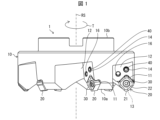
- FIG. 1 is a schematic side view of a cutting tool according to an embodiment of the present disclosure.
- FIG. 2 is a schematic perspective view showing a state in which only one cutting insert is attached to the cutting tool shown in FIG. 1 .
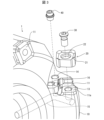
- FIG. 2 is a schematic exploded perspective view of a mounting portion of a cutting insert in the cutting tool shown in FIG. 1 .
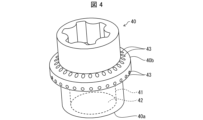
- FIG. 2 is a perspective view of a cleaning screw provided in the cutting tool shown in FIG. 1 .
- FIG. 5 is a plan view of the cleaning screw shown in FIG. 4, seen from the screw head side.
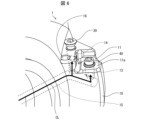
- 5A to 5C are schematic diagrams illustrating a method for replacing a cutting insert in a cutting tool according to an embodiment of the present disclosure.
- FIG. 5A to 5C are schematic diagrams illustrating a method for replacing a cutting insert in a cutting tool according to an embodiment of the present disclosure.
- FIG. 4 is a schematic diagram illustrating a state during replacement of a cutting insert in a cutting tool according to an embodiment of the present disclosure.
- FIG. 2 is a schematic diagram illustrating a state during cutting using a cutting tool according to an embodiment of the present disclosure.
- 11A to 11C are schematic diagrams illustrating another method for replacing the cutting insert according to the embodiment of the present disclosure.
- 11A to 11C are schematic diagrams illustrating another method for replacing the cutting insert according to the embodiment of the present disclosure.
- 1A to 1C are schematic diagrams illustrating a manufacturing method of a machined product according to an embodiment of the present disclosure.
- 1A to 1C are schematic diagrams illustrating a manufacturing method of a machined product according to an embodiment of the present disclosure.
- 1A to 1C are schematic diagrams illustrating a manufacturing method of a machined product according to an embodiment of the present disclosure.
- a washing process (cleaning process) is usually performed to remove any chips that have gotten into the pocket.
- machine tools such as NC (Numerical Control) lathes or machining centers to which cutting tools are attached
- the working space is limited.
- the washing process is complicated, and there is a risk that the cleaning will be insufficient, or that the washing process will take time, resulting in a delay in replacing the cutting insert.
- each of the drawings referred to below shows a simplified view of only the components necessary for explaining the embodiment. Therefore, the cutting tool according to the embodiment of the present disclosure may include any components not shown in each of the drawings referred to. Furthermore, the dimensions of the components in each drawing do not faithfully represent the actual dimensions of the components and the dimensional ratios of each member, etc.
- FIG. 1 is a schematic side view of the cutting tool 1 according to the embodiment of the present disclosure.
- Fig. 2 is a schematic perspective view showing a state in which only one cutting insert 20 is attached to the cutting tool 1 shown in Fig. 1.
- Fig. 3 is a schematic exploded perspective view of an attachment portion of the cutting insert 20 in the cutting tool 1 shown in Fig. 1.
- Fig. 4 is a perspective view of a cleaning screw 40 provided in the cutting tool 1 shown in Fig. 1.
- Fig. 5 is a plan view of the cleaning screw 40 shown in Fig. 4 as viewed from the screw head.
- the cutting tool 1 is a tool that can rotate around a rotation axis RS.
- the cutting tool 1 is used for cutting a workpiece W (see FIG. 11) described later.
- the cutting tool 1 may have a holder 10 that is attached to the spindle of a processing machine such as a milling machine, a cutting insert 20, a clamp screw (first screw) 30 that fixes the cutting insert 20 to the holder 10, and a cleaning screw (second screw) 40 attached to a second screw hole 14 provided in the holder 10.
- a processing machine such as a milling machine
- first screw clamp screw
- second screw cleaning screw
- the cutting insert 20 may have a cutting edge 21 and an attachment hole 22 penetrating in the thickness direction.
- An octagonal plate shape is shown as an example of the cutting insert 20, but it may be a polygonal plate shape other than an octagonal plate shape, such as a triangular plate shape or a square plate shape.
- the cutting insert 20 may be rotationally symmetrical at a certain angle around the center of the attachment hole 22, or may be inverted symmetrical on the front and back.
- the cutting insert 20 may also be a double-sided insert equipped with both upper and lower cutting edges.
- the holder 10 may extend from the tip 10a to the rear end 10b along the rotation axis RS.
- the holder 10 may be cylindrical as in the example, or may be prismatic. Examples of materials for the holder 10 include metals such as stainless steel, carbon steel, cast iron, and aluminum alloys.
- the holder 10 may have a chip pocket (pocket) 11 located on the side of the tip 10a and a chip pocket 12.
- the chip pocket 11 is a recess in which the cutting insert 20 is located, and the cutting insert 20 may be located in the chip pocket 11.
- the chip pocket 11 may have a seat surface 11a against which the surface of the cutting insert 20 in the thickness direction abuts.
- the chip pocket 12 is a recess that temporarily receives the chips generated when the cutting insert 20 cuts the workpiece W (see FIG. 11) and makes it easier for the chips to flow in the discharge direction.
- the chip pocket 11 may be located in the chip pocket 12.
- the chip pockets 11 and the chip pockets 12 may each be located in multiple positions on the outer peripheral surface of the holder 10.
- the multiple chip pockets 11 and the multiple chip pockets 12 may be located at intervals in the circumferential direction of the outer peripheral surface of the holder 10. In that case, they may be located at equal intervals in the circumferential direction, or may be located at unequal intervals in the circumferential direction.
- the cutting insert 20 may be located only in one or more selected chip pockets 11 in the holder 10.
- the number of chip pockets 11 and chip pockets 12 for the holder 10 may each be one.
- the holder 10 may have a first screw hole 13 located in the chip pocket 11, a second screw hole 14 located away from the chip pocket 11, and a flow path 15 capable of supplying coolant.
- the flow path 15 may pass through the inside of the holder 10 and open to the first screw hole 13 and the second screw hole 14.
- the flow path 15 may be configured to communicate with the first screw hole 13 and the second screw hole 14 and to be able to supply coolant to both the first screw hole 13 and the second screw hole 14.
- a clamp screw 30 for fixing the cutting insert 20 to the holder 10 may be attached to the first screw hole 13.
- the cutting insert 20 can be fixed to the holder 10 by screwing the clamp screw 30 inserted into the mounting hole 22 of the cutting insert 20 into the first screw hole 13.
- the cutting insert 20 can be removed from the holder 10 by releasing the screw engagement between the clamp screw 30 and the first screw hole 13.
- the clamp screw 30 may be solid and not have a through hole connected to the flow path 15 described later.
- a cleaning screw 40 may be attached to the second screw hole 14.
- the cleaning screw 40 may have a through hole 41 that is connected to the flow path 15 provided in the holder 10, as shown in the example of FIG. 4.
- the cleaning screw 40 may have a through hole 41 that is connected to the flow path 15 provided in the holder 10 via the first screw hole 13.
- the first screw hole 13 and the second screw hole 14 provided in the holder 10 may both be configured to be able to attach both the clamp screw 30 and the cleaning screw 40.
- the first screw hole 13 may be able to attach the cleaning screw 40 instead of the clamp screw 30, and the second screw hole 14 may be able to attach the clamp screw 30 instead of the cleaning screw 40 (see FIG. 6).
- the cleaning screw 40 has a tip 40a that is inserted into the second screw hole 14 and an outer peripheral surface 40b, and the through hole 41 may have a supply port 42 located at the tip 40a through which the coolant CL is supplied, and multiple discharge ports 43 located at the outer peripheral surface 40b through which the coolant CL is discharged. There may be only one discharge port 43 located at the outer peripheral surface 40b.
- the discharge port 43 may be configured to be smaller than the supply port 42. Also, as shown in the example of Figure 5, in a configuration in which multiple discharge ports 43 are provided, the discharge port 43 may have a first discharge port 43A and a second discharge port 43B positioned rotationally symmetrically with respect to the first discharge port 43A with respect to the central axis CZ (indicated by a dot in the figure) of the cleaning screw 40.
- the first discharge port 43A may be the same size as the second discharge port 43B.
- the multiple discharge ports 43 may be formed at equal intervals on the outer peripheral surface 40b.
- the multiple discharge ports 43 formed at equal intervals on the outer peripheral surface 40b may be formed in multiple stages along the direction of the central axis CZ of the cleaning screw 40.
- the second screw hole 14 may be configured to be located closer to the rear end 10b of the holder 10 than the first screw hole 13.
- This configuration reduces the risk of chips generated during cutting entering the second screw hole 14. That is, during cutting, the cutting tool 1 is attached to the spindle of the processing machine so that the tip 10a of the holder 10 faces vertically downward. Therefore, the generated chips move vertically downward due to gravity. With the above configuration, the second screw hole 14 is more likely to be located vertically above the cutting edge of the cutting insert 20, making it difficult for chips to enter the second screw hole 14.
- the second screw hole 14 may be configured to be located closer to the rear end 10b of the holder 10 than the cutting insert 20. In such a configuration, it becomes even more difficult for cutting chips to get into the second screw hole 14.
- the holder 10 extends from the tip 10a to the rear end 10b along the rotation axis RS, and the opening of the second screw hole 14 may be located forward of the opening of the first screw hole 13 in the rotation direction T of the rotation axis RS.
- the cutting tool 1 may have a third screw hole 16 to which a clamp screw 30 can be attached.
- the third screw hole 16 may be configured to be located closer to the rear end 10b of the holder 10 than the first screw hole 13.
- the opening of the third screw hole 16 may also be located forward of the opening of the second screw hole 14 in the rotation direction T of the rotation axis RS.
- FIG. 6 is a schematic diagram for explaining a method for replacing the cutting insert 20 in the cutting tool 1 according to an embodiment of the present disclosure.
- Fig. 7 is a schematic diagram showing a state when replacing the cutting insert in the cutting tool 1 according to an embodiment of the present disclosure.
- Fig. 8 is a schematic diagram showing a state during cutting processing in the cutting tool 1 according to an embodiment of the present disclosure.
- the method for replacing the cutting insert 20 may include steps A, B, C, D, E, and F.
- Step A is a step of removing the clamp screw 30 from the first screw hole 13 (see FIG. 3).
- Step B is a step of removing the cleaning screw 40 from the second screw hole 14 (see FIG. 3).
- Step C is a step of removing the used cutting insert 20 from the chip pocket 11 (see FIG. 3).
- step D the cleaning screw 40 removed from the second screw hole 14 is attached to the first screw hole 13 (see FIG. 6).
- the coolant CL is supplied to the flow path 15 (see FIG. 6).
- step F an unused cutting insert 20 is attached to the chip pocket 11.
- the method for replacing the cutting insert 20 may include a step G of attaching the clamp screw 30 removed from the first screw hole 13 to the second screw hole 14 (see FIG. 6).
- the cleaning screw 40 removed from the second screw hole 14 is attached to the first screw hole 13 from which the used cutting insert 20 has been removed, and in this state, coolant CL is supplied to the flow path 15.
- the coolant CL is discharged to the outside of the holder 10 through the through hole 41.
- chips containing fine iron powder and the like that are attached to the inside and periphery of the chip pocket 11 after the used cutting insert 20 has been removed can be removed by the coolant CL discharged from the cleaning screw 40.
- chips that have entered the chip pocket 11 can be efficiently removed as part of the operation of the cutting tool 1, without the need for work such as spraying cleaning liquid or gas from the outside.
- the risk of the device becoming complicated can be reduced.
- a supply port 42 is provided at the tip 40a and a discharge port 43 is provided on the outer peripheral surface 40b, so that the coolant CL is discharged laterally from the outer peripheral surface 40b of the cleaning screw 40, as shown in the example of Figure 7.
- the coolant CL can be effectively supplied into the chip pocket 11 from the cleaning screw 40 attached to the first screw hole 13. This allows the discharge of the coolant CL to effectively remove chips adhering to the chip pocket 11.
- the discharge port 43 by configuring the discharge port 43 to be smaller than the supply port 42, the ejection pressure of the coolant CL when it is discharged is increased, thereby improving the effectiveness of chip removal both when replacing the cutting insert 20 and when cutting processing is performed.
- first outlet 43A and the second outlet 43B are same size, it is possible to reduce variation in the amount of coolant CL discharged, which depends on the orientation of the cleaning screw 40 when attached to the first screw hole 13 or the second screw hole 14.
- the coolant CL can be ejected more effectively in a shower-like manner, improving cleaning performance.
- the clamp screw 30 does not have a through hole 41 connected to the flow path 15 like the cleaning screw 40, and is solid in structure, so that the coolant CL is less likely to be discharged through the clamp screw 30.
- the clamp screw 30 attached to the first screw hole 13 is solid and blocks the first screw hole 13 which is connected to the flow path 15. This allows the coolant CL supplied from the flow path 15 to be sent to the through hole 41 of the cleaning screw 40 attached to the second screw hole 14, allowing more coolant CL to be discharged toward the cutting area.
- the cutting tool 1 is attached to the spindle of the processing machine so that the tip 10a of the holder 10 faces vertically downward (see FIG. 11). Therefore, as shown in the example of FIG. 1, by configuring the second screw hole 14 to be located closer to the rear end 10b of the holder 10 than the first screw hole 13, the coolant CL discharged from the cleaning screw 40 during cutting can be effectively directed toward the cutting area located vertically downward. This increases the effectiveness of chip removal by the coolant CL discharged from the second screw hole 14 through the cleaning screw 40 during cutting.
- the opening of the second screw hole 14 may be configured to be located forward in the rotational direction of the rotation shaft RS than the opening of the first screw hole 13, as in the example shown in FIG. 1. This also allows the coolant CL discharged from the cleaning screw 40 to be effectively directed toward the cutting site located behind in the rotational direction during cutting.
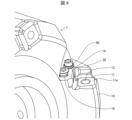
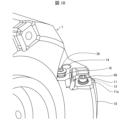
- Figures 9 and 10 are schematic diagrams for explaining another method for replacing the cutting insert according to the embodiment of the present disclosure.
- the process may include a step H in which the clamp screw 30 removed from the first screw hole 13 in the above-mentioned step A is attached to the third screw hole 16.
- the method may include a step G' in which the clamp screw 30 is removed from the third screw hole 16 and the removed clamp screw 30 is attached to the second screw hole 14 instead of the above-mentioned step G.
- this allows the second screw hole 14 connected to the flow path 15 to be blocked by the solid clamp screw 30 when replacing the cutting insert 20, allowing more coolant CL to be supplied to the through hole 41 of the cleaning screw 40 attached to the first screw hole 13.
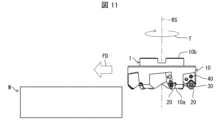
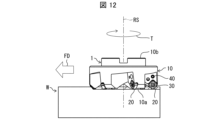
- Fig. 11 to Fig. 13 are schematic diagrams for explaining a method for manufacturing a machined product according to an embodiment of the present disclosure.
- Fig. 11 to Fig. 13 illustrate a cutting tool 1 according to an embodiment of the present disclosure.
- the manufacturing method of the machined product according to the embodiment of the present disclosure is a manufacturing method for manufacturing the machined product M by cutting the workpiece W using the cutting tool 1, and may include a first step, a second step, and a third step.
- the first step is a step of rotating the cutting tool 1.
- the second step is a step of bringing the rotating cutting tool 1 into contact with the workpiece W.
- the third step is a step of separating the cutting tool 1 from the workpiece W.
- Examples of the material of the workpiece W include aluminum alloy, stainless steel, carbon steel, alloy steel, cast iron, and non-ferrous metal.
- the specific content of the manufacturing method of the machined product according to the embodiment of the present disclosure is as follows.
- the cutting tool 1 is rotated in the rotation direction T while being moved in the direction of the arrow FD to approach the workpiece W. Then, the cutting insert 20 of the rotating cutting tool 1 is moved in the direction of the arrow FD while being brought into contact with the workpiece W. As a result, the cutting tool 1 cuts the workpiece W, and as shown in the example in Figure 13, a machined surface Wf is formed on the workpiece.
- the cutting tool 1 is further moved in the direction of the arrow FD to separate it from the workpiece W. This completes the cutting of the workpiece W, and a machined product M can be produced, which is the workpiece W that has been machined.
- the cutting insert 20 of the cutting tool 1 can be repeatedly brought into contact with different locations on the workpiece W while rotating the cutting tool 1.
- the cutting tool 1 allows the cutting insert 20 to be easily and stably replaced.
- the replacement of the cutting insert 20 can be automated using a device such as a robot hand. This improves productivity and reduces manufacturing costs.
- the manufacturing method of the machined product according to the present disclosure is a manufacturing method for manufacturing a machined product by cutting the workpiece using a cutting tool, and may include a step of rotating the workpiece, a step of bringing the cutting tool according to the present disclosure into contact with the rotating workpiece, and a step of moving the cutting tool according to the present disclosure away from the workpiece.
- a cutting tool 1 is exemplified, but as described above, examples of cutting tools include rotary tools and turning tools.
- Rotary tools include, for example, cutting tools (milling tools). Turning tools are used for turning processes such as face milling and end milling. Examples of turning tools include external diameter machining tools, internal diameter machining tools, grooving tools, and cut-off tools.
Landscapes
- Engineering & Computer Science (AREA)
- Mechanical Engineering (AREA)
- Milling Processes (AREA)
Priority Applications (2)
| Application Number | Priority Date | Filing Date | Title |
|---|---|---|---|
| JP2025509753A JPWO2024202343A1 (https=) | 2023-03-30 | 2023-12-26 | |
| DE112023006094.0T DE112023006094T5 (de) | 2023-03-30 | 2023-12-26 | Schneidwerkzeug, verfahren zur herstellung eines maschinell bearbeiteten produkts und verfahren zum austausch eines schneideinsatzes |
Applications Claiming Priority (2)
| Application Number | Priority Date | Filing Date | Title |
|---|---|---|---|
| JP2023056532 | 2023-03-30 | ||
| JP2023-056532 | 2023-03-30 |
Publications (1)
| Publication Number | Publication Date |
|---|---|
| WO2024202343A1 true WO2024202343A1 (ja) | 2024-10-03 |
Family
ID=92904782
Family Applications (1)
| Application Number | Title | Priority Date | Filing Date |
|---|---|---|---|
| PCT/JP2023/046573 Ceased WO2024202343A1 (ja) | 2023-03-30 | 2023-12-26 | 切削工具、切削加工物の製造方法及び切削インサートの交換方法 |
Country Status (3)
| Country | Link |
|---|---|
| JP (1) | JPWO2024202343A1 (https=) |
| DE (1) | DE112023006094T5 (https=) |
| WO (1) | WO2024202343A1 (https=) |
Citations (6)
| Publication number | Priority date | Publication date | Assignee | Title |
|---|---|---|---|---|
| JP2005279900A (ja) * | 2004-03-31 | 2005-10-13 | Mitsubishi Materials Corp | 切削工具のクーラント供給機構 |
| WO2007145649A1 (en) * | 2006-06-13 | 2007-12-21 | Giannetti Enrico R | Machine tool holder having internal coolant supply and cutter retaining and coolant distribution cutter insert retaining clamp assembly |
| US20130078043A1 (en) * | 2010-09-02 | 2013-03-28 | Kennametal Inc. | Cutting insert assembly and components thereof |
| JP2013538703A (ja) * | 2010-10-08 | 2013-10-17 | ティーディーワイ・インダストリーズ・エルエルシー | クーラントシステムおよび締結具を用いた切削工具 |
| JP2015168024A (ja) * | 2014-03-06 | 2015-09-28 | 三菱マテリアル株式会社 | 刃先交換式切削工具 |
| JP2019217575A (ja) * | 2018-06-18 | 2019-12-26 | 株式会社タンガロイ | 冶具、クーラント供給構造及び切削工具 |
Family Cites Families (1)
| Publication number | Priority date | Publication date | Assignee | Title |
|---|---|---|---|---|
| US10730115B2 (en) | 2017-11-29 | 2020-08-04 | Iscar, Ltd. | Cutting tool fastener having internal fluid channel and spherical head abutment surface |
-
2023
- 2023-12-26 JP JP2025509753A patent/JPWO2024202343A1/ja active Pending
- 2023-12-26 DE DE112023006094.0T patent/DE112023006094T5/de active Pending
- 2023-12-26 WO PCT/JP2023/046573 patent/WO2024202343A1/ja not_active Ceased
Patent Citations (6)
| Publication number | Priority date | Publication date | Assignee | Title |
|---|---|---|---|---|
| JP2005279900A (ja) * | 2004-03-31 | 2005-10-13 | Mitsubishi Materials Corp | 切削工具のクーラント供給機構 |
| WO2007145649A1 (en) * | 2006-06-13 | 2007-12-21 | Giannetti Enrico R | Machine tool holder having internal coolant supply and cutter retaining and coolant distribution cutter insert retaining clamp assembly |
| US20130078043A1 (en) * | 2010-09-02 | 2013-03-28 | Kennametal Inc. | Cutting insert assembly and components thereof |
| JP2013538703A (ja) * | 2010-10-08 | 2013-10-17 | ティーディーワイ・インダストリーズ・エルエルシー | クーラントシステムおよび締結具を用いた切削工具 |
| JP2015168024A (ja) * | 2014-03-06 | 2015-09-28 | 三菱マテリアル株式会社 | 刃先交換式切削工具 |
| JP2019217575A (ja) * | 2018-06-18 | 2019-12-26 | 株式会社タンガロイ | 冶具、クーラント供給構造及び切削工具 |
Also Published As
| Publication number | Publication date |
|---|---|
| DE112023006094T5 (de) | 2026-02-26 |
| JPWO2024202343A1 (https=) | 2024-10-03 |
Similar Documents
| Publication | Publication Date | Title |
|---|---|---|
| KR101288727B1 (ko) | 귀따기용 블레이드 헤드를 이용하여 베벨기어를 모따기하거나 귀따기하기 위한 베벨기어 절삭장치와 그 방법 | |
| JP2001198708A (ja) | 切削工具および切削加工方法 | |
| JP5235610B2 (ja) | 工作機械の加工粉排出装置 | |
| WO2010092807A1 (ja) | 刃先交換式切削工具およびこれに用いる切削用インサート | |
| JP2017504495A (ja) | 両面フライス切削インサートおよびフライス工具 | |
| WO2022118492A1 (ja) | 加工機械 | |
| JPH06134648A (ja) | 切削加工方法および装置 | |
| JP2014030888A (ja) | 切削工具 | |
| CN114555268B (zh) | 用于可转位转塔的刀夹以及切断和切槽刀具以及该刀夹以及切断和切槽刀具的加工方法 | |
| JP6314636B2 (ja) | 切削加工装置 | |
| JP4816723B2 (ja) | インサート | |
| WO2024202343A1 (ja) | 切削工具、切削加工物の製造方法及び切削インサートの交換方法 | |
| JP2014151435A (ja) | 切り屑除去加工用装置 | |
| JP2602354Y2 (ja) | 旋削用工具ホルダー | |
| CN116457125A (zh) | 金属切削的车削方法 | |
| JP7494466B2 (ja) | クーラント孔付きスロッティングカッターの取付部材 | |
| JPH07136817A (ja) | 円筒状ワークの切削治工具並びに円筒状ワークと切削治工具との位置決め治工具、切屑処理方法および円筒状ワークの切削工具 | |
| JP3903717B2 (ja) | テーパ穴加工方法およびテーパ穴加工用工具 | |
| JPH0325850Y2 (https=) | ||
| WO2024202342A1 (ja) | 切削工具及び切削加工物の製造方法 | |
| JP7045460B2 (ja) | 切削工具及び切削加工物の製造方法 | |
| US8413680B2 (en) | Fluid distribution apparatus | |
| JP2021098242A (ja) | クーラント穴付きカッターおよびそのカッター本体 | |
| KR100296445B1 (ko) | 작은 구멍의 내경 가공을 위한 인덱서블 보링공구 | |
| JP7021252B2 (ja) | 清掃用蓋部材およびワーク清掃方法 |
Legal Events
| Date | Code | Title | Description |
|---|---|---|---|
| 121 | Ep: the epo has been informed by wipo that ep was designated in this application |
Ref document number: 23930959 Country of ref document: EP Kind code of ref document: A1 |
|
| ENP | Entry into the national phase |
Ref document number: 2025509753 Country of ref document: JP Kind code of ref document: A |
|
| WWE | Wipo information: entry into national phase |
Ref document number: 2025509753 Country of ref document: JP |
|
| WWE | Wipo information: entry into national phase |
Ref document number: 112023006094 Country of ref document: DE |
|
| WWP | Wipo information: published in national office |
Ref document number: 112023006094 Country of ref document: DE |
|
| 122 | Ep: pct application non-entry in european phase |
Ref document number: 23930959 Country of ref document: EP Kind code of ref document: A1 |