WO2024201626A1 - 異常検知装置および異常検知方法 - Google Patents
異常検知装置および異常検知方法 Download PDFInfo
- Publication number
- WO2024201626A1 WO2024201626A1 PCT/JP2023/012067 JP2023012067W WO2024201626A1 WO 2024201626 A1 WO2024201626 A1 WO 2024201626A1 JP 2023012067 W JP2023012067 W JP 2023012067W WO 2024201626 A1 WO2024201626 A1 WO 2024201626A1
- Authority
- WO
- WIPO (PCT)
- Prior art keywords
- detection
- unit
- target area
- intrusion
- abandonment
- Prior art date
- Legal status (The legal status is an assumption and is not a legal conclusion. Google has not performed a legal analysis and makes no representation as to the accuracy of the status listed.)
- Ceased
Links
Images




Classifications
-
- G—PHYSICS
- G08—SIGNALLING
- G08B—SIGNALLING SYSTEMS, e.g. PERSONAL CALLING SYSTEMS; ORDER TELEGRAPHS; ALARM SYSTEMS
- G08B13/00—Burglar, theft or intruder alarms
-
- G—PHYSICS
- G08—SIGNALLING
- G08B—SIGNALLING SYSTEMS, e.g. PERSONAL CALLING SYSTEMS; ORDER TELEGRAPHS; ALARM SYSTEMS
- G08B21/00—Alarms responsive to a single specified undesired or abnormal condition and not otherwise provided for
-
- G—PHYSICS
- G08—SIGNALLING
- G08B—SIGNALLING SYSTEMS, e.g. PERSONAL CALLING SYSTEMS; ORDER TELEGRAPHS; ALARM SYSTEMS
- G08B21/00—Alarms responsive to a single specified undesired or abnormal condition and not otherwise provided for
- G08B21/02—Alarms for ensuring the safety of persons
-
- G—PHYSICS
- G08—SIGNALLING
- G08B—SIGNALLING SYSTEMS, e.g. PERSONAL CALLING SYSTEMS; ORDER TELEGRAPHS; ALARM SYSTEMS
- G08B21/00—Alarms responsive to a single specified undesired or abnormal condition and not otherwise provided for
- G08B21/18—Status alarms
- G08B21/22—Status alarms responsive to presence or absence of persons
Definitions
- This disclosure relates to an anomaly detection device and an anomaly detection method.
- target areas areas that are subject to abnormality detection
- technology to prevent unauthorized intrusion into a target area is being considered.
- a technique is known that utilizes an inherent anti-theft function to detect abandonment in a target area and prevent the abandonment from occurring (for example, Patent Document 1).
- Patent Document 1 The detection of an intrusion into the target area and the detection of an infant or the like being left behind in the target area do not necessarily have to be performed at the same time.
- the conventional technology disclosed in Patent Document 1 does not take this into consideration, and has the problem that it continuously detects intrusions into the target area and detects the abandonment of infants and the like in the target area, resulting in a problem of power consumption due to the execution of unnecessary processes.
- the present disclosure has been made to solve the problems described above, and aims to provide an anomaly detection device that can simultaneously detect whether there is an intrusion into a target area and whether there is a small child or other person left behind in the target area, while suppressing the execution of unnecessary processes.
- the anomaly detection device includes a data acquisition unit that acquires detection data relating to a moving object present in a target area that is generated based on sensor data acquired by a sensor detecting an object present in the target area, a selection unit that selects whether to perform abandonment detection in the target area or intrusion detection into the target area, an abandonment detection unit that detects whether an object is abandoned in the target area based on the detection data acquired by the data acquisition unit when the selection unit selects to perform abandonment detection in the target area, and an intrusion detection unit that detects whether an intrusion into the target area is present based on the detection data acquired by the data acquisition unit when the selection unit selects to perform intrusion detection into the target area.
- the anomaly detection device can simultaneously detect whether an intrusion into a target area has occurred and whether a child or other person has been left behind in the target area, while suppressing the execution of unnecessary processes.
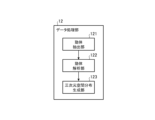
- FIG. 1 is a diagram illustrating a configuration example of an anomaly detection device according to a first embodiment
- FIG. 2 illustrates an example of the configuration of a data processing unit
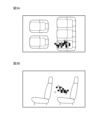
- 3A and 3B are diagrams showing an example of a three-dimensional spatial distribution generated by a three-dimensional spatial distribution generating unit in embodiment 1, where Fig. 3A shows an example of a top view of the three-dimensional spatial distribution and Fig. 3B shows an example of a side view of the three-dimensional spatial distribution.
- FIG. 4A shows an example of a three-dimensional spatial distribution when the vehicle owner moves from within the vehicle surrounding area to outside the vehicle surrounding area in embodiment 1, where FIG. 4A shows an example of a three-dimensional spatial distribution when the vehicle owner is located within the vehicle surrounding area
- FIG. 4A shows an example of a three-dimensional spatial distribution when the vehicle owner is located within the vehicle surrounding area
- FIG. 4B shows an example of a three-dimensional spatial distribution when the vehicle owner moves outside the vehicle surrounding area and is located outside the vehicle surrounding area.
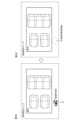
- Figure 5A is a diagram for explaining the concept of an example in which the abandonment detection unit detects whether or not an object has been left behind in the vehicle cabin using a three-dimensional spatial distribution in embodiment 1
- Figure 5B is a diagram for explaining the concept of an example in which the intrusion detection unit detects whether or not an intrusion has occurred into the vehicle cabin using a three-dimensional spatial distribution.
- 4 is a diagram illustrating a detailed configuration example of a detection result output unit of the anomaly detection device according to the first embodiment.
- FIG. 4 is a flowchart for explaining an example of an operation of the anomaly detection device according to the first embodiment.
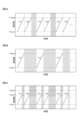
- FIGS. 8A, 8B, and 8C are diagrams for explaining an example of the control content when the selection unit is capable of controlling the operation of the sensor in the first embodiment.
- Figures 9A, 9B, and 9C are figures for explaining the concept of the selection unit changing the abnormality detection period in embodiment 1, where Figure 9B is a figure showing an example of a three-dimensional spatial distribution generated based on sensor data in which a sensor with a small number of antennas detects an object present in the vehicle cabin, Figure 9A is a figure showing an example of a three-dimensional spatial distribution generated based on sensor data in which a sensor with a larger number of antennas than Figure 9B detects an object present in the vehicle cabin, and Figure 9C is a figure showing a three-dimensional spatial distribution in which the distribution of moving objects is superimposed on the three-dimensional spatial distribution shown in Figure 9B.
- 10A and 10B are diagrams illustrating an example of a hardware configuration of the anomaly detection device according to the first embodiment.
- the anomaly detection device detects anomalies in an area that is a target of anomaly detection (hereinafter referred to as a "target area").
- the anomalies detected by the anomaly detection device include the abandonment of a person requiring assistance in the target area and an intrusion into the target area. That is, in detail, the target area is an area that is a target for detecting whether a person requiring assistance has been abandoned or whether an intrusion has occurred.
- the term "person requiring assistance” refers to a living body, such as an infant, that has a physical constitution that makes it difficult for the living body to leave the target area by itself if left there.
- the "target area” is the vehicle interior
- the "person requiring assistance” is an infant
- the abnormality detection device detects both whether an infant has been left behind in the vehicle interior and whether a person has entered the vehicle interior.
- the vehicle interior is, for example, the interior of a regular passenger car.
- the "abandonment” refers to the abandonment of a person requiring assistance.
- the "intrusion” refers to the intrusion of a person.
- the "intrusion” refers to the intrusion of a moving object that is regarded as a person.
- the detection of whether or not an object has been left behind in the vehicle cabin performed by the abnormality detection device is also referred to simply as “detection of abandonment in the vehicle cabin,” and the detection of whether or not an object has been intruded into the vehicle cabin is also referred to simply as “detection of intrusion into the vehicle cabin.”
- FIG. 1 is a diagram illustrating an example of a configuration of an anomaly detection device 1 according to the first embodiment.
- the abnormality detection device 1 is mounted on, for example, a vehicle 100 and connected to a sensor 2 and an output device 3 .
- the sensor 2 detects an object in the vehicle compartment.
- the sensor 2 is assumed to be a radio wave sensor such as a millimeter wave radar.
- the sensor 2 acquires, as sensor data, a reflected wave that is generated when a radio wave is emitted toward the interior of the vehicle cabin and is reflected by an object within the vehicle cabin.
- the sensor 2 is equipped with, for example, an antenna with wide-angle directivity, and is provided inside the vehicle cabin so that radio waves are irradiated to any occupants who may be present inside the vehicle cabin.
- the sensor 2 is a general radio wave sensor that detects an object, and a method for acquiring sensor data by the sensor 2 will be described by way of an example.
- the radio wave transmitting/receiving section (not shown) included in the sensor 2 periodically generates an FM signal (called a chirp wave) whose frequency increases and decreases.
- the radio wave transmitting/receiving unit amplifies the signal power to obtain the power necessary for emitting radio waves, and radiates the radio waves into the space within the vehicle cabin via a transmitting antenna (not shown).
- a transmitting antenna not shown.
- the radio waves irradiated into the vehicle interior space reach a target object within the irradiation range of the radio wave transmitting and receiving unit, a part of the radio waves is reflected by the surface of the target object and returns to the radio wave transmitting and receiving unit.
- the target object refers to an object that reflects radio waves, such as an occupant in the vehicle interior or a vehicle structure.
- the radio wave transmitting/receiving unit receives radio waves (reflected waves) reflected from the surface of a target object via a receiving antenna (not shown).
- the radio wave transmitting/receiving unit receives an FM receiving signal, which is the same as the FM transmitting signal.
- the receiving signal is input to the radio wave transmitting/receiving unit with a time lag corresponding to the time it takes for the radio wave to reach the target object and return.
- the radio wave transmitting/receiving unit extracts the frequency difference between the frequency of the generated FM signal and the frequency of the received signal, and generates an intermediate frequency (IF) signal having the frequency difference.
- An A/D conversion unit (not shown) included in the sensor 2 converts the intermediate frequency signal from an analog signal to a digital signal, and outputs the digital signal to the anomaly detection device 1 as sensor data.
- a plurality of sensors 2 may be provided in the vehicle 100, and the plurality of sensors 2 may be connected to the abnormality detection device 1.
- the sensor 2 may be provided in a position from which the entire interior of the vehicle can be viewed, such as an overhead console, so that a single sensor 2 can cover the entire area within the vehicle cabin, or multiple sensors may be provided in an area corresponding to a seat or in each of the areas within the vehicle cabin that have been previously divided into multiple sections.
- the sensor 2 may control the operation of the sensor 2 by itself using a trigger inside the sensor 2, or may control the operation of the sensor 2 based on a trigger from outside the sensor 2.
- the abnormality detection device 1 detects whether an object has been left behind in the vehicle cabin and whether a person has entered the vehicle cabin based on the sensor data output from the sensor 2. Note that in the first embodiment, the abnormality detection device 1 detects whether an object has been left behind in the vehicle cabin and whether a person has entered the vehicle cabin based on the sensor data output from the common sensor 2. Details of an example configuration of the abnormality detection device 1 will be described later.
- the output device 3 is, for example, a display device such as a display or an audio output device such as a speaker provided on a mobile terminal carried by the owner of the vehicle 100, or a lamp or a horn provided on the vehicle 100.
- the output device 3 may be a driving control device that controls driving of the vehicle 100.
- the output device 3 may be a server provided in an emergency system. 1, the output device 3 is provided in the vehicle 100, but this is merely an example. As described above, the output device 3 may be provided outside the vehicle 100 and connected to the abnormality detection device 1 outside the vehicle 100.
- the output device 3 performs operations based on information (hereinafter referred to as "output control information") generated based on the results of the abnormality detection device 1 performing abnormality detection (more specifically, detection of whether or not an object has been left behind in the vehicle cabin, or detection of whether or not an object has entered the vehicle cabin). For example, when the output device 3 is a display device, the display device displays a warning that an object has been detected as abandoned in the vehicle cabin, or displays a warning that an intrusion into the vehicle cabin has been detected, based on the output control information.
- the audio output device when the output device 3 is an audio output device, the audio output device outputs a warning that an object has been detected as abandoned in the vehicle cabin, or displays a warning that an intrusion into the vehicle cabin has been detected, based on the output control information.
- the output device 3 when the output device 3 is a driving control device, the driving control device controls the vehicle 100 based on the output control information.
- the control of the vehicle 100 includes stopping the vehicle 100, controlling the opening and closing of windows, controlling air conditioning, and the like.
- the output device 3 when the output device 3 is a server provided in an emergency system, the server requests an ambulance based on the output control information.
- output device 3 only one output device 3 is shown, but this is merely one example.
- multiple output devices 3 may be provided, and the multiple output devices 3 may be connected to the abnormality detection device 1.
- multiple types of output devices 3, such as an audio output device and an operation control device, may be connected to the abnormality detection device 1, and each of the multiple types of output devices 3 may perform an operation based on the output control information.
- the anomaly detection device 1 includes a data acquisition unit 11, an anomaly detection unit 13, and a detection result output unit 14.
- the data acquisition unit 11 includes a data processing unit 12 .
- the abnormality detection unit 13 includes a selection unit 131 , an abandonment detection unit 132 , and an intrusion detection unit 133 .
- the data acquiring unit 11 includes the data processing unit 12, but this is merely an example.
- the data processing unit 12 may be provided outside the data acquiring unit 11 in the anomaly detection device 1.
- the data acquisition unit 11 acquires data regarding moving objects present in the vehicle cabin (hereinafter referred to as "detection data") that is generated based on sensor data acquired by the sensor 2 detecting an object present in the vehicle cabin. Specifically, the data processing unit 12 generates detection data based on the sensor data acquired from the sensor 2 , and the data acquisition unit 11 acquires the detection data generated by the data processing unit 12 .
- the data processing unit 12 performs pre-processing on the sensor data acquired from the sensor 2, which is performed by the anomaly detection device 1 in common when detecting whether an object has been left behind in the vehicle cabin and when detecting whether an object has entered the vehicle cabin, and generates detection data.
- FIG. 2 is a diagram showing an example of the configuration of the data processing unit 12.
- the data processing unit 12 includes, for example, a moving object extraction unit 121 , a moving object analysis unit 122 , and a three-dimensional space distribution generation unit 123 .
- the moving object extraction unit 121 extracts a moving object based on the sensor data acquired from the sensor 2 .
- the moving object extracted by the moving object extraction unit 121 is an intruder into the vehicle 100 or an occupant left in the vehicle cabin.
- the moving object extraction unit 121 extracts the moving object by detecting a movement in the vehicle cabin based on sensor data.
- the movement in the vehicle cabin includes a movement due to a change in the position of the intruder into the vehicle 100 or an occupant left in the vehicle cabin, and a body movement such as chest movement associated with breathing.
- a possible method for the moving object extraction unit 121 to extract a moving object is to apply a known MTI (Moving Target Indicators) filter to the sensor data, in this case, the received signal acquired by the sensor 2, more specifically, the intermediate frequency signal based on the received signal.
- MTI Microving Target Indicators
- the moving object extraction unit 121 outputs the sensor data from which the signal components due to the moving object have been extracted to the moving object analysis unit 122 .
- the moving object analysis unit 122 Based on the sensor data output from the moving object extraction unit 121, the moving object analysis unit 122 performs frequency analysis on the received signal indicating the moving object extracted by the moving object extraction unit 121 to extract information such as the position, speed, and signal strength of the moving object (hereinafter referred to as ⁇ moving object information''), and outputs the extracted moving object information to the three-dimensional spatial distribution generation unit 123.
- the moving object analysis unit 122 can extract moving object information based on various known methods or procedures such as Fourier transform (FFT), integration processing, peak extraction, beamforming, and the like.
- FFT Fourier transform
- the three-dimensional spatial distribution generating unit 123 generates a three-dimensional spatial distribution as detection data based on the moving object information output from the moving object analyzing unit 122 .
- the three-dimensional spatial distribution generated by the three-dimensional spatial distribution generating unit 123 represents the distribution of the area in the vehicle cabin where the moving object exists in three dimensions.
- the three-dimensional spatial distribution represents the minute movement of the moving object in the vehicle cabin, in other words, the target object that reflected the radio wave irradiated by the sensor 2, by a plurality of grids that correspond to the reflection points of the radio wave in the three-dimensional space.
- the intermediate frequency signal is generated from a reflected wave of a radio wave reflected by the surface of the target object.
- the moving object analysis unit 122 can calculate the position of the reflection point on the surface of the target object from the intermediate frequency signal and extract moving object information. Since there are multiple reflection points on the surface of the target object, the three-dimensional spatial distribution generation unit 123 can generate a three-dimensional spatial distribution for the target object based on the moving object information extracted by signal processing of the reflected waves from the multiple reflection points.
- FIGS. 3A and 3B are diagrams showing an example of a three-dimensional spatial distribution generated by the three-dimensional spatial distribution generating section 123 in the first embodiment.
- Fig. 3A shows an example of a top view of the three-dimensional spatial distribution
- Fig. 3B shows an example of a side view of the three-dimensional spatial distribution.
- the three-dimensional spatial distribution shown in Fig. 3A and Fig. 3B is a three-dimensional spatial distribution generated when there is an infant in a rearward-facing child seat installed in the left rear seat in the vehicle cabin.
- a numerical value according to the speed of the target object present at the position of the grid is assigned to each grid.
- the faster the speed of the target object present at the position of a certain grid the larger the numerical value assigned to that grid.
- a grid included in a range where a moving object with small movements exists is assigned a larger numerical value than a grid where no moving object exists.
- the grids to which larger numerical values are assigned are shown darker.
- the grids included in the range in which a moving object exists are shown darker.
- stationary components in other words, reflected wave components with a velocity of zero, do not appear.
- the data acquisition unit 11 acquires it and outputs the acquired three-dimensional spatial distribution to the anomaly detection unit 13.
- the abnormality detection unit 13 selects whether to detect whether an object has been left behind in the vehicle compartment or whether to detect whether an object has entered the vehicle compartment, and executes the detection process selected.
- a mode in which the abnormality detection device 1 detects whether an object has been left inside the vehicle cabin is referred to as an “abandonment detection mode,” and a mode in which the abnormality detection device 1 detects whether an object has been intruded into the vehicle cabin is referred to as an “intrusion detection mode.”
- the abnormality detection unit 13 selectively switches between the abandonment detection mode and the intrusion detection mode.
- the selection unit 131 of the abnormality detection unit 13 selects whether to detect whether an object is left in the vehicle interior or whether an intrusion into the vehicle interior is performed. That is, the selection unit 131 selects whether to use the abandonment detection mode or the intrusion detection mode.
- the selection unit 131 selects the abandoned object detection mode, it outputs an instruction to the abandoned object detection unit 132 to execute detection of whether or not an object has been left inside the vehicle cabin (hereinafter referred to as an "abandoned object detection start instruction").
- the selection unit 131 selects the intrusion detection mode, it outputs an instruction to the intrusion detection unit 133 to detect whether or not there has been an intrusion into the vehicle compartment (hereinafter referred to as an "intrusion detection start instruction").
- the selection unit 131 selects the abandonment detection mode until a preset time (hereinafter referred to as the "switching time") has elapsed, and selects the intrusion detection mode if abandonment is not detected even after the switching time has elapsed. In other words, the selection unit 131 switches from the abandonment detection mode to the intrusion detection mode when the switching time has elapsed after the operation of the anomaly detection device 1 is started.
- the timing at which the operation of the anomaly detection device 1 is started is, for example, the timing at which the doors of the vehicle 100 are locked.
- the selection unit 131 selects the abandonment detection mode until the switching time has elapsed after the doors are locked, and selects the intrusion detection mode if abandonment is not detected even after the switching time has elapsed.
- An example of the timing at which the operation of the anomaly detection device 1 is started or ended will be described later.
- the selection unit 131 may acquire data indicating that the doors are locked or unlocked (hereinafter referred to as "door data") from a door sensor (not shown) mounted on the vehicle 100 that detects whether the doors are locked or unlocked.
- the selection unit 131 determines that the door is locked based on the door data, it outputs an abandonment detection start instruction to the abandonment detection unit 132.
- the abandonment detection unit 132 detects whether or not an object has been left inside the vehicle cabin based on the abandonment detection start instruction output from the selection unit 131. Then, the abandonment detection unit 132 outputs a detection result of whether or not an object has been left inside the vehicle cabin (hereinafter referred to as an "abandonment detection result") to the selection unit 131 and the detection result output unit 14. Details of the abandonment detection unit 132 will be described later.
- the selection unit 131 selects the intrusion detection mode. Then, the selection unit 131 outputs an intrusion detection start instruction to the intrusion detection unit 133. At this time, the selection unit 131 outputs an instruction to the abandonment detection unit 132 to end the detection of whether an object has been left in the vehicle interior (hereinafter referred to as an "abandonment detection end instruction"). In this case, the abandonment detection unit 132 repeatedly detects whether or not an object is left in the vehicle compartment until the switching time has elapsed, for example.
- the selection unit 131 selects the abandonment detection mode when the operation of the anomaly detection device 1 is started, and selects the intrusion detection mode when the abandonment detection unit 132 completes the detection of whether or not something is abandoned in the vehicle cabin. That is, the selection unit 131 switches from the abandonment detection mode to the intrusion detection mode when the process of detecting whether or not something is abandoned is completed after the operation of the anomaly detection device 1 is started.
- the timing at which the operation of the abnormality detection device 1 starts is, for example, the timing at which the doors of the vehicle 100 are locked.
- the selection unit 131 determines that the doors are locked based on the door data, it outputs an abandonment detection start instruction to the abandonment detection unit 132.
- the abandonment detection unit 132 detects whether an object has been left inside the vehicle cabin based on the abandonment detection start instruction output from the selection unit 131. Then, when the abandonment detection unit 132 completes the process of detecting whether an object has been left inside the vehicle cabin, it outputs a notification that the detection of whether an object has been left inside the vehicle cabin has been completed (hereinafter referred to as an "abandonment detection completion notification") to the selection unit 131.
- the abandonment detection unit 132 may complete the detection of whether an object has been left inside the vehicle cabin when a detection result of whether an object has been left inside the vehicle cabin is obtained once, or may complete the detection of whether an object has been left inside the vehicle cabin when a detection result of whether an object has been left inside the vehicle cabin is obtained repeatedly a preset number of times.
- the selection unit 131 selects the intrusion detection mode when an abandonment detection completion notification is output from the abandonment detection unit 132. Then, the selection unit 131 outputs an intrusion detection start instruction to the intrusion detection unit 133. At this time, the selection unit 131 outputs an abandonment detection end instruction to the abandonment detection unit 132.
- the difference between the mode selection method by the selection unit 131 in the above-mentioned ⁇ Selection Example (2)> and the mode selection method by the selection unit 131 in ⁇ Selection Example (1)> is that the selection unit 131 does not set a predetermined period (switching time) and immediately switches to the intrusion detection mode if it detects that nothing has been left in the vehicle cabin.
- the selection unit 131 may select the abandonment detection mode while the owner of the vehicle 100 is present in the vicinity of the vehicle 100, and select the intrusion detection mode when the owner of the vehicle 100 leaves the vicinity of the vehicle 100. In other words, the selection unit 131 switches from the abandonment detection mode to the intrusion detection mode at the timing when the owner of the vehicle 100 leaves the vicinity of the vehicle 100.
- the selection unit 131 determines whether or not the owner of the vehicle 100 is present in the vicinity of the vehicle 100 based on, for example, whether or not the owner is present in a preset vehicle vicinity area.
- the selection unit 131 can determine whether or not the owner of the vehicle 100 is present in the area surrounding the vehicle, for example, from the detection data acquired from the data acquisition unit 11, that is, in this case, the three-dimensional spatial distribution.
- FIGS. 4A and 4B are diagrams showing an example of a three-dimensional spatial distribution when the owner of vehicle 100 moves from within the area surrounding the vehicle to outside the area surrounding the vehicle in the first embodiment.
- Fig. 4A shows an example of a three-dimensional spatial distribution when the owner of the vehicle 100 is present within the vehicle surrounding area
- Fig. 4B shows an example of a three-dimensional spatial distribution when the owner of the vehicle 100 moves out of the vehicle surrounding area and is present outside the vehicle surrounding area.
- Fig. 4A and Fig. 4B show examples of top views of the three-dimensional spatial distribution.
- the owner of the vehicle 100 is indicated by "D".
- the radio waves irradiated from the sensor 2 also propagate outside the vehicle cabin.
- the sensor 2 also detects people around the vehicle 100, in other words, people outside the vehicle cabin.
- minute movements of people around the vehicle 100 who have reflected the radio waves irradiated by the sensor 2 are represented by a plurality of grids that correspond to the reflection points of the radio waves in the three-dimensional space outside the vehicle cabin.
- the selection unit 131 stores, for example, the three-dimensional spatial distribution acquired from the data acquisition unit 11 for a preset time period in a storage unit (not shown).
- the storage unit is provided, for example, in a location that can be referenced by the anomaly detection device 1.
- the selection unit 131 determines that the owner of vehicle 100 has moved from within the area surrounding the vehicle to outside the area surrounding the vehicle, in other words, that the owner of vehicle 100 has left the area surrounding vehicle 100, when the state in which a moving object is present inside the vehicle cabin changes to a state in which the moving object is present outside the vehicle cabin and within the area surrounding the vehicle (see Figure 4A), and then changes to a state in which the moving object is present outside the area surrounding the vehicle (see Figure 4B).
- FIG. 4 an example of a three-dimensional spatial distribution showing a state in which a moving object exists in the vehicle cabin is omitted.
- the selection unit 131 may determine that the owner of the vehicle 100 has moved outside the area surrounding the vehicle using other methods.
- the selection unit 131 may determine that the owner of the vehicle 100 has moved outside the area surrounding the vehicle by short-range wireless communication with a key sensor (not shown) provided on the key of the vehicle 100.
- the selection unit 131 selects the intrusion detection mode when it is determined that the owner of the vehicle 100 has left the vicinity of the vehicle 100. Then, the selection unit 131 outputs an intrusion detection start instruction to the intrusion detection unit 133. At this time, the selection unit 131 outputs an abandonment detection end instruction to the abandonment detection unit 132. In this case, the abandonment detection unit 132 repeatedly detects whether or not an object is left inside the vehicle cabin until an abandonment detection end instruction is output from the selection unit 131, for example.
- the selection unit 131 may determine whether to select the abandonment detection mode or the intrusion detection mode by combining, for example, the above-mentioned selection example (1), selection example (2), or selection example (3). For example, the selection unit 131 may combine selection example (1) and selection example (3) to select the intrusion detection mode when either the owner of the vehicle 100 leaves the vehicle 100 or the switching time has elapsed, and output an instruction to end abandonment detection to the abandonment detection unit 132. Note that the above-mentioned "Selection Example (1)", “Selection Example (2)", or “Selection Example (3)” is merely an example, and the selection unit 131 may determine whether to select the abandonment detection mode or the intrusion detection mode using selection criteria other than those described above. For example, the selection unit 131 may select the abandonment detection mode or the intrusion detection mode in accordance with the laws and regulations or assessment of the area in which the vehicle 100 is used.
- the abandonment detection unit 132 of the abnormality detection unit 13 detects whether or not an object has been left behind in the vehicle cabin based on the detection data acquired by the data acquisition unit 11, in this case, the three-dimensional spatial distribution. Specifically, when an abandonment detection start instruction is output from the selection unit 131, the abandonment detection unit 132 detects whether or not an object is left behind in the vehicle cabin based on the three-dimensional spatial distribution.
- the abandonment detection unit 132 determines whether or not a moving object that is regarded as a small child is present inside the vehicle cabin based on the three-dimensional spatial distribution.
- the determination by the abandonment detection unit 132 of "whether or not there is a moving object regarded as an infant in the vehicle compartment" more specifically means "whether or not there is a moving object regarded as an infant that has been left behind in the vehicle compartment.”
- the abandonment detection unit 132 determines "whether or not there is only a moving object regarded as an infant in the vehicle compartment.”
- the abandonment detection unit 132 first determines whether there is a moving object deemed to be an occupant in the vehicle cabin in the part of the three-dimensional spatial distribution that corresponds to the area inside the vehicle cabin, and if so, in which seat position the moving object deemed to be an occupant is located.
- Each grid of the three-dimensional spatial distribution is associated with a coordinate in the real space in the vehicle cabin, which is expressed in a three-dimensional coordinate system that represents the real space in the vehicle cabin.
- the abandoned object detection unit 132 can identify an area in the three-dimensional spatial distribution that corresponds to an area in the vehicle cabin.
- the three-dimensional spatial distribution of the part that corresponds to the area in the vehicle cabin is referred to as the "in-vehicle three-dimensional spatial distribution.”
- the abandonment detection unit 132 determines whether or not the spatial distribution included in the three-dimensional spatial distribution in the vehicle interior is a spatial distribution corresponding to an occupant (hereinafter referred to as an "occupant spatial distribution"), based on the shape of the spatial distribution. Any method can be used for the judgment based on the shape of the spatial distribution, but one possible method is to use a model that learns the shape of the occupant spatial distribution to judge whether or not a spatial distribution contained in the three-dimensional spatial distribution inside the vehicle cabin is an occupant spatial distribution. Furthermore, the abandonment detection unit 132 may determine that a spatial distribution included in the three-dimensional spatial distribution in the vehicle interior is an occupant spatial distribution if the relative speed corresponding to the spatial distribution is greater than a preset threshold value, for example.
- Each grid of the three-dimensional spatial distribution is associated with a relative speed. Even if the occupant is, for example, a small child sleeping in a child seat, there is a certain degree of movement. If the abandonment detection unit 132 determines that the spatial distribution included in the three-dimensional spatial distribution within the vehicle interior is an occupant spatial distribution, it determines that a moving object regarded as an occupant is present within the vehicle interior.
- the abandonment detection unit 132 determines whether the detected moving object regarded as an occupant is an adult or a child, based on the occupant spatial distribution included in the three-dimensional spatial distribution inside the vehicle cabin. Any method may be used for the determination based on the size of the occupant space distribution, but for example, a mode may be considered in which it is determined whether the moving object regarded as an occupant is an adult or an infant from the size of the occupant space distribution. Also, for example, a mode may be considered in which it is determined whether the moving object regarded as an occupant is an adult or an infant by using a model that has learned the size of the occupant space distribution for adults and infants. When there are multiple moving objects that are considered to be occupants, the abandonment detection unit 132 determines whether each of the moving objects is an adult or a child.
- the abandonment detection unit 132 determines whether or not a moving object determined to be a small child is present among the moving objects regarded as passengers. When a moving object determined to be an infant is present among the moving objects regarded as passengers, the abandonment detection unit 132 determines whether or not there is a moving object determined to be an adult in addition to the moving object. When there is no moving object determined to be an adult in addition to the moving object determined to be an infant, the abandonment detection unit 132 detects that only moving objects regarded as infants are present in the vehicle cabin. In other words, the abandonment detection unit 132 detects that something has been left behind in the vehicle cabin.
- the abandonment detection unit 132 detects that there is not only a moving object regarded as an infant in the vehicle cabin. In other words, the abandonment detection unit 132 detects that there is no object left in the vehicle cabin.
- the abandoned object detection unit 132 performs the process of detecting whether an object has been abandoned in the vehicle cabin as described above at a preset cycle (hereinafter referred to as the "first cycle").
- the abandonment detection unit 132 outputs an abandonment detection result indicating whether or not there is an abandoned object in the vehicle cabin to the detection result output unit 14 .
- the abandonment detection unit 132 may output an abandonment detection result to the selection unit 131 .
- the abandonment detection unit 132 may output an abandonment detection completion notification to the selection unit 131 when it has completed detection of whether or not an object has been left behind in the vehicle cabin.
- the detection of the presence or absence of a moving object in the vehicle cabin is performed only based on the presence or absence of a moving object in the vehicle cabin, it may be possible to detect that an occupant other than a person requiring assistance, an infant in this case, has been left behind, such as an adult occupant. As a result, for example, a problem of over-alarm may occur, in which an alarm is output to indicate that an occupant has been left behind even when no alarm is necessary.
- the output control of the alarm is performed by the detection result output unit 14. Details of the detection result output unit 14 will be described later.
- the abandonment detection unit 132 not only detects whether or not there is a moving object inside the vehicle cabin, but also, if there is a moving object inside the vehicle cabin, detects whether or not the moving object is a small child for which an alarm should be output. This enables the abandonment detection unit 132 to prevent, for example, the case where an occupant who should not be considered abandoned, i.e., who does not require assistance, is present in the vehicle cabin and thus detects that an occupant has been abandoned in the vehicle cabin.
- the abandonment detection unit 132 determines whether the detected moving object regarded as an occupant is an adult or an infant by determining the physique based on the spatial distribution of occupants, but this is merely an example.
- the abandonment detection unit 132 may determine whether the detected moving object regarded as an occupant is an adult or an infant by other methods.
- the abandonment detection unit 132 may determine whether the detected moving object regarded as an occupant is an adult or a child by detecting the breathing rate based on the spatial distribution of occupants.
- the abandonment detection unit 132 may obtain an image of the inside of the vehicle cabin captured by a camera (not shown) connected to the abnormality detection device 1, and perform a known image recognition process on the image to determine whether the detected moving object regarded as an occupant is an adult or a child. For example, the abandonment detection unit 132 may estimate the age of the occupant from the face of the occupant recognized from the captured image, and determine whether the moving object regarded as an occupant is an adult or a child. Also, for example, the abandonment detection unit 132 may determine whether the moving object regarded as an occupant is an adult or a child by detecting crying based on audio data acquired from a microphone (not shown) connected to the abnormality detection device 1.
- the abandonment detection unit 132 can determine whether the detected moving object regarded as an occupant is an adult or an infant by using various known methods.
- the abandonment detection unit 132 may determine whether the detected moving object regarded as an occupant is an adult or an infant by combining various known methods.
- the intrusion detection unit 133 of the abnormality detection unit 13 detects whether or not there has been an intrusion into the vehicle cabin based on the detection data acquired by the data acquisition unit 11, in this case, the three-dimensional spatial distribution. Specifically, when an instruction to start intrusion detection is output from the selection unit 131, the abandonment detection unit 132 detects whether or not there has been an intrusion into the vehicle cabin based on the three-dimensional spatial distribution.
- the intrusion detection unit 133 detects the presence or absence of an intrusion into the vehicle compartment based on the three-dimensional spatial distribution. For example, when the intrusion detection unit 133 detects a transition from a state in which there is no moving object in the vehicle cabin to a state in which there is a moving object in the vehicle cabin based on the time-series three-dimensional spatial distribution stored in the memory unit, it regards the moved moving object as a person, in other words, an intruder, and detects that there has been an intrusion into the vehicle cabin.
- the intrusion detection unit 133 detects whether or not an intrusion has occurred in the vehicle cabin based on the spatial distribution of occupants, but this is merely an example.
- the intrusion detection unit 133 may detect whether or not an intrusion has occurred in the vehicle cabin by using other methods.
- the intrusion detection unit 133 may perform the detection based on vibration data acquired from a vibration sensor (not shown) connected to the anomaly detection device 1 . In this way, the intrusion detection unit 133 can detect the presence or absence of an intrusion into the vehicle compartment by using various known methods.
- the intrusion detection unit 133 may detect the presence or absence of an intrusion into the vehicle compartment by combining various known methods.
- the intrusion detection unit 133 executes the above-described process of detecting whether or not an intrusion has occurred into the vehicle compartment at a preset period (hereinafter referred to as the "second period"). It is assumed here that the length of the first period and the length of the second period are the same.
- the intrusion detection unit 133 outputs the detection result of whether or not there has been an intrusion into the vehicle compartment (hereinafter referred to as the “intrusion detection result”) to the detection result output unit 14 .
- the intrusion detection unit 133 may output the intrusion detection result to the selection unit 131 .
- the presence or absence of an intrusion into the vehicle cabin can be realized as a function if it is possible to detect the presence or absence of a moving object within the vehicle cabin or around the vehicle 100.
- the intrusion detection unit 133 is not required to detect the attributes of the moving object (for example, whether the moving object is an adult or a child), as the abandonment detection unit 132 does to detect the presence or absence of an abandoned object in the vehicle cabin.
- FIG. 5A is a diagram for explaining an example concept in which the abandonment detection unit 132 detects whether an object has been abandoned in the vehicle cabin using a three-dimensional spatial distribution in embodiment 1
- FIG. 5B is a diagram for explaining an example concept in which the intrusion detection unit 133 detects whether an object has been intruded into the vehicle cabin using a three-dimensional spatial distribution.
- the diagram on the left shows an example of a top view of a three-dimensional spatial distribution
- the diagram on the right shows an example of a side view of the three-dimensional spatial distribution
- the occupant is designated as "D4"
- the occupant is designated as "D5"
- the occupant designated as "D4" and the occupant designated as "D5" are the same occupant.
- the abandoned object detection unit 132 can detect the number and positions of moving objects, in other words, passengers, present in the vehicle cabin based on a top view of the three-dimensional spatial distribution as shown in the left side of the figure.
- the abandoned object detection unit 132 can detect the presence of a passenger in the left rear seat in the vehicle cabin based on the top view of the three-dimensional spatial distribution on the left side of the figure.
- the abandonment detection unit 132 cannot detect whether the occupant is an occupant who is considered to have been abandoned, in other words, whether or not an infant is present in the vehicle cabin, only from the top view of the three-dimensional spatial distribution. Therefore, the abandonment detection unit 132 also uses a side view of the three-dimensional spatial distribution as shown in the right diagram of FIG. 5A to detect whether or not something has been abandoned in the vehicle cabin, in other words, whether or not an infant is present in the vehicle cabin.
- the abandonment detection unit 132 can detect, for example, the occupant's sitting height and other physical builds. For example, in the example of FIG. 5A, the abandonment detection unit 132 detects that an occupant is present only in the left rear seat from the top view of the three-dimensional spatial distribution, and detects that the occupant is an infant placed in a child seat from the side view of the three-dimensional spatial distribution. From the side view of the three-dimensional spatial distribution, it can be seen that the occupant is present in a position above the seat surface, and that the occupant's physical build is that of an infant. Therefore, the abandonment detection unit 132 detects that an object has been left behind in the vehicle compartment.
- the three-dimensional spatial distribution on the left, the three-dimensional spatial distribution in the middle, and the three-dimensional spatial distribution on the right are top views of the time-series three-dimensional spatial distributions in this order.
- the intruder is indicated by "D1”
- the intruder is indicated by "D2”
- the intruder is indicated by "D3”
- the intruders shown in "D1", “D2", and "D3" are the same person.
- the intrusion detection unit 133 detects that a moving object (intruder) approaches the vehicle 100 and intrudes into the vehicle cabin when no occupant is present in the vehicle cabin. In other words, the intrusion detection unit 133 detects that there has been an intrusion into the vehicle cabin. In order to prevent an intrusion into the vehicle cabin, for example, the intrusion detection unit 133 may detect an intrusion into the vehicle cabin by determining that there is a suspicious person attempting to intrude when a moving object is present for a certain period of time around the vehicle 100. In this case as well, the intrusion detection unit 133 can detect whether or not a moving object is present for a certain period of time around the vehicle 100 based on a top view of the time-series three-dimensional spatial distribution.
- the abandonment detection unit 132 and the intrusion detection unit 133 can each detect whether an object has been abandoned in the vehicle cabin and whether an intrusion has occurred into the vehicle cabin by using the three-dimensional spatial distribution obtained from a common sensor 2, here a radio wave sensor.
- a common sensor 2 here a radio wave sensor.
- the abandonment detection unit 132 needs to detect attributes of the occupant, such as the physique of the occupant and whether the occupant is an adult or a child. Therefore, the processing load when the abandonment detection unit 132 detects whether an object has been left in the vehicle cabin is higher than when the intrusion detection unit 133 detects whether an intrusion into the vehicle cabin.
- the intrusion detection unit 133 can detect an intrusion only from the information of the three-dimensional spatial distribution seen from above the vehicle 100. Also, the intrusion detection unit 133 can detect the presence or absence of an intrusion into the vehicle cabin if it is known whether the moving object is present inside or outside the vehicle cabin. For this reason, the intrusion detection unit 133 can detect the presence or absence of an intrusion into the vehicle cabin by, for example, limiting the range for detecting the presence or absence of an intrusion into the vehicle cabin to the vicinity of the boundary between the inside and outside of the vehicle cabin in the three-dimensional spatial distribution.
- the detection result output unit 14 outputs to the output device 3 information based on the detection result of the abandonment detection unit 132 as to whether or not an object has been left behind in the vehicle cabin (hereinafter referred to as "output control information"), or output control information based on the detection result of the intrusion detection unit 133 as to whether or not an object has been intruded into the vehicle cabin.
- FIG. 6 is a diagram showing a detailed configuration example of the detection result output unit 14 of the anomaly detection device 1 according to the first embodiment.
- the detection result output unit 14 includes a detection result storage unit 141, a notification content generation unit 142, and an output control unit 143.
- the detection result storage unit 141 stores the abandonment detection result output from the abandonment detection unit 132 of the abnormality detection unit 13 or the intrusion detection result output from the intrusion detection unit 133 for a preset fixed period of time. 6, the detection result storage unit 141 is assumed to be provided in the anomaly detection device 1, but this is merely an example. The detection result storage unit 141 may be provided in a location outside the anomaly detection device 1 that can be referenced by the anomaly detection device 1. The detection result storage unit 141 may also be common to the above-mentioned storage unit.
- the notification content generation unit 142 generates output control information based on the abandonment detection result output from the abandonment detection unit 132 of the abnormality detection unit 13 or the intrusion detection result output from the intrusion detection unit 133 .
- the output control information is information for causing the output device 3 to perform an operation in response to an object being left in the vehicle interior or an intrusion into the vehicle interior.
- the notification content generation unit 142 determines an operation to be performed by the output device 3 based on, for example, the result of the abandonment detection or the result of the intrusion detection, and generates output control information.
- the operation to be performed by the output device 3 is, for example, a notification that an object has been left in the vehicle interior or that an intrusion has occurred into the vehicle interior.
- the notification content generation unit 142 generates information to cause the output device 3 to perform a notification as output control information. For example, when the notification content generation unit 142 causes the output device 3 to output some information (for example, an alarm), the notification content generation unit 142 may determine the output form and include information to instruct the determined output form in the output control information. The notification content generation unit 142 may obtain the abandonment detection result or the intrusion detection result directly from the abandonment detection unit 132 or the intrusion detection unit 133 , or may obtain them from the detection result storage unit 141 .
- the output device 3 is a display device.
- the notification content generating unit 142 obtains an abandonment detection result indicating that an object has been abandoned in the vehicle interior, the notification content generating unit 142 generates output control information for causing the output device 3 to display a message notifying that an object has been abandoned.
- the notification content generating unit 142 obtains an intrusion detection result indicating that an object has been intruded into the vehicle interior, the notification content generating unit 142 generates output control information for causing the output device 3 to display a message notifying that an intrusion has occurred into the vehicle interior or that a suspicious movement has occurred around the vehicle 100.
- the output device 3 performs display according to the output control information.
- the output device 3 is an audio output device.
- the notification content generating unit 142 obtains an abandonment detection result indicating that an object has been abandoned in the vehicle interior, the notification content generating unit 142 generates output control information for causing the output device 3 to output a voice or an alarm sound notifying that the object has been abandoned.
- the notification content generating unit 142 obtains an intrusion detection result indicating that an intrusion has occurred in the vehicle interior, the notification content generating unit 142 generates output control information for causing the output device 3 to output a voice or an alarm sound notifying that an intrusion has occurred in the vehicle interior or that a suspicious movement has occurred around the vehicle 100.
- the output device 3 outputs voice or sound in accordance with the output control information.
- the output device 3 is a driving control device.
- the notification content generating unit 142 obtains an abandonment detection result indicating that an object has been abandoned in the vehicle cabin
- the notification content generating unit 142 generates output control information to notify the output device 3 that the object has been abandoned.
- the notification content generating unit 142 obtains an intrusion detection result indicating that an object has been intruded into the vehicle cabin
- the notification content generating unit 142 generates output control information to notify the output device 3 that an intrusion has occurred into the vehicle cabin or that there has been a suspicious movement around the vehicle 100.
- the output device 3 performs vehicle control according to the output control information.
- the output device 3 when the output control information is output to the effect that an infant has been left inside the vehicle, the output device 3 performs control such as opening the windows of the vehicle 100 or turning on the air conditioning. When an infant has been left inside the vehicle, it is possible that the infant has suffered from heat stroke or the like. On the other hand, when the output control information is output to the effect that an infant has entered the vehicle, the output device 3 performs control such as locking the doors of the vehicle 100.
- the notification content generation unit 142 can generate output control information for causing the output device 3 to perform different control operations depending on whether an abandonment detection result or an intrusion detection result has been output.
- the alarm content generation unit 142 may include supplementary information in the output control information, such as an image of the interior of the vehicle cabin in which an intruder has been captured, or information indicating the location of a child that has been left behind.
- the notification content generation unit 142 may, for example, obtain an image of the interior of the vehicle cabin from a camera (not shown) mounted on the vehicle 100.
- the notification content generation unit 142 may also obtain, for example, a three-dimensional spatial distribution used to detect the presence or absence of abandonment from the abandonment detection unit 132, and identify the position of the abandoned infant from the obtained three-dimensional spatial distribution.
- the alarm content generation unit 142 may generate output control information that increases the level of the alarm depending on the elapsed time after it is detected that something has been left behind in the vehicle cabin or after it is detected that something has entered the vehicle cabin.
- the notification content generating unit 142 generates output control information for raising the level of the alarm as the time that has elapsed since it was detected that an object was left in the vehicle cabin or the time that has elapsed since it was detected that an intrusion into the vehicle cabin becomes longer.
- the notification content generating unit 142 can acquire past abandonment detection results or intrusion detection results by referring to the detection result storage unit 141, and can determine the time that has elapsed since it was detected that an object was left in the vehicle cabin or the time that has elapsed since it was detected that an intrusion into the vehicle cabin occurred. In this manner, the notification content generating unit 142 can generate output control information that changes the output form in stages.
- the notification content generation unit 142 when it is detected that an object has been left inside the vehicle cabin, it may be that the owner of the vehicle 100 has intentionally left the vehicle 100 temporarily.
- the notification content generation unit 142 generates output control information that raises the level of the alarm as the time that has elapsed since it was detected that an object has been left inside the vehicle cabin increases, so that the output device 3 issues a low-level alarm immediately after detecting that the object has been left inside the vehicle cabin, and raises the level of the alarm as the time that has elapsed since the object was left inside the vehicle increases.
- the notification content generation unit 142 outputs the generated output control information to the output control unit 143.
- the output control unit 143 outputs the output control information output from the notification content generation unit 142 to the output device 3 . At this time, the output control unit 143 controls the output destination of the output control information in accordance with the content of the output control information.
- the output control unit 143 outputs the output control information only to the output device 3 provided outside the vehicle 100.
- An intrusion into the vehicle cabin occurs when no occupants are inside the vehicle cabin, so it is expected that no one will notice the alarm even if an alarm is issued inside the vehicle cabin.
- the output control unit 143 can prevent the output of unnecessary output control information.
- the output control unit 143 outputs the output control information not only to the output device 3 provided outside the vehicle 100, but also to the output device 3 provided inside the vehicle cabin. By outputting the output control information to the output device 3 provided inside the vehicle cabin, the output control unit 143 can inform the left-behind infant that he or she has been left behind.
- the output control unit 143 can combine various output devices 3 as the output destination of the output control information.
- the output control unit 143 outputs the output control information output from the notification content generation unit 142 to the output device 3, and causes the output device 3 to perform control in accordance with the output control information, so that the abnormality detection device 1 enables the owner of the vehicle 100, etc. to understand the cause of the abnormality occurring in the vehicle 100, or more specifically, whether the vehicle has been abandoned or an intrusion has occurred.
- the output control unit 143 may output information for stopping an alarm or the like based on the output control information to the output device 3 (hereinafter referred to as “stop control information”). For example, when an input device (not shown) that accepts the stop of an alarm accepts an instruction to stop an alarm, the output control unit 143 acquires the stop instruction and outputs stop control information to the output device 3. When the stop control information is output, the output device 3 stops the control that has been performed based on the output control information, such as an alarm.
- the output control unit 143 may change the control content instructed by the stop control information depending on whether the output device 3 is being caused to output based on output control information generated based on the result of abandonment detection or output based on output control information generated based on the result of intrusion detection. For example, when a stop instruction is received after the output device 3 has output an alarm based on output control information generated based on the result of the abandonment detection, the output control unit 143 unconditionally stops the output of the alarm that the output device 3 has output based on the output control information.
- the output control unit 143 does not stop the output of the alarm that the output device 3 is outputting based on the output control information unless the key of the vehicle 100 is in the vicinity of the vehicle 100. In this way, the output control unit 143 can, for example, prevent an intruder from stopping the alarm.
- the input device that accepts the stop instruction may be mounted on the vehicle 100 or may be provided outside the vehicle.
- the input device may be, for example, a communication device.
- the output control unit 143 can accept the stop instruction and stop the control that the output device 3 has been performing based on the output control information, thereby further improving the convenience of the anomaly detection device 1.
- the above-mentioned contents of the output control information generated by the detection result output unit 14 are merely examples, and the detection result output unit 14 may generate output control information with contents other than those described above and control the output device 3 accordingly.
- the detection result output unit 14 may generate output control information with contents in accordance with the laws and regulations or assessments of the area in which the vehicle 100 is used and control the output device 3 accordingly.
- FIG. 7 is a flowchart for explaining an example of the operation of the anomaly detection device 1 according to the first embodiment.
- the abnormality detection device 1 starts operation when the doors of the vehicle 100 are locked, and thereafter repeats the operation shown in the flowchart of FIG. 7 until the doors are unlocked.
- the control unit (not shown) of the anomaly detection device 1 acquires door data from a door sensor, and upon detecting that the door is locked, instructs the data acquisition unit 11, the anomaly detection unit 13, and the detection result output unit 14 of the anomaly detection device 1 to start operation, and upon detecting that the door is unlocked, instructs the data acquisition unit 11, the anomaly detection unit 13, and the detection result output unit 14 to end operation.
- the abnormality detection device 1 may start its operation in response to a trigger such as the opening or closing of the door of the vehicle 100 after the vehicle 100 has stopped, and may repeat the operation as shown in the flowchart of Fig. 7 until the door is opened again.
- the control unit of the abnormality detection device 1 detects that the vehicle 100 has stopped from a vehicle speed sensor (not shown) or a shift position sensor (not shown) mounted on the vehicle 100, and detects the opening or closing of the door from the door data.
- the abnormality detection device 1 may start operation when triggered by the owner of the vehicle 100 leaving the vicinity of the vehicle 100, and may repeat the operation as shown in the flowchart of FIG. 7 until the owner of the vehicle 100 approaches (returns) to the vicinity of the vehicle 100.
- the control unit may detect whether the owner of the vehicle 100 is present in the vicinity of the vehicle 100 using various known methods, such as a method using a signal from the key of the vehicle 100.
- the control unit may detect whether the owner of the vehicle 100 is present in the vicinity of the vehicle 100, for example, using a three-dimensional spatial distribution acquired by the data acquisition unit 11.
- the control unit can determine that the owner of the vehicle 100 has left the vehicle 100 by using information such as detection of whether an occupant of the vehicle 100 is present in the vicinity of the vehicle 100 immediately after getting off the vehicle, and disappearance of a biological reaction after getting off the vehicle 100 due to leaving the vehicle 100.
- the abnormality detection device 1 may start operation when triggered by the vehicle 100 being in a running state or an occupant getting into the vehicle 100, and may repeat the operation as shown in the flowchart of Fig. 7 until the vehicle 100 is in a running state again after the door of the vehicle 100 is opened and closed, or until an occupant gets into the vehicle 100.
- the control unit can detect that the vehicle 100 is in a running state, for example, from a vehicle speed sensor. In addition, the control unit can detect that an occupant has gotten into the vehicle 100, for example, from a seating sensor (not shown) mounted on the vehicle 100.
- the anomaly detection device 1 may combine the timings described in the above examples with respect to the timings at which the operation shown in the flowchart of FIG. 7 is started or ended.
- the abnormality detection device 1 may combine ⁇ Timing example (1)> and ⁇ Timing example (2)>, and start operation in response to the vehicle 100 coming to a stop and the door of the vehicle 100 being opened or closed as a trigger, and repeat the operation as shown in the flowchart of FIG. 7 until the door is next unlocked.
- the abnormality detection device 1 may start or end the operation shown in the flowchart of FIG. 7 at a timing other than the above.
- the abnormality detection device 1 may set the timing for starting or ending the operation shown in the flowchart of FIG. 7 in accordance with the laws, regulations, or assessments of the area in which the vehicle 100 is used.
- the anomaly detection unit 13 in the anomaly detection device 1 selectively switches between the abandonment detection mode and the intrusion detection mode until the anomaly detection device 1 ends its operation.
- the abnormality detection device 1 starts operation when the doors of the vehicle 100 are locked (see ⁇ Timing example (1)>).
- the selection unit 131 selects the abandonment detection mode until the switching time has elapsed, and the abandonment detection unit 132 executes detection of whether or not an object has been left inside the vehicle cabin. If abandonment is not detected even after the switching time has elapsed, the selection unit 131 switches from the abandonment detection mode to the intrusion detection mode.
- the abandonment detection unit 132 ends detection of whether or not an object has been left inside the vehicle cabin, and the intrusion detection unit 133 executes detection of whether or not an object has been intruded into the vehicle cabin (see Selection Example (1) above).
- the selection unit 131 continues to select the intrusion detection mode.
- the abnormality detection device 1 ends its operation. That is, the process of detecting whether an object has been left inside the vehicle compartment and the process of detecting whether an object has entered the vehicle compartment both end.
- the abnormality detection device 1 starts operating when the vehicle 100 starts traveling (see ⁇ Timing example (4)>).
- the selection unit 131 may cause the abandonment detection unit 132 to detect whether or not there is a small child in the vehicle cabin, which is a detection target for the presence or absence of abandonment.
- the selection unit 131 may not select the abandonment detection mode thereafter, but may select the intrusion detection mode at the timing of switching the selection (for example, after the switching time has elapsed).
- the data processing unit 12 performs pre-processing on the sensor data acquired from the sensor 2, which is performed in common by the anomaly detection device 1 when detecting whether an object has been left behind in the vehicle cabin and when detecting whether an object has been intruded into the vehicle cabin, and generates detection data, in this case a three-dimensional spatial distribution (step ST1).
- the data acquisition unit 11 acquires the detection data (here, a three-dimensional spatial distribution) generated by the data processing unit 12 in step ST1 (step ST2).
- the data acquisition unit 11 outputs the acquired detection data, here a three-dimensional spatial distribution, to the anomaly detection unit 13 .
- the selection unit 131 of the abnormality detection unit 13 selects whether to execute abandonment detection in the vehicle compartment or intrusion detection into the vehicle compartment (step ST3). That is, the selection unit 131 selects whether to execute the abandonment detection mode or the intrusion detection mode. When the selection unit 131 selects the abandonment detection mode, it outputs an abandonment detection start instruction to the abandonment detection unit 132. When the selection unit 131 selects the intrusion detection mode, it outputs an intrusion detection start instruction to the intrusion detection unit 133.
- the abandonment detection unit 132 of the abnormality detection unit 13 detects whether or not an object has been left in the vehicle cabin based on the detection data, here, the three-dimensional spatial distribution, acquired by the data acquisition unit 11 in step ST2. If the selection unit 131 selects execution of intrusion detection into the vehicle cabin in step ST3, the intrusion detection unit 133 of the abnormality detection unit 13 detects whether or not an intrusion has occurred into the vehicle cabin based on the detection data, here, the three-dimensional spatial distribution, acquired by the data acquisition unit 11 in step ST2 (step ST4). When the abandonment detection unit 132 operates, the abandonment detection unit 132 outputs an abandonment detection result to the detection result output unit 14. When the intrusion detection unit 133 operates, the intrusion detection unit 133 outputs an intrusion detection result to the detection result output unit 14.
- the detection result output unit 14 outputs output control information based on the detection result of whether or not an object has been left in the vehicle cabin by the abandonment detection unit 132 in step ST4, or output control information based on the detection result of whether or not an object has been intruded into the vehicle cabin by the intrusion detection unit 133, to the output device 3 (step ST5).
- the output device 3 performs control according to the output control information.
- the operation of the abnormality detection device 1 shown in the flowchart of Figure 7 may be repeatedly executed at the operation timing described above until the operation ends, or, without being limited to this, if the abnormality detection device 1 detects an abnormality (i.e., if an object has been left behind in the vehicle cabin or an intrusion into the vehicle cabin is detected and output control information is output to the output device 3), the processing of the abnormality detection device 1 may be terminated even if the operation end timing has not yet arrived.
- the abnormality detection device 1 continues the repeated process even after detecting an abnormality, thereby enabling step-by-step control of the output device 3, such as issuing a warning.
- the abnormality detection device 1 acquires detection data regarding moving objects present in the vehicle cabin, which is generated based on the sensor data acquired by the sensor 2 when it detects an object present in the vehicle cabin, and selects whether to perform abandonment detection in the vehicle cabin or intrusion detection into the vehicle cabin.
- the abnormality detection device 1 selects to perform abandoned object detection in the vehicle cabin, it detects whether or not an object has been left in the vehicle cabin based on the acquired detection data, and when the abnormality detection device 1 selects to perform intrusion into the vehicle cabin, it detects whether or not an intrusion into the vehicle cabin has occurred based on the acquired detection data.
- the abnormality detection device 1 when detecting abandonment in the vehicle cabin, the abnormality detection device 1 needs to detect not only the presence or absence of a moving object in the vehicle cabin but also whether the moving object present in the vehicle cabin is a child for which an alarm is to be output, so as not to detect the presence of an adult other than a child as abandoned. If the abnormality detection device 1 does not determine whether the abandoned occupant is a child for which an alarm is required, the abnormality detection device 1 may, for example, detect the presence of an adult resting in the vehicle cabin as abandoned. As a result, the abnormality detection device 1 may cause the output device 3 to output an unnecessary alarm, leading to over-alarming.
- the abnormality detection device 1 when detecting whether or not there is an intrusion into the vehicle cabin, the abnormality detection device 1 only needs to detect whether or not there is a moving object inside the vehicle cabin or around the vehicle 100, and it is not necessary for it to detect whether the moving object is an adult or a child. That is, the process of abandonment detection is more complicated than the process of intrusion detection. In addition, abandonment detection may involve risk to human life, so higher accuracy is required in terms of detection performance as well. Therefore, in general, abandonment detection in a vehicle cabin tends to have a higher processing load than intrusion detection into the vehicle cabin. As a result, abandonment detection in a vehicle cabin tends to consume more power to execute the process as compared to intrusion detection into the vehicle cabin.
- the abnormality detection device 1 selectively switches between detecting whether anything has been left behind in the vehicle cabin and detecting whether any intrusions have occurred into the vehicle cabin, and can therefore simultaneously detect whether any intrusions have occurred into the target area and whether any infants or other objects have been left behind in the target area while suppressing the execution of unnecessary processes.
- the abnormality detection device 1 can achieve lower power consumption compared to the conventional technology described above, which continuously detects whether anything has been left behind in the vehicle cabin and whether any intrusions have occurred into the vehicle cabin.
- the abnormality detection device 1 can selectively switch between detecting abandonment within the vehicle cabin and detecting intrusion into the vehicle cabin, and if it detects abandonment within the vehicle cabin or intrusion into the vehicle cabin, it can cause the output device 3 to operate in a manner that makes this clear. Therefore, the abnormality detection device 1 enables the user to understand whether a certain notification, etc. is a notification, etc. of an object being left behind in the vehicle cabin, or a notification, etc. of an object being intruded into the vehicle cabin.
- the selection unit 131 may control the operation of the sensor 2 in accordance with the selection of whether to perform abandonment detection in the vehicle compartment or to perform intrusion detection into the vehicle compartment.
- the selection unit 131 may cause the sensor 2 to change the number of transmitting antennas or the transmission waveform between the abandoned object detection mode and the intrusion detection mode.
- the abandonment detection unit 132 needs to detect whether the detected moving object regarded as an occupant is an adult or a child based on the occupant spatial distribution contained in the three-dimensional spatial distribution within the vehicle cabin, as described above.
- the difference in distance and angle from the sensor 2 (more specifically, the radio wave sensor) to the head of an adult and an infant is important, and the sensor 2 is required to have high distance resolution and angle resolution.
- the intrusion detection unit 133 detects whether or not an intrusion has occurred into the vehicle cabin
- the sensor 2 does not require the same resolution as when the abandonment detection unit 132 detects whether or not an object has been left inside the vehicle cabin; it is sufficient for the sensor 2 to be able to roughly detect whether a biological reaction is occurring inside or outside the vehicle cabin. Therefore, for example, the selection unit 131 changes the number of transmitting antennas or the transmission waveform of the sensor 2 between the abandoned detection mode and the intrusion detection mode.
- FIGS. 8A, 8B, and 8C are diagrams for explaining an example of the control content when the selection unit 131 is capable of controlling the operation of the sensor 2 in the first embodiment.
- FIGS. 8A, 8B, and 8C are diagrams for explaining an example of the control content when the selection unit 131 is capable of controlling the operation of the sensor 2 in the first embodiment.
- the selection unit 131 selects the abandoned detection mode, it controls the sensor 2 to use two transmitting antennas Tx1 and Tx2 and transmit radio waves using frequency bandwidths Freq. 1 to Freq. 2 (see FIG. 8A).
- the selection unit 131 selects the intrusion detection mode, it controls the sensor 2 to reduce the number of transmitting antennas (see FIG. 8B).
- the radio wave transmission time is shortened and antenna operation control processing for the reduced number of transmitting antennas is not required, making it possible for the anomaly detection device 1 to reduce power consumption of the sensor 2.
- the selection unit 131 may control the sensor 2 to limit the frequency bandwidth to between Freq. 1 and Freq. 3 (see FIG. 8C). This shortens the radio wave transmission time, enabling the anomaly detection device 1 to reduce the power consumption of the sensor 2.
- the selection unit 131 may also combine the control of changing the transmission waveform to the sensor 2 as described above.
- the selection unit 131 may change the period of abnormality detection depending on the selection of, for example, the abandonment detection mode or the intrusion detection mode.
- the length of the cycle (first cycle) in which the abandonment detection unit 132 detects whether or not an object has been left behind in the vehicle cabin and the length of the cycle (second cycle) in which the intrusion detection unit 133 detects whether or not an object has been intruded into the vehicle cabin are assumed to be the same, but the selection unit 131 may make the length of the first cycle different from the length of the second cycle.
- the selection unit 131 may change the period for detecting an anomaly by changing the period for which the data processing unit 12 acquires sensor data from the sensor 2 in accordance with the selection of the abandonment detection mode or the intrusion detection mode. Note that the arrow from the selection unit 131 to the data processing unit 12 is omitted in FIG. 1 .
- FIG. 9A, 9B, and 9C are diagrams for explaining the concept of the selection unit 131 changing the anomaly detection cycle in the first embodiment.
- FIG. 9B is a diagram showing an example of a three-dimensional spatial distribution generated based on sensor data obtained when the sensor 2 with a small number of antennas detects an object present in the vehicle cabin.
- FIG. 9A is a diagram showing an example of a three-dimensional spatial distribution generated based on sensor data obtained when a sensor 2 having a larger number of antennas than that in FIG. 9B detects an object present in the vehicle interior.
- FIG. 9C is a diagram showing a three-dimensional spatial distribution obtained by superimposing the distribution of moving objects on the three-dimensional spatial distribution shown in FIG. 9B. It should be noted that each of Figs. 9A, 9B, and 9C is a side view of a three-dimensional spatial distribution.
- the sensor 2 is a sensor with a small number of antennas, as shown in Fig. 9B, the number of biological reactions that can be detected in one sensing is small compared to when the sensor 2 with a large number of antennas is used as in Fig. 9A, so it is difficult for the abnormality detection device 1 to obtain a three-dimensional spatial distribution that can detect the physique of an occupant left in the vehicle cabin in one sensing by the sensor 2.
- the sensor 2 continuously acquires sensor data in a short cycle, and the abnormality detection device 1 generates a three-dimensional spatial distribution by overlapping the biological responses acquired in each cycle, and by clarifying the silhouette of the occupant, it is possible to detect whether or not an object is left behind in the vehicle cabin. Therefore, when the selection unit 131 selects the abandonment detection mode, it causes the data processing unit 12 to shorten the cycle for acquiring sensor data.
- the selection unit 131 may set the period for acquiring sensor data to be longer in the intrusion detection mode than in the abandonment detection mode.
- the selection unit 131 is not limited to changing the length of the period of acquisition of sensor data by the data processing unit 12, and may, for example, change the length of a first period in which the abandonment detection unit 132 detects whether an object has been abandoned in the vehicle cabin and the length of a second period in which the intrusion detection unit 133 detects whether an intrusion has been detected into the vehicle cabin without changing the period of acquisition of sensor data by the data processing unit 12.
- This allows the abnormality detection device 1 to perform the detection of whether an object has been abandoned in the vehicle cabin by the abandonment detection unit 132 and the detection of whether an intrusion has been detected into the vehicle cabin by the intrusion detection unit 133 at the required periods, respectively, and can suppress the execution of unnecessary processes.
- the abnormality detection device 1 can achieve lower power consumption.
- the selection unit 131 will, for example, change the period of the sensor data acquisition process in the sensor 2 or even the period of three-dimensional spatial distribution generation, which will have a greater effect on reducing power consumption when the detection period is changed to a longer period.
- the functions of the data processing unit 12 may be provided by the sensor 2 .
- the data acquiring unit 11 acquires detection data, here a three-dimensional spatial distribution, from the sensor 2.
- the anomaly detection device 1 does not necessarily need to include the data processing unit 12.
- the abnormality detection device 1 can omit the process of step ST1.
- the abandonment detection unit 132 and the intrusion detection unit 133 each detect whether an object has been abandoned in the vehicle cabin or whether an intrusion has occurred into the vehicle cabin based on common detection data, more specifically, three-dimensional spatial distribution, which is based on sensor data acquired from a common sensor 2, more specifically, a radio wave sensor, but this is merely one example.
- the abandonment detection unit 132 may detect whether an object has been left behind in the vehicle cabin using detection data generated based on sensor data acquired by another type of sensor 2, in addition to the same three-dimensional spatial distribution as the detection data used by the intrusion detection unit 133 to detect whether an intrusion has occurred into the vehicle cabin.
- the abandonment detection unit 132 acquires as detection data, in addition to the three-dimensional spatial distribution, an image (hereinafter referred to as an "image after motion detection") that is generated from a camera based on an image of the interior of the vehicle cabin and that has information about a moving object inside the vehicle cabin added to it, and combines the three-dimensional spatial distribution with the image after motion detection to detect whether an object has been left inside the vehicle cabin.
- the intrusion detection unit 133 detects the presence or absence of an intrusion into the vehicle cabin using only the three-dimensional spatial distribution.
- the selection unit 131 selects the intrusion detection mode, the selection unit 131 may stop the operation of the camera.
- the abnormality detection device 1 can detect whether an object has been left behind in the vehicle cabin with high accuracy, and can detect whether an object has been entered into the vehicle cabin while eliminating unnecessary data acquisition or processing and reducing power consumption.
- the abandonment detection unit 132 detects whether an object has been left behind in the vehicle cabin by using the same three-dimensional spatial distribution as the detection data used by the intrusion detection unit 133 to detect whether an intrusion has occurred into the vehicle cabin, as well as detection data generated based on sensor data acquired by another type of sensor 2; however, this is merely one example.
- the intrusion detection unit 133 may detect whether or not an object has been left behind in the vehicle cabin by using detection data generated based on sensor data acquired by another type of sensor 2, in addition to the same three-dimensional spatial distribution as the detection data used by the abandonment detection unit 132 to detect whether or not an object has been left behind in the vehicle cabin.
- the intrusion detection unit 133 may acquire an image captured after motion detection from a camera in addition to the three-dimensional spatial distribution as detection data, and combine the three-dimensional spatial distribution with the image captured after motion detection to detect whether or not there has been an intrusion into the vehicle cabin.
- the abandonment detection unit 132 detects whether an object is abandoned in the vehicle cabin by using only the three-dimensional spatial distribution. Note that, when the selection unit 131 selects the intrusion detection mode, the selection unit 131 may cause the camera to start operating. This allows the abnormality detection device 1 to check the reaction outside the vehicle detected by the radio wave sensor in more detail from the image captured after the motion detection when detecting whether or not an intrusion has occurred in the vehicle cabin.
- the abnormality detection device 1 can check from the image captured after the motion detection that the reaction is not caused by an intruder. This allows the abnormality detection device 1 to detect whether or not an intrusion has occurred in the vehicle cabin with high accuracy and to suppress overdetection of the intrusion, and to detect whether or not an object has been left behind in the vehicle cabin while omitting unnecessary data acquisition or processing and suppressing power consumption.
- the abandonment detection unit 132 and the intrusion detection unit 133 may each detect whether an object has been abandoned in the vehicle cabin or whether an intrusion has occurred into the vehicle cabin using detection data generated based on sensor data acquired by separate, different types of sensors 2.
- the generation of detection data is performed individually by the abandonment detection unit 132 and the intrusion detection unit 133 when detecting whether an object has been abandoned in the vehicle cabin or when detecting whether an intrusion has occurred into the vehicle cabin.
- the abnormality detection device 1 may be configured without the data processing unit 12, and the processing of step ST1 may be omitted in the operation of the abnormality detection device 1 described using the flowchart shown in FIG.
- the anomaly detection device 1 may perform the process of step ST3 before the process of step ST2. This allows the data acquisition unit 11 in the anomaly detection device 1 to acquire only the detection data necessary for the mode selected by the selection unit 131 (the abandonment detection mode or the intrusion detection mode), and makes it possible to omit acquisition of unnecessary detection data.
- the abandonment detection unit 132 and the intrusion detection unit 133 each detect whether an object has been left behind in the vehicle cabin or whether an intrusion has occurred into the vehicle cabin based on detection data that is based on sensor data acquired by a common sensor 2, it is desirable for the abandonment detection unit 132 and the intrusion detection unit 133 to use detection data generated based on sensor data acquired by the same sensor 2 as much as possible.
- the radio wave sensor when a radio wave sensor is used as the sensor 2, the radio wave sensor can penetrate cloth decorations such as seat surfaces or blankets other than metal parts, making it possible to observe the situation in the entire vehicle cabin.
- radio waves from the radio wave sensor can also penetrate to the outside of the vehicle through window frames and the like, making it possible for the radio wave sensor to observe the situation around the vehicle 100.
- the abnormality detection device 1 can perform both the functions of detecting whether an object has been left behind in the vehicle cabin and the function of detecting whether an intrusion has occurred into the vehicle cabin, using detection data generated based on sensor data acquired by a common radio wave sensor.
- the common sensor 2 may be a camera
- the abnormality detection device 1 may perform both the functions of detecting whether an object has been left behind in the vehicle cabin and the function of detecting whether an intrusion has occurred into the vehicle cabin by using detection data (i.e., an image captured after motion detection) generated based on sensor data (i.e., an image captured) acquired by the common camera.
- detection data i.e., an image captured after motion detection
- sensor data i.e., an image captured
- the camera is installed in the vehicle cabin so as to be able to capture an image of an area in which an occupant may be present.
- the camera can capture an image of the interior of the vehicle cabin, and can also capture an image of the periphery of the vehicle 100 through windows, etc.
- the detailed configuration example of the data processing unit 12 does not need to be the configuration example shown in Fig. 2.
- the data processing unit 12 only needs to be configured to acquire a captured image from the camera, detect a moving object in the captured image using a known image recognition technology, and generate a captured image after detecting the moving object.
- the sensor 2 from which the sensor data is acquired remains unchanged from when the anomaly detection device 1 starts its operation to when it ends its operation.
- the anomaly detection device 1 may be capable of adding or changing the sensor 2 from which sensor data is acquired during the period from when the operation starts to when the operation ends.
- the intrusion detection unit 133 detects an intrusion into the vehicle cabin based on detection data based on sensor data acquired by a radio wave sensor, i.e., based on a three-dimensional spatial distribution, it regards this as a tentative detection, and switches the sensor 2 from which the detection data is acquired from the radio wave sensor to a camera.
- the intrusion detection unit 133 checks whether or not it is acceptable to detect an intrusion into the vehicle cabin based on a post-motion detection captured image based on an image captured by the camera.
- the intrusion detection unit 133 detects an intrusion of a moving object into the vehicle cabin based on the post-motion detection captured image, it determines that an intrusion into the vehicle cabin has been detected, and outputs an intrusion detection result indicating an intrusion into the vehicle cabin to the detection result output unit 14. For example, when the intrusion detection unit 133 detects an intrusion into the vehicle cabin based on the three-dimensional spatial distribution, it notifies the control unit of the anomaly detection device 1 of that fact.
- the control unit starts the camera and instructs the data acquisition unit 11 to acquire an image captured after the detection of a moving object.
- the data acquisition unit 11 acquires the image captured after the detection of a moving object, it outputs the image to the intrusion detection unit 133 as detection data.
- the intrusion detection unit 133 performs the above-mentioned confirmation based on the image captured after the detection of a moving object acquired from the data acquisition unit 11.
- the intrusion detection unit 133 when the intrusion detection unit 133 detects an intrusion into the vehicle cabin based on detection data based on sensor data acquired by the radio wave sensor, i.e., based on three-dimensional spatial distribution, it notifies the control unit, and the control unit activates the camera in addition to the radio wave sensor, and the alarm content generation unit 142 acquires an image of the inside of the vehicle cabin from the camera and includes the image in the output control information as supplementary information.
- the anomaly detection device 1 may be capable of adding or changing the sensor 2 from which the sensor data is acquired during the period from when the operation is started to when the operation is ended.
- the anomaly detection device 1 can further improve the accuracy of detecting whether or not there is an intrusion into the vehicle cabin or whether or not there is an object left in the vehicle cabin. Furthermore, the anomaly detection device 1 can provide information that there has been an intrusion into the vehicle cabin or that there has been an object left in the vehicle cabin in a more easily understandable form.
- the selection unit 131 lengthens the cycle of acquiring sensor data in the intrusion detection mode, for example, as compared to the abandonment detection mode.
- the selection unit 131 may lengthen the cycle of acquiring sensor data in the abandonment detection mode, as compared to the intrusion detection mode.
- the anomaly detection device 1 can detect whether an object is abandoned inside the vehicle cabin from a post-moving object detection captured image based on an image of the vehicle cabin captured at least once.
- the anomaly detection device 1 in the abandonment detection mode, there is no problem even if the selection unit 131 lengthens the imaging period of the camera or the first period.
- the anomaly detection device 1 should shorten the camera's imaging period or the second period so as not to miss the quick movements of an intruder, such as theft of luggage through the window of the vehicle 100.
- the selection unit 131 changes the abnormality detection period depending on the selection of the abandonment detection mode or the intrusion detection mode, the selection unit 131 determines whether the period to be made longer or shorter in the abandonment detection mode or the intrusion detection mode depending on the type of sensor 2.
- the selection unit 131 selects either the abandonment detection mode or the intrusion detection mode, but the present invention is not limited to this, and the selection unit 131 may be capable of selecting the abandonment detection mode and the intrusion detection mode in parallel. That is, the selection unit 131 may be capable of selecting the execution of abandonment detection in the vehicle cabin and the execution of intrusion detection into the vehicle cabin in parallel.
- the selection unit 131 can, for example, distribute the processing capacity of the abnormality detection unit 13 to a process for detecting whether an object has been left in the vehicle cabin and a process for detecting whether an object has been intruded into the vehicle cabin.
- the abnormality detection device 1 can detect whether an object has been left in the vehicle cabin and whether an object has been intruded into the vehicle cabin in parallel, rather than detecting only one of these two processes.
- performance or detection constraints arise compared to the case where each process is performed individually.
- the selection unit 131 detects whether an object has been left in the vehicle cabin and whether an intrusion has occurred into the vehicle cabin in parallel before and after switching the mode, thereby making it possible to switch between the abandonment detection mode and the intrusion detection mode in stages.
- the abnormality detection device 1 can also handle cases where the conditions, such as the detection time, defined in the law or assessment for detecting whether an object has been left in the vehicle cabin and detecting whether an intrusion has occurred into the vehicle cabin overlap.
- the abnormality detection device 1 is an in-vehicle device mounted on the vehicle 100, but this is merely one example.
- some or all of the data acquisition unit 11, data processing unit 12, anomaly detection unit 13, or detection result output unit 14 provided in the anomaly detection device 1 may be provided in a server (not shown), and the in-vehicle device and the server may form an anomaly detection system.
- the target area is the interior of a general passenger vehicle, but this is merely one example.
- the target area may be the interior of a commercial vehicle such as a bus.
- the target area is not limited to the interior of a vehicle, but may be, for example, the interior of an airplane, a train, or any other interior of a moving object other than a vehicle.
- the target area is not limited to the interior of a moving object, but may be, for example, the interior of a room whose entrance to the target area can be opened or closed.
- the functions of the data acquisition unit 11, the data processing unit 12, the abnormality detection unit 13, the detection result output unit 14, and a control unit are realized by the processing circuit 1001. That is, the abnormality detection device 1 includes the processing circuit 1001 for performing control to detect whether or not an object has been left behind in the vehicle cabin, or whether or not an object has entered the vehicle cabin.
- the processing circuitry 1001 may be dedicated hardware as shown in FIG. 10A, or may be a processor 1004 executing a program stored in memory as shown in FIG. 10B.
- the processing circuit 1001 may be, for example, a single circuit, a composite circuit, a programmed processor, a parallel programmed processor, an ASIC (Application Specific Integrated Circuit), an FPGA (Field-Programmable Gate Array), or a combination of these.
- ASIC Application Specific Integrated Circuit
- FPGA Field-Programmable Gate Array
- the processing circuit is the processor 1004, the functions of the data acquisition unit 11, the data processing unit 12, the anomaly detection unit 13, the detection result output unit 14, and the control unit (not shown) are realized by software, firmware, or a combination of software and firmware.
- the software or firmware is written as a program and stored in the memory 1005.
- the processor 1004 executes the functions of the data acquisition unit 11, the data processing unit 12, the anomaly detection unit 13, the detection result output unit 14, and the control unit (not shown) by reading and executing the program stored in the memory 1005.
- the anomaly detection device 1 includes a memory 1005 for storing a program that, when executed by the processor 1004, results in the execution of the processes of steps ST1 to ST5 in FIG. 7 described above.
- memory 1005 includes, for example, non-volatile or volatile semiconductor memory such as RAM, ROM (Read Only Memory), flash memory, EPROM (Erasable Programmable Read Only Memory), EEPROM (Electrically Erasable Programmable Read-Only Memory), magnetic disk, flexible disk, optical disk, compact disk, mini disk, DVD (Digital Versatile Disc), etc.
- non-volatile or volatile semiconductor memory such as RAM, ROM (Read Only Memory), flash memory, EPROM (Erasable Programmable Read Only Memory), EEPROM (Electrically Erasable Programmable Read-Only Memory), magnetic disk, flexible disk, optical disk, compact disk, mini disk, DVD (Digital Versatile Disc), etc.
- the functions of the data acquisition unit 11, the data processing unit 12, the anomaly detection unit 13, the detection result output unit 14, and the control unit may be partially realized by dedicated hardware and partially realized by software or firmware.
- the functions of the data acquisition unit 11 and the data processing unit 12 may be realized by a processing circuit 1001 as dedicated hardware, and the functions of the anomaly detection unit 13, the detection result output unit 14, and the control unit (not shown) may be realized by a processor 1004 reading and executing a program stored in a memory 1005.
- the detection result storage unit 141 and a storage unit (not shown) are configured, for example, by a memory.
- the abnormality detection device 1 also includes an input interface device 1002 and an output interface device 1003 that perform wired or wireless communication with devices such as the sensor 2 or the output device 3.
- the anomaly detection device 1 is configured to include a data acquisition unit 11 that acquires detection data regarding moving objects present in the target area generated based on sensor data acquired by the sensor 2 when the sensor 2 detects an object present in the target area, a selection unit 131 that selects whether to perform abandonment detection in the target area or intrusion detection into the target area, an abandonment detection unit 132 that detects whether an object is abandoned in the target area based on the detection data acquired by the data acquisition unit 11 when the selection unit 131 selects to perform abandonment detection in the target area, and an intrusion detection unit 133 that detects whether an intrusion into the target area has occurred based on the detection data acquired by the data acquisition unit 11 when the selection unit 131 selects to perform intrusion detection into the target area.
- the abnormality detection device 1 can detect whether an object has entered the target area and whether an infant or the like has been left behind in the target area while suppressing the execution of unnecessary processes. As a result, the abnormality detection device 1 can suppress power consumption due to the execution of unnecessary processes.
- any of the components of the embodiments may be modified or omitted.
- the anomaly detection device disclosed herein can simultaneously detect whether there is an intrusion into a target area and whether there is a child or other person left behind in the target area, while suppressing the execution of unnecessary processes.
- Anomaly detection device 11 Data acquisition unit, 12 Data processing unit, 121 Moving object extraction unit, 122 Moving object analysis unit, 123 Three-dimensional spatial distribution generation unit, 13 Anomaly detection unit, 131 Selection unit, 132 Abandonment detection unit, 133 Intrusion detection unit, 14 Detection result output unit, 141 Detection result storage unit, 142 Notification content generation unit, 143 Output control unit, 100 Vehicle, 1001 Processing circuit, 1002 Input interface device, 1003 Output interface device, 1004 Processor, 1005 Memory.
Landscapes
- Physics & Mathematics (AREA)
- General Physics & Mathematics (AREA)
- Business, Economics & Management (AREA)
- Emergency Management (AREA)
- Alarm Systems (AREA)
- Burglar Alarm Systems (AREA)
Abstract
センサ(2)が対象領域に存在する物体を検知して取得したセンサデータに基づき生成された対象領域に存在する動体に関する検知用データ、を取得するデータ取得部(11)と、対象領域における置去り検知、または、対象領域への侵入検知のいずれを実行するかを選択する選択部(131)と、選択部(131)が対象領域における置去り検知の実行を選択した場合、データ取得部(11)が取得した検知用データに基づき、対象領域における置去りの有無を検知する置去り検知部(132)と、選択部(131)が対象領域への侵入検知の実行を選択した場合、データ取得部(11)が取得した検知用データに基づき、対象領域への侵入の有無を検知する侵入検知部(133)とを備えた。
Description
本開示は、異常検知装置および異常検知方法に関する。
近年、車室内等、異常検知の対象とする領域(以下「対象領域」という。)における幼児等の置去りの問題が社会問題化している。
一方、対象領域内への不法侵入を防止する技術について、検討されている。
そこで、例えば、元々有している盗難防止機能を利用して、対象領域における置去りの検知を行い、当該置去りの発生を未然に防止しようとする技術が知られている(例えば、特許文献1)。
一方、対象領域内への不法侵入を防止する技術について、検討されている。
そこで、例えば、元々有している盗難防止機能を利用して、対象領域における置去りの検知を行い、当該置去りの発生を未然に防止しようとする技術が知られている(例えば、特許文献1)。
対象領域への侵入の検知と対象領域における幼児等の置去りの検知とは、必ずしも同じタイミングで行われる必要はない。
特許文献1に開示されているような従来技術では、このことが考慮されておらず、継続的に対象領域への侵入の検知と対象領域における幼児等の置去りの検知とが動作しているという課題があった。その結果、不要な処理の実行による電力消費が発生するという問題があった。
特許文献1に開示されているような従来技術では、このことが考慮されておらず、継続的に対象領域への侵入の検知と対象領域における幼児等の置去りの検知とが動作しているという課題があった。その結果、不要な処理の実行による電力消費が発生するという問題があった。
本開示は、上記のような課題を解決するためになされたもので、不要な処理の実行を抑制しつつ、対象領域への侵入の有無の検知と対象領域における幼児等の置去りの有無の検知を両立させることが可能な異常検知装置を得ることを目的とする。
本開示に係る異常検知装置は、センサが対象領域に存在する物体を検知して取得したセンサデータに基づき生成された対象領域に存在する動体に関する検知用データ、を取得するデータ取得部と、対象領域における置去り検知、または、対象領域への侵入検知のいずれを実行するかを選択する選択部と、選択部が対象領域における置去り検知の実行を選択した場合、データ取得部が取得した検知用データに基づき、対象領域における置去りの有無を検知する置去り検知部と、選択部が対象領域への侵入検知の実行を選択した場合、データ取得部が取得した検知用データに基づき、対象領域への侵入の有無を検知する侵入検知部とを備えた。
本開示によれば、異常検知装置は、不要な処理の実行を抑制しつつ、対象領域への侵入の有無の検知と対象領域における幼児等の置去りの有無の検知を両立させることができる。
本開示において、異常検知装置は、異常検知の対象とする領域(以下「対象領域」という。)における異常を検知する。本開示において、異常検知装置が検知する異常は、対象領域における要介助者の置去りと対象領域への侵入を含む。すなわち、対象領域は、詳細には、要介助者の置去りの有無、または、侵入の有無を検知する対象とする領域である。
本開示において、「要介助者」とは、幼児等、対象領域に置去りにされると自力で対象領域外へ出ることが困難な体格の生体を想定している。なお、本開示においては、ペット等の生体も、「要介助者」に含むものとする。
以下の実施の形態では、一例として、「対象領域」は車室内、「要介助者」は幼児とし、異常検知装置は、車室内における幼児の置去りの有無の検知と、車室内への人の侵入の有無の検知とを両立させるものとする。なお、車室内とは、例えば、一般乗用車の車室内である。
以下の実施の形態において、単に「置去り」というとき、当該「置去り」は、要介助者の置去りを意味する。また、以下の実施の形態において、単に「侵入」というとき、当該「侵入」は、人の侵入を意味する。より詳細には、当該「侵入」は、人とみなす動体の侵入を意味する。
以下の実施の形態では、異常検知装置が行う、車室内における置去りの有無の検知を、単に「車室内における置去り検知」ともいい、車室内への侵入の有無の検知を、単に「車室内への侵入検知」ともいう。
本開示において、「要介助者」とは、幼児等、対象領域に置去りにされると自力で対象領域外へ出ることが困難な体格の生体を想定している。なお、本開示においては、ペット等の生体も、「要介助者」に含むものとする。
以下の実施の形態では、一例として、「対象領域」は車室内、「要介助者」は幼児とし、異常検知装置は、車室内における幼児の置去りの有無の検知と、車室内への人の侵入の有無の検知とを両立させるものとする。なお、車室内とは、例えば、一般乗用車の車室内である。
以下の実施の形態において、単に「置去り」というとき、当該「置去り」は、要介助者の置去りを意味する。また、以下の実施の形態において、単に「侵入」というとき、当該「侵入」は、人の侵入を意味する。より詳細には、当該「侵入」は、人とみなす動体の侵入を意味する。
以下の実施の形態では、異常検知装置が行う、車室内における置去りの有無の検知を、単に「車室内における置去り検知」ともいい、車室内への侵入の有無の検知を、単に「車室内への侵入検知」ともいう。
実施の形態1.
図1は、実施の形態1に係る異常検知装置1の構成例を示す図である。
異常検知装置1は、例えば、車両100に搭載され、センサ2および出力装置3と接続される。
図1は、実施の形態1に係る異常検知装置1の構成例を示す図である。
異常検知装置1は、例えば、車両100に搭載され、センサ2および出力装置3と接続される。
センサ2は、車室内の物体を検知する。
実施の形態1では、センサ2は、ミリ波レーダ等の電波センサを想定する。
センサ2は、車室内に向けて放射した電波が車室内の物体によって反射された反射波、を、センサデータとして取得する。
センサ2は、例えば、アンテナ指向性が広角のアンテナを搭載しており、車室内に存在し得る乗員に電波が照射されるように車室内に設けられている。
実施の形態1では、センサ2は、ミリ波レーダ等の電波センサを想定する。
センサ2は、車室内に向けて放射した電波が車室内の物体によって反射された反射波、を、センサデータとして取得する。
センサ2は、例えば、アンテナ指向性が広角のアンテナを搭載しており、車室内に存在し得る乗員に電波が照射されるように車室内に設けられている。
センサ2は、物体を検知する一般的な電波センサであるが、センサ2によるセンサデータの取得方法について、一例を挙げて説明する。
電波センサのセンシング用の信号には各種変調方式があるが、ここでは変調方式として、車載用途でよく用いられるFM-CW(Frequency Modulation - Continuous Wave)方式を適用した事例で説明する。
センサ2が備えている電波送受信部(図示省略)は、周波数が増減するFM信号(チャープ波という)を周期的に生成する。
電波送受信部は、電波の照射に必要な電力を得るために信号電力を増幅して、送信アンテナ(図示省略)を介して車室内の空間に電波を照射させる。
車室内空間に照射された電波は、電波送受信部の電波の照射範囲に存在する目標対象物に到達すると、その一部は目標対象物の表面で反射して電波送受信部に返ってくる。ここで、目標対象物とは、例えば、車室内の乗員または車両構造物等、電波が反射する物体をいう。
電波センサのセンシング用の信号には各種変調方式があるが、ここでは変調方式として、車載用途でよく用いられるFM-CW(Frequency Modulation - Continuous Wave)方式を適用した事例で説明する。
センサ2が備えている電波送受信部(図示省略)は、周波数が増減するFM信号(チャープ波という)を周期的に生成する。
電波送受信部は、電波の照射に必要な電力を得るために信号電力を増幅して、送信アンテナ(図示省略)を介して車室内の空間に電波を照射させる。
車室内空間に照射された電波は、電波送受信部の電波の照射範囲に存在する目標対象物に到達すると、その一部は目標対象物の表面で反射して電波送受信部に返ってくる。ここで、目標対象物とは、例えば、車室内の乗員または車両構造物等、電波が反射する物体をいう。
電波送受信部は、目標対象物の表面で反射して返ってきた電波(反射波)を、受信アンテナ(図示省略)を介して受信する。
電波送受信部には、FM受信波として、FM送信波と同様の信号が受信信号として入力される。当該受信信号は、電波送受信部から目標対象物間に電波が到達して、返ってくるまでに要する時間差をおいて、電波送受信部に入力される。
電波送受信部は、生成したFM信号の周波数と受信信号の周波数との周波数差分を抽出し、周波数差分を有する中間周波数(IF)信号を生成する。
センサ2が備えているA/D変換部(図示省略)は、中間周波数信号を、アナログ信号からデジタル信号に変換し、デジタル信号を、センサデータとして、異常検知装置1に出力する。
電波送受信部には、FM受信波として、FM送信波と同様の信号が受信信号として入力される。当該受信信号は、電波送受信部から目標対象物間に電波が到達して、返ってくるまでに要する時間差をおいて、電波送受信部に入力される。
電波送受信部は、生成したFM信号の周波数と受信信号の周波数との周波数差分を抽出し、周波数差分を有する中間周波数(IF)信号を生成する。
センサ2が備えているA/D変換部(図示省略)は、中間周波数信号を、アナログ信号からデジタル信号に変換し、デジタル信号を、センサデータとして、異常検知装置1に出力する。
なお、図1では、センサ2は1つのみ図示しているが、これは一例に過ぎない。センサ2は車両100に複数備えられ、複数のセンサ2が異常検知装置1に接続されてもよい。
例えば、センサ2は、1つのセンサ2で車室内の領域全体をカバーできるよう、オーバーヘッドコンソール等の車室内全体を見通すことが可能な位置に1つ設けられてもよいし、座席に対応する領域または予め複数に区分けされた車室内の領域毎に複数設けられてもよい。
また、センサ2は、センサ2内部のトリガを用いてセンサ2単体でセンサ2の動作制御を行ってもよいし、センサ2外部からのトリガに基づいてセンサ2の動作制御を行ってもよい。
例えば、センサ2は、1つのセンサ2で車室内の領域全体をカバーできるよう、オーバーヘッドコンソール等の車室内全体を見通すことが可能な位置に1つ設けられてもよいし、座席に対応する領域または予め複数に区分けされた車室内の領域毎に複数設けられてもよい。
また、センサ2は、センサ2内部のトリガを用いてセンサ2単体でセンサ2の動作制御を行ってもよいし、センサ2外部からのトリガに基づいてセンサ2の動作制御を行ってもよい。
異常検知装置1は、センサ2から出力されたセンサデータに基づき、車室内における置去りの有無の検知、および、車室内への人の侵入の有無の検知を行う。なお、実施の形態1において、異常検知装置1は、共通のセンサ2から出力されたセンサデータに基づいて、車室内における置去りの有無の検知、および、車室内への侵入の有無の検知を行う。異常検知装置1の構成例の詳細については、後述する。
出力装置3は、例えば、車両100の所有者が携帯している携帯端末に備えられているディスプレイ等の表示装置もしくはスピーカ等の音声出力装置、または、車両100に備えられているランプもしくはホーンである。また、例えば、出力装置3は、車両100の運転を制御する運転制御装置であってもよい。また、例えば、出力装置3は、救急システムが備えるサーバであってもよい。
なお、図1では、一例として、出力装置3は、車両100に設けられているものとしているが、これは一例に過ぎない。上述のとおり、出力装置3は、車両100の外部に設けられ、車両100の外部にて異常検知装置1と接続されてもよい。
なお、図1では、一例として、出力装置3は、車両100に設けられているものとしているが、これは一例に過ぎない。上述のとおり、出力装置3は、車両100の外部に設けられ、車両100の外部にて異常検知装置1と接続されてもよい。
出力装置3は、異常検知装置1が異常検知(詳細には車室内における置去りの有無の検知、または、車室内への侵入の有無の検知)を行った結果に基づいて生成した情報(以下「出力制御情報」という。)に基づく動作を行う。
例えば、出力装置3が表示装置である場合、表示装置は、出力制御情報に基づき、車室内における置去りが検知された旨の警告表示、または、車室内への侵入が検知された旨の警告表示を行う。例えば、出力装置3が音声出力装置である場合、音声出力装置は、出力制御情報に基づき、車室内における置去りが検知された旨の警報、または、車室内への侵入が検知された旨の警報を出力する。例えば、出力装置3が運転制御装置である場合、運転制御装置は、出力制御情報に基づき、車両100の制御を行う。車両100の制御とは、車両100の停止、窓の開閉制御、または、空調の制御等である。例えば、出力装置3が、救急システムが備えるサーバである場合、サーバは、出力制御情報に基づき、救急車の要請を行う。
例えば、出力装置3が表示装置である場合、表示装置は、出力制御情報に基づき、車室内における置去りが検知された旨の警告表示、または、車室内への侵入が検知された旨の警告表示を行う。例えば、出力装置3が音声出力装置である場合、音声出力装置は、出力制御情報に基づき、車室内における置去りが検知された旨の警報、または、車室内への侵入が検知された旨の警報を出力する。例えば、出力装置3が運転制御装置である場合、運転制御装置は、出力制御情報に基づき、車両100の制御を行う。車両100の制御とは、車両100の停止、窓の開閉制御、または、空調の制御等である。例えば、出力装置3が、救急システムが備えるサーバである場合、サーバは、出力制御情報に基づき、救急車の要請を行う。
なお、図1では、出力装置3は1つのみ図示しているが、これは一例に過ぎない。例えば、出力装置3は複数設けられ、複数の出力装置3が異常検知装置1と接続されてもよい。また、例えば、音声出力装置と運転制御装置等、複数種類の出力装置3が異常検知装置1と接続され、複数種類の出力装置3がそれぞれ、出力制御情報に基づく動作を行ってもよい。
実施の形態1に係る異常検知装置1の構成例について説明する。
図1に示すように、異常検知装置1は、データ取得部11、異常検知部13、および、検知結果出力部14を備える。
データ取得部11は、データ処理部12を備える。
異常検知部13は、選択部131、置去り検知部132、および、侵入検知部133を備える。
なお、ここでは、データ取得部11がデータ処理部12を備えるものとしているが、これは一例に過ぎない。例えば、データ処理部12は、異常検知装置1において、データ取得部11の外部に備えられていてもよい。
図1に示すように、異常検知装置1は、データ取得部11、異常検知部13、および、検知結果出力部14を備える。
データ取得部11は、データ処理部12を備える。
異常検知部13は、選択部131、置去り検知部132、および、侵入検知部133を備える。
なお、ここでは、データ取得部11がデータ処理部12を備えるものとしているが、これは一例に過ぎない。例えば、データ処理部12は、異常検知装置1において、データ取得部11の外部に備えられていてもよい。
データ取得部11は、センサ2が車室内に存在する物体を検知して取得したセンサデータに基づき生成された、車室内に存在する動体に関するデータ(以下「検知用データ」という。)、を取得する。
具体的には、データ処理部12が、センサ2から取得したセンサデータに基づき検知用データを生成し、データ取得部11は、データ処理部12が生成した検知用データを取得する。
具体的には、データ処理部12が、センサ2から取得したセンサデータに基づき検知用データを生成し、データ取得部11は、データ処理部12が生成した検知用データを取得する。
データ処理部12は、センサ2から取得したセンサデータに対して、異常検知装置1が車室内における置去りの有無の検知と車室内への侵入の有無の検知において共通して実施する前処理を行い、検知用データを生成する。
ここで、図2は、データ処理部12の構成例を示す図である。
図2に示すように、データ処理部12は、例えば、動体抽出部121、動体解析部122、および、三次元空間分布生成部123を備える。
図2に示すように、データ処理部12は、例えば、動体抽出部121、動体解析部122、および、三次元空間分布生成部123を備える。
動体抽出部121は、センサ2から取得したセンサデータに基づき、動体を抽出する。
実施の形態1において、動体抽出部121が抽出する動体は、車両100への侵入者または車室内に置去りにされた乗員である。動体抽出部121は、センサデータに基づき、車室内の動きを検知することで、動体を抽出する。車室内の動きは、車両100への侵入者または車室内に置去りにされた乗員の位置の変化による動き、および、呼吸に伴う胸の動き等の体動を含む。
動体抽出部121が動体を抽出する方法としては、センサデータ、ここでは、センサ2が取得した受信信号、より詳細には受信信号に基づく中間周波数信号、に対して、公知のMTI(Moving Target Indicators)フィルタを適用する方法が考えられる。MTIフィルタを適用することにより、車室内の座席等、完全に静止した物体による信号成分が除去され、動体による信号成分が抽出される。
動体抽出部121は、動体による信号成分が抽出されたセンサデータを、動体解析部122に出力する。
実施の形態1において、動体抽出部121が抽出する動体は、車両100への侵入者または車室内に置去りにされた乗員である。動体抽出部121は、センサデータに基づき、車室内の動きを検知することで、動体を抽出する。車室内の動きは、車両100への侵入者または車室内に置去りにされた乗員の位置の変化による動き、および、呼吸に伴う胸の動き等の体動を含む。
動体抽出部121が動体を抽出する方法としては、センサデータ、ここでは、センサ2が取得した受信信号、より詳細には受信信号に基づく中間周波数信号、に対して、公知のMTI(Moving Target Indicators)フィルタを適用する方法が考えられる。MTIフィルタを適用することにより、車室内の座席等、完全に静止した物体による信号成分が除去され、動体による信号成分が抽出される。
動体抽出部121は、動体による信号成分が抽出されたセンサデータを、動体解析部122に出力する。
動体解析部122は、動体抽出部121から出力されたセンサデータに基づき、動体抽出部121が抽出した動体を示す受信信号に対して周波数解析を行うことにより、動体の位置、速度、および、信号強度等の情報(以下「動体情報」という。)を抽出し、抽出した動体情報を三次元空間分布生成部123に出力する。
動体解析部122は、フーリエ変換(FFT)、積分処理、ピーク抽出、ビームフォーミング等の公知の種々の方法または手順に基づいて、動体情報を抽出できる。
動体解析部122は、フーリエ変換(FFT)、積分処理、ピーク抽出、ビームフォーミング等の公知の種々の方法または手順に基づいて、動体情報を抽出できる。
三次元空間分布生成部123は、動体解析部122から出力された動体情報に基づき、三次元空間分布を、検知用データとして生成する。
三次元空間分布生成部123が生成する三次元空間分布は、車室内において動体が存在する領域の分布を3次元であらわす。詳細には、三次元空間分布は、車室内において、動体、言い換えれば、センサ2が照射した電波を反射した目標対象物の微小な動きを、三次元空間における電波の反射点に対応付けた複数のグリッドであらわす。
なお、中間周波数信号は、目標対象物の表面で電波が反射された反射波から生成されたものである。動体解析部122は、この中間周波数信号から、目標対象物の表面における反射点の位置を算出し、動体情報を抽出することができる。
目標対象物の表面における反射点は複数存在するため、三次元空間分布生成部123は、複数の反射点からの反射波を信号処理して抽出された動体情報に基づけば、目標対象物に対して三次元空間分布を生成可能となる。
三次元空間分布生成部123が生成する三次元空間分布は、車室内において動体が存在する領域の分布を3次元であらわす。詳細には、三次元空間分布は、車室内において、動体、言い換えれば、センサ2が照射した電波を反射した目標対象物の微小な動きを、三次元空間における電波の反射点に対応付けた複数のグリッドであらわす。
なお、中間周波数信号は、目標対象物の表面で電波が反射された反射波から生成されたものである。動体解析部122は、この中間周波数信号から、目標対象物の表面における反射点の位置を算出し、動体情報を抽出することができる。
目標対象物の表面における反射点は複数存在するため、三次元空間分布生成部123は、複数の反射点からの反射波を信号処理して抽出された動体情報に基づけば、目標対象物に対して三次元空間分布を生成可能となる。
ここで、図3Aおよび図3Bは、実施の形態1において三次元空間分布生成部123が生成する三次元空間分布の一例を示す図である。
図3Aは三次元空間分布の上面図の一例を示し、図3Bは三次元空間分布の側面図の一例を示す。図3Aおよび図3Bを用いて示す三次元空間分布は、車室内において、左側の後部座席に設置された後ろ向きチャイルドシートにのせられた乳幼児が存在する場合に生成された三次元空間分布としている。
図3Aは三次元空間分布の上面図の一例を示し、図3Bは三次元空間分布の側面図の一例を示す。図3Aおよび図3Bを用いて示す三次元空間分布は、車室内において、左側の後部座席に設置された後ろ向きチャイルドシートにのせられた乳幼児が存在する場合に生成された三次元空間分布としている。
三次元空間分布では、各グリッドに対して、グリッドの位置に存在する目標対象物の速度に応じた数値が付与される。詳細には、あるグリッドについて、当該グリッドの位置に存在する目標対象物の速度が大きいほど、当該グリッドには大きい数値が付与される。すなわち、三次元空間分布において、微小運動する動体が存在する範囲に含まれるグリッドには、動体が存在しないグリッドよりも大きい数値が付与される。
図3Aおよび図3Bに示す三次元空間分布では、付与されている数値が大きいグリッドほど濃く示されている。つまり、図3Aおよび図3Bに示す三次元空間分布において、動体が存在する範囲に含まれるグリッドほど、濃く示されている。
なお、三次元空間分布において、静止しているもの、言い換えれば、速度が0の反射波の成分はあらわれない。
図3Aおよび図3Bに示す三次元空間分布では、付与されている数値が大きいグリッドほど濃く示されている。つまり、図3Aおよび図3Bに示す三次元空間分布において、動体が存在する範囲に含まれるグリッドほど、濃く示されている。
なお、三次元空間分布において、静止しているもの、言い換えれば、速度が0の反射波の成分はあらわれない。
三次元空間分布生成部123が三次元空間分布を生成すると、データ取得部11はこれを取得し、取得した三次元空間分布を異常検知部13に出力する。
異常検知部13は、車室内における置去りの有無の検知、または、車室内への侵入の有無の検知のいずれを実行するかを選択し、選択した方の検知処理を実行する。
実施の形態1において、異常検知装置1が車室内における置去りの有無の検知を行うモードを「置去り検知モード」、異常検知装置1が車室内への侵入の有無の検知を行うモードを「侵入検知モード」という。異常検知部13は、置去り検知モードとするか侵入検知モードとするかを選択的に切り替える。
実施の形態1において、異常検知装置1が車室内における置去りの有無の検知を行うモードを「置去り検知モード」、異常検知装置1が車室内への侵入の有無の検知を行うモードを「侵入検知モード」という。異常検知部13は、置去り検知モードとするか侵入検知モードとするかを選択的に切り替える。
異常検知部13の選択部131は、車室内における置去りの有無の検知、または、車室内への侵入の有無の検知のいずれを実行するかを選択する。つまり、選択部131は、置去り検知モードとするか侵入検知モードとするかを選択する。
選択部131は、置去り検知モードを選択した場合、置去り検知部132に対して、車室内における置去りの有無の検知を実行させる指示(以下「置去り検知開始指示」という。)を出力する。
選択部131は、侵入検知モードを選択した場合、侵入検知部133に対して、車室内への侵入の有無の検知を実行させる指示(以下「侵入検知開始指示」という。)を出力する。
選択部131は、置去り検知モードを選択した場合、置去り検知部132に対して、車室内における置去りの有無の検知を実行させる指示(以下「置去り検知開始指示」という。)を出力する。
選択部131は、侵入検知モードを選択した場合、侵入検知部133に対して、車室内への侵入の有無の検知を実行させる指示(以下「侵入検知開始指示」という。)を出力する。
ここで、選択部131が、置去り検知モードを選択するか侵入検知モードを選択するかの選択基準について、一例を挙げて説明する。
〈選択例(1)〉
選択部131は、例えば、異常検知装置1の動作が開始されると、予め設定された時間(以下「切替用時間」という。)が経過するまでは置去り検知モードを選択し、切替用時間が経過しても置去りが検知されなかった場合に、侵入検知モードを選択する。すなわち、選択部131は、異常検知装置1の動作が開始後、切替用時間が経過したときに、置去り検知モードから侵入検知モードに切り替える。
異常検知装置1の動作が開始されるタイミングは、例えば、車両100のドアがロックされたタイミングである。つまり、選択部131は、例えば、ドアロック後、切替用時間が経過するまでは置去り検知モードを選択し、切替用時間が経過しても置去りが検知されなかった場合に、侵入検知モードを選択する。異常検知装置1の動作の開始または終了タイミングについては、一例を挙げて後述する。
なお、選択部131は、例えば、車両100に搭載されている、ドアのロックまたはアンロックを検知するドアセンサ(図示省略)から、ドアがロックまたはアンロックされた旨を示すデータ(以下「ドアデータ」という。)を取得すればよい。
選択部131は、例えば、異常検知装置1の動作が開始されると、予め設定された時間(以下「切替用時間」という。)が経過するまでは置去り検知モードを選択し、切替用時間が経過しても置去りが検知されなかった場合に、侵入検知モードを選択する。すなわち、選択部131は、異常検知装置1の動作が開始後、切替用時間が経過したときに、置去り検知モードから侵入検知モードに切り替える。
異常検知装置1の動作が開始されるタイミングは、例えば、車両100のドアがロックされたタイミングである。つまり、選択部131は、例えば、ドアロック後、切替用時間が経過するまでは置去り検知モードを選択し、切替用時間が経過しても置去りが検知されなかった場合に、侵入検知モードを選択する。異常検知装置1の動作の開始または終了タイミングについては、一例を挙げて後述する。
なお、選択部131は、例えば、車両100に搭載されている、ドアのロックまたはアンロックを検知するドアセンサ(図示省略)から、ドアがロックまたはアンロックされた旨を示すデータ(以下「ドアデータ」という。)を取得すればよい。
この場合、選択部131は、ドアデータに基づきドアがロックされたと判定した場合、置去り検知部132に対して、置去り検知開始指示を出力する。置去り検知部132は、選択部131から出力された置去り検知開始指示に基づき、車室内における置去りの有無を検知する。そして、置去り検知部132は、車室内における置去りの有無の検知結果(以下「置去り検知結果」という。)を、選択部131および検知結果出力部14に出力する。置去り検知部132の詳細については、後述する。
選択部131は、切替用時間が経過しても置去り検知部132から車室内において置去りがあると検知した旨の置去り検知結果が出力されなかった場合、侵入検知モードを選択する。そして、選択部131は、侵入検知部133に対して、侵入検知開始指示を出力する。このとき、選択部131は、置去り検知部132に対して、車室内における置去りの有無の検知を終了させる指示(以下「置去り検知終了指示」という。)を出力する。
なお、この場合、置去り検知部132は、例えば、切替用時間が経過するまでの間、繰り返し、車室内における置去りの有無の検知を行う。
選択部131は、切替用時間が経過しても置去り検知部132から車室内において置去りがあると検知した旨の置去り検知結果が出力されなかった場合、侵入検知モードを選択する。そして、選択部131は、侵入検知部133に対して、侵入検知開始指示を出力する。このとき、選択部131は、置去り検知部132に対して、車室内における置去りの有無の検知を終了させる指示(以下「置去り検知終了指示」という。)を出力する。
なお、この場合、置去り検知部132は、例えば、切替用時間が経過するまでの間、繰り返し、車室内における置去りの有無の検知を行う。
〈選択例(2)〉
選択部131は、例えば、異常検知装置1の動作が開始されると置去り検知モードを選択し、置去り検知部132が車室内の置去りの有無の検知を完了すると、侵入検知モードを選択する。すなわち、選択部131は、異常検知装置1の動作が開始後、置去り有無の検知の処理が完了すると、置去り検知モードから侵入検知モードに切り替える。
当該〈選択例(2)〉においても、異常検知装置1の動作が開始されるタイミングは、例えば、車両100のドアがロックされたタイミングとすると、選択部131は、ドアデータに基づきドアがロックされたと判定した場合、置去り検知部132に対して、置去り検知開始指示を出力する。
置去り検知部132は、選択部131から出力された置去り検知開始指示に基づき、車室内における置去りの有無を検知する。そして、置去り検知部132は、車室内における置去りの有無の検知の処理を完了すると、置去りの有無の検知を完了した旨の通知(以下「置去り検知完了通知」という。)を、選択部131に出力する。なお、置去り検知部132は、車室内における置去りの有無の検知結果が1回得られた場合に、置去りの有無の検知を完了したとしてもよいし、車室内における置去りの有無の検知結果が繰り返し予め設定された回数得られた場合に、置去りの有無の検知を完了してもよい。
選択部131は、置去り検知部132から置去り検知完了通知が出力された場合、侵入検知モードを選択する。そして、選択部131は、侵入検知部133に対して、侵入検知開始指示を出力する。このとき、選択部131は、置去り検知部132に対して、置去り検知終了指示を出力する。
選択部131は、例えば、異常検知装置1の動作が開始されると置去り検知モードを選択し、置去り検知部132が車室内の置去りの有無の検知を完了すると、侵入検知モードを選択する。すなわち、選択部131は、異常検知装置1の動作が開始後、置去り有無の検知の処理が完了すると、置去り検知モードから侵入検知モードに切り替える。
当該〈選択例(2)〉においても、異常検知装置1の動作が開始されるタイミングは、例えば、車両100のドアがロックされたタイミングとすると、選択部131は、ドアデータに基づきドアがロックされたと判定した場合、置去り検知部132に対して、置去り検知開始指示を出力する。
置去り検知部132は、選択部131から出力された置去り検知開始指示に基づき、車室内における置去りの有無を検知する。そして、置去り検知部132は、車室内における置去りの有無の検知の処理を完了すると、置去りの有無の検知を完了した旨の通知(以下「置去り検知完了通知」という。)を、選択部131に出力する。なお、置去り検知部132は、車室内における置去りの有無の検知結果が1回得られた場合に、置去りの有無の検知を完了したとしてもよいし、車室内における置去りの有無の検知結果が繰り返し予め設定された回数得られた場合に、置去りの有無の検知を完了してもよい。
選択部131は、置去り検知部132から置去り検知完了通知が出力された場合、侵入検知モードを選択する。そして、選択部131は、侵入検知部133に対して、侵入検知開始指示を出力する。このとき、選択部131は、置去り検知部132に対して、置去り検知終了指示を出力する。
上述の〈選択例(2)〉における選択部131によるモードの選択方法と〈選択例(1)〉における選択部131によるモードの選択方法との違いは、選択部131が所定の期間(切替用時間)を設けずに、車室内における置去りはないと検知された場合には即座に侵入検知モードに切り替える点である。
〈選択例(3)〉
選択部131は、例えば、異常検知装置1の動作が開始されると、車両100の所有者が車両100の周辺に存在する間は置去り検知モードを選択し、車両100の所有者が車両100の周辺から離れた場合に侵入検知モードを選択してもよい。すなわち、選択部131は、車両100の所有者が車両100の周辺から離れたタイミングで、置去り検知モードから侵入検知モードに切り替える。
選択部131は、車両100の所有者が車両100の周辺に存在するか否かを、例えば、当該所有者が、予め設定された車両周辺エリアに存在するか否かによって判定する。
選択部131は、例えば、データ取得部11から取得した検知用データ、すなわち、ここでは、三次元空間分布、から、車両100の所有者が車両周辺エリアに存在するか否かを判定できる。
選択部131は、例えば、異常検知装置1の動作が開始されると、車両100の所有者が車両100の周辺に存在する間は置去り検知モードを選択し、車両100の所有者が車両100の周辺から離れた場合に侵入検知モードを選択してもよい。すなわち、選択部131は、車両100の所有者が車両100の周辺から離れたタイミングで、置去り検知モードから侵入検知モードに切り替える。
選択部131は、車両100の所有者が車両100の周辺に存在するか否かを、例えば、当該所有者が、予め設定された車両周辺エリアに存在するか否かによって判定する。
選択部131は、例えば、データ取得部11から取得した検知用データ、すなわち、ここでは、三次元空間分布、から、車両100の所有者が車両周辺エリアに存在するか否かを判定できる。
ここで、図4Aおよび図4Bは、実施の形態1において、車両100の所有者が車両周辺エリア内から車両周辺エリア外に移動した場合の、三次元空間分布の一例を示す図である。
図4Aは、車両100の所有者が車両周辺エリア内に存在する場合の三次元空間分布の一例を示し、図4Bは、車両100の所有者が車両周辺エリア外に移動し車両周辺エリア外に存在する場合の三次元空間分布の一例を示す。なお、図4Aおよび図4Bは、三次元空間分布の上面図の一例を示している。図4Aにおいて、車両100の所有者は、「D」で示されている。
センサ2から照射された電波は、車室外にも伝搬する。そのため、センサ2は、車両100周辺の人、言い換えれば、車室外の人についても検知する。その結果、三次元空間分布においては、センサ2が照射した電波を反射した車両100周辺の人の微小な動きが、車室外の三次元空間における電波の反射点に対応付けた複数のグリッドであらわされる。
図4Aは、車両100の所有者が車両周辺エリア内に存在する場合の三次元空間分布の一例を示し、図4Bは、車両100の所有者が車両周辺エリア外に移動し車両周辺エリア外に存在する場合の三次元空間分布の一例を示す。なお、図4Aおよび図4Bは、三次元空間分布の上面図の一例を示している。図4Aにおいて、車両100の所有者は、「D」で示されている。
センサ2から照射された電波は、車室外にも伝搬する。そのため、センサ2は、車両100周辺の人、言い換えれば、車室外の人についても検知する。その結果、三次元空間分布においては、センサ2が照射した電波を反射した車両100周辺の人の微小な動きが、車室外の三次元空間における電波の反射点に対応付けた複数のグリッドであらわされる。
選択部131は、例えば、データ取得部11から取得した三次元空間分布について、予め設定された時間分の三次元空間分布を、記憶部(図示省略)に記憶しておく。記憶部は、例えば、異常検知装置1が参照可能な場所に備えられている。
選択部131は、記憶部に記憶されている時系列の三次元空間分布に基づき、車室内に動体が存在する状態から、車室外であって、かつ、車両周辺エリア内に存在する状態となり(図4A参照)、その後、車両周辺エリア外に存在する状態となった(図4B参照)場合に、車両100の所有者が車両周辺エリア内から車両周辺エリア外に移動した、言い換えれば、車両100の所有者が車両100の周辺から離れた、と判定する。
なお、図4では、車室内に動体が存在する状態を示す三次元空間分布の一例の図示は省略している。
選択部131は、記憶部に記憶されている時系列の三次元空間分布に基づき、車室内に動体が存在する状態から、車室外であって、かつ、車両周辺エリア内に存在する状態となり(図4A参照)、その後、車両周辺エリア外に存在する状態となった(図4B参照)場合に、車両100の所有者が車両周辺エリア内から車両周辺エリア外に移動した、言い換えれば、車両100の所有者が車両100の周辺から離れた、と判定する。
なお、図4では、車室内に動体が存在する状態を示す三次元空間分布の一例の図示は省略している。
上述したような車両100の所有者が車両周辺エリア外に移動したことの判定方法は、一例に過ぎず、選択部131は、その他の方法で、車両100の所有者が車両周辺エリア外に移動したことを判定してもよい。例えば、選択部131は、車両100のキーに設けられているキーセンサ(図示省略)との近距離無線通信によって、車両100の所有者が車両周辺エリア外に移動したことを判定してもよい。
選択部131は、車両100の所有者が車両100の周辺から離れたと判定した場合、侵入検知モードを選択する。そして、選択部131は、侵入検知部133に対して、侵入検知開始指示を出力する。このとき、選択部131は、置去り検知部132に対して、置去り検知終了指示を出力する。
なお、この場合、置去り検知部132は、例えば、選択部131から置去り検知終了指示が出力されるまでの間、繰り返し、車室内における置去りの有無の検知を行う。
なお、この場合、置去り検知部132は、例えば、選択部131から置去り検知終了指示が出力されるまでの間、繰り返し、車室内における置去りの有無の検知を行う。
選択部131は、例えば、上記〈選択例(1)〉、〈選択例(2)〉、または、〈選択例(3)〉を組み合わせて、置去り検知モードを選択するか侵入検知モードを選択するかを決定してもよい。
例えば、選択部131は、〈選択例(1)〉と〈選択例(3)〉を組み合わせて、車両100の所有者が車両100から離れたこと、または、切替用時間が経過したこと、のいずれかが発生した場合に、侵入検知モードを選択し、置去り検知部132に対しては置去り検知終了指示を出力してもよい。
なお、上記〈選択例(1)〉、〈選択例(2)〉、または、〈選択例(3)〉は一例であり、選択部131は、上記以外の選択基準を用いて、置去り検知モードを選択するか侵入検知モードを選択するかを決定してもよい。例えば、選択部131は、車両100が使用される地域の法規またはアセスメントに従って、置去り検知モードまたは侵入検知モードを選択するようにしてもよい。
例えば、選択部131は、〈選択例(1)〉と〈選択例(3)〉を組み合わせて、車両100の所有者が車両100から離れたこと、または、切替用時間が経過したこと、のいずれかが発生した場合に、侵入検知モードを選択し、置去り検知部132に対しては置去り検知終了指示を出力してもよい。
なお、上記〈選択例(1)〉、〈選択例(2)〉、または、〈選択例(3)〉は一例であり、選択部131は、上記以外の選択基準を用いて、置去り検知モードを選択するか侵入検知モードを選択するかを決定してもよい。例えば、選択部131は、車両100が使用される地域の法規またはアセスメントに従って、置去り検知モードまたは侵入検知モードを選択するようにしてもよい。
異常検知部13の置去り検知部132は、選択部131が車室内における置去りの有無の検知の実行を選択した場合、データ取得部11が取得した検知用データ、ここでは、三次元空間分布、に基づき、車室内における置去りの有無を検知する。
具体的には、置去り検知部132は、選択部131から置去り検知開始指示が出力された場合、三次元空間分布に基づき、車室内における置去りの有無を検知する。
具体的には、置去り検知部132は、選択部131から置去り検知開始指示が出力された場合、三次元空間分布に基づき、車室内における置去りの有無を検知する。
置去り検知部132が三次元空間分布に基づき車室内における置去りの有無を検知する方法の一例について説明する。
例えば、置去り検知部132は、三次元空間分布に基づき、車室内に幼児とみなす動体が存在するか否かの判定を行う。
実施の形態1において、置去り検知部132が判定する、「車室内に幼児とみなす動体が存在するか否か」は、より詳細には、「車室内に、置き去りにされている幼児とみなす動体が存在するか否か」を意味する。すなわち、置去り検知部132は、「車室内に幼児とみなす動体のみが存在するか否か」を判定する。
例えば、置去り検知部132は、三次元空間分布に基づき、車室内に幼児とみなす動体が存在するか否かの判定を行う。
実施の形態1において、置去り検知部132が判定する、「車室内に幼児とみなす動体が存在するか否か」は、より詳細には、「車室内に、置き去りにされている幼児とみなす動体が存在するか否か」を意味する。すなわち、置去り検知部132は、「車室内に幼児とみなす動体のみが存在するか否か」を判定する。
置去り検知部132は、まず、三次元空間分布の車室内の領域に相当する部分において、車室内に乗員とみなす動体が存在しているか、乗員とみなす動体が存在している場合、当該乗員とみなす動体はどの座席の位置に存在しているかを判定する。
なお、三次元空間分布の各グリッドには、車室内の実空間をあらわす3次元座標系であらわされる車室内の実空間上の座標が対応付けられている。置去り検知部132は、三次元空間分布における車室内の領域に相当する領域を特定可能である。以下、車室内の領域に相当する部分の三次元空間分布を、「車室内三次元空間分布」という。
なお、三次元空間分布の各グリッドには、車室内の実空間をあらわす3次元座標系であらわされる車室内の実空間上の座標が対応付けられている。置去り検知部132は、三次元空間分布における車室内の領域に相当する領域を特定可能である。以下、車室内の領域に相当する部分の三次元空間分布を、「車室内三次元空間分布」という。
置去り検知部132は、車室内三次元空間分布に含まれている空間分布の形状に基づいて、当該空間分布が、乗員に対応する空間分布(以下「乗員空間分布」という。)であるか否かを判定する。
空間分布の形状に基づく判定の手法は、どのような手法でもよいが、例えば、乗員空間分布の形状を学習しているモデルを用いて、車室内三次元空間分布に含まれている空間分布が、乗員空間分布であるか否かを判定する態様が考えられる。
また、置去り検知部132は、車室内三次元空間分布に含まれている空間分布に対応する相対速度が、例えば、予め設定された閾値よりも大きければ、当該空間分布が、乗員空間分布であると判定してもよい。なお、三次元空間分布の各グリッドには、相対速度が対応付けられている。乗員は、例えば、チャイルドシートに寝かされている幼児であったとしても、ある程度の動きがある。
置去り検知部132は、車室内三次元空間分布に含まれている空間分布が乗員空間分布であると判定すれば、車室内に乗員とみなす動体が存在していると判定する。
空間分布の形状に基づく判定の手法は、どのような手法でもよいが、例えば、乗員空間分布の形状を学習しているモデルを用いて、車室内三次元空間分布に含まれている空間分布が、乗員空間分布であるか否かを判定する態様が考えられる。
また、置去り検知部132は、車室内三次元空間分布に含まれている空間分布に対応する相対速度が、例えば、予め設定された閾値よりも大きければ、当該空間分布が、乗員空間分布であると判定してもよい。なお、三次元空間分布の各グリッドには、相対速度が対応付けられている。乗員は、例えば、チャイルドシートに寝かされている幼児であったとしても、ある程度の動きがある。
置去り検知部132は、車室内三次元空間分布に含まれている空間分布が乗員空間分布であると判定すれば、車室内に乗員とみなす動体が存在していると判定する。
さらに、置去り検知部132は、車室内三次元空間分布に含まれている乗員空間分布に基づいて、検知した乗員とみなす動体が、大人であるのか、幼児であるのかを判定する。
乗員空間分布の大きさに基づく判定の手法は、どのような手法でもよいが、例えば、乗員空間分布の大きさから、乗員とみなす動体が大人であるのか幼児であるのかを判定する態様が考えられる。また、例えば、大人および幼児におけるそれぞれの乗員空間分布の大きさを学習しているモデルを用いて、乗員とみなす動体が大人であるのか幼児であるのかを判定する態様が考えられる。
置去り検知部132は、乗員とみなす動体が複数存在する場合、全ての動体について、大人であるのか幼児であるのかを判定する。
乗員空間分布の大きさに基づく判定の手法は、どのような手法でもよいが、例えば、乗員空間分布の大きさから、乗員とみなす動体が大人であるのか幼児であるのかを判定する態様が考えられる。また、例えば、大人および幼児におけるそれぞれの乗員空間分布の大きさを学習しているモデルを用いて、乗員とみなす動体が大人であるのか幼児であるのかを判定する態様が考えられる。
置去り検知部132は、乗員とみなす動体が複数存在する場合、全ての動体について、大人であるのか幼児であるのかを判定する。
そして、置去り検知部132は、乗員とみなす動体の中に、幼児であると判定した動体が存在するか否かを判定する。
置去り検知部132は、乗員とみなす動体の中に、幼児であると判定した動体が存在する場合、当該動体の他に、大人であると判定した動体が存在するか否かを判定する。置去り検知部132は、幼児であると判定した動体の他に、大人であると判定した動体が存在していなければ、車室内に幼児とみなす動体のみが存在すると検知する。すなわち、置去り検知部132は、車室内において置去りがあると検知する。
一方、置去り検知部132は、幼児であると判定した動体の他に、大人であると判定した動体が存在している場合、または、乗員とみなす動体の中に幼児であると判定した動体が存在しない、すなわち、乗員であるとみなす動体は全て大人であると判定した場合、車室内に幼児とみなす動体のみが存在した状態ではないと検知する。すなわち、置去り検知部132は、車室内において置去りがないと検知する。
置去り検知部132は、乗員とみなす動体の中に、幼児であると判定した動体が存在する場合、当該動体の他に、大人であると判定した動体が存在するか否かを判定する。置去り検知部132は、幼児であると判定した動体の他に、大人であると判定した動体が存在していなければ、車室内に幼児とみなす動体のみが存在すると検知する。すなわち、置去り検知部132は、車室内において置去りがあると検知する。
一方、置去り検知部132は、幼児であると判定した動体の他に、大人であると判定した動体が存在している場合、または、乗員とみなす動体の中に幼児であると判定した動体が存在しない、すなわち、乗員であるとみなす動体は全て大人であると判定した場合、車室内に幼児とみなす動体のみが存在した状態ではないと検知する。すなわち、置去り検知部132は、車室内において置去りがないと検知する。
置去り検知部132は、上述したような車室内における置去りの有無の検知の処理を、予め設定されている周期(以下「第1周期」という。)で実行する。
置去り検知部132は、車室内において置去りがあるか否かの置去り検知結果を、検知結果出力部14に出力する。
置去り検知部132は、置去り検知結果を選択部131に出力してもよい。
また、置去り検知部132は、例えば、1回以上の予め設定された回数だけ車室内における置去りの有無の検知を行う場合は、車室内における置去りの有無の検知を完了した場合に、選択部131に対して、置去り検知完了通知を出力してもよい。
置去り検知部132は、置去り検知結果を選択部131に出力してもよい。
また、置去り検知部132は、例えば、1回以上の予め設定された回数だけ車室内における置去りの有無の検知を行う場合は、車室内における置去りの有無の検知を完了した場合に、選択部131に対して、置去り検知完了通知を出力してもよい。
車室内における置去り検知は、車室内の動体の有無のみから検知した場合、置去りにされた乗員が大人である等、要介助者、ここでは幼児、以外の乗員についても、置去りにされていると検知され得る。その結果、例えば、警報が不要である場合にも置去りありとの警報が出力されるといった過警報の問題が起こり得る。なお、警報の出力制御については検知結果出力部14が行う。検知結果出力部14の詳細については、後述する。
そこで、置去り検知部132は、車室内に存在している動体の有無だけではなく、車室内に動体が存在する場合には、当該動体が警報の出力対象となる幼児であるか否かを検知する。
これにより、置去り検知部132は、例えば、置去りとみなすべきではない、すなわち要介助者ではない乗員が車室内に存在していることをもって、車室内において置去りがあると検知してしまうことを防ぐことができる。
そこで、置去り検知部132は、車室内に存在している動体の有無だけではなく、車室内に動体が存在する場合には、当該動体が警報の出力対象となる幼児であるか否かを検知する。
これにより、置去り検知部132は、例えば、置去りとみなすべきではない、すなわち要介助者ではない乗員が車室内に存在していることをもって、車室内において置去りがあると検知してしまうことを防ぐことができる。
なお、上述の例では、置去り検知部132は、検知した乗員とみなす動体が大人であるのか幼児であるのかを判定を、乗員空間分布に基づく体格の判定によって行うものとしたが、これは一例に過ぎない。置去り検知部132は、検知した乗員とみなす動体が大人であるか幼児あるかの判定を、その他の方法で行ってもよい。
例えば、置去り検知部132は、乗員空間分布に基づき、呼吸の速度を検知することで、検知した乗員とみなす動体が大人であるのか幼児であるのかを判定してもよい。
例えば、置去り検知部132は、異常検知装置1と接続されているカメラ(図示省略)が車室内を撮像した撮像画像を取得し、当該撮像画像に対して公知の画像認識処理を行って、検知した乗員とみなす動体が大人であるのか幼児であるのかを判定してもよい。例えば、置去り検知部132は、撮像画像から認識した乗員の顔から乗員の年齢を推定し、乗員とみなす動体が大人であるか幼児であるかを判定する。
また、例えば、置去り検知部132は、異常検知装置1と接続されているマイク(図示省略)から取得した音声データに基づき泣き声を検知することで、乗員とみなす動体が大人であるか幼児であるかを判定してもよい。
このように、置去り検知部132は、公知の種々の方法を用いて、検知した乗員とみなす動体が大人であるのか幼児であるのかを判定できる。置去り検知部132は、公知の種々の方法を組み合わせて、検知した乗員とみなす動体が大人であるのか幼児であるのかを判定してもよい。
例えば、置去り検知部132は、乗員空間分布に基づき、呼吸の速度を検知することで、検知した乗員とみなす動体が大人であるのか幼児であるのかを判定してもよい。
例えば、置去り検知部132は、異常検知装置1と接続されているカメラ(図示省略)が車室内を撮像した撮像画像を取得し、当該撮像画像に対して公知の画像認識処理を行って、検知した乗員とみなす動体が大人であるのか幼児であるのかを判定してもよい。例えば、置去り検知部132は、撮像画像から認識した乗員の顔から乗員の年齢を推定し、乗員とみなす動体が大人であるか幼児であるかを判定する。
また、例えば、置去り検知部132は、異常検知装置1と接続されているマイク(図示省略)から取得した音声データに基づき泣き声を検知することで、乗員とみなす動体が大人であるか幼児であるかを判定してもよい。
このように、置去り検知部132は、公知の種々の方法を用いて、検知した乗員とみなす動体が大人であるのか幼児であるのかを判定できる。置去り検知部132は、公知の種々の方法を組み合わせて、検知した乗員とみなす動体が大人であるのか幼児であるのかを判定してもよい。
異常検知部13の侵入検知部133は、選択部131が車室内への侵入の有無の検知の実行を選択した場合、データ取得部11が取得した検知用データ、ここでは、三次元空間分布、に基づき、車室内への侵入の有無を検知する。
具体的には、置去り検知部132は、選択部131から侵入検知開始指示が出力された場合、三次元空間分布に基づき、車室内への侵入の有無を検知する。
具体的には、置去り検知部132は、選択部131から侵入検知開始指示が出力された場合、三次元空間分布に基づき、車室内への侵入の有無を検知する。
侵入検知部133が三次元空間分布に基づき車室内への侵入の有無を検知する方法の一例について説明する。
例えば、侵入検知部133は、記憶部に記憶されている時系列の三次元空間分布に基づき、車室内に動体が存在しない状態から、車室内に動体が存在する状態へと遷移したと検知した場合、移動した当該動体を、人、言い換えれば侵入者、とみなし、車室内への侵入があると検知する。
例えば、侵入検知部133は、記憶部に記憶されている時系列の三次元空間分布に基づき、車室内に動体が存在しない状態から、車室内に動体が存在する状態へと遷移したと検知した場合、移動した当該動体を、人、言い換えれば侵入者、とみなし、車室内への侵入があると検知する。
なお、上述の例では、侵入検知部133は、車室内への侵入の有無の検知を、乗員空間分布に基づいて行うものとしたが、これは一例に過ぎない。侵入検知部133は、車室内への侵入の有無の検知を、その他の方法で行ってもよい。
例えば、侵入検知部133は、異常検知装置1と接続されている振動センサ(図示省略)から取得した振動データに基づいて行ってもよい。
このように、侵入検知部133は、公知の種々の方法を用いて、車室内への侵入の有無を検知できる。侵入検知部133は、公知の種々の方法を組み合わせて、車室内への侵入の有無を検知してもよい。
例えば、侵入検知部133は、異常検知装置1と接続されている振動センサ(図示省略)から取得した振動データに基づいて行ってもよい。
このように、侵入検知部133は、公知の種々の方法を用いて、車室内への侵入の有無を検知できる。侵入検知部133は、公知の種々の方法を組み合わせて、車室内への侵入の有無を検知してもよい。
侵入検知部133は、上述したような車室内への侵入の有無の検知の処理を、予め設定されている周期(以下「第2周期」という。)で実行する。
なお、ここでは、第1周期の長さと第2周期の長さは同じ長さを想定する。
なお、ここでは、第1周期の長さと第2周期の長さは同じ長さを想定する。
侵入検知部133は、車室内への侵入の有無の検知結果(以下「侵入検知結果」という。)を、検知結果出力部14に出力する。
侵入検知部133は、侵入検知結果を選択部131に出力してもよい。
侵入検知部133は、侵入検知結果を選択部131に出力してもよい。
車室内への侵入の有無は、車室内または車両100の周辺に存在する動体の有無が検知できれば、機能として実現可能である。侵入検知部133は、置去り検知部132による車室内における置去りの有無の検知のように、動体の属性(例えば、動体が大人であるか幼児であるか)の検知まで行うことを必須としない。
ここで、図5Aは、実施の形態1において、置去り検知部132が三次元空間分布を用いて車室内における置去りの有無を検知する一例の概念を説明するための図であり、図5Bは、侵入検知部133が三次元空間分布を用いて車室内への侵入の有無を検知する一例の概念を説明するための図である。
図5Aにおいて、左側の図は、三次元空間分布の上面図の一例を示し、右側の図は、三次元空間分布の側面図の一例を示している。
左側に示す三次元空間分布の上面図の一例において乗員は「D4」で示されており、右側に示す三次元空間分布の側面図の一例において乗員は「D5」で示されている。なお、「D4」に示す乗員と「D5」に示す乗員は同一の乗員である。
置去り検知部132は、左側の図のような三次元空間分布の上面図に基づけば、車室内に存在している動体、言い換えれば、乗員、の数、および、位置を検知可能である。例えば、図5Aで示す例でいうと、置去り検知部132は、左側の、三次元空間分布の上面図に基づけば、車室内において、左側の後部座席に乗員が存在していることを検知できる。
しかし、置去り検知部132は、三次元空間分布の上面図のみでは、乗員が、置去りにされているとみなす乗員、言い換えれば、幼児であるか否かまでは検知できない。そこで、置去り検知部132は、図5Aの右側の図のような三次元空間分布の側面図も用いて、車室内に置去りがあるか否か、言い換えれば、車室内に幼児が存在しているか否かを検知する。三次元空間分布の側面図を用いることで、置去り検知部132は、例えば、乗員の座高等、体格を検知できる。例えば、図5Aの例でいうと、置去り検知部132は、三次元空間分布の上面図から、左側の後部座席にのみ乗員が存在していることを検知し、三次元空間分布の側面図から、当該乗員はチャイルドシートにのせられている幼児であることを検知する。三次元空間分布の側面図をみると、乗員は座席の座面から浮いた位置に存在していること、および、乗員の体格が幼児の体格であることがわかる。よって、置去り検知部132は、車室内において置去りがあると検知する。
左側に示す三次元空間分布の上面図の一例において乗員は「D4」で示されており、右側に示す三次元空間分布の側面図の一例において乗員は「D5」で示されている。なお、「D4」に示す乗員と「D5」に示す乗員は同一の乗員である。
置去り検知部132は、左側の図のような三次元空間分布の上面図に基づけば、車室内に存在している動体、言い換えれば、乗員、の数、および、位置を検知可能である。例えば、図5Aで示す例でいうと、置去り検知部132は、左側の、三次元空間分布の上面図に基づけば、車室内において、左側の後部座席に乗員が存在していることを検知できる。
しかし、置去り検知部132は、三次元空間分布の上面図のみでは、乗員が、置去りにされているとみなす乗員、言い換えれば、幼児であるか否かまでは検知できない。そこで、置去り検知部132は、図5Aの右側の図のような三次元空間分布の側面図も用いて、車室内に置去りがあるか否か、言い換えれば、車室内に幼児が存在しているか否かを検知する。三次元空間分布の側面図を用いることで、置去り検知部132は、例えば、乗員の座高等、体格を検知できる。例えば、図5Aの例でいうと、置去り検知部132は、三次元空間分布の上面図から、左側の後部座席にのみ乗員が存在していることを検知し、三次元空間分布の側面図から、当該乗員はチャイルドシートにのせられている幼児であることを検知する。三次元空間分布の側面図をみると、乗員は座席の座面から浮いた位置に存在していること、および、乗員の体格が幼児の体格であることがわかる。よって、置去り検知部132は、車室内において置去りがあると検知する。
図5Bにおいて、左側の三次元空間分布、真ん中の三次元空間分布、右側の三次元空間分布は、この順番で時系列の三次元空間分布の上面図を示している。
左側に示す三次元空間分布の上面図の一例において侵入者が「D1」で示されており、真ん中に示す三次元空間分布の上面図の一例において侵入者が「D2」で示されており、右側に示す三次元空間分布の上面図の一例において侵入者が「D3」で示されている。なお、「D1」に示す侵入者と「D2」に示す侵入者と「D3」に示す侵入者は同一人物である。
侵入検知部133は、図5Bに示すような、時系列の三次元空間分布の上面図に基づけば、車室内に乗員が存在していない状態で、動体(侵入者)が車両100に近づき、車室内に当該動体が侵入したことを検知する。つまり、侵入検知部133は、車室内への侵入があると検知する。
なお、侵入検知部133は、例えば、車室内への侵入を未然に防ぐため、車両100の周辺に一定時間、動体が存在する場合に、侵入を試みる不審者が存在するとして、車室内への侵入があると検知してもよい。この場合も、侵入検知部133は、時系列の三次元空間分布の上面図に基づいて、車両100の周辺に一定時間、動体が存在するか否かを検知できる。
左側に示す三次元空間分布の上面図の一例において侵入者が「D1」で示されており、真ん中に示す三次元空間分布の上面図の一例において侵入者が「D2」で示されており、右側に示す三次元空間分布の上面図の一例において侵入者が「D3」で示されている。なお、「D1」に示す侵入者と「D2」に示す侵入者と「D3」に示す侵入者は同一人物である。
侵入検知部133は、図5Bに示すような、時系列の三次元空間分布の上面図に基づけば、車室内に乗員が存在していない状態で、動体(侵入者)が車両100に近づき、車室内に当該動体が侵入したことを検知する。つまり、侵入検知部133は、車室内への侵入があると検知する。
なお、侵入検知部133は、例えば、車室内への侵入を未然に防ぐため、車両100の周辺に一定時間、動体が存在する場合に、侵入を試みる不審者が存在するとして、車室内への侵入があると検知してもよい。この場合も、侵入検知部133は、時系列の三次元空間分布の上面図に基づいて、車両100の周辺に一定時間、動体が存在するか否かを検知できる。
このように、置去り検知部132および侵入検知部133は、それぞれ、共通のセンサ2、ここでは電波センサ、から取得された三次元空間分布を用いて、車室内における置去りの有無、および、車室内への侵入の有無を検知できる。
ただし、置去り検知部132は、車室内における置去りの有無を検知するのに、乗員の体格等、乗員が大人であるか幼児であるかの属性まで検知する必要がある。そのため、侵入検知部133が車室内への侵入の有無を検知する場合に比べ、置去り検知部132が車室内における置去りの有無を検知する際の処理負荷は、高くなる。
一方、侵入検知部133は、三次元空間分布のうち、車両100の上方からみた情報のみで侵入検知可能である。また、侵入検知部133は、動体が車室内または車室外のどちらに存在しているかがわかれば車室内への侵入の有無を検知できる。これらのことから、侵入検知部133は、例えば、車室内への侵入の有無を検知する範囲を、三次元空間分布のうち、車室内と車室外の境界付近に限定して、車室内への侵入の有無を検知することも可能である。
ただし、置去り検知部132は、車室内における置去りの有無を検知するのに、乗員の体格等、乗員が大人であるか幼児であるかの属性まで検知する必要がある。そのため、侵入検知部133が車室内への侵入の有無を検知する場合に比べ、置去り検知部132が車室内における置去りの有無を検知する際の処理負荷は、高くなる。
一方、侵入検知部133は、三次元空間分布のうち、車両100の上方からみた情報のみで侵入検知可能である。また、侵入検知部133は、動体が車室内または車室外のどちらに存在しているかがわかれば車室内への侵入の有無を検知できる。これらのことから、侵入検知部133は、例えば、車室内への侵入の有無を検知する範囲を、三次元空間分布のうち、車室内と車室外の境界付近に限定して、車室内への侵入の有無を検知することも可能である。
図1を用いた異常検知装置1の構成例の説明に戻る。
検知結果出力部14は、置去り検知部132による車室内における置去りの有無の検知結果に基づく情報(以下「出力制御情報」という。)、または、侵入検知部133による車室内への侵入の有無の検知結果に基づく出力制御情報、を、出力装置3に出力する。
ここで、図6は、実施の形態1に係る異常検知装置1の検知結果出力部14の詳細な構成例を示す図である。
検知結果出力部14は、検知結果記憶部141、報知内容生成部142、および、出力制御部143を備える。
検知結果記憶部141は、異常検知部13の置去り検知部132から出力された置去り検知結果、または、侵入検知部133から出力された侵入検知結果を、予め設定された一定期間、記憶する。
なお、ここでは、図6に示すように、検知結果記憶部141は、異常検知装置1に備えられているものとするが、これは一例に過ぎない。検知結果記憶部141は、異常検知装置1の外部の、異常検知装置1が参照可能な場所に備えられてもよい。また、検知結果記憶部141は、上述の記憶部と共通のものとしてもよい。
なお、ここでは、図6に示すように、検知結果記憶部141は、異常検知装置1に備えられているものとするが、これは一例に過ぎない。検知結果記憶部141は、異常検知装置1の外部の、異常検知装置1が参照可能な場所に備えられてもよい。また、検知結果記憶部141は、上述の記憶部と共通のものとしてもよい。
報知内容生成部142は、異常検知部13の置去り検知部132から出力された置去り検知結果、または、侵入検知部133から出力された侵入検知結果に基づき、出力制御情報を生成する。
実施の形態1において、出力制御情報は、出力装置3に対して、車室内において置去りがあること、または、車室内への侵入があることに応じた動作を行わせるための情報である。
報知内容生成部142は、例えば、置去り検知結果、または、侵入検知結果に基づき、出力装置3に対して行わせる動作等を決定し、出力制御情報を生成する。
例えば、出力装置3に対して行わせる動作とは、例えば、車室内において置去りがある旨、または、車室内への侵入がある旨の報知である。報知内容生成部142は、出力装置3に対して報知を行わせる旨の情報を、出力制御情報として生成する。報知内容生成部142は、例えば、出力装置3に対して何等かの情報(例えば、警報等)を出力させる場合、その出力形態を決定し、決定した出力形態を指示する旨の情報を出力制御情報に含めてもよい。
なお、報知内容生成部142は、置去り検知結果または侵入検知結果を、置去り検知部132または侵入検知部133から直接取得してもよいし、検知結果記憶部141から取得してもよい。
実施の形態1において、出力制御情報は、出力装置3に対して、車室内において置去りがあること、または、車室内への侵入があることに応じた動作を行わせるための情報である。
報知内容生成部142は、例えば、置去り検知結果、または、侵入検知結果に基づき、出力装置3に対して行わせる動作等を決定し、出力制御情報を生成する。
例えば、出力装置3に対して行わせる動作とは、例えば、車室内において置去りがある旨、または、車室内への侵入がある旨の報知である。報知内容生成部142は、出力装置3に対して報知を行わせる旨の情報を、出力制御情報として生成する。報知内容生成部142は、例えば、出力装置3に対して何等かの情報(例えば、警報等)を出力させる場合、その出力形態を決定し、決定した出力形態を指示する旨の情報を出力制御情報に含めてもよい。
なお、報知内容生成部142は、置去り検知結果または侵入検知結果を、置去り検知部132または侵入検知部133から直接取得してもよいし、検知結果記憶部141から取得してもよい。
例えば、出力装置3が表示装置であるとする。報知内容生成部142は、例えば、車室内に置去りがある旨の置去り検知結果を取得した場合、出力装置3に対して、置去りが発生している旨を報知するメッセージを表示させるための出力制御情報を生成する。また、報知内容生成部142は、例えば、車室内への侵入がある旨の侵入検知結果を取得した場合、出力装置3に対して、車室内への侵入があった、または、車両100周辺にて不審な動きがあった旨を報知するメッセージを表示させるための出力制御情報を生成する。
出力装置3は、出力制御情報に従った表示を行う。
出力装置3は、出力制御情報に従った表示を行う。
例えば、出力装置3が音声出力装置であるとする。報知内容生成部142は、例えば、車室内に置去りがある旨の置去り検知結果を取得した場合、出力装置3に対して、置去りが発生している旨を報知する音声または警報音を出力させるための出力制御情報を生成する。また、報知内容生成部142は、例えば、車室内への侵入がある旨の侵入検知結果を取得した場合、出力装置3に対して、車室内への侵入があった、または、車両100周辺にて不審な動きがあった旨を報知する音声または警報音を出力させるための出力制御情報を生成する。
出力装置3は、出力制御情報に従った音声または音の出力を行う。
出力装置3は、出力制御情報に従った音声または音の出力を行う。
例えば、出力装置3が運転制御装置であるとする。報知内容生成部142は、例えば、車室内に置去りがある旨の置去り検知結果を取得した場合、出力装置3に対して、置去りが発生している旨を知らせる出力制御情報を生成する。また、報知内容生成部142は、例えば、車室内への侵入がある旨の侵入検知結果を取得した場合、出力装置3に対して、車室内への侵入があった、または、車両100周辺にて不審な動きがあった旨を知らせる出力制御情報を生成する。
出力装置3は、出力制御情報に従った車両制御を行う。例えば、出力装置3は、車室内に置去りがある旨の出力制御情報が出力された場合、車両100の窓を開ける、または、空調をオンにする等の制御を行う。車室内において置去りが発生している場合、置去りにされた幼児が熱中症等になっていることが考えられる。一方、例えば、出力装置3は、車室内への侵入がある旨の出力制御情報が出力された場合、車両100のドアをロックする制御を行う。
出力装置3は、出力制御情報に従った車両制御を行う。例えば、出力装置3は、車室内に置去りがある旨の出力制御情報が出力された場合、車両100の窓を開ける、または、空調をオンにする等の制御を行う。車室内において置去りが発生している場合、置去りにされた幼児が熱中症等になっていることが考えられる。一方、例えば、出力装置3は、車室内への侵入がある旨の出力制御情報が出力された場合、車両100のドアをロックする制御を行う。
このように、報知内容生成部142は、置去り検知結果が出力されたか、侵入検知結果が出力されたかによって、出力装置3に対して異なる内容の制御を行わせるための出力制御情報を生成することができる。
また、報知内容生成部142は、例えば、侵入者が撮像されている、車室内を撮像した撮像画像、または、置去りにされている幼児の位置を示す情報等の補足情報を、出力制御情報に含めてもよい。
報知内容生成部142は、例えば、車両100に搭載されているカメラ(図示省略)から、車室内を撮像した撮像画像を取得すればよい。また、報知内容生成部142は、例えば、置去り検知部132から置去りの有無の検知に用いた三次元空間分布を取得し、取得した三次元空間分布から置去りにされている幼児の位置を特定すればよい。
報知内容生成部142は、例えば、車両100に搭載されているカメラ(図示省略)から、車室内を撮像した撮像画像を取得すればよい。また、報知内容生成部142は、例えば、置去り検知部132から置去りの有無の検知に用いた三次元空間分布を取得し、取得した三次元空間分布から置去りにされている幼児の位置を特定すればよい。
また、報知内容生成部142は、例えば、車室内における置去りがあると検知された後、または、車室内への侵入があると検知された後の経過時間に応じて、報知の段階を上げさせる出力制御情報を生成してもよい。
例えば、報知内容生成部142は、車室内における置去りがあると検知された後の経過時間、または、車室内への侵入があると検知された後の経過時間が長くなるにつれて警報の段階を上げさせる出力制御情報を生成する。なお、報知内容生成部142は、検知結果記憶部141を参照することで、過去の置去り検知結果または侵入検知結果を取得でき、車室内における置去りがあると検知された後の経過時間、または、車室内への侵入があると検知された後の経過時間を判定できる。
このように、報知内容生成部142は、出力形態を段階的に変更させる出力制御情報を生成することもできる。
例えば、報知内容生成部142は、車室内における置去りがあると検知された後の経過時間、または、車室内への侵入があると検知された後の経過時間が長くなるにつれて警報の段階を上げさせる出力制御情報を生成する。なお、報知内容生成部142は、検知結果記憶部141を参照することで、過去の置去り検知結果または侵入検知結果を取得でき、車室内における置去りがあると検知された後の経過時間、または、車室内への侵入があると検知された後の経過時間を判定できる。
このように、報知内容生成部142は、出力形態を段階的に変更させる出力制御情報を生成することもできる。
例えば、車室内における置去りがあると検知された場合、それは、車両100の所有者が意図的に一時的に車両100を離れているためであることも考えられる。報知内容生成部142が、車室内における置去りがあると検知された後の経過時間が長くなるにつれて警報の段階を上げさせる出力制御情報を生成することで、出力装置3は、置去りの検知直後は低いレベルの警報を行い、置去りが発生している状態の経過時間が長くなるにつれて警報の段階を上げるようになる。
報知内容生成部142は、生成した出力制御情報を出力制御部143に出力する。
出力制御部143は、報知内容生成部142から出力された出力制御情報を、出力装置3に出力する。
このとき、出力制御部143は、出力制御情報の内容に応じて、当該出力制御情報の出力先を制御する。
このとき、出力制御部143は、出力制御情報の内容に応じて、当該出力制御情報の出力先を制御する。
例えば、出力制御情報が車室内への侵入に関する出力制御情報である場合、出力制御部143は、車両100の外部に備えられている出力装置3にのみ、出力制御情報を出力する。車室内への侵入は、車室内に乗員がいない間に発生するため、車室内で報知を行っても当該報知を誰も気づかないことが想定される。出力制御部143は、車両100の外部に備えられている出力装置3にのみ出力制御情報を出力することで、無用な出力制御情報の出力を防止できる。
例えば、出力制御情報が車室内における置去りに関する出力制御情報である場合、出力制御部143は、車両100の外部に備えられている出力装置3のみならず、車室内に設けられている出力装置3にも、出力制御情報を出力する。出力制御部143は、車室内に設けられている出力装置3に出力制御情報を出力することで、置去りにされている幼児に対して、自身が置去りにされた状態であることを知らせることができる。
出力制御部143は、出力制御情報の出力先について、種々の出力装置3を組み合わせることができる。
出力制御部143が出力装置3に対し、報知内容生成部142から出力された出力制御情報を出力し、出力装置3に出力制御情報に従った制御を行わせることで、異常検知装置1は、車両100の所有者等に対して、車両100にて発生している異常の原因、より詳細には、置去りが発生しているか、侵入が発生しているか、を、把握させることができる。
出力制御部143が出力装置3に対し、報知内容生成部142から出力された出力制御情報を出力し、出力装置3に出力制御情報に従った制御を行わせることで、異常検知装置1は、車両100の所有者等に対して、車両100にて発生している異常の原因、より詳細には、置去りが発生しているか、侵入が発生しているか、を、把握させることができる。
また、出力制御部143は、出力装置3に対して、出力制御情報に基づく警報等を停止させるための情報(以下「停止制御情報」という。)を出力してもよい。
例えば、警報の停止を受け付ける入力装置(図示省略)が、警報の停止指示を受け付けた場合、出力制御部143は、当該停止指示を取得し、出力装置3に対して、停止制御情報を出力する。出力装置3は、停止制御情報が出力されると、警報等、出力制御情報に基づいて行っていた制御を停止する。
例えば、警報の停止を受け付ける入力装置(図示省略)が、警報の停止指示を受け付けた場合、出力制御部143は、当該停止指示を取得し、出力装置3に対して、停止制御情報を出力する。出力装置3は、停止制御情報が出力されると、警報等、出力制御情報に基づいて行っていた制御を停止する。
出力制御部143は、出力装置3に対して、置去り検知結果に基づいて生成された出力制御情報に基づく出力を行わせている場合と、侵入検知結果に基づいて生成された出力制御情報に基づく出力を行わせている場合とで、停止制御情報で指示する制御内容を変更してもよい。
例えば、出力装置3に対して置去り検知結果に基づいて生成された出力制御情報に基づく警報の出力を行わせた後、停止指示を受け付けた場合、出力制御部143は、無条件に出力装置3に対して出力制御情報に基づいて行わせていた警報の出力を停止させる。一方、出力装置3に対して侵入検知結果に基づいて生成された出力制御情報に基づく警報の出力を行わせた後、停止指示を受け付けた場合、出力制御部143は、車両100のキーが車両100の周辺になければ、出力装置3が出力制御情報に基づいて行っている警報の出力を停止させないようにする。これにより、出力制御部143は、例えば、侵入者が警報を停止できないようにできる。
例えば、出力装置3に対して置去り検知結果に基づいて生成された出力制御情報に基づく警報の出力を行わせた後、停止指示を受け付けた場合、出力制御部143は、無条件に出力装置3に対して出力制御情報に基づいて行わせていた警報の出力を停止させる。一方、出力装置3に対して侵入検知結果に基づいて生成された出力制御情報に基づく警報の出力を行わせた後、停止指示を受け付けた場合、出力制御部143は、車両100のキーが車両100の周辺になければ、出力装置3が出力制御情報に基づいて行っている警報の出力を停止させないようにする。これにより、出力制御部143は、例えば、侵入者が警報を停止できないようにできる。
なお、停止指示を受け付ける入力装置は、車両100に搭載されていても、車外に備えられていてもよい。入力装置は、例えば、通信装置であってもよい。例えば、出力制御部143は、遠隔からの操作によって停止指示が入力された場合であっても、当該停止指示を受け付け、出力装置3に対して出力制御情報に基づいて行わせていた制御を停止可能とすることで、より異常検知装置1の利便性を高めることができる。
以上で述べた、検知結果出力部14が生成する出力制御情報の内容は一例に過ぎず、検知結果出力部14は、上述した内容以外の内容の出力制御情報を生成し、これに従って出力装置3を制御してもよい。例えば、検知結果出力部14は、車両100が使用されている地域の法規またはアセスメントに従った内容の出力制御情報を生成し、これに従って出力装置3を制御してもよい。
実施の形態1に係る異常検知装置1の動作について説明する。
図7は、実施の形態1に係る異常検知装置1の動作の一例を説明するためのフローチャートである。
図7は、実施の形態1に係る異常検知装置1の動作の一例を説明するためのフローチャートである。
まず、異常検知装置1が、図7のフローチャートで示す動作を開始するタイミング、および、終了するタイミングについて、いくつか例を挙げて説明する。
〈タイミング例(1)〉
例えば、異常検知装置1は、車両100のドアがロックされると動作を開始し、その後ドアのロックが解除されるまで、図7のフローチャートで示すような動作を繰り返す。
例えば、異常検知装置1の制御部(図示省略)は、ドアセンサからドアデータを取得し、ドアがロックされたと検知すると、異常検知装置1のデータ取得部11、異常検知部13、および、検知結果出力部14に対して動作の開始を指示し、ドアのロックが解除されたと検知すると、データ取得部11、異常検知部13、および、検知結果出力部14に対して動作の終了を指示する。
例えば、異常検知装置1は、車両100のドアがロックされると動作を開始し、その後ドアのロックが解除されるまで、図7のフローチャートで示すような動作を繰り返す。
例えば、異常検知装置1の制御部(図示省略)は、ドアセンサからドアデータを取得し、ドアがロックされたと検知すると、異常検知装置1のデータ取得部11、異常検知部13、および、検知結果出力部14に対して動作の開始を指示し、ドアのロックが解除されたと検知すると、データ取得部11、異常検知部13、および、検知結果出力部14に対して動作の終了を指示する。
〈タイミング例(2)〉
車両100の乗員がドアをロックせずに車両100から離れる場合も想定されるため、例えば、異常検知装置1は、車両100が停止し車両100のドアの開け閉めがあったことをトリガとして動作を開始し、次にドアが開けられるまで、図7のフローチャートで示すような動作を繰り返してもよい。例えば、異常検知装置1の制御部は、車両100に搭載されている車速センサ(図示省略)またはシフトポジションセンサ(図示省略)から車両100が停止したことを検知し、ドアデータからドアの開閉を検知する。
車両100の乗員がドアをロックせずに車両100から離れる場合も想定されるため、例えば、異常検知装置1は、車両100が停止し車両100のドアの開け閉めがあったことをトリガとして動作を開始し、次にドアが開けられるまで、図7のフローチャートで示すような動作を繰り返してもよい。例えば、異常検知装置1の制御部は、車両100に搭載されている車速センサ(図示省略)またはシフトポジションセンサ(図示省略)から車両100が停止したことを検知し、ドアデータからドアの開閉を検知する。
〈タイミング例(3)〉
例えば、異常検知装置1は、車両100の所有者が車両100の周辺から離れたことをトリガとして動作を開始し、車両100の所有者が車両100の周辺に近づく(戻ってくる)まで、図7のフローチャートで示すような動作を繰り返してもよい。制御部は、車両100の所有者が車両100の周辺に存在するか否かを、例えば、車両100のキーの信号を用いた方法等、公知の種々の方法を用いて検知できる。制御部は、例えば、データ取得部11が取得した三次元空間分布を用いて、車両100の所有者が車両100の周辺に存在するか否かを検知してもよい。制御部は、降車直後に車両100の周辺に車両100の乗員が存在するか否かの検知、および、車両100から離れたことによる降車後の生体反応の消失といった情報を用いることで、車両100の所有者が車両100から離れたことを判定可能である。
例えば、異常検知装置1は、車両100の所有者が車両100の周辺から離れたことをトリガとして動作を開始し、車両100の所有者が車両100の周辺に近づく(戻ってくる)まで、図7のフローチャートで示すような動作を繰り返してもよい。制御部は、車両100の所有者が車両100の周辺に存在するか否かを、例えば、車両100のキーの信号を用いた方法等、公知の種々の方法を用いて検知できる。制御部は、例えば、データ取得部11が取得した三次元空間分布を用いて、車両100の所有者が車両100の周辺に存在するか否かを検知してもよい。制御部は、降車直後に車両100の周辺に車両100の乗員が存在するか否かの検知、および、車両100から離れたことによる降車後の生体反応の消失といった情報を用いることで、車両100の所有者が車両100から離れたことを判定可能である。
〈タイミング例(4)〉
例えば、異常検知装置1は、車両100が走行状態となったこと、または、乗員が車両100に乗り込んだことをトリガとして動作を開始し、車両100のドアの開け閉めがあった後再び車両100が走行状態となる、または、乗員が車両100に乗り込むまで、図7のフローチャートで示すような動作を繰り返してもよい。制御部は、例えば、車速センサから車両100が走行状態になったことを検知できる。また、制御部は、例えば、車両100に搭載されている着座センサ(図示省略)から乗員が車両100に乗り込んだことを検知できる。
例えば、異常検知装置1は、車両100が走行状態となったこと、または、乗員が車両100に乗り込んだことをトリガとして動作を開始し、車両100のドアの開け閉めがあった後再び車両100が走行状態となる、または、乗員が車両100に乗り込むまで、図7のフローチャートで示すような動作を繰り返してもよい。制御部は、例えば、車速センサから車両100が走行状態になったことを検知できる。また、制御部は、例えば、車両100に搭載されている着座センサ(図示省略)から乗員が車両100に乗り込んだことを検知できる。
なお、例えば、異常検知装置1は、図7のフローチャートで示すような動作を開始または終了するタイミングについて、上述の例で述べたタイミングを組み合わせてもよい。
例えば、異常検知装置1は、〈タイミング例(1)〉と〈タイミング例(2)〉を組み合わせ、車両100が停止し車両100のドアの開け閉めがあったことをトリガとして動作を開始し、次にドアのロックが解除されるまで、図7のフローチャートで示すような動作を繰り返すようにしてもよい。
例えば、異常検知装置1は、〈タイミング例(1)〉と〈タイミング例(2)〉を組み合わせ、車両100が停止し車両100のドアの開け閉めがあったことをトリガとして動作を開始し、次にドアのロックが解除されるまで、図7のフローチャートで示すような動作を繰り返すようにしてもよい。
また、上述したような例は一例に過ぎず、異常検知装置1は、上記以外のタイミングで、図7のフローチャートで示すような動作を開始または終了してもよい。例えば、異常検知装置1は、車両100が使用されている地域の法規またはアセスメントに従って、図7のフローチャートで示すような動作を開始または終了するタイミングを設定してもよい。
異常検知装置1が上述した例のようなタイミングで動作を開始すると、異常検知装置1において、異常検知部13は、異常検知装置1が動作を終了するまでの間で、置去り検知モードとするか侵入検知モードとするかを選択的に切り替える。
例えば、異常検知装置1は、車両100のドアがロックされると動作を開始する(〈タイミング例(1)〉参照)。
選択部131は、切替用時間が経過するまでは置去り検知モードを選択し、置去り検知部132は車室内における置去りの有無の検知を実行する。切替用時間が経過しても置去りが検知されなかった場合、選択部131は、置去り検知モードから侵入検知モードに切り替える。置去り検知部132は、車室内における置去りの有無の検知を終了し、侵入検知部133は、車室内への侵入の有無の検知を実行する(上記〈選択例(1)〉参照)。
次に車両100のドアが解除されるまで、切替用時間は経過していることから、選択部131は、侵入検知モードを引き続き選択する。
車両100のドアが解除されると、異常検知装置1は、動作を終了する。すなわち、車室内における置去り有無の検知の処理も、車室内への侵入の有無の検知の処理も、終了する。
選択部131は、切替用時間が経過するまでは置去り検知モードを選択し、置去り検知部132は車室内における置去りの有無の検知を実行する。切替用時間が経過しても置去りが検知されなかった場合、選択部131は、置去り検知モードから侵入検知モードに切り替える。置去り検知部132は、車室内における置去りの有無の検知を終了し、侵入検知部133は、車室内への侵入の有無の検知を実行する(上記〈選択例(1)〉参照)。
次に車両100のドアが解除されるまで、切替用時間は経過していることから、選択部131は、侵入検知モードを引き続き選択する。
車両100のドアが解除されると、異常検知装置1は、動作を終了する。すなわち、車室内における置去り有無の検知の処理も、車室内への侵入の有無の検知の処理も、終了する。
また、例えば、異常検知装置1は、車両100が走行状態となると動作を開始する(〈タイミング例(4)〉参照)。
ここで、選択部131は、置去り検知部132に対して、車室内において置去りの有無を検知対象となる幼児が存在しているか否かを検知させておいてもよい。置去り検知部132が、車室内には幼児は存在していないと検知した場合、選択部131は、以降、置去り検知モードは選択せず、選択の切り替えのタイミング(例えば、切替用時間経過後)で、侵入検知モードを選択してもよい。
ここで、選択部131は、置去り検知部132に対して、車室内において置去りの有無を検知対象となる幼児が存在しているか否かを検知させておいてもよい。置去り検知部132が、車室内には幼児は存在していないと検知した場合、選択部131は、以降、置去り検知モードは選択せず、選択の切り替えのタイミング(例えば、切替用時間経過後)で、侵入検知モードを選択してもよい。
図7のフローチャートで示す異常検知装置1の動作例の詳細について、説明する。
データ処理部12は、センサ2から取得したセンサデータに対して、異常検知装置1が行う車室内における置去りの有無の検知と車室内への侵入の有無の検知において共通して実施する前処理を行い、検知用データ、ここでは三次元空間分布、を生成する(ステップST1)。
データ取得部11は、ステップST1にてデータ処理部12が生成した検知用データ、ここでは三次元空間分布、を取得する(ステップST2)。
データ取得部11は取得した検知用データ、ここでは三次元空間分布、を異常検知部13に出力する。
データ取得部11は取得した検知用データ、ここでは三次元空間分布、を異常検知部13に出力する。
異常検知部13の選択部131は、車室内における置去り検知または車室内への侵入検知のいずれを実行するかを選択する(ステップST3)。つまり、選択部131は、置去り検知モードとするか侵入検知モードとするかを選択する。
選択部131は、置去り検知モードを選択した場合、置去り検知部132に対して、置去り検知開始指示を出力する。選択部131は、侵入検知モードを選択した場合、侵入検知部133に対して、侵入検知開始指示を出力する。
選択部131は、置去り検知モードを選択した場合、置去り検知部132に対して、置去り検知開始指示を出力する。選択部131は、侵入検知モードを選択した場合、侵入検知部133に対して、侵入検知開始指示を出力する。
ステップST3にて選択部131が車室内における置去り検知の実行を選択した場合、異常検知部13の置去り検知部132は、ステップST2にてデータ取得部11が取得した検知用データ、ここでは、三次元空間分布、に基づき、車室内における置去りの有無を検知する。ステップST3にて選択部131が車室内への侵入検知の実行を選択した場合、異常検知部13の侵入検知部133は、ステップST2にてデータ取得部11が取得した検知用データ、ここでは、三次元空間分布、に基づき、車室内への侵入の有無を検知する(ステップST4)。
置去り検知部132が動作した場合、置去り検知部132は置去り検知結果を検知結果出力部14に出力する。侵入検知部133が動作した場合、侵入検知部133は侵入検知結果を検知結果出力部14に出力する。
置去り検知部132が動作した場合、置去り検知部132は置去り検知結果を検知結果出力部14に出力する。侵入検知部133が動作した場合、侵入検知部133は侵入検知結果を検知結果出力部14に出力する。
検知結果出力部14は、ステップST4における置去り検知部132による車室内における置去りの有無の検知結果に基づく出力制御情報、または、侵入検知部133による車室内への侵入の有無の検知結果に基づく出力制御情報、を、出力装置3に出力する(ステップST5)。
出力装置3は、出力制御情報に従った制御を行う。
出力装置3は、出力制御情報に従った制御を行う。
なお、図7のフローチャートで示す異常検知装置1の動作は、上述したような動作タイミングで、動作終了のタイミングまで繰り返し実行されてもよいし、これに限らず、異常検知装置1にて異常を検知した場合(すなわち、車室内における置去りがある、または、車室内への侵入があると検知され、出力装置3に対して出力制御情報が出力された場合)には、動作終了のタイミングになっていなくても、異常検知装置1の処理を終了してもよい。
異常検知装置1は、異常を検知した後も繰り返し処理を継続することで、出力装置3に対して、段階的な警報等の制御を行うことができる。
異常検知装置1は、異常を検知した後も繰り返し処理を継続することで、出力装置3に対して、段階的な警報等の制御を行うことができる。
このように、異常検知装置1は、センサ2が車室内に存在する物体を検知して取得したセンサデータに基づき生成された車室内に存在する動体に関する検知用データ、を取得し、車室内における置去り検知または車室内への侵入検知のいずれを実行するかを選択する。
異常検知装置1は、車室内における置去り検知の実行を選択した場合、取得した検知用データに基づき車室内における置去りの有無を検知し、車室内への侵入検知の実行を選択した場合、取得した検知用データに基づき車室内への侵入の有無を検知する。
異常検知装置1は、車室内における置去り検知の実行を選択した場合、取得した検知用データに基づき車室内における置去りの有無を検知し、車室内への侵入検知の実行を選択した場合、取得した検知用データに基づき車室内への侵入の有無を検知する。
上述のとおり、車室内における置去り検知を行う場合、異常検知装置1は、幼児以外の大人等が存在していることを置去りありと検知しないよう、車室内の動体の有無だけではなく、車室内に存在する動体が警報の出力対象となる幼児であるか否かを検知する必要がある。仮に、異常検知装置1が、置去りにされている乗員が警報を必要とする幼児であるか否かを判定しないとすると、異常検知装置1は、例えば、車室内で休息中の大人がいることを、置去りがあると検知してしまうことになり得る。その結果、異常検知装置1は、出力装置3に対して不要な警報の出力等を行わせる等、過警報を招くことになり得る。
一方、車室内への侵入の有無を検知する場合は、異常検知装置1は、車室内または車両100の周辺に存在する動体の有無が検知できればよく、動体が大人であるか幼児であるかの検知まで行うことを必須としない。
すなわち、置去り検知の処理のほうが、侵入検知の処理よりも、複雑な処理となる。また、置去り検知は、人命にかかわるおそれもあるため、検知性能の観点でも侵入検知と比較してより高い精度が求められる。そのため、一般に、車室内における置去り検知は、車室内への侵入検知と比べて、処理負荷が高くなる傾向にある。その結果、車室内における置去り検知は、車室内への侵入検知と比べて、処理の実行にかかる消費電力が高くなる傾向にある。
一方、車室内への侵入の有無を検知する場合は、異常検知装置1は、車室内または車両100の周辺に存在する動体の有無が検知できればよく、動体が大人であるか幼児であるかの検知まで行うことを必須としない。
すなわち、置去り検知の処理のほうが、侵入検知の処理よりも、複雑な処理となる。また、置去り検知は、人命にかかわるおそれもあるため、検知性能の観点でも侵入検知と比較してより高い精度が求められる。そのため、一般に、車室内における置去り検知は、車室内への侵入検知と比べて、処理負荷が高くなる傾向にある。その結果、車室内における置去り検知は、車室内への侵入検知と比べて、処理の実行にかかる消費電力が高くなる傾向にある。
これに対し、異常検知装置1は、車室内における置去りの有無の検知を実行するか、車室内への侵入の有無の検知を実行するかを選択的に切り替えるので、不要な処理の実行を抑制しつつ、対象領域への侵入の有無の検知と対象領域における幼児等の置去りの有無の検知を両立させることができる。その結果、異常検知装置1は、上述した従来技術のように、車室内における置去りの有無の検知と車室内への侵入の有無の検知の双方が継続的に動作する場合に比べ、低消費電力化をはかることができる。
また、例えば、上述したような従来技術のように、車室内における生体とみなす動体の検知有無のみで置去り検知と侵入検知の両機能を同時に実現する場合、仮に警報が出力されたとしても、ユーザは、当該警報が置去りによるものか侵入によるものかを判別できないおそれがある。このように、ユーザが何等かの通知等を受けてもその原因が分からない等、ユーザビリティが低いという問題が挙げられる。
これに対し、異常検知装置1は、車室内における置去り検知と車室内への侵入検知を選択的に切り替え、仮に車室内における置去りまたは車室内への侵入を検知した場合には、出力装置3に対して、それがわかる形態で動作させるようにできる。
そのため、異常検知装置1は、ユーザに対して、何等かの通知等が、車室内における置去りを通知等するものなのか、車室内への侵入を通知等するものなのかを把握可能とさせることができる。
これに対し、異常検知装置1は、車室内における置去り検知と車室内への侵入検知を選択的に切り替え、仮に車室内における置去りまたは車室内への侵入を検知した場合には、出力装置3に対して、それがわかる形態で動作させるようにできる。
そのため、異常検知装置1は、ユーザに対して、何等かの通知等が、車室内における置去りを通知等するものなのか、車室内への侵入を通知等するものなのかを把握可能とさせることができる。
以上で述べたとおり、置去りの有無の検知のほうが、侵入の有無の検知よりも、複雑な処理となるとともに、高精度化が求められる。センサ2にしてみれば、侵入の有無の検知は、置去りの有無の検知ほどの詳細なセンシングは不要である。
そこで、以上の実施の形態1において、選択部131は、車室内における置去り検知を実行するか車室内への侵入検知を実行するかの選択に応じて、センサ2の動作を制御するようにしてもよい。
そこで、以上の実施の形態1において、選択部131は、車室内における置去り検知を実行するか車室内への侵入検知を実行するかの選択に応じて、センサ2の動作を制御するようにしてもよい。
例えば、選択部131は、置去り検知モードと侵入検知モードとで、センサ2に対し、送信アンテナ数または送信波形を変更させてもよい。
置去り検知部132は、車室内における置去りの有無の検知を行う際には、上述のとおり、車室内三次元空間分布に含まれている乗員空間分布に基づいて、検知した乗員とみなす動体が、大人であるのか、幼児であるのかを検知する必要がある。
置去り検知部132が大人と幼児の体格差を正確に検知する上で、大人と幼児との、センサ2(詳細には電波センサ)から頭部までの距離と角度の差、が重要であり、センサ2には高い距離分解能、角度分解能が求められる。
一方、侵入検知部133が車室内への侵入の有無の検知を行う際には、センサ2には、置去り検知部132が車室内における置去りの有無を検知する際ほどの分解能は必要とされず、センサ2は、生体反応が車室内か車室外かといった大まかな検知ができれば十分である。
そのため、例えば、選択部131は、置去り検知モードと侵入検知モードとで、センサ2の送信アンテナ数または送信波形を変更させる。
置去り検知部132は、車室内における置去りの有無の検知を行う際には、上述のとおり、車室内三次元空間分布に含まれている乗員空間分布に基づいて、検知した乗員とみなす動体が、大人であるのか、幼児であるのかを検知する必要がある。
置去り検知部132が大人と幼児の体格差を正確に検知する上で、大人と幼児との、センサ2(詳細には電波センサ)から頭部までの距離と角度の差、が重要であり、センサ2には高い距離分解能、角度分解能が求められる。
一方、侵入検知部133が車室内への侵入の有無の検知を行う際には、センサ2には、置去り検知部132が車室内における置去りの有無を検知する際ほどの分解能は必要とされず、センサ2は、生体反応が車室内か車室外かといった大まかな検知ができれば十分である。
そのため、例えば、選択部131は、置去り検知モードと侵入検知モードとで、センサ2の送信アンテナ数または送信波形を変更させる。
ここで、図8A、図8B、および、図8Cは、実施の形態1において選択部131がセンサ2の動作を制御可能とした場合の制御内容の一例について説明するための図である。
図8A、図8B、および、図8Cは、実施の形態1において選択部131がセンサ2の動作を制御可能とした場合の制御内容の一例について説明するための図である。
図8A、図8B、および、図8Cは、実施の形態1において選択部131がセンサ2の動作を制御可能とした場合の制御内容の一例について説明するための図である。
例えば、選択部131は、置去り検知モードを選択した場合は、センサ2に対して、2つの送信アンテナTx1、Tx2を使用し、周波数帯域幅Freq.1からFreq.2を利用する電波を送信させるよう制御する(図8A参照)。一方、選択部131は、侵入検知モードを選択した場合は、センサ2に対して、送信アンテナ数を削減させるよう制御する(図8B参照)。
これにより、侵入検知モードでは電波の送信時間が短縮され、かつ送信アンテナ削減分のアンテナ動作制御処理が不要となるため、異常検知装置1は、センサ2の消費電力抑制が可能となる。
これにより、侵入検知モードでは電波の送信時間が短縮され、かつ送信アンテナ削減分のアンテナ動作制御処理が不要となるため、異常検知装置1は、センサ2の消費電力抑制が可能となる。
また、例えば、選択部131は、センサ2に対して、周波数帯域幅をFreq.1からFreq.3の間に制限させるよう制御してもよい(図8C参照)。
これにより、電波送信時間が短縮されるため、異常検知装置1は、センサ2の消費電力抑制が可能となる。
これにより、電波送信時間が短縮されるため、異常検知装置1は、センサ2の消費電力抑制が可能となる。
なお、選択部131は、上述したようなセンサ2に対する送信波形の変更の制御を組み合わせてもよい。
選択部131は、例えば、置去り検知モードまたは侵入検知モードの選択に応じて、異常検知の周期を変更してもよい。
例えば、以上の実施の形態1では、置去り検知部132が車室内における置去りの有無を検知する周期(第1周期)の長さと、侵入検知部133が車室内への侵入の有無を検知する周期(第2周期)の長さは同じ長さを想定していたが、選択部131は、第1周期の長さと第2周期の長さを異ならせてもよい。
また、例えば、選択部131は、置去り検知モードまたは侵入検知モードの選択に応じて、そもそも、データ処理部12がセンサ2からセンサデータを取得する周期を異ならせるようにすることで、異常検知の周期を変更してもよい。なお、図1において、選択部131からデータ処理部12への矢印は省略している。
例えば、以上の実施の形態1では、置去り検知部132が車室内における置去りの有無を検知する周期(第1周期)の長さと、侵入検知部133が車室内への侵入の有無を検知する周期(第2周期)の長さは同じ長さを想定していたが、選択部131は、第1周期の長さと第2周期の長さを異ならせてもよい。
また、例えば、選択部131は、置去り検知モードまたは侵入検知モードの選択に応じて、そもそも、データ処理部12がセンサ2からセンサデータを取得する周期を異ならせるようにすることで、異常検知の周期を変更してもよい。なお、図1において、選択部131からデータ処理部12への矢印は省略している。
図9A、図9B、および、図9Cは、実施の形態1において、選択部131が異常検知の周期を変更する概念について説明するための図である。
図9Bは、アンテナ数が少ないセンサ2が車室内に存在する物体を検知したセンサデータに基づいて生成された三次元空間分布の一例を示す図である。
図9Aは、図9Bよりもアンテナ数が多いセンサ2が車室内に存在する物体を検知したセンサデータに基づいて生成された三次元空間分布の一例を示す図である。
図9Cは、図9Bに示した三次元空間分布における動体の分布を重ね合わせた三次元空間分布を示す図である。
なお、図9A、図9B、および、図9Cは、いずれも、三次元空間分布の側面図としている。
図9Bは、アンテナ数が少ないセンサ2が車室内に存在する物体を検知したセンサデータに基づいて生成された三次元空間分布の一例を示す図である。
図9Aは、図9Bよりもアンテナ数が多いセンサ2が車室内に存在する物体を検知したセンサデータに基づいて生成された三次元空間分布の一例を示す図である。
図9Cは、図9Bに示した三次元空間分布における動体の分布を重ね合わせた三次元空間分布を示す図である。
なお、図9A、図9B、および、図9Cは、いずれも、三次元空間分布の側面図としている。
例えば、センサ2が、アンテナ数が少ないセンサであったとする。この場合、図9Bに示すように、一回のセンシングで検知可能な生体反応は、図9Aのようにアンテナ数が多いセンサ2を使用する場合と比較して少ないため、異常検知装置1は、センサ2による一回のセンシングで車室内に置去りされた乗員の体格を検知可能な三次元空間分布を得ることは困難である。
例えば、図9Cに示すように、センサ2が短い周期で連続的にセンサデータを取得し、異常検知装置1は、各周期で得られた生体反応を重ね描くことで三次元空間分布を生成し、乗員のシルエットを明確にすることで、車室内における置去りの有無の検知を実施することが可能である。そこで、選択部131は、置去り検知モードを選択した場合は、データ処理部12に対してセンサデータを取得する周期を短くさせる。
例えば、図9Cに示すように、センサ2が短い周期で連続的にセンサデータを取得し、異常検知装置1は、各周期で得られた生体反応を重ね描くことで三次元空間分布を生成し、乗員のシルエットを明確にすることで、車室内における置去りの有無の検知を実施することが可能である。そこで、選択部131は、置去り検知モードを選択した場合は、データ処理部12に対してセンサデータを取得する周期を短くさせる。
一方、侵入検知モードでは、乗員の体格を検知する必要はなく、車両100の周辺、または、車室内の生体反応の有無が分かればよい。
そこで、選択部131は、例えば、侵入検知モードでは、置去り検知モードと比較して、センサデータを取得する周期を長くしてもよい。
そこで、選択部131は、例えば、侵入検知モードでは、置去り検知モードと比較して、センサデータを取得する周期を長くしてもよい。
なお、異常検知の周期の変更について、上述のとおり、選択部131は、データ処理部12によるセンサデータの取得周期の長さを異ならせることに限らず、例えば、データ処理部12によるセンサデータの取得周期は変更せず、置去り検知部132が車室内における置去りの有無を検知する第1周期の長さと、侵入検知部133が車室内への侵入検知の有無を検知する第2周期の長さとを異ならせるようにしてもよい。これにより、異常検知装置1は、置去り検知部132による車室内における置去りの有無の検知と、侵入検知部133による車室内への侵入の有無の検知とを、それぞれ、必要な周期で実行させることができ、より不要な処理の実行を抑制できる。その結果、異常検知装置1は、より低消費電力化をはかることができる。
ただし、選択部131は、データ処理部12によるセンサデータの取得周期の長さを異ならせるほうが、例えば、センサ2におけるセンサデータの取得処理の周期、または、三次元空間分布生成の周期まで変更することになるため、検知周期を長く変更した際の消費電力の抑制効果が大きくなる。
ただし、選択部131は、データ処理部12によるセンサデータの取得周期の長さを異ならせるほうが、例えば、センサ2におけるセンサデータの取得処理の周期、または、三次元空間分布生成の周期まで変更することになるため、検知周期を長く変更した際の消費電力の抑制効果が大きくなる。
また、以上の実施の形態1において、データ処理部12が有する機能は、センサ2が有していてもよい。
この場合、データ取得部11は、センサ2から検知用データ、ここでは三次元空間分布、を取得する。異常検知装置1は、データ処理部12を備えることを必須としない。
また、図7のフローチャートを用いて説明した異常検知装置1の動作について、異常検知装置1は、ステップST1の処理を省略できる。
この場合、データ取得部11は、センサ2から検知用データ、ここでは三次元空間分布、を取得する。異常検知装置1は、データ処理部12を備えることを必須としない。
また、図7のフローチャートを用いて説明した異常検知装置1の動作について、異常検知装置1は、ステップST1の処理を省略できる。
また、以上の実施の形態1では、置き去り検知部132と侵入検知部133は、それぞれ、共通のセンサ2、詳細には電波センサ、から取得したセンサデータに基づく共通の検知用データ、詳細には三次元空間分布に基づき、車室内における置去りの有無の検知、または、車室内への侵入の有無の検知を行うものとしたが、これは一例に過ぎない。
例えば、置去り検知部132は、侵入検知部133が車室内への侵入の有無の検知を行うのに用いる検知用データと同じ三次元空間分布に加え、他の種類のセンサ2が取得したセンサデータに基づき生成された検知用データを用いて、車室内における置去りの有無の検知を行ってもよい。
例えば、置去り検知部132は、三次元空間分布に加え、カメラから当該カメラが車室内を撮像した撮像画像に基づき生成された、車室内の動体の情報が付与された撮像画像(以下「動体検知後撮像画像」という。)を検知用データとして取得し、三次元空間分布と動体検知後撮像画像とを組み合わせて、車室内における置去りの有無を検知する。
侵入検知部133は、三次元空間分布のみを用いて、車室内への侵入の有無を検知する。選択部131は、侵入検知モードを選択した場合、カメラに対して、動作を停止させてもよい。
これにより、異常検知装置1は、車室内における置去りの有無の検知を高精度に実施でき、かつ、車室内への侵入の有無の検知を、無用なデータ取得または処理を省略し、消費電力を抑制して、行うことができる。
例えば、置去り検知部132は、侵入検知部133が車室内への侵入の有無の検知を行うのに用いる検知用データと同じ三次元空間分布に加え、他の種類のセンサ2が取得したセンサデータに基づき生成された検知用データを用いて、車室内における置去りの有無の検知を行ってもよい。
例えば、置去り検知部132は、三次元空間分布に加え、カメラから当該カメラが車室内を撮像した撮像画像に基づき生成された、車室内の動体の情報が付与された撮像画像(以下「動体検知後撮像画像」という。)を検知用データとして取得し、三次元空間分布と動体検知後撮像画像とを組み合わせて、車室内における置去りの有無を検知する。
侵入検知部133は、三次元空間分布のみを用いて、車室内への侵入の有無を検知する。選択部131は、侵入検知モードを選択した場合、カメラに対して、動作を停止させてもよい。
これにより、異常検知装置1は、車室内における置去りの有無の検知を高精度に実施でき、かつ、車室内への侵入の有無の検知を、無用なデータ取得または処理を省略し、消費電力を抑制して、行うことができる。
なお、上述の例では、置去り検知部132が、侵入検知部133が車室内への侵入の有無の検知を行うのに用いる検知用データと同じ三次元空間分布に加え、他の種類のセンサ2が取得したセンサデータに基づき生成された検知用データを用いて、車室内における置去りの有無の検知を行う例を挙げたが、これは一例に過ぎない。
例えば、侵入検知部133は、置去り検知部132が車室内における置去りの有無の検知を行うのに用いる検知用データと同じ三次元空間分布に加え、他の種類のセンサ2が取得したセンサデータに基づき生成された検知用データを用いて、車室内への侵入の有無の検知を行ってもよい。
例えば、侵入検知部133は、三次元空間分布に加え、カメラから動体検知後撮像画像を検知用データとして取得し、三次元空間分布と動体検知後撮像画像とを組み合わせて、車室内への侵入の有無を検知してもよい。
置去り検知部132は、三次元空間分布のみを用いて、車室内における置去りの有無を検知する。なお、選択部131は、侵入検知モードを選択した場合に、カメラに対して、動作を開始させてもよい。
これにより、異常検知装置1は、車室内への侵入の有無の検知において、電波センサが検知した車外の反応を、動体検知後撮像画像からより詳細に確認可能となる。具体例を挙げると、異常検知装置1は、例えば、車両100の近くにある木が揺れて電波センサで反応してしまったとしても、その反応が侵入者によるものではないと動体検知後撮像画像から確認可能となる。これにより、異常検知装置1は、車室内への侵入の有無の検知を高精度に実施でき、当該侵入の過検知を抑制できるとともに、車室内における置去りの有無の検知を、無用なデータ取得または処理を省略し、消費電力を抑制して、行うことができる。
例えば、侵入検知部133は、置去り検知部132が車室内における置去りの有無の検知を行うのに用いる検知用データと同じ三次元空間分布に加え、他の種類のセンサ2が取得したセンサデータに基づき生成された検知用データを用いて、車室内への侵入の有無の検知を行ってもよい。
例えば、侵入検知部133は、三次元空間分布に加え、カメラから動体検知後撮像画像を検知用データとして取得し、三次元空間分布と動体検知後撮像画像とを組み合わせて、車室内への侵入の有無を検知してもよい。
置去り検知部132は、三次元空間分布のみを用いて、車室内における置去りの有無を検知する。なお、選択部131は、侵入検知モードを選択した場合に、カメラに対して、動作を開始させてもよい。
これにより、異常検知装置1は、車室内への侵入の有無の検知において、電波センサが検知した車外の反応を、動体検知後撮像画像からより詳細に確認可能となる。具体例を挙げると、異常検知装置1は、例えば、車両100の近くにある木が揺れて電波センサで反応してしまったとしても、その反応が侵入者によるものではないと動体検知後撮像画像から確認可能となる。これにより、異常検知装置1は、車室内への侵入の有無の検知を高精度に実施でき、当該侵入の過検知を抑制できるとともに、車室内における置去りの有無の検知を、無用なデータ取得または処理を省略し、消費電力を抑制して、行うことができる。
また、以上の実施の形態1において、置去り検知部132と侵入検知部133とは、それぞれ、別々の、異なる種類のセンサ2が取得したセンサデータに基づき生成された検知用データを用いて、車室内における置去りの有無の検知、または、車室内への侵入の有無の検知を行ってもよい。
この場合、置去り検知部132と侵入検知部133とで共通の検知用データを用いなくなるため、検知用データの生成は、置去り検知部132と侵入検知部133とが、それぞれ、車室内における置去りの有無の検知を行う際、または、車室内への侵入の有無の検知を行う際に、個別に行う。異常検知装置1は、データ処理部12を備えない構成とでき、図7に示すフローチャートを用いて説明した異常検知装置1の動作において、ステップST1の処理は省略可能である。
また、この場合、図7のフローチャートで示したような異常検知装置1の動作について、異常検知装置1は、ステップST2の処理の前に、ステップST3の処理を行ってもよい。これにより、異常検知装置1において、データ取得部11は、選択部131が選択したモード(置去り検知モードまたは侵入検知モード)に必要な検知用データのみを取得すればよくなり、不要な検知用データの取得を省略できる。
この場合、置去り検知部132と侵入検知部133とで共通の検知用データを用いなくなるため、検知用データの生成は、置去り検知部132と侵入検知部133とが、それぞれ、車室内における置去りの有無の検知を行う際、または、車室内への侵入の有無の検知を行う際に、個別に行う。異常検知装置1は、データ処理部12を備えない構成とでき、図7に示すフローチャートを用いて説明した異常検知装置1の動作において、ステップST1の処理は省略可能である。
また、この場合、図7のフローチャートで示したような異常検知装置1の動作について、異常検知装置1は、ステップST2の処理の前に、ステップST3の処理を行ってもよい。これにより、異常検知装置1において、データ取得部11は、選択部131が選択したモード(置去り検知モードまたは侵入検知モード)に必要な検知用データのみを取得すればよくなり、不要な検知用データの取得を省略できる。
ただし、置去り検知部132と侵入検知部133が、それぞれ、共通のセンサ2が取得したセンサデータに基づく検知用データに基づき、車室内における置去りの有無を検知する、または、車室内への侵入の有無を検知するようにしたほうが、システム全体の構成が簡単になるため、置去り検知部132と侵入検知部133は、可能な限り同一のセンサ2が取得したセンサデータに基づき生成された検知用データを用いることが望ましい。
例えば、以上の実施の形態1で説明したように、センサ2として電波センサを使用する場合、電波センサは金属部分以外の座面またはブランケット等の布製の装飾を透過するため、車室内全体の状況を観察可能である。また、電波センサからの電波は、窓枠部分等から車外にも透過するため、電波センサは車両100の周辺の状況も観察可能である。よって、異常検知装置1は、共通の電波センサが取得したセンサデータに基づき生成された検知用データを用いて、車室内における置去りの有無の検知と車室内への侵入の有無の検知の両機能を果たすことができる。
その他、例えば、共通のセンサ2をカメラとし、異常検知装置1は、共通のカメラが取得したセンサデータ(すなわち撮像画像)に基づき生成された検知用データ(すなわち動体検知後撮像画像)を用いて、車室内における置去りの有無の検知と車室内への侵入の有無の検知の両機能を果たすこともできる。カメラは、車室内において、乗員が存在し得る範囲を撮像可能に設置される。カメラは車室内を撮像可能であるとともに、窓等を通して車両100の周辺も撮像可能である。
なお、例えば、共通のセンサ2をカメラとする場合、データ処理部12の詳細な構成例は、図2で示したような構成例である必要はない。データ処理部12は、カメラから撮像画像を取得し、公知の画像認識技術を用いて、撮像画像上の動体を検知し、動体検知後撮像画像を生成する構成となっていればよい。
なお、例えば、共通のセンサ2をカメラとする場合、データ処理部12の詳細な構成例は、図2で示したような構成例である必要はない。データ処理部12は、カメラから撮像画像を取得し、公知の画像認識技術を用いて、撮像画像上の動体を検知し、動体検知後撮像画像を生成する構成となっていればよい。
また、以上の実施の形態1では、異常検知装置1が動作を開始してから動作を終了するまで、センサデータの取得元とするセンサ2は、変わらないものとしていた。
しかし、これは一例に過ぎず、異常検知装置1は、動作を開始してから動作を終了するまでの間で、センサデータの取得元となるセンサ2を追加または変更可能としてもよい。
例えば、異常検知装置1において、侵入検知部133は、電波センサが取得したセンサデータに基づく検知用データ、すなわち、三次元空間分布に基づいて、車室内への侵入を検知すると、これを仮検知とし、検知用データの取得元となるセンサ2を、電波センサからカメラに切り替える。つまり、侵入検知部133は、カメラが撮像した撮像画像に基づく動体検知後撮像画像に基づいて、車室内への侵入の検知をありとしてよいかどうかの確認を行う。侵入検知部133は、動体検知後撮像画像に基づいて車室内への動体の侵入を検知した場合は、車室内への侵入の検知があると確定し、車室内への侵入がある旨の侵入検知結果を、検知結果出力部14に出力する。
なお、例えば、侵入検知部133は、三次元空間分布に基づいて車室内への侵入を検知すると、その旨を異常検知装置1の制御部に通知する。制御部は、カメラを起動させるとともに、データ取得部11に対して、動体検知後撮像画像の取得を指示する。データ取得部11は、動体検知後撮像画像を取得すると、これを検知用データとして、侵入検知部133に出力する。侵入検知部133は、データ取得部11から取得した動体検知後撮像画像に基づいて、上記確認を行う。
また、例えば、異常検知装置1において、例えば、侵入検知部133は、電波センサが取得したセンサデータに基づく検知用データ、すなわち、三次元空間分布に基づいて、車室内への侵入を検知すると、これを制御部に通知し、制御部が電波センサに加えてカメラを起動させ、報知内容生成部142が、カメラから車室内を撮像した撮像画像を取得して、当該撮像画像を補足情報として出力制御情報に含めるようにしてもよい。
このように、異常検知装置1は、動作を開始してから動作を終了するまでの間で、センサデータの取得元となるセンサ2を追加または変更可能としてもよい。これにより、異常検知装置1は、車室内への侵入の有無の検知、または、車室内における置去りの有無の検知の精度をより向上させることができる。また、異常検知装置1は、車室内への侵入がある旨、または、車室内における置去りがある旨を、よりわかりやすい形態で提供することができる。
しかし、これは一例に過ぎず、異常検知装置1は、動作を開始してから動作を終了するまでの間で、センサデータの取得元となるセンサ2を追加または変更可能としてもよい。
例えば、異常検知装置1において、侵入検知部133は、電波センサが取得したセンサデータに基づく検知用データ、すなわち、三次元空間分布に基づいて、車室内への侵入を検知すると、これを仮検知とし、検知用データの取得元となるセンサ2を、電波センサからカメラに切り替える。つまり、侵入検知部133は、カメラが撮像した撮像画像に基づく動体検知後撮像画像に基づいて、車室内への侵入の検知をありとしてよいかどうかの確認を行う。侵入検知部133は、動体検知後撮像画像に基づいて車室内への動体の侵入を検知した場合は、車室内への侵入の検知があると確定し、車室内への侵入がある旨の侵入検知結果を、検知結果出力部14に出力する。
なお、例えば、侵入検知部133は、三次元空間分布に基づいて車室内への侵入を検知すると、その旨を異常検知装置1の制御部に通知する。制御部は、カメラを起動させるとともに、データ取得部11に対して、動体検知後撮像画像の取得を指示する。データ取得部11は、動体検知後撮像画像を取得すると、これを検知用データとして、侵入検知部133に出力する。侵入検知部133は、データ取得部11から取得した動体検知後撮像画像に基づいて、上記確認を行う。
また、例えば、異常検知装置1において、例えば、侵入検知部133は、電波センサが取得したセンサデータに基づく検知用データ、すなわち、三次元空間分布に基づいて、車室内への侵入を検知すると、これを制御部に通知し、制御部が電波センサに加えてカメラを起動させ、報知内容生成部142が、カメラから車室内を撮像した撮像画像を取得して、当該撮像画像を補足情報として出力制御情報に含めるようにしてもよい。
このように、異常検知装置1は、動作を開始してから動作を終了するまでの間で、センサデータの取得元となるセンサ2を追加または変更可能としてもよい。これにより、異常検知装置1は、車室内への侵入の有無の検知、または、車室内における置去りの有無の検知の精度をより向上させることができる。また、異常検知装置1は、車室内への侵入がある旨、または、車室内における置去りがある旨を、よりわかりやすい形態で提供することができる。
また、以上の、置去り検知モードまたは侵入検知モードの選択に応じて、異常検知の周期を変更してもよいとの説明において挙げた具体例では、選択部131は、例えば、侵入検知モードでは、置去り検知モードと比較して、センサデータを取得する周期を長くする例を挙げた。例えば、共通のセンサ2をカメラとする場合は、選択部131は、置去り検知モードでは、侵入検知モードと比較して、センサデータを取得する周期を長くしてもよい。
例えば、異常検知装置1は、置去り検知を実行する際は、車室内が最低一回撮像された撮像画像に基づく動体検知後撮像画像から、車室内における置去りの有無を検知できる。したがって、異常検知装置1において、選択部131は、置去り検知モードでは、カメラの撮像周期、または、第1周期を長くしても問題はない。
一方、例えば、異常検知装置1は、侵入検知を実行する際は、車両100の窓からの荷物盗難等、侵入者の素早い動きを取りこぼさないよう、カメラの撮像周期、または、第2周期を短くするべきである。
このように、選択部131が置去り検知モードまたは侵入検知モードの選択に応じて異常検知の周期を変更する場合、選択部131は、置去り検知モードと侵入検知モードとで、どちらの周期を長くまたは短くするかを、センサ2の種類に応じて決定すればよい。
例えば、異常検知装置1は、置去り検知を実行する際は、車室内が最低一回撮像された撮像画像に基づく動体検知後撮像画像から、車室内における置去りの有無を検知できる。したがって、異常検知装置1において、選択部131は、置去り検知モードでは、カメラの撮像周期、または、第1周期を長くしても問題はない。
一方、例えば、異常検知装置1は、侵入検知を実行する際は、車両100の窓からの荷物盗難等、侵入者の素早い動きを取りこぼさないよう、カメラの撮像周期、または、第2周期を短くするべきである。
このように、選択部131が置去り検知モードまたは侵入検知モードの選択に応じて異常検知の周期を変更する場合、選択部131は、置去り検知モードと侵入検知モードとで、どちらの周期を長くまたは短くするかを、センサ2の種類に応じて決定すればよい。
また、以上の実施の形態1では、選択部131は、置去り検知モードと侵入検知モードのいずれかを選択するようにしていたが、これに限らず、選択部131は、置去り検知モードと侵入検知モードとを並行して選択可能としてもよい。すなわち、選択部131は、車室内における置去り検知の実行と車室内への侵入検知の実行とを並行して選択可能としてもよい。
選択部131は、例えば、異常検知部13の処理能力を、車室内における置去りの有無の検知のための処理と車室内への侵入の有無の検知のための処理に分配できる。これによって、異常検知装置1は、車室内における置去りの有無の検知と車室内への侵入の有無の検知のいずれか一方のみを実施するのではなく、車室内における置去りの有無の検知と車室内への侵入の有無の検知を並列して実施することが可能となる。ただし、個々で処理する場合と比較すると性能または検知の制約等は、発生する。
例えば、選択部131は、置去り検知モードから侵入検知モードへ切り替える場合に、当該モードの切替の前後で、車室内における置去りの有無の検知と車室内への侵入の有無の検知とを並行して行うことで、段階的に置去り検知モードと侵入検知モードとを切り替えることが可能となる。また、異常検知装置1は、車室内における置去りの有無の検知または車室内への侵入の有無の検知の法規またはアセスメントで定義されている検知時間等の条件が重複している場合も対応可能となる。
選択部131は、例えば、異常検知部13の処理能力を、車室内における置去りの有無の検知のための処理と車室内への侵入の有無の検知のための処理に分配できる。これによって、異常検知装置1は、車室内における置去りの有無の検知と車室内への侵入の有無の検知のいずれか一方のみを実施するのではなく、車室内における置去りの有無の検知と車室内への侵入の有無の検知を並列して実施することが可能となる。ただし、個々で処理する場合と比較すると性能または検知の制約等は、発生する。
例えば、選択部131は、置去り検知モードから侵入検知モードへ切り替える場合に、当該モードの切替の前後で、車室内における置去りの有無の検知と車室内への侵入の有無の検知とを並行して行うことで、段階的に置去り検知モードと侵入検知モードとを切り替えることが可能となる。また、異常検知装置1は、車室内における置去りの有無の検知または車室内への侵入の有無の検知の法規またはアセスメントで定義されている検知時間等の条件が重複している場合も対応可能となる。
また、以上の実施の形態1では、異常検知装置1は、車両100に搭載されている車載装置としたが、これは一例に過ぎない。
例えば、異常検知装置1が備えているデータ取得部11、データ処理部12、異常検知部13、または、検知結果出力部14の一部または全部がサーバ(図示省略)に備えられ、車載装置とサーバとで異常検知システムを構成してもよい。
例えば、異常検知装置1が備えているデータ取得部11、データ処理部12、異常検知部13、または、検知結果出力部14の一部または全部がサーバ(図示省略)に備えられ、車載装置とサーバとで異常検知システムを構成してもよい。
また、以上の実施の形態1では、対象領域は一般乗用車の車室内としたが、これは一例に過ぎない。
対象領域は、バス等の商用車の車室内であってもよい。また、対象領域は車両の室内に限らず、例えば、航空機の機内、電車の車両内等、車両以外の移動体が有する室内であってもよい。また、対象領域は移動体が有する室内に限らず、例えば、対象領域への出入り口を開閉可能な部屋の室内であってもよい。
対象領域は、バス等の商用車の車室内であってもよい。また、対象領域は車両の室内に限らず、例えば、航空機の機内、電車の車両内等、車両以外の移動体が有する室内であってもよい。また、対象領域は移動体が有する室内に限らず、例えば、対象領域への出入り口を開閉可能な部屋の室内であってもよい。
図10Aおよび図10Bは、実施の形態1に係る異常検知装置1のハードウェア構成の一例を示す図である。
実施の形態1において、データ取得部11と、データ処理部12と、異常検知部13と、検知結果出力部14と、図示しない制御部の機能は、処理回路1001により実現される。すなわち、異常検知装置1は、車室内における置き去りの有無、または、車室内への侵入の有無を検知する制御を行うための処理回路1001を備える。
処理回路1001は、図10Aに示すように専用のハードウェアであっても、図10Bに示すようにメモリに格納されるプログラムを実行するプロセッサ1004であってもよい。
実施の形態1において、データ取得部11と、データ処理部12と、異常検知部13と、検知結果出力部14と、図示しない制御部の機能は、処理回路1001により実現される。すなわち、異常検知装置1は、車室内における置き去りの有無、または、車室内への侵入の有無を検知する制御を行うための処理回路1001を備える。
処理回路1001は、図10Aに示すように専用のハードウェアであっても、図10Bに示すようにメモリに格納されるプログラムを実行するプロセッサ1004であってもよい。
処理回路1001が専用のハードウェアである場合、処理回路1001は、例えば、単一回路、複合回路、プログラム化したプロセッサ、並列プログラム化したプロセッサ、ASIC(Application Specific Integrated Circuit)、FPGA(Field-Programmable Gate Array)、またはこれらを組み合わせたものが該当する。
処理回路がプロセッサ1004の場合、データ取得部11と、データ処理部12と、異常検知部13と、検知結果出力部14と、図示しない制御部の機能は、ソフトウェア、ファームウェア、または、ソフトウェアとファームウェアとの組み合わせにより実現される。ソフトウェアまたはファームウェアは、プログラムとして記述され、メモリ1005に記憶される。プロセッサ1004は、メモリ1005に記憶されたプログラムを読み出して実行することにより、データ取得部11と、データ処理部12と、異常検知部13と、検知結果出力部14と、図示しない制御部の機能を実行する。すなわち、異常検知装置1は、プロセッサ1004により実行されるときに、上述の図7のステップST1~ステップST5の処理が結果的に実行されることになるプログラムを格納するためのメモリ1005を備える。また、メモリ1005に記憶されたプログラムは、データ取得部11と、データ処理部12と、異常検知部13と、検知結果出力部14と、図示しない制御部の処理の手順または方法をコンピュータに実行させるものであるともいえる。ここで、メモリ1005とは、例えば、RAM、ROM(Read Only Memory)、フラッシュメモリ、EPROM(Erasable Programmable Read Only Memory)、EEPROM(Electrically Erasable Programmable Read-Only Memory)等の、不揮発性もしくは揮発性の半導体メモリ、磁気ディスク、フレキシブルディスク、光ディスク、コンパクトディスク、ミニディスク、DVD(Digital Versatile Disc)等が該当する。
なお、データ取得部11と、データ処理部12と、異常検知部13と、検知結果出力部14と、図示しない制御部の機能について、一部を専用のハードウェアで実現し、一部をソフトウェアまたはファームウェアで実現するようにしてもよい。例えば、データ取得部11と、データ処理部12については専用のハードウェアとしての処理回路1001でその機能を実現し、異常検知部13と、検知結果出力部14と、図示しない制御部についてはプロセッサ1004がメモリ1005に格納されたプログラムを読み出して実行することによってその機能を実現することが可能である。
検知結果記憶部141および図示しない記憶部は、例えば、メモリ等で構成される。
また、異常検知装置1は、センサ2または出力装置3等の装置と、有線通信また無線通信を行う入力インタフェース装置1002および出力インタフェース装置1003を備える。
検知結果記憶部141および図示しない記憶部は、例えば、メモリ等で構成される。
また、異常検知装置1は、センサ2または出力装置3等の装置と、有線通信また無線通信を行う入力インタフェース装置1002および出力インタフェース装置1003を備える。
以上のように、実施の形態1によれば、異常検知装置1は、センサ2が対象領域に存在する物体を検知して取得したセンサデータに基づき生成された対象領域に存在する動体に関する検知用データ、を取得するデータ取得部11と、対象領域における置去り検知、または、対象領域への侵入検知のいずれを実行するかを選択する選択部131と、選択部131が対象領域における置去り検知の実行を選択した場合、データ取得部11が取得した検知用データに基づき、対象領域における置去りの有無を検知する置去り検知部132と、選択部131が対象領域への侵入検知の実行を選択した場合、データ取得部11が取得した検知用データに基づき、対象領域への侵入の有無を検知する侵入検知部133とを備えるように構成した。
そのため、異常検知装置1は、不要な処理の実行を抑制しつつ、対象領域への侵入の有無の検知と対象領域における幼児等の置去りの有無の検知を両立させることができる。その結果、異常検知装置1は、不要な処理の実行による消費電力を抑制することができる。
そのため、異常検知装置1は、不要な処理の実行を抑制しつつ、対象領域への侵入の有無の検知と対象領域における幼児等の置去りの有無の検知を両立させることができる。その結果、異常検知装置1は、不要な処理の実行による消費電力を抑制することができる。
なお、実施の形態の任意の構成要素の変形、もしくは実施の形態の任意の構成要素の省略が可能である。
本開示に係る異常検知装置は、不要な処理の実行を抑制しつつ、対象領域への侵入の有無の検知と対象領域における幼児等の置去りの有無の検知を両立させることができる。
1 異常検知装置、11 データ取得部、12 データ処理部、121 動体抽出部、122 動体解析部、123 三次元空間分布生成部、13 異常検知部、131 選択部、132 置去り検知部、133 侵入検知部、14 検知結果出力部、141 検知結果記憶部、142 報知内容生成部、143 出力制御部、100 車両、1001 処理回路、1002 入力インタフェース装置、1003 出力インタフェース装置、1004 プロセッサ、1005 メモリ。
Claims (20)
- センサが対象領域に存在する物体を検知して取得したセンサデータに基づき生成された前記対象領域に存在する動体に関する検知用データ、を取得するデータ取得部と、
前記対象領域における置去り検知、または、前記対象領域への侵入検知のいずれを実行するかを選択する選択部と、
前記選択部が前記対象領域における置去り検知の実行を選択した場合、前記データ取得部が取得した前記検知用データに基づき、前記対象領域における置去りの有無を検知する置去り検知部と、
前記選択部が前記対象領域への侵入検知の実行を選択した場合、前記データ取得部が取得した前記検知用データに基づき、前記対象領域への侵入の有無を検知する侵入検知部
とを備えた異常検知装置。 - 前記置去り検知部は、前記検知用データに基づき前記対象領域に要介助者とみなす前記動体が存在するかを判定することで、前記対象領域における置去りの有無を検知する
ことを特徴とする請求項1記載の異常検知装置。 - 前記センサデータに基づき前記対象領域に存在する前記動体を検知し、前記検知用データを生成するデータ処理部を備え、
前記データ取得部は、前記データ処理部が生成した前記検知用データを取得する
ことを特徴とする請求項1または請求項2記載の異常検知装置。 - 前記置去り検知部と前記侵入検知部は、それぞれ、共通の前記センサが取得した前記センサデータに基づく前記検知用データに基づき、前記対象領域における置去りの有無を検知する、または、前記対象領域への侵入の有無を検知する
ことを特徴とする請求項1から請求項3のうちのいずれか1項記載の異常検知装置。 - 前記選択部は、前記対象領域における置去り検知を実行するか前記対象領域への侵入検知を実行するかの選択に応じて、前記センサの動作を制御する
ことを特徴とする請求項1から請求項4のうちのいずれか1項記載の異常検知装置。 - 前記置去り検知部は、前記共通の前記センサが取得した前記センサデータに基づく前記検知用データに加え、前記共通の前記センサ以外の前記センサが取得した前記センサデータに基づく前記検知用データを用いて、前記対象領域における置去りの有無を検知する
ことを特徴とする請求項4記載の異常検知装置。 - 前記選択部は、前記対象領域内への出入りに用いられるドアがロックされた後、切替用時間が経過するまでは前記対象領域における置去り検知の実行を選択し、前記切替用時間が経過しても前記対象領域における置去りが検知されなかった場合、前記対象領域への侵入検知の実行を選択する
ことを特徴とする請求項1から請求項6のうちのいずれか1項記載の異常検知装置。 - 前記選択部は、前記対象領域内への出入りに用いられるドアがロックされると前記対象領域における置去り検知の実行を選択し、前記置去り検知部が前記選択部の選択に基づき前記対象領域における置去りの有無の検知を完了すると、前記対象領域への侵入検知の実行を選択する
ことを特徴とする請求項1から請求項6のうちのいずれか1項記載の異常検知装置。 - 前記対象領域は車両の車室内であり、
前記選択部は、前記車両の所有者が前記車両の周辺に存在する場合は前記対象領域における置去り検知の実行を選択し、前記車両の前記所有者が前記車両の周辺から離れると、前記対象領域への侵入検知の実行を選択する
ことを特徴とする請求項1から請求項6のうちのいずれか1項記載の異常検知装置。 - 前記選択部は、前記対象領域における置去り検知の実行と前記対象領域への侵入検知の実行とを並行して選択可能である
ことを特徴とする請求項1から請求項6のうちのいずれか1項記載の異常検知装置。 - 前記選択部は、前記対象領域への出入りに用いられるドアがロックされると、当該ロックが解除されるまで、前記対象領域における置去り検知または前記対象領域への侵入検知のいずれを実行するかの選択を繰り返し行う
ことを特徴とする請求項1から請求項10のうちのいずれか1項記載の異常検知装置。 - 前記置去り検知部は第1周期で前記対象領域における置去りの有無を検知し、
前記侵入検知部は第2周期で前記対象領域への侵入の有無を検知し、
前記第1周期と前記第2周期の長さは異なる
ことを特徴とする請求項1から請求項11のうちのいずれか1項記載の異常検知装置。 - 前記置去り検知部による前記対象領域における置去りの有無の検知結果に基づく出力制御情報、または、前記侵入検知部による前記対象領域への侵入の有無の検知結果に基づく前記出力制御情報、を出力する検知結果出力部
を備えた請求項1から請求項12のうちのいずれか1項記載の異常検知装置。 - 前記出力制御情報は、警報を出力させるための情報である
ことを特徴とする請求項13記載の異常検知装置。 - 前記センサは前記対象領域に向けて放射した電波が前記対象領域内の物体によって反射された反射波を前記センサデータとして取得する電波センサを含む
ことを特徴とする請求項1から請求項14のうちのいずれか1項記載の異常検知装置。 - 前記センサは前記対象領域を撮像するカメラを含む
ことを特徴とする請求項1から請求項15のうちのいずれか1項記載の異常検知装置。 - 前記対象領域は車両の車室内である
ことを特徴とする請求項1から請求項16のうちのいずれか1項記載の異常検知装置。 - 動作を開始してから動作を終了するまでの間で、前記センサデータの取得元となる前記センサを追加または変更可能である
ことを特徴とする請求項1から請求項17のうちのいずれか1項記載の異常検知装置。 - 前記対象領域は車両の車室内であり、
前記出力制御情報は、前記車両の運転制御を行わせるための情報である
ことを特徴とする請求項13記載の異常検知装置。 - データ取得部が、センサが対象領域に存在する物体を検知して取得したセンサデータに基づき生成された前記対象領域に存在する動体に関する検知用データ、を取得するステップと、
選択部が、前記対象領域における置去り検知、または、前記対象領域への侵入検知のいずれを実行するかを選択するステップと、
置去り検知部が、前記選択部が前記対象領域における置去り検知の実行を選択した場合、前記データ取得部が取得した前記検知用データに基づき、前記対象領域における置去りの有無を検知するステップと、
侵入検知部が、前記選択部が前記対象領域への侵入検知の実行を選択した場合、前記データ取得部が取得した前記検知用データに基づき、前記対象領域への侵入の有無を検知するステップ
とを備えた異常検知方法。
Priority Applications (2)
| Application Number | Priority Date | Filing Date | Title |
|---|---|---|---|
| JP2025509260A JP7851480B2 (ja) | 2023-03-27 | 2023-03-27 | 異常検知装置および異常検知方法 |
| PCT/JP2023/012067 WO2024201626A1 (ja) | 2023-03-27 | 2023-03-27 | 異常検知装置および異常検知方法 |
Applications Claiming Priority (1)
| Application Number | Priority Date | Filing Date | Title |
|---|---|---|---|
| PCT/JP2023/012067 WO2024201626A1 (ja) | 2023-03-27 | 2023-03-27 | 異常検知装置および異常検知方法 |
Publications (1)
| Publication Number | Publication Date |
|---|---|
| WO2024201626A1 true WO2024201626A1 (ja) | 2024-10-03 |
Family
ID=92904117
Family Applications (1)
| Application Number | Title | Priority Date | Filing Date |
|---|---|---|---|
| PCT/JP2023/012067 Ceased WO2024201626A1 (ja) | 2023-03-27 | 2023-03-27 | 異常検知装置および異常検知方法 |
Country Status (2)
| Country | Link |
|---|---|
| JP (1) | JP7851480B2 (ja) |
| WO (1) | WO2024201626A1 (ja) |
Citations (3)
| Publication number | Priority date | Publication date | Assignee | Title |
|---|---|---|---|---|
| JP2005247094A (ja) * | 2004-03-03 | 2005-09-15 | Nissan Motor Co Ltd | 車両用ドアロック制御装置 |
| JP2014065361A (ja) * | 2012-09-25 | 2014-04-17 | Faltec Co Ltd | 車両用安全装置 |
| KR20200046987A (ko) * | 2018-10-26 | 2020-05-07 | 현대자동차주식회사 | 차량의 후석 승객 감지 및 실내 침입 경고 시스템, 그리고 그를 이용한 승객 감지 및 침입 경고 방법 |
Family Cites Families (8)
| Publication number | Priority date | Publication date | Assignee | Title |
|---|---|---|---|---|
| JP2004346708A (ja) * | 2003-05-26 | 2004-12-09 | Sumitomo Electric Ind Ltd | 閉じ込め防止システム |
| US20110121996A1 (en) * | 2009-11-23 | 2011-05-26 | Delphi Technologies, Inc. | Method and System for Detecting an Occupant Using Reflected Signals |
| WO2013111745A1 (ja) * | 2012-01-24 | 2013-08-01 | 日産自動車株式会社 | 車室内残存乗員検出装置及び車室内残存乗員検出方法 |
| JP6451390B2 (ja) * | 2015-02-17 | 2019-01-16 | トヨタ紡織株式会社 | 動き検出システム |
| KR102581694B1 (ko) * | 2016-08-31 | 2023-09-21 | 엘에스오토모티브테크놀로지스 주식회사 | 차량 탑승자 모니터링 시스템 및 방법 |
| KR102673869B1 (ko) * | 2019-01-16 | 2024-06-07 | 엘에스오토모티브테크놀로지스 주식회사 | 차량의 실내 침입 및 동승자를 감지하는 장치 |
| JP7370073B2 (ja) * | 2020-09-30 | 2023-10-27 | 株式会社ユピテル | システムおよびプログラム等 |
| JP7751403B2 (ja) * | 2021-05-28 | 2025-10-08 | 株式会社Subaru | 車両の乗員置去判定装置 |
-
2023
- 2023-03-27 WO PCT/JP2023/012067 patent/WO2024201626A1/ja not_active Ceased
- 2023-03-27 JP JP2025509260A patent/JP7851480B2/ja active Active
Patent Citations (3)
| Publication number | Priority date | Publication date | Assignee | Title |
|---|---|---|---|---|
| JP2005247094A (ja) * | 2004-03-03 | 2005-09-15 | Nissan Motor Co Ltd | 車両用ドアロック制御装置 |
| JP2014065361A (ja) * | 2012-09-25 | 2014-04-17 | Faltec Co Ltd | 車両用安全装置 |
| KR20200046987A (ko) * | 2018-10-26 | 2020-05-07 | 현대자동차주식회사 | 차량의 후석 승객 감지 및 실내 침입 경고 시스템, 그리고 그를 이용한 승객 감지 및 침입 경고 방법 |
Also Published As
| Publication number | Publication date |
|---|---|
| JPWO2024201626A1 (ja) | 2024-10-03 |
| JP7851480B2 (ja) | 2026-04-24 |
Similar Documents
| Publication | Publication Date | Title |
|---|---|---|
| KR102389526B1 (ko) | 차내 생명 감지 시스템 및 그 감지 방법 | |
| EP3831647B1 (en) | Vehicle occupant detection device | |
| CN106456062B (zh) | 用于无人照顾的孩子的检测的方法以及系统 | |
| JP7695984B2 (ja) | 自動車を監視する方法および自動車 | |
| KR102737670B1 (ko) | 레이더기반 차량 내 생체감지 장치 및 방법 | |
| CN104968536A (zh) | 用于对车辆车厢中的对象进行存在识别的方法和设备 | |
| CN110341623B (zh) | 一种车门防撞预警系统及预警方法 | |
| CN112319367A (zh) | 车内滞留人员监控保护系统及设备 | |
| CN108137047B (zh) | 动态元素保护 | |
| WO2021234836A1 (ja) | 車室内検知装置、および、車室内検知方法 | |
| JP6588525B2 (ja) | 駐車場管理システム | |
| CN113022574A (zh) | 用于检测交通工具中乘客异常安定的系统和方法 | |
| US11697395B2 (en) | Intrusion detection system for a vehicle and associated vehicle and method | |
| JP2023509146A (ja) | 車両内のレーダーベースの監視 | |
| WO2025205258A1 (ja) | 検知装置 | |
| JP2024026052A (ja) | 自動車の乗員の位置および生体パラメータを求めるための方法ならびに自動車 | |
| US12376582B2 (en) | Mosquito repellent system and method for operating the same | |
| JP2013216251A (ja) | 周辺状況監視装置 | |
| JP2021122300A (ja) | 生体状態検出装置および生体状態検出方法 | |
| Yousaf et al. | mmWave Radar-Based Non-Invasive Vehicle Occupancy Detection with Insights from Vision, RF, and Physical Sensors: A Review | |
| JP7851480B2 (ja) | 異常検知装置および異常検知方法 | |
| US20230303103A1 (en) | In-cabin presence detection | |
| WO2022162861A1 (ja) | 乗員判定装置及び乗員判定方法 | |
| JP7778250B2 (ja) | 置き去り判定システム、置き去り判定装置、および、置き去り判定方法 | |
| CN117445861A (zh) | 车辆环境监控方法、装置、车辆以及存储介质 |
Legal Events
| Date | Code | Title | Description |
|---|---|---|---|
| 121 | Ep: the epo has been informed by wipo that ep was designated in this application |
Ref document number: 23930266 Country of ref document: EP Kind code of ref document: A1 |
|
| WWE | Wipo information: entry into national phase |
Ref document number: 2025509260 Country of ref document: JP |
|
| NENP | Non-entry into the national phase |
Ref country code: DE |
|
| 122 | Ep: pct application non-entry in european phase |
Ref document number: 23930266 Country of ref document: EP Kind code of ref document: A1 |