WO2024195208A1 - 光変調器 - Google Patents
光変調器 Download PDFInfo
- Publication number
- WO2024195208A1 WO2024195208A1 PCT/JP2023/042864 JP2023042864W WO2024195208A1 WO 2024195208 A1 WO2024195208 A1 WO 2024195208A1 JP 2023042864 W JP2023042864 W JP 2023042864W WO 2024195208 A1 WO2024195208 A1 WO 2024195208A1
- Authority
- WO
- WIPO (PCT)
- Prior art keywords
- electrode
- optical modulator
- wiring
- optical
- electrodes
- Prior art date
- Legal status (The legal status is an assumption and is not a legal conclusion. Google has not performed a legal analysis and makes no representation as to the accuracy of the status listed.)
- Ceased
Links
Images






























Classifications
-
- G—PHYSICS
- G02—OPTICS
- G02F—OPTICAL DEVICES OR ARRANGEMENTS FOR THE CONTROL OF LIGHT BY MODIFICATION OF THE OPTICAL PROPERTIES OF THE MEDIA OF THE ELEMENTS INVOLVED THEREIN; NON-LINEAR OPTICS; FREQUENCY-CHANGING OF LIGHT; OPTICAL LOGIC ELEMENTS; OPTICAL ANALOGUE/DIGITAL CONVERTERS
- G02F1/00—Devices or arrangements for the control of the intensity, colour, phase, polarisation or direction of light arriving from an independent light source, e.g. switching, gating or modulating; Non-linear optics
- G02F1/01—Devices or arrangements for the control of the intensity, colour, phase, polarisation or direction of light arriving from an independent light source, e.g. switching, gating or modulating; Non-linear optics for the control of the intensity, phase, polarisation or colour
- G02F1/21—Devices or arrangements for the control of the intensity, colour, phase, polarisation or direction of light arriving from an independent light source, e.g. switching, gating or modulating; Non-linear optics for the control of the intensity, phase, polarisation or colour by interference
- G02F1/225—Devices or arrangements for the control of the intensity, colour, phase, polarisation or direction of light arriving from an independent light source, e.g. switching, gating or modulating; Non-linear optics for the control of the intensity, phase, polarisation or colour by interference in an optical waveguide structure
- G02F1/2255—Devices or arrangements for the control of the intensity, colour, phase, polarisation or direction of light arriving from an independent light source, e.g. switching, gating or modulating; Non-linear optics for the control of the intensity, phase, polarisation or colour by interference in an optical waveguide structure controlled by a high-frequency electromagnetic component in an electric waveguide structure
-
- G—PHYSICS
- G02—OPTICS
- G02B—OPTICAL ELEMENTS, SYSTEMS OR APPARATUS
- G02B6/00—Light guides; Structural details of arrangements comprising light guides and other optical elements, e.g. couplings
- G02B6/10—Light guides; Structural details of arrangements comprising light guides and other optical elements, e.g. couplings of the optical waveguide type
- G02B6/12—Light guides; Structural details of arrangements comprising light guides and other optical elements, e.g. couplings of the optical waveguide type of the integrated circuit kind
-
- G—PHYSICS
- G02—OPTICS
- G02F—OPTICAL DEVICES OR ARRANGEMENTS FOR THE CONTROL OF LIGHT BY MODIFICATION OF THE OPTICAL PROPERTIES OF THE MEDIA OF THE ELEMENTS INVOLVED THEREIN; NON-LINEAR OPTICS; FREQUENCY-CHANGING OF LIGHT; OPTICAL LOGIC ELEMENTS; OPTICAL ANALOGUE/DIGITAL CONVERTERS
- G02F1/00—Devices or arrangements for the control of the intensity, colour, phase, polarisation or direction of light arriving from an independent light source, e.g. switching, gating or modulating; Non-linear optics
- G02F1/01—Devices or arrangements for the control of the intensity, colour, phase, polarisation or direction of light arriving from an independent light source, e.g. switching, gating or modulating; Non-linear optics for the control of the intensity, phase, polarisation or colour
- G02F1/03—Devices or arrangements for the control of the intensity, colour, phase, polarisation or direction of light arriving from an independent light source, e.g. switching, gating or modulating; Non-linear optics for the control of the intensity, phase, polarisation or colour based on ceramics or electro-optical crystals, e.g. exhibiting Pockels effect or Kerr effect
- G02F1/035—Devices or arrangements for the control of the intensity, colour, phase, polarisation or direction of light arriving from an independent light source, e.g. switching, gating or modulating; Non-linear optics for the control of the intensity, phase, polarisation or colour based on ceramics or electro-optical crystals, e.g. exhibiting Pockels effect or Kerr effect in an optical waveguide structure
-
- G—PHYSICS
- G02—OPTICS
- G02F—OPTICAL DEVICES OR ARRANGEMENTS FOR THE CONTROL OF LIGHT BY MODIFICATION OF THE OPTICAL PROPERTIES OF THE MEDIA OF THE ELEMENTS INVOLVED THEREIN; NON-LINEAR OPTICS; FREQUENCY-CHANGING OF LIGHT; OPTICAL LOGIC ELEMENTS; OPTICAL ANALOGUE/DIGITAL CONVERTERS
- G02F1/00—Devices or arrangements for the control of the intensity, colour, phase, polarisation or direction of light arriving from an independent light source, e.g. switching, gating or modulating; Non-linear optics
- G02F1/01—Devices or arrangements for the control of the intensity, colour, phase, polarisation or direction of light arriving from an independent light source, e.g. switching, gating or modulating; Non-linear optics for the control of the intensity, phase, polarisation or colour
- G02F1/21—Devices or arrangements for the control of the intensity, colour, phase, polarisation or direction of light arriving from an independent light source, e.g. switching, gating or modulating; Non-linear optics for the control of the intensity, phase, polarisation or colour by interference
- G02F1/212—Mach-Zehnder type
Definitions
- This disclosure relates to an optical modulator.
- Optical communications require optical transceivers that convert between optical and electrical signals.
- the main component of an optical transceiver is an optical modulator.
- the optical modulator is responsible for converting electrical signals into optical signals.
- FIG. 1 of Patent Document 1 illustrates an example of a conventional optical modulator having a coplanar electrode arrangement.
- an optical control substrate having an optical waveguide and a control electrode and a circuit substrate having a wiring electrode are stacked.
- the control electrode is formed on the surface of the optical control substrate facing the circuit substrate in order to apply an electric field to the optical waveguide in the optical control substrate.
- the wiring electrode is formed on the surface of the circuit substrate facing the optical control substrate in order to supply or derive a modulation signal to the control electrode.
- the control electrode includes a signal electrode and a ground electrode.
- the wiring electrodes are provided corresponding to the signal electrode and the ground electrode, and are connected to the respective ends of the signal electrode and the ground electrode.
- a wiring electrode connected to a signal electrode and a wiring electrode connected to a ground electrode are arranged in parallel on a circuit board. These wiring electrodes are not intended to apply an electric field to the optical waveguide, so it is preferable to arrange them as far apart as possible. If the distance between the wiring electrodes is short, the electric field formed by the wiring electrodes may be applied to parts other than the optical modulation section of the optical waveguide, which may result in large electrical losses. However, to ensure the distance between the wiring electrodes in the optical modulator of Patent Document 1, it is necessary to separate the wiring electrodes in the in-plane direction of the circuit board, which creates the problem of the optical modulator becoming larger, especially in the width direction.
- the objective of this disclosure is to provide an optical modulator that can reduce electrical losses while suppressing size increases.
- the optical modulator according to the present disclosure comprises an optical waveguide, a first electrode, a second electrode, and a first wiring electrode.
- the optical waveguide has an electro-optical effect.
- the first electrode is disposed on one side of the optical waveguide in the height direction of the optical modulator, and extends along a part of the optical waveguide.
- the second electrode is disposed on the other side of the optical waveguide in the height direction of the optical modulator, and forms a potential difference between the first electrode and the second electrode to apply an electric field to the optical waveguide together with the first electrode.
- the first wiring electrode is disposed on the opposite side of the optical waveguide to the first electrode in the height direction of the optical modulator, and is electrically connected to the first electrode.
- the first wiring electrode includes a wiring portion disposed so as to be drawn out from an end of the first electrode in the extension direction when viewed along the height direction of the optical modulator.
- FIG. 1 is a plan view of an optical modulator according to a first embodiment.
- FIG. 2A is a schematic diagram showing the configuration of the optical modulator according to the first embodiment.
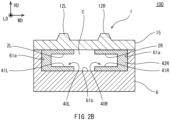
- FIG. 2B is a schematic diagram showing the configuration of the optical modulator according to the first embodiment.
- FIG. 2C is a schematic diagram showing the configuration of the optical modulator according to the first embodiment.
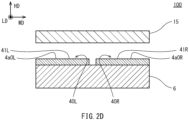
- FIG. 2D is a schematic diagram showing the configuration of the optical modulator according to the first embodiment.
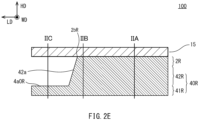
- FIG. 2E is a schematic diagram showing the configuration of the optical modulator according to the first embodiment.
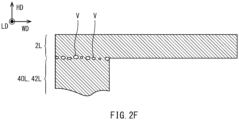
- FIG. 2F is a schematic diagram showing the configuration of the optical modulator according to the first embodiment.
- FIG. 3A is a schematic diagram showing an example of a method for manufacturing the optical modulator according to the first embodiment.
- FIG. 3A is a schematic diagram showing an example of a method for manufacturing the optical modulator according to the first embodiment.
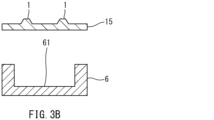
- FIG. 3B is a schematic diagram showing an example of a method for manufacturing the optical modulator according to the first embodiment.
- FIG. 3C is a schematic view showing an example of a method for manufacturing the optical modulator according to the first embodiment.
- FIG. 3D is a schematic view showing an example of a method for manufacturing the optical modulator according to the first embodiment.
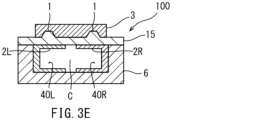
- FIG. 3E is a schematic view showing an example of a method for manufacturing the optical modulator according to the first embodiment.
- FIG. 4A is a schematic diagram showing an example of a method for manufacturing the optical modulator according to the first embodiment.
- FIG. 4B is a schematic diagram showing an example of a method for manufacturing the optical modulator according to the first embodiment.
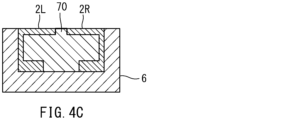
- FIG. 4C is a schematic view showing an example of a method for manufacturing the optical modulator according to the first embodiment.
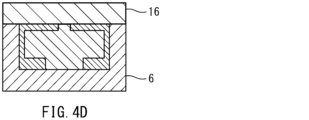
- FIG. 4D is a schematic view showing an example of a method for manufacturing the optical modulator according to the first embodiment.
- FIG. 4E is a schematic view showing an example of a method for manufacturing the optical modulator according to the first embodiment.
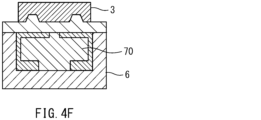
- FIG. 4F is a schematic view showing an example of a method for manufacturing the optical modulator according to the first embodiment.
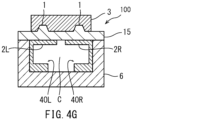
- FIG. 4G is a schematic view showing an example of a method for manufacturing the optical modulator according to the first embodiment.
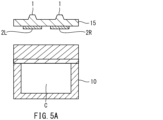
- FIG. 5A is a schematic diagram showing an example of a method for manufacturing the optical modulator according to the first embodiment.
- FIG. 5B is a schematic diagram showing an example of a method for manufacturing the optical modulator according to the first embodiment.
- FIG. 5C is a schematic view showing an example of a method for manufacturing the optical modulator according to the first embodiment.
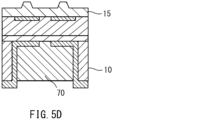
- FIG. 5D is a schematic view showing an example of a method for manufacturing the optical modulator according to the first embodiment.
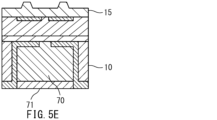
- FIG. 5E is a schematic view showing an example of a method for manufacturing the optical modulator according to the first embodiment.
- FIG. 5F is a schematic view showing an example of a method for manufacturing the optical modulator according to the first embodiment.
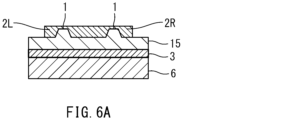
- FIG. 6A is a schematic diagram showing an example of a method for manufacturing the optical modulator according to the first embodiment.
- FIG. 6B is a schematic diagram showing an example of a method for manufacturing the optical modulator according to the first embodiment.
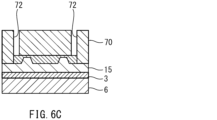
- FIG. 6C is a schematic view showing an example of a method for manufacturing the optical modulator according to the first embodiment.
- FIG. 6D is a schematic view showing an example of a method for manufacturing the optical modulator according to the first embodiment.
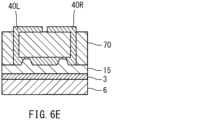
- FIG. 6E is a schematic view showing an example of a method for manufacturing the optical modulator according to the first embodiment.
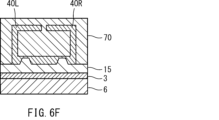
- FIG. 6F is a schematic view showing an example of a method for manufacturing the optical modulator according to the first embodiment.
- FIG. 6G is a schematic view showing an example of a method for manufacturing the optical modulator according to the first embodiment.
- FIG. 7 is a schematic diagram showing the configuration of an optical modulator according to the second embodiment.
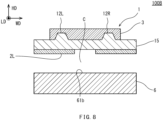
- FIG. 8 is a schematic diagram showing the configuration of an optical modulator according to the third embodiment.
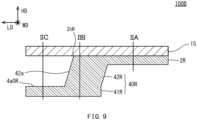
- FIG. 9 is a schematic diagram showing the configuration of an optical modulator according to the third embodiment.
- FIG. 10 is a plan view of the optical modulator according to the fourth embodiment.
- FIG. 11 is a schematic diagram showing the configuration of an optical modulator according to the fourth embodiment.
- FIG. 12 is a schematic diagram showing the configuration of an optical modulator according to the fifth embodiment.
- FIG. 13 is a plan view of the optical modulator according to the sixth embodiment.
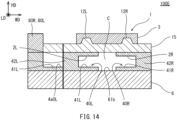
- FIG. 14 is a schematic diagram showing the configuration of an optical modulator according to the sixth embodiment.
- FIG. 15 is a schematic diagram showing the configuration of an optical modulator according to the seventh embodiment.
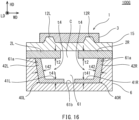
- FIG. 16 is a schematic diagram showing the configuration of an optical modulator according to the eighth embodiment.
- FIG. 15 is a schematic diagram showing the configuration of an optical modulator according to the seventh embodiment.
- FIG. 16 is a schematic diagram showing the configuration of an optical modulator according to the eighth
- FIG. 17 is a schematic diagram showing the configuration of an optical modulator according to the ninth embodiment.
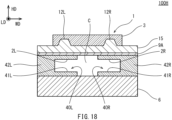
- FIG. 18 is a schematic diagram showing a modification of the optical modulator according to the ninth embodiment.
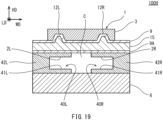
- FIG. 19 is a schematic diagram showing a modification of the optical modulator according to the ninth embodiment.
- FIG. 20 is a schematic diagram showing the configuration of an optical modulator according to the tenth embodiment.
- FIG. 21 is a schematic diagram showing the configuration of an optical modulator according to the eleventh embodiment.
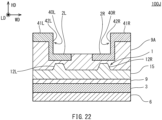
- FIG. 22 is a schematic diagram showing a modification of the optical modulator according to the eleventh embodiment.
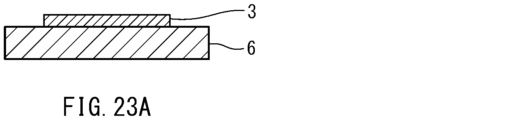
- FIG. 23A is a schematic diagram showing an example of a method for manufacturing the optical modulator according to the eleventh embodiment.
- FIG. 23A is a schematic diagram showing an example of a method for manufacturing the optical modulator according to the eleventh embodiment.
- FIG. 23B is a schematic diagram showing an example of a manufacturing method for the optical modulator according to the eleventh embodiment.
- FIG. 23C is a schematic diagram showing an example of a manufacturing method for the optical modulator according to the eleventh embodiment.
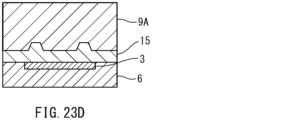
- FIG. 23D is a schematic diagram showing an example of a manufacturing method for the optical modulator according to the eleventh embodiment.
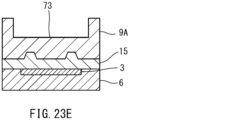
- FIG. 23E is a schematic diagram showing an example of a manufacturing method for the optical modulator according to the eleventh embodiment.
- FIG. 23F is a schematic diagram showing an example of a manufacturing method for the optical modulator according to the eleventh embodiment.
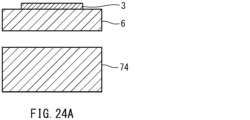
- FIG. 24A is a schematic diagram showing an example of a manufacturing method for the optical modulator according to the eleventh embodiment.
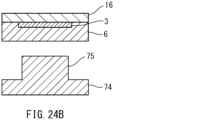
- FIG. 24B is a schematic diagram showing an example of a manufacturing method for the optical modulator according to the eleventh embodiment.
- FIG. 24C is a schematic diagram showing an example of a manufacturing method for the optical modulator according to the eleventh embodiment.
- FIG. 24D is a schematic diagram showing an example of a manufacturing method for the optical modulator according to the eleventh embodiment.
- FIG. 24E is a schematic diagram showing an example of a manufacturing method for the optical modulator according to the eleventh embodiment.
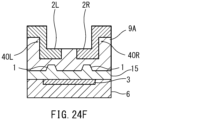
- FIG. 24F is a schematic diagram showing an example of a manufacturing method for the optical modulator according to the eleventh embodiment.
- FIG. 25A is a schematic diagram showing an example of a manufacturing method for the optical modulator according to the eleventh embodiment.
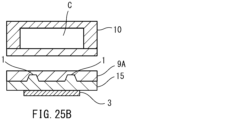
- FIG. 25B is a schematic diagram showing an example of a manufacturing method for the optical modulator according to the eleventh embodiment.
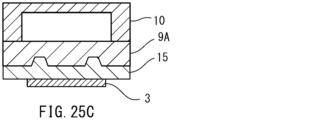
- FIG. 25C is a schematic diagram showing an example of a manufacturing method for the optical modulator according to the eleventh embodiment.
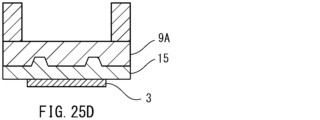
- FIG. 25D is a schematic diagram showing an example of a manufacturing method for the optical modulator according to the eleventh embodiment.
- FIG. 25E is a schematic diagram showing an example of a manufacturing method for the optical modulator according to the eleventh embodiment.
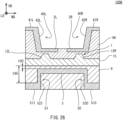
- FIG. 26 is a schematic diagram showing the configuration of an optical modulator according to the twelfth embodiment.
- FIG. 27 is a schematic diagram showing the configuration of an optical modulator according to the thirteenth embodiment.
- FIG. 28 is a schematic diagram showing the configuration of an optical modulator according to the fourteenth embodiment.
- FIG. 29 is a schematic diagram showing the configuration of an optical modulator according to the fifteenth embodiment.
- FIG. 30 is a schematic diagram showing the configuration of an optical modulator according to the fifteenth embodiment.
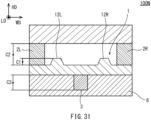
- FIG. 31 is a schematic diagram showing the configuration of an optical modulator according to the fifteenth embodiment.
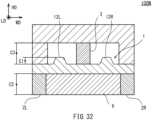
- FIG. 32 is a schematic diagram showing the configuration of an optical modulator according to the fifteenth embodiment.
- the optical modulator includes an optical waveguide, a first electrode, a second electrode, and a first wiring electrode.
- the optical waveguide has an electro-optical effect.
- the first electrode is disposed on one side of the optical waveguide in the height direction of the optical modulator, and extends along a part of the optical waveguide.
- the second electrode is disposed on the other side of the optical waveguide in the height direction of the optical modulator, and forms a potential difference between the first electrode and the second electrode, and applies an electric field to the optical waveguide together with the first electrode.
- the first wiring electrode is disposed on the opposite side of the optical waveguide to the first electrode in the height direction of the optical modulator, and is electrically connected to the first electrode.
- the first wiring electrode includes a wiring portion disposed so as to be drawn out from an end of the first electrode in the extension direction when viewed along the height direction of the optical modulator (first configuration).
- the first electrode is disposed on one side of the optical waveguide in the height direction of the optical modulator.
- the first wiring electrode which is electrically connected to the first electrode and supplies an electrical signal to the first electrode or extracts an electrical signal from the first electrode, includes a wiring portion disposed so as to be drawn out from the end of the first electrode as viewed along the height direction of the optical modulator, and is disposed on the opposite side of the optical waveguide to the first electrode in the height direction of the optical modulator.
- the second electrode for applying an electric field to the optical waveguide together with the first electrode is disposed on the opposite side of the first electrode and the first wiring electrode in the height direction of the optical modulator.
- the wiring electrode for supplying an electrical signal to the second electrode or extracting an electrical signal from the second electrode naturally becomes separated from the wiring portion of the first wiring electrode in the height direction of the optical modulator. This makes it difficult for an electric field to be formed between the wiring electrodes, and it is possible to prevent an excessive electric field from being applied to parts of the optical waveguide other than the optical modulation portion. Therefore, according to the first configuration, it is possible to reduce electrical loss while suppressing the increase in size of the optical modulator, particularly in the width direction.
- the first electrode is disposed in a cavity provided in the optical modulator (second configuration).
- the first electrode can be disposed relatively freely by utilizing the cavity.
- the first wiring electrode is disposed within the cavity and supported by a sidewall defining the cavity (third configuration).
- the first wiring electrode is supported by the sidewall that defines the cavity, so buckling of the first wiring electrode can be suppressed. For example, even if the first wiring electrode is formed in a state in which internal stress is generated and the first wiring electrode is no longer able to withstand the internal stress when the optical modulator is in use, buckling of the first wiring electrode is unlikely to occur. Therefore, deformation of the optical modulator can be suppressed.
- the first wiring electrode may include a main body portion that is disposed away from the first electrode in the height direction and a portion of which constitutes the wiring portion, and a connecting portion that connects the main body portion and the first electrode.
- the connecting portion may be inclined in the height direction when viewed in a cross section perpendicular to the extension direction of the first electrode (fourth configuration).
- the connecting portion connecting the first electrode and the main body of the first wiring electrode is arranged parallel to the height direction of the optical modulator, a right-angled corner portion is formed at the joint between the first electrode and the first wiring electrode, and high-frequency signal loss occurs at this corner portion.
- the connecting portion of the first wiring electrode is inclined with respect to the height direction of the optical modulator. Therefore, the first wiring electrode can be joined to the first electrode at a gentle angle. This makes it possible to reduce high-frequency signal loss at the joint between the first electrode and the first wiring electrode, and achieve wideband modulation.
- the first wiring electrode may include a main body portion disposed away from the first electrode in the height direction and part of which constitutes the wiring portion, and a connecting portion connecting the main body portion and the first electrode.
- the connecting portion includes a surface that is continuous with the end of the first electrode in the extension direction, and the surface can be inclined in the height direction such that the main body side is away from the first electrode in the extension direction when viewed along the width direction of the optical modulator (fifth configuration).
- the surface of the connecting portion of the first wiring electrode is inclined with respect to the height direction of the optical modulator when viewed along the width direction of the optical modulator so that the main body side is away from the first electrode in the extension direction relative to the first electrode side. Therefore, the surface of the connecting portion of the first wiring electrode can be made to continue at a gentle angle with the first electrode. This makes it possible to reduce high-frequency signal loss at the boundary between the surface of the connecting portion and the first electrode, and realize modulation over a wide band.
- At least a portion of the first wiring electrode may be arranged independently within the cavity (sixth configuration).
- the first wiring electrode is provided on a surface that has been roughened by processing, the first wiring electrode is likely to peel off, and there is a risk of electrical signal loss due to the surface roughness.
- the sixth configuration at least a portion of the first wiring electrode is self-supporting within the cavity. In this case, peeling of the first wiring electrode does not occur, and electrical signal loss due to surface roughness can be prevented.
- any one of the optical modulators in the first to sixth configurations may further include a through electrode connected to the wiring portion of the first wiring electrode and extending from the first electrode side to the second electrode side (seventh configuration).
- a through electrode is provided that extends from the first electrode side to the second electrode side.
- the through electrode is connected to the wiring portion of the first wiring electrode.
- the electrical signal of the first electrode is taken out to the second electrode side via the wiring portion of the first wiring electrode and the through electrode. Therefore, the electrode pad for the first electrode and the electrode pad for the second electrode can be arranged in the same plane, and the electrical wiring can be simplified. In addition, the electrical wiring for the first electrode and the second electrode can be brought closer together, which reduces the loss of the electrical signal.
- the through electrode is inclined with respect to the height direction of the optical modulator (eighth configuration).
- the through electrodes are arranged parallel to the height direction of the optical modulator, right-angled corners are formed at the junctions between the through electrodes and the first wiring electrodes, and high-frequency signal loss occurs at these corners.
- the through electrodes are inclined relative to the height direction of the optical modulator. This allows for a gentle junction between the through electrodes and the first wiring electrodes. This reduces high-frequency signal loss at the junctions between the through electrodes and the first wiring electrodes, enabling modulation over a wide bandwidth.
- the thickness of the first electrode is greater than the thickness of the first wiring electrode (ninth configuration).
- the first electrode is an electrode that applies an electric field to the optical waveguide together with the second electrode to modulate the optical signal.
- the thickness of this first electrode is made greater than the thickness of the first wiring electrode. This makes it possible to reduce the resistance of the first electrode in the portion of the optical modulator that performs optical modulation, thereby reducing the loss of the electrical signal.
- the first electrode and the first wiring electrode may be joined, and a gap may exist at the interface between the first electrode and the first wiring electrode (tenth configuration).
- a gap exists at the interface between the first electrode and the first wiring electrode. This gap can add capacitance and adjust the characteristic impedance.
- the gap also has a lower dielectric constant than the electro-optic material. This can reduce the effective refractive index of the electrical signal and reduce the loss of the electrical signal in the first electrode and the first wiring electrode.
- the first electrode and the first wiring electrode may be joined, and oxygen may be present at the interface between the first electrode and the first wiring electrode (11th configuration).
- oxygen is present at the interface between the first electrode and the first wiring electrode.
- This oxygen can add capacitance, allowing the characteristic impedance to be adjusted.
- oxygen when oxygen is bonded to a metal, its dielectric constant becomes lower than that of the electro-optical material. This allows the effective refractive index of the electrical signal to be reduced, and the loss of the electrical signal in the first electrode and the first wiring electrode to be reduced.
- the first electrode and the first wiring electrode may be joined, and a eutectic may exist between the first electrode and the first wiring electrode (12th configuration).
- a eutectic is formed between the first electrode and the first wiring electrode, so that the bonding strength between the first electrode and the first wiring electrode can be increased. In addition, the loss of electrical connection between the first electrode and the first wiring electrode can be reduced.
- the first electrode and the first wiring electrode may be joined, and a resin may be present at the interface between the first electrode and the first wiring electrode (13th configuration).
- the resin since resin is present at the interface between the first electrode and the first wiring electrode, it is possible to add electrical capacitance by the resin, and it is possible to adjust the characteristic impedance. Furthermore, the resin has a lower dielectric constant than the electro-optical material. Therefore, it is possible to reduce the effective refractive index of the electrical signal, and it is possible to reduce the loss of the electrical signal in the first electrode and the first wiring electrode.
- the length of the first electrode in the width direction of the optical modulator is greater than the length of the optical waveguide (14th configuration).
- the width of the first electrode (the length in the width direction of the optical modulator) is greater than the width of the optical waveguide (the length in the width direction of the optical modulator), so that a uniform electric field can be applied from the first electrode to the optical waveguide. This can improve the quality of the optical signal generated by the optical modulator.
- the optical modulator of any one of the first to fourteenth configurations further includes a low dielectric layer provided at least either between the optical waveguide and the first electrode or between the optical waveguide and the second electrode, the low dielectric layer having a refractive index smaller than that of the optical waveguide (fifteenth configuration).
- a low dielectric constant layer is provided between the optical waveguide and the first electrode and/or the second electrode. This makes it difficult for light to be absorbed from the optical waveguide to the first electrode and/or the second electrode, and optical loss can be suppressed. Furthermore, by providing a low dielectric constant layer, the effective refractive index of the high frequency signal can be adjusted to match the effective refractive index of the light wave, allowing optical modulation up to higher frequencies. Furthermore, by providing a low dielectric constant layer, the effective dielectric constant for the electrical signal can be lowered, suppressing high frequency signal loss and allowing optical modulation up to higher frequencies.
- the length in the height direction of the low dielectric constant layer from the optical waveguide to the first wiring electrode is greater than the length in the height direction of the low dielectric constant layer from the optical waveguide to the first electrode (16th configuration).
- the optical modulator of any one of the first to sixteenth configurations further includes a support substrate arranged on the opposite side of the first electrode from the optical waveguide and formed of a low dielectric constant material having a refractive index smaller than that of the optical waveguide (seventeenth configuration).
- a support substrate made of a low dielectric constant material is provided on the opposite side of the first electrode to the optical waveguide. This allows the effective refractive index of the high frequency signal to be adjusted to match the effective refractive index of the light wave, making it possible to perform optical modulation over a wider bandwidth. Furthermore, by providing a support substrate made of a low dielectric constant material, the effective dielectric constant for the electrical signal can be reduced, suppressing loss of the high frequency signal and enabling optical modulation up to higher frequencies.
- any one of the optical modulators of the first to seventeenth configurations may further include a second wiring electrode that is disposed on the opposite side of the optical waveguide from the second electrode in the height direction of the optical modulator and is electrically connected to the second electrode (18th configuration).
- the optical modulator of the 18th configuration may further include a through electrode connected to the second wiring electrode and extending from the second electrode side to the first electrode side (19th configuration).
- the thickness of the second electrode is greater than the thickness of the second wiring electrode (20th configuration).
- the optical modulator of any one of the eighteenth to twentieth configurations may further include a first low dielectric layer provided in the height direction from the optical waveguide to the first electrode and from the optical waveguide to the first wiring electrode, the first low dielectric layer having a refractive index smaller than that of the optical waveguide, and a second low dielectric layer provided in the height direction from the optical waveguide to the second electrode and from the optical waveguide to the second wiring electrode, the second low dielectric layer having a refractive index smaller than that of the optical waveguide.
- the length in the height direction of the first low dielectric layer from the optical waveguide to the first wiring electrode is greater than the length in the height direction of the first low dielectric layer from the optical waveguide to the first electrode, and the length in the height direction of the second low dielectric layer from the optical waveguide to the second wiring electrode is greater than the length in the height direction of the second low dielectric layer from the optical waveguide to the second electrode (twenty-first configuration).
- FIG. 1 is a plan view of an optical modulator 100 according to the first embodiment.
- the optical modulator 100 is a so-called Mach-Zehnder type optical modulator.
- the optical modulator 100 includes an optical waveguide 1, first electrodes 2R and 2L, a second electrode 3, and first wiring electrodes 4IR, 4IL, 4OR, and 4OL.
- FIG. 1 shows the optical waveguide 1, the first electrodes 2R and 2L, the second electrode 3, and the first wiring electrodes 4IR, 4IL, 4OR, and 4OL when projected onto a plane perpendicular to the height direction HD of the optical modulator 100.
- FIG. 1 shows the optical waveguide 1, the first electrodes 2R and 2L, the second electrode 3, and the first wiring electrodes 4IR, 4IL, 4OR, and 4OL when projected onto a plane perpendicular to the height direction HD of the optical modulator 100.
- the second electrode 3 is shown by a dashed line
- the first wiring electrodes 4IR, 4IL, 4OR, and 4OL are shown by a broken line.
- the height direction HD means the stacking direction of each element of the optical modulator 100 having a stacked structure.
- a direction in which the optical waveguide 1 substantially extends and perpendicular to the height direction HD is defined as a longitudinal direction LD of the optical modulator 100.
- a direction perpendicular to the height direction HD and the longitudinal direction LD is a width direction WD of the optical modulator 100.
- the optical waveguide 1 functions as a light transmission path.
- the optical waveguide 1 includes an input optical waveguide 11, which is the input side of the light, two branch optical waveguides 12R, 12L branched from the input optical waveguide 11, and an output optical waveguide 13, which is the output side of the light formed by combining the two branch optical waveguides 12R, 12L.
- the input optical waveguide 11 and the output optical waveguide 13 extend linearly, for example, along the longitudinal direction LD.
- the branch optical waveguides 12R, 12L include input relay sections 121R, 121L, straight sections 122R, 122L, and output relay sections 123R, 123L.
- the straight sections 122R, 122L are arranged side by side in the width direction WD.
- the straight sections 122R and 122L are connected to the input optical waveguide 11 by the input relay sections 121R and 121L.
- the straight sections 122R and 122L are connected to the output optical waveguide 13 by the output relay sections 123R and 123L.
- the first electrodes 2R, 2L extend along a portion of the optical waveguide 1. More specifically, the first electrodes 2R, 2L extend along the straight portions 122R, 122L of the branched optical waveguides 12R, 12L, respectively. The first electrodes 2R, 2L are arranged so as to overlap the straight portions 122R, 122L of the branched optical waveguides 12R, 12L, respectively, when viewed, for example, along the height direction HD.
- the second electrode 3 is arranged so that at least a portion of it overlaps with the optical waveguide 1 and the first electrodes 2R and 2L when viewed along the height direction HD.
- the second electrode 3 forms a potential difference between the first electrodes 2R and 2L, and applies an electric field to the optical waveguide 1 together with the first electrodes 2R and 2L.
- the first electrodes 2R and 2L and the second electrode 3 function, for example, as control electrodes for controlling the light passing through the optical waveguide 1.
- the first electrode 2R and the second electrode 3 are arranged so that an electric field can be applied to the branch optical waveguide 12R.
- the first electrode 2L and the second electrode 3 are arranged so that an electric field can be applied to the branch optical waveguide 12L.
- the straight portions 122R and 122L are the substantial optical modulation portions of the optical waveguide 1.
- the first electrodes 2R and 2L can be signal electrodes
- the second electrode 3 can be a ground electrode.
- the first electrodes 2R and 2L can be ground electrodes
- the second electrode 3 can be a signal electrode.
- the first wiring electrodes 4IR, 4IL, 4OR, 4OL are arranged in the optical modulator 100 for the purpose of supplying an electrical signal to the first electrodes 2R, 2L or extracting an electrical signal from the first electrodes 2R, 2L.
- the first wiring electrodes 4IR, 4OR are electrically connected to the first electrode 2R.
- the first wiring electrodes 4IL, 4OL are electrically connected to the first electrode 2L.
- the first wiring electrodes 4IR, 4IL are arranged on the input side of the first electrodes 2R, 2L, and the first wiring electrodes 4OR, 4OL are arranged on the output side of the first electrodes 2R, 2L.
- the first wiring electrodes 4IL, 4OL protrude from one of the first electrodes 2L in the width direction WD when viewed along the height direction HD.
- the first wiring electrode 4IL includes a wiring portion 4aIL.
- the wiring portion 4aIL is arranged so as to be drawn from one end 2aL of the first electrode 2L in the extension direction when viewed along the height direction HD.
- the first wiring electrode 4OL includes a wiring portion 4aOL.
- the wiring portion 4aOL is arranged so as to be drawn from the other end 2bL of the first electrode 2L in the extension direction when viewed along the height direction HD.
- the first wiring electrodes 4IR and 4OR also protrude in the width direction WD from the other first electrode 2R when viewed along the height direction HD.
- the first wiring electrode 4IR includes a wiring portion 4aIR.
- the wiring portion 4aIR is arranged so as to be drawn from one end 2aR of the first electrode 2R in the extension direction when viewed along the height direction HD.
- the first wiring electrode 4OR includes a wiring portion 4aOR.
- the wiring portion 4aOR is arranged so as to be drawn from the other end 2bR of the first electrode 2R in the extension direction when viewed along the height direction HD.
- FIG. 2A is a cross-sectional view taken along line IIA-IIA in FIG. 1.
- FIG. 2A is a cross-sectional view (transverse cross-sectional view) of the optical modulator 100 cut along a plane perpendicular to the longitudinal direction LD at the positions of the straight portions 122R, 122L (optical modulation portions of the optical waveguide 1) of the branched optical waveguides 12R, 12L.
- the optical waveguide 1 has an electro-optic effect.
- the optical waveguide 1 is formed in the base layer 15.
- the optical waveguide 1 protrudes from the surface of the base layer 15. That is, the optical waveguide 1 is a ridge-type optical waveguide.
- the optical waveguide 1 does not necessarily have to be a ridge-type optical waveguide.
- the optical waveguide 1 may have a substantially trapezoidal cross section as shown in FIG. 2A, but may also have a cross section of another shape, such as a rectangular shape.
- the optical waveguide 1 is made of an electro-optical material.
- the electro-optical material include LiNbO3 (lithium niobate), LiTaO3 (lithium tantalate), PLZT (lead lanthanum zirconate titanate), KTN (potassium tantalate niobate), and BaTiO3 (barium titanate).
- the electro-optical material may be an electro-optical polymer (EO polymer).
- the base layer 15 may be made of the same electro-optical material as the optical waveguide 1. However, the base layer 15 may be omitted in the optical modulator 100.
- the first electrodes 2R, 2L are disposed on one side of the optical modulator 100 in the height direction HD with respect to the optical waveguide 1. That is, the center C2 of the first electrodes 2R, 2L in the height direction HD is located on one side of the center C1 of the optical waveguide 1 (branch optical waveguides 12R, 12L) in the height direction HD of the optical modulator 100. In this embodiment, the entire first electrodes 2R, 2L are disposed on one side of the height direction HD with respect to the optical waveguide 1.
- the first electrode 2R is laminated on one side of the height direction HD with respect to the branch optical waveguide 12R.
- the first electrode 2L is laminated on one side of the height direction HD with respect to the branch optical waveguide 12L.
- the first electrodes 2R, 2L have a substantially rectangular cross section. However, the cross-sectional shape of the first electrodes 2R, 2L is not limited to this.
- the width w2 of the first electrodes 2R, 2L is preferably larger than the width w1 of the optical waveguide 1. However, the width w2 of the first electrodes 2R, 2L may be equal to or smaller than the width w1 of the optical waveguide 1.
- the width w2 of the first electrodes 2R, 2L is the maximum length of the first electrodes 2R, 2L in the width direction WD.
- the width w1 of the optical waveguide 1 is the maximum length in the width direction WD of the portions of the optical waveguide 1 that correspond to the first electrodes 2R, 2L. In this embodiment, the width w1 is the maximum length in the width direction WD of each of the branched optical waveguides 12R, 12L.
- the first wiring electrodes 4OR, 4OL are arranged on the opposite side of the optical waveguide 1 with respect to the first electrodes 2R, 2L in the height direction HD.
- the first wiring electrode 4OR includes a main body portion 41R and a connecting portion 42R.
- the first wiring electrode 4OL includes a main body portion 41L and a connecting portion 42L.
- the main body 41R is disposed away from the first electrode 2R in the height direction HD.
- the main body 41L is disposed away from the first electrode 2L in the height direction HD.
- the main body 41R, 41L are disposed, for example, directly below the first electrodes 2R, 2L in a cross-sectional view of the optical modulator 100.
- the main body 41R, 41L face the first electrodes 2R, 2L with a gap in the height direction HD.
- the connecting portion 42R connects the main body 41R to the first electrode 2R.
- the connecting portion 42L connects the main body 41L to the first electrode 2L.
- the connecting portion 42R may connect, for example, the outer ends of the main body 41R and the first electrode 2R to each other in the width direction WD.
- the connecting portion 42L may connect the outer ends of the main body 41L and the first electrode 2L to each other in the width direction WD.
- the connecting portions 42R, 42L extend from the main body portions 41R, 41L toward the first electrodes 2R, 2L in a cross-sectional view of the optical modulator 100.
- the main body portions 41R, 41L and the connecting portions 42R, 42L have a substantially rectangular cross section.
- the cross-sectional shape of the first electrodes 2R, 2L is not limited to this.
- the optical modulator 100 may further include a support substrate 6.
- the support substrate 6 supports the optical waveguide 1, the first electrodes 2R and 2L, the second electrode 3, and the first wiring electrodes 4OR and 4OL.
- a semiconductor material may be used as the support substrate 6.
- a single element semiconductor such as Si (silicon) or Ge (germanium), or a compound semiconductor such as GaAs (gallium arsenide) may be used.
- an oxide such as SiO 2 , Al 2 O 3 , LaAlO 3 , LaYO 3 , ZnO, HfO 2 , MgO, or Y 2 O 3 may be used.
- an electro-optical material specifically, LiNbO 3 , LiTaO 3 , PLZT, KTN, or BaTiO 3 may be used as the support substrate 6.
- a cavity C is provided in the optical modulator 100.
- the cavity C is formed between the support substrate 6 and the optical waveguide 1.
- the cavity C is a closed space in a cross-sectional view of the optical modulator 100.
- the cavity C can be formed, for example, by a recess 61 provided in the support substrate 6 and a base layer 15.
- the cavity C is defined by the side walls 61a, 61a and bottom wall 61b of the recess 61 and the base layer 15.
- the first electrodes 2R, 2L and the first wiring electrodes 4OR, 4OL are arranged in this cavity C.
- the first wiring electrodes 4OR, 4OL are supported by the side walls 61a, 61a.
- connection portion 42R of the first wiring electrode 4OR is provided along one side wall 61a, and the connection portion 42L of the first wiring electrode 4OL is provided along the other side wall 61a.
- main body portions 41R, 41L of the first wiring electrodes 4OR, 4OL are provided along the bottom wall 61b.
- the second electrode 3 is disposed on the other side of the optical modulator 100 in the height direction HD (opposite the first electrodes 2R, 2L) with respect to the optical waveguide 1. That is, the center C3 of the second electrode 3 in the height direction HD of the optical modulator 100 is located on the other side of the height direction HD from the center C1 of the optical waveguide 1.
- the second electrode 3 is laminated on the optical waveguide 1 on the opposite side of the first electrodes 2R, 2L in the height direction HD. More specifically, the second electrode 3 is laminated on the branch optical waveguides 12R, 12L on the opposite side of the first electrodes 2R, 2L.
- the second electrode 3 is disposed on the opposite side of the first electrodes 2R, 2L with respect to the branch optical waveguides 12R, 12L so that the branch optical waveguides 12R, 12L are positioned between the second electrode 3 and the first electrodes 2R, 2L.
- the second electrode 3 is provided in common to the two branch optical waveguides 12R and 12L.
- the second electrode 3 may be provided for each of the branch optical waveguides 12R and 12L.
- FIGS. 2B and 2C are cross-sectional views taken along lines IIB-IIB and IIC-IIC in FIG. 1, respectively.
- FIG. 2B is a cross-sectional view of the optical modulator 100 cut along a plane perpendicular to the longitudinal direction LD at the positions of the output relay sections 123R and 123L of the branched optical waveguides 12R and 12L.
- FIG. 2C is a cross-sectional view of the optical modulator 100 cut along a plane perpendicular to the longitudinal direction LD at a position of the output relay sections 123R and 123L of the branched optical waveguides 12R and 12L closer to the output optical waveguide 13 than the cross section shown in FIG. 2B.
- the second electrode 3 does not exist at a position on the output side of the optical waveguide 1 from the optical modulation section.
- the first electrodes 2R, 2L and the connecting parts 42R, 42L of the first wiring electrodes 4OR, 4OL also do not exist. Therefore, the electric field by the first electrodes 2R, 2L and the second electrode 3 is not substantially applied to the part of the optical waveguide 1 other than the optical modulation section.
- the main parts 41R, 41L of the first wiring electrodes 4OR, 4OL are separated from the optical waveguide 1 in the height direction HD, the electric field of the first wiring electrodes 4OR, 4OL is not substantially affected in the part of the optical waveguide 1 other than the optical modulation section.
- the main parts 41R, 41L of the first wiring electrodes 4OR, 4OL at this position are parts arranged to be drawn out from the first electrodes 2R, 2L when viewed along the height direction HD, and constitute the wiring part 4aOL.
- FIG. 2D is a cross-sectional view taken along line IID-IID in FIG. 1.
- FIG. 2D is a cross-sectional view taken when the first wiring electrodes 4OR, 4OL, which are drawn out from the first electrodes 2R, 2L in the width direction WD, are cut along a plane perpendicular to the width direction WD.
- the first electrodes 2R, 2L, the second electrode 3, and the connecting portions 42R, 42L of the first wiring electrodes 4OR, 4OL are not present, but the main body portions 41R, 41L of the first wiring electrodes 4OR, 4OL are present.
- the main body portions 41R, 41L of the first wiring electrodes 4OR, 4OL at this position are portions that are arranged to be pulled out from the first electrodes 2R, 2L when viewed along the height direction HD, and form the wiring portion 4aOL.
- FIG. 2E is a cross-sectional view taken along line IIE-IIE in FIG. 1.
- FIG. 2E is a cross-sectional view of the optical modulator 100 cut along a plane perpendicular to the width direction WD, showing the first electrode 2R and the first wiring electrode 4OR as viewed along the width direction WD.
- FIG. 2E also shows lines IIA-IIA, IIB-IIB, and IIC-IIC in FIG. 1.
- the connecting portion 42R of the first wiring electrode 4OR includes a surface 42a that is continuous with the end of the first electrode 2R in the extension direction (longitudinal direction LD).
- the surface 42a is inclined with respect to the height direction HD so that the main body portion 41R side of the first wiring electrode 4OR is away from the first electrode 2R in the extension direction relative to the first electrode 2R side.
- the surface 42a of the connecting portion 42R may be straight or curved.
- the connecting portion 42L of the first wiring electrode 4OL can have a similar configuration to the connecting portion 42R of the first wiring electrode 4OR. That is, the surface of the connecting portion 42L that is continuous with the end of the first electrode 2L in the extension direction may be inclined with respect to the height direction HD so that the main body portion 41L side of the first wiring electrode 4OL is away from the first electrode 2L in the extension direction relative to the first electrode 2L side.
- FIG. 2F is a cross-sectional view of an enlarged portion of the first electrode 2L and the first wiring electrode 4OL.
- the first electrode 2L is joined to the first wiring electrode 4OL. More specifically, the first electrode 2L is joined to the connecting portion 42L of the first wiring electrode 4OL.
- a minute gap V may exist at the interface between the first electrode 2L and the first wiring electrode 4OL.
- oxygen may exist at the interface between the first electrode 2L and the first wiring electrode 4OL. This oxygen is, for example, the oxygen content of an oxide.
- the oxygen present at the interface between the first electrode 2L and the first wiring electrode 4OL is, for example, 1 mass % or more higher than the inside of the first electrode 2L and the inside of the first wiring electrode 4OL.
- a eutectic may exist between the first electrode 2L and the first wiring electrode 4OL. This eutectic occurs when the first electrode 2L and the first wiring electrode 4OL are joined using a eutectic reaction of metals.
- Resin may also be present at the interface between the first electrode 2L and the first wiring electrode 4OL. This resin is, for example, a conductive resin. When any of voids, oxygen, eutectic, and resin exists between the first electrode 2L and the connecting portion 42L, the electrical connection between the first electrode 2L and the connecting portion 42L is ensured.
- voids, oxygen, or resin may also be present at the interface between the first electrode 2R and the first wiring electrode 4OR.
- a eutectic may be present between the first electrode 2R and the first wiring electrode 4OR.
- FIGS. 2A to 2F mainly show the configuration of the output side of the optical modulator 100.
- the input side of the optical modulator 100 can have a similar configuration to the output side. Therefore, a detailed description of the input side configuration will be omitted.
- FIGS. 3A to 3E are schematic diagrams for explaining an example of a method for manufacturing the optical modulator 100. As shown in Figure 3A, a support substrate 6 and an electro-optic material substrate 16 are prepared.
- a recess 61 is formed in the support substrate 6 by dry etching, wet etching, dicing, or the like.
- This recess 61 becomes the cavity C.
- the electro-optical material substrate 16 is patterned by lithography or the like, and then a base layer 15 having an optical waveguide 1 is formed by dry etching, wet etching, dicing, or the like.
- electrodes are formed on the support substrate 6 in which the recess 61 is formed, and then patterning is performed using lithography or the like to form the first wiring electrodes 4OR, 4OL in the recess 61.
- electrodes are formed on the base layer 15 having the optical waveguide 1, and then patterning is performed using lithography or the like to form the first electrodes 2R, 2L on the surface of the base layer 15.
- the first electrodes 2R, 2L of the base layer 15 are bonded to the first wiring electrodes 4OR, 4OL of the support substrate 6.
- the bonding is performed by bonding using a metal or a conductive resin, etc.
- the second electrode 3 is formed on the base layer 15 having the optical waveguide 1 by sputtering, vapor deposition, epitaxial film formation, or the like.
- an optical modulator 100 having a cavity C can be manufactured.
- FIGS. 4A to 4G are schematic diagrams illustrating another example of a method for manufacturing the optical modulator 100.
- a recess 61 is formed in a prepared support substrate 6 by a method similar to that shown in FIG. 3B and FIG. 3C above, and first wiring electrodes 4OR, 4OL are formed in the recess 61.
- the recesses 61 in which the first wiring electrodes 4OR, 4OL are formed are filled with a sacrificial layer 70.
- the sacrificial layer 70 can be filled by CVD, vapor deposition, sputtering, spin coating, etc.
- the first electrodes 2R and 2L are formed on the support substrate 6 filled with the sacrificial layer 70 by sputtering, vapor deposition, epitaxial film formation, or the like.
- the electro-optical material substrate 16 is bonded to the support substrate 6 on which the first electrodes 2R, 2L are formed.
- the bonding can be performed by bonding using a metal or a conductive resin.
- a film of electro-optical material may be formed on the support substrate 6 on which the first electrodes 2R, 2L are formed by epitaxial deposition, spin coating, or the like.
- the electro-optical material substrate 16 is patterned by lithography or the like, and then a base layer 15 having an optical waveguide 1 is formed by dry etching, wet etching, dicing, or the like.
- the second electrode 3 is formed on the base layer 15 having the optical waveguide 1 by sputtering, vapor deposition, epitaxial deposition, or the like.
- the sacrificial layer 70 is removed from the base layer 15 on which the second electrode 3 is formed by dry etching, wet etching, or the like.
- an optical modulator 100 having a cavity C can be manufactured.
- FIGS. 5A to 5F are schematic diagrams illustrating another example of a method for manufacturing an optical modulator 100.
- a C-SOI (Cavity Silicon On Insulator) 10 having a cavity C is prepared.
- a base layer 15 having an optical waveguide 1 is prepared.
- First electrodes 2R and 2L are formed on the surface of the base layer 15 by a method similar to that shown in FIG. 3C above.
- the base layer 15 is bonded to the C-SOI 10.
- the bonding can be performed by bonding using a metal or a conductive resin.
- the first electrodes 2R, 2L may be formed directly on the C-SOI 10, and an electro-optical material may be formed on the surface by epitaxial deposition, spin coating, or the like.
- the first wiring electrodes 4OR, 4OL are formed in the opened cavity C by sputtering, vapor deposition, epitaxial film formation, etc.
- the cavity C in which the first wiring electrodes 4OR, 4OL are formed is filled with a sacrificial layer 70.
- the sacrificial layer 70 can be filled by CVD, vapor deposition, sputtering, spin coating, etc.
- a sealing film 71 is formed on the surface of the sacrificial layer 70.
- This film 71 can be formed by sputtering, CVD, deposition, etc.
- the sacrificial layer 70 is removed.
- the sacrificial layer 70 can be removed by dry etching, wet etching, or the like.
- the second electrode 3 is formed on the base layer 15 having the optical waveguide 1 by a method similar to that shown in FIG. 3E above. By this method, the optical modulator 100 having the cavity C can be manufactured.
- FIGS. 6A to 6G are schematic diagrams illustrating another example of a method for manufacturing an optical modulator 100.
- a support substrate 6 is prepared in which a second electrode 3, a base layer 15 having an optical waveguide 1, and first electrodes 2R and 2L are laminated in this order.
- a sacrificial layer 70 is deposited on the first electrodes 2R and 2L.
- the deposition of the sacrificial layer 70 can be performed by CVD, deposition, sputtering, spin coating, etc.
- through holes 72, 72 reaching the first electrodes 2R, 2L are formed in the sacrificial layer 70.
- the through holes 72, 72 can be formed by patterning using lithography or the like, followed by dry etching, wet etching, dicing, or the like.
- the first wiring electrodes 4OR, 4OL are formed in the through holes 72, 72 by sputtering, vapor deposition, epitaxial film formation, or the like.
- a sealing film is formed on the first wiring electrodes 4OR, 4OL.
- This film can be formed by sputtering, CVD, deposition, etc.
- the sacrificial layer 70 on the inner side of the first wiring electrodes 4OR, 4OL is removed.
- the method described above can be used to remove the sacrificial layer 70.
- an optical modulator 100 having a cavity C can be manufactured.
- the first electrodes 2R, 2L are disposed on one side of the optical waveguide 1 in the height direction HD of the optical modulator 100.
- the first wiring electrodes 4IR, 4IL, 4OR, 4OL that supply electric signals to the first electrodes 2R, 2L or extract electric signals from the first electrodes 2R, 2L include wiring parts 4aIR, 4aIL, 4aOR, 4aOL that are disposed so as to be drawn out from the ends 2aR, 2aL, 2bR, 2bL of the first electrodes 2R, 2L as viewed along the height direction HD, and are disposed on the opposite side of the optical waveguide 1 with respect to the first electrodes 2R, 2L in the height direction HD.
- the second electrode 3 for applying an electric field to the optical waveguide 1 together with the first electrodes 2R, 2L is disposed on the opposite side of the first electrodes 2R, 2L and the first wiring electrodes 4IR, 4IL, 4OR, 4OL in the height direction HD of the optical modulator 100. Therefore, the wiring electrodes for supplying an electric signal to the second electrode 3 or extracting an electric signal from the second electrode 3 are naturally separated from the wiring portions 4aIR, 4aIL, 4aOR, and 4aOL of the first wiring electrodes 4IR, 4IL, 4OR, and 4OL in the height direction HD of the optical modulator 100.
- the first electrodes 2R, 2L are provided in a cavity C.
- the cavity C is disposed on the first electrode 2R, 2L side of the optical waveguide 1 in the height direction HD of the optical modulator 100, and accommodates the first electrodes 2R, 2L.
- the cavity C can be used to arrange the first wiring electrodes 4IR, 4IL, 4OR, 4OL relatively freely.
- the first wiring electrodes 4IR, 4IL, 4OR, 4OL are disposed on the opposite side of the optical waveguide 1 with respect to the first electrodes 2R, 2L in the height direction HD of the optical modulator 100. Therefore, even if the wiring portions 4aIR, 4aIL, 4aOR, 4aOL of the first wiring electrodes 4IR, 4IL, 4OR, 4OL cross the optical waveguide 1 when viewed along the height direction HD of the optical modulator 100, it is possible to dispose the wiring portions 4aIR, 4aIL, 4aOR, 4aOL at a position away from the optical waveguide 1 in the height direction HD of the optical modulator 100.
- the wiring portions 4aIR, 4aIL, 4aOR, and 4aOL of the first wiring electrodes 4IR, 4IL, 4OR, and 4OL are pulled out from the first electrodes 2R and 2L to one side in the width direction WD and are arranged in parallel in a plan view of the optical modulator 100. In this case, it is not necessary to route the first wiring electrodes 4IR, 4IL, 4OR, and 4OL widely. This reduces the loss of electrical signals and saves on the footprint.
- the first wiring electrodes 4IR, 4IL, 4OR, and 4OL which are not intended to apply an electric field to the optical waveguide 1, are spaced apart from the optical waveguide 1 in the height direction HD. Therefore, the first wiring electrodes 4IR, 4IL, 4OR, and 4OL have substantially no effect on the optical waveguide 1, and an electric field can be applied evenly to the branch optical waveguides 12L and 12R by the first electrodes 2L and 2R and the second electrode 3. This reduces the amount of light leaking from the optical waveguide 1 when the voltage is turned ON/OFF, improving the extinction ratio of the optical modulator 100.
- the optical modulator 100 is formed in a state in which internal stress occurs in the first wiring electrodes 4IR, 4IL, 4OR, and 4OL due to film formation, bonding, and the like. If the first wiring electrodes 4IR, 4IL, 4OR, and 4OL cannot withstand the internal stress when the optical modulator 100 is used, the first wiring electrodes 4IR, 4IL, 4OR, and 4OL may buckle. If the first wiring electrodes 4IR, 4IL, 4OR, and 4OL buckle, the first electrodes 2R and 2L buckle together with the first wiring electrodes 4IR, 4IL, 4OR, and 4OL, and as a result, the entire optical modulator 100 is deformed.
- the first wiring electrodes 4IR, 4IL, 4OR, and 4OL are supported by the side walls 61a and 61a, so that buckling of the first wiring electrodes 4IR, 4IL, 4OR, and 4OL can be suppressed. As a result, deformation of the optical modulator 100 can be suppressed.
- the connecting parts 42R, 42L connecting the first electrodes 2R, 2L and the main parts 41R, 41L of the first wiring electrodes 4IR, 4IL, 4OR, 4OL if the surface 42a continuing to the end of the first electrodes 2R, 2L in the extension direction is arranged parallel to the height direction HD of the optical modulator 100, this surface 42a forms a right-angled corner with the end of the first electrode 2R, and high-frequency signal loss occurs at this corner.
- the surface 42a of the connecting part 42R of the first wiring electrode 4OR is inclined with respect to the height direction HD when viewed along the width direction WD of the optical modulator 100 so that the main parts 41R, 41L side is away from the first electrodes 2R, 2L in the extension direction relative to the first electrodes 2R, 2L side. Therefore, the surfaces 42a of the connecting parts 42R, 42L of the first wiring electrodes 4OR, 4OL can be made continuous with the first electrodes 2R, 2L at a gentle angle. This reduces the loss of high-frequency signals at the boundaries between the surfaces 42a of the connecting parts 42R, 42L and the first electrodes 2R, 2L. As a result, modulation over a wide band can be achieved.
- a minute gap V may exist at the interface between the first electrodes 2R, 2L and the connecting portions 42R, 42L.
- the gap V can add an electric capacitance. Therefore, the characteristic impedance can be adjusted.
- the gap V has a lower dielectric constant than the electro-optic material, the effective refractive index of the electric signal can be reduced, and the loss of the electric signal in the first electrodes 2R, 2L and the first wiring electrodes 4OR, 4OL can be reduced.
- oxygen may be present at the interface between the first electrodes 2R, 2L and the connecting parts 42R, 42L.
- oxygen can add capacitance. This allows the characteristic impedance to be adjusted.
- oxygen when oxygen is combined with a metal and exists as an oxide, its dielectric constant is lower than that of an electro-optical material. This allows the effective refractive index of the electrical signal to be reduced, and the loss of the electrical signal in the first electrodes 2R, 2L and the first wiring electrodes 4OR, 4OL to be reduced.
- a eutectic may exist between the first electrodes 2R, 2L and the connecting portions 42R, 42L.
- the bonding strength between the first electrodes 2R, 2L and the first wiring electrodes 4OR, 4OL can be increased.
- the loss of electrical connection between the first electrodes 2R, 2L and the first wiring electrodes 4OR, 4OL can be reduced.
- resin may be present at the interface between the first electrodes 2R, 2L and the connecting portions 42R, 42L.
- the resin can add capacitance. This allows the characteristic impedance to be adjusted.
- resin has a lower dielectric constant than electro-optical materials. This allows the effective refractive index of the electrical signal to be reduced, and the loss of the electrical signal in the first electrodes 2R, 2L and the first wiring electrodes 4OR, 4OL to be reduced.
- the width w2 of the first electrodes 2R and 2L is greater than the width w1 of the optical waveguide 1. In this case, a uniform electric field can be applied to the optical waveguide 1. Therefore, the quality of the generated optical signal is improved.
- the optical modulator 100 may include a support substrate 6.
- the support substrate 6 is disposed on the opposite side of the optical waveguide 1 with respect to the first electrodes 2R and 2L.
- the support substrate 6 is preferably formed of a low dielectric constant material having a refractive index smaller than that of the optical waveguide 1. This allows the effective refractive index of the high frequency signal to be adjusted so that it matches the effective refractive index of the light wave. This allows optical modulation to be performed over a wider bandwidth.
- the effective dielectric constant for the electrical signal can be reduced, which suppresses loss of the high frequency signal and allows optical modulation up to higher frequencies.
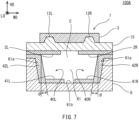
- Fig. 7 is a schematic diagram showing the configuration of the optical modulator 100A according to the second embodiment, and is a cross-sectional view corresponding to Fig. 2A.
- Fig. 7 is a cross-sectional view of the optical modulator 100A cut along a plane perpendicular to the longitudinal direction LD at the positions of the straight portions 122R, 122L of the branched optical waveguides 12R, 12L.
- the optical modulator 100A differs from the optical modulator 100 according to the first embodiment in the configuration of the connecting portions 42R, 42L of the first wiring electrodes 4OR, 4OL.
- the connecting portions 42R, 42L of the first wiring electrodes 4OR, 4OL are inclined with respect to the height direction HD of the optical modulator 100A.
- the connecting portions 42R, 42L are inclined with respect to the height direction HD so as to move inward in the width direction WD as they approach the main body portions 41R, 41L.
- the connecting portions 42R, 42L are provided along the side walls 61a, 61a that define the cavity C. The surfaces of these side walls 61a, 61a are also inclined in the same way as the connecting portions 42R, 42L.
- the connecting portions 42R, 42L are inclined with respect to the height direction HD. Therefore, the first wiring electrodes 4OR, 4OL can be joined to the first electrodes 2R, 2L at a gentle angle ⁇ . This makes it possible to reduce the loss of high frequency signals at the joints between the first electrodes 2R, 2L and the first wiring electrodes 4OR, 4OL, and to realize modulation over a wide band.
- Fig. 8 is a cross-sectional view corresponding to Fig. 2A.
- Fig. 8 is a cross-sectional view of the optical modulator 100B cut along a plane perpendicular to the longitudinal direction LD at the position of the straight portions 122R, 122L (optical modulation portion of the optical waveguide 1) of the branched optical waveguides 12R, 12L.
- Fig. 9 is a cross-sectional view corresponding to Fig. 2E. In other words, Fig.
- FIG 9 is a cross-sectional view of the optical modulator 100B cut along a plane perpendicular to the width direction WD, and shows the first electrodes 2R, 2L and the first wiring electrodes 4OR, 4OL viewed along the width direction WD.
- the optical modulator 100B differs from the optical modulator 100 according to the first embodiment in the configuration of the first wiring electrodes 4OR, 4OL.
- the first wiring electrodes 4OR, 4OL are not present in the cross section at the position of the optical modulation section of the optical waveguide 1.
- the first wiring electrodes 4OR, 4OL are connected only to the ends of the first electrodes 2R, 2L in the extension direction.
- the connecting portion 42R of the first wiring electrode 4OR includes a surface 42a that is continuous with the end of the first electrode 2R in the extension direction (longitudinal direction LD) as in the first embodiment.
- the surface of the connecting portion 42R of the first wiring electrode 4OR opposite to the surface 42a is also inclined with respect to the height direction HD, similar to the surface 42a. Therefore, as in the third embodiment, the loss of high-frequency signals at the boundary between the surfaces 42a of the connecting portions 42R, 42L and the first electrodes 2R, 2L can be reduced.
- Fig. 10 is a plan view of the optical modulator 100C according to the fourth embodiment.
- Fig. 11 is a cross-sectional view showing the configuration of the optical modulator 100C according to the fourth embodiment.
- the optical modulator 100C differs from the optical modulator 100 according to the first embodiment in the configuration of the first wiring electrodes 4OR, 4OL.
- the first electrodes 2R, 2L are provided in the regions of the straight portions 122R, 122L of the branched optical waveguides 12R, 12L.
- the first electrodes 2R, 2L and the first wiring electrodes 4OR, 4OL are disposed in the cavity C. At least a portion of the first wiring electrodes 4OR, 4OL is freestanding in the cavity C. More specifically, the connecting portions 42R, 42L of the first wiring electrodes 4OR, 4OL are freestanding in the cavity C. More specifically, the connecting portions 42R, 42L are disposed at positions away from the side walls 61a, 61a that define the cavity C, and are not in contact with the side walls 61a, 61a.
- the main portions 41R, 41L of the first wiring electrodes 4OR, 4OL are provided along the bottom wall 61b that defines the cavity C.
- the connecting portions 42R, 42L of the first wiring electrodes 4OR, 4OL are arranged independently within the cavity C.
- the connecting portions 42R, 42L are not in contact with the side walls 61a, 61a of the cavity C. Therefore, even if the surfaces of the side walls 61a, 61a are roughened by processing, for example, this does not affect the first wiring electrodes 4OR, 4OL. In other words, the first wiring electrodes 4OR, 4OL do not peel off from the side walls 61a, 61a, and no loss of electrical signals due to surface roughness occurs.
- Fig. 12 is a cross-sectional view showing the configuration of the optical modulator 100D according to the fifth embodiment.
- the optical modulator 100D differs from the optical modulator 100C according to the fourth embodiment in the configuration of the first wiring electrodes 4OR, 4OL.
- the main body portions 41R, 41L of the first wiring electrodes 4OR, 4OL are disposed outside the cavity C.
- the connecting portions 42R, 42L of the first wiring electrodes 4OR, 4OL penetrate the bottom wall 61b that defines the cavity C and are connected to the main body portions 41R, 41L.
- a portion of the connecting portions 42R, 42L is independent within the cavity C. Therefore, the optical modulator 100D according to the fifth embodiment has the same effect as the optical modulator 100C according to the fourth embodiment.
- Fig. 13 is a plan view of the optical modulator 100E according to the sixth embodiment.
- Fig. 14 is a cross-sectional view taken along line XIV-XIV in Fig. 13.
- Fig. 14 shows a cross section of the first wiring electrode 4OL drawn from the first electrode 2L in the width direction WD cut along a plane perpendicular to the longitudinal direction LD, and a cross section of the optical modulator 100E cut along a plane perpendicular to the longitudinal direction LD at the positions of the straight portions 122R and 122L of the branched optical waveguides 12R and 12L.
- the optical modulator 100E is different from the optical modulator 100 according to the first embodiment in that it includes through-electrodes 8IR, 8IL, 8OR, and 8OL.
- the optical modulator 100E includes through electrodes 8IR, 8IL, 8OR, and 8OL.
- the through electrodes 8IR, 8IL, 8OR, and 8OL are connected to the ends of the wiring portions 4aIR, 4aIL, 4aOR, and 4aOL of the first wiring electrodes 4IR, 4IL, 4OR, and 4OL. More specifically, the through electrodes 8IR, 8IL, 8OR, and 8OL are connected to the ends of the wiring portions 4aIR, 4aIL, 4aOR, and 4aOL formed by the main portions 41R and 41L of the first wiring electrodes 4OR and 4OL.
- the through electrodes 8IR, 8IL, 8OR, and 8OL are electrically connected to the first electrodes 2R and 2L via the first wiring electrodes 4OR and 4OL.
- the through electrodes 8IR, 8IL, 8OR, and 8OL extend from the first electrodes 2R and 2L to the second electrode 3.
- the through electrodes 8IR, 8IL, 8OR, and 8OL extend along the height direction HD.
- the electrical signals of the first electrodes 2R and 2L are taken out to the second electrode 3 side via the through electrodes 8IR, 8IL, 8OR, and 8OL, or the electrical signals are supplied to the first electrodes 2R and 2L via the through electrodes 8IR, 8IL, 8OR, and 8OL.
- the through electrodes 8IR, 8IL, 8OR, and 8OL penetrate the base layer 15 in which the optical waveguide 1 is formed.
- the electrode pads for the first electrodes 2R, 2L and the electrode pad for the second electrode 3 can be arranged on the same plane, simplifying the electrical wiring.
- the electrical wiring for the first electrodes 2R, 2L and the second electrode 3 can be brought closer together, reducing the loss of electrical signals.
- Fig. 15 is a cross-sectional view showing the configuration of the optical modulator 100F according to the seventh embodiment, and is a cross-sectional view corresponding to Fig. 14.
- the optical modulator 100F differs from the optical modulator 100E according to the sixth embodiment in the configuration of the through electrodes 8IR, 8IL, 8OR, and 8OL.
- the through electrodes 8OR, 8OL are provided along the side wall 61a that defines the cavity C.
- the through electrodes 8OR, 8OL are inclined with respect to the height direction HD of the optical modulator 100F. More specifically, the surfaces 811 of the through electrodes 8OR, 8OL that contact the side wall 61a are inclined with respect to the height direction HD so as to move inward in the width direction WD as they approach the bottom wall 61b.
- the surface of the side wall 61a is also inclined in the same way as the through electrodes 8OR, 8OL.
- the through electrodes 8IR, 8IL, 8OR, and 8OL are inclined with respect to the height direction HD. This allows the surfaces 811 of the through electrodes 8IR, 8IL, 8OR, and 8OL to be gently joined to the first electrodes 2R and 2L. This reduces the loss of high-frequency signals at the joints between the through electrodes 8IR, 8IL, 8OR, and 8OL and the first wiring electrodes 4IR, 4IL, 4OR, and 4OL, and enables modulation over a wide band.
- FIG. 16 is a cross-sectional view showing the configuration of the optical modulator 100G according to the eighth embodiment.
- the optical modulator 100G differs from the optical modulator 100 according to the first embodiment in the configurations of the first electrodes 2R, 2L and the first wiring electrodes 4OR, 4OL.
- the thickness t2 of the first electrodes 2R, 2L is greater than the thickness t4 of the first wiring electrodes 4OR, 4OL.
- the thickness t2 of the first electrodes 2R, 2L is the maximum length of the first electrodes 2R, 2L in the height direction HD.
- the thickness t4 of the first wiring electrodes 4OR, 4OL is the maximum thickness among the thickness t41 of the main body parts 41R, 41L and the thickness t42 of the connecting parts 42R, 42L.
- the thickness t41 of the main body parts 41R, 41L is based on the surface of the bottom wall 61b of the recess 61 in which the main body parts 41R, 41L are provided, and is the maximum dimension from this surface in a direction perpendicular to this surface.
- the thickness t42 of the connecting parts 42R, 42L is based on the surface of the side walls 61a, 61a of the recess 61 in which the connecting parts 42R, 42L are provided, and is the maximum dimension from this surface in a direction perpendicular to this surface.
- the thickness t2 of the first electrodes 2R, 2L is made larger than the thickness t4 of the first wiring electrodes 4IR, 4IL, 4OR, 4OL. This makes it possible to reduce the electrical resistance of the first electrodes 2R, 2L in the parts of the optical modulator 100G where optical modulation is performed (straight sections 122R, 122L), thereby reducing the loss of the electrical signal.
- Fig. 17 is a cross-sectional view showing the configuration of the optical modulator 100H according to the ninth embodiment.
- the optical modulator 100H differs from the optical modulator 100 according to the first embodiment in that it includes a low dielectric constant layer 9.
- the optical modulator 100H includes a low dielectric layer 9 between the optical waveguide 1 and the second electrode 3.
- the low dielectric layer 9 has a refractive index smaller than that of the optical waveguide 1.
- the low dielectric layer 9 is provided so as to cover the optical waveguide 1 and the base layer 15.
- a low dielectric layer 9 is provided between the optical waveguide 1 and the second electrode 3. Therefore, light passing through the optical waveguide 1 is less likely to be absorbed by the second electrode 3, and optical loss can be suppressed. Furthermore, by providing the low dielectric layer 9, the effective refractive index of the high frequency signal can be adjusted to match the effective refractive index of the light wave. Therefore, optical modulation can be performed up to higher frequencies. Furthermore, by providing the low dielectric layer 9, the effective dielectric constant for the electrical signal can be lowered. Therefore, high frequency signal loss can be suppressed, and optical modulation can be performed up to higher frequencies.
- the optical modulator 100H shown in FIG. 18 includes a low dielectric layer 9A between the optical waveguide 1 and the first electrodes 2R and 2L.
- the optical modulator 100H shown in FIG. 19 includes a low dielectric layer 9 between the optical waveguide 1 and the second electrode 3, and further includes a low dielectric layer 9A between the optical waveguide 1 and the first electrodes 2R and 2L.
- the low dielectric layer 9A is provided between the base layer 15 and the first electrodes 2R and 2L.
- the low dielectric layer 9A makes it difficult for the light passing through the optical waveguide 1 to be absorbed by the first electrodes 2R and 2L.
- the effective refractive index of the high frequency signal can be adjusted, and the effective dielectric constant for the electrical signal can be reduced.
- FIG. 20 is a cross-sectional view showing the configuration of the optical modulator 100I according to the tenth embodiment.
- the optical modulator 100I differs from the optical modulator 100H according to the ninth embodiment in the arrangement of the cavity C relative to the optical waveguide 1.
- the optical waveguide 1, the first electrodes 2R, 2L, and the second electrode 3 are disposed on a support substrate 6.
- the second electrode 3 is provided on the support substrate 6 side with respect to the optical waveguide 1, with a low dielectric layer 9 interposed therebetween.
- the cavity C is defined by a low dielectric layer 9A that is disposed on the opposite side of the support substrate 6 with respect to the optical waveguide 1.
- the first electrodes 2R, 2L and the first wiring electrodes 4IR, 4IL, 4OR, 4OL are disposed within this cavity C.
- the cavity C can be disposed on the upper side with respect to the support substrate 6. If the cavity C is disposed on the upper side, the cavity C can be formed using a cap that is placed over the optical modulator 100I.
- Fig. 21 is a schematic diagram showing the configuration of the optical modulator 100J according to the eleventh embodiment, and is a cross-sectional view corresponding to Fig. 2A.
- Fig. 21 is a cross-sectional view of the optical modulator 100J cut along a plane perpendicular to the longitudinal direction LD at the positions of the straight portions 122R, 122L of the branched optical waveguides 12R, 12L.
- the optical modulator 100J differs from the optical modulator 100 according to the first embodiment in the arrangement of the first electrodes 2R, 2L and the second electrode 3 relative to the optical waveguide 1.
- the first electrodes 2R and 2L are disposed on one side of the optical waveguide 1 in the height direction HD.
- the first electrodes 2R and 2L are disposed, for example, directly above the branch optical waveguides 12R and 12L, respectively.
- the second electrode 3 is disposed on the other side of the optical waveguide 1 in the height direction HD.
- the second electrode 3 is disposed, for example, on one of both surfaces of the base layer 15, the surface opposite the ridge-type optical waveguide 1.
- the second electrode 3 is also disposed on a support substrate 6.
- the first wiring electrodes 4OR, 4OL are electrically connected to the first electrodes 2R, 2L.
- the first wiring electrodes 4OR, 4OL are arranged on the opposite side of the optical waveguide 1 from the first electrodes 2R, 2L in the height direction HD. More specifically, the main body portions 41R, 41L of the first wiring electrodes 4OR, 4OL are arranged away from the first electrodes 2R, 2L in the height direction HD. In addition, the main body portions 41R, 41L are arranged at a position shifted outward from the first electrodes 2R, 2L in the width direction WD.
- the connecting portions 42R, 42L of the first wiring electrodes 4OR, 4OL connect the main body portions 41R, 41L to the first electrodes 2R, 2L.
- the connecting portions 42R, 42L connect, for example, the outer ends of the first electrodes 2R, 2L in the width direction WD to the inner ends of the main bodies 41R, 41L in the width direction WD.
- a low dielectric layer 9A is provided in the height direction HD from the optical waveguide 1 to the first electrodes 2R, 2L.
- the low dielectric layer 9A is also provided in the height direction HD from the optical waveguide 1 to the first wiring electrodes 4OR, 4OL.
- the thickness t9A4 of the low dielectric layer 9A at the position of the first wiring electrodes 4OR, 4OL is greater than the thickness t9A2 of the low dielectric layer 9A at the position of the first electrodes 2R, 2L.
- the thickness t9A4 is the length in the height direction HD of the low dielectric layer 9A from the optical waveguide 1 to the first wiring electrodes 4OR, 4OL, and is, for example, the shortest distance in the height direction HD from the optical waveguide 1 to the main body portions 41R, 41L of the first wiring electrodes 4OR, 4OL.
- the thickness t9A2 is the length in the height direction HD of the low dielectric layer 9A from the optical waveguide 1 to the first electrodes 2R, 2L, and is, for example, the shortest distance in the height direction HD from the optical waveguide 1 to the first electrodes 2R, 2L.
- the thickness t9A4 of the low dielectric layer 9A at the position of the first wiring electrodes 4OR, 4OL is at least twice the thickness t9A2 of the low dielectric layer 9A at the position of the first electrodes 2R, 2L.
- FIG. 22 shows a modified example of the optical modulator 100J according to the eleventh embodiment.
- the optical modulator 100J shown in FIG. 22 includes a low dielectric layer 9A between the optical waveguide 1 and the first electrodes 2R and 2L.
- the optical modulator 100J further includes a low dielectric layer 9 between the optical waveguide 1 and the second electrode 3.
- FIGS 23A to 23F are schematic diagrams for explaining an example of a method for manufacturing the optical modulator 100J.
- a second electrode 3 is formed on the surface of a support substrate 6.
- the electro-optical material substrate 16 is bonded to the support substrate 6 on whose surface the second electrode 3 is formed.
- the bonding method described above can be used as the bonding method.
- a film of the electro-optical material may be formed by epitaxial deposition, spin coating, or the like.
- the electro-optical material substrate 16 is patterned by lithography or the like, and then dry-etched, wet-etched, diced, or the like. This forms a base layer 15 having an optical waveguide 1.
- a low dielectric constant layer 9A is laminated on the base layer 15 having the optical waveguide 1.
- the low dielectric constant layer 9A can be formed by sputtering, vapor deposition, epitaxial deposition, etc.
- the low dielectric constant layer 9A is patterned by lithography or the like, and then a recess 73 is formed by dry etching, wet etching, dicing, or the like.
- the recess 73 is subjected to sputtering, vapor deposition, epitaxial film formation, etc., thereby forming the first electrodes 2R, 2L and the first wiring electrodes 4OR, 4OL in the recess 73.
- the optical modulator 100J can be manufactured.
- FIGS. 24A to 24F are schematic diagrams illustrating another example of a method for manufacturing the optical modulator 100J.
- a support substrate 6 having a second electrode 3 formed on its surface is prepared.
- a substrate 74 is prepared that is separate from the support substrate 6 having the second electrode 3 formed on its surface.
- an electro-optical material substrate 16 is bonded to the support substrate 6 in the same manner as in FIG. 23B.
- a film of electro-optical material may be formed.
- the substrate 74 is patterned by lithography or the like, and then dry-etched, wet-etched, diced, or the like. This forms a convex portion 75 on the substrate 74.
- a base layer 15 having an optical waveguide 1 is formed in the same manner as in FIG. 23C. Meanwhile, sputtering, vapor deposition, epitaxial film formation, etc. are performed on the substrate 74 on which the convex portion 75 is formed, thereby forming the first electrodes 2R, 2L and the first wiring electrodes 4OR, 4OL around the convex portion 75.
- a low dielectric constant layer 9A is laminated on the protrusion 75 of the substrate 74.
- the method for forming the low dielectric constant layer 9A can be the method described above.
- the substrate 74 on which the low dielectric layer 9A is formed is bonded to the support substrate 6 on which the optical waveguide 1 is formed.
- the bonding method described above can be used as the bonding method.
- the substrate 74 is removed.
- the substrate 74 can be removed by dry etching, wet etching, or the like.
- the optical modulator 100J can be manufactured.
- 25A to 25E are schematic diagrams illustrating another example of a method for manufacturing the optical modulator 100J. As shown in FIG. 25A, a C-SOI 10 having a cavity C is prepared.
- the C-SOI 10 is subjected to dry etching, wet etching, etc. to remove the active layer.
- a base layer 15 having an optical waveguide 1 is prepared.
- a low dielectric constant layer 9A is laminated on the surface on the optical waveguide 1 side, and a second electrode 3 is formed on the surface on the opposite side.
- the base layer 15 is bonded to the C-SOI 10.
- the first wiring electrodes 4OR, 4OL are formed in the opened cavity C by sputtering, vapor deposition, epitaxial film formation, or the like.
- the optical modulator 100J can be manufactured.
- Fig. 26 is a schematic diagram showing the configuration of the optical modulator 100K according to the 12th embodiment, and is a cross-sectional view corresponding to Fig. 2A.
- Fig. 26 is a cross-sectional view of the optical modulator 100K cut along a plane perpendicular to the longitudinal direction LD at the positions of the straight portions 122R, 122L of the branched optical waveguides 12R, 12L.
- the optical modulator 100K differs from the optical modulator 100J according to the 11th embodiment in the configuration including the second wiring electrodes 5I, 5O.
- the optical modulator 100K includes second wiring electrodes 5I, 5O.
- the second wiring electrodes 5I, 5O are electrically connected to the second electrode 3.
- the second wiring electrodes 5I, 5O are disposed on the opposite side of the second electrode 3 from the optical waveguide 1 in the height direction HD.
- the second wiring electrodes 5I, 5O include main body portions 51I, 51O and connecting portions 52I, 52O.
- the main body portions 51I, 51O are disposed away from the second electrode 3 in the height direction HD.
- the main body portions 51I, 51O are disposed at positions shifted outward from the second electrode 3 in the width direction WD.
- the connecting portions 52I, 52O connect the main body portions 51I, 51O to the second electrode 3.
- the connecting portions 52I, 52O connect, for example, the outer end of the second electrode 3 in the width direction WD to the inner end of the main body portions 51I, 51O in the width direction WD.
- the connecting portions 52I, 52O may be parallel to the height direction HD in a cross-sectional view of the optical modulator 100, or may be inclined with respect to the height direction HD.
- the main body portions 51I, 51O and the connecting portions 52I, 52O can have, for example, a substantially rectangular cross section.
- the cross-sectional shapes of the main body portions 51I, 51O and the connecting portions 52I, 52O are not limited to this.
- the low dielectric layer 9 is provided from the optical waveguide 1 to the second electrode 3 in the height direction HD.
- the low dielectric layer 9 is also provided from the optical waveguide 1 to the second wiring electrodes 5I, 5O.
- the thickness t95 of the low dielectric layer 9 at the position of the second wiring electrodes 5I, 5O is greater than the thickness t93 of the low dielectric layer 9 at the position of the second electrode 3.
- the thickness t95 is the length in the height direction HD of the low dielectric layer 9 from the optical waveguide 1 to the second wiring electrodes 5I, 5O, and is, for example, the shortest distance in the height direction HD from the base layer 15 to the main body parts 51I, 51O of the second wiring electrodes 5I, 5O.
- the thickness t93 is the length in the height direction HD of the low dielectric layer 9A from the optical waveguide 1 to the second electrode 3, and is, for example, the shortest distance in the height direction HD from the base layer 15 to the second electrode 3. It is preferable that the thickness t95 of the low dielectric layer 9 at the position of the second wiring electrodes 5I, 5O is at least twice the thickness t93 of the low dielectric layer 9 at the position of the second electrode 3.
- the second wiring electrodes 5I, 5O are disposed on the opposite side of the optical waveguide 1 with respect to the second electrode 3. Therefore, the second wiring electrodes 5I, 5O can be naturally separated in the height direction HD from the optical waveguide 1 and the first wiring electrodes 4IR, 4IL, 4OR, 4OL. Therefore, an electric field is not easily formed between the first wiring electrodes 4IR, 4IL, 4OR, 4OL and the second wiring electrodes 5I, 5O, which do not have the purpose of applying an electric field to the optical waveguide 1, and it is possible to prevent the electric field due to the first wiring electrodes 4IR, 4IL, 4OR, 4OL and the second wiring electrodes 5I, 5O from being applied to the optical waveguide 1. Therefore, electrical loss in the optical modulator 100K can be further suppressed.
- Fig. 27 is a cross-sectional view showing the configuration of the optical modulator 100L according to the 13th embodiment.
- the optical modulator 100L differs from the optical modulator 100K according to the 12th embodiment in that it includes through electrodes 8AI and 8AO.
- the optical modulator 100L includes through electrodes 8AI, 8AO.
- the through electrodes 8AI, 8AO are connected to the ends of the second wiring electrodes 5I, 5O. More specifically, the through electrodes 8AI, 8AO are connected to the main body portions 51I, 51O of the second wiring electrodes 5I, 5O. That is, the through electrodes 8AI, 8AO are electrically connected to the second electrode 3 via the second wiring electrodes 5I, 5O.
- the through electrodes 8AI, 8AO extend from the second electrode 3 side to the first electrodes 2R, 2L side. In this embodiment, the through electrodes 8AI, 8AO extend along the height direction HD.
- an electrical signal from the second electrode 3 is taken out to the first electrodes 2R, 2L side via the through electrodes 8AI, 8AO, or an electrical signal is supplied to the second electrode 3 via the through electrodes 8AI, 8AO.
- the through electrodes 8AI and 8AO penetrate the base layer 15 in which the optical waveguide 1 is formed, and the low dielectric layers 9 and 9A.
- the electrode pads for the first electrodes 2R, 2L and the electrode pads for the second electrode 3 can be arranged on the same plane, simplifying the electrical wiring.
- the electrical wiring for the first electrodes 2R, 2L and the second electrode 3 can be brought closer together, reducing electrical signal loss.
- Fig. 28 is a cross-sectional view showing the configuration of the optical modulator 100M according to the fourteenth embodiment.
- the optical modulator 100M differs from the optical modulator 100L according to the thirteenth embodiment in the configuration of the through electrodes 8AI and 8AO.
- the through electrodes 8AI, 8AO are inclined with respect to the height direction HD of the optical modulator 100M.
- the through electrodes 8AI, 8AO are inclined with respect to the height direction HD so that the second wiring electrodes 5I, 5O are positioned further inward in the width direction WD.
- the through electrodes 8AI, 8AO penetrate the low dielectric layers 9, 9A.
- the through electrodes 8AI, 8AO are inclined with respect to the height direction HD. This allows the through electrodes 8AI, 8AO to be gently joined to the second electrode 3. This reduces the loss of high-frequency signals at the joints between the through electrodes 8AI, 8AO and the second electrode 3, making it possible to achieve modulation over a wide band.
- the optical waveguide 1, the first electrodes 2R, 2L, and the second electrode 3 are arranged substantially along the height direction HD.
- the arrangement of the optical waveguide 1, the first electrodes 2R, 2L, and the second electrode 3 differs from that of the other embodiments.
- the first electrodes 2R, 2L are arranged on one side of the optical waveguide 1 in the height direction HD, and the second electrode 3 is arranged on the other side of the optical waveguide 1 in the height direction HD. That is, in the height direction HD, the center C2 of the first electrodes 2R, 2L is arranged on one side of the center C1 of the optical waveguide 1, and the center C3 of the second electrode 3 is arranged on the other side.
- the optical waveguide 1 is arranged between the first electrodes 2R, 2L and the second electrode 3 in the width direction WD.
- the first electrodes 2R, 2L are arranged outside the optical waveguide 1 in the width direction WD, and the second electrode 3 is arranged inside the optical waveguide 1 in the width direction WD.
- the first electrodes 2R and 2L are arranged on one side, and the second electrode 3 is arranged on the other side, just like in the other embodiments.
- optical modulator 100N shown in Figures 29 to 32 can have wiring electrodes of a similar configuration to any of the other embodiments.
- the optical modulator according to ⁇ 2>, The first wiring electrode is disposed within the cavity and supported by a sidewall that defines the cavity.
- the first wiring electrode includes a main body portion that is disposed apart from the first electrode in the height direction and a part of which constitutes the wiring portion, and a connecting portion that connects the main body portion and the first electrode, The optical modulator, wherein the connecting portion is inclined with respect to the height direction when viewed in a cross section perpendicular to an extension direction of the first electrode.
- the first wiring electrode includes a main body portion that is disposed apart from the first electrode in the height direction and a part of which constitutes the wiring portion, and a connecting portion that connects the main body portion and the first electrode, the connecting portion includes a surface that is continuous with an end portion of the first electrode in an extending direction,
- An optical modulator wherein the surface is inclined with respect to the height direction when viewed along the width direction of the optical modulator such that the main body side is away from the first electrode in the extension direction relative to the first electrode side.
- ⁇ 6> The optical modulator according to ⁇ 2>, An optical modulator, wherein at least a portion of the first wiring electrode is disposed independently within the cavity.
- optical modulator according to any one of ⁇ 1> to ⁇ 6>, further comprising: an optical modulator comprising a through electrode connected to the wiring portion of the first wiring electrode and extending from the first electrode side to the second electrode side.
- An optical modulator according to any one of ⁇ 1> to ⁇ 9>, an optical modulator in which the first electrode and the first wiring electrode are joined, and oxygen is present at an interface between the first electrode and the first wiring electrode;
- An optical modulator according to any one of ⁇ 1> to ⁇ 9>, an optical modulator, wherein the first electrode and the first wiring electrode are joined, and a resin is present at an interface between the first electrode and the first wiring electrode;
- optical modulator according to any one of ⁇ 1> to ⁇ 14>, further comprising: an optical modulator comprising: a low dielectric layer provided at least one between the optical waveguide and the first electrode and between the optical waveguide and the second electrode, the low dielectric layer having a refractive index smaller than a refractive index of the optical waveguide.
- the low dielectric layer is provided from the optical waveguide to the first electrode and from the optical waveguide to the first wiring electrode in the height direction, an optical modulator, wherein a length in the height direction of the low dielectric layer from the optical waveguide to the first wiring electrode is greater than a length in the height direction of the low dielectric layer from the optical waveguide to the first electrode.
- optical modulator comprising: a support substrate disposed on an opposite side of the first electrode from the optical waveguide, the support substrate being made of a low dielectric constant material having a refractive index smaller than that of the optical waveguide.
- optical modulator according to any one of ⁇ 1> to ⁇ 17>, further comprising: an optical modulator comprising: a second wiring electrode disposed on an opposite side of the second electrode from the optical waveguide in the height direction, the second wiring electrode being electrically connected to the second electrode;
- optical modulator further comprising: an optical modulator comprising a through electrode connected to the second wiring electrode and extending from the second electrode side to the first electrode side.
- the optical modulator according to any one of ⁇ 18> to ⁇ 20>, further comprising: a first low dielectric constant layer provided in the height direction from the optical waveguide to the first electrode and from the optical waveguide to the first wiring electrode, the first low dielectric constant layer having a refractive index smaller than a refractive index of the optical waveguide; a second low dielectric constant layer provided in the height direction from the optical waveguide to the second electrode and from the optical waveguide to the second wiring electrode, the second low dielectric constant layer having a refractive index smaller than a refractive index of the optical waveguide; a length in the height direction of the first low dielectric constant layer from the optical waveguide to the first wiring electrode is greater than a length in the height direction of the first low dielectric constant layer from the optical waveguide to the first electrode, an optical modulator, wherein a length in the height direction of the second low dielectric layer from the optical waveguide to the second wiring electrode is greater than a length in the height direction of the second low dielectric layer from the optical
- Optical modulator 1 Optical waveguide 11: Inlet optical waveguide 12R, 12L: Branch optical waveguide 13: Output optical waveguide 121R, 121L: Input relay section 122R, 122L: Straight section 123R, 123L: Output relay section 15: Base layer 16: Electro-optic material substrate 2R, 2L: First electrode 2aR, 2bR, 2aL , 2bL: End 3: Second electrode 4IR, 4IL, 4OR, 4OL: First wiring electrode 4aIR, 4aIL, 4aOR, 4aOL: Wiring portion 41R, 41L: Main body portion 42R, 42L: Connection portion 42a: Surface 5I, 5O: Second wiring electrode 51I, 51O: Main body portion 52I, 52O: Connection portion V: Vacancy C: Cavity 6: Support substrate 61: Reces
Landscapes
- Physics & Mathematics (AREA)
- Nonlinear Science (AREA)
- General Physics & Mathematics (AREA)
- Optics & Photonics (AREA)
- Electromagnetism (AREA)
- Engineering & Computer Science (AREA)
- Microelectronics & Electronic Packaging (AREA)
- Chemical & Material Sciences (AREA)
- Ceramic Engineering (AREA)
- Crystallography & Structural Chemistry (AREA)
- Optical Modulation, Optical Deflection, Nonlinear Optics, Optical Demodulation, Optical Logic Elements (AREA)
Priority Applications (4)
| Application Number | Priority Date | Filing Date | Title |
|---|---|---|---|
| CN202380095531.0A CN120752577A (zh) | 2023-03-22 | 2023-11-30 | 光调制器 |
| JP2024531292A JP7786581B2 (ja) | 2023-03-22 | 2023-11-30 | 光変調器 |
| US18/804,528 US20240411200A1 (en) | 2023-03-22 | 2024-08-14 | Optical modulator |
| JP2025222854A JP2026026283A (ja) | 2023-03-22 | 2025-12-02 | 光変調器 |
Applications Claiming Priority (2)
| Application Number | Priority Date | Filing Date | Title |
|---|---|---|---|
| JP2023045794 | 2023-03-22 | ||
| JP2023-045794 | 2023-03-22 |
Related Child Applications (1)
| Application Number | Title | Priority Date | Filing Date |
|---|---|---|---|
| US18/804,528 Continuation US20240411200A1 (en) | 2023-03-22 | 2024-08-14 | Optical modulator |
Publications (1)
| Publication Number | Publication Date |
|---|---|
| WO2024195208A1 true WO2024195208A1 (ja) | 2024-09-26 |
Family
ID=92841581
Family Applications (1)
| Application Number | Title | Priority Date | Filing Date |
|---|---|---|---|
| PCT/JP2023/042864 Ceased WO2024195208A1 (ja) | 2023-03-22 | 2023-11-30 | 光変調器 |
Country Status (4)
| Country | Link |
|---|---|
| US (1) | US20240411200A1 (https=) |
| JP (2) | JP7786581B2 (https=) |
| CN (1) | CN120752577A (https=) |
| WO (1) | WO2024195208A1 (https=) |
Citations (8)
| Publication number | Priority date | Publication date | Assignee | Title |
|---|---|---|---|---|
| JPH06130338A (ja) * | 1992-10-22 | 1994-05-13 | Fujitsu Ltd | 光導波路デバイス |
| JP2009139843A (ja) * | 2007-12-10 | 2009-06-25 | Fuji Xerox Co Ltd | 光導波路素子 |
| JP2014191250A (ja) * | 2013-03-28 | 2014-10-06 | Sumitomo Osaka Cement Co Ltd | 光制御素子 |
| US20140341496A1 (en) * | 2013-05-15 | 2014-11-20 | Electronics And Telecommunications Research Institute | Optical modulator and optical module including the same |
| JP2016029469A (ja) * | 2014-07-14 | 2016-03-03 | 住友電気工業株式会社 | 半導体光変調器および半導体光変調器の製造方法 |
| JP2020056927A (ja) * | 2018-10-03 | 2020-04-09 | 株式会社日本製鋼所 | 光変調器、光変調器用基板、光変調器の製造方法及び光変調器用基板の製造方法 |
| WO2021201132A1 (en) * | 2020-03-31 | 2021-10-07 | Tdk Corporation | Electro-optical device |
| JP2022148652A (ja) * | 2021-03-24 | 2022-10-06 | 住友大阪セメント株式会社 | 光導波路素子、光変調器、光変調モジュール、及び光送信装置 |
-
2023
- 2023-11-30 WO PCT/JP2023/042864 patent/WO2024195208A1/ja not_active Ceased
- 2023-11-30 CN CN202380095531.0A patent/CN120752577A/zh active Pending
- 2023-11-30 JP JP2024531292A patent/JP7786581B2/ja active Active
-
2024
- 2024-08-14 US US18/804,528 patent/US20240411200A1/en active Pending
-
2025
- 2025-12-02 JP JP2025222854A patent/JP2026026283A/ja active Pending
Patent Citations (8)
| Publication number | Priority date | Publication date | Assignee | Title |
|---|---|---|---|---|
| JPH06130338A (ja) * | 1992-10-22 | 1994-05-13 | Fujitsu Ltd | 光導波路デバイス |
| JP2009139843A (ja) * | 2007-12-10 | 2009-06-25 | Fuji Xerox Co Ltd | 光導波路素子 |
| JP2014191250A (ja) * | 2013-03-28 | 2014-10-06 | Sumitomo Osaka Cement Co Ltd | 光制御素子 |
| US20140341496A1 (en) * | 2013-05-15 | 2014-11-20 | Electronics And Telecommunications Research Institute | Optical modulator and optical module including the same |
| JP2016029469A (ja) * | 2014-07-14 | 2016-03-03 | 住友電気工業株式会社 | 半導体光変調器および半導体光変調器の製造方法 |
| JP2020056927A (ja) * | 2018-10-03 | 2020-04-09 | 株式会社日本製鋼所 | 光変調器、光変調器用基板、光変調器の製造方法及び光変調器用基板の製造方法 |
| WO2021201132A1 (en) * | 2020-03-31 | 2021-10-07 | Tdk Corporation | Electro-optical device |
| JP2022148652A (ja) * | 2021-03-24 | 2022-10-06 | 住友大阪セメント株式会社 | 光導波路素子、光変調器、光変調モジュール、及び光送信装置 |
Also Published As
| Publication number | Publication date |
|---|---|
| US20240411200A1 (en) | 2024-12-12 |
| JPWO2024195208A1 (https=) | 2024-09-26 |
| JP7786581B2 (ja) | 2025-12-16 |
| CN120752577A (zh) | 2025-10-03 |
| JP2026026283A (ja) | 2026-02-16 |
Similar Documents
| Publication | Publication Date | Title |
|---|---|---|
| US11940707B2 (en) | High-speed and low-voltage electro-optical modulator based on lithium niobate-silicon wafer | |
| US6862124B2 (en) | Semiconductor optical modulator, mach-zehnder optical modulator employing the same, and method of manufacturing semiconductor optical modulator | |
| JP2012512442A (ja) | モノリシックな電子光学的tweコンポーネント構造 | |
| US11719964B2 (en) | Optical device and optical communication device | |
| JP7547779B2 (ja) | 光デバイス、及びこれを用いた光送受信機 | |
| US11693291B2 (en) | Optical waveguide device and method of manufacturing optical waveguide device | |
| JP3695717B2 (ja) | 光変調器 | |
| WO2020202608A1 (ja) | 光導波路素子、及び光導波路デバイス | |
| JP7658184B2 (ja) | 光デバイス及び光通信装置 | |
| JP2009064048A (ja) | 光変調器 | |
| US20100310206A1 (en) | Optical modulator | |
| WO2019202894A1 (ja) | 光変調器 | |
| JP7786581B2 (ja) | 光変調器 | |
| JP7729696B2 (ja) | 光導波路デバイス、光チップ、及び通信装置 | |
| JP2000056281A5 (https=) | ||
| JPH03229214A (ja) | 光変調素子 | |
| US12517384B2 (en) | Optical waveguide device, optical modulator, optical modulation module, and optical transmission apparatus | |
| JP4587509B2 (ja) | 導波路型光変調器 | |
| WO2025069334A1 (ja) | 光導波路素子及びそれを用いた光変調器並びに光送信装置 | |
| JPH0527279A (ja) | 半導体光変調器 | |
| WO2023053254A1 (ja) | 光接続構造 | |
| US20250199347A1 (en) | Electcro-optic modulator and a method for fabricating the electro-optic modulator | |
| WO2024202247A1 (ja) | 光変調器 | |
| WO2024202245A1 (ja) | 光変調器 | |
| KR102648213B1 (ko) | 광전 변환 장치 |
Legal Events
| Date | Code | Title | Description |
|---|---|---|---|
| WWE | Wipo information: entry into national phase |
Ref document number: 2024531292 Country of ref document: JP |
|
| 121 | Ep: the epo has been informed by wipo that ep was designated in this application |
Ref document number: 23928776 Country of ref document: EP Kind code of ref document: A1 |
|
| WWE | Wipo information: entry into national phase |
Ref document number: 202380095531.0 Country of ref document: CN |
|
| WWP | Wipo information: published in national office |
Ref document number: 202380095531.0 Country of ref document: CN |
|
| NENP | Non-entry into the national phase |
Ref country code: DE |
|
| 122 | Ep: pct application non-entry in european phase |
Ref document number: 23928776 Country of ref document: EP Kind code of ref document: A1 |