WO2024181280A1 - 毛状体を有する樹脂シート本体と保護層とを含む積層樹脂シート、その製造方法及びその成形品 - Google Patents
毛状体を有する樹脂シート本体と保護層とを含む積層樹脂シート、その製造方法及びその成形品 Download PDFInfo
- Publication number
- WO2024181280A1 WO2024181280A1 PCT/JP2024/006431 JP2024006431W WO2024181280A1 WO 2024181280 A1 WO2024181280 A1 WO 2024181280A1 JP 2024006431 W JP2024006431 W JP 2024006431W WO 2024181280 A1 WO2024181280 A1 WO 2024181280A1
- Authority
- WO
- WIPO (PCT)
- Prior art keywords
- resin sheet
- hair
- bodies
- protective layer
- laminated resin
- Prior art date
- Legal status (The legal status is an assumption and is not a legal conclusion. Google has not performed a legal analysis and makes no representation as to the accuracy of the status listed.)
- Ceased
Links
Images
Classifications
-
- B—PERFORMING OPERATIONS; TRANSPORTING
- B29—WORKING OF PLASTICS; WORKING OF SUBSTANCES IN A PLASTIC STATE IN GENERAL
- B29C—SHAPING OR JOINING OF PLASTICS; SHAPING OF MATERIAL IN A PLASTIC STATE, NOT OTHERWISE PROVIDED FOR; AFTER-TREATMENT OF THE SHAPED PRODUCTS, e.g. REPAIRING
- B29C59/00—Surface shaping of articles, e.g. embossing; Apparatus therefor
- B29C59/02—Surface shaping of articles, e.g. embossing; Apparatus therefor by mechanical means, e.g. pressing
- B29C59/022—Surface shaping of articles, e.g. embossing; Apparatus therefor by mechanical means, e.g. pressing characterised by the disposition or the configuration, e.g. dimensions, of the embossments or the shaping tools therefor
- B29C59/025—Fibrous surfaces with piles or similar fibres substantially perpendicular to the surface
-
- B—PERFORMING OPERATIONS; TRANSPORTING
- B29—WORKING OF PLASTICS; WORKING OF SUBSTANCES IN A PLASTIC STATE IN GENERAL
- B29C—SHAPING OR JOINING OF PLASTICS; SHAPING OF MATERIAL IN A PLASTIC STATE, NOT OTHERWISE PROVIDED FOR; AFTER-TREATMENT OF THE SHAPED PRODUCTS, e.g. REPAIRING
- B29C45/00—Injection moulding, i.e. forcing the required volume of moulding material through a nozzle into a closed mould; Apparatus therefor
- B29C45/14—Injection moulding, i.e. forcing the required volume of moulding material through a nozzle into a closed mould; Apparatus therefor incorporating preformed parts or layers, e.g. injection moulding around inserts or for coating articles
-
- B—PERFORMING OPERATIONS; TRANSPORTING
- B29—WORKING OF PLASTICS; WORKING OF SUBSTANCES IN A PLASTIC STATE IN GENERAL
- B29D—PRODUCING PARTICULAR ARTICLES FROM PLASTICS OR FROM SUBSTANCES IN A PLASTIC STATE
- B29D7/00—Producing flat articles, e.g. films or sheets
- B29D7/01—Films or sheets
-
- B—PERFORMING OPERATIONS; TRANSPORTING
- B32—LAYERED PRODUCTS
- B32B—LAYERED PRODUCTS, i.e. PRODUCTS BUILT-UP OF STRATA OF FLAT OR NON-FLAT, e.g. CELLULAR OR HONEYCOMB, FORM
- B32B27/00—Layered products comprising a layer of synthetic resin
- B32B27/06—Layered products comprising a layer of synthetic resin as the main or only constituent of a layer, which is next to another layer of the same or of a different material
- B32B27/08—Layered products comprising a layer of synthetic resin as the main or only constituent of a layer, which is next to another layer of the same or of a different material of synthetic resin
-
- B—PERFORMING OPERATIONS; TRANSPORTING
- B32—LAYERED PRODUCTS
- B32B—LAYERED PRODUCTS, i.e. PRODUCTS BUILT-UP OF STRATA OF FLAT OR NON-FLAT, e.g. CELLULAR OR HONEYCOMB, FORM
- B32B3/00—Layered products comprising a layer with external or internal discontinuities or unevennesses, or a layer of non-planar shape; Layered products comprising a layer having particular features of form
- B32B3/26—Layered products comprising a layer with external or internal discontinuities or unevennesses, or a layer of non-planar shape; Layered products comprising a layer having particular features of form characterised by a particular shape of the outline of the cross-section of a continuous layer; characterised by a layer with cavities or internal voids ; characterised by an apertured layer
- B32B3/30—Layered products comprising a layer with external or internal discontinuities or unevennesses, or a layer of non-planar shape; Layered products comprising a layer having particular features of form characterised by a particular shape of the outline of the cross-section of a continuous layer; characterised by a layer with cavities or internal voids ; characterised by an apertured layer characterised by a layer formed with recesses or projections, e.g. hollows, grooves, protuberances, ribs
-
- B—PERFORMING OPERATIONS; TRANSPORTING
- B32—LAYERED PRODUCTS
- B32B—LAYERED PRODUCTS, i.e. PRODUCTS BUILT-UP OF STRATA OF FLAT OR NON-FLAT, e.g. CELLULAR OR HONEYCOMB, FORM
- B32B7/00—Layered products characterised by the relation between layers; Layered products characterised by the relative orientation of features between layers, or by the relative values of a measurable parameter between layers, i.e. products comprising layers having different physical, chemical or physicochemical properties; Layered products characterised by the interconnection of layers
- B32B7/02—Physical, chemical or physicochemical properties
- B32B7/022—Mechanical properties
-
- C—CHEMISTRY; METALLURGY
- C08—ORGANIC MACROMOLECULAR COMPOUNDS; THEIR PREPARATION OR CHEMICAL WORKING-UP; COMPOSITIONS BASED THEREON
- C08J—WORKING-UP; GENERAL PROCESSES OF COMPOUNDING; AFTER-TREATMENT NOT COVERED BY SUBCLASSES C08B, C08C, C08F, C08G or C08H
- C08J7/00—Chemical treatment or coating of shaped articles made of macromolecular substances
- C08J7/04—Coating
- C08J7/0427—Coating with only one layer of a composition containing a polymer binder
-
- C—CHEMISTRY; METALLURGY
- C08—ORGANIC MACROMOLECULAR COMPOUNDS; THEIR PREPARATION OR CHEMICAL WORKING-UP; COMPOSITIONS BASED THEREON
- C08J—WORKING-UP; GENERAL PROCESSES OF COMPOUNDING; AFTER-TREATMENT NOT COVERED BY SUBCLASSES C08B, C08C, C08F, C08G or C08H
- C08J7/00—Chemical treatment or coating of shaped articles made of macromolecular substances
- C08J7/04—Coating
- C08J7/046—Forming abrasion-resistant coatings; Forming surface-hardening coatings
-
- B—PERFORMING OPERATIONS; TRANSPORTING
- B29—WORKING OF PLASTICS; WORKING OF SUBSTANCES IN A PLASTIC STATE IN GENERAL
- B29C—SHAPING OR JOINING OF PLASTICS; SHAPING OF MATERIAL IN A PLASTIC STATE, NOT OTHERWISE PROVIDED FOR; AFTER-TREATMENT OF THE SHAPED PRODUCTS, e.g. REPAIRING
- B29C59/00—Surface shaping of articles, e.g. embossing; Apparatus therefor
- B29C59/02—Surface shaping of articles, e.g. embossing; Apparatus therefor by mechanical means, e.g. pressing
- B29C59/04—Surface shaping of articles, e.g. embossing; Apparatus therefor by mechanical means, e.g. pressing using rollers or endless belts
-
- C—CHEMISTRY; METALLURGY
- C08—ORGANIC MACROMOLECULAR COMPOUNDS; THEIR PREPARATION OR CHEMICAL WORKING-UP; COMPOSITIONS BASED THEREON
- C08J—WORKING-UP; GENERAL PROCESSES OF COMPOUNDING; AFTER-TREATMENT NOT COVERED BY SUBCLASSES C08B, C08C, C08F, C08G or C08H
- C08J2375/00—Characterised by the use of polyureas or polyurethanes; Derivatives of such polymers
- C08J2375/04—Polyurethanes
-
- C—CHEMISTRY; METALLURGY
- C08—ORGANIC MACROMOLECULAR COMPOUNDS; THEIR PREPARATION OR CHEMICAL WORKING-UP; COMPOSITIONS BASED THEREON
- C08J—WORKING-UP; GENERAL PROCESSES OF COMPOUNDING; AFTER-TREATMENT NOT COVERED BY SUBCLASSES C08B, C08C, C08F, C08G or C08H
- C08J2483/00—Characterised by the use of macromolecular compounds obtained by reactions forming in the main chain of the macromolecule a linkage containing silicon with or without sulfur, nitrogen, oxygen, or carbon only; Derivatives of such polymers
- C08J2483/04—Polysiloxanes
Definitions
- the present invention relates to a laminated resin sheet including a resin sheet body having hair-like bodies and a protective layer, a manufacturing method thereof, and a molded product thereof.
- Patent Document 1 proposes a resin sheet having hair-like bodies regularly arranged on the surface.
- a resin sheet is used as an interior part such as a dashboard or a seat of an automobile, it is necessary to perform secondary molding and attach it to the surface of the object.
- An object of the present invention is to provide a laminated resin sheet which is suppressed from whitening and from losing tactile feel even when subjected to secondary molding, a method for producing the same, and a molded article made from the same.
- a laminated resin sheet including a resin sheet main body having regularly arranged hair-like bodies on at least one surface of a base layer, with no structural boundary between the base layer and the hair-like bodies forming a continuous phase, and a protective layer filling the gaps between the hair-like bodies and covering the surface of the resin sheet main body on the side having the hair-like bodies, and the protective layer having a tensile modulus at 20°C of 0.2 MPa or more and less than 2 MPa, a laminated resin sheet can be obtained in which whitening and loss of tactile feel are suppressed even when secondary molding is performed, and thus completed the present invention.
- a laminated resin sheet comprising: a resin sheet body having regularly arranged hairy bodies on at least one surface of a base layer, with no structural boundary between the base layer and the hairy bodies forming a continuous phase; and a protective layer filling the gaps between the hairy bodies and covering the surface of the resin sheet body on the side having the hairy bodies, wherein the tensile modulus of elasticity at 20°C of the protective layer is 0.2 MPa or more and less than 2 MPa, and the average thickness of the protective layer is greater than the average height of the hairy bodies.
- the peel strength between the resin sheet body and the protective layer is 0.01 to 0.10 N/mm.
- the molded product according to [9] which is an insert molded product or a vacuum molded product.
- the molded article according to [9] which is provided on the surface of an automobile interior material, an electronic device exterior material, or a cosmetic container.
- the present invention provides a laminated resin sheet that suppresses whitening and loss of tactile sensation even when secondary molding is performed, a manufacturing method thereof, and a molded product thereof.
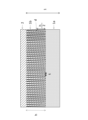
- FIG. 1 is a schematic vertical cross-sectional side view showing a laminated resin sheet according to a first embodiment of the present invention.
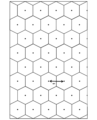
- FIG. 2 is a schematic plan view of a resin sheet main body.
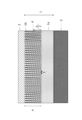
- FIG. 2 is a schematic vertical cross-sectional side view showing a laminated resin sheet according to a second embodiment of the present invention.
- the resin sheet according to the first embodiment of the present invention is a laminated resin sheet comprising a resin sheet body having regularly arranged hairy bodies on at least one surface of a base layer, with no structural boundary between the base layer and the hairy bodies forming a continuous phase, and a protective layer filling the gaps between the hairy bodies and covering the surface of the resin sheet body having the hairy bodies, the protective layer having a tensile modulus of elasticity of 0.2 MPa or more and less than 2 MPa at 20°C, and the protective layer having an average thickness greater than the average height of the hairy bodies. That is, the layer structure of the laminated resin sheet according to this embodiment is, from top to bottom, a protective layer (2), hairy bodies, and a base layer (1).
- the underlayer (1a) is a layer that underlies the hair-like bodies, and refers to the portion of the reference numeral 1 in FIG. 1 other than the hair-like bodies (1b) on the surface.
- the thickness of the underlayer refers to the thickness from the root of the hair-like bodies to the surface on the opposite side of the underlayer.
- the average thickness of the underlayer is preferably 15 ⁇ m to 300 ⁇ m, more preferably 30 ⁇ m to 280 ⁇ m, and even more preferably 50 ⁇ m to 250 ⁇ m. By making it 15 ⁇ m or more, the height of the hair-like bodies can be fully expressed. Furthermore, by making it 300 ⁇ m or less, the hair-like bodies can be efficiently formed.
- the average thickness of the underlayer can be determined by measuring the thickness from the root of the hair-like bodies to the interface with the other layer at 10 points on a sample cut into cross-sectional slices at any three points using a microtome, and the arithmetic average value of the 30 measured values can be used.
- the term "structurally free of boundaries” means that the underlayer and the hairy bodies are integrally formed, and there is no structurally clear boundary between them.
- continuous phase means that there is no seam between the underlayer and the hairy bodies, and that there is no discontinuous (continuous phase).
- the underlayer and the hairy bodies may have the same composition, and the bond between the underlayer and the hairy bodies may include a covalent bond.
- a covalent bond is a chemical bond formed by sharing an electron pair between two atoms.
- the individual polymers are bonded by covalent bonds, which are stronger than the van der Waals bonds and hydrogen bonds that act between polymer molecules.
- the undercoat layer and the capillaries may be derived from the same solid thermoplastic resin sheet, which is not separate.
- the base layer and the hair-like bodies may be formed from the same solid thermoplastic resin sheet.
- Formed from the same solid thermoplastic resin sheet means that the hair-like bodies and the base layer are directly formed by processing a single resin sheet. Since there is no structural boundary between the base layer and the hair-like bodies, and a continuous phase is formed, the hair-like bodies are prevented from separating from the base layer due to external stimuli, resulting in a sheet with a good tactile feel.
- the sheet can be manufactured in fewer steps than when the hair-like bodies are implanted.
- the undercoat layer and the hair-like bodies are made of the same thermoplastic resin composition, the main component of which is a thermoplastic resin.
- "mainly composed” means that it contains 50% by mass or more. Preferably, it contains 60% by mass or more, 70% by mass or more, 80% by mass or more, or 90% by mass or more.
- a resin containing at least one of the following can be used: urethane-based elastomer (TPU), styrene-based resin, polyolefin-based resin, polyvinyl chloride resin, thermoplastic elastomer, and fluorine-based resin.
- the urethane-based elastomer is a resin made of diisocyanate and polyol as reaction raw materials, and the combination of the diisocyanate may be selected from any combination of diphenylmethane diisocyanate (MDI), H 12 MDI, or hexamethylene diisocyanate (HDI) and the polyol may be polyether, polyester, or polycarbonate, or a combination of two or more of them may be used. In one embodiment of the present invention, a combination of MDI or HDI diisocyanate and carbonate polyol is preferably used.
- MDI diphenylmethane diisocyanate
- H 12 MDI hexamethylene diisocyanate
- HDI hexamethylene diisocyanate
- a combination of MDI or HDI diisocyanate and carbonate polyol is preferably used.
- styrene-based resins homopolymers or copolymers of styrene-based monomers such as styrene, ⁇ -methylstyrene, p-methylstyrene, dimethylstyrene, p-t-butylstyrene, and chlorostyrene, copolymers of these styrene-based monomers with other monomers, such as styrene-acrylonitrile copolymers (AS resins), or graft polymers obtained by graft polymerization of the above-mentioned styrene-based monomers with other polymers, such as polybutadiene, styrene-butadiene copolymers, polyisoprene, polychloroprene, and other diene rubber polymers, such as high impact polystyrene (HIPS resin) and styrene-acrylonitrile graft polymers (ABS resins
- Polyolefin resin means a resin made of a polymer containing ⁇ -olefin as a monomer, and includes polyethylene resin and polypropylene resin.
- polyethylene resin high density polyethylene, low density polyethylene, linear low density polyethylene, linear medium density polyethylene, etc. can be used, and not only simple substances but also copolymers, grafts, and blends having these structures can be used.
- Examples of the latter resin include copolymers and blends of resins having polar groups in the polyethylene chain, such as ethylene-vinyl acetate copolymer, ethylene-acrylic acid copolymer, ethylene-acrylic acid ester copolymer, ethylene-methacrylic acid ester copolymer, ethylene-vinyl acetate-vinyl chloride copolymer, and further blends with terpolymers with acid anhydrides.
- resins having polar groups in the polyethylene chain such as ethylene-vinyl acetate copolymer, ethylene-acrylic acid copolymer, ethylene-acrylic acid ester copolymer, ethylene-methacrylic acid ester copolymer, ethylene-vinyl acetate-vinyl chloride copolymer, and further blends with terpolymers with acid anhydrides.
- the polypropylene resin homopolypropylene, random polypropylene, block polypropylene, etc.
- the structure of the homopolypropylene may be any of isotactic, atactic, and syndiotactic.
- the ⁇ -olefin to be copolymerized with propylene preferably has 2 to 20 carbon atoms, more preferably has 4 to 12 carbon atoms, such as ethylene, 1-butene, 1-pentene, 1-hexene, 1-heptene, 1-octene, 1-nonene, and 1-decene.
- block polypropylene When block polypropylene is used, a block copolymer (block polypropylene), a block copolymer containing a rubber component, or a graft copolymer can be used. In addition to using these olefin resins alone, other olefin resins can also be used in combination.
- polyvinyl chloride resin vinyl chloride homopolymer or copolymer of vinyl chloride and other comonomers can be used.
- polyvinyl chloride When polyvinyl chloride is a copolymer, it may be a random copolymer or a graft copolymer.
- An example of a graft copolymer is one in which vinyl chloride is graft-polymerized onto an ethylene-vinyl acetate copolymer or a thermoplastic urethane polymer as a backbone polymer.
- the polyvinyl chloride of this embodiment is a soft polyvinyl chloride that can be extruded, and is a composition containing additives such as a polymer plasticizer.
- any known polymer plasticizer can be used, and preferred examples include ethylene copolymer polymer plasticizers such as ethylene-vinyl acetate-carbon monoxide copolymer, ethylene-(meth)acrylic acid ester-carbon monoxide copolymer, and ethylene-vinyl acetate copolymer with a high vinyl acetate content.
- ethylene copolymer polymer plasticizers such as ethylene-vinyl acetate-carbon monoxide copolymer, ethylene-(meth)acrylic acid ester-carbon monoxide copolymer, and ethylene-vinyl acetate copolymer with a high vinyl acetate content.
- Thermoplastic elastomers include those that have a structure that combines soft polymeric substances and hard polymeric substances. Specific examples include styrene-based elastomers, olefin-based elastomers, vinyl chloride-based elastomers, polyester-based elastomers, and polyamide-based elastomers. These elastomers can be selected from those generally available on the market.
- PVDF Polyvinylidene fluoride
- vinylidene fluoride copolymers include vinylidene fluoride-hexafluoropropylene copolymers, vinylidene fluoride-tetrafluoroethylene copolymers, vinylidene fluoride-chlorotrifluoroethylene copolymers, vinylidene fluoride-trifluoroethylene copolymers, vinylidene fluoride-tetrafluoroethylene-hexafluoropropylene terpolymers, vinylidene fluoride-chlorotrifluoroethylene-hexafluoropropylene terpolymers, and mixtures of two or more of these.
- the melt mass flow rate of the thermoplastic resin composition at 190°C to 300°C is preferably 4g/10min or more. By making it 4g/10min or more, the transferability of the capillary shape can be improved.
- the melt mass flow rate is a value measured in accordance with JIS K 7210 under conditions of a test temperature range of 190°C to 300°C and a load (2.16kg to 10.0kg).
- the thermoplastic resin composition may be an alloy of the above thermoplastic resins in any ratio, provided that the effect of the present invention is not impaired.
- other additives may be added.
- additives such as water/oil repellents, colorants such as pigments and dyes, lubricants/release agents such as silicone oil and alkyl esters, fibrous reinforcing agents such as glass fibers, granular fine particles such as talc, clay, and silica, and scaly fine particles such as mica
- low molecular weight antistatic agents such as salt compounds of sulfonic acid and alkali metals
- high molecular weight antistatic agents such as polyether ester amides, flame retardants, antibacterial agents, antiviral agents, and heat stabilizers may be added.
- Scrap resin generated in the resin sheet manufacturing process may also be mixed and used.
- water- and oil-repellents examples include silicone-based water- and oil-repellents, carnauba wax, and fluorine-based water- and oil-repellents.
- silicones include organopolysiloxane, dimethylpolysiloxane, methylphenylpolysiloxane, and methylhydrogenpolysiloxane, with dimethylpolysiloxane being the most suitable.
- Commercially available products include "Clinbell CB50-PP,” “Clinbell CB-30PE,” “Clinbell CB-1,” and “Clinbell CB-50AB” (manufactured by Fuji Chemical Co., Ltd.), which are silicone alloyed with resin.
- carnauba wax products include "Carnauba No. 1” (manufactured by Nikko Spain Co., Ltd.), and fluorine-based water- and oil-repellents include surfactants with perfluoroalkyl groups, and a commercially available product is "Surflon KT-PA” (manufactured by AGC Seimi Chemical Co., Ltd.).
- the amount of water- and oil-repellent added is preferably 0.5% to 25% by mass. If it is less than 0.5% by mass, there is a risk that sufficient water and oil repellency will not be achieved, and if it exceeds 25% by mass, there is a risk that moldability will deteriorate.
- antistatic agents examples include polyether ester amide-based polymer-type antistatic agents and ionomer-based polymer-type antistatic agents.
- Commercially available polyether ester amide-based polymer-type antistatic agents include "Pellestat 230," “Pellestat 6500,” “Pelectron AS,” and “Pelectron HS” (manufactured by Sanyo Chemical Industries, Ltd.).
- Commercially available ionomer-based polymer-type antistatic agents include "Entira SD100" and "Entira MK400” (manufactured by Mitsui DuPont Polychemicals, Ltd.).
- the amount of antistatic agent added is preferably 5% to 30% by mass. If it is less than 5% by mass, there is a risk that sufficient antistatic properties will not be obtained, and if it exceeds 30% by mass, production costs will increase.
- Antibacterial agents may be either inorganic or organic. In terms of dispersibility, inorganic agents are preferred. Specific examples include inorganic antibacterial agents of metal ions (Ag, Zn, Cu) and calcined shell calcium antibacterial agents. Commercially available inorganic antibacterial agents of metal ions include “Bactekiler BM102VT” (manufactured by Fuji Chemical Co., Ltd.), “Novaron VZF200", “Novaron (AG300)” (manufactured by Toa Gosei Co., Ltd.), “KM-10D-G”, and “IM-10D-L” (manufactured by Sinanen Zeomic Co., Ltd.).
- Calcined shell calcium antibacterial agents include "Scallow” (manufactured by FID Co., Ltd.).
- the amount of antibacterial agent added is preferably 0.5% to 5% by mass. If it is less than 0.5% by mass, there is a risk that sufficient antibacterial properties will not be obtained, and if it exceeds 5% by mass, production costs will increase.
- the lubricant/release agent may be an alkyl lubricant/release agent such as an aliphatic hydrocarbon compound, a higher fatty acid compound, a higher aliphatic alcohol compound, or a fatty acid amide compound, a silicone lubricant/release agent, or a fluorine-based lubricant/release agent.
- the amount added is preferably 0.01 to 5 parts by mass, more preferably 0.05 to 3 parts by mass, and even more preferably 0.1 to 2 parts by mass, out of a total of 100 parts by mass including the resin composition.
- a masterbatch in which a lubricant and release agent are pre-alloyed with a thermoplastic resin can also be used.
- "Wax Master V” manufactured by BASF
- BASF is a commercially available masterbatch based on a urethane-based thermoplastic elastomer, and in terms of production efficiency, it is preferable to use a masterbatch.
- the amount of masterbatch added is preferably 1 to 8 parts by mass, more preferably 2 to 7 parts by mass, and even more preferably 3 to 6 parts by mass, out of a total of 100 parts by mass including the resin composition.
- the hair-like bodies (1b) refer to the part that extends from the surface of the base layer (1a) in a hair-like manner as shown in FIG. 1.
- the hair-like bodies are regularly arranged on the surface of the base layer.
- regularly arranged means that the hair-like bodies are arranged in a non-random arrangement, that is, in a state where the hair-like bodies are arranged in an orderly manner (for example, at regular intervals) in one or two directions.
- the arrangement state of the hair-like bodies is used to determine whether the arrangement of the hair-like bodies is regular or not.
- the hair-like bodies are located on the base layer at a predetermined interval, and the positions of the bottom surfaces of the hair-like bodies are regularly arranged in the longitudinal and lateral directions of the base layer.
- the arrangement form of the hair-like bodies is not particularly limited, and a checkerboard arrangement or a staggered arrangement in which the hair-like bodies are arranged vertically and horizontally can be selected.
- the hair-like bodies are regularly arranged on the surface of the base layer, so that they are uniform and free of unevenness, and a good tactile sensation is easily expressed.
- the hair-like bodies can be collapsed by applying a load, such as tracing with a finger, and can form a finger mark that looks different in gloss and color from the surrounding parts.
- the hair-like material can also provide a suede-like, brushed sheet-like feel.
- the average height (h) of the hairs is preferably 30 ⁇ m to 500 ⁇ m, more preferably 60 ⁇ m to 250 ⁇ m, even more preferably 80 ⁇ m to 200 ⁇ m, and even more preferably 90 ⁇ m to 180 ⁇ m.
- the average height 30 ⁇ m or more a good tactile sensation can be sufficiently ensured, and by making the average height 500 ⁇ m or less, good tactile sensations such as a moist feeling, a soft feeling, and a fluffy feeling can be obtained.
- the length from the root to the tip of the hair represents the height of the hair.
- the distance from the surface of the base layer to the point where the hair is farthest from the surface of the base layer is the height h of the hair.
- the total value of the intervals divided by multi-point measurement from the tip to the center of the root of the hair is the length L of the hair.
- the average height and length of the hairs can be determined by measuring the height and length of the hairs at any number of points on the resin sheet using an electron microscope and image processing software, and then calculating the arithmetic mean value of the measured values.
- the average diameter (d) of the hair-like bodies is preferably 1 ⁇ m to 50 ⁇ m, more preferably 5 ⁇ m to 50 ⁇ m, and even more preferably 5 ⁇ m to 40 ⁇ m.
- the average diameter of the hair-like bodies is determined by measuring the diameter of the mid-height (h/2) of the hair-like bodies from several points on the resin sheet body using an electron microscope and image processing software, and using the arithmetic average value of the measured values.
- the aspect ratio of the hair-like bodies can be expressed as (average height of the hair-like bodies/average diameter of the hair-like bodies).
- the aspect ratio of the hair-like bodies is preferably 2 to 20, more preferably 2 to 10, and even more preferably 2 to 5.
- the aspect ratio can also be based on the average bottom diameter of the hair-like bodies.
- the average bottom diameter of the hair-like bodies is preferably 10 ⁇ m to 150 ⁇ m, more preferably 20 ⁇ m to 120 ⁇ m, and even more preferably 30 ⁇ m to 100 ⁇ m.
- the average bottom diameter of the hair-like bodies is determined by measuring the interval between adjacent hair-like bodies at several points on the resin sheet body and using the arithmetic average value of the measured values.
- the aspect ratio based on the bottom diameter of the hair-like bodies is preferably 1.0 to 10, more preferably 1.0 to 5, and even more preferably 1.0 to 2.5.
- the aspect ratio By setting the aspect ratio to 1.0 or more, good tactile sensation can be ensured, and by setting the aspect ratio to 10 or less, not only good tactile sensation such as moist feeling, soft feeling, and fluffy feeling can be obtained, but also the risk of the ratio of the height to the length of the hair-like bodies being equal to or less than a certain level can be reduced.
- the average spacing (t) of the hairs is preferably 20 ⁇ m to 200 ⁇ m, more preferably 40 ⁇ m to 150 ⁇ m, and even more preferably 40 ⁇ m to 100 ⁇ m.
- the spacing of the hairs means the distance between the center of the base of a hair and the center of the base of an adjacent hair, as shown in FIG. 2, for example.
- the average spacing of the hairs is determined by measuring the spacing between adjacent hairs at several points on the resin sheet body, and calculating the arithmetic mean value of the measured values.
- the shape of the hair-like body is not particularly limited, but may be such that it extends in a hair-like manner in the direction away from the base layer, and gradually becomes thinner as it approaches the tip, or that a bulge is formed at the tip. In other words, as it moves away from the base layer, the cross-sectional area may gradually decrease, then increase once and terminate.
- the tip of the hair-like body may be bud-shaped or mushroom-shaped.
- the hair-like body may have a portion located at the base end that extends in the direction away from the base layer, and a portion that extends from the portion located at the base end and bends with a constant curvature or a gradually changing curvature, or even a portion that is wound in a spiral or spiral shape.
- the tip of the hair-like body may be folded inward.
- This shape creates a good tactile sensation.
- the bud-shaped or mushroom-shaped portion is hollow, which creates an even better tactile sensation.
- the ratio of the average diameter of the bud or mushroom shape to the average diameter of the hair is preferably 1.1 or more.
- the height of the bud or mushroom shape is preferably 7 ⁇ m or more.
- the average diameter of the hair, the average diameter of the width of the bud or mushroom shape, and the height are measured using an electron scanning microscope photograph, and the arithmetic average value is used.
- the hair is made of a thermoplastic resin.
- the thermoplastic resin may be the same as the resin that can be used in the above-mentioned undercoat layer.
- the thermoplastic resin contained in the underlayer and the hair-like bodies may at least partially form a three-dimensional cross-linked structure (e.g., a three-dimensional network structure).
- a three-dimensional cross-linked structure e.g., a three-dimensional network structure
- at least a part of the hair-like bodies may be cross-linked, in another embodiment, the entire surface of the hair-like bodies may be cross-linked, and in yet another embodiment, the entire hair-like bodies (from the boundary with the underlayer to the tip) may be cross-linked.
- Methods for forming a cross-linked body include, for example, a method in which the resin sheet is molded and then the surface having the hair-like bodies is irradiated with an electron beam, and a method in which an organic peroxide is added and the resin sheet is heated and humidified during or after molding.
- Commercially available resins to which an organic peroxide has been added include "Linkron" manufactured by Mitsubishi Chemical Corporation. In this embodiment, it is preferable to form a cross
- the average angle increased by the heat molding is preferably 0 to 10°, more preferably 0 to 9°, and even more preferably 0 to 8°.
- the angle can be calculated by measuring the angle of the hair-like bodies using, for example, a laser microscope for the resin sheet body before heat molding and the resin sheet body from which the protective layer has been peeled off after heat molding of the laminated resin sheet, and subtracting the angle before heat molding from the angle after heat molding.
- the temperature conditions of the injection can be a mold temperature of 40°C, an injection resin temperature of 280°C, and a holding pressure of 30 MPa.
- the hot molding can be carried out under the following conditions. Using a vacuum and compressed air molding machine, preforming is performed on the laminated resin sheet under the following conditions to give it a three-dimensional shape.
- the three-dimensional shape can be given by using a convex cover panel mold that is gently curved by 10 mm from the end to the center on a surface that is 200 mm long and 100 mm short, and bringing the surface of the laminated resin sheet on the base layer side, i.e., the surface opposite the protective layer, into contact with the convex surface of the mold.
- Sheet surface temperature 100-150°C Heating time: 40 to 300 seconds
- Mold shape Long side 200 mm, short side 100 mm -Then, the laminated resin sheet to which the three-dimensional shape has been imparted is removed from the mold, the excess portion is trimmed, and polycarbonate resin is injected using an insert molding machine under the following conditions to obtain a secondary molded product (insert molded product).
- Insert molding is performed by placing the laminated resin sheet to which the three-dimensional shape has been imparted so that the protective layer side surface is in contact with the injection mold, and injecting the resin into the base layer side using the side gate method.
- Mold temperature 40°C Injection resin temperature: 280°C Holding pressure: 30 MPa
- the molded product is removed from the mold and the protective layer is peeled off to obtain the final secondary molded product.
- the average value of the angle increased by hot forming can be adjusted by the composition of the resin sheet itself, the shape of the capillaries, the composition and average thickness of the protective layer, and the like.
- ⁇ Resin sheet body> "tactile sensation” refers to the texture and feel of the surface of the resin sheet body. It is determined whether the surface of the resin sheet feels comfortable to the touch, and if so, a good tactile sensation is one that feels moist, soft, fluffy, or other specific pleasant feel.
- the thickness of the resin sheet body refers to the combined thickness of the average height of the hair-like bodies and the average thickness of the base layer.
- the thickness of the resin sheet body is preferably 45 ⁇ m to 800 ⁇ m, more preferably 100 ⁇ m to 500 ⁇ m, and even more preferably 130 ⁇ m to 300 ⁇ m.
- the thickness of the resin sheet body may be 80 ⁇ m or more and less than 350 ⁇ m.
- a thickness of 45 ⁇ m or more can ensure a good tactile feel, and a thickness of 800 ⁇ m or less can reduce manufacturing costs.
- the thickness of the resin sheet body can be measured in accordance with Method A of JIS L 1913:2010.
- the protective layer (2) is a layer that fills the gaps between the hairs and covers the surface of the resin sheet body on the side having the hairs. "Filling the gaps” means filling the space between adjacent hairs, more preferably filling the space between adjacent hairs from the root to the tip.
- the tensile modulus of the protective layer at 20°C is 0.2 MPa or more and less than 2 MPa.
- the tensile modulus of the protective layer at 20°C is preferably 0.3 MPa or more and less than 1.9 MPa, more preferably 0.3 MPa or more and less than 1.8 MPa, and even more preferably 0.4 MPa or more and less than 1.7 MPa.
- the tensile modulus of the protective layer By making the tensile modulus of the protective layer at 20°C 0.2 MPa or more, it is possible to suppress the occurrence of uncut parts when the protective layer is peeled off after molding. In addition, by making it 2 MPa or less, it is possible to suppress the decrease in cushioning properties.
- the tensile modulus of the protective layer can be measured, for example, by cutting out a test piece of the protective layer measuring 12 cm ⁇ 2.5 cm (the long side is in the CMD direction), setting the test piece in a small tabletop testing machine (manufactured by Shimadzu Corporation, "EZTest/CE"), and conducting a tensile test at room temperature (20°C) (chuck distance 50 mm, tensile speed 100 mm/min), and determining the tensile modulus in the elastic region (slope at strain 0-4%) from the obtained stress-strain (S-S) curve.
- EZTest/CE small tabletop testing machine
- the protective layer has a tensile strength of 1.0 to 30 MPa.
- the protective layer has a tensile strength of preferably 1.5 to 30 MPa, more preferably 1.5 to 30 MPa.
- the tensile strength of the protective layer can be determined, for example, by cutting out a test piece of the protective layer measuring 12 cm x 2.5 cm (with the long side in the CMD direction), setting the test piece in a small tabletop testing machine (manufactured by Shimadzu Corporation, "EZTest/CE"), and conducting a tensile test at room temperature (20°C) (chuck distance 50 mm, tensile speed 100 mm/min), from the maximum value of the obtained stress-strain (S-S) curve.
- the average thickness of the protective layer is preferably 50 ⁇ m to 600 ⁇ m, more preferably 80 ⁇ m to 400 ⁇ m, even more preferably 90 ⁇ m to 300 ⁇ m, and even more preferably 100 ⁇ m to 250 ⁇ m.
- the average thickness of the protective layer can be directly measured by peeling the protective layer from the laminated resin sheet and using a micrometer. In this embodiment, the average thickness of the protective layer is greater than the average height of the hairs, so that the hairs are completely covered by the protective layer, and the effect of suppressing the inclination of the hairs due to molding can be strengthened.
- the material and method of forming the protective layer are not particularly limited as long as the tensile modulus at 20° C. is 0.2 MPa or more and less than 2 MPa, and the peel strength between the resin sheet body and the protective layer is 0.01 N/mm or more and less than 0.10 N/mm.
- the protective layer may be formed by coating and curing a silicone resin on the surface of the resin sheet having hair-like bodies, or a hot melt film may be laminated on the surface of the resin sheet having hair-like bodies and heated to conform to the uneven shape of the hair-like bodies.
- a peroxide-curable type, a condensation reaction-curable type, an addition reaction-curable type, an ultraviolet-curable type, or the like can be used.
- As the hot melt film an olefin-based, polyamide-based, polyurethane-based, polyester-based, or other hot melt film can be used.
- the raw material composition for the protective layer may contain other additives to the extent that they do not impair the effects of the present invention.
- the laminated resin sheet in this embodiment is a laminated resin sheet comprising a resin sheet main body having regularly arranged hairy bodies on at least one surface of a base layer, with no structural boundary between the base layer and the hairy bodies forming a continuous phase, and a protective layer filling the gaps between the hairy bodies and covering the surface of the resin sheet main body having the hairy bodies, wherein the tensile modulus of elasticity of the protective layer at 20°C is 0.2 MPa or more and less than 2 MPa.
- the peel strength between the resin sheet body and the protective layer is 0.01 to 0.10 N/mm.
- the peel strength between the resin sheet body and the protective layer is preferably 0.01 to 0.08 N/mm, more preferably 0.02 to 0.08 N/mm, and even more preferably 0.02 to 0.05 N/mm.
- the peel strength can be adjusted by selecting the materials of the resin sheet and the protective layer.
- the peel strength between the resin sheet main body and the protective layer in a laminated resin sheet can be determined as follows: A laminated resin sheet consisting of a resin sheet main body and a protective layer is cut to a width of 25 mm, and the resin sheet main body is placed horizontally below the gripping jig of a universal material testing machine using a 90-degree peeling jig so that the protective layer faces upwards. The protective layer peeled off from the resin sheet below is sandwiched above the gripping jig, and the gripping jig holding the protective layer above is pulled in the normal direction to the sheet surface at a tensile speed of 100 mm/min to measure.
- the average thickness of the laminated resin sheet refers to the combined average thickness of the base layer and the average thickness of the protective layer.
- the average thickness of the laminated resin sheet is preferably 65 ⁇ m to 900 ⁇ m, more preferably 100 ⁇ m to 700 ⁇ m, and even more preferably 200 ⁇ m to 500 ⁇ m.
- the thickness of the laminated resin sheet can be measured in accordance with JIS K 7130:1999.
- An example of the laminated resin sheet according to the second embodiment of the present invention is a laminated resin sheet in which a base layer is formed on the surface of the undercoat layer opposite to the side having the hair-like bodies, as shown in Fig. 3. That is, the layer structure of the laminated resin sheet according to the second embodiment is, from top to bottom, a protective layer (2), hair-like bodies and undercoat layer (1), and a base layer (3).
- the average thickness of the base layer is preferably 50 ⁇ m to 1000 ⁇ m, more preferably 100 ⁇ m to 800 ⁇ m, and even more preferably 150 ⁇ m to 500 ⁇ m. By setting the average thickness of the base layer to 1000 ⁇ m or less, the production cost can be reduced.
- the hair-like body and the undercoat layer are the same as those described in the first embodiment, so the description will be omitted.
- the total average thickness of the protective layer, the hair-like body, the undercoat layer, and the base layer is 80 ⁇ m to 1000 ⁇ m, more preferably 200 ⁇ m to 800 ⁇ m, and even more preferably 300 ⁇ m to 600 ⁇ m.
- the base layer in the resin sheet according to the second embodiment it is preferable to use a thermoplastic resin that can be bonded to the underlayer.
- the same thermoplastic resin composition as the underlayer, polycarbonate-based resin, polyester-based resin, or polymer alloy resin thereof can be suitably used.
- the mass ratio of the polycarbonate-based resin to the polyester-based resin in the polymer alloy resin is preferably 50:50 to 90:10, more preferably 60:40 to 80:20, and even more preferably 65:35 to 75:25.
- the polymer alloy resin refers to a polymer multi-component system, and may be a polymer blend having a certain degree of compatibility due to mixing or the like, a block copolymer or a graft copolymer obtained by copolymerization, or a mixture of resins that are not compatible with each other.
- polycarbonate resins include those derived from aliphatic dihydroxy compounds and those derived from aromatic dihydroxy compounds.
- those derived from aromatic dihydroxy compounds can be suitably used, and in particular, those derived from aromatic dihydroxy compounds (bisphenols) in which two aromatic dihydroxy compounds are bonded via a certain type of bonding group are preferred.
- aromatic dihydroxy compounds bisphenols
- These can be produced by a known method of polycondensation of a dihydroxy compound with phosgene or a carbonate ester, and are not limited to this method, and commercially available resins can also be used.
- polyester-based resins examples include polyethylene terephthalate, polybutylene terephthalate, polyethylene-2,6-naphthalate, polymethylene terephthalate, and polyester resins copolymerized with, as a copolymerization component, a diol component such as diethylene glycol, neopentyl glycol, or polyalkylene glycol, or a dicarboxylic acid component such as adipic acid, sebacic acid, phthalic acid, isophthalic acid, or 2,6-naphthalenedicarboxylic acid.
- the base layer may contain other additives as necessary.
- additives such as water repellents, oil repellents, pigments, dyes, and other colorants, lubricants and release agents such as silicone oils and alkyl esters, fibrous reinforcing agents such as glass fibers, fillers such as granular fine particles such as talc, clay, and silica, scaly fine particles such as mica, low molecular weight antistatic agents such as salt compounds of sulfonic acid and alkali metals, polymeric antistatic agents such as polyether ester amides, flame retardants, antibacterial agents, antiviral agents, and heat stabilizers can be added.
- scrap resin generated in the resin sheet manufacturing process can be mixed and used.
- the base layer may have a partially crosslinked structure.
- the method for producing the resin sheet body according to the present invention is not limited and may be any method, but typically includes a step of melt-extruding a raw resin and providing regularly arranged hair-like bodies on at least one surface of the obtained sheet.
- a feed block or a multi-manifold die can be used for the production.
- the layer structure of each embodiment of the resin sheet body is basically as described above, but in addition, for example, scrap raw materials generated in the production process may be laminated as an additional layer as long as there is no deterioration in physical properties, etc.
- the method for applying the hair-like bodies is not particularly limited, and any method known to those skilled in the art can be used.
- a manufacturing method using an extrusion molding method a manufacturing method using a roll-to-roll method, a manufacturing method using a photolithography method, a manufacturing method using a heat press method, a manufacturing method using a pattern roll and a UV-curable resin, a manufacturing method using a 3D printer, a method in which the hair-like bodies are embedded in a resin layer and then covalently bonded by a polymerization reaction, etc.
- a sheet is extruded using a T-die method, and the resin sheet body can be manufactured by casting with a transfer roll that has been textured to give the surface of the sheet a hair-like shape, and a touch roll.
- a transfer roll on which the unevenness processing has been performed a roll surface on which fine unevenness of several ⁇ m to several hundred ⁇ m in size has been regularly formed by laser engraving, electroforming, etching, mill engraving, or the like can be used.
- regular means that the unevenness is arranged in a non-random manner, that is, in a state where it is arranged orderly in one or two directions.
- a checkerboard arrangement arranged vertically and horizontally or a staggered arrangement, etc. can be selected.
- shape of the uneven portion for example, in the case of the shape of the recess, a pyramid shape (a cone, a square pyramid, a triangular pyramid, a hexagonal pyramid, etc.), a semicircle, a rectangle (a square prism), etc. can be mentioned.
- size the opening diameter of the recess, the recess depth, and the interval between the recess shapes are several ⁇ m to several hundred ⁇ m.
- the material of the transfer roll for example, metal, ceramic, etc. can be used.
- the interval of the hair-like bodies can be adjusted by adjusting the interval of the recesses of the transfer roll, and the height of the hair-like bodies can be adjusted by adjusting the depth of the recesses of the transfer roll, and the touch can also be adjusted. It is also preferred to process the transfer roll surface into unevenness with a high aspect ratio.
- the aspect ratio (depth of the recess/diameter of the recess opening) when processing the recess shape on the transfer roll surface is preferably 1.0 to 9.0 or 1.0 to 2.0.
- the laser engraving method or the electroforming method is particularly preferably used since it is suitable for precise processing in the depth direction compared to the etching method, the blasting method, the mill engraving method, and the like.
- the transfer roll may be made of a material such as metal or ceramic.
- the touch roll may be made of various materials, such as silicone rubber, NBR rubber, EPT rubber, butyl rubber, chloroprene rubber, or fluororubber.
- a touch roll having a rubber hardness (JIS K 6253) of 40 to 100 may be used.
- a Teflon (registered trademark) layer may be formed on the surface of the touch roll.
- the touch roll can be made of various materials, for example, a roll made of silicone rubber, NBR rubber, EPT rubber, butyl rubber, chloroprene rubber, or fluororubber.
- a touch roll having a rubber hardness (JIS K 6253) of 40 to 100 can be used.
- a Teflon (registered trademark) layer may be formed on the surface of the touch roll.
- the resin sheet body of the present embodiment can be manufactured.
- the resin sheet body of this embodiment can be manufactured by adjusting the temperature of the transfer roll to a temperature near the crystalline melting temperature, glass transition point, or melting point of the thermoplastic resin (for example, 100 to 150° C. when random polypropylene is used) and casting with a pinch pressure between the transfer roll and the touch roll of 30 to 120 kg/cm 2.
- the cast resin sheet is taken up at a line speed of 0.5 to 30 m/min using a pinch roll or the like.
- the method for forming the protective layer according to the present embodiment is not particularly limited, and any method known to those skilled in the art can be used. For example, a method including a step of applying the raw resin of the protective layer to the surface of the resin sheet body having hair-like bodies produced, a method including a step of melting and pasting the raw resin formed in advance into a sheet shape, etc. can be mentioned.
- the molded product of this embodiment is a molded product using the laminated resin sheet of this embodiment.
- the laminated resin sheet of this embodiment can be used for general molding, and the molding method includes insert molding, in-mold molding, general vacuum molding, pressure molding, and applications of these methods, such as a method in which a resin sheet is heated and softened in a vacuum state and released under atmospheric pressure to be overlaid (molded) on the surface of an existing molded product, but is not limited thereto.
- a known sheet heating method such as radiant heating using an infrared heater or the like, which is non-contact heating, can be applied.
- a resin sheet is heated at a surface temperature of 60°C to 220°C for 20 seconds to 480 seconds, and then molded onto the surface of an existing molded product, and can be stretched 1.05 to 2.50 times depending on the shape of the surface.
- the laminated resin sheet of this embodiment can be used in applications that require the good tactile sensation described above.
- the laminated resin sheet can be used as an automobile interior material, an electronic device exterior material, or a surface material for cosmetic containers.
- Automobile interior materials include steering wheels, dashboards, levers, switches, and other parts that are touched by the hands inside the automobile.
- interior materials can be made by molding and laminating the above-mentioned resin sheet onto the surface of a known instrument panel or pillar (for example, JP 2009-184421 A). By laminating the resin sheet, an interior material with a good tactile feel can be obtained.
- a known instrument panel or pillar for example, JP 2009-184421 A
- olefin resins, PVC resins, and urethane elastomers are preferred, taking into consideration light resistance and chemical resistance. There are no particular limitations on the method for laminating the resin sheet and the interior material.
- a portable transmitter can be made by molding and laminating the resin sheet of the present invention to the surface of a portable transmitter housing for a known keyless entry system (for example, JP 2005-228911 A). By laminating the resin sheet, a portable transmitter with good tactile sensation can be obtained.
- Olefin resins and urethane elastomers are preferred as materials for the resin sheet to be laminated. There are no particular limitations on the method for laminating the resin sheet to the housing.
- Examples of cosmetic containers include containers for face cream, pack cream, foundation, and eye shadow, such as a cosmetic container in which the resin sheet of the present invention is molded and bonded to the surface of the lid member of a known foundation container (JP Patent Publication 2017-29608).
- a cosmetic container By bonding the resin sheet, a cosmetic container with good tactile properties can be obtained.
- Olefin resins and urethane elastomers are preferred as materials for the resin sheet to be bonded. There are no particular limitations on the method for bonding the resin sheet.
- a laminate can be produced by laminating (dry laminating, extrusion laminating) printed matter (paper, metal thin film, etc.) with letters, pictures, etc., or nonwoven fabric, and then laminating it onto the printed surface of a business card, for example, to produce a business card with a tactile feel.
- laminating dry laminating, extrusion laminating
- printed matter paper, metal thin film, etc.
- nonwoven fabric for example, to produce a business card with a tactile feel.
- the average interval of hairs was measured by measuring the distance between the center of the root of a hair and the center of the root of an adjacent hair at 10 locations for each sample, and the arithmetic average value of the 30 measured values was used.
- the average thickness of the underlayer was determined by measuring the thickness of each layer at 10 points for each sample, and the arithmetic mean value of the 30 measurements was used.
- the thickness of the underlayer is defined as the distance from the base of the hair to the interface with the other layer.
- the tensile modulus and tensile strength of the protective layer were determined as follows: A test piece of the protective layer measuring 12 cm x 2.5 cm (long side in the CMD direction) was cut out. The test piece was then set in a small tabletop testing machine (Shimadzu Corporation, "EZTest/CE") and a tensile test was carried out at room temperature (20°C) (chuck distance 50 mm, tensile speed 100 mm/min). The tensile modulus in the elastic region (slope at strain 0-4%) was determined from the obtained stress-strain (S-S) curve. The point at which the maximum stress was reached was taken as the tensile strength.
- peel strength between resin sheet main body and protective layer was determined as follows: a laminated resin sheet consisting of a resin sheet main body and a protective layer was cut to a width of 25 mm, a 90-degree peeling jig (manufactured by Toyo Seiki Seisaku-sho) was attached below a universal material testing machine (manufactured by Toyo Seiki Seisaku-sho, "Strograph VE1D"), the resin sheet main body was placed horizontally with the protective layer facing upward, the protective layer peeled off from the resin sheet below was clamped between the upper gripping jig, and the gripping jig holding the protective layer above was pulled in the normal direction to the sheet surface at a tensile speed of 100 mm/min to measure.
- the angle of the hair-like body was measured using a laser microscope (VK-X100, manufactured by Keyence Corporation) for the resin sheet body before secondary molding and the resin sheet body from which the protective layer was peeled off after the laminated resin sheet was secondary molded. The measured samples were cut out from cross-sections at any three positions of the resin sheet body using a microtome.
- the hair-like body fall angle was measured by measuring the angle of 10 hair-like bodies for each sample, and the arithmetic average value of the 30 measured values was used.
- the hair-like body fall angle was set to 0° when the hair-like body extended perpendicularly to the surface of the base layer.
- the resin sheet extruded by the co-extrusion multilayer T-die method was subjected to uneven processing by chromium oxide spraying and laser engraving, and was cast using a transfer roll with uneven processing adjusted to 60°C to 150°C and a touch roll made of silicone-based rubber with a rubber hardness of 70 adjusted to 10°C to 90°C, and was taken up at a line speed of 1 m/min to 15 m/min using a pinch roll.
- any one of the silicone-based resins (C-1) to (C-3) for the protective layer and a curing agent were mixed in a ratio of 9:1, and then the mixture was spread on the surface of the resin sheet main body with a brass rod to form a protective layer with a thickness shown in Table 1, thereby obtaining a laminated resin sheet.
- the laminated resin sheet was preformed under the following conditions to give it a three-dimensional shape.
- the three-dimensional shape was given by using a convex cover panel mold that was gently curved by 10 mm from the end to the center on a surface that was 200 mm long and 100 mm short, and bringing the surface of the laminated resin sheet on the base layer side, i.e., the surface opposite the protective layer, into contact with the convex surface of the mold.
- the insert molding was performed by placing the laminated resin sheet to which the three-dimensional shape had been imparted so that the surface on the protective layer side was in contact with the injection mold, and injecting the resin into the base layer side using a side gate method. Mold temperature: 40°C ⁇ Injection resin temperature: 280°C ⁇ Pressure holding: 30MPa After cooling, the molded product was removed from the mold and the protective layer was peeled off to obtain the final secondary molded product.
- the resin sheet of this embodiment is suppressed from whitening and loss of tactile sensation even when secondary molding is performed, and therefore has industrial applicability as a resin sheet capable of secondary molding and its molded product.
Landscapes
- Engineering & Computer Science (AREA)
- Mechanical Engineering (AREA)
- Chemical & Material Sciences (AREA)
- Health & Medical Sciences (AREA)
- Chemical Kinetics & Catalysis (AREA)
- Medicinal Chemistry (AREA)
- Polymers & Plastics (AREA)
- Organic Chemistry (AREA)
- Manufacturing & Machinery (AREA)
- Laminated Bodies (AREA)
Priority Applications (3)
| Application Number | Priority Date | Filing Date | Title |
|---|---|---|---|
| CN202480014674.9A CN120752134A (zh) | 2023-02-28 | 2024-02-22 | 包含具有毛状体的树脂片主体和保护层的层叠树脂片、其制造方法及其成型品 |
| JP2025503830A JPWO2024181280A1 (https=) | 2023-02-28 | 2024-02-22 | |
| EP24763761.4A EP4674611A1 (en) | 2023-02-28 | 2024-02-22 | Laminated resin sheet including protective layer and resin sheet body having hair-like bodies, and production method therefor and molded product thereof |
Applications Claiming Priority (2)
| Application Number | Priority Date | Filing Date | Title |
|---|---|---|---|
| JP2023-030224 | 2023-02-28 | ||
| JP2023030224 | 2023-02-28 |
Publications (1)
| Publication Number | Publication Date |
|---|---|
| WO2024181280A1 true WO2024181280A1 (ja) | 2024-09-06 |
Family
ID=92590620
Family Applications (1)
| Application Number | Title | Priority Date | Filing Date |
|---|---|---|---|
| PCT/JP2024/006431 Ceased WO2024181280A1 (ja) | 2023-02-28 | 2024-02-22 | 毛状体を有する樹脂シート本体と保護層とを含む積層樹脂シート、その製造方法及びその成形品 |
Country Status (5)
| Country | Link |
|---|---|
| EP (1) | EP4674611A1 (https=) |
| JP (1) | JPWO2024181280A1 (https=) |
| CN (1) | CN120752134A (https=) |
| TW (1) | TW202502545A (https=) |
| WO (1) | WO2024181280A1 (https=) |
Cited By (1)
| Publication number | Priority date | Publication date | Assignee | Title |
|---|---|---|---|---|
| WO2025225208A1 (ja) * | 2024-04-24 | 2025-10-30 | デンカ株式会社 | 毛状体を有する樹脂シート本体と保護シートとを含む積層樹脂シート、その製造方法及びその成形品 |
Citations (9)
| Publication number | Priority date | Publication date | Assignee | Title |
|---|---|---|---|---|
| JPS53162169U (https=) * | 1977-05-25 | 1978-12-19 | ||
| JPH0535394U (ja) * | 1991-10-23 | 1993-05-14 | 大日本印刷株式会社 | 化粧材 |
| JP2005228911A (ja) | 2004-02-13 | 2005-08-25 | Honda Lock Mfg Co Ltd | 携帯電子機器 |
| JP2009184421A (ja) | 2008-02-04 | 2009-08-20 | Honda Access Corp | カバーパネル |
| WO2015029453A1 (ja) * | 2013-08-30 | 2015-03-05 | Art&Tech株式会社 | テキスタイル調インモールド用シート、その製造方法、プレフォーム成形体、テキスタイル調樹脂成形体及びその製造方法 |
| JP2017029608A (ja) | 2015-08-05 | 2017-02-09 | 株式会社エイエムジー | 化粧品容器 |
| WO2018016562A1 (ja) | 2016-07-20 | 2018-01-25 | デンカ株式会社 | 毛状体を有する熱可塑性樹脂シート及びその成形品 |
| JP2019507029A (ja) * | 2015-12-22 | 2019-03-14 | スリーエム イノベイティブ プロパティズ カンパニー | 構造化層を備えたアクリルフィルム |
| WO2021145295A1 (ja) * | 2020-01-15 | 2021-07-22 | デンカ株式会社 | 毛状体を有する樹脂シート及びその成形品 |
-
2024
- 2024-02-22 JP JP2025503830A patent/JPWO2024181280A1/ja active Pending
- 2024-02-22 EP EP24763761.4A patent/EP4674611A1/en active Pending
- 2024-02-22 WO PCT/JP2024/006431 patent/WO2024181280A1/ja not_active Ceased
- 2024-02-22 CN CN202480014674.9A patent/CN120752134A/zh active Pending
- 2024-02-27 TW TW113107012A patent/TW202502545A/zh unknown
Patent Citations (9)
| Publication number | Priority date | Publication date | Assignee | Title |
|---|---|---|---|---|
| JPS53162169U (https=) * | 1977-05-25 | 1978-12-19 | ||
| JPH0535394U (ja) * | 1991-10-23 | 1993-05-14 | 大日本印刷株式会社 | 化粧材 |
| JP2005228911A (ja) | 2004-02-13 | 2005-08-25 | Honda Lock Mfg Co Ltd | 携帯電子機器 |
| JP2009184421A (ja) | 2008-02-04 | 2009-08-20 | Honda Access Corp | カバーパネル |
| WO2015029453A1 (ja) * | 2013-08-30 | 2015-03-05 | Art&Tech株式会社 | テキスタイル調インモールド用シート、その製造方法、プレフォーム成形体、テキスタイル調樹脂成形体及びその製造方法 |
| JP2017029608A (ja) | 2015-08-05 | 2017-02-09 | 株式会社エイエムジー | 化粧品容器 |
| JP2019507029A (ja) * | 2015-12-22 | 2019-03-14 | スリーエム イノベイティブ プロパティズ カンパニー | 構造化層を備えたアクリルフィルム |
| WO2018016562A1 (ja) | 2016-07-20 | 2018-01-25 | デンカ株式会社 | 毛状体を有する熱可塑性樹脂シート及びその成形品 |
| WO2021145295A1 (ja) * | 2020-01-15 | 2021-07-22 | デンカ株式会社 | 毛状体を有する樹脂シート及びその成形品 |
Non-Patent Citations (1)
| Title |
|---|
| See also references of EP4674611A1 |
Cited By (1)
| Publication number | Priority date | Publication date | Assignee | Title |
|---|---|---|---|---|
| WO2025225208A1 (ja) * | 2024-04-24 | 2025-10-30 | デンカ株式会社 | 毛状体を有する樹脂シート本体と保護シートとを含む積層樹脂シート、その製造方法及びその成形品 |
Also Published As
| Publication number | Publication date |
|---|---|
| TW202502545A (zh) | 2025-01-16 |
| EP4674611A1 (en) | 2026-01-07 |
| CN120752134A (zh) | 2025-10-03 |
| JPWO2024181280A1 (https=) | 2024-09-06 |
Similar Documents
| Publication | Publication Date | Title |
|---|---|---|
| JP7361044B2 (ja) | 毛状体を有する熱可塑性樹脂シート及びその成形品 | |
| JP7149965B2 (ja) | 毛状体を有する熱可塑性樹脂シート及びその成形品 | |
| JP6731568B1 (ja) | 毛状体を有する樹脂シート及びその成形品 | |
| JP6935045B1 (ja) | 毛状体を有する樹脂シート及びその成形品 | |
| WO2024181280A1 (ja) | 毛状体を有する樹脂シート本体と保護層とを含む積層樹脂シート、その製造方法及びその成形品 | |
| JP7446284B2 (ja) | 毛状体を有する樹脂シート及びその成形品 | |
| JP7487309B2 (ja) | 毛状体を有する樹脂シート及びその成形品 | |
| JP7321770B2 (ja) | 毛状体を有する樹脂シート及びその成形品 | |
| JP7698049B2 (ja) | 毛状体を有する樹脂シート及びその成形品 | |
| JP2025166601A (ja) | 毛状体を有する樹脂シート本体と保護シートとを含む積層樹脂シート、その製造方法及びその成形品 | |
| JP7562008B2 (ja) | 毛状体を有する樹脂シート及びその成形品 | |
| JP2026041627A (ja) | 毛状体を有する樹脂シート本体と保護シートとを含む積層樹脂シート、その製造方法及びその成形品 | |
| WO2025225208A1 (ja) | 毛状体を有する樹脂シート本体と保護シートとを含む積層樹脂シート、その製造方法及びその成形品 |
Legal Events
| Date | Code | Title | Description |
|---|---|---|---|
| 121 | Ep: the epo has been informed by wipo that ep was designated in this application |
Ref document number: 24763761 Country of ref document: EP Kind code of ref document: A1 |
|
| ENP | Entry into the national phase |
Ref document number: 2025503830 Country of ref document: JP Kind code of ref document: A |
|
| WWE | Wipo information: entry into national phase |
Ref document number: 2025503830 Country of ref document: JP |
|
| WWE | Wipo information: entry into national phase |
Ref document number: 202480014674.9 Country of ref document: CN |
|
| WWE | Wipo information: entry into national phase |
Ref document number: 2024763761 Country of ref document: EP |
|
| NENP | Non-entry into the national phase |
Ref country code: DE |
|
| WWP | Wipo information: published in national office |
Ref document number: 202480014674.9 Country of ref document: CN |
|
| ENP | Entry into the national phase |
Ref document number: 2024763761 Country of ref document: EP Effective date: 20250929 |
|
| ENP | Entry into the national phase |
Ref document number: 2024763761 Country of ref document: EP Effective date: 20250929 |
|
| ENP | Entry into the national phase |
Ref document number: 2024763761 Country of ref document: EP Effective date: 20250929 |
|
| WWP | Wipo information: published in national office |
Ref document number: 2024763761 Country of ref document: EP |