WO2024171422A1 - 異常判定装置 - Google Patents
異常判定装置 Download PDFInfo
- Publication number
- WO2024171422A1 WO2024171422A1 PCT/JP2023/005623 JP2023005623W WO2024171422A1 WO 2024171422 A1 WO2024171422 A1 WO 2024171422A1 JP 2023005623 W JP2023005623 W JP 2023005623W WO 2024171422 A1 WO2024171422 A1 WO 2024171422A1
- Authority
- WO
- WIPO (PCT)
- Prior art keywords
- unit
- voltage
- switch unit
- switch
- abnormality determination
- Prior art date
- Legal status (The legal status is an assumption and is not a legal conclusion. Google has not performed a legal analysis and makes no representation as to the accuracy of the status listed.)
- Ceased
Links
Images

Classifications
-
- H—ELECTRICITY
- H02—GENERATION; CONVERSION OR DISTRIBUTION OF ELECTRIC POWER
- H02J—ELECTRIC POWER NETWORKS; CIRCUIT ARRANGEMENTS OR SYSTEMS FOR SUPPLYING OR DISTRIBUTING ELECTRIC POWER; SYSTEMS FOR STORING ELECTRIC ENERGY
- H02J7/00—Circuit arrangements for charging or discharging batteries or for supplying loads from batteries
Definitions
- This disclosure relates to an abnormality determination device.
- Patent Document 1 discloses a power storage device connected between a main power supply and a load.
- This power storage device includes a power storage unit, a main power supply side bypass FET, a load side bypass FET, a power storage unit side FET, a load side FET, a voltage detection circuit, and a control unit.
- the power storage unit supplies power to the load.
- the main power supply side bypass FET and the load side bypass FET are connected in series between the main power supply and the load.
- the power storage unit side FET and the load side FET are connected in series between the power storage unit and the load.
- the voltage detection circuit detects the voltage at the connection point between the main power supply side bypass FET and the load side FET.
- the control unit determines that either the main power supply side bypass FET or the load side bypass FET has a short circuit failure if the voltage at the connection point is equal to or higher than a predetermined value.
- Patent Document 1 a voltage equivalent to the output voltage of the power storage unit is supplied from the power storage unit to the load. For this reason, the charging voltage of the power storage unit must be set to be equivalent to the drive voltage of the load, leaving little room for choice.
- the present disclosure aims to provide a technology that can be used in a configuration that detects an abnormality when a switch between a power supply unit and a load is turned off while power is being supplied from the power storage unit to the load, and that can increase the freedom of choice in selecting the power storage unit.
- the abnormality determination device of the present disclosure is An abnormality determination device for use in an in-vehicle system including a power supply unit, a load, and a power storage unit, A first switch unit provided between the power supply unit and the load; a second switch unit connected in series to the first switch unit on the load side of the first switch unit; a conductive path provided between the second switch unit and the load; a voltage conversion unit provided between the conductive path and the power storage unit; a voltage detection circuit that detects a voltage at a connection point between the first switch unit and the second switch unit; a control unit that controls the first switch unit, the second switch unit, and the voltage conversion unit; Equipped with the voltage conversion unit performs a conversion operation of converting a voltage input from the power storage unit side and outputting the converted voltage to the conductive path side; The control unit causes the voltage conversion unit to perform the conversion operation, controls the first switch unit and the second switch unit to an off state, and performs an abnormality determination process to determine whether or not at least one of the first switch unit and the second
- the technology disclosed herein is used in a configuration that detects an abnormality when a switch between a power supply unit and a load is turned off while power is being supplied from the power storage unit to the load, thereby increasing the freedom of choice in the selection of the power storage unit.
- FIG. 1 is a schematic diagram showing the configuration of an in-vehicle system including an abnormality determination device according to a first embodiment.
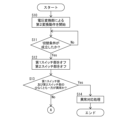
- FIG. 2 is a flowchart showing the first half of the process performed by the control unit.
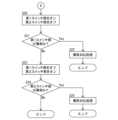
- FIG. 3 shows the latter half of the flowchart of the process performed by the control unit.
- An abnormality determination device for use in an in-vehicle system including a power supply unit, a load, and a power storage unit, A first switch unit provided between the power supply unit and the load; a second switch unit connected in series to the first switch unit on the load side of the first switch unit; a conductive path provided between the second switch unit and the load; a voltage conversion unit provided between the conductive path and the power storage unit; a voltage detection circuit that detects a voltage at a connection point between the first switch unit and the second switch unit; a control unit that controls the first switch unit, the second switch unit, and the voltage conversion unit; Equipped with the voltage conversion unit performs a conversion operation of converting a voltage input from the power storage unit side and outputting the converted voltage to the conductive path side; The control unit causes the voltage conversion unit to perform the conversion operation, and controls the first switch unit and the second switch unit to an off state, while performing an abnormality determination process to determine whether or not at least one of the first switch unit and the second switch unit is abnormal based on the
- the abnormality determination device controls the first switch unit and the second switch unit to the off state while causing the voltage conversion unit to perform a conversion operation, thereby being able to supply power from the power storage unit to the load. Moreover, the output voltage of the power storage unit is converted by the voltage conversion unit and output to the load side. For this reason, the output voltage of the power storage unit is unlikely to be limited by the drive voltage of the load. Therefore, the abnormality determination device can increase the degree of freedom in selecting the power storage unit.
- the control unit is causing the voltage conversion unit to perform the conversion operation, and determining that the first switch unit is abnormal when a voltage detected by the voltage detection circuit is equal to an output voltage of the power supply unit or is within a first range including the output voltage in a state in which the first switch unit and the second switch unit are controlled to an off state;
- the abnormality determination device according to claim 1, wherein, in a state in which the voltage conversion unit is caused to perform the conversion operation and the first switch unit and the second switch unit are controlled to an off state, when a voltage detected by the voltage detection circuit is the same as an output voltage of the voltage conversion unit or is within a second range including the output voltage, the second switch unit is determined to be abnormal.
- the abnormality determination device can distinguish between abnormalities in the first switch section and abnormalities in the second switch section.
- the abnormality determination device can switch the first switch unit and the second switch unit to the off state while preventing interruption of the power supply to the load, and determine whether or not at least one of the first switch unit and the second switch unit is abnormal.
- the control unit is when the abnormality determination condition is satisfied while the first switch unit and the second switch unit are controlled to be in an on state, the voltage conversion unit is caused to perform the conversion operation;
- the abnormality determination device according to claim 3, wherein when a switching condition is satisfied during the conversion operation, the first switch unit and the second switch unit are switched to an off state, and whether or not at least one of the first switch unit and the second switch unit is abnormal is determined based on a voltage detected by the voltage detection circuit.
- the abnormality determination device causes the voltage conversion unit to perform a conversion operation when the abnormality determination condition is met, and switches the first switch unit and the second switch unit to the off state after the switching condition is met. Therefore, the abnormality determination device can more reliably prevent a temporary shortage of power supply to the load when the power supply source to the load is switched from the power supply unit to the power storage unit.
- the abnormality determination device can determine whether or not an abnormality has occurred in which the second switch unit does not switch to the on state.
- the abnormality determination device can determine whether or not an abnormality has occurred in which the first switch unit does not switch to the on state.
- FIG. 1 shows an abnormality determination device 10 used in the in-vehicle system 1.
- the in-vehicle system 1 is mounted on a vehicle.
- the in-vehicle system 1 includes a power supply unit 2, a load 3, a power storage unit 4, and the abnormality determination device 10.
- the in-vehicle system 1 can supply power from the power supply unit 2 to the load 3.
- the in-vehicle system 1 switches the power supply source for the load 3 from the power supply unit 2 to the power storage unit 4.
- the power supply unit 2 is constituted by, for example, a battery.
- the battery may be constituted by a secondary battery such as a lead-acid battery or a lithium-ion battery, or may be constituted by other types of storage batteries.
- the high-potential terminal of the power supply unit 2 is electrically connected to the first conductive path 81.
- the output voltage of the power supply unit 2 is applied to the first conductive path 81.
- the low-potential terminal of the power supply unit 2 is electrically connected to the ground.
- the voltage refers to a voltage based on the ground potential.
- the load 3 is an electrical device mounted on a vehicle. One end of the load 3 is electrically connected to the second conductive path 82. The other end of the load 3 is electrically connected to ground. The load 3 is driven by receiving power supplied from the second conductive path 82.
- the storage unit 4 is composed of a storage element.
- the storage element may be a capacitor such as an EDLC, or a battery such as a lithium ion battery.
- the high-potential terminal of the storage unit 4 is electrically connected to the third conductive path 83.
- the low-potential terminal of the storage unit 4 is electrically connected to the ground.
- the output voltage of the storage unit 4 is applied to the third conductive path 83.
- the abnormality determination device 10 includes a first switch unit 21, a second switch unit 22, a voltage conversion unit 23, a voltage detection circuit 24, and a control unit 25.
- the first switch section 21 is provided between the power supply section 2 and the load 3.
- the first switch section 21 is configured with an N-channel MOSFET (Metal-Oxide-Semiconductor Field Effect Transistor).
- the first switch section 21 may be configured with one MOSFET, or may be configured with multiple MOSFETs connected in parallel.
- the first switch section 21 may be configured with a semiconductor switching element other than an N-channel MOSFET, or may be configured with a mechanical switch having contacts.
- the second switch section 22 is connected in series to the first switch section 21 on the load 3 side of the first switch section 21.
- the second switch section 22 is configured with an N-channel MOSFET.
- the second switch section 22 may be configured with one MOSFET, or may be configured with multiple MOSFETs connected in parallel.
- the second switch section 22 may be configured with a semiconductor switching element other than an N-channel MOSFET, or may be configured with a mechanical switch having contacts.
- the first switch section 21 and the second switch section 22 are connected in the opposite directions.
- the first switch section 21 has a body diode 21A.
- the second switch section 22 has a body diode 22A.
- the anode of the body diode 21A is electrically connected to the anode of the body diode 22A.
- the cathode of the body diode 21A is electrically connected to the first conductive path 81.
- the cathode of the body diode 22A is electrically connected to the second conductive path 82.
- the second conductive path 82 is provided between the second switch section 22 and the power storage section 4.
- the second conductive path 82 corresponds to an example of a conductive path.
- One end of the first switch section 21 is electrically connected to the first conductive path 81.
- One end of the first switch section 21 is electrically connected to the high potential terminal of the power supply section 2 in a configuration in which it is short-circuited to the high potential terminal of the power supply section 2.
- the other end of the first switch section 21 is electrically connected to the intermediate conductive path 85.
- the intermediate conductive path 85 is provided between the first switch section 21 and the second switch section 22.
- the other end of the first switch section 21 is electrically connected to one end of the second switch section 22 in a configuration in which it is short-circuited to the high potential terminal of the load 3.
- the other end of the second switch section 22 is electrically connected to the second conductive path 82.
- the other end of the second switch section 22 is electrically connected to the high potential terminal of the load 3 in a configuration in which it is short-circuited to the high potential terminal of the load 3.
- first switch section 21 and the second switch section 22 When the first switch section 21 and the second switch section 22 are both in the on state, they allow current to flow in both directions. When the first switch section 21 and the second switch section 22 are both in the off state, they block current from flowing in both directions.
- the voltage conversion unit 23 is provided between the second conductive path 82 and the storage unit 4.
- the voltage conversion unit 23 performs a first conversion operation in which the voltage input from the second conductive path 82 side is converted and output to the storage unit 4 side, and a second conversion operation in which the voltage input from the storage unit 4 side is converted and output to the second conductive path 82 side.
- the second conversion operation corresponds to an example of a conversion operation.
- a fourth conductive path 84 is provided between the second conductive path 82 and the voltage conversion unit 23. In the first conversion operation, the voltage conversion unit 23 converts the voltage applied to the fourth conductive path 84 and applies it to the third conductive path 83.
- the voltage conversion unit 23 converts the voltage applied to the third conductive path 83 and applies it to the fourth conductive path 84.
- the voltage conversion by the voltage conversion unit 23 may be a step-up or a step-down.
- the voltage conversion unit 23 is configured by, for example, a DC-DC converter.
- the voltage detection circuit 24 detects the voltage at the connection between the first switch section 21 and the second switch section 22.
- the intermediate conductive path 85 corresponds to an example of a connection section.
- the voltage detection circuit 24 is electrically connected to the intermediate conductive path 85.
- the voltage detection circuit 24 detects the voltage of the intermediate conductive path 85 and outputs a signal indicating the detected voltage.
- the signal output by the voltage detection circuit 24 is input to the control unit 25.
- the voltage detection circuit 24 may be configured to include a voltage divider circuit that divides the voltage of the intermediate conductive path 85, or may not be configured to include a voltage divider circuit.
- the control unit 25 controls the first switch unit 21, the second switch unit 22, and the voltage conversion unit 23.
- the control unit 25 includes, for example, a microcomputer.
- the control unit 25 is configured, for example, as an MCU (Micro Controller Unit).
- the MCU that controls the first switch unit 21 and the second switch unit 22 may be the same as the MCU that controls the voltage conversion unit 23, or may be different.
- the control unit 25 includes an information processing unit such as a CPU, and a storage unit such as a ROM or RAM.
- the control unit 25 causes the voltage conversion unit 23 to perform the second conversion operation, and while controlling the first switch unit 21 and the second switch unit 22 to be in the OFF state, performs an abnormality determination process to determine whether or not at least one of the first switch unit 21 and the second switch unit 22 is abnormal based on the voltage detected by the voltage detection circuit 24.
- This abnormality is an abnormality in which the first switch unit 21 and the second switch unit 22 do not switch to the OFF state.
- the control unit 25 determines that at least one of the first switch unit 21 and the second switch unit 22 is abnormal.
- the first threshold is a value greater than 0V.
- the control unit 25 determines that the first switch unit 21 is abnormal when the voltage detected by the voltage detection circuit 24 is the same as the output voltage of the power supply unit 2 or is within a first range including the output voltage.
- the lower limit of the first range is a value greater than 0V.
- the control unit 25 determines that the second switch unit 22 is abnormal when the voltage detected by the voltage detection circuit 24 is the same as the output voltage of the voltage conversion unit 23 or is within a second range including the output voltage.
- the lower limit of the second range is greater than the upper limit of the first range.
- the control unit 25 performs the abnormality determination process when the abnormality determination condition is satisfied while controlling the first switch unit 21 and the second switch unit 22 to be in the on state.
- the abnormality determination condition may be that the power supply from the power supply unit 2 to the load 3 has started, or may be a condition that is satisfied every time a predetermined time has elapsed, or may be a condition that is satisfied at a predetermined time, or may be some other condition.
- the control unit 25 causes the voltage conversion unit 23 to perform the second conversion operation when an abnormality determination condition is satisfied while controlling the first switch unit 21 and the second switch unit 22 to the on state.
- the control unit 25 switches the first switch unit 21 and the second switch unit 22 to the off state, and determines whether or not at least one of the first switch unit 21 and the second switch unit 22 is abnormal based on the voltage detected by the voltage detection circuit 24.
- the switching condition is defined to be met when the power required to drive the load 3 is supplied from the voltage conversion unit 23.
- the switching condition may be, for example, the output voltage of the voltage conversion unit 23 becoming equal to or greater than the threshold voltage.
- the control unit 25 sets the target voltage to a value greater than the output voltage of the power supply unit 2 when the first switch unit 21 and the second switch unit 22 are in the off state. Then, the control unit 25 causes the voltage conversion unit 23 to perform a second conversion operation so that the output voltage becomes the target voltage.
- the threshold voltage is set to, for example, the target voltage.
- the second conversion operation is performed, the output voltage of the voltage conversion unit 23 gradually increases.
- the switching condition is met.
- the control unit 25, for example, acquires the voltage of the fourth conductive path 84, and determines that the switching condition is met when the acquired voltage becomes equal to or greater than the threshold voltage.
- the switching condition may be, for example, that the output current of the voltage conversion unit 23 exceeds a threshold current.
- the control unit 25 sets the target voltage to a value greater than the output voltage of the power supply unit 2 when the first switch unit 21 and the second switch unit 22 are in the off state. Then, the control unit 25 causes the voltage conversion unit 23 to perform a second conversion operation so that the output voltage becomes the target voltage. When the second conversion operation is performed, the output voltage of the voltage conversion unit 23 gradually increases. When the output voltage reaches the target voltage, a current flows from the voltage conversion unit 23 side to the load 3 side in the fourth conductive path 84. The control unit 25 acquires, for example, the value of the current flowing through the fourth conductive path 84, and determines that the switching condition is met when the acquired current value exceeds the threshold current.
- the switching condition may be that a predetermined time has elapsed since the voltage conversion unit 23 started the second conversion operation.
- the switching condition may be that a switching request signal has been given from the load 3.
- the control unit 25 causes the voltage conversion unit 23 to perform the second conversion operation, controls the first switch unit 21 to the OFF state, and controls the second switch unit 22 to the ON state, and determines whether the second switch unit 22 is abnormal based on the voltage detected by the voltage detection circuit 24.
- This abnormality is an abnormality in which the second switch unit 22 does not switch to the ON state.
- the control unit 25 determines that the second switch unit 22 is abnormal, for example, when the voltage detected by the voltage detection circuit 24 is equal to or lower than the second threshold.
- the second threshold is, for example, a value equal to or higher than 0V.
- the second threshold is, for example, a value lower than the output voltage of the power supply unit 2 (for example, the voltage of the first conductive path 81) and lower than the output voltage of the voltage conversion unit 23 (for example, the voltage of the second conductive path 82 or the fourth conductive path 84).
- the control unit 25 causes the voltage conversion unit 23 to perform the second conversion operation, controls the first switch unit 21 to the ON state, and determines whether the first switch unit 21 is abnormal based on the voltage detected by the voltage detection circuit 24 in a state in which the second switch unit 22 is controlled to the OFF state.
- This abnormality is an abnormality in which the first switch unit 21 does not switch to the ON state.
- the control unit 25 determines that the first switch unit 21 is abnormal, for example, when the voltage detected by the voltage detection circuit 24 is equal to or lower than the third threshold.
- the third threshold is, for example, a value equal to or higher than 0V.
- the third threshold is, for example, a value lower than the output voltage of the power supply unit 2 (for example, the voltage of the first conductive path 81) and lower than the output voltage of the voltage conversion unit 23 (for example, the voltage of the second conductive path 82 or the fourth conductive path 84).
- the control unit 25 When the charging condition is met, the control unit 25 causes the voltage conversion unit 23 to perform the first conversion operation to charge the power storage unit 4.
- the charging condition may be, for example, that the charging voltage of the power storage unit 4 is equal to or lower than the charging start voltage, or may be another condition.
- the charging start voltage is a value greater than 0V.
- the control unit 25 stops the first conversion operation by the voltage conversion unit 23.
- the charging completion condition may be, for example, that the charging voltage of the power storage unit 4 is equal to or higher than the charging completion voltage.
- the charging completion voltage is a value greater than 0V and is greater than the charging start voltage.
- the control unit 25 switches the first switch unit 21 and the second switch unit 22 to the off state and causes the voltage conversion unit 23 to perform the second conversion operation. This makes it possible to switch the power supply source to the load 3 from the power supply unit 2 to the power storage unit 4.
- the output voltage of the power supply unit 2 becomes a low voltage state may be, for example, when the output voltage of the power supply unit 2 becomes equal to or lower than the failure determination voltage, or when the output current of the power supply unit 2 (e.g., the current flowing through the first conductive path 81) exceeds the overcurrent threshold, or when these states continue for a predetermined time.
- the control unit 25 performs the above-mentioned basic operation, and when an abnormality determination condition is met while power is being supplied from the power supply unit 2 to the load 3, it performs the processing shown in Figures 2 and 3.
- step S10 the control unit 25 causes the voltage conversion unit 23 to start the second conversion operation. Then, in step S11, the control unit 25 determines whether or not the above-mentioned switching condition is satisfied. If the control unit 25 does not determine that the switching condition is satisfied, it repeats the process of step S11 until the switching condition is satisfied.
- control unit 25 determines that the switching condition is met, in step S12, it switches the first switch unit 21 and the second switch unit 22 to the off state. Then, in step S13, the control unit 25 determines whether or not at least one of the first switch unit 21 and the second switch unit 22 is abnormal, based on the voltage detected by the voltage detection circuit 24.
- control unit 25 determines in step S13 that there is an abnormality, it performs an abnormality response process in step S14.
- This abnormality response process is, for example, a process of notifying an external ECU that at least one of the first switch unit 21 and the second switch unit 22 is abnormal. After performing the abnormality response process, the control unit 25 ends the process shown in Figures 2 and 3.
- step S20 the control unit 25 switches the first switch unit 21 to the ON state while keeping the second switch unit 22 in the OFF state. Then, in step S21, the control unit 25 determines whether or not there is an abnormality in the first switch unit 21 based on the voltage detected by the voltage detection circuit 24.
- control unit 25 determines in step S21 that there is an abnormality, it performs an abnormality response process in step S22.
- This abnormality response process is, for example, a process of notifying an external ECU that there is an abnormality in the first switch unit 21. After performing the abnormality response process, the control unit 25 ends the process shown in Figures 2 and 3.
- control unit 25 determines in step S21 that there is no abnormality, then in step S23, it switches the first switch unit 21 to the OFF state and switches the second switch unit 22 to the ON state. Then, in step S24, the control unit 25 determines whether or not there is an abnormality in the second switch unit 22 based on the voltage detected by the voltage detection circuit 24.
- control unit 25 determines in step S24 that an abnormality has occurred, it performs an abnormality response process in step S24.
- This abnormality response process is, for example, a process of notifying an external ECU that the second switch unit 22 is abnormal. After performing the abnormality response process, the control unit 25 ends the process shown in Figures 2 and 3.
- control unit 25 determines in step S24 that no abnormality exists, it ends the processing shown in Figures 2 and 3.
- control unit 25 controls the first switch unit 21 and the second switch unit 22 to the on state, stops the voltage conversion unit 23, and returns to a state in which power is supplied from the power supply unit 2 to the load 3.
- the abnormality determination device 10 can supply power from the power storage unit 4 to the load 3 by causing the voltage conversion unit 23 to perform the second conversion operation while controlling the first switch unit 21 and the second switch unit 22 to the off state. Moreover, the output voltage of the power storage unit 4 is converted by the voltage conversion unit 23 and output to the load 3 side. Therefore, the output voltage of the power storage unit 4 is unlikely to be limited by the drive voltage of the load 3. Therefore, the abnormality determination device 10 can increase the degree of freedom in selecting the power storage unit 4.
- the abnormality determination device 10 can distinguish between an abnormality in the first switch section 21 and an abnormality in the second switch section 22.
- the abnormality determination device 10 can determine whether or not at least one of the first switch unit 21 and the second switch unit 22 is abnormal by switching the first switch unit 21 and the second switch unit 22 to the off state while preventing interruption of the power supply to the load 3.
- the abnormality determination device 10 causes the voltage conversion unit 23 to perform the second conversion operation when the abnormality determination condition is met, and switches the first switch unit 21 and the second switch unit 22 to the off state after the switching condition is met. Therefore, the abnormality determination device 10 can more reliably prevent a temporary shortage of power supply to the load 3 when the power supply source to the load 3 is switched from the power supply unit 2 to the power storage unit 4.
- the abnormality determination device 10 can determine whether or not an abnormality exists in which the second switch section 22 does not switch to the on state.
- the abnormality determination device 10 can determine whether or not an abnormality exists in which the first switch unit 21 does not switch to the on state.
Landscapes
- Engineering & Computer Science (AREA)
- Power Engineering (AREA)
- Charge And Discharge Circuits For Batteries Or The Like (AREA)
Priority Applications (3)
| Application Number | Priority Date | Filing Date | Title |
|---|---|---|---|
| CN202380093411.7A CN120604420A (zh) | 2023-02-17 | 2023-02-17 | 异常判定装置 |
| JP2025500577A JPWO2024171422A1 (https=) | 2023-02-17 | 2023-02-17 | |
| PCT/JP2023/005623 WO2024171422A1 (ja) | 2023-02-17 | 2023-02-17 | 異常判定装置 |
Applications Claiming Priority (1)
| Application Number | Priority Date | Filing Date | Title |
|---|---|---|---|
| PCT/JP2023/005623 WO2024171422A1 (ja) | 2023-02-17 | 2023-02-17 | 異常判定装置 |
Publications (1)
| Publication Number | Publication Date |
|---|---|
| WO2024171422A1 true WO2024171422A1 (ja) | 2024-08-22 |
Family
ID=92421315
Family Applications (1)
| Application Number | Title | Priority Date | Filing Date |
|---|---|---|---|
| PCT/JP2023/005623 Ceased WO2024171422A1 (ja) | 2023-02-17 | 2023-02-17 | 異常判定装置 |
Country Status (3)
| Country | Link |
|---|---|
| JP (1) | JPWO2024171422A1 (https=) |
| CN (1) | CN120604420A (https=) |
| WO (1) | WO2024171422A1 (https=) |
Citations (7)
| Publication number | Priority date | Publication date | Assignee | Title |
|---|---|---|---|---|
| JP2007145208A (ja) * | 2005-11-29 | 2007-06-14 | Matsushita Electric Ind Co Ltd | 電子制御装置 |
| JP2008182872A (ja) * | 2006-12-25 | 2008-08-07 | Matsushita Electric Ind Co Ltd | 蓄電装置 |
| JP2014030281A (ja) * | 2012-07-31 | 2014-02-13 | Denso Corp | 電源システム |
| WO2018088111A1 (ja) * | 2016-11-08 | 2018-05-17 | 株式会社デンソー | 電源制御装置、及び電池ユニット |
| JP2021057982A (ja) * | 2019-09-30 | 2021-04-08 | 株式会社デンソーテン | 電源制御装置および電源制御方法 |
| WO2021230130A1 (ja) * | 2020-05-13 | 2021-11-18 | 株式会社デンソー | 制御装置及び電源システム |
| JP2021187283A (ja) * | 2020-05-29 | 2021-12-13 | 日産自動車株式会社 | 車両制御装置 |
-
2023
- 2023-02-17 CN CN202380093411.7A patent/CN120604420A/zh active Pending
- 2023-02-17 WO PCT/JP2023/005623 patent/WO2024171422A1/ja not_active Ceased
- 2023-02-17 JP JP2025500577A patent/JPWO2024171422A1/ja active Pending
Patent Citations (7)
| Publication number | Priority date | Publication date | Assignee | Title |
|---|---|---|---|---|
| JP2007145208A (ja) * | 2005-11-29 | 2007-06-14 | Matsushita Electric Ind Co Ltd | 電子制御装置 |
| JP2008182872A (ja) * | 2006-12-25 | 2008-08-07 | Matsushita Electric Ind Co Ltd | 蓄電装置 |
| JP2014030281A (ja) * | 2012-07-31 | 2014-02-13 | Denso Corp | 電源システム |
| WO2018088111A1 (ja) * | 2016-11-08 | 2018-05-17 | 株式会社デンソー | 電源制御装置、及び電池ユニット |
| JP2021057982A (ja) * | 2019-09-30 | 2021-04-08 | 株式会社デンソーテン | 電源制御装置および電源制御方法 |
| WO2021230130A1 (ja) * | 2020-05-13 | 2021-11-18 | 株式会社デンソー | 制御装置及び電源システム |
| JP2021187283A (ja) * | 2020-05-29 | 2021-12-13 | 日産自動車株式会社 | 車両制御装置 |
Also Published As
| Publication number | Publication date |
|---|---|
| JPWO2024171422A1 (https=) | 2024-08-22 |
| CN120604420A (zh) | 2025-09-05 |
Similar Documents
| Publication | Publication Date | Title |
|---|---|---|
| US10658835B2 (en) | Power supply device | |
| CN109075600B (zh) | 车辆用电源装置 | |
| US12003176B2 (en) | In-vehicle power supply system to detect failure for a bi-directional DC-DC converter's conversion circuit | |
| US11173857B2 (en) | Control device for on-board power supply unit, and on-board power supply device with a protective relay | |
| CN109792160B (zh) | 车载用的备用装置 | |
| US11021062B2 (en) | Vehicle power supply device | |
| US11052771B2 (en) | Vehicle-mounted power supply device | |
| JP5278837B2 (ja) | コンバータの出力ダイオード短絡検出装置 | |
| US20150097501A1 (en) | Electric vehicle power conversion system | |
| JP5987850B2 (ja) | 電力変換装置 | |
| JP7120041B2 (ja) | 車両用電源制御装置、及び車両用電源装置 | |
| US10017138B2 (en) | Power supply management system and power supply management method | |
| WO2018180753A1 (ja) | 電源装置 | |
| JP6376422B2 (ja) | 充放電装置 | |
| US9252678B2 (en) | Power conversion apparatus | |
| CN112236917A (zh) | 车辆用电源装置 | |
| WO2024171422A1 (ja) | 異常判定装置 | |
| JP2017163713A (ja) | 充放電装置及び電源装置 | |
| JP6852590B2 (ja) | Dc−dcコンバータ | |
| WO2023047987A1 (ja) | 車両用電源装置 | |
| JP2017099257A (ja) | 充放電装置 | |
| EP4535600A1 (en) | Power supply device and switch diagnosis method | |
| US12498420B2 (en) | Power supply, and diagnostic method for power supply | |
| US20250237692A1 (en) | Diagnosis device | |
| JP2022160011A (ja) | 放電制御装置、放電制御方法 |
Legal Events
| Date | Code | Title | Description |
|---|---|---|---|
| 121 | Ep: the epo has been informed by wipo that ep was designated in this application |
Ref document number: 23921596 Country of ref document: EP Kind code of ref document: A1 |
|
| ENP | Entry into the national phase |
Ref document number: 2025500577 Country of ref document: JP Kind code of ref document: A |
|
| WWE | Wipo information: entry into national phase |
Ref document number: 2025500577 Country of ref document: JP |
|
| WWE | Wipo information: entry into national phase |
Ref document number: 202380093411.7 Country of ref document: CN |
|
| WWP | Wipo information: published in national office |
Ref document number: 202380093411.7 Country of ref document: CN |
|
| NENP | Non-entry into the national phase |
Ref country code: DE |
|
| 122 | Ep: pct application non-entry in european phase |
Ref document number: 23921596 Country of ref document: EP Kind code of ref document: A1 |