WO2024154612A1 - プラズマ処理装置及びプラズマ処理方法 - Google Patents
プラズマ処理装置及びプラズマ処理方法 Download PDFInfo
- Publication number
- WO2024154612A1 WO2024154612A1 PCT/JP2024/000187 JP2024000187W WO2024154612A1 WO 2024154612 A1 WO2024154612 A1 WO 2024154612A1 JP 2024000187 W JP2024000187 W JP 2024000187W WO 2024154612 A1 WO2024154612 A1 WO 2024154612A1
- Authority
- WO
- WIPO (PCT)
- Prior art keywords
- plasma
- frequency component
- frequency
- power level
- period
- Prior art date
- Legal status (The legal status is an assumption and is not a legal conclusion. Google has not performed a legal analysis and makes no representation as to the accuracy of the status listed.)
- Ceased
Links
Images





Classifications
-
- H—ELECTRICITY
- H01—ELECTRIC ELEMENTS
- H01J—ELECTRIC DISCHARGE TUBES OR DISCHARGE LAMPS
- H01J37/00—Discharge tubes with provision for introducing objects or material to be exposed to the discharge, e.g. for the purpose of examination or processing thereof
- H01J37/32—Gas-filled discharge tubes
- H01J37/32009—Arrangements for generation of plasma specially adapted for examination or treatment of objects, e.g. plasma sources
- H01J37/32082—Radio frequency generated discharge
- H01J37/32137—Radio frequency generated discharge controlling of the discharge by modulation of energy
- H01J37/32155—Frequency modulation
- H01J37/32165—Plural frequencies
-
- H—ELECTRICITY
- H01—ELECTRIC ELEMENTS
- H01J—ELECTRIC DISCHARGE TUBES OR DISCHARGE LAMPS
- H01J37/00—Discharge tubes with provision for introducing objects or material to be exposed to the discharge, e.g. for the purpose of examination or processing thereof
- H01J37/32—Gas-filled discharge tubes
- H01J37/32009—Arrangements for generation of plasma specially adapted for examination or treatment of objects, e.g. plasma sources
- H01J37/32082—Radio frequency generated discharge
- H01J37/321—Radio frequency generated discharge the radio frequency energy being inductively coupled to the plasma
- H01J37/3211—Antennas, e.g. particular shapes of coils
-
- H—ELECTRICITY
- H01—ELECTRIC ELEMENTS
- H01J—ELECTRIC DISCHARGE TUBES OR DISCHARGE LAMPS
- H01J37/00—Discharge tubes with provision for introducing objects or material to be exposed to the discharge, e.g. for the purpose of examination or processing thereof
- H01J37/32—Gas-filled discharge tubes
- H01J37/32009—Arrangements for generation of plasma specially adapted for examination or treatment of objects, e.g. plasma sources
- H01J37/32082—Radio frequency generated discharge
- H01J37/32174—Circuits specially adapted for controlling the RF discharge
-
- H—ELECTRICITY
- H01—ELECTRIC ELEMENTS
- H01J—ELECTRIC DISCHARGE TUBES OR DISCHARGE LAMPS
- H01J37/00—Discharge tubes with provision for introducing objects or material to be exposed to the discharge, e.g. for the purpose of examination or processing thereof
- H01J37/32—Gas-filled discharge tubes
- H01J37/32009—Arrangements for generation of plasma specially adapted for examination or treatment of objects, e.g. plasma sources
- H01J37/32082—Radio frequency generated discharge
- H01J37/32174—Circuits specially adapted for controlling the RF discharge
- H01J37/32183—Matching circuits
-
- H—ELECTRICITY
- H01—ELECTRIC ELEMENTS
- H01J—ELECTRIC DISCHARGE TUBES OR DISCHARGE LAMPS
- H01J37/00—Discharge tubes with provision for introducing objects or material to be exposed to the discharge, e.g. for the purpose of examination or processing thereof
- H01J37/32—Gas-filled discharge tubes
- H01J37/32917—Plasma diagnostics
- H01J37/32935—Monitoring and controlling tubes by information coming from the object and/or discharge
-
- H—ELECTRICITY
- H01—ELECTRIC ELEMENTS
- H01J—ELECTRIC DISCHARGE TUBES OR DISCHARGE LAMPS
- H01J37/00—Discharge tubes with provision for introducing objects or material to be exposed to the discharge, e.g. for the purpose of examination or processing thereof
- H01J37/32—Gas-filled discharge tubes
- H01J37/32917—Plasma diagnostics
- H01J37/3299—Feedback systems
-
- H—ELECTRICITY
- H05—ELECTRIC TECHNIQUES NOT OTHERWISE PROVIDED FOR
- H05H—PLASMA TECHNIQUE; PRODUCTION OF ACCELERATED ELECTRICALLY-CHARGED PARTICLES OR OF NEUTRONS; PRODUCTION OR ACCELERATION OF NEUTRAL MOLECULAR OR ATOMIC BEAMS
- H05H1/00—Generating plasma; Handling plasma
- H05H1/24—Generating plasma
- H05H1/46—Generating plasma using applied electromagnetic fields, e.g. high frequency or microwave energy
Definitions
- An exemplary embodiment of the present disclosure relates to a plasma processing apparatus and a plasma processing method.
- Plasma processing apparatuses are used in plasma processing of substrates.
- the plasma processing apparatus ignites plasma in a chamber by supplying a high-frequency signal.
- Patent Document 1 discloses a plasma processing apparatus that modulates at least one of the power level and the frequency of the high-frequency signal.
- This disclosure provides technology that speeds up plasma ignition and efficiently maintains the ignited plasma.
- a plasma processing apparatus in one exemplary embodiment, includes a chamber, a substrate support, an antenna, an RF generator, and a controller.
- the substrate support is disposed within the chamber.
- the antenna is disposed above the substrate support.
- the RF generator is electrically connected to the antenna.
- the RF generator is configured to generate an RF signal.
- the RF signal includes one or both of a first frequency component and a second frequency component.
- the first frequency component is a frequency component for igniting a plasma in the chamber.
- the second frequency component is a frequency component for maintaining the ignited plasma.
- the first frequency component has a first frequency.
- the second frequency component has a second frequency different from the first frequency.
- the second frequency is a matching frequency.
- the control unit is configured to control the RF generating unit to set the power level of a first frequency component of the RF signal to a power level greater than the power level of a second frequency component of the RF signal during a first period in order to ignite a plasma in the chamber, and to set the power level of the second frequency component to a power level greater than the power level of the first frequency component during a second period in order to maintain the ignited plasma.
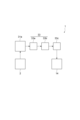
- FIG. 1 is a diagram for explaining a configuration example of a plasma processing system.
- FIG. 1 is a diagram for explaining a configuration example of an inductively coupled plasma processing apparatus.
- 1 is a diagram showing a configuration of a power supply system and a control system in a plasma processing apparatus according to an exemplary embodiment;
- 1 is a diagram showing a configuration of a first RF generating unit of a plasma processing apparatus according to an exemplary embodiment;
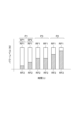
- FIG. 2 is a diagram showing time variations of multiple frequency components of a source RF signal generated by a first RF generating unit in one exemplary embodiment.
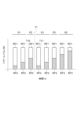
- FIG. 11 is a diagram showing time variations of multiple frequency components of a source RF signal generated by a first RF generating unit in another exemplary embodiment.
- FIG. 1 is a diagram for explaining a configuration example of a plasma processing system.
- FIG. 1 is a diagram for explaining a configuration example of an inductively coupled plasma processing apparatus.
- 1 is a diagram showing a configuration of a power supply
- 11 is a diagram showing time variations of multiple frequency components of a source RF signal generated by a first RF generating unit in yet another exemplary embodiment.
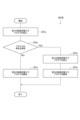
- 1 is a flow diagram of a plasma processing method according to an exemplary embodiment.
- 4 is a flow diagram of a plasma processing method according to another exemplary embodiment.
- FIG. 1 is a diagram for explaining an example of the configuration of a plasma processing system.
- the plasma processing system includes a plasma processing device 1 and a control unit 2.
- the plasma processing system is an example of a substrate processing system
- the plasma processing device 1 is an example of a substrate processing device.
- the plasma processing device 1 includes a plasma processing chamber 10, a substrate support unit 11, and a plasma generation unit 12.
- the plasma processing chamber 10 has a plasma processing space.
- the plasma processing chamber 10 also has at least one gas supply port for supplying at least one processing gas to the plasma processing space, and at least one gas exhaust port for exhausting gas from the plasma processing space.
- the gas supply port is connected to a gas supply unit 20 described later, and the gas exhaust port is connected to an exhaust system 40 described later.
- the substrate support unit 11 is disposed in the plasma processing space, and has a substrate support surface for supporting a substrate.
- the plasma generating unit 12 is configured to generate plasma from at least one processing gas supplied into the plasma processing space.
- the plasma formed in the plasma processing space may be capacitively coupled plasma (CCP), inductively coupled plasma (ICP), ECR plasma (Electron-Cyclotron-resonance plasma), Helicon wave excited plasma (HWP), or surface wave plasma (SWP), etc.
- various types of plasma generating units may be used, including AC (Alternating Current) plasma generating units and DC (Direct Current) plasma generating units.
- the AC signal (AC power) used in the AC plasma generating unit has a frequency in the range of 100 kHz to 10 GHz.
- AC signals include RF (Radio Frequency) signals and microwave signals.
- the RF signal has a frequency in the range of 100 kHz to 150 MHz.
- the control unit 2 processes computer-executable instructions that cause the plasma processing apparatus 1 to perform the various steps described in this disclosure.
- the control unit 2 may be configured to control each element of the plasma processing apparatus 1 to perform the various steps described herein. In one embodiment, a part or all of the control unit 2 may be included in the plasma processing apparatus 1.
- the control unit 2 may include a processing unit 2a1, a storage unit 2a2, and a communication interface 2a3.
- the control unit 2 is realized, for example, by a computer 2a.
- the processing unit 2a1 may be configured to perform various control operations by reading a program from the storage unit 2a2 and executing the read program. This program may be stored in the storage unit 2a2 in advance, or may be acquired via a medium when necessary.
- the acquired program is stored in the storage unit 2a2 and is read from the storage unit 2a2 by the processing unit 2a1 and executed.
- the medium may be various storage media readable by the computer 2a, or may be a communication line connected to the communication interface 2a3.
- the processing unit 2a1 may be a CPU (Central Processing Unit).
- the memory unit 2a2 may include a RAM (Random Access Memory), a ROM (Read Only Memory), a HDD (Hard Disk Drive), a SSD (Solid State Drive), or a combination of these.
- the communication interface 2a3 may communicate with the plasma processing device 1 via a communication line such as a LAN (Local Area Network).
- FIG. 1 is a diagram for explaining an example of the configuration of an inductively coupled plasma processing device.
- the inductively coupled plasma processing apparatus 1 includes a plasma processing chamber 10, a gas supply unit 20, a power supply 30, and an exhaust system 40.
- the plasma processing chamber 10 includes a dielectric window 101.
- the plasma processing apparatus 1 also includes a substrate support unit 11, a gas introduction unit, and an antenna 14.
- the substrate support unit 11 is disposed within the plasma processing chamber 10.
- the antenna 14 is disposed on or above the plasma processing chamber 10 (i.e., on or above the dielectric window 101).
- the plasma processing chamber 10 has a plasma processing space 10s defined by the dielectric window 101, a sidewall 102 of the plasma processing chamber 10, and the substrate support unit 11.
- the plasma processing chamber 10 is grounded.
- the substrate support 11 includes a main body 111 and a ring assembly 112.
- the main body 111 has a central region 111a for supporting the substrate W and an annular region 111b for supporting the ring assembly 112.
- a wafer is an example of a substrate W.
- the annular region 111b of the main body 111 surrounds the central region 111a of the main body 111 in a plan view.
- the substrate W is disposed on the central region 111a of the main body 111
- the ring assembly 112 is disposed on the annular region 111b of the main body 111 so as to surround the substrate W on the central region 111a of the main body 111. Therefore, the central region 111a is also called a substrate support surface for supporting the substrate W, and the annular region 111b is also called a ring support surface for supporting the ring assembly 112.
- the main body 111 includes a base 1110 and an electrostatic chuck 1111.
- the base 1110 includes a conductive member.
- the conductive member of the base 1110 may function as a bias electrode.
- the electrostatic chuck 1111 is disposed on the base 1110.
- the electrostatic chuck 1111 includes a ceramic member 1111a and an electrostatic electrode 1111b disposed within the ceramic member 1111a.
- the ceramic member 1111a has a central region 111a. In one embodiment, the ceramic member 1111a also has an annular region 111b. Note that other members surrounding the electrostatic chuck 1111, such as an annular electrostatic chuck or an annular insulating member, may have the annular region 111b.
- the ring assembly 112 may be disposed on the annular electrostatic chuck or the annular insulating member, or may be disposed on both the electrostatic chuck 1111 and the annular insulating member.
- at least one RF/DC electrode coupled to an RF power source 31 and/or a DC power source 32, which will be described later, may be disposed within the ceramic member 1111a.
- the at least one RF/DC electrode functions as a bias electrode.
- the conductive member of the base 1110 and the at least one RF/DC electrode may function as multiple bias electrodes.
- the electrostatic electrode 1111b may function as a bias electrode.
- the substrate support 11 includes at least one bias electrode.
- the ring assembly 112 includes one or more annular members.
- the one or more annular members include one or more edge rings and at least one cover ring.
- the edge rings are formed of a conductive or insulating material, and the cover rings are formed of an insulating material.
- the substrate support 11 may also include a temperature adjustment module configured to adjust at least one of the electrostatic chuck 1111, the ring assembly 112, and the substrate to a target temperature.
- the temperature adjustment module may include a heater, a heat transfer medium, a flow passage 1110a, or a combination thereof.
- a heat transfer fluid such as brine or a gas flows through the flow passage 1110a.
- the flow passage 1110a is formed in the base 1110, and one or more heaters are disposed in the ceramic member 1111a of the electrostatic chuck 1111.
- the substrate support 11 may also include a heat transfer gas supply configured to supply a heat transfer gas to a gap between the back surface of the substrate W and the central region 111a.
- the gas introduction section is configured to introduce at least one processing gas from the gas supply section 20 into the plasma processing space 10s.
- the gas introduction section includes a center gas injector (CGI) 13.
- the center gas injector 13 is disposed above the substrate support section 11 and is attached to a central opening formed in the dielectric window 101.
- the center gas injector 13 has at least one gas supply port 13a, at least one gas flow path 13b, and at least one gas inlet port 13c.
- the processing gas supplied to the gas supply port 13a passes through the gas flow path 13b and is introduced into the plasma processing space 10s from the gas inlet port 13c.
- the gas introduction section may include one or more side gas injectors (SGI) attached to one or more openings formed in the sidewall 102.
- SGI side gas injectors
- the gas supply unit 20 may include at least one gas source 21 and at least one flow controller 22.
- the gas supply unit 20 is configured to supply at least one process gas from a corresponding gas source 21 to the gas inlet via a corresponding flow controller 22.
- Each flow controller 22 may include, for example, a mass flow controller or a pressure-controlled flow controller.
- the gas supply unit 20 may include at least one flow modulation device that modulates or pulses the flow rate of the at least one process gas.
- the power supply 30 includes an RF power supply 31 coupled to the plasma processing chamber 10 via at least one impedance matching circuit.
- the RF power supply 31 is configured to supply at least one RF signal (RF power) to at least one bias electrode and the antenna 14. This causes a plasma to be formed from at least one processing gas supplied to the plasma processing space 10s.
- the RF power supply 31 can function as at least a part of the plasma generating unit 12.
- a bias RF signal to at least one bias electrode, a bias potential is generated on the substrate W, and ions in the formed plasma can be attracted to the substrate W.
- the RF power supply 31 includes a first RF generating unit 31a and a second RF generating unit 31b.
- the first RF generating unit 31a is coupled to the antenna 14 via at least one impedance matching circuit and configured to generate a source RF signal (source RF power) for plasma generation.
- the source RF signal has a frequency in the range of 10 MHz to 150 MHz.
- the first RF generating unit 31a may be configured to generate multiple source RF signals having different frequencies. The generated one or more source RF signals are supplied to the antenna 14.
- the second RF generating unit 31b is coupled to at least one bias electrode via at least one impedance matching circuit and configured to generate a bias RF signal (bias RF power).
- the frequency of the bias RF signal may be the same as or different from the frequency of the source RF signal.
- the bias RF signal has a lower frequency than the frequency of the source RF signal.
- the bias RF signal has a frequency in the range of 100 kHz to 60 MHz.
- the second RF generating unit 31b may be configured to generate multiple bias RF signals having different frequencies.
- the generated one or more bias RF signals are supplied to at least one bias electrode.
- at least one of the source RF signal and the bias RF signal may be pulsed.
- the power supply 30 may also include a DC power supply 32 coupled to the plasma processing chamber 10.
- the DC power supply 32 includes a bias DC generator 32a.
- the bias DC generator 32a is connected to at least one bias electrode and configured to generate a bias DC signal. The generated bias DC signal is applied to the at least one bias electrode.
- the bias DC signal may be pulsed.
- a sequence of voltage pulses is applied to at least one bias electrode.
- the voltage pulses may have a rectangular, trapezoidal, triangular, or combination of these pulse waveforms.
- a waveform generator for generating a sequence of voltage pulses from the DC signal is connected between the bias DC generator 32a and at least one bias electrode.
- the bias DC generator 32a and the waveform generator constitute a voltage pulse generator.
- the voltage pulses may have a positive polarity or a negative polarity.
- the sequence of voltage pulses may include one or more positive voltage pulses and one or more negative voltage pulses within one period.
- the bias DC generator 32a may be provided in addition to the RF power source 31 or may be provided instead of the second RF generator 31b.
- the antenna 14 includes one or more coils.
- the antenna 14 may include an outer coil and an inner coil arranged coaxially.
- the RF power source 31 may be connected to both the outer coil and the inner coil, or to either the outer coil or the inner coil.
- the same RF generator may be connected to both the outer coil and the inner coil, or separate RF generators may be connected separately to the outer coil and the inner coil.
- the exhaust system 40 may be connected to, for example, a gas exhaust port 10e provided at the bottom of the plasma processing chamber 10.
- the exhaust system 40 may include a pressure regulating valve and a vacuum pump. The pressure in the plasma processing space 10s is adjusted by the pressure regulating valve.
- the vacuum pump may include a turbomolecular pump, a dry pump, or a combination thereof.
- FIG. 3 is a diagram showing the configuration of a power supply system and a control system in a plasma processing apparatus according to an exemplary embodiment.
- the first RF generating unit 31a is configured to generate an RF signal, i.e., a source RF signal, which is supplied to generate plasma in the chamber 10. Details of the source RF signal generated by the first RF generating unit 31a will be described later.
- the first RF generating unit 31a is electrically connected to the antenna 14 via a matching unit 33c.
- the matching device 33c includes an impedance matching circuit having a variable impedance.
- the matching device 33c is connected between the first RF generating unit 31a and the antenna 14.
- the matching device 33c is configured to match the load impedance to the output impedance of the first RF generating unit 31a.
- the impedance of the impedance matching circuit of the matching device 33c can be controlled by the control unit 2.
- the plasma processing apparatus 1 may further include a plasma state monitor 33.
- the plasma state monitor 33 is configured to monitor the state of the plasma generated in the chamber 10.
- the plasma state monitor 33 may include a directional coupler 33a and/or a voltage/current sensor 33b.
- the directional coupler 33a determines the power level of the forward wave of the source RF signal generated by the first RF generating unit 31a and the power level of the reflected wave of the source RF signal.
- the directional coupler 33a may determine the reflectance of the source RF signal. The reflectance is determined as the ratio of the power level of the reflected wave to the power level of the forward wave.
- the directional coupler 33a may notify the control unit 2 of the power levels and reflectance of the forward wave and the reflected wave.
- the power level and reflectance of the reflected wave are each large when plasma is lost in the chamber 10. Therefore, the power level and reflectance of the reflected wave each represent the state of the plasma.
- the directional coupler 33a may be connected between the first RF generating unit 31a and the matching unit 33c.
- the directional coupler 33a may be integrated with the first RF generating unit 31a.
- the voltage/current sensor 33b measures the voltage and current of the source RF signal supplied to the antenna 14.
- the voltage/current sensor 33b may determine the reflection coefficient of the source RF signal from the measured voltage and current.
- the voltage/current sensor 33b may notify the control unit 2 of the determined reflection coefficient.
- the reflection coefficient becomes large when the plasma is lost in the chamber 10. Therefore, the reflection coefficient represents the state of the plasma.
- the source RF signal generated by the first RF generating unit 31a includes one or both of a first frequency component RF1 and a second frequency component RF2.
- the first frequency component RF1 is a frequency component for igniting plasma in the chamber 10.
- the second frequency component RF2 is a frequency component for maintaining the ignited plasma.
- the first frequency component RF1 has a first frequency f1.
- the first frequency f1 may be a resonant frequency of the antenna 14 when plasma is not ignited in the chamber 10.
- the first frequency f1 may be a frequency optimized to suppress reflection of the source RF signal when plasma is not ignited in the chamber 10.
- the first frequency f1 may be a frequency set to match the load impedance when plasma is not ignited in the chamber 10 to the output impedance of the first RF generating unit 31a.
- the first frequency f1 may be set based on the design of the plasma processing apparatus 1 and the type of gas introduced into the chamber 10.
- the second frequency component RF2 has a second frequency f2.
- the second frequency f2 may be a resonant frequency of the antenna 14 when the generated plasma is present in the chamber 10.
- the second frequency f2 may be a frequency optimized to suppress reflection of the source RF signal when the generated plasma is present in the chamber 10.
- the second frequency f2 may be a frequency set to match the load impedance when the generated plasma is present in the chamber 10 to the output impedance of the first RF generating unit 31a.
- the second frequency f2 may be determined by sweeping the frequency of the source RF signal after a plasma is ignited in the chamber 10.
- the second frequency f2 may be determined as the frequency that minimizes the degree of reflection as a result of sweeping the frequency of the source RF signal.
- the degree of reflection may be evaluated by the power level, reflectivity, or reflection coefficient of the reflected wave.
- the second frequency f2 may be determined by supplying a source RF signal including multiple frequency components to the antenna 14 after a plasma is ignited in the chamber 10.
- the multiple frequency components have multiple frequencies that are different from one another.
- the second frequency f2 may be determined as a frequency among the multiple frequency components that minimizes the degree of reflection.
- the degree of reflection may be evaluated by the power level, reflectivity, or reflection coefficient of the reflected wave.
- the second frequency f2 may be set from known data.
- the second frequency f2 may be identified by performing the process of the first example or the process of the second example described above in a frequency range near the second frequency f2 used in the plasma process having the conditions closest to the current plasma process conditions.
- the difference between the first frequency f1 and the second frequency f2 may be within 5% of the first frequency f1. In one embodiment, the difference between the first frequency f1 and the second frequency f2 may be within 1 MHz.
- FIG. 4 is a diagram showing the configuration of the first RF generating section of a plasma processing apparatus according to one exemplary embodiment.
- the first RF generating section 31a includes at least one RF generating unit 50.
- the first RF generating section 31a may include multiple RF generating units 50 as the at least one RF generating unit 50.
- Each of the multiple RF generating units 50 includes a signal generator 5a, a mixer 5b, a filter 5c, and an amplifier 5d.
- the signal generator 5a outputs two signals having different frequencies to the mixer 5b.
- the frequencies of the two signals may be specified to the signal generator 5a by the control unit 2.
- the mixer 5b generates another signal having two frequency components by mixing the two signals output from the signal generator 5a.
- the frequencies of the two frequency components are the sum and difference of the frequencies of the two signals output from the signal generator 5a.
- the filter 5c selectively passes one of the two frequency components of the signal generated by the mixer 5b.
- the signal of the frequency component that passed through the filter 5c is input to the amplifier 5d.
- the amplifier 5d generates one frequency component of the source RF signal by amplifying the signal input from the filter 5c.
- the gain of the amplifier 5d may be specified to the amplifier 5d by the control unit 2. This adjusts the power level of one frequency component of the source RF signal.
- the first RF generating unit 31a may include a first RF generating unit 51 and a second RF generating unit 52 as the multiple RF generating units 50.
- the first RF generating unit 51 may generate a first frequency component RF1.
- the second RF generating unit 52 may generate a second frequency component RF2.
- a source RF signal including one or both of the first frequency component RF1 and the second frequency component RF2 is supplied to the antenna 14 via a directional coupler 33a, a voltage/current sensor 33b, and a matching unit 33c.
- the first RF generating unit 31a may further include a third RF generating unit 53 as the multiple RF generating units 50. Details of the third RF generating unit 53 will be described later.
- Figure 5 is a diagram showing the change over time of multiple frequency components of the source RF signal (RF signal) generated by the first RF generating unit in one exemplary embodiment. Note that in Figure 5, the power level of the source RF signal is constant, but the power level of the source RF signal may change.
- the control unit 2 sets the power level of the first frequency component RF1 of the source RF signal in the first period P1 to a power level greater than the power level of the second frequency component RF2 of the source RF signal.
- the power level of the second frequency component RF2 in the first period P1 may be greater than zero.
- the second frequency component RF2 has a power level greater than zero in the first period P1.
- the power level of the second frequency component RF2 in the first period P1 may be zero.
- the second frequency component RF2 has a zero power level in the first period P1.
- the power level of the first frequency component RF1 having the first frequency f1 suitable for igniting plasma is set to a relatively large power level. Therefore, the plasma processing apparatus 1 is capable of igniting plasma at high speed.
- the first period P1 may include a first sub-period SP1 and a second sub-period SP2.
- the second sub-period SP2 is a period following the first sub-period SP1.
- the control unit 2 may set the power level of the second frequency component RF2 in the second sub-period SP2 to a power level greater than the power level of the first frequency component RF1 in the first sub-period SP1.
- the power level of the second frequency component RF2 in the first sub-period SP1 may be greater than zero. In this case, the second frequency component RF2 has a power level greater than zero in the first sub-period SP1.
- the power level of the second frequency component RF2 in the first sub-period SP1 may be zero. In this case, the second frequency component RF2 has a zero power level in the first sub-period SP1.
- the control unit 2 sets the power level of the second frequency component RF2 to a power level greater than the power level of the first frequency component RF1 during the second period P2 in order to maintain the ignited plasma.
- the power level of the first frequency component RF1 in the second period P2 may be greater than zero. In this case, the first frequency component RF1 has a power level greater than zero in the second period P2. In one embodiment, the power level of the first frequency component RF1 in the second period P2 may be a minimum power level required to ignite a plasma in the chamber 10. In this case, the first frequency component RF1 has a minimum power level required to ignite a plasma in the chamber 10 in the second period P2. The minimum power level required to ignite a plasma in the chamber 10 may be predetermined. The minimum power level required to ignite a plasma in the chamber 10 is, for example, within a range of 5% to 50% of the maximum power level of the first frequency component RF1 in the first period P1.
- the power level of the second frequency component RF2 having the second frequency f2 suitable for maintaining the ignited plasma in the presence of the plasma is set to a relatively large power level. Therefore, the plasma processing apparatus 1 can efficiently maintain the plasma.
- the plasma processing apparatus 1 it is possible to change the source RF signal supplied to the antenna 14 from the source RF signal in the first period P1 to the source RF signal in the second period P2 without a transition period. Therefore, the plasma processing apparatus 1 is capable of quickly switching between plasma ignition and plasma maintenance.
- the control unit 2 may set the power level of the first frequency component RF1 in the period P3 between the first period P1 and the second period P2 to a power level lower than the power level of the first frequency component RF1 in the first period P1.
- the period P3 is a transitional period from when the plasma in the chamber 10 is ignited until it is stably maintained.
- the power level of the first frequency component RF1 in the period P3 is a power level higher than zero.
- the control unit 2 may set the power level of the second frequency component RF2 in the period P3 to a power level lower than the power level of the second frequency component RF2 in the second period P2.
- the power level of the second frequency component RF2 in the period P3 is a power level higher than zero.
- FIG. 6 is a diagram showing the time variation of multiple frequency components of a source RF signal generated by a first RF generating unit in another exemplary embodiment.
- the control unit 2 may determine the disappearance of plasma in the chamber 10 from the state of the plasma monitored by the plasma state monitor 33.
- the control unit 2 may control the first RF generating unit 31a to reignite plasma in the chamber 10 when it is determined from the state of the plasma monitored by the plasma state monitor 33 that the plasma has disappeared after the first period P1.
- the control unit 2 supplies a source RF signal including a first frequency component RF1 when it is determined that the plasma has disappeared.
- the control unit 2 may set the power level of the first frequency component RF1 of the source RF signal to a power level greater than the power level of the second frequency component RF2 of the source RF signal in order to reignite the plasma.
- the control unit 2 determines that the plasma has disappeared at time T1.
- the power level of the first frequency component RF1 of the source RF signal is equal to or less than the power level of the second frequency component RF2 of the source RF signal.
- Time T10 is included in the period P3 between the first period P1 and the second period P2.
- time T11 which is after time T1, the power level of the first frequency component RF1 of the source RF signal is greater than the power level of the second frequency component RF2 of the source RF signal.
- Time T11 is included in the first period P1.
- a source RF signal including a first frequency component RF1 having a first frequency f1 suitable for igniting the plasma is supplied. Therefore, according to the plasma processing apparatus 1, it is possible to quickly re-ignite the plasma after the plasma has disappeared.
- FIG. 7 is a diagram showing the time change of multiple frequency components of a source RF signal generated by a first RF generating unit in yet another exemplary embodiment.
- the control unit 2 may control the first RF generating unit 31a to generate a source RF signal including a third frequency component RF3.
- the third frequency component RF3 is generated by a third RF generating unit 53.
- the source RF signal including the third frequency component RF3 is supplied to the antenna 14 via a directional coupler 33a, a voltage/current sensor 33b, and a matching unit 33c.
- the frequency f3 of the third frequency component RF3 is different from the first frequency f1 and the second frequency f2.
- the frequency f3 is a frequency suitable for maintaining an ignited plasma, similar to the second frequency f2.
- the frequency f3 may be higher than the first frequency f1 and lower than the second frequency f2.
- control unit 2 may re-ignite the plasma in the chamber 10 if it is determined from the state of the plasma monitored by the plasma state monitor 33 that the plasma has disappeared after the first period P1. After re-igniting the plasma in the chamber 10, the control unit 2 may control the first RF generating unit 31a to supply a source RF signal including the third frequency component RF3.
- the control unit 2 may control the first RF generating unit 31a to supply a source RF signal including a third frequency component RF3 instead of the second frequency component RF2.
- the control unit 2 determines that the plasma has disappeared at time T1 after the first period P1.
- the source RF signal includes the first frequency component RF1 and the second frequency component RF2.
- the source RF signal includes the third frequency component RF3 instead of the second frequency component RF2.
- Time point T11 is included in the first period P1.
- the control unit 2 may set the power level of the first frequency component RF1 of the source RF signal in the first period P1 to a power level greater than the power level of the third frequency component RF3 of the source RF signal in order to ignite the plasma in the chamber 10.
- the power level of the third frequency component RF3 in the first period P1 is greater than zero.
- the control unit 2 may set the power level of the third frequency component RF3 in the second period P2 to a power level greater than the power level of the first frequency component RF1 in order to maintain the ignited plasma.
- a source RF signal including a third frequency component RF3 is supplied after the plasma is extinguished.
- the third frequency component RF3 has a frequency different from the second frequency f2 of the second frequency component, which is set to a relatively large power level when the plasma is extinguished. Therefore, the plasma processing apparatus 1 is easily able to re-ignite the plasma after the plasma is extinguished.
- FIG. 8 is a flow chart of a plasma processing method according to one exemplary embodiment.
- the plasma processing method shown in FIG. 8 (hereinafter, referred to as "method MTA") can be performed with a substrate placed on a substrate support 11.
- Each part of the plasma processing apparatus 1 can be controlled by a control unit 2 to perform each step of method MTA.
- step STa a source RF signal including a first frequency component RF1 is supplied from the first RF generating unit 31a to the antenna 14 during a first period P1 to ignite a plasma in the chamber 10.
- step STa the power level of the first frequency component RF1 of the source RF signal is greater than the power level of the second frequency component RF2 of the source RF signal.
- the method MTA may include a step STb.
- the step STb is performed after the step STa.
- step STc in order to maintain the ignited plasma, a source RF signal having a second frequency component RF2 is supplied from the first RF generating unit 31a to the antenna 14 in the second period P2.
- the power level of the second frequency component RF2 of the source RF signal is greater than the power level of the first frequency component RF1 of the source RF signal.
- step STb is performed after step STa and before step STc. However, step STb may be performed in parallel with step STc.
- FIG. 9 is a flow chart of a plasma processing method according to another exemplary embodiment.
- the plasma processing method shown in FIG. 9 (hereinafter, referred to as "method MTB") may be performed in place of method MTA.
- method MTB will be described from the perspective of the differences with method MTA.
- Method MTB includes steps STd and STe. Steps STd and STe are performed when it is determined that the plasma has disappeared in step STb. In step STe, plasma is reignited in chamber 10. Step STe is performed after step STd. In step STe, a source RF signal including a third frequency component RF3 is supplied.
- a source RF signal including a first frequency component RF1 is provided to ignite a plasma in the chamber 10.
- the source RF signal may include a third frequency component RF3 instead of the second frequency component RF2.
- the power level of the first frequency component RF1 of the source RF signal is greater than the power level of the third frequency component RF3 of the source RF signal.
- the power level of the third frequency component RF3 of the source RF signal in step STd may be greater than zero.
- a source RF signal having a third frequency component RF3 is supplied from the first RF generating unit 31a to the antenna 14.
- the power level of the third frequency component RF3 of the source RF signal may be greater than the power level of the first frequency component RF1 of the source RF signal.
- the power level of the first frequency component RF1 in step STe may be greater than zero. In one embodiment, the power level of the first frequency component RF1 in step STe may be the minimum power level required to ignite a plasma in the chamber 10.
- the plasma processing apparatus 1 may be equipped with an optical sensor.
- the optical sensor is disposed in the chamber 10.
- the optical sensor is included in the plasma state monitor 33.
- the optical sensor monitors the emission intensity in the chamber 10.
- the emission intensity represents the state of the plasma.
- the plasma state monitor 33 notifies the control unit 2 of the emission intensity.
- the control unit 2 determines the ignition and extinction of the plasma from the emission intensity in the chamber 10.
- the first RF generating unit 31a may include only a single RF generating unit 50.
- the first RF generating unit 31a may generate a source RF signal including only the first frequency component RF1 in the first period P1 by using the single RF generating unit 50. In this case, the power level of the second frequency component RF2 in the first period P1 is zero.
- the first RF generating unit 31a may generate a source RF signal including only the second frequency component RF2 in the second period P2 by using the single RF generating unit 50. In this case, the power level of the first frequency component RF1 in the second period P2 is zero.
- a chamber a substrate support disposed within the chamber; an antenna disposed above the substrate support; an RF generator electrically connected to the antenna and configured to generate an RF signal including one or both of a first frequency component for igniting a plasma in the chamber and a second frequency component for sustaining the ignited plasma, the first frequency component having a first frequency and the second frequency component having a second frequency that is a matching frequency different from the first frequency;
- a control unit Equipped with The control unit controls the RF generation unit, setting a power level of the first frequency component of the RF signal to a power level greater than a power level of the second frequency component of the RF signal during a first time period to ignite the plasma in the chamber; setting a power level of the second frequency component of the RF signal to a power level greater than a power level of the first frequency component of the RF signal during a second time period in order to maintain the ignited plasma.
- Plasma processing equipment [E2] A chamber; a substrate support disposed within the chamber; an RF generator configured to generate an RF signal including one or both of a first frequency component for igniting a plasma in the chamber and a second frequency component for sustaining the ignited plasma, the first frequency component having a first frequency and the second frequency component having a second frequency that is a matching frequency different from the first frequency; A control unit; Equipped with The control unit controls the RF generation unit, setting a power level of the first frequency component of the RF signal to a power level greater than a power level of the second frequency component of the RF signal during a first time period to ignite the plasma in the chamber; setting a power level of the second frequency component of the RF signal to a power level greater than a power level of the first frequency component of the RF signal during a second time period in order to maintain the ignited plasma.
- Plasma processing equipment [E3] the second frequency component has a power level greater than zero during the first period.
- the plasma processing apparatus according to E1 or E2.
- the first period of time includes: A first subperiod; a second subperiod after the first subperiod; the control unit is configured to control the RF generating unit to set a power level of the second frequency component in the second sub-period to a power level higher than a power level of the second frequency component in the first sub-period.
- the plasma processing apparatus according to any one of E1 to E5.
- the control unit controls the RF generation unit, setting a power level of the first frequency component in a period between the first period and the second period to a power level greater than zero and less than a power level of the first frequency component in the first period; setting a power level of the second frequency component in a period between the first period and the second period to a power level greater than zero and less than a power level of the second frequency component in the second period;
- the plasma processing apparatus according to any one of E1 to E10.
- a plasma state monitor configured to monitor a state of the plasma being generated in the chamber; the control unit is configured to control the RF generating unit to supply the RF signal including the first frequency component to re-ignite plasma in the chamber when it is determined from the state of the plasma monitored by the plasma state monitor that the plasma has been extinguished after the first period of time.
- the plasma processing apparatus according to any one of E1 to E11.
- control unit is configured, when it is determined from the state of the plasma monitored by the plasma state monitor that the plasma has been extinguished after the first period of time, to re-ignite plasma in the chamber, and then to control the RF generating unit to supply the RF signal including a third frequency component;
- the frequency of the third frequency component is different from the first frequency and the second frequency.
- [E14] (a) supplying an RF signal including a first frequency component from an RF generator to an antenna disposed above a chamber of a plasma processing apparatus during a first period in order to ignite a plasma in the chamber; (b) supplying an RF signal having a second frequency component from the RF generator to the antenna during a second time period to maintain the ignited plasma; Including, the first frequency component has a first frequency and the second frequency component has a second frequency that is a matching frequency different from the first frequency; In the method (a), a power level of the first frequency component of the RF signal is greater than a power level of the second frequency component of the RF signal; In the (b), a power level of the second frequency component of the RF signal is greater than a power level of the first frequency component of the RF signal.
- Plasma treatment method [E15] (c) if a state of the plasma monitored by a plasma state monitor determines that the plasma has been extinguished after the first period of time, providing the RF signal including the first frequency component to re-ignite a plasma in the chamber. [E16] (c) if the state of the plasma monitored by a plasma state monitor indicates that the plasma has been extinguished after the first period of time, then reigniting a plasma in the chamber and then providing the RF signal including a third frequency component; The frequency of the third frequency component is different from the first frequency and the second frequency.
- 1...plasma processing apparatus 2...control section, 10...chamber, 11...substrate support section, 14...antenna, 31a...first RF generating section (RF generating section), 33...plasma state monitor, RF1...first frequency component, RF2...second frequency component, RF3...third frequency component, f1...first frequency, f2...second frequency, f3...third frequency, P1...first period, P2...second period, SP1...first sub-period, SP2...second sub-period.
Landscapes
- Physics & Mathematics (AREA)
- Engineering & Computer Science (AREA)
- Plasma & Fusion (AREA)
- Chemical & Material Sciences (AREA)
- Analytical Chemistry (AREA)
- Electromagnetism (AREA)
- Spectroscopy & Molecular Physics (AREA)
- Drying Of Semiconductors (AREA)
Priority Applications (4)
| Application Number | Priority Date | Filing Date | Title |
|---|---|---|---|
| JP2024571709A JPWO2024154612A1 (https=) | 2023-01-18 | 2024-01-09 | |
| CN202480007046.8A CN120570068A (zh) | 2023-01-18 | 2024-01-09 | 等离子体处理装置和等离子体处理方法 |
| KR1020257026073A KR20250135221A (ko) | 2023-01-18 | 2024-01-09 | 플라즈마 처리 장치 및 플라즈마 처리 방법 |
| US19/265,822 US20250343027A1 (en) | 2023-01-18 | 2025-07-10 | Plasma-processing apparatus and plasma-processing method |
Applications Claiming Priority (2)
| Application Number | Priority Date | Filing Date | Title |
|---|---|---|---|
| JP2023-005664 | 2023-01-18 | ||
| JP2023005664 | 2023-01-18 |
Related Child Applications (1)
| Application Number | Title | Priority Date | Filing Date |
|---|---|---|---|
| US19/265,822 Continuation US20250343027A1 (en) | 2023-01-18 | 2025-07-10 | Plasma-processing apparatus and plasma-processing method |
Publications (1)
| Publication Number | Publication Date |
|---|---|
| WO2024154612A1 true WO2024154612A1 (ja) | 2024-07-25 |
Family
ID=91955902
Family Applications (1)
| Application Number | Title | Priority Date | Filing Date |
|---|---|---|---|
| PCT/JP2024/000187 Ceased WO2024154612A1 (ja) | 2023-01-18 | 2024-01-09 | プラズマ処理装置及びプラズマ処理方法 |
Country Status (6)
| Country | Link |
|---|---|
| US (1) | US20250343027A1 (https=) |
| JP (1) | JPWO2024154612A1 (https=) |
| KR (1) | KR20250135221A (https=) |
| CN (1) | CN120570068A (https=) |
| TW (1) | TW202448216A (https=) |
| WO (1) | WO2024154612A1 (https=) |
Citations (3)
| Publication number | Priority date | Publication date | Assignee | Title |
|---|---|---|---|---|
| JPH1064696A (ja) * | 1996-08-23 | 1998-03-06 | Tokyo Electron Ltd | プラズマ処理装置 |
| WO2005031839A1 (ja) * | 2003-09-30 | 2005-04-07 | Tokyo Electron Limited | プラズマ処理システム |
| JP2016528667A (ja) * | 2013-06-17 | 2016-09-15 | アプライド マテリアルズ インコーポレイテッドApplied Materials,Incorporated | プラズマチャンバ内での高速で再現性のあるプラズマの点火及び同調のための方法 |
Family Cites Families (1)
| Publication number | Priority date | Publication date | Assignee | Title |
|---|---|---|---|---|
| JP7334102B2 (ja) | 2019-10-11 | 2023-08-28 | 株式会社ダイヘン | 高周波電源装置 |
-
2024
- 2024-01-09 JP JP2024571709A patent/JPWO2024154612A1/ja active Pending
- 2024-01-09 WO PCT/JP2024/000187 patent/WO2024154612A1/ja not_active Ceased
- 2024-01-09 CN CN202480007046.8A patent/CN120570068A/zh active Pending
- 2024-01-09 KR KR1020257026073A patent/KR20250135221A/ko active Pending
- 2024-01-10 TW TW113101047A patent/TW202448216A/zh unknown
-
2025
- 2025-07-10 US US19/265,822 patent/US20250343027A1/en active Pending
Patent Citations (3)
| Publication number | Priority date | Publication date | Assignee | Title |
|---|---|---|---|---|
| JPH1064696A (ja) * | 1996-08-23 | 1998-03-06 | Tokyo Electron Ltd | プラズマ処理装置 |
| WO2005031839A1 (ja) * | 2003-09-30 | 2005-04-07 | Tokyo Electron Limited | プラズマ処理システム |
| JP2016528667A (ja) * | 2013-06-17 | 2016-09-15 | アプライド マテリアルズ インコーポレイテッドApplied Materials,Incorporated | プラズマチャンバ内での高速で再現性のあるプラズマの点火及び同調のための方法 |
Also Published As
| Publication number | Publication date |
|---|---|
| JPWO2024154612A1 (https=) | 2024-07-25 |
| CN120570068A (zh) | 2025-08-29 |
| TW202448216A (zh) | 2024-12-01 |
| US20250343027A1 (en) | 2025-11-06 |
| KR20250135221A (ko) | 2025-09-12 |
Similar Documents
| Publication | Publication Date | Title |
|---|---|---|
| KR102038617B1 (ko) | 플라즈마 처리 방법 및 플라즈마 처리 장치 | |
| KR100849708B1 (ko) | 이중 주파수 rf 소오스를 사용한 플라즈마 생성 및 제어 | |
| JP7577093B2 (ja) | プラズマ処理システムおよびプラズマ処理方法 | |
| KR20230043767A (ko) | 플라즈마 처리 장치 및 처리 방법 | |
| KR20240028931A (ko) | 에칭 방법 및 플라즈마 처리 장치 | |
| KR20250040655A (ko) | 플라스마 처리 장치 및 플라스마 처리 방법 | |
| US20250191883A1 (en) | Plasma processing apparatus, rf system, and rf control method | |
| JP7675954B2 (ja) | プラズマ処理装置及びプラズマ処理方法 | |
| WO2024154612A1 (ja) | プラズマ処理装置及びプラズマ処理方法 | |
| TW202524960A (zh) | 電漿處理裝置及阻抗匹配方法 | |
| US20250364234A1 (en) | Anomaly detection method and plasma processing device | |
| JP7799906B2 (ja) | プラズマエッチング装置及びプラズマエッチング方法 | |
| WO2025169740A1 (ja) | プラズマ処理装置、電源システム、制御方法、及びプログラム | |
| JP2024098586A (ja) | プラズマ処理装置及び制御方法 | |
| WO2024106256A1 (ja) | プラズマ処理装置及びプラズマ処理方法 | |
| WO2024106257A1 (ja) | プラズマ処理装置及びプラズマ処理方法 | |
| WO2025057636A1 (ja) | プラズマ処理装置 | |
| TW202533280A (zh) | 電漿處理裝置及控制方法 | |
| JP2024033855A (ja) | プラズマ処理装置 | |
| JP2026027648A (ja) | 基板支持器及びプラズマ処理装置 | |
| WO2025142138A1 (ja) | プラズマ処理装置 | |
| JP2026004103A (ja) | プラズマ処理装置及びプラズマ処理方法 | |
| WO2024070580A1 (ja) | プラズマ処理装置及び電源システム | |
| WO2024018960A1 (ja) | プラズマ処理装置及びプラズマ処理方法 | |
| WO2024062804A1 (ja) | プラズマ処理装置及びプラズマ処理方法 |
Legal Events
| Date | Code | Title | Description |
|---|---|---|---|
| 121 | Ep: the epo has been informed by wipo that ep was designated in this application |
Ref document number: 24744535 Country of ref document: EP Kind code of ref document: A1 |
|
| ENP | Entry into the national phase |
Ref document number: 2024571709 Country of ref document: JP Kind code of ref document: A |
|
| WWE | Wipo information: entry into national phase |
Ref document number: 2024571709 Country of ref document: JP Ref document number: 202480007046.8 Country of ref document: CN |
|
| ENP | Entry into the national phase |
Ref document number: 1020257026073 Country of ref document: KR Free format text: ST27 STATUS EVENT CODE: A-0-1-A10-A15-NAP-PA0105 (AS PROVIDED BY THE NATIONAL OFFICE) |
|
| WWE | Wipo information: entry into national phase |
Ref document number: 1020257026073 Country of ref document: KR |
|
| NENP | Non-entry into the national phase |
Ref country code: DE |
|
| WWP | Wipo information: published in national office |
Ref document number: 202480007046.8 Country of ref document: CN |
|
| 122 | Ep: pct application non-entry in european phase |
Ref document number: 24744535 Country of ref document: EP Kind code of ref document: A1 |