WO2024154466A1 - イオン濃度測定装置、イオン濃度測定プログラム、イオン濃度測定方法、測定装置、及び、測定方法 - Google Patents
イオン濃度測定装置、イオン濃度測定プログラム、イオン濃度測定方法、測定装置、及び、測定方法 Download PDFInfo
- Publication number
- WO2024154466A1 WO2024154466A1 PCT/JP2023/043894 JP2023043894W WO2024154466A1 WO 2024154466 A1 WO2024154466 A1 WO 2024154466A1 JP 2023043894 W JP2023043894 W JP 2023043894W WO 2024154466 A1 WO2024154466 A1 WO 2024154466A1
- Authority
- WO
- WIPO (PCT)
- Prior art keywords
- ion concentration
- stable value
- sensor
- time change
- measurement
- Prior art date
- Legal status (The legal status is an assumption and is not a legal conclusion. Google has not performed a legal analysis and makes no representation as to the accuracy of the status listed.)
- Ceased
Links
Images



Classifications
-
- G—PHYSICS
- G01—MEASURING; TESTING
- G01N—INVESTIGATING OR ANALYSING MATERIALS BY DETERMINING THEIR CHEMICAL OR PHYSICAL PROPERTIES
- G01N27/00—Investigating or analysing materials by the use of electric, electrochemical, or magnetic means
-
- G—PHYSICS
- G01—MEASURING; TESTING
- G01N—INVESTIGATING OR ANALYSING MATERIALS BY DETERMINING THEIR CHEMICAL OR PHYSICAL PROPERTIES
- G01N27/00—Investigating or analysing materials by the use of electric, electrochemical, or magnetic means
- G01N27/26—Investigating or analysing materials by the use of electric, electrochemical, or magnetic means by investigating electrochemical variables; by using electrolysis or electrophoresis
-
- G—PHYSICS
- G01—MEASURING; TESTING
- G01N—INVESTIGATING OR ANALYSING MATERIALS BY DETERMINING THEIR CHEMICAL OR PHYSICAL PROPERTIES
- G01N27/00—Investigating or analysing materials by the use of electric, electrochemical, or magnetic means
- G01N27/26—Investigating or analysing materials by the use of electric, electrochemical, or magnetic means by investigating electrochemical variables; by using electrolysis or electrophoresis
- G01N27/403—Cells and electrode assemblies
-
- G—PHYSICS
- G01—MEASURING; TESTING
- G01N—INVESTIGATING OR ANALYSING MATERIALS BY DETERMINING THEIR CHEMICAL OR PHYSICAL PROPERTIES
- G01N27/00—Investigating or analysing materials by the use of electric, electrochemical, or magnetic means
- G01N27/26—Investigating or analysing materials by the use of electric, electrochemical, or magnetic means by investigating electrochemical variables; by using electrolysis or electrophoresis
- G01N27/416—Systems
Definitions
- the present invention relates to an ion concentration measuring device, an ion concentration measuring program, an ion concentration measuring method, a measuring device, and a measuring method.
- An ion concentration measuring device is immersed in a test liquid to measure the ion concentration of the test liquid.
- a test liquid to measure the ion concentration of the test liquid.
- Patent Document 1 An example of this type of ion concentration measuring device is shown in Patent Document 1, in which an electrode part is immersed in or in contact with the test liquid to generate an electromotive force between the internal liquid of the electrode part and the test liquid, and the ion concentration of the test liquid is calculated based on this electromotive force. And since this electromotive force varies depending on the temperature of the test liquid, this ion concentration measuring device performs temperature compensation based on the temperature of the test liquid when calculating the ion concentration.
- this ion concentration measuring device is known to have an unstable ion concentration for a certain time from the start of measurement when it is immersed in or in contact with the test liquid, and a waiting time is required until the ion concentration stabilizes.
- this ion concentration measuring device there is a temperature difference between the electrode unit and the test liquid when they are immersed in or in contact with each other, so a waiting time is also required until the temperature of the test liquid stabilizes. Therefore, since the ion concentration stabilizes only after these waiting times have elapsed, it takes time until a stable ion concentration can be measured.
- the measurement accuracy varies depending on the user's skill. As a result, if a waiting time is required until the temperature and ion concentration of the test liquid have stabilized as described above, depending on the user's skill, it may not be possible to determine whether the temperature and ion concentration of the test liquid have stabilized.
- the present invention was made to solve the above problems, and its main objective is to complete the concentration measurement between the start of the measurement and the time when the concentration stabilizes.
- the ion concentration measuring device of the present invention is an ion concentration measuring device for measuring the ion concentration of a test liquid, and is characterized in that it comprises an ion concentration sensor that outputs an ion concentration signal that is a signal corresponding to the ion concentration of the test liquid, and an ion concentration estimation unit that calculates a change in the ion concentration over time from the ion concentration signals at different times, and uses the change in the ion concentration over time to estimate a stable value at which the ion concentration stabilizes.
- the ion concentration measurement program according to the present invention is an ion concentration measurement program used in an ion concentration measuring device equipped with an ion concentration sensor that outputs an ion concentration signal corresponding to the ion concentration of a test liquid, and is characterized in that it provides a computer with a function as an ion concentration estimation unit that calculates a change in the ion concentration over time from the ion concentration signals at different times, and estimates a stable value at which the ion concentration stabilizes, using the change in the ion concentration over time.
- the ion concentration measurement method according to the present invention is an ion concentration measurement method used in an ion concentration measurement device equipped with an ion concentration sensor that outputs an ion concentration signal corresponding to the ion concentration of a test liquid, and is characterized in that a change in the ion concentration over time is calculated from the ion concentration signals at different times, and a stable value at which the ion concentration stabilizes is estimated using the change in the ion concentration over time.
- the time change of the ion concentration is calculated from the ion concentration signals at different times, and the stable value of the ion concentration is estimated using the time change of the ion concentration. Therefore, since the stable value of the ion concentration is estimated regardless of whether the ion concentration is actually stable or not, by using the estimated stable value as the measured value of the ion concentration, it is possible to complete the measurement of the ion concentration from the start of the measurement until the actual ion concentration stabilizes, and thus it is possible to shorten the measurement time. In addition, since the ion concentration estimation unit estimates the stable value of the ion concentration, the user does not need to judge whether the ion concentration has actually stabilized or not, and therefore the ion concentration can be measured without depending on the ability of the user.
- the ion concentration measuring device preferably further includes a temperature sensor that outputs a temperature signal that is a signal corresponding to the temperature of the test liquid, and the ion concentration estimating unit preferably calculates the change in temperature over time from the temperature signals at different times, and estimates the stable value using the change in ion concentration over time and the change in temperature over time.
- the stable value of the ion concentration is estimated using the time change in ion concentration and the time change in temperature of the test liquid, so the ion concentration can be measured between the start of measurement and when the temperature of the test liquid stabilizes.
- the stable value of the ion concentration is estimated using the time change in temperature, by compensating for the temperature of the test liquid, the stable value of the ion concentration can be estimated more accurately than if only the time change in ion concentration were used, improving measurement accuracy.
- the ion concentration measuring device further includes a degradation data storage unit that uses the ion concentration signal output from the ion concentration sensor to store degradation data indicating the degradation state of the ion concentration sensor, and it is preferable that the ion concentration estimation unit estimates the stable value using at least the change in the ion concentration over time and the degradation data.
- the ion concentration estimation unit estimates the stable value of the ion concentration using the time change in ion concentration and deterioration data, so that a stable value of the ion concentration can be obtained even when an error in the ion concentration signal occurs due to deterioration.
- the ion concentration measuring device further includes a reference data storage unit that stores reference data indicating the known ion concentration of the test liquid or the ion concentration of the test liquid measured by the ion concentration sensor, and a degradation data update unit that compares the reference data with the estimated stable value and updates the degradation data, and it is preferable that the degradation data storage unit obtains the degradation data updated by the degradation data update unit, and the ion concentration estimation unit estimates the stable value using the updated degradation data.
- the degradation data update unit updates the degradation data by comparing the reference data with the estimated stable value, so that the degradation data stored in the degradation data storage unit indicates the updated degradation of the ion concentration sensor. Therefore, the ion concentration estimation unit estimates the stable value with the degradation of the ion concentration sensor updated, so that the stable value can be estimated with high accuracy.
- the ion concentration measuring device further includes a degradation model creation unit that creates a degradation model that is a change in degradation of the ion concentration sensor over time based on the reference data and the estimated stable value, the degradation data update unit predicts and updates the degradation data based on the degradation model, the degradation data storage unit stores the degradation data predicted by the degradation data update unit, and the ion concentration estimation unit estimates the stable value using the predicted degradation data.
- a degradation model creation unit that creates a degradation model that is a change in degradation of the ion concentration sensor over time based on the reference data and the estimated stable value
- the degradation data update unit predicts and updates the degradation data based on the degradation model
- the degradation data storage unit stores the degradation data predicted by the degradation data update unit
- the ion concentration estimation unit estimates the stable value using the predicted degradation data.
- the deterioration data is predicted and updated based on the deterioration model created by the deterioration model creation unit, so the ion concentration estimation unit can estimate the ion concentration after a predetermined time has elapsed, such as the time of the next calibration, and the user can predict the calibration cycle of the ion concentration sensor based on the deterioration model. Furthermore, since the time at which the ion concentration stabilizes is determined based on the deterioration state of the ion concentration sensor, the deterioration model creation unit creates a deterioration model, so the deterioration data update unit can predict the time at which the ion concentration stabilizes and update the deterioration data.
- the ion concentration measuring device may be one that performs measurements by batch measurement, in which the device is immersed in or contacted with the test liquid for each measurement.
- the ion concentration estimation unit estimates the stable ion concentration value using the change in ion concentration over time, so that even in the case of batch measurement, ion concentration measurement can be performed between the start of measurement and when the ion concentration stabilizes.
- the ion concentration estimation unit may estimate the stable value using a least squares method based on the time changes of the ion concentration at different times.
- the stable value is estimated using the least squares method based on the time changes in the ion concentration at different times, so even if an error occurs in the ion concentration signal output by the ion concentration sensor, the error can be corrected to estimate the stable value.
- the measuring device is a measuring device that measures a first element indicating the concentration of a measured object or a related value thereof, and includes a first sensor that outputs a first element signal that is a signal corresponding to the first element, a second sensor that outputs a second element signal that is a signal corresponding to a second element that indicates a parameter different from the first element, and a stable value estimation unit that estimates a first stable value at which the first element indicates a stable value, wherein the stable value estimation unit calculates a time change of the first element from the first element signals at different times, calculates a time change of the second element from the second element signals at different times, and estimates the first stable value using the time change of the first element and the time change of the second element.
- the measurement method is also a measurement method used in a measurement device that measures a first element that indicates the concentration of a measurement target or a value related thereto, the measurement device having a first sensor that outputs a first element signal that is a signal corresponding to the first element, and a second sensor that outputs a second element signal that is a signal corresponding to a second element that indicates a parameter different from the first element, the measurement device calculates a time change of the first element from the first element signals at different times, calculates a time change of the second element from the second element signals at different times, and estimates a first stable value at which the first element is stable, using the time change of the first element and the time change of the second element.
- concentration measurement can be completed between the start of measurement and when the concentration stabilizes.
- FIG. 1 is a schematic diagram of an ion concentration measuring device according to an embodiment of the present invention.
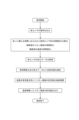
- 4 is a flowchart of a method for estimating an ion concentration in the embodiment.
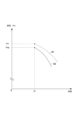
- 6 is a graph showing a method for estimating ion concentration and temperature in the embodiment.
- 13 is a graph showing a method for estimating an ion concentration in another embodiment.
- FIG. 11 is a schematic diagram of an ion concentration measuring device according to another embodiment. 13 is a flowchart of a method for estimating an ion concentration according to another embodiment.
- the ion concentration measuring device 100 measures the ion concentration of a sample liquid, and performs the measurements by batch measurement in which the device is immersed in or in contact with the sample liquid for each measurement.
- this ion concentration measuring device 100 comprises a measuring device A having an elongated shape overall, and an information processing device B consisting of a CPU and the like configured to be able to communicate with the measuring device A via wired or wireless communication.
- the measuring device A is provided with an ion concentration sensor 10 that detects the ion concentration of the test liquid, and a temperature sensor 20 that detects the temperature of the test liquid.
- the ion concentration sensor 10 is provided at the tip of the measuring device A, and is immersed in or in contact with the test liquid to output an ion concentration signal that is a signal corresponding to the ion concentration of the test liquid.
- This ion concentration sensor 10 is a composite type in which a measurement electrode, which is an ion-selective electrode, and a comparison electrode are integrated together.
- a test liquid holder 11 is formed to hold the test liquid so that the test liquid comes into contact with the surface of the ion concentration sensor 10.
- the temperature sensor 20 is provided inside the measuring device A and outputs a temperature signal that corresponds to the temperature of the test liquid.
- This temperature sensor 20 is, for example, a thermistor, and detects the test liquid held in the test liquid holder 11 to detect the temperature of the test liquid.
- the information processing device B receives the ion concentration signal and the temperature signal and processes these signals. Specifically, as shown in FIG. 1, the information processing device B has a data receiving unit 31 that receives signals from each sensor, a degradation data storage unit 32 that stores degradation data indicating the degradation state of each sensor, and an ion concentration estimation unit 33 that estimates a stable value indicating a stable value of the ion concentration. The data received by this data receiving unit 31 is output to the degradation data storage unit 32 and the ion concentration estimation unit 33.
- the degradation data storage unit 32 stores degradation data for each sensor based on the data received by the data receiving unit 31.
- Degradation data is created when each sensor is calibrated, by comparing a test liquid of known ion concentration with the ion concentration based on the signal from each sensor.
- examples of degradation data include the state of response sensitivity and asymmetry potential difference of each sensor.
- the created degradation data is stored in the degradation data storage unit 32 by input from a user or a calculation device such as a CPU. It is sufficient that degradation data for at least the ion concentration sensor 10 has been created.
- the ion concentration estimation unit 33 estimates the stable value of the ion concentration based on the signals from each sensor.
- the ion concentration estimation unit 33 acquires data from the data reception unit 31 and the degradation data storage unit 32, estimates the stable value of the ion concentration, and outputs it.
- FIG. 2 the ion concentration estimation method used by the ion concentration estimation unit 33 will be described.
- the ion concentration estimation unit 33 calculates the time change d1 in ion concentration and the time change d'1 in temperature from the ion concentration signal and temperature signal at different times. Specifically, the ion concentration estimation unit 33 obtains the ion concentration signal and temperature signal at time t1 from the data receiving unit 31, and calculates the ion concentration C1 and temperature F1 from these signals. The ion concentration estimation unit 33 also calculates the ion concentration C2 and temperature F2 at time t2 in a similar manner.
- the ion concentration estimation unit 33 calculates the time change d1 in ion concentration and the time change d'1 in temperature from time t1 to t2 by subtracting and dividing the ion concentration C1 and temperature F1 at time t1 from the ion concentration C2 and temperature F2 at time t2, respectively.
- the ion concentration estimation unit 33 acquires the deterioration data of the ion concentration sensor 10 and the deterioration data of the temperature sensor 20 from the deterioration data storage unit 32. Note that the ion concentration estimation unit 33 may acquire each deterioration data before calculating each time change, or may not acquire the deterioration data of each sensor.
- the ion concentration estimation unit 33 estimates a stable ion concentration value Cs at which the ion concentration is stable, based on the time change d1 of the ion concentration and the deterioration data of the ion concentration sensor 10.
- the ion concentration estimation unit 33 also estimates a stable temperature value Fs at which the temperature of the test liquid is stable, based on the time change d'1 of the temperature and the deterioration data of the temperature sensor 20.
- the stable ion concentration value Cs and stable temperature value Fs in this embodiment refer to the ion concentration and temperature when the difference between the ion concentration and temperature measured by each sensor is less than a predetermined value.
- the ion concentration estimation unit 33 uses a least squares method, such as the Levenberg-Marquardt method or the recursive least squares method, to create a prediction model that indicates a prediction of the change in ion concentration and temperature over time from the change in ion concentration over time d1 and the change in temperature over time d'1. Specifically, when creating a prediction model, the ion concentration estimation unit 33 calculates the change rate of the ion concentration and the change rate of the temperature from the change in ion concentration over time d1 and the change in temperature over time d'1.
- a least squares method such as the Levenberg-Marquardt method or the recursive least squares method
- the ion concentration estimation unit 33 calculates the time ts at which the change rates are estimated to stabilize based on the deterioration data of each sensor, and creates a prediction model of the ion concentration and temperature up to the time ts. Based on this prediction model and the deterioration data of each sensor, the ion concentration estimation unit 33 estimates a stable ion concentration value Cs indicating the ion concentration at time ts and a stable temperature value Fs indicating the temperature at time ts.
- the ion concentration estimation unit 33 performs temperature compensation on the stable ion concentration value Cs based on the estimated stable temperature value Fs, and calculates a compensated stable value Cf, which is the temperature-compensated stable value of the ion concentration. After that, the ion concentration estimation unit 33 transmits the compensated stable value Cf to the display unit 40, such as a display.
- the ion concentrations C1 and C2 are calculated based on the ion concentration signals at different times t1 and t2, and the stable ion concentration value Cs is estimated using the time change d1 of the ion concentration calculated from the ion concentrations C1 and C2. Therefore, the stable ion concentration value Cs is estimated regardless of whether the ion concentration is stable or not, so that the measurement of the ion concentration can be completed in the transition state from the start of the measurement until the ion concentration stabilizes.
- the ion concentration estimation unit 33 estimates the stable ion concentration value Cs, the user does not need to determine whether the ion concentration has stabilized. Therefore, the ion concentration can be measured without depending on the ability of the user.
- the ion concentration estimation unit 33 estimates the stable ion concentration value Cs using the ion concentrations C1 and C2 and the degradation data, but it is sufficient that the stable ion concentration value Cs is estimated from at least the ion concentrations C1 and C2.
- the ion concentration estimation unit 33 performs temperature compensation on the stable ion concentration value Cs based on the estimated stable temperature value Fs, but it is not necessary to perform temperature compensation on the stable ion concentration value Cs. In this case, the ion concentration estimation unit 33 estimates the stable ion concentration value Cs from the ion concentrations C1 and C2, and outputs the stable ion concentration value Cs to the display unit 40.
- the ion concentration and temperature are calculated from the ion concentration signal and temperature signal corresponding to times t1 and t2, but the ion concentration and temperature may be calculated from each signal at different times.
- the ion concentration may be calculated from the ion concentration signal at times t1 and t2
- the temperature of the test liquid may be calculated from the temperature signal at times t'1 and t'2 that are different from times t1 and t2.
- the estimated stable temperature value Fs is used to perform temperature compensation for the estimated stable ion concentration value Cs, but the timing for performing temperature compensation is not limited to this.
- the ion concentration estimation unit 33 may first estimate the stable temperature value Fs, perform temperature compensation for the ion concentrations C1 and C2 corresponding to each ion concentration signal, and then calculate the stable ion concentration value Cs.
- the ion concentration estimation unit 33 estimates based on the time change in ion concentration d1, the time change in temperature of the test liquid d'1, and the degradation data, but it may also estimate based on other parameters that indicate the electrochemical properties of the test liquid. For example, the ion concentration estimation unit 33 may also estimate based on the time change in the salt concentration of the test liquid.
- the ion concentration estimation unit 33 estimates the stable value Cs of the ion concentration from the ion concentrations C1 and C2 at two different times t1 and t2.
- the stable value Cs of the ion concentration may be estimated from the ion concentrations at three or more times.
- the ion concentration estimation unit 33 may calculate the time change d2 of the ion concentration at times t2 and t3 in addition to the time change d1 of the ion concentration at times t1 and t2, create a prediction model from the time changes d1 and d2 of the ion concentration, and estimate the stable value of the ion concentration.
- the ion concentration estimation unit 33 may create a prediction model from each of the time changes d1 and d2 of the ion concentration, and calculate the stable value of the ion concentration corresponding to each prediction model. In this way, even if an error occurs in the ion concentration signal output by the ion concentration sensor, the time change of the ion concentration is calculated using other times, so that the error can be corrected to estimate the stable value.
- the ion concentration measuring device 100 may further include a reference data storage unit 34 that stores reference data indicating a known ion concentration of the test liquid or an ion concentration of the test liquid measured by the ion concentration sensor 10, and a degradation data update unit 35 that compares the reference data with each estimated stable value and updates the degradation data.
- the reference data may be, for example, the ion concentration Ci when the ion concentration sensor 10 is calibrated, or the ion concentration Ci measured by the ion concentration sensor 10, and the reference data storage unit 34 stores the ion concentration Ci.
- the method of updating the degradation data is as shown in FIG. 6. Specifically, when the stable ion concentration value Cs is output by the ion concentration estimation unit 33, the degradation data update unit 35 compares the response sensitivity of the ion concentration sensor 10 based on the ion concentration Ci in the reference data storage unit 34 and the stable ion concentration value Cs. If the difference in response sensitivity is within the reference range, the degradation data update unit 35 updates the degradation data, outputs it to the degradation data storage unit 32, and ends the measurement. If the difference in response sensitivity is outside the reference range, the ion concentration sensor 10 is replaced and the measurement ends. In this way, the ion concentration estimation unit 33 uses the updated degradation data in the next measurement, so that the stable value can be estimated with high accuracy.
- the ion concentration measuring device 100 may be configured to further include a degradation model creation unit 36 that creates a degradation model that represents the change in degradation of the ion concentration sensor 10 over time based on the reference data and the estimated stable value Cs of the ion concentration.
- the degradation data update unit 35 updates the degradation data based on the created degradation model.
- the ion concentration estimation unit 33 estimates the ion concentration based on the predicted degradation data.
- the degradation model creation unit 36 creates a degradation model D1 that indicates the change over time in the sensitivity of the ion concentration sensor 10 in the reference data. Then, when the estimated stable value Cs is output at time t1, the degradation model creation unit 36 compares the sensitivity Y1 of the ion concentration sensor 10 in the reference data with the sensitivity Y1a of the ion concentration sensor 10 at the estimated stable value Cs, and creates a new degradation model D2.
- the degradation model D2 may be created by, for example, calculating the ratio ⁇ of the sensitivity Y1a to the sensitivity Y1, and multiplying the degradation model D1 by this ratio. Note that the degradation model is not limited to the change over time in the sensitivity of the ion concentration sensor 10, but may also be a change over time in the improper potential of the ion concentration sensor 10.
- the degradation data update unit 35 predicts and updates the degradation data, for example, at time ts when the ion concentration stabilizes, based on the new degradation model D2.
- the updated degradation data is stored in the degradation data storage unit 32, and the ion concentration estimation unit 33 uses the updated degradation data to estimate the stable value Cs of the ion concentration.
- the ion concentration estimation unit 33 can estimate the ion concentration after a predetermined time has elapsed, and the user can predict the calibration cycle of the ion concentration sensor 10 based on the deterioration model. Furthermore, since the time at which the ion concentration stabilizes is estimated based on the deterioration data of the ion concentration sensor 10, the deterioration model creation unit 36 creates a deterioration model, and the deterioration data update unit 35 can predict the time at which the ion concentration stabilizes and update the deterioration data.
- the ion concentration of the test liquid is measured, but the parameter to be measured is not limited to the ion concentration, and may be a first element indicating the concentration of the object to be measured or a related value thereof.
- the measurement device for measuring the first element includes a first sensor that outputs a first element signal that is a signal corresponding to the first element, a second sensor that outputs a second element signal that is a signal corresponding to a second element that indicates a parameter different from the first element, and a stable value estimation unit that estimates a first stable value at which the first element indicates a stable value, and the stable value estimation unit calculates the time change of the first element from the first element signal at different times, calculates the time change of the second element from the second element signal at different times, and estimates the first stable value using the time change of the first element and the time change of the second element.
- the measurement object constituting the first element may be any of gas, liquid, or solid.
- the parameters include the concentration of exhaust gas, the concentration of process gas, the concentration of air, the concentration of gas components in dust, or the concentration of elemental components, specifically, the concentrations of NOx , SOx , CO2 , THC, NH3 , NH4 , CO, CH4 , PM2.5, O3 , and H2 .
- the parameters include total nitrogen, total phosphorus, organic oxygen concentration (TOC), biochemical oxygen demand (BOD), chemical oxygen demand (COD), liquid electrical conductivity, liquid electrical conductivity, liquid electrical resistivity, liquid turbidity, liquid color, residual chlorine concentration, peracetic acid concentration, silica concentration, and dissolved gases such as dissolved oxygen and dissolved carbon dioxide.
- the parameters include elemental concentration or component concentration in the solid.
- the shape of the object to be measured may be different from the shape at the time of sampling.
- parameters indicating the second element include temperature, air temperature, pressure, humidity, light intensity, illuminance, voltage value, current value, pulse count, carbon dioxide concentration, impedance, or flow rate.
- concentration measurement can be completed between the start of measurement and when the concentration stabilizes.
- Reference Signs List 100 Ion concentration measuring device 10: Ion concentration sensor 20: Temperature sensor 32: Deterioration data storage unit 33: Ion concentration estimation unit 34: Reference data storage unit 35: Deterioration data update unit Cs: Stable value of ion concentration d1: Time change in ion concentration d'1: Time change in temperature
Landscapes
- Chemical & Material Sciences (AREA)
- Life Sciences & Earth Sciences (AREA)
- Health & Medical Sciences (AREA)
- Physics & Mathematics (AREA)
- Chemical Kinetics & Catalysis (AREA)
- Electrochemistry (AREA)
- Analytical Chemistry (AREA)
- Biochemistry (AREA)
- General Health & Medical Sciences (AREA)
- General Physics & Mathematics (AREA)
- Immunology (AREA)
- Pathology (AREA)
- Molecular Biology (AREA)
- Investigating Or Analyzing Materials By The Use Of Electric Means (AREA)
Priority Applications (1)
| Application Number | Priority Date | Filing Date | Title |
|---|---|---|---|
| JP2024571648A JPWO2024154466A1 (https=) | 2023-01-16 | 2023-12-07 |
Applications Claiming Priority (2)
| Application Number | Priority Date | Filing Date | Title |
|---|---|---|---|
| JP2023004365 | 2023-01-16 | ||
| JP2023-004365 | 2023-01-16 |
Publications (1)
| Publication Number | Publication Date |
|---|---|
| WO2024154466A1 true WO2024154466A1 (ja) | 2024-07-25 |
Family
ID=91955548
Family Applications (1)
| Application Number | Title | Priority Date | Filing Date |
|---|---|---|---|
| PCT/JP2023/043894 Ceased WO2024154466A1 (ja) | 2023-01-16 | 2023-12-07 | イオン濃度測定装置、イオン濃度測定プログラム、イオン濃度測定方法、測定装置、及び、測定方法 |
Country Status (2)
| Country | Link |
|---|---|
| JP (1) | JPWO2024154466A1 (https=) |
| WO (1) | WO2024154466A1 (https=) |
Citations (10)
| Publication number | Priority date | Publication date | Assignee | Title |
|---|---|---|---|---|
| JPH04326055A (ja) * | 1991-04-25 | 1992-11-16 | Komatsu Ltd | 化学量センサの温度補正方法 |
| JPH0573568U (ja) * | 1992-03-10 | 1993-10-08 | 日本電子機器株式会社 | アルコール濃度検出装置 |
| JPH08220062A (ja) * | 1995-02-08 | 1996-08-30 | A & T:Kk | 電解質溶液の測定方法および電解質測定装置 |
| JP2001142722A (ja) * | 1999-11-11 | 2001-05-25 | Oki Electric Ind Co Ltd | 情報処理装置 |
| JP2004117085A (ja) * | 2002-09-25 | 2004-04-15 | Tanita Corp | 電気化学測定装置 |
| JP2012036761A (ja) * | 2010-08-04 | 2012-02-23 | Toyota Motor Corp | 燃料性状検出装置 |
| JP2012211871A (ja) * | 2011-03-31 | 2012-11-01 | Horiba Ltd | イオン濃度測定電極 |
| JP2020041968A (ja) * | 2018-09-13 | 2020-03-19 | 株式会社日立ハイテクノロジーズ | 電解質濃度測定装置 |
| JP2021018141A (ja) * | 2019-07-19 | 2021-02-15 | 株式会社日立ハイテク | 分析装置及び分析方法 |
| JP2023142443A (ja) * | 2022-03-25 | 2023-10-05 | 株式会社日立ハイテク | 電解質分析装置 |
-
2023
- 2023-12-07 JP JP2024571648A patent/JPWO2024154466A1/ja active Pending
- 2023-12-07 WO PCT/JP2023/043894 patent/WO2024154466A1/ja not_active Ceased
Patent Citations (10)
| Publication number | Priority date | Publication date | Assignee | Title |
|---|---|---|---|---|
| JPH04326055A (ja) * | 1991-04-25 | 1992-11-16 | Komatsu Ltd | 化学量センサの温度補正方法 |
| JPH0573568U (ja) * | 1992-03-10 | 1993-10-08 | 日本電子機器株式会社 | アルコール濃度検出装置 |
| JPH08220062A (ja) * | 1995-02-08 | 1996-08-30 | A & T:Kk | 電解質溶液の測定方法および電解質測定装置 |
| JP2001142722A (ja) * | 1999-11-11 | 2001-05-25 | Oki Electric Ind Co Ltd | 情報処理装置 |
| JP2004117085A (ja) * | 2002-09-25 | 2004-04-15 | Tanita Corp | 電気化学測定装置 |
| JP2012036761A (ja) * | 2010-08-04 | 2012-02-23 | Toyota Motor Corp | 燃料性状検出装置 |
| JP2012211871A (ja) * | 2011-03-31 | 2012-11-01 | Horiba Ltd | イオン濃度測定電極 |
| JP2020041968A (ja) * | 2018-09-13 | 2020-03-19 | 株式会社日立ハイテクノロジーズ | 電解質濃度測定装置 |
| JP2021018141A (ja) * | 2019-07-19 | 2021-02-15 | 株式会社日立ハイテク | 分析装置及び分析方法 |
| JP2023142443A (ja) * | 2022-03-25 | 2023-10-05 | 株式会社日立ハイテク | 電解質分析装置 |
Also Published As
| Publication number | Publication date |
|---|---|
| JPWO2024154466A1 (https=) | 2024-07-25 |
Similar Documents
| Publication | Publication Date | Title |
|---|---|---|
| Dickson et al. | Reference materials for oceanic CO2 analysis: a method for the certification of total alkalinity | |
| US8063644B2 (en) | Impedance measurement of a pH electrode | |
| RU2009101335A (ru) | Система и способ для измерения анализируемого вещества в пробе | |
| ATE393911T1 (de) | Biosensorsystem | |
| CN108918636B (zh) | 测量装置 | |
| JP2013539036A5 (https=) | ||
| US7366626B2 (en) | Calibration method and zirconia-type oxygen analyzer using this method | |
| CN101346618A (zh) | 实验参考方法中的标定 | |
| JP5480108B2 (ja) | pHの測定方法 | |
| JP6510046B2 (ja) | 新規較正方法 | |
| JP2010261895A (ja) | 溶液中微量成分の濃度測定方法及び濃度測定装置 | |
| JP2006017697A (ja) | ダブルスロットバイオセンサの測定方法 | |
| WO2024154466A1 (ja) | イオン濃度測定装置、イオン濃度測定プログラム、イオン濃度測定方法、測定装置、及び、測定方法 | |
| JP6866337B2 (ja) | クレアチニン濃度測定装置の較正方法 | |
| DE60220288D1 (de) | Bestimmung der Genauigkeit eines Probevolumens in Biosensoren | |
| KR20220100487A (ko) | Eis 측정 및 알고리즘 방식을 통한 전기화학 전극센서 트랜스듀서의 자동 교정 방법, 수명 진단 방법, 및 양불 진단 방법 | |
| WO2022162126A1 (en) | Electrochemical measurement with additional reference measurement | |
| RU2855362C1 (ru) | Способ и система определения концентрации летучих компонентов водного раствора сточных вод по их следам в воздухе | |
| US10139363B2 (en) | BHF solution concentration measurement device and BHF solution concentration measurement method | |
| CN113030031A (zh) | 氧浓度测试方法、氧浓度测试装置和荧光氧传感器 | |
| US12607598B2 (en) | Method and system for calibrating a sensor during real-time operational use | |
| CN105044159B (zh) | 电解质分析仪的测试方法 | |
| CN120891060B (zh) | 一种基于选择性系数校正的氯离子探头校准方法 | |
| Nussbaum et al. | Overcoming Limitations for Ultrasensitive In Situ pH Measurements in Marine Waters while Maintaining Traceability to Primary Standards | |
| JPWO2024154466A5 (https=) |
Legal Events
| Date | Code | Title | Description |
|---|---|---|---|
| 121 | Ep: the epo has been informed by wipo that ep was designated in this application |
Ref document number: 23917677 Country of ref document: EP Kind code of ref document: A1 |
|
| WWE | Wipo information: entry into national phase |
Ref document number: 2024571648 Country of ref document: JP |
|
| NENP | Non-entry into the national phase |
Ref country code: DE |
|
| 122 | Ep: pct application non-entry in european phase |
Ref document number: 23917677 Country of ref document: EP Kind code of ref document: A1 |