WO2024143452A1 - 3-メチル-1-ブテン系重合体及びその製造方法、並びに樹脂組成物、ペレット及び成形体 - Google Patents
3-メチル-1-ブテン系重合体及びその製造方法、並びに樹脂組成物、ペレット及び成形体 Download PDFInfo
- Publication number
- WO2024143452A1 WO2024143452A1 PCT/JP2023/046871 JP2023046871W WO2024143452A1 WO 2024143452 A1 WO2024143452 A1 WO 2024143452A1 JP 2023046871 W JP2023046871 W JP 2023046871W WO 2024143452 A1 WO2024143452 A1 WO 2024143452A1
- Authority
- WO
- WIPO (PCT)
- Prior art keywords
- methyl
- group
- butene polymer
- butene
- carbon atoms
- Prior art date
- Legal status (The legal status is an assumption and is not a legal conclusion. Google has not performed a legal analysis and makes no representation as to the accuracy of the status listed.)
- Ceased
Links
Images

Classifications
-
- C—CHEMISTRY; METALLURGY
- C08—ORGANIC MACROMOLECULAR COMPOUNDS; THEIR PREPARATION OR CHEMICAL WORKING-UP; COMPOSITIONS BASED THEREON
- C08F—MACROMOLECULAR COMPOUNDS OBTAINED BY REACTIONS ONLY INVOLVING CARBON-TO-CARBON UNSATURATED BONDS
- C08F10/00—Homopolymers and copolymers of unsaturated aliphatic hydrocarbons having only one carbon-to-carbon double bond
- C08F10/14—Monomers containing five or more carbon atoms
-
- C—CHEMISTRY; METALLURGY
- C08—ORGANIC MACROMOLECULAR COMPOUNDS; THEIR PREPARATION OR CHEMICAL WORKING-UP; COMPOSITIONS BASED THEREON
- C08F—MACROMOLECULAR COMPOUNDS OBTAINED BY REACTIONS ONLY INVOLVING CARBON-TO-CARBON UNSATURATED BONDS
- C08F110/00—Homopolymers of unsaturated aliphatic hydrocarbons having only one carbon-to-carbon double bond
- C08F110/14—Monomers containing five or more carbon atoms
-
- C—CHEMISTRY; METALLURGY
- C08—ORGANIC MACROMOLECULAR COMPOUNDS; THEIR PREPARATION OR CHEMICAL WORKING-UP; COMPOSITIONS BASED THEREON
- C08F—MACROMOLECULAR COMPOUNDS OBTAINED BY REACTIONS ONLY INVOLVING CARBON-TO-CARBON UNSATURATED BONDS
- C08F4/00—Polymerisation catalysts
- C08F4/42—Metals; Metal hydrides; Metallo-organic compounds; Use thereof as catalyst precursors
- C08F4/44—Metals; Metal hydrides; Metallo-organic compounds; Use thereof as catalyst precursors selected from light metals, zinc, cadmium, mercury, copper, silver, gold, boron, gallium, indium, thallium, rare earths or actinides
- C08F4/60—Metals; Metal hydrides; Metallo-organic compounds; Use thereof as catalyst precursors selected from light metals, zinc, cadmium, mercury, copper, silver, gold, boron, gallium, indium, thallium, rare earths or actinides together with refractory metals, iron group metals, platinum group metals, manganese, rhenium technetium or compounds thereof
- C08F4/62—Refractory metals or compounds thereof
- C08F4/64—Titanium, zirconium, hafnium or compounds thereof
-
- C—CHEMISTRY; METALLURGY
- C08—ORGANIC MACROMOLECULAR COMPOUNDS; THEIR PREPARATION OR CHEMICAL WORKING-UP; COMPOSITIONS BASED THEREON
- C08L—COMPOSITIONS OF MACROMOLECULAR COMPOUNDS
- C08L23/00—Compositions of homopolymers or copolymers of unsaturated aliphatic hydrocarbons having only one carbon-to-carbon double bond; Compositions of derivatives of such polymers
- C08L23/02—Compositions of homopolymers or copolymers of unsaturated aliphatic hydrocarbons having only one carbon-to-carbon double bond; Compositions of derivatives of such polymers not modified by chemical after-treatment
- C08L23/18—Homopolymers or copolymers of hydrocarbons having four or more carbon atoms
- C08L23/20—Homopolymers or copolymers of hydrocarbons having four or more carbon atoms having four to nine carbon atoms
-
- C—CHEMISTRY; METALLURGY
- C08—ORGANIC MACROMOLECULAR COMPOUNDS; THEIR PREPARATION OR CHEMICAL WORKING-UP; COMPOSITIONS BASED THEREON
- C08F—MACROMOLECULAR COMPOUNDS OBTAINED BY REACTIONS ONLY INVOLVING CARBON-TO-CARBON UNSATURATED BONDS
- C08F2400/00—Characteristics for processes of polymerization
- C08F2400/02—Control or adjustment of polymerization parameters
-
- C—CHEMISTRY; METALLURGY
- C08—ORGANIC MACROMOLECULAR COMPOUNDS; THEIR PREPARATION OR CHEMICAL WORKING-UP; COMPOSITIONS BASED THEREON
- C08F—MACROMOLECULAR COMPOUNDS OBTAINED BY REACTIONS ONLY INVOLVING CARBON-TO-CARBON UNSATURATED BONDS
- C08F2500/00—Characteristics or properties of obtained polyolefins; Use thereof
- C08F2500/20—Activation energy or enthalpy
-
- C—CHEMISTRY; METALLURGY
- C08—ORGANIC MACROMOLECULAR COMPOUNDS; THEIR PREPARATION OR CHEMICAL WORKING-UP; COMPOSITIONS BASED THEREON
- C08F—MACROMOLECULAR COMPOUNDS OBTAINED BY REACTIONS ONLY INVOLVING CARBON-TO-CARBON UNSATURATED BONDS
- C08F2500/00—Characteristics or properties of obtained polyolefins; Use thereof
- C08F2500/34—Melting point [Tm]
-
- C—CHEMISTRY; METALLURGY
- C08—ORGANIC MACROMOLECULAR COMPOUNDS; THEIR PREPARATION OR CHEMICAL WORKING-UP; COMPOSITIONS BASED THEREON
- C08F—MACROMOLECULAR COMPOUNDS OBTAINED BY REACTIONS ONLY INVOLVING CARBON-TO-CARBON UNSATURATED BONDS
- C08F2500/00—Characteristics or properties of obtained polyolefins; Use thereof
- C08F2500/35—Crystallinity, e.g. soluble or insoluble content as determined by the extraction of the polymer with a solvent
Definitions
- the fusion enthalpy of a conventionally produced 3-methyl-1-butene polymer is at most 63 J/g, and no 3-methyl-1-butene polymer with a higher fusion enthalpy is known, nor have any attempts been made to produce such a 3-methyl-1-butene polymer. Therefore, there is room for further improvement in the mechanical strength of a molded product of a 3-methyl-1-butene polymer.
- the present invention aims to provide a 3-methyl-1-butene polymer that has high crystallinity and can improve the mechanical strength of molded articles, a method for producing the same, and a resin composition, pellets, and molded articles.
- DSC differential scanning calorimetry
- the maximum peak intensity and amorphous peak intensity are obtained from a profile obtained by X-ray diffraction, and the crystallinity is calculated from the following formula:
- Crystallinity (%) 100 ⁇ (maximum peak intensity ⁇ amorphous peak intensity)/maximum peak intensity [4]
- the maximum peak intensity and amorphous peak intensity are obtained from a profile obtained by X-ray diffraction, and the crystallinity is calculated from the following formula:
- Crystallinity (%) 100 ⁇ (maximum peak intensity ⁇ amorphous peak intensity)/maximum peak intensity[5]
- a resin composition comprising the 3-methyl-1-butene polymer according to any one of [1] to [6] above.
- Each ligand represented by formula (I) or (II) has at least two hydrogen atoms which can be removed in a bonding reaction with a metal atom, the metal compound (2), or a base.
- Ar 1 to Ar 4 are each independently a substituted or unsubstituted aryl group or a substituted or unsubstituted heteroaryl group.
- B is a bridging group having 1 to 50 atoms (however, hydrogen atoms are not included in the number).
- X and X' are both oxygen atoms.
- X'' and X''' are each independently a hydroxy group, a substituted or unsubstituted alkoxy group, or a substituted or unsubstituted aryloxy group.
- R 1 to R 4 are each independently a substituent selected from an alkyl group, an aryl group, a heteroaryl group, and a combination thereof.
- n1 to n4 are each independently an integer of 1 to 4.
- the present invention provides a 3-methyl-1-butene polymer that is highly crystalline and capable of improving the mechanical strength of molded articles, a method for producing the same, and a resin composition, pellets, and molded articles that contain the 3-methyl-1-butene polymer.
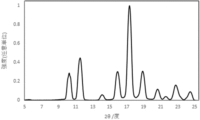
- 1 is a profile obtained by measuring the 3-methyl-1-butene polymer obtained in Example 1 that was not subjected to a melt treatment by an X-ray diffraction method.
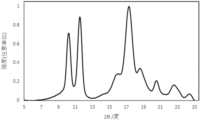
- 1 is a profile obtained by measuring the melt-treated 3-methyl-1-butene polymer obtained in Example 1 by an X-ray diffraction method.
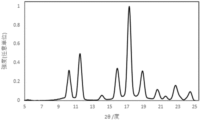
- 1 shows a profile obtained by measuring the 3-methyl-1-butene polymer obtained in Example 4, which was not subjected to a melt treatment, by an X-ray diffraction method.
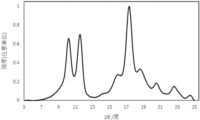
- 1 shows a profile obtained by measuring the melt-treated 3-methyl-1-butene polymer obtained in Example 4 by an X-ray diffraction method.
- 1 shows a profile obtained by measuring the 3-methyl-1-butene polymer obtained in Comparative Example 4, which was not subjected to a melt treatment, by an X-ray diffraction method.
- the 3-methyl-1-butene polymer of the present embodiment has a melting enthalpy of 65 to 100 J/g as measured by differential scanning calorimetry (DSC). A method for producing such a 3-methyl-1-butene polymer will be described later.
- the melting enthalpy of the 3-methyl-1-butene polymer is 65 to 100 J/g, which leads to very high crystallinity of the 3-methyl-1-butene polymer, and as a result, mechanical strength such as rigidity of a molded article of the 3-methyl-1-butene polymer is improved.
- the 3-methyl-1-butene polymer of this embodiment has a high melting point, and specifically, the melting point is preferably 280 to 310° C., more preferably 285 to 310° C., further preferably 290 to 310° C., and particularly preferably 295 to 310° C.
- the 3-methyl-1-butene polymer of this embodiment having a high melting point has excellent heat resistance. If the melting point is 280° C. or higher, the 3-methyl-1-butene polymer has sufficient heat resistance. On the other hand, if the melting point is 310° C. or lower, the processing temperature of the 3-methyl-1-butene polymer can be kept low, and therefore, thermal degradation during processing can be easily suppressed.
- a 3-methyl-1-butene polymer having the above melting point can be obtained by producing the 3-methyl-1-butene polymer by the production method described below. The melting point is measured by differential scanning calorimetry (DSC) under the conditions described in the Examples.
- the ⁇ -olefin is an ⁇ -olefin having 3 to 16 carbon atoms, and even more preferably, an ⁇ -olefin having 3 to 12 carbon atoms.
- the ⁇ -olefin may be linear or branched.
- the copolymer may be a random copolymer, a block copolymer, or an alternating copolymer.
- Examples of the ⁇ -olefin include propylene, 1-butene, 1-pentene, 1-hexene, 3-methyl-1-pentene, 3-ethyl-1-pentene, 4-methyl-1-pentene, 4-methyl-1-hexene, 4,4-dimethyl-1-hexene, 4,4-dimethyl-1-pentene, 4-ethyl-1-hexene, 3-ethyl-1-hexene, 1-octene, 1-decene, 1-dodecene, 1-tetradecene, 1-hexadecene, 1-octadecene, 1-eicosene, vinylcyclohexene, and vinylnorbornane.
- the ⁇ -olefin may be one type or two or more types.
- a method for producing a 3-methyl-1 - butene polymer by polymerizing 3-methyl-1-butene alone or copolymerizing 3-methyl-1-butene with ethylene or an ⁇ -olefin in the presence of a catalyst formed from a composition containing a ligand (1) represented by the following formula (I) or (II) and a metal compound (2) represented by the formula M(L) n [M is titanium, hafnium or zirconium. L is a component that forms a covalent bond, a dative bond or an ionic bond with M. n is an integer of 2 to 6] is effective.
- X'' and X''' are each independently a hydroxy group, a substituted or unsubstituted alkoxy group, a substituted or unsubstituted aryloxy group, or a substituted or unsubstituted aralkyloxy group.
- Y and Y' are each independently a hydroxy group, a substituted or unsubstituted alkoxy group, a substituted or unsubstituted aryloxy group, or a substituted or unsubstituted aralkyloxy group.
- the ⁇ -olefin copolymerized with 3-methyl-1-butene is the same as the above-mentioned ⁇ -olefin.
- the 3-methyl-1-butene polymer obtained by the production method of this embodiment is the same as the above-mentioned 3-methyl-1-butene polymer.
- aryl group may have examples include a halogen atom (F, Cl, Br, I), an alkyl group having 1 to 6 carbon atoms, an alkoxy group having 1 to 6 carbon atoms, a hydroxy group, and a substituted or unsubstituted heteroaryl group having 3 to 30 ring carbon atoms.
- halogen atom F, Cl, Br, I
- alkyl group having 1 to 6 carbon atoms an alkoxy group having 1 to 6 carbon atoms
- a hydroxy group a substituted or unsubstituted heteroaryl group having 3 to 30 ring carbon atoms.
- the alkyl group having 1 to 6 carbon atoms for the substituent may be an alkyl group having 1 to 4 carbon atoms, or an alkyl group having 1 to 3 carbon atoms.
- Examples of the alkyl group include a methyl group, an ethyl group, an n-propyl group, an isopropyl group, an n-butyl group, an isobutyl group, a t-butyl group, an n-pentyl group, and an isopentyl group.
- the alkoxy group having 1 to 6 carbon atoms for the substituent may be an alkoxy group having 1 to 4 carbon atoms, or an alkoxy group having 1 to 3 carbon atoms.
- the heteroaryl group represented by Ar 1 to Ar 4 is preferably a substituted or unsubstituted heteroaryl group having 3 to 30 ring carbon atoms, and is explained in the same manner as the heteroaryl group having 3 to 30 ring carbon atoms of the above-mentioned substituent, and the preferred embodiments are also the same.
- the arylene group having 6 to 20 ring carbon atoms is preferably an arylene group having 6 to 12 ring carbon atoms, more preferably an arylene group having 6 to 10 ring carbon atoms, and even more preferably an arylene group having 6 ring carbon atoms.
- the arylene group include a 1,2-phenylene group, a 1,3-phenylene group, a biphenyl-2,2'-diyl group, and a 1,4-phenylene group.
- the heteroarylene group having 3 to 20 ring carbon atoms is preferably a heteroarylene group having 3 to 15 ring carbon atoms, and more preferably a heteroarylene group having 5 to 15 ring carbon atoms.
- the heteroarylene group include a 2,6-pyridyl group, a xanthenediyl group, and the following divalent groups.
- groups formed by combining an alkylene group having 1 to 10 carbon atoms with an arylene group having 6 to 20 ring carbon atoms are preferred, and groups formed by combining an alkylene group having 1 to 10 carbon atoms with a heteroarylene group having 3 to 20 ring carbon atoms.
- Examples of the group formed by combining an alkylene group having 1 to 10 carbon atoms with an arylene group having 6 to 20 ring carbon atoms include the following divalent groups.
- divalent groups are preferred as groups formed by combining an alkylene group having 1 to 10 carbon atoms with an arylene group having 6 to 20 ring carbon atoms.
- examples of groups that combine an alkylene group having 1 to 10 carbon atoms with a heteroarylene group having 3 to 20 ring carbon atoms include the following divalent groups.
- the substituted or unsubstituted alkoxy group represented by X" and X"" may be an alkoxy group having 1 to 6 carbon atoms, an alkoxy group having 1 to 4 carbon atoms, or an alkoxy group having 1 to 3 carbon atoms.
- the alkoxy group include a methoxy group, an ethoxy group, an n-propoxy group, an isopropoxy group, an n-butoxy group, an isobutoxy group, a t-butoxy group, an n-pentyloxy group, and an isopentyloxy group.
- the substituent that the alkoxy group may have include a halogen atom (F, Cl, Br, I) and a hydroxy group.
- the substituted or unsubstituted aralkyloxy group represented by X" and X"" may be an aralkyloxy group having 6 to 30 ring carbon atoms, an aralkyloxy group having 6 to 20 ring carbon atoms, an aralkyloxy group having 6 to 12 ring carbon atoms, or an aralkyloxy group having 6 ring carbon atoms.
- Examples of the aralkyloxy group include a benzyloxy group.
- the substituted or unsubstituted aralkyloxy group represented by Y and Y' includes the same as the substituted or unsubstituted aralkyloxy group represented by X'' and X''', and preferred embodiments are also the same.
- Y and Y' are preferably hydroxy groups.
- tri-substituted methylium salt examples include trityl tetrakis(pentafluorophenyl)borate, tri(o-tolyl)methylium tetrakis(pentafluorophenyl)borate, tri(2,6-dimethylphenyl)methylium tetrakis(pentafluorophenyl)borate, and the like.
- organoaluminum in the boron compound-organoaluminum combination examples include trialkylaluminums such as trimethylaluminum, triethylaluminum, triisopropylaluminum, triisobutylaluminum, and trioctylaluminum; alkenylaluminums such as isoprenylaluminum; dialkylaluminum halides such as dimethylaluminum chloride and diethylaluminum chloride; alkylaluminum sesquihalides such as methylaluminum sesquichloride, isopropylaluminum sesquichloride and butylaluminum sesquichloride; alkylaluminum dihalides such as methylaluminum dichloride, isopropylaluminum dichloride and ethylaluminum dibromide; and alkylaluminum hydrides such as diethylaluminum hydride and diisobutylalum
- the holding time after the 3-methyl-1-butene polymer starts to melt is preferably 1 to 30 minutes, more preferably 1 to 15 minutes, and even more preferably 1 to 10 minutes.
- the temperature increasing conditions in the melting treatment are not particularly limited, but the temperature is preferably increased at a rate of 3 to 15° C./min until the 3-methyl-1-butene polymer melts, more preferably at a rate of 5 to 15° C./min, and even more preferably at a rate of 10° C./min.
- the polymer is cooled to solidify again.
- the cooling temperature is not particularly limited as long as it is lower than the melting point of the 3-methyl-1-butene polymer of the present embodiment, but is preferably 250° C.
- the crystallinity of the 3-methyl-1-butene polymer (Y) is preferably 96 to 100%, more preferably 97 to 100%, further preferably 98 to 100%, and particularly preferably 99 to 100%.
- the upper limit of the crystallinity of the 3-methyl-1-butene polymer (Y) may be 99% or less, 98% or less, 97% or less, or 96% or less.
- the homogeneous solution thus obtained was cooled to room temperature, and then dropped into 2 L (18 mol) of titanium tetrachloride maintained at -20°C over 1 hour. After the dropwise addition, the temperature of the resulting mixture was raised to 110°C over 2 hours, and when it reached 110°C, 42.4 mL (160 mmol) of dibutyl phthalate was added, and the temperature was maintained for 2 hours while stirring. After the reaction was completed, the mixture was left to stand and the supernatant was removed. Decane and hexane were added thereto, and the solid components were washed three times, and then resuspended in 2 L of titanium tetrachloride and heated again at 110°C for 2 hours.
- Example 4 A 3-methyl-1-butene polymer was produced in the same manner as in Example 1, except that the activator (3) was changed from TTB and TIBA to a toluene solution of methylaluminoxane (MAO) [concentration: 0.2 mol/L, MAO content: 550 ⁇ L (corresponding to 110 ⁇ mol)] and a toluene solution of 2,6-di-tert-butyl-p-cresol (BHT) [concentration: 0.1 mol/L, BHT content: 450 ⁇ L (corresponding to 45 ⁇ mol)].
- MAO methylaluminoxane
- BHT 2,6-di-tert-butyl-p-cresol
- Example 5 A 3-methyl-1-butene polymer was produced in the same manner as in Example 2, except that the catalyst was changed from Catalyst 1 to Catalyst 2 and the polymerization time was changed from 30 minutes to 10 minutes. The obtained 3-methyl-1-butene polymer was subjected to the respective measurements by the above-mentioned methods. The results are shown in Table 1.
- Example 6 A 3-methyl-1-butene polymer was produced in the same manner as in Example 5, except that the polymerization temperature was changed from 120° C. to 135° C. The obtained 3-methyl-1-butene polymer was subjected to the respective measurements by the above-mentioned methods. The results are shown in Table 1.
- the melt-treated 3-methyl-1-butene polymer has higher crystallinity than the non-melt-treated 3-methyl-1-butene polymer.
- the catalyst used in Example 1 has a higher polymerization activity than the homogeneous catalyst (metallocene catalyst) used in Comparative Examples 1 to 3 and the solid catalyst used in Comparative Example 4, and is therefore economically advantageous.
Landscapes
- Chemical & Material Sciences (AREA)
- Health & Medical Sciences (AREA)
- Chemical Kinetics & Catalysis (AREA)
- Medicinal Chemistry (AREA)
- Polymers & Plastics (AREA)
- Organic Chemistry (AREA)
- Engineering & Computer Science (AREA)
- Materials Engineering (AREA)
- Addition Polymer Or Copolymer, Post-Treatments, Or Chemical Modifications (AREA)
- Processes Of Treating Macromolecular Substances (AREA)
Priority Applications (4)
| Application Number | Priority Date | Filing Date | Title |
|---|---|---|---|
| JP2024567918A JPWO2024143452A1 (https=) | 2022-12-28 | 2023-12-27 | |
| EP23912230.2A EP4644434A1 (en) | 2022-12-28 | 2023-12-27 | 3-methyl-1-butene-based polymer, manufacturing method therefor, resin composition, pellet, and molded item |
| CN202380088858.5A CN120344571A (zh) | 2022-12-28 | 2023-12-27 | 3-甲基-1-丁烯系聚合物及其制造方法、以及树脂组合物、粒料和成形体 |
| KR1020257020891A KR20250128978A (ko) | 2022-12-28 | 2023-12-27 | 3-메틸-1-부텐계 중합체 및 그 제조 방법, 및 수지 조성물, 펠릿 및 성형체 |
Applications Claiming Priority (2)
| Application Number | Priority Date | Filing Date | Title |
|---|---|---|---|
| JP2022-212746 | 2022-12-28 | ||
| JP2022212746 | 2022-12-28 |
Publications (1)
| Publication Number | Publication Date |
|---|---|
| WO2024143452A1 true WO2024143452A1 (ja) | 2024-07-04 |
Family
ID=91717766
Family Applications (1)
| Application Number | Title | Priority Date | Filing Date |
|---|---|---|---|
| PCT/JP2023/046871 Ceased WO2024143452A1 (ja) | 2022-12-28 | 2023-12-27 | 3-メチル-1-ブテン系重合体及びその製造方法、並びに樹脂組成物、ペレット及び成形体 |
Country Status (6)
| Country | Link |
|---|---|
| EP (1) | EP4644434A1 (https=) |
| JP (1) | JPWO2024143452A1 (https=) |
| KR (1) | KR20250128978A (https=) |
| CN (1) | CN120344571A (https=) |
| TW (1) | TW202438540A (https=) |
| WO (1) | WO2024143452A1 (https=) |
Citations (8)
| Publication number | Priority date | Publication date | Assignee | Title |
|---|---|---|---|---|
| JPH02158318A (ja) * | 1988-12-12 | 1990-06-18 | Mitsubishi Kasei Corp | 高透明性プロピレン重合体フィルム |
| JPH0328246A (ja) * | 1989-03-29 | 1991-02-06 | Mitsubishi Kasei Corp | 医療器材用成形材料及びそれを用いた医療器材 |
| JPH05170830A (ja) * | 1991-12-20 | 1993-07-09 | Asahi Chem Ind Co Ltd | プロピレン重合体の製造方法 |
| EP0669340A1 (de) | 1994-02-25 | 1995-08-30 | Witco GmbH | Verfahren zur Herstellung von verbrückten stereorigiden Metallocenen |
| EP0834514A2 (en) | 1996-10-04 | 1998-04-08 | Kanto Kagaku Kabushiki Kaisha | Process for synthesizing metallocene compounds |
| JP2005523921A (ja) | 2002-04-24 | 2005-08-11 | シミックス・テクノロジーズ・インコーポレーテッド | 架橋ビス芳香族リガンド、錯体、触媒、または、重合方法およびそれにより得られるポリマー |
| WO2005108406A1 (en) | 2004-04-29 | 2005-11-17 | Symyx Tecnologies, Inc | Bridged bi-aromatic catalysts, complexes, and method of using the same |
| EP2759554A1 (en) * | 2013-01-23 | 2014-07-30 | Total Research & Technology Feluy | Process for producing olefin / 3-methyl-1-butene copolymers |
Family Cites Families (3)
| Publication number | Priority date | Publication date | Assignee | Title |
|---|---|---|---|---|
| JPH0699514B2 (ja) | 1985-05-28 | 1994-12-07 | 三菱化成株式会社 | 3−メチルブテン−1重合体の製造方法 |
| DE102006031960A1 (de) | 2006-07-11 | 2008-01-17 | Oxeno Olefinchemie Gmbh | Verfahren zur Herstellung von Polymeren aus 3-Methylbut-1-en |
| BRPI0808190A2 (pt) | 2007-12-07 | 2014-07-08 | Panasonic Corp | Método de gravação de informação e método de reprodução de informação |
-
2023
- 2023-12-27 EP EP23912230.2A patent/EP4644434A1/en active Pending
- 2023-12-27 JP JP2024567918A patent/JPWO2024143452A1/ja active Pending
- 2023-12-27 WO PCT/JP2023/046871 patent/WO2024143452A1/ja not_active Ceased
- 2023-12-27 CN CN202380088858.5A patent/CN120344571A/zh active Pending
- 2023-12-27 KR KR1020257020891A patent/KR20250128978A/ko active Pending
- 2023-12-28 TW TW112151280A patent/TW202438540A/zh unknown
Patent Citations (8)
| Publication number | Priority date | Publication date | Assignee | Title |
|---|---|---|---|---|
| JPH02158318A (ja) * | 1988-12-12 | 1990-06-18 | Mitsubishi Kasei Corp | 高透明性プロピレン重合体フィルム |
| JPH0328246A (ja) * | 1989-03-29 | 1991-02-06 | Mitsubishi Kasei Corp | 医療器材用成形材料及びそれを用いた医療器材 |
| JPH05170830A (ja) * | 1991-12-20 | 1993-07-09 | Asahi Chem Ind Co Ltd | プロピレン重合体の製造方法 |
| EP0669340A1 (de) | 1994-02-25 | 1995-08-30 | Witco GmbH | Verfahren zur Herstellung von verbrückten stereorigiden Metallocenen |
| EP0834514A2 (en) | 1996-10-04 | 1998-04-08 | Kanto Kagaku Kabushiki Kaisha | Process for synthesizing metallocene compounds |
| JP2005523921A (ja) | 2002-04-24 | 2005-08-11 | シミックス・テクノロジーズ・インコーポレーテッド | 架橋ビス芳香族リガンド、錯体、触媒、または、重合方法およびそれにより得られるポリマー |
| WO2005108406A1 (en) | 2004-04-29 | 2005-11-17 | Symyx Tecnologies, Inc | Bridged bi-aromatic catalysts, complexes, and method of using the same |
| EP2759554A1 (en) * | 2013-01-23 | 2014-07-30 | Total Research & Technology Feluy | Process for producing olefin / 3-methyl-1-butene copolymers |
Non-Patent Citations (3)
| Title |
|---|
| JOURNAL OF THE AMERICAN CHEMICAL SOCIETY, vol. 143, no. 20, 2021, pages 7641 - 7647 |
| MARKS ET AL., CHEM. REV, vol. 100, 2000, pages 1391 - 1434 |
| See also references of EP4644434A1 |
Also Published As
| Publication number | Publication date |
|---|---|
| CN120344571A (zh) | 2025-07-18 |
| JPWO2024143452A1 (https=) | 2024-07-04 |
| EP4644434A1 (en) | 2025-11-05 |
| KR20250128978A (ko) | 2025-08-28 |
| TW202438540A (zh) | 2024-10-01 |
Similar Documents
| Publication | Publication Date | Title |
|---|---|---|
| US10144791B2 (en) | Molecular weight control of polyolefins using halogenated bis-phenylphenoxy catalysts | |
| CN102066441B (zh) | 高乙烯基封端的基于丙烯的低聚物 | |
| KR102081523B1 (ko) | 비닐 이동제의 사용을 통해 제조된 중합체 | |
| EP2989130B1 (en) | Pyridyldiamide metal catalysts and processes to produce polyolefins | |
| EP1751169B1 (en) | Bridged bi-aromatic catalysts, complexes, and method of using the same | |
| KR101514378B1 (ko) | 1-부텐 에틸렌 공중합체 | |
| JP5848434B2 (ja) | ビニル末端プロピレンおよびエチレン/プロピレンマクロマーの生成のための触媒性能の向上 | |
| CN104968692B (zh) | 控制使用吡啶基二胺催化剂体系制备的聚烯烃的分子量的方法 | |
| KR20190131093A (ko) | 올레핀 중합을 위한 게르마늄-브릿지된 비스-바이페닐-페녹시 촉매 | |
| CN103443139B (zh) | 乙烯基封端的高级烯烃聚合物及其生产方法 | |
| CN109563323B (zh) | 基于聚丙烯的树脂组合物 | |
| KR20130008559A (ko) | 올레핀 단량체의 중합 방법 및 이를 위한 촉매 | |
| CN104968693B (zh) | 含乙烯基封端的大分子单体作为共聚单体的聚乙烯共聚物 | |
| KR20180033008A (ko) | 올레핀계 공중합체 및 이의 제조 방법 | |
| CN104428326A (zh) | 乙烯基封端聚合物及其制造方法 | |
| EP3898725B1 (en) | Heterocycle-heterocycle-based group iv transition metal catalysts for olefin polymerization | |
| CN110914316B (zh) | 聚丙烯及其制备方法 | |
| CN118891293A (zh) | C1对称5-OMe-6-烷基取代金属茂 | |
| WO2014047542A1 (en) | Production of vinyl terminated polyethylene | |
| EP3560965A1 (en) | Olefin polymer, preparation method therefor and film using same | |
| WO2024143452A1 (ja) | 3-メチル-1-ブテン系重合体及びその製造方法、並びに樹脂組成物、ペレット及び成形体 | |
| US11041035B2 (en) | Process to produce long-chain branched polyolefins using dienes | |
| KR20160036620A (ko) | 올레핀 중합을 위한 가교된 메탈로센 착물 | |
| EP3889191A1 (en) | Polypropylene resin having excellent melt characteristics, and preparation method therefor | |
| KR20220094138A (ko) | 금속-리간드 착체, 이를 포함하는 에틸렌계 중합체 제조용 촉매 조성물 및 이를 이용한 에틸렌계 중합체의 제조방법 |
Legal Events
| Date | Code | Title | Description |
|---|---|---|---|
| 121 | Ep: the epo has been informed by wipo that ep was designated in this application |
Ref document number: 23912230 Country of ref document: EP Kind code of ref document: A1 |
|
| WWE | Wipo information: entry into national phase |
Ref document number: 2024567918 Country of ref document: JP |
|
| WWE | Wipo information: entry into national phase |
Ref document number: 202380088858.5 Country of ref document: CN |
|
| WWP | Wipo information: published in national office |
Ref document number: 202380088858.5 Country of ref document: CN |
|
| WWE | Wipo information: entry into national phase |
Ref document number: 2023912230 Country of ref document: EP |
|
| NENP | Non-entry into the national phase |
Ref country code: DE |
|
| WWE | Wipo information: entry into national phase |
Ref document number: 11202503690U Country of ref document: SG |
|
| WWP | Wipo information: published in national office |
Ref document number: 11202503690U Country of ref document: SG |
|
| ENP | Entry into the national phase |
Ref document number: 2023912230 Country of ref document: EP Effective date: 20250728 |
|
| ENP | Entry into the national phase |
Ref document number: 2023912230 Country of ref document: EP Effective date: 20250728 |
|
| WWP | Wipo information: published in national office |
Ref document number: 1020257020891 Country of ref document: KR |
|
| WWP | Wipo information: published in national office |
Ref document number: 2023912230 Country of ref document: EP |