WO2024142410A1 - ガーネット型酸化物固体電解質の製造方法 - Google Patents
ガーネット型酸化物固体電解質の製造方法 Download PDFInfo
- Publication number
- WO2024142410A1 WO2024142410A1 PCT/JP2022/048704 JP2022048704W WO2024142410A1 WO 2024142410 A1 WO2024142410 A1 WO 2024142410A1 JP 2022048704 W JP2022048704 W JP 2022048704W WO 2024142410 A1 WO2024142410 A1 WO 2024142410A1
- Authority
- WO
- WIPO (PCT)
- Prior art keywords
- garnet
- type oxide
- solid electrolyte
- oxide solid
- heating
- Prior art date
- Legal status (The legal status is an assumption and is not a legal conclusion. Google has not performed a legal analysis and makes no representation as to the accuracy of the status listed.)
- Ceased
Links
Images

Classifications
-
- H—ELECTRICITY
- H01—ELECTRIC ELEMENTS
- H01M—PROCESSES OR MEANS, e.g. BATTERIES, FOR THE DIRECT CONVERSION OF CHEMICAL ENERGY INTO ELECTRICAL ENERGY
- H01M10/00—Secondary cells; Manufacture thereof
- H01M10/05—Accumulators with non-aqueous electrolyte
- H01M10/056—Accumulators with non-aqueous electrolyte characterised by the materials used as electrolytes, e.g. mixed inorganic/organic electrolytes
- H01M10/0561—Accumulators with non-aqueous electrolyte characterised by the materials used as electrolytes, e.g. mixed inorganic/organic electrolytes the electrolyte being constituted of inorganic materials only
- H01M10/0562—Solid materials
-
- H—ELECTRICITY
- H01—ELECTRIC ELEMENTS
- H01B—CABLES; CONDUCTORS; INSULATORS; SELECTION OF MATERIALS FOR THEIR CONDUCTIVE, INSULATING OR DIELECTRIC PROPERTIES
- H01B1/00—Conductors or conductive bodies characterised by the conductive materials; Selection of materials as conductors
- H01B1/06—Conductors or conductive bodies characterised by the conductive materials; Selection of materials as conductors mainly consisting of other non-metallic substances
- H01B1/08—Conductors or conductive bodies characterised by the conductive materials; Selection of materials as conductors mainly consisting of other non-metallic substances oxides
-
- H—ELECTRICITY
- H01—ELECTRIC ELEMENTS
- H01M—PROCESSES OR MEANS, e.g. BATTERIES, FOR THE DIRECT CONVERSION OF CHEMICAL ENERGY INTO ELECTRICAL ENERGY
- H01M10/00—Secondary cells; Manufacture thereof
- H01M10/05—Accumulators with non-aqueous electrolyte
- H01M10/052—Li-accumulators
-
- H—ELECTRICITY
- H01—ELECTRIC ELEMENTS
- H01M—PROCESSES OR MEANS, e.g. BATTERIES, FOR THE DIRECT CONVERSION OF CHEMICAL ENERGY INTO ELECTRICAL ENERGY
- H01M2300/00—Electrolytes
- H01M2300/0017—Non-aqueous electrolytes
- H01M2300/0065—Solid electrolytes
- H01M2300/0068—Solid electrolytes inorganic
- H01M2300/0071—Oxides
-
- Y—GENERAL TAGGING OF NEW TECHNOLOGICAL DEVELOPMENTS; GENERAL TAGGING OF CROSS-SECTIONAL TECHNOLOGIES SPANNING OVER SEVERAL SECTIONS OF THE IPC; TECHNICAL SUBJECTS COVERED BY FORMER USPC CROSS-REFERENCE ART COLLECTIONS [XRACs] AND DIGESTS
- Y02—TECHNOLOGIES OR APPLICATIONS FOR MITIGATION OR ADAPTATION AGAINST CLIMATE CHANGE
- Y02E—REDUCTION OF GREENHOUSE GAS [GHG] EMISSIONS, RELATED TO ENERGY GENERATION, TRANSMISSION OR DISTRIBUTION
- Y02E60/00—Enabling technologies; Technologies with a potential or indirect contribution to GHG emissions mitigation
- Y02E60/10—Energy storage using batteries
Definitions
- Patent Document 1 is a method of removing lithium carbonate formed on the surface of a garnet-type oxide solid electrolyte by polishing, thereby increasing the ionic conductivity of the garnet-type oxide solid electrolyte.
- the method for producing a garnet-type oxide solid electrolyte of the present disclosure includes: compressing and molding Li 7 La 3 Zr 2 O 12 (LLZO) powder having a median diameter (D50) of 0.02 to 0.2 ⁇ m to obtain an intermediate; The intermediate product is heated at 950 to 1050° C. for 2 to 7 hours, and then cooled to room temperature over 4 hours or more to obtain a first garnet-type oxide solid electrolyte.
- LLZO Li 7 La 3 Zr 2 O 12
- the manufacturing method described in (1) above can produce garnet-type oxide solid electrolytes of various shapes with high ionic conductivity.
- the first garnet-type oxide solid electrolyte is contacted with at least one selected from an organic plastic ionic crystal and an ionic liquid to obtain a second garnet-type oxide solid electrolyte.
- the manufacturing method described in (2) above can produce a second garnet-type oxide solid electrolyte with higher ionic conductivity.
- the LLZO powder is pressurized under conditions of 72 MPa or more to obtain the intermediate.
- the manufacturing method described in (3) above ensures sufficient hardness of the intermediate, so the shape of the intermediate can be maintained.
- the method for producing a garnet-type oxide solid electrolyte includes the steps of: 1) A pressing step of pressing Li 7 La 3 Zr 2 O 12 (LLZO) powder having a median diameter (D50) of 0.02 to 0.2 ⁇ m to obtain an intermediate; 2) a heating and cooling step of heating the intermediate at 950 to 1050° C. for 2 to 7 hours and then cooling to room temperature over 4 hours or more to obtain a first garnet-type oxide solid electrolyte; including.
- LLZO Li 7 La 3 Zr 2 O 12
- the LLZO powder having the above-mentioned predetermined median diameter can be obtained, for example, by removing isopropanol with an evaporator from an isopropanol suspension obtained by grinding a commercially available LLZO powder having a median diameter (D50) of more than 0.2 ⁇ m in isopropanol using a bead mill.
- D50 median diameter
- the upper limit of the pressure when obtaining the LLZO powder intermediate is limited by the upper limit of the pressure that can be applied by the pressurizing device used in the hydraulic press, and is, for example, 650 MPa or less, but may be higher. As a result, the shape of the intermediate is maintained through the subsequent heating and cooling process and the contact process described later.
- Step 1) Obtaining Intermediate 1 Intermediate 1 was obtained by putting 60 mg of LLZO powder with a median diameter (D50) of 0.1 ⁇ m into a powder molding machine with an inner diameter of 10 mm in a dry chamber with a dew point of -50°C or less, and then uniaxially press-molding the LLZO powder with a median diameter (D50) of 0.1 ⁇ m at 433 MPa using a hydraulic press.
- the diameter of intermediate 1 is 10 mm.
- Intermediate 2 was produced using LLZO powder with a median diameter (D50) of 1 ⁇ m. Intermediate 2 was obtained by treating in the same manner as for obtaining intermediate 1 described above, except that LLZO powder with a median diameter (D50) of 1 ⁇ m was used instead of LLZO powder with a median diameter (D50) of 0.1 ⁇ m. The diameter of intermediate 2 is 10 mm.
- the first garnet-type oxide solid electrolyte 2 was produced using the above-mentioned intermediate 2.
- the first garnet-type oxide solid electrolyte 2 was obtained by treating in the same manner as in the above-mentioned "Obtaining garnet-type oxide solid electrolyte 1", except that the above-mentioned intermediate 2 was used and heating was performed under the conditions of "Effect of heating time on ionic conductivity” and "Effect of heating temperature on ionic conductivity” described below.
- the diameter of the first garnet-type oxide solid electrolyte 2 was 8 mm to 9.5 mm, which was slightly smaller than before firing.
- the Li symmetric cell 2 was manufactured in the same manner as the Li symmetric cell 1, except that the first garnet-type oxide solid electrolyte 2 was used instead of the first garnet-type oxide solid electrolyte 1.
- the Li symmetric cell 3 was manufactured in the same manner as the Li symmetric cell 1, except that the first garnet-type oxide solid electrolyte 3 was used instead of the first garnet-type oxide solid electrolyte 1.
- the ionic conductivity of the first garnet-type oxide solid electrolyte 2 and the first garnet-type oxide solid electrolyte 3 was measured by the same measurement method as that of the first garnet-type oxide solid electrolyte 1, except that the Li symmetric cell 2 and the Li symmetric cell 3 were used instead of the Li symmetric cell 1.
- the first garnet-type oxide solid electrolyte 2 (0.5h) was obtained by a heating and cooling process in which the intermediate 2 was heated to 1000°C using a firing furnace under the above-mentioned dry chamber conditions, the heating time was 30 minutes, and then cooled to room temperature in the firing furnace over 2 to 4 hours.
- the first garnet-type oxide solid electrolyte 2 (1h) was obtained by a heating and cooling process in which the intermediate 2 was heated to 1000°C using a firing furnace under the above-mentioned dry chamber conditions, the heating time was 1 hour, and then cooled to room temperature in the firing furnace over 2 to 4 hours.
- the first garnet-type oxide solid electrolyte 2 (6h) was obtained by a heating and cooling process in which the intermediate 2 was heated to 1000°C using a sintering furnace under the above-mentioned dry chamber conditions, for a heating time of 6 hours, and then cooled to room temperature in the sintering furnace over 2 to 4 hours.
- the first garnet-type oxide solid electrolyte 2 (8h) was obtained by a heating and cooling process in which the intermediate 2 was heated to 1000°C using a sintering furnace under the above-mentioned dry chamber conditions, for a heating time of 8 hours, and then cooled to room temperature in the sintering furnace over 2 to 4 hours.
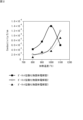
- FIG. 1 shows the measurement results of the ion conductivity of the first garnet-type oxide solid electrolyte 2 with different heating times. According to FIG. 1, it can be seen that the first garnet-type oxide solid electrolyte 2 (2h), the first garnet-type oxide solid electrolyte 2 (4h), and the first garnet-type oxide solid electrolyte 2 (6h) have an ion conductivity of 4.0 ⁇ 10 ⁇ 5 S/cm or more.
- the first garnet-type oxide solid electrolyte 1 (800°C) was obtained by a heating and cooling process in which the intermediate 1 was heated to 800°C using a firing furnace under the above-mentioned dry chamber conditions, for a heating time of 2 hours, and then cooled to room temperature in the firing furnace over 2 to 4 hours.
- the first garnet-type oxide solid electrolyte 1 is a first garnet-type oxide solid electrolyte manufactured using LLZO powder having a median diameter (D50) of 0.1 ⁇ m.
- the first garnet-type oxide solid electrolytes 2 and 3 are first garnet-type oxide solid electrolytes manufactured using LLZO powder having a median diameter (D50) of 1 ⁇ m and 10 ⁇ m, respectively. That is, according to FIG.
- the first garnet-type oxide solid electrolyte manufactured using LLZO powder having a median diameter (D50) of 0.02 to 0.2 ⁇ m has a significantly higher ion conductivity than the first garnet-type oxide solid electrolyte manufactured using LLZO powder having a median diameter (D50) of 1 ⁇ m or more.
Landscapes
- Chemical & Material Sciences (AREA)
- Engineering & Computer Science (AREA)
- Manufacturing & Machinery (AREA)
- Chemical Kinetics & Catalysis (AREA)
- Electrochemistry (AREA)
- General Chemical & Material Sciences (AREA)
- Physics & Mathematics (AREA)
- Condensed Matter Physics & Semiconductors (AREA)
- General Physics & Mathematics (AREA)
- Inorganic Chemistry (AREA)
- Secondary Cells (AREA)
- Conductive Materials (AREA)
Priority Applications (5)
| Application Number | Priority Date | Filing Date | Title |
|---|---|---|---|
| DE112022008137.6T DE112022008137T5 (de) | 2022-12-29 | 2022-12-29 | Verfahren zur herstellung eines granat-typ-oxid-festelektrolyts |
| KR1020257014925A KR20250085801A (ko) | 2022-12-29 | 2022-12-29 | 가닛형 산화물 고체 전해질의 제조 방법 |
| JP2024567174A JP7774269B2 (ja) | 2022-12-29 | 2022-12-29 | ガーネット型酸化物固体電解質の製造方法 |
| PCT/JP2022/048704 WO2024142410A1 (ja) | 2022-12-29 | 2022-12-29 | ガーネット型酸化物固体電解質の製造方法 |
| CN202280102827.6A CN120418890A (zh) | 2022-12-29 | 2022-12-29 | 石榴石型氧化物固体电解质的制造方法 |
Applications Claiming Priority (1)
| Application Number | Priority Date | Filing Date | Title |
|---|---|---|---|
| PCT/JP2022/048704 WO2024142410A1 (ja) | 2022-12-29 | 2022-12-29 | ガーネット型酸化物固体電解質の製造方法 |
Publications (1)
| Publication Number | Publication Date |
|---|---|
| WO2024142410A1 true WO2024142410A1 (ja) | 2024-07-04 |
Family
ID=91717093
Family Applications (1)
| Application Number | Title | Priority Date | Filing Date |
|---|---|---|---|
| PCT/JP2022/048704 Ceased WO2024142410A1 (ja) | 2022-12-29 | 2022-12-29 | ガーネット型酸化物固体電解質の製造方法 |
Country Status (5)
| Country | Link |
|---|---|
| JP (1) | JP7774269B2 (https=) |
| KR (1) | KR20250085801A (https=) |
| CN (1) | CN120418890A (https=) |
| DE (1) | DE112022008137T5 (https=) |
| WO (1) | WO2024142410A1 (https=) |
Citations (2)
| Publication number | Priority date | Publication date | Assignee | Title |
|---|---|---|---|---|
| JP2010143785A (ja) * | 2008-12-18 | 2010-07-01 | National Institute Of Advanced Industrial Science & Technology | リチウムイオン伝導性酸化物およびその製造方法、並びに該酸化物により構成された固体電解質 |
| WO2020183806A1 (ja) * | 2019-03-14 | 2020-09-17 | セイコーエプソン株式会社 | ガーネット型固体電解質の前駆体溶液、ガーネット型固体電解質の前駆体溶液の製造方法およびガーネット型固体電解質 |
Family Cites Families (1)
| Publication number | Priority date | Publication date | Assignee | Title |
|---|---|---|---|---|
| KR102745545B1 (ko) | 2014-10-28 | 2024-12-26 | 유니버시티 오브 메릴랜드, 컬리지 파크 | 고체상 배터리용 계면층 및 그 제조방법 |
-
2022
- 2022-12-29 KR KR1020257014925A patent/KR20250085801A/ko active Pending
- 2022-12-29 WO PCT/JP2022/048704 patent/WO2024142410A1/ja not_active Ceased
- 2022-12-29 JP JP2024567174A patent/JP7774269B2/ja active Active
- 2022-12-29 DE DE112022008137.6T patent/DE112022008137T5/de active Pending
- 2022-12-29 CN CN202280102827.6A patent/CN120418890A/zh active Pending
Patent Citations (2)
| Publication number | Priority date | Publication date | Assignee | Title |
|---|---|---|---|---|
| JP2010143785A (ja) * | 2008-12-18 | 2010-07-01 | National Institute Of Advanced Industrial Science & Technology | リチウムイオン伝導性酸化物およびその製造方法、並びに該酸化物により構成された固体電解質 |
| WO2020183806A1 (ja) * | 2019-03-14 | 2020-09-17 | セイコーエプソン株式会社 | ガーネット型固体電解質の前駆体溶液、ガーネット型固体電解質の前駆体溶液の製造方法およびガーネット型固体電解質 |
Also Published As
| Publication number | Publication date |
|---|---|
| KR20250085801A (ko) | 2025-06-12 |
| JPWO2024142410A1 (https=) | 2024-07-04 |
| JP7774269B2 (ja) | 2025-11-21 |
| CN120418890A (zh) | 2025-08-01 |
| DE112022008137T5 (de) | 2025-10-09 |
Similar Documents
| Publication | Publication Date | Title |
|---|---|---|
| CN103904360A (zh) | 一种固态电解质及其制作方法与全固态锂电池 | |
| JP2008059843A (ja) | 固体電解質層及びその製造方法 | |
| CN103098288A (zh) | 非水电解质电池及其制造方法 | |
| CN109524649B (zh) | 一种包覆结构的钠离子电池正极材料及其制备方法和应用 | |
| TW202141836A (zh) | 具有低界面電阻的鋰/石榴石電解質界面 | |
| CN110534796A (zh) | 一种全固态锂电池及其制备方法 | |
| CN118782768B (zh) | 一种钠离子电池负极材料及其制备方法和钠离子电池 | |
| Wu et al. | Garnet Li7La3Zr2O12 solid-state electrolyte: environmental corrosion, countermeasures and applications | |
| CN118335944A (zh) | 铜、氟掺杂碳包覆层状过渡金属氧化物钠离子电池正极材料及其制备方法 | |
| CN107256963B (zh) | 负极材料及制作方法、负极及锂离子全电池及制作方法 | |
| CN110911741B (zh) | 氧化碳球掺杂的固态聚合物电解质膜及其制备方法和应用 | |
| CN110875471B (zh) | 金属锂@碳复合材料、锂金属阳极及其制备和应用 | |
| WO2024142410A1 (ja) | ガーネット型酸化物固体電解質の製造方法 | |
| CN116314629A (zh) | 一种用于固态锂金属电池的锂金属负极及制备方法与应用 | |
| JP7774270B2 (ja) | ガーネット型酸化物固体電解質の製造方法 | |
| KR20170023227A (ko) | 음극 재료의 제조 방법 | |
| CN117813263B (zh) | 一种正极补锂剂及其前驱体与制备方法和应用 | |
| WO2024235011A1 (zh) | 一种空气稳定的固态电解质及其制备方法和应用 | |
| CN111082035A (zh) | 片状-石墨烯@硅@无定型碳-三明治结构复合材料的制备方法及其产品和应用 | |
| CN112490411B (zh) | 一种原位成膜保护锂金属负极的方法 | |
| CN113659127A (zh) | 一种碳纳米纤维/钛酸锂复合电极材料及其制备方法和应用 | |
| KR101919715B1 (ko) | 음극 재료의 제조 방법 | |
| KR101850645B1 (ko) | 리튬 이온 전지의 캐소드 전류 집진기, 그의 제조방법, 및 이를 포함하는 리튬 이온 전지 | |
| CN113013411A (zh) | 氧化亚钴分级介孔纳米球@二氧化钛@碳复合材料及其制备和应用 | |
| US20230044416A1 (en) | Method of manufacturing a solid-state lithium battery and a battery manufactured by the method |
Legal Events
| Date | Code | Title | Description |
|---|---|---|---|
| 121 | Ep: the epo has been informed by wipo that ep was designated in this application |
Ref document number: 22970196 Country of ref document: EP Kind code of ref document: A1 |
|
| ENP | Entry into the national phase |
Ref document number: 20257014925 Country of ref document: KR Kind code of ref document: A |
|
| WWE | Wipo information: entry into national phase |
Ref document number: 2024567174 Country of ref document: JP |
|
| WWP | Wipo information: published in national office |
Ref document number: 1020257014925 Country of ref document: KR |
|
| WWE | Wipo information: entry into national phase |
Ref document number: CN2022801028276 Country of ref document: CN Ref document number: 202280102827.6 Country of ref document: CN |
|
| WWE | Wipo information: entry into national phase |
Ref document number: 112022008137 Country of ref document: DE |
|
| WWP | Wipo information: published in national office |
Ref document number: 202280102827.6 Country of ref document: CN |
|
| WWP | Wipo information: published in national office |
Ref document number: 112022008137 Country of ref document: DE |
|
| 122 | Ep: pct application non-entry in european phase |
Ref document number: 22970196 Country of ref document: EP Kind code of ref document: A1 |