WO2024135708A1 - 化合物の製造方法、重合体、組成物、パターン形成方法 - Google Patents
化合物の製造方法、重合体、組成物、パターン形成方法 Download PDFInfo
- Publication number
- WO2024135708A1 WO2024135708A1 PCT/JP2023/045591 JP2023045591W WO2024135708A1 WO 2024135708 A1 WO2024135708 A1 WO 2024135708A1 JP 2023045591 W JP2023045591 W JP 2023045591W WO 2024135708 A1 WO2024135708 A1 WO 2024135708A1
- Authority
- WO
- WIPO (PCT)
- Prior art keywords
- group
- formula
- compound
- acid
- reaction
- Prior art date
- Legal status (The legal status is an assumption and is not a legal conclusion. Google has not performed a legal analysis and makes no representation as to the accuracy of the status listed.)
- Ceased
Links
Images
Classifications
-
- C—CHEMISTRY; METALLURGY
- C07—ORGANIC CHEMISTRY
- C07C—ACYCLIC OR CARBOCYCLIC COMPOUNDS
- C07C67/00—Preparation of carboxylic acid esters
- C07C67/08—Preparation of carboxylic acid esters by reacting carboxylic acids or symmetrical anhydrides with the hydroxy or O-metal group of organic compounds
-
- C—CHEMISTRY; METALLURGY
- C07—ORGANIC CHEMISTRY
- C07B—GENERAL METHODS OF ORGANIC CHEMISTRY; APPARATUS THEREFOR
- C07B61/00—Other general methods
-
- C—CHEMISTRY; METALLURGY
- C07—ORGANIC CHEMISTRY
- C07C—ACYCLIC OR CARBOCYCLIC COMPOUNDS
- C07C37/00—Preparation of compounds having hydroxy or O-metal groups bound to a carbon atom of a six-membered aromatic ring
-
- C—CHEMISTRY; METALLURGY
- C07—ORGANIC CHEMISTRY
- C07C—ACYCLIC OR CARBOCYCLIC COMPOUNDS
- C07C37/00—Preparation of compounds having hydroxy or O-metal groups bound to a carbon atom of a six-membered aromatic ring
- C07C37/11—Preparation of compounds having hydroxy or O-metal groups bound to a carbon atom of a six-membered aromatic ring by reactions increasing the number of carbon atoms
- C07C37/20—Preparation of compounds having hydroxy or O-metal groups bound to a carbon atom of a six-membered aromatic ring by reactions increasing the number of carbon atoms using aldehydes or ketones
-
- C—CHEMISTRY; METALLURGY
- C07—ORGANIC CHEMISTRY
- C07C—ACYCLIC OR CARBOCYCLIC COMPOUNDS
- C07C37/00—Preparation of compounds having hydroxy or O-metal groups bound to a carbon atom of a six-membered aromatic ring
- C07C37/50—Preparation of compounds having hydroxy or O-metal groups bound to a carbon atom of a six-membered aromatic ring by reactions decreasing the number of carbon atoms
-
- C—CHEMISTRY; METALLURGY
- C07—ORGANIC CHEMISTRY
- C07C—ACYCLIC OR CARBOCYCLIC COMPOUNDS
- C07C37/00—Preparation of compounds having hydroxy or O-metal groups bound to a carbon atom of a six-membered aromatic ring
- C07C37/62—Preparation of compounds having hydroxy or O-metal groups bound to a carbon atom of a six-membered aromatic ring by introduction of halogen; by substitution of halogen atoms by other halogen atoms
-
- C—CHEMISTRY; METALLURGY
- C07—ORGANIC CHEMISTRY
- C07C—ACYCLIC OR CARBOCYCLIC COMPOUNDS
- C07C39/00—Compounds having at least one hydroxy or O-metal group bound to a carbon atom of a six-membered aromatic ring
- C07C39/18—Compounds having at least one hydroxy or O-metal group bound to a carbon atom of a six-membered aromatic ring monocyclic with unsaturation outside the aromatic ring
- C07C39/19—Compounds having at least one hydroxy or O-metal group bound to a carbon atom of a six-membered aromatic ring monocyclic with unsaturation outside the aromatic ring containing carbon-to-carbon double bonds but no carbon-to-carbon triple bonds
-
- C—CHEMISTRY; METALLURGY
- C07—ORGANIC CHEMISTRY
- C07C—ACYCLIC OR CARBOCYCLIC COMPOUNDS
- C07C39/00—Compounds having at least one hydroxy or O-metal group bound to a carbon atom of a six-membered aromatic ring
- C07C39/24—Halogenated derivatives
- C07C39/26—Halogenated derivatives monocyclic monohydroxylic containing halogen bound to ring carbon atoms
- C07C39/27—Halogenated derivatives monocyclic monohydroxylic containing halogen bound to ring carbon atoms all halogen atoms being bound to ring carbon atoms
-
- C—CHEMISTRY; METALLURGY
- C07—ORGANIC CHEMISTRY
- C07C—ACYCLIC OR CARBOCYCLIC COMPOUNDS
- C07C41/00—Preparation of ethers; Preparation of compounds having groups, groups or groups
- C07C41/01—Preparation of ethers
- C07C41/18—Preparation of ethers by reactions not forming ether-oxygen bonds
- C07C41/30—Preparation of ethers by reactions not forming ether-oxygen bonds by increasing the number of carbon atoms, e.g. by oligomerisation
-
- C—CHEMISTRY; METALLURGY
- C07—ORGANIC CHEMISTRY
- C07C—ACYCLIC OR CARBOCYCLIC COMPOUNDS
- C07C43/00—Ethers; Compounds having groups, groups or groups
- C07C43/02—Ethers
- C07C43/20—Ethers having an ether-oxygen atom bound to a carbon atom of a six-membered aromatic ring
- C07C43/23—Ethers having an ether-oxygen atom bound to a carbon atom of a six-membered aromatic ring containing hydroxy or O-metal groups
-
- C—CHEMISTRY; METALLURGY
- C07—ORGANIC CHEMISTRY
- C07C—ACYCLIC OR CARBOCYCLIC COMPOUNDS
- C07C45/00—Preparation of compounds having >C = O groups bound only to carbon or hydrogen atoms; Preparation of chelates of such compounds
- C07C45/27—Preparation of compounds having >C = O groups bound only to carbon or hydrogen atoms; Preparation of chelates of such compounds by oxidation
- C07C45/29—Preparation of compounds having >C = O groups bound only to carbon or hydrogen atoms; Preparation of chelates of such compounds by oxidation of hydroxy groups
- C07C45/298—Preparation of compounds having >C = O groups bound only to carbon or hydrogen atoms; Preparation of chelates of such compounds by oxidation of hydroxy groups with manganese derivatives
-
- C—CHEMISTRY; METALLURGY
- C07—ORGANIC CHEMISTRY
- C07C—ACYCLIC OR CARBOCYCLIC COMPOUNDS
- C07C45/00—Preparation of compounds having >C = O groups bound only to carbon or hydrogen atoms; Preparation of chelates of such compounds
- C07C45/61—Preparation of compounds having >C = O groups bound only to carbon or hydrogen atoms; Preparation of chelates of such compounds by reactions not involving the formation of >C = O groups
- C07C45/63—Preparation of compounds having >C = O groups bound only to carbon or hydrogen atoms; Preparation of chelates of such compounds by reactions not involving the formation of >C = O groups by introduction of halogen; by substitution of halogen atoms by other halogen atoms
-
- C—CHEMISTRY; METALLURGY
- C07—ORGANIC CHEMISTRY
- C07C—ACYCLIC OR CARBOCYCLIC COMPOUNDS
- C07C47/00—Compounds having —CHO groups
- C07C47/52—Compounds having —CHO groups bound to carbon atoms of six—membered aromatic rings
- C07C47/56—Compounds having —CHO groups bound to carbon atoms of six—membered aromatic rings containing hydroxy groups
- C07C47/565—Compounds having —CHO groups bound to carbon atoms of six—membered aromatic rings containing hydroxy groups all hydroxy groups bound to the ring
-
- C—CHEMISTRY; METALLURGY
- C07—ORGANIC CHEMISTRY
- C07C—ACYCLIC OR CARBOCYCLIC COMPOUNDS
- C07C47/00—Compounds having —CHO groups
- C07C47/52—Compounds having —CHO groups bound to carbon atoms of six—membered aromatic rings
- C07C47/575—Compounds having —CHO groups bound to carbon atoms of six—membered aromatic rings containing ether groups, groups, groups, or groups
-
- C—CHEMISTRY; METALLURGY
- C07—ORGANIC CHEMISTRY
- C07C—ACYCLIC OR CARBOCYCLIC COMPOUNDS
- C07C67/00—Preparation of carboxylic acid esters
- C07C67/28—Preparation of carboxylic acid esters by modifying the hydroxylic moiety of the ester, such modification not being an introduction of an ester group
-
- C—CHEMISTRY; METALLURGY
- C07—ORGANIC CHEMISTRY
- C07C—ACYCLIC OR CARBOCYCLIC COMPOUNDS
- C07C67/00—Preparation of carboxylic acid esters
- C07C67/28—Preparation of carboxylic acid esters by modifying the hydroxylic moiety of the ester, such modification not being an introduction of an ester group
- C07C67/293—Preparation of carboxylic acid esters by modifying the hydroxylic moiety of the ester, such modification not being an introduction of an ester group by isomerisation; by change of size of the carbon skeleton
-
- C—CHEMISTRY; METALLURGY
- C07—ORGANIC CHEMISTRY
- C07C—ACYCLIC OR CARBOCYCLIC COMPOUNDS
- C07C69/00—Esters of carboxylic acids; Esters of carbonic or haloformic acids
- C07C69/02—Esters of acyclic saturated monocarboxylic acids having the carboxyl group bound to an acyclic carbon atom or to hydrogen
- C07C69/12—Acetic acid esters
- C07C69/14—Acetic acid esters of monohydroxylic compounds
- C07C69/145—Acetic acid esters of monohydroxylic compounds of unsaturated alcohols
- C07C69/157—Acetic acid esters of monohydroxylic compounds of unsaturated alcohols containing six-membered aromatic rings
-
- C—CHEMISTRY; METALLURGY
- C07—ORGANIC CHEMISTRY
- C07C—ACYCLIC OR CARBOCYCLIC COMPOUNDS
- C07C69/00—Esters of carboxylic acids; Esters of carbonic or haloformic acids
- C07C69/02—Esters of acyclic saturated monocarboxylic acids having the carboxyl group bound to an acyclic carbon atom or to hydrogen
- C07C69/12—Acetic acid esters
- C07C69/16—Acetic acid esters of dihydroxylic compounds
-
- C—CHEMISTRY; METALLURGY
- C08—ORGANIC MACROMOLECULAR COMPOUNDS; THEIR PREPARATION OR CHEMICAL WORKING-UP; COMPOSITIONS BASED THEREON
- C08F—MACROMOLECULAR COMPOUNDS OBTAINED BY REACTIONS ONLY INVOLVING CARBON-TO-CARBON UNSATURATED BONDS
- C08F12/00—Homopolymers and copolymers of compounds having one or more unsaturated aliphatic radicals, each having only one carbon-to-carbon double bond, and at least one being terminated by an aromatic carbocyclic ring
- C08F12/02—Monomers containing only one unsaturated aliphatic radical
- C08F12/04—Monomers containing only one unsaturated aliphatic radical containing one ring
-
- C—CHEMISTRY; METALLURGY
- C08—ORGANIC MACROMOLECULAR COMPOUNDS; THEIR PREPARATION OR CHEMICAL WORKING-UP; COMPOSITIONS BASED THEREON
- C08F—MACROMOLECULAR COMPOUNDS OBTAINED BY REACTIONS ONLY INVOLVING CARBON-TO-CARBON UNSATURATED BONDS
- C08F12/00—Homopolymers and copolymers of compounds having one or more unsaturated aliphatic radicals, each having only one carbon-to-carbon double bond, and at least one being terminated by an aromatic carbocyclic ring
- C08F12/02—Monomers containing only one unsaturated aliphatic radical
- C08F12/04—Monomers containing only one unsaturated aliphatic radical containing one ring
- C08F12/14—Monomers containing only one unsaturated aliphatic radical containing one ring substituted by hetero atoms or groups containing heteroatoms
- C08F12/22—Oxygen
- C08F12/24—Phenols or alcohols
-
- G—PHYSICS
- G03—PHOTOGRAPHY; CINEMATOGRAPHY; ANALOGOUS TECHNIQUES USING WAVES OTHER THAN OPTICAL WAVES; ELECTROGRAPHY; HOLOGRAPHY
- G03F—PHOTOMECHANICAL PRODUCTION OF TEXTURED OR PATTERNED SURFACES, e.g. FOR PRINTING, FOR PROCESSING OF SEMICONDUCTOR DEVICES; MATERIALS THEREFOR; ORIGINALS THEREFOR; APPARATUS SPECIALLY ADAPTED THEREFOR
- G03F7/00—Photomechanical, e.g. photolithographic, production of textured or patterned surfaces, e.g. printing surfaces; Materials therefor, e.g. comprising photoresists; Apparatus specially adapted therefor
- G03F7/004—Photosensitive materials
-
- G—PHYSICS
- G03—PHOTOGRAPHY; CINEMATOGRAPHY; ANALOGOUS TECHNIQUES USING WAVES OTHER THAN OPTICAL WAVES; ELECTROGRAPHY; HOLOGRAPHY
- G03F—PHOTOMECHANICAL PRODUCTION OF TEXTURED OR PATTERNED SURFACES, e.g. FOR PRINTING, FOR PROCESSING OF SEMICONDUCTOR DEVICES; MATERIALS THEREFOR; ORIGINALS THEREFOR; APPARATUS SPECIALLY ADAPTED THEREFOR
- G03F7/00—Photomechanical, e.g. photolithographic, production of textured or patterned surfaces, e.g. printing surfaces; Materials therefor, e.g. comprising photoresists; Apparatus specially adapted therefor
- G03F7/004—Photosensitive materials
- G03F7/0045—Photosensitive materials with organic non-macromolecular light-sensitive compounds not otherwise provided for, e.g. dissolution inhibitors
Definitions
- the present invention relates to a method for producing a compound, a polymer, a composition, and a pattern formation method.
- the most common resist materials used to date are polymeric resist materials capable of forming amorphous films.
- Examples include polymeric resist compositions such as polymethyl methacrylate, polyhydroxystyrene or polyalkyl methacrylate having an acid-dissociable group (see, for example, Non-Patent Document 1).
- a thin resist film is prepared by applying a solution of such a resist composition onto a substrate, and then irradiated with ultraviolet light, far ultraviolet light, electron beams, extreme ultraviolet light, or the like to form a line pattern of about 10 to 100 nm.
- Non-Patent Document 2 the reaction mechanism of electron beam or extreme ultraviolet lithography is different from that of normal photolithography.
- Non-Patent Document 3 Non-Patent Document 3
- the goal is to form fine patterns of several nm to several tens of nm. As the dimensions of the resist pattern become smaller, a resist composition with higher sensitivity to the exposure light source is required.
- extreme ultraviolet lithography there is a demand for higher sensitivity in terms of throughput.
- Various techniques have been proposed to improve these problems (see, for example, Patent Documents 1 to 11 and Non-Patent Document 4).
- Patent Document 1 As a resist material that improves the above-mentioned problems, a resist composition containing a metal complex such as titanium, tin, hafnium, or zirconium has been proposed (see, for example, Patent Document 1).
- the introduction of unsaturated double bonds using the Wittig reaction is widely known in the art.
- the Wittig reaction with aldehyde groups or ketone groups contained in the raw material tends to proceed quantitatively, and is commonly used at the laboratory level as a simple method for introducing unsaturated double bonds.
- it is generally difficult to remove the phosphine oxide by-product that occurs after the Wittig reaction the purity decreases, and the reaction poses challenges for mass production.
- a method for removing phosphine oxide in which sulfuric acid is added to a mixed solvent of alcohol and water, and a compound having an unsaturated double bond is recovered by recrystallization (see, for example, Patent Document 8).
- This method utilizes the difference in solubility between phosphine oxide or a complex of phosphine oxide and sulfuric acid, and the compound having an unsaturated double bond, to separate the compound having an unsaturated double bond by recrystallization.
- this method there is an issue that the yield of the target compound having an unsaturated double bond decreases when the phosphine oxide is reliably removed.
- Non-Patent Document 4 Another method for removing phosphine oxide is known to be the addition of zinc chloride as a Lewis acid to an ethanol solvent (see, for example, Non-Patent Document 4).
- This method uses polar solvents such as alcohols and esters, and therefore requires an excess of zinc chloride to ensure the removal of phosphine oxide.
- the excess Lewis acid induces polymerization of the compounds with unsaturated double bonds, resulting in a decrease in yield and purity.
- the resist composition prepared using this method is contaminated with metal atoms derived from the zinc chloride used, which causes defects in the resist pattern.
- a method for synthesizing hydroxystyrene is known in which an aldehyde or ketone is used as a raw material, and an unsaturated double bond is introduced by a decarboxylation reaction via a cinnamic acid structure (see, for example, Patent Document 10).
- Another method is known in which an unsaturated double bond is introduced by a dehydration reaction from a raw material having an alcohol group or an alkoxide group (see, for example, Patent Document 11). These methods require a reaction temperature of about 150°C to efficiently proceed with decarboxylation.
- the methods for producing halogen-containing hydroxystyrene and its hydroxy group derivatives generally require expensive reagents and strict conditions, and have the problem of low yield and purity of halogen-containing hydroxystyrene and its hydroxy group derivatives.
- the present invention aims to provide a method for producing halogen-containing hydroxystyrene and its hydroxy group derivatives with high yield and high purity, as well as a compound, polymer, composition, and film-forming composition obtained by the production method, and a method for forming a resist pattern using the film-forming composition.
- a method for producing a compound A represented by the following formula (1) comprising at least one of a step HX, a step ST, and a step PR.
- X's each independently represent I, F, Cl, Br, or an organic group having 1 to 30 carbon atoms and having 1 to 5 substituents selected from the group consisting of I, F, Cl, and Br
- L1 each independently represents a single bond, an ether group, an ester group, a thioether group, an amino group, a thioester group, an acetal group, a urethane group, a urea group, an amide group, or an imide group, and the ether group, ester group, thioether group, amino group, thioester group, acetal group, urethane group, urea group, amide group, and imide group of L1 may have a substituent, each Y is independently a hydroxyl group, an alk
- Step HX A step of introducing a halogen or a group containing a halogen.
- Step ST A step of introducing an unsaturated double bond.
- Step PR A step of introducing a group represented by the following formula (Y-0): (In formula (Y-0), each L 0 is independently one or more groups selected from the group consisting of an alkoxy group, an ester group, an ether group, a thioether group, an acetal group, a thioacetal group, a carboxyalkoxy group, a carbonate ester group, a sulfonyl group, and a silyl group, or a hydrolyzable group.) [2] The manufacturing method according to [1], wherein the step ST includes any one of a step (W), a step (C), and a step (D).
- formula (3a) and formula (3b) X, L 1 , Y, Ra , Z, A, m, n, p, and r are the same as defined in formula (1);
- X 0 is H or an organic group having 1 to 30 carbon atoms;
- m' is an integer equal to or greater than 0.
- a process comprising at least the steps of: (In formula (RM1), LG is a group selected from a hydroxy group, an alkoxy group, a carbonate group, an acetal group, and a carboxyl group, and the alkoxy group, the carbonate group, the acetal group, and the carboxyl group each include an aliphatic group or an aromatic group having 1 to 60 carbon atoms which may have a substituent; R3 is a hydrogen group, or a carboxyl group or an ester group which may have a substituent having 1 to 60
- X 0 , L 1 , Y, A, Z, p, m′, n, r, R a , R b , and R c are the same as defined in formula (1), formula (3a), and formula (3b);
- R 9 to R 10 are each independently H, OH, OCH 3 , OR D , a halogen, a cyano group, or an organic group having 1 to 8 carbon atoms which may have a substituent, and at least one of R 9 to R 10 is OH, OCH 3 , or OR D.
- R D is an organic group having 1 to 30 carbon atoms which may have a substituent.
- X, L1 , Y, A, Z, p, m', n, r, Ra , Rb and Rc are the same as defined in formula (1), formula (3a) and formula (3b).
- R 9 to R 10 are each independently H, OH, OCH 3 , OR D , a halogen, a cyano group, or an organic group having 1 to 8 carbon atoms which may have a substituent, and at least one of R 9 to R 10 is OH, OCH 3 , or OR D.
- R D is an organic group having 1 to 30 carbon atoms which may have a substituent.
- the carbonyl compound B is a compound represented by the following formula (4a) or the following formula (4b): The method according to any one of [1] to [8], wherein an HSP distance between a compound represented by the following formula (5a) or (5b), which is formed by using an organic phosphorus compound in the step W2, and the phosphine oxide is 6.5 or more.
- Y1 's each independently represent an alkoxy group, an ester group, an acetal group, a carboxyalkoxy group, a carbonate ester group, an ether group, or a thioether group, and the alkoxy group, ester group, acetal group, carboxyalkoxy group, carbonate ester group, ether group, or thioether group of Y1 may have a substituent; n1 is an integer between 1 and n.
- step HX further includes a step of halogenating the compound represented by formula (3a) to produce the compound represented by formula (3b), a step of halogenating the compound represented by formula (0a) to produce the compound represented by formula (0b), and a step of halogenating the compound represented by formula (4a) to produce the compound represented by formula (4b).
- step C3 one or more solvents selected from the group consisting of gamma-butyrolactone, dimethylformamide, dioxane, cyclopentyl methyl ether, toluene, and diglyme are further used.
- [28] The method for producing the present invention according to [24] or [27], further comprising a step of removing impurities using an adsorbent.
- [29] The method according to [24], [27] or [28], further comprising a step of removing impurities by a reslurry treatment.
- a composition comprising at least one selected from a compound obtained by the production method according to any one of [1] to [22], [24], and [27] to [29], and a polymer containing a structural unit corresponding to the compound.
- a film-forming composition comprising at least one selected from a compound obtained by the production method according to any one of [1] to [22], [24], and [27] to [29], and a polymer containing a structural unit corresponding to the compound.
- a method for forming a resist pattern comprising the steps of:
- the present invention provides a production method that can produce halogen-containing hydroxystyrene and its hydroxy group derivatives in high yield and high purity, as well as a compound, polymer, composition, and film-forming composition obtained by the production method, and a method for forming a resist pattern using the film-forming composition.
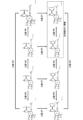
- FIG. 1 is a flow diagram showing an example of a method for producing compound A of the present embodiment.
- (Meth)acrylate means at least one selected from acrylate, haloacrylate, and methacrylate.
- Haloacrylate means an acrylate in which a halogen is substituted at the methyl group position of a methacrylate.
- Other terms containing the expression (meth) are also interpreted in the same way as (meth)acrylate.
- (co)polymer means at least one selected from a homopolymer and a copolymer.
- the method for producing compound A of the present embodiment (hereinafter, may be referred to as the "production method of the present embodiment") is a method for producing compound A represented by the following formula (1), and includes at least one of step HX, step ST, and step PR.
- X's each independently represent I, F, Cl, Br, or an organic group having 1 to 30 carbon atoms and having 1 to 5 substituents selected from the group consisting of I, F, Cl, and Br;
- L1 each independently represents a single bond, an ether group, an ester group, a thioether group, an amino group, a thioester group, an acetal group, a urethane group, a urea group, an amide group, or an imide group, and the ether group, ester group, thioether group, amino group, thioester group, acetal group, urethane group, urea group, amide group, and imide group of L1 may have a substituent, each Y is independently a hydroxyl group, an alkoxy group, an ester group, an acetal group, a carboxyalkoxy group, a carbonate ester group, a nitro group, an amino group, a carboxyl group, a
- Step HX A step of introducing a halogen or a group containing a halogen.
- Step ST A step of introducing an unsaturated double bond.
- Step PR A step of introducing a group represented by the following formula (Y-0): (In formula (Y-0), each L 0 is independently one or more groups selected from the group consisting of an alkoxy group, an ester group, an ether group, a thioether group, an acetal group, a thioacetal group, a carboxyalkoxy group, a carbonate ester group, a sulfonyl group, and a silyl group, or a hydrolyzable group.)
- Compound A produced by the production method of this embodiment can be used as a resist material because a polymer containing compound A as a structural unit can increase the exposure sensitivity of a resist composition.
- Compound A in this embodiment has one or more halogens and an unsaturated double bond.
- Compound A may further have one or more hydrophilic groups or one decomposable group. That is, the compound according to this embodiment has one or more halogens, one or more hydrophilic groups or one decomposable group, and an unsaturated double bond.
- Compound A may further have one or more hydrophilic groups or one or more decomposable groups.
- hydrophilic group refers to a group that improves the affinity between an organic compound and water by bonding to the organic compound.
- hydrophilic groups include hydroxyl, nitro, amino, carboxyl, thiol, phosphine, phosphonic, phosphoric, ether, thioether, urethane, urea, amide, and imide groups.
- hydroxyl and carboxyl groups are preferred, and hydroxyl groups are more preferred, from the viewpoint of improving the performance of a resist using the compound obtained by this embodiment, particularly in terms of developability, resolution, and defect reduction.
- the number of hydrophilic groups is preferably an integer of 1 to 5, more preferably an integer of 1 to 3, even more preferably 1 or 2, and particularly preferably 2.
- a structure in which a decomposable group is introduced and the structure after decomposition becomes a hydroxyl or carboxyl group can also be preferably used.
- decomposable group refers to a group that decomposes in the presence of an acid or a base, or by the action of radiation, an electron beam, extreme ultraviolet light (EUV), or irradiation from a light source such as ArF or KrF.
- the decomposable group is not particularly limited, but for example, an acid-dissociable functional group described in International Publication WO2013/024778 can be used.
- a hydrolyzable group is preferred.
- hydrolyzable group refers to a group that hydrolyzes in the presence of an acid or a base.
- the hydrolyzable group is not particularly limited, but for example, an alkoxy group, an ester group, an acetal group, a carbonate ester group, etc. are included.
- the number of decomposable groups is not particularly limited, but is preferably an integer of 1 to 5, more preferably an integer of 1 to 3, even more preferably 1 or 2, and particularly preferably 2.
- the unsaturated double bond is preferably a polymerizable unsaturated double bond.
- Groups having an unsaturated double bond are not particularly limited, but examples thereof include vinyl groups, isopropenyl groups, (meth)acryloyl groups, and haloacryloyl groups.
- Examples of haloacryloyl groups include ⁇ -fluoroacryloyl groups, ⁇ -chloroacryloyl groups, ⁇ -bromoacryloyl groups, ⁇ -iodoacryloyl groups, ⁇ , ⁇ -dichloroacryloyl groups, and ⁇ , ⁇ -diiodoacryloyl groups.
- isopropenyl groups and vinyl groups are preferred.
- the number of unsaturated double bonds is preferably an integer of 1 to 3, more preferably an integer of 1 to 2, and even more preferably 1.
- Compound A of the present embodiment is a compound represented by the following formula (1). From the viewpoint of application, compound A preferably contains a functional group whose solubility in an alkaline developer is improved by the action of an acid or a base. It is preferable that any one of Z, Y, and X in formula (1) contains a functional group whose solubility in an alkaline developer is improved by the action of an acid or a base.
- Each X is independently I, F, Cl, Br, or an organic group having 1 to 30 carbon atoms and having 1 to 5 substituents selected from the group consisting of I, F, Cl, and Br.
- each X is preferably independently I, F, Cl, or Br, more preferably independently I, F, or Br, even more preferably independently I or F, and particularly preferably independently I.
- the number of halogens is preferably an integer of 1 to 5, more preferably an integer of 1 to 4, and even more preferably an integer of 1 to 3.
- substitution means that one or more hydrogen atoms in a functional group are substituted with a substituent.
- the "substituent” is not particularly limited, but examples thereof include a halogen atom, a hydroxyl group, a carboxyl group, a cyano group, a nitro group, a thiol group, a heterocyclic group, an alkyl group having 1 to 30 carbon atoms, an aryl group having 6 to 30 carbon atoms, an alkoxyl group having 1 to 30 carbon atoms, an alkenyl group having 2 to 30 carbon atoms, an alkynyl group having 2 to 30 carbon atoms, an acyl group having 1 to 30 carbon atoms, and an amino group having 0 to 30 carbon atoms.
- the alkyl group may be any of a linear aliphatic hydrocarbon group, a branched aliphatic hydrocarbon group, and a cyclic aliphatic hydrocarbon group.
- the alkyl group having 1 to 30 carbon atoms is not particularly limited, and examples thereof include a methyl group, an ethyl group, an n-propyl group, an i-propyl group, an n-butyl group, an i-butyl group, a t-butyl group, an n-pentyl group, an n-hexyl group, an n-dodecyl group, and a valerate group.
- the aryl group having 6 to 30 carbon atoms is not particularly limited, but examples thereof include a phenyl group, a naphthalene group, a biphenyl group, an anthracyl group, a pyrenyl group, and a perylene group.
- the alkenyl group having 2 to 30 carbon atoms is not particularly limited, but examples thereof include an ethynyl group, a propenyl group, a butynyl group, and a pentynyl group.
- the alkynyl group having 2 to 30 carbon atoms is not particularly limited, but examples thereof include an acetylene group, an ethynyl group, and a propynyl group.
- the alkoxy group having 1 to 30 carbon atoms is not particularly limited, but examples thereof include a methoxy group, an ethoxy group, a propoxy group, a butoxy group, and a pentoxy group.
- the "organic group having 1 to 30 carbon atoms and having 1 to 5 substituents selected from the group consisting of I, F, Cl, and Br" is not particularly limited, but examples thereof include monoiodophenyl group, diiodophenyl group, triiodophenyl group, tetraiodophenyl group, pentaiodophenyl group, monoiodohydroxyphenyl group, diiodohydroxyphenyl group, triiodohydroxyphenyl group, monoiodoacetoxyphenyl group, diiodoacetoxyphenyl group, triiodoacetoxyphenyl group, monoiodo-t-butoxycarbonylphenyl group, diiodophenyl group, triiodo ...
- triiodo-t-butoxycarbonylphenyl Iodo-t-butoxycarbonylphenyl group, triiodo-t-butoxycarbonylphenyl group, monoiododihydroxyphenyl group, diiododihydroxyphenyl group, triiododihydroxyphenyl group, monoiododiacetoxyphenyl group, diiododiacetoxyphenyl group, triiododiacetoxyphenyl group, monoiodo-di-t-butoxycarbonylphenyl group, diiodo-di-t-butoxycarbonylphenyl group, triiodo-di-t-butoxycarbonylphenyl group, monoiodotrihydroxyphenyl group, diiodotrihydr iodophenyl group, monoiodotriacetoxyphenyl group, diiodotriacetoxyphenyl group, monoiodo-tri-
- Monochlorophenyl group dichlorophenyl group, trichlorophenyl group, tetrachlorophenyl group, pentachlorophenyl group, monochlorohydroxyphenyl group, dichlorohydroxyphenyl group, trichlorohydroxyphenyl group, monochloroacetoxyphenyl group, dichloroacetoxyphenyl group, trichloroacetoxyphenyl group, monochloro-t-butoxycarbonylphenyl group, dichloro-t-butoxycarbonylphenyl group, trichloro-t-butoxycarbonylphenyl group, monochlorodihydroxyphenyl group, dichlorodihydroxyphenyl group, trichlorodihydroxyphenyl group, monochlorodiacetoxyphenyl group, dichlorodiacetoxyphenyl group, trichlorodiacetoxyphenyl group, monochlorodi-t-butoxycarbonylphenyl group, dich
- Examples include monochlorotrihydroxyphenyl group, dichlorotrihydroxyphenyl group, monochlorotriacetoxyphenyl group, dichlorotriacetoxyphenyl group, monochlorotri-t-butoxycarbonylphenyl group, dichlorotri-t-butoxycarbonylphenyl group, monochloroadamantyl group, dichloroadamantyl group, trichloroadamantyl group, monochlorohydroxyadamantyl group, dichlorohydroxynaphthyl group, monochloroacetoxynaphthyl group, dichloroacetoxyadamantyl group, monochloro-t-butoxycarbonyladamantyl group, dichloro-t-butoxycarbonyladamantyl group, trichloro-t-butoxycarbonyladamantyl group, monochlorodihydroxyadamantyl group, monochlorodiacetoxyadamantyl group, monochlor
- X is not particularly limited, but may be an aromatic group having one or more F, Cl, Br or I introduced therein.
- aromatic groups include, but are not particularly limited to, groups having a benzene ring such as a phenyl group having 1 to 5 halogens, and groups having a heteroaromatic ring such as furan, thiophene or pyridine having 1 to 5 halogens.
- aromatic groups include phenyl groups having 1 to 5 I, phenyl groups having 1 to 5 F, phenyl groups having 1 to 5 Cl, phenyl groups having 1 to 5 Br, naphthyl groups having 1 to 5 F, naphthyl groups having 1 to 5 Cl, B A naphthyl group having 1 to 5 r's, a naphthyl group having 1 to 5 I's, a phenol group having 1 to 4 F's, a phenol group having 1 to 4 Cl's, a phenol group having 1 to 4 Br's, a phenol group having 1 to 4 I's, a furan group having 1 to 3 F's, a furan group having 1 to 3 Cl's, a furan group having 1 to 3 Br's, a furan group having 1 to 3 I's, a thiophene group having 1 to 3 F's, a thiophene group having 1 to 3 Cl's, and a thiophene group having 1 to 1 to
- a thiophene group having 1 to 3 I a pyridine group having 1 to 4 F, a pyridine group having 1 to 4 Cl, a pyridine group having 1 to 4 Br, a pyridine group having 1 to 4 I, a benzodiazole group having 1 to 5 F, a benzodiazole group having 1 to 5 Cl, a benzodiazole group having 1 to 5 Br, a benzodiazole group having 1 to 5 I, a benzimidazole group having 1 to 4 F, a benzimidazole group having 1 to 4 Cl, a benzodiazole group having 1 to 5 Br,
- the benzimidazole group include a benzimidazole group having 4 F, a benzimidazole group having 1 to 4 I, a benzoxazole group having 1 to 4 F, a benzoxazole group having 1 to 4 Cl, a benzoxazole group having 1 to 4 Br, a benzoxazole group having 1 to 4
- X may also be an alicyclic group having one or more F, Cl, Br, or I introduced into the alicyclic group.
- alicyclic groups include an adamantyl group having 1 to 3 halogens, an adamantyl group having 1 to 3 F, an adamantyl group having 1 to 3 Cl, an adamantyl group having 1 to 3 Br, an adamantyl group having 1 to 3 I, a cyclopentyl group having 1 to 3 F, a cyclopentyl group having 1 to 3 Cl, a cyclopentyl group having 1 to 3 Br, and a cyclopentyl group having 1 to 3 I.
- Examples include a cyclopentyl group having 3 F, a bicycloundecyl group having 1 to 3 Cl, a bicycloundecyl group having 1 to 3 Br, a bicycloundecyl group having 1 to 3 I, a norbornyl group having 1 to 3 F, a norbornyl group having 1 to 3 Cl, a norbornyl group having 1 to 3 Br, and a norbornyl group having 1 to 3 I.
- L1 is each independently a single bond, an ether group, an ester group, a thioether group, an amino group, a thioester group, an acetal group, a phosphine group, a phosphine group, a urethane group, a urea group, an amide group, an imide group, or a phosphoric acid group.
- L1 is preferably a single bond.
- the ether group, ester group, thioether group, amino group, thioester group, acetal group, phosphine group, phosphine group, urethane group, urea group, amide group, imide group, or phosphoric acid group of L1 may have a substituent. Such a substituent is not particularly limited, but may be, for example, the substituent described above.
- n is an integer of 1 or more, preferably an integer of 1 or more and 5 or less, more preferably an integer of 1 or more and 4 or less, and even more preferably 1 or 2.
- Y is each independently a hydroxyl group, an alkoxy group, an ester group, an acetal group, a carboxyalkoxy group, a carbonate ester group, a nitro group, an amino group, a carboxyl group, a thiol group, an ether group, a thioether group, a phosphine group, a phosphone group, a urethane group, a urea group, an amide group, an imide group, or a phosphate group, and the alkoxy group, ester group, carbonate ester group, amino group, ether group, thioether group, phosphine group, phosphone group, urethane group, urea group, amide group, imide group, and phosphate group of Y may have a substituent.
- a substituent is not particularly limited, but examples thereof include the substituents described above.
- the ester group is preferably a tertiary ester group.
- * 3 is the bonding site with A.
- Y is preferably a hydroxyl group, a tertiary ester group, an acetal group, a carbonate ester group, or a carboxyalkoxy group from the viewpoint of increasing the exposure sensitivity of the resist composition, more preferably a hydroxyl group, an acetal group, a carbonate ester group, or a carboxyalkoxy group, and even more preferably a hydroxyl group, an acetal group, or a carboxyalkoxy group.
- Y is preferably an ester group, a carboxyalkoxy group, or a carbonate ester group, which function as a protecting group and can form a hydroxyl group or a carboxyl group, which is preferable from the viewpoint of increasing the sensitivity of the resist composition after deprotection, from the viewpoint of improving stability in the acidic to weakly acidic process in the method for producing compound A according to the present invention, and from the viewpoint of producing a polymer of stable quality by radical polymerization when compound A is used as a resist material.
- Each Y is preferably independently a group represented by the following formula (Y-1).
- L1 is a group which is cleaved by the action of an acid or a base.
- the ester group is preferably a tertiary ester group from the viewpoint of increasing the exposure sensitivity of the resist composition.
- * 1 is a bonding site with A
- * 2 is a bonding site with R 1.
- L 1 is preferably a tertiary ester group, an acetal group, a carbonate ester group, or a carboxyalkoxy group from the viewpoint of increasing the exposure sensitivity of the resist composition, more preferably an acetal group, a carbonate ester group, or a carboxyalkoxy group, and even more preferably an acetal group or a carboxyalkoxy group.
- L 1 is preferably an ester group, a carboxyalkoxy group, or a carbonate ester group from the viewpoint of improving stability in an acidic to weakly acidic process in the method for producing compound A according to the present invention, and from the viewpoint of producing a polymer of stable quality by radical polymerization when compound A is used as a resist material.
- Y is preferably a group represented by formula (Y-1) for the purpose of controlling the polymerizability of the resin and setting the degree of polymerization in the desired range.
- Compound A has a large effect on active species during the polymer formation reaction when it has an X group, making it difficult to achieve the desired control. Therefore, by making the hydrophilic group in compound A a group represented by formula (Y-1), it is possible to suppress variations in copolymer formation and polymerization inhibition resulting from the hydrophilic group.
- R 1 is a linear, branched or cyclic aliphatic group having 1 to 30 carbon atoms, an aromatic group having 6 to 30 carbon atoms, a linear, branched or cyclic aliphatic group containing a heteroatom having 1 to 30 carbon atoms, or a linear, branched or cyclic aromatic group containing a heteroatom having 1 to 30 carbon atoms, and the aliphatic group, aromatic group, aliphatic group containing a heteroatom, or aromatic group containing a heteroatom of R 1 may further have a substituent.
- the substituent here may be any of the above-mentioned, but a linear, branched or cyclic aliphatic group having 1 to 20 carbon atoms or an aromatic group having 6 to 20 carbon atoms is preferred.
- R 1 is preferably an aliphatic group.
- the aliphatic group in R 1 is preferably a branched or cyclic aliphatic group.
- the number of carbon atoms in the aliphatic group is preferably 1 to 20, more preferably 3 to 10, and even more preferably 4 to 8.
- the aliphatic group is not particularly limited, but examples thereof include a methyl group, an isopropyl group, a sec-butyl group, a tert-butyl group, an isobutyl group, a cyclohexyl group, a methylcyclohexyl group, an adamantyl group, etc.
- a tert-butyl group, a cyclohexyl group, or an adamantyl group is preferable.
- a carboxylic acid group is formed when L1 is cleaved by the action of an acid or base, and when used as a resist material, the difference in solubility and the difference in dissolution rate between the cleaved portion and the non-cleaved portion in the development treatment are increased, thereby improving the resolution and suppressing residues at the bottom of the pattern, particularly in fine line patterns, which is preferable.
- L 1 is not particularly limited, but is preferably, for example, a group represented by the following formula:
- R 1 is not particularly limited, but is preferably, for example, a group represented by the following formula:
- Y is, for example, a group represented by the following formula:
- alkoxy group that can be used as Y examples include alkoxy groups having 1 or more carbon atoms, and when compound A is used as a resist material, from the viewpoint of the solubility of the resin after being combined with other monomers to form a resin, alkoxy groups having 2 or more carbon atoms are preferred, and alkoxy groups having 3 or more carbon atoms or having a ring structure are more preferred.
- the alkoxy group is not particularly limited, but examples include the following.
- the amino group and amide group that can be used as Y are preferably a primary amino group, a secondary amino group, a tertiary amino group, a group having a quaternary ammonium salt structure, an amide having a substituent, etc.
- the amino group or amide group is not particularly limited, but examples thereof include the following.
- n is an integer of 0 or more, preferably an integer of 1 or more, more preferably an integer of 1 to 5, even more preferably an integer of 1 to 3, and particularly preferably 1 or 2.
- R a , R b , and R c are each independently H, I, F, Cl, Br, or an organic group having 1 to 18 carbon atoms which may have a substituent.
- the substituent of the organic group having 1 to 18 carbon atoms is not particularly limited, but examples thereof include I, F, Cl, Br, or other substituents.
- the other substituents are not particularly limited, but examples thereof include hydroxyl groups, alkoxy groups, ester groups, acetal groups, carbonate ester groups, nitro groups, amino groups, carboxyl groups, thiol groups, ether groups, thioether groups, phosphine groups, phosphone groups, urethane groups, urea groups, amide groups, imide groups, and phosphoric acid groups.
- alkoxy groups, ester groups, carbonate ester groups, amino groups, ether groups, thioether groups, phosphine groups, phosphone groups, urethane groups, urea groups, amide groups, imide groups, and phosphoric acid groups may further have a substituent.
- substituent here include linear, branched, or cyclic aliphatic groups having 1 to 20 carbon atoms, and aromatic groups having 6 to 20 carbon atoms. It is preferable that all of R a , R b and R c are H ( hydrogen ) .
- the organic group which may have a substituent in R a , R b , and R c preferably has 1 to 8 carbon atoms.
- the organic group having 1 to 8 carbon atoms which may have a substituent, is not particularly limited, but examples thereof include linear or branched aliphatic hydrocarbon groups having 1 to 18 carbon atoms, alicyclic hydrocarbon groups having 1 to 18 carbon atoms, and aromatic groups having 1 to 18 carbon atoms which may contain a heteroatom.
- the linear or branched aliphatic hydrocarbon group having 1 to 18 carbon atoms is not particularly limited, but examples thereof include methyl, ethyl, n-propyl, isopropyl, n-butyl, isobutyl, tert-butyl, n-pentyl, and n-hexyl groups.
- the alicyclic hydrocarbon group having 1 to 18 carbon atoms is not particularly limited, but examples thereof include a cyclohexyl group.
- aromatic groups that may contain heteroatoms such as a benzodiazole group, a benzotriazole group, and a benzothiadiazole group, can also be appropriately selected.
- combinations of these organic groups can be selected.
- Aromatic groups having 1 to 18 carbon atoms that may contain heteroatoms include, but are not limited to, phenyl, naphthalene, biphenyl, anthracyl, pyrenyl, benzodiazole, benzotriazole, and benzothiadiazole groups.
- organic groups having 1 to 18 carbon atoms that may have a substituent although there are no particular limitations, when compound A is used as a resist material, a methyl group is preferred from the viewpoint of producing a polymer of stable quality.
- R a is an organic group having 1 to 18 carbon atoms or a group selected from F, Cl and I, it is preferable that n and r are 0 or more.
- A is an organic group having 6 to 30 carbon atoms.
- A may be a monocyclic organic group or a polycyclic organic group, and may have a substituent.
- A is preferably an aromatic ring which may have a substituent.
- the number of carbon atoms in A is preferably 6 to 14, and more preferably 6 to 10.
- A is preferably a group represented by any one of the following formulas (A-1) to (A-4), more preferably a group represented by the following formulas (A-1) to (A-2), and even more preferably a group represented by the following formula (A-1).
- A may be an alicyclic structure which may have a substituent.
- the "alicyclic structure” refers to a saturated or unsaturated carbon ring which does not have aromaticity.
- Examples of the alicyclic structure include a saturated or unsaturated carbon ring having 6 to 30 carbon atoms, and a saturated or unsaturated carbon ring having 6 to 20 carbon atoms is preferable.
- Examples of the alicyclic structure include groups having cyclohexyl, cycloheptyl, cyclooctyl, cyclononyl, cyclodecyl, cycloicosyl, cyclopropenyl, cyclobutenyl, cyclopentenyl, cyclohexenyl, cycloheptenyl, cyclooctenyl, cyclopentadienyl, cyclooctadienyl, adamantyl, bicycloundecyl, decahydronaphthyl, norbornyl, norbornadienyl, cubane, basketane, and hasan.
- A may also be a heterocyclic structure which may have a substituent.
- heterocyclic structure There are no particular limitations on the heterocyclic structure, but examples include cyclic nitrogen-containing structures such as pyridine, piperidine, piperidone, benzodiazole, and benzotriazole, triazine, cyclic urethane structure, cyclic urea, cyclic amide, cyclic imide, cyclic ethers such as furan, pyran, and dioxolane, and alicyclic groups having a lactone structure such as caprolactone, butyrolactone, nonalactone, decalactone, undecalactone, bicycloundecalactone, and phthalide.
- p is an integer of 1 or more, preferably an integer of 1 to 3, more preferably an integer of 1 to 2, and even more preferably 1.
- Z is each independently an alkoxy group, an ester group, an acetal group, a carboxyalkoxy group, or a carbonate ester group. These groups may have a substituent, and examples of the substituent include a hydrocarbon group having 1 to 60 carbon atoms which may further have a substituent.
- r is an integer of 0 or more, preferably an integer of 0 to 2, more preferably an integer of 0 to 1, and even more preferably 1.
- the ester group is preferably a tertiary ester group.
- * 3 is the bonding site with A.
- Z is preferably a tertiary ester group, an acetal group, a carbonate ester group or a carboxyalkoxy group, more preferably an acetal group, a carbonate ester group or a carboxyalkoxy group, and even more preferably an acetal group or a carboxyalkoxy group.
- an ester group, a carboxyalkoxy group or a carbonate ester group is preferred.
- n is an integer of 0 or more
- r is an integer of 0 or more, but at least one of n and r may be an integer of 1 or more. In other words, n+r may be an integer of 1 or more.
- X, L1 , Y, Ra , Rb , Rc , Z, A, m, n, p, and r are the same as defined in formula (1);
- Y1 's each independently represent an alkoxy group, an ester group, an acetal group, a carboxyalkoxy group, a carbonate ester group, an ether group, or a thioether group, and the alkoxy group, ester group, acetal group, carboxyalkoxy group, carbonate ester group, ether group, or thioether group of Y may have a substituent;
- n1 is an integer between 1 and n.
- Compound A represented by formula (1) in this embodiment is not particularly limited, but examples thereof include compounds having the structures shown below.
- the method for producing compound A includes at least one of step HX, step ST, and step PR.
- step HX is a step of introducing a halogen or a group containing a halogen, specifically, a step of introducing a halogen or a group containing a halogen into a target compound.
- step ST is a step of introducing an unsaturated double bond, specifically, a step of introducing an unsaturated double bond into a target compound.
- Step PR is a step of introducing a group represented by the formula (Y-0), specifically, a step of introducing an alkoxy group, an ester group, an ether group, a thioether group, an acetal group, a thioacetal group, a carboxyalkoxy group, a carbonate ester group, a sulfonyl group, and a silyl group, or a hydrolyzable group, etc., into a target compound.
- Y-0 a step of introducing an alkoxy group, an ester group, an ether group, a thioether group, an acetal group, a thioacetal group, a carboxyalkoxy group, a carbonate ester group, a sulfonyl group, and a silyl group, or a hydrolyzable group, etc.
- steps HX, ST, and PR the order of steps HX, ST, and PR is not particularly limited, and each of steps HX, ST, and PR may be repeated multiple times. Furthermore, steps other than steps HX, ST, and PR may be performed between each of steps HX, ST, and PR. Note that, in the case where the manufacturing method of this embodiment includes steps ST and PR, these steps may be step STPR, in which step ST and step PR are performed consecutively after one step without performing an isolation and purification operation. Step STPR will be described later.
- step HX is a step of introducing a halogen or a group containing a halogen into the target compound.
- Step HX is not particularly limited, but includes a method of introducing a halogen from an amino group by Sandmeyer reaction or the like, a method of reacting iodine chloride in an organic solvent (e.g., JP 2012-180326 A), a method of dropping iodine into an alkaline aqueous solution of phenol under alkaline conditions and in the presence of ⁇ -cyclodextrin (JP 63-101342 A, JP 2003-64012 A), and the like.
- the halogen or group containing a halogen to be introduced is not particularly limited, but is preferably F, I, or a group containing F or I, and is preferably I, or a group containing I, from the viewpoint of performance when compound A obtained by the manufacturing method of this embodiment is applied to a resist resin, particularly the effect of improving sensitivity to EUV.
- Halogenating agents include, but are not limited to, iodinating agents such as iodine chloride, iodine, and N-iodosuccinimide; fluorinating agents such as potassium fluoride and tetramethylammonium fluoride; chlorinating agents such as thionyl chloride and dichloromethyl methyl ether; and brominating agents such as bromine molecules, carbon tetrabromide, and N-bromosuccinimide.
- iodinating agents are preferred, with iodine and iodine chloride being more preferred, and iodine being particularly preferred.
- the ratio of halogenating agent to substrate is preferably 1.2 molar or more, more preferably 1.5 molar or more, and even more preferably 2.0 molar or more.
- the iodine introduction reaction can proceed by reacting at least an iodinating agent with a substrate. More specifically, but not limited to, a compound into which I or a group containing I has been introduced can be obtained by using known iodine introduction reaction conditions using methods described in non-patent documents such as Adv. Synth. Catal. 2007, 349, 1159-1172 and Organic Letters; Vol. 6; (2004); pp. 2785-2788, and patent documents such as US Pat. No. 5,300,506, US Pat. No. 5,434,154, US 2009/281114, EP 1,439,164, and WO 2006/101318.
- Iodizing agents that can be used include, but are not limited to, iodine chloride, iodine, N-iodosuccinimide, iodine compounds, monochloride iodide, N-iodosuccinimide, benzyltrimethylammonium dichloroiodate, tetraethylammonium iodide, tetra-n-butylammonium iodide, lithium iodide, sodium iodide, potassium iodide, 1-chloro-2-iodoethane, iodine fluoride.
- Examples include silver, tert-butyl hypoiodide, 1,3-diiodo-5,5-dimethylhydantoin, iodine-morpholine complex, trifluoroacetyl hypoiodide, iodine-iodic acid, iodine-periodic acid, iodine-hydrogen peroxide, 1-iodoheptafluoropropane, triphenylphosphate-methyl iodide, iodine-thallium(I) acetate, 1-chloro-2-iodoethane, iodine-copper(II) acetate, and the like.
- additives may be added to the iodine introduction reaction for the purpose of promoting the reaction or suppressing by-products.
- additives include, but are not limited to, acids such as hydrochloric acid, sulfuric acid, nitric acid, phosphoric acid, acetic acid, p-toluenesulfonic acid, ferric chloride, aluminum chloride, copper chloride, antimony pentachloride, silver sulfate, silver nitrate, and silver trifluoroacetate; bases such as sodium hydroxide, potassium hydroxide, lithium hydroxide, sodium carbonate, potassium carbonate, calcium carbonate, sodium bicarbonate, and potassium bicarbonate; oxidizing agents such as cerium (IV) ammonium nitrate and sodium peroxodisulfate; inorganic compounds such as sodium chloride, potassium chloride, mercury (II) oxide, and cerium oxide; organic compounds such as acetic anhydride; and
- step HX from the viewpoint of improving reaction efficiency and purity, it is preferable to introduce iodine using at least an iodine source and an oxidizing agent.
- the iodizing source is not particularly limited, but examples thereof include the above-mentioned iodizing agents.
- the oxidizing agent is not particularly limited, but examples thereof include divalent iodic acid, hydrogen peroxide, and certain additives (hydrochloric acid, sulfuric acid, nitric acid, p-toluenesulfonic acid, etc.).
- the reaction for introducing a halogen or a halogen-containing group may be carried out without a solvent or with a solvent.
- the solvent is not particularly limited, but examples include halogen-based solvents such as dichloromethane, dichloroethane, chloroform, and carbon tetrachloride, alkyl solvents such as hexane, cyclohexane, heptane, pentane, and octane, aromatic hydrocarbon solvents such as benzene and toluene, alcohol solvents such as methanol, ethanol, 1-propanol, 2-propanol, 1-butanol, and 2-butanol, ether solvents such as diethyl ether, diisopropyl ether, tetrahydrofuran, cyclopentyl methyl ether, 1,4-dioxane, and diglyme, acetic acid, dimethylformamide, dimethyl sulfoxide, and
- the iodine introduction reaction can be carried out by reacting at least an iodinating agent with a substrate (target compound).
- a substrate target compound
- the target compound can be obtained under known iodine introduction reaction conditions by a Sandmeyer reaction or the like using the method described in Chemistry - A European Journal, 24 (55), 14622-14626; 2018, Synthesis (2007) (1), 81-84, etc.
- the reaction temperature for introducing a halogen or a halogen-containing group is not particularly limited and may be any temperature between the freezing point and the boiling point of the solvent used in the reaction, but is preferably 0°C or higher and 150°C or lower.
- the substrate (target compound) into which the halogen or halogen-containing group is introduced is not particularly limited, and any compound having a reaction site for the halogen introduction reaction described above can be used.
- step HX may be a step of introducing a halogen or a group containing a halogen into a compound represented by the following formula (3a), the following formula (0a), or the following formula (4a).
- L 1 , Y, R a , Z, A, n, p, and r are the same as defined in formula (1);
- X 0 is H or an organic group having 1 to 30 carbon atoms;
- m' is an integer equal to or greater than 0.
- X 0 , L 1 , Y, R a , Z, A, m′, n, p, and r are the same as defined in formula (1) and formula (3a);
- Y1 's each independently represent an alkoxy group, an ester group, an acetal group, a carboxyalkoxy group, a carbonate ester group, an ether group, or a thioether group, and the alkoxy group, ester group, acetal group, carboxyalkoxy group, carbonate ester group, ether group, or thioether group of Y may have a substituent;
- n1 is an integer between 1 and n.
- step HX the compounds obtained by introducing a halogen or a group containing a halogen into the compound represented by the following formula (3a), the following formula (0a), or the following formula (4a) are not particularly limited, but are preferably represented by the following formula (3b), the following formula (4b), or the following formula (0b), respectively.
- X, L 1 , Y, Ra , Z, A, m, n, p, and r are the same as defined in formula (1), formula (3a), and formula (3b);
- Y1 's each independently represent an alkoxy group, an ester group, an acetal group, a carboxyalkoxy group, a carbonate ester group, an ether group, or a thioether group, and the alkoxy group, ester group, acetal group, carboxyalkoxy group, carbonate ester group, ether group, or thioether group of Y may have a substituent;
- n1 is an integer between 1 and n.
- the method further includes a step of halogenating the compound represented by formula (3a) to produce the compound represented by formula (3b), a step of halogenating the compound represented by formula (0a) to produce the compound represented by formula (0b), and a step of halogenating the compound represented by formula (4a) to produce the compound represented by formula (4b).
- the step ST is a step of introducing an unsaturated double bond.
- the step ST is not particularly limited, but preferably includes any one of the steps (W), (C), and (D).
- the step (W) may utilize, for example, a Wittig reaction
- the step (C) may utilize, for example, a cinnamic acid decarboxylation reaction
- the step (D) may utilize, for example, a dehydration reaction.
- the step (W) is W1) preparing a carbonyl compound B represented by the following formula (3a) or (3b); W2) forming an unsaturated double bond from the carbonyl site of the carbonyl compound B.
- X, L 1 , Y, Ra , Z, A, m, n, p, and r are the same as defined in formula (1);
- X 0 is H or an organic group having 1 to 30 carbon atoms;
- m' is an integer equal to or greater than 0.
- step W2 of this embodiment it is preferable to form an unsaturated double bond from the carbonyl moiety of carbonyl compound B to obtain a compound represented by the following formula (0a) or (0b).
- step (W) of this embodiment forming an unsaturated double bond from the carbonyl site of carbonyl compound B means converting the carbonyl group into an unsaturated double bond.
- the carbonyl compound B represented by formula (3a) or formula (3b) is not particularly limited, but examples thereof include compounds having the structures shown below.
- A is preferably benzene, toluene, or a heteroaromatic ring in terms of the effect per mass on the stability of the X group in the resin, the effect of the X group on improving lithography performance such as improving sensitivity, and the effect of suppressing the solubility of the resin in a developer and partial crystallinity in the resin matrix when incorporated as a structural unit of a copolymer in a lithography resin.
- the compound obtained in step (W) of this embodiment is not particularly limited as long as it is a compound into which an unsaturated double bond has been introduced, and may be referred to as an olefin compound hereinafter.
- the step W1 in this embodiment is not particularly limited, but may be, for example, a step of preparing carbonyl compound B by a conventionally known method.
- Compound B may be a commercially available compound.
- step W2 of this embodiment the reaction for forming an unsaturated double bond from the carbonyl moiety of carbonyl compound B is not particularly limited, but examples thereof include the Wittig reaction.
- the solvent used is not particularly limited, but may be a wide variety of solvents including polar aprotic solvents and protic polar solvents, and a single protic polar solvent or a single polar aprotic solvent may be used. Furthermore, a mixture of polar aprotic solvents, a mixture of protic polar solvents, a mixture of polar aprotic solvents and protic polar solvents, and a mixture of aprotic or protic solvents and nonpolar solvents may be used.
- the solvent is not particularly limited, but from the viewpoint of suppressing by-products, a polar aprotic solvent or a mixture thereof is preferred, and a polar aprotic solvent is more preferred.
- a solvent is effective but not an essential component.
- Preferred polar aprotic solvents include, but are not limited to, ether solvents such as diethyl ether, tetrahydrofuran, dimethoxyethane, diglyme, triglyme, cyclopentyl methyl ether, and methyl tert-butyl ether; ester solvents such as ethyl acetate and ⁇ -butyrolactone; nitrile solvents such as acetonitrile; hydrocarbon solvents such as toluene and hexane; amide solvents such as N,N-dimethylformamide, 1-methyl-2-pyrrolidinone, N,N-dimethylacetamide, hexamethylphosphoramide, and hexamethylphosphorous triamide; and dimethylsulfoxide.
- Preferred protic polar solvents include, but are not limited to, water, alcohol solvents such as methanol, ethanol, propanol, and butanol; di(propylene glycol) methyl ether, di(ethylene glycol) methyl ether, 2-butoxyethanol, ethylene glycol, 2-methoxyethanol, propylene glycol methyl ether, n-hexanol, and n-butanol.
- the amount of solvent used can be appropriately set depending on the substrate, catalyst, and reaction conditions used, and is not particularly limited. From the viewpoint of yield, however, it is preferably 0 to 10,000 parts by mass, and more preferably 100 to 2,000 parts by mass, per 100 parts by mass of reaction raw materials.
- an organic phosphorus compound may be used.
- the organic phosphorus compound a wide variety of organic phosphorus compounds that function under reaction conditions that form an unsaturated double bond from the carbonyl site of the carbonyl compound B can be used.
- Preferred organic phosphorus compounds are not particularly limited, but include, for example, phosphorane compounds such as alkylene triphenylphosphorane, alkylene trimethylphosphorane, alkylene triethylphosphorane, and alkylene tributylphosphorane; phosphonium compounds such as alkyltriphenylphosphonium halide and alkyltributylphosphonium halide; phosphonic acid ester compounds such as dimethyl alkylphosphonate, diethyl alkylphosphonate, and dibutyl alkylphosphonate; phosphine compounds such as trimethylphosphine, triethylphosphine, tributylphosphine, and triphenylphosphine; and phosphite esters such as trimethyl phosphite, triethyl phosphite, and tributyl phosphite.
- phosphorane compounds such as alkylene triphenylphosphoran
- organic phosphorus compounds may be used as they are, or may be used in combination with a base or an alkyl halide by a known method to form a phosphorus ylide.
- organic phosphorus compound trimethylphosphine, phosphite esters, and phosphonate esters are preferred from the viewpoint of ease of removing the organic phosphorus by-products generated in the reaction of forming an unsaturated double bond from the carbonyl moiety of carbonyl compound B, and alkyltriphenylphosphonium halides are more preferred from the viewpoint of availability of the organic phosphorus compound.
- phosphine oxide may be produced as a by-product.
- the amount of the organic phosphorus compound used can be set appropriately depending on the substrate, organic phosphorus compound, and reaction conditions used, and is not particularly limited, but is preferably 1 to 500 parts by mass per 100 parts by mass of the reaction raw materials, and from the viewpoint of yield, is more preferably 30 to 300 parts by mass.
- the amount of the organic phosphorus compound used can be set appropriately depending on the substrate, organic phosphorus compound, and reaction conditions used, and is not particularly limited, but is preferably 1 to 5 times the amount of the reaction raw materials, and more preferably 1.2 to 3 times the amount, in terms of molar ratio, from the viewpoint of reducing the load in the purification process after the reaction.
- a base may be further used.
- a base used in combination with the organic phosphorus compound in step W2
- bases include, but are not limited to, alkali metal salts of alkoxides, organic lithium compounds, lithium amide compounds, metal hydrides, nitrogen-containing organic compounds such as nitrogen-containing heterocyclic compounds, and nitrogen-containing alicyclic compounds.
- More specific examples include sodium methoxide, potassium methoxide, sodium ethoxide, potassium ethoxide, sodium tert-butoxide, potassium tert-butoxide, n-butyllithium, sec-butyllithium, tert-butyllithium, phenyllithium, lithium diisopropylamide, lithium tetramethylpiperidide, lithium hydride, sodium hydride, diazabicycloundecene, diazabicyclononene, 1,5,7-triazabicyclo[4.4.0]dec-5-ene, 7-methyl-1,5,7-triazabicyclo[4.4.0]dec-5-ene, and 7-methyl-1,5,7-triazabicyclo[4.4.0]dec-5-ene.
- the nitrogen-containing organic compound is not particularly limited from the viewpoint of suppressing pattern defects in the resist composition produced using compound A, and from the viewpoint of achieving both low nucleophilicity and the necessary basicity for the purpose of improving the reaction efficiency and suppressing side reactions during the production of compound A, but is preferably an organic base that does not contain a metal atom as a constituent element, more preferably a nitrogen-containing subcyclic compound or a nitrogen-containing alicyclic compound, and particularly preferably diazabicycloundecene, diazabicyclononene, 1,5,7-triazabicyclo[4.4.0]dec-5-ene, 7-methyl-1,5,7-triazabicyclo[4.4.0]dec-5-ene, 7-methyl-1,5,7-triazabicyclo[4.4.0]dec-5-ene, etc.
- the amount of base used can be appropriately set depending on the substrate, organophosphorus compound, base, and reaction conditions used, and is not particularly limited. However, it is preferably 1 to 500 parts by mass per 100 parts by mass of reaction raw materials, and from the viewpoint of yield, it is more preferably 30 to 300 parts by mass.
- a polymerization inhibitor may be further used.
- the polymerization inhibitor a wide variety of polymerization inhibitors that function under reaction conditions that form an unsaturated double bond from the carbonyl site of the carbonyl compound B can be used.
- the polymerization inhibitor is effective but not essential.
- Preferred polymerization inhibitors include, but are not limited to, hydroquinone, hydroquinone monomethyl ether (hereinafter sometimes referred to as methoquinone), 4-tert-butylcatechol, phenothiazine, N-oxyl (nitroxide) inhibitors, Prostab (registered trademark) 5415 (bis(1-oxyl-2,2,6,6-tetramethylpiperidine-1-yl)-1,4-dihydroquinone, 4-tert-butylcatechol, phenothiazine, N-oxyl (nitroxide) inhibitors, and ...
- 4-yl)sebacate CAS# 2516-92-9
- 4-hydroxy-TEMPO 4-hydroxy-2,2,6,6-tetramethylpiperidin-1-yloxy, CAS# 2226-96-2, available from TCI
- Uvinul® 4040P (1,6-hexamethylene-bis(N-formyl-N-(1-oxyl-2,2,6,6-tetramethylpiperidin-4-yl)amine, available from BASF Corp., Worcester, Mass.
- the amount of polymerization inhibitor used can be set appropriately depending on the substrate, catalyst, and reaction conditions used, and is not particularly limited. However, it is preferably 0.0001 to 100 parts by mass per 100 parts by mass of reaction raw materials, and from the viewpoint of yield, it is more preferably 0.001 to 10 parts by mass.
- a polymerization retarder may be further used.
- the polymerization retarder a wide variety of polymerization retarders that function under reaction conditions that form an unsaturated double bond from the carbonyl site of carbonyl compound B can be used.
- the polymerization retarder is effective but is not an essential component.
- an organic phosphorus compound When used in step W2 of this embodiment, it may be further used in combination with a polymerization inhibitor and a polymerization retarder.
- Polymerization retarders are well known in the art and are compounds that slow down the polymerization reaction but cannot completely prevent polymerization.
- Polymerization retarders include, but are not limited to, aromatic nitro compounds such as dinitro-ortho-cresol (DNOC) and dinitrobutylphenol (DNBP).
- Methods for producing polymerization retarders are well known in the art and include, for example, the methods described in U.S. Pat. No. 6,339,177; Park et al., Polymer (Korea) (1988), 12(8), 710-19).
- methods for using polymerization retarders in terms of controlling styrene polymerization include, for example, the methods described in Bushby et al., Polymer (1998), 39(22), 5567-5571.
- the amount of polymerization retarder used can be set appropriately depending on the substrate, catalyst, and reaction conditions used, and is not particularly limited. However, it is preferably 0.0001 to 100 parts by mass per 100 parts by mass of reaction raw materials, and from the viewpoint of yield, it is more preferably 0.001 to 10 parts by mass.
- step W2 of this embodiment When an organic phosphorus compound is used in step W2 of this embodiment, a wide variety of quenching agents that function under reaction conditions that form an unsaturated double bond from the carbonyl site of carbonyl compound B are used.
- the quenching agent refers to an agent that has the function of deactivating the phosphorus ylide.
- the quenching agent is effective but not an essential component.
- Quenching agents include, but are not limited to, ethanol, aqueous ammonium chloride, water, hydrochloric acid, sulfuric acid, etc.
- the amount of quenching agent used can be set appropriately depending on the amount of reducing agent used, and is not particularly limited, but generally, it is preferably 1 to 500 parts by mass per 100 parts by mass of reducing agent, and from the viewpoint of yield, it is more preferably 50 to 200 parts by mass.
- the reaction temperature is not particularly limited and varies depending on the concentration of the substrate, the stability of the target olefin compound, the choice of catalyst, and the desired yield. From the viewpoint of inhibiting the polymerization of the olefin compound and the ability to remove the phosphine oxide described below, the reaction temperature is not particularly limited, but is preferably -80°C or higher and 80°C or lower, more preferably -50°C or higher and 60°C or lower, even more preferably -30°C or higher and 50°C or lower, and particularly preferably -20°C or higher and 30°C or lower.
- the reaction temperature is preferably -80°C or higher and 80°C or lower.
- the reaction pressure is not particularly limited and varies depending on the concentration of the substrate, the stability of the target olefin compound, the choice of catalyst, and the desired yield.
- the pressure can be adjusted using an inert gas such as nitrogen, or an air suction pump, etc.
- conventional pressure reaction vessels including, but not limited to, shaker vessels, rocker vessels, stirred autoclaves, etc. can be used.
- triphenylphosphine oxide is produced as the phosphine oxide described below, the preferred reaction pressure is reduced pressure to normal pressure, and normal pressure is preferred.
- the reaction time is not particularly limited and varies depending on the concentration of the substrate, the stability of the target olefin compound, the choice of catalyst, and the desired yield.
- the reaction time is not particularly limited, but is preferably 6 hours or less, and more preferably 15 minutes or more and 600 minutes or less.
- triphenylphosphine oxide is produced as the phosphine oxide described below, the reaction time is preferably 15 minutes or more and 600 minutes or less.
- reaction mixture means a mixture containing a starting compound (carbonyl compound B in step W2), a target compound (a compound in which an unsaturated double bond is formed from the carbonyl site of carbonyl compound B in step W2), reagents necessary for the reaction, reaction intermediates, reaction by-products, etc.
- the reaction vessel is not particularly limited, and a known reaction vessel can be appropriately selected.
- the reaction can be carried out by appropriately selecting a known method such as a batch system, a semi-batch system, or a continuous system.
- the reaction temperature is not particularly limited, and the preferred range may vary depending on the concentration of the substrate, the stability of the target product formed, the choice of catalyst, and the desired yield.
- the reaction temperature is preferably from -100°C to 100°C, and from the viewpoint of yield, more preferably from -90°C to 80°C, even more preferably from -80°C to 60°C, and particularly preferably from -80°C to 40°C.
- the reaction temperature is preferably from -80°C to 80°C.
- the reaction pressure is not particularly limited, and the preferred range may vary depending on the concentration of the substrate, the stability of the target compound formed, the choice of catalyst, and the desired yield.
- the reaction pressure can be adjusted using, but is not limited to, an inert gas such as nitrogen, or an air suction pump.
- an inert gas such as nitrogen
- an air suction pump for reactions at high pressure, conventional pressure reaction vessels including, but are not limited to, shaker vessels, rocker vessels, stirred autoclaves, etc. may be used.
- the reaction pressure is preferably reduced pressure to normal pressure, and more preferably reduced pressure.
- the reaction time is not particularly limited, and the preferred range varies depending on the concentration of the substrate, the stability of the formed product, the choice of catalyst, and the desired yield.
- the reaction time is preferably 6 hours or less, and more preferably 15 minutes or more and 600 minutes or less.
- the reaction time is preferably 15 minutes or more and 600 minutes or less.
- Step W2 may further include a step of isolating and/or purifying the target compound after the formation of the unsaturated double bond from the carbonyl site of carbonyl compound B.
- the isolation and/or purification may be carried out using a suitable method known in the art after the completion of the reaction of forming the unsaturated double bond from the carbonyl site of carbonyl compound B.
- a method of pouring the reaction mixture onto ice water extracting into a solvent such as an acetate solvent such as ethyl acetate or butyl acetate, or an ether solvent such as toluene, cyclopentyl methyl ether or diethyl ether, and then removing the solvent by evaporation under reduced pressure to recover the product, etc.
- the target compound may be isolated and purified in a high purity by a separation and purification method using filtration, concentration, distillation, extraction, crystallization, recrystallization, column chromatography, activated carbon, etc., which are well known in the art, or a combination of these.
- a step of removing the phosphine oxide produced may be further included.
- the Wittig reaction will be described.
- Methods for removing the phosphine oxide produced in the Wittig reaction include a method of removing the phosphine oxide using an adsorbent, and a method of solidifying the phosphine oxide produced and removing it by solid-liquid separation. Only one of these steps may be used, or multiple steps may be combined. An appropriate method is selected depending on the stability, reactivity, and solubility of the target compound, the stability, reactivity, and solubility of the phosphine oxide, by-product impurities, the desired yield, etc.
- the method of removing phosphine oxide using an adsorbent is preferable from the viewpoint of selectively reducing phosphine oxide without impairing the yield of the target compound, and from the viewpoint of simultaneously removing high molecular weight impurities generated during the manufacturing process or storage of intermediates.
- the adsorbent is not particularly limited, but examples thereof include silica gel, modified silica gel, activated carbon, activated alumina, zeolite, hydrotalcite, florisil, activated clay, diatomaceous earth, synthetic adsorbents, ion exchange resins, etc.
- Modified silica gel includes silica gel supported with sulfuric acid, etc.
- silica gel, zeolite, activated alumina, ion exchange resins, and modified silica gel are preferred, silica gel, modified silica gel, and ion exchange resins are more preferred, and silica gel is even more preferred.
- the adsorbent can be used in a method in which the adsorbent is added to a solution containing the target olefin compound and phosphine oxide produced by the Wittig reaction, followed by stirring, and then filtering off the adsorbent, or in which a solution containing the olefin compound and phosphine oxide is passed through a container, column, filter, etc. filled with the adsorbent. From a manufacturing standpoint, the method of adding the adsorbent and stirring is preferred.
- the amount of adsorbent used is not particularly limited and can be set appropriately depending on the adsorbent, phosphine oxide, olefin compound, solvent, temperature, desired yield, etc., used. From the viewpoint of removing phosphine oxide thoroughly, it is preferable to use a larger amount of adsorbent, and from the viewpoint of suppressing a decrease in the yield of the olefin compound, it is preferable to use a smaller amount of adsorbent.
- the amount of adsorbent used is preferably 0.01 to 100 parts by mass, more preferably 0.1 to 50 parts by mass, and even more preferably 0.3 to 20 parts by mass, per part by mass of the olefin compound of the target compound.
- the solvent may be a wide variety of solvents including, but not limited to, polar aprotic solvents and protic polar solvents, and a single protic polar solvent or a single polar aprotic solvent may be used. Furthermore, mixtures of polar aprotic solvents, mixtures of protic polar solvents, mixtures of polar aprotic solvents and protic polar solvents, and mixtures of aprotic or protic solvents and nonpolar solvents may be used.
- Preferred polar aprotic solvents include, but are not limited to, ether-based solvents such as diethyl ether, tetrahydrofuran, dimethoxyethane, diglyme, triglyme, cyclopentyl methyl ether, and methyl tert-butyl ether; ester-based solvents such as ethyl acetate and ⁇ -butyrolactone; nitrile-based solvents such as acetonitrile; hydrocarbon-based solvents such as toluene and hexane; amide-based solvents such as N,N-dimethylformamide, 1-methyl-2-pyrrolidinone, N,N-dimethylacetamide, hexamethylphosphoramide, and hexamethylphosphite triamide; dimethyl sulfoxide; and the like, with dimethyl sulfoxide being more preferred.
- ether-based solvents such as diethyl ether, tetra
- Preferred protic polar solvents include, but are not limited to, water, alcohol solvents such as methanol, ethanol, propanol, and butanol, di(propylene glycol) methyl ether, di(ethylene glycol) methyl ether, 2-butoxyethanol, ethylene glycol, 2-methoxyethanol, propylene glycol methyl ether, n-hexanol, and n-butanol, and from the viewpoint of effectively adsorbing polar groups contained in phosphine oxide and high molecular weight impurities, hydrocarbon solvents such as toluene and hexane are more preferred.
- the temperature is not particularly limited, and the preferred range varies depending on the adsorbent, the concentration of the target olefin compound, the concentration of phosphine oxide, the content of high molecular weight impurities, the stability of the olefin compound, and the desired yield.
- the reaction temperature is not particularly limited, but from the viewpoint of inhibiting polymerization of the olefin compound and removing phosphine oxide, it is preferably -80°C or higher and 80°C or lower, more preferably -50°C or higher and 60°C or lower, even more preferably -30°C or higher and 50°C or lower, and particularly preferably -20°C or higher and 30°C or lower.
- the temperature range is preferably -80°C or higher and 80°C or lower.
- examples of a method for solidifying the phosphine oxide produced by the Wittig reaction and removing it by solid-liquid separation include a method for solidifying the phosphine oxide as a complex with the acid by further adding an acid, and removing the phosphine oxide by solidifying the phosphine oxide by changing the solvent system, and removing the phosphine oxide by solid-liquid separation.
- the use of a Br ⁇ nsted acid makes it possible to use an organic solvent other than a polar solvent, so that the amount of acid used can be suppressed to approximately the same amount as the phosphine oxide, and the target olefin compound can be highly purified.
- the phosphine oxide is removed only by filtration, it is possible to recover the target olefin compound in high yield and to carry out a process that can be used industrially.
- the acid is not particularly limited, but examples thereof include inorganic acids such as hydrochloric acid, sulfuric acid, phosphoric acid, hydrobromic acid, and hydrofluoric acid; organic acids such as acetic acid, oxalic acid, malonic acid, succinic acid, adipic acid, sebacic acid, citric acid, fumaric acid, maleic acid, formic acid, benzoic acid, salicylic acid, p-toluenesulfonic acid, methanesulfonic acid, trifluoroacetic acid, dichloroacetic acid, trichloroacetic acid, trifluoromethanesulfonic acid, benzenesulfonic acid, naphthalenesulfonic acid, and naphthalenedisulfonic acid; alcohols such as hexafluoroisopropanol, benzyl alcohol, diphenylmethanol
- These acids may be used alone or in combination of two or more. These acids may be used without dilution or diluted with water or an organic solvent. From the viewpoint of the removability of phosphine oxide, it is preferable to add the acid without dilution or diluted with an organic solvent, and from the viewpoint of filterability, it is more preferable to add the acid diluted with an organic solvent.
- the organic solvent for diluting the acid is not particularly limited as long as it is a solvent that uniformly dissolves or disperses the acid, but from the viewpoint of production, a solvent that is miscible with the Wittig reaction solution is preferable.
- organic solvent for diluting the acid for example, from the viewpoint of using a highly polar acid and a non-polar organic solvent (Wittig reaction solution), a hydrophilic organic solvent such as ethers such as THF and dioxane, or alcohols such as methanol can be used.
- a hydrophilic organic solvent such as ethers such as THF and dioxane, or alcohols such as methanol
- the pK a of the acid is not particularly limited, but from the viewpoint of the ability to remove phosphine oxide, it is preferably 11 or less, more preferably 9 or less, and even more preferably 6 or less. Furthermore, by using an acid with a large molecular weight, it is possible to effectively remove phosphine oxide regardless of the pK a .
- the molecular weight of the acid is not particularly limited, but is preferably 70 or more, more preferably 80 or more, and even more preferably 90 or more.
- the amount of acid used can be appropriately set depending on the phosphine oxide, the target olefin compound, the acid, the reaction conditions, etc., and is not particularly limited. From the viewpoint of phosphine oxide removal, it is preferable that the amount of acid used is 0.01 to 100 parts by mass per 100 parts by mass of phosphine oxide. From the viewpoint of phosphine oxide removal, it is preferable that the amount of acid used is large, and from the viewpoint of inhibiting polymerization of the olefin compound, it is preferable that the amount of acid used is small.
- the amount of the acid used satisfies the following formula 1.
- (amount of substance of the acid) ⁇ (valence of the acid) in formula 1 is added up by ⁇ .
- the target olefin compound has a phenol skeleton or the like and can act as the acid, (amount of substance of the acid) ⁇ (valence of the acid) of the olefin compound is not added up by ⁇ in formula 1.
- the acid may be added directly to the Wittig reaction solution, or the acid may be added after changing the solvent of the Wittig reaction solution by a procedure well known in the art, such as filtration, concentration, distillation, extraction, back-extraction into an aqueous layer, crystallization, recrystallization, or a combination of these.
- the SP value of the solvent contained in the Wittig reaction solution when the acid is added is preferably 30.0 MPa 1/2 or less, more preferably 25.0 MPa 1/2 or less, even more preferably 23.0 MPa 1/2 or less, and particularly preferably 20.0 MPa 1/2 or less, from the viewpoint of phosphine oxide removal.
- the SP value is a value calculated using "HSPiP 4th Edition 4.1.03".
- the temperature at which the acid is added and the reaction temperature at which the complex of the phosphine oxide and the acid is formed are not particularly limited and vary depending on the concentration of the substrate, the stability of the target olefin compound, the choice of catalyst, and the desired yield.
- the temperature is preferably -80°C or higher and 80°C or lower, more preferably -50°C or higher and 60°C or lower, even more preferably -30°C or higher and 50°C or lower, and particularly preferably -20°C or higher and 30°C or lower.
- the temperature is preferably -80°C or higher and 80°C or lower.
- the pressure when the acid is added and the reaction pressure when the complex of the phosphine oxide and the acid is formed are not particularly limited and vary depending on the concentration of the substrate, the stability of the target olefin compound, the choice of catalyst and the desired yield.
- the pressure can be adjusted using an inert gas such as nitrogen, or using an air suction pump or the like.
- conventional pressure reactors including, but not limited to, shaker vessels, rocker vessels and stirred autoclaves are used.
- the pressure when the acid is added and the reaction pressure when the complex of the phosphine oxide and the acid is formed are preferably reduced pressure to normal pressure, more preferably normal pressure.
- the reaction time for forming the complex of the phosphine oxide and the acid is not particularly limited and varies depending on the concentration of the substrate, the stability of the target olefin compound, the choice of catalyst, and the desired yield.
- the reaction time is preferably 6 hours or less, and more preferably 15 minutes or more and 600 minutes or less.
- the reaction time is preferably 15 minutes or more and 600 minutes or less.
- the phosphine oxide solidified as a complex with the acid is preferably removed by solid-liquid separation.
- the method of solid-liquid separation is not particularly limited, but varies depending on the solids concentration in the slurry, density distribution, particle size distribution, temperature, solvent, viscosity, specific gravity, selection of phosphine oxide, stability of the complex, concentration of the olefin compound, stability of the olefin compound, and the desired yield.
- Conventional solid-liquid separators including vacuum filters, pressure filters, squeeze filters, and centrifugal filters, can be used.
- an example of a method for solidifying the phosphine oxide produced by the Wittig reaction and removing it by solid-liquid separation is to solidify the phosphine oxide by changing the solvent system and then remove the phosphine oxide by solid-liquid separation.
- step W2 a known method can be used as the method for changing the solvent system, and methods such as adding a solvent component, concentrating, distilling, extracting, and back-extracting into the aqueous layer can be used to change the solvent system.
- the solvent system can be changed to any desired system after all components contained in the reaction solution have been extracted once by methods such as concentrating to dryness, salting out, crystallizing, and recrystallizing.
- step W2 of this embodiment when the phosphine oxide is solidified by changing the solvent system and then removed by solid-liquid separation, from the viewpoint of the removability of the phosphine oxide, it is preferable that the carbonyl compound B is a compound represented by the following formula (4a) or (4b).
- the compound formed by using the organic phosphorus compound in step W2 is preferably a compound represented by the following formula (5a) or (5b).
- the carbonyl compound B is preferably a compound represented by the formula (4a) or the formula (4b), and the present inventors consider the following reason, although it is not intended to be particularly limited. That is, since phosphine oxide has a highly polar partial structure, the solubility of phosphine oxide in the solvent can be reduced by controlling the hydrophilicity and/or polarity of the solvent of the reaction solution, so that the phosphine oxide can be solidified and removed by solid-liquid separation.
- Either a method of solidifying by changing the solvent system to a solvent system having higher polarity with respect to phosphine oxide, or a method of solidifying by changing the solvent system to a solvent system having lower polarity with respect to phosphine oxide can be applied.
- quality maintenance such as impurity management, etc.
- a method in which the compounds represented by the formulas (5a) and (5b) are obtained in a state dissolved in a solvent is preferable, and a method of solidifying phosphine oxide by changing the solvent system to a solvent system having lower polarity with respect to phosphine oxide is more preferable.
- step (W) by changing to a solvent system with lower polarity with respect to phosphine oxide, the effect of the polymerization inhibitor described below can be maintained in step (W), and the effect of suppressing quality deterioration caused by side reactions such as polymerization of the compound represented by formula (5a) or formula (5b) can be maintained.
- a method for changing the solvent system may include, for example, removing the reaction solvent used in the Wittig reaction by vacuum concentration, and then adding a solvent suitable for solidifying the phosphine oxide. From the viewpoint of the removability of the phosphine oxide, it is preferable to change to a solvent system with a lower polarity to the phosphine oxide to solidify it.
- the compound represented by the formula (5a) or (5b) has a hydrophilic/hydrophobic relationship with the phosphine oxide within a predetermined range.
- the hydrophilic/hydrophobic relationship is not particularly limited, but for example, the difference in hydrophilic/hydrophobicity between the compound represented by the formula (5a) or (5b) and the phosphine oxide is set to a desired range based on the HSP distance calculated by "HSPiP 4th Edition 4.1.03".
- the HSP distance between the compound represented by the formula (5a) or (5b) and the phosphine oxide is preferably 6.5 or more, more preferably 7.0 or more.
- the solvent used to remove the phosphine oxide is not particularly limited, and may be, for example, a wide variety of solvents including polar aprotic solvents and protic polar solvents, and a single protic polar solvent or a single polar aprotic solvent may be used. Furthermore, a mixture of polar aprotic solvents, a mixture of protic polar solvents, a mixture of polar aprotic solvents and protic polar solvents, and a mixture of an aprotic or protic solvent and a nonpolar solvent may be used.
- the solvent used to remove the phosphine oxide is more preferably a solvent that solidifies the phosphine oxide and dissolves the compound represented by formula (5a) or formula (5b).
- Preferred polar aprotic solvents include, but are not limited to, ether solvents such as diethyl ether, tetrahydrofuran, dimethoxyethane, diglyme, triglyme, etc., ester solvents such as ethyl acetate, ⁇ -butyrolactone, etc., nitrile solvents such as acetonitrile, hydrocarbon solvents such as toluene, hexane, heptane, etc., amide solvents such as N,N-dimethylformamide, 1-methyl-2-pyrrolidinone, N,N-dimethylacetamide, hexamethylphosphoramide, hexamethylphosphorous triamide, dimethyl sulfoxide, etc.
- ether solvents such as diethyl ether, tetrahydrofuran, dimethoxyethane, diglyme, triglyme, etc.
- ester solvents such as ethyl
- Preferred protic polar solvents include, but are not limited to, water, methanol, ethanol, propanol, butanol, etc., alcohol solvents, di(propylene glycol) methyl ether, di(ethylene glycol) methyl ether, 2-butoxyethanol, ethylene glycol, 2-methoxyethanol, propylene glycol methyl ether, n-hexanol, n-butanol, etc.
- a combination in which the Wittig reaction is carried out in an ether-based solvent and then the solvent is changed to a hydrocarbon-based solvent is preferred.
- the compound represented by the formula (5a) or the formula (5b) in the step W2 may be converted into a compound represented by the formula (0a) or the formula (0b) by various conversions.
- the step of obtaining the compound represented by the formula (0a) or the formula (0b) from the compound represented by the formula (5a) or the formula (5b) can be appropriately selected.
- the method of obtaining the compound represented by formula (0a) or formula (0b) from the compound represented by formula (5a) or formula (5b) is not particularly limited, but for example, at least a part of Y 1 in formula (5a) and formula (5b) can be hydrolyzed to an alkoxy group, an ester group, an acetal group, a carboxyalkoxy group, a carbonate ester group, an ether group, a thioether group, etc. using a base, an acid, heat, etc. to obtain a compound represented by formula (0a) or formula (0b).
- a known acid or base can be used.
- the method of treating the acid or base is not particularly limited, but examples thereof include a method of directly adding the acid or base to a solution and a method of treating the acid or base in a multiphase mixed system by a liquid separation operation.
- a polymerization inhibitor or the like may be used as a stabilizer in order to improve the stability of the compound represented by formula (5a) or formula (5b), or the compound represented by formula (0a) or formula (0b).
- the polymerization inhibitor is not particularly limited, but the polymerization inhibitor described above can be used.
- the amount used is preferably 1 ppm or more and 10,000 ppm or less with respect to the compound represented by formula (5a) or formula (5b), or the compound represented by formula (0a) or formula (0b).
- the amount of the polymerization inhibitor used is 1 ppm or more, the effect of improving the stability of the compound represented by formula (5a) or formula (5b), or the compound represented by formula (0a) or formula (0b) can be sufficiently obtained.
- the amount used is more than 10,000 ppm, the removability of the phosphine oxide tends to decrease due to the interaction between the polymerization inhibitor and the phosphine oxide.
- the amount of polymerization inhibitor remaining in the compound represented by formula (1) obtained by the manufacturing method of this embodiment becomes large, and when a polymer is produced using the compound represented by formula (1), the polymerization inhibitor that is mixed in has a polymerization suppressing effect, which can cause problems such as the inability to obtain the desired polymer.
- step (C) C1) preparing the carbonyl compound B; C2) a step of obtaining a compound represented by the following formula (SA2a) or (SA2b) using the carbonyl compound B and a compound represented by the following formula (RM1) or malononitrile; C3) forming a compound represented by the following formula (0a) or (0b) using a compound represented by the following formula (SA2a) or (SA2b) and a fluoride source:
- LG is a group selected from a hydroxy group, an alkoxy group, a carbonate group, an acetal group, and a carboxyl group, and the alkoxy group, the carbonate group, the acetal group, and the carboxyl group each include an aliphatic group or an aromatic group having 1 to 60 carbon atoms which may have a substituent;
- R3 is a hydrogen group, or a carboxyl group or an ester group which may have a substituent having 1 to 60 carbon atoms;
- R4 is a hydrogen group;
- XA is a group selected from a hydrogen group and a halogen group.
- step C1 may be the same as step W1.
- the compound represented by formula (RM1) is not particularly limited, but examples thereof include maleic acid, dimethyl maleate, diethyl maleate, dipropyl maleate, diisopropyl maleate, maleic anhydride, and other maleic acid ester derivatives, ethyl acetate, propyl acetate, butyl acetate, ⁇ -chloroethyl acetate, ⁇ -chloropropyl acetate, ⁇ -chlorobutyl acetate, and other acetate ester derivatives.
- the compound represented by formula (RM1) is preferably a compound selected from the group consisting of malonic acid, malonic acid ester derivatives such as dimethyl malonate or diethyl malonate, acetic acid derivatives, and acetate ester derivatives.
- step C2 although there is no particular limitation, a general method such as the Knoevenagel reaction or the Dobner reaction can be used, and for example, the conditions described in Journal of Molecular Catalysis B: Enzymatic, 82, 92-95; 2012, Tetrahedron Letters, 46(40), 6893-6896; 2005, etc. can be used.
- the compound represented by formula (RM1) or malononitrile can be reacted with a base in a solvent to obtain a compound represented by formula (SA2a) or formula (SA2b).
- An acid can also be used in addition to a base.
- Various known compounds can be used as the base, and examples include, but are not limited to, nitrogen-containing cyclic compounds containing structures such as pyridine, piperidine, pyrrolidine, azole, diazole, triazole, and morpholine, and nitrogen-containing tertiary amine compounds such as tributylamine, trimethylamine, and trihydroxyethylamine.
- Acids that can be used in combination with the base are not particularly limited, but examples include weak acids such as acetic acid and propionic acid.
- the balance between acidity and basicity is not particularly limited, but when the target compound is a compound in which m or m' in formula (0a) or formula (0b) is 1 or more, it is preferable to carry out the reaction under acidic conditions.
- step C2 when LG in formula (RM1) is an alkoxy group, a carbonate group, an acetal group, or a carboxyl group, it is preferable to further include a step of obtaining a compound represented by formula (SA3) by a reaction of converting LG to a hydroxy group by hydrolysis or the like.
- the treatment such as hydrolysis is not particularly limited as long as it can convert LG to a hydroxy group, but as an example of reaction conditions, for example, an acid such as hydrochloric acid, sulfuric acid, or paratoluenesulfonic acid can be used in combination as a catalyst, and the deprotection reaction can be performed under temperature conditions such as reflux.
- the deprotection reaction can be performed by refluxing in a solvent condition such as toluene or xylene using an inorganic base such as sodium hydroxide or potassium hydroxide, or an organic base such as a tertiary amine, as a base.
- a solvent condition such as toluene or xylene
- an inorganic base such as sodium hydroxide or potassium hydroxide
- an organic base such as a tertiary amine
- LG is a hydroxy group
- X 0 , L 1 , Y, A, Z, p, m′, n, and r are the same as defined in formula (SA2a) and formula (0a);
- R5 and R6 each independently represent H, F, Cl, Br, or an organic group having 1 to 60 carbon atoms which may have a substituent.
- a reducing agent may be further used to obtain a compound represented by formula (SA2a) or formula (SA2b).
- SA2a a compound represented by formula (SA2a) or formula (SA2b)
- a more stable compound represented by formula (RM1) can be used, which is advantageous in terms of conversion rate and purity.
- the reducing agent various conventionally known ones can be used.
- reducing agents that function under reaction conditions that yield a compound represented by formula (SA2a) or formula (SA2b) are used as reducing agents.
- Preferred reducing agents include, but are not limited to, metal hydrides and metal hydride complexes.
- reducing agents include, but are not limited to, borane dimethylsulfide, diisobutylaluminum hydride, sodium borohydride, lithium borohydride, potassium borohydride, zinc borohydride, lithium tri-s-butylborohydride, potassium tri-s-butylborohydride, lithium triethylborohydride, lithium aluminum hydride, lithium tri-t-butoxyaluminum hydride, sodium bis(methoxyethoxy)aluminum hydride, etc.
- the amount of reducing agent used can be set appropriately depending on the substrate, reducing agent, and reaction conditions used, and is not particularly limited. However, it is preferably 1 to 500 parts by mass per 100 parts by mass of reaction raw materials, and from the viewpoint of yield, it is more preferably 10 to 200 parts by mass.
- step C3 is preferably a step of decarboxylating the carboxyl group of the compound represented by formula (SA2a), (SA2b) or (SA3) using a compound represented by formula (SA2a), (SA2b) or (SA3) and a fluoride source.
- various solvents can be used as the reaction solvent, and are not particularly limited as long as they dissolve the compound represented by formula (SA2a), formula (SA2b), or formula (SA3).
- the solvent include methanol, ethanol, propanol, butanol, alcohol-based solvents, ketone-based solvents such as cyclohexanone, cyclopentanone, MEK, and MIBK, linear or cyclic ester-based solvents such as ethyl acetate, butyl acetate, ethyl propionate, isobutyl propionate, ethyl lactate, and gamma butyrolactone, ether-based solvents such as diethyl ether, glycol-based solvents such as diethylene glycol, PGMEA, and PGME, aromatic solvents such as toluene and benzene, amide-based solvents such as DMF, and water.
- the reaction solvent is preferably a solvent having high polarity, high dielectric constant, and/or low hydrophobicity from the viewpoint of the solubility of the compound represented by formula (SA2a), formula (SA2b), or formula (SA3) and the fluoride source, and from the viewpoint of improving the stability of the reaction product. Also, from the viewpoint of solubility, a solvent having high polarity is preferable, and from the viewpoint of stability, a solvent having low nucleophilicity is preferable.
- the reaction solvent is not particularly limited, but is preferably, for example, a cyclic ester such as gamma-butyrolactone, an ether such as diglyme, dioxane, tetrahydrofuran, or cyclopentyl methyl ether, an amide such as dimethylformamide, or an aromatic hydrocarbon such as toluene, more preferably one or more solvents selected from the group consisting of dimethyl sulfoxide, gamma-butyrolactone, dimethylformamide, dioxane, cyclopentyl methyl ether, toluene, and diglyme, and even more preferably one or more solvents selected from the group consisting of gamma-butyrolactone, dimethylformamide, dioxane, cyclopentyl methyl ether, toluene, and diglyme.
- a cyclic ester such as gamma-butyrolactone
- an ether such as diglyme
- the fluoride source is not particularly limited, but various fluoride-generating compounds can be used, such as salts of quaternary amines and fluorides, such as tetrabutylammonium fluoride, tetramethylamine fluoride, and tetrahydroxyethylamine fluoride; salts of metal cations and fluorides, such as tetramethylaluminum; salts of phosphonium and fluorides, such as tetraoctadecylphosphonium; and fluoride salts of alkali metals, such as KF and NaF.
- salts of quaternary amines and fluorides such as tetrabutylammonium fluoride, tetramethylamine fluoride, and tetrahydroxyethylamine fluoride
- salts of metal cations and fluorides such as tetramethylaluminum
- salts of phosphonium and fluorides such as tetra
- step C3 it is preferable to obtain a compound represented by formula (0a) or formula (0b) by performing a decarboxylation reaction on a compound represented by formula (SA2a), formula (SA2b) or formula (SA3) using a fluoride source at a reaction temperature of 100° C. or less.
- the reaction temperature is more preferably 80° C. or less, further preferably 60° C. or less, and particularly preferably 50° C. or less.
- a polymerization inhibitor may be further used, and a commercially available product that is generally available may be used.
- the polymerization inhibitor include, but are not limited to, nitroso compounds such as 2,2,6,6-tetramethyl-4-hydroxypiperidine-1-oxyl, N-nitrosophenylhydroxylamine ammonium salt, N-nitrosophenylhydroxylamine aluminum salt, N-nitroso-N-(1-naphthyl)hydroxylamine ammonium salt, N-nitrosodiphenylamine, N-nitroso-N-methylaniline, nitrosonaphthol, p-nitrosophenol, and N,N'-dimethyl-p-nitrosoaniline; sulfur-containing compounds such as phenothiazine, methylene blue, and 2-mercaptobenzimidazole; and N,N'-diphenyl-p-phenylenediamine.
- the amount of the additive is preferably 0.001 to 10 parts by mass, more preferably 0.01 to 1 part by mass, relative to 100 parts by mass of the compound represented by formula (SA2a), formula (SA2b), or formula (SA3).
- step (D) In this embodiment, step (D) D1) preparing a compound represented by formula (1-1a) or formula (1-1b);
- R 9 to R 10 each independently represent H, OH, OCH 3 , OR D , a halogen atom, a cyano group, or an organic group having 1 to 8 carbon atoms which may have a substituent;
- R At least one of R 9 to R 10 is OH, OCH 3 , or OR D , where R D is an organic group having 1 to 30 carbon atoms which may have a substituent.
- R 9 to R 10 each independently represent H, OH, OCH 3 , OR D , a halogen atom, a cyano group, or an organic group having 1 to 8 carbon atoms which may have a substituent; R At least one of R 9 to R 10 is OH, OCH 3 , or OR D , where R D is an organic group having 1 to 30 carbon atoms which may have a substituent.
- X, X0 , L1 , Y, A, Z, p, m, m', n, r, Ra , Rb , and Rc are the same as defined in formula (1), formula (3a), and formula (3b). It is preferable that the process includes at least the steps:
- the reaction solvent is not particularly limited, but a wide variety of reaction solvents can be used, including polar aprotic solvents and protic polar solvents, and a single protic polar solvent or a single polar aprotic solvent can be used. Furthermore, mixtures of polar aprotic solvents, mixtures of protic polar solvents, mixtures of polar aprotic solvents and protic polar solvents, and mixtures of aprotic or protic solvents and nonpolar solvents can be used, with polar aprotic solvents or mixtures thereof being preferred.
- the reaction solvent is an effective but not essential component.
- Preferred polar aprotic solvents are not particularly limited from the viewpoint of improving yield, but include ether-based solvents such as diethyl ether, tetrahydrofuran, dimethoxyethane, diglyme, triglyme, etc., ester-based solvents such as ethyl acetate, ⁇ -butyrolactone, etc., nitrile-based solvents such as acetonitrile, hydrocarbon-based solvents such as toluene, hexane, etc., amide-based solvents such as N,N-dimethylformamide, 1-methyl-2-pyrrolidinone, N,N-dimethylacetamide, hexamethylphosphoramide, hexamethylphosphite triamide, dimethyl sulfoxide, sulfolane, etc.
- ether-based solvents such as diethyl ether, tetrahydrofuran, dimethoxyethane, diglyme,
- the polar aprotic solvent is preferably a solvent with a high relative dielectric constant, and N,N-dimethylformamide, dimethyl sulfoxide, and sulfolane are preferred.
- the relative dielectric constant is preferably 20 or more in the room temperature range of about 20 to 30°C.
- the relative dielectric constant of a solvent with a high relative dielectric constant is more preferably 30 or more, and even more preferably 40 or more.
- Preferred protic polar solvents include, but are not limited to, water, alcoholic solvents such as methanol, ethanol, propanol, and butanol, di(propylene glycol) methyl ether, cyclopentyl methyl ether, di(ethylene glycol) methyl ether, 2-butoxyethanol, ethylene glycol, 2-methoxyethanol, propylene glycol methyl ether, n-hexanol, and n-butanol.
- alcoholic solvents such as methanol, ethanol, propanol, and butanol
- di(propylene glycol) methyl ether such as methanol, ethanol, propanol, and butanol
- di(propylene glycol) methyl ether such as methanol, ethanol, propanol, and butanol
- di(propylene glycol) methyl ether such as methanol, ethanol, propanol, and butanol
- step D2 from the viewpoint of improving efficiency, it is preferable to use one or more solvents having a high relative dielectric constant as the reaction solvent, and it is more preferable to use a mixed solvent using one or more solvents selected from the group consisting of ethanol, propanol, isopropyl alcohol, butanol, isobutanol, sec-butanol, tert-butanol, diglyme, diisopropyl ether, ethyl acetate, tetrahydrofuran, dioxane, methyl ethyl ketone, chloroform, methylene chloride, dichloroethane, benzene, toluene, o-xylene, cyclohexane, hexane, acetonitrile, nitromethane, and pyridine.
- solvents selected from the group consisting of ethanol, propanol, isopropyl alcohol, butanol, isobutanol
- step D2 from the viewpoint of improving the yield, it is preferable to use one or more solvents selected from the group consisting of polar aprotic solvents having a dielectric constant of 20 or more at 20°C to 30°C, as well as one or more solvents selected from the group consisting of ethanol, propanol, isopropyl alcohol, butanol, isobutanol, sec-butanol, tert-butanol, 1,2-dimethoxyethane, diisopropyl ether, ethyl acetate, tetrahydrofuran, dioxane, methyl ethyl ketone, carbon tetrachloride, chloroform, dichloroethane, benzene, toluene, o-xylene, cyclohexane, hexane, acetonitrile, nitromethane, and pyridine, and it is more preferable to use a combination of a solvent with
- the amount of reaction solvent used can be appropriately set depending on the substrate, catalyst, and reaction conditions used, and is not particularly limited. However, it is preferably 0 to 10,000 parts by mass per 100 parts by mass of reaction raw materials, and from the viewpoint of yield, it is more preferably 100 to 2,000 parts by mass.
- step D2 a wide variety of catalysts that function under the reaction conditions for obtaining the compound represented by formula (0a) or formula (0b) can be used as the catalyst, and it is preferable to use an acid as the catalyst.
- the acid catalyst is not particularly limited, but examples thereof include inorganic acids such as hydrochloric acid, sulfuric acid, phosphoric acid, hydrobromic acid, and hydrofluoric acid, organic acids such as oxalic acid, malonic acid, succinic acid, adipic acid, sebacic acid, citric acid, fumaric acid, maleic acid, formic acid, p-toluenesulfonic acid, methanesulfonic acid, trifluoroacetic acid, dichloroacetic acid, trichloroacetic acid, trifluoromethanesulfonic acid, benzenesulfonic acid, naphthalenesulfonic acid, and naphthalenedisulfonic acid, and Lewis acids such as zinc chloride, aluminum chloride, iron
- the amount of catalyst used can be set appropriately depending on the substrate, catalyst, and reaction conditions used, and is not particularly limited. However, it is preferably 0.0001 to 100 parts by mass per 100 parts by mass of reaction raw materials, and from the viewpoint of yield, it is more preferably 0.001 to 10 parts by mass.
- a polymerization inhibitor may be further used.
- the polymerization inhibitor a wide variety of polymerization inhibitors that function under the conditions of the acid-catalyzed dehydration reaction can be used.
- the polymerization inhibitor is effective but not essential.
- Preferred polymerization inhibitors include, but are not limited to, hydroquinone, hydroquinone monomethyl ether, 4-tert-butylcatechol, phenothiazine, and N-oxyl (nitroxide) inhibitors, such as Prostab (registered trademark) 5415 (bis(1-oxyl-2,2,6,6-tetramethylpiperidin-4-yl) ceramide commercially available from Ciba Specialty Chemicals, Tarrytow n, N.Y.).
- Prostab registered trademark
- 5415 bis(1-oxyl-2,2,6,6-tetramethylpiperidin-4-yl) ceramide commercially available from Ciba Specialty Chemicals, Tarrytow n, N.Y.
- the amount of polymerization inhibitor used can be appropriately set depending on the substrate, catalyst, and reaction conditions used, and is not particularly limited. It is preferably 0.0001 to 100 parts by mass per 100 parts by mass of reaction raw materials, and more preferably 0.001 to 10 parts by mass from the viewpoint of yield.
- a method of bubbling gaseous components including air or oxygen into the reaction system can also be used as appropriate to increase the effect of the polymerization inhibitor.
- a polymerization retarder may be further used.
- the polymerization retarder a wide variety of polymerization retarders that function under the conditions of the acid-catalyzed dehydration reaction can be used.
- the polymerization retarder is effective but is not a required component.
- step D2 a combination of polymerization inhibitors and polymerization retarders may also be used.
- Polymerization retarders are well known in the art and are compounds that slow down the polymerization reaction but do not prevent it altogether.
- Polymerization retarders include, but are not limited to, aromatic nitro compounds such as dinitro-ortho-cresol (DNOC) and dinitrobutylphenol (DNBP).
- DNOC dinitro-ortho-cresol
- DNBP dinitrobutylphenol
- the amount of polymerization retarder used can be set appropriately depending on the substrate, catalyst, and reaction conditions used, and is not particularly limited. However, it is preferably 0.0001 to 100 parts by mass per 100 parts by mass of reaction raw materials, and from the viewpoint of yield, it is more preferably 0.001 to 10 parts by mass.
- reaction conditions for step D2 of this embodiment is described below.
- a compound represented by formula (1-1a) or formula (1-1b), a catalyst, and a solvent are added to a reaction vessel to form a reaction mixture.
- the reaction vessel is not particularly limited, and any known reaction vessel can be appropriately selected.
- the reaction can be carried out by appropriately selecting any known method such as a batch system, semi-batch system, or continuous system.
- the reaction temperature is not particularly limited, and the preferred range may vary depending on the concentration of the substrate, the stability of the target product formed, the choice of catalyst, and the desired yield.
- the reaction temperature is preferably from 0°C to 200°C, and from the viewpoint of yield, more preferably from 10°C to 190°C, even more preferably from 25°C to 150°C, and particularly preferably from 50°C to 100°C.
- the reaction temperature is preferably from 0°C to 100°C.
- the reaction pressure is not particularly limited, and the preferred range may vary depending on the concentration of the substrate, the stability of the target compound formed, the choice of catalyst, and the desired yield.
- the reaction pressure can be adjusted using, but is not particularly limited to, an inert gas such as nitrogen, or an air suction pump.
- an inert gas such as nitrogen
- an air suction pump for reactions at high pressure, conventional pressure reaction vessels including, but are not particularly limited to, shaker vessels, rocker vessels, and stirred autoclaves may be used.
- the reaction pressure is preferably reduced pressure to normal pressure, and more preferably reduced pressure.
- step D2 from the viewpoint of improving the reaction rate, it is preferable to remove the low boiling point products such as water and/or methanol produced from the dehydration reaction system catalyzed by an acid, although this is not particularly limited.
- a method for removing the low boiling point products a conventionally known appropriate method can be used. For example, it is preferable to remove them by evaporation, and it is more preferable to remove them by evaporation under reduced pressure.
- a method for efficiently removing the low boiling point products such as water and/or methanol produced from the reaction system although this is not particularly limited, a method using a dehydrating material such as a molecular sieve in combination, a method using a Dean-Stark, a method using reduced pressure, etc. can be mentioned.
- the reaction time is not particularly limited, and the preferred range may vary depending on the concentration of the substrate, the stability of the target product formed, the choice of catalyst, and the desired yield.
- the reaction time is preferably 6 hours or less, and more preferably 15 minutes or more and 600 minutes or less.
- the preferred reaction time is preferably 15 minutes or more and 600 minutes or less.
- Step D2 may further include a step of isolating and/or purifying the target compound after the acid-catalyzed dehydration reaction.
- this can be carried out using a suitable method known in the art.
- the reaction mixture may be poured onto ice water, extracted into a solvent such as ethyl acetate or diethyl ether, and then the solvent is removed using evaporation under reduced pressure to recover the product.
- the target compound may be isolated and purified to a high purity using separation and purification methods such as filtration, concentration, distillation, extraction, crystallization, recrystallization, column chromatography, activated carbon, etc., which are well known in the art, or a combination of these.
- the process PR is a process of introducing a group represented by the following formula (Y-0).
- the conditions for introducing the group represented by formula (Y-0) solvent, catalyst, reaction temperature, etc.
- solvent, catalyst, reaction temperature, etc. can be appropriately selected depending on the compound to be introduced and formula (Y-0).
- each L 0 is independently at least one selected from an alkoxy group, an ester group, an ether group, a thioether group, an acetal group, a thioacetal group, a carboxyalkoxy group, a carbonate ester group, a sulfonyl group, and a silyl group, or a hydrolyzable group.
- the alkoxy group, ester group, ether group, thioether group, acetal group, thioacetal group, carboxyalkoxy group, carbonate ester group, sulfonyl group, and silyl group, or the hydrolyzable group may further have a substituent.
- the substituent is not particularly limited, but examples thereof include those mentioned above.
- the hydrolyzable group is defined the same as in (Compound A) and is not particularly limited, but is preferably, for example, an alkoxy group, an ester group, an acetal group, a thioacetal group, an oxycarbonyl group, a carboxyalkoxy group, or a carbonate ester group.
- the group represented by formula (Y-0) is a group represented by the following formula (Y-2).
- * 1 is the bonding site to A in formula (1)
- * 2 is the bonding site to R2 in formula (Y-2).
- R2 has the same meaning as R1 in formula (Y-1) and R3 in formula (Y-3).
- process PR is preferably a process of introducing a group represented by formula (Y-0) into a compound represented by formula (3a0), formula (3b0), formula (0a0), formula (0b0), formula (1-1a0), or formula (1-1b0) to obtain a compound represented by formula (3a1), formula (3b1), formula (0a1), formula (0b1), formula (1-1a1), or formula (1-1b1), and more preferably a process of obtaining a compound represented by formula (0b1).
- X, L 1 , Y, Ra , Z, A, m, n, p, and r are the same as defined in formula (1);
- Y 0 is each independently a hydroxyl group, an amino group, a thiol group, an imide group, a phosphate group, or a halogen, and the amino group, the thiol group, the imide group, or the phosphate group of Y 0 is a substituent and X 0 is H or an organic group having 1 to 30 carbon atoms;
- n2 is an integer between 1 and n, m' is an integer equal to or greater than 0.
- X, X 0 , L 1 , Y, A, Z, p, m′, n, n2, r, R a , R b , and R c are the same as defined in formula (1), formula (3a), and formula (3b); Y 0 is the same as defined in formula (3a0).
- R 9 to R 10 each independently represent H, OH, OCH 3 , OR D , a halogen atom, a cyano group, or an organic group having 1 to 8 carbon atoms which may have a substituent; R At least one of R 9 to R 10 is OH, OCH 3 , or OR D , where R D is an organic group having 1 to 30 carbon atoms which may have a substituent.
- R 9 to R 10 each independently represent H, OH, OCH 3 , OR D , a halogen atom, a cyano group, or an organic group having 1 to 8 carbon atoms which may have a substituent; R At least one of R 9 to R 10 is OH, OCH 3 , or OR D , where R D is an organic group having 1 to 30 carbon atoms which may have a substituent.
- X, L 1 , Y, Ra , Z, A, m, n, p, and r are the same as defined in formula (1); n2 is as defined in formula (3a0), Y 1 is a group represented by the formula (Y-0), X 0 is H or an organic group having 1 to 30 carbon atoms; m' is an integer equal to or greater than 0.
- R 9 to R 10 each independently represent H, OH, OCH 3 , OR D , a halogen atom, a cyano group, or an organic group having 1 to 8 carbon atoms which may have a substituent; R At least one of R 9 to R 10 is OH, OCH 3 , or OR D , where R D is an organic group having 1 to 30 carbon atoms which may have a substituent.
- Y 1 is preferably a group represented by formula (Y-3).
- L 3 is a hydrolyzable group.
- L 3 has the same meaning as R 2 in formula (Y-2).
- the ester group is preferably a tertiary ester group.
- * 1 is a bonding site with A
- * 2 is a bonding site with R3 .
- L3 is preferably a tertiary ester group, an acetal group, a carbonate ester group, or a carboxyalkoxy group from the viewpoint of increasing sensitivity when used as a copolymer for a resist resin, more preferably an acetal group, a carbonate ester group, or a carboxyalkoxy group, and even more preferably an acetal group or a carboxyalkoxy group.
- an ester group, a carboxyalkoxy group, and a carbonate ester group are preferred.
- Y 1 is preferably a group represented by formula (Y-3). Since the compound A has a X group, it has a large effect on active species during the polymer formation reaction, making it difficult to achieve the desired control, and therefore, by having the hydrophilic group in the compound A have a group represented by formula (Y-3) as a protecting group, it is possible to suppress variations in copolymer formation and polymerization inhibition caused by the hydrophilic group.
- R22 may be a divalent hydrocarbon having 1 to 10 carbon atoms, or R22 may have a ring structure linked to R2 or A in formula (1).
- R 3 is a linear, branched or cyclic aliphatic group having 1 to 30 carbon atoms, an aromatic group having 6 to 30 carbon atoms, a linear, branched or cyclic aliphatic group containing a heteroatom having 1 to 30 carbon atoms, or a linear, branched or cyclic aromatic group containing a heteroatom having 1 to 30 carbon atoms, and the aliphatic group, aromatic group, aliphatic group containing a heteroatom, or aromatic group containing a heteroatom of R 3 may further have a substituent.
- the substituent here may be any of those mentioned above, but a linear, branched or cyclic aliphatic group having 1 to 20 carbon atoms or an aromatic group having 6 to 20 carbon atoms is preferred.
- R 3 is preferably an aliphatic group.
- the aliphatic group in R 2 is preferably a branched or cyclic aliphatic group.
- the number of carbon atoms in the aliphatic group is preferably 1 to 20, more preferably 3 to 10, and even more preferably 4 to 8.
- the aliphatic group is not particularly limited, but examples thereof include a methyl group, an isopropyl group, a sec-butyl group, a tert-butyl group, an isobutyl group, a cyclohexyl group, a methylcyclohexyl group, and an adamantyl group.
- a tert-butyl group, a cyclohexyl group, and an adamantyl group are preferable.
- a carboxylic acid group is formed, which increases the difference in solubility and the difference in dissolution rate between the cleaved portion and the non-cleaved portion in the development process, thereby improving the resolution and suppressing residues at the bottom of the pattern, particularly in fine line patterns, which is preferable.
- formula (Y-3) include, but are not limited to, the following.
- R3 include, but are not limited to, the following:
- formula (Y-0), formula (Y-2) or formula (Y-3) are not particularly limited, but examples include the following. Each may independently be a group represented by any of the following formulas (Y-1-1) to (Y-1-7).
- the alkoxy group may be an alkoxy group having one or more carbon atoms. From the viewpoint of the solubility of the resin after being combined with other monomers to form a resin, an alkoxy group having two or more carbon atoms is preferred, and an alkoxy group having three or more carbon atoms or having a ring structure is more preferred.
- alkoxy group In the group represented by formula (Y-0), formula (Y-2) or formula (Y-3), specific examples of the alkoxy group include, but are not limited to, the following:
- the amino group and amide group are preferably a primary amino group, a secondary amino group, a tertiary amino group, a group having a quaternary ammonium salt structure, an amide having a substituent, etc.
- the amino group or amide group is not particularly limited, but examples thereof include the following.
- the method of introducing the group represented by formula (Y-0) is not particularly limited, but known methods can be used.
- Examples of the method of introducing the group represented by formula (Y-0) are not particularly limited, but include, for example, those described in Japanese Patent No. 6094969, JP 2021-050307 A, JP 8-157410 A, JP 6-192171 A, JP 2000-178227 A, U.S. Patent No. 5,274,060, Bennech, T, et al. Synthesis 1995, 1. 1, Kumar, H. et al., J. S. Chem. Lett. 1999, 857, and Greene's Protection Groups in Organic Synthesis Fifth Edition (Wiley), etc., may be used as appropriate.
- Figure 1 is a flow diagram showing an example of a method for producing compound A of the present embodiment.
- the production method of the present embodiment is not limited to the embodiment shown in Figure 1.
- a compound written at the end of an arrow means that it can be produced from a compound written before the arrow by the process written above the arrow.
- one compound selected from the compounds represented by formula (0a), formula (0b), formula (3a), formula (3b), formula (4a), formula (4b), or formula (5a) can be set as the starting compound in the method for producing compound A of this embodiment. From the viewpoint of ease of preparing the starting compound, it is preferable to set the compound represented by formula (3a) or formula (3b) as the starting compound, although there is no particular limitation.
- the target compound to be produced can be set according to the purpose, and a compound represented by formula (0b) or formula (5b) can be set as the target compound in the production method of this embodiment.
- a compound represented by formula (0b) or formula (5b) is one aspect of compound A in this embodiment.
- the target compound when a starting compound and a target compound are set, the target compound can be produced by carrying out step HX, step ST, and/or step PR in the order indicated by the arrows pointing from the starting compound to the target compound.
- step HX, step ST, or step PR can be performed on the compound represented by formula (3a), and although not particularly limited, it is preferable to perform step HX.
- step HX a compound represented by formula (3b) can be obtained from the compound represented by formula (3a).
- step ST or step PR can be performed on the compound represented by formula (3b).
- step ST is performed, a compound represented by formula (0b) can be obtained, and when step PR is performed, a compound represented by formula (5b) can be obtained.
- step ST can be performed on the compound represented by formula (4b), and a compound represented by formula (5b) can be obtained.
- step PR can be performed on the compound represented by formula (0b), and a compound represented by formula (5b) can be obtained.
- step PR can be performed on the compound represented by formula (0b), and a compound represented by formula (5b) can be obtained.
- step PR does not have to be performed.
- the manufacturing method of this embodiment can be performed as a continuous process of the process ST and the process PR.
- the "continuous process” means a method in which one process (continuous first process) is followed by the other process (continuous second process) without the need for an isolation and purification operation of the target product produced in the continuous first process.
- the process STPR is a process in which the process ST and the process PR are performed consecutively without the need for an isolation and purification operation after one of the processes.
- the order of the processes ST and PR in the process STPR is not limited, and the processes may be performed in the order of process ST and process PR, or in the order of process PR and process ST.
- the process performed first is referred to as the “continuous first process”
- the process performed later is referred to as the “continuous second process”.
- the conditions and materials used in the process ST and the process PR performed in the process STPR can be appropriately adopted as described above.
- step STPR is carried out by a through process, it is possible to avoid the reduction in the yield of the target product that would normally be associated with the purification operation that is carried out after the first through process, and therefore the desired derivative can be produced with a high yield.
- step STPR can omit the heating operation and concentration operation that are normally performed in the isolation and purification operation that is carried out after the first through process, so that the generation of impurities due to polymerization reactions and the like that are associated with heat and reduced pressure can be suppressed, and the desired derivative can be stably produced with high purity.
- step STPR can be carried out by a through process.
- impurities are generated in each reaction, and the impurity types are often different, so the amount and type of impurities accumulate with each step, and it becomes difficult to purify only the last time, which places a large burden on the process.
- isolation and purification operations are required after each step.
- step STPR almost no impurities are generated in step PR, so only the phosphine oxide generated in step ST can be targeted for purification.
- the method for removing phosphine oxide is highly versatile for substrates with double bonds, and the same method can be applied to substrates after derivatization by step PR.
- the reaction conditions for step PR are not very strict, it is easy to use the same solvent and base as in step ST. For these reasons, step STPR can be carried out by a through-process.
- step STPR the product produced in the first step of the process may remain in the mother liquor. Also, the product of the first step of the process may remain in the form in which the reactant in the first step of the process has acted (for example, an alcohol reacts with a base to become an alkoxide).
- the reactant in the first step of the process for example, an alcohol reacts with a base to become an alkoxide.
- the first and second steps may be carried out in the same reaction vessel or in different reaction vessels. That is, in process STPR, process ST and process PR can be carried out in the same reaction vessel.
- the method for carrying out the first and second steps in the same reaction vessel but examples include a method in which the reactants for the second step are directly added to the reaction solution for the first step, or a method in which the substrate is added to a reaction vessel containing the reactants used in the first and second steps, and the reactions in the first and second steps are carried out continuously in this state.
- step STPR the method of performing the first and second steps in different reaction vessels is not particularly limited, but for example, there is a method of directly adding the reaction liquid of the first step, which has been subjected to operations such as concentration as necessary, to a reaction vessel in which the reactants and reaction solvent of the second step are prepared. Whether the first and second steps are performed in the same or different reaction vessels is selected according to the type of reaction to be performed, the desired yield, and the desired purity. From the viewpoint of suppressing the introduction of impurities due to transfer between reaction vessels, and from the viewpoint of simplifying the operation and efficiently producing the target product, it is preferable to perform the first and second steps in the same reaction vessel.
- the STPR process employs a continuous process, it is possible to omit the addition of new reactants that would otherwise be required in the second continuous step depending on the reaction form. For example, if a base is required in both the first and second continuous steps, the base used in the first continuous step can be continued in the second continuous step, or if the action of the base continues in the second continuous step, it is possible to omit the addition of new base in the second continuous step. For example, in the STPR process, one step can be carried out consecutively without changing the solvent after the other step.
- step STPR in which step ST and step PR are performed as a continuous process, an organic phosphorus compound is used and the resulting reaction liquid contains phosphine oxide, step STPR may further include a step of removing the phosphine oxide.
- step STPR for example, the above-mentioned step (W) can be used as step ST, and the method for removing the phosphine oxide is not particularly limited, but the method used in the above-mentioned step W2 can be used.
- step (W) in step STPR an organic phosphorus compound can be used in step W2 to utilize a reaction (Wittig reaction, etc.) for forming an unsaturated double bond from the carbonyl site of carbonyl compound B.
- a reaction (Wittig reaction, etc.) for forming an unsaturated double bond from the carbonyl site of carbonyl compound B.
- step STPR a method can be adopted in which the phosphine oxide produced in the Wittig reaction, etc. is solidified and removed by solid-liquid separation. Examples of the method for solidifying the phosphine oxide produced in the Wittig reaction, etc.
- the timing of adding an acid to solidify the phosphine oxide as a complex with the acid and removing the phosphine oxide by solid-liquid separation is not particularly limited, but in either case of performing the steps PR and ST in that order, or in either case of performing the steps ST and PR in that order, it is preferable to perform the steps after the action of the base in the system has weakened, specifically, after the system has been neutralized in the second passing step.
- the amounts of the acid and phosphine oxide satisfy the following formula 1.
- the manufacturing method of this embodiment may include an impurity removal step of removing impurities using filter filtration or an adsorbent, in addition to the step of removing phosphine oxide in the above-mentioned step W2.
- a method using liquid separation or crystallization is generally selected for removing impurities.
- oligomer-sized by-products such as dimers and trimers and high molecular weight impurities have a compound structure and solubility characteristics similar to that of the target compound, and on the other hand, there is concern about the performance impact on the application, so that further purification techniques are effective for high purification.
- an impurity removal step using an adsorbent and an impurity removal step using a reslurry.
- a plurality of types of filter filtration and adsorbents may be used in appropriate combination.
- adsorbent examples include known adsorbents, such as alumina, activated alumina, silica gel, modified silica gel, silica-alumina, and inorganic adsorbents such as zeolite (synthetic zeolite, etc.), hydrotalcite, florisil, activated clay, diatomaceous earth, mica, and organic adsorbents such as activated carbon, molecular sieves, and ion exchange resins.
- zeolite synthetic zeolite, etc.
- hydrotalcite florisil
- activated clay activated clay
- diatomaceous earth diatomaceous earth
- mica organic adsorbents
- organic adsorbents such as activated carbon, molecular sieves, and ion exchange resins.
- adsorption phenomena can be classified into two types: physical adsorption and chemical adsorption.
- physical adsorption refers to the phenomenon in which atoms or molecules are adsorbed on a solid surface, where the adsorption is mainly caused by the van der Waals forces between gas molecules and surface atoms. Its characteristics include little substance specificity, fast adsorption speed, small heat of adsorption (up to 20 kJmol -1 ), multilayer adsorption, and reversible desorption without dissociation.
- chemisorption refers to the phenomenon in which atoms or molecules are adsorbed onto a solid surface, and the cause of adsorption is the formation of chemical bonds or charge transfer interactions. Many gas molecules and gas atoms are chemically adsorbed onto metals and metal oxides. The characteristics of this phenomenon are that it is highly specific to the substance, the adsorption speed is slow, the heat of adsorption is large (several hundred kJ mol -1 ), and only monolayer adsorption occurs.
- reslurry processing can be selected as the purification step.
- the solid target material is dispersed in a solvent, and the target material is purified by dissolving impurities in the reslurry solvent while keeping the target material in a solid state.
- the type of solvent, temperature, and dispersion means such as stirring and ultrasonic treatment can be appropriately selected to perform the treatment.
- the reslurry solvent preferably has a low solubility of the target substance, and can be appropriately selected from solvents having a solubility of 5% or less, more preferably 3% or less, even more preferably 1% or less, and even more preferably 0.1% or less.
- any solvent can be combined as an auxiliary solvent to ensure the solubility of the impurities to be removed while allowing the target substance to be recovered.
- Impurities to be removed include residues of reaction reagents, reaction by-products, such as dimers, reaction products of raw materials with solvents or reaction reagents, modified products of reaction products, oligomers or polymers derived from raw materials or reaction products, etc. There is concern that the inclusion of these impurities may affect productivity, resolution, roughness, defects, and yield in semiconductor lithography, particularly when the compound obtained by this embodiment is applied to materials for lithography. Of these, the reslurry treatment is particularly effective in removing by-products, and oligomers or polymers derived from raw materials or reaction products.
- the timing of the impurity removal process is not particularly limited, but it can be appropriately performed, for example, in process HX, process C in process ST, process D, and process PR as a pretreatment process in which reaction raw materials and reaction reagents are added to the main reaction, or as an additional post-treatment process after the reaction.
- the manufacturing method of this embodiment may include a crystallization step of obtaining a target compound by a crystallization operation.
- the crystallization operation is a method of forming a new equilibrium phase containing a solid based on the degree of supersaturation, that is, the magnitude of deviation from the equilibrium state, after forming a supersaturated state by any method. Therefore, by carrying out the crystallization step, nucleation and crystal growth are promoted by the degree of supersaturation, and a specific component can be solidified and separated with high purity.
- a method of forming a supersaturated state a method by temperature management, a method by changing the solvent composition, a method by adding a precipitant, etc. can be appropriately selected.
- Crystallization methods include cooling crystallization, which cools the raw solution to reduce solubility and create supersaturation; evaporation crystallization, which heats and concentrates the raw solution to create supersaturation; anti-solvent crystallization, which adds a solvent that is poorly soluble in the solute to reduce its solubility and create supersaturation; and reactive crystallization, which adds a precipitant or injects a reactive gas to promote a chemical reaction and create a supersaturated state.
- the temperature dependency of the solubility of the target component and the width of the condition region in which the supersaturated state occurs are clarified with respect to temperature and concentration. Then, a solution containing the target component is placed in the metastable region between the solubility curve and the supersaturated solubility curve, and crystal nuclei are formed, which promotes moderate crystal growth and allows crystallization to occur in a crystalline state that is easy to recover.
- the purity of the target product can be improved by the drying process.
- the target product or the target product crude product with improved purity can be obtained by appropriately combining a liquid separation process, a concentration process, and a crystallization process with respect to the target product crude product synthesized in the synthesis process.
- the purity of the obtained crude product can be improved by volatilizing and removing impurity components including residual solvent components by drying.
- the drying method shows a process of removing volatile components by utilizing a vapor pressure difference.
- a method of volatilizing residual components by adding thermal energy a method of increasing the volume of the gas phase components in contact by using a fluid flow, a method of lowering the atmospheric pressure, a freeze-drying method, etc. can be appropriately used.
- a means for suppressing the denaturation of the target compound during drying causes oxidation reactions caused by oxidizing components such as oxygen-containing components in the atmosphere, polymerization reactions thought to be caused by thermal radicals generated at unsaturated double bond sites by thermal energy, and elimination of halogen sites by thermal energy.
- Means for suppressing these include suppression of denaturation caused by radicals by blowing in oxygen in the drying process, and the use of antioxidant components in combination.
- the antioxidant a known material can be appropriately used.
- the antioxidant include p-benzoquinone, naphthoquinone, phenanthraquinone, toluquinone, 2,6-diphenyl-p-benzoquinone, 2,5-diacetoxy-p-benzoquinone, 2,5-dicaproxy-p-benzoquinone, 2,5-diacyloxy-p-benzoquinone, hydroquinone, p-t-butylcatechol, 2,5-di-t-butylhydroquinone, mono-t-butylhydroquinone, 2,5-di-t-amylhydroquinone, di-t-butyl-paracresolhydroquinone monomethyl ether, ⁇ -naphthol, methoquinone, BHT, TEMPO, and OH-TEMPO.
- methoquinone, BHT, TEMPO, and OH-TEMPO can be preferably used.
- a method for applying the antioxidant a method in which an appropriate amount of the antioxidant is added to a solution containing the target compound in a step before drying (crystallization step or concentration step), a method in which a rinse solution containing an antioxidant component is treated in a rinsing treatment after filtration in the crystallization step, etc. can be appropriately used.
- the polymer of this embodiment contains a structural unit corresponding to the above-mentioned compound A.
- the polymer of this embodiment contains a structural unit corresponding to compound A, and thus can increase the sensitivity to the exposure light source when incorporated into a resist composition. In particular, even when extreme ultraviolet light is used as the exposure light source, the polymer shows sufficient sensitivity and can successfully form a fine line pattern having a narrow line width and requiring a higher exposure sensitivity to the resist.
- the polymer of this embodiment may contain a structural unit derived from another monomer in addition to the structural unit corresponding to compound A.
- the other monomer to be copolymerized with compound A preferably contains a polymerized unit having an aromatic compound having an unsaturated double bond as a substituent, and a functional group that improves the solubility in an alkaline developer by the action of an acid or base.
- the method for producing a polymer in this embodiment will be described.
- the polymerization reaction is carried out by dissolving the monomers that will become the constituent units in a solvent, adding a polymerization initiator, and heating or cooling the mixture.
- the reaction conditions can be set as desired depending on the type of polymerization initiator, the initiation method such as heat or light, the temperature, pressure, concentration, solvent, additives, etc.
- Polymerization initiators include radical polymerization initiators such as azoisobutyronitrile and peroxides, and anionic polymerization initiators such as alkyl lithium and Grignard reagents.
- Any commercially available solvent can be used for the polymerization reaction.
- a wide variety of solvents such as alcohols, ethers, hydrocarbons, and halogenated solvents, can be used as appropriate as long as they do not inhibit the reaction.
- a mixture of multiple solvents can also be used as long as they do not inhibit the reaction.
- the polymer in this embodiment obtained by the polymerization reaction can be purified by known methods. Specifically, it can be purified by a combination of ultrafiltration, crystallization, microfiltration, acid washing, washing with water having an electrical conductivity of 10 mS/m or less, and extraction.
- composition of the present embodiment contains at least compound A and at least one type of polymer having a structural unit corresponding to compound A.
- the composition of the present embodiment may contain various additives depending on the intended use of compound A, etc.
- An example of the composition of the present embodiment is a film-forming composition.
- the film-forming composition of this embodiment contains at least compound A and at least one type of polymer having a structural unit corresponding to compound A.
- the film-forming composition of this embodiment can be used for lithography film formation applications, such as resist film formation applications (i.e., "resist composition"), and can also be used for upper layer film formation applications (i.e., "upper layer film formation composition"), intermediate layer formation applications (i.e., "intermediate layer formation composition”), underlayer film formation applications (i.e., "underlayer film formation composition”), etc.
- resist composition i.e., "resist composition”
- intermediate layer formation applications i.e., intermediate layer formation composition
- underlayer film formation applications i.e., "underlayer film formation composition
- the film-forming composition of this embodiment can also be used as an optical component-forming composition that applies lithography technology.
- optical components are useful as plastic lenses (prism lenses, lenticular lenses, microlenses, Fresnel lenses, viewing angle control lenses, contrast enhancement lenses, etc.), retardation films, films for electromagnetic wave shielding, prisms, optical fibers, solder resists for flexible printed wiring, plating resists, interlayer insulating films for multilayer printed wiring boards, photosensitive optical waveguides, liquid crystal displays, organic electroluminescence (EL) displays, optical semiconductor (LED) elements, solid-state imaging elements, organic thin-film solar cells, dye-sensitized solar cells, and organic thin-film transistors (TFTs).
- the composition can be suitably used as an embedding film and planarizing film on a photodiode, planarizing films before and after a color filter, microlenses, planarizing films on a microlens, and conformal films.
- the film-forming composition of this embodiment may further contain, for example, an acid generator, a base generator, or a base compound.
- the film-forming composition of this embodiment contains compound A or the polymer of this embodiment, and may contain other components such as a base material, a solvent, or an acid diffusion control agent, as necessary. Each component will be described below.
- the term "substrate” refers to a compound (including a resin) other than compound A or the polymer in this embodiment, and is used as a resist for g-line, i-line, KrF excimer laser (248 nm), ArF excimer laser (193 nm), extreme ultraviolet (EUV) lithography (13.5 nm), or electron beam (EB) (e.g., a substrate for lithography or a substrate for resist).
- EB electron beam
- the substrate examples include phenol novolac resin, cresol novolac resin, hydroxystyrene resin, (meth)acrylic resin, hydroxystyrene-(meth)acrylic copolymer, cycloolefin-maleic anhydride copolymer, cycloolefin, vinyl ether-maleic anhydride copolymer, and inorganic resist materials having metal elements such as titanium, tin, hafnium, and zirconium, as well as derivatives thereof.
- phenol novolak resins cresol novolak resins, hydroxystyrene resins, (meth)acrylic resins, hydroxystyrene-(meth)acrylic copolymers, and inorganic resist materials containing metal elements such as titanium, tin, hafnium, zirconium, and derivatives thereof.
- the derivative is not particularly limited, but examples include those into which a dissociable group has been introduced and those into which a crosslinkable group has been introduced.
- the derivative into which a dissociable group or a crosslinkable group has been introduced can undergo a dissociation reaction or a crosslinking reaction by the action of light, acid, etc.
- Dissociable group refers to a characteristic group that cleaves to produce a functional group such as an alkali-soluble group that changes solubility.
- alkali-soluble groups include, but are not limited to, a phenolic hydroxyl group, a carboxyl group, a sulfonic acid group, and a hexafluoroisopropanol group, with the phenolic hydroxyl group and the carboxyl group being preferred, and the phenolic hydroxyl group being particularly preferred.
- crosslinkable group refers to a group that crosslinks in the presence or absence of a catalyst.
- examples of crosslinkable groups include, but are not limited to, alkoxy groups having 1 to 20 carbon atoms, groups having an allyl group, groups having a (meth)acryloyl group, groups having an epoxy (meth)acryloyl group, groups having a hydroxyl group, groups having a urethane (meth)acryloyl group, groups having a glycidyl group, and groups having a vinyl-containing phenylmethyl group.
- the solvent in this embodiment may be any known solvent that dissolves at least the above-mentioned compound A or the polymer in this embodiment.
- the solvent is not particularly limited, and examples thereof include ethylene glycol monoalkyl ether acetates such as ethylene glycol monomethyl ether acetate, ethylene glycol monoethyl ether acetate, ethylene glycol mono-n-propyl ether acetate, and ethylene glycol mono-n-butyl ether acetate; ethylene glycol monoalkyl ethers such as ethylene glycol monomethyl ether and ethylene glycol monoethyl ether; propylene glycol monoalkyl ether acetates such as propylene glycol monomethyl ether acetate (PGMEA), propylene glycol monoethyl ether acetate, propylene glycol mono-n-propyl ether acetate, and propylene glycol mono-n-butyl ether acetate; propylene glycol monoalkyl
- lactic acid esters such as methyl acetate, ethyl acetate, n-propyl acetate, n-butyl acetate, n-amyl acetate, n-hexyl acetate, methyl propionate, ethyl propionate, and other aliphatic carboxylic acid esters; methyl 3-methoxypropionate, ethyl 3-methoxypropionate, methyl 3-ethoxypropionate, ethyl 3-ethoxypropionate, methyl 3-methoxy-2-methylpropionate, 3-methoxybutyl acetate, 3-methyl-3-methoxybutyl acetate, 3-methoxy-3-methylpropionate,
- suitable solvents include butyl acetate, butyl 3-methoxy-3-methylbutyrate, methyl acetoacetate, methyl pyruvate, ethyl pyruvate, and other esters; aromatic hydrocarbons such as tolu
- the solvent used in this embodiment is preferably a safe solvent, and is more preferably at least one selected from PGMEA, PGME, CHN, CPN, 2-heptanone, anisole, butyl acetate, and ethyl lactate, and even more preferably at least one selected from PGMEA, PGME, CHN, CPN, and ethyl lactate.
- the solid component concentration in the film-forming composition of this embodiment is not particularly limited, but is preferably 1 to 80 mass %, more preferably 1 to 50 mass %, even more preferably 1 to 30 mass %, and even more preferably 1 to 10 mass %, relative to the total mass of the film-forming composition.
- the film-forming composition of the present embodiment preferably contains one or more acid generators that generate an acid directly or indirectly upon irradiation with radiation.
- the radiation is at least one selected from the group consisting of visible light, ultraviolet light, excimer laser, electron beam, extreme ultraviolet light (EUV), X-rays, and ion beams.
- the acid generator is not particularly limited, but for example, those described in International Publication WO2013/024778 can be used.
- the acid generators can be used alone or in combination of two or more.
- the amount of the acid generator is preferably 0.001 to 49% by mass, more preferably 1 to 40% by mass, even more preferably 3 to 30% by mass, and even more preferably 5 to 25% by mass, based on the total mass of the solid components.
- the method of generating the acid is not particularly limited as long as an acid is generated in the system. If an excimer laser is used instead of ultraviolet rays such as g-rays and i-rays, finer processing is possible, and even finer processing is possible if an electron beam, extreme ultraviolet rays, X-rays, or ion beams are used as high-energy rays.
- the film-forming composition of the present embodiment may contain an acid diffusion controller.
- the acid diffusion controller controls the diffusion of the acid generated from the acid generator by radiation exposure in the resist film, thereby preventing undesirable chemical reactions from occurring in the unexposed region.
- the use of the acid diffusion controller tends to improve the storage stability of the composition of the present embodiment.
- the use of the acid diffusion controller can improve the resolution of the film formed using the composition of the present embodiment, and can suppress changes in the line width of the resist pattern caused by fluctuations between the time of exposure before radiation exposure and the time of exposure after radiation exposure, tending to result in excellent process stability.
- the acid diffusion controller is not particularly limited, and examples thereof include radiation-decomposable basic compounds such as nitrogen atom-containing basic compounds, basic sulfonium compounds, and basic iodonium compounds.
- the acid diffusion control agent is not particularly limited, but for example, those described in International Publication WO2013/024778 can be used.
- the acid diffusion control agents can be used alone or in combination.
- the amount of the acid diffusion control agent is preferably 0.001 to 49% by mass, more preferably 0.01 to 10% by mass, even more preferably 0.01 to 5% by mass, and even more preferably 0.01 to 3% by mass, based on the total mass of the solid components.
- the amount of the acid diffusion control agent is within the above range, it tends to be possible to prevent a decrease in resolution, deterioration of the pattern shape, dimensional fidelity, etc. Furthermore, even if the waiting time from electron beam irradiation to heating after radiation irradiation is long, it is possible to suppress deterioration of the shape of the upper layer of the pattern.
- the amount of the acid diffusion control agent (E) is 10% by mass or less, it tends to be possible to prevent a decrease in sensitivity, developability of unexposed parts, etc. Furthermore, by using such an acid diffusion control agent, the storage stability of the resist composition is improved, and the resolution is improved, and changes in the line width of the resist pattern due to fluctuations in the waiting time before radiation irradiation and the waiting time after radiation irradiation can be suppressed, and the process stability tends to be excellent.
- the base generator is a photobase generator.
- the photobase generator is a substance that generates a base upon exposure to light, and is not particularly limited as long as it is inactive under normal conditions of room temperature and normal pressure, but generates a base (basic substance) upon exposure to electromagnetic waves and heating as external stimuli.
- the photobase generator that can be used in this embodiment is not particularly limited and any known photobase generator can be used, such as carbamate derivatives, amide derivatives, imide derivatives, ⁇ -cobalt complexes, imidazole derivatives, cinnamic acid amide derivatives, and oxime derivatives.
- the basic substance generated from the photobase generator is not particularly limited, but may be a compound having an amino group, particularly a monoamine, a polyamine such as a diamine, or an amidine. From the viewpoint of sensitivity and resolution, it is preferable that the basic substance generated is a compound having an amino group with a higher basicity (a higher pKa value of the conjugate acid).
- photobase generators examples include base generators having a cinnamic acid amide structure as disclosed in JP 2009-80452 A and WO 2009/123122 A, base generators having a carbamate structure as disclosed in JP 2006-189591 A and JP 2008-247747 A, base generators having an oxime structure or a carbamoyloxime structure as disclosed in JP 2007-249013 A and JP 2008-003581 A, and compounds described in JP 2010-243773 A, but are not limited to these, and other known base generator structures can also be used.
- the photobase generators can be used alone or in combination of two or more.
- the preferred content of the photobase generator in the actinic ray-sensitive or radiation-sensitive resin composition is the same as the preferred content of the photoacid generator in the actinic ray-sensitive or radiation-sensitive resin composition described above.
- the basic compound is not particularly limited, but may be any of those described in International Publication WO 2013/024778.
- the basic compound may be used alone or in combination of two or more.
- the amount of the base compound is preferably 0.001 to 49% by mass, more preferably 0.01 to 5% by mass, and even more preferably 0.01 to 3% by mass, based on the total mass of the solid components.
- additives such as a crosslinking agent, a dissolution promoter, a dissolution control agent, a sensitizer, a surfactant, and an organic carboxylic acid or a phosphorus oxo acid or a derivative thereof may be added as necessary.
- the film-forming composition of the present embodiment may contain a crosslinking agent.
- the crosslinking agent can crosslink at least one of the compound A, the polymer of the present embodiment, and the substrate.
- the crosslinking agent is preferably an acid crosslinking agent capable of intramolecularly or intermolecularly crosslinking the substrate in the presence of the acid generated from the acid generator.
- acid crosslinking agents include compounds having one or more groups (hereinafter referred to as "crosslinkable groups") capable of crosslinking the substrate.
- crosslinkable groups examples include (i) hydroxyalkyl groups, hydroxyalkyl groups (alkyl groups having 1 to 6 carbon atoms), alkoxy groups having 1 to 6 carbon atoms (alkyl groups having 1 to 6 carbon atoms), acetoxy (alkyl groups having 1 to 6 carbon atoms), and other hydroxyalkyl groups or groups derived therefrom; (ii) carbonyl groups, such as formyl groups and carboxy (alkyl groups having 1 to 6 carbon atoms), and other carbonyl groups or groups derived therefrom; (iii) dimethylaminomethyl groups, diethylaminomethyl groups, dimethylolaminomethyl groups, diethylaminomethyl groups, Examples of the crosslinkable groups include nitrogen-containing groups such as arylaminomethyl groups and morpholinomethyl groups; (iv) glycidyl group-containing groups such as glycidyl ether groups, glycidyl ester groups and glycidylamino groups
- the crosslinking agent having a crosslinkable group is not particularly limited, but for example, the acid crosslinking agent described in International Publication WO2013/024778 can be used.
- the crosslinking agents can be used alone or in combination.
- the amount of crosslinking agent is preferably 50% by mass or less, more preferably 40% by mass or less, even more preferably 30% by mass or less, and even more preferably 20% by mass or less, based on the total mass of the solid components.
- the dissolution promoter is a component that has the effect of increasing the solubility of the solid component in the developer when the solubility of the solid component is too low, and appropriately increasing the dissolution rate of the compound during development.
- the dissolution promoter is preferably a low molecular weight one, and examples thereof include low molecular weight phenolic compounds. Examples of low molecular weight phenolic compounds include bisphenols, tris(hydroxyphenyl)methane, etc. These dissolution promoters can be used alone or in combination of two or more kinds.
- the amount of the dissolution promoter is adjusted appropriately depending on the type of solid component used, but is preferably 0 to 49% by mass, more preferably 0 to 5% by mass, even more preferably 0 to 1% by mass, and particularly preferably 0% by mass, of the total mass of the solid components.
- the dissolution control agent is a component that has the effect of controlling the solubility of a solid component in a developer when the solubility of the solid component is too high in the developer, thereby appropriately reducing the dissolution rate during development.
- a dissolution control agent it is preferable that it does not undergo chemical changes during steps such as baking, irradiation, and development of the resist film.
- the dissolution control agent is not particularly limited, but examples thereof include aromatic hydrocarbons such as phenanthrene, anthracene, and acenaphthene; ketones such as acetophenone, benzophenone, and phenyl naphthyl ketone; and sulfones such as methyl phenyl sulfone, diphenyl sulfone, and dinaphthyl sulfone. These dissolution control agents can be used alone or in combination.
- aromatic hydrocarbons such as phenanthrene, anthracene, and acenaphthene
- ketones such as acetophenone, benzophenone, and phenyl naphthyl ketone
- sulfones such as methyl phenyl sulfone, diphenyl sulfone, and dinaphthyl sulfone.
- the amount of dissolution inhibitor is adjusted appropriately depending on the type of compound used, but is preferably 0 to 49% by mass, more preferably 0 to 5% by mass, even more preferably 0 to 1% by mass, and particularly preferably 0% by mass, of the total mass of the solid components.
- the sensitizer is a component that absorbs the energy of the irradiated radiation, transfers the energy to the acid generator, and thereby increases the amount of acid generated, thereby improving the apparent sensitivity of the resist.
- Examples of such sensitizers include, but are not limited to, benzophenones, biacetyls, pyrenes, phenothiazines, and fluorenes. These sensitizers can be used alone or in combination.
- the amount of sensitizer to be used is adjusted appropriately depending on the type of compound used, but is preferably 0 to 49% by mass, more preferably 0 to 5% by mass, even more preferably 0 to 1% by mass, and particularly preferably 0% by mass, of the total mass of the solid components.
- the surfactant is a component that has the effect of improving the coatability and striation of the composition of this embodiment, the developability of the resist, and the like.
- the surfactant may be any of anionic surfactants, cationic surfactants, nonionic surfactants, and amphoteric surfactants.
- a preferred surfactant is a nonionic surfactant.
- the nonionic surfactant has good affinity with the solvent used in the production of the composition of this embodiment, and can further enhance the effect of the composition of this embodiment. Examples of the nonionic surfactant include, but are not limited to, polyoxyethylene higher alkyl ethers, polyoxyethylene higher alkyl phenyl ethers, and higher fatty acid diesters of polyethylene glycol.
- Examples of commercially available products of these surfactants include, under the trade names below, Eftop (manufactured by Gemco), Megafac (manufactured by Dainippon Ink and Chemicals, Inc.), Fluorad (manufactured by Sumitomo ThreeM), Asahi Guard, Surflon (all manufactured by Asahi Glass Co., Ltd.), Pepol (manufactured by Toho Chemical Industry Co., Ltd.), KP (manufactured by Shin-Etsu Chemical Co., Ltd.), and Polyfluor (manufactured by Kyoeisha Yushi Kagaku Kogyo Co., Ltd.).
- the amount of surfactant to be used is adjusted as appropriate depending on the type of solid component used, but is preferably 0 to 49% by mass, more preferably 0 to 5% by mass, even more preferably 0 to 1% by mass, and particularly preferably 0% by mass, of the total mass of the solid components.
- Organic carboxylic acid or phosphorus oxoacid or its derivative For the purpose of preventing deterioration in sensitivity or improving resist pattern shape, post-deposition stability, etc., an organic carboxylic acid or a phosphorus oxo acid or a derivative thereof may be further contained as an optional component.
- the organic carboxylic acid or the phosphorus oxo acid or a derivative thereof may be used in combination with an acid diffusion controller, or may be used alone.
- Suitable examples of the organic carboxylic acid include malonic acid, citric acid, malic acid, succinic acid, benzoic acid, and salicylic acid.
- Suitable examples of the phosphorus oxo acid or a derivative thereof include phosphoric acid, phosphoric acid di-n-butyl ester, phosphoric acid diphenyl ester, and other phosphoric acid or ester derivatives thereof, phosphonic acid, phosphonic acid dimethyl ester, phosphonic acid di-n-butyl ester, phenylphosphonic acid, phosphonic acid diphenyl ester, phosphonic acid dibenzyl ester, and other phosphonic acid or ester derivatives thereof, phosphinic acid, phenylphosphinic acid, and other phosphinic acid and ester derivatives thereof.
- phosphonic acid is particularly preferred.
- the organic carboxylic acid or phosphorus oxoacid or its derivative may be used alone or in combination of two or more kinds.
- the amount of organic carboxylic acid or phosphorus oxoacid or its derivative is adjusted appropriately depending on the type of compound used, but is preferably 0 to 49 mass% of the total mass of the solid components, more preferably 0 to 5 mass%, even more preferably 0 to 1 mass%, and particularly preferably 0 mass%.
- the composition of the present embodiment may contain one or more additives other than the above-mentioned components, as necessary.
- additives include dyes, pigments, and adhesion aids.
- the incorporation of a dye or pigment is preferable because it can visualize the latent image of the exposed area and mitigate the effect of halation during exposure.
- the incorporation of an adhesion aid is preferable because it can improve adhesion to the substrate.
- examples of other additives include antihalation agents, storage stabilizers, defoamers, shape improvers, and the like, specifically 4-hydroxy-4'-methylchalcone.
- the method for forming a resist pattern according to the present embodiment includes the steps of: A step of applying the film forming composition of the present embodiment onto a substrate to form a resist film; exposing the resist film to a pattern; developing the exposed resist film; including.
- the film-forming composition of this embodiment contains at least one selected from compound A or the polymer of this embodiment.
- the coating method in the process of forming the resist film is not particularly limited, but examples include a spin coater, a dip coater, and a roller coater.
- the substrate is not particularly limited, but examples include a silicon wafer, metal, plastic, glass, and ceramic.
- a heat treatment may be performed at a temperature of about 50°C to 200°C.
- the thickness of the resist film is not particularly limited, but is, for example, 50 nm to 1 ⁇ m.
- the film may be exposed through a predetermined mask pattern, or a maskless shot exposure may be performed.
- the thickness of the coating film is, for example, 0.1 to 20 ⁇ m, preferably about 0.3 to 2 ⁇ m.
- light of various wavelengths such as ultraviolet rays and X-rays
- far ultraviolet rays such as F2 excimer laser (wavelength 157 nm), ArF excimer laser (wavelength 193 nm), and KrF excimer laser (wavelength 248 nm)
- extreme ultraviolet rays wavelength 13 nm
- X-rays electron beams, etc.
- the exposure conditions such as the exposure dose, are appropriately selected depending on the blending composition of the above resin and/or compound, the type of each additive, etc.
- the desired resist pattern is then formed by developing with an alkaline developer, usually at 10 to 50°C for 10 to 200 seconds, preferably at 20 to 25°C for 15 to 90 seconds.
- the alkaline developer is, for example, an alkaline aqueous solution in which an alkaline compound such as an alkali metal hydroxide, aqueous ammonia, alkylamines, alkanolamines, heterocyclic amines, tetraalkylammonium hydroxides, choline, 1,8-diazabicyclo-[5.4.0]-7-undecene, or 1,5-diazabicyclo-[4.3.0]-5-nonene is dissolved to a concentration of usually 1 to 10% by mass, preferably 1 to 3% by mass.
- a water-soluble organic solvent or a surfactant can be appropriately added to the developer consisting of the alkaline aqueous solution.
- composition of the present embodiment can also be used as an optical component forming composition that applies lithography technology.
- optical components are useful as plastic lenses (prism lenses, lenticular lenses, microlenses, Fresnel lenses, viewing angle control lenses, contrast enhancement lenses, etc.), retardation films, films for electromagnetic wave shielding, prisms, optical fibers, solder resists for flexible printed wiring, plating resists, interlayer insulating films for multilayer printed wiring boards, photosensitive optical waveguides, liquid crystal displays, organic electroluminescence (EL) displays, optical semiconductor (LED) elements, solid-state imaging elements, organic thin-film solar cells, dye-sensitized solar cells, and organic thin-film transistors (TFTs).
- plastic lenses prisms, microlenses, Fresnel lenses, viewing angle control lenses, contrast enhancement lenses, etc.
- retardation films films for electromagnetic wave shielding, prisms, optical fibers, solder resists for flexible printed wiring, plating resists, interlayer insulating films for multilayer printed wiring boards,
- the composition can be suitably used as an embedding film and planarizing film on a photodiode, planarizing films before and after a color filter, microlenses, planarizing films on a microlens, and conformal films.
- the composition is particularly suitable for use as a component of a solid-state imaging element that requires a high refractive index.
- composition of this embodiment can also be used as a patterning material for lithography applications.
- the lithography process can be used for a variety of applications, including semiconductors, liquid crystal display panels and display panels using OLEDs, power devices, CCDs and other sensors, and the like.
- the composition of this embodiment can be suitably used in the process of forming device elements on a silicon wafer, by forming a pattern on the insulating film on the substrate side by etching based on a pattern formed on the upper surface of an insulating layer such as a silicon oxide film or other oxide film using the composition of this embodiment, and further stacking a metal film or semiconductor material based on the formed insulating film pattern to form a circuit pattern, thereby constructing semiconductor elements and other devices.
- the molecular weight of the compound was measured by LC-MS analysis using Acquity UPLC/MALDI-Synapt HDMS manufactured by Waters.
- GPC Purity A GPC column APC ACQUITY APC XT45 (150 mm) was attached to a GPC apparatus (Shodex GPC system 11), and measurements were performed using a UV detector (measurement wavelength 254 nm or 220 nm). Tetrahydrofuran was used as the eluent. Column temperature 30°C. Sample: Prepared as a 0.2 wt. % tetrahydrofuran solution
- Step 1 Iodination (synthesis of 4-hydroxy-5-iodo-3-methoxybenzaldehyde) According to the following reaction scheme, halogen was introduced to synthesize 4-hydroxy-5-iodo-3-methoxybenzaldehyde.
- Step 2 Olefination (synthesis of compound Ma1) and removal of phosphine oxide by acid addition method
- compound Ma1 was synthesized by olefination using the Wittig reaction and removal of phosphine oxide by the acid addition method.
- 134g (0.375mol) of methyltriphenylphosphonium bromide and 348mL of THF were charged into a 1000mL glass reaction vessel, and nitrogen was blown into the reaction vessel at a flow rate of 10mL/min and stirring was started.
- the reaction vessel was immersed in ice water and cooled to 0°C, and then 70.1g (0.625mol) of potassium tert-butoxide was charged in portions and stirring was continued for 30 minutes.
- 69.5g (0.250mol) of 4-hydroxy-5-iodo-3-methoxybenzaldehyde obtained in step 1 was charged in portions and stirred for 1 hour, after which the reaction solution was gradually added to 126g of 3M hydrochloric acid charged in another glass reaction vessel.
- reaction vessel was returned to room temperature, and 209mL of toluene was charged and stirred.
- organic layer was transferred to a separatory funnel and washed multiple times with 3M hydrochloric acid and ion-exchanged water to obtain a Wittig reaction solution containing compound Ma1 and triphenylphosphine oxide.
- silica gel (Kanto Chemical Co., Ltd., for column chromatography, 60N (spherical, neutral), particle size: 100-210 ⁇ m) was added to the compound Ma1 solution, and the mixture was suspended and stirred at room temperature 22° C. for 1 hour.
- the silica gel was removed by filtration with a suction filter, and a compound Ma1 solution in which phosphine oxide and polymers were further reduced was obtained.
- the compound Ma1 solution was concentrated, and then an excess amount of heptane was added. The solution was cooled, and the resulting precipitate was collected by suction filtration and vacuum dried at 25°C to obtain 48.3 g of a white solid.
- Step 3 Acetyl protection (synthesis of compound Ma1a) According to the following reaction scheme, an acetyl group was introduced to synthesize compound Ma1a.
- a 1000 mL glass flask was used as a reaction vessel, and 41.4 g (0.150 mol) of the compound Ma1 obtained in step 2 was dissolved using 414 mL of chloroform as a solvent, and then 22.8 g (0.225 mol) of triethylamine and 2.75 g (0.0225 mol) of 4-dimethylaminopyridine were added, and the mixture was stirred while being immersed in ice water and cooled to 0 ° C. 23.0 g (0.225 mol) of acetic anhydride was added over 20 minutes, and the mixture was stirred for 2 hours under ice cooling, and 126 g of 0.2 M hydrochloric acid was added dropwise over 20 minutes.
- Step 1b iodination (synthesis of 4-hydroxy-5-iodo-3-methoxybenzaldehyde) was carried out according to the following (Step 1b).
- Step 1b Iodination (synthesis of 4-hydroxy-5-iodo-3-methoxybenzaldehyde) According to the following reaction scheme, halogen was introduced to synthesize 4-hydroxy-5-iodo-3-methoxybenzaldehyde.
- Step 1b iodination (synthesis of 4-hydroxy-5-iodo-3-methoxybenzaldehyde) was carried out according to the following (Step 1b).
- Step 1b Iodination (synthesis of 4-hydroxy-5-iodo-3-methoxybenzaldehyde) According to the following reaction scheme, halogen was introduced to synthesize 4-hydroxy-5-iodo-3-methoxybenzaldehyde.
- Step 1 Iodination 4-Hydroxy-5-iodo-3-methoxybenzaldehyde was synthesized in the same manner as in Example 1 (Step 1).
- Step 2 Acetyl protection (synthesis of 4-acetoxy-5-iodo-3-methoxybenzaldehyde) According to the following reaction scheme, an acetyl group was introduced to synthesize 4-acetoxy-5-iodo-3-methoxybenzaldehyde.
- a 1000mL glass flask was used as a reaction vessel, and 55.6g (0.200mol) of 4-hydroxy-5-iodo-3-methoxybenzaldehyde obtained in step 1 was dissolved in 556mL of chloroform as a solvent. Then, 30.4g (0.300mol) of triethylamine and 3.67g (0.0300mol) of 4-dimethylaminopyridine were added, and the mixture was stirred while being immersed in ice water and cooled to 0°C. 30.6g (0.300mol) of acetic anhydride was added over 20 minutes, and the mixture was stirred for 2 hours under ice cooling, and 238g of 0.2M hydrochloric acid was added dropwise over 20 minutes.
- Step 3 Olefination and removal of phosphine oxide by addition of acid
- compound Ma1a was synthesized by olefination by Wittig reaction and removal of phosphine oxide by addition of acid.
- silica gel (Kanto Chemical, for column chromatography, 60N (spherical, neutral), particle size 100-210 ⁇ m) was added to the compound Ma1a solution, and the mixture was suspended and stirred at room temperature 22 ° C. for 1 hour.
- the silica gel was removed by filtration with a suction filter, and a compound Ma1a solution in which phosphine oxide and polymer were further reduced was obtained.
- the compound Ma1a solution was concentrated, and then an excess amount of heptane was added. The solution was cooled, and the resulting precipitate was collected by suction filtration and vacuum dried at 25°C to obtain 33.4 g of a white solid.
- Step 1 Iodination 4-Hydroxy-5-iodo-3-methoxybenzaldehyde was synthesized in the same manner as in Example 1 (Step 1).
- Step 2 Acetyl Protection 4-acetoxy-5-iodo-3-methoxybenzaldehyde was obtained in the same manner as in Example 2 (Step 2).
- Step 3 Olefination and Removal of Phosphine Oxide by Crystallization
- compound Ma1a was synthesized by olefination via the Wittig reaction and removal of phosphine oxide by crystallization.
- reaction vessel was returned to room temperature, and 144mL of toluene was charged and stirred.
- organic layer was transferred to a separatory funnel and washed multiple times with 3M hydrochloric acid and ion-exchanged water to obtain a Wittig reaction solution containing compound Ma1a and triphenylphosphine oxide.
- the Wittig reaction solution was concentrated until the concentration of toluene in the solution was 50% by mass. 632 mL of heptane was gradually added and stirred for 1 hour. The precipitated solid was filtered with a suction filter to obtain a compound Ma1a solution with reduced triphenylphosphine oxide. After concentrating the compound Ma1a solution, an excess amount of heptane was added, the solution was cooled, and the precipitate obtained was collected by suction filtration and vacuum dried at 25°C to obtain 28.6 g of a white solid. As a result of analysis by liquid chromatography-mass spectrometry (LC-MS), a molecular weight of 318 was observed.
- LC-MS liquid chromatography-mass spectrometry
- Step 1 Iodination 4-Hydroxy-5-iodo-3-methoxybenzaldehyde was obtained by the same procedure as in Example 1 (Step 1).
- Step 2 Olefination and removal of phosphine oxide by acid addition method
- Compound Ma1 (47.2 g) was obtained by the method described in Example 1 (Step 2), except that a solution of acetic acid (33.0 g) and acetic acid (187 mL) was used instead of a solution of sulfuric acid (13.0 g) and THF (82.8 mL).
- the LC purity at 254 nm was 99.9%, and the GPC purity was 99.9%.
- Step 1 Iodination 4-Hydroxy-5-iodo-3-methoxybenzaldehyde was obtained by the same procedure as in Example 1 (Step 1).
- Step 2 Olefination and removal of phosphine oxide by acid addition method
- Compound Ma1 (45.6 g) was obtained by the method described in Example 1 (Step 2), except that 75.1 g of acetic acid was used instead of 13.0 g of sulfuric acid and 82.8 mL of a sulfuric acid solution in THF.
- the LC purity at 254 nm was 99.9%, and the GPC purity was 99.7%.
- Step 1 Iodination 4-Hydroxy-5-iodo-3-methoxybenzaldehyde was obtained by the same procedure as in Example 1 (Step 1).
- Step 2 Olefination and removal of phosphine oxide by acid addition method
- Compound Ma1 (49.0 g) was obtained by the method described in Example 1 (Step 2), except that a solution of triphenylmethanol (66.4 g) and THF (376 mL) was used instead of a sulfuric acid solution of sulfuric acid (13.0 g) and THF (82.8 mL).
- the LC purity at 254 nm was 99.6%, and the GPC purity was 99.9%.
- Step 1 Iodination 4-Hydroxy-5-iodo-3-methoxybenzaldehyde was obtained by the same procedure as in Example 1 (Step 1).
- Step 2 Olefination and removal of phosphine oxide by acid addition method
- Compound Ma1 (49.1 g) was obtained by the method described in Example 1 (Step 2), except that 209 mL of butyl acetate was used instead of 209 mL of toluene as the extraction solvent.
- the LC purity at 254 nm was 99.9%, and the GPC purity was 99.9%.
- Step 1 Iodination 4-Hydroxy-5-iodo-3-methoxybenzaldehyde was obtained by the same procedure as in Example 1 (Step 1).
- Step 2 Olefination and removal of phosphine oxide by acid addition method
- Compound Ma1 48.9 g was obtained by the method described in Example 1 (Step 2), except that 209 mL of cyclopentyl methyl ether was used instead of 209 mL of toluene as the extraction solvent.
- the LC purity at 254 nm was 99.8%, and the GPC purity was 99.9%.
- Step 1 Iodination 4-Hydroxy-5-iodo-3-methoxybenzaldehyde was obtained by the same procedure as in Example 1 (Step 1).
- Step 2 Olefination and removal of phosphine oxide by acid addition method
- Compound Ma1 (41.8 g) was obtained by the method described in Example 1 (Step 2), except that a sulfuric acid solution of 6.13 g of sulfuric acid and 34.7 mL of THF was used instead of a sulfuric acid solution of 13.0 g of sulfuric acid and 82.8 mL of THF, and 174 g of silica gel was used instead of 69.5 g of silica gel.
- the LC purity at 254 nm was 99.9%, and the GPC purity was 99.9%.
- Step 1 Iodination (synthesis of 4-hydroxy-3,5-diiodo-benzaldehyde) According to the following reaction scheme, halogen was introduced to synthesize 4-hydroxy-3,5-diiodo-benzaldehyde.
- Step 2 Olefination and removal of phosphine oxide by addition of acid (synthesis of compound Ma2) According to the following reaction formula, compound Ma2 was synthesized by olefination using the Wittig reaction and removing phosphine oxide using a method of adding an acid.
- reaction vessel was returned to room temperature, and 209mL of toluene was charged and stirred.
- organic layer was transferred to a separatory funnel and washed multiple times with 3M hydrochloric acid and ion-exchanged water to obtain a Wittig reaction solution containing compound Ma2 and triphenylphosphine oxide.
- silica gel (Kanto Chemical, for column chromatography, 60N (spherical, neutral), particle size: 100-210 ⁇ m) was added to the compound Ma2 solution, and the mixture was suspended and stirred at room temperature 22° C. for 1 hour.
- the silica gel was removed by filtration with a suction filter, and a compound Ma2 solution in which phosphine oxide and polymer were reduced was obtained.
- the compound Ma2 solution was concentrated, and then an excess amount of heptane was added. The solution was cooled, and the resulting precipitate was collected by suction filtration and vacuum dried at 25°C to obtain 65.1 g of a white solid.
- Step 3 Acetyl protection (synthesis of compound Ma2a)
- a compound Ma2a was synthesized by introducing an acetyl group according to the following reaction formula.
- a 1000 mL glass flask was used as a reaction vessel, and 55.8 g (0.150 mol) of compound Ma2 was dissolved in 414 mL of chloroform as a solvent, after which 22.8 g (0.225 mol) of triethylamine and 2.75 g (0.0225 mol) of 4-dimethylaminopyridine were added, and the mixture was stirred while being immersed in ice water and cooled to 0 ° C. 23.0 g (0.225 mol) of acetic anhydride was added over 20 minutes, and the mixture was stirred for 2 hours under ice cooling, and 126 g of 0.2 M hydrochloric acid was added dropwise over 20 minutes.
- Step 1 Iodination 4-Hydroxy-5-iodo-3-methoxybenzaldehyde was obtained by the same procedure as in Example 1 (Step 1).
- Step 2 Olefination and removal of phosphine oxide by zinc chloride addition method
- compound Ma1 was synthesized by olefination by Wittig reaction and removal of phosphine oxide by zinc chloride addition method.
- reaction vessel was returned to room temperature, and 209mL of toluene was charged and stirred.
- organic layer was transferred to a separatory funnel and washed multiple times with 3M hydrochloric acid and ion-exchanged water to obtain a Wittig reaction solution containing compound Ma1 and triphenylphosphine oxide.
- the Wittig reaction solution was concentrated to dryness, and the resulting solid was dissolved in 700 mL of ethanol to obtain a crude reaction ethanol solution.
- the crude reaction ethanol solution was charged into a 2000 mL glass reaction vessel, and stirred while immersed in ice water and cooled to 0 ° C.
- a separately prepared 10% by mass zinc chloride ethanol solution (700 mL) was dropped into the reaction vessel over 10 minutes and stirred for 1 hour.
- the precipitated zinc chloride-triphenylphosphine oxide complex was filtered with a suction filter.
- the obtained filtrate was concentrated to dryness and then dissolved in toluene, and 69.5 g of silica gel (Kanto Chemical, for column chromatography, 60N (spherical, neutral), particle size 100-210 ⁇ m) was added, and the mixture was suspended and stirred at room temperature 22 ° C. for 1 hour.
- the silica gel was removed by filtration with a suction filter, and a compound Ma1 solution in which phosphine oxide and polymer were reduced was obtained. After concentrating the compound Ma1 solution, an excess amount of heptane was added, the solution was cooled, and the resulting precipitate was collected by suction filtration and dried in vacuum at 25°C to obtain 9.95 g of a white solid.
- Example 11 show that by using a Br ⁇ nsted acid instead of zinc chloride to remove phosphine oxide, the removal of phosphine oxide was improved, and the target compound could be obtained with a higher purity.
- the polymerization of the compound having an unsaturated double bond was suppressed, and the target compound with a higher purity could be obtained with a higher yield.
- Step 1 Iodination (synthesis of 4-hydroxy-3,5-diiodobenzyl alcohol) According to the following reaction formula, a halogen was introduced to synthesize 4-hydroxy-3,5-diiodobenzyl alcohol.
- a 2L glass flask was used as the reaction vessel, and 55.2g (0.4mol) of 4-hydroxybenzyl alcohol was dissolved in butanol as a solvent. Then, 20% by mass aqueous iodine chloride solution (812g, 1.0mol) was added dropwise at 50°C over 120 minutes, and the mixture was stirred at 50°C for 2 hours to react 4-hydroxybenzyl alcohol with iodine chloride. After the reaction, an aqueous sodium thiosulfate solution was added to the reaction solution, which was stirred for 1 hour, and then the liquid temperature was cooled to 10°C. The precipitate that separated out upon cooling was filtered, washed, and dried to obtain 148g of a white solid. A sample of the white solid was analyzed by liquid chromatography-mass spectrometry (LC-MS), and 4-hydroxy-3,5-diiodobenzyl alcohol was confirmed.
- LC-MS liquid chromatography-mass spectrometry
- Step 2 Oxidation reaction (synthesis of 4-hydroxy-3,5-diiodobenzaldehyde) According to the following reaction formula, 4-hydroxy-3,5-diiodobenzaldehyde was synthesized by oxidation reaction.
- step 1 After adding MnO 2 (34 g, 0.4 mol) to a methylene chloride solvent and stirring, the entire amount of 4-hydroxy-3,5-diiodobenzyl alcohol obtained in step 1 was added dropwise to a 50% by mass solution dissolved in methylene chloride while stirring for 1 hour, and then stirred at room temperature for 4 hours. The reaction solution was then filtered and the solvent was distilled off to obtain 146 g of 4-hydroxy-3,5-diiodobenzaldehyde.
- Step 3 Malonic acid addition reaction (synthesis of compound M8-CINMe)
- Compound M8-CINMe was synthesized by malonic acid addition reaction according to the following reaction scheme.
- Step 4 Hydrolysis reaction (synthesis of compound M8-CIN)
- Compound M8-CIN was synthesized by hydrolysis according to the following reaction formula.
- Step 5 Decarboxylation reaction (synthesis of 4-hydroxy-3,5-diiodostyrene) According to the following reaction scheme, 4-hydroxy-3,5-diiodostyrene was synthesized by any one of steps 5-1 to 5-5 using a fluoride source.
- Step 5-1 Synthesis of 4-hydroxy-3,5-diiodostyrene Using a 3 L eggplant flask, a solution of 1.3 g (4 mol) of tetrabutylammonium fluoride trihydrate dissolved in 200 mL of gamma-butyrolactone was slowly added to a solution of 0.4 mol of M8-CIN obtained in step 4 dissolved in 400 mL of gamma-butyrolactone at 10° C. and stirred, and then the temperature was raised to 40° C. and stirring was continued for 12 hours.
- the obtained reaction solution was washed three times with 200 mL of pure water, dried with magnesium sulfate, and the filtrate obtained after filtration was concentrated under reduced pressure to obtain 142 g of a white solid.
- Analysis by liquid chromatography-mass spectrometry (LC-MS) confirmed that the molecular weight was 372. Furthermore, when 1H-NMR measurement was performed under the above measurement conditions, the following peaks were found, and it was confirmed that the compound had the chemical structure of 4-hydroxy-3,5-diiodostyrene.
- the LC purity at 254 nm was 99.9%, and the GPC purity was 99.9%.
- Step 5-2 Decarboxylation reaction (synthesis of 4-hydroxy-3,5-diiodostyrene) Using a 3L eggplant flask, 0.4 mol of M8-CIN obtained in step 4 was dissolved in 400 mL of dimethylformamide, and a solution of 1.3 g (4 mol) of tetrabutylammonium fluoride trihydrate dissolved in 200 mL of dimethylformamide was slowly added at 10°C and stirred, then the temperature was raised to 40°C and stirring was performed for 12 hours.
- the obtained reaction solution was washed three times with 200 mL of pure water, then dried with magnesium sulfate, and the filtrate obtained after filtration was concentrated under reduced pressure to obtain 143 g of a white solid.
- the obtained compound was analyzed and confirmed to have a chemical structure of 4-hydroxy-3,5-diiodostyrene as in (step 5-1).
- the LC purity at 254 nm was 99.9%, and the GPC purity was 99.9%.
- Step 5-3 Decarboxylation reaction: synthesis of 4-hydroxy-3,5-diiodostyrene Using a 3L eggplant flask, 0.4 mol of M8-CIN obtained in step 4 was dissolved in a mixed solution of 300 mL of 1,4-dioxane and 100 mL of toluene, and a solution of 1.3 g (4 mol) of tetrabutylammonium fluoride trihydrate dissolved in a mixed solution of 150 mL of 1,4-dioxane and 50 mL of toluene was slowly added at 10 ° C. and stirred, and then the temperature was raised to 40 ° C. and stirring was performed for 12 hours.
- the obtained reaction solution was washed three times with 200 mL of pure water, then dried with magnesium sulfate, and the filtrate obtained after filtration was concentrated under reduced pressure to obtain 144 g of a white solid.
- the obtained compound was analyzed and confirmed to have the chemical structure of 4-hydroxy-3,5-diiodostyrene as in (Step 5-1).
- the LC purity at 254 nm was 99.9%, and the GPC purity was 99.9%.
- Step 5-4 Decarboxylation reaction (synthesis of 4-hydroxy-3,5-diiodostyrene) Using a 3L eggplant flask, a solution of 0.4 mol of the compound M8-CIN obtained in step 4 dissolved in a mixed solution of 300 mL of cyclopentyl methyl ether and 100 mL of toluene was slowly added at 10 ° C. to a solution of 1.3 g (4 mol) of tetrabutylammonium fluoride trihydrate dissolved in a mixed solution of 150 mL of cyclopentyl methyl ether and 50 mL of toluene, and then the mixture was heated to 40 ° C. and stirred for 12 hours.
- the reaction solution obtained was washed three times with 200 mL of pure water, then dried with magnesium sulfate, and the filtrate obtained after filtration was concentrated under reduced pressure to obtain 142 g of a white solid.
- the obtained compound was analyzed and confirmed to have a chemical structure of 4-hydroxy-3,5-diiodostyrene as in (step 5-1).
- the LC purity at 254 nm was 99.9%, and the GPC purity was 99.9%.
- Step 5-5 Decarboxylation reaction (synthesis of 4-hydroxy-3,5-diiodostyrene) Using a 3L eggplant flask, a solution of 1.3 g (4 mol) of tetrabutylammonium fluoride trihydrate dissolved in a mixed solution of 150 mL of diglyme and 50 mL of toluene was slowly added to the solution obtained by dissolving 0.4 mol of the compound M8-CIN obtained in step 4 in a mixed solution of 400 mL of diglyme and 100 mL of toluene at 10 ° C. and stirred, and then the temperature was raised to 40 ° C. and stirring was performed for 12 hours.
- the obtained reaction solution was washed three times with 200 mL of pure water, then dried with magnesium sulfate, and the filtrate obtained after filtration was concentrated under reduced pressure to obtain 141 g of a white solid.
- the obtained compound was analyzed and confirmed to have a chemical structure of 4-hydroxy-3,5-diiodostyrene as in (step 5-1).
- the LC purity at 254 nm was 99.9%, and the GPC purity was 99.9%.
- Step 1 Iodination (synthesis of 1-(4-hydroxy-3,5-diiodophenyl)ethanol) According to the following reaction scheme, 1-(4-hydroxy-3,5-diiodophenyl)ethanol was synthesized by the method of step 1-1 or step 1-2.
- Step 1-1 Synthesis of 1-(4-hydroxy-3,5-diiodophenyl)ethanol 119 g of 1-(4-hydroxyphenyl)ethanol, 175 g of iodine, 1400 mL of methanol, and 200 mL of pure water were charged into a reaction vessel, and the reaction vessel was immersed in an ice bath and stirring was started. Then, 87 g of an aqueous solution of iodic acid having a concentration of 70% by mass was dropped over 60 minutes. Then, the reaction vessel was immersed in a water bath at 25°C, and stirring was continued for 6 hours.
- Step 1-2 Synthesis of 1-(4-hydroxy-3,5-diiodophenyl)ethanol 119 g of 1-(4-hydroxyphenyl)ethanol, 177 g of iodine, 1400 mL of methanol, and 350 mL of pure water were charged into a reaction vessel, and the reaction vessel was immersed in an ice bath and stirring was started. Then, 88 g of an aqueous solution of iodic acid having a concentration of 70% by mass was dropped over 60 minutes. Then, the reaction vessel was immersed in a water bath at 25°C, and stirring was continued for 8 hours.
- Step 2 Synthesis of 4-hydroxy-3,5-diiodostyrene According to the following reaction formula, 4-hydroxy-3,5-diiodostyrene was synthesized by a dehydration reaction using an acid as a catalyst in any one of steps 2-1 to 2-7.
- Step 2-1 Synthesis of 4-hydroxy-3,5-diiodostyrene
- a reaction vessel connected to a reflux tube and a Dean-Stark 200 g of a mixture of 1-(4-hydroxy-3,5-diiodophenyl)ethanol and 2,6-diiodo-4-(1-methoxyethyl)phenol obtained in step 1-1 in a ratio of 93.4:6.6, 29 mL of concentrated sulfuric acid, 0.2 g of 4-hydroxy-2,2,6,6-tetramethylpiperidine 1-oxyl free radical, 0.2 g of 4-methoxyphenol, 2.7 L of dimethyl sulfoxide, and 0.3 L of diglyme were charged and stirring was started.
- the reaction vessel was then depressurized to 30 hPa, immersed in a water bath at 90 ° C., and stirring was continued for 8 hours.
- the reaction vessel was then immersed in a water bath at 25 ° C. to cool the reaction solution.
- the ratio of 1-(4-hydroxy-3,5-diiodophenyl)ethanol, 2,6-diiodo-4-(1-methoxyethyl)phenol and 4-hydroxy-3,5-diiodostyrene in the reaction solution was 0.08:0.01:99.11.
- Step 2-2 Synthesis of 4-hydroxy-3,5-diiodostyrene
- a reaction vessel connected to a reflux tube and a Dean-Stark 200 g of a mixture of 1-(4-hydroxy-3,5-diiodophenyl)ethanol and 2,6-diiodo-4-(1-methoxyethyl)phenol obtained in step 1-1 with a ratio of 93.4:6.6, 14 g of p-toluenesulfonic acid, 0.2 g of 4-hydroxy-2,2,6,6-tetramethylpiperidine 1-oxyl free radical, 0.2 g of 4-methoxyphenol, 2.5 L of dimethyl sulfoxide, and 0.5 L of cyclopentyl methyl ether were charged and stirring was started.
- the reaction vessel was then depressurized to 30 hPa, immersed in a water bath at 90 ° C., and stirring was continued for 6 hours.
- the reaction vessel was then immersed in a water bath at 25 ° C. to cool the reaction solution.
- the ratio of 1-(4-hydroxy-3,5-diiodophenyl)ethanol, 2,6-diiodo-4-(1-methoxyethyl)phenol and 4-hydroxy-3,5-diiodostyrene in the reaction solution was 0.08:0.01:98.98.
- Step 2-3 Synthesis of 4-hydroxy-3,5-diiodostyrene
- a reaction vessel connected to a reflux tube and a Dean-Stark 200 g of a mixture of 1-(4-hydroxy-3,5-diiodophenyl)ethanol and 2,6-diiodo-4-(1-methoxyethyl)phenol obtained in step 1-1 with a ratio of 93.4:6.6, 29 mL of concentrated sulfuric acid, 0.2 g of 4-hydroxy-2,2,6,6-tetramethylpiperidine 1-oxyl free radical, 0.2 g of 4-methoxyphenol, 22.5 L of dimethyl sulfoxide, and 0.5 L of 1,4-dioxane were charged and stirring was started.
- the reaction vessel was then depressurized to 25 hPa, immersed in a water bath at 90 ° C., and stirring was continued for 8 hours.
- the reaction vessel was then immersed in a water bath at 25 ° C., and the reaction solution was cooled.
- the ratio of 1-(4-hydroxy-3,5-diiodophenyl)ethanol, 2,6-diiodo-4-(1-methoxyethyl)phenol and 4-hydroxy-3,5-diiodostyrene in the reaction solution was 0.07:0.01:98.75.
- Step 2-4 Synthesis of 4-hydroxy-3,5-diiodostyrene
- a reaction vessel connected to a reflux tube and a Dean-Stark 200 g of a mixture of 1-(4-hydroxy-3,5-diiodophenyl)ethanol and 2,6-diiodo-4-(1-methoxyethyl)phenol obtained in step 1-1 with a ratio of 93.4:6.6, 18 g of p-toluenesulfonic acid, 0.2 g of 4-hydroxy-2,2,6,6-tetramethylpiperidine 1-oxyl free radical, 0.2 g of 4-methoxyphenol, 2.7 L of dimethyl sulfoxide, and 0.3 L of toluene were charged and stirring was started.
- the reaction vessel was then depressurized to 25 hPa, immersed in a water bath at 90 ° C., and stirring was continued for 8 hours.
- the reaction vessel was then immersed in a water bath at 25 ° C., and the reaction solution was cooled.
- the ratio of 1-(4-hydroxy-3,5-diiodophenyl)ethanol, 2,6-diiodo-4-(1-methoxyethyl)phenol and 4-hydroxy-3,5-diiodostyrene in the reaction solution was 0.07:0.01:99.25.
- Step 2-5) Synthesis of 4-hydroxy-3,5-diiodostyrene
- a reaction vessel connected to a reflux tube and a Dean-Stark 200 g of a mixture of 1-(4-hydroxy-3,5-diiodophenyl)ethanol and 2,6-diiodo-4-(1-methoxyethyl)phenol obtained in step 1-1 with a ratio of 93.4:6.6, 29 mL of concentrated sulfuric acid, 0.2 g of 4-hydroxy-2,2,6,6-tetramethylpiperidine 1-oxyl free radical, 0.2 g of 4-methoxyphenol, 2.5 L of dimethylformamide, and 0.5 L of toluene were charged and stirring was started.
- the reaction vessel was then depressurized to 20 hPa, immersed in a water bath at 90 ° C., and stirring was continued for 6 hours.
- the reaction vessel was then immersed in a water bath at 25 ° C. to cool the reaction solution.
- the ratio of 1-(4-hydroxy-3,5-diiodophenyl)ethanol, 2,6-diiodo-4-(1-methoxyethyl)phenol and 4-hydroxy-3,5-diiodostyrene in the reaction solution was 0.05:0.01:99.29.
- Step 2-6 Synthesis of 4-hydroxy-3,5-diiodostyrene
- a reaction vessel connected to a reflux tube and a Dean-Stark 200 g of a mixture of 1-(4-hydroxy-3,5-diiodophenyl)ethanol and 2,6-diiodo-4-(1-methoxyethyl)phenol obtained in step 1-1 in a ratio of 93.4:6.6, 29 mL of concentrated sulfuric acid, 0.2 g of 4-hydroxy-2,2,6,6-tetramethylpiperidine 1-oxyl free radical, 0.2 g of 4-methoxyphenol, 2.5 L of dimethylformamide, and 0.5 L of dioxane were charged and stirring was started.
- the reaction vessel was then depressurized to 25 hPa, immersed in a water bath at 90 ° C., and stirring was continued for 8 hours.
- the reaction vessel was then immersed in a water bath at 25 ° C., and the reaction solution was cooled.
- the ratio of 1-(4-hydroxy-3,5-diiodophenyl)ethanol, 2,6-diiodo-4-(1-methoxyethyl)phenol and 4-hydroxy-3,5-diiodostyrene in the reaction solution was 0.05:0.01:98.99.
- Step 2-7) Synthesis of 4-hydroxy-3,5-diiodostyrene In a reaction vessel connected to a reflux tube and a Dean-Stark, 200 g of a mixture of 1-(4-hydroxy-3,5-diiodophenyl)ethanol and 2,6-diiodo-4-(1-methoxyethyl)phenol obtained in step 1-1 in a ratio of 93.4:6.6, 14 g of p-toluenesulfonic acid, 0.2 g of 4-hydroxy-2,2,6,6-tetramethylpiperidine 1-oxyl free radical, 0.2 g of 4-methoxyphenol, 200 g of molecular sieves, 2.5 L of dimethyl sulfoxide, and 0.5 L of diisopropyl ether were charged and stirring was started.
- reaction vessel was then immersed in a water bath at 90 ° C., and stirring was continued for 6 hours.
- the reaction vessel was then immersed in a water bath at 25 ° C. to cool the reaction solution.
- the ratio of 1-(4-hydroxy-3,5-diiodophenyl)ethanol, 2,6-diiodo-4-(1-methoxyethyl)phenol and 4-hydroxy-3,5-diiodostyrene in the reaction solution was 0.08:0.01:98.04.
- the collected filtrate was dried at 40° C. for 12 hours, and 3.7 kg of the target product, 5-iodovanillin, was obtained. NMR analysis of the obtained target product confirmed that 5-iodovanillin was obtained. The same iodination process was carried out multiple times to obtain more than 9.0 kg of 5-iodovanillin.
- the temperature was controlled by a jacket-type temperature control device so that the internal temperature was -5 ° C.
- 9.0 kg of 6M hydrochloric acid was added while stirring.
- 36 kg of pure water was added, and the mixture was stirred while checking the internal temperature, and cooling at -5°C was continued until the rise in the internal temperature subsided.
- 22.5 kg of pure water was added, and the mixture was stirred for 10 minutes, then allowed to stand to check the interface between the two liquids, and the aqueous phase was removed. This washing process was carried out three times to obtain an organic phase containing toluene and THF as a solvent.
- the organic phase was further distilled under reduced pressure to obtain a toluene solution that was concentrated to twice the concentration.
- a 20L GL-lined reaction vessel was prepared, and before the reaction, the reaction vessel was washed with acetone and methanol, which is a reaction solvent, and then washed with a 0.1% aqueous nitric acid solution for 18 hours, followed by thorough washing with pure water.
- the aqueous phase was drained. Similarly, washing with 18L of pure water and draining of the aqueous phase were performed twice, and an organic phase containing toluene and THF as a solvent was obtained. The organic phase was further distilled under reduced pressure to obtain a toluene solution that was concentrated to a concentration of twice the original concentration. To the obtained toluene solution, 9 kg of silica gel powder (neutral silica, manufactured by Kanto Chemical Co., Ltd.) was added and stirred for 1 hour. The filtrate was collected by filtration, and the silica was further rinsed with 18 kg of toluene to collect the remaining components.
- silica gel powder neutral silica, manufactured by Kanto Chemical Co., Ltd.
- the obtained toluene solution was subjected to separation and washing treatment with 18 kg of 0.1% NaHSO 3 aqueous solution, and then the collected toluene phase was subjected to separation and washing treatment with 18 kg of 1% oxalic acid aqueous solution, and the collected toluene phase was further subjected to separation and washing treatment with 18 kg of pure water three times.
- the obtained toluene solution was filtered using a 10 nm nylon filter (Kitz Micro Filter Co., Ltd.) to collect the toluene solution. After adding 51.5 kg of heptane to the obtained toluene container, it was cooled with a jacket-type temperature control mechanism so that the internal temperature was -20 ° C.
- the above toluene solution was put into a similarly prepared 200L reaction kettle, and then the temperature was adjusted with a jacket-type temperature control mechanism so that the internal temperature was 0 ° C., and then 5.45 g of methoquinone, 3.0 kg of triethylamine, and 362 g of DMAP were added in sequence while stirring, and stirred for 30 minutes. Furthermore, 3.0 kg of acetic anhydride was added dropwise while maintaining the internal temperature at 15 ° C. or less, and stirring was further performed for 1 hour. Thereafter, while stirring the reaction solution, 23.4 kg of 0.2N hydrochloric acid was added dropwise while maintaining the internal temperature at 15 ° C. or less, and stirred at 180 rpm for 10 minutes.
- the aqueous phase was removed, and then 23.4 kg of a 5% by mass aqueous sodium bicarbonate solution was added so that the internal temperature was 30 ° C. or less, and then stirring was performed at 180 rpm for 10 minutes, and further left it still, and then the aqueous phase was removed, and a washing treatment was performed. A washing treatment with an aqueous sodium bicarbonate solution was performed once more. Next, 15.2 kg of 3% by mass oxalic acid aqueous solution was added, stirred at 180 rpm for 10 minutes, and then allowed to stand, and then the aqueous phase was removed to perform a cleaning treatment with the oxalic acid aqueous solution.
- the cleaning treatment with the oxalic acid aqueous solution was performed once more. Next, 15.2 kg of pure water was added, stirred at 180 rpm for 10 minutes, and then allowed to stand, and then the aqueous phase was removed to perform a cleaning treatment with pure water. The cleaning treatment with pure water was performed two more times.
- the organic phase that had been washed with pure water was further subjected to a 10 nm filter treatment (nylon filter, manufactured by Kitz Micron Co., Ltd.).
- the organic phase, which was the recovered toluene solution was concentrated by distillation under reduced pressure to a concentration of 45% by mass. At this time, the toluene solution was 13.5 kg.
- a 20 L GL-lined reactor B was prepared, and before the reaction, the reactor was washed with acetone and methanol, which was a reaction solvent, and then washed with a 0.1% aqueous nitric acid solution for 18 hours, followed by thorough washing with pure water. After adding 12.59 kg of THF, 2.27 kg of concentrated sulfuric acid was added while maintaining the internal temperature at 0°C or lower, and the mixture was stirred for 10 minutes to prepare a concentrated sulfuric acid-THF solution.
- the toluene solution that had been concentrated to twice the concentration was maintained at an internal temperature within the range of -5°C to 5°C, and while stirring at 180 rpm, 9.87 kg of a concentrated sulfuric acid-THF solution separately prepared in the reactor B was dropped into the reactor A, followed by stirring for 1 hour. After confirming the presence of a precipitate, filtration was performed, and the filtrate was collected.
- a 50L GL-lined reactor C was prepared, and before the reaction, the reactor was washed with acetone and methanol, which was the reaction solvent, and then washed with 0.1% aqueous nitric acid for 18 hours, followed by thorough washing with pure water.
- the obtained toluene solution was washed with 18 kg of 0.1% NaHSO 3 aqueous solution for 1 minute, and then the collected toluene phase was washed with 18 kg of 3% oxalic acid aqueous solution, and the collected toluene phase was further washed with 18 kg of pure water three times.
- the obtained toluene solution was filtered with a 10 nm nylon filter (Kitz Micro Filter Co., Ltd.) to collect the toluene solution.
- the obtained toluene solution was concentrated, cooled with a jacket-type temperature control mechanism so that the internal temperature was -20 ° C., and 51.5 kg of heptane was added, and then stirred for 20 hours.
- the precipitate was collected by filtration and dried at 25 ° C. to obtain 5.0 kg of the target product, 3-methoxy-4-acetoxy-5-iodostyrene (iodine-containing styrene derivative).
- Step 1 Synthesis of 2,6-diiodo-4-vinylphenol- (Step 1): Synthesis of 3',5'-diiodo-4'-hydroxyphenyl-1-methoxyethyl (Iodination process)
- a 200L GL-lined reactor and a Teflon-coated twin-star type stirring blade were prepared. Before the reaction, the reactor was washed with acetone and methanol, which was the reaction solvent, and then washed with a 0.1% aqueous nitric acid solution for 18 hours, followed by thorough washing with pure water. A condenser was also connected to the reactor. Solution operations involving stirring in the reactor were carried out under a nitrogen flow (0.1L/min).
- the recovered aqueous phase was subjected to a similar extraction operation with 13 kg of toluene twice.
- the recovered toluene phase was put into a 200L reaction vessel all together.
- 15 kg of 0.1% by mass aqueous oxalic acid was added, and the mixture was stirred at an internal temperature of 25°C for 10 minutes and allowed to stand, and the aqueous phase was drained.
- 15 kg of pure water was added, and the mixture was stirred at an internal temperature of 25°C for 10 minutes and allowed to stand, and the aqueous phase was drained three more times.
- the recovered toluene solution was concentrated by distillation under reduced pressure while maintaining the internal temperature at 40°C or less so that the target product was 30% by mass. It was then cooled to an internal temperature of 18°C while stirring at 15 rpm, and stirring was continued for 4 hours. When crystallization was confirmed, it was cooled at a rate of -1°C/10 minutes so that the internal temperature was 20°C. 8.3 kg of heptane cooled to -20°C was then gradually added, and stirring was continued for 30 minutes. The precipitate that formed was collected by filtration.
- the collected toluene solution was concentrated by distillation under reduced pressure while maintaining the internal temperature at 40°C or less so that the target product was 30% by mass, and then cooled to an internal temperature of 18°C while stirring at 15 rpm, and stirring was continued for 4 hours.
- the solution was cooled at a cooling rate of -1°C/10 minutes so that the internal temperature was 20°C. Thereafter, 8.3 kg of heptane cooled to -20°C was gradually added, and stirring was continued for 30 minutes.
- the precipitate that had been deposited was collected by filtration.
- the recovered precipitate was dried on shelves at 25° C. for 72 hours to obtain 4.9 kg of the target product.
- reaction vessel was returned to room temperature, and 750 mL of toluene was added. Add and stir.
- the organic layer was transferred to a separatory funnel and washed several times with 3M hydrochloric acid and ion-exchanged water to obtain a Wittig reaction solution containing 3,5-diacetoxy-4-iodostyrene (Compound XX) and triphenylphosphine oxide. Ta.
- the obtained Wittig reaction solution was purified by column chromatography, and the obtained solid of compound XX was dried in vacuum at 25° C. to obtain 10.7 g of a white solid. The yield was 27%.
- Analysis by liquid chromatography-mass spectrometry (LC-MS) revealed a molecular weight of 346.
- LC-MS liquid chromatography-mass spectrometry
- Step 1 Iodination 4-Hydroxy-5-iodo-3-methoxybenzaldehyde was obtained by the same procedure as in Example 1 (Step 1).
- Step 2 Acetyl Protection 4-acetoxy-5-iodo-3-methoxybenzaldehyde was obtained in the same manner as in Example 2 (Step 2).
- Step 3 Olefination and removal of phosphine oxide by acid addition method 32.9 g of compound Ma1a was obtained by the method described in Example 2 (Step 3), except that the temperature in the reaction of the Wittig reaction solution with the sulfuric acid solution was ⁇ 20° C. instead of 0° C.
- the LC purity at 254 nm was 99.9%, and the GPC purity was 99.9%.
- Step 1 Iodination 4-Hydroxy-5-iodo-3-methoxybenzaldehyde was obtained by the same procedure as in Example 1 (Step 1).
- Step 2 Acetyl Protection 4-acetoxy-5-iodo-3-methoxybenzaldehyde was obtained in the same manner as in Example 2 (Step 2).
- Step 3 Olefination and removal of phosphine oxide by acid addition method 31.9 g of compound Ma1a was obtained by the method described in Example 2 (Step 3), except that the temperature in the reaction of the Wittig reaction solution with the sulfuric acid solution was 30° C. instead of 0° C.
- the LC purity at 254 nm was 99.8%, and the GPC purity was 99.7%.
- Step 1 Iodination 4-Hydroxy-5-iodo-3-methoxybenzaldehyde was obtained by the same procedure as in Example 1 (Step 1).
- Step 2 Acetyl Protection 4-acetoxy-5-iodo-3-methoxybenzaldehyde was obtained in the same manner as in Example 2 (Step 2).
- Step 3 Olefination and removal of phosphine oxide by acid addition method
- the compound Ma1a (33.5 g) was obtained by the method described in Example 2 (Step 3), except that 144 mL of 1-butanol was used instead of 144 mL of toluene as the extraction solvent.
- the LC purity at 254 nm was 99.4%, and the GPC purity was 99.9%.
- Step 1 Iodination 4-Hydroxy-5-iodo-3-methoxybenzaldehyde was obtained by the same procedure as in Example 1 (Step 1).
- Step 2 Acetyl Protection 4-acetoxy-5-iodo-3-methoxybenzaldehyde was obtained in the same manner as in Example 2 (Step 2).
- Step 3 Olefination and removal of phosphine oxide by acid addition method
- Compound Ma1 (33.6 g) was obtained by the method described in Example 2 (Step 3), except that a sulfuric acid solution of 7.80 g of sulfuric acid and 44.2 mL of THF was replaced with 18.4 g of sulfuric acid and 104 mL of THF.
- the LC purity at 254 nm was 99.9%, and the GPC purity was 99.9%.
- Step 1 Iodination 4-Hydroxy-3,5-diiodo-benzaldehyde was obtained in the same manner as in Example 10 (Step 1).
- Step 2 Olefination and removal of phosphine oxide by addition of acid (synthesis of compound Ma2)
- Compound Ma2 (63.8 g) was obtained by the method described in Example 10 (Step 2), except that a sulfuric acid solution of 13.0 g of sulfuric acid and 13.0 mL of THF was used instead of a sulfuric acid solution of 13.0 g of sulfuric acid and 82.8 mL of THF.
- the LC purity at 254 nm was 99.9%, and the GPC purity was 99.9%.
- Step 1 Iodination 4-Hydroxy-3,5-diiodo-benzaldehyde was obtained in the same manner as in Example 10 (Step 1).
- Step 2 Olefination and removal of phosphine oxide by addition of acid (synthesis of compound Ma2)
- Compound Ma2 (62.7 g) was obtained by the method described in Example 10 (Step 2), except that a sulfuric acid solution of 13.0 g of sulfuric acid and 13.0 mL of 1,4-dioxane was used instead of a sulfuric acid solution of 13.0 g of sulfuric acid and 82.8 mL of THF.
- the LC purity at 254 nm was 99.9%, and the GPC purity was 99.9%.
- Step 1 Iodination 4-Hydroxy-3,5-diiodo-benzaldehyde was obtained in the same manner as in Example 10 (Step 1).
- Step 2 Olefination and removal of phosphine oxide by addition of acid (synthesis of compound Ma2)
- Compound Ma2 (64.0 g) was obtained by the method described in Example 10 (Step 2), except that 43.9 g of p-toluenesulfonic acid and 102 mL of methanol were used instead of a sulfuric acid solution of 13.0 g of sulfuric acid and 82.8 mL of THF.
- the LC purity at 254 nm was 99.8%, and the GPC purity was 99.9%.
- Step 1 Iodination 4-Hydroxy-5-iodo-3-methoxybenzaldehyde was obtained by the same procedure as in Example 1 (Step 1).
- Step 2 Olefination and removal of phosphine oxide by addition of acid (synthesis of compound Ma2)
- a 1000 mL glass reaction vessel 134 g (0.375 mol) of methyltriphenylphosphonium bromide and 348 mL of THF were charged, and nitrogen was blown into the reaction vessel at a flow rate of 10 mL/min and stirring was started.
- 95.2 g (0.625 mol) of diazabicycloundecene was charged by portionwise addition, and stirring was continued for 30 minutes.
- step 2 Subsequent steps were carried out in the same manner as in Example 1 (step 2), and 46.0 g of compound Ma1 was obtained.
- the LC purity at 254 nm was 99.9%, and the GPC purity was 99.9%.
Landscapes
- Chemical & Material Sciences (AREA)
- Organic Chemistry (AREA)
- Chemical Kinetics & Catalysis (AREA)
- Health & Medical Sciences (AREA)
- Medicinal Chemistry (AREA)
- Polymers & Plastics (AREA)
- Physics & Mathematics (AREA)
- General Physics & Mathematics (AREA)
- Emergency Medicine (AREA)
- Spectroscopy & Molecular Physics (AREA)
- Organic Low-Molecular-Weight Compounds And Preparation Thereof (AREA)
- Addition Polymer Or Copolymer, Post-Treatments, Or Chemical Modifications (AREA)
Priority Applications (3)
| Application Number | Priority Date | Filing Date | Title |
|---|---|---|---|
| KR1020257020187A KR20250126726A (ko) | 2022-12-20 | 2023-12-20 | 화합물의 제조방법, 중합체, 조성물, 패턴 형성방법 |
| CN202380087348.6A CN120435452A (zh) | 2022-12-20 | 2023-12-20 | 化合物的制造方法、聚合物、组合物、图案形成方法 |
| JP2024566094A JPWO2024135708A1 (https=) | 2022-12-20 | 2023-12-20 |
Applications Claiming Priority (4)
| Application Number | Priority Date | Filing Date | Title |
|---|---|---|---|
| JP2022203721 | 2022-12-20 | ||
| JP2022-203721 | 2022-12-20 | ||
| JP2023182078 | 2023-10-23 | ||
| JP2023-182078 | 2023-10-23 |
Publications (1)
| Publication Number | Publication Date |
|---|---|
| WO2024135708A1 true WO2024135708A1 (ja) | 2024-06-27 |
Family
ID=91588703
Family Applications (1)
| Application Number | Title | Priority Date | Filing Date |
|---|---|---|---|
| PCT/JP2023/045591 Ceased WO2024135708A1 (ja) | 2022-12-20 | 2023-12-20 | 化合物の製造方法、重合体、組成物、パターン形成方法 |
Country Status (5)
| Country | Link |
|---|---|
| JP (1) | JPWO2024135708A1 (https=) |
| KR (1) | KR20250126726A (https=) |
| CN (1) | CN120435452A (https=) |
| TW (1) | TW202440507A (https=) |
| WO (1) | WO2024135708A1 (https=) |
Citations (5)
| Publication number | Priority date | Publication date | Assignee | Title |
|---|---|---|---|---|
| JPH05213779A (ja) * | 1992-02-04 | 1993-08-24 | Shin Etsu Chem Co Ltd | オレフィン化合物の製造方法 |
| JP2001072614A (ja) * | 1999-09-07 | 2001-03-21 | Sumitomo Chem Co Ltd | オレフィン化合物の製造法 |
| WO2021029395A1 (ja) * | 2019-08-09 | 2021-02-18 | 三菱瓦斯化学株式会社 | 化合物、重合体、組成物、膜形成用組成物、パターン形成方法、絶縁膜の形成方法及び化合物の製造方法、並びにヨウ素含有ビニルポリマーおよびそのアセチル化誘導体の製造方法 |
| JP2021188040A (ja) * | 2020-06-01 | 2021-12-13 | 住友化学株式会社 | 化合物、樹脂、レジスト組成物及びレジストパターンの製造方法 |
| WO2022138670A1 (ja) * | 2020-12-21 | 2022-06-30 | 三菱瓦斯化学株式会社 | 化合物、重合体、組成物、膜形成用組成物、パターンの形成方法、絶縁膜の形成方法及び化合物の製造方法 |
Family Cites Families (8)
| Publication number | Priority date | Publication date | Assignee | Title |
|---|---|---|---|---|
| US4316995A (en) | 1981-02-05 | 1982-02-23 | International Flavors & Fragrances Inc. | Process for preparing vinyl phenol |
| EP0502819A1 (de) | 1991-03-01 | 1992-09-09 | Ciba-Geigy Ag | Säurekatalytisch vernetzbare Copolymere |
| US7586013B2 (en) | 2004-03-26 | 2009-09-08 | E.I. Du Pont De Nemours And Company | Method for preparing hydroxystyrenes and acetylated derivatives thereof |
| JP2009196963A (ja) | 2008-02-25 | 2009-09-03 | Nippon Oxirane Kk | スチレンの製造方法 |
| JP6008201B2 (ja) | 2013-05-10 | 2016-10-19 | 東レ・ファインケミカル株式会社 | スチレン誘導体の製造方法 |
| JP6196897B2 (ja) | 2013-12-05 | 2017-09-13 | 東京応化工業株式会社 | ネガ型レジスト組成物、レジストパターン形成方法及び錯体 |
| JP7222674B2 (ja) | 2017-12-15 | 2023-02-15 | 信越化学工業株式会社 | 反射防止膜、反射防止膜の製造方法、及び眼鏡型ディスプレイ |
| EP3779596A4 (en) | 2018-03-30 | 2021-07-07 | FUJIFILM Corporation | NEGATIVE LIGHT SENSITIVE COMPOSITION FOR EUV LIGHT, METHOD OF PATTERN SHAPING AND METHOD OF MANUFACTURING AN ELECTRONIC DEVICE |
-
2023
- 2023-12-20 KR KR1020257020187A patent/KR20250126726A/ko active Pending
- 2023-12-20 TW TW112149832A patent/TW202440507A/zh unknown
- 2023-12-20 CN CN202380087348.6A patent/CN120435452A/zh active Pending
- 2023-12-20 WO PCT/JP2023/045591 patent/WO2024135708A1/ja not_active Ceased
- 2023-12-20 JP JP2024566094A patent/JPWO2024135708A1/ja active Pending
Patent Citations (5)
| Publication number | Priority date | Publication date | Assignee | Title |
|---|---|---|---|---|
| JPH05213779A (ja) * | 1992-02-04 | 1993-08-24 | Shin Etsu Chem Co Ltd | オレフィン化合物の製造方法 |
| JP2001072614A (ja) * | 1999-09-07 | 2001-03-21 | Sumitomo Chem Co Ltd | オレフィン化合物の製造法 |
| WO2021029395A1 (ja) * | 2019-08-09 | 2021-02-18 | 三菱瓦斯化学株式会社 | 化合物、重合体、組成物、膜形成用組成物、パターン形成方法、絶縁膜の形成方法及び化合物の製造方法、並びにヨウ素含有ビニルポリマーおよびそのアセチル化誘導体の製造方法 |
| JP2021188040A (ja) * | 2020-06-01 | 2021-12-13 | 住友化学株式会社 | 化合物、樹脂、レジスト組成物及びレジストパターンの製造方法 |
| WO2022138670A1 (ja) * | 2020-12-21 | 2022-06-30 | 三菱瓦斯化学株式会社 | 化合物、重合体、組成物、膜形成用組成物、パターンの形成方法、絶縁膜の形成方法及び化合物の製造方法 |
Also Published As
| Publication number | Publication date |
|---|---|
| KR20250126726A (ko) | 2025-08-25 |
| CN120435452A (zh) | 2025-08-05 |
| TW202440507A (zh) | 2024-10-16 |
| JPWO2024135708A1 (https=) | 2024-06-27 |
Similar Documents
| Publication | Publication Date | Title |
|---|---|---|
| JP7582193B2 (ja) | 化合物、重合体、組成物、膜形成用組成物、パターン形成方法、絶縁膜の形成方法及び化合物の製造方法、並びにヨウ素含有ビニルポリマーおよびそのアセチル化誘導体の製造方法 | |
| JP7579516B2 (ja) | 化合物、(共)重合体、組成物、パターン形成方法、及び化合物の製造方法 | |
| JP7770639B2 (ja) | 化合物、(共)重合体、組成物、レジストパターン形成方法、並びに化合物及び(共)重合体の製造方法 | |
| CN107533291B (zh) | 化合物、抗蚀剂组合物及使用其的抗蚀图案形成方法 | |
| JP7814674B2 (ja) | 化合物、重合体、組成物、膜形成用組成物、パターンの形成方法、絶縁膜の形成方法及び化合物の製造方法 | |
| WO2024135708A1 (ja) | 化合物の製造方法、重合体、組成物、パターン形成方法 | |
| TW202535992A (zh) | 組成物、樹脂組成物、膜形成用組成物、微影術用膜形成用組成物、阻劑膜形成用組成物 | |
| CN119451998A (zh) | 组合物、树脂组合物、膜形成用组合物、图案形成方法及化合物 | |
| CN116615405A (zh) | 化合物、聚合物、组合物、膜形成用组合物、图案的形成方法、绝缘膜的形成方法及化合物的制造方法 | |
| TW202613065A (zh) | 化合物、聚合物、組成物、膜形成用組成物、圖型形成方法、絕緣膜之形成方法及化合物之製造方法,以及含有碘之乙烯基聚合物及其乙醯化衍生物之製造方法 | |
| TW202600505A (zh) | 化合物、組成物、半導體微影用膜形成用組成物,及半導體微影用阻劑膜形成用組成物 | |
| WO2025084341A1 (ja) | ヨウ素含有(メタ)アクリレート化合物、ヨウ素含有(メタ)アクリレート(共)重合体、リソグラフィー用組成物、レジスト組成物、下層膜形成用組成物、及びヨウ素含有(メタ)アクリレート化合物の製造方法 | |
| WO2025182419A1 (ja) | 組成物 | |
| WO2026063516A1 (ja) | 化合物、組成物、(共)重合体、膜形成用組成物、及び化合物の製造方法 | |
| WO2025084340A1 (ja) | ヨウ素含有(メタ)アクリレート化合物、ヨウ素含有(メタ)アクリレート(共)重合体、リソグラフィー用組成物、レジスト組成物、下層膜形成用組成物、及びヨウ素含有(メタ)アクリレート化合物の製造方法 | |
| TW202534072A (zh) | 化合物、組成物、樹脂組成物、膜形成用組成物、微影術用膜形成用組成物、阻劑膜形成用組成物 |
Legal Events
| Date | Code | Title | Description |
|---|---|---|---|
| 121 | Ep: the epo has been informed by wipo that ep was designated in this application |
Ref document number: 23907068 Country of ref document: EP Kind code of ref document: A1 |
|
| WWE | Wipo information: entry into national phase |
Ref document number: 2024566094 Country of ref document: JP |
|
| WWE | Wipo information: entry into national phase |
Ref document number: 202380087348.6 Country of ref document: CN |
|
| NENP | Non-entry into the national phase |
Ref country code: DE |
|
| WWP | Wipo information: published in national office |
Ref document number: 202380087348.6 Country of ref document: CN |
|
| WWP | Wipo information: published in national office |
Ref document number: 1020257020187 Country of ref document: KR |
|
| 122 | Ep: pct application non-entry in european phase |
Ref document number: 23907068 Country of ref document: EP Kind code of ref document: A1 |