WO2024122337A1 - ゲーム玩具、及びプログラム - Google Patents
ゲーム玩具、及びプログラム Download PDFInfo
- Publication number
- WO2024122337A1 WO2024122337A1 PCT/JP2023/041918 JP2023041918W WO2024122337A1 WO 2024122337 A1 WO2024122337 A1 WO 2024122337A1 JP 2023041918 W JP2023041918 W JP 2023041918W WO 2024122337 A1 WO2024122337 A1 WO 2024122337A1
- Authority
- WO
- WIPO (PCT)
- Prior art keywords
- game
- type
- information
- game item
- card
- Prior art date
- Legal status (The legal status is an assumption and is not a legal conclusion. Google has not performed a legal analysis and makes no representation as to the accuracy of the status listed.)
- Ceased
Links
Images



Classifications
-
- A—HUMAN NECESSITIES
- A63—SPORTS; GAMES; AMUSEMENTS
- A63F—CARD, BOARD, OR ROULETTE GAMES; INDOOR GAMES USING SMALL MOVING PLAYING BODIES; VIDEO GAMES; GAMES NOT OTHERWISE PROVIDED FOR
- A63F1/00—Card games
- A63F1/06—Card games appurtenances
- A63F1/067—Tables or similar supporting structures
-
- A—HUMAN NECESSITIES
- A63—SPORTS; GAMES; AMUSEMENTS
- A63F—CARD, BOARD, OR ROULETTE GAMES; INDOOR GAMES USING SMALL MOVING PLAYING BODIES; VIDEO GAMES; GAMES NOT OTHERWISE PROVIDED FOR
- A63F13/00—Video games, i.e. games using an electronically generated display having two or more dimensions
- A63F13/50—Controlling the output signals based on the game progress
- A63F13/53—Controlling the output signals based on the game progress involving additional visual information provided to the game scene, e.g. by overlay to simulate a head-up display [HUD] or displaying a laser sight in a shooting game
- A63F13/533—Controlling the output signals based on the game progress involving additional visual information provided to the game scene, e.g. by overlay to simulate a head-up display [HUD] or displaying a laser sight in a shooting game for prompting the player, e.g. by displaying a game menu
-
- A—HUMAN NECESSITIES
- A63—SPORTS; GAMES; AMUSEMENTS
- A63F—CARD, BOARD, OR ROULETTE GAMES; INDOOR GAMES USING SMALL MOVING PLAYING BODIES; VIDEO GAMES; GAMES NOT OTHERWISE PROVIDED FOR
- A63F1/00—Card games
- A63F1/02—Cards; Special shapes of cards
-
- A—HUMAN NECESSITIES
- A63—SPORTS; GAMES; AMUSEMENTS
- A63F—CARD, BOARD, OR ROULETTE GAMES; INDOOR GAMES USING SMALL MOVING PLAYING BODIES; VIDEO GAMES; GAMES NOT OTHERWISE PROVIDED FOR
- A63F1/00—Card games
- A63F1/04—Card games combined with other games
-
- A—HUMAN NECESSITIES
- A63—SPORTS; GAMES; AMUSEMENTS
- A63F—CARD, BOARD, OR ROULETTE GAMES; INDOOR GAMES USING SMALL MOVING PLAYING BODIES; VIDEO GAMES; GAMES NOT OTHERWISE PROVIDED FOR
- A63F1/00—Card games
- A63F1/06—Card games appurtenances
-
- A—HUMAN NECESSITIES
- A63—SPORTS; GAMES; AMUSEMENTS
- A63F—CARD, BOARD, OR ROULETTE GAMES; INDOOR GAMES USING SMALL MOVING PLAYING BODIES; VIDEO GAMES; GAMES NOT OTHERWISE PROVIDED FOR
- A63F13/00—Video games, i.e. games using an electronically generated display having two or more dimensions
- A63F13/50—Controlling the output signals based on the game progress
- A63F13/52—Controlling the output signals based on the game progress involving aspects of the displayed game scene
-
- A—HUMAN NECESSITIES
- A63—SPORTS; GAMES; AMUSEMENTS
- A63F—CARD, BOARD, OR ROULETTE GAMES; INDOOR GAMES USING SMALL MOVING PLAYING BODIES; VIDEO GAMES; GAMES NOT OTHERWISE PROVIDED FOR
- A63F13/00—Video games, i.e. games using an electronically generated display having two or more dimensions
- A63F13/80—Special adaptations for executing a specific game genre or game mode
-
- A—HUMAN NECESSITIES
- A63—SPORTS; GAMES; AMUSEMENTS
- A63F—CARD, BOARD, OR ROULETTE GAMES; INDOOR GAMES USING SMALL MOVING PLAYING BODIES; VIDEO GAMES; GAMES NOT OTHERWISE PROVIDED FOR
- A63F3/00—Board games; Raffle games
-
- A—HUMAN NECESSITIES
- A63—SPORTS; GAMES; AMUSEMENTS
- A63F—CARD, BOARD, OR ROULETTE GAMES; INDOOR GAMES USING SMALL MOVING PLAYING BODIES; VIDEO GAMES; GAMES NOT OTHERWISE PROVIDED FOR
- A63F11/00—Game accessories of general use, e.g. score counters, boxes
- A63F11/0074—Game concepts, rules or strategies
- A63F2011/0086—Rules
-
- A—HUMAN NECESSITIES
- A63—SPORTS; GAMES; AMUSEMENTS
- A63F—CARD, BOARD, OR ROULETTE GAMES; INDOOR GAMES USING SMALL MOVING PLAYING BODIES; VIDEO GAMES; GAMES NOT OTHERWISE PROVIDED FOR
- A63F2300/00—Features of games using an electronically generated display having two or more dimensions, e.g. on a television screen, showing representations related to the game
- A63F2300/10—Features of games using an electronically generated display having two or more dimensions, e.g. on a television screen, showing representations related to the game characterized by input arrangements for converting player-generated signals into game device control signals
-
- A—HUMAN NECESSITIES
- A63—SPORTS; GAMES; AMUSEMENTS
- A63F—CARD, BOARD, OR ROULETTE GAMES; INDOOR GAMES USING SMALL MOVING PLAYING BODIES; VIDEO GAMES; GAMES NOT OTHERWISE PROVIDED FOR
- A63F2300/00—Features of games using an electronically generated display having two or more dimensions, e.g. on a television screen, showing representations related to the game
- A63F2300/80—Features of games using an electronically generated display having two or more dimensions, e.g. on a television screen, showing representations related to the game specially adapted for executing a specific type of game
Definitions
- the present invention relates to a game toy and a program.
- an object of the present invention is to provide a game toy and a program that can improve the entertainment value of card games.
- One aspect of the present invention is a game toy comprising a first type of game item associated with a character and a play sheet on which the first type of game item is placed, the first type of game item being recorded with first information indicating information of a first condition for placing the first type of game item on the play sheet and second information being information that is an element of the first condition of the first information of other first type of game items, the play sheet including a first placement area in which the first type of game item can be placed, and the second information used to determine whether the first condition of the first information of the first type of game item is satisfied is the second information of the first type of game item placed in the first placement area.
- One aspect of the present invention is a program that causes a computer to function as a display means for displaying a playsheet on which a first type of game item associated with a character is placed, and as a control means for controlling a game, the first type of game item is recorded with first information indicating information on a first condition for placing the first type of game item on the playsheet, and second information which is information that is an element of the first condition of the first information of other first type of game items, the playsheet includes a first placement area in which the first type of game item can be placed, and the control means uses the second information of the first type of game item placed in the first placement area to determine whether the first condition of the first information of the first type of game item is satisfied.
- the present invention makes it possible to provide a game toy that enhances entertainment value.
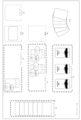
- FIG. 1 is a schematic diagram of a game toy according to this embodiment.
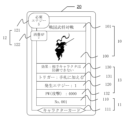
- FIG. 2 is a diagram showing an example of the front side of a character card 20.
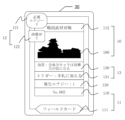
- FIG. 3 is a diagram showing an example of the front side of a field card 30.
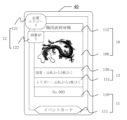
- FIG. 4 is a diagram showing an example of the front side of an event card 40.
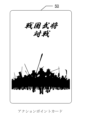
- FIG. 5 is a diagram showing an example of the front side of an action point card 50.
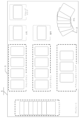
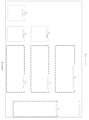
- FIG. FIG. 6 is a diagram showing an example of the play sheet 3.
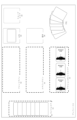
- FIG. 7 shows an example of the game toy 1 at the point where preparation for the game has been completed.
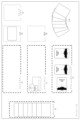
- FIG. 8 is an example for explaining the state of the start phase.
- FIG. 9 shows an example of the state of the main phase.
- FIG. 1 is a schematic diagram of a game toy according to this embodiment.
- FIG. 2 is a diagram showing an example of the front side of a character card 20.
- FIG. 3 is a diagram showing an example of the front side of a field card 30
- FIG. 10 shows an example of the state of the main phase.
- FIG. 11 shows an example of the state of the end phase.
- FIG. 12 shows an example of the state of the start phase.
- FIG. 13 shows an example of the state of the movement phase.
- FIG. 14 shows an example of the state of the main phase.
- FIG. 15 shows an example of the state of the main phase.
- FIG. 16 is an example of the overall configuration for explaining a game system according to the second embodiment.
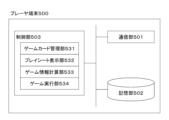
- FIG. 17 is a block diagram of the player terminal 500.
- the present invention is a game toy, and the game is a battle-type game in which a player battles an opponent by placing game items on a play sheet. Characters are associated with the game items, and the play sheet is assigned a plurality of areas in which the game items can be placed. The player places a game item in any area of the play sheet, and plays the game using the abilities of the character associated with the game item.
- First Embodiment 1 is a schematic diagram for explaining a game toy 1 according to this embodiment. As shown in FIG. 1, the game toy 1 includes a game card 2 and a play sheet 3.
- the game card 2 corresponds to the game item described above, and is a card that is owned by the player. Players can obtain the game card 2 by purchasing it, exchanging it with other players, or distributing it to players who meet certain conditions.
- the game cards 2 can be grouped according to works (series) that have the same worldview in anime, movies, manga, games, etc.
- works series
- a player builds it from game cards that belong to one group (work).
- players may use only cards from the same work, or they may use game cards that belong to different works.
- the game card 2 is composed of a front and a back. In this embodiment, multiple types of game cards 2 are prepared. The information written on the front of the game card 2 differs depending on the type of game card 2. Any number of types of game cards 2 may be provided, but the following explanation will be given using four types of game cards as examples: character cards 20, field cards 30, event cards 40, and action point (AP) cards 50.
- AP action point
- game cards 2 there are four types of game cards 2, as described above. All types of cards have in common that they contain at least either a character image (picture) or a description (such as the name of the work) that identifies the work to which the card belongs. They also have in common that the game cards 2 are associated with a character image or information about the character of the work to which the game card 2 belongs. A player who is familiar with the work can intuitively build a deck from game cards 2 of the same work by referring to the character image or information about the character, while a player who is unfamiliar with the work can build a deck by referring to the description. Characters are characters that appear in the work. Information about characters includes characteristic scenes, scenery, landscapes, backgrounds, buildings, the character's possessions, events, etc. that appear in the work.
- the game card 2 also has a correct position, which is the state in which the contents written on the game card 2 can be read as is from the player's perspective.
- the game card 2 can be placed in multiple states.
- the state in which the game card 2 is in the correct position is called the active state
- the state in which the game card 2 is rotated 90 degrees and facing sideways is called the rest state.
- a specific orientation may be determined in advance as the active state, and a state in which the orientation of the game card is changed from the specific orientation may be determined as the rest state.
- FIG. 2 is a diagram for explaining an example of the front side of a character card 20.
- the character card 20 is a card that is the basis of the game, and is a game card that is played against an opponent's character card 20.
- the character card 20 is a card that can be placed on the front line and energy line of the play sheet 3 described later.
- the character card 20 placed on the energy line is placed from the player's hand.
- the character card 20 placed on the front line may be placed from the player's hand, or may be moved from the energy line and placed.
- the character card 20 placed on the front line attacks the opponent's character card, or is attacked by the opponent's character card.
- Character card 20 has character information 10, card information 11, energy information 12, and ability information 13 written thereon.
- the character information 10 includes at least picture information 100 and a work name 101.
- the picture information 100 is a picture of a character appearing in a work or information about a character, and is a picture that allows at least a part of the ability information of the character card to be intuitively understood. Furthermore, even if the character is the same, there may be multiple game cards 2 with different character pictures, and each is treated as a different game card 2.
- the work name 101 indicates the name of the work to which the game card belongs. In the example of FIG. 2, "Sengoku Warlords Battle" is written as the work name 101. As described above, the player uses the work name 101 as a reference to build a deck using game cards with the same work name.
- the card information 11 includes at least a card number 110 and a card type 111 as information for distinguishing individual cards.
- the card number 110 is identification information that uniquely identifies the game card 2.
- "001" is written as the card number 110.
- the card type 111 is written as any one of information such as a character card, a field card, an event card, or an action point card.
- "character card” is written as the card type 111.
- the card information 11 may include, for example, a card name that allows the character card 20 itself or the ability information of the character card 20 to be intuitively recognized, color information to which the game card belongs that is grouped into multiple colors in advance, rarity information that is assigned according to the number of game cards issued, etc.
- the energy information 12 contains information used to determine whether the player meets the conditions for placing game cards from his/her hand on the play sheet 3.
- the energy information 12 includes at least generated energy information (corresponding to the second information) 120, required energy information (corresponding to the first information) 121, and consumed action point information (corresponding to the third information) 122.
- the generated energy information 120 contains the value of the generated energy, which is information that determines the conditions for a player to place a game card from his/her hand on the play sheet 3 when that game card is placed on the play sheet 3. In the example of FIG. 2, "1" is written as the generated energy information.
- the required energy information 121 indicates the required energy value, which is the condition for the player to place a game card 2 from his hand on the play sheet 3 (the condition for being able to place a game card).
- the required energy value is the condition for the player to place a game card 2 from his hand on the play sheet 3 (the condition for being able to place a game card).
- "5" is indicated as the required energy information.
- the player can place game cards with "5" or less indicated in the required energy information 121 from his hand on the play sheet 3.
- the consumed action point information 122 indicates the number of action point cards 50 that the player will consume when placing the character card 20 from his/her hand on the play sheet 3.
- the consumed action point information is set to "2," indicating that two action point cards 50 will be consumed to place the character card 20 from the hand.
- the ability information 13 includes at least effect information 130, trigger information 131, and power information 132, which are referenced during game battles.
- the ability information 13 may be included in the character information 10, but this explanation will use an example in which the ability information is not included in the character information.
- Effect information 130 describes the effect that can be obtained by game card 2 placed on play sheet 3 when the card is placed on play sheet 1.
- "opponent character cannot defend” is described.
- the trigger information 131 describes an action that can be executed when the player is attacked by an opponent while the character card 20 is placed on the play sheet 3 from the player's hand.
- "add to hand" is described as the trigger information.
- the power information 132 contains either an attack value or a defense value. If the attack value contained in the power information 132 is greater than the defense value of the opponent's character card 20, the character card 20 containing the attack value wins. In the example of FIG. 2, an "attack value of 4000" is contained as the power information 132.
- ⁇ Field Card> 3 is a diagram for explaining an example of the front side of a field card 30.
- the field card 30 is a card that supports the character card 20.
- the field card 30 is a card that can be placed on an energy line of a play sheet 3 described later.
- the field card 30 to be placed on the energy line is placed on the energy line from the player's hand.
- the field card 30 has character information 10, card information 11, energy information 12, and ability information 13 written thereon.
- the character information 10 includes picture information 100 and the work name 101.
- the picture information 100 is a picture of a character or information about a character that appears in the work to which the field card 30 belongs.
- the picture information 100 of the field card 30 may be a picture that is unrelated to the ability information of the field card 30, but a picture that allows at least a part of the ability information of the field card 30 to be intuitively understood is preferable.
- a picture that is related to the content of the work to which the field card 30 belongs and that allows at least a part of the ability information of the field card 30 to be intuitively understood is most preferable. By doing so, even if the player does not remember the ability information 13 of each card, part of the ability information can be intuitively understood, so there is no possibility that the game progress will be delayed due to understanding the abilities of the cards, and the interest of the game will not be lost.
- the card information 11, like the character card 20, includes at least a card number 110 and a card type 111.
- the card number 110 is shown as "002" and the card type 111 is shown as "field card.”
- the energy information 12 like the character card 20, includes generated energy information 120, required energy information 121, and consumed action point information 122.
- generated energy information 120 includes generated energy information 120, required energy information 121, and consumed action point information 122.
- consumed action point information 122 In the example of FIG. 3, "1" is entered as generated energy information, "3" as required energy information, and "2" as consumed action point information.
- the ability information 13 includes effect information 130 and trigger information 131, just like the character card 20. What makes it different from the character card 20 is that it does not include power information 132. In other words, unlike the character card 20, the field card 30 cannot be placed on the front line of the play sheet 3, and cannot attack the opponent's character card 20. In the example of Figure 3, the effect information 130 states "The attack power of all friendly characters is doubled," while the trigger information 131 states "Add to hand.”
- ⁇ Event Card> 4 is a diagram for explaining an example of the front side of an event card 40.
- the event card 40 is not a card to be placed in any area of the play sheet 3 described later, but a card that allows the player to execute the content written in the ability information of the event card 40 by placing the event card 40 from the hand on the play sheet 3 (appearing on the field).
- the event card 40 like the character card 20 and the field card 30, has character information 10, card information 11, energy information 12, and ability information 13 written thereon.
- the character information 10 includes picture 100 information and the work name 101.
- the picture information is a picture of a character appearing in the work to which the event card 40 belongs, or information about a character.
- the picture on the event card 40 may be a picture unrelated to the ability information of the event card 40, but it is preferable for the picture to be a characteristic scene, scenery, landscape, background, building, character possession, event, etc. that represents the work to which the event card 40 belongs.
- the card information 11 includes at least a card number 110 and a card type 111, similar to the character card 20 and the field card 30.
- the card number 110 is "003”
- the card type 111 is "event card”
- the work name 112 card is "Sengoku Warlord Battle”.
- the energy information 12, like the character cards 20 and field cards 30, includes required energy information 121 and consumed action point information 122. Since the event card 40 is not a card that is placed in any area of the play sheet 3, unlike the character cards 20 and field cards 30, it does not list generated energy information 120. In the example of Figure 4, "2" is listed as the required energy information and "1" is listed as the consumed action point information.
- the ability information 13 includes effect information 130 and trigger information 131.
- the effect information 130 states “Draw 3 cards from the deck”
- the trigger information 131 states “Draw 1 card from the deck.”
- FIG. 5 is a diagram for explaining an example of the front side of an action point card 50.
- the action point card 50 is a game card placed in the action point area of the play sheet 3 described later. Unlike the character card 20, the field card 30, and the event card 40, the action point card 50 is not played from the player's hand onto the play sheet 3, but is placed in a predetermined number in the action point card area from the beginning of the battle game. The initial state of the action point card 50 placed at the beginning of the battle is placed in an active state.
- the action point card 50 is a card that is consumed by the number of cards indicated by the consumed action point information 122 of the character card 20, the field card 30, and the event card 40 when the character card 20, the field card 30, and the event card 40 are placed from the hand onto the play sheet 3. That is, the player consumes the active point card to place one of the character card 20, the field card 30, and the event card 40 from the hand onto the play sheet 3. At this time, the player changes the active point cards from the active state to the rest state in the number of cards indicated by the consumed action point information of the game card drawn from the hand to indicate that they have been consumed.
- the action point card 50 like the character card 20, field card 30, and event card 40, has character information 10 including picture information 100 and work name 101. However, unlike the character card 20, field card 30, and event card 40, the card information 11, energy information 12, and ability information 13, which are information related to the game battle, do not need to be written on the action point card 50. For this reason, it is preferable for the action card 50 to be a card with a high design quality and collectible element. Since the action point card 50 is always placed on the play sheet 3 during the game battle and is always visible to the opposing player, making the action point card 50 a card with a high design quality will increase the player's satisfaction with the card game.
- Game Card 2 The back of Game Card 2 is the same for all game cards, so the player cannot tell what the front is from the back.
- the play sheet 3 will be described with reference to FIG. 6.
- the top of the play sheet 3 faces the opponent.
- the play sheet 3 is formed in a rectangular shape, for example a rectangle.
- the play sheet 3 is preferably formed to be foldable so that it can be carried around.
- the play sheet 3 is formed to be the same size as the game card 2, so that it can be carried together with the game card.
- the play sheet 3 is assigned multiple areas (regions). These multiple areas indicate the locations where the player places the game cards 2. In the following explanation, an example is given in which there are seven areas named deck area 30, energy line 31, front line 32, action point area 33, life area 34, remove area 35, and outside area 36. Note that these seven areas only need to have different roles, and the names of the areas can be any names that the player can understand when playing.
- the energy line 31, the front line 32, and the action point area 33 are assigned to have the same size and shape.
- the front line 32, on which the character cards 20 that attack the opponent are placed, is formed along the edge of the play sheet on the opponent's side.
- the action point area 33 is formed along the edge on the player's side.
- the energy line 31 is formed between the front line 32 and the action point area 33, and along the front line 32 and the action point area 33.
- the deck area 30 is an area where the player places the decks he or she has constructed, stacked face down.
- the energy line (first placement area) 31 is an area where character cards 20 and field cards 30 are placed.
- the game cards placed on the energy line are character cards 20 or field cards 30 selected by the player from their hand. If there are no character cards 20 placed on the energy line 31 or the total energy is "0", the player selects and places a character card 20 or field card 30 whose required energy information is 0.
- the front line (second placement area) 32 is an area where character cards 20 are placed. During a player's turn, the player uses the character cards 20 placed on the front line to attack the character cards 20 placed in the opponent's front area 32. During the opponent's turn, the character cards 20 placed on the front line 32 are attacked by the character cards 20 placed in the opponent's front area 32.
- the number of character cards 20 placed on the front line 32 is predetermined, and in the following explanation, it is set to four.
- the action point area 33 is an area where action point cards 50 are placed.
- the maximum number of action point cards 50 that can be placed in the action point area 33 is predetermined. In the following explanation, an example in which the maximum number is three cards is used.
- the life area 34 is an area where game cards 2 are placed. In the game preparation stage, the game cards 2 in the life area 34 are placed face down. When the attack value of a character card 20 placed on the front line 32 becomes 0 due to an attack from the opposing player, the player becomes able to draw a game card 2 placed in the life area 34.
- the number of game cards 2 placed in the life area 34 is predetermined, and in the following explanation, it is set to seven.
- the remove area 35 is an area where a player can temporarily move a game card from the energy line 31 or the front line 32 to place it when the player wants to play a new game card from his or her hand but the maximum number of game cards have been placed on the energy line 31 or the front line 32 and no further cards can be placed. Game cards placed in the remove area 35 are placed face up.
- the outside area 36 is an area where character cards 20 that have been attacked by the opposing player and have been removed from the game, and event cards 40 that have been used, are placed. Game cards placed in the outside area 36 cannot be used again until the end of the game.
- ⁇ Game Preparation> Place your play sheet 3 and your opponent's play sheet 3 facing each other.
- the player selects game cards 2 of the same work name to construct a deck.
- the number of cards to be constructed is predetermined. In the following explanation, an example of a deck containing 50 cards will be explained. The player draws a certain number of game cards from the deck they have constructed as their hand. In this example, the player draws seven game cards 2. The player places a predetermined number of game cards 2 face down in the life area. In this example, the number of game cards 2 placed in the life area is seven. The player places three action point cards 50 in a resting state in the action point area.
- Game Flow> When the game starts, the opponent decides who will go first and who will go second, and turns are then taken alternately starting with the first player. Each turn consists of multiple phases, such as a start phase, movement phase, main phase, attack phase, and end phase. In the start phase, all game cards 2 placed in the front line area 32, the energy line area 31, and the action point area 33 are activated. Next, one game card 2 is drawn from the deck.
- the movement phase it is possible to move character cards 20 placed in the energy line area to the front line area.
- the maximum number of game cards 2 placed in the front area is four, the player can move any of the four character cards 20 to the remove area.
- the player moves the character card 20 placed in the energy line area to the front line area. It is also possible to swap and place a character card 20 placed in the energy line area with a character card 20 placed in the front line area.
- At least one of the following can be performed: placing a character card 20 from the hand on the front line 32 or energy line 31; placing a field card 30 from the hand on the energy line 31; and placing an event card 40 on the play sheet 3.
- the character cards 20, field cards 30, and event cards 40 that can be placed from the hand are those whose required energy information 121 value is equal to or less than the total value of the generated energy information 120 of each game card 2 placed on the energy line 31 and whose consumed action point information 122 value is equal to or less than the action point card 50 that is placed in an active state in the action point area 33.
- the character cards 20 and field cards 30 that satisfy this condition are placed in a resting state.
- character cards 20 placed on the front line attack defensive character cards 20 placed on the opponent's front line.
- the player changes the character card 20 to be attacked from the active state to the rest state.
- the character card 20 placed on the opponent's front line is moved off the field. At this time, the contents written in the trigger information of the character card 20 to be moved off the field are checked and those contents are executed.
- attack value written in the power information of the attacking character card 20 is greater than the defense value written in the power information of the character card 20 placed on the opponent's front line, the opponent being attacked may draw a character card 20 from the life area. If the drawn game card 2 is used to defend, the attacking character card 20 will be defeated. If the player wishes to attack another character card, the player changes the state of the character card 20 to be attacked from the active state to the rest state and then attacks.
- the attack phase ends. It should be noted that a player can also pass the attack phase of the current turn in preparation for an attack on the next turn. In the end phase, the game cards 2 placed in the rest state on the play sheet 3 are changed to the active state, and the game ends.
- Example 1 A first example of this embodiment will be described. In the following description, it is assumed that the preparation for the game has already been completed, the player has seven game cards 2 in his/her hand, the seven game cards are placed face down in the life area of the play sheet 3, and three action point cards 50 are placed in a resting state in the action point area.
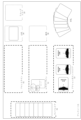
- Figure 7 shows the state of the game toy 1 when the preparation for the game has been completed.
- the player changes the three action point cards 50 placed in the action point area 33 from the rest state to the active state.
- the player draws one game card 2 from the deck.
- all of the action point cards 50 in the action point area 33 are in the active state.
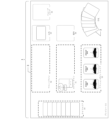
- the player moves any number of character cards 20 placed on the energy lines 31 to the front area 32. For example, if there are no character cards 20 placed on the energy lines 31, such as in the first turn, the game moves to the main phase.
- players At least one of the following can be performed: placing a character card 20 from the hand on the front line 32 or the energy line 31; placing a field card 30 from the hand on the energy line 31; and placing an event card 40 on the play sheet 3. Since no game cards 2 are placed on the energy line 31 in the first turn, the character cards 20, field cards 30, and event cards 40 that can be placed on the energy line 31 or the front line 32 are game cards 2 whose required energy information 121 is "0". Furthermore, the character cards 20, field cards 30, and event cards 40 whose consumed action point information 122 is "3" or less are included. In the example of FIG. 9, a character card 20 whose required energy information 121 is "0" and whose consumed action point information 122 is "1" is placed on the energy line 31.
- the game card is changed from a resting state to an active state, and the content described in the effect of the game card is activated.
- the action point cards 50 in the action point area 33 are changed to a resting state by the "1" card described in the consumed action point information 122 of the character card 20 placed on the energy line 31, and then the character card 20 is changed to an active state.
- the player attacks the character cards 20 placed on the opponent's front line with the character cards 20 placed on the front line 32.
- the game moves to the end phase.
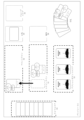
- the end phase as shown in FIG. 11, a player changes all game cards on his/her play sheet to the active state and ends his/her turn.
- Example 2 A second example of the present embodiment will be described below.
- a case will be described in which several turns have already been completed, and in the start phase, as shown in FIG. 12, two character cards 20 with required energy of "0”, generated energy of "2”, and consumed action points of "1” are placed on the energy line 31, and a field card 30 with required energy of "2", generated energy of "3", and consumed action points of "1" is held in the hand.
- Figure 13 shows an example of moving one of the character cards 20 placed on the energy line 31 to the front area 32.
- the total generated energy information of the game cards placed on the energy line 31 is "2", so the player can place a character card 20 or a field card 30 whose required energy information is "2" or less on the energy line 31.
- the player can place a field card 30 with a required energy of "2", generated energy of "3", and consumed action points of "1" on the energy line 31.
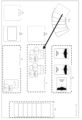
- Figure 14 shows an example in which one of the action point cards 50 in the action point area 33 is changed from active to rest, and a field card 30 with required energy of "2", generated energy of "3", and consumed action points of "1" is placed from the hand onto the energy line 31.
- the player attacks the character cards 20 placed on the front line 32 against the character cards 20 placed on the opponent's front line, and then the game moves to the end phase.
- the player changes all game cards on his or her play sheet to the active state, as shown in Figure 15, and ends his or her turn.
- the embodiment of the present invention has the following advantages.
- (1) The character cards 20, field cards 30, and event cards 40 are provided with required energy information 121, which is a condition necessary for placing them on the energy line 31 or front line 32 of the play sheet 3, and generated energy information 120, which is an element of the condition of the required energy information 121 of other character cards 20, field cards 30, and event cards 40.
- required energy information 121 which is a condition necessary for placing them on the energy line 31 or front line 32 of the play sheet 3
- generated energy information 120 which is an element of the condition of the required energy information 121 of other character cards 20, field cards 30, and event cards 40.
- the play sheet 3 has two areas with different roles: the energy line 31 where game cards 2 that are elements of the required energy information are placed, and the front line 32 where only game cards 2 that are not elements of the required energy information and that attack or defend are placed.
- the energy line 31 where game cards 2 that are elements of the required energy information are placed
- the front line 32 where only game cards 2 that are not elements of the required energy information and that attack or defend are placed.
- the play sheet 3 has an action point area 33 in which action point cards 50 are placed.
- Action point cards 50 placed in the action point area 33 count action points according to their placement state (active state, rest state). This means that there is no need to write generated energy information 120, required energy information 121, or other text information related to the game on the action point card 50, and as a result, the action point card 50 can be designed to be highly collectible, and can be a highly valuable trading card. And because the action point card 50 is placed in the action point area 33, which is a dedicated placement area, it can show opponents that you are holding a rare card.
- the back side of the game card 2 is defined as being common to all game cards 2, but the definitions of the front and back sides may be reversed.
- Fig. 16 is a diagram showing an example of the overall configuration of a game system in this embodiment. As shown in Fig. 16, the game system is configured with a player terminal 500 prepared for each of players A and B of the game, and a game server 600.
- the player terminal 500 is a computer capable of executing a game program, and is connected to a communication line N via a wireless communication base station or the like, and can perform data communication with the game server 600.
- the player terminal 500 is, for example, a smartphone, a mobile phone, a portable game device, a stationary home game device, an arcade game device, a personal computer, a tablet computer, a controller for a stationary home game device, etc. Basically, there are multiple player terminals 500, and each is operated by a player.
- the game server 600 is a server system that includes one or more server devices and storage devices.
- the game server 600 controls the card game of the above embodiment, provides various services for operating the card game, manages data required for operating the game, and distributes game programs and data required for running the game on the player terminals 500.
- FIG. 17 is a block diagram showing an example of the configuration of a player terminal 500. As shown in FIG. 17, the player terminal 500 has a communication unit 501, a storage unit 502, and a control unit 503.
- the communication unit 501 is a processing unit that controls communications with other devices such as the game server 600 and other player terminals 500, and is, for example, a communication interface such as a network interface card.
- the storage unit 502 stores various data and programs executed by the control unit 503, and is, for example, a memory or a hard disk.
- the control unit 503 is a processing unit that controls the entire player terminal 500, and is, for example, a processor.
- the control unit 503 includes a game card management unit 531, a play sheet display unit 532, a game information calculation unit 533, and a game execution unit 534.
- Each processing unit is an example of an electronic circuit that the processor has, or an example of a process that the processor executes.
- the game card management unit 531 manages the character cards 20, field cards 30, event cards 40, and action point (AP) cards 50 described above.
- the play sheet display unit 532 displays the play sheets 3 of the player and the opposing player on the player terminal 500.
- the game information calculation unit 533 performs calculations necessary for the progress of the game using the generated energy information 120, required energy information 121, and consumed action point information 122, etc., described above.
- the game execution unit 534 manages and executes the direction and progress of the match. With such a terminal, a game can be played without using a physical game card.
- the control of the card game described in embodiment 1 is executed by the player terminal 500, and matching of opponent players and overall game management are performed by the game server 600, so that the card game can be played online, thereby increasing the interest of players.
- the game is played via the game server 600, but it is also possible to execute the game using only the player terminal 500.
Landscapes
- Engineering & Computer Science (AREA)
- Multimedia (AREA)
- Physics & Mathematics (AREA)
- Optics & Photonics (AREA)
- Toys (AREA)
Priority Applications (1)
| Application Number | Priority Date | Filing Date | Title |
|---|---|---|---|
| AU2023388942A AU2023388942A1 (en) | 2022-12-05 | 2023-11-22 | Game toy and program |
Applications Claiming Priority (2)
| Application Number | Priority Date | Filing Date | Title |
|---|---|---|---|
| JP2022194551A JP7444956B1 (ja) | 2022-12-05 | 2022-12-05 | ゲーム玩具、及びプログラム |
| JP2022-194551 | 2022-12-05 |
Publications (1)
| Publication Number | Publication Date |
|---|---|
| WO2024122337A1 true WO2024122337A1 (ja) | 2024-06-13 |
Family
ID=90096919
Family Applications (1)
| Application Number | Title | Priority Date | Filing Date |
|---|---|---|---|
| PCT/JP2023/041918 Ceased WO2024122337A1 (ja) | 2022-12-05 | 2023-11-22 | ゲーム玩具、及びプログラム |
Country Status (6)
| Country | Link |
|---|---|
| US (1) | US20240181329A1 (enExample) |
| JP (2) | JP7444956B1 (enExample) |
| CN (1) | CN117679738A (enExample) |
| AU (1) | AU2023388942A1 (enExample) |
| CA (1) | CA3220852A1 (enExample) |
| WO (1) | WO2024122337A1 (enExample) |
Families Citing this family (3)
| Publication number | Priority date | Publication date | Assignee | Title |
|---|---|---|---|---|
| JP7733057B2 (ja) * | 2023-05-25 | 2025-09-02 | 株式会社バンダイ | ゲーム玩具 |
| JP7737423B2 (ja) * | 2023-06-05 | 2025-09-10 | 株式会社バンダイ | プログラム、端末、及びゲーム方法 |
| JP2025150102A (ja) * | 2024-03-27 | 2025-10-09 | 株式会社バンダイ | ゲーム玩具、及びプログラム |
Citations (4)
| Publication number | Priority date | Publication date | Assignee | Title |
|---|---|---|---|---|
| JP2003175145A (ja) * | 2001-12-10 | 2003-06-24 | Konami Co Ltd | カードゲーム及びカードゲームのプレイ方法 |
| JP2004041523A (ja) * | 2002-07-12 | 2004-02-12 | Konami Co Ltd | 対戦型カードゲーム |
| JP2017023177A (ja) * | 2015-07-15 | 2017-02-02 | 株式会社バンダイ | ゲーム用物品、プログラム及びゲーム装置 |
| JP3211524U (ja) * | 2017-05-08 | 2017-07-20 | 株式会社ファンディール | トレーディングカードゲーム用カード |
-
2022
- 2022-12-05 JP JP2022194551A patent/JP7444956B1/ja active Active
-
2023
- 2023-11-16 CN CN202311525064.9A patent/CN117679738A/zh active Pending
- 2023-11-22 AU AU2023388942A patent/AU2023388942A1/en active Pending
- 2023-11-22 WO PCT/JP2023/041918 patent/WO2024122337A1/ja not_active Ceased
- 2023-11-22 CA CA3220852A patent/CA3220852A1/en active Pending
- 2023-12-04 US US18/527,717 patent/US20240181329A1/en active Pending
-
2024
- 2024-02-21 JP JP2024024250A patent/JP2024081158A/ja active Pending
Patent Citations (4)
| Publication number | Priority date | Publication date | Assignee | Title |
|---|---|---|---|---|
| JP2003175145A (ja) * | 2001-12-10 | 2003-06-24 | Konami Co Ltd | カードゲーム及びカードゲームのプレイ方法 |
| JP2004041523A (ja) * | 2002-07-12 | 2004-02-12 | Konami Co Ltd | 対戦型カードゲーム |
| JP2017023177A (ja) * | 2015-07-15 | 2017-02-02 | 株式会社バンダイ | ゲーム用物品、プログラム及びゲーム装置 |
| JP3211524U (ja) * | 2017-05-08 | 2017-07-20 | 株式会社ファンディール | トレーディングカードゲーム用カード |
Also Published As
| Publication number | Publication date |
|---|---|
| JP2024081158A (ja) | 2024-06-17 |
| CN117679738A (zh) | 2024-03-12 |
| CA3220852A1 (en) | 2024-06-05 |
| AU2023388942A1 (en) | 2025-03-20 |
| JP2024081091A (ja) | 2024-06-17 |
| US20240181329A1 (en) | 2024-06-06 |
| JP7444956B1 (ja) | 2024-03-06 |
Similar Documents
| Publication | Publication Date | Title |
|---|---|---|
| WO2024122337A1 (ja) | ゲーム玩具、及びプログラム | |
| US20120015701A1 (en) | Dynamic card system and method | |
| JP5926424B2 (ja) | 制御方法、コンピュータ及び制御プログラム | |
| JP3863437B2 (ja) | ゲーム装置、ゲーム制御プログラムおよびそのプログラムが記録された記録媒体 | |
| JP6789651B2 (ja) | 制御プログラム、コンピュータ及び制御方法 | |
| JP6854012B2 (ja) | ゲームシステム、ゲーム制御装置、及びプログラム | |
| JP2021007887A (ja) | 制御プログラム、コンピュータ及び制御方法 | |
| JP5411374B1 (ja) | ゲーム制御システム、サーバ装置及びプログラム | |
| JP7691476B1 (ja) | ゲーム玩具、及びプログラム | |
| JP5309509B2 (ja) | ゲーム装置制御プログラム、ゲーム装置制御プログラムを記録したコンピュータ読み取り可能な記録媒体及びゲーム装置 | |
| JP5756218B1 (ja) | 制御方法、コンピュータ及び制御プログラム | |
| WO2024203181A1 (ja) | ゲーム玩具 | |
| JP6832008B2 (ja) | ゲームシステム、ゲーム制御装置、及びプログラム | |
| JP7737423B2 (ja) | プログラム、端末、及びゲーム方法 | |
| JP7357860B2 (ja) | ゲーム制御方法、コンピュータ及び制御プログラム | |
| JP2002331168A (ja) | ゲーム装置、ゲーム制御方法およびその記録媒体ならびにコンピュータプログラム | |
| JP2001246041A (ja) | カードゲーム装置およびゲームデータ記録媒体あるいはゲームデータ | |
| JP6829238B2 (ja) | ゲーム制御方法、コンピュータ及び制御プログラム | |
| JP2025131507A (ja) | プログラム及びゲーム装置 | |
| KR20250127706A (ko) | 프로그램, 게임 장치, 및 제공 관리 장치 | |
| JP5377794B1 (ja) | ゲーム制御システム、サーバ装置及びプログラム | |
| JP2016187586A (ja) | ゲーム制御方法、コンピュータ及び制御プログラム | |
| JP2014210164A (ja) | ゲーム制御システム、サーバ装置、プログラム及び方法 |
Legal Events
| Date | Code | Title | Description |
|---|---|---|---|
| 121 | Ep: the epo has been informed by wipo that ep was designated in this application |
Ref document number: 23900456 Country of ref document: EP Kind code of ref document: A1 |
|
| WWE | Wipo information: entry into national phase |
Ref document number: AU2023388942 Country of ref document: AU |
|
| WWE | Wipo information: entry into national phase |
Ref document number: 2501001478 Country of ref document: TH |
|
| ENP | Entry into the national phase |
Ref document number: 2023388942 Country of ref document: AU Date of ref document: 20231122 Kind code of ref document: A |
|
| WWE | Wipo information: entry into national phase |
Ref document number: 11202501690Y Country of ref document: SG |
|
| WWP | Wipo information: published in national office |
Ref document number: 11202501690Y Country of ref document: SG |
|
| NENP | Non-entry into the national phase |
Ref country code: DE |
|
| 122 | Ep: pct application non-entry in european phase |
Ref document number: 23900456 Country of ref document: EP Kind code of ref document: A1 |