WO2024117099A1 - 検査装置 - Google Patents
検査装置 Download PDFInfo
- Publication number
- WO2024117099A1 WO2024117099A1 PCT/JP2023/042440 JP2023042440W WO2024117099A1 WO 2024117099 A1 WO2024117099 A1 WO 2024117099A1 JP 2023042440 W JP2023042440 W JP 2023042440W WO 2024117099 A1 WO2024117099 A1 WO 2024117099A1
- Authority
- WO
- WIPO (PCT)
- Prior art keywords
- height information
- unit
- inspected
- inspection
- image
- Prior art date
- Legal status (The legal status is an assumption and is not a legal conclusion. Google has not performed a legal analysis and makes no representation as to the accuracy of the status listed.)
- Ceased
Links
Images



Classifications
-
- G—PHYSICS
- G01—MEASURING; TESTING
- G01N—INVESTIGATING OR ANALYSING MATERIALS BY DETERMINING THEIR CHEMICAL OR PHYSICAL PROPERTIES
- G01N23/00—Investigating or analysing materials by the use of wave or particle radiation, e.g. X-rays or neutrons, not covered by groups G01N3/00 – G01N17/00, G01N21/00 or G01N22/00
- G01N23/02—Investigating or analysing materials by the use of wave or particle radiation, e.g. X-rays or neutrons, not covered by groups G01N3/00 – G01N17/00, G01N21/00 or G01N22/00 by transmitting the radiation through the material
- G01N23/04—Investigating or analysing materials by the use of wave or particle radiation, e.g. X-rays or neutrons, not covered by groups G01N3/00 – G01N17/00, G01N21/00 or G01N22/00 by transmitting the radiation through the material and forming images of the material
-
- G—PHYSICS
- G01—MEASURING; TESTING
- G01N—INVESTIGATING OR ANALYSING MATERIALS BY DETERMINING THEIR CHEMICAL OR PHYSICAL PROPERTIES
- G01N23/00—Investigating or analysing materials by the use of wave or particle radiation, e.g. X-rays or neutrons, not covered by groups G01N3/00 – G01N17/00, G01N21/00 or G01N22/00
- G01N23/02—Investigating or analysing materials by the use of wave or particle radiation, e.g. X-rays or neutrons, not covered by groups G01N3/00 – G01N17/00, G01N21/00 or G01N22/00 by transmitting the radiation through the material
- G01N23/04—Investigating or analysing materials by the use of wave or particle radiation, e.g. X-rays or neutrons, not covered by groups G01N3/00 – G01N17/00, G01N21/00 or G01N22/00 by transmitting the radiation through the material and forming images of the material
- G01N23/046—Investigating or analysing materials by the use of wave or particle radiation, e.g. X-rays or neutrons, not covered by groups G01N3/00 – G01N17/00, G01N21/00 or G01N22/00 by transmitting the radiation through the material and forming images of the material using tomography, e.g. computed tomography [CT]
-
- G—PHYSICS
- G01—MEASURING; TESTING
- G01N—INVESTIGATING OR ANALYSING MATERIALS BY DETERMINING THEIR CHEMICAL OR PHYSICAL PROPERTIES
- G01N23/00—Investigating or analysing materials by the use of wave or particle radiation, e.g. X-rays or neutrons, not covered by groups G01N3/00 – G01N17/00, G01N21/00 or G01N22/00
- G01N23/02—Investigating or analysing materials by the use of wave or particle radiation, e.g. X-rays or neutrons, not covered by groups G01N3/00 – G01N17/00, G01N21/00 or G01N22/00 by transmitting the radiation through the material
- G01N23/06—Investigating or analysing materials by the use of wave or particle radiation, e.g. X-rays or neutrons, not covered by groups G01N3/00 – G01N17/00, G01N21/00 or G01N22/00 by transmitting the radiation through the material and measuring the absorption
- G01N23/18—Investigating the presence of flaws defects or foreign matter
Definitions
- the present invention relates to an inspection device.
- the state of connection between electronic components e.g., pins
- the wiring on the board by solder hereinafter referred to as the "solder joint state"
- tomosynthesis-type X-ray inspection equipment is used.
- inspection must be performed based on the exact position of the surface (top surface) of the electronic circuit board, so there are inspection equipment that irradiate the surface of the electronic circuit board with laser light, obtain height information of the surface of the electronic circuit board from the reflected light, and eliminate the effects of warping and bending based on this height information (see, for example, Patent Document 1).
- cross-sectional image In order to generate a three-dimensional reconstructed image (cross-sectional image) from an X-ray transmission image to inspect the state of solder joints, it is necessary to obtain information on the warping and bending of the electronic board and, based on this information, accurately select the cross-sectional image (cross-sectional image of the board surface) to be used for inspection.
- the surface of the electronic board may be coated with a resist or have electronic components attached, the position at which the laser light can be irradiated to measure the height of the board surface is limited. For example, a pad surface on the board with no electronic components attached is provided, and the height is measured by irradiating this pad surface with laser light.
- detectors for detecting X-ray transmission images have become larger and have higher resolution, increasing the amount of data per cross-sectional image, and so there is a tendency for the amount of processing required to select the cross-sectional image of the inspection target to also increase.
- the present invention has been made in consideration of these problems, and aims to provide an inspection device configured to acquire height information of an electronic board (inspected object) that is the object of inspection, determine a search range in a reconstructed image generated from a transmission image based on this height information, and compare the reconstructed image (cross-sectional image) within the determined search range with a reference image to determine the cross-sectional image of the inspection object.
- an inspection device configured to acquire height information of an electronic board (inspected object) that is the object of inspection, determine a search range in a reconstructed image generated from a transmission image based on this height information, and compare the reconstructed image (cross-sectional image) within the determined search range with a reference image to determine the cross-sectional image of the inspection object.
- the inspection device has a radiation source, a holding unit that holds an object to be inspected, a detector, a height information acquisition unit that acquires height information of the object to be inspected, a drive unit that changes the relative positions of the radiation source, the object to be inspected held by the holding unit, and the detector, and the relative positions of the object to be inspected held by the holding unit and the height information acquisition unit, and a control unit, and the control unit executes the steps of acquiring height information of the object to be inspected by the height information acquisition unit, generating cross-sectional images of the object to be inspected from a plurality of transmission images of the object to be inspected obtained by detecting radiation emitted from the radiation source and passing through the object to be inspected by the detector when the radiation source, the object to be inspected held by the holding unit, and the detector are in a predetermined relative position by the drive unit, determining a predetermined range in the height direction based on the height information, determining a cross-section
- the control unit of the inspection device desirably moves the object to be inspected held by the holding unit relative to the height information acquisition unit using the drive unit, acquires height information of multiple positions on the substrate surface of the object to be inspected using the height information acquisition unit, and determines height information of the substrate surface at a predetermined position in an area including the multiple positions from the height information of the multiple positions.
- the control unit of the inspection device desirably moves the object to be inspected held by the holding unit relative to the height information acquisition unit using the drive unit, acquires height information of multiple positions on the object to be inspected using the height information acquisition unit, removes height information other than that of the substrate surface from the height information of the multiple positions by calculation, and determines height information of the substrate surface at a predetermined position in an area including the multiple positions.
- the control unit of the inspection device acquires the height information at the multiple positions while changing the relative position between the height information acquisition unit and the test object held by the holding unit using the drive unit.
- the control unit of the inspection device preferably acquires the position of the substrate surface of the object to be inspected from image data of the object to be inspected that has been acquired in advance, and acquires the height information of the acquired position by the height information acquisition unit.
- the control unit of the inspection device in the step of acquiring the height information, it is desirable for the control unit of the inspection device according to the present invention to acquire the position of the substrate surface from color information of the object to be inspected in the image data.
- the control unit of the inspection device preferably acquires height information of the multiple positions while changing the relative position of the object to be inspected held by the holding unit with respect to the height information acquisition unit using the drive unit, and determines height information of the substrate surface of the object to be inspected from the height information of the multiple positions.
- the height information acquisition unit of the inspection device according to the present invention is a displacement meter that acquires the height information on the top or bottom surface of the substrate of the object to be inspected.
- the height measurement unit acquires height information of the object to be inspected, and then the transmission image is acquired to generate a reconstructed image of the object to be inspected. Based on the height information from the height measurement unit, the search range of the inspection surface in the reconstructed image is determined, and the cross-sectional image of the object to be inspected is compared with the reference image within this range to select the cross-sectional image of the inspection surface.
- the time required to select the cross-sectional image of the inspection surface can be shortened compared to when comparing with all cross-sectional images.
- FIG. 1 is an explanatory diagram for explaining a configuration of an inspection device according to an embodiment of the present invention.
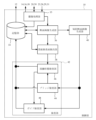
- FIG. 2 is an explanatory diagram for explaining each functional block of a control unit of the inspection device. 4 is a flowchart for explaining an inspection process in the inspection device.
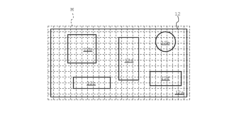
- FIG. 2 is an explanatory diagram showing an example of an object to be inspected by the inspection device.
- 10 is a flowchart for explaining a substrate inspection surface detection process.
- 11 is an explanatory diagram for explaining the relationship between height information and a search range in a reconstructed image.
- FIG. 13 is a flowchart for explaining a modified example of a method for acquiring height information.
- 10 is an explanatory diagram showing an example of a measurement position when acquiring height information of the entire surface of the upper surface of a substrate of an object to be inspected.
- FIG. 1 is an explanatory diagram for explaining a configuration of an inspection device according to an embodiment of the present invention.
- FIG. 2 is an explanatory diagram for
- the inspection device 1 is configured to have a control unit 10, which is made up of a processing device such as a personal computer (PC), a monitor 11, and an imaging unit 32.
- the imaging unit 32 further has a radiation quality change unit 14, a radiation generator drive unit 16, a substrate holder drive unit 18, a detector drive unit 20, a radiation generator 22, a substrate holder 24, a detector 26, and a height information acquisition unit 50.
- the radiation generator 22 is a device (ray source) that generates radiation such as X-rays, and generates radiation by colliding accelerated electrons with a target such as tungsten or diamond.
- a target such as tungsten or diamond.
- the radiation in this embodiment is described as being X-rays, the radiation is not limited to this.
- the radiation may be alpha rays, beta rays, gamma rays, ultraviolet rays, visible light, or infrared rays.
- the radiation may also be microwaves or terahertz waves.
- the board holding unit 24 holds the electronic board, which is the object under inspection 12.
- the object under inspection 12 held by the board holding unit 24 is irradiated with radiation generated by the radiation generator 22, and the radiation that has passed through the object under inspection 12 is detected by the detector 26 to capture an image.
- the radiation transmission image of the object under inspection 12 captured by the detector 26 will be referred to as a "transmission image.”
- the board holding unit 24, which holds the electronic board, which is the object under inspection 12, and the detector 26 are moved relative to the radiation generator 22 to obtain multiple transmission images, and a reconstructed image (cross-sectional image) is generated from these transmission images.
- the transmission image captured by the detector 26 is sent to the control unit 10, and is reconstructed into an image including the three-dimensional shape of the solder at the joint using a known technique such as the Filtered Backprojection (FBP) method.
- the reconstructed image and the transmission image are stored in a storage unit (e.g., the storage unit 34 described later) in the control unit 10 or in an external storage unit (not shown).
- a storage unit e.g., the storage unit 34 described later
- an external storage unit not shown.
- an image reconstructed into a three-dimensional image including the three-dimensional shape of the solder at the joint based on the transmission image is referred to as a "reconstructed image”.
- An image obtained by cutting out an arbitrary cross section from the reconstructed image is referred to as a "cross-sectional image”.
- Such a reconstructed image and cross-sectional image are output to the monitor 11.
- the monitor 11 displays not only the reconstructed image and the cross-sectional image, but also the inspection results of the solder joint state described later.
- the reconstructed image in this embodiment is also called a "planar CT" because it is reconstructed from a planar image (transmission image) captured by the detector 26 as described above.
- the radiation quality change unit 14 changes the radiation quality generated by the radiation generator 22.
- the radiation quality is determined by the voltage (hereafter referred to as “tube voltage”) applied to accelerate the electrons to be collided with the target, and the current (hereafter referred to as "tube current") that determines the number of electrons.
- the radiation quality change unit 14 is a device that controls the tube voltage and tube current. This radiation quality change unit 14 can be realized using known technology such as a transformer or rectifier.
- the quality of radiation is determined by the brightness and hardness of the radiation (spectral distribution of radiation).
- Increasing the tube current increases the number of electrons that collide with the target, and the number of radiation photons generated.
- the brightness of the radiation increases.
- some components such as capacitors are thicker than other components, and in order to capture a transmission image of these components, it is necessary to irradiate them with radiation of high brightness.
- the brightness of the radiation is adjusted by adjusting the tube current.
- increasing the tube voltage increases the energy of the electrons that collide with the target, and the energy (spectrum) of the generated radiation increases.
- the tube voltage can be used to adjust the contrast of a transmission image.
- the radiation generator driving unit 16 has a driving mechanism such as a motor (not shown) and can move the radiation generator 22 up and down along axis A passing through its focal point (axis (optical axis) passing through the center of the radiation direction of the radiation emitted from the radiation generator 22, the direction of this axis being referred to as the "Z-axis direction").
- a driving mechanism such as a motor (not shown) and can move the radiation generator 22 up and down along axis A passing through its focal point (axis (optical axis) passing through the center of the radiation direction of the radiation emitted from the radiation generator 22, the direction of this axis being referred to as the "Z-axis direction").
- This makes it possible to change the distance between the radiation generator 22 and the inspected object (electronic board) 12 held by the board holding unit 24 to change the irradiation field and change the magnification ratio of the transmitted image captured by the detector 26.
- the position of the radiation generator 22 in the Z-axis direction is detected
- the detector driving unit 20 also has a driving mechanism such as a motor (not shown) and rotates the detector 26 along the detector rotation track 30.
- the substrate holding unit driving unit 18 also has a driving mechanism such as a motor (not shown) and moves the substrate holding unit 24 in parallel on the plane on which the substrate rotation track 28 is provided.
- the substrate holding unit 24 is configured to rotate on the substrate rotation track 28 in conjunction with the rotation of the detector 26. This makes it possible to capture multiple transmission images with different projection directions and projection angles while changing the relative positional relationship between the test object 12 held by the substrate holding unit 24 and the radiation generator 22.
- the area on the test object 12 where a transmission image can be acquired is determined by the size of the area where the detector 26 detects radiation and the relative positions of the radiation generator 22, the test object 12 (substrate holding unit 24), and the detector 26.
- the area where this transmission image can be acquired is called the "FOV (field of view)".
- the rotation radius of the substrate rotation orbit 28 and the detector rotation orbit 30 is not fixed, but can be freely changed. This makes it possible to arbitrarily change the irradiation angle of the radiation irradiated to the substrate of the inspected object 12 and the components attached to this substrate.
- the orbital plane of the substrate rotation orbit 28 and the detector rotation orbit 30 is perpendicular to the Z-axis direction described above, and if the directions perpendicular to this orbital plane are the X-axis direction and the Y-axis direction, the positions of the substrate holding part 24 in the X-axis direction and the Y-axis direction are detected by a substrate position detection part (not shown) and output to the control part 10, and the positions of the detector 26 in the X-axis direction and the Y-axis direction are detected by a detector position detection part (not shown) and output to the control part 10.
- the height information acquisition unit 50 is disposed above the board holding unit 24 and is configured as a displacement meter that acquires height information of the top surface of the electronic board, which is the object to be inspected 12 held by the board holding unit 24.
- This displacement meter can be configured, for example, to detect the position (height) of the top surface of the electronic board in the Z-axis direction by irradiating the top surface of the electronic board with laser light and receiving the reflected light, but is not limited to this configuration. For example, it may be configured to acquire height information by contacting a probe with the top surface of the electronic board.
- the height information acquisition unit 50 in the following description is assumed to be a displacement meter that acquires height information using laser light, as described above.
- the board constituting the object to be inspected 12 is not warped and does not bend when held by the board holding unit 24, the top surface of the board (board inspection surface described later) is flat, and its position in the Z direction is known from information such as the design of the electronic board (this ideal board inspection surface is called the "reference surface").
- this ideal board inspection surface is called the "reference surface”
- the control unit 10 can obtain information (hereinafter referred to as "height information") regarding the height of the upper surface (substrate inspection surface) of the substrate of the inspected object 12 held by the substrate holding unit 24 through the height information acquisition unit 50, and obtain the amount of deviation from the reference surface.
- This height information is managed, for example, in an XYZ coordinate system with a predetermined position of the inspection device 1 as the origin, but the coordinate system is not limited to this.
- the control unit 10 controls all operations of the inspection device 1 described above. Below, the main functions of the control unit 10 are explained using FIG. 2. Although not shown, input devices such as a keyboard and a mouse are connected to the control unit 10.
- the control unit 10 includes a memory unit 34, an imaging processing unit 35, a cross-sectional image generating unit 36, a board inspection surface detecting unit 38, a pseudo cross-sectional image generating unit 40, and an inspection unit 42.
- the imaging processing unit 35 of the control unit 10 also has the function of an imaging control unit that controls the operation of the radiation quality changing unit 14, the radiation generator driving unit 16, the board holding unit driving unit 18, and the detector driving unit 20.
- each of these functional blocks is realized by the cooperation of hardware, such as a CPU that executes various arithmetic processes, and a RAM that is used as a work area for storing data and executing programs, and software. Therefore, these functional blocks can be realized in various ways by combining hardware and software.
- the memory unit 34 stores information such as imaging conditions for capturing a transmission image of the electronic board, which is the inspected object 12, and the design of the electronic board.
- the memory unit 34 also stores transmission images and reconstructed images (cross-sectional images, pseudo cross-sectional images) of the electronic board, as well as inspection results of the inspection unit 42, which will be described later.
- the memory unit 34 also stores information for driving the radiation generator driving unit 16, the board holder driving unit 18, and the detector driving unit 20 (e.g., the speed at which the radiation generator driving unit 16 drives the radiation generator 22, the speed at which the board holder driving unit 18 drives the board holder 24, and the speed at which the detector driving unit 20 drives the detector 26, etc.).
- the imaging processing unit 35 drives the radiation generator 22, substrate holding unit 24, and detector 26 using the radiation generator driving unit 16, substrate holding unit driving unit 18, and detector driving unit 20 to capture a transmission image of the object to be inspected held by the substrate holding unit 24, and generates a reconstructed image (cross-sectional image) from the transmission image.
- the method of capturing the transmission image and generating the reconstructed image (cross-sectional image) by this imaging processing unit 35 will be described later.
- the imaging processing unit 35 is also configured to control the operation of the height information acquisition unit 50.
- the cross-sectional image generating unit 36 generates a cross-sectional image (reconstructed image) based on the multiple transmission images acquired from the storage unit 34. This can be achieved using known techniques, such as the FBP method or the maximum likelihood estimation method. Different reconstruction algorithms result in different properties of the reconstructed image and different times required for reconstruction. Therefore, multiple reconstruction algorithms and parameters used in the algorithms may be prepared in advance and the user may select one. This provides the user with the freedom to choose, such as prioritizing a shorter reconstruction time or prioritizing better image quality even if it takes more time.
- Each of the generated cross-sectional images is output to the storage unit 34 along with attribute information, such as information that determines the position of each cross-sectional image in the Z-axis direction and the positions (coordinates) of pixels in the cross-sectional image in the X-axis direction and the Y-axis direction, and is stored in the storage unit 34.
- attribute information such as information that determines the position of each cross-sectional image in the Z-axis direction and the positions (coordinates) of pixels in the cross-sectional image in the X-axis direction and the Y-axis direction
- the board inspection surface detection unit 38 identifies an image (cross-sectional image) showing the surface to be inspected on the electronic board (e.g., the surface of the electronic board) from among the multiple cross-sectional images generated by the cross-sectional image generation unit 36.
- a cross-sectional image showing the inspection surface of the electronic board is referred to as an "inspection surface image.”
- the board inspection surface detection unit 38 is configured to identify the inspection surface image based on the height information acquired by the height information acquisition unit 50 described above. The method of identifying the inspection surface image will be described later.
- the pseudo cross-sectional image generating unit 40 images the area of the board that is thicker than the cross-sectional image by stacking a predetermined number of consecutive cross-sectional images of the cross-sectional images generated by the cross-sectional image generating unit 36.
- the number of cross-sectional images to be stacked is determined by the thickness of the area of the board that is shown by the cross-sectional image (hereinafter referred to as the "slice thickness") and the slice thickness of the pseudo cross-sectional image.
- the inspection surface image identified by the board inspection surface detection unit 38 is used to identify the position of the solder.
- the inspection unit 42 inspects the solder joint condition based on the cross-sectional image generated by the cross-sectional image generation unit 36, the inspection surface image identified by the board inspection surface detection unit 38, and the pseudo cross-sectional image generated by the pseudo cross-sectional image generation unit 40. Since the solder that joins the electronic board and the component is located near the board inspection surface, by inspecting the inspection surface image and the cross-sectional image that shows the area on the radiation generator 22 side of the inspection surface image, it is possible to determine whether the solder is properly joining the board and the component.
- solder joint condition refers to whether or not an appropriate conductive path is formed when the electronic board and the component are joined by solder. Inspection of the solder joint condition includes bridge inspection, molten state inspection, and void inspection. “Bridge” refers to an undesirable conductive path between conductors caused by solder joining. “Melted state” refers to a state in which the joint between the electronic board and the component is insufficient due to insufficient melting of the solder, that is, whether or not there is a so-called “floating” state. "Void” refers to a defect in the solder joint caused by air bubbles in the solder joint. Therefore, the inspection unit 42 includes a bridge inspection unit 44, a molten state inspection unit 46, and a void inspection unit 48.
- bridge inspection unit 44 inspects and voids, respectively, based on the pseudo cross-sectional image generated by the pseudo cross-sectional image generation unit 40, and the molten state inspection unit 46 inspects the molten state of the solder based on the inspection surface image identified by the board inspection surface detection unit 38.
- the inspection results in the bridge inspection unit 44, molten state inspection unit 46, and void inspection unit 48 are stored in the memory unit 34.
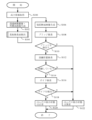
- FIG. 3 is a flowchart showing the process from obtaining height information on the substrate inspection surface, taking a transmitted image and generating a reconstructed image (cross-sectional image), to identifying the inspection surface image and inspecting the solder joint condition.
- the process in this flowchart starts, for example, when the control unit 10 receives an instruction to start the inspection from an input device (not shown).
- the image processing unit 35 of the control unit 10 first acquires height information of the board inspection surface (the upper surface of the board on which electronic components are attached) of the inspected object 12 by the height information acquisition unit 50 (step S100), as shown in FIG. 3.
- the height information acquisition unit 50 is fixedly arranged, the height information of the board inspection surface of the inspected object 12 is acquired by moving the inspected object 12 by the board holding unit 24 to acquire height information of a desired position on the inspected object 12 (height information of the board inspection surface).
- the height information acquisition unit 50 is configured to be movable, the height information of a desired position on the inspected object 12 is acquired by moving the height information acquisition unit 50.
- the acquired height information is composed of a position (X, Y) on the XY plane and a height (Z) at that position, and is stored in the memory unit 34 in association with the field of view FOV as (X, Y, Z), for example.
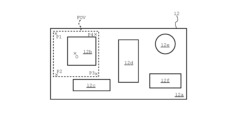
- Figure 4 shows an example of the object 12 to be inspected, which is an electronic board inspected by the inspection device 1.
- the object 12 to be inspected has electronic components 12b to 12f attached to the board 12.
- the dashed rectangle indicates the field of view FOV.
- the image processing unit 35 of the control unit 10 may measure height information at the center O as height information of the top surface of the board 12a in the field of view FOV using the height information acquisition unit 50, or may measure height information at multiple points in the field of view FOV (for example, height information at the four corners P1 to P4 of the field of view FOV in Figure 4) and calculate height information at the center O of the field of view FOV from this height information using linear interpolation or the like.
- the location where the top surface of the board 12a can be directly measured can be determined from data such as the design of the inspected object (electronic board) 12.
- the location where no electronic components are attached can be identified from image data (two-dimensional color image) of the top surface of the inspected object 12 captured in advance. Since a green resist is generally applied to the top surface of the board 12a, the green parts of the image data can be identified and these green parts can be determined to be locations where no electronic components are attached.
- height information can be acquired at the position of the board surface while moving the height information acquisition unit 50 and the board holding unit 24 (inspected object 12) relative to each other, so that height information can be acquired efficiently at multiple positions on the board surface.
- the inspected object (electronic board) 12 is brought into the inspection device 1, it hits a stopper used to position the inspected object 12 and rotates slightly. At this time, the position of the inspected object (electronic board) 12 can be correctly read by reading the recognition mark, and the same route on the board can always be scanned when measuring height information with the height information acquisition unit 50, thereby improving the reproducibility of the measurement.
- the relative positions of the substrate holding unit 24 and the height information acquisition unit 50 holding the object to be inspected 12 may be fixed for each location for which height information is to be acquired (in the case of a configuration in which the substrate holding unit 24 is moved to move the position at which the laser light from the height information acquisition unit 50 is irradiated, the substrate holding unit drive unit 18 moves the substrate holding unit 24 to move the object to be inspected 12 to the position at which the laser light is irradiated, and then the substrate holding unit 24 is stopped), or the height information may be acquired at a desired position while changing the relative positions of the substrate holding unit 24 and the height information acquisition unit 50 holding the object to be inspected 12 (in the case of a configuration in which the substrate holding unit 24 is moved to move the position at which the laser light from the height information acquisition unit 50 is irradiated, the substrate holding unit drive unit 18 moves the substrate holding unit 24).
- the imaging processing unit 35 of the control unit 10 sets the irradiation field of the radiation emitted by the radiation generator 22 (the area where the radiation is irradiated to acquire a transmission image of the field of view FOV described above) by the radiation generator driving unit 16, moves the substrate holding unit 24 by the substrate holding unit driving unit 18, and moves the detector 26 by the detector driving unit 20 to change the imaging position, while setting the radiation quality of the radiation generator 22 by the radiation quality changing unit 14, irradiates the substrate with radiation, and captures a transmission image.
- the cross-sectional image generating unit 36 of the control unit 10 generates a reconstructed image from the multiple transmission images thus captured (step S102).
- This reconstructed image can also be managed in the same coordinate system (e.g., XYZ coordinate system) as the above-mentioned height information.
- the movement path of the substrate holder 24 by the substrate holder driver 18 and the movement path of the detector 26 by the detector driver 20 when capturing a transmission image are set in advance in the substrate holder driver 18 and the detector driver 20 by reading information stored in the memory 34 or inputting information from an input device.
- the position of the radiation generator 22 in the Z-axis direction is also set in advance in the radiation generator driver 16 by a similar method.
- the substrate holder driver 18 and the detector driver 20 may move the substrate holder 24 and the detector 26 to a desired position, and the substrate holder 24 and the detector 26 may be stopped at a position where a transmission image is to be acquired before capturing a transmission image, or the substrate holder driver 18 and the detector driver 20 may move the substrate holder 24 and the detector 26 to a desired position while capturing a transmission image.
- the captured transmission image and the generated reconstructed image are stored in the memory 34 for each field of view FOV.
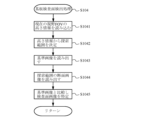
- the board inspection surface detection unit 38 of the control unit 10 receives the transmission image or the reconstructed image (cross-sectional image) from the cross-sectional image generation unit 36, and executes a board inspection surface detection process to identify the inspection surface image from the transmitted image or the reconstructed image (cross-sectional image) (step S104). For example, when identifying the inspection surface image from the reconstructed image, as shown in FIG. 5, the board inspection surface detection unit 38 of the control unit 10 first reads the height information of the current field of view FOV (height information acquired in step S100) from the storage unit 34 (step S1041), and determines the search range in the Z-axis direction in the reconstructed image (cross-sectional image) from this height information (step S1042).
- FOV height information acquired in step S100
- the search range is a predetermined range in the Z direction that includes the Z-direction position of the board inspection surface measured by the height information acquisition unit 50. This is because there is a high possibility that the cross-sectional image (inspection surface image) of the board inspection surface is included in the cross-sectional image in the predetermined range (search range) in the Z direction that includes the height information of the current field of view FOV (the measured Z-direction position of the board inspection surface).
- the memory unit 34 stores in advance a cross-sectional image (called the "reference image") of the substrate inspection surface of a normal object to be inspected that has no abnormalities such as a solder joint state.
- the substrate inspection surface detection unit 38 of the control unit 10 reads out the reference image of the current field of view FOV from the memory unit 34 (step S1043), and further reads out from the memory unit 34 the cross-sectional images within the search range determined in step S1042 among the reconstructed images of the current field of view FOV (the reconstructed images generated in step S102) (step S1044).
- the substrate inspection surface detection unit 38 of the control unit 10 compares the reference image with each of the cross-sectional images read out in step S1024, identifies the cross-sectional image that most closely matches the reference image as the inspection surface image, stores the position of the identified cross-sectional image (inspection surface image) in the Z-axis direction as the position of the substrate inspection surface in the current field of view FOV (step S1045), and ends the substrate inspection surface detection process.
- a phase-only correlation method can be used, which allows the matching rate to be found quickly and regardless of positional deviation. For example, as shown in FIG.
- the pseudo cross-sectional image generating unit 40 of the control unit 10 generates a pseudo cross-sectional image based on the inspection surface image identified in step S104 and the Z-direction position of the substrate inspection surface (step S106).
- the bridge inspection unit 44 of the control unit 10 obtains a pseudo cross-sectional image of a slice thickness equivalent to that of the solder ball that shows the solder ball from the pseudo cross-sectional image generation unit 40 (reads it from the storage unit 34) and inspects whether or not a bridge exists (step S108). If no bridge is detected ("N" in step S110), the molten state inspection unit 46 of the control unit 10 obtains an inspection surface image from the board inspection surface detection unit 38 (reads it from the storage unit 34) and inspects whether or not the solder is molten (step S112).
- the void inspection unit 48 of the control unit 10 obtains a pseudo cross-sectional image that partially shows the solder ball from the pseudo cross-sectional image generation unit 40 (reads it from the storage unit 34) and inspects whether or not a void exists (step S116). If no voids are found ("N" in step S118), the inspection unit 42 of the control unit 10 determines that the solder joint condition is normal (step S120) and outputs this information to the memory unit 34.
- step S110 If a bridge is detected ("Y" in step S110), the solder is not melted ("N” in step S114), or a void is present ("Y” in step S118), the inspection unit 42 determines that the solder joint condition is abnormal (step S122) and outputs this information to the memory unit 34. When the solder condition is output to the memory unit 34, the processing in this flowchart ends.
- steps S104 to S122 shown in FIG. 3 is also performed for each of the above-mentioned fields of view FOVs, but steps S104 to S122 may be performed for each field of view FOV after capturing images of all fields of view FOVs in step S102, or steps S104 to S122 may be performed in parallel with capturing images of other fields of view FOVs, starting from the field of view FOV for which generation of reconstructed images (cross-sectional images and pseudo-cross-sectional images) has been completed.
- the inspection device 1 before acquiring a transmission image of the inspected object 12, height information for each field of view FOV of the inspected object 12 is acquired by the height information acquisition unit 50, and then a transmission image is acquired for each field of view FOV to generate a reconstructed image of the inspected object. Based on the height information from the height information acquisition unit 50, a search range for the substrate inspection surface in the reconstructed image is determined, and the reconstructed image (cross-sectional image) of the inspected object 12 is compared with a reference image in this search range to determine the cross-sectional image of the substrate inspection surface.
- the range of the reconstructed image (cross-sectional image) that includes the cross-sectional image of the substrate inspection surface is limited, and a comparison is performed within this limited range, so that the time required to identify the cross-sectional image of the substrate inspection surface can be shortened compared to the case of comparing with all cross-sectional images.
- the height information acquisition unit 50 can acquire height information during preparation time for generating radiation from the radiation generator 22, height information can be acquired during a time when a transmitted image cannot be acquired, thereby suppressing an increase in the overall examination time due to processing for acquiring height information.
- the electronic board is coated with a resist or the like, and when height information is obtained from above the resist or the like (height information is obtained by irradiating the resist or the like with laser light), there is variation in the thickness of the resist or the like, and therefore variation in the height information occurs.
- the height information obtained by the height information acquisition unit 50 determines the search range in the cross-sectional image, and the selection of the cross-sectional image of the board inspection surface is made by comparing the cross-sectional image in the determined search range with the reference image, so there is no effect on the accuracy of the selection of the cross-sectional image of the board inspection surface.
- height information is obtained at multiple positions within the field of view FOV of the inspected object 12, and height information within the field of view FOV (e.g., height information at the center of the field of view FOV) is calculated from these multiple height information, so that information regarding deviation from the reference surface within the field of view FOV due to warping or bending can be obtained with high accuracy, and the search range of the cross-sectional image can be determined more accurately.
- the width of the search range of the cross-sectional image can be narrowed (fewer cross-sectional images are compared with the reference image), thereby shortening the time required to detect the substrate inspection surface, and as a result, the time required for the entire inspection can be shortened.
- the substrate holding part 24 (test object 12) when acquiring height information at multiple positions on the test object 12, if the substrate holding part 24 (test object 12) is stopped relative to the height information acquisition part 50 each time the acquisition position is moved, the accuracy of the acquired height information is improved because no vibrations or the like are generated in the test object 12; however, when moving to the next measurement position, the substrate holding part 24 (test object 12) must be moved again relative to the height information acquisition part 50, which takes time to stop and start. Therefore, by acquiring height information at multiple positions while moving the height information acquisition part 50 and the substrate holding part 24 (test object 12) relative to each other, the time it takes to acquire the height information can be shortened.
- the height information acquired by the height information acquisition unit 50 determines the range in which the cross-sectional images are searched, and the selection of the cross-sectional image of the substrate inspection surface is made by comparing the cross-sectional images in the determined search range with the reference image, so there is no effect on the selection of the cross-sectional image of the substrate inspection surface.
- the height information acquisition unit 50 is disposed on the upper surface side of the inspected object 12.
- the height information acquisition unit 50 is disposed on the upper surface side of the inspected object 12, it is located on the radiation generator 22 side, so that the height information acquisition unit 50 can be disposed in a position where it is not directly irradiated with radiation emitted from the radiation generator 22, thereby avoiding exposure to radiation.
- the height information acquisition unit 50 may be disposed on the rear surface side of the inspected object 12 to acquire height information of the rear surface of the substrate of the inspected object 12.
- the substrate of the inspected object 12 is flat, and the thickness of this substrate is known from information such as design.
- the height information of the upper surface of the substrate can be calculated from the height information of the rear surface of the substrate of the inspected object 12. Even if the accuracy of the height information of the upper surface calculated from the height information of the rear surface of the substrate is low, as described above, the range in which the cross-sectional image is searched is determined, and the selection of the cross-sectional image of the substrate inspection surface is performed by comparing the cross-sectional image in the determined search range with the reference image, so there is no effect on the selection of the cross-sectional image of the substrate inspection surface.
- the height information acquisition unit 50 is placed on the back surface of the substrate of the inspected object 12, the radiation emitted from the radiation generator 22 will directly irradiate the height information acquisition unit 50, resulting in exposure to radiation. In this way, the height information acquisition unit 50 can acquire height information from both the top surface and the back surface of the substrate of the inspected object 12, which increases the degree of freedom in the placement position of the height information acquisition unit 50 in the inspection device 1.
- FIG. 7 shows a flow chart of a modified method of acquiring height information.
- the image processing unit 35 of the control unit 10 acquires height information of the entire upper surface of the substrate of the object 12 (step S1001).
- the substrate 12a of the object 12 is divided into regions indicated by dashed lines M, the substrate holding unit 24 is moved relative to the height information acquiring unit 50, and height information is acquired in each region.
- the object 12 is moved from the upper left region to the right while acquiring height information in each region, and the object 12 is moved from the upper right region to the next lower step and moved leftward while acquiring height information in each region.
- the acquired height information is stored in the memory unit 34 together with the coordinates on the substrate in the form of (X, Y, Z).
- the image capture processing unit 35 of the control unit 10 applies a minimum value filter to the height information of each region to remove the height information of the components (step S1002).
- the minimum value filter is a filter that compares the height information of the region of interest with the height information of the regions surrounding the region of interest, and converts the height information of the region of interest into height information with the smallest value. Since the components are attached to the top surface of the substrate, the height information of the components can be removed by applying this minimum value filter.
- the image capture processing unit 35 of the control unit 10 applies an average value filter to the height information of each region to which the minimum value filter has been applied, and removes abnormal values.
- the average value filter is a filter that calculates the average value between the good height information of interest and the height information of regions surrounding the interest, and changes the height information of the interest region to the average value. By applying the average value filter, it is possible to remove abnormal values.
- the image capturing processing unit 35 of the control unit 10 calculates the height information of the center of each FOV from the height information of the area included in the FOV, for example by linear interpolation (step S1004), and ends the height information acquisition process.
Landscapes
- Health & Medical Sciences (AREA)
- Immunology (AREA)
- Physics & Mathematics (AREA)
- Chemical & Material Sciences (AREA)
- Analytical Chemistry (AREA)
- Biochemistry (AREA)
- General Health & Medical Sciences (AREA)
- Life Sciences & Earth Sciences (AREA)
- Pathology (AREA)
- General Physics & Mathematics (AREA)
- Engineering & Computer Science (AREA)
- Nuclear Medicine, Radiotherapy & Molecular Imaging (AREA)
- Pulmonology (AREA)
- Radiology & Medical Imaging (AREA)
- Theoretical Computer Science (AREA)
- Analysing Materials By The Use Of Radiation (AREA)
Priority Applications (1)
| Application Number | Priority Date | Filing Date | Title |
|---|---|---|---|
| JP2024561486A JPWO2024117099A1 (https=) | 2022-12-01 | 2023-11-28 |
Applications Claiming Priority (2)
| Application Number | Priority Date | Filing Date | Title |
|---|---|---|---|
| JP2022192824 | 2022-12-01 | ||
| JP2022-192824 | 2022-12-01 |
Publications (1)
| Publication Number | Publication Date |
|---|---|
| WO2024117099A1 true WO2024117099A1 (ja) | 2024-06-06 |
Family
ID=91324147
Family Applications (1)
| Application Number | Title | Priority Date | Filing Date |
|---|---|---|---|
| PCT/JP2023/042440 Ceased WO2024117099A1 (ja) | 2022-12-01 | 2023-11-28 | 検査装置 |
Country Status (2)
| Country | Link |
|---|---|
| JP (1) | JPWO2024117099A1 (https=) |
| WO (1) | WO2024117099A1 (https=) |
Citations (6)
| Publication number | Priority date | Publication date | Assignee | Title |
|---|---|---|---|---|
| US20030035576A1 (en) * | 2001-07-31 | 2003-02-20 | Roder Paul A. | Automatic X-ray determination of solder joint and view Delta Z values from a laser mapped reference surface for circuit board inspection using X-ray laminography |
| JP2006292465A (ja) * | 2005-04-07 | 2006-10-26 | Nagoya Electric Works Co Ltd | X線検査装置、x線検査方法およびx線検査プログラム |
| JP2012237729A (ja) * | 2011-05-13 | 2012-12-06 | Omron Corp | 検査領域設定方法およびx線検査システム |
| WO2019065701A1 (ja) * | 2017-09-28 | 2019-04-04 | 株式会社サキコーポレーション | 検査位置の特定方法、3次元画像の生成方法、及び検査装置 |
| JP2021162523A (ja) * | 2020-04-02 | 2021-10-11 | 株式会社サキコーポレーション | 検査装置 |
| JP2021173575A (ja) * | 2020-04-22 | 2021-11-01 | 株式会社サキコーポレーション | 検査装置 |
-
2023
- 2023-11-28 JP JP2024561486A patent/JPWO2024117099A1/ja active Pending
- 2023-11-28 WO PCT/JP2023/042440 patent/WO2024117099A1/ja not_active Ceased
Patent Citations (6)
| Publication number | Priority date | Publication date | Assignee | Title |
|---|---|---|---|---|
| US20030035576A1 (en) * | 2001-07-31 | 2003-02-20 | Roder Paul A. | Automatic X-ray determination of solder joint and view Delta Z values from a laser mapped reference surface for circuit board inspection using X-ray laminography |
| JP2006292465A (ja) * | 2005-04-07 | 2006-10-26 | Nagoya Electric Works Co Ltd | X線検査装置、x線検査方法およびx線検査プログラム |
| JP2012237729A (ja) * | 2011-05-13 | 2012-12-06 | Omron Corp | 検査領域設定方法およびx線検査システム |
| WO2019065701A1 (ja) * | 2017-09-28 | 2019-04-04 | 株式会社サキコーポレーション | 検査位置の特定方法、3次元画像の生成方法、及び検査装置 |
| JP2021162523A (ja) * | 2020-04-02 | 2021-10-11 | 株式会社サキコーポレーション | 検査装置 |
| JP2021173575A (ja) * | 2020-04-22 | 2021-11-01 | 株式会社サキコーポレーション | 検査装置 |
Also Published As
| Publication number | Publication date |
|---|---|
| JPWO2024117099A1 (https=) | 2024-06-06 |
Similar Documents
| Publication | Publication Date | Title |
|---|---|---|
| JP4551919B2 (ja) | 断層撮影の検査システムおよびその方法 | |
| JP5444718B2 (ja) | 検査方法、検査装置および検査用プログラム | |
| US10054432B2 (en) | X-ray inspection apparatus and control method | |
| CN101057135B (zh) | X射线ct系统及x射线ct方法 | |
| JP5559551B2 (ja) | 検査装置 | |
| US11835475B2 (en) | Inspection position identification method, three-dimensional image generation method, and inspection device | |
| JP7437222B2 (ja) | 検査装置 | |
| JP4610590B2 (ja) | X線検査装置、x線検査方法およびx線検査プログラム | |
| CN115427797B (zh) | 检查装置 | |
| JP6676023B2 (ja) | 検査位置の特定方法及び検査装置 | |
| JP5569061B2 (ja) | X線検査方法、x線検査装置およびx線検査プログラム | |
| JP4580266B2 (ja) | X線検査装置、x線検査方法およびx線検査プログラム | |
| JP4449596B2 (ja) | 実装基板検査装置 | |
| WO2024117099A1 (ja) | 検査装置 | |
| JP2013190361A (ja) | X線検査装置およびその制御方法 | |
| JP4591103B2 (ja) | X線ct検査装置及びx線ct検査方法 | |
| TW201312102A (zh) | X光檢查裝置、x光檢查裝置之控制方法、用於控制x光檢查裝置之程式及儲存該程式之記錄媒體 | |
| JP6805200B2 (ja) | 移動制御装置、移動制御方法および移動制御プログラム | |
| JP2023053558A (ja) | 検査装置 | |
| WO2024210035A1 (ja) | 画像データの補正方法及び検査装置 | |
| TWI920742B (zh) | 檢查系統、檢查裝置、檢查方法及程式 | |
| JP5851200B2 (ja) | 基板検査装置、基板検査方法および基板検査プログラム | |
| JP2004340630A (ja) | コンピュータ断層撮像方法及び装置 | |
| WO2024214554A1 (ja) | 検査装置 | |
| JP2026040849A (ja) | 画像データの生成方法及び検査装置 |
Legal Events
| Date | Code | Title | Description |
|---|---|---|---|
| 121 | Ep: the epo has been informed by wipo that ep was designated in this application |
Ref document number: 23897747 Country of ref document: EP Kind code of ref document: A1 |
|
| WWE | Wipo information: entry into national phase |
Ref document number: 2024561486 Country of ref document: JP |
|
| NENP | Non-entry into the national phase |
Ref country code: DE |
|
| 122 | Ep: pct application non-entry in european phase |
Ref document number: 23897747 Country of ref document: EP Kind code of ref document: A1 |