WO2024095986A1 - 事業者をマッチングするシステム、サーバおよび方法 - Google Patents
事業者をマッチングするシステム、サーバおよび方法 Download PDFInfo
- Publication number
- WO2024095986A1 WO2024095986A1 PCT/JP2023/039167 JP2023039167W WO2024095986A1 WO 2024095986 A1 WO2024095986 A1 WO 2024095986A1 JP 2023039167 W JP2023039167 W JP 2023039167W WO 2024095986 A1 WO2024095986 A1 WO 2024095986A1
- Authority
- WO
- WIPO (PCT)
- Prior art keywords
- business
- product
- information providing
- conditions
- consumer terminal
- Prior art date
- Legal status (The legal status is an assumption and is not a legal conclusion. Google has not performed a legal analysis and makes no representation as to the accuracy of the status listed.)
- Ceased
Links
Images









Classifications
-
- G—PHYSICS
- G06—COMPUTING OR CALCULATING; COUNTING
- G06Q—INFORMATION AND COMMUNICATION TECHNOLOGY [ICT] SPECIALLY ADAPTED FOR ADMINISTRATIVE, COMMERCIAL, FINANCIAL, MANAGERIAL OR SUPERVISORY PURPOSES; SYSTEMS OR METHODS SPECIALLY ADAPTED FOR ADMINISTRATIVE, COMMERCIAL, FINANCIAL, MANAGERIAL OR SUPERVISORY PURPOSES, NOT OTHERWISE PROVIDED FOR
- G06Q10/00—Administration; Management
- G06Q10/08—Logistics, e.g. warehousing, loading or distribution; Inventory or stock management
-
- G—PHYSICS
- G06—COMPUTING OR CALCULATING; COUNTING
- G06Q—INFORMATION AND COMMUNICATION TECHNOLOGY [ICT] SPECIALLY ADAPTED FOR ADMINISTRATIVE, COMMERCIAL, FINANCIAL, MANAGERIAL OR SUPERVISORY PURPOSES; SYSTEMS OR METHODS SPECIALLY ADAPTED FOR ADMINISTRATIVE, COMMERCIAL, FINANCIAL, MANAGERIAL OR SUPERVISORY PURPOSES, NOT OTHERWISE PROVIDED FOR
- G06Q10/00—Administration; Management
- G06Q10/08—Logistics, e.g. warehousing, loading or distribution; Inventory or stock management
- G06Q10/083—Shipping
- G06Q10/0834—Choice of carriers
-
- G—PHYSICS
- G06—COMPUTING OR CALCULATING; COUNTING
- G06Q—INFORMATION AND COMMUNICATION TECHNOLOGY [ICT] SPECIALLY ADAPTED FOR ADMINISTRATIVE, COMMERCIAL, FINANCIAL, MANAGERIAL OR SUPERVISORY PURPOSES; SYSTEMS OR METHODS SPECIALLY ADAPTED FOR ADMINISTRATIVE, COMMERCIAL, FINANCIAL, MANAGERIAL OR SUPERVISORY PURPOSES, NOT OTHERWISE PROVIDED FOR
- G06Q10/00—Administration; Management
- G06Q10/08—Logistics, e.g. warehousing, loading or distribution; Inventory or stock management
- G06Q10/083—Shipping
- G06Q10/0835—Relationships between shipper or supplier and carriers
-
- G—PHYSICS
- G06—COMPUTING OR CALCULATING; COUNTING
- G06Q—INFORMATION AND COMMUNICATION TECHNOLOGY [ICT] SPECIALLY ADAPTED FOR ADMINISTRATIVE, COMMERCIAL, FINANCIAL, MANAGERIAL OR SUPERVISORY PURPOSES; SYSTEMS OR METHODS SPECIALLY ADAPTED FOR ADMINISTRATIVE, COMMERCIAL, FINANCIAL, MANAGERIAL OR SUPERVISORY PURPOSES, NOT OTHERWISE PROVIDED FOR
- G06Q30/00—Commerce
- G06Q30/06—Buying, selling or leasing transactions
- G06Q30/0601—Electronic shopping [e-shopping]
-
- G—PHYSICS
- G06—COMPUTING OR CALCULATING; COUNTING
- G06Q—INFORMATION AND COMMUNICATION TECHNOLOGY [ICT] SPECIALLY ADAPTED FOR ADMINISTRATIVE, COMMERCIAL, FINANCIAL, MANAGERIAL OR SUPERVISORY PURPOSES; SYSTEMS OR METHODS SPECIALLY ADAPTED FOR ADMINISTRATIVE, COMMERCIAL, FINANCIAL, MANAGERIAL OR SUPERVISORY PURPOSES, NOT OTHERWISE PROVIDED FOR
- G06Q50/00—Information and communication technology [ICT] specially adapted for implementation of business processes of specific business sectors, e.g. utilities or tourism
- G06Q50/10—Services
Definitions
- Patent Document 1 JP 2016-181196 A
- EC electronic commerce
- an information providing server has a condition management means for managing the conditions for entrusting the delivery of a product, which are set by a entrusting business operator, and the conditions for accepting the delivery, which are set by a entrusted business operator, and a matching means for matching an entrusting business operator and an entrusted business operator whose conditions match each other and managing the correspondence relationship
- a consumer terminal has a display means for displaying an online store operated by a first entrusting business operator, and an information request means for inquiring of the information providing server regarding the entrustment of the delivery of the product when the product is selected on the online store
- the information providing server further has an information providing means for receiving the inquiry from the consumer terminal, identifying one or more entrusted business operators associated with the first entrusting business operator, and notifying the consumer terminal,
- a mechanism can be provided that enables an EC business operator to outsource the delivery of products or transfer sales opportunities for products. Problems, configurations and effects other than those described above will become apparent from the following description of the embodiments.
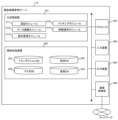
- FIG. 1 shows an example of the configuration of a product information management system 100 .
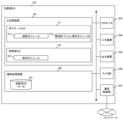
- FIG. 2 shows an example of the hardware configuration of the product information management server 110.
- FIG. 3 shows an example of the hardware configuration of the consumer DD 120.
- FIG. 4 shows an example of the hardware configuration of the business DD 130.
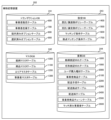
- FIG. 5 shows an example of a table constituting the database of the product information management server 110.
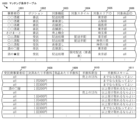
- FIG. 6 shows an example of a business sales table 600 .
- FIG. 7 shows an example of a business inventory table 700 .
- FIG. 8 shows an example of a presented options table 800 .
- FIG. 9 shows an example of a selected options table 900 .
- FIG. 10 shows an example of a stock master table 1000 .
- FIG. 10 shows an example of a stock master table 1000 .
- FIG. 11 shows an example of a product master table 1100 .
- FIG. 12 shows an example of an area master table 1200 .
- FIG. 13 shows an example of a business operator master table 1300 .
- FIG. 14 shows an example of a delegation/transfer side policy table 1400 .
- FIG. 15 shows an example of a trustee/transferee policy table 1500 .
- FIG. 16 shows an example of a matching condition table 1600 .
- FIG. 17 shows an example of a base matching condition table 1700 .
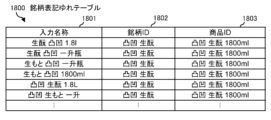
- FIG. 18 shows an example of a brand notation fluctuation table 1800.
- FIG. 19 shows an example of a name notation variation table 1900.
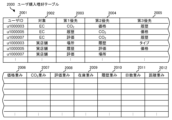
- FIG. 20 shows an example of a user purchasing preference table 2000 .
- FIG. 21 shows an example of a business product table 2100 .
- FIG. 22 shows an example of a delivery means table 2200 .
- FIG. 23 shows an example of a delivery base table 2300.
- FIG. 24 shows an example of a shipping fee table 2400 .
- FIG. 25 shows an example of a business product chain table 2500.
- FIG. 26 shows an example of a matched business table 2600.
- FIG. 27 shows an example of a user authentication process 2700 .
- FIG. 28 shows an example of a user ID acquisition process 2800 .
- FIG. 29 shows an example of an entity authentication process 2900 .
- FIG. 30 shows an example of a business ID acquisition process 3000 .
- FIG. 31 shows an example of product/sales/inventory data linkage processing 3100.
- FIG. 32 shows an example of a sales data linkage process 3200 .
- FIG. 33 shows an example of a registration process 3300 for an enterprise to register matching conditions and the like.
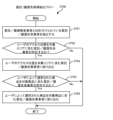
- FIG. 34 shows an example of a pre-matching process flow 3400.
- FIG. 35 shows an example of a receipt option display process 3500 .
- FIG. 36 shows an example of a receipt option extraction flow 3600.
- FIG. 37 shows an example of a flow 3700 for extracting candidates for entrustment/transfer.
- FIG. 38 shows an example of a base extraction flow 3800.
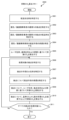
- FIG. 39 shows an example of a suppressed CO 2 calculation flow 3900.
- FIG. 40 shows an example of a setting screen 4000 for setting the consignment conditions and the transfer conditions.
- FIG. 41 shows an example of a setting screen 4100 for setting the conditions of acceptance and the conditions of transfer.
- FIG. 42 shows an example of a setting screen 4100 for setting the conditions of acceptance and the conditions of transfer.
- FIG. 43 shows an example of an EC screen 4300 that includes a receipt option.
- FIG. 44 shows another example of an EC screen 4400 that includes a receipt option.
- FIG. 45 illustrates yet another example of an EC screen 4500 that includes a receipt option.
- FIG. 46 illustrates yet another example of an EC screen 4600 that includes a receipt option.
- FIG. 47 shows an example of a setting screen 4700 for setting the priority.
- FIG. 48 shows an example of another setting screen 4800 for setting priorities.
- Example This example is a scheme for matching businesses related to EC. 1-1. Applicable Market
- the applicable market for this matching scheme is an industry in which producers distributed across many regions wholesale their products to sellers distributed across many regions, who then sell the products to consumers distributed across many regions via e-commerce. In other words, it is an industry in which the number of producers, products, and sellers are all huge, and sellers dealing in the same products are distributed across many regions.
- the applicable market is the alcohol industry.
- DD is an abbreviation for Digital Device.
- This DD is a general term for various devices that are linked to the Digital World, such as PCs, smartphones, HDDs, projectors, and IoT devices.
- DA is an abbreviation for Digital Application.
- This DA is a general term for various 2D (websites, EC sites, smartphone apps), 3D, AR, and VR apps provided through each DD.
- EC Electronic Commerce
- Delivery processing involves packing products in the company's own warehouse and delivering them to individual homes, or entrusting delivery to a home delivery company.
- Over-the-counter sales refers to the sale of products in physical stores.
- EC operators are classified as operators that only operate EC, operators that operate EC and can also handle shipping from their own warehouses, or operators that operate both EC and physical stores and can also handle shipping from their own warehouses.
- Delivery companies are companies that operate an e-commerce site and can also handle shipping from their own warehouses, companies that operate both an e-commerce site and physical stores and can also handle shipping from their own warehouses, companies that operate physical stores and can also handle shipping from their own warehouses, or companies that can only handle shipping from their own warehouses.
- Physical store operators are operators that operate both e-commerce and physical stores and can handle shipping from their own warehouses, operators that operate physical stores and can handle shipping from their own warehouses, or operators that only operate physical stores.
- the EC referred to here includes not only a general EC having a product introduction function and a payment function, but also a DA having only a product introduction function.
- Table 2 shows the sales opportunities and delivery function sharing options for EC businesses.
- Option A is an option where orders are received on your own EC site and delivery and handover are outsourced.
- the outsourcee is a business or wholesaler
- the consumer's place of payment is your own EC site
- the outsourcing fee varies depending on the outsourcing content.
- the requirements for outsourced businesses and wholesalers are as shown in Table 2.
- option B is an option to guide consumers to another party's EC by transferring sales opportunities.
- the transferee is the business operator or wholesaler that operates the EC
- the consumer's place of payment is on the other party's EC
- the cost of the transfer is covered by a customer attraction fee paid by the transferee.
- the requirements for the business operator and wholesaler to whom the sales opportunity is transferred are as shown in Table 2.
- option C is an option that transfers sales opportunities to induce consumers to the physical stores of others.
- the transferee is a business operator or wholesaler that operates a physical store, the consumer makes payment at the third party's store, and the transfer cost is covered by a customer attraction fee paid by the transferee.
- the requirements for the business operator and wholesaler to which the sales opportunity is transferred are as shown in Table 2.
- Option A is divided into three options, A1 to A3.
- Option A1 is an option for outsourcing delivery.
- the outsourcee is a business or wholesaler that can pack, place orders with home delivery companies, or deliver to homes
- the settlement location is the company's own EC site
- the outsourcing fee is paid by the outsourcer to the outsourcee as a delivery outsourcing fee.
- the requirements for the outsourcee business and wholesaler are as shown in Table 3.
- Option A2 is an option for entrusting hand delivery (warehouse delivery).
- the consignee is a business operator or wholesaler that does not sell in stores and can deliver the products at a warehouse or office
- the settlement location is the company's own e-commerce site
- the consignment fee is paid by the consignor to the consignee as a warehouse delivery consignment fee.
- the requirements for the consignee business operator and wholesaler are as shown in Table 3.
- Option A3 is an option for outsourcing hand-to-hand delivery (in-store delivery).
- the consignee is a business operator or wholesaler that sells in-store and can agree on a response when a price gap occurs, the settlement location is on the company's own e-commerce site, and the consignment fee varies depending on the matching conditions.
- the requirements for the consignee business operator and wholesaler are as shown in Table 3.
- the client sets an upper limit for the commission fee as a specified condition.
- the client sets a lower limit for the commission fee. If the client's set value (lower limit) is equal to or lower than the client's set value (upper limit), then the two are matched.
- the transferring party sets a lower limit for the customer attraction fee as a specified condition.
- the transferring party sets an upper limit for the customer attraction fee. If the transferring party's set value (upper limit) is equal to or greater than the transferring party's set value (lower limit), then the two parties are matched.
- the matching scheme shown in Table 5 is based on the following assumptions.
- Premise 1 The consignor's intentions regarding in-store delivery are two conflicting ideas: 1. They are willing to pay up to a certain amount as the in-store delivery consignment amount, and 2. They want to be paid a certain amount or more as a contribution to attracting customers.
- Premise 2 Similarly, there are two conflicting opinions regarding the intentions of the consignee regarding in-store delivery: 1. They want to be paid a certain amount as the in-store delivery consignment, and 2. They are willing to pay a certain amount as a customer attraction contribution.
- Premise 3 It is unacceptable for consumers to purchase an item online and then pick it up at a store only if the store price is lower than the EC purchase price. Therefore, if the store price is lower than the EC sales price, the price difference needs to be output only if the consignor and recipient can make up for it.
- the entrusting party wants to pay more than x2 as a contribution to attracting customers, If the trustee is willing to pay up to y2 as a customer attraction contribution, and the EC price is equal to or lower than the retail price, then matching between the two is established if y2 > x2. On the other hand, if the EC price is higher than the retail price by z, then matching between the two is established if y2 > x2 + z.
- option A EC is mandatory for the outsourcing party.
- option A1 linkage of inventory information and shipping management on a product-by-product basis is mandatory
- option A2 linkage of inventory information and shipping management on a product-by-product and by location is mandatory
- option A3 linkage of inventory information, shipping management, and retail price on a product-by-product and by location is mandatory.
- EC is not required for the entrusting party.
- the entrusted party only needs to register handling information on a stock-by-stock basis.
- the matching scheme is applied to, for example, the alcohol industry.
- the alcohol industry is an industry in which producers distributed across many regions wholesale their products to sellers distributed across many regions, who then sell the products to consumers distributed across many regions via e-commerce. In other words, it is an industry in which the number of producers, the number of products, and the number of sellers are all huge, and sellers dealing in the same products are distributed across many regions.
- Amazon is a typical example of an EC mall.
- a plurality of "retailers" where a certain product can be purchased are displayed in a default UI.
- each retailer selects either shipping from its own warehouse or outsourcing to a specialized warehouse company as a means of delivering the product to the purchaser.
- selecting a retailer is synonymous with selecting a delivery method.
- the above matching scheme separates the sales function from the delivery function.
- Each retailer can prepare its own UI.
- each retailer can choose to ship from its own warehouse, outsource to a specialized warehouse company, or entrust the delivery to a local EC operator or retailer.
- the retailer's UI displays multiple "methods of acquisition" for a certain product. In other words, consumers can select both the retailer and the acquisition method.
- FIG. 1 shows an example of the configuration of a product information management system 100.
- the product information management system 100 includes a product information management server 110 , a consumer DD 120 , a business operator DD 130 , and a business operator server 140 .
- the product information management server 110 constituting this system is a server that manages information relating to alcoholic beverages.
- the consumer DD120 is a terminal used by a consumer (hereinafter, also referred to as a "user") who drinks alcoholic beverages.
- the consumer DD120 includes the scheme DA121 and the business operator DA122. A part of the scheme DA121 is incorporated in the business operator DA122.
- the business entity DD130 is a terminal used by a business entity that handles alcoholic beverages. Each business entity DD130 is provided with the scheme DA131.
- the business operator server 140 is a server managed by a business operator that handles alcoholic beverages.
- the product information management server 110 is mutually connected to a consumer DD 120, a business DD 130, and a business server 140 via a wired or wireless network, and can transmit and receive information via this network.
- the business server 140 is connected to the consumer DD 120 and the business DD 130 via a wired or wireless network, and can transmit and receive information via this network.
- FIG. 1 shows only one each of the consumer DD 120, business operator DD 130, and business operator server 140, the product information management system 100 may include a plurality of each.
- Each of the components of the product information management system 100 may be, for example, a portable terminal (mobile terminal) such as a smartphone, tablet, mobile phone, or personal digital assistant (PDA), or may be a wearable terminal such as glasses, a wristwatch, or clothing.
- a portable terminal such as a smartphone, tablet, mobile phone, or personal digital assistant (PDA)
- PDA personal digital assistant
- Each of the components may be a stationary or portable computer, or a server located on the cloud or a network.
- each of the components may be a VR (Virtual Reality) terminal, an AR (Augmented Reality) terminal, or an MR (Mixed Reality) terminal.
- each of the components may be a combination of multiple of these terminals.
- a combination of one smartphone and one wearable terminal may logically function as one terminal.
- Each of the components may also be an information processing terminal other than these.
- Each component device comprises a processor that executes an operating system, applications, programs, etc.; a main memory device such as a RAM (Random Access Memory); an auxiliary memory device such as an IC card, hard disk drive, SSD (Solid State Drive), flash memory, etc.; a communication control unit such as a network card, wireless communication module, or mobile communication module; input devices such as a touch panel, keyboard, mouse, voice input, and input based on motion detection captured by the camera unit; and output devices such as a monitor or display.
- the output device may be a device or terminal that transmits information to be output to an external monitor, display, projector, printer, device, etc.
- the main memory stores various programs, applications, etc. (modules), and the processor executes these programs and applications to realize each functional element of the overall system.
- modules may be implemented in hardware, for example by integration.
- Each module may be an independent program or application, or may be implemented as a subprogram or function within a single integrated program or application.
- each module is described as the entity (subject) that performs the processing, but in reality, the processing is carried out by a processor that processes various programs, applications, etc. (modules).
- the auxiliary storage device stores various databases (DB).
- DB databases
- a “database” is a functional element (storage unit) that stores a set of data so that it can handle any data manipulation (e.g., extraction, addition, deletion, overwriting, etc.) from the processor or an external computer.
- data manipulation e.g., extraction, addition, deletion, overwriting, etc.
- the database can be a database management system, spreadsheet software, or a text file such as XML or JSON.
- FIG. 2 shows an example of the hardware configuration of the product information management server 110.
- the product information management server 110 is configured, for example, as a server deployed on the cloud.
- the main memory device 201 of this server stores programs such as an authentication module 211, a data linking module 212, a condition management module 213, a matching module 214, and an information provision module 215.
- the processor 203 executes these programs to realize each functional element of the product information management server 110. Each module will be described below.
- the authentication module 211 performs authentication processing for a user of the consumer DD120 or a business using the business DD730.
- the data linking module 212 executes linking processing of product/sales/inventory data with the business entity server 140 or the business entity DD 130 .
- the module manages store information related to stores where the products can be purchased or consumed, which is transmitted from the business server 140, etc.
- the module manages product information related to the products, product handling information of the stores where the products can be purchased or consumed, and store information related to the stores.
- the managed product handling information includes product inventory information of the stores.
- Product handling information is registered or updated in any of the following ways.
- the condition management module 213 manages the entrustment conditions, the consignment conditions, the transfer conditions, and the transfer conditions.
- the entrustment conditions are the conditions for entrusting the delivery of the product and are set by the entrusting business operator.
- the acceptance conditions are the conditions for accepting the delivery of the product and are set by the entrusted business operator.
- the transfer conditions are the conditions for transferring the sales opportunity of the product and are set by the transferring business operator.
- the transfer conditions are the conditions for receiving the sales opportunity of the product and are set by the transferring business operator.
- the consignment conditions and the consignment conditions are conditions related to the fee for the delivery of the product, and are set by area.
- the consignment conditions are set by product or by consignee.
- the transfer conditions and the transfer acceptance conditions are conditions regarding the compensation for the sales opportunity of the product, and are set by area.
- the transfer conditions are set by product or by transferee.
- the matching module 214 matches outsourcing businesses and outsourced businesses whose conditions match, and manages the correspondence between them.
- the same module also matches transferring businesses and receiving businesses whose conditions match, and manages the correspondence between them.
- the information providing module 21 upon receiving an inquiry from the consumer DD 120, identifies one or more entrusted business operators associated with the entrusting business operator and notifies the consumer DD 120. At that time, the module calculates the amount of CO2 required for the entrusting business operator to deliver the product, calculates the amount of CO2 required for the one or more entrusted business operators to deliver the product, and further notifies the difference between the two to the consumer DD 120 as the suppressed CO2 amount.
- the module also manages the history information of the entrusted business operators that are displayed on the consumer DD120 and selected as the entrustee. The module then sorts or narrows down the one or more entrusted business operators based on the history information, and notifies the consumer DD120 of the sorted or narrowed down entrusted business operators.
- the information providing module 21 upon receiving an inquiry from the consumer DD 120, identifies one or more transferee business operators associated with the transferor business operator and notifies the consumer DD 120. At that time, the module calculates the amount of CO2 required for the transferor business operator to deliver the product, calculates the amount of CO2 required for one or more transferee business operators to deliver the product, and further notifies the difference between the two to the consumer DD 120 as the suppressed CO2 amount.
- the module also manages the history information of the recipient business that is displayed on the consumer DD120 and selected as the transferee. The module then sorts or narrows down the one or more recipient businesses based on the history information, and notifies the consumer DD120 of the sorted or narrowed down recipient businesses.
- the auxiliary storage device 202 includes databases such as a transaction DB 241, a master DB 242, a setting DB 243, and an element DB 244.
- the tables that make up each DB will be described later.
- FIG. 3 shows an example of the hardware configuration of the consumer DD 120.
- the consumer DD 120 is composed of a terminal such as a smartphone, a tablet, a notebook PC, or a desktop PC.
- the main memory 301 of this DD stores programs such as an authentication module 311 and a receipt option display module 312.
- the processor 303 executes these programs to realize each functional element of the consumer DD 120. .
- Each module will be described below.
- the authentication module 311 performs authentication processing for the user of the consumer DD120.
- the receiving option display module 312 inquires of the product information management server 110 about the contractor for the delivery of the product. The module then displays one or more entrusted business operators notified by the product information management server 110 as contractors for the delivery of the product. At that time, the module further displays the amount of reduced CO2 notified by the product information management server 110. The module also displays the entrusted business operators sorted or narrowed down by the product information management server 110 as contractors.
- the receiving option display module 312 inquires of the product information management server 110 about the transferee of the product's sales opportunity. The module then displays one or more recipient businesses notified by the product information management server 110 as the transferee of the product's sales opportunity. At that time, the module further displays the amount of reduced CO2 notified by the product information management server 110. The module also displays the recipient businesses sorted or narrowed down by the product information management server 110.
- the display module 321 displays various information. For example, this module displays the online store operated by the entrusting/transferring business.
- the auxiliary storage device 302 stores consumer DD data 331.
- This consumer DD data 331 is, for example, various data received from the product information management server 110.
- FIG. 4 shows an example of the hardware configuration of the business DD 130.
- the business DD 130 is configured with terminals such as a smartphone, a tablet, a notebook PC, and a desktop PC.
- the main storage device 401 of this DD stores programs such as an authentication module 411 and a condition registration module 412.
- the processor 403 executes these programs to realize each of the functional elements of the business DD 130. Each module will be described below.
- the authentication module 411 performs authentication processing for businesses that use the business DD 130.
- the condition registration module 412 registers information such as consignment conditions, acceptance conditions, transfer conditions, and transfer conditions in the product information management server 110.
- the auxiliary storage device 402 stores business entity DD data 421.
- the business entity DD data 421 is, for example, various data to be transmitted to the product information management server 110.
- FIG. 5 shows an example of tables constituting the database of the product information management server 110. Each table will be explained below.
- FIG. 6 shows an example of a business sales table 600 .
- the business sales table 600 stores the history of product sales between businesses.
- the table has fields such as a business ID 601, a base ID 602, a category 603, a manufacturer 604, a product ID 605, a product name 606, a buyer 607, a buyer type 608, a buyer telephone number 609, a buyer address 610, a buyer business ID 611, a quantity 612, a price 613, an order date and time 614, a delivery date and time 615, and a registration date and time 616.
- the value of the registration date and time 616 indicates the date and time when the record was registered.
- FIG. 7 shows an example of a business inventory table 700 .
- the business inventory table 700 stores the product inventory of a business.
- the table has fields such as a business ID 701, a base ID 702, a category 703, a manufacturer 704, a product ID 705, a product name 706, and an inventory 707.
- FIG. 8 shows an example of a presented options table 800 .
- the presented option table 800 stores the history of receiving options presented to the consumer.
- the table has fields such as a matching code 801, a base ID 802, a method ID 803, a user code 804, a user area ID 805, a product 806, a displayed stock 807, a displayed price 808, a displayed delivery charge 809, a displayed total amount 810, a displayed required CO2 811, a displayed suppressed CO2 812, a scheduled delivery date 813, a scheduled shipping date 814, a base address 815, a user address 816, a reference address 817, a reference CO2 818, and a reference delivery charge 819.
- FIG. 9 shows an example of a selected options table 900 .
- the selected options table 900 stores the history of receiving options selected by the consumer.
- the table has fields such as a matching code 901, a base ID 902, a method ID 903, a user code 904, a user area ID 905, a product 906, a displayed stock 907, a displayed price 908, a displayed delivery charge 909, a displayed total amount 910, a displayed required CO2 911, a displayed suppressed CO2 912, a scheduled delivery date 913, a scheduled shipping date 914, a base address 915, a user address 916, a reference address 917, a reference CO2 918, and a reference delivery charge 919.
- FIG. 10 shows an example of a stock master table 1000 .
- the brand master table 1000 stores information about brands of alcoholic beverages.
- the table has fields such as parent ID 1001, brand ID 1002, name 1003, category ID 1004, area ID 1005, and manufacturer ID 1006.
- the brand name is assigned to the brand ID 1002, and an example of the value of the name 1003 is omitted.
- FIG. 11 shows an example of a product master table 1100 .
- a product master table 1100 stores information about alcoholic beverages.
- the table has fields such as brand ID 1101, product ID 1102, name 1103, type 1104, container 1105, and quantity 1106.
- the product name is assigned to the product ID 1102, and an example of the value of the name 1103 is omitted.
- FIG. 12 shows an example of an area master table 1200 .
- the area master table 1200 stores the hierarchical relationships of administrative districts.
- the table has fields such as parent ID 1201, area ID 1202, and name 1203.
- parent ID 1201, area ID 1202, and name 1203. For ease of explanation, in Fig. 12, the area name is assigned to the area ID 1202, and an example of the value of name 1203 is omitted.
- FIG. 13 shows an example of a business operator master table 1300 .
- the business master table 1300 stores information about businesses.
- the table has fields such as a parent ID 1301, a business ID 1302, a name 1303, a type 1304, a subtype 1305, a telephone number 1306, an address 1307, an area ID 1308, a rating (as a seller) 1309, a rating (as a deliverer) 1310, an access code 1311, an EC URL 1312, a HP URL 1313, and a reservation URL 1314.
- the business operator name is assigned to the business operator ID 1302, and an example of the value of the name 1303 is omitted.
- the "$product_id" portion of the EC URL and reservation URL illustrated in FIG. 13 is replaced with an individual product ID when the URL is used.
- the reservation URL "seat-reserve” indicates that it is a URL for reserving a seat, and "product-reserve” indicates that it is a URL for reserving a product.
- FIG. 14 shows an example of a delegation/transfer side policy table 1400 .
- the consignment/transfer side policy table 1400 stores the policy of the business operator regarding the consignment of product delivery and the transfer of sales opportunities.
- the table has fields such as business operator ID 1401, delivery consignment 1402, warehouse delivery consignment 1403, storefront delivery consignment 1404, sales opportunity transfer to EC 1405, and sales opportunity transfer to physical store 1406.
- FIG. 15 shows an example of a trustee/transferee policy table 1500 .
- the consignment/transferee policy table 1500 stores the policy of the business operator regarding the consignment of delivery of goods and the transfer of sales opportunities.
- the table has fields such as business operator ID 1501, delivery consignment 1502, warehouse delivery consignment 1503, storefront delivery consignment 1504, transfer of sales opportunity to EC 1505, transfer of sales opportunity to physical store 1506, final acceptance time 1507, number of days for shipping 1508, number of days for warehouse reservation 1509, number of days for storefront reservation 1510, etc.
- FIG. 16 shows an example of a matching condition table 1600 .
- the matching condition table 1600 stores the entrustment conditions, entrustment conditions, transfer conditions, and transfer conditions of the business operator.
- the table has fields such as a business operator ID 1601, a position 1602, a target function 1603, a target style 1604, a target area ID 1605, a target product ID 1606, an entrusted business operator ID 1607, a fee per payment 1608, a fee per product 1609, a fee rate 1610, and a fee scheme 1611.
- the target product ID 1606 and the entrusted business operator ID 1607 can be set only by the entrusting side or the transferring side.
- FIG. 17 shows an example of a base matching condition table 1700 .
- the base matching condition table 1700 stores stock conditions for each base of a business operator.
- the table has fields for a business operator ID 1701, an area ID 1702, a base ID 1703, a target product ID 1704, stock conditions 1705, and the like.
- the table is not for pre-matching purposes, but is dynamically applied at the time of consumer access.
- FIG. 18 shows an example of a brand notation fluctuation table 1800.
- the brand notation variation table 1800 is a table for standardizing notation variations of brand IDs and product IDs.
- the table has fields such as an input name 1801, a brand ID 1802, and a product ID 1803.
- FIG. 19 shows an example of a name notation variation table 1900.
- the name spelling variation table 1900 is a table for standardizing spelling variations of terms related to alcoholic beverages.
- the table has fields such as an input name 1901, an object 1902, and an object ID 1903.
- FIG. 20 shows an example of a user purchasing preference table 2000 .
- the user purchase preference table 2000 stores information about the purchase preferences of the user of the consumer DD 120.
- the table has fields such as a user ID 2001, a target 2002, a first priority 2003, a second priority 2004, a third priority 2005, a price weight 2006, a CO2 weight 2007, an evaluation weight 2008, an inventory weight 2009, a history weight 2010, a number of days weight 2011, and a distance weight 2012.
- the values stored in the priority field are as follows:
- the priority value may be determined through analysis of the selected options table 900, or may be explicitly set by the user on a settings screen.
- Fig. 47 shows an example of a setting screen 4700 for setting priorities.
- Fig. 48 shows another example of a setting screen 4800 for setting priorities.
- FIG. 21 shows an example of a business product table 2100 .
- the business product table 2100 stores information about products handled by a business.
- the table has fields such as a business ID 2101, a base ID 2102, a category 2103, a manufacturer 2104, a product ID 2105, a product name 2106, a price 2107, a product name (formatted) 2108, a brand ID 2109, a product ID 2110, an inventory 2111, an inventory level 2112, an inventory estimation accuracy 2113, a sales (forecast value) 2114, an inventory (forecast value) 2115, an EC URL 2116, a registration date and time 2117, an update date and time 2118, etc.
- values received from the business are stored in the category 2103, manufacturer 2104, product ID 2105, product name 2106, and price 2107.
- the product ID 2105 is a product ID unique to the business.
- the product ID 2110 is optional.
- the values stored in the brand ID 2109 and product ID 2110 are universal (common) IDs assigned by the product information management server 110 .
- the value of the EC URL 2116 is applied with priority over the value of the EC URL 1312 in the business entity master table 1300 .
- the value of the registration date and time 2117 indicates the date and time when the record was registered, and the value of the update date and time 2118 indicates the date and time when the record was updated.
- FIG. 22 shows an example of a delivery means table 2200 .
- the delivery means table 2200 stores information about delivery means of businesses.
- the table has fields such as a business ID 2201, a means ID 2202, a name 2203, a type 2204, a method 2205, and fuel efficiency (km/fuel).
- FIG. 23 shows an example of a delivery base table 2300.
- the delivery base table 2300 stores information on each base of a business operator.
- the table has fields such as a business operator ID 2301, a base ID 2302, a name 2303, a type 2304, a means ID 2305, a delivery type 2306, a telephone number 2307, an address 2308, an area ID 2309, and a business day 2310.
- the base name is used as the base ID 2302, and thus an example of the value of the name 2303 is omitted.
- FIG. 24 shows an example of a shipping fee table 2400 .
- the delivery fee table 2400 stores information about product delivery by businesses.
- the table has fields such as a business ID 2401, an area ID 2402, a base ID 2403, a box size 2404, a delivery fee 2405, and days until arrival 2406.
- FIG. 25 shows an example of a business product chain table 2500.
- the business product chain table 2500 stores information on wholesalers of business operators.
- the table has fields such as a business ID 2501, a product ID 2502, a product name 2503, a supplier 2504, a supplier ID 2505, an average purchase price 2506, a customer 2507, a customer ID 2508, and an average selling price 2509.
- This table is necessary to grasp the (direct and indirect) wholesale destinations of the target product when the product is limited and conditions are specified in the matching condition table 1600 .
- FIG. 26 shows an example of a matched business table 2600.
- the matched business table 2600 stores the correspondence between the entrusting party and the entrusted party, and the transferring party and the transferring party whose conditions match each other.
- the table has fields such as a matching code 2601, an entrusting/transferring party ID 2602, a target function 2603, an entrusted/transferring party ID 2604, a target area ID 2605, a target product ID 2606, matching conditions 2607, an entrusting/transferring party condition 2608, an entrusted/transferring party condition 2609, a processing count 2610, a validity 2611, a matching date 2612, an activation date 2613, and a cancellation date 2614.
- This table stores the results of matching between the entrusting/transferring party and the entrusted/transferring party on a daily or weekly basis using the matching condition table 1600 .
- FIG. 27 shows an example of a user authentication process 2700. The process shown in the figure is executed only once in a certain period.
- the user of the consumer DD 120 makes an authentication request (step 2701). Specifically, the user presses, for example, a login button.
- the authentication module 311 of the consumer DD 120 outputs an authentication form (step 2702).
- the user inputs authentication information such as an email address and a password into this authentication form (step 2703).
- the input authentication information is sent to the authentication server, where authentication is performed (step 2704). If the authentication fails, the user re-inputs the authentication information. On the other hand, if the authentication is successful, the authentication module 311 becomes available to obtain the session CD (code) for a certain period of time thereafter (step 2705). This concludes the description of the user authentication process 2700.
- User ID Acquisition Processing Fig. 28 shows an example of a user ID acquisition processing 2800. The processing shown in the figure is executed as necessary after user authentication.
- the user of the consumer DD 120 makes some kind of request or input (step 2801).
- the consumer DD 120 transmits the request/input together with the session CD to the product information management server 110 (step 2802).
- the authentication module 211 of the product information management server 110 Upon receiving this request/input, the authentication module 211 of the product information management server 110 transmits a session CD to the authentication server to request a user ID (step 2803). The authentication server verifies the session CD (step 2804), and if the session CD is valid, transmits the corresponding user ID to the product information management server 110. By acquiring this user ID, the product information management server 110 becomes able to acquire attribute information of the user (step 2805). After acquiring the user ID, the product information management server 110 executes processing according to the request/input (step 2806). This concludes the description of the user ID acquisition process 2800.
- Business Authentication Processing Fig. 29 shows an example of business authentication processing 2900.
- the processing shown in the figure is executed only once in a certain period of time.
- the business using the business DD 130 makes an authentication request (step 2901).
- the business for example, presses a login button.
- the authentication module 411 of the business DD 130 outputs an authentication form (step 2902).
- the business enters authentication information such as an email address and a password into this authentication form (step 2903).
- the input authentication information is sent to the authentication server, and authentication is performed by the authentication server (step 2904). If the authentication fails, the business operator re-inputs the authentication information. On the other hand, if the authentication is successful, the authentication module 411 becomes available for a certain period of time thereafter (step 2905). This concludes the explanation of the business authentication process 2900.
- Business ID Acquisition Processing Fig. 30 shows an example of a business ID acquisition processing 3000. The processing shown in the figure is executed as necessary after business authentication.
- a business entity using the business entity DD 130 makes some kind of request or input (step 3001).
- the business entity DD 130 transmits the request/input together with the session CD to the product information management server 110 (step 3002).
- the authentication module 211 of the product information management server 110 Upon receiving this request/input, the authentication module 211 of the product information management server 110 transmits a session CD to the authentication server to request a business ID (step 3003).
- the authentication server verifies the session CD (step 3004), and if the session CD is valid, transmits the corresponding business ID to the product information management server 110.
- the product information management server 110 becomes able to acquire attribute information of the business (step 3005).
- the product information management server 110 executes processing according to the request/input (step 3006).
- the above is a description of the business ID acquisition process 3000.
- FIG. 31 shows an example of a business product/sales/inventory data linkage processing 3100.
- the processing shown in the figure is executed periodically at a fixed frequency such as daily.
- This process is premised on the fact that a session in which uniqueness is guaranteed by an access key has been established between the business entity server 140 and the product information management server 110 .
- the business entity server 140 extracts product, sales, or inventory data and transmits it to the product information management server 110 (step 3101). At that time, when transmitting sales data, the business entity server 140 transmits the sales data accumulated since the previous transmission.
- the data linking module 212 of the product information management server 110 When the data linking module 212 of the product information management server 110 receives the sales data, it stores the data in the business sales table 600 in association with the business ID (step 3102). When the data linking module 212 receives the inventory data, it stores the data in the business operator inventory table 700 in association with the business operator ID (step 3103).
- the data linking module 212 When the data linking module 212 receives the product data, it associates the data with the business ID and stores it in the business product table 2100 (specifically, business ID 2101, base ID 2102, category 2103, manufacturer 2104, product ID 2105, product name 2106, and registration date and time 2117) (step 3104). When storing product data based on sales data, the module aggregates the sales data to product granularity before storing it.
- the module After storing the product data, the module extracts records from the business product table 2100 that do not match the universal master (step 3105). After extracting the records, the module removes unnecessary symbols from the product name, corrects spelling variations, and adjusts the order of words (step 3106). The module then stores the reformatted product name in the business product table 2100 (specifically, product name (formatted) 2108).
- the module After storing, the module checks the reformulated product name against the product master table 1100 (step 3107). Then, the module stores the brand ID and product ID associated with the reformulated product name in the table in the business product table 2100 (specifically, brand ID 2109 and product ID 2110). In addition, product names that do not match using machine processing will be checked manually.
- the module For product names that cannot be matched even by manual processing, the module performs new product and brand registration (step 3108). Specifically, the module generates a new brand ID, associates the generated ID with the brand name, and stores them in the brand master table 1000. The module also generates a new product ID, associates the generated ID with the reformatted product name, and stores them in the product master table 1100. Furthermore, the module stores the generated brand ID and product ID in the business product table 2100 (specifically, brand ID 2109 and product ID 2110). This concludes the explanation of the product/sales/stock data linkage process 3100.
- FIG. 32 shows an example of seller's supplier sales data linkage processing 3200. In this process, steps 3101 and 3102 of product/sales/stock data linkage process 3100 are executed first.
- the data linkage module 212 of the product information management server 110 registers the seller (buyer) in the sales data with the business (step 3201). Specifically, the module registers the seller in the business master table 1300 (specifically, business ID 1302, name 1303, type 1304, telephone number 1306, address 1307), and registers the business ID of the buyer in the business sales table 600 (specifically, buyer business ID 611). At that time, the module registers the differences (only unregistered parts) and eliminates redundant records as much as possible by name matching.
- the module stores the product data in the business product table 2100 (specifically, business ID 2101, base ID 2102, category 2103, manufacturer 2104, product ID 2105, product name 2106, and registration date and time 2117) in association with the above-mentioned sales business ID (step 3202). Thereafter, steps 3104 to 3106 of the product/sales/stock data linkage process 3100 are executed. This concludes the explanation of the sales data linkage process 3200.
- Inventory Information Update Process for Collaborating Businesses The inventory quantity, inventory level, and inventory estimation accuracy in the business product table 2100 are updated using one of the following methods.
- Linking inventory data of target businesses No additional action is required from the business operator.
- the processing content constantly reflects the stock quantity in the business operator product table 2100.
- the accuracy of stock estimation is 100%.
- Linking sales data of the target business's suppliers No additional action is required from the business.
- the process involves estimating the inventory level based on past trends each time the supplier's business sales table 600 is updated. The accuracy of inventory estimation ranges from low to high (depending on past trends).
- FIG. 33 shows an example of a registration processing 3300 for an enterprise to register matching conditions, etc. This process is premised on the completion of business authentication process 2900 .
- a business using the business DD 130 accesses the product information management server 110 (step 3301).
- the business ID acquisition process 3000 is executed, and the condition management module 213 of the product information management server 110 acquires the business ID (step 3302).
- the business operator accesses a setting screen for setting the consignment conditions and transfer conditions (step 3303).
- the condition management module 213 of the product information management server 110 extracts the registration information of the business operator from the consignment/transfer side policy table 1400, the matching condition table 1600, and the business operator master table 1300 (step 3304). The module then transmits the extracted registration information to the business operator DD 130.
- the condition registration module 412 of the business DD 130 displays a setting screen for setting the consignment conditions and transfer conditions based on the registration information received from the product information management server 110 (step 3305).
- the business enters and updates various information on this setting screen (step 3306).
- condition registration module 412 of the business DD 130 When the condition registration module 412 of the business DD 130 has completed inputting and updating the information, it sends the input or updated registration information to the product information management server 110.
- the condition management module 213 of the product information management server 110 updates the consignment/transfer side policy table 1400 and the matching condition table 1600 based on the registration information received from the business DD (step 3307).
- the business then accesses a settings screen for setting the conditions of consignment and transfer (step 3308).
- the condition management module 213 of the product information management server 110 extracts the registration information of the business from the consignment/transferee policy table 1500, matching condition table 1600, delivery method table 2200, delivery base table 2300, and delivery fee table 2400 (step 3309).
- the module then transmits the extracted registration information to the business DD 130.
- the condition registration module 412 of the business DD130 displays a setting screen for setting the consignment conditions and the transfer conditions based on the registration information received from the product information management server 110 (step 3310).
- the business enters and updates various information on this setting screen (step 3311).
- condition registration module 412 of the business DD 130 When the condition registration module 412 of the business DD 130 completes the input and update of information, it transmits the input or updated registration information to the product information management server 110.
- the condition management module 213 of the product information management server 110 updates the consignee/transferee policy table 1500, the matching condition table 1600, the delivery means table 2200, the delivery base table 2300, and the delivery fee table 2400 based on the registration information received from the business DD (step 3312). This concludes the description of the registration process 3300.
- FIG. 40 shows an example of a setting screen 4000 for setting the consignment conditions and the transfer conditions.
- the URL of the EC is entered in an input field 4001 on this screen.
- the entered URL is registered in the EC URL 1312 field of the business operator master table 1300.
- the URL of the homepage is input in the input field 4002.
- the input URL is registered in the homepage URL 1313 field of the business entity master table 1300.
- Radio button 4003 is a button for selecting delivery consignment. When this radio button 4003 is selected, the value "true" is registered in the delivery consignment 1402 field of the consignment/transfer side policy table 1400. In addition, input fields 4004 and 4005 are displayed.
- Radio button 4006 is a button for selecting warehouse delivery consignment. When this radio button 4006 is selected, the value "true" is registered in the warehouse delivery consignment 1403 field of the consignment/transfer side policy table 1400. In addition, input fields 4007 and 4008 are displayed.
- Radio button 4013 is a button for selecting the transfer of sales opportunities to EC.
- this radio button 4013 is selected, the value "true" is registered in the field of the transfer of sales opportunities to EC 1405 in the consignment/transfer side policy table 1400.
- input fields 4014 and 4015 are displayed.
- Radio button 4016 is a button for selecting the transfer of sales opportunities to a physical store. When this radio button 4016 is selected, the value "true" is registered in the field of the transfer of sales opportunities to a physical store 1406 in the consignment/transfer side policy table 1400. In addition, input fields 4017 and 4018 are displayed.
- the commission per payment is input in input fields 4014 and 4017.
- the input commission is registered in the commission per payment field 1608 of the matching condition table 1600.
- the commission per product is input in input fields 4015 and 4018.
- the input commission is registered in the commission per product field 1609 of the matching condition table 1600. This concludes the explanation of the setting screen 4000.
- a radio button 4101 on this screen is a button for selecting delivery acceptance.
- the value "true" is registered in the delivery acceptance 1502 field of the acceptance/transferee policy table 1500.
- input fields 4102 to 4105, a delivery means registration list 4201, a delivery base registration list 4202, and a delivery fee registration list 4203 are displayed.
- Radio button 4106 is a button for selecting store pick-up acceptance. When this radio button 4106 is selected, the value "true" is registered in the store pick-up acceptance 1504 field of the acceptance/transferee policy table 1500. In addition, input fields 4107 to 4109, pull-down menu 4110, and delivery base registration list 4202 are displayed.
- Radio button 4111 is a button for selecting warehouse delivery consignment. When this radio button 4111 is selected, the value "true" is registered in the warehouse delivery consignment 1503 field of the consignee/transferee policy table 1500. In addition, input fields 4112 to 4114 and the distribution base registration list 4202 are displayed.
- the final acceptance time is input in the input field 4102.
- the input final acceptance time is registered in the final acceptance time 1507 field of the deposit/transfer side policy table 1500.
- the number of days to ship is input in the input field 4103.
- the input number of days to ship is registered in the field of number of days to ship 1508 in the consignment/transferee policy table 1500.
- the commission per payment is input in input fields 4104, 4108, and 4113.
- the input commission is registered in the commission per payment field 1608 of the matching condition table 1600.
- the commission per product is input in input fields 4105, 4109, and 4114.
- the input commission is registered in the commission per product 1609 field of the matching condition table 1600.
- the number of days for store reservation is input in the input field 4107.
- the input number of days is registered in the field of the number of days for store reservation 1510 in the deposit/transfer side policy table 1500.
- the pull-down menu 4110 is a menu for selecting a commission scheme.
- the commission scheme selected in the pull-down menu 4110 is registered in the commission scheme 1611 field of the matching condition table 1600.
- the number of days for warehouse reservation is input in the input field 4112.
- the input number of days is registered in the field of the number of days for warehouse reservation 1509 in the deposit/transfer side policy table 1500.
- Radio button 4115 is a button for selecting the transfer of sales opportunities to EC. When this radio button 4115 is selected, the value "true" is registered in the field of transfer of sales opportunities to EC 1505 in the trustee/transferee policy table 1500. In addition, input fields 4116 and 4117 are displayed.
- Radio button 4118 is a button for selecting the transfer of sales opportunities to a physical store. When this radio button 4118 is selected, the value "true" is registered in the field of transfer of sales opportunities to physical store 1506 in the entrustment/transferee policy table 1500. In addition, input fields 4119 and 4120 are displayed.
- the commission per payment is entered in input fields 4116 and 4119.
- the entered commission is registered in the commission per payment field 1608 of matching condition table 1600.
- the commission per product is input in input fields 4117 and 4120.
- the input commission is registered in the commission per product 1609 field of the matching condition table 1600.
- the delivery means registration list 4201 is a list for registering information related to delivery means. Based on the information registered in this list, information is registered in each field of the delivery means table 2200, such as the name 2203, type 2204, method 2205, and fuel efficiency 2206.
- the distribution base registration list 4202 is a list for registering information related to distribution bases. Based on the information registered in this list, information is registered in each field of the distribution base table 2300, such as the name 2303, type 2304, delivery type 2306, address 2308, and business days 2310.
- the delivery fee registration list 4203 is a list for registering information related to delivery. Based on the information registered in this list, information is registered in each field of the delivery fee table 2400, such as the business ID 2401, the area ID 2402, the base ID 2403, the box size 2404, the delivery fee 2405, and the number of days until arrival 2406. This concludes the explanation of the setting screen 4100.
- the setting screen 4100 is merely one example of a setting screen. Instead of this setting screen 4100, a detailed setting screen that allows conditions to be set for each target area may be used.
- the detailed setting screen referred to here is like a table that shows the information of the entrusted/transferred party registered in the matching condition table 1600, excluding the business operator ID and position.
- FIG. 34 shows an example of a pre-matching process flow 3400. This flow is executed by the matching module 214 of the product information management server 110 with reference to the matching condition table 1600. This flow is executed periodically, such as daily or weekly. In this flow, the matching module 214 first identifies the entrusting/transferring business entity to be processed (step 3401).
- the module determines whether or not a target area has been specified by the entrusting/transferring business to be processed (step 3402). If the result of this determination is that a target area has been specified (YES), the module narrows down the search to entrusted/transferee businesses that cover the specified target area (step 3403). On the other hand, if the result of this determination is that a target area has not been specified (NO), the module proceeds to step 3404.
- step 3404 the module determines whether or not a target product has been specified by the entrusting/transferring business to be processed. If the result of this determination is that the target product has been specified (YES), the module refers to the business product chain table 2500 and narrows down the search to entrusted/receiving businesses that handle the specified target product (step 3405). On the other hand, if the result of this determination is that the target product has not been specified (NO), the module proceeds to step 3406.
- step 3406 the module identifies the target of processing from among the entrusted/received businesses narrowed down up to this point. The module then determines whether the fee conditions of any of the entrusted/received businesses to be processed match those of the entrusting/transferring business to be processed (step 3407). Note that cases where the fee conditions match are as explained above with reference to Tables 4 and 5.
- step 3407 If the result of the determination in step 3407 is that the fee conditions of any of the entrusted/received businesses being processed match those of the entrusting/transferring business being processed (YES), the module registers the information of the entrusted/received business being processed and the information of the entrusting/transferring business being processed in the matched business table 2600 in association with each other (step 3408). On the other hand, if the result of the determination in step 3407 is that the fee conditions of any of the entrusted/received businesses being processed do not match those of the entrusting/transferring business being processed (NO), the module proceeds to step 3409.
- step 3409 the module determines whether all entrusted/transferee businesses have been targeted for processing. If the result of this determination is that all entrusted/transferee businesses have been targeted for processing (YES), the module proceeds to step 3410. On the other hand, if the result of this determination is that not all entrusted/transferee businesses have been targeted for processing (NO), the module returns to step 3406 and identifies another entrusted/transferee business as the target for processing.
- step 3410 the module judges whether all entrustment/transfer side businesses have been processed. If the result of this judgment is that all entrustment/transfer side businesses have been processed (YES), the module ends this flow. On the other hand, if the result of this judgment is that all entrustment/transfer side businesses have not been processed (NO), the module returns to step 3401 and identifies another entrustment/transfer side business as the processing target. This concludes the description of the pre-matching process flow 3400.
- FIG. 35 shows an example of a receipt option display processing 3500.
- the display module 321 of the consumer DD 620 displays the EC screen (step 3501).
- the user selects a product on this EC screen and presses the purchase button (step 3502).
- the receipt option display module 312 of the consumer DD 620 transmits a receipt option request to the product information management server 110 (step 3503).
- This request includes the business ID of the entrusting/transferring business that operates the EC, the universal brand ID of the selected product, the user's access location, and the session CD.
- the user ID acquisition process 2800 is executed, and the information provision module 215 of the product information management server 110 acquires the user ID (step 3504). After acquiring the user ID, the module extracts the receipt options for the target product (step 3505).
- FIG. 36 shows an example of a receipt option extraction flow 3600.
- the information providing module 215 first extracts candidates for entrustment/transferees from the pre-matching results (step 3601).
- FIG. 37 shows an example of a flow 3700 for extracting candidates for entrustment/transfer. This flow is executed by referring to the matched business operator table 2600 .
- the information providing module 215 first extracts the entrusted/transferee business operator (in other words, the entrusted/transferee business operator) associated with the entrusting/transferring business operator (step 3701).
- the module determines whether there is a consignee/transferee business whose target area includes the user's access location (step 3702). If the result of this determination is that there is a consignee/transferee business whose target area includes the user's access location (YES), the module narrows down the search to such consignee/transferee businesses (step 3703). On the other hand, if the result of this determination is that there is no consignee/transferee business whose target area includes the user's access location (NO), the module ends this flow.
- the module judges whether there is a consignment/transferee business that includes the product selected by the user in the target product (step 3704). If the result of this judgment is that there is a consignment/transferee business that includes the product selected by the user in the target product (YES), the module narrows down to such consignment/transferee business (step 3705). On the other hand, if the result of this judgment is that there is no consignment/transferee business that includes the product selected by the user in the target product (NO), the module ends this flow. This concludes the explanation of the entrustment/transferee candidate extraction flow 3700.
- the information providing module 215 extracts bases for the extracted consignment/transferee candidates (step 3602).
- FIG. 38 shows an example of a base extraction flow 3800.
- the information providing module 215 first identifies candidates for consignment/transferees to be processed (step 3801).
- the module refers to the base matching condition table 1700 to identify the bases that are candidates for consignment/transferees to be processed (step 3802).
- the module identifies the bases that are associated with the business ID of the target business and the area of the user's access location.
- the module refers to the base matching condition table 1700 to identify the inventory conditions for the identified base (step 3803). At that time, the module identifies the inventory conditions set for the product selected by the user.
- the module refers to the business product table 2100 to identify the product inventory for the identified location (step 3804). At that time, the module identifies the inventory of the product selected by the user.
- the module determines whether or not inventory conditions have been set for the identified location (step 3805). If the result of this determination is that inventory conditions have been set for the identified location (YES), then the module determines whether or not the product inventory identified in step 3804 satisfies the inventory conditions (step 3806). If the result of this determination is that the product inventory satisfies the inventory conditions (YES), then the module registers information about the identified location in the presented options table 800 (step 3808). The information registered here includes the location ID, displayed inventory, user code, user area ID, product, and displayed price.
- the module also references the shipping fee table 2400 and registers the shipping fee for the identified location in the presented options table 800 (step 3809).
- step 3805 determines whether or not there is inventory of the product (step 3807). If the result of this determination is that there is inventory of the product (YES), the module executes steps 3808 and 3809 described above. On the other hand, if the result of this determination is that there is no inventory of the product (NO), the module proceeds to step 3810.
- step 3810 the module judges whether all the candidates for entrustment/transferee have been processed. If the result of this judgment is that all the candidates for entrustment/transferee have been processed (YES), the module ends this flow. On the other hand, if the result of this judgment is that all the candidates for entrustment/transferee have not been processed (NO), the module returns to step 3801 and identifies another candidate for entrustment/transferee as the target for processing.
- the base extraction flow 3800 is the explanation of the base extraction flow 3800.
- the information providing module 215 calculates the suppressed CO 2 for each of the identified locations (step 3603 ).
- FIG. 39 shows an example of a suppressed CO 2 calculation flow 3900.
- the information providing module 215 first identifies the delivery address (step 3901). At that time, if the module can identify the user and the address has already been registered, the module identifies the address. If not, the module identifies the user's access location as the delivery address. The module registers the identified delivery address as the user address in the presented options table 800 for each base station.
- the module then references the delivery base table 2300 to identify the base closest to the entrusting/transferring company (step 3902). In doing so, the module identifies the nearest base from the delivery address where the means ID is not null. The module registers the address of the identified base as the reference address in the presented options table 800 for each base.
- the module refers to the delivery fee table 2400 to identify the delivery fee for the nearest base of the entrusting/transferring business (step 3903). At that time, the module identifies the delivery fee associated with the user area ID. The module registers the identified delivery fee as the standard delivery fee in the presented options table 800 for each base.
- the module refers to the delivery means table 2200 to identify the fuel efficiency of the delivery means of the entrusting/transferring company (step 3904). At that time, the module identifies the fuel efficiency associated with the delivery means of the nearest base of the entrusting/transferring company.
- the module calculates the required CO2 based on the user address, the reference address, and the fuel efficiency that have been specified so far (step 3905).
- the module registers the calculated required CO2 as the reference CO2 in the presented option table 800 for each base point.
- the module identifies the base to be processed (step 3906).
- the module then references the delivery base table 2300 to identify the means ID and address of the base to be processed (step 3907).
- the module registers the identified means ID as the method ID and the identified address as the base address in the presented options table 800.
- the module refers to the delivery means table 2200 to identify the fuel efficiency of the delivery means for the base to be processed (step 3908). At that time, the module identifies the fuel efficiency associated with the business operator that owns the base to be processed and the means ID identified in step 3907.
- the module calculates the required CO2 for the processing target base based on the user address, base address, and fuel efficiency identified up to this point (step 3909).
- the module registers the calculated required CO2 in the presented option table 800 as the displayed required CO2 .
- the module calculates the suppressed CO 2 for the processing target site by subtracting the display required CO 2 from the reference CO 2 (step 3910).
- the module registers the calculated suppressed CO 2 in the presented option table 800 as the displayed suppressed CO 2 .
- the module judges whether all bases have been processed (step 3911). If the result of this judgment is that all bases have been processed (YES), the module ends this flow. On the other hand, if the result of this judgment is that all bases have not been processed (NO), the module returns to step 3906 and identifies another base to be processed. This concludes the explanation of the suppressed CO 2 calculation flow 3900.
- the information providing module 215 ends the receipt option extraction flow 3600.
- the above is the explanation of the receipt option extraction flow 3600.
- the information providing module 215 sorts and/or narrows down the extracted receiving options based on the user's preferences (selection criteria) or a preset condition (e.g., total amount) (step 3506).
- the module refers to the selected option table 900 and sorts and/or narrows down the receiving options based on the selection history.
- the module refers to the presented options table 800 and sorts and/or narrows down the receiving options based on the displayed required CO 2 .
- Availability Stock Status
- the module refers to the presented options table 800 and sorts and/or narrows down the receiving options based on the stock quantity of the target product.
- the module refers to the business master table 1300 and sorts and/or narrows down the receiving options based on the reputation.
- the module refers to the presented option table 800 and sorts and/or narrows down the receiving options based on the displayed price of the target product.
- the receipt option display module 312 of the consumer DD120 displays the receipt options (step 3507).
- FIG. 43 shows an example of an EC screen 4300 including a receipt option.
- the EC screen 4300 has a purchased item list 4301 , a delivery option list 4302 , and a receiving option list 4303 .
- the purchased product list 4301 is a list of purchased products, which indicates the product name 4304, the unit price 4305, and the quantity 4306 for each purchased product.
- the delivery option list 4302 is a list of candidates for outsourcing the delivery process.
- the list indicates, for each candidate, a store name 4307, a delivery method 4308, a rating 4309, a scheduled shipping date 4310, a scheduled delivery date 4311, a delivery fee 4312, a CO2 reduction amount 4313, a total amount 4314, and a purchase button 4315.
- the CO2 value the theoretical value will be different from reality at first because the trucks do not only transport the target products. However, it is expected that it will be possible to make the value closer to reality by sharing the necessary information with the delivery side.
- the receiving option list 4303 is a list of candidates for consignment destinations for warehouse delivery or store delivery.
- the list indicates, for each candidate consignment destination, a store name 4316, a rating 4317, an inventory 4318, a receiving deadline 4319, a store price 4320, a CO 2 reduction amount 4321, a selling price 4322, and a purchase button 4323.
- FIG. 44 shows another example of an EC screen 4400 that includes a receipt option.
- the consignees for each area are narrowed down to one company.
- the consignor can limit the delivery processing to one company per area, so that the user does not need to select a delivery company and can have the product delivered by the nearest contracted company.
- This EC screen 4400 has a purchase item list 4401 , a delivery option area 4402 , and a receiving option area 4403 .
- the purchased product list 4401 is a list of purchased products, which indicates the product name 4404, the unit price 4405, and the quantity 4406 for each purchased product.
- the delivery option area 4402 displays the store name 4407, delivery method 4408, rating 4409, scheduled shipping date 4410, scheduled delivery date 4411, delivery fee 4412, CO 2 reduction 4413, total amount 4414, and purchase button 4415 for candidates for outsourcing the delivery process.
- the receiving option area 4403 displays the store name 4416, rating 4417, stock 4418, receiving deadline 4419, store price 4420, CO 2 reduction 4421, sales price 4422 and purchase button 4423 for consignment candidates for warehouse delivery or store delivery.
- FIG. 45 illustrates yet another example of an EC screen 4500 that includes a receipt option. 43 or 44, the EC screen 4500 shown in the figure has a list 4501 of EC sites that are candidates for transferees of sales opportunities. This list 4501 shows a store name 4502 and a link button 4503 for each EC site.
- FIG. 46 illustrates yet another example of an EC screen 4600 that includes a receipt option.
- the EC screen 4600 shown in the figure differs from the EC screen 4500 shown in Fig. 45 in that it has a list 4601 of actual stores that are candidates for transferees of product sales opportunities.
- This list 4601 shows a store name 4602 and a coupon button 4603 for each actual store.
- the receiving option display module 312 transmits the selected information to the product information management server 110 (step 3509).
- This selected information includes the business ID of the entrusting/transferring business that operates the EC, the universal brand ID of the selected product, the session CD, and the ID of the selected receiving option.
- the user ID acquisition process 2800 is executed, and the information provision module 215 of the product information management server 110 acquires the user ID (step 3510). After acquiring the user ID, the module registers information about the selected receiving option in the selected option table 900 (step 3511).
- the registered and accumulated selection history is referenced when estimating the user's preferences or conditions (step 3512).
- This estimation process is performed by analyzing the selected option table 900, and the top three factors that the user values are extracted and registered in the user purchase preference table 2000. This estimation process is also performed at a fixed frequency, such as weekly or monthly. This concludes the description of the receipt option display process 3500.
- the product information management server 110 may provide a reward program to the consumer DD 120 user according to the amount of CO2 suppression accumulated.
- the reward program is an incentive scheme provided by a business operator to a good customer who frequently uses a service for a certain period of time. The customer can receive benefits and rewards according to the points and rank he/she has earned.
- the product information management server 110 may provide benefits or rewards to the user of the consumer DD 120 according to the amount of CO 2 suppression stored in the selected option table 900 .
- alcoholic beverages are assumed to be the target product.
- other luxury products may be used as the target product instead of alcoholic beverages.
- a fee may be generated when the consumer visits the target EC site or the target store, even if the consumer does not make a payment.
- the consumer's visit may be tracked, for example, by a tag installed on the EC site or detected by the consumer's location information.
- the user may be able to rate their satisfaction with the purchasing EC and the delivery company (or store) (separately from their evaluation of the alcohol itself).
- the selection criteria for the receipt option referred to in step 3506 of the above receipt option display process 3500 may be learned using any one of the following or a combination of the following: (a) Allow the user to clearly indicate the priority of each element. (i) Analyze the weight of each element using conjoint analysis. (c) Analyze the weight of each element based on the receipt options presented to the user and the history of selected receipt options. The weighting of each element is used to calculate a score for each receipt option.
- the product information management server 110 generates an estimation model based on the presented option table 800 and the selected option table 900.
- the generated estimation model is an estimation model in which the evaluation value for the received option (a value indicating whether the user has selected it or not) is the objective variable, and each element value of the received option is the explanatory variable.
- the product information management server 110 generates this estimation model by performing multiple regression analysis on the target user, and calculates a weighting coefficient for each element value. The calculated weighting coefficient for each element value is registered in the user purchase preference table 2000.
- the product information management server 110 estimates the evaluation value of each receipt option using the generated estimation model. At that time, the server estimates the evaluation value for each receipt option by inputting its element values into the estimation model. After estimating the evaluation value, the server sorts and/or narrows down the receipt options based on the estimated evaluation value.
- estimation model may be generated using other statistical methods or machine learning methods instead of multiple regression analysis.
- step 3501 of the above-mentioned receipt option display process 3500 the group of products displayed to the consumer can be narrowed down to "products that are handled or in stock at retail stores that the user can visit within 30 minutes.”
- a “product-driven UX (User Experience)” is achieved by first identifying the product that the customer wants to buy and then deciding how to obtain that product.
- this embodiment provides a "means-driven UX" in which the customer identifies the product that the customer wants to buy from a group of products that are readily available nearby.
- the following criteria can be considered as criteria for narrowing down products based on the means of acquisition: - Retailer distance (items that are available or in stock at retailers within a certain distance from the user's current location) ⁇ Shipping cost or CO2 required (Products that can be delivered for shipping costs of less than ⁇ yen or with CO2 requirements of less than ⁇ g)
- the above embodiment can be used in a manner other than the case where the consumer (consumer DD 620) accesses an online store in a pull-type manner. For example, if a consumer (Consumer DD620) registers his/her own list of products that he/she "wants to drink/buy" on a server (e.g., product information management server 110) by some means, then when a nearby online store stocks the product, the consumer (Consumer DD620) can be notified by push when that product is available, or when the consumer passes near a physical store that sells the product, the consumer (Consumer DD620) can be notified by push when that product is available.
- a server e.g., product information management server 110
- the above “some means” may be in the form of a consumer explicitly registering the product that they "want to drink/buy,” or in the form of a consumer registering when they access a sales page for a specific product in an online store but the product is out of stock, or in the form of a consumer registering a product by accessing a sales page for a specific product in an online store.
- a model in which a server e.g., the product information management server 110 provides a payment infrastructure, collects payment from consumers and entrusting/transferring businesses, and pays the payment to the entrusting/transferring businesses may be used.
- a model in which each entrusting/receiving business collects payment from consumers on its own online store and pays a commission to the entrusting/receiving business, or a model in which the commission is offset against the existing product order fee, may also be used.
- the usage scenario of the above embodiment is not limited to a typical EC situation in which the consumer receives the product immediately after purchase.
- a consignment/receiving business does not have the target product in stock when a consumer (consumer DD 620) accesses the purchase screen (EC screen)
- the product information management server 110 can secure the stock between the consignment/transferring business and the consignment/receiving business, or between multiple consignment/receiving businesses, it is possible to realize a format in which the product is displayed in the delivery options or receipt options on the purchase screen (EC screen). This makes product delivery between businesses more efficient in terms of both delivery frequency and quantity per delivery, and reduces logistics costs and environmental burdens.
- the product price and storage fee may be presented separately, with the storage fee charged depending on the period, or the fee may be presented in a manner that varies by changing the delivery date or receipt deadline on the purchase screen ( Figure 43). This allows consumers to have their purchased alcohol stored in an environment suitable for alcohol by their local liquor store, similar to a dry cleaning storage service.
- the present invention is not limited to the above-described embodiments, but includes various modified examples.
- the above-described embodiments have been described in detail to clearly explain the present invention, and are not necessarily limited to those having all of the configurations described. It is also possible to replace part of the configuration of one embodiment with the configuration of another embodiment, and it is also possible to add the configuration of another embodiment to the configuration of one embodiment. It is also possible to add, delete, or replace part of the configuration of each embodiment with other configurations.
- each of the above configurations, functions, processing units, processing means, etc. may be realized in hardware, for example by designing some or all of them as an integrated circuit. Furthermore, each of the above configurations, functions, etc. may be realized in software by a processor interpreting and executing a program that realizes each function. Information such as the programs, tables, files, etc. that realize each function can be stored in a memory, a recording device such as a hard disk or SSD (Solid State Drive), or a recording medium such as an IC card, SD card, or DVD.
- a recording device such as a hard disk or SSD (Solid State Drive)
- a recording medium such as an IC card, SD card, or DVD.
- control lines and information lines shown are those that are considered necessary for the explanation, and not all control lines and information lines in the product are necessarily shown. In reality, it can be considered that almost all components are connected to each other.
- the above-described embodiments disclose at least the configurations described in the claims.
- 100...Product information management system 110...Product information management server, 120...Consumer DD, 130...Business DD, 140...Business server, 211...Authentication module, 212...Data linkage module, 213...Condition management module, 214...Matching module, 215...Information provision module, 241...Transaction DB, 242...Master DB, 243...Setting DB, 244...Element DB, 311...Authentication module, 312...Receipt option display module, 321...Display module, 331...Consumer DD data, 411...Authentication module, 412...Condition registration module, 421...Business DD data
Landscapes
- Business, Economics & Management (AREA)
- Economics (AREA)
- Engineering & Computer Science (AREA)
- Marketing (AREA)
- Tourism & Hospitality (AREA)
- Theoretical Computer Science (AREA)
- Strategic Management (AREA)
- Physics & Mathematics (AREA)
- General Business, Economics & Management (AREA)
- General Physics & Mathematics (AREA)
- Human Resources & Organizations (AREA)
- Development Economics (AREA)
- Entrepreneurship & Innovation (AREA)
- Operations Research (AREA)
- Quality & Reliability (AREA)
- Accounting & Taxation (AREA)
- Finance (AREA)
- Health & Medical Sciences (AREA)
- General Health & Medical Sciences (AREA)
- Primary Health Care (AREA)
- Management, Administration, Business Operations System, And Electronic Commerce (AREA)
Priority Applications (1)
| Application Number | Priority Date | Filing Date | Title |
|---|---|---|---|
| JP2024554511A JPWO2024095986A1 (https=) | 2022-10-31 | 2023-10-30 |
Applications Claiming Priority (2)
| Application Number | Priority Date | Filing Date | Title |
|---|---|---|---|
| JP2022174785 | 2022-10-31 | ||
| JP2022-174785 | 2022-10-31 |
Publications (1)
| Publication Number | Publication Date |
|---|---|
| WO2024095986A1 true WO2024095986A1 (ja) | 2024-05-10 |
Family
ID=90930572
Family Applications (1)
| Application Number | Title | Priority Date | Filing Date |
|---|---|---|---|
| PCT/JP2023/039167 Ceased WO2024095986A1 (ja) | 2022-10-31 | 2023-10-30 | 事業者をマッチングするシステム、サーバおよび方法 |
Country Status (2)
| Country | Link |
|---|---|
| JP (1) | JPWO2024095986A1 (https=) |
| WO (1) | WO2024095986A1 (https=) |
Citations (6)
| Publication number | Priority date | Publication date | Assignee | Title |
|---|---|---|---|---|
| JP2003044709A (ja) * | 2001-04-25 | 2003-02-14 | Fujitsu Ltd | 商品販売仲介方法 |
| JP2005189968A (ja) * | 2003-12-24 | 2005-07-14 | Kureo:Kk | オンライン販売プログラム、オンライン販売方法およびオンライン販売装置 |
| JP2019200753A (ja) * | 2018-05-18 | 2019-11-21 | ヤフー株式会社 | 決定装置、決定方法および決定プログラム |
| JP2021006985A (ja) * | 2020-04-02 | 2021-01-21 | 株式会社PicUApp | 配達依頼システム、配達依頼方法、および配達依頼プログラム |
| JP2021026366A (ja) * | 2019-08-01 | 2021-02-22 | 株式会社グローバー | 情報処理システム、情報処理装置、情報処理方法及び情報処理プログラム |
| JP2022125604A (ja) * | 2021-02-17 | 2022-08-29 | 株式会社東芝 | 情報処理装置、情報処理方法及びコンピュータプログラム |
-
2023
- 2023-10-30 JP JP2024554511A patent/JPWO2024095986A1/ja active Pending
- 2023-10-30 WO PCT/JP2023/039167 patent/WO2024095986A1/ja not_active Ceased
Patent Citations (6)
| Publication number | Priority date | Publication date | Assignee | Title |
|---|---|---|---|---|
| JP2003044709A (ja) * | 2001-04-25 | 2003-02-14 | Fujitsu Ltd | 商品販売仲介方法 |
| JP2005189968A (ja) * | 2003-12-24 | 2005-07-14 | Kureo:Kk | オンライン販売プログラム、オンライン販売方法およびオンライン販売装置 |
| JP2019200753A (ja) * | 2018-05-18 | 2019-11-21 | ヤフー株式会社 | 決定装置、決定方法および決定プログラム |
| JP2021026366A (ja) * | 2019-08-01 | 2021-02-22 | 株式会社グローバー | 情報処理システム、情報処理装置、情報処理方法及び情報処理プログラム |
| JP2021006985A (ja) * | 2020-04-02 | 2021-01-21 | 株式会社PicUApp | 配達依頼システム、配達依頼方法、および配達依頼プログラム |
| JP2022125604A (ja) * | 2021-02-17 | 2022-08-29 | 株式会社東芝 | 情報処理装置、情報処理方法及びコンピュータプログラム |
Also Published As
| Publication number | Publication date |
|---|---|
| JPWO2024095986A1 (https=) | 2024-05-10 |
Similar Documents
| Publication | Publication Date | Title |
|---|---|---|
| US11900442B1 (en) | System and method for identifying and co-ordinating an alternate delivery of one or more selected items | |
| US20220215338A1 (en) | Systems and methods for facilitating e-commerce product returns using orders for returned items | |
| US8065192B2 (en) | Method and system for tiered pricing of customized base products | |
| US20210090112A1 (en) | Systems and Methods for Shopping in an Electronic Commerce Environment | |
| US9824380B1 (en) | Method for optimizing a business transaction | |
| US8768763B2 (en) | Online marketplace with shipping incentives | |
| US8744919B1 (en) | Systems and methods for retail networking | |
| US8135621B2 (en) | System and method for supporting anonymous transactions | |
| CN114202089A (zh) | 基于运送路线和运输方式预测来获得碳排放的指示的方法和系统 | |
| US20130151381A1 (en) | Multiple-retailer internet sales system and method | |
| US20080235147A1 (en) | System and method for facilitation of shipping from multiple merchandise vendors | |
| WO2016125242A1 (ja) | 情報処理装置、情報処理方法及び情報処理プログラム | |
| CN115760262B (zh) | 用于延迟加载结账选项的电子商务结账的系统和方法 | |
| JP2014174850A (ja) | 電子商取引サーバ、電子商取引方法および電子商取引プログラム | |
| US20070130201A1 (en) | System, method, and computer program product for synchronizing price information among various sources of price information | |
| JP7264560B1 (ja) | 配送料見積装置 | |
| WO2024095986A1 (ja) | 事業者をマッチングするシステム、サーバおよび方法 | |
| KR100619529B1 (ko) | 상품 구매와 배송을 결합시킨 전자상거래 시스템 및 방법 | |
| US20230031992A1 (en) | Systems and methods for automatic printing of shipping labels for orders bypassing stowage in a warehouse | |
| JP4411307B2 (ja) | 無体財産権を有する商品の販売支援システム、無体財産権を有する商品の販売支援方法、及び無体財産権を有する商品の販売支援プログラム | |
| US20120253992A1 (en) | Systems and methods for inventory generation and management | |
| JP7419440B2 (ja) | 情報処理装置、情報処理方法、及び情報処理プログラム | |
| US20260017601A1 (en) | Systems and Methods for Computer Memory Optimization for the Storage of Delivery Time Information for a Product Sold Online | |
| JP2014174565A (ja) | 電子商取引サーバ、電子商取引方法および電子商取引プログラム | |
| JP5244207B2 (ja) | 共通在庫活用サーバ、商品販売管理サーバ、商品在庫共通化方法及びプログラム |
Legal Events
| Date | Code | Title | Description |
|---|---|---|---|
| 121 | Ep: the epo has been informed by wipo that ep was designated in this application |
Ref document number: 23885740 Country of ref document: EP Kind code of ref document: A1 |
|
| WWE | Wipo information: entry into national phase |
Ref document number: 2024554511 Country of ref document: JP |
|
| NENP | Non-entry into the national phase |
Ref country code: DE |
|
| 122 | Ep: pct application non-entry in european phase |
Ref document number: 23885740 Country of ref document: EP Kind code of ref document: A1 |