WO2024090447A1 - 金属am用銅合金粉末の製造方法 - Google Patents
金属am用銅合金粉末の製造方法 Download PDFInfo
- Publication number
- WO2024090447A1 WO2024090447A1 PCT/JP2023/038393 JP2023038393W WO2024090447A1 WO 2024090447 A1 WO2024090447 A1 WO 2024090447A1 JP 2023038393 W JP2023038393 W JP 2023038393W WO 2024090447 A1 WO2024090447 A1 WO 2024090447A1
- Authority
- WO
- WIPO (PCT)
- Prior art keywords
- copper alloy
- metal
- copper
- powder
- alloy powder
- Prior art date
- Legal status (The legal status is an assumption and is not a legal conclusion. Google has not performed a legal analysis and makes no representation as to the accuracy of the status listed.)
- Ceased
Links
Images


Classifications
-
- C—CHEMISTRY; METALLURGY
- C22—METALLURGY; FERROUS OR NON-FERROUS ALLOYS; TREATMENT OF ALLOYS OR NON-FERROUS METALS
- C22C—ALLOYS
- C22C1/00—Making non-ferrous alloys
- C22C1/04—Making non-ferrous alloys by powder metallurgy
- C22C1/0425—Copper-based alloys
-
- B—PERFORMING OPERATIONS; TRANSPORTING
- B22—CASTING; POWDER METALLURGY
- B22D—CASTING OF METALS; CASTING OF OTHER SUBSTANCES BY THE SAME PROCESSES OR DEVICES
- B22D11/00—Continuous casting of metals, i.e. casting in indefinite lengths
- B22D11/001—Continuous casting of metals, i.e. casting in indefinite lengths of specific alloys
- B22D11/004—Copper alloys
-
- B—PERFORMING OPERATIONS; TRANSPORTING
- B22—CASTING; POWDER METALLURGY
- B22D—CASTING OF METALS; CASTING OF OTHER SUBSTANCES BY THE SAME PROCESSES OR DEVICES
- B22D11/00—Continuous casting of metals, i.e. casting in indefinite lengths
- B22D11/10—Supplying or treating molten metal
-
- B—PERFORMING OPERATIONS; TRANSPORTING
- B22—CASTING; POWDER METALLURGY
- B22D—CASTING OF METALS; CASTING OF OTHER SUBSTANCES BY THE SAME PROCESSES OR DEVICES
- B22D11/00—Continuous casting of metals, i.e. casting in indefinite lengths
- B22D11/10—Supplying or treating molten metal
- B22D11/11—Treating the molten metal
-
- B—PERFORMING OPERATIONS; TRANSPORTING
- B22—CASTING; POWDER METALLURGY
- B22F—WORKING METALLIC POWDER; MANUFACTURE OF ARTICLES FROM METALLIC POWDER; MAKING METALLIC POWDER; APPARATUS OR DEVICES SPECIALLY ADAPTED FOR METALLIC POWDER
- B22F1/00—Metallic powder; Treatment of metallic powder, e.g. to facilitate working or to improve properties
- B22F1/05—Metallic powder characterised by the size or surface area of the particles
-
- B—PERFORMING OPERATIONS; TRANSPORTING
- B22—CASTING; POWDER METALLURGY
- B22F—WORKING METALLIC POWDER; MANUFACTURE OF ARTICLES FROM METALLIC POWDER; MAKING METALLIC POWDER; APPARATUS OR DEVICES SPECIALLY ADAPTED FOR METALLIC POWDER
- B22F9/00—Making metallic powder or suspensions thereof
- B22F9/02—Making metallic powder or suspensions thereof using physical processes
- B22F9/06—Making metallic powder or suspensions thereof using physical processes starting from liquid material
- B22F9/08—Making metallic powder or suspensions thereof using physical processes starting from liquid material by casting, e.g. through sieves or in water, by atomising or spraying
- B22F9/082—Making metallic powder or suspensions thereof using physical processes starting from liquid material by casting, e.g. through sieves or in water, by atomising or spraying atomising using a fluid
-
- B—PERFORMING OPERATIONS; TRANSPORTING
- B33—ADDITIVE MANUFACTURING TECHNOLOGY
- B33Y—ADDITIVE MANUFACTURING, i.e. MANUFACTURING OF THREE-DIMENSIONAL [3D] OBJECTS BY ADDITIVE DEPOSITION, ADDITIVE AGGLOMERATION OR ADDITIVE LAYERING, e.g. BY 3D PRINTING, STEREOLITHOGRAPHY OR SELECTIVE LASER SINTERING
- B33Y70/00—Materials specially adapted for additive manufacturing
-
- C—CHEMISTRY; METALLURGY
- C22—METALLURGY; FERROUS OR NON-FERROUS ALLOYS; TREATMENT OF ALLOYS OR NON-FERROUS METALS
- C22C—ALLOYS
- C22C1/00—Making non-ferrous alloys
- C22C1/02—Making non-ferrous alloys by melting
-
- C—CHEMISTRY; METALLURGY
- C22—METALLURGY; FERROUS OR NON-FERROUS ALLOYS; TREATMENT OF ALLOYS OR NON-FERROUS METALS
- C22C—ALLOYS
- C22C9/00—Alloys based on copper
-
- B—PERFORMING OPERATIONS; TRANSPORTING
- B22—CASTING; POWDER METALLURGY
- B22F—WORKING METALLIC POWDER; MANUFACTURE OF ARTICLES FROM METALLIC POWDER; MAKING METALLIC POWDER; APPARATUS OR DEVICES SPECIALLY ADAPTED FOR METALLIC POWDER
- B22F1/00—Metallic powder; Treatment of metallic powder, e.g. to facilitate working or to improve properties
- B22F1/05—Metallic powder characterised by the size or surface area of the particles
- B22F1/052—Metallic powder characterised by the size or surface area of the particles characterised by a mixture of particles of different sizes or by the particle size distribution
-
- B—PERFORMING OPERATIONS; TRANSPORTING
- B22—CASTING; POWDER METALLURGY
- B22F—WORKING METALLIC POWDER; MANUFACTURE OF ARTICLES FROM METALLIC POWDER; MAKING METALLIC POWDER; APPARATUS OR DEVICES SPECIALLY ADAPTED FOR METALLIC POWDER
- B22F10/00—Additive manufacturing of workpieces or articles from metallic powder
- B22F10/20—Direct sintering or melting
- B22F10/28—Powder bed fusion, e.g. selective laser melting [SLM] or electron beam melting [EBM]
-
- B—PERFORMING OPERATIONS; TRANSPORTING
- B22—CASTING; POWDER METALLURGY
- B22F—WORKING METALLIC POWDER; MANUFACTURE OF ARTICLES FROM METALLIC POWDER; MAKING METALLIC POWDER; APPARATUS OR DEVICES SPECIALLY ADAPTED FOR METALLIC POWDER
- B22F10/00—Additive manufacturing of workpieces or articles from metallic powder
- B22F10/30—Process control
- B22F10/34—Process control of powder characteristics, e.g. density, oxidation or flowability
-
- B—PERFORMING OPERATIONS; TRANSPORTING
- B22—CASTING; POWDER METALLURGY
- B22F—WORKING METALLIC POWDER; MANUFACTURE OF ARTICLES FROM METALLIC POWDER; MAKING METALLIC POWDER; APPARATUS OR DEVICES SPECIALLY ADAPTED FOR METALLIC POWDER
- B22F9/00—Making metallic powder or suspensions thereof
- B22F9/02—Making metallic powder or suspensions thereof using physical processes
- B22F9/06—Making metallic powder or suspensions thereof using physical processes starting from liquid material
- B22F9/08—Making metallic powder or suspensions thereof using physical processes starting from liquid material by casting, e.g. through sieves or in water, by atomising or spraying
- B22F9/082—Making metallic powder or suspensions thereof using physical processes starting from liquid material by casting, e.g. through sieves or in water, by atomising or spraying atomising using a fluid
- B22F2009/0824—Making metallic powder or suspensions thereof using physical processes starting from liquid material by casting, e.g. through sieves or in water, by atomising or spraying atomising using a fluid with a specific atomising fluid
-
- B—PERFORMING OPERATIONS; TRANSPORTING
- B22—CASTING; POWDER METALLURGY
- B22F—WORKING METALLIC POWDER; MANUFACTURE OF ARTICLES FROM METALLIC POWDER; MAKING METALLIC POWDER; APPARATUS OR DEVICES SPECIALLY ADAPTED FOR METALLIC POWDER
- B22F9/00—Making metallic powder or suspensions thereof
- B22F9/02—Making metallic powder or suspensions thereof using physical processes
- B22F9/06—Making metallic powder or suspensions thereof using physical processes starting from liquid material
- B22F9/08—Making metallic powder or suspensions thereof using physical processes starting from liquid material by casting, e.g. through sieves or in water, by atomising or spraying
- B22F9/082—Making metallic powder or suspensions thereof using physical processes starting from liquid material by casting, e.g. through sieves or in water, by atomising or spraying atomising using a fluid
- B22F2009/0848—Melting process before atomisation
-
- B—PERFORMING OPERATIONS; TRANSPORTING
- B22—CASTING; POWDER METALLURGY
- B22F—WORKING METALLIC POWDER; MANUFACTURE OF ARTICLES FROM METALLIC POWDER; MAKING METALLIC POWDER; APPARATUS OR DEVICES SPECIALLY ADAPTED FOR METALLIC POWDER
- B22F9/00—Making metallic powder or suspensions thereof
- B22F9/02—Making metallic powder or suspensions thereof using physical processes
- B22F9/06—Making metallic powder or suspensions thereof using physical processes starting from liquid material
- B22F9/08—Making metallic powder or suspensions thereof using physical processes starting from liquid material by casting, e.g. through sieves or in water, by atomising or spraying
- B22F9/082—Making metallic powder or suspensions thereof using physical processes starting from liquid material by casting, e.g. through sieves or in water, by atomising or spraying atomising using a fluid
- B22F2009/0888—Making metallic powder or suspensions thereof using physical processes starting from liquid material by casting, e.g. through sieves or in water, by atomising or spraying atomising using a fluid casting construction of the melt process, apparatus, intermediate reservoir, e.g. tundish, devices for temperature control
-
- B—PERFORMING OPERATIONS; TRANSPORTING
- B22—CASTING; POWDER METALLURGY
- B22F—WORKING METALLIC POWDER; MANUFACTURE OF ARTICLES FROM METALLIC POWDER; MAKING METALLIC POWDER; APPARATUS OR DEVICES SPECIALLY ADAPTED FOR METALLIC POWDER
- B22F2301/00—Metallic composition of the powder or its coating
- B22F2301/10—Copper
-
- B—PERFORMING OPERATIONS; TRANSPORTING
- B22—CASTING; POWDER METALLURGY
- B22F—WORKING METALLIC POWDER; MANUFACTURE OF ARTICLES FROM METALLIC POWDER; MAKING METALLIC POWDER; APPARATUS OR DEVICES SPECIALLY ADAPTED FOR METALLIC POWDER
- B22F2304/00—Physical aspects of the powder
- B22F2304/10—Micron size particles, i.e. above 1 micrometer up to 500 micrometer
-
- B—PERFORMING OPERATIONS; TRANSPORTING
- B22—CASTING; POWDER METALLURGY
- B22F—WORKING METALLIC POWDER; MANUFACTURE OF ARTICLES FROM METALLIC POWDER; MAKING METALLIC POWDER; APPARATUS OR DEVICES SPECIALLY ADAPTED FOR METALLIC POWDER
- B22F2998/00—Supplementary information concerning processes or compositions relating to powder metallurgy
- B22F2998/10—Processes characterised by the sequence of their steps
Definitions
- the present invention relates to a method for producing copper alloy powder for metal additive manufacturing (metal AM), which is optimal for metal AM technology.
- metal AM metal additive manufacturing
- metal AM technology which uses powder as the main raw material and creates products using a metal 3D printer, has been put to practical use as a method for manufacturing metal parts with various three-dimensional shapes.
- Major metal AM technologies using metal powder include powder bed fusion (PBF) using electron beams or laser light, and binder jetting.
- Copper alloys have many basic properties suitable for industrial applications, such as electrical conductivity, thermal conductivity, mechanical properties, wear resistance, and heat resistance, and are used as materials for various components.
- attempts have been made to form components of various shapes by metal AM using copper alloy powder in various fields such as space and electrical component applications, and there is an increasing need for copper and copper alloy components manufactured by metal AM.
- Patent Documents 1 and 2 propose techniques for producing layered objects by metal AM using copper alloy powder.
- Metal structures created by metal AM will be used as structural components for a variety of applications, so if voids are present in the additively created object or if the microstructure of the metal material is uneven, this can cause problems in terms of thermomechanical and electrical reliability.
- the most commonly used manufacturing method for metal AM is laser PBF, and attempts are being made to use laser PBF for manufacturing copper and copper alloys as well.
- a thin layer of powder is first formed (powder bed), and then the powder bed is locally irradiated with a laser or an electron beam to melt and solidify the material.
- copper and copper alloys compared with other metal materials such as iron, titanium, and nickel, copper itself has a high reflectance in the visible and infrared ranges, which causes the melting behavior of the copper alloy powder to become unstable during the laser PBF process, and voids are likely to occur inside the manufactured additive manufacturing product, resulting in a number of problems such as unstable quality of the product manufactured by laser PBF and poor productivity, and there is a demand for improvements in the quality and productivity of copper and copper alloys manufactured by laser PBF.
- the most widely used form of raw material for metal AM is powder.
- the electromagnetic wave absorption characteristics of the particles due to coupling and interaction with the electromagnetic waves of the surface layer of each particle constituting the raw material powder affect the melting behavior of the raw material powder, and greatly affect the productivity of parts and the quality including the defect density of the parts.
- the thickness of the powder bed formed in one stacking process is, for example, about several tens of ⁇ m (Non-Patent Document 1), and the raw material powder is melted by irradiating such a relatively thin powder bed with converged electromagnetic waves, and the desired modeling structure is realized by repeating numerous stacking and melting and solidification.
- the electromagnetic wave absorption characteristics of solids have a significant impact on the elementary process of such additive manufacturing using a powder bed. For example, since the electromagnetic wave absorption characteristics of solids are affected by the material composition, improving the uniformity of the powder material composition and microstructure is extremely important for achieving stable quality and high productivity in the entire additive manufacturing product.
- the reproducibility of the microstructure of such raw material powders is a similar issue in other metal AM methods such as the binder jet method, and in particular, in the additive manufacturing of copper alloys, improving productivity has been a major challenge due to issues with these various raw materials.
- Conventional copper alloy powders for metal AM do not have sufficient material properties suitable for metal AM processes, and as a result, objects manufactured by various additive manufacturing processes are prone to defects, making it difficult to achieve sufficient productivity.
- one of the factors that can cause structural defects in metal AM objects is the generation of voids due to the entrapment of gases, etc.
- gas is generated due to impurities contained in the copper alloy powder when the powder is melted, and the molten copper alloy or solidified copper alloy can trap the gas components, resulting in the generation of voids inside the additive object produced, which can make it difficult to consistently produce high-quality additive objects.
- This invention was made in consideration of the above-mentioned circumstances, and aims to provide a method for producing copper alloy powder for metal AM that can stably produce high-quality additively molded objects with high reproducibility of the microstructure of additively molded objects produced by metal AM and with few structural defects such as voids.
- the inventors conducted extensive research and found that when using powder produced from an atomization process in which a high-purity copper alloy ingot with sufficiently reduced O and H concentrations is used as a raw material and is melted and decomposed by atomization in an inert gas or vacuum atmosphere to pulverize the raw material, it is possible to significantly suppress the occurrence of voids inside the manufactured additive manufacturing product.
- the suppression of voids in the laser PBF process by increasing the purity of the raw material copper alloy powder, the reproducibility of the material composition throughout the powder is increased, in other words, the reproducibility of the powder composition at each location on the powder bed where the laser is irradiated is increased.
- the reproducibility of the melting and solidification behavior of the raw material powder due to laser irradiation is increased and stabilized. Furthermore, it is believed that the occurrence of voids in the additive manufacturing process can be suppressed due to effects such as the suppression of desorbed gas components such as H2O that may be generated due to O and H in the raw material powder.
- the manufacturing method of copper alloy powder for metal AM according to aspect 1 of the present invention is a manufacturing method of copper alloy powder for metal AM used in metal AM, and includes a casting process for manufacturing a copper alloy ingot using a casting device equipped with a copper molten metal supply section for melting a copper raw material made of high-purity copper having a purity of 99.99 mass% or more to obtain molten copper, an addition section for adding alloy elements of a copper alloy to the molten copper in a non-oxidizing atmosphere to obtain molten copper alloy, and a mold to which the molten copper alloy is supplied, and an atomization process for powdering the copper alloy ingot as a raw material by atomizing the copper alloy ingot in an inert gas or vacuum atmosphere to melt and decompose it, and is characterized in that the O concentration in the copper alloy ingot is 10 mass ppm or less and the H concentration is 5 mass ppm or less.
- the O concentration in the copper alloy ingot is 10 mass ppm or less, and the H concentration is 5 mass ppm or less.
- the S concentration in the copper alloy ingot is 15 mass ppm or less.
- the S concentration in the copper alloy ingot is 15 ppm by mass or less, so that the S, which is a component that is easily contained in copper, can be sufficiently reduced.
- the total of the O concentration, the H concentration and the S concentration in the copper alloy ingot is 30 mass ppm or less.
- the sum of the O concentration, H concentration, and S concentration in the copper alloy ingot is 30 mass ppm or less. Therefore, by producing copper alloy powder using this copper alloy ingot as a raw material, it is possible to produce copper alloy powder for metal AM that has high reproducibility of microstructure and has fewer structural defects such as voids, and can stably produce even higher quality additive manufacturing products.
- the total content of the alloy elements in the copper alloy ingot is within the range of 0.01 mass% or more and 50 mass% or less.
- the total content of the alloying elements in the copper alloy ingot is within the range of 0.01 mass% or more and 50 mass% or less, so that it is possible to stably produce copper alloy powder for metal AM having a uniform content of the alloying elements.
- the copper alloy powder contains alloying elements, it is possible to produce copper alloy powder for metal AM that has excellent properties such as electrical conductivity and thermal conductivity.
- a fifth aspect of the present invention is directed to the method for producing a copper alloy powder for metal AM according to any one of the first to fourth aspects, wherein the alloying element contains one or more selected from the group consisting of Cr, Zr, Si, Ni, Mg, Ti, Al, Zn, Ca, Sn, Pb, Fe, Mn, Te, Nb, Co, Sb, Bi, Ag, Ta, W, Mo, and P.
- the alloying element contains one or more selected from the group consisting of Cr, Zr, Si, Ni, Mg, Ti, Al, Zn, Ca, Sn, Pb, Fe, Mn, Te, Nb, Co, Sb, Bi, Ag, Ta, W, Mo, and P.
- a sixth aspect of the present invention is the method for producing a copper alloy powder for metal AM according to any one of the first to fifth aspects, wherein in the casting step, the copper alloy ingot is continuously produced by a continuous casting device.
- the copper alloy ingot is continuously produced by a continuous casting device, and therefore the production efficiency of the copper alloy ingot is excellent.
- the copper alloy ingot having a stable content of alloy elements can be obtained by continuous casting, and it becomes possible to stably produce copper alloy powder for metal AM having a uniform content of alloy elements.
- the present invention provides a method for producing copper alloy powder for metal AM that can reliably produce high-quality additively molded objects with high reproducibility of the microstructure of the additively molded objects produced by metal AM and few structural defects such as voids.
- FIG. 1 is a flow diagram of a method for producing a copper alloy powder for metal AM according to the present embodiment.
- FIG. 2 is a flow diagram of a melting and casting process in the method for producing a copper alloy powder for metal AM according to the present embodiment.
- FIG. 2 is a flow diagram of a copper alloy raw material preparation process in the method for producing copper alloy powder for metal AM according to the present embodiment.
- FIG. 2 is a flow diagram of an atomization process in the method for producing a copper alloy powder for metal AM according to the present embodiment.
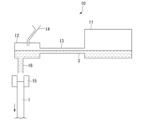
- FIG. 1 is a schematic explanatory diagram of a continuous casting device used in the method for producing copper alloy powder for metal AM according to the present embodiment.
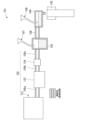
- FIG. 2 is a schematic explanatory diagram of another continuous casting device used in the method for producing copper alloy powder for metal AM according to the present embodiment.
- the method for producing copper alloy powder for metal AM according to the present embodiment is for producing copper alloy powder for use in metal AM. Note that, in the present embodiment, copper alloy powder suitable for the laser PBF method is produced.
- the method for producing copper alloy powder for metal AM according to the present embodiment will be described with reference to the flow diagram of FIG.
- the manufacturing method of copper alloy powder for metal AM according to this embodiment includes a melting and casting step S01 for obtaining a copper alloy ingot, a copper alloy raw material preparation step S02 for processing the obtained copper alloy ingot into a wire rod to obtain a copper alloy raw material, and a powder processing step S03 for processing the copper alloy raw material into powder.
- a copper alloy ingot 1 having a predetermined composition is manufactured.
- the melting and casting process S01 includes a melting step S11, an alloy element adding step S12, and a continuous casting step S13, as shown in the flow diagram of Fig. 2.
- a copper alloy ingot 1 is obtained using a continuous casting apparatus 10 shown in FIG.
- This continuous casting device 10 includes a melting furnace 11, a tundish 12 arranged downstream of the melting furnace 11, a connecting trough 13 connecting the melting furnace 11 and the tundish 12, an addition section 14 for adding alloy elements in the tundish 12, a continuous casting mold 15 arranged downstream of the tundish 12, and a pouring nozzle 16 for pouring molten copper alloy from the tundish 12 into the continuous casting mold 15.
- the copper raw material is melted in a non-oxidizing atmosphere (an inert gas atmosphere or a reducing atmosphere) to obtain the molten copper 3 (melting step S11).
- the copper raw material melted in the melting furnace 11 is high-purity copper (for example, high-purity electrolytic copper or oxygen-free copper) having a purity of 99.99 mass% or more.
- the copper raw material to be melted is high-purity copper of 4N grade (99.99 mass%) or more, more preferably high-purity copper of 5N grade (99.999 mass%) or more, and even more preferably high-purity copper of 6N (99.9999 mass%) or more.
- the obtained molten copper 3 is preferably oxygen-free molten copper.
- the obtained molten copper 3 is supplied to the tundish 12 while maintaining a non-oxidizing atmosphere (an inert gas atmosphere or a reducing atmosphere).
- the connecting trough 13 is disposed between the melting furnace 11 and the tundish 12, and the molten copper 3 passes through the inside of the connecting trough 13 in a non-oxidizing atmosphere.
- the molten copper 3 is held in a non-oxidizing atmosphere (an inert gas atmosphere or a reducing atmosphere).
- the connecting trough 13, and the tundish 12 are in a non-oxidizing atmosphere (an inert gas atmosphere or a reducing atmosphere), the gas components (O, H) in the molten copper 3 are reduced.
- alloy elements are added to the molten copper 3 using the adding section 14 (alloy element adding step S12).
- alloying elements By adding alloying elements to the molten copper 3 in which the gas components (O, H) have been sufficiently reduced, the yield of the alloying elements added is good, so that the amount of the alloying elements used can be reduced, and the manufacturing cost of the copper alloy can be reduced. Furthermore, by adding alloying elements to the molten copper 3 flowing inside the tundish 12, the alloying elements can be uniformly dissolved, and a molten copper alloy having stable component values can be continuously produced.
- the obtained molten copper alloy is poured into the continuous casting mold 15 via the pouring nozzle 16 to continuously produce the copper alloy ingot 1 (continuous casting process S13).
- the obtained copper alloy ingot 1 has an O concentration of 10 ppm by mass or less and an H concentration of 5 ppm by mass or less.
- the O concentration is more preferably 8 mass ppm or less, and the lower limit is not particularly limited, but may be a value not including 0 (or a value exceeding 0), or may be 0.5 mass ppm.
- the H concentration is more preferably 3 mass ppm or less, and the lower limit is not particularly limited, but may be a value not including 0 (or a value exceeding 0), or may be 0.2 mass ppm.
- the S concentration is preferably 15 ppm by mass or less.
- the S concentration is more preferably 11 ppm by mass or less, and the lower limit is not particularly limited, but may be a value not including 0 (or a value exceeding 0), or may be 0.01 ppm by mass.
- the total content of impurity elements (excluding O, H, and S) other than Cu and alloy elements is preferably 0.04 mass% or less.
- the sum of the O concentration, H concentration, and S concentration is preferably 30 mass ppm or less.
- the sum of the O concentration, H concentration, and S concentration is more preferably 25 mass ppm or less, further preferably 22 mass ppm or less, and may be 20 mass ppm or less.
- the lower limit of the sum of the O concentration, H concentration, and S concentration is not particularly limited, but may be a value that does not include 0 (or a value that exceeds 0), and may be 0.71 mass ppm.
- the copper alloy ingot 1 obtained in the melting and casting step S01 is processed into a wire rod to produce a copper alloy raw material.
- the copper alloy raw material preparation process S02 includes an extrusion process S21, a drawing process S22, and a cutting process S23.
- a copper alloy ingot having a circular cross section is heated and extruded into a rod having a predetermined diameter.
- the heating temperature during the hot extrusion process is preferably set within a range of 700° C. or more and 1000° C. or less.
- the bar obtained by the extrusion process S21 is subjected to drawing to form a wire having a predetermined diameter.
- the drawing temperature is not particularly limited, but is preferably within the range of ⁇ 200° C. to 200° C., which corresponds to cold or warm rolling, and room temperature is particularly preferable.
- the wire obtained in the drawing step S22 is cut to a predetermined length to obtain a copper alloy raw material.
- the obtained copper alloy raw material has an O concentration of 10 mass ppm or less and an H concentration of 5 mass ppm or less.
- the S concentration in the obtained copper alloy raw material is 15 mass ppm or less.
- the total content of impurity elements (excluding O, H, and S) other than Cu and alloy elements in the obtained copper alloy raw material is preferably 0.04 mass% or less.
- the powder processing step S03 includes a melting step S31, an atomizing step S32, and a classification step S33.
- the copper alloy raw material is heated and melted to obtain a molten metal.
- the melting atmosphere is preferably a non-oxidizing atmosphere.
- the molten metal obtained in the melting process S31 is sprayed with high-pressure gas to rapidly cool the droplets of the molten metal, thereby producing a powder having a spherical or similar shape.
- Inert gases such as argon and nitrogen can be used as the gas used in the gas atomization method.
- the melting temperature of the copper alloy raw material in the gas atomization process (the melting temperature during the gas atomization process) is preferably equal to or higher than the melting point of copper and equal to or lower than 1500°C.
- the melting temperature during the gas atomization process may be equal to or higher than 1085°C and equal to or lower than 1500°C.
- the obtained powder is classified to obtain a copper alloy powder having a predetermined particle size distribution.
- the copper alloy powder for metal AM is produced.
- the copper alloy powder for metal AM produced by the method for producing copper alloy powder for metal AM of the present embodiment contains various alloy elements as described above.
- the alloying element refers to an element that is intentionally added in the manufacturing method of the copper alloy powder for metal AM of this embodiment.
- some of the alloying elements may be called active metal elements.
- the copper alloy ingot of this embodiment preferably contains one or more alloy elements selected from Cr, Zr, Si and Ni.
- the alloying elements are not limited to the above components, and it is preferable that the alloying elements contain one or more selected from Cr, Zr, Si, Ni, Mg, Ti, Al, Zn, Ca, Sn, Pb, Fe, Mn, Te, Nb, Co, Sb, Bi, Ag, Ta, W, Mo, and P.
- the copper alloy ingot of this embodiment preferably contains one or more active metal elements as alloy elements. Examples of active metal elements include Cr, Zr, Si, Ni, Mg, Ti, Ni, Al, Zn, Ca, Sn, Pb, Fe, Mn, Te, and Nb.
- the total content of the alloying elements is preferably in the range of 0.01 mass% to 50 mass%.
- the total content of the alloying elements is more preferably in the range of 0.02 mass% to 45 mass%, and may be 5 mass% or less.
- the copper alloy powder for metal AM may contain impurity elements (excluding O, H, S, and N) other than the alloy elements, as long as they do not affect the properties.
- the impurity elements are components that are unintentionally mixed in due to contamination during the manufacturing process or impurities contained in trace amounts in raw materials.
- the impurity elements may be unavoidable impurities.
- the total amount of impurity elements (excluding O, H, S, and N) in the copper alloy powder for metal AM may be 0.07 mass% or less, may be 0.06 mass% or less, may be 0.05 mass% or less, is preferably 0.04 mass% or less, is more preferably 0.03 mass% or less, is even more preferably 0.02 mass% or less, and is further preferably 0.01 mass% or less.
- atmospheric components contained in the atmosphere or in the process may cause the powder to contain atmospheric components. For example, nitrogen may be contained in the powder as an atmospheric component.
- the nitrogen concentration (N concentration) is preferably 30 mass ppm, more preferably 20 mass ppm, and even more preferably 10 mass ppm or less. In the copper alloy powder for metal AM of this embodiment, the nitrogen concentration (N concentration) is more preferably 5 mass ppm or less.
- the lower limit of the N concentration is not particularly limited, but may be a value that does not include 0 (or a value that exceeds 0).
- the error in the accuracy of the numbers is ⁇ 10% (excluding O, H, S, and N).
- the copper alloy powder for metal AM manufactured by the manufacturing method of the copper alloy powder for metal AM of this embodiment contains one or more alloy elements selected from Cr, Zr, Si, and Ni, and the total content of the alloy elements may be in the range of 0.01 mass% to 50 mass%, more preferably in the range of 0.01 mass% to 10 mass%, and more preferably in the range of 0.01 mass% to 5 mass%, and may be 0.02 mass% or more.
- the alloy elements of the copper alloy powder for metal AM manufactured by this embodiment are not limited to the above components, and the alloy elements (active metal elements) include one or more selected from Cr, Zr, Si, Ni, Mg, Ti, Al, Zn, Ca, Sn, Pb, Fe, Mn, Te, Nb, Co, Sb, Bi, and Ag. Furthermore, since the O concentration in the copper raw material made of oxygen-free copper is 10 mass ppm or less and the H concentration is 5 mass ppm or less, the copper alloy powder for metal AM produced by the manufacturing method for copper alloy powder for metal AM of this embodiment has low O and H concentrations.
- the O concentration in the copper alloy ingot obtained in the melting and casting process S01 is 10 mass ppm or less, and the H concentration is 5 mass ppm or less. Therefore, by manufacturing copper alloy powder using this copper alloy ingot as a raw material, it is possible to manufacture copper alloy powder for metal AM that can stably manufacture high-quality additive manufacturing objects with high reproducibility of the microstructure and few structural defects such as voids.
- the manufacturing method of copper alloy powder for metal AM of this embodiment when the S concentration in the copper alloy ingot is 15 mass ppm or less, S, which is a component that is easily contained in copper, can be sufficiently reduced, and by manufacturing copper alloy powder using this copper alloy ingot as a raw material, it is possible to manufacture copper alloy powder for metal AM that has high reproducibility of the microstructure, has few structural defects such as voids, and can stably produce even higher quality additive manufacturing objects.
- the content of impurity elements (excluding O, H, and S) other than Cu and alloying elements in the copper alloy ingot is 0.04 mass% or less in total, the amount of impurity elements is sufficiently reduced, and by manufacturing copper alloy powder using this copper alloy ingot as a raw material, it is possible to manufacture copper alloy powder for metal AM that has high reproducibility of the microstructure and few structural defects such as voids, and can stably manufacture even higher quality additive manufacturing objects.
- the continuous casting apparatus 1 can obtain copper alloy ingots with a stable content of alloying elements, and can stably produce copper alloy powder for metal AM with a uniform content of alloying elements.
- Such a state in which the content of alloying elements is uniform in copper alloy powder for metal AM can be considered to realize uniform energy absorption throughout the powder bed in a PBF manufacturing process using, for example, an electron beam or laser light, and as a result, an additive manufacturing object with high reproducibility and high reliability can be realized.
- the powder is produced by gas atomization, but this is not limited thereto, and the copper alloy powder may be produced by water atomization, centrifugal atomization, inductively coupled plasma method, plasma atomization method, or the like.
- the copper alloy powder for metal AM obtained as described above may be appropriately heat-treated to stabilize the structure, etc. During this heat treatment, an appropriate atmosphere such as an inert gas or vacuum may be selected. Furthermore, in this embodiment, the copper alloy powder for metal AM suitable for the PBF method using a laser has been described as being produced, but this is not limited thereto, and the copper alloy powder for metal AM applicable to other metal AM methods may also be used. In addition, in the present embodiment, the continuous casting apparatus shown in FIG. 5 is used to produce a copper alloy ingot, but the present invention is not limited to this, and other casting apparatuses may be used.
- a continuous casting device 101 shown in FIG. 6 may be used.
- This continuous casting device 101 includes an oxygen-free copper supply means (molten copper supply section) 102 arranged at the most upstream portion, a heating furnace 103 arranged downstream thereof, a tundish 104 arranged downstream of the heating furnace 103 and supplied with molten copper, molten metal supply passages 105a, 105b, and 105c connecting the oxygen-free copper supply means 102 to the heating furnace 103, a trough 106 connecting the heating furnace 103 and the tundish 104, addition means (addition sections) 107 and 108 for adding alloy elements in a non-oxidizing atmosphere, and a continuous casting mold 142.
- the oxygen-free copper supply means 102, the heating furnace 103, the tundish 104, the molten metal supply passages 105a, 105b, and 105c, and the trough 106 each have a non-oxidizing atmosphere inside.
- the oxygen-free copper supply means 102 is composed of a melting furnace 121 for melting the copper raw material, a holding furnace 122 for temporarily holding the molten copper obtained by melting in the melting furnace 121, a degassing treatment device 124 for removing oxygen and hydrogen from the molten copper, and molten metal supply paths 105a, 105b, and 105c that connect these.
- the degassing treatment device 124 has a gas bubbling device as stirring means for stirring the molten copper therein, and removes oxygen and hydrogen from the molten copper by bubbling with an inert gas, for example.
- the molten metal supply passages 105a, 105b, and 105c have a non-oxidizing atmosphere therein to prevent the molten copper and the oxygen-free copper molten metal from being oxidized.
- the non-oxidizing atmosphere is formed by blowing a mixed gas of nitrogen and carbon monoxide or an inert gas such as argon into the molten metal supply passages.
- a first adding means 107 disposed in the heating furnace 103 and a second adding means 108 disposed in the tundish 104 are provided.
- the alloying elements are added to the oxygen-free copper molten metal stored in the heating furnace 103.
- the oxygen-free copper molten metal stored in the storage section is heated by a high-frequency induction coil, and the melting of the added alloying elements is promoted.
- the alloying elements are continuously or intermittently charged from the second adding means 108 provided in the tundish 104, the alloying elements are added to the molten oxygen-free copper flowing in the tundish 104.
- the molten oxygen-free copper flowing in the tundish 104 is heated in the heating furnace 103 and has a high temperature, and also flows within the tundish 104, the dissolution of the added alloying elements is promoted.
- a copper raw material made of 4N grade high purity copper was used to produce an ingot of C18000 having the composition shown in Table 1.
- the impurities shown in Table 1 are impurity elements (excluding O, H, and S).
- the produced C18000 ingot was used as a raw material to produce copper alloy powder for metal AM having the composition shown in Table 2 by gas atomization using argon gas, and the powder was sieved to a particle size suitable for the powder bed of metal AM.
- the melting temperature during the gas atomization process was 1300°C.
- particle size distribution measurement was performed using MT3300EXII manufactured by Microtrac, and the particle size distribution was as follows: 10% cumulative particle size on a volume basis was 16 ⁇ m, 50% cumulative particle size was 28 ⁇ m, and 90% cumulative particle size was 45 ⁇ m. Then, using the copper alloy powder for metal AM of the present invention, a small piece of an additive manufacturing object was produced using a commercially available laser PBF device at an energy density of 13 J/ mm2 .
- a commercially available C18000 powder for metal AM shown in Table 2 was prepared.
- particle size distribution measurement was performed using an MT3300EXII manufactured by Microtrac, and the particle size distribution was as follows: 10% cumulative particle size on a volume basis was 13 ⁇ m, 50% cumulative particle size was 33 ⁇ m, and 90% cumulative particle size was 57 ⁇ m.
- a small piece of an additively molded object was produced under the same molding conditions as the example of the present invention, including the layer thickness, using a commercially available laser PBF device.
- composition of ingot and copper alloy powder for metal AM The O concentration in the ingots shown in Table 1, the copper alloy powders for metal AM of the present invention, and the copper alloy powders for metal AM of the conventional examples was determined by inert gas fusion-infrared absorption method, the H concentration by inert gas fusion-thermal conductivity method, and the S concentration by combustion-infrared absorption method. The concentrations of components other than these substances, except for copper, were determined by a combination of X-ray fluorescence analysis, glow discharge mass spectrometry, and inductively coupled plasma mass spectrometry. The results are shown in Table 2.
- the impurities shown in Table 2 are impurity elements (excluding O, H, S, and N).
- the density of the layered object was evaluated from the cross section of the layered object and the area occupied by voids observed in the cross section of the layered object. In this specification, this density is defined as the density of the object.
- the density of the molded object was evaluated by first defining the cross-sectional area of the object to be measured (this is called the evaluation cross-sectional area, 3.4 mm square), identifying voids within this measurement cross-sectional area, and calculating the area occupied by voids in the evaluation cross-sectional area. The density of the molded object was then defined as (evaluation cross-sectional area - void-occupied area)/evaluation cross-sectional area. The evaluation results of the density of the molded object are shown in Table 2.
- the density of the molded object reached 99.3% by additive manufacturing using the copper alloy powder for metal AM of the present invention.
- the density of the molded object was 97.3%, which was a problematic density in practical use.
- the O concentration of the copper alloy powder for metal AM of the present invention example is higher than the O concentration of the ingot in Table 1.
- the original copper alloy ingot is of high purity, it is possible to suppress the degree of excess increase in O concentration in the subsequent processes, which is thought to contribute to improving the reproducibility of the microstructure of the additive manufacturing product.
- the present invention can provide a method for producing copper alloy powder for metal AM that can stably produce high-quality additively molded objects with high reproducibility of the microstructure of the additively molded objects produced by metal AM and with few structural defects such as voids.
Landscapes
- Chemical & Material Sciences (AREA)
- Engineering & Computer Science (AREA)
- Mechanical Engineering (AREA)
- Materials Engineering (AREA)
- Metallurgy (AREA)
- Organic Chemistry (AREA)
- Manufacturing & Machinery (AREA)
- Manufacture Of Metal Powder And Suspensions Thereof (AREA)
- Powder Metallurgy (AREA)
- Continuous Casting (AREA)
Priority Applications (5)
| Application Number | Priority Date | Filing Date | Title |
|---|---|---|---|
| CN202380074239.0A CN120091879A (zh) | 2022-10-24 | 2023-10-24 | 金属am用铜合金粉末的制造方法 |
| EP23882652.3A EP4556144A4 (en) | 2022-10-24 | 2023-10-24 | PROCESS FOR MANUFACTURING COPPER ALLOY POWDER FOR METAL AM |
| US18/877,925 US20250162031A1 (en) | 2022-10-24 | 2023-10-24 | Method for manufacturing copper alloy powder for metal am |
| JP2024506147A JP7513223B1 (ja) | 2022-10-24 | 2023-10-24 | 金属am用銅合金粉末の製造方法 |
| JP2024101708A JP7626286B2 (ja) | 2022-10-24 | 2024-06-25 | 金属am用銅合金粉末の製造方法 |
Applications Claiming Priority (2)
| Application Number | Priority Date | Filing Date | Title |
|---|---|---|---|
| JP2022-169920 | 2022-10-24 | ||
| JP2022169920 | 2022-10-24 |
Publications (1)
| Publication Number | Publication Date |
|---|---|
| WO2024090447A1 true WO2024090447A1 (ja) | 2024-05-02 |
Family
ID=90830851
Family Applications (1)
| Application Number | Title | Priority Date | Filing Date |
|---|---|---|---|
| PCT/JP2023/038393 Ceased WO2024090447A1 (ja) | 2022-10-24 | 2023-10-24 | 金属am用銅合金粉末の製造方法 |
Country Status (6)
| Country | Link |
|---|---|
| US (1) | US20250162031A1 (https=) |
| EP (1) | EP4556144A4 (https=) |
| JP (2) | JP7513223B1 (https=) |
| CN (1) | CN120091879A (https=) |
| TW (1) | TW202428381A (https=) |
| WO (1) | WO2024090447A1 (https=) |
Families Citing this family (2)
| Publication number | Priority date | Publication date | Assignee | Title |
|---|---|---|---|---|
| US12377252B2 (en) | 2018-03-13 | 2025-08-05 | Vertex Pharmaceuticals Incorporated | Implantation devices, system, and methods |
| CN120519736B (zh) * | 2025-07-25 | 2025-10-10 | 广州众山增材科技有限公司 | 一种导热铜合金材料及其制备方法和激光增材制造中的应用 |
Citations (7)
| Publication number | Priority date | Publication date | Assignee | Title |
|---|---|---|---|---|
| JP2015132008A (ja) * | 2014-01-15 | 2015-07-23 | 株式会社神戸製鋼所 | 電気電子部品用銅合金 |
| JP2016211062A (ja) | 2015-05-13 | 2016-12-15 | 株式会社ダイヘン | 銅合金粉末、積層造形物の製造方法および積層造形物 |
| JP2018178239A (ja) * | 2017-04-21 | 2018-11-15 | Jx金属株式会社 | 銅粉末及びその製造方法並びに立体造形物の製造方法 |
| JP2019070169A (ja) | 2017-09-04 | 2019-05-09 | 株式会社Nttデータエンジニアリングシステムズ | 銅合金粉末、積層造形物の熱処理方法、銅合金造形物の製造方法および銅合金造形物 |
| CN111676386A (zh) * | 2020-05-22 | 2020-09-18 | 陕西斯瑞新材料股份有限公司 | 一种CuCrZr材料性能改善的方法 |
| JP2020186429A (ja) * | 2019-05-13 | 2020-11-19 | 三菱マテリアル株式会社 | レーザー光の吸収率に優れた銅粉末 |
| JP2022169920A (ja) | 2021-04-28 | 2022-11-10 | オムロン株式会社 | 制御システム、データ提供方法および中継処理プログラム |
Family Cites Families (5)
| Publication number | Priority date | Publication date | Assignee | Title |
|---|---|---|---|---|
| JP4747689B2 (ja) * | 2005-06-08 | 2011-08-17 | 三菱マテリアル株式会社 | 銅合金の連続製造方法 |
| JP5053242B2 (ja) * | 2007-11-30 | 2012-10-17 | 古河電気工業株式会社 | 銅合金材の製造方法及びその装置 |
| JP2011012301A (ja) * | 2009-07-01 | 2011-01-20 | Hitachi Cable Ltd | 銅合金及び銅合金の製造方法 |
| JP5962707B2 (ja) * | 2013-07-31 | 2016-08-03 | 三菱マテリアル株式会社 | 電子・電気機器用銅合金、電子・電気機器用銅合金塑性加工材、電子・電気機器用銅合金塑性加工材の製造方法、電子・電気機器用部品及び端子 |
| CN109550969A (zh) * | 2018-12-30 | 2019-04-02 | 北京康普锡威科技有限公司 | 制备增材制造用Al/Cu基合金粉末的离心雾化装置及方法 |
-
2023
- 2023-10-24 WO PCT/JP2023/038393 patent/WO2024090447A1/ja not_active Ceased
- 2023-10-24 CN CN202380074239.0A patent/CN120091879A/zh active Pending
- 2023-10-24 EP EP23882652.3A patent/EP4556144A4/en active Pending
- 2023-10-24 US US18/877,925 patent/US20250162031A1/en active Pending
- 2023-10-24 JP JP2024506147A patent/JP7513223B1/ja active Active
- 2023-10-24 TW TW112140633A patent/TW202428381A/zh unknown
-
2024
- 2024-06-25 JP JP2024101708A patent/JP7626286B2/ja active Active
Patent Citations (7)
| Publication number | Priority date | Publication date | Assignee | Title |
|---|---|---|---|---|
| JP2015132008A (ja) * | 2014-01-15 | 2015-07-23 | 株式会社神戸製鋼所 | 電気電子部品用銅合金 |
| JP2016211062A (ja) | 2015-05-13 | 2016-12-15 | 株式会社ダイヘン | 銅合金粉末、積層造形物の製造方法および積層造形物 |
| JP2018178239A (ja) * | 2017-04-21 | 2018-11-15 | Jx金属株式会社 | 銅粉末及びその製造方法並びに立体造形物の製造方法 |
| JP2019070169A (ja) | 2017-09-04 | 2019-05-09 | 株式会社Nttデータエンジニアリングシステムズ | 銅合金粉末、積層造形物の熱処理方法、銅合金造形物の製造方法および銅合金造形物 |
| JP2020186429A (ja) * | 2019-05-13 | 2020-11-19 | 三菱マテリアル株式会社 | レーザー光の吸収率に優れた銅粉末 |
| CN111676386A (zh) * | 2020-05-22 | 2020-09-18 | 陕西斯瑞新材料股份有限公司 | 一种CuCrZr材料性能改善的方法 |
| JP2022169920A (ja) | 2021-04-28 | 2022-11-10 | オムロン株式会社 | 制御システム、データ提供方法および中継処理プログラム |
Non-Patent Citations (2)
| Title |
|---|
| See also references of EP4556144A4 |
| Y. M. ARISOY: "Influence of scan strategy and process parameters on microstructure and its optimization in additively manufactured nickel alloy 625 via laser powder bed fusion", THE INTERNATIONAL JOURNAL OF ADVANCED MANUFACTURING TECHNOLOGY, vol. 90, 2017, pages 1393 - 1417, XP036227792, DOI: 10.1007/s00170-016-9429-z |
Also Published As
| Publication number | Publication date |
|---|---|
| JPWO2024090447A1 (https=) | 2024-05-02 |
| US20250162031A1 (en) | 2025-05-22 |
| JP7513223B1 (ja) | 2024-07-09 |
| CN120091879A (zh) | 2025-06-03 |
| EP4556144A4 (en) | 2025-10-08 |
| EP4556144A1 (en) | 2025-05-21 |
| JP2024129057A (ja) | 2024-09-26 |
| TW202428381A (zh) | 2024-07-16 |
| JP7626286B2 (ja) | 2025-02-04 |
Similar Documents
| Publication | Publication Date | Title |
|---|---|---|
| KR102722473B1 (ko) | 알루미늄 합금 부품 제조 공정 | |
| JP7626286B2 (ja) | 金属am用銅合金粉末の製造方法 | |
| US12037661B2 (en) | Process for manufacturing an aluminum alloy part | |
| CN112805105B (zh) | 制造铝合金零件的方法 | |
| CN109072344B (zh) | 钛、铝、钒和铁的bcc材料及由其制成的产品 | |
| CN112805106B (zh) | 制造铝合金零件的方法 | |
| JPWO2019239655A1 (ja) | 銅合金粉末、積層造形物および積層造形物の製造方法ならびに各種金属部品 | |
| CN113412172B (zh) | 制造铝合金零件的方法 | |
| CN114829655A (zh) | 用于马氏体时效钢的增材制造的方法 | |
| JP2025020372A (ja) | 金属am用銅合金粉末および積層造形物の製造方法 | |
| KR20230009373A (ko) | 알루미늄 합금 부품을 제조하기 위한 방법 | |
| CN117396290A (zh) | 采用含有预热的增材制造技术制备铝合金零件的方法 | |
| JP7586376B2 (ja) | 金属am銅合金粉末および積層造形物の製造方法 | |
| JP7513224B1 (ja) | 金属am用銅合金粉末および積層造形物の製造方法 | |
| JP7563652B2 (ja) | 金属am用銅合金粉末および積層造形物の製造方法 | |
| EP4541484A1 (en) | Copper alloy powder for additive manufacturing, additively manufactured copper alloy article, and method for manufacturing copper alloy additively-manufactured article | |
| JP2024066625A (ja) | 銅合金粉末、積層造形物の製造方法、および積層造形物 | |
| CN118492402A (zh) | 一种定向能量沉积技术用高球形度低密度钢的制备方法 | |
| WO2025100263A1 (ja) | アルミニウム合金成形体及びその製造方法 |
Legal Events
| Date | Code | Title | Description |
|---|---|---|---|
| ENP | Entry into the national phase |
Ref document number: 2024506147 Country of ref document: JP Kind code of ref document: A |
|
| 121 | Ep: the epo has been informed by wipo that ep was designated in this application |
Ref document number: 23882652 Country of ref document: EP Kind code of ref document: A1 |
|
| WWE | Wipo information: entry into national phase |
Ref document number: 18877925 Country of ref document: US |
|
| WWE | Wipo information: entry into national phase |
Ref document number: 2023882652 Country of ref document: EP |
|
| ENP | Entry into the national phase |
Ref document number: 2023882652 Country of ref document: EP Effective date: 20250214 |
|
| WWE | Wipo information: entry into national phase |
Ref document number: 202380074239.0 Country of ref document: CN |
|
| WWP | Wipo information: published in national office |
Ref document number: 2023882652 Country of ref document: EP |
|
| WWP | Wipo information: published in national office |
Ref document number: 18877925 Country of ref document: US |
|
| NENP | Non-entry into the national phase |
Ref country code: DE |
|
| WWP | Wipo information: published in national office |
Ref document number: 202380074239.0 Country of ref document: CN |