WO2024070808A1 - 感光性フィルム及び感光性樹脂組成物 - Google Patents
感光性フィルム及び感光性樹脂組成物 Download PDFInfo
- Publication number
- WO2024070808A1 WO2024070808A1 PCT/JP2023/033909 JP2023033909W WO2024070808A1 WO 2024070808 A1 WO2024070808 A1 WO 2024070808A1 JP 2023033909 W JP2023033909 W JP 2023033909W WO 2024070808 A1 WO2024070808 A1 WO 2024070808A1
- Authority
- WO
- WIPO (PCT)
- Prior art keywords
- structural unit
- resin composition
- following formula
- formula
- photosensitive resin
- Prior art date
- Legal status (The legal status is an assumption and is not a legal conclusion. Google has not performed a legal analysis and makes no representation as to the accuracy of the status listed.)
- Ceased
Links
Images


Classifications
-
- C—CHEMISTRY; METALLURGY
- C08—ORGANIC MACROMOLECULAR COMPOUNDS; THEIR PREPARATION OR CHEMICAL WORKING-UP; COMPOSITIONS BASED THEREON
- C08F—MACROMOLECULAR COMPOUNDS OBTAINED BY REACTIONS ONLY INVOLVING CARBON-TO-CARBON UNSATURATED BONDS
- C08F290/00—Macromolecular compounds obtained by polymerising monomers on to polymers modified by introduction of aliphatic unsaturated end or side groups
- C08F290/08—Macromolecular compounds obtained by polymerising monomers on to polymers modified by introduction of aliphatic unsaturated end or side groups on to polymers modified by introduction of unsaturated side groups
- C08F290/14—Polymers provided for in subclass C08G
-
- C—CHEMISTRY; METALLURGY
- C08—ORGANIC MACROMOLECULAR COMPOUNDS; THEIR PREPARATION OR CHEMICAL WORKING-UP; COMPOSITIONS BASED THEREON
- C08G—MACROMOLECULAR COMPOUNDS OBTAINED OTHERWISE THAN BY REACTIONS ONLY INVOLVING UNSATURATED CARBON-TO-CARBON BONDS
- C08G73/00—Macromolecular compounds obtained by reactions forming a linkage containing nitrogen with or without oxygen or carbon in the main chain of the macromolecule, not provided for in groups C08G12/00 - C08G71/00
- C08G73/06—Polycondensates having nitrogen-containing heterocyclic rings in the main chain of the macromolecule
- C08G73/10—Polyimides; Polyester-imides; Polyamide-imides; Polyamide acids or similar polyimide precursors
- C08G73/12—Unsaturated polyimide precursors
-
- G—PHYSICS
- G03—PHOTOGRAPHY; CINEMATOGRAPHY; ANALOGOUS TECHNIQUES USING WAVES OTHER THAN OPTICAL WAVES; ELECTROGRAPHY; HOLOGRAPHY
- G03F—PHOTOMECHANICAL PRODUCTION OF TEXTURED OR PATTERNED SURFACES, e.g. FOR PRINTING, FOR PROCESSING OF SEMICONDUCTOR DEVICES; MATERIALS THEREFOR; ORIGINALS THEREFOR; APPARATUS SPECIALLY ADAPTED THEREFOR
- G03F7/00—Photomechanical, e.g. photolithographic, production of textured or patterned surfaces, e.g. printing surfaces; Materials therefor, e.g. comprising photoresists; Apparatus specially adapted therefor
- G03F7/004—Photosensitive materials
-
- G—PHYSICS
- G03—PHOTOGRAPHY; CINEMATOGRAPHY; ANALOGOUS TECHNIQUES USING WAVES OTHER THAN OPTICAL WAVES; ELECTROGRAPHY; HOLOGRAPHY
- G03F—PHOTOMECHANICAL PRODUCTION OF TEXTURED OR PATTERNED SURFACES, e.g. FOR PRINTING, FOR PROCESSING OF SEMICONDUCTOR DEVICES; MATERIALS THEREFOR; ORIGINALS THEREFOR; APPARATUS SPECIALLY ADAPTED THEREFOR
- G03F7/00—Photomechanical, e.g. photolithographic, production of textured or patterned surfaces, e.g. printing surfaces; Materials therefor, e.g. comprising photoresists; Apparatus specially adapted therefor
- G03F7/004—Photosensitive materials
- G03F7/027—Non-macromolecular photopolymerisable compounds having carbon-to-carbon double bonds, e.g. ethylenic compounds
-
- H—ELECTRICITY
- H05—ELECTRIC TECHNIQUES NOT OTHERWISE PROVIDED FOR
- H05K—PRINTED CIRCUITS; CASINGS OR CONSTRUCTIONAL DETAILS OF ELECTRIC APPARATUS; MANUFACTURE OF ASSEMBLAGES OF ELECTRICAL COMPONENTS
- H05K1/00—Printed circuits
- H05K1/02—Details
- H05K1/03—Use of materials for the substrate
Definitions
- the present invention relates to a photosensitive film, a photosensitive resin composition, and a method for manufacturing a semiconductor package substrate using the same; a polyimide precursor that can be applied to the photosensitive film; and a semiconductor chip package substrate and a semiconductor device that use a cured product of the photosensitive resin composition.
- polyimide resins which have excellent heat resistance and insulating properties, have been used in insulating layers of semiconductor devices (Patent Documents 1 to 5).
- polyimide resins have low solubility in solvents. Therefore, after forming a layer of a photosensitive resin composition containing a polyimide precursor, the polyimide precursor is sometimes ring-closed to form an insulating layer.
- Patent Documents 6 to 8 were previously known.
- a thick insulating layer containing a polyimide resin there are cases where it is desired to form a thick insulating layer containing a polyimide resin.
- a layer of a photosensitive resin composition is formed thick, and then the layer is cured to obtain a thick insulating layer.
- holes such as via holes.
- a layer of a photosensitive resin composition is formed with a thickness of 20 ⁇ m or more, it is difficult to form holes in the layer by exposure and development.
- the present invention was devised in view of the above problems, and aims to provide a photosensitive film and a photosensitive resin composition that can form holes by exposure and development and can form a thick insulating layer; a polyimide precursor that can be applied to the photosensitive film and the photosensitive resin composition; a method for manufacturing a semiconductor package substrate using the photosensitive film and the photosensitive resin composition; and a semiconductor chip package substrate and a semiconductor device that include a cured product of the photosensitive resin composition.
- the present inventors have conducted extensive research to solve the above-mentioned problems, and as a result, have found that the above-mentioned problems can be solved by using a photosensitive resin composition containing a specific polyimide precursor (A), a compound containing an ethylenically unsaturated bond (B), and a photopolymerization initiator (C) in combination, thereby completing the present invention. That is, the present invention includes the following.
- the photosensitive resin composition layer has a thickness of 20 ⁇ m or more;
- the photosensitive resin composition comprises: (A) a polyimide precursor; (B) a compound containing an ethylenically unsaturated bond; and (C) a photopolymerization initiator; (A) A photosensitive film, in which the polyimide precursor contains a structural unit having a structure obtained by reacting a carboxyl group of a polyamic acid structural unit obtained by reacting an aliphatic acid dianhydride with a diamine compound with an epoxy group of an epoxy compound containing an ethylenically unsaturated bond.
- a 3a represents a tetravalent organic group containing an aliphatic hydrocarbon group
- B 3a represents a divalent organic group
- Ring Z 31a and ring Z 32a each independently represent an aliphatic hydrocarbon ring which may have a substituent
- R 31a and R 32a each independently represent a monovalent organic group containing an ethylenically unsaturated bond
- k a3 represents 0 or 1.
- the polyimide precursor (A) is a polyimide precursor having a structural unit represented by the following formula (a-1-1), a structural unit represented by the following formula (a-1-2), a structural unit represented by the following formula (a-1-3), a structural unit represented by the following formula (a-2-1), a structural unit represented by the following formula (a-2-2), a structural unit represented by the following formula (a-2-3), a structural unit represented by the following formula (a-3-1), a structural unit represented by the following formula (a-3-2), a structural unit represented by the following formula (a-3-3), or a structural unit represented by the following formula (a-4-1).
- a-4-2 a structural unit represented by the following formula (a-4-3)
- a-5-1 a structural unit represented by the following formula (a-5-2)
- a structural unit represented by the following formula (a-6-1) a structural unit represented by the following formula (a-6-2), and a structural unit represented by the following formula (a-6-3.
- a photosensitive resin composition comprising: (A) a polyimide precursor; (B) a compound containing an ethylenically unsaturated bond; and (C) a photopolymerization initiator, (A) A photosensitive resin composition, in which the polyimide precursor contains a structural unit having a structure obtained by reacting a carboxyl group of a polyamic acid structural unit obtained by reacting an aliphatic acid dianhydride with a diamine compound containing an indane skeleton, with an epoxy group of an epoxy compound containing an ethylenically unsaturated bond.
- a photosensitive film comprising a photosensitive resin composition layer containing the photosensitive resin composition according to [16].
- a semiconductor package substrate comprising an insulating layer formed from a cured product of the photosensitive resin composition according to [16].
- a semiconductor device comprising the semiconductor package substrate according to [18].
- a method for manufacturing a semiconductor package substrate comprising:
- a 1a represents a tetravalent organic group containing an aliphatic hydrocarbon group
- R 11a and R 12a each independently represent a monovalent organic group containing an ethylenically unsaturated bond
- Each R 13a independently represents a hydrogen atom or a methyl group
- Xa represents a single bond, a group represented by the following formula (a5-1) or a group represented by the following formula (a5-2):
- Xb represents a single bond, a group represented by formula (a5-3), or a group represented by formula (a5-4);
- m a1 represents an integer of 1 to 5;
- k a1 represents 0 or 1.
- a polyimide precursor containing a structural unit represented by the following formula (A-7) (In formula (A-7), A 4a represents a tetravalent organic group containing an aliphatic hydrocarbon group; Ring Z 41a and ring Z 42a each independently represent an aliphatic hydrocarbon ring which may have a substituent; R 41a and R 42a each independently represent a monovalent organic group containing an ethylenically unsaturated bond; Each R 43a independently represents a hydrogen atom or a methyl group; Xa 4a represents a single bond, a group represented by formula (a5-1) or a group represented by formula (a5-2); Xb 4a represents a single bond, a group represented by formula (a5-3), or a group represented by formula (a5-4); m a4 represents an integer of 1 to 5; k a4 represents 0 or 1. (In formulas (a5-1) to (a5-4), * represents a bond.)
- the present invention provides a photosensitive film and a photosensitive resin composition that can form holes by exposure and development and can form a thick insulating layer; a polyimide precursor that can be used with the photosensitive film and the photosensitive resin composition; a method for manufacturing a semiconductor package substrate using the photosensitive film and the photosensitive resin composition; and a semiconductor chip package substrate and a semiconductor device that include a cured product of the photosensitive resin composition.
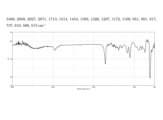
- FIG. 1 is a spectroscopic diagram showing the IR spectrum of the polyimide precursor A-1 produced in Synthesis Example 1.
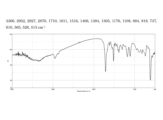
- FIG. 2 is a spectroscopic diagram showing the IR spectrum of the polyimide precursor A-2 produced in Synthesis Example 2.
- FIG. 3 is a spectroscopic diagram showing the IR spectrum of the polyimide precursor A-3 produced in Synthesis Example 3.
- FIG. 4 is a spectroscopic diagram showing the IR spectrum of the polyimide precursor A-4 produced in Synthesis Example 4.
- FIG. 5 is a spectroscopic diagram showing the IR spectrum of the polyimide precursor A-5 produced in Synthesis Example 5.
- FIG. 6 is a spectroscopic diagram showing the IR spectrum of the polyimide precursor A-6 produced in Synthesis Example 6.
- the term "optionally substituted" in reference to a compound or group means both cases where the hydrogen atoms of the compound or group are not substituted with substituents, and cases where some or all of the hydrogen atoms of the compound or group are substituted with substituents.
- organic group refers to a group that contains at least carbon atoms as skeletal atoms, and may be linear, branched, or cyclic.
- the amount of each component in the photosensitive resin composition represents the value when the non-volatile components in the photosensitive resin composition are taken as 100 mass %, unless otherwise specified.
- the photosensitive film according to the first embodiment of the present invention includes a photosensitive resin composition layer.
- the photosensitive resin composition layer includes the photosensitive resin composition according to the first embodiment of the present invention, and preferably includes only the photosensitive resin composition.
- the photosensitive resin composition includes (A) a polyimide precursor, (B) a compound containing an ethylenically unsaturated bond, and (C) a photopolymerization initiator.
- the "(B) compound containing an ethylenically unsaturated bond” may be referred to as the "(B) crosslinking agent".
- the (A) polyimide precursor contains a structural unit having a structure obtained by reacting the epoxy group of an epoxy compound containing an ethylenically unsaturated bond with the carboxyl group of a polyamic acid structural unit obtained by reacting an aliphatic acid dianhydride with a diamine compound.
- the "structural unit having a structure obtained by reacting the epoxy group of an epoxy compound containing an ethylenically unsaturated bond with the carboxyl group of a polyamic acid structural unit obtained by reacting an aliphatic acid dianhydride with a diamine compound” may be appropriately referred to as the "specific polyamic acid ester structural unit".
- the photosensitive resin composition can usually be used as a negative photosensitive resin composition.
- the photosensitive film according to this embodiment can form holes in the photosensitive resin composition layer by exposure and development, even if the photosensitive resin composition layer is as thick as 20 ⁇ m or more. Therefore, with this photosensitive film, a thick insulating layer having holes formed by exposure and development can be obtained.
- the photosensitive resin composition according to the first embodiment of the present invention contains a polyimide precursor (A) as the component (A).
- the polyimide precursor (A) can be cyclically closed by heating to form a polyimide. Therefore, according to the cured product obtained by thermally curing the photosensitive resin composition containing the polyimide precursor (A), a good insulating layer can be formed by utilizing the excellent physical properties of the polyimide.
- the resolution of the photosensitive resin composition can usually be improved.
- the polyimide precursor (A) may be used alone or in combination of two or more types.
- a resin containing a specific polyamic acid ester structural unit i.e., a structural unit having a structure obtained by reacting a carboxyl group of a polyamic acid structural unit obtained by reacting an aliphatic acid dianhydride with a diamine compound with an epoxy group of an epoxy compound containing an ethylenically unsaturated bond
- a resin containing a specific polyamic acid ester structural unit i.e., a structural unit having a structure obtained by reacting a carboxyl group of a polyamic acid structural unit obtained by reacting an aliphatic acid dianhydride with a diamine compound with an epoxy group of an epoxy compound containing an ethylenically unsaturated bond
- A) Polyimide precursor usually contains multiple specific polyamic acid ester structural units in one molecule.
- the specific polyamic acid ester structural unit contains an epoxy compound residue having a structure formed by the reaction of an epoxy group of an epoxy compound with a carboxyl group. Since an epoxy compound contains an ethylenically unsaturated bond, the epoxy compound residue may contain an ethylenically unsaturated bond.
- An "ethylenically unsaturated bond” refers to a non-aromatic carbon-carbon unsaturated bond, such as a non-aromatic carbon-carbon double bond and a carbon-carbon triple bond.
- the epoxy compound residue can function as a radical reactive group that can undergo polymerization by radicals generated by heat or light. Therefore, a photosensitive resin composition containing (A) a polyimide precursor can be polymerized by exposure to light, effectively reducing the solubility of the photosensitive resin composition in a developer.
- the polyimide precursor (A) preferably contains an indane skeleton in the specific polyamic acid ester structural unit.
- the indane skeleton represents the skeleton shown in (a1-1) below.
- the solubility of the non-exposed portion of the photosensitive resin composition in the developer can be increased. This can shorten the development time, and more preferably improve the resolution.
- “resolution” refers to the property of being able to form small holes in the photosensitive resin composition by exposure and development. In general, the smaller the diameter of the holes that can be formed, the better the resolution.
- the polyimide precursor (A) preferably contains a trimethylindane skeleton represented by the following formula (a1-2).
- the specific polyamic acid ester structural unit preferably contains an indane skeleton in the structural portion derived from the diamine compound.
- a polyamic acid structural unit can be formed by reacting an aliphatic acid dianhydride with a diamine compound.
- the polyamic acid structural unit usually contains a carboxyl group. Therefore, a specific polyamic acid ester structural unit can be formed by reacting the carboxyl group of this polyamic acid structural unit with the epoxy group of an epoxy compound containing an ethylenically unsaturated bond.
- Aliphatic acid dianhydride refers to a dianhydride of a carboxylic acid containing two acid anhydride groups (i.e., -CO-O-CO-) and an aliphatic carbon bonded to the acid anhydride groups.
- the aliphatic carbon is usually a saturated aliphatic carbon.
- the acid anhydride group is bonded to a saturated aliphatic chain, and a ring structure is formed by the bonded acid anhydride group and the saturated aliphatic chain.
- This ring structure is usually a heterocycle consisting of oxygen atoms and carbon atoms.
- the ring structure is preferably a 5-membered or 6-membered ring, and more preferably a 5-membered ring.
- the aliphatic acid dianhydride may contain an unsaturated aliphatic chain and an aromatic chain in a portion other than the portion to which the acid anhydride group is directly bonded.
- the saturated aliphatic chain to which the acid anhydride group is bonded is preferably bonded to another carbon atom contained in the aliphatic acid dianhydride to form a carbon ring.
- the aliphatic acid dianhydride contains an aliphatic carbon ring containing a saturated aliphatic chain, and that the acid anhydride group is bonded to this aliphatic carbon ring.
- One of the two acid anhydride groups may be bonded to an aliphatic carbon ring, or both may be bonded to an aliphatic carbon ring.
- the molecular weight range of the aliphatic acid dianhydride is preferably 400 or less. When the molecular weight is within this range, the concentration of ethylenically unsaturated bonds can be increased, which usually suppresses swelling of the photosensitive resin composition during development and effectively increases the residual film rate.
- aliphatic acid dianhydrides include aliphatic tetracarboxylic acid dianhydrides.
- aliphatic tetracarboxylic acid dianhydrides include 1,2,4,5-cyclohexanetetracarboxylic acid dianhydride, bicyclo[2.2.2]oct-7-ene-2,3,5,6-tetracarboxylic acid dianhydride, bicyclo[2.2.1]heptane-2-endo-3-endo-5-exo-6-exo-2,3,5,6-tetracarboxylic acid dianhydride, bicyclo[2.2.1]heptane-2-exo-3-exo-5-exo-6-exo-2,3,5,6-tetracarboxylic acid dianhydride, Examples of such an anhydride include cyclo[2.2.1]heptane-2,3,5,6-tetracarboxylic dianhydride, 2-(3,4-dicarboxy-1,2,3,4-tetrahydro
- 2-(3,4-dicarboxy-1,2,3,4-tetrahydro-1-naphthyl)succinic dianhydride, 5-(2,5-dioxotetrahydrofuryl)-3-methyl-3-cyclohexene-1,2-dicarboxylic anhydride, 1,2,3,4-butanetetracarboxylic dianhydride, and N,N'-1,4-phenylenebis[octahydro-1,3-dioxo-5-isobenzofurancarboxamide] are preferred, and 2-(3,4-dicarboxy-1,2,3,4-tetrahydro-1-naphthyl)succinic dianhydride, 5-(2,5-dioxotetrahydrofuryl)-3-methyl-3-cyclohexene-1,2-dicarboxylic anhydride, and 1,2,3,4-butanetetracarboxylic dianhydride are more preferred.
- the diamine compound may be, for example, bis[2-(3-aminopropoxy)ethyl]ether, 1,4-butanediol-bis(3-aminopropyl)ether, 3,9-bis(3-aminopropyl)-2,4,8,10-tetraspiro-5,5-undecane, 1,2-bis(2-aminoethoxy)ethane, 1,2-bis(3-aminopropoxy)ethane, triethylene glycol-bis(3-aminopropyl)ether, polyethylene glycol-bis(3-aminopropyl)ether, 3,9-bis(3-aminopropyl)-2,4,8,10-tetraspiro-5,5-undecane, 1,4-butanediol-bis(3-aminopropyl)ether, etc.
- diamine compound may be used alone, or two or more types may be used in combination.
- a diamine compound containing an aromatic ring may be used as the diamine compound.
- the diamine compound contains an indane skeleton.
- diamine compounds containing an indane skeleton include the diamine compounds shown in the following formulas (a2-1) to (a2-10). Among these, the diamine compounds shown in the formulas (a2-4) to (a2-7) are preferred, and the diamine compound shown in the formula (a2-4) is even more preferred.
- the epoxy compound containing an ethylenically unsaturated bond a compound containing an ethylenically unsaturated bond and an epoxy group can be used.
- the epoxy group may be contained as a glycidyl group.
- examples of epoxy compounds containing an ethylenically unsaturated bond include glycidyl acrylate, glycidyl methacrylate, 4-hydroxybutyl acrylate glycidyl ether, and 3,4-epoxycyclohexylmethyl methacrylate.
- the epoxy compounds containing an ethylenically unsaturated bond may be used alone or in combination of two or more types.
- the specific polyamic acid ester structural unit is preferably represented by the following formula (A-1). Therefore, it is preferable that the (A) polyimide precursor contains the specific polyamic acid ester structural unit represented by the following formula (A-1).
- a a represents a tetravalent organic group containing an aliphatic hydrocarbon group
- B a represents a divalent organic group
- R 1a and R 2a each independently represent a monovalent organic group containing an ethylenically unsaturated bond
- k a represents 0 or 1.
- the specific polyamic acid ester structural units represented by formula (A-1) contained in the (A) polyimide precursor may be the same or different.
- a a represents a tetravalent organic group containing an aliphatic hydrocarbon group.
- the number of carbon atoms in A a is preferably 6 to 40.
- the aliphatic hydrocarbon group contained in the tetravalent organic group contains an aliphatic carbon, and the carbonyl group shown in formula (A-1) is bonded to this aliphatic carbon.
- the aliphatic carbon is a saturated aliphatic carbon.
- the tetravalent organic group contains a saturated aliphatic chain, and the carbonyl group shown in formula (A-1) is bonded to this saturated aliphatic chain.
- This saturated aliphatic chain preferably contains a carbon chain having 2 or 3 carbon atoms linking the two carbonyl groups shown in formula (A-1). In particular, it is more preferable that this saturated aliphatic chain contains a carbon chain having 2 carbon atoms linking the two carbonyl groups shown in formula (A-1).
- the saturated aliphatic chain containing a carbon chain having two carbon atoms linking two carbonyl groups shown in the formula (A-1) can be obtained by reacting an aliphatic acid dianhydride containing an acid anhydride group forming a five-membered ring with a diamine compound.
- the saturated aliphatic chain containing a carbon chain having three carbon atoms linking two carbonyl groups shown in the formula (A-1) can be obtained by reacting an aliphatic acid dianhydride containing an acid anhydride group forming a six-membered ring with a diamine compound.
- a preferred example of Aa is a tetravalent aliphatic hydrocarbon group which may have a substituent.
- the tetravalent aliphatic hydrocarbon group may be a saturated aliphatic hydrocarbon group or an unsaturated aliphatic hydrocarbon group.
- the tetravalent aliphatic hydrocarbon group may be a chain-like hydrocarbon group, a cyclic hydrocarbon group (i.e., an alicyclic hydrocarbon group), or a combination thereof.
- the chain-like hydrocarbon group may be either linear or branched.
- the tetravalent aliphatic hydrocarbon group preferably contains an aliphatic carbon ring, and it is more preferable that the carbonyl group shown in the formula (A-1) is bonded to the aliphatic carbon ring.
- the number of carbonyl groups bonded to the aliphatic carbon ring is preferably 2 or more.
- Examples of the substituent that the tetravalent aliphatic hydrocarbon group in A a may have include linear, branched, or cyclic alkyl groups having 1 to 10 carbon atoms, such as methyl, ethyl, propyl, and n-butyl groups; alkenyl groups, such as vinyl, allyl, propenyl, and butenyl groups; halogen atoms, such as fluorine, chlorine, and bromine atoms; alkoxy groups having 1 to 10 carbon atoms, such as methoxy, ethoxy, and propoxy groups; hydroxyl groups; and halogen-substituted alkyl groups, such as trifluoromethyl groups.
- substituents may be bonded to form a ring.
- the above-mentioned substituents may further have a substituent (hereinafter, sometimes referred to as a "secondary substituent").
- the substituent may be one type or two or more types.
- the formula weight range of Aa is preferably not more than 328.
- the concentration of ethylenically unsaturated bonds in the polyimide precursor (A) can be increased, so that swelling of the photosensitive resin composition during development can usually be suppressed and the residual film rate can be effectively increased.
- Examples of Aa include groups having a structure in which the acid anhydride group has been removed from the above-mentioned aliphatic acid dianhydrides.
- Preferred examples of Aa include groups shown in the following formulae (a3-1) to (a3-4). In the formulae, * represents a bond.
- B a represents a divalent organic group.
- the divalent organic group may contain an aromatic ring.
- the divalent organic group preferably contains an indane skeleton.
- the divalent organic group may preferably contain an aromatic ring in addition to the indane skeleton.
- Examples of the divalent organic group include the groups (a4-1) to (a4-30) exemplified below.
- a group that combines two or more of the groups (a4-1) to (a4-30) may also be used as the divalent organic group.
- B a the groups (a4-21) to (a4-30) are preferred, the groups (a4-24) to (a4-27) are more preferred, and the group (a4-24) is even more preferred.
- * represents a bond.
- R 1a and R 2a each independently represent a monovalent organic group containing an ethylenically unsaturated bond.
- the monovalent organic group containing an ethylenically unsaturated bond include a vinyl group, an allyl group, a propargyl group, an ethynyl group, a phenylethynyl group, a butenyl group, a maleimide group, a nadimide group, a (meth)acryloyl group, and a group represented by formula (A-2) described below.
- the term "(meth)acryloyl group” includes a methacryloyl group, an acryloyl group, and a combination thereof.
- R 1a and R 2a are each independently represented by the following formula (A-2).
- R 4a , R 5a and R 6a each independently represent a hydrogen atom or an aliphatic hydrocarbon group having 1 to 3 carbon atoms; p a represents an integer of 0 to 10; * represents a bond.
- R 4a to R 6a each independently represent a hydrogen atom or an aliphatic hydrocarbon group having 1 to 3 carbon atoms.
- the aliphatic hydrocarbon group having 1 to 3 carbon atoms include an alkyl group having 1 to 3 carbon atoms.
- the alkyl group having 1 to 3 carbon atoms include a methyl group, an ethyl group, an n-propyl group, and a 2-propyl group, and among these, a methyl group is preferable.
- p a represents an integer of 0 to 10, preferably an integer of 0 to 5, more preferably an integer of 0 to 3, and even more preferably 0.
- k a 0 or 1.
- the specific polyamic acid ester structural unit is more preferably represented by the following formula (A-3). Therefore, it is more preferable that the (A) polyimide precursor contains the specific polyamic acid ester structural unit represented by the following formula (A-3).
- a 1a represents a tetravalent organic group containing an aliphatic hydrocarbon group
- R 11a and R 12a each independently represent a monovalent organic group containing an ethylenically unsaturated bond
- R 13a each independently represent a hydrogen atom or a methyl group
- Xa represents a single bond, a group represented by formula (a5-1) below, or a group represented by formula (a5-2)
- Xb represents a single bond, a group represented by formula (a5-3), or a group represented by formula (a5-4)
- m a1 represents an integer of 1 to 5
- k a1 represents 0 or 1.
- the specific polyamic acid ester structural units represented by formula (A-3) contained in the polyimide precursor (A) may be the same or different.
- a 1a represents a tetravalent organic group containing an aliphatic hydrocarbon group.
- a 1a is the same as A a in formula (A-1).
- R 11a and R 12a each independently represent a monovalent organic group containing an ethylenically unsaturated bond.
- R 11a and R 12a are the same as R 1a and R 2a in formula (A-1).
- Xa represents a single bond, a group represented by formula (a5-1), or a group represented by formula (a5-2).
- Examples of the group represented by formula (a5-1) include a 1,2-phenylene group, a 1,3-phenylene group, and a 1,4-phenylene group.
- Examples of the group represented by formula (a5-2) include the following groups (a5-2-1) to (a5-2-6).
- Xa is preferably a group represented by formula (a5-1), and more preferably a 1,4-phenylene group.
- * represents a bond.
- Xb represents a single bond, a group represented by formula (a5-3), or a group represented by formula (a5-4).
- Examples of the group represented by formula (a5-3) include a 1,2-phenylene group, a 1,3-phenylene group, and a 1,4-phenylene group.
- Examples of the group represented by formula (a5-4) include the following groups (a5-4-1) to (a5-4-3). Of these, a single bond is preferred as Xb. In the following formulas, * represents a bond.
- R 13a each independently represents a hydrogen atom or a methyl group, and preferably represents a methyl group.
- m a1 represents an integer of 1 to 5, preferably an integer of 1 to 3, more preferably 2 or 3, and even more preferably 3.
- k a1 represents 0 or 1.
- the specific polyamic acid ester structural unit is more preferably represented by the following formula (A-4). Therefore, it is more preferable that the (A) polyimide precursor contains the specific polyamic acid ester structural unit represented by the following formula (A-4).
- a 2a represents a tetravalent organic group containing an aliphatic hydrocarbon group
- R 21a and R 22a each independently represent a monovalent organic group containing an ethylenically unsaturated bond
- k a2 represents 0 or 1.
- the specific polyamic acid ester structural units represented by formula (A-4) contained in the polyimide precursor (A) may be the same or different.
- a 2a represents a tetravalent organic group containing an aliphatic hydrocarbon group.
- a 2a is the same as Aa in formula (A-1).
- R 21a and R 22a each independently represent a monovalent organic group containing an ethylenically unsaturated bond.
- R 21a and R 22a are the same as R 1a and R 2a in formula (A-1).
- k a2 represents 0 or 1.
- the specific polyamic acid ester structural unit is preferably represented by the following formula (A-5). Therefore, it is preferable that the (A) polyimide precursor contains the specific polyamic acid ester structural unit represented by the following formula (A-5).
- a 3a represents a tetravalent organic group containing an aliphatic hydrocarbon group
- B 3a represents a divalent organic group
- ring Z 31a and ring Z 32a each independently represent an aliphatic hydrocarbon ring which may have a substituent
- R 31a and R 32a each independently represent a monovalent organic group containing an ethylenically unsaturated bond
- k a3 represents 0 or 1.
- the specific polyamic acid ester structural units represented by formula (A-5) contained in the (A) polyimide precursor may be the same as or different from each other.
- a 3a represents a tetravalent organic group containing an aliphatic hydrocarbon group.
- a 3a is the same as A a in formula (A-1).
- B 3a represents a divalent organic group.
- B 3a is the same as B a in formula (A-1).
- ring Z 31a and ring Z 32a each independently represent an aliphatic hydrocarbon ring which may have a substituent.
- the aliphatic hydrocarbon ring may be monocyclic or polycyclic.
- the aliphatic hydrocarbon ring may be a saturated aliphatic hydrocarbon ring such as a cycloalkane ring, or an unsaturated aliphatic hydrocarbon ring such as a cycloalkane ring.
- the number of carbon atoms in the aliphatic hydrocarbon ring is preferably 3 to 10.
- Examples of the aliphatic hydrocarbon ring include monocycloalkane rings such as a cyclobutane ring, a cyclopentane ring, a cyclohexane ring, a cycloheptane ring, and a cyclooctane ring; bicycloalkane rings such as a decalin ring and a norbornane ring; spiroalkane rings such as a spirononane ring; monocycloalkene rings such as a cyclobutene ring, a cyclopropene ring, a cyclohexene ring, a cyclohexadiene ring, a cycloheptene ring, and a cyclooctene ring; bicycloalkene rings such as a norbornene ring and a norbornadiene ring; and spiroalkene rings such as a spir
- Examples of the substituent that the aliphatic hydrocarbon ring in ring Z 31a and ring Z 32a may have include the same examples as the substituent that the tetravalent aliphatic hydrocarbon group in A a may have.
- the substituent may be one type or two or more types.
- R 31a and R 32a each independently represent a monovalent organic group containing an ethylenically unsaturated bond.
- R 31a and R 32a may be the same as R 1a and R 2a in formula (A-1).
- R 31a and R 32a each independently represent the following formula (A-6):
- R 34a , R 35a and R 36a each independently represent a hydrogen atom or an aliphatic hydrocarbon group having 1 to 3 carbon atoms; p a3 represents an integer of 0 to 10; and * represents a bond.
- R 34a to R 36a each independently represent a hydrogen atom or an aliphatic hydrocarbon group having 1 to 3 carbon atoms.
- R 34a to R 36a are the same as R 4a to R 6a in formula (A-2).
- p a3 represents an integer of 0 to 10, preferably an integer of 1 to 5, more preferably an integer of 1 to 3, and still more preferably 1.
- k a3 represents 0 or 1.
- the specific polyamic acid ester structural unit is more preferably represented by the following formula (A-7). Therefore, it is more preferable that the (A) polyimide precursor contains the specific polyamic acid ester structural unit represented by the following formula (A-7).
- a 4a represents a tetravalent organic group containing an aliphatic hydrocarbon group; ring Z 41a and ring Z 42a each independently represent an aliphatic hydrocarbon ring which may have a substituent; R 41a and R 42a each independently represent a monovalent organic group containing an ethylenically unsaturated bond; R 43a each independently represent a hydrogen atom or a methyl group; Xa 4a represents a single bond, a group represented by formula (a5-1), or a group represented by formula (a5-2); Xb 4a represents a single bond, a group represented by formula (a5-3), or a group represented by formula (a5-4); m a4 represents an integer of 1 to 5; and k a4 represents 0 or 1.
- the specific polyamic acid ester structural units represented by formula (A-7) contained in the polyimide precursor (A) may be the same or different.
- a 4a represents a tetravalent organic group containing an aliphatic hydrocarbon group.
- a 4a is the same as A a in formula (A-1).
- ring Z 41a and ring Z 42a each independently represent an aliphatic hydrocarbon ring which may have a substituent. Ring Z 41a and ring Z 42a are the same as ring Z 31a and ring Z 32a in formula (A-5).
- R 41a and R 42a each independently represent a monovalent organic group containing an ethylenically unsaturated bond.
- R 41a and R 42a are the same as R 31a and R 32a in formula (A-5).
- R 43a each independently represents a hydrogen atom or a methyl group.
- R 43a is the same as R 13a in formula (A-3).
- Xa 4a represents a single bond, a group represented by formula (a5-1), or a group represented by formula (a5-2).
- Xa 4a is the same as Xa in formula (A-3).
- Xb 4a represents a single bond, a group represented by formula (a5-3), or a group represented by formula (a5-4).
- Xb 4a is the same as Xb in formula (A-3).
- m a4 represents an integer of 1 to 5.
- m a4 is the same as m a1 in formula (A-3).
- k a4 represents 0 or 1.
- the specific polyamic acid ester structural unit is more preferably represented by the following formula (A-8). Therefore, it is more preferable that the (A) polyimide precursor contains the specific polyamic acid ester structural unit represented by the following formula (A-8).
- a 5a represents a tetravalent organic group containing an aliphatic hydrocarbon group
- ring Z 51a and ring Z 52a each independently represent an aliphatic hydrocarbon ring which may have a substituent
- R 51a and R 52a each independently represent a monovalent organic group containing an ethylenically unsaturated bond
- k a5 represents 0 or 1.
- the specific polyamic acid ester structural units represented by formula (A-8) contained in the (A) polyimide precursor may be the same as or different from each other.
- a 5a represents a tetravalent organic group containing an aliphatic hydrocarbon group.
- a 5a is the same as A a in formula (A-1).
- ring Z 51a and ring Z 52a each independently represent an aliphatic hydrocarbon ring which may have a substituent. Ring Z 51a and ring Z 52a are the same as ring Z 31a and ring Z 32a in formula (A-5).
- R 51a and R 52a each independently represent a monovalent organic group containing an ethylenically unsaturated bond, and R 51a and R 52a are the same as R 31a and R 32a in formula (A-5).
- k a5 represents 0 or 1.
- the specific polyamic acid ester structural unit may be represented by the following formula (A-9). Therefore, the (A) polyimide precursor may contain the specific polyamic acid ester structural unit represented by the following formula (A-9).
- a 6a represents a tetravalent organic group containing an aliphatic hydrocarbon group
- B 6a represents a divalent organic group
- R 61a and R 62a each independently represent a monovalent organic group containing an ethylenically unsaturated bond
- k a6 represents 0 or 1.
- the specific polyamic acid ester structural units represented by formula (A-9) contained in the (A) polyimide precursor may be the same or different.
- a 6a represents a tetravalent organic group containing an aliphatic hydrocarbon group.
- a 6a is the same as A a in formula (A-1).
- B 6a represents a divalent organic group.
- B 6a is the same as B a in formula (A-1).
- R 61a and R 62a each independently represent a monovalent organic group containing an ethylenically unsaturated bond.
- R 61a and R 62a are the same as R 1a and R 2a in formula (A-1).
- k a6 represents 0 or 1.
- the specific polyamic acid ester structural unit may be represented by the following formula (A-10). Therefore, the (A) polyimide precursor may contain the specific polyamic acid ester structural unit represented by the following formula (A-10).
- a 7a represents a tetravalent organic group containing an aliphatic hydrocarbon group; R 71a and R 72a each independently represent a monovalent organic group containing an ethylenically unsaturated bond; R 73a each independently represent a hydrogen atom or a methyl group; Xa 7a represents a single bond, a group represented by formula (a5-1), or a group represented by formula (a5-2); Xb 7a represents a single bond, a group represented by formula (a5-3), or a group represented by formula (a5-4); m a7 represents an integer of 1 to 5; and k a7 represents 0 or 1.
- the specific polyamic acid ester structural units represented by formula (A-10) contained in the polyimide precursor (A) may be the same or different.
- a 7a represents a tetravalent organic group containing an aliphatic hydrocarbon group.
- a 7a is the same as A a in formula (A-1).
- R 71a and R 72a each independently represent a monovalent organic group containing an ethylenically unsaturated bond.
- R 71a and R 72a are the same as R 1a and R 2a in formula (A-1).
- Xa 7a represents a single bond, a group represented by formula (a5-1), or a group represented by formula (a5-2).
- Xa 7a is the same as Xa in formula (A-3).
- Xb 7a represents a single bond, a group represented by formula (a5-3), or a group represented by formula (a5-4).
- Xb 7a is the same as Xb in formula (A-3).
- R 73a each independently represents a hydrogen atom or a methyl group.
- R 73a is the same as R 13a in formula (A-3).
- m a7 represents an integer of 1 to 5.
- m a7 is the same as m a1 in formula (A-3).
- k a7 represents 0 or 1.
- the specific polyamic acid ester structural unit may be represented by the following formula (A-11). Therefore, the (A) polyimide precursor may contain the specific polyamic acid ester structural unit represented by the following formula (A-11).
- a 8a represents a tetravalent organic group containing an aliphatic hydrocarbon group
- R 81a and R 82a each independently represent a monovalent organic group containing an ethylenically unsaturated bond
- k a8 represents 0 or 1.
- the specific polyamic acid ester structural units represented by formula (A-11) contained in the (A) polyimide precursor may be the same or different.
- a 8a represents a tetravalent organic group containing an aliphatic hydrocarbon group.
- a 8a is the same as A a in formula (A-1).
- R 81a and R 82a each independently represent a monovalent organic group containing an ethylenically unsaturated bond.
- R 81a and R 82a are the same as R 1a and R 2a in formula (A-1).
- k a8 represents 0 or 1.
- the specific polyamic acid ester structural unit may be represented by the following formula (A-12). Therefore, the (A) polyimide precursor may contain the specific polyamic acid ester structural unit represented by the following formula (A-12).
- a 9a represents a tetravalent organic group containing an aliphatic hydrocarbon group
- B 9a represents a divalent organic group
- R 91a and R 92a each independently represent a monovalent organic group containing an ethylenically unsaturated bond.
- the specific polyamic acid ester structural units represented by formula (A-12) contained in the polyimide precursor (A) may be the same or different.
- a 9a represents a tetravalent organic group containing an aliphatic hydrocarbon group.
- a 9a is the same as A a in formula (A-1).
- B 9a represents a divalent organic group.
- B 9a is the same as B a in formula (A-1).
- R 91a and R 92a each independently represent a monovalent organic group containing an ethylenically unsaturated bond.
- R 91a and R 92a are the same as R 1a and R 2a in formula (A-1).
- the specific polyamic acid ester structural unit may be represented by the following formula (A-13). Therefore, the (A) polyimide precursor may contain the specific polyamic acid ester structural unit represented by the following formula (A-13).
- a 10a represents a tetravalent organic group containing an aliphatic hydrocarbon group;
- R 101a and R 102a each independently represent a monovalent organic group containing an ethylenically unsaturated bond;
- R 103a each independently represent a hydrogen atom or a methyl group;
- Xa 10a represents a single bond, a group represented by formula (a5-1), or a group represented by formula (a5-2);
- Xb 10a represents a single bond, a group represented by formula (a5-3), or a group represented by formula (a5-4);
- m a10 represents an integer of 1 to 5.
- the specific polyamic acid ester structural units represented by formula (A-13) contained in the polyimide precursor (A) may be the same or different.
- a 10a represents a tetravalent organic group containing an aliphatic hydrocarbon group.
- a 10a is the same as A a in formula (A-1).
- R 101a and R 102a each independently represent a monovalent organic group containing an ethylenically unsaturated bond.
- R 101a and R 102a are the same as R 1a and R 2a in formula (A-1).
- Xa 10a represents a single bond, a group represented by formula (a5-1), or a group represented by formula (a5-2).
- Xa 10a is the same as Xa in formula (A-3).
- Xb 10a represents a single bond, a group represented by formula (a5-3), or a group represented by formula (a5-4).
- Xb 10a is the same as Xb in formula (A-3).
- R 103a each independently represents a hydrogen atom or a methyl group.
- R 103a is the same as R 13a in formula (A-3).
- m a10 represents an integer of 1 to 5.
- m a10 is the same as m a1 in formula (A-3).
- the specific polyamic acid ester structural unit may be represented by the following formula (A-14). Therefore, the (A) polyimide precursor may contain the specific polyamic acid ester structural unit represented by the following formula (A-14).
- a 11a represents a tetravalent organic group containing an aliphatic hydrocarbon group; R 111a and R 112a each independently represent a monovalent organic group containing an ethylenically unsaturated bond.
- the specific polyamic acid ester structural units contained in the polyimide precursor (A) and represented by formula (A-14) may be the same or different.
- a 11a represents a tetravalent organic group containing an aliphatic hydrocarbon group.
- a 11a is the same as A a in formula (A-1).
- R 111a and R 112a each independently represent a monovalent organic group containing an ethylenically unsaturated bond.
- R 111a and R 112a are the same as R 1a and R 2a in formula (A-1).
- Specific examples of specific polyamic acid ester structural units include the following formulae (a-1-1) to (a-1-3), (a-2-1) to (a-2-3), (a-3-1) to (a-3-3), (a-4-1) to (a-4-3), (a-5-1) to (a-5-3), (a-6-1) to (a-6-3), (a-7-1) to (a-7-3), and (a-8-1 to (a-8-3).
- Examples include those represented by formulas (a-9-1) to (a-9-3), (a-10-1) to (a-10-3), (a-11-1) to (a-11-3), (a-12-1) to (a-12-2), (a-13-1) to (a-13-2), (a-14-1) to (a-14-2), (a-15-1) to (a-15-2), or (a-16-1) to (a-16-2).
- the specific polyamic acid ester structural unit is represented by any of the following formulas (a-1-1) to (a-1-3), (a-2-1) to (a-2-3), (a-3-1) to (a-3-3), (a-4-1) to (a-4-3), (a-5-1) to (a-5-3), and (a-6-1) to (a-6-3).
- the polyimide precursor (A) is a structural unit represented by the following formula (a-1-1), a structural unit represented by the following formula (a-1-2), a structural unit represented by the following formula (a-1-3), a structural unit represented by the following formula (a-2-1), a structural unit represented by the following formula (a-2-2), a structural unit represented by the following formula (a-2-3), a structural unit represented by the following formula (a-3-1), a structural unit represented by the following formula (a-3-2), a structural unit represented by the following formula (a-3-3), a structural unit represented by the following formula (a-4-
- the copolymer contains one or more structural units selected from the group consisting of a structural unit represented by the following formula (a-1), a structural unit represented by the following formula (a-2), a structural unit represented by the following formula (a-3), a structural unit represented by the following formula (a-4), a structural unit represented by the following formula (a-5), a structural unit represented by the following formula (a-5-1), a structural unit represented by the
- the polyimide precursor (A) is particularly preferably one or more structural units selected from the group consisting of a structural unit represented by the following formula (a-1-1), a structural unit represented by the following formula (a-1-2), a structural unit represented by the following formula (a-1-3), a structural unit represented by the following formula (a-2-1), a structural unit represented by the following formula (a-2-2), a structural unit represented by the following formula (a-2-3), a structural unit represented by the following formula (a-3-1), a structural unit represented by the following formula (a-3-2), a structural unit represented by the following formula (a-3-3), a structural unit represented by the following formula (a-4-1), a structural unit represented by the following formula (a-4-2), a structural unit represented by the following formula (a-4-3), a structural unit represented by the following formula (a-6-1), a structural unit represented by the following formula (a-6-2), and a structural unit represented by the following formula (a-6-3).
- the number of repeating units of the specific polyamic acid ester structural unit contained in (A) the polyimide precursor is usually 2 or more, preferably 5 to 200, more preferably 5 to 150, even more preferably 5 to 100, and particularly preferably 5 to 70.
- polyimide precursor (A) examples include compounds containing the repeating structures (a-17-1) to (a-17-3), (a-18-1) to (a-18-3), (a-19-1) to (a-19-3), (a-20-1) to (a-20-3), (a-21-1) to (a-21-3), or (a-22-1) to (a-22-3) shown below.
- the polyimide precursor (A) is not limited to these specific examples.
- n a1 to n a18 represent integers of 5 to 200.
- the polyimide precursor (A) may contain any structural unit other than the specific polyamic acid ester structural unit described above.
- the polyimide precursor (A) may contain, for example, a polyamic acid structural unit containing a carboxyl group in combination with the specific polyamic acid ester structural unit.
- the polyimide precursor (A) containing the polyamic acid structural unit in this way can be produced, for example, by reacting a part of the carboxyl group contained in the polyamic acid with an epoxy compound containing an ethylenically unsaturated bond.
- the polyimide precursor (A) containing the polyamic acid structural unit is obtained by reacting a "part" of the carboxyl group contained in the polyamic acid with the epoxy compound so that the polyamic acid structural unit contained in the polyamic acid remains.
- the polyimide precursor (A) contains a large amount of the specific polyamic acid ester structural unit, and therefore it is preferable that the amount of any structural unit is small.
- the mass of the specific polyamic acid ester structural unit is preferably 50% by mass or more, more preferably 70% by mass or more, based on the total mass of the polyimide precursor (A) (100%).
- the polyimide precursor (A) may contain only the specific polyamic acid ester structural unit described above as a repeating unit, and therefore may not contain any structural unit.
- the specific polyamic acid ester structural unit contained in the polyimide precursor (A) may be of one type or of two or more types.
- the weight average molecular weight of the polyimide precursor (A) is preferably 2000 or more from the viewpoint of obtaining the effects of the present invention significantly.
- the weight average molecular weight of the polyimide precursor (A) is more preferably 3000 or more, even more preferably 5000 or more, and preferably 1 million or less, more preferably 500,000 or less, and even more preferably 200,000 or less.
- the weight average molecular weight of the resin can be measured as a polystyrene-equivalent value by gel permeation chromatography (GPC).
- the polyimide precursor (A) is capable of transmitting ultraviolet light with high transmittance.
- the total light transmittance at a wavelength of 365 nm of a layer of the polyimide precursor (A) having a thickness of 60 ⁇ m is preferably 80% or more, more preferably 90% or more, and even more preferably 95% or more.
- the total light transmittance can be measured by the method described in Synthesis Example 1 of the Examples described later.
- the method for producing the polyimide precursor (A) is not particularly limited.
- the polyimide precursor (A) may be produced, for example, by a method including reacting an aliphatic acid dianhydride with a diamine compound to obtain a polyamic acid, and reacting the polyamic acid with an epoxy compound containing an ethylenically unsaturated bond.
- As the aliphatic acid dianhydride, the diamine compound, and the epoxy compound containing an ethylenically unsaturated bond for example, those described above may be used.
- the amount of (A) polyimide precursor is preferably 50% by mass or more, more preferably 60% by mass or more, even more preferably 70% by mass or more, and is preferably 98% by mass or less, more preferably 95% by mass or less, even more preferably 90% by mass or less, based on 100% by mass of the non-volatile components of the photosensitive resin composition.
- the amount of (A) polyimide precursor is within the above range, holes can be effectively formed in a thick photosensitive resin composition layer by exposure and development.
- the photosensitive resin composition according to the first embodiment of the present invention contains a crosslinking agent (B) (i.e., a compound containing an ethylenically unsaturated bond (B)) as the component (B).
- the crosslinking agent (B) does not include those corresponding to the polyimide precursor (A).
- the crosslinking agent (B) may be used alone or in combination of two or more types.
- the (B) crosslinking agent a compound capable of causing a crosslinking reaction to proceed upon exposure to light can be used. Since the (B) crosslinking agent contains an ethylenically unsaturated bond, this ethylenically unsaturated bond can usually cause a crosslinking reaction.
- a compound containing an ethylenically unsaturated bond in which at least one of the carbon atoms at the ⁇ -position of the ethylenically unsaturated bond is bonded to a carbonyl group or an aromatic group, is more preferable.
- the carbon atom at the ⁇ -position of the ethylenically unsaturated bond refers to the first carbon atom adjacent to the carbon atom bonded by a carbon-carbon unsaturated bond.
- (B) Crosslinking agent generally contains a group containing an ethylenically unsaturated bond.
- group containing an ethylenically unsaturated bond may be referred to as the "ethylenically unsaturated group”.
- the ethylenically unsaturated group is usually a monovalent group, and examples thereof include a vinyl group, an allyl group, a propargyl group, a butenyl group, an ethynyl group, a phenylethynyl group, a maleimide group, a nadimide group, and a (meth)acryloyl group.
- (meth)acryloyl group and a phenylethynyl group are preferred, and a (meth)acryloyl group is particularly preferred.
- (B) Crosslinking agent contains an ethylenically unsaturated bond, and therefore photoradical polymerization is possible.
- a compound having a carbonyl group or an aromatic group at at least one of the ⁇ positions of the ethylenically unsaturated bond is preferred.
- the number of ethylenically unsaturated bonds per molecule of (B) crosslinking agent is usually one or more. From the viewpoint of obtaining the effect of the present invention significantly, the number of ethylenically unsaturated bonds per molecule of (B) crosslinking agent is preferably two or more, more preferably three or more. In addition, when the number of ethylenically unsaturated bonds per molecule of (B) crosslinking agent is three or more, the residual film ratio of the photosensitive resin composition layer after development can be increased.
- the "residual film ratio" represents the ratio of the thickness of the photosensitive resin composition layer after exposure and development to the thickness of the photosensitive resin composition layer before exposure and development.
- (B) crosslinking agent contains two or more ethylenically unsaturated groups per molecule, those ethylenically unsaturated groups may be the same or different.
- the crosslinking agent (B) is preferably a compound represented by the following formula (B-1):
- R 1b each independently represents a hydrogen atom or a linear or branched alkyl group having 1 to 4 carbon atoms
- Z 1b each independently represents a linear or branched alkylene group having 1 to 20 carbon atoms which may contain an oxygen atom, an arylene group which may contain an oxygen atom, or a linear or branched alkenylene group having 2 to 20 carbon atoms which may contain an oxygen atom
- a 1b represents a linear, cyclic or branched organic group having 1 to 10 carbon atoms and a valence of n b
- n b represents an integer of 2 to 6.
- R 1b each independently represents a hydrogen atom or a linear or branched alkyl group having 1 to 4 carbon atoms.
- the linear or branched alkyl group having 1 to 4 carbon atoms include a methyl group, an ethyl group, a propyl group, an isopropyl group, a 1-butyl group, a s-butyl group, and a t-butyl group.
- a hydrogen atom or a methyl group is preferable as R 1b .
- each Z 1b independently represents a linear or branched alkylene group having 1 to 20 carbon atoms which may contain an oxygen atom, an arylene group which may contain an oxygen atom, or a linear or branched alkenylene group having 2 to 20 carbon atoms which may contain an oxygen atom.
- the linear or branched alkylene group having 1 to 20 carbon atoms is preferably a linear or branched alkylene group having 1 to 10 carbon atoms, more preferably a linear or branched alkylene group having 1 to 6 carbon atoms.
- alkylene groups include a methylene group, an ethylene group, a propylene group, a butylene group, a pentylene group, and a hexylene group, and a methylene group is preferred.
- the alkylene group may also be an oxyalkylene group containing an oxygen atom, and specific examples of such groups include those shown in the following formulas (b1-1) to (b1-6).
- n b1 to n b6 represent integers of 1 to 23.
- n b1 and n b2 preferably represent integers of 1 to 20.
- n b3 and n b4 preferably represent integers of 1 to 10.
- n b5 preferably represents an integer of 1 to 19.
- n b6 preferably represents an integer of 1 to 9.
- the arylene group which may contain an oxygen atom is preferably an arylene group having 6 to 20 carbon atoms, more preferably an arylene group having 6 to 15 carbon atoms, and even more preferably an arylene group having 6 to 10 carbon atoms.
- Examples of such an arylene group include a phenylene group and a naphthylene group.
- the arylene group may also contain an oxygen atom, and specific examples of such groups include those shown in the following formulas (b2-1) to (b2-2). In the formulas, "*" represents a bond, and n b7 and n b8 represent integers of 1 to 23.
- linear or branched alkenylene group having 2 to 20 carbon atoms which may contain an oxygen atom a linear or branched alkenylene group having 2 to 10 carbon atoms is preferred, and a linear or branched alkenylene group having 2 to 6 carbon atoms is more preferred.
- alkenylene group examples include an ethenylene group, a propenylene group, a butenylene group, a pentenylene group, and a hexenylene group.
- the alkenylene group may also be an oxyalkenylene group containing an oxygen atom, and specific examples of such groups include those shown in the following formulae (b3-1) and (b3-2). In the formulae, "*" represents a bond, and n b9 to n b10 represent integers of 1 to 23, preferably integers of 1 to 10.
- a propenylene group is preferred.
- Z 1b is preferably a linear or branched alkylene group having 1 to 20 carbon atoms which may contain an oxygen atom, and more preferably an oxyalkylene group or a methylene group.
- a 1b represents a linear, cyclic or branched n b- valent organic group having 1 to 10 carbon atoms.
- the n b-valent organic group include an n b - valent hydrocarbon group which may contain an oxygen atom, an n b -valent group derived from bisphenol, an n b- valent group derived from fluorene, an n b- valent group derived from tricyclodecane, or an n b- valent group derived from an isocyanuric group.
- n b -valent hydrocarbon group which may contain an oxygen atom examples include an n b-valent aliphatic hydrocarbon group which may contain an oxygen atom, and an n b -valent aromatic hydrocarbon group which may contain an oxygen atom, and an n b -valent aliphatic hydrocarbon group which may contain an oxygen atom is preferred.
- a 1b is preferably an alkylene group such as a methylene group or an ethylene group; an alkyleneoxyalkylene group such as a methyleneoxymethylene group; or the like.
- Specific examples of the group represented by A 1b include those shown in the following formulas (b4-1) to (b4-7). In the formula, "*" represents a bond.
- nb represents an integer of 2 to 6, preferably an integer of 2 to 5, more preferably an integer of 2 to 4, and further preferably 2 or 3.
- the crosslinking agent (B) may be a compound represented by the following formula (B-2):
- R 2b each independently represents a hydrogen atom or a methyl group, and is preferably a methyl group.
- (B) crosslinking agent examples include the following compounds (b5-1) to (b5-11). However, the (B) crosslinking agent is not limited to these.
- the crosslinking agent may be a commercially available product.
- commercially available products include NK Ester-D-TMP, 4G, 9G, 14G, 23G, DCP, TMPT, and A-TMPT manufactured by Shin-Nakamura Chemical Co., Ltd.; and SR209 manufactured by Tomoe Engineering Co., Ltd.
- the amount of (B) crosslinking agent is preferably 1% by mass or more, more preferably 2% by mass or more, even more preferably 3% by mass or more, and is preferably 35% by mass or less, more preferably 30% by mass or less, even more preferably 25% by mass or less, based on 100% by mass of the non-volatile components of the photosensitive resin composition.
- amount of (B) crosslinking agent is within the above range, holes can be effectively formed in a thick photosensitive resin composition layer by exposure and development.
- the amount of (B) crosslinking agent is preferably 3 parts by mass or more, more preferably 4 parts by mass or more, and even more preferably 5 parts by mass or more, and is preferably 30 parts by mass or less, more preferably 25 parts by mass or less, and even more preferably 20 parts by mass or less, relative to 100 parts by mass of (A) polyimide precursor.
- amount of (B) crosslinking agent is within the above range, holes can be effectively formed in a thick photosensitive resin composition layer by exposure and development.
- the photosensitive resin composition according to the first embodiment of the present invention contains a photopolymerization initiator (C) as the component (C).
- This photopolymerization initiator (C) does not include those corresponding to the above-mentioned polyimide precursor (A) or crosslinking agent (B).
- the photopolymerization initiator (C) a compound capable of generating radicals upon exposure to actinic rays can be used.
- the photopolymerization initiator (C) may be used alone or in combination of two or more kinds.
- photopolymerization initiators include oxime ester-based photopolymerization initiators, aminoketone-based photopolymerization initiators, acylphosphine-based photopolymerization initiators, ⁇ -hydroxyketone-based photopolymerization initiators, benzoin-based photopolymerization initiators, and benzyl ketal-based photopolymerization initiators.
- oxime ester photopolymerization initiators include 2-(benzoyloxyimino)-1-[4-(phenylthio)phenyl]octan-1-one (OXE01), [1-[9-ethyl-6-(2-methylbenzoyl)carbazol-3-yl]ethylideneamino]acetate (OXE02), ethanone, 1-[9-ethyl-6-(2-methylbenzoyl)-9H-carbazol-3-yl]-, 1-(O-acetyloxime), etc.
- aminoketone-based photopolymerization initiators include ⁇ -aminoketone-based photopolymerization initiators such as 2-methyl-1-phenyl-2-morpholinopropan-1-one, 2-methyl-1-[4-(methylthio)phenyl]-2-morpholinopropan-1-one, 2-methyl-1-(4-hexylphenyl)-2-morpholinopropan-1-one, 2-ethyl-2-(dimethylamino)-1-(4-morpholinophenyl)butan-1-one, 2-benzyl-2-(dimethylamino)-1-(4-morpholinophenyl)butan-1-one, 2-(dimethylamino)-2-(4-methylphenylmethyl)-1-(4-morpholinophenyl)butan-1-one, and 2-methyl-1-(9,9-dibutylfluoren-2-yl)-2-morpholinopropan-1-one.
- acylphosphine photopolymerization initiators include bis(2,4,6-trimethylbenzoyl)phenylphosphine oxide, (2,4,6-trimethylbenzoyl)diphenylphosphine oxide, polyoxyethylene glycerin ether tris[phenyl(2,4,6-trimethylbenzoyl)phosphinate] (Polymeric TPO-L), etc.
- Examples of ⁇ -hydroxyketone photopolymerization initiators include 1-hydroxycyclohexyl phenyl ketone, 2-hydroxy-2-methyl-1-phenylpropanone, 1-[4-(2-hydroxyethoxy)phenyl]-2-hydroxy-2-methylpropanone, 2-hydroxy-1- ⁇ 4-[4-(2-hydroxy-2-methylpropionyl)benzyl]phenyl ⁇ -2-methylpropan-1-one, etc.
- benzoin-based photopolymerization initiators examples include benzoin, benzoin methyl ether, benzoin ethyl ether, benzoin isopropyl ether, and benzoin isobutyl ether.
- benzyl ketal photopolymerization initiators examples include 2,2-dimethoxy-2-phenylacetophenone.
- the photopolymerization initiator preferably contains one or more types selected from the group consisting of oxime ester-based photopolymerization initiators, aminoketone-based photopolymerization initiators, and acylphosphine-based photopolymerization initiators, with oxime ester-based photopolymerization initiators being more preferred.
- the photopolymerization initiator may be a commercially available product.
- Specific examples of commercially available products of the photopolymerization initiator (C) include "Omnirad 907", “Omnirad 369", “Omnirad 379”, “Omnirad 379EG”, “Omnirad 819”, and “Omnirad TPO” manufactured by IGM; "Irgacure TPO”, “Irgacure OXE-01", and “Irgacure OXE-02" manufactured by BASF; and "N-1919” manufactured by ADEKA.
- the amount of (C) photopolymerization initiator is preferably 0.1% by mass or more, more preferably 0.5% by mass or more, even more preferably 0.8% by mass or more, and is preferably 10% by mass or less, more preferably 8% by mass or less, even more preferably 5% by mass or less, based on 100% by mass of the nonvolatile components of the photosensitive resin composition.
- the amount of (C) photopolymerization initiator is within the above range, holes can be effectively formed in a thick photosensitive resin composition layer by exposure and development.
- the amount of (C) photopolymerization initiator is preferably 0.1 parts by mass or more, more preferably 0.5 parts by mass or more, even more preferably 1 part by mass or more, and is preferably 9 parts by mass or less, more preferably 7 parts by mass or less, even more preferably 5 parts by mass or less, relative to 100 parts by mass of (A) polyimide precursor.
- amount of (C) photopolymerization initiator is within the above range, holes can be effectively formed in a thick photosensitive resin composition layer by exposure and development.
- the amount of (C) photopolymerization initiator is preferably 1 part by mass or more, more preferably 5 parts by mass or more, even more preferably 10 parts by mass or more, and is preferably 100 parts by mass or less, more preferably 50 parts by mass or less, even more preferably 30 parts by mass or less, relative to 100 parts by mass of (B) crosslinking agent.
- amount of (C) photopolymerization initiator is within the above range, holes can be effectively formed in a thick photosensitive resin composition layer by exposure and development.
- the amount of (C) photopolymerization initiator is preferably 0.1 parts by mass or more, more preferably 0.5 parts by mass or more, even more preferably 0.8 parts by mass or more, and is preferably 9 parts by mass or less, more preferably 7 parts by mass or less, even more preferably 5 parts by mass or less, relative to 100 parts by mass of the total of (A) polyimide precursor and (B) crosslinking agent.
- amount of (C) photopolymerization initiator is within the above range, holes can be effectively formed in a thick photosensitive resin composition layer by exposure and development.
- the photosensitive resin composition according to the first embodiment of the present invention may contain a sensitizer (D) as an optional component.
- the sensitizer (D) as the component (D) does not include the above-mentioned polyimide precursor (A), crosslinking agent (B), or photopolymerization initiator (C).
- the sensitizer (D) can be excited by receiving light, but the sensitizer (D) itself does not generate radicals.
- the sensitizer (D) when the sensitizer (D) is excited, it can usually transfer its energy to the photopolymerization initiator (C). Then, the photopolymerization initiator (C) that has received the energy can generate radicals. Therefore, by using the sensitizer (D), it is possible to improve the photosensitivity of the photosensitive resin composition.
- the sensitizer (D) may be used alone or in combination of two or more types.
- sensitizers include benzophenones such as Michler's ketone, 4,4'-bis(diethylamino)benzophenone, and 4-morpholinobenzophenone; cyclic alkanes such as 2,5-bis(4'-diethylaminobenzal)cyclopentane, 2,6-bis(4'-diethylaminobenzal)cyclohexanone, and 2,6-bis(4'-diethylaminobenzal)-4-methylcyclohexanone; chalcones such as 4,4'-bis(dimethylamino)chalcone and 4,4'-bis(diethylamino)chalcone; p- Indanones such as dimethylaminocinnamylidene indanone and p-dimethylaminobenzylidene indanone; thiazoles such as 2-(p-dimethylaminophenylbiphenylene)-benzothiazole, 2-(p-dimethyla
- the amount of (D) sensitizer is preferably 0.1% by mass or more, more preferably 0.5% by mass or more, even more preferably 1% by mass or more, and is preferably 15% by mass or less, more preferably 10% by mass or less, even more preferably 5% by mass or less, based on 100% by mass of the non-volatile components of the photosensitive resin composition.
- the amount of (D) sensitizer is within the above range, holes can be effectively formed in a thick photosensitive resin composition layer by exposure and development.
- the amount of sensitizer (D) is preferably 0.1 parts by mass or more, more preferably 0.5 parts by mass or more, even more preferably 1 part by mass or more, and is preferably 15 parts by mass or less, more preferably 10 parts by mass or less, even more preferably 5 parts by mass or less, relative to 100 parts by mass of polyimide precursor (A).
- amount of sensitizer (D) is within the above range, holes can be effectively formed in a thick photosensitive resin composition layer by exposure and development.
- the amount of the sensitizer (D) is preferably 1 part by mass or more, more preferably 5 parts by mass or more, even more preferably 10 parts by mass or more, and is preferably 100 parts by mass or less, more preferably 50 parts by mass or less, even more preferably 30 parts by mass or less, relative to 100 parts by mass of the crosslinker (B).
- the amount of the sensitizer (D) is within the above range, holes can be effectively formed in a thick photosensitive resin composition layer by exposure and development.
- the amount of sensitizer (D) is preferably 10 parts by mass or more, more preferably 30 parts by mass or more, even more preferably 50 parts by mass or more, and is preferably 500 parts by mass or less, more preferably 300 parts by mass or less, even more preferably 200 parts by mass or less, relative to 100 parts by mass of photopolymerization initiator (C).
- the amount of sensitizer (D) is within the above range, holes can be effectively formed in a thick photosensitive resin composition layer by exposure and development.
- the amount of the sensitizer (D) is preferably 0.1 parts by mass or more, more preferably 0.5 parts by mass or more, and even more preferably 1 part by mass or more, relative to 100 parts by mass of the total of the polyimide precursor (A) and the crosslinking agent (B). It is preferably 15 parts by mass or less, more preferably 10 parts by mass or less, and even more preferably 5 parts by mass or less. When the amount of the sensitizer (D) is within the above range, holes can be effectively formed in a thick photosensitive resin composition layer by exposure and development.
- the photosensitive resin composition according to the first embodiment of the present invention may contain an adhesion aid (E) as an optional component.
- the adhesion aid (E) as the component (E) does not include the above-mentioned (A) polyimide precursor, (B) crosslinking agent, (C) photopolymerization initiator, or (D) sensitizer.
- A polyimide precursor
- B crosslinking agent
- C photopolymerization initiator
- D sensitizer.
- the adhesion aid (E) may be used alone or in combination of two or more types.
- a compound that improves the adhesion strength between the substrate and the film formed using the negative photosensitive resin composition can be used.
- examples of such compounds include ⁇ -aminopropyldimethoxysilane, N-( ⁇ -aminoethyl)- ⁇ -aminopropylmethyldimethoxysilane, ⁇ -glycidoxypropylmethyldimethoxysilane, ⁇ -mercaptopropylmethyldimethoxysilane, 3-methacryloxypropyldimethoxymethylsilane, 3-methacryloxypropyltrimethoxysilane, 3-glycidoxypropyltriethoxysilane, dimethoxymethyl-3-piperidinopropylsilane, diethoxy-3-glycidoxypropylmethylsilane, N-(3-diethoxymethylsilylpropyl)succinimide, N-[3-(triethoxysilyl)propyl]phthala
- the adhesion aid may be a commercially available product.
- commercially available products include "KBM403" (3-glycidoxypropyltriethoxysilane), “KBM803” (3-mercaptopropyltrimethoxysilane), “LS1375" (3-mercaptopropylmethyldimethoxysilane), and “LS3610” (N-(3-triethoxysilylpropyl)urea) manufactured by Shin-Etsu Chemical Co., Ltd.; "SilaAce S810” (3-mercaptopropyltrimethoxysilane) manufactured by Chisso Corporation; and “SIM6475.0” (3-mercaptopropyltriethoxysilane) manufactured by Azmax Corporation.
- the amount of (E) adhesion aid is preferably 0.01% by mass or more, more preferably 0.05% by mass or more, even more preferably 0.1% by mass or more, based on 100% by mass of the non-volatile components of the photosensitive resin composition, and is preferably 5% by mass or less, more preferably 3% by mass or less, even more preferably 1% by mass or less.
- the amount of (E) adhesion aid is preferably 0.01 parts by mass or more, more preferably 0.05 parts by mass or more, even more preferably 0.1 parts by mass or more, and is preferably 5 parts by mass or less, more preferably 3 parts by mass or less, even more preferably 1 part by mass or less, per 100 parts by mass of (A) polyimide precursor.
- the amount of (E) adhesion aid is preferably 0.1 parts by mass or more, more preferably 0.5 parts by mass or more, even more preferably 1 part by mass or more, and is preferably 20 parts by mass or less, more preferably 15 parts by mass or less, even more preferably 10 parts by mass or less, per 100 parts by mass of (B) crosslinking agent.
- the amount of (E) adhesion aid is preferably 0.01 parts by mass or more, more preferably 0.05 parts by mass or more, and even more preferably 0.1 parts by mass or more, relative to 100 parts by mass of the total of (A) polyimide precursor and (B) crosslinking agent, and is preferably 5 parts by mass or less, more preferably 3 parts by mass or less, and even more preferably 1 part by mass or less.
- the photosensitive resin composition according to the first embodiment of the present invention may contain an optional additive (F) as an optional component in addition to the above-mentioned components (A) to (E).
- the optional additive (F) as component (F) may be used alone or in combination of two or more kinds.
- Optional additives include, for example, photopolymerization initiator assistants.
- photopolymerization initiator assistants include tertiary amines such as N,N-dimethylaminobenzoic acid ethyl ester, N,N-dimethylaminobenzoic acid isoamyl ester, pentyl-4-dimethylaminobenzoate, triethylamine, and triethanolamine.
- Optional additives include, for example, surfactants such as fluorine-based surfactants, nonionic surfactants, cationic surfactants, anionic surfactants, and silicone-based surfactants; thermoplastic resins; colorants such as phthalocyanine blue, phthalocyanine green, iodine green, diazo yellow, crystal violet, titanium oxide, carbon black, and naphthalene black; polymerization inhibitors such as hydroquinone, phenothiazine, methylhydroquinone, hydroquinone monomethyl ether, catechol, and pyrogallol; thickeners such as bentone and montmorillonite; silicone-based, fluorine-based, and vinyl resin-based defoamers; flame retardants such as antimony compounds, phosphorus-based compounds, aromatic condensed phosphate esters, and halogen-containing condensed phosphate esters; and thermosetting resins such as epoxy resins, phenolic resins, and cyanate ester resins, thermo
- the photosensitive resin composition according to the first embodiment of the present invention may contain a solvent (G) as an optional component in combination with the non-volatile components (A) to (F) described above.
- the solvent (G) is a volatile component, and it is preferable to use one that can uniformly dissolve at least one of the components (A) to (F).
- solvents examples include ether compound solvents having 2 to 9 carbon atoms, such as dimethyl ether, diethyl ether, methyl ethyl ether, tetrahydrofuran, dioxane, ethylene glycol dimethyl ether, diethylene glycol dimethyl ether, and triethylene glycol dimethyl ether; ketone compound solvents having 2 to 6 carbon atoms, such as acetone and methyl ethyl ketone; saturated hydrocarbon compound solvents having 5 to 10 carbon atoms, such as normal pentane, cyclopentane, normal hexane, cyclohexane, methylcyclohexane, and decalin; benzene, toluene, etc.
- ether compound solvents having 2 to 9 carbon atoms such as dimethyl ether, diethyl ether, methyl ethyl ether, tetrahydrofuran, dioxane, ethylene glycol dimethyl ether, diethylene
- solvents examples include aromatic hydrocarbon solvents having 6 to 10 carbon atoms, such as hexane, xylene, mesitylene, and tetralin; ester solvents having 3 to 9 carbon atoms, such as methyl acetate, ethyl acetate, ⁇ -butyrolactone, and methyl benzoate; halogen-containing solvents having 1 to 10 carbon atoms, such as chloroform, methylene chloride, and 1,2-dichloroethane; nitrogen-containing solvents having 2 to 10 carbon atoms, such as acetonitrile, N,N-dimethylformamide, N,N-dimethylacetamide, and N-methyl-2-pyrrolidone; and sulfur-containing solvents, such as dimethyl sulfoxide.
- aromatic hydrocarbon solvents having 6 to 10 carbon atoms, such as hexane, xylene, mesitylene, and tetralin
- ester solvents having 3 to 9 carbon atom
- Examples of (G) solvents include N-ethyl-2-pyrrolidone, tetrahydrofuran, N,N-dimethylacetamide, dimethyl sulfoxide, hexamethylphosphoramide, pyridine, cyclopentanone, ⁇ -acetyl- ⁇ -butyrolactone, tetramethylurea, 1,3-dimethyl-2-imidazolinone, N-cyclohexyl-2-pyrrolidone, propylene glycol monomethyl ether, propylene glycol monomethyl ether acetate, methyl ethyl ketone, methyl isobutyl ketone, anisole, ethyl acetate, ethyl lactate, and butyl lactate.
- (G) Solvents may be used alone or in combination of two or more.
- the photosensitive resin composition according to the first embodiment of the present invention is contained in a photosensitive resin composition layer of a photosensitive film.
- the amount of the (G) solvent in the photosensitive resin composition contained in the photosensitive resin composition layer is preferably 1% by mass or more, more preferably 2% by mass or more, and even more preferably 3% by mass or more, and is preferably 40% by mass or less, more preferably 35% by mass or less, and even more preferably 30% by mass or less, when the entire photosensitive resin composition including the (G) solvent is taken as 100% by mass.
- the photosensitive resin composition according to the first embodiment of the present invention can usually have excellent resolution. Therefore, in the photosensitive resin composition according to the present embodiment, a small hole can be formed by exposure and development. The degree of resolution can be evaluated by the opening diameter of the limiting opening via.
- a photosensitive resin composition layer with a dry thickness of 60 ⁇ m is prepared using a photosensitive resin composition.
- the photosensitive resin composition layer is exposed to light using a mask that draws round holes (via holes) with exposure patterns of 70 ⁇ m, 80 ⁇ m, 90 ⁇ m, and 100 ⁇ m in diameter, and developed to form round holes.
- the bottoms of the round holes are then observed to identify the smallest round hole (threshold opening via) that can be opened without residue or peeling.
- the photosensitive resin composition according to this embodiment can make the diameter of the identified round hole (threshold opening via) preferably 100 ⁇ m or less, more preferably 90 ⁇ m or less, even more preferably 80 ⁇ m or less, and particularly preferably 70 ⁇ m or less.
- the method of measuring the diameter of the threshold opening via can be the method described in the examples below.
- the photosensitive resin composition according to the first embodiment of the present invention can usually have excellent developability. Therefore, in the photosensitive resin composition according to this embodiment, holes can be formed by short development after exposure. The degree of this developability can be evaluated by the development time.
- a photosensitive resin composition layer having a dry thickness of 60 ⁇ m is prepared using a photosensitive resin composition.
- the photosensitive resin composition layer is exposed to light using a mask that draws round holes (via holes) with a desired opening diameter (for example, 70 ⁇ m to 100 ⁇ m).
- Cyclopentanone at 23° C. is then sprayed as a developer at a spray pressure of 0.1 MPa for a certain development time. At this time, the development time required to remove the photosensitive resin composition from the non-exposed portion of the photosensitive resin composition layer by development to form a round hole (via hole) is measured.
- the photosensitive resin composition according to this embodiment can achieve the development time of preferably 720 seconds or less, more preferably 300 seconds or less, even more preferably 240 seconds or less, and particularly preferably 180 seconds or less.
- the specific method for measuring the development time can be the method described in the Examples below.
- the polyimide precursor (A) contained in the photosensitive resin composition according to this embodiment is esterified by reaction of the epoxy compound with the carboxyl group of the polyamic acid structural unit, so that the decomposition reaction into aliphatic acid dianhydrides and diamine compounds due to depolymerization is suppressed. Therefore, the photosensitive resin composition can usually have excellent storage stability. In addition, the decrease in molecular weight due to heating when curing the photosensitive resin composition can usually be suppressed.
- the photosensitive resin composition according to the first embodiment of the present invention can be produced by a method including appropriately mixing the above-mentioned components and kneading or stirring, as necessary, with a kneading device such as a triple roll mill, a ball mill, a bead mill, or a sand mill, or with a stirring device such as a super mixer or a planetary mixer.
- a kneading device such as a triple roll mill, a ball mill, a bead mill, or a sand mill
- a stirring device such as a super mixer or a planetary mixer.
- the thickness range of the photosensitive resin composition layer is usually 20 ⁇ m or more, preferably 25 ⁇ m or more, more preferably 30 ⁇ m or more, even more preferably 40 ⁇ m or more, and particularly preferably 50 ⁇ m or more.
- the upper limit of the thickness can be, for example, 150 ⁇ m or less, 120 ⁇ m or less, 100 ⁇ m or less, 90 ⁇ m or less, 80 ⁇ m or less, 70 ⁇ m or less, etc.
- a thick insulating layer having a thickness in the same range as the thickness range of the photosensitive resin composition layer can be formed.
- the photosensitive film according to the first embodiment of the present invention may further include any optional member in combination with the photosensitive resin composition layer.
- the photosensitive film according to the first embodiment of the present invention may, for example, have a support.
- the photosensitive resin composition layer is formed on this support.
- the support examples include polyethylene terephthalate film (PET film), polyethylene naphthalate film, polypropylene film, polyethylene film, polyvinyl alcohol film, triacetyl acetate film, etc., with polyethylene terephthalate film being particularly preferred.
- PET film polyethylene terephthalate film
- polyethylene naphthalate film polyethylene naphthalate film
- polypropylene film polyethylene film
- polyethylene film polyvinyl alcohol film
- triacetyl acetate film etc.
- supports include, but are not limited to, polypropylene films such as Oji Paper's "Alphan MA-410” and “E-200C,” Tamapoly's “GF-1” and “GF-8,” and Shin-Etsu Film's polypropylene film; and polyethylene terephthalate films such as Teijin's PS series, such as "PS-25.” These supports are preferably coated on the surface with a release agent, such as a silicone coating agent or a non-silicone coating agent, to facilitate removal.
- a release agent such as a silicone coating agent or a non-silicone coating agent
- the thickness of the support is preferably in the range of 5 ⁇ m to 100 ⁇ m, and more preferably in the range of 10 ⁇ m to 50 ⁇ m.
- the photosensitive film according to the first embodiment of the present invention may, for example, include a protective film that protects the photosensitive resin composition layer.
- the photosensitive film may include a support, a photosensitive resin composition layer, and a protective film in this order.
- the protective film can prevent dirt from adhering to and scratches on the surface of the photosensitive resin composition layer.
- the protective film may be, for example, a film made of the same material as the support.
- the thickness of the protective film is not particularly limited, but is preferably in the range of 1 ⁇ m to 40 ⁇ m, more preferably in the range of 5 ⁇ m to 30 ⁇ m, and even more preferably in the range of 10 ⁇ m to 30 ⁇ m. It is preferable that the adhesive strength between the photosensitive resin composition layer and the protective film is smaller than the adhesive strength between the photosensitive resin composition layer and the support.
- the photosensitive film according to the first embodiment of the present invention can be produced, for example, by a method including coating a photosensitive resin composition on a support and drying it as necessary.
- the photosensitive film may be produced by a production method including preparing a varnish-like photosensitive resin composition containing a solvent (G), coating the photosensitive resin composition on a support, and then drying the solvent (G).
- the amount of (G) solvent contained in the varnish-like photosensitive resin composition is preferably 10% by mass or more, more preferably 20% by mass or more, and even more preferably 30% by mass or more, and is preferably 99% by mass or less, more preferably 97% by mass or less, and even more preferably 95% by mass or less, assuming that the entire photosensitive resin composition including (G) solvent is 100% by mass.
- the photosensitive resin composition layer of the photosensitive film according to the first embodiment of the present invention can usually have excellent resolution. Therefore, in the photosensitive resin composition layer according to this embodiment, a small hole can be formed by exposure and development. The degree of this resolution can be evaluated by the opening diameter of the limiting opening via.
- the photosensitive resin composition layer is exposed to light using a mask that draws round holes (via holes) with exposure pattern opening diameters of 70 ⁇ m, 80 ⁇ m, 90 ⁇ m, and 100 ⁇ m, and developed to form round holes.
- the bottoms of the round holes are then observed to identify the smallest round hole (threshold opening via) that can be opened without residue or peeling.
- the photosensitive resin composition layer according to this embodiment can make the opening diameter of this identified round hole (threshold opening via) preferably 100 ⁇ m or less, more preferably 90 ⁇ m or less, even more preferably 80 ⁇ m or less, and particularly preferably 70 ⁇ m or less.
- the specific method for measuring the opening diameter of the threshold opening via can be the method described in the examples below.
- the photosensitive resin composition layer of the photosensitive film according to the first embodiment of the present invention can usually have excellent developability. Therefore, holes can be formed in the photosensitive resin composition layer according to this embodiment by exposure and then developing for a short period of time. The degree of this developability can be evaluated by the development time.
- the photosensitive resin composition layer is exposed to light using a mask that draws round holes (via holes) with a desired opening diameter (for example, 70 ⁇ m to 100 ⁇ m). Cyclopentanone at 23° C. is then sprayed as a developer at a spray pressure of 0.1 MPa for a certain development time. At this time, the development time required to remove the photosensitive resin composition from the non-exposed parts of the photosensitive resin composition layer by development to form round holes (via holes) is measured.
- the photosensitive resin composition layer according to this embodiment can be developed for a period of time of preferably 720 seconds or less, more preferably 300 seconds or less, even more preferably 240 seconds or less, and particularly preferably 180 seconds or less.
- the specific method for measuring the development time can be the method described in the Examples below.
- the photosensitive resin composition according to the second embodiment of the present invention includes (A) a polyimide precursor, (B) a crosslinking agent (i.e., (B) a compound containing an ethylenically unsaturated bond), and (C) a photopolymerization initiator.
- the polyimide precursor (A) contains a structural unit having a structure obtained by reacting an epoxy group of an epoxy compound containing an ethylenically unsaturated bond with a carboxyl group of a polyamic acid obtained by reacting an aliphatic acid dianhydride with a diamine compound containing an indane skeleton.
- the photosensitive resin composition according to the second embodiment of the present invention represents a photosensitive resin composition according to the first embodiment of the present invention in which the diamine compound related to the specific polyamic acid ester structural unit contains an indane skeleton.
- the polyimide precursor (A) contained in the photosensitive resin composition according to the second embodiment of the present invention usually contains an indane skeleton in the structural portion derived from the diamine compound of the specific polyamic acid ester structural unit.
- the polyimide precursor (A) contained in the photosensitive resin composition according to the second embodiment of the present invention contains a specific polyamic acid ester structural unit represented by formula (A-1), Ba represents a divalent organic group containing an indane skeleton.
- the specific polyamic acid ester structural unit is preferably represented by formula (A-3), and more preferably represented by formula (A-4).
- B 3a represents a divalent organic group containing an indane skeleton.
- the specific polyamic acid ester structural unit is preferably represented by formula (A-7), and more preferably represented by formula (A-8).
- the polyimide precursor (A) contained in the photosensitive resin composition according to the second embodiment of the present invention contains a specific polyamic acid ester structural unit represented by formula (A-9), B 6a represents a divalent organic group containing an indane skeleton.
- the specific polyamic acid ester structural unit is preferably represented by formula (A-10), and more preferably represented by formula (A-11).
- the polyimide precursor (A) contained in the photosensitive resin composition according to the second embodiment of the present invention contains a specific polyamic acid ester structural unit represented by formula (A-12), B 9a represents a divalent organic group containing an indane skeleton.
- the specific polyamic acid ester structural unit is preferably represented by formula (A-13), and more preferably represented by formula (A-14).
- the specific polyamic acid ester structural unit is represented by the formula (a-1-1) to the formula (a-1-3), the formula (a-2-1) to the formula (a-2-3), the formula (a-3-1) to the formula (a-3-3), the formula (a-4-1) to the formula (a-4-3), the formula (a-6-1) to the formula (a-6-3), the formula (a-7-1) to the formula (a-7-3), the formula (a-8-1) to the formula (a-8-3), the formula (a-9-1) to the formula (a-9-3), the formula (a-11-1) to the formula (a-11-3), the formula (a-12-1) to the formula (a-12-2), the formula (a-12-3) to the formula (a-12-4), the formula (a-12-5) to the formula (a-12-6), the formula (a-12-7) to the formula (a-12-8), the formula (a-12-9) to the formula (a-12-1).
- the compound is represented by any one of the following formulas: (a-12-2), (a-13-1) to (a-13-2), (a-14-1) to (a-14-2), and (a-16-1) to (a-16-2); and it is particularly preferable that the compound is represented by any one of the following formulas: (a-1-1) to (a-1-3), (a-2-1) to (a-2-3), (a-3-1) to (a-3-3), (a-4-1) to (a-4-3), and (a-6-1) to (a-6-3).
- the polyimide precursor (A) according to the second embodiment is particularly preferably a structural unit represented by formula (a-1-1), a structural unit represented by formula (a-1-2), a structural unit represented by formula (a-1-3), a structural unit represented by formula (a-2-1), a structural unit represented by formula (a-2-2), a structural unit represented by formula (a-2-3), a structural unit represented by formula (a-3-1), a structural unit represented by formula (a-3-2), a structural unit represented by formula (a-3-3), a structural unit represented by formula (a-4-1), a structural unit represented by formula (a-4-2), a structural unit represented by formula (a-4-3), a structural unit represented by formula (a-6-1), a structural unit represented by formula (a-6-2), and a structural unit represented by formula (a-6-3). It is particularly preferable to contain one or more structural units selected from the group consisting of these. According to the photosensitive resin composition according to the second embodiment, it is possible to obtain the same advantages as those of the photosensitive resin composition according to the first embodiment
- the photosensitive resin composition according to the second embodiment of the present invention may be included in a photosensitive resin composition layer, like the photosensitive resin composition according to the first embodiment of the present invention.
- a photosensitive film having a photosensitive resin composition layer containing the photosensitive resin composition according to the second embodiment of the present invention may be obtained.
- This photosensitive film according to the second embodiment may be the same as the photosensitive film according to the first embodiment, except that the photosensitive resin composition layer contains the photosensitive resin composition according to the second embodiment instead of the photosensitive resin composition according to the first embodiment.
- the thickness of the photosensitive resin composition layer of this photosensitive film according to the second embodiment may be less than 20 ⁇ m, but is preferably in the range of 20 ⁇ m or more, like the photosensitive resin composition layer of the photosensitive film according to the first embodiment.
- the photosensitive film according to the second embodiment can provide the same advantages as the photosensitive film according to the first embodiment.
- the photosensitive resin composition according to the second embodiment of the present invention may be used in a form other than a photosensitive film.
- the photosensitive resin composition according to the second embodiment may be used in the form of a varnish-like photosensitive resin composition.
- the varnish-like photosensitive resin composition may be used in a method for manufacturing a semiconductor package substrate using a coating method. Even in this way, when in a form other than a photosensitive film, the photosensitive resin composition according to the second embodiment can obtain the advantages described in the first embodiment, and therefore, holes can be formed by exposure and development, and a thick insulating layer can be formed.
- the term “photosensitive resin composition” includes both the photosensitive resin composition according to the first embodiment and the photosensitive resin composition according to the second embodiment, unless otherwise specified.
- the term “photosensitive resin composition layer” includes both the photosensitive resin composition layer according to the first embodiment and the photosensitive resin composition layer according to the second embodiment, unless otherwise specified.
- the term “photosensitive film” includes both the photosensitive film according to the first embodiment and the photosensitive film according to the second embodiment, unless otherwise specified.
- the applications of the above-mentioned photosensitive resin composition and photosensitive film are not particularly limited.
- the photosensitive resin composition and photosensitive film can be used in a wide range of applications where photosensitive resin compositions are used, such as insulating resin sheets (prepregs, etc.), silicon wafers, circuit boards (for laminates, multilayer printed wiring boards, etc.), solder resists, buffer coat films, underfill materials, die bonding materials, semiconductor encapsulants, hole filling resins, and component embedding resins.
- the photosensitive resin composition and the photosensitive film may be used to form an insulating layer.
- the photosensitive resin composition and the photosensitive film may be used to form an insulating layer of a printed wiring board (a printed wiring board having an insulating layer made of a cured product of the photosensitive resin composition).
- the photosensitive resin composition and the photosensitive film may be used to form an interlayer insulating layer.
- the photosensitive resin composition and the photosensitive film may be used to form an interlayer insulating layer of a printed wiring board having an interlayer insulating layer made of a cured product of the photosensitive resin composition.
- the photosensitive resin composition and the photosensitive film may be used for plating formation.
- the photosensitive resin composition and the photosensitive film may be used for forming an insulating layer of a printed wiring board having an insulating layer containing a cured product of the photosensitive resin composition and plating formed on the insulating layer.
- the photosensitive resin composition and the photosensitive film may be used to form a solder resist.
- the photosensitive resin composition and the photosensitive film may be used to form a solder resist for a printed wiring board that includes a cured product of the photosensitive resin composition as a solder resist.
- the photosensitive resin composition and the photosensitive film may be used to form a rewiring layer of a wafer-level package.
- the photosensitive resin composition and the photosensitive film may be used to form a rewiring layer of a wafer-level package that includes a cured product of the photosensitive resin composition as the rewiring layer.
- the photosensitive resin composition and the photosensitive film may be used to form a rewiring layer of a fan-out wafer-level package.
- the photosensitive resin composition and the photosensitive film may be used to form a rewiring layer of a fan-out wafer-level package having a cured product of the photosensitive resin composition as the rewiring layer.
- the photosensitive resin composition and the photosensitive film may be used to form a rewiring layer of a fan-out panel level package.
- the photosensitive resin composition and the photosensitive film may be used to form a rewiring layer of a fan-out panel level package that includes a cured product of the photosensitive resin composition as the rewiring layer.
- the photosensitive resin composition and the photosensitive film may be used for a buffer coat.
- the photosensitive resin composition and the photosensitive film may be used for forming a buffer coat film of a semiconductor device having a buffer coat film made of a cured product of the photosensitive resin composition.
- the photosensitive resin composition and the photosensitive film may be used to form an insulating layer of a display.
- the photosensitive resin composition and the photosensitive film may be used to form an insulating layer of a display that includes a cured product of the photosensitive resin composition as the insulating layer.
- the semiconductor package substrate includes an insulating layer formed by the cured product of the above-mentioned photosensitive resin composition.
- the insulating layer includes the cured product of the photosensitive resin composition, and preferably includes only the cured product of the photosensitive resin composition.
- the insulating layer can be formed thick.
- the specific thickness range of the insulating layer can be the same as the thickness range of the photosensitive resin composition layer.
- This insulating layer is preferably used as a rewiring formation layer, an interlayer insulating layer, a buffer coat film, or a solder resist.
- the semiconductor package substrate can be manufactured using the above-mentioned photosensitive resin composition, and the cured product of the photosensitive resin composition is used as an insulating layer.
- the manufacturing method of the semiconductor package substrate according to the first example includes the following steps: (I) forming a photosensitive resin composition layer containing a photosensitive resin composition on a circuit board; (II) a step of irradiating the photosensitive resin composition layer with actinic rays; (III) developing the photosensitive resin composition layer; Includes, in this order.
- Examples of methods for forming the photosensitive resin composition layer include a method in which a resin varnish containing the photosensitive resin composition is directly applied onto a circuit board, and a method in which the photosensitive film is used.
- resin varnish application methods include gravure coating, microgravure coating, reverse coating, kiss reverse coating, die coating, slot die, lip coating, comma coating, blade coating, roll coating, knife coating, curtain coating, chamber gravure coating, slot orifice, spin coating, slit coating, spray coating, dip coating, hot melt coating, bar coating, applicator, air knife coating, curtain flow coating, offset printing, brush coating, and full-surface printing using screen printing.
- the resin varnish may be applied in several separate applications, or in one application, or a combination of different methods may be used. Of these, the die coating method is preferred, as it provides excellent uniformity of application. In addition, to avoid contamination by foreign matter, it is preferable to carry out the application process in an environment where foreign matter is unlikely to be generated, such as a clean room.
- the resin varnish After applying the resin varnish, it is dried in a drying oven such as a hot air oven or far infrared oven as necessary. Drying conditions are preferably 80°C to 120°C for 3 to 13 minutes. In this way, a photosensitive resin composition layer is formed on the circuit board.
- a drying oven such as a hot air oven or far infrared oven as necessary. Drying conditions are preferably 80°C to 120°C for 3 to 13 minutes. In this way, a photosensitive resin composition layer is formed on the circuit board.
- circuit boards include substrates that include a support substrate such as a glass epoxy substrate, a metal substrate, a polyester substrate, a polyimide substrate, a BT resin substrate, or a thermosetting polyphenylene ether substrate.
- the circuit board refers to a substrate having a patterned conductor layer (circuit) formed on one or both sides of the support substrate as described above.
- a substrate in which one or both sides of the outermost layer of the multilayer printed wiring board are patterned conductor layers (circuits) is also included in the circuit board referred to here.
- the surface of the conductor layer may have been roughened in advance by blackening, copper etching, or the like.
- the photosensitive film when a photosensitive film is used, the photosensitive film is laminated on the circuit board. This lamination is performed so that the photosensitive resin composition layer of the photosensitive film is bonded to the circuit board.
- the photosensitive film has a protective film, the protective film is removed before lamination.
- the photosensitive film may be laminated on one side or both sides of the circuit board.
- lamination may be performed by preheating the photosensitive film and the circuit board as necessary, and pressing the photosensitive resin composition layer onto the circuit board while applying pressure and heat.
- a method of laminating the film onto the circuit board under reduced pressure using a vacuum lamination method is preferably used.
- the lamination conditions are not particularly limited. For example, it is preferable to laminate under reduced pressure with a pressure bonding temperature (lamination temperature) of preferably 50°C to 120°C, a pressure bonding pressure of preferably 1 kgf/cm 2 to 11 kgf/cm 2 (9.8 ⁇ 10 4 N/m 2 to 107.9 ⁇ 10 4 N/m 2 ), a pressure bonding time of preferably 5 seconds to 300 seconds, and an air pressure of 20 mmHg (26.7 hPa) or less.
- the lamination process may be a batch type or a continuous type using a roll.
- the vacuum lamination method can be performed using a commercially available vacuum laminator.
- Examples of commercially available vacuum laminators include a vacuum applicator manufactured by Nikko Materials Co., Ltd., a vacuum pressure laminator manufactured by Meiki Seisakusho Co., Ltd., a roll type dry coater manufactured by Hitachi Industries Co., Ltd., and a vacuum laminator manufactured by Hitachi AIC Co., Ltd.
- active light include ultraviolet light, visible light, electron beams, and X-rays, and ultraviolet light is particularly preferred.
- the amount of ultraviolet light is usually 10 mJ/cm 2 to 1000 mJ/cm 2.
- a via pattern such as a round hole pattern can be used as the mask pattern.
- a mask pattern capable of forming a latent image of a via hole having a desired via diameter (opening diameter) can be used.
- the via diameter (opening diameter) is preferably 100 ⁇ m or less, more preferably 90 ⁇ m or less, and even more preferably 80 ⁇ m or less. There is no particular lower limit, but it can be 0.1 ⁇ m or more, 0.5 ⁇ m or more, etc.
- Heat treatment can quickly reduce the solubility of the exposed portion of the photosensitive resin composition layer in the developer.
- a development step is carried out in which the unexposed portions of the photosensitive resin composition layer are removed with a developer, whereby holes are formed in the photosensitive resin composition layer, and a desired pattern can be obtained.
- the development is usually carried out by wet development.
- the developer used is usually an alkaline solution, an aqueous developer, an organic solvent, or another developer that is safe, stable, and easy to use.
- the development method may be any of the well-known methods, such as spraying, oscillating immersion, brushing, and scraping.
- Alkaline aqueous solutions used as developers include, for example, aqueous solutions of alkali metal hydroxides such as lithium hydroxide, sodium hydroxide, potassium hydroxide, etc., carbonates or bicarbonates such as sodium carbonate and sodium bicarbonate, alkali metal phosphates such as sodium phosphate and potassium phosphate, alkali metal pyrophosphates such as sodium pyrophosphate and potassium pyrophosphate, and aqueous solutions of organic bases that do not contain metal ions, such as tetraalkylammonium hydroxide.
- An aqueous solution of tetramethylammonium hydroxide (TMAH) is preferred because it does not contain metal ions and does not affect the semiconductor chip.
- alkaline aqueous solutions may contain additives such as surfactants and defoamers to improve the development effect.
- the pH of the alkaline aqueous solution is preferably in the range of 8 to 12, and more preferably in the range of 9 to 11.
- the base concentration of the alkaline aqueous solution is preferably 0.1% by mass to 10% by mass.
- the temperature of the alkaline aqueous solution can be appropriately selected according to the developability of the photosensitive resin composition layer, and is preferably 20°C to 50°C.
- Organic solvents used as developers include, for example, acetone, ethyl acetate, alkoxyethanols having an alkoxy group with 1 to 4 carbon atoms, ethyl alcohol, isopropyl alcohol, butyl alcohol, diethylene glycol monomethyl ether, diethylene glycol monoethyl ether, diethylene glycol monobutyl ether, cyclopentanone, and cyclohexanone.
- the concentration of such an organic solvent is preferably 2% by mass to 90% by mass based on the total amount of the developer.
- the temperature of such an organic solvent can be adjusted according to the developability.
- organic solvents can be used alone or in combination of two or more kinds. Examples of organic solvent-based developers used alone include 1,1,1-trichloroethane, N-methylpyrrolidone, N,N-dimethylformamide, cyclopentanone, cyclohexanone, methyl isobutyl ketone, and ⁇ -butyrolactone.
- development methods include the dip method, the stroke method, the spray method, the high-pressure spray method, brushing, and slapping, and the high-pressure spray method is suitable for improving resolution.
- the spray pressure is preferably 0.05 MPa to 0.3 MPa.
- a heat curing (post-baking) step is performed as necessary.
- the curing of the photosensitive resin composition layer may proceed in the above steps (I) to (III)
- the curing of the photosensitive resin composition can be further promoted by the heat curing step to obtain an insulating layer having better mechanical strength.
- the polyimide precursor (A) undergoes ring closure to obtain a polyimide.
- the heat curing step include a heating step using a clean oven.
- the atmosphere during heat curing may be in air or in an inert gas atmosphere such as nitrogen.
- the heating conditions may be appropriately selected depending on factors such as the type and content of the resin component in the photosensitive resin composition. Specific heating conditions are preferably selected in the range of 150°C to 300°C for 20 minutes to 300 minutes, more preferably 170°C to 250°C for 30 minutes to 240 minutes.
- the method for producing a semiconductor package substrate may further include a drilling step and a desmearing step after forming an insulating layer as a cured photosensitive resin composition layer. These steps may be performed according to various methods known to those skilled in the art for use in the production of semiconductor package substrates.
- a drilling process may be performed on the insulating layer formed on the circuit board to form via holes and through holes.
- the drilling process may be performed by known methods such as drilling, laser, plasma, etc., or by combining these methods as necessary. Among these, a drilling process using a laser such as a carbon dioxide laser or a YAG laser is preferred.
- the desmear process is a process in which a desmear treatment is applied to the insulating layer.
- Resin residue smear
- Resin residue generally adheres to the inside of openings such as via holes and through holes formed in the drilling process. Since such smears can cause poor electrical connections, it is preferable to carry out a process to remove the smear (desmear treatment) in this process.
- the desmear process may be performed by dry desmear process, wet desmear process, or a combination of these.
- An example of a dry desmear process is a desmear process using plasma.
- a desmear process using plasma can be performed using a commercially available plasma desmear process.
- examples suitable for use in manufacturing semiconductor package substrates include a microwave plasma device manufactured by Nissin Co., Ltd. and an atmospheric pressure plasma etching device manufactured by Sekisui Chemical Co., Ltd.
- Wet desmear treatment includes, for example, desmear treatment using an oxidizing agent solution.
- desmear treatment is performed using an oxidizing agent solution
- swelling liquids include "Swelling Dip Securigans P" and "Swelling Dip Securigans SBU” manufactured by Atotech Japan.
- the swelling treatment is preferably performed by immersing a substrate having openings such as via holes in a swelling liquid heated to 60°C to 80°C for 5 to 10 minutes.
- the oxidizing agent solution is preferably an alkaline permanganate solution, such as a solution in which potassium permanganate or sodium permanganate is dissolved in an aqueous solution of sodium hydroxide.
- the oxidation treatment using an oxidizing agent solution is preferably performed by immersing a substrate after swelling treatment in an oxidizing agent solution heated to 60°C to 80°C for 10 to 30 minutes.
- Commercially available alkaline permanganate aqueous solutions include, for example, "Concentrate Compact CP" and "Dosing Solution Securiganth P" manufactured by Atotech Japan.
- the neutralization treatment using a neutralizing solution is preferably carried out by immersing the substrate after the oxidation treatment in the neutralizing solution at 30°C to 50°C for 3 to 10 minutes.
- the neutralizing solution is preferably an acidic aqueous solution, and a commercially available product is, for example, "Reduction Solution Securiganth P" manufactured by Atotech Japan.
- the dry desmear treatment may be performed first, or the wet desmear treatment may be performed first.
- the manufacturing method for a semiconductor package substrate may further include a conductor layer forming process.
- the conductor layer forming process is a process of forming a conductor layer on an insulating layer.
- the conductor layer may be formed by sputtering after the insulating layer is formed.
- the conductor layer may also be formed by a combination of electroless plating and electrolytic plating.
- a plating resist having a reverse pattern to the conductor layer may be formed, and the conductor layer may be formed only by electroless plating.
- Subsequent pattern formation methods that can be used include, for example, subtractive methods and semi-additive methods known to those skilled in the art.
- the semiconductor package substrate according to the second example can be manufactured using the above-mentioned photosensitive resin composition, and the cured product of the photosensitive resin composition is used as a rewiring formation layer.
- the manufacturing method of the semiconductor package substrate according to the second example includes the following steps: (A) a step of laminating a temporary fixing film on a substrate; (B) a step of temporarily fixing a semiconductor chip on a temporary fixing film; (C) forming an encapsulation layer on the semiconductor chip; (D) peeling the substrate and the temporary fixing film from the semiconductor chip; (E) a step of forming a rewiring formation layer as an insulating layer on the surface of the semiconductor chip from which the base material and the temporary fixing film have been peeled off; (F) forming a rewiring layer as a conductor layer on the rewiring formation layer; and (G) forming a solder resist layer on the rewiring layer;
- the method for manufacturing a semiconductor package substrate includes: (H) dicing
- Step (A) is a step of laminating a temporary fixing film on a substrate.
- the lamination conditions of the substrate and the temporary fixing film are not particularly limited, but for example, it is preferable to perform lamination under reduced pressure with a pressure bonding temperature (lamination temperature) of preferably 70°C to 140°C, a pressure bonding pressure of preferably 1 kgf/cm 2 to 11 kgf/cm 2 , a pressure bonding time of preferably 5 seconds to 300 seconds, and an air pressure of 20 mmHg or less.
- the lamination step may be a batch type or a continuous type using a roll.
- the vacuum lamination method can be performed using a commercially available vacuum laminator.
- Examples of commercially available vacuum laminators include a vacuum applicator manufactured by Nikko Materials Co., Ltd., a vacuum pressure laminator manufactured by Meiki Seisakusho Co., Ltd., a roll type dry coater manufactured by Hitachi Industries Co., Ltd., and a vacuum laminator manufactured by Hitachi AIC Co., Ltd.
- substrates examples include silicon wafers; glass wafers; glass substrates; metal substrates such as copper, titanium, stainless steel, and cold-rolled steel plate (SPCC); substrates such as FR-4 substrates in which glass fibers are impregnated with epoxy resin or the like and then heat-cured; substrates made of bismaleimide triazine resins such as BT resin; etc.
- the temporary fixing film can be made of any material that can be peeled off from the semiconductor chip and can temporarily fix the semiconductor chip.
- Commercially available products include “Riva Alpha” manufactured by Nitto Denko Corporation.
- Step (B) is a step of temporarily fixing the semiconductor chip on the temporary fixing film.
- the temporary fixing of the semiconductor chip can be performed using, for example, a device such as a flip chip bonder or a die bonder.
- the layout and number of the semiconductor chips can be appropriately set depending on the shape and size of the temporary fixing film, the number of semiconductor package substrates to be produced, etc.
- the semiconductor chips may be temporarily fixed by arranging them in a matrix shape of multiple rows and multiple columns.
- Step (C) is a step of forming an encapsulating layer on the semiconductor chip.
- the encapsulating layer can be made of any material having insulating properties, and the above-mentioned photosensitive resin composition can be used.
- the encapsulating layer is usually formed by a method including a step of forming an encapsulating resin composition layer on the semiconductor chip and a step of curing the resin composition layer to form the encapsulating layer.
- the encapsulating resin composition layer can be cured by an appropriate curing method such as thermal curing.
- the encapsulating resin composition layer is preferably formed by compression molding.
- compression molding the semiconductor chip and the encapsulating resin composition are typically placed in a mold, and pressure and, if necessary, heat are applied to the encapsulating resin composition in the mold to form an encapsulating resin composition layer that covers the semiconductor chip.
- Specific operations of the compression molding method can be, for example, as follows.
- An upper mold and a lower mold are prepared as molds for compression molding.
- an encapsulating resin composition is applied to the semiconductor chip that has been temporarily fixed on the temporary fixing film as described above.
- the semiconductor chip to which the encapsulating resin composition has been applied is attached to the lower mold together with the substrate and the temporary fixing film. Thereafter, the upper and lower molds are clamped together, and heat and pressure are applied to the encapsulating resin composition to perform compression molding.
- Specific operations of the compression molding method may be, for example, as follows: An upper mold and a lower mold are prepared as molds for compression molding. An encapsulating resin composition is placed on the lower mold. A semiconductor chip is attached to the upper mold together with a substrate and a temporary fixing film. The upper and lower molds are then clamped together so that the encapsulating resin composition placed on the lower mold is in contact with the semiconductor chip attached to the upper mold, and heat and pressure are applied to perform compression molding.
- the molding conditions vary depending on the composition of the encapsulating resin composition, and appropriate conditions can be adopted so that good encapsulation is achieved.
- the temperature of the mold during molding is preferably a temperature at which the encapsulating resin composition can exhibit excellent compression moldability, and is preferably 80°C or higher, more preferably 100°C or higher, particularly preferably 120°C or higher, and preferably 200°C or lower, more preferably 170°C or lower, and particularly preferably 150°C or lower.
- the pressure applied during molding is preferably 1 MPa or higher, more preferably 3 MPa or higher, particularly preferably 5 MPa or higher, and preferably 50 MPa or lower, more preferably 30 MPa or lower, and particularly preferably 20 MPa or lower.
- the cure time is preferably 1 minute or higher, more preferably 2 minutes or higher, particularly preferably 5 minutes or higher, and preferably 60 minutes or lower, more preferably 30 minutes or lower, and particularly preferably 20 minutes or lower.
- the mold is removed after the encapsulating resin composition layer is formed.
- the mold may be removed before or after the encapsulating resin composition layer is thermally cured.
- the compression molding method may be performed by discharging the sealing resin composition filled in a cartridge into a lower mold.
- Step (D) is a step of peeling off the substrate and the temporary fixing film from the semiconductor chip. It is desirable to adopt an appropriate peeling method according to the material of the temporary fixing film.
- the peeling method may include a method of heating, foaming or expanding the temporary fixing film to peel it off.
- the peeling method may include a method of irradiating the temporary fixing film with ultraviolet light through the substrate to reduce the adhesive strength of the temporary fixing film to peel it off.
- the heating conditions are usually 100° C. to 250° C. for 1 second to 90 seconds or 5 minutes to 15 minutes.
- the irradiation amount of ultraviolet light is usually 10 mJ/cm 2 to 1000 mJ/cm 2 .
- Step (E) is a step of forming a rewiring formation layer as an insulating layer on the surface of the semiconductor chip from which the base material and the temporary fixing film are peeled off.
- the rewiring formation layer can be formed using the above-mentioned photosensitive film or photosensitive resin composition.
- the method of forming the rewiring formation layer can include forming a photosensitive resin composition layer in the same manner as in step (I) in the first example.
- via holes may be formed in the redistribution layer to provide interlayer connection between the semiconductor chip and the redistribution layer.
- the via hole can usually be formed by carrying out an exposure process in which the surface of the photosensitive resin composition layer for forming the rewiring formation layer is irradiated with active light through a mask pattern, and a development process in which the non-exposed portion not irradiated with active light is developed and removed.
- the amount and duration of exposure of the active light can be appropriately set according to the photosensitive resin composition layer.
- Examples of the exposure method include a contact exposure method in which a mask pattern is closely attached to the photosensitive resin composition layer and exposed, and a non-contact exposure method in which a mask pattern is not closely attached to the photosensitive resin composition layer and exposed using parallel light.
- the exposure and development methods can be carried out as described in the first example.
- the shape of the via hole is not particularly limited, but is generally circular (approximately circular).
- the top diameter of the via hole is preferably 100 ⁇ m or less, more preferably 90 ⁇ m or less, and even more preferably 80 ⁇ m or less, and is preferably 0.1 ⁇ m or more, preferably 0.5 ⁇ m or more, and more preferably 1.0 ⁇ m or more.
- the top diameter of the via hole refers to the diameter of the opening of the via hole on the surface of the redistribution layer.
- a thermal curing step may be carried out.
- the thermal curing method may be as described in the first example.
- Step (F) is a step of forming a redistribution layer as a conductor layer on the redistribution formation layer.
- the method of forming the redistribution layer on the redistribution formation layer can be the same as the method of forming a conductor layer on the insulating layer in the first example.
- steps (E) and (F) may be repeated to alternately stack the redistribution layer and the redistribution formation layer (build up).
- Step (G) is a step of forming a solder resist layer on the rewiring layer.
- the material of the solder resist layer can be any material having insulating properties. Among them, photosensitive resins and thermosetting resins are preferred from the viewpoint of ease of manufacturing the semiconductor package substrate. The above-mentioned photosensitive resin composition may also be used.
- step (G) bumping processing may be performed to form bumps, if necessary.
- the bumping processing may be performed using methods such as solder balls and solder plating.
- the formation of via holes in the bumping processing may be performed in the same manner as in step (E).
- the method for manufacturing a semiconductor package substrate may include step (H) in addition to steps (A) to (G).
- Step (H) is a step of dicing a plurality of semiconductor package substrates into individual semiconductor package substrates to separate them. There are no particular limitations on the method for dicing the semiconductor package substrates into individual semiconductor package substrates.
- the semiconductor device includes the above-mentioned semiconductor package substrate.
- Examples of the semiconductor device on which the semiconductor package substrate is mounted include various semiconductor devices used in electrical products (e.g., computers, mobile phones, smartphones, tablet devices, wearable devices, digital cameras, medical devices, televisions, etc.) and vehicles (e.g., motorcycles, automobiles, trains, ships, aircraft, etc.).
- polyimide precursor A-1 111.3 g of glycidyl methacrylate (GMA) and 0.42 g of 4-methoxyphenol were added to the flask and reacted at 50°C for 20 hours to obtain a solution of polyimide precursor A-1.
- the molecular weight of polyimide precursor A-1 was measured by gel permeation chromatography (standard polystyrene equivalent) to find that the weight average molecular weight (Mw) was 15,000.
- Mw weight average molecular weight
- the IR spectrum infrared absorption spectrum
- the measured IR spectrum is shown in Figure 1. From the IR spectrum results shown in Figure 1, it was confirmed that polyimide precursor A-1 contains the above structural unit.
- a solution of polyimide precursor A-1 was uniformly applied to a PET film (Toray Industries, Inc., "Lumirror T6AM", thickness 38 ⁇ m) using a die coater and dried at 80 to 110°C for 6 minutes to obtain an evaluation sample comprising a 60 ⁇ m thick layer of polyimide precursor A-1 and a PET film.
- the light transmittance spectrum of the evaluation sample was measured using a fiber spectrophotometer (MCPD-7700, model 311C, Otsuka Electronics Co., Ltd., external light source unit: halogen lamp MC-2564 (24 V, 150 W specification)) equipped with a ⁇ 80 mm integrating sphere (model name SRS-99-010, reflectance 99%).
- the distance between the integrating sphere and the evaluation sample was 0 mm, and the distance between the light source and the evaluation sample was 48 mm.
- the total light transmittance (%) of the layer of polyimide precursor A-1 at a wavelength of 365 nm was calculated using the light transmission spectrum of the above PET film as a reference, and was found to be 97%.
- polyimide precursor A-2 for 20 hours to obtain a solution of polyimide precursor A-2.
- the molecular weight of polyimide precursor A-2 was measured by gel permeation chromatography (standard polystyrene equivalent) to find that the weight average molecular weight (Mw) was 16,000.
- the IR spectrum (infrared absorption spectrum) of the obtained polyimide precursor A-2 was also measured. The measured IR spectrum is shown in FIG. 2. From the IR spectrum shown in FIG. 2, it was confirmed that the polyimide precursor A-2 contained the above structural unit.
- a layer of polyimide precursor A-2 was formed in the same manner as in Synthesis Example 1, and the total light transmittance at a wavelength of 365 nm was measured and found to be 98%.
- the molecular weight of polyimide precursor A-3 was measured by gel permeation chromatography (standard polystyrene equivalent) to find that the weight average molecular weight (Mw) was 14,000.
- the IR spectrum (infrared absorption spectrum) of the obtained polyimide precursor A-3 was also measured. The measured IR spectrum is shown in FIG. 3. From the IR spectrum shown in FIG. 3, it was confirmed that the polyimide precursor A-3 contained the above structural unit.
- a layer of polyimide precursor A-3 was formed in the same manner as in Synthesis Example 1, and the total light transmittance at a wavelength of 365 nm was measured and found to be 97%.
- polyimide precursor A-4 for 20 hours to obtain a solution of polyimide precursor A-4.
- the molecular weight of polyimide precursor A-4 was measured by gel permeation chromatography (standard polystyrene equivalent) to find that the weight average molecular weight (Mw) was 16,000.
- the IR spectrum infrared absorption spectrum of the obtained polyimide precursor A-4 was measured. The measured IR spectrum is shown in Figure 4. From the result of the IR spectrum shown in Figure 4, it was confirmed that the polyimide precursor A-4 contains the above-mentioned structural unit.
- a layer of polyimide precursor A-4 was formed in the same manner as in Synthesis Example 1, and the total light transmittance at a wavelength of 365 nm was measured and found to be 97%.
- the molecular weight of polyimide precursor A-5 was measured by gel permeation chromatography (standard polystyrene equivalent) to find that the weight average molecular weight (Mw) was 15,000.
- the IR spectrum (infrared absorption spectrum) of the obtained polyimide precursor A-5 was also measured. The measured IR spectrum is shown in FIG. 5. From the IR spectrum shown in FIG. 5, it was confirmed that the polyimide precursor A-5 contained the above structural unit.
- a layer of polyimide precursor A-5 was formed in the same manner as in Synthesis Example 1, and the total light transmittance at a wavelength of 365 nm was measured and found to be 97%.
- polyimide precursor A-6 111.3 g of glycidyl methacrylate (GMA) and 0.42 g of 4-methoxyphenol were added thereto and reacted at 50°C for 20 hours to obtain a solution of polyimide precursor A-6.
- the molecular weight of polyimide precursor A-6 was measured by gel permeation chromatography (standard polystyrene equivalent) and found to have a weight average molecular weight (Mw) of 13,000.
- Mw weight average molecular weight
- the IR spectrum infrared absorption spectrum of the obtained polyimide precursor A-6 was also measured. The measured IR spectrum is shown in Fig. 6. From the result of the IR spectrum shown in Fig. 6, it was confirmed that the polyimide precursor A-6 contains the above structural unit.
- a layer of polyimide precursor A-6 was formed in the same manner as in Synthesis Example 1, and the total light transmittance at a wavelength of 365 nm was measured and found to be 98%.
- the molecular weight of polyimide precursor A-7 was measured by gel permeation chromatography (standard polystyrene equivalent) and found to have a weight average molecular weight (Mw) of 17,000.
- Mw weight average molecular weight
- a layer of polyimide precursor A-7 was formed in the same manner as in Synthesis Example 1, and the total light transmittance at a wavelength of 365 nm was measured to be 0.5%.
- Polyimide Precursor> Polymer A-1: A solution of polyimide precursor A-1 produced in Synthesis Example 1.
- Polymer A-2 A solution of polyimide precursor A-2 produced in Synthesis Example 2.
- Polymer A-3 A solution of polyimide precursor A-3 produced in Synthesis Example 3.
- Polymer A-4 A solution of polyimide precursor A-4 produced in Synthesis Example 4.
- Polymer A-5 A solution of polyimide precursor A-5 produced in Synthesis Example 5.
- Polymer A-6 A solution of polyimide precursor A-6 produced in Synthesis Example 6.
- Polymer A-7 A solution of polyimide precursor A-7 produced in Synthesis Example 7.
- TMPT Crosslinking agent shown in the following formula (“TMPT” manufactured by Shin-Nakamura Chemical Co., Ltd.)
- Irgacure OXE02 Photopolymerization initiator shown in the following formula ("Irgacure OXE02" manufactured by BASF)
- N-phenyldiethanolamine a sensitizer having the structure shown in the following formula.
- KBM-403 A silane coupling agent having the structure shown in the following formula (manufactured by Shin-Etsu Chemical Co., Ltd., "KBM-403")
- a PET film (Toray Industries, Inc., "Lumirror T6AM", thickness 38 ⁇ m) was prepared as a support.
- the photosensitive resin composition prepared in each Example and Comparative Example was uniformly applied to the support using a die coater so that the thickness of the photosensitive resin composition layer after drying was 60 ⁇ m, and the support was dried at 80° C. to 120° C. for 6 minutes to form a photosensitive resin composition layer.
- a photosensitive film having a layer structure of support/photosensitive resin composition layer was obtained.
- a copper layer having a thickness of 5 ⁇ m was formed on a silicon wafer by plating, and roughened with a 1% aqueous hydrochloric acid solution for 60 seconds to obtain a substrate.
- the photosensitive film was placed on the substrate so that the photosensitive resin composition layer was in contact with the surface of the copper layer.
- the substrate and the photosensitive film were laminated using a vacuum laminator ("VP160" manufactured by Nikko Materials Co., Ltd.) to obtain a laminate having a layer structure of substrate/photosensitive resin composition layer/support.
- the pressure bonding conditions in the lamination were a vacuum drawing time of 30 seconds, a pressure bonding temperature of 60° C., a pressure bonding pressure of 0.7 MPa, and a pressure bonding time of 30 seconds.
- the laminate was left to stand at room temperature for 30 minutes, and then the support was peeled off from the laminate.
- the photosensitive resin composition layer of the laminate was exposed to ultraviolet light (wavelength 365 nm, intensity 40 mW/cm 2 ).
- the optimal value of the exposure dose was set in the range of 100 mJ/cm 2 to 1000 mJ/cm 2 .
- a quartz glass mask was used to draw round holes (via holes) with opening diameters of 70 ⁇ m, 80 ⁇ m, 90 ⁇ m, and 100 ⁇ m. Thereafter, the laminate was left to stand at room temperature for 5 minutes, and then heat-treated at 100° C. for 3 minutes.
- the entire surface of the photosensitive resin composition layer on the laminate was spray-developed with cyclopentanone at 23°C as a developer at a spray pressure of 0.1 MPa for an optimal time between 90 and 720 seconds. This was followed by a spray rinse with propylene glycol monomethyl ether acetate at a spray pressure of 0.1 MPa for 30 seconds.
- the photosensitive resin composition layer was then thermally cured by a heat treatment at 170°C for 180 minutes to obtain an insulating layer containing a cured product of the photosensitive resin composition.
- via holes were formed in the areas where round holes (via holes) had been drawn by exposure to light.
- the diameter of the bottom of these via holes was observed with a scanning electron microscope (SEM) (magnification 1000x).
- SEM scanning electron microscope
- the smallest size via hole that could be opened without residue or peeling was determined as the limiting opening via.
- Resolution was evaluated based on the opening diameter of the limiting opening via. The smaller the opening diameter of the limiting opening via, the better the resolution of the photosensitive resin composition.
Landscapes
- Chemical & Material Sciences (AREA)
- Physics & Mathematics (AREA)
- Medicinal Chemistry (AREA)
- Health & Medical Sciences (AREA)
- Chemical Kinetics & Catalysis (AREA)
- General Physics & Mathematics (AREA)
- Polymers & Plastics (AREA)
- Organic Chemistry (AREA)
- Spectroscopy & Molecular Physics (AREA)
- Engineering & Computer Science (AREA)
- Microelectronics & Electronic Packaging (AREA)
- Macromolecular Compounds Obtained By Forming Nitrogen-Containing Linkages In General (AREA)
- Macromonomer-Based Addition Polymer (AREA)
- Materials For Photolithography (AREA)
Priority Applications (1)
| Application Number | Priority Date | Filing Date | Title |
|---|---|---|---|
| JP2024550111A JPWO2024070808A1 (https=) | 2022-09-29 | 2023-09-19 |
Applications Claiming Priority (2)
| Application Number | Priority Date | Filing Date | Title |
|---|---|---|---|
| JP2022-156955 | 2022-09-29 | ||
| JP2022156955 | 2022-09-29 |
Publications (1)
| Publication Number | Publication Date |
|---|---|
| WO2024070808A1 true WO2024070808A1 (ja) | 2024-04-04 |
Family
ID=90477537
Family Applications (1)
| Application Number | Title | Priority Date | Filing Date |
|---|---|---|---|
| PCT/JP2023/033909 Ceased WO2024070808A1 (ja) | 2022-09-29 | 2023-09-19 | 感光性フィルム及び感光性樹脂組成物 |
Country Status (3)
| Country | Link |
|---|---|
| JP (1) | JPWO2024070808A1 (https=) |
| TW (1) | TW202433176A (https=) |
| WO (1) | WO2024070808A1 (https=) |
Citations (5)
| Publication number | Priority date | Publication date | Assignee | Title |
|---|---|---|---|---|
| JP2004341058A (ja) * | 2003-05-13 | 2004-12-02 | Mitsui Chemicals Inc | 感光性樹脂組成物 |
| JP2006169409A (ja) * | 2004-12-16 | 2006-06-29 | Kaneka Corp | ポリイミド前駆体およびそれを用いた感光性樹脂組成物 |
| JP2006193691A (ja) * | 2005-01-17 | 2006-07-27 | Nippon Kayaku Co Ltd | 感光性ポリアミド酸及びこれを含有する感光性組成物 |
| JP2007108761A (ja) * | 2001-05-30 | 2007-04-26 | Kaneka Corp | 感光性樹脂組成物及びそれを用いた感光性ドライフィルムレジスト、感光性カバーレイフィルム |
| JP2021015296A (ja) * | 2020-10-30 | 2021-02-12 | 昭和電工マテリアルズ株式会社 | 感光性エレメント、レジストパターンの形成方法、及び、プリント配線板の製造方法 |
-
2023
- 2023-09-19 JP JP2024550111A patent/JPWO2024070808A1/ja active Pending
- 2023-09-19 WO PCT/JP2023/033909 patent/WO2024070808A1/ja not_active Ceased
- 2023-09-26 TW TW112136885A patent/TW202433176A/zh unknown
Patent Citations (5)
| Publication number | Priority date | Publication date | Assignee | Title |
|---|---|---|---|---|
| JP2007108761A (ja) * | 2001-05-30 | 2007-04-26 | Kaneka Corp | 感光性樹脂組成物及びそれを用いた感光性ドライフィルムレジスト、感光性カバーレイフィルム |
| JP2004341058A (ja) * | 2003-05-13 | 2004-12-02 | Mitsui Chemicals Inc | 感光性樹脂組成物 |
| JP2006169409A (ja) * | 2004-12-16 | 2006-06-29 | Kaneka Corp | ポリイミド前駆体およびそれを用いた感光性樹脂組成物 |
| JP2006193691A (ja) * | 2005-01-17 | 2006-07-27 | Nippon Kayaku Co Ltd | 感光性ポリアミド酸及びこれを含有する感光性組成物 |
| JP2021015296A (ja) * | 2020-10-30 | 2021-02-12 | 昭和電工マテリアルズ株式会社 | 感光性エレメント、レジストパターンの形成方法、及び、プリント配線板の製造方法 |
Also Published As
| Publication number | Publication date |
|---|---|
| TW202433176A (zh) | 2024-08-16 |
| JPWO2024070808A1 (https=) | 2024-04-04 |
Similar Documents
| Publication | Publication Date | Title |
|---|---|---|
| JP7590394B2 (ja) | ネガ型感光性樹脂組成物、並びにこれを用いたポリイミド及び硬化レリーフパターンの製造方法 | |
| CN114207522B (zh) | 负型感光性树脂组合物、聚酰亚胺的制造方法、固化浮雕图案的制造方法和半导体装置 | |
| JP7319381B2 (ja) | ネガ型硬化性組成物、硬化膜、積層体、硬化膜の製造方法、及び、半導体デバイス | |
| JP7601043B2 (ja) | 感光性樹脂組成物 | |
| JP7683279B2 (ja) | 感光性樹脂組成物 | |
| JP2023092854A (ja) | 樹脂組成物 | |
| JP7683276B2 (ja) | 感光性樹脂組成物 | |
| JP7552951B2 (ja) | ポリエーテル樹脂 | |
| WO2024070808A1 (ja) | 感光性フィルム及び感光性樹脂組成物 | |
| JP7700662B2 (ja) | ネガ型感光性樹脂組成物 | |
| JP2024050229A (ja) | 感光性樹脂組成物 | |
| TW202444800A (zh) | 含有醯基鍺化合物之介電膜形成組成物 | |
| JP7408929B2 (ja) | 樹脂組成物 | |
| JP2025145097A (ja) | 感光性樹脂組成物 | |
| JP7852667B2 (ja) | 感光性フィルム | |
| JP2024118288A (ja) | 感光性樹脂組成物 | |
| JP7687192B2 (ja) | ポジ型感光性樹脂組成物 | |
| JP2025115629A (ja) | 感光性樹脂組成物 | |
| JP2025079728A (ja) | 感光性樹脂組成物 | |
| CN117136335A (zh) | 感光性树脂组合物 | |
| JP2025133519A (ja) | 感光性樹脂組成物 | |
| JP2024126392A (ja) | 感光性樹脂組成物 | |
| JP2024050294A (ja) | 感光性樹脂組成物 | |
| JP2024135928A (ja) | ポリイミド樹脂 | |
| JP2024122692A (ja) | 感光性樹脂組成物 |
Legal Events
| Date | Code | Title | Description |
|---|---|---|---|
| 121 | Ep: the epo has been informed by wipo that ep was designated in this application |
Ref document number: 23872036 Country of ref document: EP Kind code of ref document: A1 |
|
| WWE | Wipo information: entry into national phase |
Ref document number: 2024550111 Country of ref document: JP |
|
| NENP | Non-entry into the national phase |
Ref country code: DE |
|
| 122 | Ep: pct application non-entry in european phase |
Ref document number: 23872036 Country of ref document: EP Kind code of ref document: A1 |