WO2024070166A1 - ゲーム装置及びプログラム - Google Patents
ゲーム装置及びプログラム Download PDFInfo
- Publication number
- WO2024070166A1 WO2024070166A1 PCT/JP2023/027082 JP2023027082W WO2024070166A1 WO 2024070166 A1 WO2024070166 A1 WO 2024070166A1 JP 2023027082 W JP2023027082 W JP 2023027082W WO 2024070166 A1 WO2024070166 A1 WO 2024070166A1
- Authority
- WO
- WIPO (PCT)
- Prior art keywords
- game
- parameters
- character
- type
- activity information
- Prior art date
- Legal status (The legal status is an assumption and is not a legal conclusion. Google has not performed a legal analysis and makes no representation as to the accuracy of the status listed.)
- Ceased
Links
Images


Classifications
-
- A—HUMAN NECESSITIES
- A63—SPORTS; GAMES; AMUSEMENTS
- A63F—CARD, BOARD, OR ROULETTE GAMES; INDOOR GAMES USING SMALL MOVING PLAYING BODIES; VIDEO GAMES; GAMES NOT OTHERWISE PROVIDED FOR
- A63F13/00—Video games, i.e. games using an electronically generated display having two or more dimensions
- A63F13/60—Generating or modifying game content before or while executing the game program, e.g. authoring tools specially adapted for game development or game-integrated level editor
-
- A—HUMAN NECESSITIES
- A63—SPORTS; GAMES; AMUSEMENTS
- A63F—CARD, BOARD, OR ROULETTE GAMES; INDOOR GAMES USING SMALL MOVING PLAYING BODIES; VIDEO GAMES; GAMES NOT OTHERWISE PROVIDED FOR
- A63F13/00—Video games, i.e. games using an electronically generated display having two or more dimensions
- A63F13/80—Special adaptations for executing a specific game genre or game mode
- A63F13/825—Fostering virtual characters
-
- A—HUMAN NECESSITIES
- A63—SPORTS; GAMES; AMUSEMENTS
- A63F—CARD, BOARD, OR ROULETTE GAMES; INDOOR GAMES USING SMALL MOVING PLAYING BODIES; VIDEO GAMES; GAMES NOT OTHERWISE PROVIDED FOR
- A63F2300/00—Features of games using an electronically generated display having two or more dimensions, e.g. on a television screen, showing representations related to the game
- A63F2300/80—Features of games using an electronically generated display having two or more dimensions, e.g. on a television screen, showing representations related to the game specially adapted for executing a specific type of game
- A63F2300/8058—Virtual breeding, e.g. tamagotchi
Definitions
- the present invention relates to a game device and program, and in particular to an electronic game with a character development function.
- Patent Document 1 There is a game device that runs an electronic game and has the function of developing a character according to the user's activity level.
- the game device in Patent Document 1 is provided with a fighting game function in which trained characters compete against each other, and a mission function to encourage the user to exercise spontaneously.
- a fighting game function in which trained characters compete against each other, and a mission function to encourage the user to exercise spontaneously.
- the results of completing the missions do not affect the parameters of the characters in the fighting game, there is a possibility that the user's spontaneous exercise may not be appropriately encouraged.
- One aspect of the present invention aims to provide a game device and program that effectively guides users to engage in spontaneous exercise.
- One aspect of the present invention is a game device that executes a first type of game in which a character is developed, and includes an acquisition means for acquiring activity information indicating a user's activity state, a development means for developing a target character to be developed by changing parameters of the target character based on the activity information acquired by the acquisition means, and a control means for controlling a development method of the target character in the development means according to a mode set in the game device, the development method of the target character in the development means including at least a first development method for changing parameters related to the first type of game and a second development method for changing parameters related to a second type of game different from the first type of game, and the control means controls the development means to develop the target character using the first development method based on the activity information when the first mode is set, and to develop the target character using the second development method based on the activity information when the second mode is set.
- the present invention makes it possible to effectively guide users into voluntary exercise.
- FIG. 1 is a diagram illustrating an example of the external configuration of a game device 100 according to an embodiment and a modification of the present invention
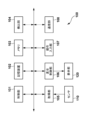
- FIG. 1 is a diagram illustrating a functional configuration of a game device 100 according to an embodiment and a modification of the present invention.
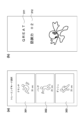
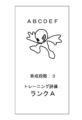
- FIG. 13 is a diagram illustrating a display screen relating to a training mode according to an embodiment and a modified example of the present invention.
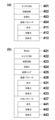
- FIG. 1 is a diagram illustrating an example of the data structure of various information managed by a game device 100 according to an embodiment and a modification of the present invention.
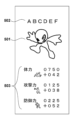
- FIG. 13 is a diagram illustrating a status screen showing battle parameters of a character being trained according to an embodiment of the present invention
- a flowchart illustrating an update process executed in the game device 100 according to an embodiment of the present invention.
- FIG. 13 is a diagram illustrating a screen presenting an evaluation of an activity history in a training mode according to a first modified example of the present invention;
- the embodiment described below is an example of the application of the present invention to a gaming device that is worn by the user and capable of playing an electronic game in which the user develops a character.
- the present invention can be applied to any device capable of playing an electronic game in which the user develops a character.
- FIG. 1 is a diagram illustrating the external appearance of a game device 100 according to this embodiment.
- the game device 100 is configured, for example, in the form of a bracelet that can be worn on the user's wrist.
- the game device 100 is equipped with various sensors that can detect and measure the user's activity state when worn, and can measure various items.
- the game device 100 is described as being worn on the wrist, so that the user can easily check the display contents of a display unit 120 (described below) that the game device 100 is equipped with.
- the implementation of the present invention is not limited to this, and the game device 100 may be worn on any part of the user's body, such as a finger, upper arm, waist, or leg.
- the game device 100 is configured to be able to execute an electronic game (a training game) relating to character training as a first type of game according to the present invention, and an electronic game (a battle game) in which the trained character battles another character as a second type of game. While the game device 100 is running, it controls the progress of the training game in accordance with the measurement results of the activity state. Details of the training game will be described later, but it goes without saying that in implementing the present invention, the input for training a character is not limited to the measurement results of the activity state.
- the form of the game device 100 and the elements for progressing through the training game shown in this embodiment are merely examples.
- Figure 2 is a block diagram illustrating the functional configuration of the game device 100 of this embodiment.
- the control unit 101 is, for example, a microcomputer, and controls the operation of each block of the game device 100. Specifically, the control unit 101 reads out the operation programs of each block recorded in the storage device 102, expands them in the memory 103, and executes them to control the operation of each block.
- the storage device 102 is a device capable of permanently retaining data, such as a non-volatile memory.
- the storage device 102 stores the operation programs of each block of the game device 100, as well as parameters and the like required for the operation of each block.
- the storage device 102 also includes an area for storing various information about characters currently being trained in the training game and characters that can be trained in the game device 100.
- the memory 103 is a storage device used for temporary data storage, such as a volatile memory. The memory 103 is used not only as an area for expanding the operation programs of each block, but also as a storage area for temporarily storing data output during the operation of each block.
- the detection unit 104 uses the sensor 110 to detect various information indicating the user's activity state and outputs the detection results.
- the sensor 110 may be, for example, an acceleration sensor or a heart rate sensor, and detects the movement occurring in the game device 100 and the user's heart rate information as activity state information.
- the sensor 110 is configured to output the detection results at predetermined time intervals, and may output, at each output timing, information such as the number of steps and heart rate detected after the most recent output.
- the acquisition unit 105 acquires various information related to the training game from a memory card (not shown) attached to the game device 100.
- the game device 100 of this embodiment is configured to be able to train multiple types of characters.
- the game device 100 has information on some types of characters stored in advance in the storage device 102, and these can be selected as targets for training, or can be selected as targets for training and a training game can be started when certain conditions are met. Meanwhile, information on the remaining types of characters is configured to be able to be acquired via the acquisition unit 105 by attaching a memory card in order to expand the fun factor.
- the display control unit 106 is responsible for controlling the display of information on the game device 100. Using display information recorded in the storage device 102 about the character being developed, the display control unit 106 creates various screens related to the development game to be displayed on the display unit 120, which may be, for example, an LCD.
- the operation input unit 107 is a user interface that the game device 100 has, such as a physical operation member (button).
- a physical operation member button
- the operation input unit 107 detects that an operation input has been made to the operation member, it outputs a control signal corresponding to the operation input to the control unit 101.
- the communication unit 108 is a communication interface provided to the game device 100 for communicating information with an external device.
- the communication unit 108 does not need to be in a state of constant communication connection, but may be configured to transition to a state of communication connection in some modes that are entered during the course of the training game or are entered as a result of a menu selection by the user, etc.
- the communication method of the communication unit 108 may include, for example, short-range wireless communication and proximity wireless communication.
- the game device 100 is configured so that multiple types of characters can be selected as the character to be raised. The user can set one of these characters as the character to be raised and raise that character. In other words, the raising game executed on the game device 100 is configured so that one character can be set as the character to be raised at a time.
- the character to be developed may be selected from among selectable characters by a lottery process, or based on conditions that are met while the game device 100 is being used. Alternatively, the character to be developed may be selected in response to an operational input by the user, or when the acquisition unit 105 acquires relevant information from a memory card.
- Character development is basically carried out according to the activity state of the user wearing the game device 100.
- the development game of this embodiment in order to represent the character's growth, multiple development stages are provided for each character, and the character progresses through the development stages sequentially as specific growth conditions are met.
- the development game for one character is configured to progress through multiple development stages, and to progress to the next development stage when specific growth conditions are met in each development stage.
- Each character is defined with multiple types of appearance (form) at least in some of the development stages, and which of these appearances the character will have is determined depending on the transition of the user's activity state in the previous development stages.
- the development game presents the user with an expression of "character evolution" by changing the character's appearance as the development stage progresses.
- the development game can provide an exciting character development experience that is not fixed, by changing the manner in which the character evolves depending on the activities performed by the user wearing the game device 100 as the multiple development stages progress.
- the multiple forms defined in the development stage are not just different in appearance, but also have different parameters (battle parameters) that are used when participating in the fighting game described below.
- the battle parameters may be, for example, physical strength, attacking power, defensive power (or evasive abilities such as agility), etc., and are referenced when determining the progress of the fighting game. Therefore, a user who wishes to progress favorably in the fighting game can wear the game device 100 and carry out planned activities so as to develop their character into a form with more favorable battle parameters.
- the detection unit 104 acquires information on the number of steps and heart rate of the user, and the form to which the character will evolve is determined according to the amount of points (scores) accumulated by measuring the number of steps and heart rate of the user over a predetermined period of time.
- the method of score evaluation and the score required for evolution to each form may be determined for each character being developed or the current form of the character.
- this acquired information on the activity state can also be used to control in real time the state of the character displayed on the display unit 120 of the game device 100.
- the activity information is also used to determine the condition (mood) of the character in a training game, and the display control unit 106 controls the image of the character displayed on the display unit 120 to reflect the condition.
- a battle game is a game in which a user participates in a character (hereinafter referred to as the player's character) that the user has trained on the game device 100.
- the user can not only enjoy watching the appearance and movements of the player's character that the user trained in the training game, but can also enjoy playing a game in which the character participates in a battle game and battles an opponent's character (hereinafter referred to as the opponent's character).
- the player's character and the opponent's character perform battle actions in sequence, and the character that first reduces the opponent's character's vitality to zero wins, or the character with the most vitality remaining after a predetermined number of turns has passed wins.
- the content of the battle game is not limited to such a turn-based game, and can be changed as appropriate to other battle-style games.
- the fighting game may be executed, for example, when an operation input related to a request to execute the fighting game is acquired by the operation input unit 107, when a predetermined condition in the training game is achieved, or when information on an opponent character is acquired.
- the information related to the opponent character in the fighting game may be stored in advance in the storage device 102, or may be received, for example, when a memory card is inserted into the game device 100, when communication is performed with an external communication device, etc.
- all characters are provided with six training stages, and the fighting game is configured to be available from the third training stage.
- the user cannot have the character participate in the fighting game and play the game until the user's character reaches the second training stage.
- the user can have the character participate in the fighting game and play the game. Therefore, events in the training game related to the execution of the fighting game are also controlled so that they do not occur until the user's character reaches a stage later than the second training stage.
- the form of the player's character changes as the training stage progresses, and the battle parameters of the character change accordingly.
- the battle parameters of the player's character include fixed values that are determined independently of the user, once the form of the player's character has been determined.
- the fixed value portion of the battle parameters (hereinafter referred to as basic parameters) that corresponds to the form of the character is predetermined according to the characteristics and properties of the character, ensuring that all users can have a basic experience of playing a battle game using the character.
- the user can train their own character in the training game by wearing the game device 100 and performing daily activities, and accumulating scores that satisfy the conditions for evolving the character into a specific form, thereby bringing the character into a state in which it has the basic parameters related to that form.
- the progress of the competitive game were to be determined solely by the basic parameters inherent to such characters (or their forms), the outcome of the competitive game would be fixed.
- the competitive game's development that favors which character would be determined based on the basic parameters of the participating characters, which could make the competitive game less interesting.
- a user can achieve good results in the competitive game simply by developing a character into a form that has basic parameters that can favorably advance the progress of the competitive game, so there is less need to develop the character further, and as a result, the user may lose interest in exercising while wearing the game device 100. In other words, the function of the game device 100 to stimulate the user's desire to exercise may not function properly.
- the battle parameters of each character include additional parameters in addition to basic parameters.
- additional parameters are parameters whose values change based on activity information acquired in the training game.
- basic parameters and additional parameters are measured based on different user actions, and in order to clearly measure and distinguish between them, the game device 100 of this embodiment provides the following two types of operating modes related to the training game, which can be switched depending on the user's operational input.
- the first is a normal mode (hereafter referred to as normal mode) in which, as described above, a score is accumulated based on activity information measured on a daily basis, such as walking, and the player's character's basic parameters are changed by progressing through the development stages based on this score.
- normal mode the user does not need to consciously perform a specific action; by performing everyday actions, including running, the user's heart rate increase pattern, number of steps, walking speed, etc. are obtained as activity information and are used to accumulate scores for progressing the player's character's development stages and for identifying the form that the character will evolve into.
- the second mode is a training mode, which differs from the normal mode in that it evaluates activity information measured by having the user consciously perform movements related to a specific type of exercise, and changes the player's character's additional parameters based on this evaluation. More specifically, in training mode, unlike the normal mode, the measurement time is limited, and the frequency with which the user was able to perform the relevant exercise within that time is evaluated, and the value of the corresponding item of the additional parameters is increased by an amount corresponding to the evaluation.
- the battle game of this embodiment will be described as having three types of items, namely, stamina, attack power, and defense power, as battle parameters for each character referenced in the battle game.
- stamina stamina
- attack power and defense power
- each of these items is associated with a different type of exercise, and activity information is acquired and evaluated for the type of exercise designated for measurement by the user.
- a screen for selecting the type of exercise to be measured is displayed on the display unit 120 of the game device 100, as shown in FIG. 3(a).
- the types of exercise to be measured are crunch (button 301), which is an abdominal muscle movement; punch (button 302), which is punching the fist alternately to the left and right; and dash (button 303), which is running.
- the user can start measurement related to any one of the types of exercise by selecting the button corresponding to that type of exercise.
- Each type of exercise may be selected so that it intuitively recalls an additional parameter item, for example; in the example shown in the figure, crunch corresponds to stamina, punch corresponds to attacking power, and dash corresponds to defensive power (or evasive performance).
- the screen of the display unit 120 displays a countdown to indicate the start of measurement, and then transitions to a measurement in progress screen. Then, when the measurement period ends, the content (number of times) performed is evaluated based on the activity information acquired during the measurement period, and the evaluation result 311 and the value 312 of the additional parameter that will increase due to the current exercise are displayed in a result screen, as shown in FIG. 3(b), for example.
- the increase in the additional parameter is evaluated in three levels, " ⁇ 0", "+1", and "+2", based on a preset number of times threshold and the number of times the corresponding exercise was performed during the measurement period.
- the mode of the game device 100 is switched from training mode to the default normal mode.
- the screen display of the display unit 120 also transitions from the training mode to a screen displaying a character related to the training game in normal mode.
- the additional parameters that increase as the user exercises in training mode are variable values that increase depending on whether the exercise is evaluated as good or bad.
- the additional parameters are accumulated sequentially depending on the number of times the user performs exercises related to training mode, regardless of the development stage, and are maintained regardless of changes in form.
- the basic parameters are base parameters that are fixedly determined regardless of the user depending on how the character evolved in the development game
- the additional parameters are user-dependent parameters that are added to the basic parameters and are set to favor users who have performed many exercises related to training mode.
- the battle parameters change even for the same character with the same form, which can increase the motivation of users who want to progress more advantageously in the battle game to engage in exercise related to the training mode.
- the additional parameters are maintained even as the player's character progresses through the development stages, so that the effect of constantly increasing the battle parameters (if the value is other than 0) is always produced while the character is being developed.
- Information regarding battle parameters is realized, for example, by storing the following information in storage device 102 or memory 103:
- the form information is managed.
- the form information is associated with a character ID 401 that uniquely identifies the character, and manages stage information 402 indicating the development stage, a form ID 403 that uniquely identifies the form, and basic parameters 404 for that form.
- the basic parameters 404 also include stamina 411, attack power 412, and defense power 413 related to that form.
- the stamina 411, attack power 412, and defense power 413 included in the basic parameters 404 are fixed values that are defined invariably for the form.
- training information is managed in the memory 103 in a configuration such as that shown in FIG. 4(b), for example.
- the training information is managed in association with a training ID 421 that identifies the player's own character currently being trained among the characters trained by the user, and includes the character ID 422 of that character, stage information 423 indicating the training stage, form ID 424 that uniquely identifies the form, accumulated score 425 relating to the transition of activity information, basic parameters 426 related to the player's own character, and additional parameters 427 related to the player's own character.
- the basic parameters 426 and additional parameters 427 also include stamina 431, attack power 432, and defense power 433, or stamina 441, attack power 442, and defense power 443, respectively.
- the value stored in the accumulation score 425 is updated by sequentially adding the score derived based on the activity information acquired in the normal mode. More specifically, in the normal mode, in order to evaluate the amount of exercise related to the actions performed daily by the user, the activity information acquired sequentially is collected at a predetermined time interval, and a predetermined arithmetic expression is applied to derive the score. The derived score is reflected in the form of being sequentially added to the value of the accumulation score 425.
- the accumulation score 425 is used, for example, to determine whether it is possible to advance the development stage of the player's character, or to determine which form the player's character will evolve into in the next development stage. Since the accumulation score 425 is basically used to determine the form of the player's character in the next development stage, it may be configured to be reset after the development stage progresses, and to start accumulating again for the development stage after the progress.
- the activity information acquired in normal mode updates the accumulated score 425 required to progress through the development stages and evolve the character, and when the accumulated score 425 meets a predetermined condition, it realizes a development element for growth that causes a change in the form of the player's character (evolution).
- the stamina 411, attack power 412, and defense power 413 of the form information managed in the storage device 102 for the changed form are read out, and the values of stamina 431, attack power 432, and defense power 433 of the development information are replaced with the read values.
- the basic parameters of the player's character are replaced with the basic parameters of the changed form, so the activity information acquired in normal mode also realizes a development element for growth that indirectly changes the basic parameters of the player's character.
- the additional parameters 427 are updated by sequentially adding values corresponding to the evaluation results based on the activity information for the exercises corresponding to each item performed in the training mode described above. That is, when the user selects a crunch in the training mode and performs a measurement, the acquired activity information is evaluated on a three-point scale, and then a value corresponding to the evaluation ( ⁇ 0/+1/+2) is added to the physical strength 441 of the development information. Similarly, when a punch is selected and a measurement is performed, the attacking power 442 of the development information is updated according to the evaluation result, and when a dash is selected and a measurement is performed, the defensive power 443 of the development information is updated according to the evaluation result. Therefore, the activity information acquired in the training mode directly updates the additional parameters 427, realizing a development element for growth that changes the additional parameters of the player's character.
- the battle parameters that change sequentially in this way in the training game can be confirmed on the player's character's status screen shown in FIG. 5, which can be accessed by inputting an operation such as a menu selection when the normal mode is set, for example.
- the status screen shows an image 501 showing the player's character's appearance, along with a name 502 relating to the player's character's form and battle parameters 503.
- basic parameters and additional parameters are separated for each item (stamina, attack power, defense power) and displayed in an identifiable manner. Therefore, by referring to the status screen, the user can understand the basic parameters specific to the player's character's form and the additional parameters that have increased for each item as a result of the user performing exercises related to the training mode.
- the player's character cannot participate in a fighting game (cannot play a fighting game) until the training stage reaches the third stage, but the status screen display is configured to be displayable at any training stage. This is to ensure that all users have the opportunity to systematically train (train) so that even if they are at a training stage where they cannot yet play a fighting game, they can progress advantageously in fighting games that they will be able to play later. It is also to allow the user to understand to what extent each parameter of their character has been strengthened by using the training mode.
- the game device 100 of this embodiment differs in processing content between normal mode and training mode during the execution of the training game as follows:
- the activity information acquired by the detection unit 104 changes in relation to the development of the player's character.
- the detection unit 104 is set to the normal mode by default (normal state), and is controlled to acquire activity information related to daily actions performed by the user while wearing the game device 100, as the first activity information according to the present invention.
- the training mode is set by an operation input related to the mode setting, the acquisition of activity information related to daily actions is stopped, and in response to an operation input related to the selection of the type of exercise to be trained, the detection unit 104 is controlled to acquire activity information related to the actions of the selected type of exercise, as the second activity information according to the present invention.
- the detection unit 104 When the measurement related to the selected type of exercise is completed and the acquisition of activity information related to the measurement period is completed, the detection unit 104 again stops acquiring activity information. At this time, when the result display, etc., performed in response to the end of the measurement is completed, the mode of the game device 100 is reset to the normal mode. That is, in normal mode, the detection unit 104 acquires information related to everyday movements from among the information measured by the sensor 110 as activity information, and in training mode, the detection unit 104 acquires information related to the selected exercise type, which is different from the information related to everyday movements from among the information measured by the sensor 110, as activity information, and the two modes are different in this respect.
- the player's character is trained from different perspectives (training methods) according to the activity information acquired in each mode.
- the player's character is trained by changing the accumulated score 425 of the training information, which is a parameter for progressing through the training stages, based on the acquired activity information.
- the game device 100 of this embodiment is configured so that, when the accumulated score 425 meets a predetermined condition, the user can decide whether or not to advance the training stage of the player's character. If it is decided to advance, the accumulated score 425 uniquely identifies the evolutionary form, and the stage information 423, form ID 424, and basic parameters 426 of the training information are changed.
- the acquired activity information is evaluated for the corresponding exercise type, and the additional parameters 427 of the training information are changed, thereby training the player's character.
- the parameters (accumulated score 425) related to the training game are not changed for the player's character, but the parameters (additional parameters 427) related to the battle game are changed. Therefore, in normal mode and training mode, activity information of the user wearing the game device 100 is acquired, but the difference is that the former changes parameters related to both the training game and the competitive game, while the latter changes only parameters related to the competitive game.
- Another difference between the two modes is that, in normal mode, when the character progresses through the development stages, the basic parameters 426 of the development information change according to the form of the character after the progress, whereas in training mode, the additional parameters 427 of the development information are maintained regardless of the change in the form of the character.
- control unit 101 determines whether the mode currently set in the game device 100 is normal mode. If the currently set mode is normal mode, the control unit 101 transfers the process to S602. If the currently set mode is not normal mode, that is, if an operational input related to a mode change has been made and the training mode has been set, the control unit 101 transfers the process to S607.
- the detection unit 104 acquires activity information related to daily movements from the information measured by the sensor 110.
- the activity information related to daily movements may include, for example, the number of steps and the heart rate over a predetermined period of time.
- control unit 101 derives an additional amount to the accumulated score based on the activity information acquired in S602.
- the control unit 101 then updates the development information by adding the derived additional amount to the accumulated score 425 of the development information related to the player's character.
- the control unit 101 determines whether the conditions for progressing through the development stages have been met.
- the conditions for progressing through the development stages may be set for the current form of the player's character, or may be set for a form to which the player's character can evolve from the current form. Alternatively, the conditions for progression may be set in common for all evolution stages, regardless of character or form. If the control unit 101 determines that the conditions for progressing through the development stages have been met, it moves the process to S605, and if it determines that the conditions have not been met, it completes this update process.
- control unit 101 determines whether or not the user has made an operational input to request progression through the development stages, i.e., a request to evolve the player's own character. If the control unit 101 determines that an operational input to request progression through the development stages has been made, it moves the process to S606, and if it determines that no such input has been made, it completes this update process.
- control unit 101 determines the evolutionary form and updates the development information. More specifically, the control unit 101 identifies one form for which the conditions for progressing through the development stage are met as the evolutionary form, and updates the form ID 424 and stage information 423 of the development information based on the evolutionary form. The control unit 101 also refers to the form information related to the evolutionary form, updates the basic parameters 426 of the development information based on the basic parameters 404 of the mobile information, and completes this update process.
- control unit 101 determines in S607 whether or not an operation input has been made to select the type of exercise to be measured. If the control unit 101 determines that an operation input has been made to select the type of exercise, it moves the process to S608, and if it determines that an operation input has not been made, it repeats the process of this step.
- the detection unit 104 acquires activity information related to the movements of the selected exercise type from the information measured by the sensor 110.
- the acquisition of activity information in this step may be performed for a measurement period set for the exercise type.
- the control unit 101 finishes acquiring the activity information related to the measurement period, it moves the process to S609.
- control unit 101 evaluates the activity information acquired in S608 based on the evaluation criteria established for the selected exercise type. The control unit 101 then updates the development information by adding the value derived as a result of the evaluation to the additional parameter 427 of the development information.
- control unit 101 sets the mode of the game device 100 to normal mode and completes this update process.
- the game device of this embodiment provides a function that can increase the battle parameters as a training mode, so that users who want to play a battle game advantageously can be induced to exercise spontaneously. Furthermore, this configuration makes the progress of the battle game independent of the characters, and allows for a rich variety of developments, so that the interest of both the training game and the battle game can be increased. Furthermore, since the user can strengthen the battle parameters while keeping the user's character in a form with a preferred appearance, a suitable battle game can be realized with the user's character in a desired form against other characters with high basic parameters.
- the activity history in training mode related to the development of the player's character may be evaluated based on the combined value of each item included in the additional parameters 427 of the development information (the sum of stamina 441, attack power 442, and defense power 443), and the obtained evaluation result may be presented to the user as an index of character development.
- the activity history in training mode may be evaluated on a five-level scale, for example, rank D, rank C, rank B, rank A, and rank S.
- the additional parameters 427 are information that is accumulated and managed regardless of the progression of the development stage, the total value of each item tends to be higher the longer the development period. For this reason, the evaluation criteria for the total value may be controlled so that the upper limit of the total value classified into each rank is higher the higher the development stage. In other words, even for the same rank, the upper limit for the rank is set higher the more the development stage progresses, so that immediately after progressing through the development stage, the rank may be evaluated at a lower rank than before the progression. Therefore, users who wish to increase their evaluation can be guided to more spontaneous exercise.
- the fighting game is described as being executed on the game device 100, but the implementation of the present invention is not limited to this.
- the fighting game may be executed on an external device such as a mobile terminal configured to be able to communicate with the game device 100, or on a server that receives information acquired from the game device 100 from the mobile terminal, etc.
- the type of exercise to be measured in the training mode may be identified based on information acquired by the sensor 110, and the control unit 101 may evaluate the activity information acquired during the measurement period based on the evaluation criteria for the identified type of exercise.
- exercise types corresponding to each item of the battle parameters are provided as selectable exercise types in the training mode, and the additional parameters 427 of the corresponding items are updated based on the activity information measured in the training mode, but the implementation of the present invention is not limited to this.
- the exercise types selectable in the training mode may also include those whose evaluation results do not change the additional parameters 427.
- an exercise type may be provided that awards points that must be consumed to progress through the training stages. In this way, it is possible to induce all users who play the training game, not just users who wish to increase the additional parameters 427, to perform exercises related to the training mode.
- a game device that executes a first type of game in which a character is developed, comprising: an acquisition means for acquiring activity information indicating a user's activity state; a development means for developing a target character to be developed by changing parameters of the target character based on the activity information acquired by the acquisition means; and a control means for controlling a development method of the target character in the development means according to a mode set in the game device, the development method of the target character in the development means including at least a first development method for changing parameters related to the first type of game and a second development method for changing parameters related to a second type of game different from the first type of game, the control means controlling the development means to develop the target character using the first development method based on the activity information when a first mode is set, and to develop the target character using the second development method based on the activity information when a second mode is set.
- the second mode causes the acquisition means to acquire the activity information for a plurality of predetermined types of exercise events
- the parameters related to the second type of game include a plurality of types of parameters, each type having the basic parameters and the additional parameters, and when the second mode is set, the training means changes the additional parameters of the type corresponding to the exercise event for which the activity information was acquired.
- the game device further comprising a selection means for accepting a selection of one of the plurality of types of exercise for which the activity information is to be obtained when the second mode is set, and the training means changes the additional parameters of the type corresponding to the one type of exercise selected by the selection means based on the activity information when the second mode is set.
- a game device according to any one of (2) to (4), wherein the training means, when the second mode is set, changes the additional parameter by adding a value based on an evaluation result of the activity information.
- the first type of game is a game in which a character grows through a plurality of development stages
- the first development method changes the basic parameters of the second type of game in addition to the parameters of the first type of game based on the activity information
- the second development method changes additional parameters of the second type of game based on the activity information without changing the parameters of the first type of game
- the development means changes the basic parameters of the target character to a fixed value predetermined for the development stage after the change when changing the development stage of the target character.
- the game device further comprising a display means for displaying parameters related to the second type of game for the target character, the display means displaying the parameters related to the second type of game for the target character in such a way that the basic parameters and the additional parameters can be distinguished.
- a game device according to any one of (1) to (12), wherein the activity information includes first activity information and second activity information different from the first activity information, and the training means changes parameters related to the first type of game based on the first activity information of the activity information when the first mode is set, and changes parameters related to the second type of game based on the second activity information of the activity information when the second mode is set.
- a game device according to any one of (1) to (14), further comprising a setting means for accepting a setting operation for setting the game device to the second mode, the game device being set to the first mode in a normal state, being set to the second mode when the setting means accepts the setting operation, and being reset to the first mode on the condition that the predetermined activity information related to the second mode has been acquired.
- Game device 101: Control unit, 102: Storage device, 103: Memory, 104: Detection unit, 105: Acquisition unit, 106: Display control unit, 107: Operation input unit, 108: Communication unit, 110: Sensor, 120: Display unit
Landscapes
- Engineering & Computer Science (AREA)
- Multimedia (AREA)
- Electrically Operated Instructional Devices (AREA)
Applications Claiming Priority (2)
| Application Number | Priority Date | Filing Date | Title |
|---|---|---|---|
| JP2022152736A JP7282244B1 (ja) | 2022-09-26 | 2022-09-26 | ゲーム装置及びプログラム |
| JP2022-152736 | 2022-09-26 |
Publications (1)
| Publication Number | Publication Date |
|---|---|
| WO2024070166A1 true WO2024070166A1 (ja) | 2024-04-04 |
Family
ID=86424996
Family Applications (1)
| Application Number | Title | Priority Date | Filing Date |
|---|---|---|---|
| PCT/JP2023/027082 Ceased WO2024070166A1 (ja) | 2022-09-26 | 2023-07-24 | ゲーム装置及びプログラム |
Country Status (3)
| Country | Link |
|---|---|
| JP (2) | JP7282244B1 (enExample) |
| CN (1) | CN116983654A (enExample) |
| WO (1) | WO2024070166A1 (enExample) |
Families Citing this family (1)
| Publication number | Priority date | Publication date | Assignee | Title |
|---|---|---|---|---|
| JP2025095158A (ja) * | 2023-12-14 | 2025-06-26 | グリーホールディングス株式会社 | 情報処理システム、情報処理方法、及びプログラム |
Citations (8)
| Publication number | Priority date | Publication date | Assignee | Title |
|---|---|---|---|---|
| JPH1119337A (ja) * | 1997-07-02 | 1999-01-26 | Media Maaketeingu Syst Kk | ネットワークゲーム装置および携帯ゲーム機 |
| JPH1152834A (ja) * | 1997-08-08 | 1999-02-26 | Hudson Soft Co Ltd | 運動用補助計器 |
| JP2000296272A (ja) * | 1997-02-19 | 2000-10-24 | Bandai Co Ltd | 仮想生命体の育成シミュレーション装置 |
| JP2002109416A (ja) * | 2000-09-28 | 2002-04-12 | Casio Comput Co Ltd | 電子ペットレンタルシステム及び電子ペットレンタル方法 |
| JP2009022440A (ja) * | 2007-07-18 | 2009-02-05 | Seiko Instruments Inc | ゲームシステム及び運動量測定装置 |
| JP2009050387A (ja) * | 2007-08-24 | 2009-03-12 | Nhn Corp | ゲームプログラム及びゲームシステム |
| JP2013046811A (ja) * | 2008-06-02 | 2013-03-07 | Nike Internatl Ltd | アバタを作成するためのシステムおよび方法 |
| JP2016054788A (ja) * | 2014-09-05 | 2016-04-21 | オムロンヘルスケア株式会社 | 動作情報測定装置、ゲーム制御プログラム、動作情報測定プログラム |
-
2022
- 2022-09-26 JP JP2022152736A patent/JP7282244B1/ja active Active
-
2023
- 2023-05-12 JP JP2023079570A patent/JP2024047530A/ja active Pending
- 2023-07-24 WO PCT/JP2023/027082 patent/WO2024070166A1/ja not_active Ceased
- 2023-08-07 CN CN202310982589.9A patent/CN116983654A/zh active Pending
Patent Citations (8)
| Publication number | Priority date | Publication date | Assignee | Title |
|---|---|---|---|---|
| JP2000296272A (ja) * | 1997-02-19 | 2000-10-24 | Bandai Co Ltd | 仮想生命体の育成シミュレーション装置 |
| JPH1119337A (ja) * | 1997-07-02 | 1999-01-26 | Media Maaketeingu Syst Kk | ネットワークゲーム装置および携帯ゲーム機 |
| JPH1152834A (ja) * | 1997-08-08 | 1999-02-26 | Hudson Soft Co Ltd | 運動用補助計器 |
| JP2002109416A (ja) * | 2000-09-28 | 2002-04-12 | Casio Comput Co Ltd | 電子ペットレンタルシステム及び電子ペットレンタル方法 |
| JP2009022440A (ja) * | 2007-07-18 | 2009-02-05 | Seiko Instruments Inc | ゲームシステム及び運動量測定装置 |
| JP2009050387A (ja) * | 2007-08-24 | 2009-03-12 | Nhn Corp | ゲームプログラム及びゲームシステム |
| JP2013046811A (ja) * | 2008-06-02 | 2013-03-07 | Nike Internatl Ltd | アバタを作成するためのシステムおよび方法 |
| JP2016054788A (ja) * | 2014-09-05 | 2016-04-21 | オムロンヘルスケア株式会社 | 動作情報測定装置、ゲーム制御プログラム、動作情報測定プログラム |
Also Published As
| Publication number | Publication date |
|---|---|
| JP2024047225A (ja) | 2024-04-05 |
| CN116983654A (zh) | 2023-11-03 |
| JP2024047530A (ja) | 2024-04-05 |
| JP7282244B1 (ja) | 2023-05-26 |
Similar Documents
| Publication | Publication Date | Title |
|---|---|---|
| JP2023137039A (ja) | 情報処理プログラム、情報処理方法およびゲーム装置 | |
| JP7549068B2 (ja) | プログラム、端末、ゲームシステム及びゲーム管理装置 | |
| JP2007061317A (ja) | ゲーム成績評価方法及び装置 | |
| JP2020175241A (ja) | プログラム、端末、ゲームシステム及びゲーム管理装置 | |
| CN118946392A (zh) | 信息处理程序、信息处理方法和信息处理系统 | |
| JP7633349B2 (ja) | ゲーム装置及びプログラム | |
| WO2024070166A1 (ja) | ゲーム装置及びプログラム | |
| WO2023176292A1 (ja) | 情報処理プログラム、情報処理方法およびゲーム装置 | |
| JP2025020276A (ja) | 情報通信端末及びプログラム | |
| JP7242955B1 (ja) | 情報処理装置、プログラム及びゲームシステム | |
| JP7402961B1 (ja) | ゲーム装置及びプログラム | |
| JP7242950B2 (ja) | ゲームサーバ、ゲームプログラム、情報処理方法 | |
| JP7399221B1 (ja) | プログラム、情報処理システム、および情報処理方法 | |
| JP7443450B1 (ja) | 情報処理プログラム、情報処理方法および情報処理システム | |
| JP7022190B1 (ja) | ゲームサーバ、ゲームプログラム、情報処理方法 | |
| WO2024004441A1 (ja) | プログラム、情報処理システム、および情報処理方法 | |
| JP7324913B1 (ja) | ゲーム装置及びプログラム | |
| JP7137725B2 (ja) | ゲームサーバ、ゲームプログラム、情報処理方法 | |
| JP7702918B2 (ja) | 情報処理装置、ゲーム制御方法およびゲームプログラム | |
| JP7137724B2 (ja) | ゲームサーバ、ゲームプログラム、情報処理方法 | |
| JP7657103B2 (ja) | プログラム | |
| JP7402949B1 (ja) | プログラム、情報処理システム、および情報処理方法 |
Legal Events
| Date | Code | Title | Description |
|---|---|---|---|
| 121 | Ep: the epo has been informed by wipo that ep was designated in this application |
Ref document number: 23871409 Country of ref document: EP Kind code of ref document: A1 |
|
| NENP | Non-entry into the national phase |
Ref country code: DE |
|
| 122 | Ep: pct application non-entry in european phase |
Ref document number: 23871409 Country of ref document: EP Kind code of ref document: A1 |