WO2024053256A1 - 容器保管装置、自動分析システム及び試料容器取り出し方法 - Google Patents
容器保管装置、自動分析システム及び試料容器取り出し方法 Download PDFInfo
- Publication number
- WO2024053256A1 WO2024053256A1 PCT/JP2023/026457 JP2023026457W WO2024053256A1 WO 2024053256 A1 WO2024053256 A1 WO 2024053256A1 JP 2023026457 W JP2023026457 W JP 2023026457W WO 2024053256 A1 WO2024053256 A1 WO 2024053256A1
- Authority
- WO
- WIPO (PCT)
- Prior art keywords
- sample
- container
- measurement
- rack
- storage device
- Prior art date
- Legal status (The legal status is an assumption and is not a legal conclusion. Google has not performed a legal analysis and makes no representation as to the accuracy of the status listed.)
- Ceased
Links
Images




Classifications
-
- G—PHYSICS
- G01—MEASURING; TESTING
- G01N—INVESTIGATING OR ANALYSING MATERIALS BY DETERMINING THEIR CHEMICAL OR PHYSICAL PROPERTIES
- G01N35/00—Automatic analysis not limited to methods or materials provided for in any single one of groups G01N1/00 - G01N33/00; Handling materials therefor
- G01N35/00584—Control arrangements for automatic analysers
- G01N35/00722—Communications; Identification
- G01N35/00732—Identification of carriers, materials or components in automatic analysers
-
- G—PHYSICS
- G01—MEASURING; TESTING
- G01N—INVESTIGATING OR ANALYSING MATERIALS BY DETERMINING THEIR CHEMICAL OR PHYSICAL PROPERTIES
- G01N35/00—Automatic analysis not limited to methods or materials provided for in any single one of groups G01N1/00 - G01N33/00; Handling materials therefor
- G01N35/00584—Control arrangements for automatic analysers
- G01N35/0092—Scheduling
-
- G—PHYSICS
- G01—MEASURING; TESTING
- G01N—INVESTIGATING OR ANALYSING MATERIALS BY DETERMINING THEIR CHEMICAL OR PHYSICAL PROPERTIES
- G01N35/00—Automatic analysis not limited to methods or materials provided for in any single one of groups G01N1/00 - G01N33/00; Handling materials therefor
- G01N35/00584—Control arrangements for automatic analysers
- G01N35/0092—Scheduling
- G01N35/0095—Scheduling introducing urgent samples with priority, e.g. Short Turn Around Time Samples [STATS]
-
- G—PHYSICS
- G01—MEASURING; TESTING
- G01N—INVESTIGATING OR ANALYSING MATERIALS BY DETERMINING THEIR CHEMICAL OR PHYSICAL PROPERTIES
- G01N35/00—Automatic analysis not limited to methods or materials provided for in any single one of groups G01N1/00 - G01N33/00; Handling materials therefor
- G01N35/02—Automatic analysis not limited to methods or materials provided for in any single one of groups G01N1/00 - G01N33/00; Handling materials therefor using a plurality of sample containers moved by a conveyor system past one or more treatment or analysis stations
- G01N35/026—Automatic analysis not limited to methods or materials provided for in any single one of groups G01N1/00 - G01N33/00; Handling materials therefor using a plurality of sample containers moved by a conveyor system past one or more treatment or analysis stations having blocks or racks of reaction cells or cuvettes
-
- G—PHYSICS
- G01—MEASURING; TESTING
- G01N—INVESTIGATING OR ANALYSING MATERIALS BY DETERMINING THEIR CHEMICAL OR PHYSICAL PROPERTIES
- G01N35/00—Automatic analysis not limited to methods or materials provided for in any single one of groups G01N1/00 - G01N33/00; Handling materials therefor
- G01N2035/00178—Special arrangements of analysers
- G01N2035/00277—Special precautions to avoid contamination (e.g. enclosures, glove- boxes, sealed sample carriers, disposal of contaminated material)
-
- G—PHYSICS
- G01—MEASURING; TESTING
- G01N—INVESTIGATING OR ANALYSING MATERIALS BY DETERMINING THEIR CHEMICAL OR PHYSICAL PROPERTIES
- G01N35/00—Automatic analysis not limited to methods or materials provided for in any single one of groups G01N1/00 - G01N33/00; Handling materials therefor
- G01N35/00584—Control arrangements for automatic analysers
- G01N35/00722—Communications; Identification
- G01N35/00732—Identification of carriers, materials or components in automatic analysers
- G01N2035/00821—Identification of carriers, materials or components in automatic analysers nature of coded information
- G01N2035/00831—Identification of carriers, materials or components in automatic analysers nature of coded information identification of the sample, e.g. patient identity, place of sampling
-
- G—PHYSICS
- G01—MEASURING; TESTING
- G01N—INVESTIGATING OR ANALYSING MATERIALS BY DETERMINING THEIR CHEMICAL OR PHYSICAL PROPERTIES
- G01N35/00—Automatic analysis not limited to methods or materials provided for in any single one of groups G01N1/00 - G01N33/00; Handling materials therefor
- G01N35/00584—Control arrangements for automatic analysers
- G01N35/0092—Scheduling
- G01N2035/0094—Scheduling optimisation; experiment design
-
- G—PHYSICS
- G01—MEASURING; TESTING
- G01N—INVESTIGATING OR ANALYSING MATERIALS BY DETERMINING THEIR CHEMICAL OR PHYSICAL PROPERTIES
- G01N35/00—Automatic analysis not limited to methods or materials provided for in any single one of groups G01N1/00 - G01N33/00; Handling materials therefor
- G01N35/02—Automatic analysis not limited to methods or materials provided for in any single one of groups G01N1/00 - G01N33/00; Handling materials therefor using a plurality of sample containers moved by a conveyor system past one or more treatment or analysis stations
- G01N35/04—Details of the conveyor system
- G01N2035/0401—Sample carriers, cuvettes or reaction vessels
- G01N2035/0412—Block or rack elements with a single row of samples
- G01N2035/0415—Block or rack elements with a single row of samples moving in two dimensions in a horizontal plane
-
- G—PHYSICS
- G01—MEASURING; TESTING
- G01N—INVESTIGATING OR ANALYSING MATERIALS BY DETERMINING THEIR CHEMICAL OR PHYSICAL PROPERTIES
- G01N35/00—Automatic analysis not limited to methods or materials provided for in any single one of groups G01N1/00 - G01N33/00; Handling materials therefor
- G01N35/02—Automatic analysis not limited to methods or materials provided for in any single one of groups G01N1/00 - G01N33/00; Handling materials therefor using a plurality of sample containers moved by a conveyor system past one or more treatment or analysis stations
- G01N35/04—Details of the conveyor system
- G01N2035/046—General conveyor features
- G01N2035/0465—Loading or unloading the conveyor
-
- G—PHYSICS
- G01—MEASURING; TESTING
- G01N—INVESTIGATING OR ANALYSING MATERIALS BY DETERMINING THEIR CHEMICAL OR PHYSICAL PROPERTIES
- G01N35/00—Automatic analysis not limited to methods or materials provided for in any single one of groups G01N1/00 - G01N33/00; Handling materials therefor
- G01N35/02—Automatic analysis not limited to methods or materials provided for in any single one of groups G01N1/00 - G01N33/00; Handling materials therefor using a plurality of sample containers moved by a conveyor system past one or more treatment or analysis stations
- G01N35/04—Details of the conveyor system
Definitions
- the present invention relates to a container storage device, an automatic analysis system, and a sample container retrieval method.
- samples are dispensed into sample containers, and multiple sample containers are loaded onto a transportable rack and loaded into an automatic analyzer. If the sample container is equipped with an identification element such as a barcode, the automatic analyzer can automatically identify the sample contained in the sample container. Therefore, the user can place the sample container at any position on the rack.
- an identification element such as a barcode
- Patent Document 1 discloses that when calibrators and controls necessary for measurement are not mounted on a turntable included in an automatic analyzer, positions for placing the calibrators and controls on the turntable or rack are determined according to a prescribed priority order.
- An automatic analysis device is disclosed that provides instructions to a user on an operation screen.
- a container storage device is a device that stores samples, and is mainly composed of a storage section and a transport section. Equipped with an automatic transport function.
- the container storage device automatically transfers the sample container containing the sample for which the measurement request has been made to a transport rack according to the measurement request from the connected automatic analyzer, and then transports it to the automatic analyzer. .
- the container storage device loads the sample containers to be transported to the automatic analyzer onto the rack in any order, and the automatic analyzer rereads the identification elements provided on the sample containers transported by the rack. If the samples are rearranged according to the dispensing order, the transport mechanism may become complicated, and the time required from when the rack arrives at the automatic analyzer to when the sample is dispensed may become longer.
- the samples are loaded onto the racks in an order that does not reduce the measurement efficiency of the automatic analyzer. Dispense the samples in the order specified. Thereby, it is possible to avoid a decrease in the measurement efficiency of the automatic analyzer or a decrease in the operational efficiency of the laboratory.
- Patent Document 1 automatically specifies the installation position of the calibrator and control on a turntable or rack for the user, but according to the example in Patent Document 1, the calibrators are arranged in order of item number and descending concentration, The installation positions of the controls are determined in order of item number.
- such standards are insufficient for the purpose of transporting samples without reducing the measurement efficiency of the automatic analyzer using the container storage device.
- mounting on a turntable or rack is performed manually by the user.
- a container storage device that is one aspect of solving the above problem is a container storage device that is connected to an automatic analyzer via a transport path that transports racks, and that stores samples to be measured by the automatic analyzer.
- a storage for storing the sample containers
- a container transport mechanism for taking out the sample containers from the storage onto a rack or storing the sample containers from the rack into the storage
- a control unit for controlling the transport of the sample containers from the storage.
- the transport path transports the rack in the direction from the container storage device to the automatic analyzer
- the rack has a plurality of container installation positions for installing sample containers
- the control unit receives measurement requests from the automatic analyzer.
- the carry-out priority is determined for the plurality of sample containers to be carried out, and the sample container to be carried out with a higher carry-out priority is placed on the transport route in the rack. control so that the container is mounted at the container installation position on the transport direction side.
- FIG. 1 is a diagram showing the basic configuration of a container storage device.
- Flowchart of container unloading algorithm Schematic diagram of the rack.
- Example of data structure of management database Flowchart of an algorithm for determining sample export priority based on concentration information.
- Flowchart of an algorithm for determining sample export priority based on measurement item information.
- Flowchart of the algorithm for determining sample export priority based on remaining amount.
- FIG. 1 shows an overview of the automatic analysis system including a container storage device.
- the container storage device 101 stores samples to be measured by the automatic analyzer 103.
- a sample container containing a sample to be measured is mounted on a rack, and is carried into the automatic analysis system through a carry-in route 105 of a container carry-in/out device 102.
- the loaded rack is recognized by the container loading/unloading device 102 and conveyed to the automatic analyzer (module) 103 along the conveying path 107.
- the racks to be transported to the container storage device 101 are transported via a transport path 107 and a transport path 108.
- the sample to be measured is stored between the container storage device 101 and the automatic analyzer 103 using the transport path 107 and the transport path 108.
- the racks loaded with sample containers are moved back and forth.
- the rack carried out from the automatic analysis system is carried to the carry-out route 106 of the container loading/unloading device 102 via the carrying route 107 and the carrying route 108, and is carried out of the automatic analyzing system.
- the number and arrangement of devices combined as an automatic analysis system are not limited to those illustrated in FIG. 1, and, for example, a plurality of automatic analysis devices (modules) may be provided.
- the container storage device 101, the container loading/unloading device 102, and the automatic analysis device 103 are controlled by a system control unit 104.
- the system control unit 104 includes a display unit that displays information to the user, a reception unit that receives operations from the user, and a control instruction that responds to user operations to the container storage device 101, container loading/unloading device 102, or automatic analysis device 103. It has a control section that outputs.
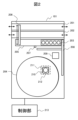
- FIG. 2 shows the basic configuration of the container storage device 101.
- the container storage device 101 is combined with the transportation paths of other devices constituting the automatic analysis system to form transportation paths 107 and 108, thereby providing a transportation path 201 for loading or unloading racks 203 loaded with sample containers. , 202.
- the transport routes 201 and 202 each transport the rack 203 in one predetermined direction, and here, the transport route 201 is used as a transport route for transporting the rack 203 from the automatic analyzer 103 to the container storage device 101, and the transport route 202 is used as a transport route for storing containers. This will be explained as an unloading route for unloading the rack 203 from the apparatus 101 to the automatic analyzer 103.
- the container storage device 101 has a loading path 205 for loading sample containers from the storage 204 onto the rack 203.
- the loading path 205 also includes a mechanism for transporting the rack 203.
- the rack 203 is moved between the transport paths 201 and 202 and the mounting path 205 by a transport mechanism 206.
- the loading path 205 includes an identification information reading device 207 for reading the identification information of the rack 203.
- the container transport mechanism 208 stores the sample container from the rack 203 to the storage 204 or takes it out from the storage 204 to the rack 203 for the rack 203 that has arrived at the loading path 205.
- the identification information of the sample container is read by the identification information reading device 209 for reading the identification information of the sample container.
- the storage 204 has a plurality of container storage locations 210 for storing sample containers. Further, the storage 204 has a lid having an opening 211 and a shutter 212 having an opening/closing function, and maintains a constant state inside the storage 204.
- the container storage device 101 has a control unit 213 that accepts a sample transport request from the automatic analysis system, selects a sample container to be taken out from the storage 204, and operates each mechanism to control the transport and transport of the sample container.
- the control unit 213 controls the operation of each mechanism of the container storage device 101. Note that the control unit 213 does not need to be dedicated to the container storage device 101; for example, the system control unit 104 of the automatic analysis system may be shared.
- the sample container includes an identification element having identification information for uniquely identifying the contained sample.
- This identification element may be, for example, a bar code.
- the identification information of the identification element is transmitted to the control unit 213 to identify the sample container containing the sample for which the transfer request is being accepted.
- the storage 204 may be disk-shaped or rack-shaped.
- the container storage locations 210 provided in the storage 204 may be arranged, for example, in a circumferential manner with respect to the storage, or may be arranged in rows and columns. Moreover, the container may be installed directly in the container storage area 210, or may be installed via a container cover or the like.
- the storage 204 includes a structure for maintaining the condition of the samples contained in the sample containers.
- An example of a configuration for maintaining the condition is a cold storage unit. In order to maintain these effects, a cover or the like may be attached to the storage 204.
- FIG. 3 is a flowchart of the container unloading algorithm executed by the control unit 213.
- Step 301 indicates that the container storage device 101 is waiting for a measurement request from the automatic analysis system for the sample stored therein. If no measurement request occurs, the container storage device 101 waits in step 301.
- the container storage device 101 receives the measurement request at the control unit 213 (step 302).
- the control unit 213 acquires measurement item information from the received measurement request (step 303), and subsequently acquires sample information to be measured (step 304).
- the device waits again for a measurement request (step 301).
- the measurement request item information and measurement target sample information obtained for each sample for which a measurement request has been made will be used.
- determine the export priority step 306.
- the sample containers are taken out from the storage 204 in the order of the determined carry-out priority and loaded onto the container installation location of the rack 203 by the container transport mechanism 208 (step 307). As soon as the loading of sample containers to be carried out onto the rack 203 is completed, the rack 203 is carried out from the container storage device 101 (step 308).
- FIG. 4 shows an overview of the rack 203.
- a notch 401 is provided at the right end of the rack 203 and indicates the direction in which the rack 203 moves. That is, when the rack 203 is transported along the transport path, it is placed on the transport path so that the side with the notch 401 is located in the transport direction of the transport path.
- five container installation positions 402 to 406 are provided, but the number of container installation positions on the rack 203 is not limited.
- the shape of the notch 401 indicating the traveling direction of the rack 203 is not limited to that shown in FIG. 4, nor is it limited to a notch, and the conveying direction may be indicated by marking, for example.
- the rack 203 is transported by a transport path, and at the dispensing position of the automatic analyzer 103, the sample contained in the sample container mounted on the rack 203 is sucked by the dispensing mechanism included in the automatic analyzer 103. Since the transport path moves in only one direction, in the case of the rack 203 in FIG. , the sample reaches the dispensing position of the automatic analyzer 103, and the sample contained in the sample container is dispensed and measured. For this reason, the sample containers are mounted on the rack 203 so that the sample container containing the sample with a higher export priority is installed at the container installation position on the transport direction side of the transport path, that is, at the container installation position closer to the notch 401. do.
- One rack can carry as many sample containers as there are container installation positions. However, if there are restrictions on the racks that can be loaded for each type of sample due to the settings of the automatic analyzer, samples of types that comply with the restrictions can be loaded in the designated racks. For example, it is possible to limit the mounting of only calibrators or only quality control samples (QC samples) on the same rack.
- QC samples quality control samples
- FIG. 5 is an example of the data structure of the management database 500 held by the control unit 213.
- the sample information table 501 registers information for each sample stored in the storage 204.
- the sample number 502 is a number that identifies the sample container, and the sample ID 503 is an ID that uniquely identifies the sample.
- the sample is a calibrator or a QC specimen
- a plurality of sample containers containing the same sample may be stored in the storage 204. In this case, a different sample number 502 is assigned to each sample container, but the sample ID 503 is the same.
- the measurement item number 504 is the measurement item number for which measurement was requested for the sample.
- sample information table 501 information such as sample type 505, concentration 506, expiration date 507, registration date and time 508, and remaining amount 509 is registered in the sample information table 501.
- the measurement item number 504 of the sample information table 501 is linked to the measurement information table 510 by an item code 511.
- information such as an item code 511 that uniquely identifies a measurement item, measurement priority 512, reaction time 513, number of dilutions 514, and destination 515 is registered.
- the information registered in the sample information table 501 and the measurement information table 510 linked to the sample information table 501 may be referred to as sample-specific information.
- the control unit 213 determines the carry-out priority for the sample that has received a measurement request based on the sample-specific information registered in the management database, and stores the samples to be measured in the order of the determined carry-out priority.
- the sample container in question is automatically transferred to the rack 203.
- the sample container can be uniquely identified by comparing the sample number 502 registered in the sample unique information with the identification information of the identification element provided in the accommodated sample container. This not only allows the user to omit the steps of recognizing the sample in the sample container, installing the sample container in the rack, and loading the rack into the automatic analyzer, but also allows the user to identify the optimal sample from the sample-specific information.
- the sample containers can be sequentially mounted on the rack, and the measurement efficiency of the automatic analyzer can be improved.
- Embodiment 1 is an example in which the sample export priority is determined from sample type information.
- the sample type information is registered in the sample type 505 of the sample information table 501.
- the export priority is determined in the priority order of the sample types set in the automatic analysis system. For example, assume that an automatic analysis system is set to prioritize measurements in the order of calibrator, quality control sample, and general sample.
- an automatic analysis system is set to prioritize measurements in the order of calibrator, quality control sample, and general sample.
- all calibrators for which a measurement request has been made are first transferred to the rack, and then the QC specimen is transferred to the rack.
- the QC specimen is transferred to the rack.
- general samples are transferred to racks. Note that if there are restrictions on the racks that can be transferred depending on the sample type due to the settings of the automatic analysis system, those restrictions will be followed.
- Embodiment 2 is an example in which the sample export priority is determined from the sample concentration information.
- Some samples measured by automatic analyzers have defined concentration values, such as QC samples.
- concentration values such as QC samples.
- carryover occurs in which samples are mixed into subsequent samples via the dispensing mechanism.
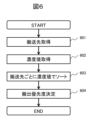
- FIG. 6 shows a flowchart of an algorithm for determining sample export priority based on concentration information.
- the destination of the sample to be measured is acquired (step 601).
- the sample transport destination information is registered in the transport destination 515 of the measurement information table 510 linked to the sample information table 501. Note that this step can be omitted if the automatic analysis system includes only one automatic analysis device (module).
- the concentration value of the sample is obtained from the concentration 506 of the sample information table 501 (step 602).
- the samples are sorted in the order of the acquired concentration values (step 603), and the priority for carrying out the sample to be measured is determined for each destination from the lowest concentration value to the highest concentration value (step 604). Thereby, the influence of sample carryover on the measurement results can be reduced, and the reliability of the measurement results can be improved.
- Embodiment 3 is an example in which the sample export priority is determined based on the expiration date of the sample.
- Some of the samples measured by automatic analyzers have expiration dates set, such as calibrators and QC samples.
- the sample expiration date information is registered in the expiration date 507 of the sample information table 501. Therefore, this expiration date information is referred to from the sample information table 501, and the priority for carrying out is determined so that the sample is used for analysis in descending order of the expiration date.
- samples with short expiration dates can be dispensed within the automatic analysis system, and samples with near expiration dates can be used effectively, thereby improving the operating efficiency of the laboratory.
- Embodiment 4 is an example in which the sample export priority is determined based on the sample registration date and time.
- Some of the samples measured by the automatic analyzer have the date and time registered in the container storage device 101.
- the registration date and time information of the sample is registered in the registration date and time 508 of the sample information table 501. Therefore, this registration date and time information is referred to from the sample information table 501, and the export priority is determined so that the sample is used for analysis in the order of the earliest registration date and time.
- the sample registered earlier can be dispensed within the automatic analysis system, and even if the same sample is stored in the container storage device 101, the sample registered earlier can be used effectively. , can improve the operational efficiency of the laboratory.
- Embodiment 5 is an example in which the sample delivery priority is determined from measurement item information related to a measurement request. Various information regarding measurement requests is registered in the measurement information table 510.
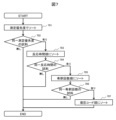
- FIG. 7 shows a flowchart of the algorithm for determining the sample export priority based on the measurement item information.
- the measurement priority is acquired from the measurement request information of the sample to be measured, and sorted in descending order of the acquired measurement priority (step 701).
- the measurement priority of the sample is registered in the measurement priority 512 of the measurement information table 510 linked to the sample information table 501. If there is no other sample with the same measurement priority (“none” in step 702), the export priority is determined according to the measurement priority. On the other hand, if there is another sample with the same measurement priority (“Yes” in step 702), the samples with the same measurement priority are sorted in descending order of reaction time (step 703).
- the reaction time of the sample is registered in the reaction time 513 of the measurement information table 510 linked to the sample information table 501.
- the export priority is determined according to the measurement priority and reaction time.
- the samples with the same measurement priority and the same reaction time are sorted in descending order of the number of dilutions (step 705).
- the number of dilutions of the sample is registered in the number of dilutions 514 of the measurement information table 510 linked to the sample information table 501. If there is no other sample with the same number of dilutions (“none” in step 706), the export priority is determined according to the measurement priority, the reaction time, and the number of dilutions.
- step 706 if there is another sample with the same number of dilutions (“Yes” in step 706), the samples with the same measurement priority, the same reaction time, and the same number of dilutions are sorted in order of item code (step 707), giving priority to export. determine the degree.
- the measurement priority is determined, for example, according to the measurement priority order of the test items for which measurement has been requested. Some test items need to be measured with priority over other test items.
- a sample container containing a sample for which such a high-priority test item is requested is recognized as a sample to be transported with high priority. Thereby, measurements can be performed in order of priority.
- measurement items that require a long reaction time or a large number of dilutions take a long time to measure.
- a sample container containing a sample for which a test item requiring a long measurement time is requested is recognized as a sample to be transported with high priority. Thereby, measurements can be performed in order of measurement time.
- the priority for carrying out the sample to be measured is determined from the measurement item information of the sample to be carried out.
- sample containers can be loaded onto racks according to the settings of test items without the user being consciously aware of this, and dispensing of samples for test items with high priority can be started first.
- dispensing can be started for the one with the longest measurement time first, and the overall measurement can be completed in the shortest possible time, improving the measurement efficiency of the automatic analysis system. .
- Example 6 refers to the measurement results of the calibrator or QC sample regarding the measurement items requested for the emergency sample, and if these measurement results are invalid or have not been measured, such calibrator or QC sample This is an example of determining a high export priority.
- An emergency sample refers to a sample that is measured with a higher priority than other general samples, and when a request for measurement of an emergency sample occurs, the measurement will be performed in front of the unmeasured general sample. At this time, if the calibration result of the test item requested for the emergency sample is invalid or the measurement of the QC sample for the test item has not been performed, the measurement of the emergency sample may not be carried out. .
- the system control unit 104 When the system control unit 104 receives a measurement request for an emergency sample, it checks the calibration and quality control status of the measurement request items, and, if necessary, measures the necessary calibrator or QC sample prior to the measurement request for the emergency sample. Generate a request.
- the container storage device 101 determines a high priority for carrying out the calibrator or QC sample based on such a measurement request. As a result, calibration and quality control for measurement items requested for emergency samples can be started early, reducing the waiting time until the measurement of calibrators or QC samples is completed, and urgent matters can be quickly resolved. Can measure high analytes.
- Embodiment 7 is an example in which the sample delivery priority is determined from measurement item information related to a measurement request. This is an example in which, when a measurement request requires continuous measurement of multiple samples, the priority for carrying out the samples is determined in the order of measurement.
- An example of a measurement request that requires continuous measurement of multiple samples is real-time QC.
- real-time QC QC samples with different concentrations are continuously measured.
- the export priority is determined in the order of the QC samples to be measured.
- sample containers can be mounted on a rack that allows measurements requiring a plurality of samples to be carried out without the user's awareness, and convenience for the user can be improved.
- Embodiment 8 is an example in which the priority for carrying out the sample is determined when the remaining amount of the sample is insufficient.
- FIG. 8 shows a flowchart of the algorithm for determining the sample export priority based on the remaining amount.
- the amount of the sample used in the requested measurement of the sample to be measured is compared with the remaining amount of the sample to be measured (step 801).
- the remaining amount of the sample is registered in the remaining amount 509 of the sample information table 501. If the remaining amount is greater than the used amount, the priority of export is not determined based on the remaining amount. On the other hand, if the remaining amount is less than the used amount, a search is made to see if the same sample is stored in the container storage device 101 (step 802).
- the identity of the sample can be determined by the sample ID 503 of the sample information table 501. If the same sample is not stored, an alarm will be displayed indicating that the remaining amount of the sample is insufficient.
- the priority for transporting the stored sample container containing the same sample is determined to be next to the priority for transporting the sample container containing the sample with insufficient remaining amount (step 803 ).
- an unused sample to be measured is loaded at the container installation position next to the container installation position where the sample container containing the sample with insufficient remaining amount was installed. Therefore, even if the remaining amount of the sample to be measured is insufficient during measurement, the same sample can be used from the sample container installed at the next container installation position, further improving the measurement efficiency of the automatic analysis system. can be done.
- the identity of the samples is determined by the sample ID in step 802, but if the lot numbers of the samples are also the same, in addition to the identity of the sample ID, the samples are determined to be the same. In some cases, judgment may be made.
- Example 9 is an example of determining export priority in an automatic analysis system including a plurality of automatic analysis devices (modules). The priority for transporting samples is determined for each transport destination, and sample containers containing samples to be inspected are loaded in different racks for each transport destination in order of transport priority.
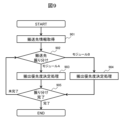
- FIG. 9 shows a flowchart of the sample export priority determination algorithm for each destination module. Note that although an example in which the automatic analysis system includes two automatic analyzers, module A and module B, is shown here, the number and types of destinations are not limited.
- transport destination information is acquired from the measurement request information of the sample to be measured (step 901).
- the sample transport destination information is registered in the transport destination 515 of the measurement information table 510 linked to the sample information table 501.
- the destinations are sorted based on the acquired destination information (step 902).
- Export priority determination processing is performed for the sample to be transported to module A (step 903).
- a discharge priority determination process is performed for the sample to be transported to module B (step 904). It is determined whether the distribution of all samples to be measured has been completed (step 905). If not, the process returns to step 902, and if it has been completed, the carry-out priority determination process is ended.
- Example 9 an example was explained in which a different rack is used for each destination, but it is also possible to use one rack for multiple destinations.
- the transport destinations are modules A and B
- in one rack used for transport multiple sample containers transported to module A and multiple sample containers transported to module B are transported, respectively.
- modules need to be mounted on racks in order of priority, there is no need to set priorities among modules.
- the racks are transported in the order of modules A and B, even if the sample containers transported to module B are mounted at a container installation position on the transport direction side of the transport route than the sample containers transported to module A. I do not care.
- a container storage device is connected to one or more automatic analysis devices (modules) to configure an automatic analysis system. It can also be configured as one block of a module.
- modules automatic analysis devices
- the samples can be identified by the identification elements attached to the sample containers, and the samples loaded on the rack can be
- the automatic analyzer can perform measurements efficiently by simply dispensing in the order in which they are loaded on the rack, without requiring the user to make any specifications for the automatic analyzer to recognize.
- control of transporting and unloading the sample container to the container storage device is performed by a control unit provided in the container storage device or the automatic analysis device.
- Measurement item number 505 ... Sample type, 506 ... Concentration, 507 ... Expiration date, 508 ... Registration date and time, 509 ... Remaining amount, 510 ... Measurement information table, 511 ...Item code, 512...Measurement priority, 513...Reaction time, 514...Number of dilutions, 515...Transportation destination.
Landscapes
- Chemical & Material Sciences (AREA)
- Physics & Mathematics (AREA)
- Health & Medical Sciences (AREA)
- Life Sciences & Earth Sciences (AREA)
- Analytical Chemistry (AREA)
- Biochemistry (AREA)
- General Health & Medical Sciences (AREA)
- General Physics & Mathematics (AREA)
- Immunology (AREA)
- Pathology (AREA)
- Chemical Kinetics & Catalysis (AREA)
- Automatic Analysis And Handling Materials Therefor (AREA)
Priority Applications (4)
| Application Number | Priority Date | Filing Date | Title |
|---|---|---|---|
| CN202380058151.XA CN119678052A (zh) | 2022-09-06 | 2023-07-19 | 容器保管装置、自动分析系统以及试样容器取出方法 |
| US19/105,518 US20260072049A1 (en) | 2022-09-06 | 2023-07-19 | Container storing device, automatic analysis system, and method of taking out specimen containers |
| EP23862800.2A EP4585927A1 (en) | 2022-09-06 | 2023-07-19 | Container storage device, automatic analysis system, and method for retrieving sample container |
| JP2024545479A JPWO2024053256A1 (https=) | 2022-09-06 | 2023-07-19 |
Applications Claiming Priority (2)
| Application Number | Priority Date | Filing Date | Title |
|---|---|---|---|
| JP2022141337 | 2022-09-06 | ||
| JP2022-141337 | 2022-09-06 |
Publications (1)
| Publication Number | Publication Date |
|---|---|
| WO2024053256A1 true WO2024053256A1 (ja) | 2024-03-14 |
Family
ID=90192375
Family Applications (1)
| Application Number | Title | Priority Date | Filing Date |
|---|---|---|---|
| PCT/JP2023/026457 Ceased WO2024053256A1 (ja) | 2022-09-06 | 2023-07-19 | 容器保管装置、自動分析システム及び試料容器取り出し方法 |
Country Status (5)
| Country | Link |
|---|---|
| US (1) | US20260072049A1 (https=) |
| EP (1) | EP4585927A1 (https=) |
| JP (1) | JPWO2024053256A1 (https=) |
| CN (1) | CN119678052A (https=) |
| WO (1) | WO2024053256A1 (https=) |
Citations (7)
| Publication number | Priority date | Publication date | Assignee | Title |
|---|---|---|---|---|
| WO2010090138A1 (ja) * | 2009-02-03 | 2010-08-12 | ベックマン コールター インコーポレイテッド | 自動分析装置およびラック搬送方法 |
| JP2010256325A (ja) * | 2009-03-31 | 2010-11-11 | Sysmex Corp | 検体分析装置及び検体分析方法 |
| JP2012122865A (ja) * | 2010-12-09 | 2012-06-28 | Hitachi High-Technologies Corp | 自動分析システム |
| JP2013072783A (ja) * | 2011-09-28 | 2013-04-22 | Sysmex Corp | 試料分析装置および試料分析装置の制御方法 |
| JP2018080957A (ja) | 2016-11-15 | 2018-05-24 | 日本電子株式会社 | 自動分析装置及びプログラム |
| WO2021153028A1 (ja) * | 2020-01-30 | 2021-08-05 | 株式会社日立ハイテク | 自動分析システム |
| WO2022176295A1 (ja) * | 2021-02-17 | 2022-08-25 | 株式会社日立ハイテク | 自動分析装置および自動分析装置の制御方法 |
-
2023
- 2023-07-19 WO PCT/JP2023/026457 patent/WO2024053256A1/ja not_active Ceased
- 2023-07-19 JP JP2024545479A patent/JPWO2024053256A1/ja active Pending
- 2023-07-19 CN CN202380058151.XA patent/CN119678052A/zh active Pending
- 2023-07-19 EP EP23862800.2A patent/EP4585927A1/en active Pending
- 2023-07-19 US US19/105,518 patent/US20260072049A1/en active Pending
Patent Citations (7)
| Publication number | Priority date | Publication date | Assignee | Title |
|---|---|---|---|---|
| WO2010090138A1 (ja) * | 2009-02-03 | 2010-08-12 | ベックマン コールター インコーポレイテッド | 自動分析装置およびラック搬送方法 |
| JP2010256325A (ja) * | 2009-03-31 | 2010-11-11 | Sysmex Corp | 検体分析装置及び検体分析方法 |
| JP2012122865A (ja) * | 2010-12-09 | 2012-06-28 | Hitachi High-Technologies Corp | 自動分析システム |
| JP2013072783A (ja) * | 2011-09-28 | 2013-04-22 | Sysmex Corp | 試料分析装置および試料分析装置の制御方法 |
| JP2018080957A (ja) | 2016-11-15 | 2018-05-24 | 日本電子株式会社 | 自動分析装置及びプログラム |
| WO2021153028A1 (ja) * | 2020-01-30 | 2021-08-05 | 株式会社日立ハイテク | 自動分析システム |
| WO2022176295A1 (ja) * | 2021-02-17 | 2022-08-25 | 株式会社日立ハイテク | 自動分析装置および自動分析装置の制御方法 |
Also Published As
| Publication number | Publication date |
|---|---|
| CN119678052A (zh) | 2025-03-21 |
| JPWO2024053256A1 (https=) | 2024-03-14 |
| US20260072049A1 (en) | 2026-03-12 |
| EP4585927A1 (en) | 2025-07-16 |
Similar Documents
| Publication | Publication Date | Title |
|---|---|---|
| US8313695B2 (en) | Automatic analyzer | |
| CN101358987B (zh) | 自动分析装置以及自动分析装置的使用方法 | |
| JP7203139B2 (ja) | 分析方法 | |
| JP7760675B2 (ja) | 自動分析システム | |
| JP4906431B2 (ja) | 自動分析装置 | |
| US20140100139A1 (en) | Method for scheduling samples in a combinational clinical analyzer | |
| WO2013150978A1 (ja) | 自動分析装置 | |
| JP6305733B2 (ja) | 自動分析装置 | |
| WO2024053256A1 (ja) | 容器保管装置、自動分析システム及び試料容器取り出し方法 | |
| JP7608594B2 (ja) | 自動分析装置 | |
| JP4491505B2 (ja) | 自動分析装置 | |
| JP2014009989A (ja) | 自動分析装置 | |
| US20230333129A1 (en) | Automatic analyzer and sample storage device | |
| JP6234765B2 (ja) | 検体検査自動分析システム | |
| US20230061977A1 (en) | Automatic analyzer | |
| CN120077278A (zh) | 容器保管装置 | |
| CN115885183A (zh) | 自动分析装置 | |
| JP2014074696A (ja) | 分析器のキャリブレーションまたはコントロール測定を行う検体自動搬送システムおよびその方法 |
Legal Events
| Date | Code | Title | Description |
|---|---|---|---|
| 121 | Ep: the epo has been informed by wipo that ep was designated in this application |
Ref document number: 23862800 Country of ref document: EP Kind code of ref document: A1 |
|
| WWE | Wipo information: entry into national phase |
Ref document number: 2024545479 Country of ref document: JP |
|
| WWE | Wipo information: entry into national phase |
Ref document number: 202380058151.X Country of ref document: CN |
|
| WWP | Wipo information: published in national office |
Ref document number: 202380058151.X Country of ref document: CN |
|
| WWE | Wipo information: entry into national phase |
Ref document number: 2023862800 Country of ref document: EP |
|
| NENP | Non-entry into the national phase |
Ref country code: DE |
|
| ENP | Entry into the national phase |
Ref document number: 2023862800 Country of ref document: EP Effective date: 20250407 |
|
| WWP | Wipo information: published in national office |
Ref document number: 2023862800 Country of ref document: EP |