WO2024034371A1 - 測定方法 - Google Patents
測定方法 Download PDFInfo
- Publication number
- WO2024034371A1 WO2024034371A1 PCT/JP2023/026962 JP2023026962W WO2024034371A1 WO 2024034371 A1 WO2024034371 A1 WO 2024034371A1 JP 2023026962 W JP2023026962 W JP 2023026962W WO 2024034371 A1 WO2024034371 A1 WO 2024034371A1
- Authority
- WO
- WIPO (PCT)
- Prior art keywords
- particle
- particles
- label
- group
- particle group
- Prior art date
- Legal status (The legal status is an assumption and is not a legal conclusion. Google has not performed a legal analysis and makes no representation as to the accuracy of the status listed.)
- Ceased
Links
Images





Classifications
-
- G—PHYSICS
- G01—MEASURING; TESTING
- G01N—INVESTIGATING OR ANALYSING MATERIALS BY DETERMINING THEIR CHEMICAL OR PHYSICAL PROPERTIES
- G01N33/00—Investigating or analysing materials by specific methods not covered by groups G01N1/00 - G01N31/00
- G01N33/48—Biological material, e.g. blood, urine; Haemocytometers
- G01N33/50—Chemical analysis of biological material, e.g. blood, urine; Testing involving biospecific ligand binding methods; Immunological testing
- G01N33/58—Chemical analysis of biological material, e.g. blood, urine; Testing involving biospecific ligand binding methods; Immunological testing involving labelled substances
- G01N33/582—Chemical analysis of biological material, e.g. blood, urine; Testing involving biospecific ligand binding methods; Immunological testing involving labelled substances with fluorescent label
-
- G—PHYSICS
- G01—MEASURING; TESTING
- G01N—INVESTIGATING OR ANALYSING MATERIALS BY DETERMINING THEIR CHEMICAL OR PHYSICAL PROPERTIES
- G01N15/00—Investigating characteristics of particles; Investigating permeability, pore-volume or surface-area of porous materials
- G01N15/02—Investigating particle size or size distribution
-
- G—PHYSICS
- G01—MEASURING; TESTING
- G01N—INVESTIGATING OR ANALYSING MATERIALS BY DETERMINING THEIR CHEMICAL OR PHYSICAL PROPERTIES
- G01N15/00—Investigating characteristics of particles; Investigating permeability, pore-volume or surface-area of porous materials
- G01N15/04—Investigating sedimentation of particle suspensions
-
- G—PHYSICS
- G01—MEASURING; TESTING
- G01N—INVESTIGATING OR ANALYSING MATERIALS BY DETERMINING THEIR CHEMICAL OR PHYSICAL PROPERTIES
- G01N30/00—Investigating or analysing materials by separation into components using adsorption, absorption or similar phenomena or using ion-exchange, e.g. chromatography or field flow fractionation
- G01N30/02—Column chromatography
- G01N30/88—Integrated analysis systems specially adapted therefor, not covered by a single one of the groups G01N30/04 - G01N30/86
-
- G—PHYSICS
- G01—MEASURING; TESTING
- G01N—INVESTIGATING OR ANALYSING MATERIALS BY DETERMINING THEIR CHEMICAL OR PHYSICAL PROPERTIES
- G01N33/00—Investigating or analysing materials by specific methods not covered by groups G01N1/00 - G01N31/00
- G01N33/48—Biological material, e.g. blood, urine; Haemocytometers
-
- G—PHYSICS
- G01—MEASURING; TESTING
- G01N—INVESTIGATING OR ANALYSING MATERIALS BY DETERMINING THEIR CHEMICAL OR PHYSICAL PROPERTIES
- G01N33/00—Investigating or analysing materials by specific methods not covered by groups G01N1/00 - G01N31/00
- G01N33/48—Biological material, e.g. blood, urine; Haemocytometers
- G01N33/483—Physical analysis of biological material
-
- G—PHYSICS
- G01—MEASURING; TESTING
- G01N—INVESTIGATING OR ANALYSING MATERIALS BY DETERMINING THEIR CHEMICAL OR PHYSICAL PROPERTIES
- G01N33/00—Investigating or analysing materials by specific methods not covered by groups G01N1/00 - G01N31/00
- G01N33/48—Biological material, e.g. blood, urine; Haemocytometers
- G01N33/50—Chemical analysis of biological material, e.g. blood, urine; Testing involving biospecific ligand binding methods; Immunological testing
- G01N33/53—Immunoassay; Biospecific binding assay; Materials therefor
-
- G—PHYSICS
- G01—MEASURING; TESTING
- G01N—INVESTIGATING OR ANALYSING MATERIALS BY DETERMINING THEIR CHEMICAL OR PHYSICAL PROPERTIES
- G01N33/00—Investigating or analysing materials by specific methods not covered by groups G01N1/00 - G01N31/00
- G01N33/48—Biological material, e.g. blood, urine; Haemocytometers
- G01N33/50—Chemical analysis of biological material, e.g. blood, urine; Testing involving biospecific ligand binding methods; Immunological testing
- G01N33/53—Immunoassay; Biospecific binding assay; Materials therefor
- G01N33/5308—Immunoassay; Biospecific binding assay; Materials therefor for analytes not provided for elsewhere, e.g. nucleic acids, uric acid, worms, mites
-
- G—PHYSICS
- G01—MEASURING; TESTING
- G01N—INVESTIGATING OR ANALYSING MATERIALS BY DETERMINING THEIR CHEMICAL OR PHYSICAL PROPERTIES
- G01N33/00—Investigating or analysing materials by specific methods not covered by groups G01N1/00 - G01N31/00
- G01N33/48—Biological material, e.g. blood, urine; Haemocytometers
- G01N33/50—Chemical analysis of biological material, e.g. blood, urine; Testing involving biospecific ligand binding methods; Immunological testing
- G01N33/53—Immunoassay; Biospecific binding assay; Materials therefor
- G01N33/543—Immunoassay; Biospecific binding assay; Materials therefor with an insoluble carrier for immobilising immunochemicals
-
- G—PHYSICS
- G01—MEASURING; TESTING
- G01N—INVESTIGATING OR ANALYSING MATERIALS BY DETERMINING THEIR CHEMICAL OR PHYSICAL PROPERTIES
- G01N33/00—Investigating or analysing materials by specific methods not covered by groups G01N1/00 - G01N31/00
- G01N33/48—Biological material, e.g. blood, urine; Haemocytometers
- G01N33/50—Chemical analysis of biological material, e.g. blood, urine; Testing involving biospecific ligand binding methods; Immunological testing
- G01N33/53—Immunoassay; Biospecific binding assay; Materials therefor
- G01N33/543—Immunoassay; Biospecific binding assay; Materials therefor with an insoluble carrier for immobilising immunochemicals
- G01N33/54313—Immunoassay; Biospecific binding assay; Materials therefor with an insoluble carrier for immobilising immunochemicals the carrier being characterised by its particulate form
-
- G—PHYSICS
- G01—MEASURING; TESTING
- G01N—INVESTIGATING OR ANALYSING MATERIALS BY DETERMINING THEIR CHEMICAL OR PHYSICAL PROPERTIES
- G01N33/00—Investigating or analysing materials by specific methods not covered by groups G01N1/00 - G01N31/00
- G01N33/48—Biological material, e.g. blood, urine; Haemocytometers
- G01N33/50—Chemical analysis of biological material, e.g. blood, urine; Testing involving biospecific ligand binding methods; Immunological testing
- G01N33/53—Immunoassay; Biospecific binding assay; Materials therefor
- G01N33/543—Immunoassay; Biospecific binding assay; Materials therefor with an insoluble carrier for immobilising immunochemicals
- G01N33/551—Immunoassay; Biospecific binding assay; Materials therefor with an insoluble carrier for immobilising immunochemicals the carrier being inorganic
- G01N33/552—Glass or silica
-
- G—PHYSICS
- G01—MEASURING; TESTING
- G01N—INVESTIGATING OR ANALYSING MATERIALS BY DETERMINING THEIR CHEMICAL OR PHYSICAL PROPERTIES
- G01N33/00—Investigating or analysing materials by specific methods not covered by groups G01N1/00 - G01N31/00
- G01N33/48—Biological material, e.g. blood, urine; Haemocytometers
- G01N33/50—Chemical analysis of biological material, e.g. blood, urine; Testing involving biospecific ligand binding methods; Immunological testing
- G01N33/53—Immunoassay; Biospecific binding assay; Materials therefor
- G01N33/543—Immunoassay; Biospecific binding assay; Materials therefor with an insoluble carrier for immobilising immunochemicals
- G01N33/551—Immunoassay; Biospecific binding assay; Materials therefor with an insoluble carrier for immobilising immunochemicals the carrier being inorganic
- G01N33/553—Metal or metal coated
-
- G—PHYSICS
- G01—MEASURING; TESTING
- G01N—INVESTIGATING OR ANALYSING MATERIALS BY DETERMINING THEIR CHEMICAL OR PHYSICAL PROPERTIES
- G01N33/00—Investigating or analysing materials by specific methods not covered by groups G01N1/00 - G01N31/00
- G01N33/48—Biological material, e.g. blood, urine; Haemocytometers
- G01N33/50—Chemical analysis of biological material, e.g. blood, urine; Testing involving biospecific ligand binding methods; Immunological testing
- G01N33/58—Chemical analysis of biological material, e.g. blood, urine; Testing involving biospecific ligand binding methods; Immunological testing involving labelled substances
- G01N33/585—Chemical analysis of biological material, e.g. blood, urine; Testing involving biospecific ligand binding methods; Immunological testing involving labelled substances with a particulate label, e.g. coloured latex
Definitions
- the present invention relates to a measuring method, and more specifically to a method for measuring biomolecules.
- xMAP registered trademark
- Japanese Translation of PCT Publication No. 2012-533052 discloses Luminex (registered trademark) technology, which is one of the xMAPs, as a method for detecting biomarkers.
- Luminex registered trademark
- xMAP is a technology that uses beads exhibiting a predetermined fluorescence spectrum, which are encapsulated with a combination of two colors of fluorescent dyes at predetermined concentrations, as a library for identifying types of biomarkers.
- beads with different fluorescence spectra are configured to bind different types of biomarkers.
- the present disclosure has been made to solve such problems, and its purpose is to provide a technique for measuring multiple types of biomarkers at once.
- a first aspect of the present disclosure is a method for measuring biomolecules contained in a sample derived from a biological sample, which includes the steps of: preparing particles belonging to a first particle group and particles belonging to a second particle group; A step of preparing a label belonging to a first label group corresponding to one particle group and a label belonging to a second label group corresponding to a second particle group.
- the labels of the first label group and the labels of the second label group have different label properties.
- the particles of the first particle group and the labels of the first label group are bonded via biomolecules.
- the particles of the second particle group and the labels of the second label group are bonded via biomolecules.
- Each particle group includes multiple particle subgroups. In each particle group, the plurality of particle subgroups have different particle sizes.
- the particles of the plurality of particle subgroups of the first particle group and the particles of the plurality of particle subgroups of the second particle group have first binding portions that specifically bind to mutually different types of biomolecules.
- the measurement method further includes the step of mixing the sample, the particles of the first particle group, the particles of the second particle group, the labels of the first label group and the labels of the second label group, and the step of mixing the sample, the particles of the first particle group. and specifically binding a biomolecule to the particles of the second particle group, the labels of the first label group, and the labels of the second label group, and each of the particles of the first particle group and the particles of the second particle group.
- a second aspect of the present disclosure is a method for measuring biomolecules contained in a sample derived from a biological sample, which includes the steps of: preparing particles belonging to a third particle group and particles belonging to a fourth particle group; The method includes the step of preparing a label belonging to a third label group corresponding to three particle groups and a label belonging to a fourth label group corresponding to a fourth particle group.
- the particles belonging to the third particle group and the particles belonging to the fourth particle group have different particle properties.
- the particles of the third particle group and the labels of the third label group are bonded via biomolecules.
- the particles of the fourth particle group and the labels of the fourth label group are bonded via biomolecules.
- Each particle group includes multiple particle subgroups.
- the plurality of particle subgroups have different particle sizes.
- the particles of the plurality of particle subgroups of the third particle group and the particles of the plurality of particle subgroups of the fourth particle group have third binding portions that specifically bind to mutually different types of biomolecules.
- the measurement method further includes the step of mixing the sample, the particles of the third particle group, the particles of the fourth particle group, the labels of the third label group, and the labels of the fourth label group, and the particles of the third particle group. and a step of specifically binding a biomolecule to the particle of the fourth particle group, the label of the third label group, and the label of the fourth label group, and each of the particles of the third particle group and the particle of the fourth particle group.
- a third aspect of the present disclosure is a method for measuring biomolecules contained in a sample derived from a biological sample, which includes the steps of: preparing particles belonging to a first particle group; and a first label group corresponding to the first particle group. and preparing a sign belonging to the.
- the particles of the first particle group and the labels of the first label group are bonded via biomolecules.
- the first particle group includes multiple particle subgroups. In the first particle group, the plurality of particle subgroups have different particle sizes. Particles of the plurality of particle subgroups of the first particle group have first binding portions that specifically bind to mutually different types of biomolecules.
- the measurement method further includes mixing the sample with the particles of the first particle group and the label of the first label group, so that the particles of the first particle group and the label of the first label group are specifically added to the biomolecules. a step of separating each of the particles of the first particle group based on particle size; and a step of bonding to each of the particles of the first particle group separated based on particle size via a biomolecule. and determining the type of biomolecule bound to the particles of the first particle group based on the particle size and the label properties.
- control device it is possible to provide a technique for measuring multiple types of biomolecules at once.
- FIG. 1 is a diagram showing the overall configuration of a measurement system according to this embodiment. It is a figure explaining the structure of a particle and a label. It is a figure explaining a particle group and a label group.
- FIG. 2 is a diagram illustrating a method of binding particles, biomarkers, and labels.
- FIG. 3 is a diagram showing separation results based on particle size.
- FIG. 3 is a diagram showing detection results of label characteristics.
- 7 is a flowchart showing measurement processing according to the present embodiment. 7 is a flowchart showing measurement processing according to Modification 1.
- FIG. 7 is a diagram illustrating a specific example of correction using first correction particles.
- FIG. 7 is a diagram illustrating a specific example of correction using second correction particles.
- FIG. 7 is a diagram illustrating structures of particles and labels according to Modification Example 2.
- 7 is a diagram illustrating particle groups and label groups according to Modification 2.
- FIG. 12 is a flowchart showing measurement processing according to modification example 2.
- FIG. 1 is a diagram illustrating an overview of a measurement system 100 according to an embodiment of the present invention.
- measurement system 100 includes a control device 4 and a measurement device 5.
- the measuring device 5 is a device for measuring biomarkers.
- the measuring device 5 includes a liquid feeding section 6 , a pretreatment section 71 , an injection section 72 , a separation section 8 , channels 51 and 52 , and a detection section 9 .
- a flow path 51 is connected downstream of the liquid feeding section 6.
- the liquid sending unit 6 sends a carrier (mobile phase) to the channel 51 .
- the liquid feeding unit 6 includes a container 61 that accommodates the carrier, and a liquid feeding pump 62 that sucks the carrier in the container 61.
- the flow path 51 is a flow path that connects the liquid feeding section 6 and the separation section 8.
- An injection section 72 is arranged in the flow path 51 .
- the injection part 72 is a part for injecting the mixed solution into the carrier in the channel 51.
- the mixed solution is a solution generated based on the sample in the pretreatment section 71. The method of generating the mixed solution by the pre-processing section 71 will be explained later.
- the mixed solution contains particles for measuring the biomarker.
- the particles include particles to which a biomarker is bound and particles to which the biomarker is not bound, and both are referred to as "particles" in the explanation of FIG. 1.
- a label having predetermined labeling characteristics eg, fluorescence
- the injection part 72 may be, for example, an autosampler or an injection port through which a user manually injects the mixed solution into the channel 51.
- the separation unit 8 separates particles mixed in the carrier (hereinafter also referred to as “particles contained in the carrier”) according to particle size. Generally, separating particles according to their size is called “classification.”
- the separation unit 8 is a classifier that uses, for example, a centrifugal FFF method, which is a type of FFF (Field Flow Fraction) method, or an AF4 (Asymmetrical Flow Field Flow Fraction) method.
- the centrifugal FFF method is a method of classifying particles based on differences in centrifugal force and diffusion coefficients by settling large particles using centrifugal force.
- particles can be classified according to their mass and size.
- the size of the particles can be expressed by, for example, the diameter, volume, etc. of the particles. Since the centrifugal FFF method has relatively high size resolution, it has the advantage of being able to identify a large number of types of biomarkers. Further, the centrifugal FFF method has smaller classification errors and can obtain classification results with higher reproducibility than the AF4 method. Therefore, there is no need to take into account the influence of classification errors in the measurement results of the label characteristics in the detection unit 9. This improves the accuracy of measuring label properties and improves the accuracy of quantifying biomarkers.
- the AF4 method is a method of classifying particles based on the difference in movement speed in laminar flow caused by generating a force field perpendicular to the direction of movement. If the centrifugal FFF method is used, particles can be classified according to their size. When the particles are approximately spherical, the size of the particles can be expressed by, for example, the diameter, volume, etc. of the particles. On the other hand, the AF4 method has the advantage of being able to classify small and light particles. This allows the particle size of particles that can be used for biomarker detection to be set small, increasing the number of types of biomarkers that can be determined.
- the separation unit 8 may be a classification device using size exclusion chromatography.
- size exclusion chromatography a solution containing particles is passed through a column containing many pores. Then, the particles are classified by taking advantage of the fact that the elution time becomes slower as the smaller particles enter the pores.
- Size exclusion chromatography can be used to classify particles according to their size. When the particles are approximately spherical, the size of the particles can be expressed by, for example, the diameter, volume, etc. of the particles.
- a classification device using size exclusion chromatography can be configured at a lower cost than a classification device using FFF (Field Flow Fraction) method.
- FFF Field Flow Fraction
- the flow path 52 is a flow path that connects the separation section 8 and the detection section 9.
- the carrier containing particles discharged from the separation section 8 is introduced into the detection section 9 via the flow path 52.
- the detection unit 9 detects the labeling characteristics of the label that binds to the particles separated according to the particle size via the biomarker.
- the label property is not particularly limited as long as it is a property that allows the type of label 2 corresponding to the type of biomarker 3 to be distinguished by the label property.
- the labeling property is fluorescence.
- the detection unit 9 includes, for example, a plurality of fluorescence detectors or a multi-wavelength fluorescence detector.
- a multi-wavelength fluorescence detector is a detector capable of simultaneous measurement at multiple excitation wavelengths and fluorescence wavelengths.
- the detection unit 9 fluorescence can be detected with high sensitivity, so that the accuracy of measuring label characteristics and the accuracy of quantifying biomarkers are improved. If a multi-wavelength fluorescence detector is used as the detection section 9, the number of detectors can be reduced, so the cost required for the detection section 9 can be reduced.
- the detection unit 9 is a radiation meter or an absorbance meter.
- the labeling characteristics may be detected for each particle, or the labeling characteristics of a plurality of particles may be detected at once.
- the detection unit 9 is configured such that the number of particles at the position where the labeling substance is measured is always one or less, the labeling characteristic of each particle is detected.
- the channel at the location where the labeled substance is measured is configured to have a width that allows only one particle to pass through, or if the concentration of particles in the carrier is low enough that only one molecule can exist at the measurement location. This is the case when it is prepared as follows.
- the configuration is such that there can be a plurality of particles at the position where the label substance is measured, a detection value corresponding to the sum of the label characteristics of the plurality of particles is detected.
- the type and number of corresponding biomarkers can be determined by calculating how many particles having what kind of labeling characteristics have been detected from the detection value corresponding to the sum total.
- the control device 4 controls the measurement device 5 and analyzes the detection results of the detection section 9.
- the control device 4 is typically a computer, and can be realized by a dedicated computer or a general-purpose personal computer.
- the control device 4 includes a processor 40, a memory 41, an input section 42, and a display section 43.
- the processor 40 includes, for example, a CPU (Central Processing Unit).
- the processor 40 expands the program stored in the memory 41 into a RAM or the like and executes the program.
- the memory 41 includes, for example, ROM (Read Only Memory), RAM (Random Access Memory), and nonvolatile memory.
- the program stored in the ROM is a program in which the processing procedure of the measurement system 100 is written.
- the nonvolatile memory stores the detection results sent from the detection unit 9 as a data file.
- the memory 41 may include a HHD (Hard Disk Drive) and/or an SSD (Solid State Drive) instead of or in addition to the nonvolatile memory.
- the input unit 42 is a unit for inputting user instructions to the measurement system 100.
- the input unit 42 includes a keyboard and a pointing device such as a mouse.
- the display section 43 includes a liquid crystal display and the like.
- the display section 43 displays the detection results of the detection section 9 and the analysis results thereof.
- the control device 4 may be composed of multiple computers. Furthermore, part or all of the functions of the control device 4 described above may be placed in a computer, server, etc. that is physically separate from the measurement device 5.
- the control device 4 may include a system controller that is a dedicated computer, and a general-purpose personal computer connected to the system controller via a network.
- each type of captured biomarker is labeled, and then the label corresponding to each type of biomarker is detected using ELISA (Enzyme-Linked With conventional methods such as Immuno-Sorbent Assay, it is difficult to measure many types of biomarkers in terms of testing time and cost.
- ELISA Enzyme-Linked With conventional methods such as Immuno-Sorbent Assay, it is difficult to measure many types of biomarkers in terms of testing time and cost.
- xMAP (registered trademark) is a method for measuring multiple types of biomarkers at once, and systems such as Luminex (registered trademark), which is a form of xMAP, are on sale.
- “measuring multiple types of biomarkers at once” indicates “labeling multiple types of biomarkers at once and detecting them at once.”
- “Once” refers to, for example, one step.
- microbeads are stained with a combination of two fluorescent dyes at various concentrations. Then, a fluorescence spectrum that reflects the combination pattern of the concentrations of fluorescent dyes within the beads is used as an identification code.
- biomarker measurement experiment using xMAP first, a labeling substance that emits fluorescence is bound to a biomarker that is specifically bound to beads. Multiple types of biomarkers are then measured by measuring the fluorescence spectra of the beads.
- Fluorescence spectra different enough to be distinguishable from each other indicates, for example, a state in which the positions (wavelengths) on the horizontal axis to which the peaks of the respective fluorescence spectra correspond are far enough apart to be distinguishable from each other.
- the number of types of beads is considered to be limited to about 30 types.
- the types of biomarkers that can be identified are increased by distinguishing them using particles of different particle sizes in addition to labeling characteristics such as fluorescence. can do. This makes it possible to measure many types of biomarkers at once.
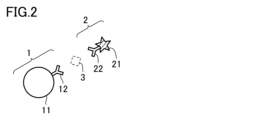
- FIG. 2 is a diagram illustrating the structures of particles and labels.
- a biomarker 3 and particles 1 and labels 2 bound to the biomarker 3 are shown.
- the biomarker 3 is used to quantitatively understand biological changes in a living body, such as the presence or absence of a disease, its progress, the effect of a drug, etc., which are the measurement targets of the measurement method according to the present embodiment. Shows biomolecules that can be used as indicators.
- the biomarker is a protein.
- Biomarkers may be at least one of nucleic acids and metabolites.
- the nucleic acid may include DNA (deoxyribonucleic acid), messenger RNA (ribonucleic acid), long non-coding RNA, or microRNA.
- the particle 1 includes a particle main body 11 and a first binding portion 12 that specifically binds to the biomarker 3.
- the particle main body 11 typically has a spherical shape with a predetermined diameter, but may include an error in the shape that is within a predetermined range due to the manufacturing process or the like.
- the predetermined range is, for example, a range in which classification by the separation unit 8 can be performed without problems.
- a spherical object used in the measurement of a biological sample or an object obtained by adding a predetermined modification to the spherical object is also referred to as a "bead" by those skilled in the art.
- the material forming the particle body 11 includes, for example, at least one of an inorganic material such as gold or silica (silicon dioxide), and a resin material such as polystyrene.
- the diameter of the particle body 11 is preferably a predetermined value between 5 and 500 nm.
- the diameter of the particle body 11 is preferably a predetermined value between 10 and 1000 nm.
- gold nanoparticles and silica particles having nanoscale sizes as described above are also referred to as “gold nanoparticles” and “silica particles”, respectively.
- gold nanoparticles and silica particles having nanoscale sizes as described above are also referred to as “gold nanoparticles” and “silica particles”, respectively.
- the advantages of using gold nanoparticles and silica nanoparticles for the particle body 11 will be explained below.
- Gold nanoparticles are stable and do not easily deteriorate. This makes aging and chemical or shock-induced deterioration less likely to occur during storage or measurement. This makes it possible to improve the reliability of the analysis since the possibility that the particle size will change during storage or measurement is very low. Furthermore, gold nanoparticles are characterized in that their size can be easily controlled during production. This makes it possible to produce particles with small variations in size distribution. This makes it possible to increase the number of sizes that can be separated at the same time. Thereby, when gold nanoparticles are used as the particle body 11, the number of types of biomarkers 3 that can be detected simultaneously can be increased.
- silica particles since silica has a refractive index closer to water than gold, there is less scattered light on the particle surface that can affect detection than gold nanoparticles. Furthermore, unlike gold, it does not exhibit high absorbance at specific wavelengths. As a result, when silica nanoparticles are used as the particle body 11, the measurement accuracy regarding fluorescence intensity and absorbance is increased. This increases the quantitative accuracy of the biomarker 3.
- nanoparticles made of resin material as the particle body 11 is that traceable and highly reliable nanoparticles made of resin materials are commercially available, and measurements can be performed relatively easily and with high precision. There is a point.
- the particle body 11 is a spherical particle made of gold whose surface is coated with silica. If such a particle main body 11 is used, many types of biomarkers 3 can be detected at once, and the amount of biomarkers can be measured with high accuracy.
- the difference between the refractive index of the particles 1 and the refractive index of the carrier is preferably equal to or less than a predetermined value. More specifically, it is preferable that the difference between the refractive index of the particle body 11 and the carrier is less than or equal to a predetermined value.
- the refractive index difference is not limited thereto, it is preferably 0.1 or less, more preferably 0.05 or less. The reason why it is preferable that the refractive index difference is less than or equal to a predetermined value will be explained in detail below.
- the detection lower limit of the fluorescence detector is preferably set low enough to ensure the sensitivity necessary for diagnosis. Therefore, it is preferable to keep the amount of scattered light originating from the particles 1 below a predetermined amount by designing the refractive index difference between the particles and the carrier to be below a predetermined value. Thereby, the detection lower limit of fluorescence can be set low, and the detection sensitivity can be improved.
- the amount of scattered light originating from the particles 1 generated during excitation light irradiation also increases. Therefore, if the detection lower limit is raised depending on the amount of the scattered light, there is a possibility that the label 2 cannot be detected with the sensitivity required for diagnosis.
- a first method of reducing the refractive index difference between the particles 1 and the carrier is to use a carrier with a refractive index close to that of the particles 1.
- the second method is to use particles 1 with a refractive index close to that of the carrier.
- the third method is to bring the refractive index of the particles 1 and the refractive index of the carrier close to each other.
- the refractive index of particle 1 is approximately 1.5 and the refractive index of the carrier is 1.33.
- the particles 1 are, for example, silica particles (refractive index: 1.46), and the carrier is, for example, water (refractive index: 1.33).
- an example of the first method is to replace a carrier with a refractive index of 1.33 with a carrier with a refractive index of 1.5.
- An example of the second method is to replace particles 1 with a refractive index of 1.5 with particles 1 with a refractive index of 1.33.
- An example of the third method is to replace a carrier with a refractive index of 1.33 with a carrier with a refractive index of 1.4, and replace particles 1 with a refractive index of 1.5 with particles 1 with a refractive index of 1.4.
- Substitution of the particles 1 and carrier described above also includes replacing the original particles 1 and carrier with new particles 1 and carrier, or making changes to the original particles 1 and carrier to change the refractive index. Such changes include, for example, adding a coating to the original particles 1, adding new ingredients to the carrier and reformulating it, and the like.
- the degree of erroneous detection of the scattered light originating from the particles 1 described above is affected by the excitation wavelength, fluorescence wavelength, excitation wavelength bandwidth, fluorescence wavelength bandwidth, etc. of the fluorescence detector.
- the closer the excitation wavelength and fluorescence wavelength are, the higher the possibility of false detection. Therefore, the excitation wavelength, fluorescence wavelength, excitation wavelength bandwidth, fluorescence wavelength bandwidth, etc., are designed for particle 1 and label 2 to reduce the probability of false detection and ensure the detection sensitivity necessary for diagnosis.
- a fluorescence detector is preferably set up.
- the first bonding portion 12 is bonded to the particle body 11.
- the first binding portion 12 is a binding site in the particle 1 for specifically binding to a predetermined type of biomarker 3.
- the particle 1 has binding specificity for the biomarker 3.
- the first binding portion 12 typically includes an antibody that binds to the predetermined type of protein.
- the antibody and the predetermined type of protein have a structure in which they specifically bind to each other through forces such as hydrogen bonds, Coulomb forces, and van der Waals forces.
- the first binding portion 12 when the biomarker 3 is a nucleic acid having a predetermined sequence, the first binding portion 12 includes a nucleic acid having a complementary sequence to the first sequence that is a part of the predetermined sequence.
- Nucleic acids include microRNAs.
- the complementary sequences for example, adenine-uracil and guanine-cytosine hydrogen bonds occur between the first sequence and the nucleic acid having the complementary sequence.
- the first binding portion 12 when the biomarker 3 is a predetermined type of metabolite, typically includes a molecule that specifically binds to a portion of the predetermined type of metabolite. .
- the label 2 includes a label portion 21 and a second binding portion 22 that specifically binds to the biomarker 3.
- the labeling part 21 is a part containing a substance (hereinafter also referred to as a "labeling substance") for labeling the particles 1 to which the biomarker 3 is bound.
- the labeling substance exhibits predetermined labeling properties.
- the label characteristics of the label part 21 in the label 2 for different types of biomarkers 3 are configured to be distinguishable from each other. Thereby, the type of biomarker 3 can be determined based on the difference in the labeling properties of the labeling substances.
- the labeling substance is a fluorescent substance and the labeling property is fluorescence. Fluorescence may be detected as a fluorescence spectrum showing the relationship between wavelength and fluorescence intensity, or its pattern (shape of a graph), or only the intensity at a predetermined wavelength may be detected.
- the fluorescent substance is usually one type of fluorescent dye, but a mixture of two or more types of fluorescent dyes may be used.
- the fluorescent dye for example, a dye commonly used in FACS (Fluorescence-Activated Cell Sorting) is used.
- FACS Fluorescence-Activated Cell Sorting
- dyes with different wavelengths from the Alexa Fluor (registered trademark) family, rhodamine, PI (Propidium Iodide), and other dyes commonly used for labeling may be used.
- the fluorescence spectrum for each type of label portion 21 corresponding to the type of biomarker 3 has a fluorescence wavelength that characterizes the fluorescence spectrum.
- the fluorescence wavelength that characterizes the fluorescence spectrum of a predetermined type of labeling part 21 is, for example, a fluorescence wavelength at which the fluorescence intensity of the predetermined type of labeling part 21 is high, but the fluorescence intensity of other types of labeling part 21 is very low. It is. In this case, by referring to the fluorescence intensity for the wavelength, it is possible to determine whether the predetermined type of marker 21 exists.
- the fluorescence spectra for each type of labeling part 21 corresponding to the type of biomarker 3 are configured such that the peaks do not substantially overlap with each other (see FIG. 6).
- the marker portions 21 are manufactured such that the wavelengths at the apex of the peaks are sufficiently separated for each type of marker portion 21.
- the fluorescence intensity of the other types of marker 21 is almost undetectable.
- the types of marker portions 21 can be distinguished by referring to the fluorescence intensity at the peak wavelength of each type of marker portion 21 .
- the labeling substance is a radioisotope and the labeling characteristic is the amount of radiation.
- the amount of radiation may be detected as a radiation spectrum or its pattern (shape of a graph) showing the relationship between wavelength and amount of radiation, or only the intensity of radiation for a predetermined wavelength may be detected.
- the labeling substance is a substance that exhibits a predetermined absorbance
- the labeling property is the absorbance.
- the absorbance may be detected as an absorbance spectrum or a pattern thereof (shape of a graph) showing the relationship between the wavelength and the amount of absorbance, or only the absorbance at a predetermined wavelength may be detected.
- the surface of the particle body 11 may be composed of a substance other than gold (for example, silica). It is preferable that the particle body 11 not affect the detection of the labeling substance.
- the labeling substance may be a substance exhibiting a color at a wavelength that is recognizable to the naked eye, and the labeling characteristic may be the color.
- examples of labeling substances and labeling characteristics are not limited to those described above, and it is sufficient that the labeling parts 21 corresponding to each type of biomarker 3 can be distinguished from each other.
- the second coupling part 22 is coupled to the marker part 21.
- the second binding portion 22 is a binding site in the label 2 for specifically binding to a predetermined type of biomarker 3.
- label 2 has binding specificity for biomarker 3.
- the second binding portion 22 binds to a site in the biomarker 3 that is different from the binding site of the first binding portion 12 .
- the label 2 can also be bound thereto.
- the second binding portion 22 typically includes an antibody that binds to the predetermined type of protein.
- the second binding portion 22 when the biomarker 3 is a nucleic acid having a predetermined sequence, the second binding portion 22 typically has a sequence complementary to the second sequence that is part of the predetermined sequence. Contains nucleic acids with Note that the second arrangement is different from the first arrangement to which the first coupling portion 12 is coupled.
- the second binding portion 22 when the biomarker 3 is a predetermined type of metabolite, the second binding portion 22 is typically other than the site to which the first binding portion 12 binds to the predetermined type of metabolite. specifically binds to the site.
- the measurement method according to the present embodiment can measure any biomarker 3 belonging to any of the categories of proteins, nucleic acids, and metabolites.
- the second binding part 22 is specifically bound to the biomarker 3 in a state in which it has been previously bound to the label part 21.
- the second binding part 22 may be configured to specifically bind to the biomarker 3 before being combined with the labeling part 21, and then specifically binding to the labeling part 21.
- the manner of binding between the second binding part 22 and the labeling part 21 is not particularly limited, but for example, amide bond formation using carbodiimide reaction, avidin-biotin interaction, or click chemistry using cyclooctyne-azide is used. .
- particle bodies 11 of different sizes are used, as detailed in FIG. 3. More specifically, a plurality of particle bodies 11 having a plurality of sizes that can be classified by the separation section 8 are used.
- the "size" of an object is a value indicating the size and/or mass of the object.
- the size of an object can be expressed, for example, by the maximum outer diameter (diameter in the case of a spherical object) and/or volume.
- the compositions of the particle bodies 11 are substantially the same, and the specific gravity of the particle bodies 11 is also substantially the same. In this case, the diameter, volume and/or mass of the particle bodies 11 are each correlated.
- the difference in each size may be configured to be sufficiently larger than the size of the first binding portion 12, the size of the biomarker 3, and the size of the label 2.
- the size here refers to, for example, a physical quantity (for example, the maximum external dimension, volume, and/or mass) that indicates the size that affects classification in the separation unit 8.
- the separation unit 8 can classify the particles based on the size of the particle body 11, regardless of the types of the first binding portion 12, the biomarker 3, and the label 2 that bind to the particle body 11. .
- the size of the smallest particle body 11 is also sufficient compared to the size of the first binding part 12, the size of the biomarker 3, and the size of the label 2. It is preferable to configure it so that it is large.
- the separation unit 8 can classify the particles based on the size of the particle body 11, regardless of the types of the first binding portion 12, the biomarker 3, and the label 2 that bind to the particle body 11. .
- the free label 2 contained in the mixed solution and the particle body 11 having the smallest size can be accurately classified. Thereby, it is possible to eliminate the possibility that the free label 2 is erroneously detected as the labeled particle body 11 having the smallest size.
- the size of the particle 1 formed by bonding the first bonding portion 12 to the particle body 11 of a predetermined size is approximately the same as that of the particle body 11 serving as the base.
- a complex formed by binding the biomarker 3 to the particle 1 hereinafter also referred to as “biomarker complex”
- biomarker complex a complex formed by binding the label 2 to the complex
- labeling complex does not substantially change from the size of the particle body 11 that is the base. That is, the sizes of the base particle body 11, particle 1, biomarker complex, and label complex are approximately the same.
- the size of the particle body 11 and the size of the particle 1 are collectively referred to as "particle size.” Furthermore, when the biomarker 3 is bound to the particle 1 to form a biomarker complex, the size of the biomarker complex is also referred to as particle size. Further, when the biomarker 3 and the label 2 are bound to the particle 1 to form a label complex, the size of the label complex is also referred to as the particle size.
- the particle sizes are different from each other indicates, for example, that the particle size distributions do not overlap between different particle groups (for example, different particle subgroups). Alternatively, if a certain degree of overlap is allowed, the average particle diameters may be different. In addition, the particle size may be appropriately selected as long as particles belonging to the average particle diameter of one particle group and another particle group can be separated by particle size separation means such as FFF.
- a labeled complex containing the particles 1 can be produced via the first binding part 12 and the second binding part 22. Further, it is possible to distinguish the type of the labeled complex based on the particle size mainly caused by the particle body 11 and the labeling characteristics of the labeling part 21. Thereby, the type of biomarker 3 to which the labeled complex corresponds can be determined.
- the labeled complexes are separated based on the particle size and then discriminated based on the labeling properties.
- a population (group) of particles 1 defined by particle size and labeling characteristics will be explained.
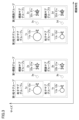
- FIG. 3 is a diagram illustrating particle groups and label groups.
- FIG. 3 illustrates a group comprising particles 1a-1d and labels 2a-2d that specifically bind to each of four types of biomarkers 3a-3d.
- a "particle group” is a group of particles 1 that bind to a label 2 having specific label properties.
- FIG. 3 a first particle group and a second particle group are shown.
- a "label group” is a group of labels 2 corresponding to a predetermined particle group.
- a first label group corresponding to a first particle group and a second label group corresponding to a second particle group are shown. Particles 1 of the first particle group and labels 2 of the first label group are bonded via the biomarker 3. Particles 1 of the second particle group and labels 2 of the second label group are bonded via the biomarker 3.
- the signs 2 (2a, 2b) of the first sign group and the signs 2 (2c, 2d) of the second sign group have different sign characteristics.
- the sign 2 of the first sign group includes a sign portion 21a having predetermined sign characteristics.
- the signs 2 of the second sign group include sign portions 21c having different sign characteristics from those of the first sign group.
- Each of the first particle group and the second particle group (hereinafter also referred to as "each particle group”) includes a plurality of particle subgroups.
- Each particle subgroup contains particles 1 of the same particle size and labeled with a label 2 having the same labeling properties.
- particle subgroup a consists of particles 1a having the same particle size and labeled by label 2a.
- Each label group includes multiple label subgroups corresponding to multiple particle subgroups of each particle group.
- the population of labels 2a corresponding to particle subgroup a is referred to as "label subgroup" a.
- the particle subgroup a and the label subgroup a are collectively referred to as a "particle-label subgroup” a.
- the number of types of particle-label subgroups corresponds to the number of types of distinguishable biomarkers 3.
- the first binding portions 12 also differ from each other. Since each label subgroup binds different types of biomarkers 3, the second binding portions 22 also differ from each other. In other words, the particles 1 of each particle subgroup have the first binding portions 12 having structures that specifically bind to mutually different types of biomarkers 3. Further, the label 2 of each label subgroup has a second binding portion having a structure that specifically binds to the biomarker 3 to which the particles 1 of the plurality of particle subgroups of the corresponding particle group specifically bind. It has 22. Referring to FIG. 3, particles 1a to 1d each include first bonding portions 12a to 12d. Referring to FIG. 3, labels 2a-2d each include second coupling portions 22a-22d.
- the plurality of particle subgroups have different particle sizes.
- the diameter of particle main body 11a of particle 1a of particle subgroup a is larger than the diameter of particle main body 11b of particle 1b of particle subgroup b.
- the diameter of the particle body 11a of the particle 1c of the particle subgroup c is larger than the diameter of the particle body 11b of the particle 1d of the particle subgroup d.
- the particle-label subgroup c of the second particle group has the same particle size as the particle-label subgroup a, but the label characteristics of the label portions 21 are different from each other.
- particle-label subgroup c and particle-label subgroup a can be distinguished by label characteristics.
- the particle-label subgroup d of the second particle group has the same particle size as the particle-label subgroup b, but the label characteristics of the label portions 21 are different from each other. Thereby, the particle-label subgroup d and the particle-label subgroup b can be distinguished based on the label properties.
- a label complex corresponding to a particle-label subgroup corresponding to a predetermined type of biomarker 3 can be distinguished from a label complex corresponding to another particle-label subgroup based on the particle size and label properties. can do. More specifically, if the given particle-label subgroup and the other particle-label subgroup correspond to the same particle group, they can be separated by particle size. Further, when the predetermined particle-label subgroup and the other particle-label subgroup correspond to different particle groups, they can be distinguished based on the label characteristics. Thereby, the type of biomarker 3 can be distinguished based on particle size and labeling properties.
- the number of particle subgroups and the number of label groups included in each particle group may each be 3 or more, and similarly, the number of particle subgroups and label subgroups included in each particle group and each label group may each be 3 or more. It may be more than that. For example, if the number of particle subgroups in each particle group is 10-20 and the number of label groups is 4-5 each, it is possible to measure 40-100 different biomarkers at once. Further, when the number of particle subgroups in each particle group is 10 to 20 and the number of label groups is about 20, it is possible to measure about 200 to 400 types of biomarkers at once. In this way, by combining variations in label properties and variations in particle size, it is possible to increase the number of types of biomarkers that can be measured at once.
- four patterns of particle-label subgroups are formed by combining two patterns of particle sizes and two patterns of label characteristics in a matrix, but of course the particle sizes and label characteristics are not necessarily the same. They do not need to be combined in a matrix.
- the pattern of particle sizes of particle subgroups of the first particle group and the combination of particle sizes of subgroups of the second particle group may be different.
- particle-label subgroups are formed by combining particle size patterns and label property patterns in a matrix, the number of particle size patterns and label properties required to form all particle-label subgroups This has the advantage that the number of patterns can be minimized.
- the maximum number of particle-label subgroups can be formed by making full use of the particle size separation ability of the separation section 8 and the separation ability of the detection value of the label characteristic in the detection section 9. That is, it is possible to maximize the number of types of biomarkers that can be determined.
- preprocessing section 71 (3-4. Method for binding particles, biomarkers, and labels) Next, a method for binding particles 1, biomarkers 3, and labels 2 in preprocessing section 71 will be described. In one embodiment, the method is performed manually by a user using common molecular biology laboratory equipment, but may also be performed by automated preprocessing equipment. That is, the preprocessing section 71 may be an automatic preprocessing device or may be an experimental instrument handled by a user.
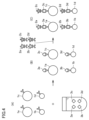
- FIG. 4 is a diagram illustrating a method for binding particles, biomarkers, and labels.
- a user prepares a sample containing biomolecules called biomarkers to be measured.
- the sample is, for example, a biological specimen such as urine or blood of a subject.
- the sample may be appropriately prepared and/or purified in advance.
- the sample is contained in a container commonly used in biological sample preparation, such as a microtube.
- the user mixes particles 1 into the sample.
- a user adds a solution containing a predetermined number of particles 1 belonging to each particle subgroup to a container containing a sample, and mixes the solution to create a mixed solution.
- the particles 1 are manufactured so as to be able to bind to the biomarker 3 to be measured.
- the biomarker 3 to be measured which was included in the sample, binds to the corresponding particle 1.
- the number of particles 1 is mixed to be sufficiently greater than the number of biomarkers 3 such that substantially all of the biomarkers 3 to be measured can bind to particles 1 .
- the biomarker 3 to be measured exists in the state of a biomarker complex in the mixed solution.
- the user further mixes label 2 into the mixed solution.
- the label 2 specifically binds to the biomarker 3 forming the biomarker complex.
- the number of labels 2 is mixed to be sufficiently greater than the number of biomarkers 3 so that substantially all of the biomarkers 3 to be measured are labeled.
- the biomarker 3 to be measured exists in the state of a labeled complex in the mixed solution.
- biomarker 3 a substance that specifically binds to the substance to be measured (biomarker 3 in this case) (here, the first binding part 12 of the particle 1 and the second binding part of the label 2) 22)
- a labeling method that is sandwiched between two methods is generally called a sandwich method.
- sandwich method multiple types of biomarkers 3 can be specifically labeled simultaneously in one step by simply adding multiple types of labels 2 corresponding to multiple types of biomarkers 3. can.
- the labeling complex By injecting the mixed solution prepared as described above into the measuring device 5, the labeling complex can be separated by particle size in the separating section 8, and the labeling characteristics can be detected in the detecting section 9.
- the mixed solution also contains a biomarker that is not the target of measurement in a free state, but since it is smaller in size than the labeled complex with the smallest particle size, it is separated from the labeled complex that is the target of measurement in the separation section 8. be done. This does not affect the detection results of the labeled complex.
- the mixed solution also contains particles 1 to which the biomarker 3 to be measured and the label 2 are not bound, but are not detected by the detection unit 9 because they are not labeled. Therefore, it does not affect the detection results of the labeled complex.
- FIG. 5 is a diagram showing the separation results based on particle size.
- the horizontal axis in FIG. 5 shows the elution time.
- the elution time is the time from when the mixed solution is injected into the sample injection section 72 until a predetermined component is detected.
- the vertical axis is a diagram showing baseline-corrected absorbance. Referring to FIG. 5, particles 1 with diameters of 7 nm, 10 nm, 15 nm, 45 nm, 75 nm, and 110 nm can be detected with almost no overlap in elution time. That is, label complexes can be separated based on particle size.
- FIG. 6 is a diagram showing the detection results of label characteristics.
- the horizontal axis indicates wavelength
- the vertical axis indicates fluorescence intensity.
- three fluorescence spectra can be detected in a form that can be distinguished from each other. That is, the labeled complex can be separated based on the fluorescence spectrum, which is the labeling characteristic.
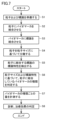
- FIG. 7 is a flowchart showing the measurement process according to this embodiment. The steps shown in FIG. 7 are performed using measurement system 100.
- S is used as an abbreviation of "STEP".
- the user prepares particles 1 belonging to the first particle group and particles 1 belonging to the second particle group.
- the user also prepares a marker 2 belonging to a first marker group corresponding to the first particle group and a marker 2 belonging to a second marker group corresponding to the second particle group.
- the user mixes the sample, particles 1 of the first particle group, and particles 1 of the second particle group using the preprocessing section 71, thereby forming particles 1 of the first particle group and particles 1 of the second particle group.
- Biomarker 3 is specifically bound to particle 1 of the particle group.
- the user uses the preprocessing unit 71 to mix the mixed solution prepared in S2, the label 2 of the first label group, and the label 2 of the second label group, thereby adding the first label to the biomarker 3. Labels 2 of one label group and labels 2 of a second label group are specifically bound.
- the processor 40 separates each of the particles 1 of the first particle group and the particles 1 of the second particle group based on particle size.
- the processor 40 introduces the mixed solution injected from the injection part 72 into the separation part 8, and the separation part 8 separates the labeled complex and the particle 1 in the mixed solution based on the particle size. do.
- the separation section 8 is a centrifugal FFF, molecules with smaller particle sizes flow out first.
- the particle 1 alone or the label complex containing the particle 1 with the smallest particle size the particle 1 alone or the label containing the second smallest particle 1
- the particles are fractionated according to the particle size, such as a complex, a single particle 1 containing particle 1 having the third smallest particle size, or a labeled complex.
- S2 and S3 may be performed by the processor 40 controlling a device (for example, an automatic preprocessing device) that performs the same process as the operation by the user. Further, S2 and S3 may be performed in the opposite order or may be performed simultaneously. Specifically, the sample and the label 2 are first mixed to bond the biomarker 3 and the label 2, and then the particles 1 are further mixed, so that the particle 1 is bonded to the biomarker 3. Good too. Alternatively, the particles 1 and the label 2 may be bonded to the biomarker 3 in one step by mixing the sample, the particles 1, and the label 2 at the same time.
- a device for example, an automatic preprocessing device
- the processor 40 detects the label characteristics of the label 2 that binds to each of the particles 1 of the first particle group and the particles 1 of the second particle group via the biomarker 3, which are separated based on particle size. For example, when the detection unit 9 is a plurality of fluorescence detectors or a multi-wavelength fluorescence detector, the processor 40 irradiates the particles 1 with excitation light and detects the intensity of the generated fluorescence.
- the processor 40 determines the type of biomarker 3 bound to each of the particles 1 of the first particle group and the particles 1 of the second particle group based on the particle size and label characteristics.
- the processor 40 measures the amount of each type of biomarker 3 based on the result of determining the type of biomarker 3.
- the amount of each type of biomarker 3 is, for example, the concentration or number of each biomarker 3 in the sample.
- the processor 40 determines the type of biomarker 3 corresponding to the label 2 that has emitted fluorescence based on the fluorescence intensity, and measures the amount of each type of biomarker 3.
- the processor 40 determines the label 2 corresponding to the fluorescence intensity, and determines the label 2 corresponding to the fluorescence intensity.
- the type of marker 3 is determined.
- the number of determined biomarkers 3 is added up. Thereby, "the number of biomarkers 3 contained in the labeled complex in the mixed solution" can be determined.
- the number of particles 1 and the number of labels 2 are adjusted to be sufficient to bring all the biomarkers 3 in the mixed solution into a labeled complex.
- the processor 40 determines the number of biomarkers 3 contained in the sample based on the number of biomarkers 3 contained in the sample and the total amount of the sample before preparing the mixed solution. "concentration" can be determined.
- the processor 40 determines how many labels 2 have which label characteristics (for example, fluorescence intensity for a predetermined wavelength) from the collection of fluorescence spectra of the multiple particles. Calculate whether each is included. As a more specific example, the processor 40 determines the fluorescence intensity or peak area for a predetermined wavelength of the fluorescence spectrum of the plurality of particles, and then determines the type and number of the biomarkers 3 corresponding to the label 2. .
- label characteristics for example, fluorescence intensity for a predetermined wavelength
- the detection unit 9 may output a collection of fluorescence spectra of multiple particles by adding up the detection results within a predetermined range.
- the processor 40 performs the same processing as when detecting the fluorescence of multiple particles at the same time.
- the predetermined range is, for example, a range in which the particle sizes are equivalent.
- the range in which the particle sizes are equivalent is defined in advance based on, for example, the time from the start of the separation process in the separation unit 8.
- the user diagnoses the disease and/or determines the therapeutic effect based on the amount of each type of biomarker 3. For example, based on a combination of the amounts of multiple types of biomarkers 3 that are considered to be related to a given disease and the effectiveness of the treatment, the presence or absence of the disease, the degree of the disease, the speed of progression of the disease, the effectiveness of the treatment, etc. are determined. do. Note that by storing combinations of amounts of the plurality of types of biomarkers 3 in the memory 41, the processor 40 may automate processing equivalent to the diagnosis performed by the user.
- the measurement method according to the present embodiment it is possible to distinguish and detect many types of biomarkers 3 using a combination of particles 1 with different particle sizes and labels 2 with different label characteristics. Thereby, many types of biomarkers 3 can be measured at once. Furthermore, a disease can be diagnosed or a therapeutic effect can be determined based on the amount of each type of biomarker measured at one time. That is, diagnosis based on multiple types of biomarkers can be easily performed.
- the above has shown a configuration in which the type of the biomarker 3 is determined using the particle size and label characteristics, it is of course possible to determine the biomarker 3 using only the particle size. For example, by using only the first particle group and first label group in FIG. 3, it is possible to determine the type of biomarker 3 corresponding to each subgroup of the first particle group. In this case, the number of types of biomarkers 3 corresponding to the number of particle sizes can be determined. In this way, it is possible to provide a technique for measuring multiple types of biomolecules at once based on differences in particle size.
- the measurement method according to Modification 1 includes a process of correcting a detected value obtained by a process of detecting a marker characteristic.
- a detected value before correction and a detected value after correction they are referred to as a detected value before correction and a detected value after correction, respectively.
- FIG. 8 is a flowchart showing measurement processing according to Modification 1. The steps shown in FIG. 8 are performed using measurement system 100.
- S51 and S52 are performed instead of S5 in FIG. S1 to S4 and S6 to S8 in FIG. 8 correspond to S1 to S4 and S6 to S8 in FIG. 7, respectively.
- descriptions of steps that overlap those in FIG. 7 will not be repeated.
- the processor 40 detects the label characteristics of the label 2 that binds to the particle 1, and obtains a pre-correction detection value.
- the processor 40 corrects the uncorrected detected value to obtain a corrected detected value.
- a correction method using first correction particles and a correction method using second correction particles will be described.
- first correction particles having a size corresponding to the particle size of each of the plurality of particle subgroups of each particle group are prepared.
- the label portion 21 is not bonded to the first correction particle.
- the first correction particle is a particle that affects the detected value in the same way as particle 1, and is typically an object equivalent to particle 1.
- An object equivalent to particle 1 is, for example, an object having the same size, composition, and structure.
- the first correction particle includes the particle body 11, which is a part that is considered to have a relatively large influence on the detected value of the label characteristic next to the label part 21.
- the first correction particle may further include a first binding portion 12 that is considered to have a relatively small effect on the detected value of the label property. This allows for more accurate correction.
- the label property is fluorescence intensity, and in this case, scattered light on the surface of the particle body 11 may affect the detected value of the label property. More specifically, the effect of scattered light occurs as a peak area due to scattered light.
- the labeling characteristics of the first correction particles "in a state where the labeling portion 21 is not bound" are detected.
- each of the biomarker 3 and the second binding portion 22, which are portions that are considered to have a relatively small influence on the detected value of the labeling property, may be bonded. This makes it possible to perform more accurate correction that takes into account the effects of the biomarker 3 and the second coupling portion 22.
- the first correction particles are measured in the same manner as the mixed sample containing the labeled complex to be measured. Specifically, the first correction particles are introduced from the injection part 72, separated according to their size in the separation part 8, and then their label characteristics are detected in the detection part 9.
- the detected value before correction of the labeling characteristics of the labeling part 21 that binds to particle 1 of the first particle group and particle 1 of the second particle group is calculated from the detection value of the labeling characteristic of the first correction particle. By correcting based on the detected value, a corrected detected value is obtained.
- FIG. 9 is a diagram illustrating a specific example of correction using the first correction particles.
- the label property is fluorescence intensity.
- the graph in FIG. 9 represents the detected intensity of a predetermined fluorescence wavelength depending on the elution time.
- the horizontal axis of the graph in FIG. 9 indicates the elapsed time after injection from the injection part 72. That is, the horizontal axis correlates with particle size.
- the vertical axis is the fluorescence intensity for a predetermined fluorescence wavelength ⁇ a. More specifically, it is the fluorescence intensity at a fluorescence wavelength that characterizes the fluorescence spectrum of the labeled portion 21a of the particles 1a, 1b to be measured.
- the fluorescence wavelength that characterizes the fluorescence spectrum of the marker 21a is, for example, a fluorescence wavelength that corresponds to the peak of the fluorescence spectrum of the marker 21a and is almost undetectable in the fluorescence spectra of the marker 21 of other particles.
- a peak with a peak area Sar is detected corresponding to the first correction particle 1ar in which the labeled part 21 is not bound, and the first correction particle 1br in which the labeled part 21 is not bound.
- a peak with a peak area Sbr is detected corresponding to .
- the first correction particles 1ar are objects equivalent to the particles 1a.
- the first correction particle 1br is an object equivalent to the particle 1b.
- the peak areas Sar and Sbr correspond to the background.
- the detection results of the labeling characteristics for the labeled complex containing the labeled portion 21a and the particle 1a and the labeled complex containing the labeled portion 21a and the particle 1b are shown as a peak with a peak area Sa and a peak with a peak area Sb. ing.
- the peak area Sa and the peak area Sb correspond to an example of a "pre-correction detection value".
- a correction is performed by subtracting each of the detection value of the first correction particle 1ar and the detection value of the first correction particle 1br from such a pre-correction detection value.
- the peak area Sax and the peak area Sbx correspond to an example of a "corrected detection value".
- the influence of scattered light on the surface of the particle body 11 can be removed.
- a component that correlates with the number of detected marker portions 21a remains. This improves the accuracy of quantifying the number of detected labeled portions 21a based on the corrected peak area.
- the post-correction detection value is mainly caused by the label characteristics of the label portion 21.
- the number of each type of biomarker 3 can be determined more accurately based on the corrected detection value. Therefore, the accuracy of quantifying the biomarker 3 in the measurement method according to the present embodiment is improved.
- the first correction particles are of the same particle size as the particle 1 to be measured, the number of particle sizes to be measured is not reduced. As a result, the background can be corrected while maximizing the number of distinguishable biomarker types.
- first, second correction particles having particle sizes different from those of each of the plurality of particle subgroups of each particle group are prepared.
- the label portion 21 is not bonded to the second correction particle.
- the second correction particles include particle bodies 11 of different sizes from the particle bodies 11 of each of the plurality of particle subgroups of each particle group.
- the label characteristics of the second correction particle in a state where the label part 21 is not bound are detected.
- the second correction particles are introduced from the injection part 72 after being mixed with a mixed sample containing a labeled complex containing the particles 1 to be measured. Thereafter, the second correction particles and the labeled complex to be measured are classified by the separating section 8, and then the labeling characteristics are detected by the detecting section 9. Thereby, the detected value of the second correction particle and the uncorrected detected value of the labeled complex to be measured can be obtained at the same time.
- the pre-correction detection values of the label properties of the label portions 21 to be bound are converted to the detection values of the label properties of the second correction particles.
- a corrected detection value is obtained by correcting based on .
- FIG. 10 is a diagram illustrating a specific example of correction using second correction particles.
- the label property is fluorescence intensity.
- the horizontal axis of the graph in FIG. 10 indicates the elapsed time after injection from the injection part 72. Thereby, the horizontal axis correlates to particle size.
- the vertical axis is the fluorescence intensity at a predetermined wavelength. More specifically, the vertical axis of the upper graph in FIG. 10 is the fluorescence intensity at the fluorescence wavelength ⁇ a that characterizes the fluorescence spectrum of the label portion 21a of the particles 1a and 1b.
- the vertical axis of the lower graph in FIG. 10 is the fluorescence intensity at the fluorescence wavelength ⁇ c that characterizes the fluorescence spectrum of the label portion 21c of the particles 1c and 1d.
- FIG. 10 shows the results measured after the second correction particles 1r were simultaneously injected into the measuring device 5 in addition to the labeled complexes containing the particles 1a to 1d to be measured.
- a peak with a peak area Sr1 is detected corresponding to the second correction particle 1r.
- the detection results of the labeling characteristics for the labeled complex containing the labeled portion 21a and the particle 1a and the labeled complex containing the labeled portion 21a and the particle 1b are shown as a peak with a peak area Sa and a peak with a peak area Sb. ing.
- a peak with a peak area Sr2 is detected corresponding to the second correction particle 1r.
- the detection results of the label characteristics for the labeled complex containing the labeled portion 21c and the particle 1c and the labeled complex containing the labeled portion 21c and the particle 1d are shown as a peak with a peak area Sc and a peak with a peak area Sd. ing.
- the peak areas Sa to Sd correspond to an example of a "pre-correction detection value".
- Such pre-correction detection values are corrected using correction coefficients Ka to Kd calculated based on the peak areas Sr1 and Sr2 of the second correction particles 1r.
- the correction coefficients Ka and Kb are numbers indicating how much the peak areas of the particle bodies 11a and 11b change with respect to the peak area Sr1 of the second correction particles.
- the correction coefficients Kc and Kd are numbers indicating how much the peak areas of the particle bodies 11a and 11b change with respect to the peak area Sr2 of the second correction particles.
- the correction coefficients Ka to Kd are calculated using a Mie scattering model or a Rayleigh scattering model.
- the unlabeled particles 1 may be measured in advance, and values determined based on the detected values in the measurement may be used. Thereby, using the peak area of the second correction particles 1r, it is possible to calculate the influence on the peak area due to measurement particles having a different particle size from the second correction particles 1r.
- the influence of scattered light (background) on the surface of the particle main body 11 of a predetermined size is calculated based on the peak area of the second correction particle serving as an internal standard.
- the corrected detection value is mainly caused by the label characteristics of the label part.
- the above correction can be performed regardless of whether the peaks in FIGS. 9 and 10 are the result of detection of the sum of the label properties of multiple particles or the detection result of the label properties of a single particle. can.
- the label complexes can be distinguished and the biomarkers 3 can be determined based on the particle size and the labeling characteristics of the label 2.
- the particles themselves can have characteristics (particle characteristics), it is also possible to distinguish between labeled complexes and determine the biomarker 3 according to the particle size and particle characteristics.
- FIG. 11 is a diagram illustrating the structures of particles and labels according to Modification 2.
- Particles and labels according to Modification 2 have different characteristics from particles 1 and labels 2 according to the embodiment and Modification 1, so in Modification 2 they are referred to as particles 1z and labels 2z.
- FIG. 11 only the parts that are different from FIG. 2, which describes the structures of particles and labels according to the embodiment, will be explained.
- the particle 1z includes a particle main body 11z and a first binding portion 12z that specifically binds to the biomarker 3.
- the particle main body 11z has particle characteristics.
- the particle characteristics are not particularly limited as long as the particle characteristics allow the type of particle 1z corresponding to the type of biomarker 3 to be distinguished.
- the particle characteristic is a pattern of fluorescence spectra.
- the pattern of the fluorescence spectrum is a pattern of fluorescence intensity versus fluorescence wavelength, and more specifically, the shape of a graph of fluorescence intensity versus fluorescence wavelength. Having a common fluorescence spectrum pattern, which is a particle characteristic, means that a fluorescence intensity pattern with respect to wavelength is common, and it is not necessarily necessary that the fluorescence intensity with respect to a specific wavelength is the same.
- the substance forming the outer surface of the particle main body 11z is preferably a colorable substance (for example, silica).
- the particle characteristic may be at least one of a radioactivity spectrum pattern and an absorbance spectrum pattern.
- the type of biomarker 3 is determined based on the difference in these particle characteristics.
- the first bonding portion 12z is bonded to the particle main body 11z.
- the first binding portion 12z is a binding site for specifically binding to a predetermined type of biomarker 3 in the particle 1z.
- the label 2z includes a label portion 21z and a second binding portion 22z that specifically binds to the biomarker 3.
- the labeling part 21z is a part containing a labeling substance for labeling the particle 1z to which the biomarker 3 is bound.
- the labeling substance exhibits predetermined labeling properties.
- the label portion 21z of the label 2z only needs to indicate that the particle 1z is bound to the biomarker 3, and does not need to indicate the type of the biomarker 3. Thereby, the label portion 21z may be the same regardless of the type of biomarker 3 to which the label 2z including the label portion 21z is bound.
- the second coupling part 22z is coupled to the marker part 21z.
- the second binding portion 22z is a binding site for specifically binding to a predetermined type of biomarker 3 in the label 2z.
- FIG. 12 is a diagram illustrating particle groups and label groups according to Modification 2.
- Figure 12 shows a set of particles 1az-1dz and labels 2az-2dz that specifically bind to each of the four types of biomarkers 3a-3d.
- FIG. 12 only the parts that are different from FIG. 3, which describes particle groups and label groups according to the embodiment, will be described.
- a "particle group” is a group of particles 1z having specific particle characteristics.
- a third particle group and a fourth particle group are shown.
- the "marker group” is a group of marks 2z corresponding to a predetermined particle group.
- a third label group corresponding to the third particle group and a fourth label group corresponding to the fourth particle group are shown.
- the particles 1z of the third particle group and the label 2z of the third label group are bonded via the biomarker 3.
- the particles 1z of the fourth particle group and the label 2z of the fourth label group are bonded via the biomarker 3.
- particles 1z of the third particle group and the particles 1z of the fourth particle group have different particle properties.
- particles 1az and 1bz of the third particle group include particle bodies 11az and 11bz having common particle characteristics.
- Particles 1cz and 1dz of the fourth particle group include particle bodies 11cz and 11dz that have common particle characteristics.
- Each of the third particle group and the fourth particle group (hereinafter also referred to as "each particle group”) includes a plurality of particle subgroups.
- Each particle subgroup includes particles 1z having a common particle size and particle properties.
- particle subgroup az consists of particles 1az having the same particle size and particle properties.
- the group of markers 2az that corresponds to the particle subgroup az is referred to as a "label subgroup” az.
- the particle subgroup az and the label subgroup az are collectively referred to as a "particle-label subgroup” az.
- the number of particle-label subgroups corresponds to the number of distinguishable biomarker 3 types.
- the first binding portions 12z also differ from each other. Since each label subgroup differs in the type of biomarker 3 to which it binds, the second binding portions 22z also differ from each other. In other words, the particles 1z of each particle subgroup have first binding portions 12z that bind to different types of biomarkers 3. Furthermore, the labels 2z of each label subgroup have second binding portions 22z that bind to different types of biomarkers 3.
- particles 1az to 1dz each include first bonding portions 12az to 12dz.
- markers 2az to 2dz each include second coupling portions 22az to 22dz.
- first bonding portion 12z and the second bonding portion 22z according to the second modification are bonded to the same type of biomarker as the first bonding portion 12 and the second bonding portion 22 according to the embodiment, respectively, they are equivalent to each other.
- It may be a substance.
- the first bonding portions 12az to 12dz and the first bonding portions 12a to 12d of the particle 1 according to the embodiment may be equivalent substances (for example, substances having the same molecular structure).
- the second binding portions 22az to 22dz and the second binding portions 22a to 22d of the label 2 according to the embodiment may be equivalent substances (for example, substances having the same molecular structure).
- the plurality of particle subgroups have different particle sizes.
- the diameter of particle main body 11az of particle 1az of particle subgroup az is larger than the diameter of particle main body 11bz of particle 1bz of particle subgroup bz.
- the diameter of the particle body 11cz of the particle 1cz of the particle subgroup cz is larger than the diameter of the particle body 11dz of the particle 1dz of the particle subgroup dz.
- particle subgroups in each particle group can be distinguished by particle size.
- the diameter of the particle main body 11az and the diameter of the particle main body 11cz are equivalent.
- the diameter of the particle main body 11bz and the diameter of the particle main body 11dz are equivalent.
- the particle-label subgroup cz of the fourth particle group has the same particle size as the particle-label subgroup az, but has different particle characteristics. Thereby, the particle-label subgroup cz and the particle-label subgroup az can be distinguished based on particle characteristics. Further, the particle-label subgroup dz of the fourth particle group has the same particle size as the particle-label subgroup bz, but the particle characteristics are different from each other. Thereby, the particle-label subgroup dz and the particle-label subgroup bz can be distinguished based on particle characteristics.
- particles 1z included in a predetermined particle subgroup can be distinguished from particles 1z included in other particle subgroups based on the particle size and particle characteristics. More specifically, when the predetermined particle subgroup and the other particle subgroup belong to the same particle group, they can be separated by particle size. Further, when the predetermined particle subgroup and the other particle subgroup belong to different particle groups, they can be distinguished based on particle characteristics.
- particles 1z included in a predetermined particle subgroup can be determined based on the particle size and particle characteristics.
- the type of the corresponding biomarker 3 can be determined based on the particle size and particle characteristics.
- the label 2z only needs to indicate that the biomarker 3 is bound to the particle 1z, regardless of the type of the biomarker 3.
- the marker characteristics of the markers 2z in each marker subgroup may be the same. More specifically, the detected value of the label characteristic of the third label group and the detected value of the label characteristic of the fourth label group may be equivalent.
- the marker portion 21az and the marker portion 21cz may be objects that show the same detection value, and more specifically, may be the same object. In this way, by configuring all the marker parts to have the same label characteristics, it is possible to reduce the complexity when preparing the marker parts.
- the detected value of the particle characteristic and the detected value of the label characteristic need to be distinguishable.
- the particle characteristics and the label characteristics may be of the same type and may be configured to be distinguishable from each other.
- the particle characteristics and the label characteristics may be fluorescence spectra that are distinguishable from each other.
- the particle properties and the label properties are different types of properties (eg, fluorescence spectra and absorbance spectra) and may be detected by different detection techniques or detectors. Thereby, based on the detection value of the detection unit 9, it is possible to determine at once whether the biomarker 3 is bound or not and the type of the biomarker 3.
- the fluorescence spectra of each of the particles of the third particle group and the particles of the fourth particle group are configured so as not to overlap with the fluorescence spectra of the labeling characteristics of the labeling portions 21az and 21cz.
- FIG. 13 is a flowchart showing measurement processing according to Modification 2. The steps shown in FIG. 13 are performed using measurement system 100.
- the user prepares particles 1z belonging to the third particle group and particles 1z belonging to the fourth particle group.
- the user also prepares a marker 2z belonging to a third label group corresponding to the third particle group and a marker 2z belonging to a fourth label group corresponding to the fourth particle group.
- the particles belonging to the third particle group and the particles belonging to the fourth particle group have different particle properties.
- the user mixes the sample, the particles 1z of the third particle group, and the particles 1z of the fourth particle group using the preprocessing section 71, thereby forming the particles 1z of the third particle group and the particles 1z of the fourth particle group.
- Biomarker 3 is specifically bound to particle 1z of the particle group.
- the user uses the preprocessing unit 71 to mix the mixed solution prepared in S12, the label 2z of the third label group, and the label 2z of the fourth label group, thereby adding the third label to the biomarker 3.
- Label 2z of the three label groups and label 2z of the fourth label group are specifically bound.
- the processor 40 separates each of the particles 1z of the third particle group and the particles 1z of the fourth particle group based on particle size.
- the processor 40 determines the particle characteristics and the label of the label 2z that binds via the biomarker 3 for each of the particles 1z of the third particle group and the particles 1z of the fourth particle group, which are separated based on particle size. Detect characteristics. For example, when the detection unit 9 is a plurality of fluorescence detectors or a multi-wavelength fluorescence detector, the processor 40 irradiates excitation light and detects a pattern of the generated fluorescence spectrum.
- the processor 40 determines the type of biomarker 3 bound to each of the particles 1z of the third particle group and the particles 1z of the fourth particle group based on the particle size, particle characteristics, and label characteristics.
- the processor 40 determines the type of biomarker 3 bound to each particle 1z based on the pattern of the fluorescence spectrum. More specifically, the processor 40 first determines whether the biomarker 3 is bound to the particle 1z based on the peak corresponding to the label 2z in the pattern of the fluorescence spectrum that is the detected value. Next, the processor 40 determines the type of the particle 1z based on the peaks corresponding to the particle characteristics of each of the particles 1z of the third particle group and the particle 1z of the fourth particle group, and determines the type of the corresponding biomarker 3. judge.
- a measuring method is a method for measuring biomolecules contained in a sample derived from a biological sample, and includes preparing particles belonging to a first particle group and particles belonging to a second particle group. and preparing a label belonging to a first label group corresponding to a first particle group and a label belonging to a second label group corresponding to a second particle group.
- the signs of the first sign group and the signs of the second sign group have different sign characteristics.
- the particles of the first particle group and the labels of the first label group are bonded via biomolecules.
- the particles of the second particle group and the labels of the second label group are bonded via biomolecules.
- Each particle group includes multiple particle subgroups. In each particle group, the plurality of particle subgroups have different particle sizes.
- the particles of the plurality of particle subgroups of the first particle group and the particles of the plurality of particle subgroups of the second particle group have first binding portions that specifically bind to mutually different types of biomolecules.
- the measurement method further includes the step of mixing the sample, the particles of the first particle group, the particles of the second particle group, the labels of the first label group and the labels of the second label group, and the step of mixing the sample, the particles of the first particle group. and specifically binding a biomolecule to the particles of the second particle group, the labels of the first label group, and the labels of the second label group, and each of the particles of the first particle group and the particles of the second particle group. a step of separating the particles based on particle size, and determining the label properties of the label bound to each of the particles of the first particle group and the particles of the second particle group via a biomolecule, separated based on particle size. and determining the type of biomolecule bound to the particles of the first group of particles and the particles of the second group of particles based on the particle size and label properties.
- the measuring method described in Section 1 further includes the step of measuring the amount of each type of biomolecule based on the result of determining the type of biomolecule.
- the measuring method described in Section 2 further includes the step of diagnosing a disease or determining a therapeutic effect based on the amount of each type of biomolecule.
- a disease can be diagnosed or a therapeutic effect can be determined based on the amount of each type of biomolecule obtained by a single measurement. That is, diagnosis based on multiple types of biomolecules can be easily performed.
- the particles of each particle group further include a particle body, and the labels of each label group include a label portion, a biomolecule and a specific particle. and a second coupling portion coupled to the second coupling portion.
- a labeled complex containing particles can be produced via the first binding part and the second binding part. Further, it is possible to distinguish the type of the labeling complex based on the particle size mainly caused by the particle body and the labeling properties of the labeling part. This makes it possible to determine the type of biomolecule to which the labeled complex corresponds.
- the label portion includes at least one of a fluorescent substance, a radioactive isotope, and a substance exhibiting a predetermined absorbance.
- the type of biomolecule can be determined based on the difference in the labeling properties of the labeling substance.
- the biomolecule contains a protein
- the first binding part contains an antibody that binds to the protein
- the second binding part contains the first binding part in the protein. This includes antibodies that bind to a site different from the binding site of the antibody.
- each of the first binding part and the second binding part can bind to a predetermined type of protein, which is a biomolecule, by utilizing the specificity of the antibody. Furthermore, a label can also be bound to the protein while the particle is bound to the protein.
- the biomolecule includes at least one of a nucleic acid and a metabolite.
- the particles of each particle group contain at least one of an inorganic material and a resin material.
- the number of types of biomolecules that can be detected simultaneously can be increased, the accuracy of quantifying biomolecules can be increased, and/or the measurement can be performed relatively easily and with high precision. be able to.
- the inorganic material contains at least one of gold and silica.
- the number of types of biomolecules that can be detected simultaneously can be increased, and/or the accuracy of quantifying biomolecules can be increased.
- the resin material contains polystyrene. According to the measurement method described in Item 10, traceable and highly reliable nanoparticles made of resin materials are commercially available, and measurement can be performed relatively easily and with high precision.
- the step of separating is performed using at least one of the following: centrifugal FFF (Field Flow Fraction) method, AF4 (Asymmetrical Flow Field Flow Fraction) method, and size exclusion chromatography. separating the particles based on particle size using a method.
- centrifugal FFF Field Flow Fraction
- AF4 Asymmetrical Flow Field Flow Fraction
- size exclusion chromatography separating the particles based on particle size using a method.
- the step of detecting the label property uses a plurality of fluorescence detectors or a multi-wavelength fluorescence detector.
- fluorescence can be detected with high sensitivity, thereby improving the measurement accuracy of labeling properties and improving the quantitative accuracy of biomolecules. If a multi-wavelength fluorescence detector is used, the number of detectors can be reduced, so the cost required for the detection section can be reduced.
- the detecting step of the measurement method described in Section 12 includes the step of irradiating particles of each particle group mixed in the carrier with excitation light. Preparing the particles includes providing particles of each particle group and a carrier. The step of preparing particles and carriers for each particle group includes preparing particles and carriers for each particle group in which the difference between the refractive index of the particles of each particle group and the refractive index of the carrier is equal to or less than a predetermined value. including steps to
- the amount of scattered light originating from particles can be kept below a predetermined amount. Therefore, the detection lower limit of fluorescence can be set low, and the detection sensitivity can be improved.
- the step of detecting the label property includes detecting the label properties of the label bound to each of the particles of the first particle group and the particles of the second particle group.
- the method further includes the step of correcting the detected value of the label characteristic.
- the accuracy of quantifying biomolecules in the measurement method is improved.
- the step of correcting includes preparing first correction particles having a size corresponding to the particle size of each of the plurality of particle subgroups of each particle group; For each particle size, detecting the label characteristic of the first correction particle without a label unit bound thereto; and for each particle size, the label bound to the particle of the first particle group and the particle of the second particle group; The method includes the step of correcting the detected value of the labeling property of the first correction particle based on the detected value of the labeling property of the first correction particle.
- the background can be corrected while maximizing the number of types of biomolecules that can be determined.
- the step of detecting the labeling property of the first correction particle includes detecting the biomolecule for each particle size with respect to the first correction particle including the first binding part. and detecting the label property while the second binding portion is bound.
- the step of detecting includes detecting the second correction particle having a particle size different from each particle size of each of the plurality of particle subgroups of each particle group.
- the step of correcting includes the step of detecting the label property in a state where the particles are not bound, and the step of correcting includes detecting the detected value of the label property of the label that is bound to the particles of the first particle group and the particles of the second particle group. and correcting based on the detected value of the labeling property of the particle.
- the accuracy of quantifying biomolecules can be improved without incurring the cost and time of separately measuring the background.
- the step of correcting based on the detected value of the labeling property of the second correction particle binds to particles of the first particle group and particles of the second particle group.
- the method includes a step of correcting the detection result of the label property using a correction coefficient calculated based on the peak area of the label property of the second correction particle.
- the influence on the peak area caused by measurement particles having a different particle size from the second correction particles can be calculated using the peak area of the second correction particles.
- a measurement method is a method for measuring biomolecules contained in a sample derived from a biological sample, in which particles belonging to a third particle group and particles belonging to a fourth particle group are prepared. and preparing a label belonging to a third label group corresponding to the third particle group and a label belonging to a fourth label group corresponding to the fourth particle group.
- the particles belonging to the third particle group and the particles belonging to the fourth particle group have different particle properties.
- the particles of the third particle group and the labels of the third label group are bonded via biomolecules.
- the particles of the fourth particle group and the labels of the fourth label group are bonded via biomolecules.
- Each particle group includes multiple particle subgroups. In each particle group, the plurality of particle subgroups have different particle sizes.
- the particles of the plurality of particle subgroups of the third particle group and the particles of the plurality of particle subgroups of the fourth particle group have third binding portions that specifically bind to mutually different types of biomolecules.
- the measurement method further includes the step of mixing the sample, the particles of the third particle group, the particles of the fourth particle group, the labels of the third label group, and the labels of the fourth label group, and the particles of the third particle group. and a step of specifically binding a biomolecule to the particle of the fourth particle group, the label of the third label group, and the label of the fourth label group, and each of the particles of the third particle group and the particle of the fourth particle group. for each of the particles of the third particle group and the particles of the fourth particle group separated based on the particle size, and a step of separating the particles based on the particle size, and determining the particle properties and the particles that are bonded via the biomolecule. and determining the types of biomolecules bound to the particles of the third particle group and the particles of the fourth particle group based on the particle size, the particle properties, and the label properties of the label. Equipped with.
- the particle characteristics include at least one of a fluorescence spectrum pattern, a radioactivity spectrum pattern, and an absorbance spectrum pattern.
- the type of biomolecule can be determined based on the difference in these particle characteristics.
- the presence or absence of binding of biomolecules and the type of biomolecule can be determined at the same time based on the detection value of the detection unit.
- a measuring method is a method for measuring biomolecules contained in a sample derived from a biological sample, which includes the step of preparing particles belonging to a first particle group; and preparing signs belonging to the corresponding first sign group.
- the particles of the first particle group and the labels of the first label group are bonded via biomolecules.
- the first particle group includes multiple particle subgroups.
- the plurality of particle subgroups have different particle sizes.
- Particles of the plurality of particle subgroups of the first particle group have first binding portions that specifically bind to mutually different types of biomolecules.
- the measurement method further includes mixing the sample with the particles of the first particle group and the label of the first label group to specifically infuse the biomolecules with the particles of the first particle group and the label of the first label group. a step of separating each of the particles of the first particle group based on particle size; and a step of bonding to each of the particles of the first particle group separated based on particle size via a biomolecule. and determining the type of biomolecule bound to the particles of the first particle group based on the particle size and the label properties.
- particles of different particle sizes can be bound to each of multiple types of biomolecules contained in a sample, and based on the difference in particle size, multiple types of biomolecules can be bonded to each other. It is possible to provide a technique for measuring molecules at once.
Landscapes
- Health & Medical Sciences (AREA)
- Life Sciences & Earth Sciences (AREA)
- Immunology (AREA)
- Engineering & Computer Science (AREA)
- Chemical & Material Sciences (AREA)
- Molecular Biology (AREA)
- Biomedical Technology (AREA)
- Urology & Nephrology (AREA)
- Hematology (AREA)
- Physics & Mathematics (AREA)
- General Physics & Mathematics (AREA)
- General Health & Medical Sciences (AREA)
- Pathology (AREA)
- Analytical Chemistry (AREA)
- Biochemistry (AREA)
- Food Science & Technology (AREA)
- Medicinal Chemistry (AREA)
- Cell Biology (AREA)
- Biotechnology (AREA)
- Microbiology (AREA)
- Inorganic Chemistry (AREA)
- Tropical Medicine & Parasitology (AREA)
- Dispersion Chemistry (AREA)
- Biophysics (AREA)
- Investigating, Analyzing Materials By Fluorescence Or Luminescence (AREA)
- Investigating Or Analysing Biological Materials (AREA)
Priority Applications (3)
| Application Number | Priority Date | Filing Date | Title |
|---|---|---|---|
| JP2024540350A JPWO2024034371A1 (https=) | 2022-08-10 | 2023-07-24 | |
| US19/102,773 US20250389723A1 (en) | 2022-08-10 | 2023-07-24 | Measurement Method |
| CN202380058304.0A CN119678042A (zh) | 2022-08-10 | 2023-07-24 | 测定方法 |
Applications Claiming Priority (4)
| Application Number | Priority Date | Filing Date | Title |
|---|---|---|---|
| JP2022127552 | 2022-08-10 | ||
| JP2022-127552 | 2022-08-10 | ||
| JP2022-137093 | 2022-08-30 | ||
| JP2022137093 | 2022-08-30 |
Publications (1)
| Publication Number | Publication Date |
|---|---|
| WO2024034371A1 true WO2024034371A1 (ja) | 2024-02-15 |
Family
ID=89851477
Family Applications (1)
| Application Number | Title | Priority Date | Filing Date |
|---|---|---|---|
| PCT/JP2023/026962 Ceased WO2024034371A1 (ja) | 2022-08-10 | 2023-07-24 | 測定方法 |
Country Status (4)
| Country | Link |
|---|---|
| US (1) | US20250389723A1 (https=) |
| JP (1) | JPWO2024034371A1 (https=) |
| CN (1) | CN119678042A (https=) |
| WO (1) | WO2024034371A1 (https=) |
Cited By (1)
| Publication number | Priority date | Publication date | Assignee | Title |
|---|---|---|---|---|
| JP2025172705A (ja) * | 2024-05-13 | 2025-11-26 | 国立医薬品食品衛生研究所長 | 遠心フィールドフローフラクショネーションを使用する粒子の検出方法 |
Citations (4)
| Publication number | Priority date | Publication date | Assignee | Title |
|---|---|---|---|---|
| JP2009014730A (ja) * | 2006-02-24 | 2009-01-22 | Furukawa Electric Co Ltd:The | フローサイトメトリーによる生体分子の定量又は細胞の検出・分取に用いる蛍光シリカ粒子、及び複数個の蛍光シリカ粒子を組み合わせたキット |
| JP2011169878A (ja) * | 2010-01-22 | 2011-09-01 | Kyushu Univ | 核酸検出用キット |
| WO2021087006A1 (en) * | 2019-10-28 | 2021-05-06 | Genotix Biotechnologies Inc. | Analyte detection and quantification by discrete enumeration of particle complexes |
| JP2021169055A (ja) * | 2020-04-14 | 2021-10-28 | 株式会社島津製作所 | 遠心式流動場分画システム |
-
2023
- 2023-07-24 JP JP2024540350A patent/JPWO2024034371A1/ja active Pending
- 2023-07-24 WO PCT/JP2023/026962 patent/WO2024034371A1/ja not_active Ceased
- 2023-07-24 CN CN202380058304.0A patent/CN119678042A/zh active Pending
- 2023-07-24 US US19/102,773 patent/US20250389723A1/en active Pending
Patent Citations (5)
| Publication number | Priority date | Publication date | Assignee | Title |
|---|---|---|---|---|
| JP2009014730A (ja) * | 2006-02-24 | 2009-01-22 | Furukawa Electric Co Ltd:The | フローサイトメトリーによる生体分子の定量又は細胞の検出・分取に用いる蛍光シリカ粒子、及び複数個の蛍光シリカ粒子を組み合わせたキット |
| JP2009014729A (ja) * | 2006-02-24 | 2009-01-22 | Furukawa Electric Co Ltd:The | フローサイトメトリーによる細胞の検出・分取システム、及び検出・分取方法 |
| JP2011169878A (ja) * | 2010-01-22 | 2011-09-01 | Kyushu Univ | 核酸検出用キット |
| WO2021087006A1 (en) * | 2019-10-28 | 2021-05-06 | Genotix Biotechnologies Inc. | Analyte detection and quantification by discrete enumeration of particle complexes |
| JP2021169055A (ja) * | 2020-04-14 | 2021-10-28 | 株式会社島津製作所 | 遠心式流動場分画システム |
Cited By (2)
| Publication number | Priority date | Publication date | Assignee | Title |
|---|---|---|---|---|
| JP2025172705A (ja) * | 2024-05-13 | 2025-11-26 | 国立医薬品食品衛生研究所長 | 遠心フィールドフローフラクショネーションを使用する粒子の検出方法 |
| JP7808920B2 (ja) | 2024-05-13 | 2026-01-30 | 国立医薬品食品衛生研究所長 | 遠心フィールドフローフラクショネーションを使用する粒子の検出方法 |
Also Published As
| Publication number | Publication date |
|---|---|
| US20250389723A1 (en) | 2025-12-25 |
| JPWO2024034371A1 (https=) | 2024-02-15 |
| CN119678042A (zh) | 2025-03-21 |
Similar Documents
| Publication | Publication Date | Title |
|---|---|---|
| Cretich et al. | Digital detection of biomarkers assisted by nanoparticles: application to diagnostics | |
| Ellington et al. | Antibody-based protein multiplex platforms: technical and operational challenges | |
| US6492125B2 (en) | Method to assess library X library interactions | |
| Kabe et al. | Application of high-performance magnetic nanobeads to biological sensing devices | |
| US20090258373A1 (en) | Methods of controlling the sensitivity and dynamic range of a homogeneous assay | |
| JP4533536B2 (ja) | 複数色の標識 | |
| JP4274944B2 (ja) | ダイナミックレンジが拡張された粒子利用リガンドアッセイ | |
| BR112017005252B1 (pt) | Método para detecção de molécula alvo e kit para utilização no referido método | |
| US20050239076A1 (en) | Analysis system | |
| Svedberg et al. | Towards encoded particles for highly multiplexed colorimetric point of care autoantibody detection | |
| WO2024034371A1 (ja) | 測定方法 | |
| US20220381775A1 (en) | Analyte detection and quantification by discrete enumeration of particle complexes | |
| EP2803998B1 (en) | Method for evaluating system for quantifying cell of interest in blood | |
| JPWO2024034371A5 (https=) | ||
| He et al. | Lab-in-a-Tip: a multiplex immunoassay platform based on a self-assembled barcoded protein array | |
| CN116953251A (zh) | 一种基于流式荧光法的阿尔茨海默症检测试剂盒及其应用 | |
| US20090029347A1 (en) | Method for Identifying Multiple Analytes Using Flow Cytometry | |
| US20050221363A1 (en) | Universal shotgun assay | |
| LU508286B1 (en) | Probe for leukemia detection and design method thereof | |
| JP2005514622A (ja) | 生体サンプルのマルチパラメトリック定量に適用される単独較正システムを得る方法、この目的のために調製された免疫学的試薬、および定量方法 | |
| CN111381029A (zh) | 一种单分子多组分数字免疫分析方法 | |
| JPWO2008007773A1 (ja) | 微粒子の検体検出活性の確認方法 | |
| Nikam et al. | Micro-and nanoscale biosensing technologies for early diagnosis of Parkinson’s disease | |
| WO2024118685A1 (en) | Analyte detection and quantification by discrete enumeration of particle complexes | |
| JP4281999B2 (ja) | 検量線の作成方法並びにそれを利用した未知物質の測定方法 |
Legal Events
| Date | Code | Title | Description |
|---|---|---|---|
| 121 | Ep: the epo has been informed by wipo that ep was designated in this application |
Ref document number: 23852347 Country of ref document: EP Kind code of ref document: A1 |
|
| WWE | Wipo information: entry into national phase |
Ref document number: 2024540350 Country of ref document: JP |
|
| WWE | Wipo information: entry into national phase |
Ref document number: 202380058304.0 Country of ref document: CN |
|
| NENP | Non-entry into the national phase |
Ref country code: DE |
|
| WWP | Wipo information: published in national office |
Ref document number: 202380058304.0 Country of ref document: CN |
|
| 122 | Ep: pct application non-entry in european phase |
Ref document number: 23852347 Country of ref document: EP Kind code of ref document: A1 |