WO2024033970A1 - 圧延ラインの操業支援方法、操業支援装置及び操業支援プログラム - Google Patents
圧延ラインの操業支援方法、操業支援装置及び操業支援プログラム Download PDFInfo
- Publication number
- WO2024033970A1 WO2024033970A1 PCT/JP2022/030275 JP2022030275W WO2024033970A1 WO 2024033970 A1 WO2024033970 A1 WO 2024033970A1 JP 2022030275 W JP2022030275 W JP 2022030275W WO 2024033970 A1 WO2024033970 A1 WO 2024033970A1
- Authority
- WO
- WIPO (PCT)
- Prior art keywords
- data
- product
- rolling line
- operator
- manufacturing
- Prior art date
- Legal status (The legal status is an assumption and is not a legal conclusion. Google has not performed a legal analysis and makes no representation as to the accuracy of the status listed.)
- Ceased
Links
Images





Classifications
-
- B—PERFORMING OPERATIONS; TRANSPORTING
- B21—MECHANICAL METAL-WORKING WITHOUT ESSENTIALLY REMOVING MATERIAL; PUNCHING METAL
- B21B—ROLLING OF METAL
- B21B3/00—Rolling materials of special alloys so far as the composition of the alloy requires or permits special rolling methods or sequences ; Rolling of aluminium, copper, zinc or other non-ferrous metals
-
- B—PERFORMING OPERATIONS; TRANSPORTING
- B21—MECHANICAL METAL-WORKING WITHOUT ESSENTIALLY REMOVING MATERIAL; PUNCHING METAL
- B21B—ROLLING OF METAL
- B21B37/00—Control devices or methods specially adapted for metal-rolling mills or the work produced thereby
Definitions
- the present disclosure relates to a method, device, and program for supporting operations in a rolling line.
- Patent Document 1 discloses an apparatus that generates a distribution schedule including charging of steel billets into a heating furnace and rolling of materials performed in a hot rolling factory.
- This conventional equipment performs simulations in real time using information on the attributes and delivery dates of steel materials that are subject to logistics schedules, in order to optimize logistics schedules over periods of about one day to one week, and predicts future logistics conditions. Predict. Then, according to this future distribution state, a lot organization schedule is created in which the distribution schedule for the cold steel billet lot and the hot billet steel lot lot are combined.
- Patent Document 1 states that the demands for producing cold steel strips tend to be higher than those for hot steel strips, and that rolling of cold steel strips is more difficult than that of hot steel strips and misrolls occur. It says things that are easy to do.
- Patent Document 1 This has not been studied in the prior art. Therefore, technological development from this perspective is desired.
- One objective of the present disclosure is to provide a technique that can provide useful information to operators involved in the manufacturing process of objects manufactured in a rolling line.
- a first aspect of the present disclosure is a method for supporting operations in a rolling line, which has the following characteristics.
- the method includes: A step of acquiring various data related to the rolled products manufactured on the rolling line, the various data including data regarding product specifications of the rolled products, data regarding the quality of the rolled products, and data regarding the quality of the rolled products.
- a second aspect of the present disclosure is a device that supports operations in a rolling line, and has the following features.
- the device includes a storage device storing various data related to rolled products manufactured in the rolling line, and one or more processors.
- the various data include data regarding the product specifications of the rolled product, data regarding the quality of the rolled product, data regarding the operating status of the rolling line during manufacturing of the rolled product, and data regarding the rolling line during manufacturing of the rolled product. and data regarding operator operations on actuators of the line.
- the one or more processors are: A process of calculating, for each product specification, an error occurrence rate that occurs in at least one of the quality of the rolled product, the operating status of the rolling line, and the operator operation, based on the various data; a process of setting a manufacturing difficulty level of the rolled product for each product specification according to the height of the occurrence rate; A process of outputting support data from an operator terminal to support an operator involved in the manufacturing process of the manufacturing target manufactured in the rolling line, the support data having product specifications that are the same as the product specifications of the manufacturing target. processing including data on the manufacturing difficulty of the rolled product, is configured to do so.
- a third aspect of the present disclosure is a program that supports operations in a rolling line, and has the following features.
- the program is A process of acquiring various data related to rolled products manufactured on the rolling line, the various data including data regarding product specifications of the rolled products, data regarding the quality of the rolled products, and data regarding the quality of the rolled products.
- the manufacturing difficulty of a rolled product manufactured on a rolling line is determined by the quality of the rolled product, the operational status of the rolling line during the manufacturing of the rolled product, and the operator operation on the actuator during the manufacturing of the rolled product. It is set for each product specification depending on the high occurrence rate of errors occurring in at least one of them.
- the manufacturing difficulty of a rolled product having the same product specifications as the product specifications of this manufacturing target is also provided as support data for supporting an operator involved in the manufacturing process of a manufacturing target manufactured on a rolling line. degree data is output from the operator terminal.
- a rolled product manufactured on a rolling line means a product that has been manufactured on a rolling line. Therefore, the manufacturing difficulty level of "rolled products manufactured on a rolling line” has already been determined.
- “manufactured objects manufactured on the rolling line” refer to products that have not yet been manufactured on the rolling line, that is, products that will be manufactured on the rolling line from now on, and products that will be manufactured on the rolling line. means a product in the process of being manufactured. Therefore, the manufacturing difficulty level of "manufacturing objects manufactured on rolling lines” has not yet been determined.
- the manufacturing difficulty level of a "rolled product manufactured on a rolling line” that has the same product specifications as the "manufacturing object manufactured on a rolling line” is output from the operator terminal as the above-mentioned support data. Accordingly, it is possible to provide the operator with useful information regarding the manufacturing difficulty level of "the manufacturing object manufactured on the rolling line.”
- FIG. 1 is a diagram illustrating a configuration example of a rolling system to which a rolling line operation support device according to a first embodiment is applied.
- FIG. 2 is a diagram illustrating a configuration example of data related to product specifications.
- FIG. 3 is a diagram showing an example of the structure of data regarding operational status.
- FIG. 3 is a diagram illustrating data related to operator operations.
- FIG. 2 is a diagram illustrating a configuration example of data regarding quality.
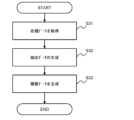
- FIG. 2 is a diagram illustrating an example of data processing performed by a management server (processor) in the first embodiment.
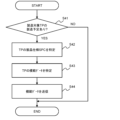
- FIG. 2 is a diagram illustrating an example of data processing performed by a management server (processor) in the first embodiment.
- FIG. 7 is a diagram illustrating an example of data processing performed by a management server (processor) in the second embodiment.
- FIG. 7 is a diagram illustrating an example of data processing performed by a management server (processor) in the second embodiment.
- FIG. 7 is a diagram illustrating an example of data processing performed by a management server (processor) in the second embodiment.
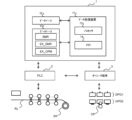
- FIG. 1 is a diagram illustrating a configuration example of a rolling system to which a rolling line operation support device according to the first embodiment is applied.
- the rolling system includes a management server 1, a PLC (Programmable Logic Controller) 2, and an operator terminal 3.
- PLC Programmable Logic Controller
- the management server 1 has a function as an operation support device according to the first embodiment.
- the management server 1 communicates with the PLC 2 and operator terminal 3 via a communication line network.
- the communication network is not particularly limited, and wired and wireless networks can be used.
- Examples of the communication line network include the Internet line, WWW (World Wide Web), telephone line, LAN (Local Area Network), SAN (Storage Area Network), and DTN (Delay Tolerant Network).
- Examples of wireless communication include Wi-Fi (Wireless Fidelity) and Bluetooth (registered trademark).
- the management server 1 includes a data processing device 11 and a database 12.
- Data processing device 11 includes at least one processor 13 and at least one memory 14 .
- the processor 13 includes a CPU (Central Processing Unit).
- the memory 14 is a volatile memory such as a DDR memory, and is used to expand various programs used by the processor 13 and temporarily store various data.
- the various programs used by the processor 13 include the operation support program according to the first embodiment.
- the various data used by the processor 13 include various data stored in the database 12.
- the various data stored in the database 12 include data regarding product specifications SPC of a plurality of rolled products RP manufactured in the rolling line RL.
- the various data also include data regarding the operation status (OPS) of the rolling line RL during the production of these rolled products RP, and operator operations for the actuators of the rolling line RL during the production of these rolled products RP.
- OPS operation status
- QLT quality QLT
- the data regarding the product specification SPC is data included in the manufacturing instruction information (rolling instruction information) that the PLC 2 has.
- the data regarding the operating status OPS is data that the PLC 2 acquires from the rolling line RL. These data are regularly updated via communication with PLC2.
- Data regarding the operator operation OPM is updated regularly through communication with the operator terminal 3. Note that since the data regarding the operator operation OPM is input to the actuator of the rolling line RL, this data may be provided to the management server 1 via the rolling line RL (PLC2).
- the data regarding quality QLT is data on each quality (for example, surface quality and size quality evaluated by plate thickness and plate width) of a plurality of rolled products RP.
- the data regarding quality QLT is updated by the management server 1 regularly acquiring inspection data performed after manufacturing these rolled products RP.
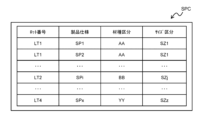
- FIG. 2 is a diagram showing an example of the structure of data regarding the product specification SPC.
- data on product specifications (SP1 to SNx) of a plurality of rolled products RP is combined with data on lot numbers (LT1 to LT4).
- the lot number is set for each RP of 100 to 200 rolled products.
- the example shown in FIG. 2 is an example of a data structure when focusing on the rolling history of one day, and four lots are rolled in this one day. Note that the period of interest in the rolling history is not particularly limited, and for example, attention may be focused on one week's rolling history or January's rolling history may be focused on.
- Product specifications are divided into x groups (x>i>2).
- the product specifications of SP1 to SPx are specified, for example, by a combination of material classifications (AA to YY) and size classifications (SZ1 to SZz).
- the material classifications AA to YY are determined with reference to, for example, the JIS standard or the DIN standard.
- the size classifications SZ1 to SZz (z>j>2) are determined, for example, based on the combination of the plate thickness and plate width of the rolled product RP.
- product specifications are specified by a combination of grade classification and size classification, but this combination is further combined with classification of other elements such as temperature classification and rolling method classification. Good too.
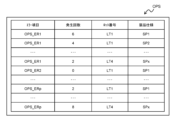
- FIG. 3 is a diagram showing an example of the structure of data regarding the operating status OPS.
- data on operation error items (OPS_ER1 to OPS_ERp) of a plurality of rolled products RP and the number of occurrences thereof are combined with data on lot numbers and product specifications.
- the history period of the data regarding the operating status OPS is the same period as that of the data regarding the product specification SPC explained in FIG. 2 (for example, one day).
- the operation error items OPS_ER1 to OPS_ERp (p>2) are set corresponding to events that lead to stopping the normal operation of the rolling line RL. Examples of such events include material breakage during rolling, biting failure, and tail end throttling.
- FIG. 4 is a diagram illustrating data related to operator operation OPM.
- the operator OP in charge of the manufacturing process in the rolling line RL monitors various information output to the HMI of the operator terminal 3 (for example, the display groups DPG1 and DPG2 shown in FIG. 1). If it is determined that it is necessary to participate in this manufacturing process, the operator OP operates the input device of the operator terminal 3 to send various operation commands to the actuator.
- the actuator here include a hydraulic cylinder that controls the roll gap, a drive motor that controls the roll speed, and a water pump that controls the cooling water.
- FIG. 4 shows an example of the transition of time-series data ACT of operation commands transmitted from the operator terminal 3 to the actuator.
- Data regarding operator operation OPM is generated based on the results of analysis processing on this time series data. Note that the analysis process and the data generation process regarding the operator operation OPM are performed by the management server 1 (for example, the processor 13).
- the data ACT changes. If the data ACT acquired during the manufacturing of a certain rolled product RP changes many times, the operator OP has recognized some kind of risk that will affect the manufacturing process of this rolled product RP, or some trouble has already occurred in the manufacturing process. It is assumed that this occurred during the process. Further, recognition of such risks and occurrence of troubles can also be estimated when the rate of change dACT/dt of data ACT is large.
- error data data indicating that an error has occurred
- error data is added.
- error data is provided when the rate of change dACT/dt exceeds the upper limit rate.
- the error data is assigned to a combination of the lot number and product specification data of the rolled product RP.
- the error data may be data specifying the type of actuator. If there are multiple actuators of the same type, the error data may be data that identifies the actuators.
- FIG. 5 is a diagram showing an example of the structure of data related to quality QLT.
- data on quality error items (QLT_ER1 to QLT_ERq) of multiple rolled products RP and their occurrence (present: 0, absent: 1) are combined with lot number and product specification data. ing.
- the history period of the data related to the quality QLT is the same period as that of the data related to the product specification SPC explained in FIG. 2 (for example, one day).
- the quality error items QLT_ER1 to QLT_ERq (q>2) are set corresponding to quality standards set in advance. Examples of quality standards include standards related to surface quality and standards related to size quality evaluated by plate thickness and plate width.
- This processing includes (i) a calculation process of the error occurrence rate ⁇ in the rolled product RP, (ii) a process of setting the manufacturing difficulty level DLv of the rolled product RP, (iii) a process of transmitting the manufacturing difficulty level DLv, is included.
- the calculation process of the occurrence rate ⁇ is performed for at least one of the errors that occur in the operational status of the rolled product RP, the error that occurs in the operator operation of the actuator, and the error that occurs in the quality of the rolled product RP. be exposed.
- the error occurrence rate ⁇ _OPS in the operational status can be expressed as the ratio of the number of occurrences of operational error items N_Eops included in the data regarding the operational status OPS to the number of manufactured rolled products RP N_RP.
- the occurrence rate ⁇ _OPM of errors in operator operations can be expressed as the ratio of the number N_Eopm of error data added to data related to operator operation OPM to the number N_RP of manufactured rolled products RP.
- the quality error occurrence rate ⁇ _QLT can be expressed as the ratio of the number of occurrences of quality error items N_Eqlt included in the data regarding quality QLT to the number of manufactured rolled products RP N_RP. Note that the manufacturing number N_RP can be ascertained from the manufacturing command information.
- the occurrence rates ⁇ _OPS, ⁇ _OPM, and ⁇ _QLT are each calculated for each product specification SPC of the rolled product RP.
- the occurrence rate ⁇ _OPS calculated for each product specification SPC of the rolled product RP will be referred to as the "occurrence rate ⁇ _OPS (SP).”
- the occurrence rate ⁇ _OPM calculated for each product specification SPC of the rolled product RP is referred to as the “occurrence rate ⁇ _OPM(SP)”
- the occurrence rate ⁇ _QLT calculated for each product specification SPC of the rolled product RP is referred to as the “occurrence rate ⁇ _QLT(SP)”.
- SP the incidence rates ⁇ _OPS(SP), ⁇ _OPM(SP), and ⁇ _QLT(SP) are not specified, they are collectively referred to as the "occurrence rate ⁇ (SP).”
- the manufacturing difficulty level DLv setting process is performed based on at least one of the occurrence rates ⁇ _OPS (SP), ⁇ _OPM (SP), and ⁇ _QLT (SP) calculated in the (i) occurrence rate ⁇ calculation process. .
- the manufacturing difficulty level DLV is calculated for each product specification SPC of the rolled product RP.
- the manufacturing difficulty DLV calculated for each product specification SPC of the rolled product RP will be referred to as "manufacturing difficulty DLV (SP)."
- the manufacturing difficulty level DLV (SP) is determined by dividing the occurrence rate ⁇ (SP) into two or more stages using one or more preset boundary values, such as "DLV: LV1," "DLv: LV2," and "DLv:
- the manufacturing difficulty level DLv(SP) can be set according to the numerical range to which the occurrence rate ⁇ (SP) belongs, such as "LV3".
- the numerical value of the occurrence rate ⁇ (SP) may be directly set as the manufacturing difficulty level DLv(SP).
- CDLv (SP) A manufacturing difficulty level (hereinafter also referred to as “total difficulty level”) CDLv (SP) may be calculated.
- CDLv(SP) ⁇ _OPS(SP) ⁇ ops+ ⁇ _OPM(SP) ⁇ opm+ ⁇ _QLT(SP) ⁇ qlt...(1)
- the weighting coefficient ⁇ indicates the relative weight of two or more occurrence rates ⁇ (SP) used in calculating the overall difficulty level CDLv, and the calculation elements of these incidence rates ⁇ (SP) (i.e. , error element).
- the weighting coefficient ops of an error in the operational status when a delay occurs in the manufacturing process due to the occurrence of this error, this delay time may be measured. Then, depending on the length of this delay time, the relative value of the weighting coefficient ⁇ opm with respect to the error weighting coefficient ⁇ opm in operator OP operation and the error weighting coefficient ⁇ qlt in quality may be adjusted. Alternatively, if the production volume decreases due to the occurrence of an error in the operating conditions, the relative value of the weighting coefficient ⁇ opm may be adjusted by measuring the amount of decrease.
- the process of transmitting the manufacturing difficulty level DLv is a process of transmitting the data of the manufacturing difficulty level DLv set in the (ii) manufacturing difficulty level DLv setting process to the operator terminal 3.
- PLC2 is a computer that performs various setting calculations in the rolling line RL.
- the PLC 2 communicates with control devices for various actuators provided on the rolling line RL and various sensors provided on the rolling line RL. For example, control commands calculated based on setting calculations and operation commands received from the operator terminal 3 are transmitted from the PLC 2 to the control device. Data regarding the state of the actuator is transmitted from the control device to the PLC 2.
- Various sensors include a thermometer that measures the temperature of the intermediate product (hereinafter also referred to as "rolled material MR"), a plate thickness gauge that measures the thickness of the rolled material MR, and a load that measures the load of the rolling mill. Examples include speedometers that measure roll speed. Measurements by these sensors are sent to the PLC2.
- the operator terminal 3 is a terminal for the operator OP to monitor or participate in the manufacturing process in the rolling line RL.
- Operator terminal 3 is connected to display groups DPG1 and DPG2. For example, an image from a surveillance camera installed on the rolling line RL is output to the display group DPG1.
- the display group DPG2 outputs data measured by various sensors on the rolling line RL, data related to the operation of actuators handled by the operator OP, and the like.
- the operator terminal 3 is provided with an input device. When the operator OP determines that it is necessary to be involved in the manufacturing process, the operator OP operates this input device.
- the support data ASS includes data on the manufacturing difficulty level DLv (or total difficulty level CDLv) received from the management server 1.
- the data on the manufacturing difficulty level DLv is for the manufacturing target TP manufactured on the rolling line RL.
- Output control of the support data ASS is performed by a processor (not shown) of the operator terminal 3.
- the manufacturing target TP refers to a product that has not yet been manufactured on the rolling line RL, that is, a product that will be manufactured on the rolling line RL from now on, and a product that is currently being manufactured on the rolling line RL. means the product inside.
- the manufacturing difficulty level DLv is set for the rolled product RP, that is, the product that has been manufactured on the rolling line RL. Therefore, the manufacturing difficulty level DLv of the manufacturing target TP is not actually set.
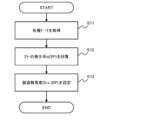
- FIGS. 6 and 7 are diagrams illustrating an example of data processing performed by the management server 1 (processor 13). The processing flows shown in FIGS. 6 and 7 are repeatedly executed at regular intervals.
- various data are acquired (step S11).
- the various data are data stored in the database 12.
- Various data include data regarding the product specifications SPC of multiple rolled products RP, data regarding the operating status OPS of the rolling line RL during the production of these rolled products RP, and actuators of the rolling line RL during the production of these rolled products RP.
- Data regarding the operator operation OPM for the rolling products RP and data regarding the quality QLT of these rolled products RP are illustrated.
- the error occurrence rate ⁇ (SP) is calculated (step S12). Calculation of the incidence rate ⁇ (SP) is performed on the data acquired in step S11. Specifically, when data regarding the operating status OPS is acquired, the occurrence rate ⁇ _OPS (SP) is calculated. If data regarding the operator operation OPM is obtained, the occurrence rate ⁇ _OPM(SP) is calculated. If data regarding the quality QLT is obtained, the incidence rate ⁇ _QLT(SP) is calculated.
- the manufacturing difficulty level DLv(SP) is calculated (step S13).
- the manufacturing difficulty level DLv(SP) is calculated for each calculation element (that is, error element) of the occurrence rate ⁇ (SP), for example, based on the occurrence rate ⁇ (SP) calculated in step S12.
- the incidence rate ⁇ (SP) calculated in step S12 is applied to the above equation (1). Note that the data of the manufacturing difficulty level DLv (SP) or the total difficulty level CDLv (SP) obtained by the process of step S13 is stored in the database 12.
- step S21 it is determined whether the TP to be manufactured is scheduled to be manufactured.
- the process in step S21 is performed, for example, with reference to schedule data included in the manufacturing instruction information that the PLC 2 has.
- the reference range of the schedule data is, for example, the date of operation of the rolling line RL.
- schedule data for a lot to be manufactured next to the currently manufactured lot is referenced.
- step S22 data of the product specification SPC of the TP to be manufactured is specified (step S22).
- the process in step S22 is performed, for example, with reference to manufacturing command information held by the PLC 2.
- step S23 the manufacturing difficulty level DLv(SP) of the TP to be manufactured is specified (step S23).
- the database 12 is referred to using the product specification SPC of the manufacturing target TP identified in the process of step S22.
- the manufacturing difficulty level DLv(SP) and/or the total difficulty level CDLv(SP) of the rolled product RP having the same product specification SPC as the product specification SPC of the manufacturing target TP is specified.
- step S24 data on the manufacturing difficulty level DLv(SP) is transmitted to the operator terminal 3 (step S24). Specifically, in the process of step S24, data on the manufacturing difficulty level DLv(SP) and/or the total difficulty level CDLv(SP) specified in the process of step S23 is transmitted to the operator terminal 3.
- the data of the calculation element that is, the error element
- the data of the manufacturing difficulty level DLv (SP) and/or the total difficulty level CDLv (SP) transmitted to the operator terminal 3 through the above processing is output from the display group DPG2 as support data ASS.
- useful information such as data on the manufacturing difficulty level DLv (SP) and/or the total difficulty level CDLv (SP) can be provided to the operator OP. If data on the calculation element (i.e. error element) of the occurrence rate ⁇ (SP) used in the calculation of the manufacturing difficulty level DLv (SP) and/or the total difficulty level CDLv (SP) is further provided, the manufacturing target It is possible to provide the operator OP with useful information such as information on error elements that should be noted in the TP manufacturing process.
- FIG. 8 is a diagram illustrating a configuration example of a rolling system to which the rolling line operation support device according to the second embodiment is applied.
- the configuration example shown in FIG. 8 is basically the same as the configuration example shown in FIG. The difference between the former and the latter is that the management server 1 includes a database 15 in addition to the database 12.
- the database 15 stores data regarding the state of material to be rolled (SMR) of the rolled product RP (more precisely, the rolled material MR) acquired in the rolling line RL during the production of the rolled product RP.
- SMR state of material to be rolled
- Data related to the state SMR include data directly acquired from various sensors installed in the rolling line RL, such as the temperature and thickness of the rolled material MR, the load applied to the rolled material MR, and the rolling speed; , data calculated based on this acquired data are illustrated.
- the database 15 also stores data EX_SMR extracted from the data regarding the state SMR.
- the data EX_SMR is data regarding the quality of the rolled product RP, the operating status OPS of the rolling line RL, and the state SMR when no error occurrence is recognized in the operator operation OPM.
- the errors here refer to the operational error items (OPS_ER1 to OPS_ERp) explained in FIG. 3, operator operations OPM that give error data explained in FIG. ⁇ QLT_ERq) is exemplified.
- the database 15 further stores data EX_OPM extracted from data related to operator operation OPM.
- the data EX_OPM is data regarding the quality of the rolled product RP and the operator operation OPM when no error is recognized in the operating status OPS of the rolling line RL. Note that the extraction processing of the data EX_OPM and the data EX_SMR is performed by the management server 1 (for example, the processor 13).
- This process includes (i) generation of data on the model state of the rolled material MR, (ii) generation of data on model operations of the operator, (iii) generation of instruction data for the operator, and (iv) ) Instruction data (Advice Data) ADV transmission processing is included.
- the process of generating model state data is performed for each product specification SPC of the rolled product RP based on the data EX_SMR.
- the process of generating model operation data is performed for each combination of the product specification SPC and actuator of the rolled product RP based on the data EX_OPM.
- the generation processes (i) and (ii) are performed, for example, every time data EX_SMR and EX_OPM are generated.
- the process of generating the guide data ADV is performed during the manufacture of the TP to be manufactured.
- the generation process (iii) is performed, for example, based on model state data regarding the rolled product RP having the same product specification SPC as the manufacturing target TP and performance state data of the manufacturing target TP.
- Data on the actual state of the manufacturing target TP refers to data regarding the state of the manufacturing target TP acquired in the rolling line RL during manufacturing of the manufacturing target TP.
- the guidance data ADV is the data of the model state and the difference between the data of the model state and the data of the actual state.
- the guidance data ADV is generated using data of a non-model state of the rolled product RP for the same product specification SPC as the manufacturing target TP.
- Non-exemplary state data refers to data in which an error has occurred in the operating status OPS of the rolling line RL during the production of the rolled product RP, the operator operation OPM during the production of this rolled product RP, and the quality QLT of this rolled product RP.
- the guidance data ADV in this example is data of a model state and a non-model state.
- data of the operator's model operation during manufacturing of the rolled product RP having the same product specification SPC as the manufacturing target TP and the operator's actual operation data during manufacturing of the manufacturing target TP are obtained.
- Guide data ADV is generated based on the data.
- the data of the operator's actual operation refers to the data regarding the operator operation OPM performed on the same actuator as the actuator that generated the model operation data during the manufacture of the TP to be manufactured.
- the instruction data ADV is the data of the model operation and the difference between the data of the model operation and the data of the actual operation.
- the guidance data ADV is generated using data of an operator's non-exemplary operation during manufacturing of a rolled product RP having the same product specification SPC as the manufacturing target TP.
- the non-exemplary operation data refers to the operating status OPS of the rolling line RL during the production of the rolled product RP and the data of the operator operation OPM when an error is recognized to have occurred in the quality QLT of the rolled product RP.
- Generation of non-exemplary operation data is performed for each product specification SPC of the rolled product RP.
- the guidance data ADV in this example is data on model operations and non-exemplary operations.
- data on model operations and non-exemplary operations are applied to known data analysis methods such as AI and machine learning to generate data on optimal operation of actuators to avoid occurrence of errors.
- the guidance data ADV in this example is optimal operation data.
- the instruction data ADV transmission process is a process of transmitting the instruction data ADV set in the (iii) instruction data ADV generation process to the operator terminal 3.
- data on the manufacturing difficulty level DLv as the support data ASS is output from any one of the display groups DPG2.
- the guidance data ADV is output from any one of the display groups DPG2 in a form that is added to the data on the manufacturing difficulty level DLv. That is, in the second embodiment, the manufacturing difficulty level DLv and the guidance data ADV are output as the support data ASS.
- FIGS. 9 to 11 are diagrams illustrating examples of data processing performed in the management server 1 (processor 13). The processing flows shown in FIGS. 9 to 11 are each repeatedly executed at regular intervals.
- various data are acquired (step S31).
- the various data are data stored in databases 12 and 15. Examples of the various data include the data described in the explanation of the process of step S11 in FIG.
- the various data also include data regarding the state SMR of the rolled product RP acquired in the rolling line RL during the production of the rolled product RP.
- extraction data is generated (step S32).
- the extracted data here is at least one of data EX_SMR and EX_OPM.
- the data EX_SMR is generated by extracting data in which no errors were found in the quality of the rolled product RP, the operating status OPS of the rolling line RL, and the operator operation OPM from the data regarding the state SMR acquired in the process of step S31.
- the data EX_OPM is generated by extracting data in which no errors were found in the quality of the rolled product RP and the operating status OPS of the rolling line RL from the data related to the operator operation OPM acquired in the process of step S31. This is done by
- model data is generated (step S33).
- the process in step S33 is performed based on the extracted data generated in step S32. If data EX_SMR is generated in the process of step S32, model state data is generated based on this data EX_SMR. On the other hand, if data EX_OPM has been generated in the process of step S32, model operation data is generated based on this data EX_OPM. Note that the model data obtained through the process of step S33 is stored in the database 15.
- step S41 it is determined whether the TP to be manufactured is scheduled to be manufactured.
- the content of the process in step S41 is the same as that in step S21 in FIG.
- step S42 data of the product specification SPC of the TP to be manufactured is specified.
- step S42 data of the process in step S42 is the same as that in step S22 in FIG.
- model data of the TP to be manufactured is specified (step S43).
- the database 15 is referred to using the product specification SPC of the manufacturing target TP identified in the process of step S42.
- model data (that is, model state and model operation data) for the rolled product RP having the same product specification SPC as the product specification SPC of the manufacturing target TP is specified.
- step S44 the model data specified in the process of step S43 is transmitted to the operator terminal 3.
- non-model data ie, data of non-model states and non-model operations
- the model data sent to the operator terminal 3 through the above processing is output from the display group DPG2 as support data ASS.
- the non-model data is output from the display group DPG2 together with the model data.
- model data (that is, model state and model operation data) is acquired (step S51).
- the model data acquired in step S51 is of a rolled product RP having the same product specification SPC as the product specification SPC of the manufacturing target TP being manufactured in the rolling line RL, and is read from the database 15.
- step S52 performance data (that is, data on performance status and performance operation) is acquired (step S52).
- the performance data acquired in step S52 is data corresponding to the model data acquired in the process of step S51.
- guide data ADV is generated (step S53).
- the guidance data ADV is, for example, the difference between the model data acquired in step S52 and the corresponding performance data acquired in step S53.
- Other examples of the guide data ADV include the model data acquired in step S52 and non-model data corresponding to this model data.
- Another example of the guidance data ADV is data on optimal operation of actuators to avoid occurrence of errors.
- step S53 the instruction data ADV is transmitted (step S54).
- step S54 the guidance data ADV generated in the process of step S53 is transmitted to the operator terminal 3.
- the guidance data ADV sent to the operator terminal 3 through the above processing is output from the display group DPG2 as support data ASS.
- model data can be provided to the operator OP. Further, useful information such as guidance data ADV including model data can also be provided to the operator OP. Therefore, it is expected that errors in manufacturing the target TP on the rolling line RL can be avoided.
- Management server 2 PLC 3 Operator terminal 12, 15 Database 13 Processor 14 Memory OP Operator RL Rolling line RP Rolled product DLv Manufacturing difficulty OPM Operator operation OPS Operating status QLT Quality SMR Condition of rolled material SPC Product specifications
Landscapes
- Engineering & Computer Science (AREA)
- Mechanical Engineering (AREA)
- Control Of Metal Rolling (AREA)
- General Factory Administration (AREA)
Priority Applications (5)
| Application Number | Priority Date | Filing Date | Title |
|---|---|---|---|
| KR1020247005449A KR20240037291A (ko) | 2022-08-08 | 2022-08-08 | 압연 라인의 조업 지원 방법, 조업 지원 장치 및 조업 지원 프로그램 |
| JP2023520516A JP7517602B2 (ja) | 2022-08-08 | 2022-08-08 | 圧延ラインの操業支援方法、操業支援装置及び操業支援プログラム |
| CN202280056174.2A CN117858770A (zh) | 2022-08-08 | 2022-08-08 | 轧制线的作业辅助方法、作业辅助装置以及作业辅助程序 |
| PCT/JP2022/030275 WO2024033970A1 (ja) | 2022-08-08 | 2022-08-08 | 圧延ラインの操業支援方法、操業支援装置及び操業支援プログラム |
| TW112112884A TWI866147B (zh) | 2022-08-08 | 2023-04-06 | 壓延線之操作支援方法、操作支援裝置及記錄媒體 |
Applications Claiming Priority (1)
| Application Number | Priority Date | Filing Date | Title |
|---|---|---|---|
| PCT/JP2022/030275 WO2024033970A1 (ja) | 2022-08-08 | 2022-08-08 | 圧延ラインの操業支援方法、操業支援装置及び操業支援プログラム |
Publications (1)
| Publication Number | Publication Date |
|---|---|
| WO2024033970A1 true WO2024033970A1 (ja) | 2024-02-15 |
Family
ID=89851226
Family Applications (1)
| Application Number | Title | Priority Date | Filing Date |
|---|---|---|---|
| PCT/JP2022/030275 Ceased WO2024033970A1 (ja) | 2022-08-08 | 2022-08-08 | 圧延ラインの操業支援方法、操業支援装置及び操業支援プログラム |
Country Status (5)
| Country | Link |
|---|---|
| JP (1) | JP7517602B2 (https=) |
| KR (1) | KR20240037291A (https=) |
| CN (1) | CN117858770A (https=) |
| TW (1) | TWI866147B (https=) |
| WO (1) | WO2024033970A1 (https=) |
Cited By (1)
| Publication number | Priority date | Publication date | Assignee | Title |
|---|---|---|---|---|
| CN116511256A (zh) * | 2023-05-16 | 2023-08-01 | 中铝瑞闽股份有限公司 | 一种冷轧机操作数据采样及评估方法 |
Citations (6)
| Publication number | Priority date | Publication date | Assignee | Title |
|---|---|---|---|---|
| JP2004167604A (ja) * | 2002-11-20 | 2004-06-17 | Posco Corp Ltd | 仕上圧延異常診断装置及び方法 |
| WO2011004454A1 (ja) * | 2009-07-07 | 2011-01-13 | 新日本製鐵株式会社 | 操業支援装置、操業支援方法及びプログラム |
| JP2011215873A (ja) * | 2010-03-31 | 2011-10-27 | Jfe Steel Corp | 製造ロット作成方法、装置及びシステム |
| JP2015074020A (ja) * | 2013-10-10 | 2015-04-20 | 株式会社神戸製鋼所 | 圧延工程の支援システム |
| JP2017170456A (ja) * | 2016-03-18 | 2017-09-28 | 株式会社神戸製鋼所 | 制御方法選択支援システム |
| JP2021023941A (ja) * | 2019-07-31 | 2021-02-22 | 東芝三菱電機産業システム株式会社 | 操作介入量評価装置 |
Family Cites Families (3)
| Publication number | Priority date | Publication date | Assignee | Title |
|---|---|---|---|---|
| JP2005059020A (ja) | 2003-08-19 | 2005-03-10 | Nippon Steel Corp | 熱間圧延工場の物流スケジューリング装置 |
| JPWO2012020468A1 (ja) * | 2010-08-09 | 2013-10-28 | 東芝三菱電機産業システム株式会社 | データ検索システム |
| JP6382432B1 (ja) * | 2017-11-22 | 2018-08-29 | 日新製鋼株式会社 | 形状制御方法、演算装置、演算方法、情報処理プログラム、および記録媒体 |
-
2022
- 2022-08-08 KR KR1020247005449A patent/KR20240037291A/ko active Pending
- 2022-08-08 JP JP2023520516A patent/JP7517602B2/ja active Active
- 2022-08-08 WO PCT/JP2022/030275 patent/WO2024033970A1/ja not_active Ceased
- 2022-08-08 CN CN202280056174.2A patent/CN117858770A/zh active Pending
-
2023
- 2023-04-06 TW TW112112884A patent/TWI866147B/zh active
Patent Citations (6)
| Publication number | Priority date | Publication date | Assignee | Title |
|---|---|---|---|---|
| JP2004167604A (ja) * | 2002-11-20 | 2004-06-17 | Posco Corp Ltd | 仕上圧延異常診断装置及び方法 |
| WO2011004454A1 (ja) * | 2009-07-07 | 2011-01-13 | 新日本製鐵株式会社 | 操業支援装置、操業支援方法及びプログラム |
| JP2011215873A (ja) * | 2010-03-31 | 2011-10-27 | Jfe Steel Corp | 製造ロット作成方法、装置及びシステム |
| JP2015074020A (ja) * | 2013-10-10 | 2015-04-20 | 株式会社神戸製鋼所 | 圧延工程の支援システム |
| JP2017170456A (ja) * | 2016-03-18 | 2017-09-28 | 株式会社神戸製鋼所 | 制御方法選択支援システム |
| JP2021023941A (ja) * | 2019-07-31 | 2021-02-22 | 東芝三菱電機産業システム株式会社 | 操作介入量評価装置 |
Cited By (1)
| Publication number | Priority date | Publication date | Assignee | Title |
|---|---|---|---|---|
| CN116511256A (zh) * | 2023-05-16 | 2023-08-01 | 中铝瑞闽股份有限公司 | 一种冷轧机操作数据采样及评估方法 |
Also Published As
| Publication number | Publication date |
|---|---|
| JP7517602B2 (ja) | 2024-07-17 |
| JPWO2024033970A1 (https=) | 2024-02-15 |
| KR20240037291A (ko) | 2024-03-21 |
| CN117858770A (zh) | 2024-04-09 |
| TW202421292A (zh) | 2024-06-01 |
| TWI866147B (zh) | 2024-12-11 |
Similar Documents
| Publication | Publication Date | Title |
|---|---|---|
| US11281196B2 (en) | Integrated planning of production and/or maintenance plans | |
| US12157232B2 (en) | Robotic application equipment monitoring and predictive analytics | |
| JP5759206B2 (ja) | 学習係数制御装置 | |
| TWI437396B (zh) | 資料檢索系統 | |
| JP2001126969A (ja) | 半導体処理技術 | |
| CN119105316B (zh) | 一种基于在线仿真与深度学习的辊压机控制系统及方法 | |
| JP2021023941A (ja) | 操作介入量評価装置 | |
| WO2024033970A1 (ja) | 圧延ラインの操業支援方法、操業支援装置及び操業支援プログラム | |
| WO2018142678A1 (ja) | 製造実績の可視化方法、画像処理装置及びプログラム | |
| JP2010015207A (ja) | エネルギ管理システム | |
| CN119204499A (zh) | 基于人工智能的自动化生产线任务调度与优化方法及系统 | |
| JP2022508735A (ja) | 金属ワークピースの製造方法 | |
| CN109634213A (zh) | 用于金属行业的裁切损耗优化的系统和方法 | |
| JP2016157313A (ja) | 鉄鋼プラントの傾向監視装置 | |
| JP7211386B2 (ja) | モデル学習方法、走間板厚変更方法、鋼板の製造方法、モデル学習装置、走間板厚変更装置および鋼板の製造装置 | |
| JP5799777B2 (ja) | 製造プロセスのスケジュール策定支援方法、装置及びプログラム | |
| JP5007630B2 (ja) | 製品品質の制御方法及び制御装置 | |
| US20200241488A1 (en) | Controller Optimization for a Control System of a Technical Plant | |
| WO2020189210A1 (ja) | 監視方法、監視装置、プログラム | |
| Muzadi et al. | Analysis of the Effectiveness of 3D Print Machine Performance using the Overall Equipment Method Effectiveness | |
| JP2025030929A (ja) | 制御装置、制御方法および制御システム | |
| CN115774424B (zh) | 仪器管理设备及仪器管理方法 | |
| JP5811077B2 (ja) | タンデム圧延機のライン加速時の最高圧延速度設定支援方法及び装置 | |
| JP2001118764A (ja) | 半導体処理技術 | |
| CN121755388A (zh) | 基于在线粘度反馈的生物基材面膜涂布厚度控制方法 |
Legal Events
| Date | Code | Title | Description |
|---|---|---|---|
| ENP | Entry into the national phase |
Ref document number: 2023520516 Country of ref document: JP Kind code of ref document: A |
|
| ENP | Entry into the national phase |
Ref document number: 20247005449 Country of ref document: KR Kind code of ref document: A |
|
| WWE | Wipo information: entry into national phase |
Ref document number: 1020247005449 Country of ref document: KR |
|
| WWE | Wipo information: entry into national phase |
Ref document number: 202280056174.2 Country of ref document: CN |
|
| 121 | Ep: the epo has been informed by wipo that ep was designated in this application |
Ref document number: 22954892 Country of ref document: EP Kind code of ref document: A1 |
|
| NENP | Non-entry into the national phase |
Ref country code: DE |
|
| 122 | Ep: pct application non-entry in european phase |
Ref document number: 22954892 Country of ref document: EP Kind code of ref document: A1 |