WO2024024486A1 - タイヤ用ゴム積層体の加硫方法、及びリトレッドタイヤの製造方法 - Google Patents
タイヤ用ゴム積層体の加硫方法、及びリトレッドタイヤの製造方法 Download PDFInfo
- Publication number
- WO2024024486A1 WO2024024486A1 PCT/JP2023/025493 JP2023025493W WO2024024486A1 WO 2024024486 A1 WO2024024486 A1 WO 2024024486A1 JP 2023025493 W JP2023025493 W JP 2023025493W WO 2024024486 A1 WO2024024486 A1 WO 2024024486A1
- Authority
- WO
- WIPO (PCT)
- Prior art keywords
- rubber
- rubber layer
- laminate
- tire
- vulcanizing
- Prior art date
- Legal status (The legal status is an assumption and is not a legal conclusion. Google has not performed a legal analysis and makes no representation as to the accuracy of the status listed.)
- Ceased
Links
Images

Classifications
-
- B—PERFORMING OPERATIONS; TRANSPORTING
- B29—WORKING OF PLASTICS; WORKING OF SUBSTANCES IN A PLASTIC STATE IN GENERAL
- B29D—PRODUCING PARTICULAR ARTICLES FROM PLASTICS OR FROM SUBSTANCES IN A PLASTIC STATE
- B29D30/00—Producing pneumatic or solid tyres or parts thereof
- B29D30/06—Pneumatic tyres or parts thereof (e.g. produced by casting, moulding, compression moulding, injection moulding, centrifugal casting)
- B29D30/52—Unvulcanised treads, e.g. on used tyres; Retreading
- B29D30/54—Retreading
- B29D30/56—Retreading with prevulcanised tread
-
- C—CHEMISTRY; METALLURGY
- C08—ORGANIC MACROMOLECULAR COMPOUNDS; THEIR PREPARATION OR CHEMICAL WORKING-UP; COMPOSITIONS BASED THEREON
- C08J—WORKING-UP; GENERAL PROCESSES OF COMPOUNDING; AFTER-TREATMENT NOT COVERED BY SUBCLASSES C08B, C08C, C08F, C08G or C08H
- C08J3/00—Processes of treating or compounding macromolecular substances
- C08J3/24—Crosslinking, e.g. vulcanising, of macromolecules
-
- C—CHEMISTRY; METALLURGY
- C08—ORGANIC MACROMOLECULAR COMPOUNDS; THEIR PREPARATION OR CHEMICAL WORKING-UP; COMPOSITIONS BASED THEREON
- C08J—WORKING-UP; GENERAL PROCESSES OF COMPOUNDING; AFTER-TREATMENT NOT COVERED BY SUBCLASSES C08B, C08C, C08F, C08G or C08H
- C08J3/00—Processes of treating or compounding macromolecular substances
- C08J3/28—Treatment by wave energy or particle radiation
Definitions
- the present invention relates to a method of vulcanizing a rubber laminate for tires and a method of manufacturing a retread tire.
- Patent Document 1 discloses that the total heating time can be shortened by using microwave energy for at least part of the thermal energy required in manufacturing a pneumatic tire.
- Patent Document 1 heating by microwave energy is finished before the start of the vulcanization reaction.
- the vulcanization reaction was performed by irradiating microwaves, it was extremely difficult to control the vulcanization reaction, and there were problems such as uneven vulcanization and local scorching. was there. Due to such problems of uneven vulcanization, rubber vulcanization using microwaves has not yet been fully put into practical use, and the use of microwaves is limited to preheating before vulcanization. There was a situation.
- a precure tread (vulcanized rubber layer) on which a tread pattern has already been formed is placed on a stand tire (the base part of a tire whose primary life has ended) and a cushion rubber (unvulcanized rubber layer)
- a cushion rubber unvulcanized rubber layer
- precure manufacturing method there is also a need for a technique for efficiently and uniformly vulcanizing the cushion rubber to be vulcanized using microwaves.
- the present invention provides a vulcanized rubber laminate for tires that can uniformly vulcanize a rubber laminate for tires in which an unvulcanized rubber layer and a vulcanized rubber layer are laminated by irradiation with microwaves.
- the purpose is to provide a sulfuric acid method.
- Another object of the present invention is to provide a method for manufacturing a retread tire that makes it possible to obtain a uniformly vulcanized retread tire.
- the present inventors focused on the fact that carbon black can serve as a heating element with excellent microwave absorption characteristics, and conducted extensive studies. They have also discovered that when heating (vulcanizing) a rubber composition containing carbon black by microwave irradiation, uniform vulcanization can be achieved by sweeping the frequency of the microwave in a predetermined manner. Furthermore, based on this knowledge, when vulcanizing a laminate comprising an unvulcanized rubber layer and a vulcanized rubber layer, it has been found that by vulcanizing the laminate in a predetermined manner, efficient and uniform vulcanization can be achieved. This finding led to the present invention.
- the gist of the present invention for achieving the above object is as follows.
- a method for vulcanizing a rubber laminate for tires which vulcanizes a rubber laminate for tires in which an unvulcanized rubber layer and a vulcanized rubber layer are laminated by irradiating microwaves,
- the unvulcanized rubber layer contains diene rubber and carbon black
- the vulcanized rubber layer contains diene rubber and carbon black
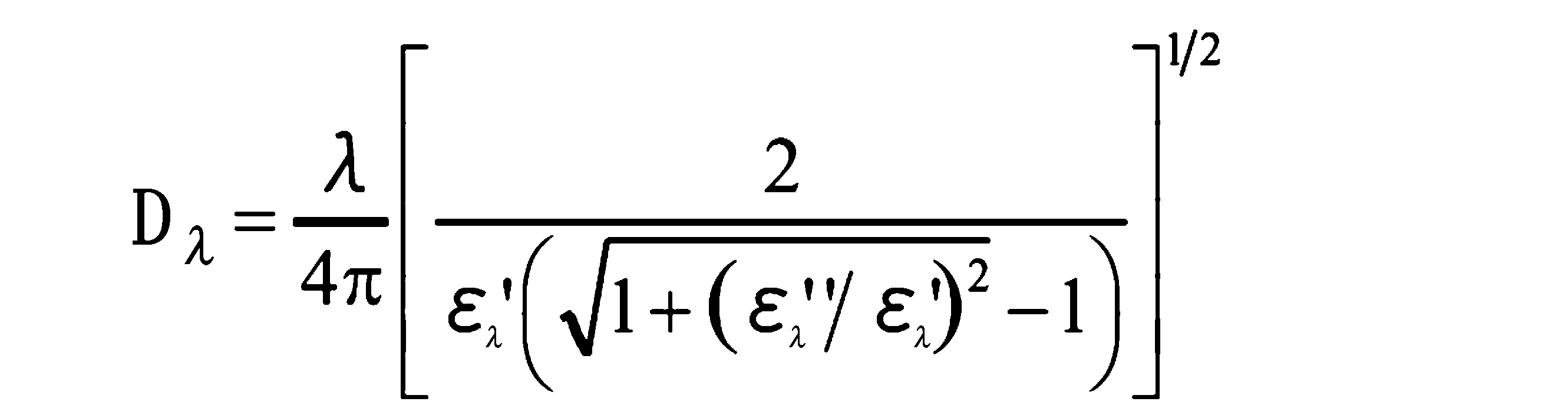
- the penetration depth D ⁇ (mm) of microwaves having a wavelength ⁇ (mm) into the vulcanized rubber constituting the vulcanized rubber layer is expressed by the following formula: [In the formula, ⁇ represents the microwave wavelength (mm), ⁇ ⁇ ′ represents the dielectric constant of the vulcanized rubber at the wavelength ⁇ , and ⁇ ⁇ ” represents the dielectric loss of the vulcanized rubber at the wavelength ⁇ .
- the microwave frequency range is selected to include the frequency corresponding to the wavelength ⁇ at which the penetration depth D ⁇ is greater than or equal to the thickness of the vulcanized rubber layer, and during vulcanization, the frequency range of the microwave is Within the frequency range, the frequency of the microwave irradiated to the rubber laminate for use is changed at each time interval selected from the range of more than 0 ⁇ sec and less than 100 ⁇ sec, and the frequency change width is selected from the range of more than 0 Hz and less than 1000 Hz. 1.
- a method for vulcanizing a rubber laminate for a tire comprising the step of changing the frequency by .
- the carbon black in the unvulcanized rubber layer includes carbon black A having a nitrogen adsorption specific surface area of 50 m 2 /g or more and 130 m 2 /g or less, according to any one of [1] to [5].
- a method for producing a retread tire which includes a step of attaching a precure tread, which is a vulcanized rubber layer, to a stand tire via a cushion rubber, which is an unvulcanized rubber layer, and vulcanizing and adhering the cushion rubber. And, A method for manufacturing a retread tire, characterized in that, in the step, the method for vulcanizing a rubber laminate for tires according to any one of [1] to [9] is used.
- a rubber laminate for a tire in which a rubber laminate for a tire in which an unvulcanized rubber layer and a vulcanized rubber layer are laminated, can be uniformly vulcanized by irradiation with microwaves.
- a sulfuric acid method can be provided.
- FIG. 2 is a schematic diagram showing an example of a frequency sweep pattern of microwaves applied to a tire rubber laminate according to the present invention.
- a method for vulcanizing a rubber laminate for tires according to an embodiment of the present invention (hereinafter sometimes referred to as "vulcanization method according to the present embodiment") is a method for vulcanizing a rubber laminate for tires by irradiating microwaves. This is a method of vulcanization.
- the tire rubber laminate used in the vulcanization method of the present embodiment is formed by laminating an unvulcanized rubber layer and a vulcanized rubber layer, and the unvulcanized rubber layer contains diene rubber and carbon black. However, the vulcanized rubber layer contains diene rubber and carbon black.
- the penetration depth D ⁇ (mm) of microwaves having a wavelength ⁇ (mm) into the vulcanized rubber constituting the vulcanized rubber layer is calculated using the following formula: [In the formula, ⁇ represents the microwave wavelength (mm), ⁇ ⁇ ′ represents the dielectric constant of the vulcanized rubber at the wavelength ⁇ , and ⁇ ⁇ ” represents the dielectric loss of the vulcanized rubber at the wavelength ⁇ . ], the frequency range of the microwave is selected so as to include the frequency corresponding to the wavelength ⁇ at which the penetration depth D ⁇ is greater than or equal to the thickness of the vulcanized rubber layer.
- the frequency of the microwave irradiated to the tire rubber laminate is changed from 0 Hz to 1000 Hz at every elapse of a time interval selected from the range of 0 ⁇ sec to 100 ⁇ sec within the frequency range selected as described above.
- the method includes a step of changing the frequency by a frequency change width selected from a range.
- the vulcanization method of the present embodiment selectively and uniformly vulcanizes the unvulcanized rubber layer of the tire rubber laminate while maintaining the quality of other members (vulcanized rubber layer, etc.) This is based on the technical idea of
- microwave refers to electromagnetic waves with a frequency of 300 MHz to 300 GHz.
- unvulcanized rubber layer refers to a layered member made from a rubber composition and not subjected to vulcanization treatment
- vulcanized rubber layer refers to a layered member made from a rubber composition. This refers to a layered member that has been made from and has already been subjected to vulcanization treatment.
- FIG. 1 is a schematic diagram showing an example of a frequency sweep pattern of microwaves applied to a tire rubber laminate according to the vulcanization method of the present embodiment.
- the frequency of the microwave irradiated to the tire rubber laminate is increased by a certain frequency change width (F) every time a certain time interval (T) passes. .
- the present inventors think as follows about the mechanism by which a tire rubber laminate, particularly an unvulcanized rubber layer, can be uniformly vulcanized by the vulcanization method of the present embodiment.
- a rubber composition containing carbon black with microwaves there are two types of microwaves: one is the microwave that is directly irradiated to the rubber composition, and the other is the microwave that is irradiated to the rubber composition after being reflected at least once in the microwave generator. Interference effects occur due to the microwaves generated.
- the frequency of microwaves is constant, areas where interference is likely to occur and areas where interference is unlikely to occur will be fixedly unevenly distributed in the rubber composition, resulting in overheating in some areas and underheating in other areas.
- a situation may arise where: Such a situation becomes particularly noticeable at temperatures of 120° C. or higher, where the crosslinking reaction occurs, and is thought to result in non-uniform vulcanization.
- the frequency of the irradiated microwave is swept in a predetermined manner, so that local concentration of energy absorption in the rubber composition can be effectively avoided. ) is considered to be able to be made uniform.
- the vulcanization method of this embodiment it is not essential to move or rotate the object to be heated within the apparatus for the purpose of avoiding uneven heating (as in a turntable microwave oven).
- the penetration depth D ⁇ (mm) of microwaves with a wavelength ⁇ (mm) into the vulcanized rubber constituting the vulcanized rubber layer is calculated by the following formula: [In the formula, ⁇ represents the microwave wavelength (mm), ⁇ ⁇ ′ represents the dielectric constant of the vulcanized rubber at the wavelength ⁇ , and ⁇ ⁇ ” represents the dielectric loss of the vulcanized rubber at the wavelength ⁇ .
- the relative dielectric constant and relative dielectric loss mentioned above can be measured by the coaxial cable method.Then, the penetration depth D ⁇ (if the frequency is changed, the wavelength ⁇ will also change).
- the frequency range of the microwave is selected so as to include the frequency corresponding to the wavelength ⁇ at which ⁇ is greater than or equal to the thickness of the vulcanized rubber layer, and the above steps are performed within the frequency range. For example, since the influence of microwave attenuation is small, the unvulcanized rubber layer can be uniformly vulcanized while the quality of the vulcanized rubber layer is sufficiently maintained.
- the penetration depth can be adjusted, for example, by adjusting the frequency range of the microwave to be selected or by adjusting the compound (composition) of the vulcanized rubber to increase the relative dielectric constant ( ⁇ ⁇ ') and dielectric loss ( ⁇ This can be done by changing ⁇ '').
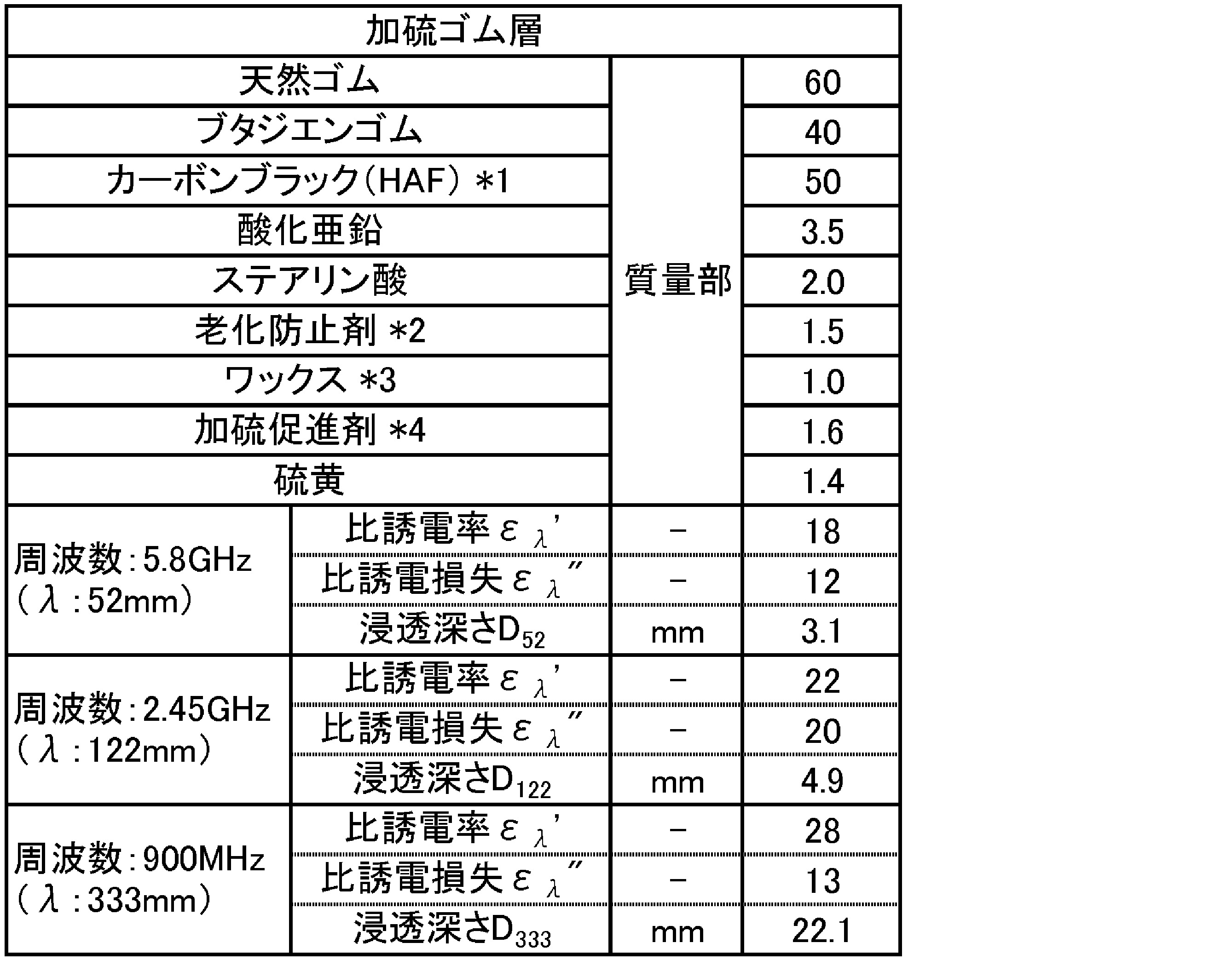
- the penetration depth D 52 at 5.8 GHz ( ⁇ wavelength 52 mm) is 3.1 mm
- the penetration depth D 122 at 122 mm) is 4.9 mm
- the penetration depth D 333 at 900 MHz ( ⁇ wavelength 333 mm ) is 22.1 mm.
- the penetration depth D 52 at 5.8 GHz is 6.3 mm
- the penetration depth D 122 is 13.2 mm
- the penetration depth D 333 at 900 MHz ( ⁇ wavelength 333 mm) is 28.8 mm.
- VFM variable frequency microwave generator
- the time interval (T) is the time between timings at which the frequency is changed, or in other words, the time at which microwaves of a constant frequency are irradiated.
- the time interval (T) is selected from a range of more than 0 ⁇ sec and less than 100 ⁇ sec. If the time interval (T) exceeds 100 ⁇ sec, there is a possibility that the concentration of heat in some parts of the rubber composition cannot be sufficiently suppressed. Further, the lower limit of the time interval (T) may be more than 0 ⁇ sec, and may be adjusted as appropriate depending on the specifications of the device used.
- the time interval (T) is preferably 1 ⁇ sec or more from the viewpoint of efficiency of microwave irradiation. From the same viewpoint, the time interval (T) is preferably selected from the range of 3 to 50 ⁇ sec, more preferably selected from the range of 5 to 30 ⁇ sec, and more preferably selected from the range of 10 to 25 ⁇ sec. More preferred.
- the time interval (T) may be constant each time as shown in FIG. 1, or may be different each time. However, in the vulcanization method of this embodiment, it is preferable that the time interval (T) is constant each time from the viewpoint of achieving uniform vulcanization more effectively.
- the frequency change width (F) is selected from a range of more than 0 Hz and less than 1000 Hz. If the frequency does not change at all (if the frequency change width (F) is 0 Hz), heat will be concentrated in some parts of the rubber composition. Furthermore, if the frequency change width (F) exceeds 1000 Hz, the stability of microwave irradiation may deteriorate, which may adversely affect uniform vulcanization. From the same viewpoint, the frequency change width (F) is preferably selected from the range of 10 to 500 Hz, more preferably selected from the range of 50 to 350 Hz, and preferably selected from the range of 100 to 260 Hz. is even more preferable.
- the frequency change width (F) may be constant each time as shown in FIG. 1, or may be different each time.
- the frequency change width (F) is constant each time.
- the frequency change by the frequency change width (F) may be increased every time as shown in FIG. 1, or may be decreased every time. , the increase or decrease may be different each time. However, in the vulcanization method of this embodiment, it is preferable to increase the frequency by the frequency change width (F) each time.
- variable frequency microwave generators usually have upper and lower limits of variable frequency based on the device specifications. Therefore, if such a variable frequency microwave generator is used and the frequency is increased each time, the frequency may reach the upper limit of the variable frequency or its vicinity. In this case, once the frequency is switched to the lower limit of the variable frequency or around it, the frequency may be increased again each time. A similar method may be used when lowering the frequency each time.
- the selected microwave frequency range is a predetermined frequency (i.e., a wavelength ⁇ at which the penetration depth D ⁇ is greater than or equal to the thickness of the vulcanized rubber layer). It is not particularly limited as long as it includes a frequency corresponding to , and can be appropriately selected, for example, based on the specifications of the microwave generator used (in particular, the type of oscillator or amplifier). In vulcanized rubbers of various formulations, the absorption of microwaves depends on the wavelength of the microwaves, so it is preferable to select an appropriate frequency range.
- the frequency range of the microwave selected in the vulcanization method of this embodiment is preferably in a band of 30 GHz or less, more preferably in a band of 3 GHz or less.
- the carbon black contained in the vulcanized rubber becomes difficult to absorb (easily transmit) microwaves, so that the influence of microwave irradiation on the vulcanized rubber becomes smaller.
- microwave absorption depends on the temperature of the rubber, by changing the frequency to the optimum frequency while irradiating microwaves, the carbon black contained in the microwaves is difficult to absorb (transmit). (easier), the effect of microwave irradiation on the vulcanized rubber becomes smaller.
- the duration of the operation of irradiating microwaves while sweeping the frequency in a predetermined manner is preferably 100 seconds or more, and preferably 200 seconds or more, although it is not particularly limited. More preferably, the time is 300 seconds or more. In this case, the degree of vulcanization of the rubber composition can be more fully increased.
- the temperature of the tire rubber laminate, particularly the unvulcanized rubber layer may be monitored while irradiating microwaves while sweeping the frequency in a predetermined manner, although this is not particularly limited. good.
- the rate of temperature increase of the tire rubber laminate, particularly the unvulcanized rubber layer may be controlled when irradiating with microwaves.
- the temperature increase rate can be controlled, for example, by finely adjusting the microwave irradiation output (W).
- W microwave irradiation output
- the control method for the temperature increase rate is not particularly limited, but may be PID control.
- the temperature increase rate can also be controlled by switching on/off the microwave irradiation.
- the temperature increase rate can be selected, for example, from a range of 0.05° C./second to 0.5° C./second.
- the highest temperature (so-called vulcanization temperature) when actually vulcanizing the tire rubber laminate is not particularly limited, and can be appropriately selected depending on the purpose.
- the temperature is preferably 140°C or higher, preferably 190°C or lower, and more preferably 160°C or lower.
- the vulcanization method of the present embodiment may be carried out with the tire rubber laminate to be vulcanized placed on an arbitrary member (for example, a stand tire, etc.).
- the tire rubber laminate to be vulcanized used in the vulcanization method of the present embodiment includes at least an unvulcanized rubber layer and a vulcanized rubber layer.
- the unvulcanized rubber layer may be a single layer, or may be two or more layers.
- the vulcanized rubber layer may be one layer alone, or may be two or more layers.
- the rubber laminate for a tire to be vulcanized may include other layered members (for example, a stand tire, etc.) in addition to the unvulcanized rubber layer and the vulcanized rubber layer. In that case, the unvulcanized rubber layer can be placed in contact with or closer to the other members.
- the other members may include metal parts (for example, steel cords, etc.).
- it is preferable that the unvulcanized rubber layer and the vulcanized rubber layer are in contact with each other.
- the unvulcanized rubber layer which is a part of the tire rubber laminate, contains at least diene rubber and carbon black. Moreover, the unvulcanized rubber layer can further contain a vulcanizing agent, other components, etc., as necessary.
- diene rubber examples include natural rubber (NR), butadiene rubber (BR), isoprene rubber (IR), styrene-butadiene rubber (SBR), ethylene-propylene-diene rubber (EPDM), chloroprene rubber (CR), and halogen rubber.
- NR natural rubber
- BR butadiene rubber
- IR isoprene rubber
- SBR styrene-butadiene rubber
- EPDM ethylene-propylene-diene rubber
- CR chloroprene rubber
- halogen rubber butyl rubber, acrylonitributylene butadiene rubber (NBR), and the like.
- NBR acrylonitributylene butadiene rubber
- At least one of natural rubber, butadiene rubber, isoprene rubber, and styrene-butadiene rubber is used as the diene rubber. It is preferable to use
- Examples of the carbon black contained in the unvulcanized rubber layer include GPF, FEF, HAF, ISAF, and SAF grade carbon black. These carbon blacks may be used alone or in combination of two or more. Further, the carbon black in the unvulcanized rubber layer preferably includes carbon black A having a nitrogen adsorption specific surface area of 50 m 2 /g or more and 130 m 2 /g or less. In this case, uniform vulcanization can be achieved more effectively. Examples of the carbon black A include HAF, ISAF, and SAF grade carbon blacks. These carbon blacks A may be used alone or in combination of two or more.
- the carbon black A preferably has a nitrogen adsorption specific surface area of 70 m 2 /g or more and 120 m 2 /g or less.
- Examples of carbon black A having such a nitrogen adsorption specific surface area include HAF and ISAF grade carbon black. Note that the nitrogen adsorption specific surface area of carbon black is measured in accordance with JIS K 6217-2.
- the content of carbon black in the unvulcanized rubber layer is not particularly limited and can be selected as appropriate depending on the purpose, but it is possible to more reliably enjoy the effect of uniform vulcanization by the vulcanization method of this embodiment. From the viewpoint of this, the amount is preferably 20 parts by mass or more, more preferably 30 parts by mass or more, based on 100 parts by mass of the diene rubber. Further, the content of carbon black in the unvulcanized rubber layer is preferably 120 parts by mass or less, and 70 parts by mass based on 100 parts by mass of the diene rubber, from the viewpoint of maintaining the desired mechanical properties of the tire. It is more preferable that it is below.
- the unvulcanized rubber layer preferably contains a vulcanizing agent.
- vulcanizing agent include sulfur and sulfur-based vulcanizing agents such as morpholine disulfide; benzoyl peroxide, dicumyl peroxide, di-t-butyl peroxide, t-butylcumyl peroxide, methyl ethyl ketone peroxide, cumene hydro Peroxide, organic peroxides such as 2,5-dimethyl-2,5-di(t-butylperoxy)hexane; and the like.
- vulcanizing agent examples include hexamethylene bisthiosulfate disodium salt dihydrate, 1,3-bis(citraconimidomethyl)benzene, 4,4'-diphenylmethane bismaleimide, m-phenylene bismaleimide, etc. It will be done. These vulcanizing agents may be used alone or in combination of two or more.
- the content of the vulcanizing agent in the unvulcanized rubber layer is not particularly limited and can be appropriately selected depending on the purpose. or less.
- ingredients include fillers other than carbon black (such as silica), vulcanization aids such as stearic acid, vulcanization accelerators, vulcanization accelerators such as zinc white, anti-aging agents, softeners, and plasticizers. , processability improvers, etc., and these can be contained in appropriate amounts.
- the rubber composition constituting the unvulcanized rubber layer may be obtained by blending and kneading the above-mentioned components in accordance with a conventional method using a kneading machine such as a roll, an internal mixer, or a Banbury rotor. can do.
- a kneading machine such as a roll, an internal mixer, or a Banbury rotor. can do.
- the thickness of the unvulcanized rubber layer is not particularly limited, and can be, for example, 0.5 mm to 4 mm.
- metal parts for example, steel cords, etc.
- metal parts for example, steel cords, etc.
- the sweep mode of the frequency of the irradiated microwave is optimized, it is expected that problems such as arcing in metal parts can be suppressed.
- the vulcanized rubber layer which is a part of the rubber laminate for tires, is a layer that has already been vulcanized, and contains at least diene rubber and carbon black.
- the vulcanization treatment is not particularly limited. Further, the vulcanized rubber layer may further contain a vulcanizing agent, other components, etc. as necessary.
- diene rubber carbon black
- vulcanizing agent vulcanizing agent
- the content of carbon black in the vulcanized rubber layer is not particularly limited and can be selected as appropriate depending on the purpose, but from the viewpoint of increasing the durability as a tire rubber, it is set to 100 parts by mass of diene rubber. It is preferable that the amount is 15 parts by mass or more. Further, the content of carbon black in the vulcanized rubber layer is preferably 60 parts by mass or less based on 100 parts by mass of diene rubber. In this case, microwaves in a wide band can pass through a vulcanized rubber layer having a certain thickness without being absorbed, and can reach deep parts. Furthermore, during vulcanization of the rubber laminate for tires, adverse effects such as heat generation of the vulcanized rubber layer can be reduced.
- the thickness of the vulcanized rubber layer is not particularly limited, and can be, for example, 10 mm to 50 mm. Further, the vulcanized rubber layer may have an uneven structure (for example, a tread pattern) formed on one surface.
- the vulcanized rubber layer may contain metal parts (for example, steel cords, etc.).
- metal parts for example, steel cords, etc.
- a method for manufacturing a retread tire according to an embodiment of the present invention includes applying a precure tread, which is a vulcanized rubber layer, to a base tire in an unvulcanized state.
- a method for manufacturing a retread tire including a step of attaching a rubber layer through a cushion rubber, and vulcanizing and adhering the cushion rubber, the method using the above-described method of vulcanizing a rubber laminate for tires in the step. It is characterized by having been.
- the member including the cushion rubber and the precure tread corresponds to the tire rubber laminate in the vulcanization method of this embodiment. According to this manufacturing method, it is possible to obtain a uniformly vulcanized retread tire.
- a sample of a vulcanized rubber layer having a thickness of 3.0 mm was prepared by kneading and vulcanizing according to a conventional method using the formulation shown in Table 1.
- a vector network manufactured by Agilent Technologies, Inc., "E5071C” was used to measure microwave frequencies in the range of 0.3 GHz to 6.5 GHz (that is, wavelength ⁇ of about 46 mm to about 1000 mm).
- the dielectric loss ( ⁇ '') and dielectric loss tangent (tan ⁇ ) were measured using the coaxial cable method.
- Table 1 shows that the microwave frequency was 5.8 GHz ( ⁇ wavelength 52 mm), 2.45 GHz ( ⁇ wavelength 122 mm), The relative permittivity ⁇ ⁇ ′ and the relative dielectric loss ⁇ ⁇ ” at 900 MHz ( ⁇ wavelength 333 mm) are shown.
- HAF Carbon black
- SEAST 3H HAF grade (nitrogen adsorption specific surface area: 82 m 2 /g) *2
- Anti-aging agent N-phenyl-N'-(1,3-dimethylbutyl)-p-phenylenediamine (6PPD) manufactured by Ouchi Shinko Chemical Industry Co., Ltd.
- an unvulcanized rubber layer with a thickness of 1 mm was prepared by kneading according to a conventional method using the formulation shown in Table 2. Next, the unvulcanized rubber layer was sandwiched between the two vulcanized rubber layers described above to produce a laminate sample having a size of 80 mm x 80 mm. The laminate sample was vulcanized by irradiation with microwaves according to the following procedure.
- Example 1-4 a variable frequency microwave generator (manufactured by LAMBDA Technology, product name "VariWave (registered trademark)”) was used, and the values shown in Table 2 were set at each predetermined time interval shown in Table 2.
- the laminate sample was heated (vulcanized) by irradiation with the microwave while changing (increasing) the frequency of the microwave by a certain frequency change width shown in FIG. At that time, the laminate sample was sandwiched between plastic molds, the initial vulcanization pressure was set to 0.5 MPa, and the temperature of the sheet sample measured with an infrared thermometer was increased from about 30°C at a heating rate of 0.2°C/sec.
- the microwave irradiation output was PID-controlled so as to rise, and when it reached 140°C, it was held at that temperature for 30 minutes.
- the variable frequency microwave generator used has a variable frequency range of 5.8 to 6.6 GHz according to the device specifications. Therefore, in the above embodiment, 5.8 to 6.6 GHz is selected as the microwave frequency range, and the microwave frequency is increased each time, and when it reaches 6.6 GHz, it is switched to 5.8 GHz, and then, It resumed its regular rise.
- the above frequency range includes the frequency (5.8 GHz) corresponding to the wavelength ⁇ (52 mm) where the penetration depth D ⁇ is greater than or equal to the thickness of the vulcanized rubber (3.0 mm). I'm here.
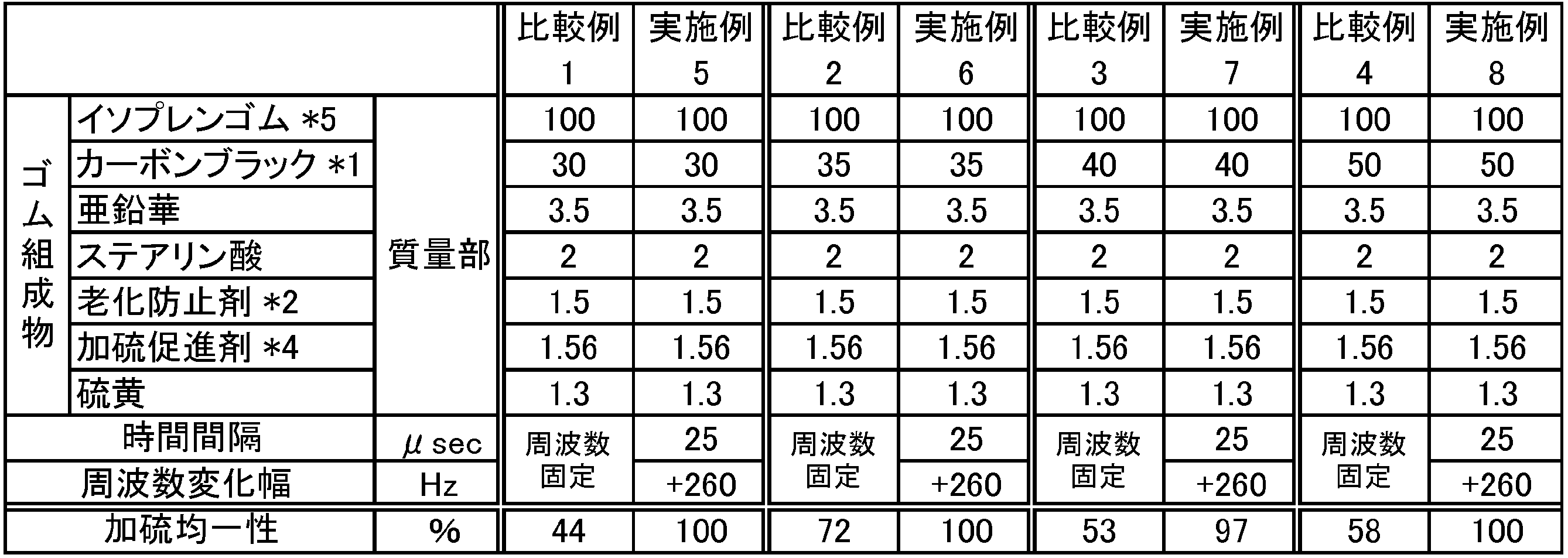
- a rubber composition was prepared by kneading according to a conventional method using the formulation shown in Table 3. This rubber composition was made into a sheet-like sample with a size of 80 mm x 80 mm x 2 mm thickness, and was vulcanized by irradiation with microwaves according to the following procedure.
- Example 5-8 a variable frequency microwave generator (manufactured by LAMBDA Technology, product name "VariWave (registered trademark)”) was used, and the values shown in Table 3 were
- the sheet-like sample was heated (vulcanized) by irradiation with the microwave while changing (increasing) the frequency of the microwave by a certain frequency change range shown in FIG.
- the sheet-like sample was sandwiched between plastic molds, the initial vulcanization pressure was set to 0.5 MPa, and the temperature of the sheet-like sample measured with an infrared thermometer was increased from about 30°C at a heating rate of 0.2°C/sec.
- the microwave irradiation output was PID-controlled so as to rise, and when it reached 140°C, it was held at that temperature for 30 minutes.
- the variable frequency microwave generator used has a variable frequency range of 5.8 to 6.6 GHz according to the device specifications. Therefore, the frequency of the microwave was increased each time, and when it reached 6.6 GHz, it was switched to 5.8 GHz, and thereafter, the frequency was restarted each time.
- Comparative Example 1-4 a sheet sample was heated (heated) by irradiation with microwaves at a fixed frequency (2.45 GHz) using a magnetron oscillator (a microwave synthesis reaction device manufactured by Milestone General Co., Ltd., "flexiWAVE”). sulfur). At that time, the initial vulcanization pressure and temperature control were the same as in the above example.
- the hardness is more than a predetermined value is based on the result that in the toluene immersion test of the sheet-like sample, if the hardness was more than the said predetermined value, it did not elute into toluene due to crosslinking.
- the vulcanization uniformity of the obtained vulcanizate was better than that of the comparative example by irradiating the microwave while sweeping the frequency in a predetermined manner while making the rubber composition a predetermined composition. I know it's expensive.
- a rubber laminate for a tire in which a rubber laminate for a tire in which an unvulcanized rubber layer and a vulcanized rubber layer are laminated, can be uniformly vulcanized by irradiation with microwaves.
- a sulfuric acid method can be provided.
Landscapes
- Chemical & Material Sciences (AREA)
- Health & Medical Sciences (AREA)
- Chemical Kinetics & Catalysis (AREA)
- Medicinal Chemistry (AREA)
- Polymers & Plastics (AREA)
- Organic Chemistry (AREA)
- Engineering & Computer Science (AREA)
- Mechanical Engineering (AREA)
- Processes Of Treating Macromolecular Substances (AREA)
- Tyre Moulding (AREA)
- Heating, Cooling, Or Curing Plastics Or The Like In General (AREA)
Abstract
未加硫ゴム層と加硫ゴム層とが積層されたタイヤ用ゴム積層体を、マイクロ波の照射によって均一に加硫することが可能な、タイヤ用ゴム積層体の加硫方法を提供する。未加硫ゴム層と加硫ゴム層とが積層されたタイヤ用ゴム積層体を、マイクロ波を照射することにより加硫する、タイヤ用ゴム積層体の加硫方法であって、前記未加硫ゴム層は、ジエン系ゴム及びカーボンブラックを含有し、前記加硫ゴム層は、ジエン系ゴム及びカーボンブラックを含有し、加硫時に、前記タイヤ用ゴム積層体に照射するマイクロ波の周波数を、所定の周波数範囲内で、0μsec超100μsec以下の範囲から選択される時間間隔の経過の毎に、0Hz超1000Hz以下の範囲から選択される周波数変化幅だけ周波数を変化させる工程を含む、ことを特徴とする、タイヤ用ゴム積層体の加硫方法である。
Description
本発明は、タイヤ用ゴム積層体の加硫方法、及びリトレッドタイヤの製造方法に関するものである。
タイヤ等のゴム製品の製造にあたり、マイクロ波のエネルギーを利用することは知られている。例えば、特許文献1には、空気入りタイヤの製造において必要となる熱エネルギーの少なくとも一部にマイクロ波エネルギーを用いることで、全加熱時間を短縮し得ることが開示されている。
但し実際のところ、特許文献1においては、マイクロ波エネルギーによる加熱を加硫反応の開始前に終了している。この点に関し、従来、マイクロ波を照射して加硫反応を行った場合には、加硫反応のコントロールが極めて難しく、加硫が不均一となって局所的な焼き焦げが発生する等の問題があった。このような加硫不均一の問題などのため、現状、マイクロ波を用いたゴム加硫は完全な実用化に至っておらず、マイクロ波の利用は、せいぜい加硫前の予備加熱に留まっているという事情があった。
また、リトレッドタイヤの製造では、台タイヤ(一次寿命が終了したタイヤの土台部分)に、トレッドパターンが既に形成されたプレキュアトレッド(加硫ゴム層)を、クッションゴム(未加硫ゴム層)を介して貼り付け、該クッションゴムを加硫接着させる手法がある(プレキュア製法)。このような手法において、加硫対象となる上記クッションゴムを、マイクロ波を用いて効率的に均一加硫する技術も求められている。
そこで、本発明は、未加硫ゴム層と加硫ゴム層とが積層されたタイヤ用ゴム積層体を、マイクロ波の照射によって均一に加硫することが可能な、タイヤ用ゴム積層体の加硫方法を提供することを目的とする。
また、本発明は、均一に加硫されたリトレッドタイヤを得ることが可能な、リトレッドタイヤの製造方法を提供することを目的とする。
また、本発明は、均一に加硫されたリトレッドタイヤを得ることが可能な、リトレッドタイヤの製造方法を提供することを目的とする。
本発明者らは、カーボンブラックがマイクロ波の吸収特性に優れた発熱体となり得る点に着目して、鋭意検討を重ねた。そして、カーボンブラックを含有するゴム組成物をマイクロ波照射によって加熱(加硫)する際、当該マイクロ波の周波数を所定の態様で掃引することにより、均一加硫が図れることを見出した。そして、更にかかる知見を踏まえ、未加硫ゴム層と加硫ゴム層とを備える積層体を加硫する際に、当該積層体を所定の態様とすることにより、効率的に均一加硫できることを見出し、本発明をするに至った。
即ち、上記目的を達成するための本発明の要旨構成は、以下の通りである。
[1]未加硫ゴム層と加硫ゴム層とが積層されたタイヤ用ゴム積層体を、マイクロ波を照射することにより加硫する、タイヤ用ゴム積層体の加硫方法であって、
前記未加硫ゴム層は、ジエン系ゴム及びカーボンブラックを含有し、
前記加硫ゴム層は、ジエン系ゴム及びカーボンブラックを含有し、
前記加硫ゴム層を構成する加硫ゴムへの、波長λ(mm)のマイクロ波の浸透深さDλ(mm)を、下記式:
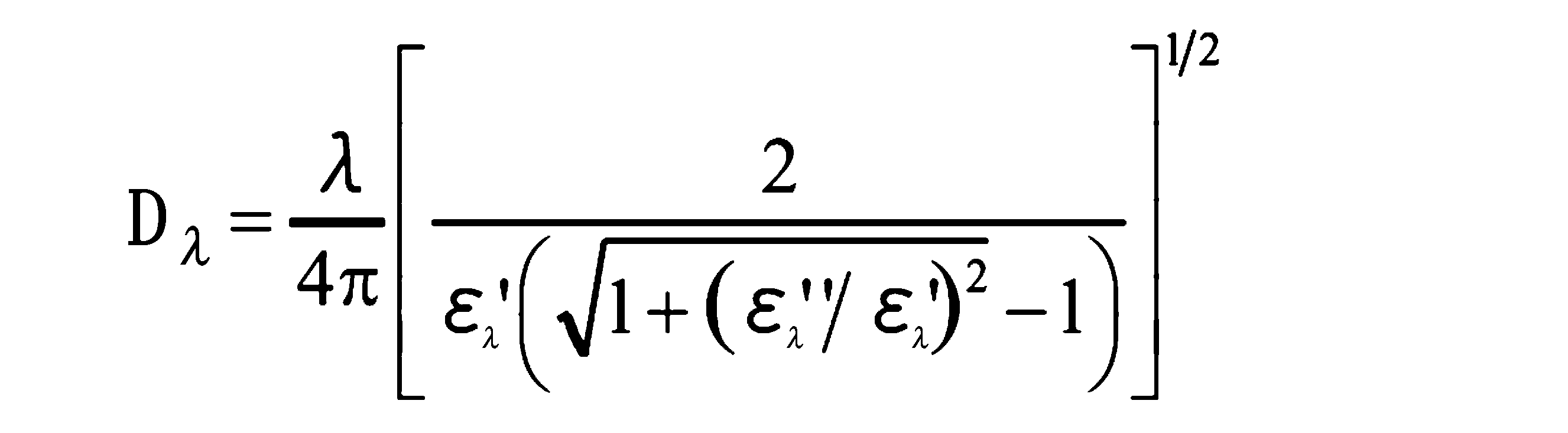
[式中、λはマイクロ波の波長(mm)を表し、ελ’は加硫ゴムの波長λにおける比誘電率を表し、ελ”は加硫ゴムの波長λにおける比誘電損失を表す。]で定義したときに、浸透深さDλが前記加硫ゴム層の厚みの値以上である波長λに対応する周波数を含むようにマイクロ波の周波数範囲を選択し、加硫時に、前記タイヤ用ゴム積層体に照射するマイクロ波の周波数を、前記周波数範囲内で、0μsec超100μsec以下の範囲から選択される時間間隔の経過の毎に、0Hz超1000Hz以下の範囲から選択される周波数変化幅だけ周波数を変化させる工程を含む、ことを特徴とする、タイヤ用ゴム積層体の加硫方法。
前記未加硫ゴム層は、ジエン系ゴム及びカーボンブラックを含有し、
前記加硫ゴム層は、ジエン系ゴム及びカーボンブラックを含有し、
前記加硫ゴム層を構成する加硫ゴムへの、波長λ(mm)のマイクロ波の浸透深さDλ(mm)を、下記式:
[2]マイクロ波の前記周波数範囲が、30GHz以下の帯域にある、[1]に記載のタイヤ用ゴム積層体の加硫方法。
[3]マイクロ波の前記周波数範囲が、3GHz以下の帯域にある、[1]に記載のタイヤ用ゴム積層体の加硫方法。
[4]前記加硫ゴム層における前記カーボンブラックの含有量が、前記ジエン系ゴム100質量部に対して15質量部以上である、[1]~[3]のいずれかに記載のタイヤ用ゴム積層体の加硫方法。
[5]前記加硫ゴム層における前記カーボンブラックの含有量が、前記ジエン系ゴム100質量部に対して60質量部以下である、[1]~[4]のいずれかに記載のタイヤ用ゴム積層体の加硫方法。
[6]前記未加硫ゴム層における前記カーボンブラックは、窒素吸着比表面積が50m2/g以上130m2/g以下であるカーボンブラックAを含む、[1]~[5]のいずれかに記載のタイヤ用ゴム積層体の加硫方法。
[7]前記未加硫ゴム層における前記カーボンブラックの含有量が、前記ジエン系ゴム100質量部に対して20質量部以上である、[1]~[6]のいずれかに記載のタイヤ用ゴム積層体の加硫方法。
[8]前記時間間隔が、毎度一定である、[1]~[7]のいずれかに記載のタイヤ用ゴム積層体の加硫方法。
[9]前記周波数変化幅が、毎度一定である、[1]~[8]のいずれかに記載のタイヤ用ゴム積層体の加硫方法。
[10]台タイヤに、加硫ゴム層であるプレキュアトレッドを、未加硫ゴム層であるクッションゴムを介して貼り付け、該クッションゴムを加硫接着させる工程を含む、リトレッドタイヤの製造方法であって、
前記工程で、[1]~[9]のいずれかに記載のタイヤ用ゴム積層体の加硫方法を用いたことを特徴とする、リトレッドタイヤの製造方法。
前記工程で、[1]~[9]のいずれかに記載のタイヤ用ゴム積層体の加硫方法を用いたことを特徴とする、リトレッドタイヤの製造方法。
本発明によれば、未加硫ゴム層と加硫ゴム層とが積層されたタイヤ用ゴム積層体を、マイクロ波の照射によって均一に加硫することが可能な、タイヤ用ゴム積層体の加硫方法を提供することができる。
また、本発明によれば、均一に加硫されたリトレッドタイヤを得ることが可能な、リトレッドタイヤの製造方法を提供することができる。
また、本発明によれば、均一に加硫されたリトレッドタイヤを得ることが可能な、リトレッドタイヤの製造方法を提供することができる。
以下に、本発明を、その実施形態に基づき、詳細に例示説明する。
(タイヤ用ゴム積層体の加硫方法)
本発明の一実施形態のタイヤ用ゴム積層体の加硫方法(以下、「本実施形態の加硫方法」と称することがある。)は、マイクロ波を照射することによりタイヤ用ゴム積層体を加硫する方法である。本実施形態の加硫方法で用いる前記タイヤ用ゴム積層体は、未加硫ゴム層と加硫ゴム層とが積層されてなり、前記未加硫ゴム層は、ジエン系ゴム及びカーボンブラックを含有し、前記加硫ゴム層は、ジエン系ゴム及びカーボンブラックを含有する。そして、本実施形態の加硫方法では、まず、前記加硫ゴム層を構成する加硫ゴムへの、波長λ(mm)のマイクロ波の浸透深さDλ(mm)を、下記式:

[式中、λはマイクロ波の波長(mm)を表し、ελ’は加硫ゴムの波長λにおける比誘電率を表し、ελ”は加硫ゴムの波長λにおける比誘電損失を表す。]で定義したときに、浸透深さDλが前記加硫ゴム層の厚みの値以上である波長λに対応する周波数を含むように、マイクロ波の周波数範囲を選択する。そして、加硫時に、前記タイヤ用ゴム積層体に照射するマイクロ波の周波数を、上述の通り選択された周波数範囲内で、0μsec超100μsec以下の範囲から選択される時間間隔の経過の毎に、0Hz超1000Hz以下の範囲から選択される周波数変化幅だけ周波数を変化させる工程を含む、ことを一特徴とする。
本実施形態の加硫方法は、上記タイヤ用ゴム積層体のうちの未加硫ゴム層を、他の部材(加硫ゴム層など)の品質を維持しつつ、選択的に均一に加硫するという技術的思想に基づくものである。
本発明の一実施形態のタイヤ用ゴム積層体の加硫方法(以下、「本実施形態の加硫方法」と称することがある。)は、マイクロ波を照射することによりタイヤ用ゴム積層体を加硫する方法である。本実施形態の加硫方法で用いる前記タイヤ用ゴム積層体は、未加硫ゴム層と加硫ゴム層とが積層されてなり、前記未加硫ゴム層は、ジエン系ゴム及びカーボンブラックを含有し、前記加硫ゴム層は、ジエン系ゴム及びカーボンブラックを含有する。そして、本実施形態の加硫方法では、まず、前記加硫ゴム層を構成する加硫ゴムへの、波長λ(mm)のマイクロ波の浸透深さDλ(mm)を、下記式:
本実施形態の加硫方法は、上記タイヤ用ゴム積層体のうちの未加硫ゴム層を、他の部材(加硫ゴム層など)の品質を維持しつつ、選択的に均一に加硫するという技術的思想に基づくものである。
本明細書において、「マイクロ波」とは、周波数300MHz~300GHzの電磁波を指すものとする。
また、本明細書において、「未加硫ゴム層」とは、ゴム組成物から作製され、加硫処理が施されていない層状の部材を指し、「加硫ゴム層」とは、ゴム組成物から作製され、既に加硫処理が施された層状の部材を指すものとする。
また、本明細書において、「未加硫ゴム層」とは、ゴム組成物から作製され、加硫処理が施されていない層状の部材を指し、「加硫ゴム層」とは、ゴム組成物から作製され、既に加硫処理が施された層状の部材を指すものとする。
図1は、本実施形態の加硫方法に従った、タイヤ用ゴム積層体に照射するマイクロ波の周波数の掃引パターンを示す一例の概要図である。図1に示す掃引パターンでは、タイヤ用ゴム積層体に照射するマイクロ波の周波数を、一定の時間間隔(T)の経過の毎に、一定の周波数変化幅(F)だけ周波数を上昇させている。
本実施形態の加硫方法によりタイヤ用ゴム積層体、特に未加硫ゴム層を均一に加硫できるメカニズムについて、本発明者らは以下のように考えている。
通常、カーボンブラックを含有するゴム組成物にマイクロ波を照射する場合には、ゴム組成物に直接照射されるマイクロ波と、マイクロ波発生装置内で少なくとも1回反射した後にゴム組成物に照射されるマイクロ波とにより、干渉作用が生じる。この点、例えばマイクロ波の周波数が一定であると、ゴム組成物において干渉作用が生じ易い箇所と生じ難い箇所とが固定的に偏在して、一部が過加熱、他の一部が加熱不足となる事態が生じ得る。かかる事態は、特に架橋反応が起こる120℃以上の温度で顕著となり、結果として加硫不均一を引き起こすものと考えられる。これに対し、本実施形態の加硫方法では、照射するマイクロ波の周波数を所定の態様で掃引するため、ゴム組成物におけるエネルギー吸収の局部集中化を効果的に回避できる結果、加熱(加硫)の均一化を図ることができるものと考えられる。
通常、カーボンブラックを含有するゴム組成物にマイクロ波を照射する場合には、ゴム組成物に直接照射されるマイクロ波と、マイクロ波発生装置内で少なくとも1回反射した後にゴム組成物に照射されるマイクロ波とにより、干渉作用が生じる。この点、例えばマイクロ波の周波数が一定であると、ゴム組成物において干渉作用が生じ易い箇所と生じ難い箇所とが固定的に偏在して、一部が過加熱、他の一部が加熱不足となる事態が生じ得る。かかる事態は、特に架橋反応が起こる120℃以上の温度で顕著となり、結果として加硫不均一を引き起こすものと考えられる。これに対し、本実施形態の加硫方法では、照射するマイクロ波の周波数を所定の態様で掃引するため、ゴム組成物におけるエネルギー吸収の局部集中化を効果的に回避できる結果、加熱(加硫)の均一化を図ることができるものと考えられる。
そのため、本実施形態の加硫方法では、(ターンテーブル式電子レンジのように、)加熱ムラの回避を目的として加熱対象物を装置内で移動又は回転させることは、必須ではない。
一方で、マイクロ波は、誘電体に吸収されたあと熱エネルギーに変わることで、次第に減衰するため、対象となる誘電体(加硫ゴムなど)に対しては、浸透できる距離(浸透深さ)が決まっている。具体的に、加硫ゴム層を構成する加硫ゴムへの、波長λ(mm)のマイクロ波の浸透深さDλ(mm)は、下記式:

[式中、λはマイクロ波の波長(mm)を表し、ελ’は加硫ゴムの波長λにおける比誘電率を表し、ελ”は加硫ゴムの波長λにおける比誘電損失を表す。]より算出することができる。なお、上記の比誘電率及び比誘電損失は、同軸ケーブル法により測定することができる。そして、浸透深さDλ(周波数を変化させれば、波長λも変化し、ひいては浸透深さも変化する。)が加硫ゴム層の厚みの値以上である波長λに対応する周波数を含むようにマイクロ波の周波数範囲を選択し、当該周波数範囲内で上記工程を行えば、マイクロ波の減衰の影響が小さいので、加硫ゴム層の品質を十分に維持したまま、未加硫ゴム層を均一に加硫することができる。
マイクロ波に関し、波長λ(mm)及び周波数f(GHz)は、λ=300/fの関係にある。
マイクロ波に関し、波長λ(mm)及び周波数f(GHz)は、λ=300/fの関係にある。
なお、浸透深さの調整は、例えば、選択されるマイクロ波の周波数範囲を調節したり、加硫ゴムの配合(組成)を調節して比誘電率(ελ’)や比誘電損失(ελ”)を変化させたりすることにより、行うことができる。
例えば、天然ゴム60質量部、ブタジエンゴム40質量部、HAF級カーボンブラック50質量部の配合について、5.8GHz(≒波長52mm)における浸透深さD52は3.1mm、2.45GHz(≒波長122mm)における浸透深さD122は4.9mm、900MHz(≒波長333mm)における浸透深さD333は22.1mmとなる。一方、例えば、スチレン-ブタジエンゴム100質量部、ISAF級カーボンブラック40質量部の配合について、5.8GHz(≒波長52mm)における浸透深さD52は6.3mm、2.45GHz(≒波長122mm)における浸透深さD122は13.2mm、900MHz(≒波長333mm)における浸透深さD333は28.8mmとなる。
例えば、天然ゴム60質量部、ブタジエンゴム40質量部、HAF級カーボンブラック50質量部の配合について、5.8GHz(≒波長52mm)における浸透深さD52は3.1mm、2.45GHz(≒波長122mm)における浸透深さD122は4.9mm、900MHz(≒波長333mm)における浸透深さD333は22.1mmとなる。一方、例えば、スチレン-ブタジエンゴム100質量部、ISAF級カーボンブラック40質量部の配合について、5.8GHz(≒波長52mm)における浸透深さD52は6.3mm、2.45GHz(≒波長122mm)における浸透深さD122は13.2mm、900MHz(≒波長333mm)における浸透深さD333は28.8mmとなる。
本実施形態の加硫方法では、周波数可変型マイクロ波発生装置(VFM、Variable Frequency Microwave)、特には、半導体発振器又は増幅器による周波数可変型マイクロ波発生装置を用いることができる。
本実施形態の加硫方法において、時間間隔(T)は、周波数を変化させるタイミング間の時間であり、言い換えれば、一定周波数のマイクロ波を照射する時間である。時間間隔(T)は、0μsec超100μsec以下の範囲から選択される。時間間隔(T)が100μsecを超えると、ゴム組成物の一部の箇所への熱の集中を十分に抑制できない虞がある。また、時間間隔(T)の下限としては、0μsec超であればよく、使用する装置の仕様によって適宜調整すればよい。特に、時間間隔(T)は、マイクロ波照射の効率の観点から、1μsec以上が好ましい。同様の観点から、時間間隔(T)は、3~50μsecの範囲から選択されることが好ましく、5~30μsecの範囲から選択されることがより好ましく、10~25μsecの範囲から選択されることが更に好ましい。
時間間隔(T)は、上述したメカニズムに鑑みれば、図1に示すように毎度一定であってもよく、或いは、都度異なってもよい。但し、本実施形態の加硫方法では、より効果的に加硫の均一化を図る観点から、時間間隔(T)が毎度一定であることが好ましい。
また、周波数変化幅(F)は、0Hz超1000Hz以下の範囲から選択される。周波数が全く変化しないと(周波数変化幅(F)が0Hzであると)、ゴム組成物の一部の箇所への熱が集中することとなる。また、周波数変化幅(F)が1000Hzを超えると、マイクロ波照射の安定性が悪化し、均一加硫に悪影響を及ぼす虞がある。同様の観点から、周波数変化幅(F)は、10~500Hzの範囲から選択されることが好ましく、50~350Hzの範囲から選択されることがより好ましく、100~260Hzの範囲から選択されることが更に好ましい。
周波数変化幅(F)は、上述したメカニズムに鑑みれば、図1に示すように毎度一定であってもよく、或いは、都度異なってもよい。但し、本実施形態の加硫方法では、より効果的に加硫の均一化を図る観点から、周波数変化幅(F)が毎度一定であることが好ましい。
また、周波数変化幅(F)分の周波数の変化のさせ方は、上述したメカニズムに鑑みれば、図1に示すように毎度上昇であってもよく、或いは、毎度低下であってもよく、或いは、上昇又は低下が都度異なってもよい。但し、本実施形態の加硫方法では、毎度、周波数変化幅(F)だけ周波数を上昇させることが好ましい。
なお、周波数可変型マイクロ波発生装置は、通常、装置仕様上の可変周波数の上限及び下限がある。そのため、そのような周波数可変型マイクロ波発生装置を用い、周波数を毎度上昇させると、周波数が可変周波数の上限又はその付近に達する場合がある。この場合には、一旦、周波数を可変周波数の下限又はその付近に切り替えた後、周波数の毎度の上昇を再開すればよい。周波数を毎度低下させるときも、同様のやり方とすればよい。
本実施形態の加硫方法において、選択されるマイクロ波の周波数範囲(周波数の使用帯域)は、所定の周波数(即ち、浸透深さDλが加硫ゴム層の厚みの値以上である波長λに対応する周波数)を含んでいれば、特に限定されず、例えば、用いるマイクロ波発生装置の仕様(特には、発振器又は増幅器の種類)に基づいて適宜選択することができる。様々な配合の加硫ゴムにおいて、マイクロ波の吸収性はマイクロ波の波長に依存するため、適切な周波数範囲を選択することが好ましい。特に、本実施形態の加硫方法で選択されるマイクロ波の周波数範囲は、30GHz以下の帯域にあることが好ましく、3GHz以下の帯域にあることがより好ましい。この場合、加硫ゴムに含有されるカーボンブラックがマイクロ波を吸収し難く(透過し易く)なるので、加硫ゴムのマイクロ波照射に対する影響がより小さくなる。また、マイクロ波の吸収性は、ゴムの温度にも依存するため、マイクロ波を照射しながら最適な周波数に途中で変化させることで、含有されるカーボンブラックがマイクロ波を吸収し難く(透過し易く)なるので、加硫ゴムのマイクロ波照射に対する影響がより小さくなる。
本実施形態の加硫方法では、特に限定されないが、周波数を所定の態様で掃引しながらマイクロ波を照射する操作の継続時間が、100秒以上であることが好ましく、200秒以上であることがより好ましく、300秒以上であることが更に好ましい。この場合、ゴム組成物の加硫の度合いをより十分に高めることができる。
本実施形態の加硫方法では、特に限定されないが、周波数を所定の態様で掃引しながらマイクロ波を照射する際に、タイヤ用ゴム積層体、特に未加硫ゴム層の温度をモニタリングしてもよい。タイヤ用ゴム積層体、特に未加硫ゴム層の温度をモニタリングすることで、より確実に、均一加硫を図ることができる。更に、本実施形態の加硫方法では、マイクロ波を照射する際に、タイヤ用ゴム積層体、特に未加硫ゴム層の昇温速度をコントロールしてもよい。その場合、昇温速度のコントロールは、例えば、マイクロ波の照射出力(W)の微調整により行うことができる。また、昇温速度のコントロール方式は、特に限定されないが、PID制御とすることができる。或いは、昇温速度のコントロールは、マイクロ波照射のオン-オフ切り替えにより行うこともできる。そして、昇温速度は、例えば、0.05℃/秒以上0.5℃/秒以下の範囲から選択することができる。
本実施形態の加硫方法において、実際にタイヤ用ゴム積層体を加硫する際の最高到達温度(いわゆる加硫温度)は、特に限定されず、目的に応じて適宜選択することができるが、通常は140℃以上とすることが好ましく、また、190℃以下とすることが好ましく、160℃以下とすることがより好ましい。
本実施形態の加硫方法は、加硫対象のタイヤ用ゴム積層体を任意の部材(例えば、台タイヤなど)上に配置した状態で実施してもよい。
<加硫対象のタイヤ用ゴム積層体>
本実施形態の加硫方法で用いる、加硫対象のタイヤ用ゴム積層体は、少なくとも未加硫ゴム層と加硫ゴム層とを備える。未加硫ゴム層は、1層単独であってもよく、2層以上であってもよい。また、加硫ゴム層は、1層単独であってもよく、2層以上であってもよい。
また、加硫対象のタイヤ用ゴム積層体は、未加硫ゴム層及び加硫ゴム層以外に、その他の層状の部材(例えば、台タイヤなど)を備えてもよい。その場合、未加硫ゴム層が上記その他の部材に接触する又はより近接するように配置することができる。また、上記その他の部材は、金属部品(例えば、スチールコードなど)を含んでいてもよい。
更に、加硫対象のタイヤ用ゴム積層体は、未加硫ゴム層と加硫ゴム層とが接触していることが好ましい。
-未加硫ゴム層-
タイヤ用ゴム積層体の一部材である未加硫ゴム層は、少なくともジエン系ゴム及びカーボンブラックを含有する。また、未加硫ゴム層は、更に必要に応じて、加硫剤、その他の成分などを適宜含有することができる。
タイヤ用ゴム積層体の一部材である未加硫ゴム層は、少なくともジエン系ゴム及びカーボンブラックを含有する。また、未加硫ゴム層は、更に必要に応じて、加硫剤、その他の成分などを適宜含有することができる。
ジエン系ゴムとしては、例えば、天然ゴム(NR)、ブタジエンゴム(BR)、イソプレンゴム(IR)、スチレン-ブタジエンゴム(SBR)、エチレン-プロピレン-ジエンゴム(EPDM)、クロロプレンゴム(CR)、ハロゲン化ブチルゴム、アクリロニリトル-ブタジエンゴム(NBR)等が挙げられる。これらジエン系ゴムは、1種単独で用いてもよく、2種以上を組み合わせて用いてもよい。これらの中でも、本発明の加硫方法による加硫均一化の効果をより確実に享受する観点から、ジエン系ゴムとしては、天然ゴム、ブタジエンゴム、イソプレンゴム及びスチレン-ブタジエンゴムの少なくともいずれかを用いることが好ましい。
未加硫ゴム層に含有されるカーボンブラックとしては、例えば、GPF、FEF、HAF、ISAF、SAFのグレードのカーボンブラックが挙げられる。これらカーボンブラックは、1種単独で用いてもよく、2種以上を組み合わせて用いてもよい。また、未加硫ゴム層におけるカーボンブラックは、窒素吸着比表面積が50m2/g以上130m2/g以下であるカーボンブラックAを含むことが好ましい。この場合、より効果的に加硫の均一化を図ることができる。上記カーボンブラックAとしては、例えば、HAF、ISAF、SAFのグレードのカーボンブラックが挙げられる。これらカーボンブラックAは、1種単独で用いてもよく、2種以上を組み合わせて用いてもよい。また、上記カーボンブラックAは、より効果的に加硫の均一化を図る観点から、窒素吸着比表面積が70m2/g以上120m2/g以下であることが好ましい。かかる窒素吸着比表面積を有するカーボンブラックAとしては、例えば、HAF、ISAFのグレードのカーボンブラックが挙げられる。
なお、カーボンブラックの窒素吸着比表面積は、JIS K 6217-2に準拠して測定されるものとする。
なお、カーボンブラックの窒素吸着比表面積は、JIS K 6217-2に準拠して測定されるものとする。
未加硫ゴム層におけるカーボンブラックの含有量としては、特に限定されず、目的に応じて適宜選択することができるが、本実施形態の加硫方法による加硫均一化の効果をより確実に享受する観点から、ジエン系ゴム100質量部に対して20質量部以上であることが好ましく、30質量部以上であることがより好ましい。また、未加硫ゴム層におけるカーボンブラックの含有量は、タイヤに所望される機械特性を保持する観点から、ジエン系ゴム100質量部に対して120質量部以下であることが好ましく、70質量部以下であることがより好ましい。
未加硫ゴム層は、加硫剤を含有することが好ましい。加硫剤としては、例えば、硫黄、モルホリンジスルフィド等の硫黄系加硫剤;ベンゾイルパーオキサイド、ジクミルパーオキサイド、ジ-t-ブチルパーオキサイド、t-ブチルクミルパーオキサイド、メチルエチルケトンパーオキサイド、クメンハイドロパーオキサイド、2,5-ジメチル-2,5-ジ(t-ブチルパーオキシ)ヘキサン等の有機過酸化物;等が挙げられる。また、加硫剤としては、ヘキサメチレンビスチオサルフェート2ナトリウム塩2水和物、1,3-ビス(シトラコンイミドメチル)ベンゼン、4,4’-ジフェニルメタンビスマレイミド、m-フェニレンビスマレイミド等も挙げられる。これら加硫剤は、1種単独で用いてもよく、2種以上を組み合わせて用いてもよい。
未加硫ゴム層における加硫剤の含有量としては、特に限定されず、目的に応じて適宜選択することができ、例えば、ジエン系ゴム100質量部に対して0.1質量部以上10質量部以下とすることができる。
その他の成分としては、カーボンブラック以外の充填剤(シリカなど)、ステアリン酸等の加硫助剤、加硫促進剤、亜鉛華等の加硫促進助剤、老化防止剤、軟化剤、可塑剤、加工性改良剤などが挙げられ、これらを適量含有することができる。
未加硫ゴム層を構成するゴム組成物は、例えば、ロール、インターナルミキサー、バンバリーローター等の混練機を用い、常法に従って上述した各成分を配合して混練することにより得られたものとすることができる。
未加硫ゴム層の厚みは、特に限定されず、例えば、0.5mm~4mmとすることができる。
なお、未加硫ゴム層中に、金属部品(例えば、スチールコードなど)が含まれていてもよい。本実施形態の加硫方法では、上述の通り、照射するマイクロ波の周波数の掃引態様の適正化が図られているので、金属部品におけるアーキング等の不具合の抑制が期待される。
-加硫ゴム層-
タイヤ用ゴム積層体の一部材である加硫ゴム層は、既に加硫処理が施された層であり、また、少なくともジエン系ゴム及びカーボンブラックを含有する。上記加硫処理は、上記加硫処理は、特に限定されない。また、加硫ゴム層は、更に必要に応じて、加硫剤、その他の成分などを適宜含有することができる。
タイヤ用ゴム積層体の一部材である加硫ゴム層は、既に加硫処理が施された層であり、また、少なくともジエン系ゴム及びカーボンブラックを含有する。上記加硫処理は、上記加硫処理は、特に限定されない。また、加硫ゴム層は、更に必要に応じて、加硫剤、その他の成分などを適宜含有することができる。
ジエン系ゴム、カーボンブラック、加硫剤、その他の成分の具体例や好適態様については、未加硫ゴム層に含有されるものと同様である。
加硫ゴム層におけるカーボンブラックの含有量としては、特に限定されず、目的に応じて適宜選択することができるが、タイヤ用ゴムとしての耐久性等を高める観点から、ジエン系ゴム100質量部に対して15質量部以上であることが好ましい。また、加硫ゴム層におけるカーボンブラックの含有量は、ジエン系ゴム100質量部に対して60質量部以下であることが好ましい。この場合、広い帯域においてマイクロ波が、吸収されることなく、ある程度の厚さを有する加硫ゴム層をも透過して深部まで到達することができる。更には、タイヤ用ゴム積層体の加硫時において、加硫ゴム層の発熱等の悪影響を低減することもできる。
加硫ゴム層の厚みは、特に限定されず、例えば、10mm~50mmとすることができる。また、加硫ゴム層は、一方の表面に凹凸構造(例えば、トレッドパターン)が形成されていてもよい。
なお、加硫ゴム層中に、金属部品(例えば、スチールコードなど)が含まれていてもよい。本実施形態の加硫方法では、上述の通り、照射するマイクロ波の周波数の掃引態様の適正化が図られているので、金属部品におけるアーキング等の不具合の抑制が期待される。
(リトレッドタイヤの製造方法)
本発明の一実施形態のリトレッドタイヤの製造方法(以下、「本実施形態の製造方法」と称することがある。)は、台タイヤに、加硫ゴム層であるプレキュアトレッドを、未加硫ゴム層であるクッションゴムを介して貼り付け、該クッションゴムを加硫接着させる工程を含む、リトレッドタイヤの製造方法であって、前記工程で、上述のタイヤ用ゴム積層体の加硫方法を用いたことを特徴とする。具体的に、本実施形態の製造方法では、クッションゴム及びプレキュアトレッドを含む部材が、本実施形態の加硫方法におけるタイヤ用ゴム積層体に対応する。
かかる製造方法によれば、均一に加硫されたリトレッドタイヤを得ることが可能である。
本発明の一実施形態のリトレッドタイヤの製造方法(以下、「本実施形態の製造方法」と称することがある。)は、台タイヤに、加硫ゴム層であるプレキュアトレッドを、未加硫ゴム層であるクッションゴムを介して貼り付け、該クッションゴムを加硫接着させる工程を含む、リトレッドタイヤの製造方法であって、前記工程で、上述のタイヤ用ゴム積層体の加硫方法を用いたことを特徴とする。具体的に、本実施形態の製造方法では、クッションゴム及びプレキュアトレッドを含む部材が、本実施形態の加硫方法におけるタイヤ用ゴム積層体に対応する。
かかる製造方法によれば、均一に加硫されたリトレッドタイヤを得ることが可能である。
以下に、実施例を挙げて本発明を更に詳しく説明するが、本発明は下記の実施例に何ら限定されるものではない。
表1に示す配合処方で常法に従って混錬及び加硫して、厚み3.0mmの加硫ゴム層サンプルを作製した。当該加硫ゴム層サンプルについて、ベクトルネットワーク(アジレント・テクノロジー株式会社製、「E5071C」)を用い、マイクロ波の周波数0.3GHz~6.5GHzの範囲(つまり、波長λが約46mm~約1000mmの範囲)における誘電損失(ε″)及び誘電正接(tanδ)を同軸ケーブル法により測定した。表1に、マイクロ波の周波数が5.8GHz(≒波長52mm)、2.45GHz(≒波長122mm)、900MHz(≒波長333mm)における比誘電率ελ’及び比誘電損失ελ”を示す。
*1 カーボンブラック(HAF):東海カーボン株式会社製、シースト3H、HAFグレード(窒素吸着比表面積:82m2/g)
*2 老化防止剤:大内新興化学工業株式会社製、N-フェニル-N’-(1,3-ジメチルブチル)-p-フェニレンジアミン(6PPD)
*3 ワックス:大内新興化学工業株式会社製、サンノック
*4 加硫促進剤:大内新興化学工業株式会社製、N-シクロヘキシル-2-ベンゾチアゾリルスルフェンアミド(ノクセラーCZ)
*2 老化防止剤:大内新興化学工業株式会社製、N-フェニル-N’-(1,3-ジメチルブチル)-p-フェニレンジアミン(6PPD)
*3 ワックス:大内新興化学工業株式会社製、サンノック
*4 加硫促進剤:大内新興化学工業株式会社製、N-シクロヘキシル-2-ベンゾチアゾリルスルフェンアミド(ノクセラーCZ)
一方、表2に示す配合処方で常法に従って混練して、厚み1mmの未加硫ゴム層を作製した。次いで、当該未加硫ゴム層を、上述の加硫ゴム層2枚を用いて挟持し、80mm×80mmのサイズの積層体サンプルを作製した。かかる積層体サンプルについて、下記の手順に従ってマイクロ波を照射して加硫した。
実施例1-4では、周波数可変型マイクロ波発生装置(LAMBDA Technology社製、製品名「VariWave(登録商標)」)を用い、表2に示す一定の時間間隔の経過の毎に、表2に示す一定の周波数変化幅だけマイクロ波の周波数を変化させながら(上昇させながら)、当該マイクロ波の照射により積層体サンプルを加熱(加硫)した。その際、積層体サンプルをプラスチックモールドに挟み、初期加硫圧を0.5MPaとし、赤外線温度計で測定されるシート状サンプルの温度が約30℃から0.2℃/秒の昇温速度で上昇するようにマイクロ波の照射出力をPID制御し、140℃に到達したら、当該温度で30分保持した。
なお、使用した周波数可変型マイクロ波発生装置は、装置仕様上の可変周波数の範囲が5.8~6.6GHzである。そのため、上記実施例では、マイクロ波の周波数範囲として5.8~6.6GHzを選択するとともに、マイクロ波の周波数を毎度上昇させて6.6GHzに達したときには、5.8GHzに切り替え、その後、毎度の上昇を再開した。上記の周波数範囲は、表1からも分かる通り、浸透深さDλが加硫ゴムの厚みの値(3.0mm)以上である波長λ(52mm)に対応する周波数(5.8GHz)を含んでいる。
なお、使用した周波数可変型マイクロ波発生装置は、装置仕様上の可変周波数の範囲が5.8~6.6GHzである。そのため、上記実施例では、マイクロ波の周波数範囲として5.8~6.6GHzを選択するとともに、マイクロ波の周波数を毎度上昇させて6.6GHzに達したときには、5.8GHzに切り替え、その後、毎度の上昇を再開した。上記の周波数範囲は、表1からも分かる通り、浸透深さDλが加硫ゴムの厚みの値(3.0mm)以上である波長λ(52mm)に対応する周波数(5.8GHz)を含んでいる。
<剥離強度の測定>
各積層体サンプルについて、JIS K 6854-3に準じて引張試験を行い、サンプルが破壊されるまでの剥離強度(N/inch)を測定した。結果を表2に示す。かかる測定値が大きいほど、接着力が強いことを示す。
各積層体サンプルについて、JIS K 6854-3に準じて引張試験を行い、サンプルが破壊されるまでの剥離強度(N/inch)を測定した。結果を表2に示す。かかる測定値が大きいほど、接着力が強いことを示す。
<破壊形態>
各積層体サンプルについて、各層の界面及び中間のマイクロ波照射によって加硫を行った層の破壊が見られなく、両サイドの加硫ゴム層が破壊された場合には、「ゴム破壊」と評価し、また、積層体サンプルの各層の界面又は中間のマイクロ波照射によって加硫を行った層が破壊された場合には、「接着破壊」と評価した。結果を表2に示す。
各積層体サンプルについて、各層の界面及び中間のマイクロ波照射によって加硫を行った層の破壊が見られなく、両サイドの加硫ゴム層が破壊された場合には、「ゴム破壊」と評価し、また、積層体サンプルの各層の界面又は中間のマイクロ波照射によって加硫を行った層が破壊された場合には、「接着破壊」と評価した。結果を表2に示す。
<接着評価>
前述した破壊形態が「ゴム破壊」の場合には、接着評価を良好とし、ゴムの界面で「接着破壊」の場合には、接着評価を不良とした。結果を表2に示す。
前述した破壊形態が「ゴム破壊」の場合には、接着評価を良好とし、ゴムの界面で「接着破壊」の場合には、接着評価を不良とした。結果を表2に示す。
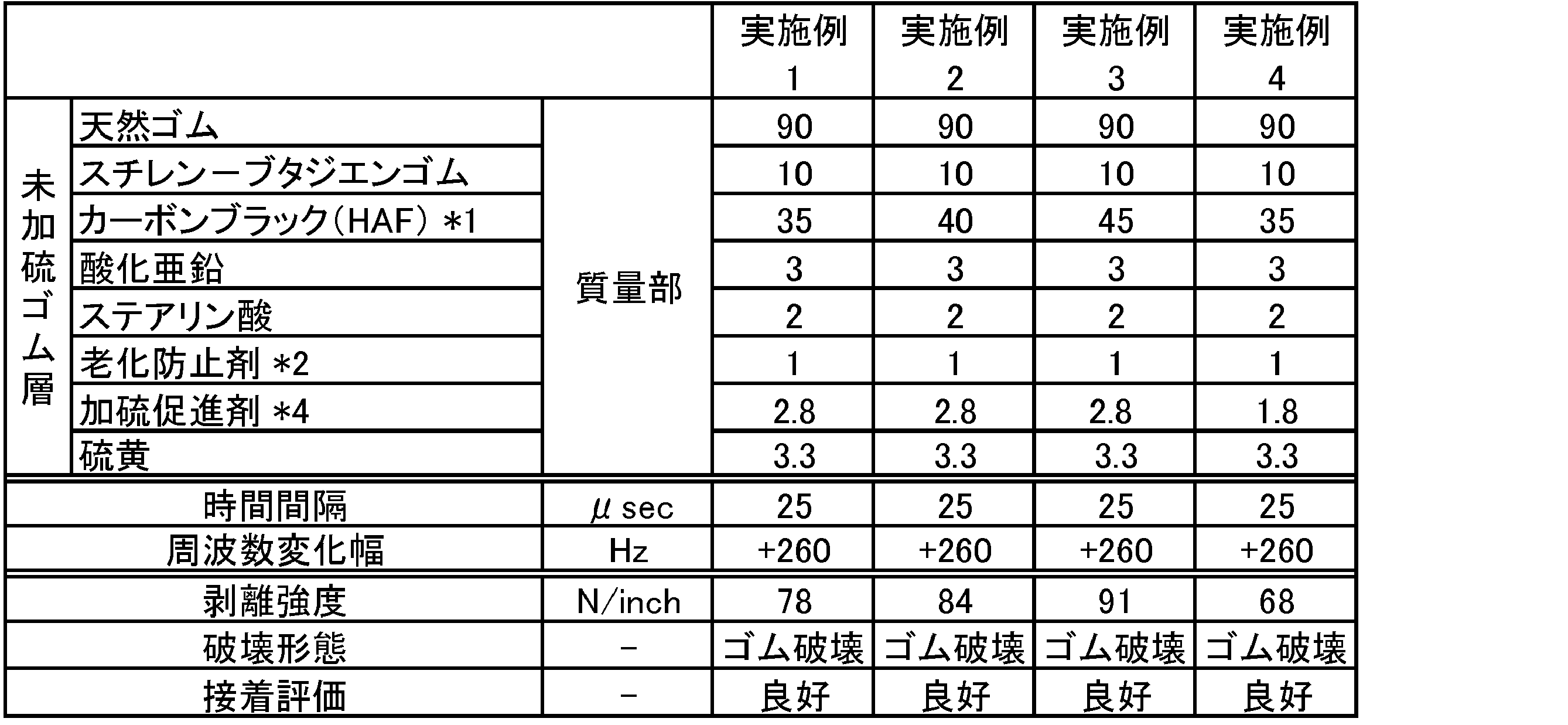
表2より、実施例1-4の積層体の層間において強固な接着力が見られたため、中間層(未加硫ゴム層)の加硫が均一にできたと思われる。つまり、一定以下の厚みを有する層を介しても、ジエン系ゴム及びカーボンブラックを含有するゴム組成物に対し、周波数を所定の態様で掃引しながらマイクロ波を照射したことで、均一に加硫できることが分かる。
従って、本発明のタイヤ用ゴム積層体の加硫方法を行うと、少なくとも未加硫ゴム層を均一に加硫することができるものと考えられる。
従って、本発明のタイヤ用ゴム積層体の加硫方法を行うと、少なくとも未加硫ゴム層を均一に加硫することができるものと考えられる。
次に、未加硫ゴム層のみに着目し、加硫方法の違いによる加硫均一性の比較の評価を行った。
表3に示す配合処方で常法に従って混錬し、ゴム組成物を調製した。かかるゴム組成物について、80mm×80mm×厚み2mmのサイズのシート状サンプルとし、下記の手順に従ってマイクロ波を照射して加硫した。
実施例5-8では、周波数可変型マイクロ波発生装置(LAMBDA Technology社製、製品名「VariWave(登録商標)」)を用い、表3に示す一定の時間間隔の経過の毎に、表3に示す一定の周波数変化幅だけマイクロ波の周波数を変化させながら(上昇させながら)、当該マイクロ波の照射によりシート状サンプルを加熱(加硫)した。その際、シート状サンプルをプラスチックモールドに挟み、初期加硫圧を0.5MPaとし、赤外線温度計で測定されるシート状サンプルの温度が約30℃から0.2℃/秒の昇温速度で上昇するようにマイクロ波の照射出力をPID制御し、140℃に到達したら、当該温度で30分保持した。
なお、使用した周波数可変型マイクロ波発生装置は、装置仕様上の可変周波数の範囲が5.8~6.6GHzである。そのため、マイクロ波の周波数を毎度上昇させて6.6GHzに達したときには、5.8GHzに切り替え、その後、毎度の上昇を再開した。
なお、使用した周波数可変型マイクロ波発生装置は、装置仕様上の可変周波数の範囲が5.8~6.6GHzである。そのため、マイクロ波の周波数を毎度上昇させて6.6GHzに達したときには、5.8GHzに切り替え、その後、毎度の上昇を再開した。
比較例1-4では、マグネトロン発振器(マイルストーンゼネラル株式会社のマイクロ波合成反応装置、「flexiWAVE」)を用い、固定周波数(2.45GHz)のマイクロ波の照射により、シート状サンプルを加熱(加硫)した。その際、初期加硫圧及び温度制御は、上記実施例と同様とした。
<加硫均一性の評価>
加硫後の各シート状サンプルについて、1cm間隔、計36点における硬度を高分子計器株式会社デジタルハードネステスターRH 101aを用いて測定した。そして、全測定点(36点)のうち、硬度が以下に示す所定値以上である測定点の割合(%)を算出した。
カーボンブラック配合量30部・・・硬度44
カーボンブラック配合量35部・・・硬度48
カーボンブラック配合量40部・・・硬度53
カーボンブラック配合量50部・・・硬度60
結果を「加硫均一性」として表1に示す。かかる割合が大きいほど、加硫均一性が高いことを示す。なお、「硬度が所定値以上」は、シート状サンプルのトルエン浸漬試験において、硬度が当該所定値以上であれば、架橋によりトルエンに溶出しなかったという結果に基づくものである。
*5 イソプレンゴム:JSR株式会社製、IR2200
表3より、実施例では、ゴム組成物を所定組成としつつ、周波数を所定の態様で掃引しながらマイクロ波を照射したことで、得られた加硫物の加硫均一性が比較例よりも高いことが分かる。
本発明によれば、未加硫ゴム層と加硫ゴム層とが積層されたタイヤ用ゴム積層体を、マイクロ波の照射によって均一に加硫することが可能な、タイヤ用ゴム積層体の加硫方法を提供することができる。
また、本発明によれば、均一に加硫されたリトレッドタイヤを得ることが可能な、リトレッドタイヤの製造方法を提供することができる。
また、本発明によれば、均一に加硫されたリトレッドタイヤを得ることが可能な、リトレッドタイヤの製造方法を提供することができる。
Claims (10)
- 未加硫ゴム層と加硫ゴム層とが積層されたタイヤ用ゴム積層体を、マイクロ波を照射することにより加硫する、タイヤ用ゴム積層体の加硫方法であって、
前記未加硫ゴム層は、ジエン系ゴム及びカーボンブラックを含有し、
前記加硫ゴム層は、ジエン系ゴム及びカーボンブラックを含有し、
前記加硫ゴム層を構成する加硫ゴムへの、波長λ(mm)のマイクロ波の浸透深さDλ(mm)を、下記式:
- マイクロ波の前記周波数範囲が、30GHz以下の帯域にある、請求項1に記載のタイヤ用ゴム積層体の加硫方法。
- マイクロ波の前記周波数範囲が、3GHz以下の帯域にある、請求項1に記載のタイヤ用ゴム積層体の加硫方法。
- 前記加硫ゴム層における前記カーボンブラックの含有量が、前記ジエン系ゴム100質量部に対して15質量部以上である、請求項1~3のいずれかに記載のタイヤ用ゴム積層体の加硫方法。
- 前記加硫ゴム層における前記カーボンブラックの含有量が、前記ジエン系ゴム100質量部に対して60質量部以下である、請求項1~4のいずれかに記載のタイヤ用ゴム積層体の加硫方法。
- 前記未加硫ゴム層における前記カーボンブラックは、窒素吸着比表面積が50m2/g以上130m2/g以下であるカーボンブラックAを含む、請求項1~5のいずれかに記載のタイヤ用ゴム積層体の加硫方法。
- 前記未加硫ゴム層における前記カーボンブラックの含有量が、前記ジエン系ゴム100質量部に対して20質量部以上である、請求項1~6のいずれかに記載のタイヤ用ゴム積層体の加硫方法。
- 前記時間間隔が、毎度一定である、請求項1~7のいずれかに記載のタイヤ用ゴム積層体の加硫方法。
- 前記周波数変化幅が、毎度一定である、請求項1~8のいずれかに記載のタイヤ用ゴム積層体の加硫方法。
- 台タイヤに、加硫ゴム層であるプレキュアトレッドを、未加硫ゴム層であるクッションゴムを介して貼り付け、該クッションゴムを加硫接着させる工程を含む、リトレッドタイヤの製造方法であって、
前記工程で、請求項1~9のいずれかに記載のタイヤ用ゴム積層体の加硫方法を用いたことを特徴とする、リトレッドタイヤの製造方法。
Applications Claiming Priority (2)
| Application Number | Priority Date | Filing Date | Title |
|---|---|---|---|
| JP2022119909A JP7844278B2 (ja) | 2022-07-27 | 2022-07-27 | タイヤ用ゴム積層体の加硫方法、及びリトレッドタイヤの製造方法 |
| JP2022-119909 | 2022-07-27 |
Publications (1)
| Publication Number | Publication Date |
|---|---|
| WO2024024486A1 true WO2024024486A1 (ja) | 2024-02-01 |
Family
ID=89706240
Family Applications (1)
| Application Number | Title | Priority Date | Filing Date |
|---|---|---|---|
| PCT/JP2023/025493 Ceased WO2024024486A1 (ja) | 2022-07-27 | 2023-07-10 | タイヤ用ゴム積層体の加硫方法、及びリトレッドタイヤの製造方法 |
Country Status (2)
| Country | Link |
|---|---|
| JP (1) | JP7844278B2 (ja) |
| WO (1) | WO2024024486A1 (ja) |
Citations (6)
| Publication number | Priority date | Publication date | Assignee | Title |
|---|---|---|---|---|
| JPS5345387A (en) * | 1976-10-04 | 1978-04-24 | Regunmerinkusutekuniku Ab | Retreading of vihicle tire by utilizing micro wave heating |
| JPS63295638A (ja) * | 1987-05-27 | 1988-12-02 | Kawasaki Steel Corp | ゴムの加硫方法 |
| JPH06344510A (ja) * | 1993-06-04 | 1994-12-20 | Bridgestone Corp | 厚肉未加硫ゴム複合体の加硫成形方法 |
| US5721286A (en) * | 1991-11-14 | 1998-02-24 | Lockheed Martin Energy Systems, Inc. | Method for curing polymers using variable-frequency microwave heating |
| JP2021195544A (ja) * | 2020-06-12 | 2021-12-27 | 株式会社ブリヂストン | 加硫方法及びタイヤ用加硫ゴム組成物 |
| JP2021195543A (ja) * | 2020-06-12 | 2021-12-27 | 株式会社ブリヂストン | 加硫方法及び加硫ゴム組成物 |
Family Cites Families (1)
| Publication number | Priority date | Publication date | Assignee | Title |
|---|---|---|---|---|
| JPH06345510A (ja) * | 1993-06-01 | 1994-12-20 | Denki Kagaku Kogyo Kk | 注入材 |
-
2022
- 2022-07-27 JP JP2022119909A patent/JP7844278B2/ja active Active
-
2023
- 2023-07-10 WO PCT/JP2023/025493 patent/WO2024024486A1/ja not_active Ceased
Patent Citations (6)
| Publication number | Priority date | Publication date | Assignee | Title |
|---|---|---|---|---|
| JPS5345387A (en) * | 1976-10-04 | 1978-04-24 | Regunmerinkusutekuniku Ab | Retreading of vihicle tire by utilizing micro wave heating |
| JPS63295638A (ja) * | 1987-05-27 | 1988-12-02 | Kawasaki Steel Corp | ゴムの加硫方法 |
| US5721286A (en) * | 1991-11-14 | 1998-02-24 | Lockheed Martin Energy Systems, Inc. | Method for curing polymers using variable-frequency microwave heating |
| JPH06344510A (ja) * | 1993-06-04 | 1994-12-20 | Bridgestone Corp | 厚肉未加硫ゴム複合体の加硫成形方法 |
| JP2021195544A (ja) * | 2020-06-12 | 2021-12-27 | 株式会社ブリヂストン | 加硫方法及びタイヤ用加硫ゴム組成物 |
| JP2021195543A (ja) * | 2020-06-12 | 2021-12-27 | 株式会社ブリヂストン | 加硫方法及び加硫ゴム組成物 |
Also Published As
| Publication number | Publication date |
|---|---|
| JP7844278B2 (ja) | 2026-04-13 |
| JP2024017346A (ja) | 2024-02-08 |
Similar Documents
| Publication | Publication Date | Title |
|---|---|---|
| JP7627620B2 (ja) | 加硫方法及びタイヤ用加硫ゴム組成物 | |
| JP7630129B2 (ja) | 加硫方法及び加硫ゴム組成物 | |
| JP2013224426A (ja) | 活性化レゾール硬化ゴム組成物 | |
| RU2239559C2 (ru) | Способ изготовления, формования и вулканизации шин для колес транспортных средств | |
| JP6008479B2 (ja) | タイヤ及びその製造方法、並びに、該タイヤの製造方法に用いた補修用ゴム部材 | |
| US4157930A (en) | Method of retreading vehicle tires using microwave heating | |
| JP7844278B2 (ja) | タイヤ用ゴム積層体の加硫方法、及びリトレッドタイヤの製造方法 | |
| WO2024024531A1 (ja) | タイヤ用ゴム積層体の加硫方法、及びリトレッドタイヤの製造方法 | |
| JP2024017342A (ja) | タイヤ用ゴム組成物の加硫方法、及びリトレッドタイヤの製造方法 | |
| WO2024024487A1 (ja) | タイヤ用ゴム組成物の加硫方法、及びリトレッドタイヤの製造方法 | |
| CN112708151A (zh) | 热塑性聚氨弹性体膜及其制备方法 | |
| WO2024024496A1 (ja) | 加硫方法 | |
| JP3792011B2 (ja) | ゴム組成物およびタイヤ | |
| WO2014129509A1 (ja) | ゴム組成物、それを用いたタイヤの製造方法、並びに、該ゴム組成物を用いたタイヤ用ゴム部材 | |
| JP2009120634A (ja) | ゴム製品の製造方法 | |
| JPH06344510A (ja) | 厚肉未加硫ゴム複合体の加硫成形方法 | |
| JPS6330137B2 (ja) | ||
| KR101597679B1 (ko) | 탄성체의 가교방법 및 이에 따라 가교된 탄성체 | |
| JPS6359860B2 (ja) | ||
| EP2721095B1 (en) | Rubber compound microwave curing method | |
| Kumar et al. | Adhesion between Compounded Elastomers: A Critical Review | |
| KR101000814B1 (ko) | 대기압 플라즈마를 이용한 트레드의 표면개질방법 | |
| JPS5996936A (ja) | ゴムの加硫方法 | |
| JPH0634626A (ja) | 加硫度簡易測定方法 | |
| Mangaraj | Vulcanization and Curing Techniques |
Legal Events
| Date | Code | Title | Description |
|---|---|---|---|
| 121 | Ep: the epo has been informed by wipo that ep was designated in this application |
Ref document number: 23846217 Country of ref document: EP Kind code of ref document: A1 |
|
| NENP | Non-entry into the national phase |
Ref country code: DE |
|
| 122 | Ep: pct application non-entry in european phase |
Ref document number: 23846217 Country of ref document: EP Kind code of ref document: A1 |