WO2023282346A1 - 析出抑制剤 - Google Patents
析出抑制剤 Download PDFInfo
- Publication number
- WO2023282346A1 WO2023282346A1 PCT/JP2022/027105 JP2022027105W WO2023282346A1 WO 2023282346 A1 WO2023282346 A1 WO 2023282346A1 JP 2022027105 W JP2022027105 W JP 2022027105W WO 2023282346 A1 WO2023282346 A1 WO 2023282346A1
- Authority
- WO
- WIPO (PCT)
- Prior art keywords
- sugar
- antisense oligomer
- pharmaceutical composition
- precipitation
- antisense
- Prior art date
- Legal status (The legal status is an assumption and is not a legal conclusion. Google has not performed a legal analysis and makes no representation as to the accuracy of the status listed.)
- Ceased
Links
Images







Classifications
-
- A—HUMAN NECESSITIES
- A61—MEDICAL OR VETERINARY SCIENCE; HYGIENE
- A61K—PREPARATIONS FOR MEDICAL, DENTAL OR TOILETRY PURPOSES
- A61K31/00—Medicinal preparations containing organic active ingredients
- A61K31/70—Carbohydrates; Sugars; Derivatives thereof
-
- A—HUMAN NECESSITIES
- A61—MEDICAL OR VETERINARY SCIENCE; HYGIENE
- A61K—PREPARATIONS FOR MEDICAL, DENTAL OR TOILETRY PURPOSES
- A61K47/00—Medicinal preparations characterised by the non-active ingredients used, e.g. carriers or inert additives; Targeting or modifying agents chemically bound to the active ingredient
- A61K47/06—Organic compounds, e.g. natural or synthetic hydrocarbons, polyolefins, mineral oil, petrolatum or ozokerite
- A61K47/26—Carbohydrates, e.g. sugar alcohols, amino sugars, nucleic acids, mono-, di- or oligo-saccharides; Derivatives thereof, e.g. polysorbates, sorbitan fatty acid esters or glycyrrhizin
-
- A—HUMAN NECESSITIES
- A61—MEDICAL OR VETERINARY SCIENCE; HYGIENE
- A61K—PREPARATIONS FOR MEDICAL, DENTAL OR TOILETRY PURPOSES
- A61K31/00—Medicinal preparations containing organic active ingredients
- A61K31/045—Hydroxy compounds, e.g. alcohols; Salts thereof, e.g. alcoholates
- A61K31/047—Hydroxy compounds, e.g. alcohols; Salts thereof, e.g. alcoholates having two or more hydroxy groups, e.g. sorbitol
-
- A—HUMAN NECESSITIES
- A61—MEDICAL OR VETERINARY SCIENCE; HYGIENE
- A61K—PREPARATIONS FOR MEDICAL, DENTAL OR TOILETRY PURPOSES
- A61K31/00—Medicinal preparations containing organic active ingredients
- A61K31/70—Carbohydrates; Sugars; Derivatives thereof
- A61K31/7016—Disaccharides, e.g. lactose, lactulose
-
- A—HUMAN NECESSITIES
- A61—MEDICAL OR VETERINARY SCIENCE; HYGIENE
- A61K—PREPARATIONS FOR MEDICAL, DENTAL OR TOILETRY PURPOSES
- A61K31/00—Medicinal preparations containing organic active ingredients
- A61K31/70—Carbohydrates; Sugars; Derivatives thereof
- A61K31/7088—Compounds having three or more nucleosides or nucleotides
-
- A—HUMAN NECESSITIES
- A61—MEDICAL OR VETERINARY SCIENCE; HYGIENE
- A61K—PREPARATIONS FOR MEDICAL, DENTAL OR TOILETRY PURPOSES
- A61K31/00—Medicinal preparations containing organic active ingredients
- A61K31/70—Carbohydrates; Sugars; Derivatives thereof
- A61K31/7088—Compounds having three or more nucleosides or nucleotides
- A61K31/7105—Natural ribonucleic acids, i.e. containing only riboses attached to adenine, guanine, cytosine or uracil and having 3'-5' phosphodiester links
-
- A—HUMAN NECESSITIES
- A61—MEDICAL OR VETERINARY SCIENCE; HYGIENE
- A61K—PREPARATIONS FOR MEDICAL, DENTAL OR TOILETRY PURPOSES
- A61K31/00—Medicinal preparations containing organic active ingredients
- A61K31/70—Carbohydrates; Sugars; Derivatives thereof
- A61K31/7088—Compounds having three or more nucleosides or nucleotides
- A61K31/712—Nucleic acids or oligonucleotides having modified sugars, i.e. other than ribose or 2'-deoxyribose
-
- A—HUMAN NECESSITIES
- A61—MEDICAL OR VETERINARY SCIENCE; HYGIENE
- A61K—PREPARATIONS FOR MEDICAL, DENTAL OR TOILETRY PURPOSES
- A61K31/00—Medicinal preparations containing organic active ingredients
- A61K31/70—Carbohydrates; Sugars; Derivatives thereof
- A61K31/7088—Compounds having three or more nucleosides or nucleotides
- A61K31/7125—Nucleic acids or oligonucleotides having modified internucleoside linkage, i.e. other than 3'-5' phosphodiesters
-
- A—HUMAN NECESSITIES
- A61—MEDICAL OR VETERINARY SCIENCE; HYGIENE
- A61P—SPECIFIC THERAPEUTIC ACTIVITY OF CHEMICAL COMPOUNDS OR MEDICINAL PREPARATIONS
- A61P13/00—Drugs for disorders of the urinary system
- A61P13/02—Drugs for disorders of the urinary system of urine or of the urinary tract, e.g. urine acidifiers
-
- A—HUMAN NECESSITIES
- A61—MEDICAL OR VETERINARY SCIENCE; HYGIENE
- A61P—SPECIFIC THERAPEUTIC ACTIVITY OF CHEMICAL COMPOUNDS OR MEDICINAL PREPARATIONS
- A61P13/00—Drugs for disorders of the urinary system
- A61P13/12—Drugs for disorders of the urinary system of the kidneys
-
- C—CHEMISTRY; METALLURGY
- C12—BIOCHEMISTRY; BEER; SPIRITS; WINE; VINEGAR; MICROBIOLOGY; ENZYMOLOGY; MUTATION OR GENETIC ENGINEERING
- C12N—MICROORGANISMS OR ENZYMES; COMPOSITIONS THEREOF; PROPAGATING, PRESERVING, OR MAINTAINING MICROORGANISMS; MUTATION OR GENETIC ENGINEERING; CULTURE MEDIA
- C12N15/00—Mutation or genetic engineering; DNA or RNA concerning genetic engineering, vectors, e.g. plasmids, or their isolation, preparation or purification; Use of hosts therefor
- C12N15/09—Recombinant DNA-technology
- C12N15/11—DNA or RNA fragments; Modified forms thereof; Non-coding nucleic acids having a biological activity
- C12N15/113—Non-coding nucleic acids modulating the expression of genes, e.g. antisense oligonucleotides; Antisense DNA or RNA; Triplex- forming oligonucleotides; Catalytic nucleic acids, e.g. ribozymes; Nucleic acids used in co-suppression or gene silencing
-
- C—CHEMISTRY; METALLURGY
- C12—BIOCHEMISTRY; BEER; SPIRITS; WINE; VINEGAR; MICROBIOLOGY; ENZYMOLOGY; MUTATION OR GENETIC ENGINEERING
- C12N—MICROORGANISMS OR ENZYMES; COMPOSITIONS THEREOF; PROPAGATING, PRESERVING, OR MAINTAINING MICROORGANISMS; MUTATION OR GENETIC ENGINEERING; CULTURE MEDIA
- C12N15/00—Mutation or genetic engineering; DNA or RNA concerning genetic engineering, vectors, e.g. plasmids, or their isolation, preparation or purification; Use of hosts therefor
- C12N15/09—Recombinant DNA-technology
- C12N15/11—DNA or RNA fragments; Modified forms thereof; Non-coding nucleic acids having a biological activity
- C12N15/111—General methods applicable to biologically active non-coding nucleic acids
-
- C—CHEMISTRY; METALLURGY
- C12—BIOCHEMISTRY; BEER; SPIRITS; WINE; VINEGAR; MICROBIOLOGY; ENZYMOLOGY; MUTATION OR GENETIC ENGINEERING
- C12N—MICROORGANISMS OR ENZYMES; COMPOSITIONS THEREOF; PROPAGATING, PRESERVING, OR MAINTAINING MICROORGANISMS; MUTATION OR GENETIC ENGINEERING; CULTURE MEDIA
- C12N2310/00—Structure or type of the nucleic acid
- C12N2310/10—Type of nucleic acid
- C12N2310/11—Antisense
-
- C—CHEMISTRY; METALLURGY
- C12—BIOCHEMISTRY; BEER; SPIRITS; WINE; VINEGAR; MICROBIOLOGY; ENZYMOLOGY; MUTATION OR GENETIC ENGINEERING
- C12N—MICROORGANISMS OR ENZYMES; COMPOSITIONS THEREOF; PROPAGATING, PRESERVING, OR MAINTAINING MICROORGANISMS; MUTATION OR GENETIC ENGINEERING; CULTURE MEDIA
- C12N2310/00—Structure or type of the nucleic acid
- C12N2310/30—Chemical structure
- C12N2310/31—Chemical structure of the backbone
- C12N2310/314—Phosphoramidates
-
- C—CHEMISTRY; METALLURGY
- C12—BIOCHEMISTRY; BEER; SPIRITS; WINE; VINEGAR; MICROBIOLOGY; ENZYMOLOGY; MUTATION OR GENETIC ENGINEERING
- C12N—MICROORGANISMS OR ENZYMES; COMPOSITIONS THEREOF; PROPAGATING, PRESERVING, OR MAINTAINING MICROORGANISMS; MUTATION OR GENETIC ENGINEERING; CULTURE MEDIA
- C12N2310/00—Structure or type of the nucleic acid
- C12N2310/30—Chemical structure
- C12N2310/32—Chemical structure of the sugar
- C12N2310/323—Chemical structure of the sugar modified ring structure
- C12N2310/3233—Morpholino-type ring
-
- C—CHEMISTRY; METALLURGY
- C12—BIOCHEMISTRY; BEER; SPIRITS; WINE; VINEGAR; MICROBIOLOGY; ENZYMOLOGY; MUTATION OR GENETIC ENGINEERING
- C12N—MICROORGANISMS OR ENZYMES; COMPOSITIONS THEREOF; PROPAGATING, PRESERVING, OR MAINTAINING MICROORGANISMS; MUTATION OR GENETIC ENGINEERING; CULTURE MEDIA
- C12N2320/00—Applications; Uses
- C12N2320/50—Methods for regulating/modulating their activity
- C12N2320/53—Methods for regulating/modulating their activity reducing unwanted side-effects
Definitions
- the present invention provides an agent for suppressing precipitation of antisense oligomers in the urine of a subject to whom a pharmaceutical composition containing an antisense oligomer containing sugar is administered, and an antisense oligomer in the urine of a subject to whom the pharmaceutical composition is administered. and a pharmaceutical composition containing the precipitation inhibitor.
- Antisense oligomers are nucleic acids that sequence-specifically hybridize to target mRNAs and pre-mRNAs. Antisense oligomers exert their effects through degradation of mRNA and pre-mRNA, exon skipping, exon inclusion, translation inhibition, etc., and are used as therapeutic agents for several diseases.
- Patent Document 1 discloses an antisense nucleic acid capable of treating Fukuyama muscular dystrophy or the like by normalizing aberrant splicing of fukutin gene having an insertion mutation of SVA-type retrotransposon.
- Non-Patent Document 1 morpholino oligomers accumulate in the kidney (Non-Patent Document 1, Figure 2)
- nephrotoxicity occurs due to administration of morpholino oligomers
- Non-Patent Document 2 Figure 3, Table 5
- the present invention provides an agent for suppressing deposition of antisense oligomers in urine in a subject to whom a pharmaceutical composition containing an antisense oligomer containing a sugar other than glucose described below was administered, and the pharmaceutical composition to which the pharmaceutical composition was administered.
- the precipitation inhibitor according to (1) which is used in an amount such that the sugar concentration in the pharmaceutical composition is 2.6 mg/mL to 1694.1 mg/mL.
- the deposition inhibitor according to any one of (1) to (6), wherein the sugar is trehalose.
- (15-1) A method for suppressing precipitation of an antisense oligomer in the urine of a subject to whom a pharmaceutical composition containing an antisense oligomer is administered, comprising adding a sugar other than glucose to the pharmaceutical composition.
- a method comprising adding sugar in an amount that results in a concentration of 0.5 mg/mL to 3000 mg/mL.
- (15-2) The method according to (15-1), wherein the sugar is added in an amount such that the sugar concentration in the pharmaceutical composition is 2.6 mg/mL to 1694.1 mg/mL.
- (15-3) The method according to (15-1) or (15-2), wherein the concentration of the antisense oligomer in the pharmaceutical composition is 0.05 mg/mL to 2000 mg/mL.
- (16-1) A method for suppressing precipitation of an antisense oligomer in urine in a subject to whom an antisense oligomer has been administered, comprising administering a sugar other than glucose to the subject, is administered in an amount such that the weight ratio of sugar to 1 is 0.1 to 100.
- (16-2) The method according to (16-1), wherein the antisense oligomer and the saccharide are administered separately.
- (16-3) The method according to (16-1) or (16-2), wherein the sugar is used in such an amount that the weight ratio of the sugar to the weight of the antisense oligomer is 1-53.
- (17-1) A pharmaceutical composition containing an antisense oligomer, wherein the pharmaceutical composition contains a sugar other than glucose, and an antisense oligomer precipitation inhibitor in the urine of a subject to whom the pharmaceutical composition is administered is 0.5 mg/mL to A pharmaceutical composition comprising a concentration of 3000 mg/mL.
- an agent for suppressing the precipitation of antisense oligomers in urine in a subject to whom a pharmaceutical composition containing an antisense oligomer is administered, and the precipitation of antisense oligomers in urine in a subject to which the pharmaceutical composition is administered is provided.
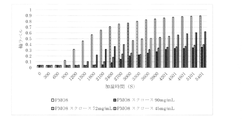
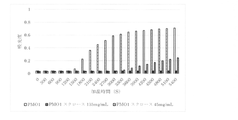
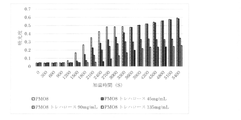
- Absorbance measurements at 620 nm under the conditions shown in Table 4 are shown. Absorbance measurements at 620 nm under the conditions shown in Table 5 are shown. Absorbance measurements at 620 nm under the conditions shown in Table 6 are shown. Absorbance measurements at 620 nm under the conditions shown in Table 7 are shown. Absorbance measurements at 620 nm under the conditions shown in Table 8 are shown. Absorbance measurements at 620 nm under the conditions shown in Table 9 are shown. Absorbance measurements at 620 nm under the conditions shown in Table 10 are shown. Absorbance measurements at 620 nm under the conditions shown in Table 11 are shown. PMO No.
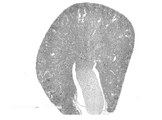
- PMO No. 8 shows hematoxylin and eosin staining images of kidneys when 10 mL/kg of 8 administration solution (50 mg/mL PMO No. 8) was administered.
- PMO No. 8 shows hematoxylin and eosin staining images of kidneys when 10 mL/kg of 8 administration solution (50 mg/mL PMO No. 8, 20 mg/mL sucrose) was administered.
- PMO No. 8 shows hematoxylin and eosin staining images of kidneys when 10 mL/kg of 8 administration solution (50 mg/mL PMO No. 8, 50 mg/mL sucrose) was administered.
- the present invention relates to an antisense oligomer deposition inhibitor in the urine of a subject to whom a pharmaceutical composition containing an antisense oligomer has been administered.
- the term “precipitation inhibitor” means an agent for inhibiting the precipitation of antisense oligomers in the urine of a subject to whom a pharmaceutical composition containing antisense oligomers has been administered.
- the inhibition of deposition reduces the accumulation of antisense oligomers in the kidney, it is expected to lead to a reduction in nephrotoxicity.
- Nephrotoxicity means tissue damage or decreased renal function due to increased accumulation of the administered antisense oligomer in the kidney.
- precipitation in body fluids such as blood is suppressed in vivo, it is predicted that the concentration of antisense oligomers in body fluids will become uniform, leading to stabilization of efficacy and/or reduction of toxicity. be.
- the presence or absence of the precipitation inhibitory effect was determined by adding an antisense oligomer and a precipitation inhibitor to a solvent simulating urine, and determining whether the precipitation inhibitor reduced the increase in absorbance due to the precipitation of the antisense oligomer. can be determined by examining the For example, after adding the antisense oligomer and the precipitation inhibitor to the solvent (e.g., after 5 minutes, 10 minutes, 15 minutes, 20 minutes, 25 minutes, 30 minutes, 40 minutes, 50 minutes, After 60 minutes, 70 minutes, 80 minutes, or 90 minutes), the absorbance can be measured at 37°C.
- the time until precipitation is observed is, for example, 5% or more. , 10% or more, 20% or more, 30% or more, 40% or more, or 50% or more, it can be determined that there is a precipitation suppressing effect.
- Solvents simulating urine include, for example, KCl at 20 nmol/mL to 9000 nmol/mL, 50 nmol/mL to 3600 nmol/mL, or 100 nmol/mL to 1800 nmol/mL, and NaCl at 15 nmol/mL to 2400 nmol/mL and 40 nmol/mL.
- Aqueous solutions containing ⁇ 900 nmol/mL, or 77 nmol/mL to 462 nmol/mL can be used.
- the dose of sugar to the subject and the concentration in urine may have linearity, so the concentration of sugar in a solvent that simulates urine (hereinafter also referred to as "urinary concentration").
- the concentration of sugar in a solvent that simulates urine (hereinafter also referred to as "urinary concentration").
- the urine concentration can be converted to a glucose dosage using the following formula, and the glucose dosage can be calculated from body weight and administration Based on the liquid volume, it can be converted to the concentration in the formulation at the time of administration (at the time of use).
- Glucose dose urine concentration (mg/mL)/estimated urine concentration in cynomolgus monkeys (127.5 (mg/mL)) x dose to cynomolgus monkeys (500 (mg/kg))
- D-mannitol concentration in formulation D-mannitol dose (mg/kg) ⁇ body weight (kg) ⁇ administration liquid volume (mL)
- a body weight of, for example, 3 to 80 kg, and an administration volume of, for example, 50 to 200 mL can be assumed.
- the concentration of antisense oligomers in a solvent that simulates urine can be converted to the concentration of antisense oligomers in the formulation as described in the Examples.
- the deposition inhibitor of the present invention may consist of sugars (excluding glucose) or may contain sugars (excluding glucose).
- the sugar may be, for example, a disaccharide or higher sugar, or a disaccharide sugar.
- sugars include disaccharides such as sucrose, lactose, lactulose, trehalose, maltose, isomaltose; trisaccharides such as raffinose, melezitose, maltotriose; galactose, mannose, fructose, ribose; Monosaccharides such as xylose, arabinose, and lyxose are included.
- the sugar is or comprises sucrose.
- the sugar is or comprises trehalose.
- the deposition inhibitor of the present invention contains a component other than sugar
- the deposition inhibitor is formulated by appropriately blending sugar with a pharmaceutically acceptable carrier or additive (and optionally the deposition inhibitor of the present invention).
- a pharmaceutically acceptable carrier or additive may be changed.
- oral agents such as tablets, coated tablets, pills, powders, granules, capsules, solutions, suspensions, and emulsions
- parenteral agents such as injections, infusions, suppositories, ointments, and patches
- Parenteral agents are preferred.
- the injection may be a freeze-dried preparation.
- the blending ratio of the carrier or additive may be appropriately set based on the range normally employed in the pharmaceutical field.
- the carriers or additives that can be incorporated are not particularly limited, but for example, water, physiological saline, other aqueous solvents, various carriers such as aqueous or oily bases, excipients, binders, pH adjusters, disintegrants, absorption Various additives such as accelerators, lubricants, coloring agents, corrigents, and perfumes are included.
- excipients examples include binders such as gelatin, cornstarch, tragacanth and gum arabic, excipients such as crystalline cellulose, cornstarch, gelatin, alginic acid and the like. Raising agents, lubricants such as magnesium stearate, sweetening agents such as sucrose, lactose or saccharin, flavoring agents such as peppermint, redwood oil or cherries, and the like may be used.
- the dosage unit form is a capsule, the above type of material may further contain a liquid carrier such as oil.
- Sterile compositions for injection can be prepared according to routine pharmaceutical practice (eg, dissolving or suspending the active ingredient in a solvent such as water for injection, natural vegetable oil, etc.).
- Aqueous solutions for injection include, for example, physiological saline, isotonic solutions containing glucose and other adjuvants (e.g., sodium chloride), and the like. ), polyalcohols (eg, propylene glycol, polyethylene glycol), nonionic surfactants (eg, polysorbate 80 TM , HCO-50), and the like.
- the oily liquid for example, sesame oil, soybean oil and the like are used, and they may be used in combination with dissolution aids such as benzyl benzoate and benzyl alcohol.
- buffers e.g., phosphate buffer, sodium acetate buffer
- soothing agents e.g., benzalkonium chloride, procaine hydrochloride, etc.
- stabilizers e.g., human serum albumin, polyethylene glycol, etc.
- preservatives agents eg, benzyl alcohol, phenol, etc.
- antioxidants and the like.
- it may be a freeze-dried preparation.
- antisense oligomers may be either oligonucleotides, morpholino oligomers, or peptide nucleic acid (PNA) oligomers (hereinafter each referred to as “antisense oligos described herein. (also referred to as “nucleotides”, “antisense morpholino oligomers as described herein”, or “antisense peptide nucleic acid oligomers as described herein”).
- PNA peptide nucleic acid
- An antisense oligonucleotide is an antisense oligomer whose constituent units are nucleotides, and such nucleotides may be ribonucleotides, deoxyribonucleotides, or modified nucleotides.
- Modified nucleotides refer to those in which all or part of the nucleobases, sugar moieties, and phosphate-binding moieties that make up ribonucleotides or deoxyribonucleotides have been modified.
- Nucleic acid bases include, for example, adenine, guanine, hypoxanthine, cytosine, thymine, uracil, or modified bases thereof.
- modified bases include pseudouracil, 3-methyluracil, dihydrouracil, 5-alkylcytosine (eg, 5-methylcytosine), 5-alkyluracil (eg, 5-ethyluracil), 5-halouracil (eg, , 5-bromouracil), 6-azapyrimidine, 6-alkylpyrimidine (e.g., 6-methyluracil), 2-thiouracil, 4-thiouracil, 4-acetylcytosine, 5-(carboxyhydroxymethyl)uracil, 5-carboxy methylaminomethyl-2-thiouracil, 5-carboxymethylaminomethyluracil, 1-methyladenine, 1-methylhypoxanthine, 2,2-dimethylguanine, 3-methylcytosine, 2-methyladenine, 2-methylguanine, N
- Modifications of the sugar moiety can include, for example, modifications at the 2' position of ribose and modifications at other parts of the sugar.
- Modifications at the 2'-position of ribose include, for example, -OH group at the 2'-position of ribose with -OR, -R, -R'OR, -SH, -SR, -NH 2 , -NHR, -NR 2 , Modifications substituted for -N 3 , -CN, -F, -Cl, -Br, -I can be mentioned.
- R represents alkyl or aryl.
- R' represents alkylene.
- Modifications of other parts of the sugar include, for example, those in which the 4'-position of ribose or deoxyribose is replaced with S, those in which the 2'-position and 4'-position of the sugar are crosslinked, for example, LNA (Locked Nucleic Acid ) or ENA (2′-O,4′-C-Ethylene-bridged Nucleic Acids), but are not limited thereto.
- LNA Locked Nucleic Acid
- ENA (2′-O,4′-C-Ethylene-bridged Nucleic Acids
- Modifications of the phosphate binding moiety include, for example, phosphodiester linkages, phosphorothioate linkages, phosphorodithioate linkages, alkylphosphonate linkages, phosphoramidate linkages, boranophosphate linkages (e.g., Enya et al: Bioorganic & Medicinal Chemistry , 2008, 18, 9154-9160) (see, eg, Republished Patent Publication No. 2006/129594 and Republished Patent Publication No. 2006/038608).
- alkyl is preferably linear or branched alkyl having 1 to 6 carbon atoms. Specific examples include methyl, ethyl, n-propyl, isopropyl, n-butyl, isobutyl, sec-butyl, tert-butyl, n-pentyl, isopentyl, neopentyl, tert-pentyl, n-hexyl and isohexyl. be done.
- the alkyl may be substituted, and examples of such substituents include halogen, alkoxy, cyano, and nitro, and may be substituted with 1 to 3 of these.
- cycloalkyl having 3 to 12 carbon atoms is preferred as cycloalkyl.
- Specific examples include cyclopropyl, cyclobutyl, cyclopentyl, cyclohexyl, cycloheptyl, cyclooctyl, cyclodecyl and cyclododecyl.
- halogen includes fluorine, chlorine, bromine, and iodine.
- alkoxy refers to linear or branched alkoxy having 1 to 6 carbon atoms, such as methoxy, ethoxy, n-propoxy, isopropoxy, n-butoxy, isobutoxy, sec-butoxy, tert. -butoxy, n-pentyloxy, isopentyloxy, n-hexyloxy, isohexyloxy and the like.
- Alkoxy having 1 to 3 carbon atoms is particularly preferred.
- aryl having 6 to 10 carbon atoms is preferred as aryl.
- Specific examples include phenyl, ⁇ -naphthyl, and ⁇ -naphthyl. Phenyl is particularly preferred.
- the aryl may be substituted, and examples of such substituents include alkyl, halogen, alkoxy, cyano, and nitro, which may be substituted 1-3 times.
- alkylene is preferably linear or branched alkylene having 1 to 6 carbon atoms.
- Specific examples include methylene, ethylene, trimethylene, tetramethylene, pentamethylene, hexamethylene, 2-(ethyl)trimethylene, and 1-(methyl)tetramethylene.
- acyl includes linear or branched alkanoyl or aroyl.
- Alkanoyl includes, for example, formyl, acetyl, 2-methylacetyl, 2,2-dimethylacetyl, propionyl, butyryl, isobutyryl, pentanoyl, 2,2-dimethylpropionyl, hexanoyl and the like.
- Aroyl includes, for example, benzoyl, toluoyl and naphthoyl. Such aroyl may be optionally substituted at any substitutable position or may be substituted with alkyl.
- the antisense oligonucleotides described herein can be easily synthesized using various automated synthesizers (e.g., AKTA oligopilot plus 10/100 (GE Healthcare)), or can be synthesized by a third party ( For example, it can be produced by entrusting to Promega or Takara) or the like.
- automated synthesizers e.g., AKTA oligopilot plus 10/100 (GE Healthcare)
- a third party For example, it can be produced by entrusting to Promega or Takara
- the antisense morpholino oligomer described in this specification is an antisense oligomer having a group represented by the following general formula as a structural unit.
- Base represents a nucleobase
- W represents a group represented by any one of the following formulas.
- the morpholino oligomer is preferably an oligomer (phosphorodiamidate morpholino oligomer (hereinafter referred to as "PMO")) having a group represented by the following formula as a constituent unit.
- PMO phosphorodiamidate morpholino oligomer
- Morpholino oligomers can be produced, for example, according to the method described in WO 1991/009033 or WO 2009/064471.
- PMO can be produced according to the method described in WO2009/064471 or WO2013/100190.
- the antisense peptide nucleic acid oligomer described in this specification is an antisense oligomer having a group represented by the following general formula as a structural unit.
- Peptide nucleic acid oligomers can be produced, for example, according to the following literature. 1) P. E. Nielsen, M. Egholm, R. H. Berg, O. Buchardt, Science, 254, 1497 (1991) 2) M. Egholm, O. Buchardt, P. E. Nielsen, R. H. Berg, JACS, 114, 1895 (1992) 3) K. L. Dueholm, M. Egholm, C. Behrens, L. Christensen, H. F. Hansen, T. Vulpius, K. H. Petersen, R. H. Berg, P. E. Nielsen, O. Buchardt, J. Org.
- the antisense oligomers described herein may be in a pharmaceutically acceptable salt form, a hydrate form, or a hydrate form of a pharmaceutically acceptable salt thereof.
- Examples of pharmaceutically acceptable salts of the antisense oligomers described herein include alkali metal salts such as sodium, potassium and lithium salts, alkaline earth metal salts such as calcium and magnesium salts. metal salts such as aluminum salts, iron salts, zinc salts, copper salts, nickel salts, cobalt salts; ammonium salts; t-octylamine salts, dibenzylamine salts, morpholine salts, glucosamine salts, phenylglycine alkyl ester salts, ethylenediamine salt, N-methylglucamine salt, guanidine salt, diethylamine salt, triethylamine salt, dicyclohexylamine salt, N,N'-dibenzylethylenediamine salt, chloroprocaine salt, procaine salt, diethanolamine salt, N-benzyl-phenethylamine salt, piperazine salts, organic amine salts such as tetramethylammonium salts
- inorganic acid salts such as nitrates, perchlorates, sulfates and phosphates; lower alkanesulfonates such as methanesulfonates, trifluoromethanesulfonates and ethanesulfonates; benzenesulfonates, p - arylsulfonates such as toluenesulfonates; organic acid salts such as acetates, malate, fumarates, succinates, citrates, tartrates, oxalates, maleates; glycinates. , lysine salts, arginine salts, ornithine salts, glutamates, and amino acid salts such as aspartates.
- these salts can be produced by known methods.
- the antisense oligomers described herein may be in their hydrate form.
- the 5' end of the antisense oligomer described herein may be any group represented by the following chemical formulas (1) to (3). Preferably, it is the group (1) or (2).
- group (1) groups represented by (1), (2), and (3) above are referred to as “group (1),” “group (2),” and “group (3),” respectively.
- the base sequence of the antisense oligomer described herein is not limited, it may contain, for example, four consecutive purine bases in the base sequence. Also, at least two of the four consecutive purine bases may be guanine.
- the antisense oligomers described herein have (i) a base sequence selected from the group consisting of SEQ ID NOs: 1-12, (ii) a base selected from the group consisting of SEQ ID NOs: 1-12 80% or more, 85% or more, 86% or more, 87% or more, 88% or more, 89% or more, 90% or more, 91% or more, 92% or more, 93% or more, 94% or more, 95% or more, 96% or more, 97% or more, 98% or more, or 99% or more sequence identity, or (iii) one or several nucleotide sequences selected from the group consisting of SEQ ID NOS: 1 to 12 contains or consists of a base sequence in which the bases of are added, deleted, or substituted.
- the antisense oligomer described herein is the genome of an insertion mutant fukutin gene in which an SVA-type retrotransposon sequence (GenBank ACCESSION: AB185332) is inserted into the genome sequence of the fukutin gene (GenBank ACCESSION: AB038490).
- the target sequence is the range from position 115937 to position 115981 of the sequence (SEQ ID NO: 13), or this range is not the target sequence.
- Examples of antisense oligomers targeting the range of positions 115937 to 115981 of SEQ ID NO: 13 include antisense oligomers containing a nucleotide sequence selected from the group consisting of SEQ ID NOS: 1-7.
- Examples of antisense oligomers that do not target the range of positions 115937 to 115981 of SEQ ID NO: 13 include antisense oligomers containing a base sequence selected from the group consisting of SEQ ID NOS: 8-12.
- the antisense oligomers described herein are conjugates with attached functional peptides, such as cell penetrating peptides (CPPs).
- functional peptides such as cell penetrating peptides (CPPs).
- Known functional peptides or commercially available functional peptides can be used herein.
- Functional peptides that can be used herein include, for example, arginine-rich peptides disclosed in WO2008/036127; or organs disclosed in WO2009/005793.
- Targeting peptides such as RXR, RBR, etc.; or peptides comprising amino acid subunits disclosed in WO2012/150960 are included.
- CPPs Cell-penetrating peptides
- Known CPPs or commercially available CPPs can be used herein.
- CPPs that can be used herein are, for example, Pharmacology & Therapeutics 154 (2015) 78-86, Table 1 on page 80, for example TAT(48-60), penetratin, polyarginine, Oct4, WT1-pTj, DPV3, transportan, MAP , VP22, Rep1, KW, KFGF, FGF12, Intefrin ⁇ 3 peptide, C105Y, TP2; Paragraph [0085] of Japanese Patent Publication No. 2017-500856 (International Publication No.
- CPPs listed in Table 1 Examples include DPV10/6, DPV15b, YM-3, Tat, LR11, C45D18, Lyp-1, Lyp-2, BMV GAG, hLF1-22, C45D18, LR20 and the like.
- CPPs are available from Funakoshi, Co., for example. , Ltd. It is commercially available from Commercially available CPPs such as TAT (Funakoshi, Co., Ltd.), penetratin (Funakoshi, Co., Ltd.), or known CPPs, such as R8, can be used herein.
- Preferred CPPs that can be used herein include, for example, hLIMK, TAT, penetratin, R8, etc.
- the CPP can be directly attached to the antisense oligomers herein or can be attached via a linker that can attach the CPP to the antisense oligomer.
- linkers can be used herein. Such linkers include, for example, Japanese Patent Publication No. 2017-500856 (International Publication No. 2015/089487), International Publication No. 2015/089487, International Publication No. 2009/073809, International Publication No. 2013/ 075035 pamphlet, International Publication No. 2015/105083 pamphlet, International Publication No.
- linkers that can be used herein include, for example, 4-maleimidobutyric acid, linkers that can bind to the functional peptides or antisense oligomers herein via disulfide bonds, and the like.
- the conjugates herein can be prepared by methods known to those skilled in the art.
- the pharmaceutical composition described herein may be formulated by appropriately blending a pharmaceutically acceptable carrier or additive (and optionally the sugar of the present invention).
- the pharmaceutical composition is the same as described for the deposition inhibitor of the present invention except that the pharmaceutically acceptable carrier or additive and formulation are the antisense nucleic acid as an active ingredient.
- the precipitation inhibitor of the present invention is used in an amount such that the sugar concentration in the pharmaceutical composition described herein is between 0.5 mg/mL and 3000 mg/mL, such as between 2.6 mg/mL and 1694 mg/mL. used and/or added to pharmaceutical compositions.
- the precipitation inhibitor of the present invention has a sugar concentration in the pharmaceutical composition of 0.5 mg/mL or higher, 1 mg/mL or higher, 1.5 mg/mL or higher, 2 mg/mL or higher, 2.5 mg/mL or higher.
- the deposition inhibitor of the present invention can be used, for example, when the sugar concentration in the pharmaceutical composition is 3000 mg/mL or less, 2500 mg/mL or less, 2500 mg/mL or less, 2000 mg/mL or less, 1500 mg/mL or less, or 1000 mg/mL. The following amounts are used and/or added to the pharmaceutical composition:
- the concentration of antisense oligomer in the pharmaceutical composition described herein is 0.05 mg/mL to 2000 mg/mL, such as 0.3 mg/mL to 350 mg/mL. In one embodiment, the concentration of antisense oligomer in the pharmaceutical composition described herein is 0.05 mg/mL or greater, 0.1 mg/mL or greater, 0.2 mg/mL or greater, 0.3 mg/mL or greater, 0.4 mg/mL or greater.
- the present invention provides a deposition inhibitor for a pharmaceutical composition containing an antisense oligomer, which contains a sugar, and the weight ratio of the sugar to the weight of the antisense oligomer is 0.1 to 100, such as 1 to 100. It relates to a deposition inhibitor, used in an amount of 53. Pharmaceutical compositions and saccharides containing antisense oligomers are described above.
- the deposition inhibitor of the present invention has a sugar weight ratio of 0.05 or more, 0.1 or more, 0.15 or more, 0.2 or more, 0.3 or more, 0.4 or more, 0.5 or more, 0.6 or more when the antisense oligomer is 1.
- the deposition inhibitor of the present invention has a sugar weight ratio of 100 or less, 53 or less, 40 or less, 30 or less, 25 or less, 20 or less, 15 or less, or 10 or less, relative to the weight of the antisense oligomer. The following amounts are used.
- the deposition inhibitor of the present invention is contained in a pharmaceutical composition described herein and administered together with the pharmaceutical composition described herein.
- a pharmaceutical composition in which the antisense oligomer described herein is lyophilized optionally together with a carrier such as glucose and dissolved in a solvent such as water for injection is mixed with the precipitation inhibitor described herein. , and then optionally adjusted with a solvent and administered to the subject.
- the antisense oligomer described herein is freeze-dried together with the precipitation inhibitor of the present invention, dissolved in a solvent such as water for injection to form a pharmaceutical composition, and then the amount is arbitrarily adjusted with the solvent. may be administered to a subject.
- the deposition inhibitors of the present invention are not included in the pharmaceutical compositions described herein and are administered separately (simultaneously or sequentially) from the pharmaceutical compositions described herein.
- a pharmaceutical composition prepared by dissolving a lyophilized antisense oligomer described herein in a solvent such as water for injection and the deposition inhibitor described herein may be separately administered to a subject.
- administering the deposition inhibitor and the pharmaceutical composition "simultaneously” means administering the deposition inhibitor and the pharmaceutical composition at the same time.
- administering the deposition inhibitor and the pharmaceutical composition "sequentially” means administering at different times. Specifically, it can be administered before or after the deposition inhibitor, and the interval between administration of the deposition inhibitor and the pharmaceutical composition in this case is not limited, but for example, several minutes, several hours, or up to about a day. It's okay.
- the subject to which the pharmaceutical composition and/or deposition inhibitor is administered is not limited, but examples include mammals such as primates such as humans, laboratory animals such as rats, mice, and rats, pigs, and cows. , horses, and domestic animals such as sheep, preferably humans.
- the dosage for administering the pharmaceutical composition and/or the deposition inhibitor includes the type of sugar contained in the antisense oligomer and the deposition inhibitor contained in the pharmaceutical composition, the dosage form of the pharmaceutical composition and the precipitation inhibitor, and age. and weight of the subject, route of administration, nature and symptoms of the disease.
- the amount of sugar can be, for example, 0.1 mg to 200 g/human, such as 1 mg to 100 g/human, such as in the range of 10 mg to 50 g/person, such as in the range of 100 mg to 50 g/person, such as in the range of 100 mg to 40 g/person, such as in the range of 100 mg to 30 g/person, such as in the range of 100 mg to 20 g/person, such as It may be in the range of 1 g to 20 g/person, such as in the range of 2 g to 20 g/person, such as in the range of 1 g to 10 g/person, such as in the range of 100 mg to 1 g/person.
- the number of administrations and the administration frequency are not limited, but for example, the administration can be performed once a day or two or three times at an interval of one day to two or three days. Also, for example, it can be administered only once, and can be administered again several days later for a total of two administrations.
- the present invention provides a method or a pharmaceutical composition for inhibiting precipitation of an antisense oligomer in urine in a subject administered an antisense oligomer or a pharmaceutical composition comprising an antisense oligomer. comprising adding sugar in an amount such that the concentration of sugar in said pharmaceutical composition is between 0.5 mg/mL and 3000 mg/mL.
- the antisense oligomer, the pharmaceutical composition, the saccharide, the concentration of the saccharide in the pharmaceutical composition, etc. are as described herein.
- the present invention provides a method for suppressing precipitation of an antisense oligomer in urine in a subject administered an antisense oligomer or a pharmaceutical composition comprising an antisense oligomer, comprising: to the subject, in an amount such that the weight ratio of saccharide to 1 of the antisense oligomer is 0.1-100.
- the weight ratio of the antisense oligomer, the pharmaceutical composition, the sugar, the precipitation inhibitor, the sugar to 1 for the antisense oligomer, and the like are as described in this specification.
- the present invention relates to a pharmaceutical composition
- a pharmaceutical composition comprising an antisense oligomer, the pharmaceutical composition comprising a sugar-containing deposition inhibitor at a concentration of 0.5 mg/mL to 3000 mg/mL.
- the antisense oligomer, the pharmaceutical composition, the saccharide, the concentration of the saccharide in the pharmaceutical composition, etc. are as described herein.
- Antisense oligomers (PMO Nos. 1 to 12 (SEQ ID NOS: 1 to 12)) shown in Table 1 were synthesized according to the method described in International Publication WO2013/100190. The theoretical and ESI-TOF-MS molecular weights of each antisense oligomer are also shown.
- Example 2 Preliminary examination of evaluation of precipitation inhibitory action by sugar
- D-mannitol which is equivalent to the reduced form of D-mannose, which is a monosaccharide
- antisense oligomers were administered to cynomolgus monkeys in order to establish test conditions such as concentrations of sugar and antisense oligomers assuming urine, and changes in plasma concentrations were observed. and the urinary concentration in the short time after administration was estimated from the systemic clearance.
- the urinary concentration in a short time after administration of 500 mg/kg of D-mannitol was estimated to be 127.5 mg/mL. Since D-mannitol is hardly distributed in the body and is rapidly excreted in the urine without being metabolized, it can be assumed that the dosage and urinary concentration are linear.
- the urinary concentration was converted to D-mannitol dosage, and the dosage was converted to the concentration in the formulation at the time of administration (at the time of use) based on the body weight and the volume of the administered solution.
- D-mannitol dose urine concentration (mg/mL)/127.5 (mg/mL) x 500 (mg/kg)
- D-mannitol concentration in formulation D-mannitol dose (mg/kg) ⁇ body weight (kg) ⁇ administration liquid volume (mL)
- body weight was 3-80 kg, and the volume of the administered liquid was 50-200 mL.
- an aqueous sugar solution with an assumed urine concentration of 135 mg/mL can be converted to a urine concentration when 529.4 mg/kg of sugar is administered, and a preparation with a sugar concentration of 7.9 to 847.1 mg/mL is administered ( use).
- PMO No. The antisense oligomer of 12 (SEQ ID NO: 12) was dissolved in physiological saline at 1 and 6 mg/mL, and administered at 10 mL/kg to three 1-year-old male cynomolgus monkeys. Plasma concentrations were measured at 0.25 hours, 0.5 hours, 1 hour, 2 hours, 6 hours and 24 hours (Table 3, values a, b, c, d, e, f, g, each value is average of 3 animals). From these values, the area under the plasma concentration-time curve (AUC 0-24 hr ) and systemic clearance (CL tot ) up to 24 hours after administration were calculated (Table 3, values h, i).
- Antisense oligomer dose urinary concentration (mg/mL)/estimated urinary concentration in cynomolgus monkeys (mg/mL) x dose to cynomolgus monkeys (mg/kg)
- Antisense oligomer concentration in preparation antisense oligomer dose (mg/kg) x body weight (kg) ⁇ administered liquid volume (mL)
- the value obtained when 60 mg/kg of antisense oligomer was administered was used as the estimated urinary concentration in cynomolgus monkeys.
- the body weight was 3 to 80 kg, and the volume of the administered liquid was 50 to 200 mL.
- an antisense oligomer aqueous solution with an assumed urinary concentration of 24.75 mg/mL can be converted to a urine concentration when an antisense oligomer of 43.41 mg/kg is administered, and the antisense oligomer concentration is 0.7-69. It is envisioned that a 5 mg/mL formulation will be administered (used).
- Example 3 Evaluation of precipitation suppression effect of sucrose
- Each antisense oligomer was dissolved in water for injection or in an aqueous sucrose solution and mixed with an aqueous solution containing potassium chloride and sodium chloride assuming urine.
- the evaluated conditions are shown in Tables 4 to 11.
- the absorbance at 620 nm of the mixed solution was measured under heating conditions of 37° C. using a plate reader Infinite F200 Pro (manufactured by TECAN).
- the concentrations of antisense oligomers, potassium chloride, and sodium chloride will vary depending on the dose of antisense oligomers and urine volume. was used to set the conditions under which precipitation was observed.
- Example 5 Evaluation of the inhibitory effect of sucrose on precipitation in the kidney
- PMO No. 11 SEQ ID NO: 11
- the 11 antisense oligomers were dissolved in physiological saline to prepare a control dosing solution containing the antisense oligomers at the concentrations shown in Table 14 and no sucrose.
- mice were necropsied and formalin-fixed, paraffin-embedded specimens of kidneys were prepared. Sections obtained by slicing the specimens were stained with hematoxylin and eosin and subjected to histopathological examination. Precipitation was determined to be suppressed when improvement was observed in renal histopathological examination findings in mice administered an administration solution containing sucrose compared to mice administered an administration solution containing no sucrose. .
- Evaluation results The tested antisense oligomers showed improvement in renal histopathological examination findings in mice administered with a dosing solution containing sucrose, confirming that sucrose suppresses precipitation. The results are shown in Table 14.
- Example 6 Evaluation of precipitation suppression effect of sucrose
- PMO No. for 1, 2, and 7, in order to further verify the usefulness for medical applications, the amount of precipitation in the presence of ions assuming urine and the inhibition of precipitation by sucrose were evaluated.
- Example 7 Evaluation of precipitation suppression effect of trehalose
- Each antisense oligomer was dissolved in water for injection or an aqueous trehalose solution and mixed with an aqueous solution containing potassium chloride and sodium chloride assuming urine.
- the evaluated conditions are shown in Tables 18-21.
- the absorbance at 620 nm of the mixed solution was measured under heating conditions of 37° C. using a plate reader Infinite F200 Pro (manufactured by TECAN).
- the concentrations of antisense oligomers, potassium chloride, and sodium chloride will vary depending on the dose of antisense oligomers and urine volume. was used to set the conditions under which precipitation was observed.
Landscapes
- Health & Medical Sciences (AREA)
- Life Sciences & Earth Sciences (AREA)
- Chemical & Material Sciences (AREA)
- General Health & Medical Sciences (AREA)
- Molecular Biology (AREA)
- Pharmacology & Pharmacy (AREA)
- Veterinary Medicine (AREA)
- Public Health (AREA)
- Animal Behavior & Ethology (AREA)
- Medicinal Chemistry (AREA)
- Engineering & Computer Science (AREA)
- Epidemiology (AREA)
- Genetics & Genomics (AREA)
- Biochemistry (AREA)
- Bioinformatics & Cheminformatics (AREA)
- Organic Chemistry (AREA)
- Biomedical Technology (AREA)
- Chemical Kinetics & Catalysis (AREA)
- General Chemical & Material Sciences (AREA)
- Biotechnology (AREA)
- Wood Science & Technology (AREA)
- Zoology (AREA)
- General Engineering & Computer Science (AREA)
- Urology & Nephrology (AREA)
- Nuclear Medicine, Radiotherapy & Molecular Imaging (AREA)
- Plant Pathology (AREA)
- Biophysics (AREA)
- Physics & Mathematics (AREA)
- Microbiology (AREA)
- Oil, Petroleum & Natural Gas (AREA)
- Pharmaceuticals Containing Other Organic And Inorganic Compounds (AREA)
- Medicines That Contain Protein Lipid Enzymes And Other Medicines (AREA)
- Medicinal Preparation (AREA)
Priority Applications (10)
| Application Number | Priority Date | Filing Date | Title |
|---|---|---|---|
| US18/577,142 US20240285770A1 (en) | 2021-07-08 | 2022-07-08 | Precipitation suppressing agent |
| CA3225573A CA3225573A1 (en) | 2021-07-08 | 2022-07-08 | Precipitation suppressing agent |
| KR1020247003689A KR20240035503A (ko) | 2021-07-08 | 2022-07-08 | 석출 억제제 |
| CN202280047891.9A CN118434424A (zh) | 2021-07-08 | 2022-07-08 | 析出抑制剂 |
| AU2022306542A AU2022306542A1 (en) | 2021-07-08 | 2022-07-08 | Precipitation suppressing agent |
| IL310001A IL310001A (en) | 2021-07-08 | 2022-07-08 | Precipitation suppressing agent |
| JP2022555691A JPWO2023282346A1 (https=) | 2021-07-08 | 2022-07-08 | |
| EP22837760.2A EP4368187A4 (en) | 2021-07-08 | 2022-07-08 | PRECIPITATION INHIBITING AGENT |
| JP2022178017A JP7466609B2 (ja) | 2021-07-08 | 2022-11-07 | 析出抑制剤 |
| JP2025126561A JP2025142303A (ja) | 2021-07-08 | 2025-07-29 | 析出抑制剤 |
Applications Claiming Priority (2)
| Application Number | Priority Date | Filing Date | Title |
|---|---|---|---|
| JP2021113562 | 2021-07-08 | ||
| JP2021-113562 | 2021-07-08 |
Publications (2)
| Publication Number | Publication Date |
|---|---|
| WO2023282346A1 true WO2023282346A1 (ja) | 2023-01-12 |
| WO2023282346A8 WO2023282346A8 (ja) | 2024-02-15 |
Family
ID=84800729
Family Applications (1)
| Application Number | Title | Priority Date | Filing Date |
|---|---|---|---|
| PCT/JP2022/027105 Ceased WO2023282346A1 (ja) | 2021-07-08 | 2022-07-08 | 析出抑制剤 |
Country Status (10)
| Country | Link |
|---|---|
| US (1) | US20240285770A1 (https=) |
| EP (1) | EP4368187A4 (https=) |
| JP (3) | JPWO2023282346A1 (https=) |
| KR (1) | KR20240035503A (https=) |
| CN (1) | CN118434424A (https=) |
| AU (1) | AU2022306542A1 (https=) |
| CA (1) | CA3225573A1 (https=) |
| IL (1) | IL310001A (https=) |
| TW (1) | TW202317147A (https=) |
| WO (1) | WO2023282346A1 (https=) |
Cited By (1)
| Publication number | Priority date | Publication date | Assignee | Title |
|---|---|---|---|---|
| EP4368186A4 (en) * | 2021-07-08 | 2025-06-25 | Nippon Shinyaku Co., Ltd. | NEPHROTOXICITY REDUCING AGENT |
Families Citing this family (1)
| Publication number | Priority date | Publication date | Assignee | Title |
|---|---|---|---|---|
| CA3225573A1 (en) * | 2021-07-08 | 2023-01-12 | Nippon Shinyaku Co., Ltd. | Precipitation suppressing agent |
Citations (25)
| Publication number | Priority date | Publication date | Assignee | Title |
|---|---|---|---|---|
| WO1991009033A1 (en) | 1989-12-20 | 1991-06-27 | Anti-Gene Development Group | Uncharged morpholino-based polymers having phosphorous-containing chiral intersubunit linkages |
| WO2002036767A2 (en) | 2000-11-02 | 2002-05-10 | Inex Pharmaceuticals Corporation | Therapeutic oligonucleotides of reduced toxicity |
| WO2006038608A1 (ja) | 2004-10-05 | 2006-04-13 | Nippon Shinyaku Co., Ltd. | オリゴ二本鎖rna及び医薬組成物 |
| CN1868456A (zh) * | 2006-06-25 | 2006-11-29 | 沈阳药科大学 | 反义脱氧寡核苷酸isis23665脂质体制剂及制备方法 |
| WO2006129594A1 (ja) | 2005-05-30 | 2006-12-07 | Nippon Shinyaku Co., Ltd. | 核酸含有複合体製剤の製造方法 |
| WO2008036127A2 (en) | 2006-05-10 | 2008-03-27 | Avi Biopharma, Inc. | Oligonucleotide analogs having cationic intersubunit linkages |
| JP2008520600A (ja) * | 2004-11-19 | 2008-06-19 | ノヴォソム アクチェンゲゼルシャフト | 局所投与のための医薬組成物におけるまたはそれに関する改善 |
| WO2009005793A2 (en) | 2007-06-29 | 2009-01-08 | Avi Biopharma, Inc. | Tissue specific peptide conjugates and methods |
| WO2009064471A1 (en) | 2007-11-15 | 2009-05-22 | Avi Biopharma, Inc. | Method of synthesis of morpholino oligomers |
| WO2009073809A2 (en) | 2007-12-04 | 2009-06-11 | Alnylam Pharmaceuticals, Inc. | Carbohydrate conjugates as delivery agents for oligonucleotides |
| WO2010009038A2 (en) | 2008-07-18 | 2010-01-21 | Oncogenex Technologies Inc. | Antisense formulation |
| WO2012150960A1 (en) | 2011-05-05 | 2012-11-08 | Avi Biopharma, Inc. | Peptide oligonucleotide conjugates |
| CN102989007A (zh) * | 2011-06-29 | 2013-03-27 | 湖州市中心医院 | 大规模制备注射用中期因子反义寡核苷酸纳米脂质体的方法 |
| WO2013075035A1 (en) | 2011-11-18 | 2013-05-23 | Alnylam Pharmaceuticals | Rnai agents, compositions and methods of use thereof for treating transthyretin (ttr) associated diseases |
| WO2013100190A1 (ja) | 2011-12-28 | 2013-07-04 | 日本新薬株式会社 | アンチセンス核酸 |
| WO2014179620A1 (en) | 2013-05-01 | 2014-11-06 | Isis Pharmaceuticals, Inc. | Conjugated antisense compounds and their use |
| WO2015006740A2 (en) | 2013-07-11 | 2015-01-15 | Alnylam Pharmaceuticals, Inc. | Oligonucleotide-ligand conjugates and process for their preparation |
| JP2015091229A (ja) | 2013-10-04 | 2015-05-14 | 国立大学法人神戸大学 | 福山型筋ジストロフィー治療用アンチセンス核酸 |
| WO2015089487A1 (en) | 2013-12-12 | 2015-06-18 | Life Technologies Corporation | Membrane-penetrating peptides to enhance transfection and compositions and methods for using same |
| WO2015105083A1 (ja) | 2014-01-07 | 2015-07-16 | 塩野義製薬株式会社 | アンチセンスオリゴヌクレオチド及び糖誘導体を含む二本鎖オリゴヌクレオチド |
| WO2016187425A1 (en) | 2015-05-19 | 2016-11-24 | Sarepta Therapeutics, Inc. | Peptide oligonucleotide conjugates |
| WO2017010575A1 (ja) | 2015-07-16 | 2017-01-19 | 協和発酵キリン株式会社 | β2GPI遺伝子発現抑制核酸複合体 |
| WO2018118599A1 (en) | 2016-12-19 | 2018-06-28 | Sarepta Therapeutics, Inc. | Exon skipping oligomer conjugates for muscular dystrophy |
| WO2018118662A1 (en) | 2016-12-19 | 2018-06-28 | Sarepta Therapeutics, Inc. | Exon skipping oligomer conjugates for muscular dystrophy |
| WO2018118627A1 (en) | 2016-12-19 | 2018-06-28 | Sarepta Therapeutics, Inc. | Exon skipping oligomer conjugates for muscular dystrophy |
Family Cites Families (2)
| Publication number | Priority date | Publication date | Assignee | Title |
|---|---|---|---|---|
| CA3225573A1 (en) * | 2021-07-08 | 2023-01-12 | Nippon Shinyaku Co., Ltd. | Precipitation suppressing agent |
| CN118475355A (zh) * | 2021-07-08 | 2024-08-09 | 日本新药株式会社 | 肾毒性减轻剂 |
-
2022
- 2022-07-08 CA CA3225573A patent/CA3225573A1/en active Pending
- 2022-07-08 JP JP2022555691A patent/JPWO2023282346A1/ja not_active Withdrawn
- 2022-07-08 IL IL310001A patent/IL310001A/en unknown
- 2022-07-08 AU AU2022306542A patent/AU2022306542A1/en active Pending
- 2022-07-08 US US18/577,142 patent/US20240285770A1/en active Pending
- 2022-07-08 CN CN202280047891.9A patent/CN118434424A/zh active Pending
- 2022-07-08 KR KR1020247003689A patent/KR20240035503A/ko active Pending
- 2022-07-08 WO PCT/JP2022/027105 patent/WO2023282346A1/ja not_active Ceased
- 2022-07-08 TW TW111125775A patent/TW202317147A/zh unknown
- 2022-07-08 EP EP22837760.2A patent/EP4368187A4/en active Pending
- 2022-11-07 JP JP2022178017A patent/JP7466609B2/ja active Active
-
2025
- 2025-07-29 JP JP2025126561A patent/JP2025142303A/ja active Pending
Patent Citations (27)
| Publication number | Priority date | Publication date | Assignee | Title |
|---|---|---|---|---|
| WO1991009033A1 (en) | 1989-12-20 | 1991-06-27 | Anti-Gene Development Group | Uncharged morpholino-based polymers having phosphorous-containing chiral intersubunit linkages |
| WO2002036767A2 (en) | 2000-11-02 | 2002-05-10 | Inex Pharmaceuticals Corporation | Therapeutic oligonucleotides of reduced toxicity |
| JP2004512383A (ja) * | 2000-11-02 | 2004-04-22 | アイネックス ファーマシューティカルズ コーポレイション | 毒性の減少した治療用オリゴヌクレオチド |
| WO2006038608A1 (ja) | 2004-10-05 | 2006-04-13 | Nippon Shinyaku Co., Ltd. | オリゴ二本鎖rna及び医薬組成物 |
| JP2008520600A (ja) * | 2004-11-19 | 2008-06-19 | ノヴォソム アクチェンゲゼルシャフト | 局所投与のための医薬組成物におけるまたはそれに関する改善 |
| WO2006129594A1 (ja) | 2005-05-30 | 2006-12-07 | Nippon Shinyaku Co., Ltd. | 核酸含有複合体製剤の製造方法 |
| WO2008036127A2 (en) | 2006-05-10 | 2008-03-27 | Avi Biopharma, Inc. | Oligonucleotide analogs having cationic intersubunit linkages |
| CN1868456A (zh) * | 2006-06-25 | 2006-11-29 | 沈阳药科大学 | 反义脱氧寡核苷酸isis23665脂质体制剂及制备方法 |
| WO2009005793A2 (en) | 2007-06-29 | 2009-01-08 | Avi Biopharma, Inc. | Tissue specific peptide conjugates and methods |
| WO2009064471A1 (en) | 2007-11-15 | 2009-05-22 | Avi Biopharma, Inc. | Method of synthesis of morpholino oligomers |
| WO2009073809A2 (en) | 2007-12-04 | 2009-06-11 | Alnylam Pharmaceuticals, Inc. | Carbohydrate conjugates as delivery agents for oligonucleotides |
| JP2011528657A (ja) * | 2008-07-18 | 2011-11-24 | オンコジェネックス・テクノロジーズ・インコーポレーテッド | アンチセンス製剤 |
| WO2010009038A2 (en) | 2008-07-18 | 2010-01-21 | Oncogenex Technologies Inc. | Antisense formulation |
| WO2012150960A1 (en) | 2011-05-05 | 2012-11-08 | Avi Biopharma, Inc. | Peptide oligonucleotide conjugates |
| CN102989007A (zh) * | 2011-06-29 | 2013-03-27 | 湖州市中心医院 | 大规模制备注射用中期因子反义寡核苷酸纳米脂质体的方法 |
| WO2013075035A1 (en) | 2011-11-18 | 2013-05-23 | Alnylam Pharmaceuticals | Rnai agents, compositions and methods of use thereof for treating transthyretin (ttr) associated diseases |
| WO2013100190A1 (ja) | 2011-12-28 | 2013-07-04 | 日本新薬株式会社 | アンチセンス核酸 |
| WO2014179620A1 (en) | 2013-05-01 | 2014-11-06 | Isis Pharmaceuticals, Inc. | Conjugated antisense compounds and their use |
| WO2015006740A2 (en) | 2013-07-11 | 2015-01-15 | Alnylam Pharmaceuticals, Inc. | Oligonucleotide-ligand conjugates and process for their preparation |
| JP2015091229A (ja) | 2013-10-04 | 2015-05-14 | 国立大学法人神戸大学 | 福山型筋ジストロフィー治療用アンチセンス核酸 |
| WO2015089487A1 (en) | 2013-12-12 | 2015-06-18 | Life Technologies Corporation | Membrane-penetrating peptides to enhance transfection and compositions and methods for using same |
| WO2015105083A1 (ja) | 2014-01-07 | 2015-07-16 | 塩野義製薬株式会社 | アンチセンスオリゴヌクレオチド及び糖誘導体を含む二本鎖オリゴヌクレオチド |
| WO2016187425A1 (en) | 2015-05-19 | 2016-11-24 | Sarepta Therapeutics, Inc. | Peptide oligonucleotide conjugates |
| WO2017010575A1 (ja) | 2015-07-16 | 2017-01-19 | 協和発酵キリン株式会社 | β2GPI遺伝子発現抑制核酸複合体 |
| WO2018118599A1 (en) | 2016-12-19 | 2018-06-28 | Sarepta Therapeutics, Inc. | Exon skipping oligomer conjugates for muscular dystrophy |
| WO2018118662A1 (en) | 2016-12-19 | 2018-06-28 | Sarepta Therapeutics, Inc. | Exon skipping oligomer conjugates for muscular dystrophy |
| WO2018118627A1 (en) | 2016-12-19 | 2018-06-28 | Sarepta Therapeutics, Inc. | Exon skipping oligomer conjugates for muscular dystrophy |
Non-Patent Citations (20)
| Title |
|---|
| "GenBank", Database accession no. AB038490 |
| A W WINKLERJ PARRA, J CLIN INVEST, vol. 16, no. 6, November 1937 (1937-11-01), pages 859 - 67 |
| ALTSCHUL SF ET AL., J MOL BIOL, vol. 215, 1990, pages 403 |
| B CLARKD A SMITH: "Pharmacokinetics and toxicity testing", CRIT REV TOXICOL, vol. 12, no. 4, 1984, pages 343 - 85 |
| CARVER MPCHARLESTON JSSHANKS CZHANG JMENSE MSHARMA AKKAUR HSAZANI P: "Toxicological Characterization of Exon Skipping Phosphorodiamidate Morpholino Oligomers (PMOs) in Non- human Primates", J NEUROMUSCUL DIS, vol. 3, no. 3, 30 August 2016 (2016-08-30), XP009510433, DOI: 10.3233/JND-160157 |
| EBIOMEDICINE, vol. 45, 2019, pages 630 - 645 |
| ENYA ET AL., BIOORGANIC & MEDICINAL CHEMISTRY, vol. 18, 2008, pages 9154 - 9160 |
| HEEMSKERK HADE WINTER CLDE KIMPE SJVAN KUIK-ROMEIJN PHEUVELMANS NPLATENBURG GJVAN OMMEN GJVAN DEUTEKOM JCAARTSMA-RUS A: "In vivo comparison of 2'-O-methyl phosphorothioate and morpholino antisense oligonucleotides for Duchenne muscular dystrophy exon skipping", J GENE MED, vol. 11, no. 3, March 2009 (2009-03-01), pages 257 - 66 |
| HUM MOL GENET, vol. 20, no. 16, 15 August 2011 (2011-08-15), pages 3151 - 3160 |
| K. L. DUEHOLM, M. EGHOLM, C. BEHRENS, L. CHRISTENSEN, H. F. HANSEN, T. VULPIUS, K. H. PETERSEN, R. H. BERG, P. E. NIELSEN, O. BUCH, J. ORG. CHEM., vol. 59, 1994, pages 5767 |
| L. CHRISTENSEN, R. FITZPATRICK, B. GILDEA, K. H. PETERSEN, H. F. HANSEN, T. KOCH, M. EGHOLM, O. BUCHARDT, P. E. NIELSEN, J. COULL,, J. PEPT. SCI., vol. 1, 1995, pages 175 |
| M. EGHOLMO. BUCHARDTP. E. NIELSENR. H. BERG, JACS, vol. 114, 1992, pages 1895 |
| P. E. NIELSENM. EGHOLMR. H. BERGO. BUCHARDT, SCIENCE, vol. 254, 1991, pages 1497 |
| PHARMACOLOGY & THERAPEUTICS, vol. 154, 2015, pages 78 - 86 |
| PROC NATL ACAD SCI USA, vol. 90, 1993, pages 5873 |
| PROC. NATL. ACAD. SCI. USA, 1990, pages 872264 - 2268 |
| SAZANI PNESS KPWELLER DLPOAGE DNELSON KSHREWSBURY AS: "Chemical and mechanistic toxicology evaluation of exon skipping phosphorodiamidate morpholino oligomers in mdx mice", INT J TOXICOL, vol. 30, no. 3, 3 May 2011 (2011-05-03), pages 322 - 33, XP009510407, DOI: 10.1177/1091581811403504 |
| SCIENCE, vol. 227, no. 4693, 1985, pages 1435 - 1441 |
| See also references of EP4368187A4 |
| T. KOCHH. F. HANSENP. ANDERSENT. LARSENH. G. BATZK. OTTESONH. ORUM, J. PEPT. RES., vol. 49, 1997, pages 80 |
Cited By (1)
| Publication number | Priority date | Publication date | Assignee | Title |
|---|---|---|---|---|
| EP4368186A4 (en) * | 2021-07-08 | 2025-06-25 | Nippon Shinyaku Co., Ltd. | NEPHROTOXICITY REDUCING AGENT |
Also Published As
| Publication number | Publication date |
|---|---|
| EP4368187A1 (en) | 2024-05-15 |
| JP7466609B2 (ja) | 2024-04-12 |
| EP4368187A4 (en) | 2025-07-02 |
| TW202317147A (zh) | 2023-05-01 |
| JP2023133099A (ja) | 2023-09-22 |
| JPWO2023282346A1 (https=) | 2023-01-12 |
| AU2022306542A1 (en) | 2024-01-18 |
| KR20240035503A (ko) | 2024-03-15 |
| CA3225573A1 (en) | 2023-01-12 |
| IL310001A (en) | 2024-03-01 |
| WO2023282346A8 (ja) | 2024-02-15 |
| CN118434424A (zh) | 2024-08-02 |
| JP2025142303A (ja) | 2025-09-30 |
| US20240285770A1 (en) | 2024-08-29 |
Similar Documents
| Publication | Publication Date | Title |
|---|---|---|
| JP2025142303A (ja) | 析出抑制剤 | |
| JP2025142302A (ja) | 腎毒性軽減剤 | |
| US12595477B2 (en) | Complement Factor B-modulating compositions and methods of use thereof | |
| EA031110B1 (ru) | Конъюгаты бороновых кислот олигонуклеотидных аналогов | |
| JP2022180420A (ja) | エクソン51のスキッピングを誘導するアンチセンス核酸 | |
| JP2025142304A (ja) | 腎毒性軽減剤 | |
| WO2025024283A1 (en) | Coagulation factor xi-modulating compositions and methods of use thereof | |
| HK40104301A (en) | Precipitation suppressing agent | |
| HK40103946A (en) | Nephrotoxicity reducing agent | |
| HK40107255A (zh) | 析出抑制剂 | |
| HK40107109A (zh) | 肾毒性减轻剂 | |
| US12042509B2 (en) | Prekallikrein-modulating compositions and methods of use thereof | |
| WO2025211422A1 (ja) | アンチセンスオリゴマー及び抗腫瘍効果増強剤 | |
| TW202346589A (zh) | 抗病毒反義寡聚物 | |
| HK40115145A (zh) | 血管紧张素原调节组合物和其使用方法 | |
| EA048392B1 (ru) | Антисмысловая нуклеиновая кислота, индуцирующая вырезание экзона 51 |
Legal Events
| Date | Code | Title | Description |
|---|---|---|---|
| ENP | Entry into the national phase |
Ref document number: 2022555691 Country of ref document: JP Kind code of ref document: A |
|
| 121 | Ep: the epo has been informed by wipo that ep was designated in this application |
Ref document number: 22837760 Country of ref document: EP Kind code of ref document: A1 |
|
| WWE | Wipo information: entry into national phase |
Ref document number: 2022306542 Country of ref document: AU Ref document number: AU2022306542 Country of ref document: AU |
|
| ENP | Entry into the national phase |
Ref document number: 3225573 Country of ref document: CA |
|
| WWE | Wipo information: entry into national phase |
Ref document number: 202280047891.9 Country of ref document: CN |
|
| WWE | Wipo information: entry into national phase |
Ref document number: 18577142 Country of ref document: US |
|
| WWE | Wipo information: entry into national phase |
Ref document number: 310001 Country of ref document: IL |
|
| WWE | Wipo information: entry into national phase |
Ref document number: P6000050/2024 Country of ref document: AE |
|
| REG | Reference to national code |
Ref country code: BR Ref legal event code: B01A Ref document number: 112024000295 Country of ref document: BR |
|
| ENP | Entry into the national phase |
Ref document number: 2022306542 Country of ref document: AU Date of ref document: 20220708 Kind code of ref document: A |
|
| ENP | Entry into the national phase |
Ref document number: 20247003689 Country of ref document: KR Kind code of ref document: A |
|
| WWE | Wipo information: entry into national phase |
Ref document number: 202417007188 Country of ref document: IN |
|
| WWE | Wipo information: entry into national phase |
Ref document number: 2024103044 Country of ref document: RU Ref document number: 2022837760 Country of ref document: EP |
|
| NENP | Non-entry into the national phase |
Ref country code: DE |
|
| WWE | Wipo information: entry into national phase |
Ref document number: 11202400104Y Country of ref document: SG |
|
| ENP | Entry into the national phase |
Ref document number: 112024000295 Country of ref document: BR Kind code of ref document: A2 Effective date: 20240108 |