WO2023276051A1 - 売上情報処理装置、売上情報処理方法、及びプログラム - Google Patents
売上情報処理装置、売上情報処理方法、及びプログラム Download PDFInfo
- Publication number
- WO2023276051A1 WO2023276051A1 PCT/JP2021/024776 JP2021024776W WO2023276051A1 WO 2023276051 A1 WO2023276051 A1 WO 2023276051A1 JP 2021024776 W JP2021024776 W JP 2021024776W WO 2023276051 A1 WO2023276051 A1 WO 2023276051A1
- Authority
- WO
- WIPO (PCT)
- Prior art keywords
- sales
- store
- performance
- graph
- information processing
- Prior art date
- Legal status (The legal status is an assumption and is not a legal conclusion. Google has not performed a legal analysis and makes no representation as to the accuracy of the status listed.)
- Ceased
Links
Images




Classifications
-
- G—PHYSICS
- G06—COMPUTING OR CALCULATING; COUNTING
- G06Q—INFORMATION AND COMMUNICATION TECHNOLOGY [ICT] SPECIALLY ADAPTED FOR ADMINISTRATIVE, COMMERCIAL, FINANCIAL, MANAGERIAL OR SUPERVISORY PURPOSES; SYSTEMS OR METHODS SPECIALLY ADAPTED FOR ADMINISTRATIVE, COMMERCIAL, FINANCIAL, MANAGERIAL OR SUPERVISORY PURPOSES, NOT OTHERWISE PROVIDED FOR
- G06Q30/00—Commerce
- G06Q30/06—Buying, selling or leasing transactions
- G06Q30/0601—Electronic shopping [e-shopping]
- G06Q30/0639—Locating goods or services, e.g. based on physical position of the goods or services within a shopping facility
-
- G—PHYSICS
- G06—COMPUTING OR CALCULATING; COUNTING
- G06Q—INFORMATION AND COMMUNICATION TECHNOLOGY [ICT] SPECIALLY ADAPTED FOR ADMINISTRATIVE, COMMERCIAL, FINANCIAL, MANAGERIAL OR SUPERVISORY PURPOSES; SYSTEMS OR METHODS SPECIALLY ADAPTED FOR ADMINISTRATIVE, COMMERCIAL, FINANCIAL, MANAGERIAL OR SUPERVISORY PURPOSES, NOT OTHERWISE PROVIDED FOR
- G06Q30/00—Commerce
- G06Q30/02—Marketing; Price estimation or determination; Fundraising
-
- G—PHYSICS
- G06—COMPUTING OR CALCULATING; COUNTING
- G06Q—INFORMATION AND COMMUNICATION TECHNOLOGY [ICT] SPECIALLY ADAPTED FOR ADMINISTRATIVE, COMMERCIAL, FINANCIAL, MANAGERIAL OR SUPERVISORY PURPOSES; SYSTEMS OR METHODS SPECIALLY ADAPTED FOR ADMINISTRATIVE, COMMERCIAL, FINANCIAL, MANAGERIAL OR SUPERVISORY PURPOSES, NOT OTHERWISE PROVIDED FOR
- G06Q30/00—Commerce
- G06Q30/02—Marketing; Price estimation or determination; Fundraising
- G06Q30/0201—Market modelling; Market analysis; Collecting market data
-
- G—PHYSICS
- G06—COMPUTING OR CALCULATING; COUNTING
- G06Q—INFORMATION AND COMMUNICATION TECHNOLOGY [ICT] SPECIALLY ADAPTED FOR ADMINISTRATIVE, COMMERCIAL, FINANCIAL, MANAGERIAL OR SUPERVISORY PURPOSES; SYSTEMS OR METHODS SPECIALLY ADAPTED FOR ADMINISTRATIVE, COMMERCIAL, FINANCIAL, MANAGERIAL OR SUPERVISORY PURPOSES, NOT OTHERWISE PROVIDED FOR
- G06Q30/00—Commerce
- G06Q30/06—Buying, selling or leasing transactions
-
- G—PHYSICS
- G06—COMPUTING OR CALCULATING; COUNTING
- G06Q—INFORMATION AND COMMUNICATION TECHNOLOGY [ICT] SPECIALLY ADAPTED FOR ADMINISTRATIVE, COMMERCIAL, FINANCIAL, MANAGERIAL OR SUPERVISORY PURPOSES; SYSTEMS OR METHODS SPECIALLY ADAPTED FOR ADMINISTRATIVE, COMMERCIAL, FINANCIAL, MANAGERIAL OR SUPERVISORY PURPOSES, NOT OTHERWISE PROVIDED FOR
- G06Q30/00—Commerce
- G06Q30/06—Buying, selling or leasing transactions
- G06Q30/0601—Electronic shopping [e-shopping]
- G06Q30/0623—Electronic shopping [e-shopping] by investigating goods or services
- G06Q30/0625—Electronic shopping [e-shopping] by investigating goods or services by formulating product or service queries, e.g. using keywords or predefined options
- G06Q30/0627—Electronic shopping [e-shopping] by investigating goods or services by formulating product or service queries, e.g. using keywords or predefined options by specifying product or service characteristics, e.g. product dimensions
Definitions
- the present invention relates to a sales information processing device, a sales information processing method, and a program.
- Patent Literature 1 describes that a server that supports a beauty salon displays performance information of its own store and performance information of other stores on a store terminal.
- a server acquires a condition for narrowing down other stores from a store terminal.
- One of the products displayed in stores has an expiry date or expiration date.
- the number of orders (the number of dishes cooked in the store) is too large, some products will exceed their expiration date or expiration date before being sold, that is, they will be discarded.
- the number of orders is too small, a sales opportunity will be lost, resulting in a drop in sales at the store. For this reason, when operating a store, the sales performance and disposal performance of the store are important indicators.
- One example of the purpose of the present invention is to make it easier for store clerks to recognize the quality of a store's sales performance and disposal performance.
- sales data acquisition means for acquiring sales data capable of specifying the sales performance and disposal performance of the first store and the sales performance and disposal performance of the second store;
- a graph having two axes of sales performance and disposal performance is displayed on a display, and a first position corresponding to the first store and a second position corresponding to the second store are displayed on the graph using the sales data.
- a graph display means for displaying in is provided.
- sales data acquisition means for acquiring sales data capable of specifying sales performance and disposal performance of a first store from sales storage means for storing data of each of a plurality of stores; position specifying means for specifying a quadrant to which the first position corresponding to the sales data belongs in a graph having at least two axes of actual sales and actual disposal; with In the graph, the 0 point on each axis is the average value of multiple stores, Further, there is provided a sales information processing apparatus comprising evaluation generating means for generating evaluation information of the first store using the quadrant specified by the position specifying means.
- a computer is configured to: a sales data acquisition process for acquiring sales data that can identify the sales performance and disposal performance of the first store and the sales performance and disposal performance of the second store; A graph having two axes of sales performance and disposal performance is displayed on a display, and a first position corresponding to the first store and a second position corresponding to the second store are displayed on the graph using the sales data.
- Graph display processing to be displayed in There is provided a sales information processing method for performing
- a computer is configured to: a sales data acquisition process for acquiring sales data capable of specifying sales performance and disposal performance of a first store from a sales storage means storing data of each of a plurality of stores; a position specifying process for specifying a quadrant to which the first position corresponding to the sales data belongs in a graph having at least two axes of actual sales and actual disposal; and In the graph, the 0 point on each axis is the average value of multiple stores, Further, a sales information processing method is provided in which the computer performs an evaluation generation process for generating evaluation information of the first store using the quadrant identified in the position identification process.
- the computer is configured to: a sales data acquisition function for acquiring sales data that can identify the sales performance and disposal performance of the first store and the sales performance and disposal performance of the second store; A graph having two axes of sales performance and disposal performance is displayed on a display, and a first position corresponding to the first store and a second position corresponding to the second store are displayed on the graph using the sales data.
- a graph display function to display in A program is provided to have a
- the computer is configured to: a sales data acquisition function for acquiring sales data capable of specifying sales performance and disposal performance of a first store from sales storage means storing data of each of a plurality of stores; a position specifying function for specifying a quadrant to which a first position corresponding to the sales data belongs in a graph having at least two axes of actual sales and actual disposal; have a In the graph, the 0 point on each axis is the average value of multiple stores, A program is provided that causes the computer to have an evaluation generation function of generating evaluation information of the first store using the quadrant identified by the position identification function.
- the store clerk can easily recognize the quality of the store's sales performance and disposal performance.
- FIG. 1 is a diagram showing the functional configuration of a sales information processing device 10 according to this embodiment.
- the sales information processing device 10 can compare sales data (hereinafter referred to as sales data) of a store (hereinafter referred to as the first store) with sales data of another store (hereinafter referred to as the second store). displayed in good condition. This makes it easier for the staff at the first store to objectively grasp the performance of the first store. It is preferable that the sales data include at least the actual sales and the actual disposal. Sales data is managed by product and by period (for example, by day and by time zone).
- the sales record is at least one of the sales amount and the number of sales
- the disposal record is at least one of the disposal amount and the number of disposals.
- the disposal amount is the sum of the sales price or purchase price of the merchandise that is disposed of before it is sold.
- a reason for discarding a product is, for example, that the predetermined sell-by date has passed before the product is sold.
- An example of a product for which sales data is targeted is food.
- An example of this food product is a product with a short sell-by date (for example, a product whose sell-by date is within one day after it is displayed at the store), such as a store-cooked product or a boxed lunch.
- the sales information processing device 10 has a sales data acquisition unit 130 and a graph display unit 140. Also, the sales information processing device 10 can use the data stored in the storage unit 160 .
- the storage unit 160 stores various data used by the sales information processing device 10 .
- the sales data acquisition unit 130 acquires the sales data of the first store and the sales data of the second store. Although there is one first store, there may be multiple second stores. These sales data are stored in the storage unit 160 .
- the storage unit 160 also stores sales data of stores other than the first store and the second store.
- the graph display unit 140 causes the display 150 to display a graph having two axes of actual sales and actual disposal. This graph may have additional axes. In this case, the graph becomes three-dimensional.
- the graph display unit 140 also causes the graph displayed on the display 150 to display a first position corresponding to the first store and a second position corresponding to the second store.
- the graph display unit 140 identifies the first position and the second position using the sales data acquired by the sales data acquisition unit 130 . When there are multiple second stores, the graph display unit 140 displays the positions of each of the multiple second stores in the graph.
- the sales information processing device 10 further has a first store acquisition unit 110 and a second store selection unit 120.
- the first store acquiring unit 110 acquires information specifying the first store (hereinafter referred to as first store specifying information).
- the first store identification information is, for example, a store ID or a store name.
- the first store identification information is input by, for example, a salesclerk at the first store.
- the first store identification information may be stored in the storage unit 160 in advance. In this case, the first store acquisition unit 110 acquires the first store identification information from the storage unit 160 .
- the second store selection unit 120 uses the first store identification information acquired by the first store acquisition unit 110 to select stores whose attributes are close to the first store as the second stores.
- the storage unit 160 stores the attributes of each of a plurality of stores.
- the second store selection unit 120 acquires an attribute corresponding to the first store identification information acquired by the first store acquisition unit 110 from the storage unit 160, and selects a store corresponding to this attribute or a store close to this attribute, Select as the second store.
- An example of attributes is the location of the store.
- the second store selection rule used by the second store selection unit 120 will be described later with reference to other drawings.
- the sales data acquisition unit 130 acquires the sales data corresponding to the first store identification information acquired by the first store acquisition unit 110 from the storage unit 160, and also acquires the sales data corresponding to the second store selected by the second store selection unit 120.
- the sales data to be acquired from the storage unit 160 may be specified in advance. In this case, the sales information processing device 10 does not have to have the first store acquisition unit 110 and the second store selection unit 120 .
- the sales data acquisition unit 130 may acquire information designating a product for which sales data is to be obtained (hereinafter referred to as product designation information) from a store clerk.
- the product designation information may be a product code or a product name.
- the sales data acquisition unit 130 acquires the sales data of the product indicated by the product designation information.
- the sales data acquisition unit 130 may acquire information specifying the period for which the sales data is to be obtained (hereinafter referred to as period specification information) from the store clerk.
- the periods specified here are quarterly, monthly, weekly, or daily. If the period is in units of days, it may be further divided into time zones. In this case, the sales data acquisition unit 130 acquires sales data for the period indicated by the period designation information.
- the sales information processing device 10 may be installed in the first store, or may be installed in a management center that manages multiple stores. In the latter case, the first store acquisition unit 110 acquires the first store identification information from the store terminal installed at the first store.
- the store terminal may be a portable terminal (for example, a smartphone or a tablet terminal) possessed by a store clerk, or may be a fixed terminal.
- a display 150 is connected to this store terminal. The graph display unit 140 then transmits data for displaying the graph on the display 150 to the store terminal.
- FIG. 2 is a diagram for explaining an example of the second store selection rule used by the second store selection unit 120.
- a plurality of stores are pre-classified into a plurality of groups using attributes.
- An example of an attribute is location (vertical classification in FIG. 2).
- Location conditions are first classified according to whether or not the facility is located on the roadside, for example, whether or not it faces a main road.
- stores not located on the roadside are further classified using the working population ratio.
- An example of the working population ratio is "working population around the store"/"(number of households around the store) + (working population around the store)".
- “around the store” means being within a certain range from the store, for example, being within a predetermined time on foot from the store.
- stores that are not located on the roadside are classified into one of three groups: residential location, mixed location, and business location.
- this group may be further divided into multiple subgroups.
- subgroups are defined using other attributes, such as product sales trends, such as the best-selling product (or product category) (horizontal classification in FIG. 2).
- the sales trend of a product is, for example, the ratio of the sales performance of the product at the store to the average sales performance of the product per store in the local government (e.g. prefecture or municipality) to which the store belongs. is. Then, the product with the largest ratio is defined as the subgroup to which the store should belong.
- the sales tendency of goods may be specified according to the day of the week and the time zone. In this case, subgroups are specified by day of the week and by time period.
- the storage unit 160 stores information indicating which group each of the plurality of stores belongs to (combination of group and subgroup if subgroups are also defined).
- the second store selection unit 120 selects other stores belonging to the same group (or a combination of groups and subgroups) as the first store as second stores. Here, if there are a plurality of other shops, the second shop selection unit 120 selects these shops as the second shops.
- FIG. 3 is a diagram showing a hardware configuration example of the sales information processing device 10. As shown in FIG. Sales information processing device 10 has bus 1010 , processor 1020 , memory 1030 , storage device 1040 , input/output interface 1050 and network interface 1060 .
- the bus 1010 is a data transmission path for the processor 1020, the memory 1030, the storage device 1040, the input/output interface 1050, and the network interface 1060 to exchange data with each other.
- the method of connecting processors 1020 and the like to each other is not limited to bus connection.
- the processor 1020 is a processor realized by a CPU (Central Processing Unit), a GPU (Graphics Processing Unit), or the like.
- the memory 1030 is a main memory implemented by RAM (Random Access Memory) or the like.
- the storage device 1040 is an auxiliary storage device realized by a HDD (Hard Disk Drive), SSD (Solid State Drive), memory card, ROM (Read Only Memory), or the like.
- the storage device 1040 stores program modules that implement each function of the sales information processing apparatus 10 (for example, the first store acquisition unit 110, the second store selection unit 120, the sales data acquisition unit 130, and the graph display unit 140). .
- Each function corresponding to the program module is realized by the processor 1020 reading each program module into the memory 1030 and executing it.
- the storage device 1040 also functions as the storage section 160 .
- the input/output interface 1050 is an interface for connecting the main body of the sales information processing device 10 and various input/output devices.
- the display 150 communicates with the main body of the sales information processing apparatus 10 via the input/output interface 1050 .
- the network interface 1060 is an interface for connecting the sales information processing device 10 to the network.
- This network is, for example, a LAN (Local Area Network) or a WAN (Wide Area Network).
- a method for connecting the network interface 1060 to the network may be a wireless connection or a wired connection.
- the sales information processing device 10 may communicate with the store terminal via the network interface 1060 .
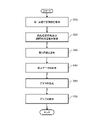
- FIG. 4 is a flowchart showing an example of processing performed by the sales information processing device 10.
- the clerk of the first store inputs the first store identification information to the first store acquisition unit 110 of the sales information processing device 10 .
- the first store identification information may be stored in the storage unit 160 in advance.
- the first store acquisition unit 110 acquires the first store identification information from the storage unit 160 (step S10).
- the sales clerk of the first store inputs into the sales information processing device 10 product designation information of the product for which the sales performance is to be confirmed and period designation information that designates the period for which the sales performance is to be obtained.
- the sales data acquisition unit 130 acquires the product designation information and period designation information (step S20).
- the second store selection unit 120 selects the second store using the first store identification information acquired by the first store acquisition unit 110 .
- An example of the method for selecting the second store is as described with reference to FIGS. 1 and 2 (step S30).
- the sales data acquisition unit 130 acquires the sales data of the first store and the sales data of the second store from the storage unit 160 .
- the sales data acquisition unit 130 acquires sales data corresponding to the product designation information and period designation information acquired in step S20 (step S40). Sales data includes at least sales performance and disposal performance. Further, the sales data acquisition unit 130 may further acquire sales data for a period before or after the period designation information acquired in step S20 with respect to the first store.
- the graph display unit 140 generates a graph using the sales data acquired by the sales data acquisition unit 130. This graph has two axes of actual sales and actual disposal. In this graph, the first position corresponding to the first store and the second position corresponding to the second store are displayed (step S50).
- the graph display unit 140 causes the display 150 to display this graph (step S60).
- the sales clerk at the first store can recognize whether the sales performance and disposal performance of the first store are superior to those of the second store.
- FIG. 5 is a diagram showing an example of the screen displayed by the display 150 in step S60 of FIG. In the example shown in this figure, this screen also serves as an initial screen, and has a period selection field 202 and a product selection field 204 .
- the period selection field 202 is a field for the store clerk to select and input period designation information.
- the period selection field 202 allows selection of the month and day that are the starting point and the ending point of the period of interest.
- the product selection column 204 is a column for the clerk to select the product for which the sales performance is to be confirmed. A plurality of products can be selected in the product selection column 204 .
- the sales data acquisition unit 130 then acquires information indicating the product selected in the product selection field 204 as product designation information.
- This screen also has a graph display column 210.
- the graph displayed in the graph display field 210 is, for example, a two-dimensional graph, and the sales performance and the disposal performance of the product are used as two axes.
- This graph shows the actual sales and actual disposal of the product selected in the product selection field 204 during the period selected in the period selection field 202 .
- the graph also shows the location of the first store (first location) and the location of the second store (second location). Therefore, the clerk of the first store can easily recognize the quality of the sales record and disposal record of the first store when compared with other stores (second store).
- This graph also shows the sales performance and disposal performance of the period preceding the selected period for the first store. Therefore, the sales clerk of the first store can easily recognize whether the sales performance and disposal performance of the first store have improved.
- the origin of this graph is the average value of multiple stores (for example, the first store and the second store).
- Stores belonging to the fourth quadrant of this graph are the most excellent because their sales results are higher than average and their disposal results are lower than average.
- stores belonging to the second quadrant have lower than average sales performance and higher than average disposal performance, so it is necessary to improve both sales measures and order quantity (number of dishes cooked in-store). . Therefore, by recognizing which quadrant the first store belongs to in this graph, the sales clerk of the first store can easily recognize the quality of the sales record and disposal record of the first store.
- the graph display section 140 may display detailed information (for example, store name and address) of the second store. This detailed information is stored in the storage unit 160 .
- the sales clerk at the first store can easily recognize the sales and disposal results of the first store by viewing the graph generated by the graph display unit 140 of the sales information processing device 10. . Therefore, the clerk of the first store can easily recognize the quality of the sales record and disposal record of the first store.
- FIG. 6 is a diagram showing an example of the functional configuration of the sales information processing device 10 according to this embodiment.
- the sales information processing device 10 shown in this figure is the same as the sales information processing device 10 according to the first embodiment except for the following points.
- the graph display unit 140 (position specifying unit) generates the graph described using FIG. 5, as in the first embodiment.
- the graph display unit 140 then specifies the quadrant to which the position of the first store (first position) belongs in the graph.
- the evaluation generation unit 170 uses the quadrant specified by the graph display unit 140 to generate evaluation information for the first store.
- the graph display unit 140 causes the display 150 to display this evaluation information as well.
- FIG. 7 is a diagram showing an example of a screen displayed on the display 150 in this embodiment. This figure corresponds to FIG. 5 in the first embodiment.
- the graph display unit 140 causes the display 150 to display a period selection field 202, a product selection field 204, and a graph display field 210, as in the first embodiment.
- the graph display unit 140 also causes the display 150 to display an evaluation display column 220 .
- the evaluation display column 220 displays the evaluation information generated by the evaluation generating section 170.
- the stores belonging to the fourth quadrant in this graph are the most excellent because their sales performance is higher than the average and their disposal performance is lower than the average.
- stores belonging to the second quadrant have lower than average sales results and higher than average disposal results.
- the stores belonging to the first quadrant have a higher than average sales performance, but a higher than average disposal performance.
- stores belonging to the third quadrant have lower than average disposal results, but their sales performance is also lower than average, so it is necessary to improve at least one of sales measures and order quantity (number of dishes cooked in-store). be.
- the evaluation generation unit 170 gives a high evaluation to the shops belonging to the fourth quadrant and a low evaluation to the shops belonging to the second quadrant. In addition, the evaluation generating unit 170 evaluates shops belonging to the first quadrant or the third quadrant as intermediate evaluations.
- evaluation display field 220 also displays sales results (eg, sales amount) and disposal results (eg, disposal amount).
- each quadrant of the graph also displays a mark 212 indicating the evaluation result of that quadrant. Therefore, the clerk of the first store can easily grasp the evaluation of the quadrant to which the first store belongs.
- the graph display section 140 does not have to cause the display 150 to display the graph display column 210 .
- the sales clerk of the first store can easily recognize the quality of the sales record and disposal record of the first store. Further, the sales information processing device 10 causes the display 150 to display the evaluation display column 220 . Therefore, the clerk of the first store can more easily recognize the quality of the sales record and disposal record of the first store.
- sales data acquisition means for acquiring sales data that can identify the sales performance and disposal performance of the first store and the sales performance and disposal performance of the second store;
- a graph having two axes of sales performance and disposal performance is displayed on a display, and a first position corresponding to the first store and a second position corresponding to the second store are displayed on the graph using the sales data.
- a graph display means for displaying in sales information processing device.
- the sales information processing apparatus further comprises evaluation information generating means for generating evaluation information of the first store using the quadrant of the graph to which the first position belongs.
- evaluation information generating means for generating evaluation information of the first store using the quadrant of the graph to which the first position belongs. 3.
- a first store acquisition means for acquiring first store identification information that identifies the first store;
- a store attribute storage means for storing attributes of the store for each of a plurality of stores, acquiring an attribute corresponding to the first store identification information, and selecting the second store using the attribute and the store attribute storage means. 2 store selection means; sales information processing device. 4.
- sales data acquisition means for acquiring sales data capable of specifying sales performance and disposal performance of the first store from sales storage means for storing data of each of a plurality of stores; position specifying means for specifying a quadrant to which the first position corresponding to the sales data belongs in a graph having at least two axes of actual sales and actual disposal; with In the graph, the 0 point on each axis is the average value of multiple stores,
- the sales information processing apparatus further comprises evaluation generation means for generating evaluation information of the first store using the quadrant identified by the position identification means. 5.
- a first store acquisition means for acquiring first store identification information that identifies the first store
- a store selection means sales information processing device. 6.
- the sales information processing device wherein the attributes include information about the location of the store and information about sales trends of products in the store. 7.
- the sales data indicates sales of a particular product
- the sales data acquisition means acquires product designation information specifying the specific product, and acquires the sales data of the product indicated by the product designation information.
- the sales data indicates sales for a particular period of time;
- the sales data acquisition means acquires period designation information designating the specific period, and acquires the sales data for the period indicated by the period designation information.
- the computer a sales data acquisition process for acquiring sales data that can identify the sales performance and disposal performance of the first store and the sales performance and disposal performance of the second store;
- a graph having two axes of sales performance and disposal performance is displayed on a display, and a first position corresponding to the first store and a second position corresponding to the second store are displayed on the graph using the sales data.
- the 0 point on each axis is the average value of multiple stores,
- the sales information processing method further comprising evaluation information generating means for generating evaluation information of the first store using the quadrant to which the first position belongs in the graph. 11.
- the computer further a first store acquisition process for acquiring first store identification information that identifies the first store;
- a store attribute storage means for storing attributes of the store for each of a plurality of stores, acquiring an attribute corresponding to the first store identification information, and selecting the second store using the attribute and the store attribute storage means. 2 store selection processing; sales information processing method. 12.
- the computer a sales data acquisition process for acquiring sales data capable of specifying sales performance and disposal performance of a first store from a sales storage means storing data of each of a plurality of stores; a position specifying process for specifying a quadrant to which the first position corresponding to the sales data belongs in a graph having at least two axes of actual sales and actual disposal; and In the graph, the 0 point on each axis is the average value of multiple stores,
- the sales information processing method wherein the computer further performs an evaluation generation process for generating evaluation information of the first store using the quadrant identified in the position identification process. 13.
- the computer further a first store acquisition process for acquiring first store identification information that identifies the first store; A second method of reading an attribute corresponding to the first store identification information from store attribute storage means for storing attributes of the store for each of a plurality of stores, and selecting the plurality of stores using the attribute and the store attribute storage means. a store selection process; sales information processing method. 14.
- the sales information processing method wherein the attributes include information about the location of the store and information about sales trends of products in the store. 15.
- the sales data indicates sales of a particular product
- the sales information processing method wherein in the sales data acquisition process, the computer acquires product designation information designating the specific product, and acquires the sales data of the product indicated by the product designation information.
- the sales data indicates sales for a particular period of time;
- the sales information processing method wherein in the sales data acquisition process, the computer acquires period designation information designating the specific period, and acquires the sales data for the period indicated by the period designation information. 17.
- a sales data acquisition function for acquiring sales data that can identify the sales performance and disposal performance of the first store and the sales performance and disposal performance of the second store;
- a graph having two axes of sales performance and disposal performance is displayed on a display, and a first position corresponding to the first store and a second position corresponding to the second store are displayed on the graph using the sales data.
- a graph display function to display in A program that has 18. In the program according to 17 above, In the graph, the 0 point on each axis is the average value of multiple stores, A program that causes the computer to further have an evaluation information generating function of generating evaluation information of the first store using the quadrant to which the first position in the graph belongs. 19.
- a first store acquisition function for acquiring first store identification information that identifies the first store
- a store attribute storage means for storing attributes of the store for each of a plurality of stores, acquiring an attribute corresponding to the first store identification information, and selecting the second store using the attribute and the store attribute storage means.
- 2 store selection function A program that has 20.
- a sales data acquisition function for acquiring sales data capable of specifying sales performance and disposal performance of a first store from sales storage means storing data of each of a plurality of stores; a position specifying function for specifying a quadrant to which a first position corresponding to the sales data belongs in a graph having at least two axes of actual sales and actual disposal; have a In the graph, the 0 point on each axis is the average value of multiple stores,
- a first store acquisition function for acquiring first store identification information that identifies the first store
- store selection function A program that has 22.
- the sales data indicates sales of a particular product
- the sales data indicates sales for a particular period of time; The program, wherein the sales data acquisition function acquires period designation information designating the specific period, and acquires the sales data for the period indicated by the period designation information.
- sales information processing device 110 first store acquisition unit 120 second store selection unit 130 sales data acquisition unit 140 graph display unit 150 display 160 storage unit
Landscapes
- Business, Economics & Management (AREA)
- Accounting & Taxation (AREA)
- Finance (AREA)
- Strategic Management (AREA)
- Development Economics (AREA)
- Engineering & Computer Science (AREA)
- General Business, Economics & Management (AREA)
- Physics & Mathematics (AREA)
- Marketing (AREA)
- General Physics & Mathematics (AREA)
- Economics (AREA)
- Theoretical Computer Science (AREA)
- Entrepreneurship & Innovation (AREA)
- Game Theory and Decision Science (AREA)
- Data Mining & Analysis (AREA)
- Management, Administration, Business Operations System, And Electronic Commerce (AREA)
Priority Applications (3)
| Application Number | Priority Date | Filing Date | Title |
|---|---|---|---|
| JP2023531247A JP7582475B2 (ja) | 2021-06-30 | 2021-06-30 | 売上情報処理装置、売上情報処理方法、及びプログラム |
| US18/273,905 US20240078592A1 (en) | 2021-06-30 | 2021-06-30 | Sales information processing apparatus, sales information processing method, and non-transitory storage medium |
| PCT/JP2021/024776 WO2023276051A1 (ja) | 2021-06-30 | 2021-06-30 | 売上情報処理装置、売上情報処理方法、及びプログラム |
Applications Claiming Priority (1)
| Application Number | Priority Date | Filing Date | Title |
|---|---|---|---|
| PCT/JP2021/024776 WO2023276051A1 (ja) | 2021-06-30 | 2021-06-30 | 売上情報処理装置、売上情報処理方法、及びプログラム |
Publications (1)
| Publication Number | Publication Date |
|---|---|
| WO2023276051A1 true WO2023276051A1 (ja) | 2023-01-05 |
Family
ID=84689814
Family Applications (1)
| Application Number | Title | Priority Date | Filing Date |
|---|---|---|---|
| PCT/JP2021/024776 Ceased WO2023276051A1 (ja) | 2021-06-30 | 2021-06-30 | 売上情報処理装置、売上情報処理方法、及びプログラム |
Country Status (3)
| Country | Link |
|---|---|
| US (1) | US20240078592A1 (https=) |
| JP (1) | JP7582475B2 (https=) |
| WO (1) | WO2023276051A1 (https=) |
Citations (6)
| Publication number | Priority date | Publication date | Assignee | Title |
|---|---|---|---|---|
| JPH11296750A (ja) * | 1998-04-13 | 1999-10-29 | Toshiba Tec Corp | 在庫管理装置システム |
| JP2006236273A (ja) * | 2005-02-28 | 2006-09-07 | Toyo Eng Corp | 管理システムおよび店舗管理端末 |
| JP2011053861A (ja) * | 2009-09-01 | 2011-03-17 | Qualitech Inc | 多次元データ表示装置、多次元データ表示プログラム、多次元データ表示方法 |
| JP2013196207A (ja) * | 2012-03-16 | 2013-09-30 | Fujitsu Ltd | 指標提供方法、指標提供装置及び指標提供プログラム |
| JP2020024739A (ja) * | 2019-10-01 | 2020-02-13 | 智美 地引 | 商品在庫情報提供システム。 |
| WO2021033338A1 (ja) * | 2019-08-22 | 2021-02-25 | 日本電気株式会社 | 分析システム、装置、制御方法、及びプログラム |
-
2021
- 2021-06-30 WO PCT/JP2021/024776 patent/WO2023276051A1/ja not_active Ceased
- 2021-06-30 US US18/273,905 patent/US20240078592A1/en active Pending
- 2021-06-30 JP JP2023531247A patent/JP7582475B2/ja active Active
Patent Citations (6)
| Publication number | Priority date | Publication date | Assignee | Title |
|---|---|---|---|---|
| JPH11296750A (ja) * | 1998-04-13 | 1999-10-29 | Toshiba Tec Corp | 在庫管理装置システム |
| JP2006236273A (ja) * | 2005-02-28 | 2006-09-07 | Toyo Eng Corp | 管理システムおよび店舗管理端末 |
| JP2011053861A (ja) * | 2009-09-01 | 2011-03-17 | Qualitech Inc | 多次元データ表示装置、多次元データ表示プログラム、多次元データ表示方法 |
| JP2013196207A (ja) * | 2012-03-16 | 2013-09-30 | Fujitsu Ltd | 指標提供方法、指標提供装置及び指標提供プログラム |
| WO2021033338A1 (ja) * | 2019-08-22 | 2021-02-25 | 日本電気株式会社 | 分析システム、装置、制御方法、及びプログラム |
| JP2020024739A (ja) * | 2019-10-01 | 2020-02-13 | 智美 地引 | 商品在庫情報提供システム。 |
Non-Patent Citations (2)
| Title |
|---|
| ANONYMOUS: "Commencement of demonstration experiment of "Machizukuri DTC™" at WITH HARAJUKU", CITY PLANNING DTC, 30 March 2021 (2021-03-30), XP093021424, Retrieved from the Internet <URL:https://www.nttdata.com/jp/ja/news/release/2021/033001> [retrieved on 20230207] * |
| DATAFLUCT CO., LTD.: "Industry's first store support AI (artificial intelligence) service specializing in food loss for food supermarkets / Looking for partners for FDATAFLUCT foodloss. J!", DATAFLUCT FOODLOSS, pages 1 - 4, XP009542375, Retrieved from the Internet <URL:https://japan.cnet.com/release/30379311> [retrieved on 20210909] * |
Also Published As
| Publication number | Publication date |
|---|---|
| JPWO2023276051A1 (https=) | 2023-01-05 |
| US20240078592A1 (en) | 2024-03-07 |
| JP7582475B2 (ja) | 2024-11-13 |
Similar Documents
| Publication | Publication Date | Title |
|---|---|---|
| KR101096821B1 (ko) | 아동의 독서이력공유를 통한 전자책 배포 확산 방법 | |
| CN101308560A (zh) | 店铺管理系统及程序 | |
| CN102473271A (zh) | 在虚拟图示环境上显示实体零售环境销售的数据 | |
| US20170140395A1 (en) | Selling status display method, selling status display apparatus, and recording medium | |
| JP5458210B1 (ja) | 情報処理装置、情報処理方法及びプログラム | |
| Martins et al. | Development and implementation of dashboards for operational monitoring using participatory design in a lean context | |
| JP2013025386A (ja) | 商品情報提供装置、商品情報提供方法及びプログラム | |
| Irion et al. | A hierarchical decomposition approach to retail shelf space management and assortment decisions | |
| CN113554457B (zh) | 适用于电商平台的智能海报生成方法、装置及存储介质 | |
| KR102452485B1 (ko) | 판매 데이터 분석 방법 및 장치 | |
| JP2978514B2 (ja) | 商品陳列管理方法 | |
| WO2023276051A1 (ja) | 売上情報処理装置、売上情報処理方法、及びプログラム | |
| JP6676993B2 (ja) | 情報提供装置、情報提供方法、及び、プログラム | |
| JP6664604B1 (ja) | 情報処理装置、情報処理方法及び情報処理プログラム | |
| JP6274471B1 (ja) | 情報処理システム、情報処理装置、情報処理方法および情報処理プログラム | |
| CN114757719A (zh) | 门店数据处理的方法、装置及设备 | |
| CN113643075B (zh) | 基于机器学习的智能海报生成方法、装置及存储介质 | |
| JP6525252B2 (ja) | 情報表示装置、情報表示方法、情報表示システム、プログラム、および記録媒体 | |
| RU118776U1 (ru) | Автоматизированная система продажи товаров и услуг | |
| WO2021024919A1 (ja) | 商品管理システム、商品管理方法、コンピュータプログラム及び記録媒体 | |
| JP7677433B2 (ja) | 画像表示装置、画像表示方法、及びプログラム | |
| JP2021189540A (ja) | 電子棚札システムおよび表示方法 | |
| JP7248838B1 (ja) | 提供装置、提供方法および提供プログラム | |
| WO2023276049A1 (ja) | 店舗データ処理装置、店舗データ処理方法、及びプログラム | |
| Singh et al. | Digitizing the street vending market |
Legal Events
| Date | Code | Title | Description |
|---|---|---|---|
| 121 | Ep: the epo has been informed by wipo that ep was designated in this application |
Ref document number: 21948358 Country of ref document: EP Kind code of ref document: A1 |
|
| ENP | Entry into the national phase |
Ref document number: 2023531247 Country of ref document: JP Kind code of ref document: A |
|
| WWE | Wipo information: entry into national phase |
Ref document number: 18273905 Country of ref document: US |
|
| NENP | Non-entry into the national phase |
Ref country code: DE |
|
| 122 | Ep: pct application non-entry in european phase |
Ref document number: 21948358 Country of ref document: EP Kind code of ref document: A1 |