WO2023238749A1 - 電子機器 - Google Patents
電子機器 Download PDFInfo
- Publication number
- WO2023238749A1 WO2023238749A1 PCT/JP2023/020266 JP2023020266W WO2023238749A1 WO 2023238749 A1 WO2023238749 A1 WO 2023238749A1 JP 2023020266 W JP2023020266 W JP 2023020266W WO 2023238749 A1 WO2023238749 A1 WO 2023238749A1
- Authority
- WO
- WIPO (PCT)
- Prior art keywords
- electrode
- upper electrode
- lower electrode
- peripheral
- electronic device
- Prior art date
- Legal status (The legal status is an assumption and is not a legal conclusion. Google has not performed a legal analysis and makes no representation as to the accuracy of the status listed.)
- Ceased
Links
Images








Classifications
-
- G—PHYSICS
- G02—OPTICS
- G02F—OPTICAL DEVICES OR ARRANGEMENTS FOR THE CONTROL OF LIGHT BY MODIFICATION OF THE OPTICAL PROPERTIES OF THE MEDIA OF THE ELEMENTS INVOLVED THEREIN; NON-LINEAR OPTICS; FREQUENCY-CHANGING OF LIGHT; OPTICAL LOGIC ELEMENTS; OPTICAL ANALOGUE/DIGITAL CONVERTERS
- G02F1/00—Devices or arrangements for the control of the intensity, colour, phase, polarisation or direction of light arriving from an independent light source, e.g. switching, gating or modulating; Non-linear optics
- G02F1/01—Devices or arrangements for the control of the intensity, colour, phase, polarisation or direction of light arriving from an independent light source, e.g. switching, gating or modulating; Non-linear optics for the control of the intensity, phase, polarisation or colour
- G02F1/13—Devices or arrangements for the control of the intensity, colour, phase, polarisation or direction of light arriving from an independent light source, e.g. switching, gating or modulating; Non-linear optics for the control of the intensity, phase, polarisation or colour based on liquid crystals, e.g. single liquid crystal display cells
- G02F1/133—Constructional arrangements; Operation of liquid crystal cells; Circuit arrangements
- G02F1/1333—Constructional arrangements; Manufacturing methods
- G02F1/1335—Structural association of cells with optical devices, e.g. polarisers or reflectors
- G02F1/133524—Light-guides, e.g. fibre-optic bundles, louvered or jalousie light-guides
-
- G—PHYSICS
- G02—OPTICS
- G02F—OPTICAL DEVICES OR ARRANGEMENTS FOR THE CONTROL OF LIGHT BY MODIFICATION OF THE OPTICAL PROPERTIES OF THE MEDIA OF THE ELEMENTS INVOLVED THEREIN; NON-LINEAR OPTICS; FREQUENCY-CHANGING OF LIGHT; OPTICAL LOGIC ELEMENTS; OPTICAL ANALOGUE/DIGITAL CONVERTERS
- G02F1/00—Devices or arrangements for the control of the intensity, colour, phase, polarisation or direction of light arriving from an independent light source, e.g. switching, gating or modulating; Non-linear optics
- G02F1/01—Devices or arrangements for the control of the intensity, colour, phase, polarisation or direction of light arriving from an independent light source, e.g. switching, gating or modulating; Non-linear optics for the control of the intensity, phase, polarisation or colour
- G02F1/13—Devices or arrangements for the control of the intensity, colour, phase, polarisation or direction of light arriving from an independent light source, e.g. switching, gating or modulating; Non-linear optics for the control of the intensity, phase, polarisation or colour based on liquid crystals, e.g. single liquid crystal display cells
-
- G—PHYSICS
- G02—OPTICS
- G02F—OPTICAL DEVICES OR ARRANGEMENTS FOR THE CONTROL OF LIGHT BY MODIFICATION OF THE OPTICAL PROPERTIES OF THE MEDIA OF THE ELEMENTS INVOLVED THEREIN; NON-LINEAR OPTICS; FREQUENCY-CHANGING OF LIGHT; OPTICAL LOGIC ELEMENTS; OPTICAL ANALOGUE/DIGITAL CONVERTERS
- G02F1/00—Devices or arrangements for the control of the intensity, colour, phase, polarisation or direction of light arriving from an independent light source, e.g. switching, gating or modulating; Non-linear optics
- G02F1/01—Devices or arrangements for the control of the intensity, colour, phase, polarisation or direction of light arriving from an independent light source, e.g. switching, gating or modulating; Non-linear optics for the control of the intensity, phase, polarisation or colour
- G02F1/13—Devices or arrangements for the control of the intensity, colour, phase, polarisation or direction of light arriving from an independent light source, e.g. switching, gating or modulating; Non-linear optics for the control of the intensity, phase, polarisation or colour based on liquid crystals, e.g. single liquid crystal display cells
- G02F1/133—Constructional arrangements; Operation of liquid crystal cells; Circuit arrangements
- G02F1/1333—Constructional arrangements; Manufacturing methods
-
- G—PHYSICS
- G02—OPTICS
- G02F—OPTICAL DEVICES OR ARRANGEMENTS FOR THE CONTROL OF LIGHT BY MODIFICATION OF THE OPTICAL PROPERTIES OF THE MEDIA OF THE ELEMENTS INVOLVED THEREIN; NON-LINEAR OPTICS; FREQUENCY-CHANGING OF LIGHT; OPTICAL LOGIC ELEMENTS; OPTICAL ANALOGUE/DIGITAL CONVERTERS
- G02F1/00—Devices or arrangements for the control of the intensity, colour, phase, polarisation or direction of light arriving from an independent light source, e.g. switching, gating or modulating; Non-linear optics
- G02F1/01—Devices or arrangements for the control of the intensity, colour, phase, polarisation or direction of light arriving from an independent light source, e.g. switching, gating or modulating; Non-linear optics for the control of the intensity, phase, polarisation or colour
- G02F1/13—Devices or arrangements for the control of the intensity, colour, phase, polarisation or direction of light arriving from an independent light source, e.g. switching, gating or modulating; Non-linear optics for the control of the intensity, phase, polarisation or colour based on liquid crystals, e.g. single liquid crystal display cells
- G02F1/133—Constructional arrangements; Operation of liquid crystal cells; Circuit arrangements
- G02F1/1333—Constructional arrangements; Manufacturing methods
- G02F1/1335—Structural association of cells with optical devices, e.g. polarisers or reflectors
- G02F1/133509—Filters, e.g. light shielding masks
- G02F1/133512—Light shielding layers, e.g. black matrix
-
- G—PHYSICS
- G02—OPTICS
- G02F—OPTICAL DEVICES OR ARRANGEMENTS FOR THE CONTROL OF LIGHT BY MODIFICATION OF THE OPTICAL PROPERTIES OF THE MEDIA OF THE ELEMENTS INVOLVED THEREIN; NON-LINEAR OPTICS; FREQUENCY-CHANGING OF LIGHT; OPTICAL LOGIC ELEMENTS; OPTICAL ANALOGUE/DIGITAL CONVERTERS
- G02F1/00—Devices or arrangements for the control of the intensity, colour, phase, polarisation or direction of light arriving from an independent light source, e.g. switching, gating or modulating; Non-linear optics
- G02F1/01—Devices or arrangements for the control of the intensity, colour, phase, polarisation or direction of light arriving from an independent light source, e.g. switching, gating or modulating; Non-linear optics for the control of the intensity, phase, polarisation or colour
- G02F1/13—Devices or arrangements for the control of the intensity, colour, phase, polarisation or direction of light arriving from an independent light source, e.g. switching, gating or modulating; Non-linear optics for the control of the intensity, phase, polarisation or colour based on liquid crystals, e.g. single liquid crystal display cells
- G02F1/133—Constructional arrangements; Operation of liquid crystal cells; Circuit arrangements
- G02F1/1333—Constructional arrangements; Manufacturing methods
- G02F1/1335—Structural association of cells with optical devices, e.g. polarisers or reflectors
- G02F1/133509—Filters, e.g. light shielding masks
- G02F1/133514—Colour filters
-
- G—PHYSICS
- G02—OPTICS
- G02F—OPTICAL DEVICES OR ARRANGEMENTS FOR THE CONTROL OF LIGHT BY MODIFICATION OF THE OPTICAL PROPERTIES OF THE MEDIA OF THE ELEMENTS INVOLVED THEREIN; NON-LINEAR OPTICS; FREQUENCY-CHANGING OF LIGHT; OPTICAL LOGIC ELEMENTS; OPTICAL ANALOGUE/DIGITAL CONVERTERS
- G02F1/00—Devices or arrangements for the control of the intensity, colour, phase, polarisation or direction of light arriving from an independent light source, e.g. switching, gating or modulating; Non-linear optics
- G02F1/01—Devices or arrangements for the control of the intensity, colour, phase, polarisation or direction of light arriving from an independent light source, e.g. switching, gating or modulating; Non-linear optics for the control of the intensity, phase, polarisation or colour
- G02F1/13—Devices or arrangements for the control of the intensity, colour, phase, polarisation or direction of light arriving from an independent light source, e.g. switching, gating or modulating; Non-linear optics for the control of the intensity, phase, polarisation or colour based on liquid crystals, e.g. single liquid crystal display cells
- G02F1/133—Constructional arrangements; Operation of liquid crystal cells; Circuit arrangements
- G02F1/1333—Constructional arrangements; Manufacturing methods
- G02F1/1343—Electrodes
-
- G—PHYSICS
- G02—OPTICS
- G02F—OPTICAL DEVICES OR ARRANGEMENTS FOR THE CONTROL OF LIGHT BY MODIFICATION OF THE OPTICAL PROPERTIES OF THE MEDIA OF THE ELEMENTS INVOLVED THEREIN; NON-LINEAR OPTICS; FREQUENCY-CHANGING OF LIGHT; OPTICAL LOGIC ELEMENTS; OPTICAL ANALOGUE/DIGITAL CONVERTERS
- G02F1/00—Devices or arrangements for the control of the intensity, colour, phase, polarisation or direction of light arriving from an independent light source, e.g. switching, gating or modulating; Non-linear optics
- G02F1/01—Devices or arrangements for the control of the intensity, colour, phase, polarisation or direction of light arriving from an independent light source, e.g. switching, gating or modulating; Non-linear optics for the control of the intensity, phase, polarisation or colour
- G02F1/13—Devices or arrangements for the control of the intensity, colour, phase, polarisation or direction of light arriving from an independent light source, e.g. switching, gating or modulating; Non-linear optics for the control of the intensity, phase, polarisation or colour based on liquid crystals, e.g. single liquid crystal display cells
- G02F1/133—Constructional arrangements; Operation of liquid crystal cells; Circuit arrangements
- G02F1/1333—Constructional arrangements; Manufacturing methods
- G02F1/1343—Electrodes
- G02F1/134309—Electrodes characterised by their geometrical arrangement
-
- G—PHYSICS
- G02—OPTICS
- G02F—OPTICAL DEVICES OR ARRANGEMENTS FOR THE CONTROL OF LIGHT BY MODIFICATION OF THE OPTICAL PROPERTIES OF THE MEDIA OF THE ELEMENTS INVOLVED THEREIN; NON-LINEAR OPTICS; FREQUENCY-CHANGING OF LIGHT; OPTICAL LOGIC ELEMENTS; OPTICAL ANALOGUE/DIGITAL CONVERTERS
- G02F1/00—Devices or arrangements for the control of the intensity, colour, phase, polarisation or direction of light arriving from an independent light source, e.g. switching, gating or modulating; Non-linear optics
- G02F1/01—Devices or arrangements for the control of the intensity, colour, phase, polarisation or direction of light arriving from an independent light source, e.g. switching, gating or modulating; Non-linear optics for the control of the intensity, phase, polarisation or colour
- G02F1/13—Devices or arrangements for the control of the intensity, colour, phase, polarisation or direction of light arriving from an independent light source, e.g. switching, gating or modulating; Non-linear optics for the control of the intensity, phase, polarisation or colour based on liquid crystals, e.g. single liquid crystal display cells
- G02F1/133—Constructional arrangements; Operation of liquid crystal cells; Circuit arrangements
- G02F1/1333—Constructional arrangements; Manufacturing methods
- G02F1/1343—Electrodes
- G02F1/13439—Electrodes characterised by their electrical, optical, physical properties; materials therefor; method of making
Definitions
- Embodiments of the present invention relate to electronic equipment.
- the present embodiment provides an electronic device that can suppress the occurrence of streaks and suppress a decrease in accuracy.
- An electronic device includes: a first upper electrode; a second upper electrode; a third upper electrode; a fourth upper electrode; a fifth upper electrode; a first lower electrode connected to the first upper electrode; a second lower electrode connected to the second upper electrode; a third lower electrode connected to the third upper electrode; a fourth lower electrode connected to the fourth upper electrode; a fifth lower electrode connected to the fifth upper electrode; the first upper electrode, the second upper electrode, the third upper electrode, the fourth upper electrode, and the fifth upper electrode, and the first lower electrode, the second lower electrode, and the third upper electrode.
- an electronic device includes: an upper electrode; a lower electrode; a region where the upper electrode and the lower electrode are not provided; Equipped with The upper electrode is a center electrode having a circular shape; a first peripheral electrode surrounding the center electrode and having an annular shape; a second peripheral electrode surrounding the first peripheral electrode and having an annular shape; a third peripheral electrode surrounding the second peripheral electrode and having an annular shape; a fourth peripheral electrode surrounding the third peripheral electrode and having an annular shape; has The center electrode, the first peripheral electrode, the second peripheral electrode, the third peripheral electrode, and the fourth peripheral electrode each have a plurality of divided electrodes.
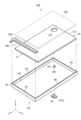
- FIG. 1 is an exploded perspective view showing an example of a schematic configuration of an electronic device applicable in the embodiment.
- FIG. 2 is a sectional view showing an example of a schematic configuration of the electronic device shown in FIG.
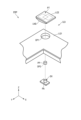
- FIG. 3 is an exploded perspective view schematically showing a partial configuration of the electronic device of this embodiment.
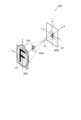
- FIG. 4 is a diagram illustrating a method of measuring distance using coded apertures.
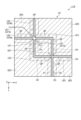
- FIG. 5 is a plan view showing an example of a schematic configuration of a part of a liquid crystal element.
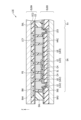
- FIG. 6 is a cross-sectional view of the liquid crystal element taken along line A1-A2 shown in FIG.
- FIG. 7 is a cross-sectional view showing an example of a schematic configuration of a liquid crystal element.
- FIG. 1 is an exploded perspective view showing an example of a schematic configuration of an electronic device applicable in the embodiment.
- FIG. 2 is a sectional view showing an example of a schematic configuration of the electronic device shown in FIG.
- FIG. 3 is an exploded perspective
- FIG. 8A is a plan view of a liquid crystal element of Comparative Example 1.
- FIG. 8B is a plan view of the liquid crystal element of Comparative Example 1.
- FIG. 8C is a plan view of the liquid crystal element of Comparative Example 1.
- FIG. 8D is a plan view of the liquid crystal element of Comparative Example 1.
- FIG. 9A is a plan view of a liquid crystal element of Comparative Example 2.
- FIG. 9B is a plan view of the liquid crystal element of Comparative Example 2.
- FIG. 9C is a plan view of a liquid crystal element of Comparative Example 2.
- FIG. 9D is a plan view of a liquid crystal element of Comparative Example 2.
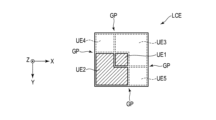
- FIG. 10A is a plan view showing the liquid crystal element of this embodiment.
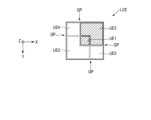
- FIG. 10B is a plan view showing the liquid crystal element of this embodiment.
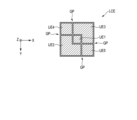
- FIG. 10C is a plan view showing the liquid crystal element of this embodiment.
- FIG. 10D is a plan view showing the liquid crystal element of this embodiment.
- FIG. 11 is a partially enlarged view of FIG. 5.
- FIG. 12 is a plan view showing another example of the configuration of the liquid crystal element in the embodiment.
- first direction X, the second direction Y, and the third direction Z are orthogonal to each other, but they may intersect at an angle other than 90 degrees.
- the direction toward the tip of the arrow in the third direction Z is defined as above or above, and the direction opposite to the direction toward the tip of the arrow in third direction Z is defined as down or below.
- the second member may be in contact with the first member, or may be separated from the first member. It may be located at In the latter case, a third member may be interposed between the first member and the second member.
- the second member is in contact with the first member.
- FIG. 1 is an exploded perspective view showing an example of a schematic configuration of an electronic device applicable in the embodiment.
- the electronic device ERP shown in FIG. 1 includes a lighting device ILD, a display panel PNL, and an image sensor PA.
- the display panel PNL is a liquid crystal display panel and includes a liquid crystal element LCD.
- the lighting device ILD includes a light guide plate LG1, a light source EM1, and a housing CS. Such an illumination device ILD illuminates, for example, the display panel PNL, which is shown simplified by a broken line in FIG. 1.
- the light guide plate LG1 is formed into a flat plate shape parallel to the XY plane defined by the first direction X and the second direction Y.
- the light guide plate LG1 faces the display panel PNL.
- the light guide plate LG1 has a side surface S1, a side surface S2 on the opposite side to the side surface S1, and an opening OP1.
- the side surface S1 and the side surface S2 each extend along the first direction X.
- the side surface S1 and the side surface S2 are surfaces parallel to the XZ plane defined by the first direction X and the third direction Z.
- the opening OP1 is a through hole that penetrates the light guide plate LG1 along the third direction Z.
- the opening OP1 is located between the side surface S1 and the side surface S2 in the second direction Y, and is closer to the side surface S2 than the side surface S1.
- the plurality of light sources EM1 are lined up along the first direction X at intervals.
- the light sources EM1 are each mounted on the wiring board FPC1 and electrically connected to the wiring board FPC1.
- the housing CS houses the light guide plate LG1 and the light source EM1.
- the housing CS includes side walls W1 to W4, a bottom plate BP, an opening OP2, and a protrusion PP.
- the side wall W1 and the side wall W2 extend along the first direction X and face each other.
- the side wall W3 and the side wall W4 extend along the second direction Y and face each other.
- the openings OP2 are through holes that penetrate the bottom plate BP along the third direction Z.
- the opening OP2 overlaps the opening OP1 in the third direction Z.
- the protrusion PP protrudes from the bottom plate BP toward the display panel PNL along the third direction Z, and is provided so as to surround the opening OP2.
- the image sensor PA of the electronic device ERP shown in FIG. 1 is provided so as to overlap the opening OP2 in the third direction Z.
- the image sensor PA is mounted on the wiring board FPC2 and electrically connected to the wiring board FPC2.
- the display panel PNL overlaps the light guide plate LG1 and also overlaps the image sensor PA at the opening OP1.
- FIG. 2 is a sectional view showing an example of a schematic configuration of the electronic device shown in FIG. 1.
- FIG. 2 shows a cross section of an electronic device ERP including a display panel PNL, an image sensor PA, and an illumination device ILD.
- the opening OP2 of the housing CS of the lighting device ILD is located inside the opening OP1 of the light guide plate LG1.
- the image sensor PA is located inside the opening OP1 and the opening OP2.
- the lighting device ILD further includes a light shielding wall BW.
- the light shielding wall BW is located inside the opening OP1.
- the light shielding wall BW is in contact with each of the reflective sheet RS, the light guide plate LG1, the diffusion sheet SS, the prism sheet PS1, and the prism sheet PS2, which will be described later, but may not be in contact with each other.
- the light shielding wall BW is made of, for example, a black colored resin. Note that the light shielding wall BW may not be provided if unnecessary.
- the illumination device ILD further includes a reflection sheet RS, a diffusion sheet SS, a prism sheet PS1, and a prism sheet PS2.
- the reflective sheet RS, the light guide plate LG1, the diffusion sheet SS, the prism sheet PS1, and the prism sheet PS2 are arranged in this order along the third direction Z and housed in the housing CS.
- the housing CS includes a metal housing CS1 and a resin base CS2.
- the pedestal CS2 forms a protrusion PP together with the housing CS1.
- Each of the diffusion sheet SS, the prism sheet PS1, and the prism sheet PS2 has an opening OP3 that overlaps the opening OP1.
- the reflective sheet RS has an opening OP4 that overlaps the opening OP1.
- the protrusion PP of the housing CS is located inside the opening OP1, the opening OP3, and the opening OP4.
- the image sensor PA includes, for example, an optical system OPS including at least one lens, a sensor element IMS, and a housing HS.
- the sensor element IMS is an image sensor that can detect images.
- the housing HS houses the optical system OPS and the sensor element IMS.
- Optical system OPS is located between display panel PNL and sensor element IMS.
- the sensor element IMS includes a plurality of sensor elements SX, which will be described later.
- the plurality of sensor elements SX are also referred to as sensor pixels.
- the polarizing plate PL1, the display panel PNL, the polarizing plate PL2, and the cover member CG are arranged in this order along the third direction Z, and have an optical switching function for light traveling along the third direction Z. It constitutes a liquid crystal element LCD.
- a polarizing plate PL1 is provided in contact with the base material BA1 of the substrate SUB1.
- An adhesive or adhesive tape (not shown) is provided between the polarizing plate PL1 and the base material BA1 (substrate), and the polarizing plate PL is adhered to the base material BA1.
- the adhesive tape TP2 is, for example, a transparent or white double-sided adhesive tape, and adheres the lighting device ILD and the liquid crystal element LCD.
- the adhesive tape TP2 adheres the polarizing plate PL1 and the protrusion PP, and the polarizing plate PL1 and the prism sheet PS2.
- the polarizing plate PL2 is bonded to the base material BA2 with an adhesive or adhesive tape (not shown). Polarizing plate PL2 is adhered to cover member CG by transparent adhesive layer AD.
- An example of the material of the cover member CG is glass.
- the display panel PNL includes a display area DA that displays an image, and a non-display area NDA that is adjacent to the display area DA and surrounds the display area DA.
- the display panel PNL includes a substrate SUB1, a substrate SUB2, a liquid crystal layer LC, and a seal SE.
- the seal SE is located in the non-display area NDA, adheres the substrate SUB1 and the substrate SUB2, and seals the liquid crystal layer LC. That is, the display area DA is an area that does not overlap with the seal SE among the areas occupied by the substrate SUB1, the substrate SUB2, and the liquid crystal layer LC sandwiched between the substrate SUB1 and the substrate SUB2.
- the substrate SUB1 includes a base material BA1 and an alignment film AL1.
- the substrate SUB2 includes a base material BA2, a color filter CF, a light shielding layer BM, an insulating layer OC, and an alignment film AL2.
- the base material BA1 and the base material BA2 are transparent substrates such as a glass substrate or a flexible resin substrate.
- the alignment film AL1 and the alignment film AL2 are in contact with the liquid crystal layer LC.
- the color filter CF, the light shielding layer BM, and the insulating layer OC are located between the base material BA2 and the liquid crystal layer LC. Note that in the example shown in FIG. 2, the color filter CF is provided on the substrate SUB2, but it may be provided on the substrate SUB1.
- the light shielding layer BM is located in the non-display area NDA.
- the boundary LB between the display area DA and the non-display area NDA is defined, for example, by the inner end (end on the display area DA side) of the light shielding layer BM.
- the seal SE is provided at a position overlapping the light shielding layer BM.
- the color filter CF includes, for example, a red color filter placed on a red pixel, a green color filter placed on a green pixel, and a blue color filter placed on a blue pixel. Equipped with a filter. Further, the color filter CF may include a transparent resin layer placed in the white pixel.
- the insulating layer OC covers the color filter CF and the light shielding layer BM.
- the insulating layer OC is, for example, a transparent organic insulating layer.
- the image sensor PA is, for example, a camera.
- the image sensor PA includes, for example, one that detects visible light, one that detects infrared rays, a proximity sensor that senses the proximity of a detection target, a detection element that detects infrared rays reflected from a detection target, etc. A combination of each may also be used.
- the electronic device ERP may include a light emitting element instead of or in addition to the image sensor PA. Examples of the light-emitting element include a projection element that projects infrared rays toward the object to be detected.
- the image sensor PA is provided so as to overlap the opening OP2 of the housing CS, and is located inside surrounded by the protrusion PP.
- the image sensor PA overlaps the cover member CG, the display panel PNL, and the light guide plate LG2 in the third direction Z. Note that a part or all of the image sensor PA overlaps the display area DA of the display panel PNL in the third direction Z. That is, in the electronic device ERP having the display panel PNL and the image sensor PA, the image sensor PA may be provided on the back side of the display panel PNL as viewed from the user of the electronic device ERP.
- FIG. 3 is an exploded perspective view schematically showing a partial configuration of the electronic device of this embodiment.
- the electronic device ERP includes a liquid crystal element LCE facing the image sensor PA.
- the liquid crystal element LCE displays an aperture pattern PT and is provided with a lens LNS.
- the lens LNS may be provided separately from the liquid crystal element LCE, or may be included therein.
- the lens LNS in FIG. 3 is shown separately from the image sensor PA, but is shown as being provided in the optical system OPS as described above.
- the image sensor PA has a sensor element SX facing the aperture pattern PT.
- the distance between the image sensor PA and the object is measured by using a coded aperture.
- the distance of the object from the image sensor PA can be estimated by arranging a specific pattern specifying whether or not light is transmitted in front of the image sensor PA.
- accuracy can be further improved.
- a pair of coded aperture patterns is called a coded aperture pair (CAP).
- FIG. 4 is a diagram illustrating a method of measuring distance using a coded aperture.
- An image IMG1 on the XY plane of the aperture pattern PT of the liquid crystal element LCE is imaged on the imaging surface (uv plane) of the image sensor PA via the lens LNS.
- the formed image IMG2 is detected by the sensor element SX present on the imaging surface.
- Information on the light (image) detected by the image sensor PA includes information on the distance from the image sensor PA to the subject.
- the image IMG3 at a position shifted from the focal point FC of the lens LNS becomes a blurred image. If the way this blur spreads is calculated as a point spread function (PSF), the distance (depth) can be obtained.
- PSF point spread function
- the coded aperture pattern can also be formed by a light-shielding layer made of a metal material, for example, instead of a liquid crystal element.
- a light-shielding layer made of a metal material the types of coded aperture patterns are limited.
- the electronic device ERP of this embodiment has the advantage that it is possible to use two or more types of coded aperture patterns by including the liquid crystal element LCE.
- FIG. 5 is a plan view showing an example of a schematic configuration of a part of the liquid crystal element.
- FIG. 6 is a cross-sectional view of the liquid crystal element taken along line A1-A2 shown in FIG.
- the liquid crystal element LCE includes a lower electrode LE1, a lower electrode LE2, a lower electrode LE3, a lower electrode LE4, a lower electrode LE5, an upper electrode UE1, an upper electrode UE2, an upper electrode UE3, an upper electrode UE4, and an upper electrode. It has a UE5 and a contact hole CH.
- the upper electrode UE1 has a square shape and is arranged near the center of the liquid crystal element LCE.
- Upper electrode UE2, upper electrode UE3, upper electrode UE4, and upper electrode UE5 are arranged surrounding upper electrode UE1.
- the upper electrode UE2, the upper electrode UE3, the upper electrode UE4, and the upper electrode UE5 constitute a hollow square electrode Q1.
- a gap GP is provided between the upper electrode UE1, the upper electrode UE2, the upper electrode UE3, the upper electrode UE4, and the upper electrode UE5 so that they do not come into contact with each other.
- the upper electrode UE1 is a center electrode located at the center of these electrodes, and the upper electrode UE2, upper electrode UE3, upper electrode UE4, and upper electrode UE5 arranged surrounding the upper electrode UE1 are peripheral electrodes surrounding the center electrode. It can also be said that It can be said that the upper electrode UE2, the upper electrode UE3, the upper electrode UE4, and the upper electrode UE5 are divided electrodes in which the peripheral electrode is divided by the gap GP.
- the upper electrode UE2 has an L-shape and is adjacent to the upper electrode UE5 in the first direction X.
- the upper electrode UE2 is adjacent to the upper electrode UE4 in the opposite direction to the second direction Y.
- the upper electrode UE3 has a shape obtained by rotating an L-shape by 180 degrees.
- the upper electrode UE3 is adjacent to the upper electrode UE4 in the opposite direction to the first direction X.
- the upper electrode UE3 is adjacent to the upper electrode UE5 in the second direction Y.
- the upper electrode UE4 has a rectangular shape and is adjacent to the upper electrode UE3 in the first direction X.
- the upper electrode UE4 is adjacent to the upper electrode UE2 in the second direction Y.
- the upper electrode UE5 has a rectangular shape and is adjacent to the upper electrode UE2 in the opposite direction to the first direction X.
- the upper electrode UE5 is adjacent to the upper electrode UE3 in the opposite direction to the second direction Y.
- the lower electrode LE1 has a rectangular electrode portion LE1a and a wiring portion LE1b, which are integrally formed.
- the electrode portion LE1a overlaps the upper electrode UE1 in plan view.
- the lower electrode LE4 has two electrode parts LE4a and LE4b provided in the same layer.
- the wiring portion LE1b is provided between the electrode portion LE4a and the electrode portion LE4b in plan view.
- the wiring portion LE1b is drawn out to the outside of the liquid crystal element LCE without contacting the electrode portion LE4a and the electrode portion LE4b provided in the same layer.
- the lower electrode LE2 is provided so as to overlap the ends of the upper electrode UE2 and the upper electrode UE1, and fill the gap GP between the upper electrode UE2 and the upper electrode UE1.
- a contact hole CH is provided in the insulating layer INS, which will be described later.
- the lower electrode LE3 is provided so as to overlap the ends of the upper electrode UE3 and the upper electrode UE1, and fill the gap GP between the upper electrode UE3 and the upper electrode UE1.
- a contact hole CH is provided in the insulating layer INS in a region where the lower electrode LE3 and the upper electrode UE3 overlap.
- the lower electrode LE4 has the electrode portion LE4a and the electrode portion LE4b.
- the electrode portion LE4a is provided so as to overlap the ends of the upper electrode UE4 and the upper electrode UE2, and fill the gap GP between the upper electrode UE4 and the upper electrode UE2.
- a contact hole CH is provided in the insulating layer INS in a region where the electrode portion LE4a and the upper electrode UE4 overlap.
- the electrode portion LE4b is provided so as to overlap the ends of the upper electrode UE4 and the upper electrode UE3, and fill the gap GP between the upper electrode UE4 and the upper electrode UE3.
- a contact hole CH is provided in the insulating layer INS in a region where the electrode portion LE4b and the upper electrode UE4 overlap.
- the lower electrode LE5 overlaps the ends of the upper electrode UE5 and the upper electrode UE2, and the ends of the upper electrode UE5 and the upper electrode UE3.
- the lower electrode LE5 is provided so as to fill the gap GP between the upper electrode UE5 and the upper electrode UE2, and the gap GP between the upper electrode UE5 and the upper electrode UE3.
- Contact holes CH are provided in the insulating layer INS in a region where the upper electrode UE5 and the upper electrode UE2 overlap and in a region where the upper electrode UE5 and the upper electrode UE3 overlap.
- the lower electrode LE1, the lower electrode LE2, the lower electrode LE3, the lower electrode LE4, and the lower electrode LE5 are provided on the insulating layer HRC.
- the insulating layer HRC may be, for example, an organic resin layer, more specifically, an acrylic resin layer or a polyimide resin layer.
- ITO indium tin oxide
- IZO indium zinc oxide
- the lower electrode LE5 is covered with an insulating layer INS.
- the insulating layer INS may be any inorganic insulating material, such as silicon nitride or silicon oxide.
- a contact hole CH overlapping the lower electrode LE5 is provided in the insulating layer INS.
- An upper electrode UE2 and an upper electrode UE5 are provided on the insulating layer INS.
- Upper electrode UE5 is connected to lower electrode LE5 via contact hole CH.
- Upper electrode UE2 is not connected to lower electrode LE5.
- FIG. 6 shows the lower electrode LE5 and upper electrode UE5, other lower electrodes LE1, lower electrode LE2, lower electrode LE3, and lower electrode LE4, as well as upper electrode UE1 and upper electrode UE2 , upper electrode UE3, and upper electrode UE4. That is, the upper electrode UE1 is connected to the lower electrode LE1 via the contact hole CH. Upper electrode UE2 is connected to lower electrode LE2 via contact hole CH. Upper electrode UE3 is connected to lower electrode LE4 via contact hole CH. Upper electrode UE4 is connected to lower electrode LE4 via contact hole CH.
- FIG. 7 is a cross-sectional view showing an example of a schematic configuration of a liquid crystal element.
- the liquid crystal element LCE includes a base material BA3, a signal line SL, an insulating layer HRC, a lower electrode LE, an electrode LEX, an insulating layer INS, an upper electrode UE, a spacer PS, and a liquid crystal layer LCY. , a counter electrode CE, an insulating layer OC2, a light shielding layer BM, and a base material BA4.
- the base material BA3, the signal line SL, the insulating layer HRC, the lower electrode LE, the electrode LEX, the insulating layer INS, and the upper electrode UE constitute a substrate SUB3.
- the counter electrode CE, the insulating layer OC2, the light shielding layer BM, and the base material BA4 constitute a substrate SUB4.
- FIG. 7 the area surrounded by dotted lines corresponds to FIG. 6.
- the liquid crystal element LCE has a sensor area SA and an end Ex.
- the sensor area SA mainly includes a lower electrode LE, an upper electrode UE, a liquid crystal layer LCY, and a counter electrode CE.
- the liquid crystal layer LCY is provided between the upper electrode UE, the lower electrode LE, and the counter electrode CE.
- an electrode LEX connected to the signal line SL is provided.
- the electrode LEX is electrically connected to an external drive element.
- the configuration of the end portion Ex is not limited to this, and wiring and electrodes for inputting a drive signal from an external drive element may be provided.
- the base material BA3 and the base material BA4 may be made of a transparent insulating member, such as glass.
- a signal line SL is provided on the base material BA3.
- the signal line SL may be formed of a metal material such as a laminate made of aluminum sandwiched between titanium.
- An insulating layer HRC is provided to cover the base material BA3 and the signal line SL.
- the insulating layer HRC functions as a planarization layer.
- a lower electrode LE and an electrode LEX are provided on the insulating layer HRC.
- the lower electrode LE and the electrode LEX are in the same layer.
- the lower electrode LE and the electrode LEX are formed of the same material and the same configuration.
- FIG. 7 shows the lower electrode LE2 and the lower electrode LE5 among the lower electrodes LE.
- the lower electrode LE2 is connected to the signal line SL via a contact hole provided in the insulating layer HRC.
- the lower electrode LE5 is also connected to another signal line SL.
- a signal is input to the lower electrode LE (lower electrode LE2 and lower electrode LE5) via the signal line SL, and the on state and off state are controlled.
- An insulating layer INS is provided covering the lower electrode LE and the electrode LEX.
- FIG. 7 shows the upper electrode UE2 and the upper electrode UE5 among the upper electrodes UE.
- the upper electrode UE2 is connected to the lower electrode LE2 via a contact hole CH provided in the insulating layer INS.
- the upper electrode UE5 is connected to the lower electrode LE5 via a contact hole CH provided in the insulating layer INS.
- a seal SAL, a spacer PS, a conductive member CM, and a liquid crystal layer LCY are provided on the insulating layer INS and the upper electrode UE.
- the seal SAL is provided so as to surround the liquid crystal layer LCY.
- the area surrounded by the seal SAL and provided with the liquid crystal layer LCY becomes the sensor area SA.
- the seal SAL adheres the substrate SUB3 and the substrate SUB4 and seals the liquid crystal layer LCY.
- the spacer PS is arranged inside the region where the liquid crystal layer LCY is provided.
- the spacer PS has a function of maintaining the thickness of the liquid crystal layer LCY.
- the spacer PS may be formed using an organic resin material.
- a light shielding layer BM is provided in contact with the base material BA4.
- the light shielding layer BM is arranged at a position facing the spacer PS.
- Examples of the material of the light shielding layer BM include metal materials and resin materials containing black pigment.
- An insulating layer OC2 is provided to cover the base material BA4 and the light shielding layer BM.
- the insulating layer OC2 is, for example, a transparent organic insulating layer.
- a counter electrode CE is provided in contact with the insulating layer OC2.
- the counter electrode CE may be formed of a transparent conductive material such as indium tin oxide (ITO) or indium zinc oxide (IZO).
- ITO indium tin oxide
- IZO indium zinc oxide
- the counter electrode CE faces the upper electrode UE and the lower electrode LE.
- the liquid crystal layer LCY is driven by a voltage applied between the upper electrode UE, the lower electrode LE, and the counter electrode CE.
- a white display area and a black display area are switched, and an aperture pattern PT of the liquid crystal element LCE is formed.
- Comparative Example 1 a case will be described in which the lower electrode LE is not provided, that is, only the upper electrode UE is provided.
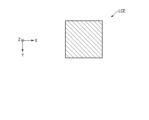
- FIG. 8A to 8D are plan views of the liquid crystal element of Comparative Example 1.
- the upper electrode UE3, the upper electrode UE4, and the upper electrode UE5 are in the on state, and the upper electrode UE1 and the upper electrode UE2 are in the off state.
- the region where the upper electrode UE3, the upper electrode UE4, and the upper electrode UE5 are provided transmits light, resulting in a so-called white display.
- the area where the upper electrode UE1 and the upper electrode UE2 are provided does not transmit light, resulting in a so-called black display.
- An electrode for driving the liquid crystal layer LCY is not arranged in the gap GP between the upper electrode UE1 and the upper electrode UE2. Therefore, the liquid crystal layer LCY transmits light, resulting in a so-called white display. Therefore, the area corresponding to the gap GP between the upper electrode UE1 and the upper electrode UE2 is detected as a white stripe.
- the upper electrode UE2, the upper electrode UE4, and the upper electrode UE5 are in the on state, and the upper electrode UE1 and the upper electrode UE3 are in the off state. Also in FIG. 8B, the area corresponding to the gap GP between the upper electrode UE1 and the upper electrode UE3 is detected as a white streak.
- upper electrode UE1, upper electrode UE2, upper electrode UE3, upper electrode UE4, and upper electrode UE5 are all in the on state.
- no streaks are detected.
- upper electrode UE1, upper electrode UE2, upper electrode UE3, upper electrode UE4, and upper electrode UE5 are all in the off state.
- the area where the upper electrode UE1, the upper electrode UE2, the upper electrode UE3, the upper electrode UE4, and the upper electrode UE5 are provided does not transmit light, resulting in a so-called black display. This results in a so-called all-black display state.
- the liquid crystal layer LCY transmits light in the region corresponding to the gap GP. Therefore, the area corresponding to the gap GP is entirely displayed in white, and white streaks are noticeably detected.
- FIGS. 8B to 8D it is considered to provide a light shielding layer in the region corresponding to the gap GP, for example.
- 9A to 9D are plan views of a liquid crystal element of Comparative Example 2.
- the upper electrode UE3, the upper electrode UE4, and the upper electrode UE5 are in the on state, and the upper electrode UE1 and the upper electrode UE2 are in the off state.
- the region where the upper electrode UE3, the upper electrode UE4, and the upper electrode UE5 are provided transmits light, resulting in a so-called white display.
- the area where the upper electrode UE1 and the upper electrode UE2 are provided does not transmit light, resulting in a so-called black display.
- a light shielding layer is provided in the gap GP between the upper electrode UE3 and the upper electrode UE4 and the gap GP between the upper electrode UE3 and the upper electrode UE5, so that light does not pass therethrough. Therefore, the gap GP is detected as a black stripe.
- the upper electrode UE2, the upper electrode UE4, and the upper electrode UE5 are in the on state, and the upper electrode UE1 and the upper electrode UE3 are in the off state. Also in FIG. 8B, areas corresponding to the gap GP between the upper electrode UE2 and the upper electrode UE4 and the gap GP between the upper electrode UE2 and the upper electrode UE5 are detected as black streaks.
- upper electrode UE1, upper electrode UE2, upper electrode UE3, upper electrode UE4, and upper electrode UE5 are all in the on state.
- the area where the upper electrode UE1, the upper electrode UE2, the upper electrode UE3, the upper electrode UE4, and the upper electrode UE5 are provided is displayed in white. This results in a so-called all-white display state.
- the area corresponding to the gap GP does not allow any light to pass through, and black streaks are clearly detected.
- upper electrode UE1, upper electrode UE2, upper electrode UE3, upper electrode UE4, and upper electrode UE5 are all in the off state.
- the region where the upper electrode UE1, the upper electrode UE2, the upper electrode UE3, the upper electrode UE4, and the upper electrode UE5 are provided and the region corresponding to the gap GP do not transmit light, resulting in a so-called black display. This results in a so-called all-black display state.
- no streaks are detected.
- Detection of undesired white stripes or black stripes by the sensor element SX leads to a decrease in accuracy of the electronic device ERP. Therefore, it is preferable to suppress the occurrence of the streaks. Even if there is a part where light escapes or where no light passes, if it is minute, it will not affect the detection by the sensor element SX. This makes it possible to suppress a decrease in accuracy.
- FIGS. 10A to 10D are plan views showing the liquid crystal element of this embodiment.
- the lower electrode LE is provided as explained in FIG. 5.
- the lower electrode LE is connected to the upper electrode UE, and the same voltage is applied thereto.
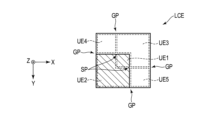
- the upper electrode UE3, the upper electrode UE4, and the upper electrode UE5 are in the on state, and the upper electrode UE1 and the upper electrode UE2 are in the off state.
- the liquid crystal element LCE shown in FIG. 10A is different from the liquid crystal element LCE shown in FIG. 8A in that a lower electrode is provided so as to fill the gap GP between the upper electrode UE1 and the upper electrode UE2 (see FIG. 5). Since the lower electrode LE2 has the same potential as the upper electrode UE2, the lower electrode LE2 is in the off state. As a result, the area corresponding to the gap GP is also displayed in black, and no white streaks are detected.
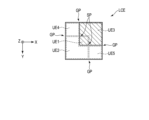
- the upper electrode UE2, the upper electrode UE4, and the upper electrode UE5 are in the on state, and the upper electrode UE1 and the upper electrode UE3 are in the off state.
- the lower electrode LE3 is provided so as to fill the gap GP between the upper electrode UE1 and the upper electrode UE3. Therefore, since the lower electrode LE3 has the same potential as the upper electrode UE3, the lower electrode LE3 is in an off state. As a result, the area corresponding to the gap GP is also displayed in black, and no white streaks are detected.
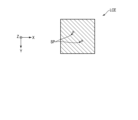
- upper electrode UE1, upper electrode UE2, upper electrode UE3, upper electrode UE4, and upper electrode UE5 are all in the on state. Since the lower electrode LE1, the lower electrode LE2, the lower electrode LE3, the lower electrode LE4, and the lower electrode LE5, which are connected to each other, are also in the on state, no black stripes are detected.
- upper electrode UE1, upper electrode UE2, upper electrode UE3, upper electrode UE4, and upper electrode UE5 are all in the off state. Since the lower electrode LE1, the lower electrode LE2, the lower electrode LE3, the lower electrode LE4, and the lower electrode LE5 are all in the off state, no white streak is detected.
- FIG. 11 is a partially enlarged view of FIG. 5. As shown in FIG. 11, a region SP1 where the ends of the lower electrode LE2, the lower electrode LE3, the lower electrode LE4a, and the lower electrode LE4b are adjacent to each other, and the lower electrode LE2, the lower electrode LE3, In the region SP2 where the ends of the lower electrodes LE5 and LE5 are adjacent to each other, neither the lower electrode nor the upper electrode is provided. When there is no particular need to distinguish between the region SP1 and the region SP2, they are simply referred to as the region SP.
- the region SP exists also in FIGS. 10A and 10B. However, since no streaks are formed and are sometimes smaller than the area displayed in black, the accuracy of the electronic device ERP is not affected.
- both the upper electrode UE and the lower electrode LE are formed of a transparent conductive material, such as indium tin oxide (ITO) or indium zinc oxide (IZO). Therefore, there is no need for a light shielding layer as shown in FIGS. 9A to 9D.
- ITO indium tin oxide
- IZO indium zinc oxide
- FIG. 12 is a plan view showing another example of the configuration of the liquid crystal element in the embodiment.
- the configuration example shown in FIG. 12 differs from the configuration example shown in FIG. 5 in that the electrode has a circular shape.
- the liquid crystal element LCE includes an upper electrode VE1a, an upper electrode VE1b, an upper electrode VE2a, an upper electrode VE2b, an upper electrode VE3a, an upper electrode VE3b, an upper electrode VE4a, an upper electrode VE4b, an upper electrode VE5a, an upper electrode VE5b, an upper electrode VE6a, and an upper electrode.
- Upper electrode VE1a, upper electrode VE1b, upper electrode VE2a, upper electrode VE2b, upper electrode VE3a, upper electrode VE3b, upper electrode VE4a, and upper electrode VE4b are arranged adjacent to each other and constitute a circular electrode C1.
- a gap GP is provided between each of the upper electrode VE1a, the upper electrode VE1b, the upper electrode VE2a, the upper electrode VE2b, the upper electrode VE3a, the upper electrode VE3b, the upper electrode VE4a, and the upper electrode VE4b.
- the upper electrode VE5a, the upper electrode VE5b, the upper electrode VE6a, the upper electrode VE6b, the upper electrode VE7a, the upper electrode VE7b, the upper electrode VE8a, and the upper electrode VE8b are arranged adjacent to each other and constitute an annular electrode C2. .
- Electrode C2 is arranged at a position surrounding electrode C1.
- a gap GP is provided between each of the upper electrode VE5a, the upper electrode VE5b, the upper electrode VE6a, the upper electrode VE6b, the upper electrode VE7a, the upper electrode VE7b, the upper electrode VE8a, and the upper electrode VE8b.
- a gap GP is also provided between the electrode C1 and the electrode C2.
- the upper electrode VE9a, the upper electrode VE9b, the upper electrode VE10a, the upper electrode VE10b, the upper electrode VE11a, the upper electrode VE11b, the upper electrode VE12a, and the upper electrode VE12b are arranged adjacent to each other and constitute a ring-shaped electrode C3. . Electrode C3 is arranged at a position surrounding electrode C2. A gap GP is provided between each of the upper electrode VE9a, the upper electrode VE9b, the upper electrode VE10a, the upper electrode VE10b, the upper electrode VE11a, the upper electrode VE11b, the upper electrode VE12a, and the upper electrode VE12b. A gap GP is also provided between the electrode C2 and the electrode C3.
- the upper electrode VE13a, the upper electrode VE13b, the upper electrode VE14a, the upper electrode VE14b, the upper electrode VE15a, the upper electrode VE15b, the upper electrode VE16a, and the upper electrode VE16b are arranged adjacent to each other and constitute an annular electrode C4. .
- Electrode C4 is arranged at a position surrounding electrode C3.
- a gap GP is provided between each of the upper electrode VE13a, the upper electrode VE13b, the upper electrode VE14a, the upper electrode VE14b, the upper electrode VE15a, the upper electrode VE15b, the upper electrode VE16a, and the upper electrode VE16b.
- a gap GP is also provided between the electrode C3 and the electrode C4.
- Electrode C5 is arranged at a position surrounding electrode C4.
- a gap GP is provided between each of the upper electrode VE17a, the upper electrode VE17b, the upper electrode VE18a, the upper electrode VE18b, the upper electrode VE19a, the upper electrode VE19b, the upper electrode VE20a, and the upper electrode VE20b.
- a gap GP is also provided between the electrode C4 and the electrode C5.
- the circular electrode C1 is a center electrode located at the center of the electrodes described above.
- the annular electrode C2 arranged surrounding the electrode C1 can also be said to be a first peripheral electrode surrounding the center electrode.
- the upper electrode VE5a, the upper electrode VE5b, the upper electrode VE6a, the upper electrode VE6b, the upper electrode VE7a, the upper electrode VE7b, the upper electrode VE8a, and the upper electrode VE8b can be said to be divided electrodes in which the first peripheral electrode is divided by the gap GP.
- the electrode C3, the electrode C4, and the electrode C5 may also be referred to as a second peripheral electrode, a third peripheral electrode, and a fourth peripheral electrode, respectively.
- the liquid crystal element LCE shown in FIG. 12 is provided with a lower electrode. Similar to FIG. 11, the liquid crystal element LCE also includes a region SP in which neither a lower electrode nor an upper electrode is provided.
- the region SP is an end portion of the upper electrode VE5b adjacent to the electrode C1, an end portion of the upper electrode VE6b adjacent to the electrode C1, and an end portion of the upper electrode VE7b adjacent to the electrode C1. It is provided at the end adjacent to C1 and at the end adjacent to electrode C1 among the ends of upper electrode VE8b.
- the region SP is provided at the end of the upper electrode VE8a adjacent to the electrode C3, and at the end of the upper electrode VE8b adjacent to the electrode C3.
- the region SP is provided between the upper electrode VE5b and the upper electrode VE9b, between the upper electrode VE6b and the upper electrode VE10b, between the upper electrode VE7b and the upper electrode VE11b, and between the upper electrode VE8b and the upper electrode VE12b.
- the region SP includes an end of the upper electrode VE9a adjacent to the electrode C4, an end of the upper electrode VE9b adjacent to the electrode C4, and an end of the upper electrode VE10a adjacent to the electrode C4. , an end adjacent to the electrode C4 among the ends of the upper electrode VE10b, an end adjacent to the electrode C4 among the ends of the upper electrode VE11a, an end adjacent to the electrode C4 among the ends of the upper electrode VE11b, It is provided at the end of the upper electrode VE12a adjacent to the electrode C4, and at the end of the upper electrode VE12b adjacent to the electrode C4.
- the region SP is provided between the upper electrode VE9b and the upper electrode VE13b, between the upper electrode VE10b and the upper electrode VE14b, between the upper electrode VE11b and the upper electrode VE15b, and between the upper electrode VE12b and the upper electrode VE16b.
- the region SP includes, at the end adjacent to the electrode C5, between the upper electrode VE13a and the upper electrode VE13b, the end of the upper electrode VE13b, the end of the upper electrode VE14a, the end of the upper electrode VE14b, the upper electrode VE15a, and the upper electrode VE13b. It is provided between the upper electrodes VE15b, at the end of the upper electrode VE15b, at the end of the upper electrode VE16a, between the upper electrode VE16a and the upper electrode VE16b, and at the end of the upper electrode VE16b.
- the region SP is provided between the upper electrode VE14b and the upper electrode VE18b.
- the region SP provided between the upper electrode VE10b and the upper electrode VE14b, between the upper electrode VE11b and the upper electrode VE15b, and between the upper electrode VE12b and the upper electrode VE16b has a pentagonal shape.
- the other areas SP have a square shape.
- the region SP at the end of the upper electrode VE16b is particularly referred to as region SPb. Since the region SPb overlaps with the wiring, light is blocked even in white display.
- Region SPb has a lower electrode LE connected to electrode C1, electrode C2, and electrode C3 arranged near the center, and under the condition that the region of electrode C1, electrode C2, and electrode C3 is displayed in black, the region SPb is Light is blocked in response to the lower electrode LE.
- region SPb occurs in the first quadrant (upper right region), second quadrant (upper left region), and fourth quadrant (lower right region) among the regions of electrode C4 and electrode C5, the third quadrant (lower left region) and a case where a light-shielding pattern is displayed on the entire electrode C1, electrode C2, and electrode C3.
- the region SP through which light passes is the region of the gap GP between the upper electrodes VE, and is a region where there is no lower electrode LE for individually moving the electrodes near the center.
- This configuration example also provides the same effects as the embodiment.
- the upper electrode UE1, the upper electrode UE2, the upper electrode UE3, the upper electrode UE4, and the upper electrode UE5 are replaced with the first upper electrode, the second upper electrode, the third upper electrode, and the fourth upper electrode, respectively. 5 is called the upper electrode.
- the lower electrode LE1, the lower electrode LE2, the lower electrode LE3, the lower electrode LE4, and the lower electrode LE5 are the first lower electrode, the second lower electrode, the third lower electrode, and the fourth lower electrode, respectively. They are called a side electrode and a fifth lower electrode.
Landscapes
- Physics & Mathematics (AREA)
- Nonlinear Science (AREA)
- Chemical & Material Sciences (AREA)
- Crystallography & Structural Chemistry (AREA)
- General Physics & Mathematics (AREA)
- Optics & Photonics (AREA)
- Mathematical Physics (AREA)
- Geometry (AREA)
- Devices For Indicating Variable Information By Combining Individual Elements (AREA)
Priority Applications (2)
| Application Number | Priority Date | Filing Date | Title |
|---|---|---|---|
| JP2024526398A JP7760728B2 (ja) | 2022-06-06 | 2023-05-31 | 電子機器 |
| US18/968,098 US20250093709A1 (en) | 2022-06-06 | 2024-12-04 | Electronic device |
Applications Claiming Priority (2)
| Application Number | Priority Date | Filing Date | Title |
|---|---|---|---|
| JP2022-091501 | 2022-06-06 | ||
| JP2022091501 | 2022-06-06 |
Related Child Applications (1)
| Application Number | Title | Priority Date | Filing Date |
|---|---|---|---|
| US18/968,098 Continuation US20250093709A1 (en) | 2022-06-06 | 2024-12-04 | Electronic device |
Publications (1)
| Publication Number | Publication Date |
|---|---|
| WO2023238749A1 true WO2023238749A1 (ja) | 2023-12-14 |
Family
ID=89118326
Family Applications (1)
| Application Number | Title | Priority Date | Filing Date |
|---|---|---|---|
| PCT/JP2023/020266 Ceased WO2023238749A1 (ja) | 2022-06-06 | 2023-05-31 | 電子機器 |
Country Status (3)
| Country | Link |
|---|---|
| US (1) | US20250093709A1 (https=) |
| JP (1) | JP7760728B2 (https=) |
| WO (1) | WO2023238749A1 (https=) |
Cited By (1)
| Publication number | Priority date | Publication date | Assignee | Title |
|---|---|---|---|---|
| WO2025204120A1 (ja) * | 2024-03-25 | 2025-10-02 | 株式会社ジャパンディスプレイ | カメラ |
Citations (4)
| Publication number | Priority date | Publication date | Assignee | Title |
|---|---|---|---|---|
| WO2009119865A1 (ja) * | 2008-03-25 | 2009-10-01 | シチズンホールディングス株式会社 | 表示パネル及びカメラ |
| JP2011248334A (ja) * | 2010-04-30 | 2011-12-08 | Seiko Instruments Inc | 液晶表示装置 |
| JP2020017369A (ja) * | 2018-07-24 | 2020-01-30 | スタンレー電気株式会社 | 車両用灯具 |
| JP2022051425A (ja) * | 2020-09-18 | 2022-03-31 | 株式会社ジャパンディスプレイ | 電子機器及び表示装置 |
-
2023
- 2023-05-31 JP JP2024526398A patent/JP7760728B2/ja active Active
- 2023-05-31 WO PCT/JP2023/020266 patent/WO2023238749A1/ja not_active Ceased
-
2024
- 2024-12-04 US US18/968,098 patent/US20250093709A1/en active Pending
Patent Citations (4)
| Publication number | Priority date | Publication date | Assignee | Title |
|---|---|---|---|---|
| WO2009119865A1 (ja) * | 2008-03-25 | 2009-10-01 | シチズンホールディングス株式会社 | 表示パネル及びカメラ |
| JP2011248334A (ja) * | 2010-04-30 | 2011-12-08 | Seiko Instruments Inc | 液晶表示装置 |
| JP2020017369A (ja) * | 2018-07-24 | 2020-01-30 | スタンレー電気株式会社 | 車両用灯具 |
| JP2022051425A (ja) * | 2020-09-18 | 2022-03-31 | 株式会社ジャパンディスプレイ | 電子機器及び表示装置 |
Cited By (1)
| Publication number | Priority date | Publication date | Assignee | Title |
|---|---|---|---|---|
| WO2025204120A1 (ja) * | 2024-03-25 | 2025-10-02 | 株式会社ジャパンディスプレイ | カメラ |
Also Published As
| Publication number | Publication date |
|---|---|
| US20250093709A1 (en) | 2025-03-20 |
| JP7760728B2 (ja) | 2025-10-27 |
| JPWO2023238749A1 (https=) | 2023-12-14 |
Similar Documents
| Publication | Publication Date | Title |
|---|---|---|
| US11422298B2 (en) | Electronic device | |
| JP7123758B2 (ja) | 電子機器 | |
| US11650444B2 (en) | Display device and electronic apparatus incorporating display device therein | |
| US12124137B2 (en) | Display device | |
| WO2016104348A1 (ja) | 表示装置 | |
| JP7191670B2 (ja) | 電子機器 | |
| CN113242994A (zh) | 嵌入有摄像头以及显示装置的电子设备 | |
| JP7109956B2 (ja) | 表示装置 | |
| JP2020170104A (ja) | 電子機器 | |
| US20250093709A1 (en) | Electronic device | |
| JP2014174540A (ja) | 液晶表示装置 | |
| JP7395368B2 (ja) | 電子機器 | |
| WO2020202924A1 (ja) | 電子機器 | |
| US11874550B2 (en) | Display device or electronic device | |
| CN215067625U (zh) | 电子设备 | |
| CN115116405B (zh) | 电平移位电路、显示面板及电子设备 | |
| WO2020213253A1 (ja) | 表示装置 | |
| US11899310B2 (en) | Display device | |
| JP7229784B2 (ja) | 表示装置 | |
| US20250047963A1 (en) | Camera module | |
| WO2020137221A1 (ja) | 表示装置、及び、表示装置を組み込んだ電子機器 | |
| US11899309B2 (en) | Electronic apparatus comprising a plurality of first light sources and a plurality of second light sources each having a light-emitting surface smaller than that of each of the first light sources | |
| KR101782642B1 (ko) | 액정표시장치 |
Legal Events
| Date | Code | Title | Description |
|---|---|---|---|
| 121 | Ep: the epo has been informed by wipo that ep was designated in this application |
Ref document number: 23819729 Country of ref document: EP Kind code of ref document: A1 |
|
| WWE | Wipo information: entry into national phase |
Ref document number: 2024526398 Country of ref document: JP |
|
| NENP | Non-entry into the national phase |
Ref country code: DE |
|
| 122 | Ep: pct application non-entry in european phase |
Ref document number: 23819729 Country of ref document: EP Kind code of ref document: A1 |