WO2023188316A1 - エネルギー線架橋性粘着剤組成物、架橋粘着剤及び粘着シート、並びにこれらの製造方法 - Google Patents
エネルギー線架橋性粘着剤組成物、架橋粘着剤及び粘着シート、並びにこれらの製造方法 Download PDFInfo
- Publication number
- WO2023188316A1 WO2023188316A1 PCT/JP2022/016671 JP2022016671W WO2023188316A1 WO 2023188316 A1 WO2023188316 A1 WO 2023188316A1 JP 2022016671 W JP2022016671 W JP 2022016671W WO 2023188316 A1 WO2023188316 A1 WO 2023188316A1
- Authority
- WO
- WIPO (PCT)
- Prior art keywords
- energy ray
- adhesive composition
- pressure
- adhesive
- crosslinkable
- Prior art date
- Legal status (The legal status is an assumption and is not a legal conclusion. Google has not performed a legal analysis and makes no representation as to the accuracy of the status listed.)
- Ceased
Links
Images


Classifications
-
- C—CHEMISTRY; METALLURGY
- C08—ORGANIC MACROMOLECULAR COMPOUNDS; THEIR PREPARATION OR CHEMICAL WORKING-UP; COMPOSITIONS BASED THEREON
- C08J—WORKING-UP; GENERAL PROCESSES OF COMPOUNDING; AFTER-TREATMENT NOT COVERED BY SUBCLASSES C08B, C08C, C08F, C08G or C08H
- C08J3/00—Processes of treating or compounding macromolecular substances
- C08J3/20—Compounding polymers with additives, e.g. colouring
- C08J3/203—Solid polymers with solid and/or liquid additives
-
- C—CHEMISTRY; METALLURGY
- C09—DYES; PAINTS; POLISHES; NATURAL RESINS; ADHESIVES; COMPOSITIONS NOT OTHERWISE PROVIDED FOR; APPLICATIONS OF MATERIALS NOT OTHERWISE PROVIDED FOR
- C09J—ADHESIVES; NON-MECHANICAL ASPECTS OF ADHESIVE PROCESSES IN GENERAL; ADHESIVE PROCESSES NOT PROVIDED FOR ELSEWHERE; USE OF MATERIALS AS ADHESIVES
- C09J133/00—Adhesives based on homopolymers or copolymers of compounds having one or more unsaturated aliphatic radicals, each having only one carbon-to-carbon double bond, and at least one being terminated by only one carboxyl radical, or of salts, anhydrides, esters, amides, imides, or nitriles thereof; Adhesives based on derivatives of such polymers
- C09J133/04—Homopolymers or copolymers of esters
- C09J133/06—Homopolymers or copolymers of esters of esters containing only carbon, hydrogen and oxygen, the oxygen atom being present only as part of the carboxyl radical
- C09J133/08—Homopolymers or copolymers of acrylic acid esters
-
- C—CHEMISTRY; METALLURGY
- C09—DYES; PAINTS; POLISHES; NATURAL RESINS; ADHESIVES; COMPOSITIONS NOT OTHERWISE PROVIDED FOR; APPLICATIONS OF MATERIALS NOT OTHERWISE PROVIDED FOR
- C09J—ADHESIVES; NON-MECHANICAL ASPECTS OF ADHESIVE PROCESSES IN GENERAL; ADHESIVE PROCESSES NOT PROVIDED FOR ELSEWHERE; USE OF MATERIALS AS ADHESIVES
- C09J201/00—Adhesives based on unspecified macromolecular compounds
-
- C—CHEMISTRY; METALLURGY
- C09—DYES; PAINTS; POLISHES; NATURAL RESINS; ADHESIVES; COMPOSITIONS NOT OTHERWISE PROVIDED FOR; APPLICATIONS OF MATERIALS NOT OTHERWISE PROVIDED FOR
- C09J—ADHESIVES; NON-MECHANICAL ASPECTS OF ADHESIVE PROCESSES IN GENERAL; ADHESIVE PROCESSES NOT PROVIDED FOR ELSEWHERE; USE OF MATERIALS AS ADHESIVES
- C09J5/00—Adhesive processes in general; Adhesive processes not provided for elsewhere, e.g. relating to primers
-
- C—CHEMISTRY; METALLURGY
- C09—DYES; PAINTS; POLISHES; NATURAL RESINS; ADHESIVES; COMPOSITIONS NOT OTHERWISE PROVIDED FOR; APPLICATIONS OF MATERIALS NOT OTHERWISE PROVIDED FOR
- C09J—ADHESIVES; NON-MECHANICAL ASPECTS OF ADHESIVE PROCESSES IN GENERAL; ADHESIVE PROCESSES NOT PROVIDED FOR ELSEWHERE; USE OF MATERIALS AS ADHESIVES
- C09J7/00—Adhesives in the form of films or foils
- C09J7/30—Adhesives in the form of films or foils characterised by the adhesive composition
- C09J7/38—Pressure-sensitive adhesives [PSA]
- C09J7/381—Pressure-sensitive adhesives [PSA] based on macromolecular compounds obtained by reactions involving only carbon-to-carbon unsaturated bonds
- C09J7/385—Acrylic polymers
-
- C—CHEMISTRY; METALLURGY
- C08—ORGANIC MACROMOLECULAR COMPOUNDS; THEIR PREPARATION OR CHEMICAL WORKING-UP; COMPOSITIONS BASED THEREON
- C08F—MACROMOLECULAR COMPOUNDS OBTAINED BY REACTIONS ONLY INVOLVING CARBON-TO-CARBON UNSATURATED BONDS
- C08F120/00—Homopolymers of compounds having one or more unsaturated aliphatic radicals, each having only one carbon-to-carbon double bond, and only one being terminated by only one carboxyl radical or a salt, anhydride, ester, amide, imide or nitrile thereof
- C08F120/02—Monocarboxylic acids having less than ten carbon atoms; Derivatives thereof
- C08F120/10—Esters
- C08F120/12—Esters of monohydric alcohols or phenols
- C08F120/16—Esters of monohydric alcohols or phenols of phenols or of alcohols containing two or more carbon atoms
- C08F120/18—Esters of monohydric alcohols or phenols of phenols or of alcohols containing two or more carbon atoms with acrylic or methacrylic acids
-
- C—CHEMISTRY; METALLURGY
- C08—ORGANIC MACROMOLECULAR COMPOUNDS; THEIR PREPARATION OR CHEMICAL WORKING-UP; COMPOSITIONS BASED THEREON
- C08F—MACROMOLECULAR COMPOUNDS OBTAINED BY REACTIONS ONLY INVOLVING CARBON-TO-CARBON UNSATURATED BONDS
- C08F220/00—Copolymers of compounds having one or more unsaturated aliphatic radicals, each having only one carbon-to-carbon double bond, and only one being terminated by only one carboxyl radical or a salt, anhydride ester, amide, imide or nitrile thereof
- C08F220/02—Monocarboxylic acids having less than ten carbon atoms; Derivatives thereof
- C08F220/10—Esters
- C08F220/26—Esters containing oxygen in addition to the carboxy oxygen
- C08F220/30—Esters containing oxygen in addition to the carboxy oxygen containing aromatic rings in the alcohol moiety
- C08F220/301—Esters containing oxygen in addition to the carboxy oxygen containing aromatic rings in the alcohol moiety and one oxygen in the alcohol moiety
-
- C—CHEMISTRY; METALLURGY
- C09—DYES; PAINTS; POLISHES; NATURAL RESINS; ADHESIVES; COMPOSITIONS NOT OTHERWISE PROVIDED FOR; APPLICATIONS OF MATERIALS NOT OTHERWISE PROVIDED FOR
- C09J—ADHESIVES; NON-MECHANICAL ASPECTS OF ADHESIVE PROCESSES IN GENERAL; ADHESIVE PROCESSES NOT PROVIDED FOR ELSEWHERE; USE OF MATERIALS AS ADHESIVES
- C09J2203/00—Applications of adhesives in processes or use of adhesives in the form of films or foils
- C09J2203/334—Applications of adhesives in processes or use of adhesives in the form of films or foils as a label
-
- C—CHEMISTRY; METALLURGY
- C09—DYES; PAINTS; POLISHES; NATURAL RESINS; ADHESIVES; COMPOSITIONS NOT OTHERWISE PROVIDED FOR; APPLICATIONS OF MATERIALS NOT OTHERWISE PROVIDED FOR
- C09J—ADHESIVES; NON-MECHANICAL ASPECTS OF ADHESIVE PROCESSES IN GENERAL; ADHESIVE PROCESSES NOT PROVIDED FOR ELSEWHERE; USE OF MATERIALS AS ADHESIVES
- C09J2301/00—Additional features of adhesives in the form of films or foils
- C09J2301/30—Additional features of adhesives in the form of films or foils characterized by the chemical, physicochemical or physical properties of the adhesive or the carrier
- C09J2301/302—Additional features of adhesives in the form of films or foils characterized by the chemical, physicochemical or physical properties of the adhesive or the carrier the adhesive being pressure-sensitive, i.e. tacky at temperatures inferior to 30°C
-
- C—CHEMISTRY; METALLURGY
- C09—DYES; PAINTS; POLISHES; NATURAL RESINS; ADHESIVES; COMPOSITIONS NOT OTHERWISE PROVIDED FOR; APPLICATIONS OF MATERIALS NOT OTHERWISE PROVIDED FOR
- C09J—ADHESIVES; NON-MECHANICAL ASPECTS OF ADHESIVE PROCESSES IN GENERAL; ADHESIVE PROCESSES NOT PROVIDED FOR ELSEWHERE; USE OF MATERIALS AS ADHESIVES
- C09J2301/00—Additional features of adhesives in the form of films or foils
- C09J2301/40—Additional features of adhesives in the form of films or foils characterized by the presence of essential components
- C09J2301/416—Additional features of adhesives in the form of films or foils characterized by the presence of essential components use of irradiation
-
- C—CHEMISTRY; METALLURGY
- C09—DYES; PAINTS; POLISHES; NATURAL RESINS; ADHESIVES; COMPOSITIONS NOT OTHERWISE PROVIDED FOR; APPLICATIONS OF MATERIALS NOT OTHERWISE PROVIDED FOR
- C09J—ADHESIVES; NON-MECHANICAL ASPECTS OF ADHESIVE PROCESSES IN GENERAL; ADHESIVE PROCESSES NOT PROVIDED FOR ELSEWHERE; USE OF MATERIALS AS ADHESIVES
- C09J2433/00—Presence of (meth)acrylic polymer
Definitions
- the present invention relates to energy ray crosslinkable adhesive compositions, crosslinked adhesives and adhesive sheets, and methods for producing these.
- Adhesive sheets are used in a wide range of industrial fields, such as labels for displaying various information, fixing or temporary fixing of parts in fields such as OA equipment, home appliances, automobiles, and architecture, and masking. .
- hot melt adhesives are widely used as adhesives for adhesive sheets, and can be easily applied to base materials by heating and melting without using solvents. It has the excellent advantage of reducing the environmental impact during manufacturing.
- hot melt adhesives for example, synthetic rubber hot melt adhesives are widely known.
- acrylic hot melt adhesives and the like have been developed (for example, Patent Document 1).
- Cohesive force is sometimes required for adhesives, not limited to hot melt adhesives, and one method for imparting cohesive force is to crosslink the adhesive by irradiating energy rays.
- Patent Documents 2 and 3 disclose an adhesive that extracts hydrocarbons from an acrylic resin with a hydrogen abstracting photoinitiator, generates radicals in the acrylic resin, and proceeds with a crosslinking reaction through a coupling reaction of the generated radicals. Disclosed.
- the present invention has been made in view of the above-mentioned problems, and provides an energy ray crosslinkable adhesive composition capable of forming an adhesive having good adhesive strength and less contamination of adherends, and the energy ray crosslinkable adhesive composition.
- adhesive sheet using the adhesive composition a crosslinked adhesive obtained by crosslinking the energy ray crosslinkable adhesive composition with energy rays, and a method for manufacturing the same, and an adhesive sheet using the crosslinked adhesive and method for manufacturing the same.
- the present inventors have discovered that the above problems can be solved by using a (meth)acrylic resin and an acrylic resin having a specific structure, and have completed the present invention. That is, the present invention provides the following [1] to [10].
- An energy ray crosslinkable adhesive composition containing (A) a (meth)acrylic resin that does not have energy ray crosslinkability, and (B) an acrylic resin that has energy ray crosslinkability.
- the content of the (B) acrylic resin having energy ray crosslinking property is 5 to 90 parts by mass based on 100 parts by mass of the (A) (meth)acrylic resin not having energy ray crosslinking property.
- [5] A method for producing the pressure-sensitive adhesive sheet according to [4] above, wherein the energy ray crosslinkable adhesive composition is combined with the (A) (meth)acrylic resin that does not have energy ray crosslinkability. , (B) obtained by melt-kneading the acrylic resin having energy-beam crosslinkability, and melt-coating the energy-beam crosslinkable adhesive composition onto the base material or release liner, A method for producing a pressure-sensitive adhesive sheet, comprising forming the energy ray crosslinkable pressure-sensitive adhesive composition layer. [6] A crosslinked adhesive obtained by irradiating the energy ray crosslinkable adhesive composition according to any one of [1] to [3] above with energy rays.
- a method for producing a crosslinked adhesive according to [6] above which comprises a step of irradiating the energy ray crosslinkable adhesive composition with energy rays.
- a pressure-sensitive adhesive sheet comprising a pressure-sensitive adhesive layer comprising the crosslinked pressure-sensitive adhesive according to [6] above on a base material or a release liner.
- a method for producing the pressure-sensitive adhesive sheet according to [8] above which comprises forming an energy-beam crosslinkable adhesive composition layer comprising the energy-beam crosslinkable adhesive composition on the base material or release liner.
- a method for producing a pressure-sensitive adhesive sheet comprising the steps of: forming the energy-beam crosslinkable pressure-sensitive adhesive composition layer; and irradiating the energy-beam crosslinkable pressure-sensitive adhesive composition layer with energy rays.
- the energy ray crosslinkable adhesive composition comprises (A) the (meth)acrylic resin that does not have energy ray crosslinkability, and (B) the acrylic resin that has energy ray crosslinkability. [9] wherein the energy ray crosslinkable adhesive composition layer is formed by melt-kneading and melt-coating the energy ray crosslinkable adhesive composition on the base material or release liner. ] The method for producing a pressure-sensitive adhesive sheet.
- an energy ray crosslinkable adhesive composition capable of forming an adhesive having good adhesive strength and less contamination of adherends, a pressure sensitive adhesive sheet using the energy ray crosslinkable adhesive composition, and It is possible to provide a crosslinked adhesive obtained by crosslinking an energy beam crosslinkable adhesive composition and a method for producing the same, as well as a pressure sensitive adhesive sheet using the crosslinked adhesive and a method for producing the same.
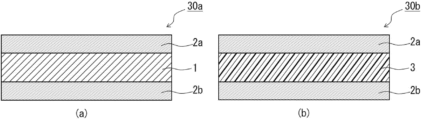
- FIG. 1 is a schematic cross-sectional view showing an example of the configuration of a pressure-sensitive adhesive sheet of the present invention. It is a typical sectional view showing another example of composition of a pressure sensitive adhesive sheet of the present invention. It is a typical sectional view showing another example of composition of a pressure sensitive adhesive sheet of the present invention.
- the lower and upper limits described in stages for preferred numerical ranges can be independently combined.
- the “preferable lower limit (10)” and “more preferable upper limit (60)” are combined to become “10 to 60”. You can also do that.
- the term "energy ray” refers to electromagnetic waves or charged particle beams that have energy quanta, examples of which include ultraviolet rays, radiation, electron beams, and the like.
- the ultraviolet rays can be irradiated using, for example, an electrodeless lamp, high-pressure mercury lamp, metal halide lamp, UV-LED, etc. as an ultraviolet source.
- the electron beam can be generated by an electron beam accelerator or the like. Note that among the energy rays mentioned above in one embodiment of the present invention, ultraviolet rays are preferable.
- energy ray crosslinkability means the property of forming a crosslinked structure by irradiation with energy rays.
- (meth)acrylic is used as a term meaning one or both of “acrylic” and “methacrylic”.
- (meth)acrylate is used as a term meaning one or both of “acrylate” and “methacrylate.”
- Mw weight average molecular weight
- the energy ray crosslinkable pressure-sensitive adhesive composition which is one aspect of the present invention, includes (A) a (meth)acrylic resin that does not have energy ray crosslinkability (hereinafter referred to as "(A) energy ray non-crosslinkable (meth)acrylic resin").
- the energy ray crosslinkable adhesive composition (hereinafter also simply referred to as "adhesive composition”) is one in which a crosslinked structure is formed by irradiation with energy rays to form a crosslinked adhesive. That is, the adhesive composition is a composition that is scheduled to be irradiated with energy rays before or after being applied to an adherend. The adhesive composition can be irradiated with energy rays at any time. Therefore, the pressure-sensitive adhesive composition has a high degree of freedom in its manufacturing method and usage method.
- the adhesive composition does not have an intentional crosslinked structure, it can be heated and melted and is suitable as a hot melt adhesive. Furthermore, since the adhesive composition does not have an intentional crosslinked structure, it has excellent shape followability. Therefore, the pressure-sensitive adhesive composition can be applied to an adherend having a step or the like, and then used to form a crosslinked pressure-sensitive adhesive by irradiation with energy rays. Next, each component contained in the pressure-sensitive adhesive composition will be explained in detail.
- Energy ray non-crosslinkable (meth)acrylic resin is not particularly limited as long as it is a (meth)acrylic resin that does not have energy ray crosslinkability. However, from the viewpoint of suppressing an increase in viscosity when the pressure-sensitive adhesive composition is continuously heated at a high temperature, it is preferable not to have a radically polymerizable unsaturated double bond.
- the (meth)acrylic resin not having energy ray crosslinkability may be used alone or in combination of two or more.
- the (meth)acrylic resin that does not have energy ray crosslinkability is a polymer containing an acrylic monomer as a monomer component, and is not particularly limited as long as it does not have energy ray crosslinkability. It is preferable to contain a structural unit derived from meth)acrylate.
- the alkyl (meth)acrylate used in component (A) for example, an alkyl (meth)acrylate in which the alkyl group has 1 to 18 carbon atoms is preferably used.
- the content of (A) (meth)acrylic resin that does not have energy ray crosslinkability in the adhesive composition that is one aspect of the present invention is 40% based on the total amount (100% by mass) of the adhesive composition. It may be ⁇ 95% by weight, it may be from 50 to 90% by weight, it may be from 60 to 85% by weight.
- the energy ray crosslinkable acrylic resin is not particularly limited as long as it is an acrylic resin that has energy ray crosslinkability.
- Energy ray crosslinkable acrylic resin may be used alone or in combination of two or more.
- Examples of the energy ray crosslinkable acrylic resin include acrylic resins having an energy ray reactive group that reacts with energy ray irradiation and contributes to the formation of a crosslinked structure.
- Examples of the energy ray-reactive group include those that are excited by energy ray irradiation and generate radicals that trigger a crosslinking reaction.
- Specific examples of energy ray-reactive groups include functional groups having a benzophenone structure, benzyl structure, o-benzoylbenzoate structure, thioxanthone structure, 3-ketocoumarin structure, 2-ethylanthraquinone structure, camphorquinone structure, etc. .
- the energy ray crosslinkable acrylic resin (B) has a benzophenone structure in the side chain.
- the benzophenone structure pulls out hydrogen atoms from the hydrocarbon groups contained in the side chains of the acrylic resin, and the radicals are regenerated. By bonding, a crosslinked structure is formed.
- the energy ray-reactive group is preferably introduced into the side chain of the acrylic resin from the viewpoint of facilitating the formation of a crosslinked structure. That is, the energy ray crosslinkable acrylic resin (B) is preferably an acrylic resin having a benzophenone structure in its side chain.
- the content of energy ray-reactive groups in the energy ray crosslinkable acrylic resin (B) is preferably 0.02 to 5.0% based on the total amount (100% by mass) of the energy ray crosslinkable acrylic resin (B). 0% by weight, more preferably 0.05 to 3.0% by weight.
- the acrylic resin is a polymer containing an acrylic monomer as a monomer component, and is not particularly limited as long as it has energy ray crosslinkability, but preferably contains a structural unit derived from alkyl (meth)acrylate.
- alkyl (meth)acrylate used in component (B) include methyl (meth)acrylate, ethyl (meth)acrylate, n-propyl (meth)acrylate, n-butyl (meth)acrylate, isobutyl (meth)acrylate, sec-butyl (meth)acrylate, n-hexyl (meth)acrylate, 2-ethylhexyl (meth)acrylate, n-octyl (meth)acrylate, isooctyl (meth)acrylate, n-nonyl (meth)acrylate, isononyl (meth)acrylate
- Examples include acrylate, n-decyl (meth)acrylate,
- alkyl (meth)acrylates in which the alkyl group has 1 to 8 carbon atoms are preferred, and 2-ethylhexyl (meth)acrylate, methyl (meth)acrylate, and n-butyl (meth)acrylate are more preferred.
- a method for introducing the energy ray-reactive group into the component (B) for example, a monomer having a functional group such as a vinyl group capable of reacting with an acrylic monomer and having the energy ray-reactive group may be used. , may be introduced by copolymerizing with an acrylic monomer. Alternatively, for example, a compound having the energy ray-reactive group may be introduced into the side chain of the acrylic resin by reacting it with a known method.
- the content of component (B) in the pressure-sensitive adhesive composition is preferably 5 to 90 parts by mass, and more preferably 10 to 80 parts by mass from the viewpoint of adhesiveness, based on 100 parts by mass of component (A). Parts by weight, more preferably 15 to 50 parts by weight, even more preferably 15 to 30 parts by weight.
- the total content of the component (A) and the component (B) is preferably 60% by mass or more, based on 100% by mass of the total amount of the adhesive composition. It is preferably 75% by mass or more, more preferably 90% by mass or more, and 100% by mass or less.
- the pressure-sensitive adhesive composition may or may not contain components other than the above-mentioned components.
- Other components include, for example, tackifiers; softeners; antioxidants; adhesive additives used in general adhesives, and the like. These other components may be used alone or in combination of two or more.
- the adhesive composition does not contain (C) a low molecular weight (Mw: 1000 or less) hydrogen abstraction type photoinitiator. When the (C) component is included, the low molecular weight hydrogen abstracting photoinitiator crosslinks the (A) components, the (B) components, or the (A) component and the (B) component.
- a low molecular weight substance that causes contamination of the adherend is produced by the radical coupling reaction of the component (C).
- low molecular weight hydrogen abstracting photoinitiators include acetophenone, benzophenone, P,P'-dimethoxybenzophenone, 4-methylbenzophenone, P,P'-dichlorobenzophenone, P,P'-dimethylbenzophenone, acetonaphthone, etc.
- aromatic ketones include aromatic aldehydes such as terephthalaldehyde and quinone aromatic compounds such as methylanthraquinone.
- the tackifier is not particularly limited, and conventionally known ones can be used, such as rosin resins, terpene resins, petroleum resins, styrene resins, and the like.
- the antioxidant is not particularly limited, and conventionally known ones can be used, such as hindered phenol antioxidants, sulfur antioxidants, phosphorus antioxidants, and the like.
- Adhesive additives used in the general adhesives listed above include waxes, fillers, extenders, heat stabilizers, light stabilizers, ultraviolet absorbers, colorants (pigments, dyes, etc.), Examples include a refractor, an antistatic agent, a stringing inhibitor, an anti-aging agent, an inorganic particle, an organic particle, a weight reducing agent, and the like. These adhesive additives may be used alone or in combination of two or more. When these adhesive additives are contained, the content of the adhesive additives is determined independently from each other by (A) energy ray non-crosslinkable (meth)acrylic resin and (B) energy ray crosslinkable acrylic. The amount is preferably 0.0001 to 20 parts by weight, more preferably 0.0001 to 10 parts by weight, based on 100 parts by weight of the total resin.
- the adhesive composition further contains one or more selected from the other components, in addition to the components (A) and (B), the components (A) and (B), the components (A) and (B),
- the total content of one or more selected from the other components is preferably 60% by mass or more, more preferably 70% by mass or more, even more preferably 80% by mass or more, based on 100% by mass of the total amount of the adhesive composition. and is 100% by mass or less.
- the pressure-sensitive adhesive composition may include, for example, (A) a (meth)acrylic resin that does not have energy ray crosslinkability, (B) an acrylic resin that has energy ray crosslinkability, and any optional components used as necessary. It can be produced by melt-kneading the components.
- melt-kneading process the process of melt-kneading (A) a (meth)acrylic resin that does not have energy ray crosslinkability and (B) an acrylic resin that has energy ray crosslinkability will be referred to as a "melt kneading process”. It is sometimes called.
- the melt-kneading step is, for example, a step in which each component is put into a mixing device equipped with a heating device, such as a heating kneader, and mixed in a molten state.
- a heating device such as a heating kneader
- the mixing device equipped with a heating device include a single screw extruder, a twin screw extruder, a roll mill, a Banbury mixer, an intermix, a pressure kneader, and the like.
- the inside of the mixing device may be reduced in pressure and melt-kneading may be carried out under reduced pressure, if necessary.
- the kneading temperature in the melt-kneading step is not particularly limited, and may be appropriately selected to allow each component to be sufficiently mixed in a molten state, but is preferably 80 to 180°C, more preferably 100 to 170°C, and Preferably it is 120 to 150°C.
- the adhesive composition when the adhesive composition is produced by melt-kneading, the adhesive composition does not need to contain a solvent, and from the viewpoint of reducing environmental burden, it is preferable that the adhesive composition does not substantially contain a solvent. It is more preferable not to have one.
- the above-mentioned pressure-sensitive adhesive composition "substantially does not contain a solvent” means, for example, that the content of the solvent is preferably 0.5% by mass or less in 100% by mass of the total amount of the pressure-sensitive adhesive composition, and This means that it is preferably 0.1% by mass or less.
- the adhesive composition obtained after melt-kneading is coated onto a base material or a release liner using an extruder or the like in its heated and molten state, and is used to produce a pressure-sensitive adhesive sheet, which is an embodiment of the present invention described later. If desired, for example, it may be filled into various containers without going through a molding process.
- a crosslinked adhesive that is one embodiment of the present invention is a crosslinked adhesive obtained by irradiating an energy ray crosslinkable adhesive composition that is one embodiment of the present invention with energy rays. That is, the crosslinked adhesive has a crosslinked structure formed by an energy ray crosslinking reaction of (B) the energy ray crosslinkable acrylic resin contained in the energy ray crosslinkable adhesive composition.
- the crosslinked adhesive itself may also have good adhesive strength and exhibit excellent adhesive strength to adherends. For example, from the viewpoint of eliminating the need for an energy ray irradiation step after applying the adhesive composition to an adherend, energy rays may be irradiated to form the crosslinked adhesive before applying the adhesive composition to an adherend. It may also be an embodiment in which it is then applied as a cross-linked adhesive to an adherend.
- the crosslinked adhesive can be produced by a method of irradiating the energy ray crosslinkable adhesive composition with energy rays.
- the step of irradiating the energy ray crosslinkable adhesive composition with energy rays may be referred to as "energy ray irradiation step.”
- the first pressure-sensitive adhesive sheet is a pressure-sensitive adhesive sheet that has an energy-beam crosslinkable adhesive composition layer made of the energy-beam crosslinkable adhesive composition described above on a base material or a release liner.
- the "energy ray crosslinkable adhesive composition layer made of the energy ray crosslinkable adhesive composition” included in the first adhesive sheet is also simply referred to as the "adhesive composition layer.”
- the "adhesive layer made of the crosslinked adhesive” that the second adhesive sheet has is also simply referred to as the “adhesive layer.”
- an “adhesive sheet” it means both the first adhesive sheet and the second adhesive sheet.
- FIG. 1(a) as an example of a first pressure-sensitive adhesive sheet, a release liner 2 is provided on one surface of the pressure-sensitive adhesive composition layer 1, and a base material is provided on the other surface of the pressure-sensitive adhesive composition layer 1. 4 is shown. Further, in FIG. 1(b), as an example of a second adhesive sheet, a release liner 2 is provided on one side of the adhesive layer 3, and a base material 4 is provided on the other side of the adhesive layer 3.
- a pressure-sensitive adhesive sheet 10b having the following structure is shown.
- the adhesive sheets 10a and 10b are suitable for, for example, applications in which the release liner 2 is peeled off and then the exposed surface of the adhesive composition layer 1 or the adhesive layer 3 is attached to an adherend.
- the adhesive sheet to be applied to the adherend is the first adhesive sheet
- the adhesive composition layer is irradiated with energy rays to form an adhesive composed of the crosslinked adhesive. form a layer.
- FIG. 2(a) as another example of the first pressure-sensitive adhesive sheet, the pressure-sensitive adhesive composition layer 1 is provided on both sides of the base material 4, and one pressure-sensitive adhesive composition layer 1 is opposite to the base material 4.
- a double-sided pressure-sensitive adhesive sheet 20a is shown having a release liner 2a on the side surface and a release liner 2b on the surface opposite to the substrate 4 of the other pressure-sensitive adhesive composition layer 1.
- FIG. 2(b) shows another example of the second adhesive sheet, which has adhesive layers 3 on both sides of the base material 4, and one adhesive layer 3 on the side opposite to the base material 4.
- a double-sided adhesive sheet 20b is shown having a release liner 2a on one side and a release liner 2b on the other side of the adhesive layer 3 opposite to the substrate 4.
- FIG. 3A shows, as another example of the first pressure-sensitive adhesive sheet, a base material-less pressure-sensitive adhesive sheet 30a that has release liners 2a and 2b on both sides of the pressure-sensitive adhesive composition layer 1. Further, FIG. 3(b) shows a base material-less adhesive sheet 30b having release liners 2a and 2b on both sides of the adhesive layer 3 as another example of the second adhesive sheet.
- the adhesive sheets 20a, 20b, 30a, and 30b are prepared by peeling and removing the release liner 2a on one side, and then applying the exposed surface of the adhesive composition layer 1 or the adhesive layer 3 to an adherend. Then, after peeling off the release liner 2b, the exposed surface of the adhesive composition layer 1 or the adhesive layer 3 is attached to another adherend. suitable. Examples of such uses include fixing or temporarily fixing various parts.
- the peeling force when peeling the release liner 2a from the adhesive composition layer 1 or the adhesive layer 3 and the peeling force when peeling the release liner 2b from the adhesive composition layer 1 or the adhesive layer 3
- the peeling forces of the two release liners are the same, if you try to pull both release liners outward, the adhesive composition layer 1 or the adhesive layer 3 will be separated by the two release liners and will not be peeled off. A phenomenon that occurs may occur. From the viewpoint of suppressing such a phenomenon, it is preferable to use two types of release liners designed to have different release forces as the two release liners 2a and 2b.
- the thickness of the adhesive composition layer in the first adhesive sheet and the thickness of the adhesive layer in the second adhesive sheet are each independently preferably 5 to 100 ⁇ m, more preferably 10 to 60 ⁇ m, and even more preferably 15 ⁇ m. ⁇ 30 ⁇ m.
- the thickness of the adhesive composition layer and the adhesive layer is 5 ⁇ m or more, the adhesive strength tends to be more easily improved.
- the thickness of the adhesive composition layer and the adhesive layer is 100 ⁇ m or less, the handleability tends to be better.
- Examples of the material for forming the base material include resin, metal, paper, and the like.
- Examples of the resin include polyolefin resins such as polyethylene and polypropylene; vinyl resins such as polyvinyl chloride, polyvinylidene chloride, polyvinyl alcohol, ethylene-vinyl acetate copolymer, and ethylene-vinyl alcohol copolymer; polyethylene terephthalate, Polyester resins such as butylene terephthalate and polyethylene naphthalate; polystyrene; acrylonitrile-butadiene-styrene copolymer; cellulose triacetate; polycarbonate; urethane resins such as polyurethane and acrylic modified polyurethane; polymethylpentene; polysulfone; polyether ether ketone; Examples include polyether sulfone; polyphenylene sulfide; polyimide resins such as polyetherimide and polyimide; polyamide resins; acrylic resins
- the base material may be composed of one kind, or two or more kinds thereof may be used in combination.
- base materials using two or more forming materials include those made by laminating paper with thermoplastic resin such as polyethylene, and those made by forming a metal film on the surface of a resin film or sheet containing resin.
- the metal layer may be formed by, for example, depositing the metal by PVD methods such as vacuum evaporation, sputtering, or ion plating, or pasting a metal foil made of the metal using a general adhesive. Examples include a method to do so.
- the surface of the base material may be subjected to surface treatment using an oxidation method, a roughening method, etc., or a primer. Processing may be performed.
- the base material may include, for example, an easily adhesive layer to facilitate printing; a recording layer to enable recording such as thermal transfer recording or ink jet recording; and a recording layer to protect these surfaces. It may also have an overcoat film or an overlaminate film; information areas such as magnetic recording, bar codes, micro semiconductor elements, etc.
- the adhesive sheet is a transparent adhesive sheet
- the base material is preferably transparent.
- the base material may contain base material additives, if necessary.
- additives for the base material include ultraviolet absorbers, light stabilizers, antioxidants, antistatic agents, slip agents, antiblocking agents, colorants, and the like. Note that these base material additives may be used alone or in combination of two or more.
- the thickness of the base material is preferably 5 to 1,000 ⁇ m, more preferably 15 to 500 ⁇ m, and even more preferably 20 to 200 ⁇ m.
- the thickness of the base material is 5 ⁇ m or more, the deformation resistance of the pressure-sensitive adhesive sheet tends to be improved.
- the thickness of the base material is 1,000 ⁇ m or less, the handleability of the pressure-sensitive adhesive sheet tends to be improved.
- thickness of the base material means the thickness of the entire base material, and if the base material consists of multiple layers, the total thickness of all the layers that make up the base material. means.
- a release liner that has been subjected to a release treatment on both sides; a release liner that has been subjected to a release treatment on one side; and the like can be used, and examples thereof include a release liner in which a release agent is coated on a base material for the release liner.
- base materials for release liners include papers such as high-quality paper, glassine paper, and kraft paper; polyester resin films such as polyethylene terephthalate resin, polybutylene terephthalate resin, and polyethylene naphthalate resin; and polyolefins such as polypropylene resin and polyethylene resin.
- Plastic films such as resin films; and the like.
- the release agent examples include rubber elastomers such as silicone resins, olefin resins, isoprene resins, and butadiene resins; long chain alkyl resins, alkyd resins, and fluororesins.
- the thickness of the release liner is not particularly limited as long as it does not impair the effects of the present invention, but is preferably 10 to 200 ⁇ m, more preferably 20 to 180 ⁇ m, and still more preferably 30 to 150 ⁇ m.
- the method for producing the first pressure-sensitive adhesive sheet includes, for example, melt-kneading the pressure-sensitive adhesive composition with (A) (meth)acrylic resin and (B) acrylic resin having energy ray crosslinkability.
- This is a method for producing a pressure-sensitive adhesive sheet, in which an energy-beam-crosslinkable pressure-sensitive adhesive composition layer is formed by melt-coating the energy-beam crosslinkable pressure-sensitive adhesive composition on a base material or a release liner.
- the step of forming an energy ray crosslinkable adhesive composition layer by melt-coating an energy ray crosslinkable adhesive composition onto a base material or a release liner will be referred to as "adhesive composition layer". It is sometimes referred to as "forming process”.
- "on the release liner” means on the release-treated side when the release liner is one-sided release-treated.
- the description of the step of melt-kneading (A) (meth)acrylic resin and (B) acrylic resin having energy ray crosslinking properties is based on one embodiment of the present invention. This is as explained in the melt-kneading step in a method for producing a certain pressure-sensitive adhesive composition.
- the energy ray crosslinkable adhesive composition obtained after the melt-kneading is heated and molten and then removed from the base material or peeled using an extruder, T-die, etc.
- a method of forming a layer by coating on the liner may also be used. Thereafter, the method may include a step of cooling the adhesive composition layer, if necessary.
- a pressure-sensitive adhesive composition layer can be formed on a base material or a release liner by the pressure-sensitive adhesive composition layer forming step described above.
- the sheet having the base material or release liner and the adhesive composition layer may be used as the first adhesive sheet, which is an embodiment of the present invention, or may be subjected to other steps as necessary.
- the pressure-sensitive adhesive sheet may have a desired structure. For example, by attaching the release-treated side of a release liner to the exposed surface of the adhesive composition layer formed on the base material, the adhesive composition layer can be bonded to the adhesive sheet 10a shown in FIG. 1(a). It is possible to produce a pressure-sensitive adhesive sheet having a release liner on one side of the composition layer and a base material on the other side of the pressure-sensitive adhesive composition layer.
- a base material can be formed like the adhesive sheet 20a shown in FIG. 2(a).
- a double-sided pressure-sensitive adhesive sheet can be produced that has pressure-sensitive adhesive composition layers on both sides of the material and a release liner on the surface of each pressure-sensitive adhesive composition layer opposite to the substrate.
- a pressure-sensitive adhesive sheet 30a shown in FIG. 3(a) can be obtained. It is possible to produce a base material-less pressure-sensitive adhesive sheet that has release liners on both sides of the pressure-sensitive adhesive composition layer.
- the method for producing the second pressure-sensitive adhesive sheet includes, for example, a step of forming an energy-beam crosslinkable adhesive composition layer made of the energy-beam crosslinkable adhesive composition on a base material or a release liner; This is a method for producing a pressure-sensitive adhesive sheet, including a step of irradiating a crosslinkable pressure-sensitive adhesive composition layer with energy rays.
- the step of forming an energy ray crosslinkable pressure-sensitive adhesive composition layer is explained as in the step of forming a pressure-sensitive adhesive composition layer in the first method for producing a pressure-sensitive adhesive sheet.
- the timing of energy ray irradiation is not particularly limited, and depends on the method for producing the adhesive sheet, the desired physical properties, etc. It is only necessary to take this into account and decide accordingly.
- the adhesive composition layer may be irradiated with energy rays directly or via a base material or a release liner, or In a state where the material layer has a base material or a release liner on one side and a release liner on the other side, energy rays may be irradiated through the base material or the release liner.
- the energy ray irradiation may be performed once, or may be performed in multiple times.
- energy ray irradiation is performed in multiple steps, for example, the first energy ray irradiation is performed with one side of the adhesive composition layer exposed, and then a base material or a release liner is attached to the surface. After that, a second energy beam irradiation may be performed through the substrate or release liner.
- the first energy ray irradiation may be performed sometime before the adhesive is attached to the adherend, and the second energy ray irradiation may be performed after the adhesive is attached to the adherend.
- the energy ray crosslinkable adhesive composition, crosslinked adhesive, and adhesive sheet described above, which are one aspect of the present invention, can be used for various purposes. Specifically, examples thereof include label use; fixing or temporary fixing of various parts; surface protection use; sealing material use; decoration and display use; and the like. Among these, use for labels and use for fixing or temporarily fixing various parts is preferable.
- Adhesive sheets for label use may be attached directly to various products, or may be attached to packaging films, packaging containers, etc. of various products.
- the constituent materials of packaging films and packaging containers include olefin resins such as polypropylene and polyethylene; polyester resins such as polyethylene terephthalate (PET) and polylactic acid; glass, paper, and metal; and the like.
- the adhesive sheet which is one aspect of the present invention, does not easily leave stains on the adherend after peeling, so it is suitable for use when attached to various products made of glass, metal, polyester resin, packaging containers, etc. suitable.
- As a pressure-sensitive adhesive sheet for fixing or temporarily fixing it is suitable for fixing or temporarily fixing, for example, electronic components, optical components, automobile parts, mechanical parts, architectural components, decorative components, and the like.
- Examples 1-3, Comparative Examples 1-2 Manufacture of energy ray crosslinkable adhesive composition
- Component (A) and component (B) were blended in the composition (unit: parts by mass) shown in Table 1, kneaded for 20 minutes at 130°C under nitrogen purge using a heating kneader, and cross-linked with energy rays. A sticky adhesive composition was obtained.
- the energy ray crosslinkable pressure-sensitive adhesive composition obtained above was applied onto a transparent polyethylene terephthalate film (thickness: 50 ⁇ m) as a base material using a die coater in a heated and molten state.
- a first pressure-sensitive adhesive sheet having an energy-beam crosslinkable adhesive composition layer (thickness: 20 ⁇ m) made of the energy-beam crosslinkable pressure-sensitive adhesive composition on the base material was obtained.
- the energy ray crosslinkable adhesive composition layer of the first adhesive sheet obtained above was exposed to the UV-C region from the exposed side using a high-pressure mercury lamp (manufactured by I-Graphics). Ultraviolet rays were irradiated at a cumulative light amount of 30 mJ/cm 2 . In this way, an adhesive layer was formed by crosslinking the energy ray crosslinkable adhesive composition layer of the first adhesive sheet with energy rays. Thereafter, the release treated side of a release liner (thickness: 38 ⁇ m) is attached to the surface of the adhesive layer opposite to the base material, thereby forming a second adhesive having the base material, the adhesive layer, and the release liner in this order. Got a sheet.
- the second pressure-sensitive adhesive sheets manufactured in Examples and Comparative Examples were cut into 25 mm x 50 mm in an environment of 23° C. and 50% RH (relative humidity) to prepare two test pieces each.
- the release liner of the test piece was removed, and the exposed adhesive layer was attached to an adherend (stainless steel plate).
- the test piece attached to the adherend was left undisturbed in an environment of 70°C for 7 days, then left undisturbed in an environment of 23°C and 50% RH for 1 day, and then exposed in an environment of 23°C and 50% RH.
- One of the test pieces was manually peeled off from the adherent in a 180° direction at a speed of about 300 mm/min (low-speed peeling).
- the other sheet was peeled off by hand in a 180° direction at a speed of about 30 m/min (high-speed peeling).
- the state of each layer of the adhesive layer of the test piece after peeling was visually observed, and contamination of the adherend was confirmed according to the following criteria.
- No contamination The adhesive layer peels off at the interface of the adherend, no adhesive remains on the adherend, and no difference is observed between the adhesive layer and the unattached area.
- Clouding Peeling occurs at the interface between the adhesive layer and the adherend, but the pasted area is confirmed to be whiter than the non-adhered area.
- Cohesive failure The adhesive layer was destroyed, and it was confirmed that the adhesive layer remained on the adherend.
Landscapes
- Chemical & Material Sciences (AREA)
- Organic Chemistry (AREA)
- Chemical Kinetics & Catalysis (AREA)
- Health & Medical Sciences (AREA)
- Medicinal Chemistry (AREA)
- Polymers & Plastics (AREA)
- Adhesives Or Adhesive Processes (AREA)
- Adhesive Tapes (AREA)
Priority Applications (5)
| Application Number | Priority Date | Filing Date | Title |
|---|---|---|---|
| PCT/JP2022/016671 WO2023188316A1 (ja) | 2022-03-31 | 2022-03-31 | エネルギー線架橋性粘着剤組成物、架橋粘着剤及び粘着シート、並びにこれらの製造方法 |
| PCT/JP2023/012715 WO2023190630A1 (ja) | 2022-03-31 | 2023-03-29 | エネルギー線架橋性粘着剤組成物、架橋粘着剤及び粘着シート、並びにこれらの製造方法 |
| US18/851,282 US20250215280A1 (en) | 2022-03-31 | 2023-03-29 | Energy ray-crosslinkable adhesive composition, crosslinked adhesive, adhesive sheet, and production methods therefor |
| JP2024512639A JPWO2023190630A1 (https=) | 2022-03-31 | 2023-03-29 | |
| CN202380030477.1A CN118946645A (zh) | 2022-03-31 | 2023-03-29 | 能量射线交联性粘合剂组合物、交联粘合剂及粘合片、以及它们的制造方法 |
Applications Claiming Priority (1)
| Application Number | Priority Date | Filing Date | Title |
|---|---|---|---|
| PCT/JP2022/016671 WO2023188316A1 (ja) | 2022-03-31 | 2022-03-31 | エネルギー線架橋性粘着剤組成物、架橋粘着剤及び粘着シート、並びにこれらの製造方法 |
Publications (1)
| Publication Number | Publication Date |
|---|---|
| WO2023188316A1 true WO2023188316A1 (ja) | 2023-10-05 |
Family
ID=88199926
Family Applications (2)
| Application Number | Title | Priority Date | Filing Date |
|---|---|---|---|
| PCT/JP2022/016671 Ceased WO2023188316A1 (ja) | 2022-03-31 | 2022-03-31 | エネルギー線架橋性粘着剤組成物、架橋粘着剤及び粘着シート、並びにこれらの製造方法 |
| PCT/JP2023/012715 Ceased WO2023190630A1 (ja) | 2022-03-31 | 2023-03-29 | エネルギー線架橋性粘着剤組成物、架橋粘着剤及び粘着シート、並びにこれらの製造方法 |
Family Applications After (1)
| Application Number | Title | Priority Date | Filing Date |
|---|---|---|---|
| PCT/JP2023/012715 Ceased WO2023190630A1 (ja) | 2022-03-31 | 2023-03-29 | エネルギー線架橋性粘着剤組成物、架橋粘着剤及び粘着シート、並びにこれらの製造方法 |
Country Status (4)
| Country | Link |
|---|---|
| US (1) | US20250215280A1 (https=) |
| JP (1) | JPWO2023190630A1 (https=) |
| CN (1) | CN118946645A (https=) |
| WO (2) | WO2023188316A1 (https=) |
Citations (5)
| Publication number | Priority date | Publication date | Assignee | Title |
|---|---|---|---|---|
| JP2001240717A (ja) * | 2000-02-25 | 2001-09-04 | Beiersdorf Ag | ポリマーブレンド |
| JP2016164222A (ja) * | 2015-03-06 | 2016-09-08 | スリーエム イノベイティブ プロパティズ カンパニー | 紫外線架橋性組成物 |
| JP2017537990A (ja) * | 2014-10-09 | 2017-12-21 | コロプラスト アクティーゼルスカブ | ポリマーと切替開始剤とを含んでなる組成物 |
| US20180355220A1 (en) * | 2015-09-08 | 2018-12-13 | Tesa Se | Adhesive-Resin-Modified Adhesive Mass |
| WO2021067432A1 (en) * | 2019-09-30 | 2021-04-08 | Shurtape Technologies, Llc | Adhesive and methods of use |
Family Cites Families (3)
| Publication number | Priority date | Publication date | Assignee | Title |
|---|---|---|---|---|
| JP4667561B2 (ja) * | 2000-06-15 | 2011-04-13 | 古河電気工業株式会社 | 放射線硬化性粘着テープ |
| JP6438817B2 (ja) * | 2015-03-27 | 2018-12-19 | リンテック株式会社 | 粘着性組成物、粘着剤、粘着シートおよび粘着剤層付き光学フィルム |
| JP2021095450A (ja) * | 2019-12-13 | 2021-06-24 | 日東電工株式会社 | 半導体加工用粘着シートおよびその利用 |
-
2022
- 2022-03-31 WO PCT/JP2022/016671 patent/WO2023188316A1/ja not_active Ceased
-
2023
- 2023-03-29 US US18/851,282 patent/US20250215280A1/en active Pending
- 2023-03-29 JP JP2024512639A patent/JPWO2023190630A1/ja active Pending
- 2023-03-29 CN CN202380030477.1A patent/CN118946645A/zh active Pending
- 2023-03-29 WO PCT/JP2023/012715 patent/WO2023190630A1/ja not_active Ceased
Patent Citations (5)
| Publication number | Priority date | Publication date | Assignee | Title |
|---|---|---|---|---|
| JP2001240717A (ja) * | 2000-02-25 | 2001-09-04 | Beiersdorf Ag | ポリマーブレンド |
| JP2017537990A (ja) * | 2014-10-09 | 2017-12-21 | コロプラスト アクティーゼルスカブ | ポリマーと切替開始剤とを含んでなる組成物 |
| JP2016164222A (ja) * | 2015-03-06 | 2016-09-08 | スリーエム イノベイティブ プロパティズ カンパニー | 紫外線架橋性組成物 |
| US20180355220A1 (en) * | 2015-09-08 | 2018-12-13 | Tesa Se | Adhesive-Resin-Modified Adhesive Mass |
| WO2021067432A1 (en) * | 2019-09-30 | 2021-04-08 | Shurtape Technologies, Llc | Adhesive and methods of use |
Also Published As
| Publication number | Publication date |
|---|---|
| US20250215280A1 (en) | 2025-07-03 |
| JPWO2023190630A1 (https=) | 2023-10-05 |
| CN118946645A (zh) | 2024-11-12 |
| WO2023190630A1 (ja) | 2023-10-05 |
Similar Documents
| Publication | Publication Date | Title |
|---|---|---|
| JP5883236B2 (ja) | 薄層基材用キャリア材 | |
| JP2012153788A (ja) | 光学用粘着シート | |
| JP7251073B2 (ja) | 粘着シート、剥離シート付き粘着シート、積層体及び積層体の製造方法 | |
| JP2010285548A (ja) | 光学部材用粘着テープ | |
| WO2020054745A1 (ja) | 粘着シート、積層体及び積層体の製造方法 | |
| JP6895228B2 (ja) | 粘着シート | |
| US20250206986A1 (en) | Adhesive sheet and manufacturing method therefor | |
| WO2023188316A1 (ja) | エネルギー線架橋性粘着剤組成物、架橋粘着剤及び粘着シート、並びにこれらの製造方法 | |
| JP2014214280A (ja) | 光学部材の製造方法 | |
| JP2005023114A (ja) | 感圧型両面接着テープ又はシート | |
| JP2020041057A (ja) | 粘着シート、積層体及び積層体の製造方法 | |
| JP7207379B2 (ja) | 粘着シート、剥離シート付き粘着シート、積層体及び積層体の製造方法 | |
| WO2023188314A1 (ja) | エネルギー線架橋性粘着剤組成物、架橋粘着剤及び粘着シート、並びにこれらの製造方法 | |
| JP7704844B2 (ja) | エネルギー線架橋性粘着剤組成物、架橋粘着剤及び粘着シート、並びにこれらの製造方法 | |
| JP7247623B2 (ja) | 粘着シート、剥離シート付き粘着シート、積層体及び積層体の製造方法 | |
| JP7247622B2 (ja) | 粘着シート、剥離シート付き粘着シート、積層体及び積層体の製造方法 | |
| JP6343365B2 (ja) | 積層体 | |
| JP7172058B2 (ja) | 積層粘着シート及び積層粘着シートの製造方法 | |
| JP2022170568A (ja) | 活性エネルギー線硬化型粘着シート及び表示装置 | |
| JP2021020999A (ja) | 粘着シート、剥離シート付き粘着シート及び積層体 | |
| JP7814731B2 (ja) | 粘着剤、ホットメルト粘着剤及びラベル | |
| JP2006328289A (ja) | 両面粘着テープ又はシートの製造方法および両面粘着テープ又はシート | |
| JP7792847B2 (ja) | ウィンドウフィルム | |
| JP2005023115A (ja) | 感圧型両面接着テープ又はシート | |
| JP2020033416A (ja) | 粘着シート、剥離シート付き粘着シート、積層体及び積層体の製造方法 |
Legal Events
| Date | Code | Title | Description |
|---|---|---|---|
| 121 | Ep: the epo has been informed by wipo that ep was designated in this application |
Ref document number: 22935458 Country of ref document: EP Kind code of ref document: A1 |
|
| NENP | Non-entry into the national phase |
Ref country code: DE |
|
| 122 | Ep: pct application non-entry in european phase |
Ref document number: 22935458 Country of ref document: EP Kind code of ref document: A1 |
|
| NENP | Non-entry into the national phase |
Ref country code: JP |