WO2023176464A1 - 要因推論装置、要因推論方法、要因推論システムおよび端末装置 - Google Patents
要因推論装置、要因推論方法、要因推論システムおよび端末装置 Download PDFInfo
- Publication number
- WO2023176464A1 WO2023176464A1 PCT/JP2023/007709 JP2023007709W WO2023176464A1 WO 2023176464 A1 WO2023176464 A1 WO 2023176464A1 JP 2023007709 W JP2023007709 W JP 2023007709W WO 2023176464 A1 WO2023176464 A1 WO 2023176464A1
- Authority
- WO
- WIPO (PCT)
- Prior art keywords
- information
- knowledge model
- nodes
- factor
- inference
- Prior art date
- Legal status (The legal status is an assumption and is not a legal conclusion. Google has not performed a legal analysis and makes no representation as to the accuracy of the status listed.)
- Ceased
Links
Images






Classifications
-
- G—PHYSICS
- G06—COMPUTING OR CALCULATING; COUNTING
- G06N—COMPUTING ARRANGEMENTS BASED ON SPECIFIC COMPUTATIONAL MODELS
- G06N5/00—Computing arrangements using knowledge-based models
- G06N5/04—Inference or reasoning models
- G06N5/045—Explanation of inference; Explainable artificial intelligence [XAI]; Interpretable artificial intelligence
-
- G—PHYSICS
- G06—COMPUTING OR CALCULATING; COUNTING
- G06N—COMPUTING ARRANGEMENTS BASED ON SPECIFIC COMPUTATIONAL MODELS
- G06N5/00—Computing arrangements using knowledge-based models
- G06N5/02—Knowledge representation; Symbolic representation
- G06N5/022—Knowledge engineering; Knowledge acquisition
-
- G—PHYSICS
- G05—CONTROLLING; REGULATING
- G05B—CONTROL OR REGULATING SYSTEMS IN GENERAL; FUNCTIONAL ELEMENTS OF SUCH SYSTEMS; MONITORING OR TESTING ARRANGEMENTS FOR SUCH SYSTEMS OR ELEMENTS
- G05B23/00—Testing or monitoring of control systems or parts thereof
- G05B23/02—Electric testing or monitoring
-
- G—PHYSICS
- G05—CONTROLLING; REGULATING
- G05B—CONTROL OR REGULATING SYSTEMS IN GENERAL; FUNCTIONAL ELEMENTS OF SUCH SYSTEMS; MONITORING OR TESTING ARRANGEMENTS FOR SUCH SYSTEMS OR ELEMENTS
- G05B23/00—Testing or monitoring of control systems or parts thereof
- G05B23/02—Electric testing or monitoring
- G05B23/0205—Electric testing or monitoring by means of a monitoring system capable of detecting and responding to faults
- G05B23/0218—Electric testing or monitoring by means of a monitoring system capable of detecting and responding to faults characterised by the fault detection method dealing with either existing or incipient faults
- G05B23/0243—Electric testing or monitoring by means of a monitoring system capable of detecting and responding to faults characterised by the fault detection method dealing with either existing or incipient faults model based detection method, e.g. first-principles knowledge model
-
- G—PHYSICS
- G05—CONTROLLING; REGULATING
- G05B—CONTROL OR REGULATING SYSTEMS IN GENERAL; FUNCTIONAL ELEMENTS OF SUCH SYSTEMS; MONITORING OR TESTING ARRANGEMENTS FOR SUCH SYSTEMS OR ELEMENTS
- G05B23/00—Testing or monitoring of control systems or parts thereof
- G05B23/02—Electric testing or monitoring
- G05B23/0205—Electric testing or monitoring by means of a monitoring system capable of detecting and responding to faults
- G05B23/0259—Electric testing or monitoring by means of a monitoring system capable of detecting and responding to faults characterized by the response to fault detection
- G05B23/0275—Fault isolation and identification, e.g. classify fault; estimate cause or root of failure
Definitions
- the present invention relates to a factor inference device, a factor inference method, a factor inference system, and a terminal device.
- Non-Patent Document 1 proposes a method of calculating relative influence values for input variables that play an important role.
- Non-Patent Document 1 does not provide information regarding the mechanism of how each variable influences prediction and detection. Therefore, currently, these are estimated using the user's predictions and knowledge of the detection target. Therefore, non-experts and inexperienced users cannot make accurate guesses and cannot take appropriate actions.
- Patent Document 1 attempts to present the influence of variables by automatically outputting the causal relationships between variables.
- the present invention has been made in view of the above, and even when used by a user who does not have deep knowledge of the subject of analysis, it is possible to obtain auxiliary information useful for problem solving from operational data such as sensor data and setting values. It is an object of the present invention to provide a factor inference device, a factor inference method, a factor inference system, and a terminal device that can give the following information and lead to appropriate and prompt actions.
- a factor inference device is a factor inference device for inferring the factors of a phenomenon in a process, and the factor inference device infers the cause of a phenomenon in a process, and the factor inference device infers the cause of a phenomenon in a process.
- knowledge model acquisition means for acquiring a knowledge model expressed in the form of a network connecting the nodes, and creating information including at least an abnormality index regarding the event based on the data collected from the process; information generating means for linking the corresponding information to the nodes of the knowledge model; and determining the cause of the phenomenon based on the structure of the knowledge model and the information linked to the nodes.
- a factor inference means for inferring and presenting the inference.
- the factor inference means presents a causal route connecting the nodes in the knowledge model and indicating a causal relationship between the phenomena, and the causal route is If there are multiple causal routes, the causal routes are ranked and presented based on the information linked to each node of the causal routes.
- the factor inference means calculates the number of nodes to which an abnormality index indicating an abnormality is connected in the causal route, or the number of nodes selected as a causal route in the past. Based on the number, the causal routes are ranked and presented.
- the factor inference means blocks the knowledge model based on the information, connects the nodes in the knowledge model, and establishes a causal relationship between the phenomena. A causal route indicating the above is presented for each block.
- the abnormality index includes at least one of the categories determined based on the degree of abnormality indicating the degree of abnormality and the degree of deviation from a predetermined normal state. One is included.
- the information further includes at least one of the data format, the type of equipment, and the timing of the event.
- the data format includes any one of an observed value, a set value, and a category.
- the timing of the event includes any of the time of setting calculation, during operation, and during non-operation.
- a factor inference method is a factor inference method that is executed by a device constructed by a computer and infers the cause of a phenomenon in a process, a knowledge model acquisition step, in which a knowledge model acquisition means included in the computer acquires a knowledge model expressed in a network format connecting the nodes, with events occurring in the process as nodes, regarding the causal relationship of phenomena in the process; an information creation step in which information creation means included in the computer creates information including at least an abnormality indicator regarding the event based on data collected from the process;
- a data combination step of linking the corresponding information, and a factor inference means included in the computer infer the cause of the phenomenon based on the structure of the knowledge model and the information linked to the node. and presenting a factorial inference step.
- a factor inference system includes a factor inference server device and a terminal device, wherein the factor inference server device is a process Regarding the causal relationship of the phenomenon in the previous article, a knowledge model acquisition means that acquires a knowledge model expressed in a network format connecting the nodes, with events that occur in the process as nodes, and based on the data collected from the process, information creation means for creating information including at least an anomaly index related to the phenomenon; data connection means for linking the corresponding information to the nodes of the knowledge model; and the structure of the knowledge model and the information linked to the nodes.
- the factor inference server device is a process Regarding the causal relationship of the phenomenon in the previous article
- a knowledge model acquisition means that acquires a knowledge model expressed in a network format connecting the nodes, with events that occur in the process as nodes, and based on the data collected from the process, information creation means for creating information including at least an anomaly index related to the phenomenon; data connection means for linking the corresponding information to the nodes of the knowledge model; and the structure
- the terminal device is provided with an information acquisition means for acquiring information including at least the cause of the phenomenon from the factor inference server device, and a display means for displaying the information acquired by the information acquisition means.
- a terminal device comprises: an information acquisition means for acquiring information including at least a factor of a phenomenon in a process from a factor inference server device; a display means for displaying the acquired information, the cause of the phenomenon is a knowledge model expressed in the form of a network connecting the nodes, with events that occur in the process as nodes, regarding the causal relationship of the phenomenon in the process.
- the knowledge model is inferred based on a structure and information associated with a node of the knowledge model that includes at least an anomaly indicator regarding the event.
- factor inference device factor inference method, factor inference system, and terminal device according to the present invention
- problems can be solved from operational data such as sensor data and setting values.
- operational data such as sensor data and setting values.
- useful auxiliary information This allows the user to take appropriate and prompt action to solve the problem using this auxiliary information.
- FIG. 1 is a diagram showing a schematic configuration of a factor inference device according to an embodiment of the present invention.
- FIG. 2 is a flowchart showing the procedure of the factor inference method executed by the factor inference device according to the embodiment of the present invention.
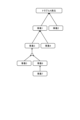
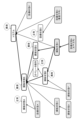
- FIG. 3 is a diagram showing an example of a knowledge model in the factor inference method according to the embodiment of the present invention.
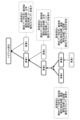
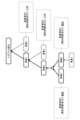
- FIG. 4 is a diagram showing an example of monitoring items and attribute information registered in the knowledge model in the factor inference method according to the embodiment of the present invention.
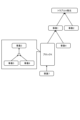
- FIG. 5 is a diagram illustrating an example in which some nodes of a knowledge model are blocked in the factor inference method according to the embodiment of the present invention.
- FIG. 1 is a diagram showing a schematic configuration of a factor inference device according to an embodiment of the present invention.
- FIG. 2 is a flowchart showing the procedure of the factor inference method executed by the factor inference device according to the embodiment of the present invention.
- FIG. 3 is a diagram showing an example of
- FIG. 6 is a diagram illustrating an example of an abnormality index (abnormality/normality classification) acquired by the standalone monitoring system in the factor inference method according to the embodiment of the present invention.
- FIG. 7 is a diagram showing an example of an abnormality index (degree of abnormality) acquired by the abnormality detection system in the factor inference method according to the embodiment of the present invention.
- FIG. 8 is a diagram illustrating an example of the result of factor inference using the abnormal/normal classification in the factor inference method according to the embodiment of the present invention.
- FIG. 9 is a diagram illustrating an example of a factor inference result using abnormality degree in the factor inference method according to the embodiment of the present invention.
- FIG. 10 is a diagram showing a modification example in which the factor inference method according to the embodiment of the present invention is applied to predicting the surface quality of a steel plate.
- FIG. 11 is a diagram showing a schematic configuration of a factor inference system according to an embodiment of the present invention.
- FIG. 12 is a diagram showing an example of a knowledge model in an example of the factor inference method according to the embodiment of the present invention.
- FIG. 13 is a diagram showing an example of a factor inference result in an example of the factor inference method according to the embodiment of the present invention.
- a factor inference device, a factor inference method, a factor inference system, and a terminal device according to embodiments of the present invention will be described with reference to the drawings. Note that the present invention is not limited to the following embodiments, and the components in the following embodiments include those that can be easily replaced by those skilled in the art, or those that are substantially the same.
- a factor inference device is for inferring the factors of a phenomenon in a process.
- the factor inference device includes a manufacturing process for steel products, a power generation process for power generation equipment, a transport process for transport equipment, and the like.
- the hot rolling process is a process of rolling a heated slab to a predetermined thickness.
- the hot rolling process uses a large number of equipment such as heating furnaces, rolling mills, and quenching equipment, but if an abnormality occurs in the equipment, there is a possibility of serious problems such as breakage of the plate during rolling or perforation. There is. Therefore, it is important for stable production to infer the cause of the abnormality and present it to the user (operator, etc.) to prevent these serious troubles.
- FIG. 1 shows an example of the configuration of an information processing device 1 for realizing a factor inference device.
- This information processing device 1 is realized by, for example, a general-purpose computer such as a workstation or a personal computer. Further, the information processing device 1 includes an input section 10, a storage section 20, a calculation section 30, and an output section 40, as shown in FIG.
- the input unit 10 is an input means for the calculation unit 30, and is realized by, for example, an input device such as a keyboard, a mouse pointer, or a numeric keypad.
- the input unit 10 inputs information necessary for various calculations in the calculation unit 30.
- the storage unit 20 is realized by a recording medium such as an EPROM (Erasable Programmable ROM), a hard disk drive (HDD), and a removable medium.
- a recording medium such as an EPROM (Erasable Programmable ROM), a hard disk drive (HDD), and a removable medium.
- removable media include disc recording media such as a USB (Universal Serial Bus) memory, a CD (Compact Disc), a DVD (Digital Versatile Disc), and a BD (Blu-ray (registered trademark) Disc).
- the storage unit 20 can store an operating system (OS), various programs, various tables, various databases, and the like.
- a knowledge model 21 is stored in the storage unit 20. Note that in addition to the knowledge model 21, the storage unit 20 may also store calculation results in the calculation unit 30, etc., as necessary.
- the knowledge model 21 is a model in which the causal relationship between phenomena in a process is expressed in a network format in which events that occur in the process are nodes, and the nodes are connected.
- This knowledge model 21 is, for example, created manually in advance and stored in the storage unit 20 in a form that can be read by a computer.
- only one knowledge model 21 may be created so as to correspond to a plurality of phenomena (troubles), or a plurality of knowledge models 21 may be created corresponding to a plurality of phenomena. Note that details of the knowledge model 21 will be described later (see FIGS. 3 to 5).
- the calculation unit 30 is realized by a processor such as a CPU (Central Processing Unit), and a memory (main memory) such as a RAM (Random Access Memory) or a ROM (Read Only Memory).
- a processor such as a CPU (Central Processing Unit)
- a memory main memory
- RAM Random Access Memory
- ROM Read Only Memory
- the calculation unit 30 loads a program into the work area of the main storage unit and executes it, and controls each component through the execution of the program, thereby achieving functions that meet a predetermined purpose.
- the calculation unit 30 functions as a knowledge model acquisition unit 31, an information creation unit 32, a data combination unit 33, and a factor inference unit 34 through execution of the above-described program.
- FIG. 1 shows an example in which the functions of each part of the calculation unit 30 are realized by one computer, the method of realizing the functions of each part is not particularly limited. For example, the function of each part is realized by multiple computers. You may realize each of them.
- the knowledge model acquisition unit 31 acquires the knowledge model 21 from the storage unit 20.
- the information creation unit 32 collects operational data from the process, and creates information that includes at least an abnormality index regarding the event based on the operational data.
- the information created by the information creation unit 32 is information that is linked to nodes of the knowledge model 21 in a data combination unit 33, which will be described later.
- this information may include, for example, data format, equipment type, event timing, and the like.
- the abnormality index includes, for example, an abnormality degree (abnormality score (abnormal value)) indicating the degree of abnormality, a classification determined based on the degree of deviation from a predetermined normal state, and the like. Note that the "classification determined based on the degree of deviation from the normal state" indicates, for example, a determination result of normality/abnormality.
- abnormality degree abnormality score (abnormal value)
- classification determined based on the degree of deviation from the normal state indicates, for example, a determination result of normality/abnormality.
- the data format includes, for example, observed values, set values, categories, etc.
- observed value refers to sensor data of equipment acquired by a sensor.
- setting value refers to a setting value set in the equipment.
- category indicates the type of data.
- the timing of the event includes the time of setting calculation, during operation, and during non-operation. Note that “at the time of setting calculation” indicates that the event occurred during setting calculation. Furthermore, “during operation” indicates that the event occurred during operation. Furthermore, “during non-operation” indicates that the event occurred during non-operation.
- the data linking unit 33 links information corresponding to the node (information created by the information creating unit 32) to the node of the knowledge model 21. Note that details of the processing of the data combining unit 33 will be described later (see FIGS. 8 and 9).
- the factor inference unit 34 infers the factors that cause the phenomenon based on the structure of the knowledge model 21 and the information linked to the nodes of the knowledge model 21, and presents it to the user. Specifically, the factor inference unit 34 identifies a causal route that connects nodes in the knowledge model 21 and indicates a causal relationship between phenomena. Then, the factor inference unit 34 presents the causal route to the user through the output unit 40.
- the factor inference unit 34 ranks and presents the causal routes based on information linked to each node of the causal routes.
- the factor inference unit 34 ranks the causal routes based on, for example, the number of nodes to which an abnormality index indicating an abnormality is connected in the inferred causal route, or the number of nodes selected as causal routes in the past. and can be presented.
- the factor inference unit 34 can also divide the knowledge model 21 into blocks based on information linked to each node, and present a causal route for each block in the knowledge model 21. Note that details of each process in the factor inference unit 34 will be described later (see FIGS. 8 and 9).
- the output unit 40 is an output means that outputs the calculation result by the calculation unit 30.
- the output unit 40 is realized by, for example, an input device such as a display or a printer.
- the output unit 40 outputs, for example, the knowledge model 21 created in advance, the inference results of the factors of the phenomenon (for example, causal routes) in the factor inference unit 34, and the like.
- the factor inference method includes a knowledge model acquisition step (step S1), an operation data collection step (step S2), an information creation step (step S3), a data combination step (step S4), A factor inference step (step S5) and a factor presentation step (step S6) are performed in order.
- step S1 knowledge model acquisition step
- step S2 operation data collection step
- step S3 information creation step
- step S4 data combination step
- step S5 A factor inference step
- a factor presentation step step S6
- ⁇ Knowledge model acquisition step> the knowledge model acquisition unit 31 acquires the knowledge model 21 stored in the storage unit 20 in advance. The details of the knowledge model 21 will be explained below.
- the knowledge model 21 is a model in which the causal relationship between phenomena in a process is expressed in a network format in which events that occur in the process are nodes and the nodes are connected.
- a computer in order to use a computer to infer how events related to process monitoring items will develop and what kind of trouble they will lead to, a computer will use knowledge about the mechanisms of phenomena that cause trouble. It is prepared as a processable knowledge model 21.
- the knowledge model 21 expresses the mechanism of trouble occurrence using a network structure in the form of a causal chain that connects events with causal relationships.
- the final result of this causal chain that is, the destination (top) of each event, becomes the trouble to focus on in the process.
- events such as equipment setting conditions, physical phenomena, equipment states, etc. related to troubles are treated as nodes in a network structure, and causally related events are connected by edges.
- Specific troubles (trouble A in FIG. 3) described at the top of the knowledge model 21 include, for example, holes, bends, and breaks in the hot rolling process. Furthermore, examples of events indicated by each node of the knowledge model 21 include "uneven heating of the slab in the heating furnace,” “uneven heat occurs in the slab,” “crown becomes larger,” and the like.
- monitoring items related to the events of the nodes are assigned to the nodes of the knowledge model 21 in advance.
- the monitoring item "temperature difference in slab” is assigned to the node for the event "uneven heating of slab in heating furnace.”
- monitoring items 1 to 4" are written for convenience, but in actual operation, specific contents corresponding to monitoring items 1 to 4 will be described. Note that some events cannot be monitored (observed) by sensors, etc. Therefore, as shown in the figure, it is not necessary to allocate monitoring items to all nodes, and there may be nodes that do not have monitoring items (for example, see events 1 and 3).
- attribute information is assigned to the nodes of the knowledge model 21 (nodes in which monitoring items are registered).
- the attribute information includes at least an abnormality index regarding the event. Further, in addition to the abnormality index, the attribute information may include, for example, data format, type of equipment, timing of an event, and the like.
- the abnormality index includes, for example, an abnormality degree (abnormality score) indicating the degree of abnormality, a classification determined based on the degree of deviation from a predetermined normal state, and the like.
- the data format includes, for example, observed values, set values, categories, and the like.
- the timing of the event includes the time of setting calculation, during operation, and during non-operation. Note that, similarly to the monitoring items, it is not necessary to assign attribute information to all nodes, and there may be nodes without attribute information (for example, see Events 1 and 3).
- the knowledge model 21 can also be presented to the user, for example, through the output unit 40 (for example, a display). At that time, by selecting (clicking) a node in which monitoring items and attribute information are registered, the details of the monitoring item and attribute information of the node are expanded and displayed in a pop-up, etc., as shown in Figure 4. You can do it like this.
- the knowledge model 21 when presenting the knowledge model 21 to the user through the output unit 40, it is also possible to limit the structure of the knowledge model 21 and present it based on the attribute information assigned to the nodes. For example, in the knowledge model 21 shown in FIG. 4, by limiting the attribute [equipment] to "looper", only the nodes of events 2 and 4 whose attribute [equipment] is "looper” are displayed, and the attribute [equipment] It is possible to hide the nodes of events 5 and 6, where is "rolling mill”. Further, during the factor inference step by the factor inference unit 34, it is also possible to exclude events whose attribute [equipment] is other than "looper” from the inference target.
- the knowledge model 21 can also block nodes corresponding to some events based on attribute information, as shown in FIG. 5, for example.
- block X shown in the figure includes another knowledge model 21 having common attribute information.
- events 3, 5, and 6 shown in the figure are all expressed as one block because the attribute [timing] is "at the time of setting calculation.”
- the information creation unit 32 collects operation data from the process. Subsequently, in the information creation step, the information creation unit 32 creates information including at least an abnormality index regarding the event based on the collected operation data.
- the operation data collection step and the information creation step it is possible to collect operation data and create information including abnormality indicators, for example, through an existing standalone monitoring system or abnormality detection system.
- Monitoring methods in a standalone monitoring system include, for example, a method in which an abnormality is determined when the distribution deviates by 3 ⁇ or more from the average of the normal distribution, and a method in which the value of a monitored item deviates from the upper or lower management limit range, as shown in Figure 6. For example, there is a method of determining that there is an abnormality when the condition occurs.
- the cause of the trouble is inferred using the abnormality index acquired by the standalone monitoring system and the knowledge model 21.
- the abnormality index acquired by the standalone monitoring system may be an abnormal/normal classification (judgment result) as shown in FIG. 6, or may be an abnormality degree (abnormality score) indicating the degree of abnormality.
- Anomaly detection system employ methods using machine learning to determine whether equipment is exhibiting abnormalities.
- a single monitoring item is looked at to determine whether there is an abnormality
- a plurality of monitoring items are looked at in combination to determine whether there is an abnormality.
- a machine learning method in an anomaly detection system for example, a statistical-based method such as a graphical Gaussian model or principal component analysis, or a deep learning-based method such as an autoencoder can be used.
- data of monitoring items during normal times is learned, and whether or not the current data is abnormal is output.
- the anomaly detection system as shown in FIG. 7, for example, the degree of abnormality (abnormality score) for each monitored item is output, and whether or not a monitored item is abnormal is determined based on the magnitude of the degree of abnormality.
- monitoring items in the hot rolling process include, for example, "meandering amount", “load difference", “slab temperature difference”, etc.
- the number of monitoring items in the anomaly detection system is enormous, reaching several thousand items. Therefore, it is difficult to instantly determine what kind of trouble will result from a monitoring item determined to be abnormal. Furthermore, it is difficult for inexperienced users who do not have sufficient knowledge about problems to speculate about the mechanism by which phenomena related to each monitoring item can develop into problems in order to take actions to deal with problems. It is difficult. Therefore, in this embodiment, the cause of the trouble is inferred using the anomaly index acquired by the anomaly detection system and the knowledge model 21.
- the data combining unit 33 connects the nodes of the knowledge model 21 with information corresponding to the nodes (information created by the information creating unit 32).
- the information linked to the knowledge model 21 is information that includes at least the abnormality index acquired by the above-described standalone monitoring system or abnormality detection system.
- Information linked to the knowledge model 21 includes abnormality indicators, data formats, types of equipment, timing of events, etc.
- examples of the abnormality index include the classification of abnormality/normality as shown in Table 1, the degree of abnormality calculated for each monitoring item as shown in Table 2, and the like. Note that Table 1 shows two patterns of classification consisting of "abnormal/normal” as an example, but for example, three patterns of classification consisting of "normal/minor abnormality/major abnormality” may be used.
- the factor inference unit 34 infers the cause of the phenomenon based on the structure of the knowledge model 21 and the information linked to the nodes of the knowledge model 21.
- the knowledge model 21 expressed in a graph structure of causal chains and the anomaly indicators shown in Tables 1 and 2 to determine what kind of trouble may occur in the process and how the trouble will be solved. Infer what happens.
- inference using the abnormality index (abnormal/normal classification) in Table 1 and inference using the abnormality index (degree of abnormality) in Table 2 will be explained separately.
- the path is further traced in the direction of the result only when all the corresponding events become abnormal. For example, in FIG. 8, both event 5 and event 6 are abnormal, so event 3 is traced. Further, if a monitoring item reaches a normal event while tracing in the direction of the result, the process of tracing further in the direction of the result is interrupted.
- the abnormality indicators in Table 2 are reflected (combined) in the knowledge model 21, and then, as shown in FIG. 9, the process is traced from the event of the monitoring item to the result of the causal relationship according to the degree of abnormality.
- the trouble described in the final node reached (trouble A in the figure) is identified as a trouble that may occur in the process.
- the causal route of the event that was followed earlier is identified, as shown by the bold line in the same figure.
- the causal route with the highest total abnormality degree is identified as the generation mechanism described in the final node.
- the total abnormality degree of the causal route from Event 5 ⁇ Event 3 ⁇ Event 1 ⁇ Trouble A is the highest at "24.0", so as shown by the thick line in the figure, Event 5 ⁇ Event Identify the causal route from 3 to event 1 to trouble A.
- the factor inference unit 34 presents the cause of the phenomenon inferred in the factor inference step to the user through the output unit 40.
- the causal routes shown in bold lines in FIGS. 8 and 9 are presented.
- the causal route in addition to the method of highlighting the causal route with a thick line as shown in the figure, the causal route may be highlighted as shown below, for example.
- nodes and edges included in the causal route may be displayed in a different color from other nodes and edges, or only nodes and edges included in the causal route may be displayed, Other nodes and edges may be hidden.
- the multiple troubles and multiple troubles may be presented to the user through the output unit 40.
- the causal routes identified in the factor inference step the causal routes are ranked based on the number of nodes to which abnormal indicators indicating an abnormality are connected, or the number of nodes that have been selected as causal routes in the past. may be presented.
- a predictive model (machine learning model) has been developed that predicts the occurrence of flaws based on the manufacturing conditions of steel sheets.
- This technology uses numerical indicators (hereinafter referred to as ⁇ degree of influence'') to indicate which of the data items of the manufacturing conditions used (hereinafter referred to as ⁇ explanatory variables'') influence the results predicted by the prediction model. ) can be output.
- ⁇ degree of influence'' numerical indicators
- ⁇ explanatory variables'' influence the results predicted by the prediction model.
- a knowledge model 21 expressed in a network structure of causal relationships of events that cause defects is created in a form that can be read by a computer. Further, to the nodes of this knowledge model 21, explanatory variables (see explanatory variables 1 to 4 in the figure) of the prediction model related to the event of the node are assigned.
- information regarding whether each explanatory variable is important or not is linked to the nodes of the knowledge model 21.
- Information regarding whether each explanatory variable is important can be created, for example, based on whether the degree of influence of the explanatory variable calculated by the prediction model exceeds a predetermined threshold.
- the factor inference system 2 includes a factor inference server device 3 and a terminal device 4, as shown in FIG.
- the factor inference server device 3 and the terminal device 4 are configured to be able to communicate through a network N such as the Internet network, for example. Further, in the factor inference system 2, the terminal device 4 is placed, for example, in a steelworks.
- the factor inference server device 3 is realized by, for example, a server placed on a cloud.
- This factor inference server device 3 is a network compatible server device of the factor inference device realized by the information processing device 1 shown in FIG. 1, and has the same configuration as the factor inference device. That is, the factor inference server device 3 includes at least a calculation section that functions as a knowledge model acquisition section, an information creation section, a data combination section, and a factor inference section among the components of the information processing device 1, and an output section. ing.
- the knowledge model acquisition unit of the factor inference server device 3 acquires a knowledge model expressed in the form of a network connecting nodes, with events that occur in the process as nodes, regarding the causal relationships between phenomena in the process. Furthermore, the information creation unit of the factor inference server device 3 creates information that includes at least an abnormality index regarding the event based on the data collected from the process. Further, the data linking unit of the factor inference server device 3 links corresponding information to the nodes of the knowledge model. Further, the factor inference unit of the factor inference server device 3 infers the cause of the phenomenon based on the structure of the knowledge model and the information linked to the nodes. Further, the output unit of the factor inference server device 3 outputs information including at least the cause of the phenomenon inferred by the factor inference unit to the terminal device 4 via the network N.
- the terminal device 4 acquires various information from the factor inference server device 3 through the network N and displays it.
- This terminal device 4 is realized by, for example, a general-purpose computer such as a personal computer, or a mobile information processing device such as a tablet computer.
- the terminal device 4 includes a calculation section that functions as an information acquisition section and a display section.
- an external display such as a liquid crystal display (LCD), an organic EL display (OLED), a touch panel display, etc. is connected to the terminal device 4.
- LCD liquid crystal display
- OLED organic EL display
- touch panel display etc.
- the information acquisition unit of the terminal device 4 acquires from the factor inference server device 3 information that includes at least the cause of the phenomenon inferred by the factor inference server device 3.
- the causes of this phenomenon are based on the structure of a knowledge model expressed in the form of a network that connects nodes, with events that occur in the process as nodes, and the information linked to the nodes of the knowledge model. It was inferred that Furthermore, the information linked to the nodes of the knowledge model is information that includes at least an abnormality indicator regarding the event.
- the causes of the above phenomenon include, for example, the entire causal route that associates the phenomenon in the process with its factors (see Figures 8 and 9), the highlighting of the causal route of the inferred cause of the phenomenon, and the highlighting of multiple causal routes. Ranking results, etc. Then, the display unit of the terminal device 4 causes the above-mentioned external display to display this information acquired by the information acquisition unit.
- FIG. 12 shows the knowledge model used in this embodiment.
- the knowledge model shown in Figure 12 shows how multiple events affect a certain trouble.
- the "equipment states A to E” include, for example, mechanical play in the rolling mill, errors in machine settings, sensor defects, and the like.
- Examples of the “steel plate states A to H” include "temperature distribution,” “hardness variation due to temperature,” and “steel plate shape.”
- attribute information including data abnormality/normality classification is registered in each node of the knowledge model shown in FIG. 12.
- some nodes phenomena
- inferring factors is performed using nodes of observable phenomena.
- shaded nodes indicate nodes of unobservable phenomena
- the other nodes indicate nodes of observable phenomena.
- Figure 13 shows the results (causal route) of inferring factors using the knowledge model shown in Figure 12. As shown by the thick line in the figure, if you trace the abnormal nodes among the nodes that lead to trouble, you will find that "equipment status B (horizontal direction)" is the fundamental cause. As described above, according to the factor inference method according to the present invention, by using a knowledge model, it is possible to easily understand the root cause of a trouble.
- factor inference device factor inference method, factor inference system, and terminal device according to the embodiments described above, even when used by a user (operator, etc.) who does not have deep knowledge of the analysis target, sensor data and setting values It is possible to provide useful auxiliary information (causal route) for problem solving from operational data such as This allows the user to take appropriate and prompt action to solve the problem using this auxiliary information.
- Information processing device 10 Input unit (input means) 20 Storage unit (storage means) 21 Knowledge model 30 Arithmetic unit (arithmetic means) 31 Knowledge model acquisition unit (knowledge model acquisition means) 32 Information creation department (information creation means) 33 Data coupling section (data coupling means) 34 Factor inference section (factor inference means) 40 Output section (output means) 2 Factor inference system 3 Factor inference server device 4 Terminal device N Network
Landscapes
- Engineering & Computer Science (AREA)
- Physics & Mathematics (AREA)
- General Physics & Mathematics (AREA)
- Theoretical Computer Science (AREA)
- General Engineering & Computer Science (AREA)
- Automation & Control Theory (AREA)
- Evolutionary Computation (AREA)
- Computing Systems (AREA)
- Data Mining & Analysis (AREA)
- Mathematical Physics (AREA)
- Software Systems (AREA)
- Computational Linguistics (AREA)
- Artificial Intelligence (AREA)
- Medical Informatics (AREA)
- Testing And Monitoring For Control Systems (AREA)
- Information Retrieval, Db Structures And Fs Structures Therefor (AREA)
Priority Applications (5)
| Application Number | Priority Date | Filing Date | Title |
|---|---|---|---|
| CN202380026573.9A CN118786397A (zh) | 2022-03-16 | 2023-03-02 | 原因推理装置、原因推理方法、原因推理系统及终端装置 |
| EP23770422.6A EP4474931A4 (en) | 2022-03-16 | 2023-03-02 | CAUSE INFERENCE DEVICE, CAUSE INFERENCE METHOD, CAUSE INFERENCE SYSTEM AND TERMINAL DEVICE |
| US18/842,966 US20250200396A1 (en) | 2022-03-16 | 2023-03-02 | Factor inference device, factor inference method, factor inference system, and terminal device |
| JP2023536874A JP7578200B2 (ja) | 2022-03-16 | 2023-03-02 | 要因推論装置、要因推論方法、要因推論システムおよび端末装置 |
| KR1020247029588A KR20240142544A (ko) | 2022-03-16 | 2023-03-02 | 요인 추론 장치, 요인 추론 방법, 요인 추론 시스템 및 단말 장치 |
Applications Claiming Priority (2)
| Application Number | Priority Date | Filing Date | Title |
|---|---|---|---|
| JP2022-040921 | 2022-03-16 | ||
| JP2022040921 | 2022-03-16 |
Publications (1)
| Publication Number | Publication Date |
|---|---|
| WO2023176464A1 true WO2023176464A1 (ja) | 2023-09-21 |
Family
ID=88023563
Family Applications (1)
| Application Number | Title | Priority Date | Filing Date |
|---|---|---|---|
| PCT/JP2023/007709 Ceased WO2023176464A1 (ja) | 2022-03-16 | 2023-03-02 | 要因推論装置、要因推論方法、要因推論システムおよび端末装置 |
Country Status (6)
| Country | Link |
|---|---|
| US (1) | US20250200396A1 (https=) |
| EP (1) | EP4474931A4 (https=) |
| JP (1) | JP7578200B2 (https=) |
| KR (1) | KR20240142544A (https=) |
| CN (1) | CN118786397A (https=) |
| WO (1) | WO2023176464A1 (https=) |
Cited By (1)
| Publication number | Priority date | Publication date | Assignee | Title |
|---|---|---|---|---|
| CN121094102A (zh) * | 2025-07-22 | 2025-12-09 | 山东海博科技信息系统股份有限公司 | 一种基于事件驱动与大模型微调的根因推理方法及系统 |
Citations (10)
| Publication number | Priority date | Publication date | Assignee | Title |
|---|---|---|---|---|
| JPH08234832A (ja) * | 1995-02-24 | 1996-09-13 | Toshiba Corp | プラント監視診断装置および方法 |
| JP2000075923A (ja) * | 1998-09-03 | 2000-03-14 | Yamatake Corp | 異常診断装置 |
| JP2007257285A (ja) * | 2006-03-23 | 2007-10-04 | Omron Corp | 要因推定装置、要因推定方法、プログラムおよびコンピュータ読取可能記録媒体 |
| JP2010122847A (ja) * | 2008-11-19 | 2010-06-03 | Hitachi Ltd | 装置異常診断方法及びシステム |
| JP2014059639A (ja) * | 2012-09-14 | 2014-04-03 | Mitsubishi Chemicals Corp | Ft計算支援プログラム、ft計算支援方法及びft計算支援装置 |
| JP2016122332A (ja) * | 2014-12-25 | 2016-07-07 | 株式会社東芝 | プロセス評価装置およびプロセス評価プログラム |
| JP2019082943A (ja) * | 2017-10-31 | 2019-05-30 | 株式会社日立製作所 | 因果関係モデル構築システムおよび方法 |
| JP2019194849A (ja) | 2018-04-30 | 2019-11-07 | 富士通株式会社 | 機械学習システムのための因果関係 |
| WO2020161835A1 (ja) * | 2019-02-06 | 2020-08-13 | オーウエル株式会社 | 管理システム及びそのための機械学習装置並びに管理方法 |
| JP2021174408A (ja) * | 2020-04-28 | 2021-11-01 | Jfeスチール株式会社 | 支援装置及び支援方法 |
Family Cites Families (9)
| Publication number | Priority date | Publication date | Assignee | Title |
|---|---|---|---|---|
| JPS57123409A (en) * | 1981-01-23 | 1982-07-31 | Hitachi Ltd | Process system of plant faulty signal |
| JPS6214210A (ja) * | 1985-07-11 | 1987-01-22 | Nippon Atom Ind Group Co Ltd | 異常診断分析方法 |
| KR960016138B1 (ko) * | 1988-06-17 | 1996-12-04 | 가부시기가이샤 히다찌세이꾸쇼 | 지식정보생성 시스템 |
| JP2890815B2 (ja) * | 1990-11-08 | 1999-05-17 | 三菱電機株式会社 | プラントの異常診断装置 |
| JPH06137908A (ja) * | 1992-10-27 | 1994-05-20 | Toshiba Corp | プラント監視装置 |
| JP2017167847A (ja) | 2016-03-16 | 2017-09-21 | 株式会社東芝 | 運用計画案作成装置、運用計画案作成方法、プログラムおよび運用計画案作成システム |
| JP6831743B2 (ja) * | 2017-04-19 | 2021-02-17 | 株式会社日立製作所 | 因果関係モデルの検証方法およびシステム、および不良原因抽出システム |
| JP7230600B2 (ja) * | 2019-03-13 | 2023-03-01 | オムロン株式会社 | 表示システム |
| US11474509B2 (en) | 2020-08-03 | 2022-10-18 | Palo Alto Research Center Incorporated | System and method for casual inference in manufacturing process |
-
2023
- 2023-03-02 WO PCT/JP2023/007709 patent/WO2023176464A1/ja not_active Ceased
- 2023-03-02 CN CN202380026573.9A patent/CN118786397A/zh active Pending
- 2023-03-02 KR KR1020247029588A patent/KR20240142544A/ko active Pending
- 2023-03-02 JP JP2023536874A patent/JP7578200B2/ja active Active
- 2023-03-02 EP EP23770422.6A patent/EP4474931A4/en active Pending
- 2023-03-02 US US18/842,966 patent/US20250200396A1/en active Pending
Patent Citations (10)
| Publication number | Priority date | Publication date | Assignee | Title |
|---|---|---|---|---|
| JPH08234832A (ja) * | 1995-02-24 | 1996-09-13 | Toshiba Corp | プラント監視診断装置および方法 |
| JP2000075923A (ja) * | 1998-09-03 | 2000-03-14 | Yamatake Corp | 異常診断装置 |
| JP2007257285A (ja) * | 2006-03-23 | 2007-10-04 | Omron Corp | 要因推定装置、要因推定方法、プログラムおよびコンピュータ読取可能記録媒体 |
| JP2010122847A (ja) * | 2008-11-19 | 2010-06-03 | Hitachi Ltd | 装置異常診断方法及びシステム |
| JP2014059639A (ja) * | 2012-09-14 | 2014-04-03 | Mitsubishi Chemicals Corp | Ft計算支援プログラム、ft計算支援方法及びft計算支援装置 |
| JP2016122332A (ja) * | 2014-12-25 | 2016-07-07 | 株式会社東芝 | プロセス評価装置およびプロセス評価プログラム |
| JP2019082943A (ja) * | 2017-10-31 | 2019-05-30 | 株式会社日立製作所 | 因果関係モデル構築システムおよび方法 |
| JP2019194849A (ja) | 2018-04-30 | 2019-11-07 | 富士通株式会社 | 機械学習システムのための因果関係 |
| WO2020161835A1 (ja) * | 2019-02-06 | 2020-08-13 | オーウエル株式会社 | 管理システム及びそのための機械学習装置並びに管理方法 |
| JP2021174408A (ja) * | 2020-04-28 | 2021-11-01 | Jfeスチール株式会社 | 支援装置及び支援方法 |
Non-Patent Citations (2)
| Title |
|---|
| MARCO: "Why should I trust you?:Explaining the predictions of any classifier", PROCEEDINGS OF THE 22ND ACM SIGKDD INTERNATIONAL CONFERENCE ON KNOWLEDGE DISCOVERY AND DATA MINING, August 2016 (2016-08-01), pages 1135 - 1144, XP058276906, DOI: 10.1145/2939672.2939778 |
| See also references of EP4474931A4 |
Cited By (1)
| Publication number | Priority date | Publication date | Assignee | Title |
|---|---|---|---|---|
| CN121094102A (zh) * | 2025-07-22 | 2025-12-09 | 山东海博科技信息系统股份有限公司 | 一种基于事件驱动与大模型微调的根因推理方法及系统 |
Also Published As
| Publication number | Publication date |
|---|---|
| KR20240142544A (ko) | 2024-09-30 |
| EP4474931A1 (en) | 2024-12-11 |
| JPWO2023176464A1 (https=) | 2023-09-21 |
| US20250200396A1 (en) | 2025-06-19 |
| EP4474931A4 (en) | 2025-05-28 |
| JP7578200B2 (ja) | 2024-11-06 |
| CN118786397A (zh) | 2024-10-15 |
Similar Documents
| Publication | Publication Date | Title |
|---|---|---|
| MacCarthy et al. | A review of non‐standard applications of statistical process control (SPC) charts | |
| JP6756374B2 (ja) | プロセスの異常状態診断装置および異常状態診断方法 | |
| Carnero | An evaluation system of the setting up of predictive maintenance programmes | |
| Antony et al. | A conceptual framework for the effective implementation of statistical process control | |
| JP7446771B2 (ja) | 可視化データ生成装置、可視化データ生成システム、及び可視化データ生成方法 | |
| CN101802731A (zh) | 用于自动显示工业控制系统中的过程信息的系统和由计算机实施的方法 | |
| JP2018113027A (ja) | プロセスの異常状態診断方法および異常状態診断装置 | |
| JP7031713B1 (ja) | 異常診断モデルの構築方法、異常診断方法、異常診断モデルの構築装置および異常診断装置 | |
| Ganguly et al. | A teaching–learning based optimization approach for economic design of X-bar control chart | |
| JP7578200B2 (ja) | 要因推論装置、要因推論方法、要因推論システムおよび端末装置 | |
| CN114386730A (zh) | 一种燃烧稳定性评价方法及系统 | |
| JP7578199B2 (ja) | 要因推論装置、要因推論方法、要因推論システムおよび端末装置 | |
| JP7580257B2 (ja) | 異常検知システム、異常検知方法およびプログラム | |
| JP4500876B1 (ja) | 生産管理システム | |
| JP7248188B2 (ja) | 異常診断モデルの構築方法、異常診断方法、異常診断モデルの構築装置および異常診断装置 | |
| Smith et al. | Using visual data mining to enhance the simple tools in statistical process control: A case study | |
| JP6388487B2 (ja) | 保全評価システム | |
| Lelo et al. | Development of an approach to incorporate proportional hazard modelling into a risk-based inspection methodology | |
| Tesfay | Statistical process control (SPC) | |
| Pandey et al. | A model for optimal maintenance interval incorporating the cost of rejections in manufacturing | |
| JP7550093B2 (ja) | 監視装置及び方法 | |
| Hornáček et al. | Data-driven health status monitoring on electrical pumps | |
| JP7798266B2 (ja) | システムバランス変動及びその予兆の表示方法、当該方法を用いた情報処理装置及びプログラム | |
| Gowan | Steps in the asset criticality process: Why risk-based capital planning is no longer optional for ageing industrial sites, and what it takes to do it well | |
| WO2025263145A1 (ja) | 異常診断方法および異常診断装置 |
Legal Events
| Date | Code | Title | Description |
|---|---|---|---|
| WWE | Wipo information: entry into national phase |
Ref document number: 2023536874 Country of ref document: JP |
|
| 121 | Ep: the epo has been informed by wipo that ep was designated in this application |
Ref document number: 23770422 Country of ref document: EP Kind code of ref document: A1 |
|
| WWE | Wipo information: entry into national phase |
Ref document number: 18842966 Country of ref document: US |
|
| ENP | Entry into the national phase |
Ref document number: 20247029588 Country of ref document: KR Kind code of ref document: A |
|
| WWE | Wipo information: entry into national phase |
Ref document number: 202417066638 Country of ref document: IN Ref document number: 1020247029588 Country of ref document: KR |
|
| WWE | Wipo information: entry into national phase |
Ref document number: 2023770422 Country of ref document: EP |
|
| ENP | Entry into the national phase |
Ref document number: 2023770422 Country of ref document: EP Effective date: 20240904 |
|
| WWE | Wipo information: entry into national phase |
Ref document number: 202380026573.9 Country of ref document: CN |
|
| REG | Reference to national code |
Ref country code: BR Ref legal event code: B01A Ref document number: 112024018267 Country of ref document: BR |
|
| NENP | Non-entry into the national phase |
Ref country code: DE |
|
| ENP | Entry into the national phase |
Ref document number: 112024018267 Country of ref document: BR Kind code of ref document: A2 Effective date: 20240905 |
|
| WWP | Wipo information: published in national office |
Ref document number: 18842966 Country of ref document: US |