WO2023176121A1 - オブジェクト取引システム、情報処理装置、プログラム及びオブジェクト取引方法 - Google Patents
オブジェクト取引システム、情報処理装置、プログラム及びオブジェクト取引方法 Download PDFInfo
- Publication number
- WO2023176121A1 WO2023176121A1 PCT/JP2023/000848 JP2023000848W WO2023176121A1 WO 2023176121 A1 WO2023176121 A1 WO 2023176121A1 JP 2023000848 W JP2023000848 W JP 2023000848W WO 2023176121 A1 WO2023176121 A1 WO 2023176121A1
- Authority
- WO
- WIPO (PCT)
- Prior art keywords
- user
- transaction
- payment
- delivery
- trading system
- Prior art date
- Legal status (The legal status is an assumption and is not a legal conclusion. Google has not performed a legal analysis and makes no representation as to the accuracy of the status listed.)
- Ceased
Links
Images










Classifications
-
- G—PHYSICS
- G06—COMPUTING OR CALCULATING; COUNTING
- G06Q—INFORMATION AND COMMUNICATION TECHNOLOGY [ICT] SPECIALLY ADAPTED FOR ADMINISTRATIVE, COMMERCIAL, FINANCIAL, MANAGERIAL OR SUPERVISORY PURPOSES; SYSTEMS OR METHODS SPECIALLY ADAPTED FOR ADMINISTRATIVE, COMMERCIAL, FINANCIAL, MANAGERIAL OR SUPERVISORY PURPOSES, NOT OTHERWISE PROVIDED FOR
- G06Q20/00—Payment architectures, schemes or protocols
- G06Q20/08—Payment architectures
- G06Q20/12—Payment architectures specially adapted for electronic shopping systems
-
- G—PHYSICS
- G06—COMPUTING OR CALCULATING; COUNTING
- G06Q—INFORMATION AND COMMUNICATION TECHNOLOGY [ICT] SPECIALLY ADAPTED FOR ADMINISTRATIVE, COMMERCIAL, FINANCIAL, MANAGERIAL OR SUPERVISORY PURPOSES; SYSTEMS OR METHODS SPECIALLY ADAPTED FOR ADMINISTRATIVE, COMMERCIAL, FINANCIAL, MANAGERIAL OR SUPERVISORY PURPOSES, NOT OTHERWISE PROVIDED FOR
- G06Q30/00—Commerce
- G06Q30/06—Buying, selling or leasing transactions
- G06Q30/0601—Electronic shopping [e-shopping]
-
- G—PHYSICS
- G06—COMPUTING OR CALCULATING; COUNTING
- G06Q—INFORMATION AND COMMUNICATION TECHNOLOGY [ICT] SPECIALLY ADAPTED FOR ADMINISTRATIVE, COMMERCIAL, FINANCIAL, MANAGERIAL OR SUPERVISORY PURPOSES; SYSTEMS OR METHODS SPECIALLY ADAPTED FOR ADMINISTRATIVE, COMMERCIAL, FINANCIAL, MANAGERIAL OR SUPERVISORY PURPOSES, NOT OTHERWISE PROVIDED FOR
- G06Q50/00—Information and communication technology [ICT] specially adapted for implementation of business processes of specific business sectors, e.g. utilities or tourism
- G06Q50/10—Services
Definitions
- the present invention relates to an object trading system, an information processing device, a program, and an object trading method.
- an object of the present invention is to provide an object trading system, an information processing device, a program, and an object trading method that are more interesting for users.
- One aspect of the present invention provides a payment means for settling a payment for a first object that is an intangible object and a second object that is a tangible object that can be used in a predetermined service, and completing the payment of the payment. on the condition that, within the delivery grace period during which the delivery of the second object to the first user is postponed, the transaction of at least one of the objects between the first object and the second object is carried out between the first user and the second user. and a transaction control means that allows control between objects.
- One aspect of the present invention provides a payment means that can be used in a predetermined service and that settles the payment for a pair of a first object that is an intangible object and a second object that is a tangible object, and a payment method that can be used in a predetermined transaction period. Enables a transaction in which the first user's set and the second user's set are exchanged between the first user who has made the payment for the set and the second user who has made the payment for the set. transaction control means, the transaction control means controls a predetermined transaction possible period based on the settlement date of the payment of the price for the pair of the first object and the second object of the first user and the second user's second object.
- This is an object trading system that is set for a period up to the earliest scheduled delivery date.
- One aspect of the present invention provides a payment means for settling a payment for a first object that is an intangible object and a second object that is a tangible object that can be used in a predetermined service, and completing the payment of the payment. on the condition that, within the delivery grace period during which the delivery of the second object to the first user is postponed, the transaction of at least one of the objects between the first object and the second object is carried out between the first user and the second user. and transaction control means capable of controlling transactions between.
- One aspect of the present invention provides a payment means for settling a payment for a first object that is an intangible object and a second object that is a tangible object that can be used in a predetermined service; As a condition, within the delivery grace period during which the delivery of the second object to the first user is postponed, at least one of the object transactions between the first object and the second object is carried out between the first user and the second user.
- This is a program that allows a computer to function as a transaction control means that allows control between transactions.
- a computer settles the payment of a price for a first object that is an intangible object and a second object that is a tangible object that can be used for a predetermined service, and completes the payment of the price. on the condition that, within the delivery grace period during which the delivery of the second object to the first user is postponed, the transaction of at least one of the objects between the first object and the second object is carried out between the first user and the second user. It is an object trading method that allows control between objects.
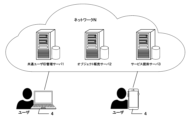
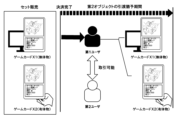
- FIG. 1 is a diagram for explaining the first embodiment.
- FIG. 2 is a diagram showing an example of the overall configuration of the object providing system in the first embodiment.
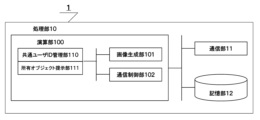
- FIG. 3 is a block diagram showing an example of the functional configuration of the common user ID management server 1.
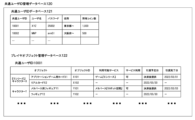
- FIG. 4 is a diagram showing an example of the common user ID management database 120.
- FIG. 5 is a block diagram showing an example of the functional configuration of the object sales server 2.
- FIG. 6 is a diagram showing an example of the sales object database 220.
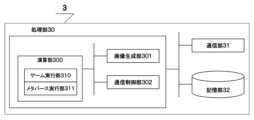
- FIG. 7 is a block diagram showing an example of the functional configuration of the service providing server 3.
- FIG. 8 is a diagram showing an example of the object database 320 used in the game.
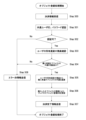
- FIG. 9 is a block diagram showing an example of the functional configuration of the terminal 4. As shown in FIG. FIG. 10 is a sequence diagram of the operation of the first embodiment.
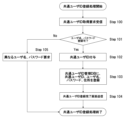
- FIG. 11 is a flowchart of the common user ID registration process (Step 1).
- FIG. 12 is a flowchart of the object sales process (Step 2).
- FIG. 13 is a diagram showing an example of the transition of screens displayed on the terminal 4.
- FIG. 14 is a flowchart of the object registration process (Step 3).
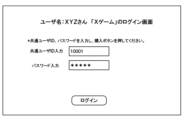
- FIG. 15 is an example of a login screen for the game.
- FIG. 16 is a flowchart of the service execution process (Step 4) and the start of the object management process (Step 5).
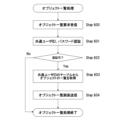
- FIG. 17 is a flowchart of object list processing (Step 6).
- FIG. 10 is a sequence diagram of the operation of the first embodiment.
- FIG. 11 is a flowchart of the common user ID registration process (Step 1).
- FIG. 12 is a flowchart of the object sales
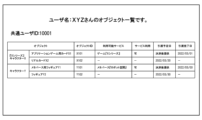
- FIG. 18 is a diagram showing an example of an object list screen.
- FIG. 19 is a diagram for explaining the second embodiment.
- FIG. 20 is a diagram showing an example of the overall configuration of an object trading system in the second embodiment.
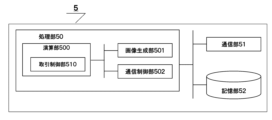
- FIG. 21 is a block diagram showing an example of the functional configuration of the transaction server 5.
- FIG. 22 is a diagram showing an example of the transaction management database 510.
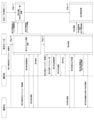
- FIG. 23 is a sequence diagram of the operation of the second embodiment.
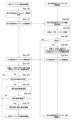
- FIG. 24 is a flowchart of the transaction object registration process (Step 10) and the transactionable owned object list process (Step 11).
- FIG. 25 is a diagram showing an example of a screen displayed on the terminal 4a.
- FIG. 26 is a flowchart of transaction processing (Step 12).
- FIG. 27 is an example of a transaction screen displayed on the terminal 4b.
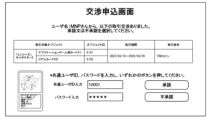
- FIG. 28 is an example of a negotiation application screen displayed on the terminal 4a.
- FIG. 29 is a flowchart of the transaction authentication process (Step 13).
- FIG. 30 is a diagram showing an example of the common user ID management table 120 after the transaction.
- FIG. 31 is a diagram for explaining modification 1 of the second embodiment.
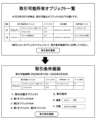
- FIG. 32 is a diagram showing an example of a transaction conditions screen in Modification 3 of the second embodiment.
- first object and the second object are intangible objects and tangible objects, they have in common that they can be associated with (embodied) a character or the like. Therefore, it is possible to associate the first object and the second object with the same character or characters that are related to each other.
- the mutually related characters are, for example, a relationship between characters in which the first object and the second object appear in a certain story.
- first object and second object associated with such a character can be provided to the user as a set, it is possible to provide the user with new enjoyment. This is because the first object associated with the user's favorite character is an intangible object, so various services such as application games and virtual spaces such as Metaverse can be provided to the user using this first object. Furthermore, since the second object associated with the user's favorite character is a tangible object, it can satisfy the user's sense of ownership in the real world. In other words, this is because double value can be given to the user.
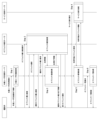
- FIG. 1 there is a virtual game card (first object) X1 used in a game application and a game card (second object) X2 as an article.
- the game card X2 is associated with the same character.
- the designs of game card X1 and game card X2 are the same.
- the user can purchase the game card X1 and the game card X2 as a set.
- the service provider provides the game card X1 as digital data to the user who purchased the set.
- the user and the game card X1 are associated so that the user can use the game card X1 in a plurality of services.
- a common identifier hereinafter sometimes referred to as a common user ID
- the game card X1 can be identified as the user's property, and the user can use the game card X1 in a plurality of services.
- the user can use the game card X1 as a game element in a game application, or use the game card X1 as a display in the metaverse.
- the service provider hands over the game card X2 as a physical item to the user who purchased the set.
- delivery includes delivery of the game card X2 to the user and delivery to the user at the store. Thereby, the user can satisfy the desire to own a physical collection or the like.
- first object and the second object are the same character and have the same picture written on them, but the present invention is not limited to this.
- the first object and the second object are the same character, but the first object may be a figure of the character, and the second object may be a plastic model of the character.
- FIG. 2 is a diagram showing an example of the overall configuration of the object providing system in the first embodiment.
- the object providing system includes a common user ID management server 1, an object sales server 2, a service providing server 3, and a terminal 4.
- the common user ID management server 1, the object sales server 2, the service providing server 3, and the terminal 4 can be connected to the network N and can communicate with each other.
- the network N means a communication path that allows data communication.
- the network N includes communication networks such as telephone communication networks, cable networks, and the Internet, in addition to LANs using dedicated lines (dedicated cables) and Ethernet (registered trademark) for direct connection, and communication methods include wired/ Doesn't matter wireless.
- the common user ID management server 1, object sales server 2, and service providing server 3 are server systems configured to include one or more server devices, storage devices, and the like. Furthermore, the common user ID management server 1, object sales server 2, and service providing server 3 do not need to be installed individually, and may be coexisted with other servers in the cloud system.
- the common user ID management server 1 is a server that manages common user IDs that are commonly used in multiple services provided to users.
- the common user ID is an identifier (identification information) that uniquely identifies a user who uses a service.
- the object sales server 2 is a server that sells or provides objects to users.
- the service providing server 3 is a server that provides a service using the first object to the user. Note that the service providing server 3 may execute a plurality of services at once, or may exist for each service.
- the terminal 4 is an information processing device (computer) capable of running applications, a web browser, etc., and is connected to the network N via a wireless communication base station, etc., and is connected to the common user ID management server 1 and the object sales server 2. , and the service providing server 3 can perform data communication.
- the terminal 4 is, for example, a smartphone, a mobile phone, a portable game device, a stationary home game device, an arcade game device, a personal computer, a tablet computer, a controller for a stationary home game device, or the like. Basically, a plurality of terminals 4 exist and are operated by each user.
- FIG. 3 is a block diagram showing an example of the functional configuration of the common user ID management server 1. As shown in FIG.
- FIG. 3 it includes a processing section 10, a communication section 11, and a storage section 12.
- the processing unit 10 centrally controls the operation of the common user ID management server 1 based on programs and data stored in the storage unit 12.
- the functions of the processing unit 10 can be realized by, for example, a microprocessor such as a CPU or a GPU, or an electronic component such as an ASIC or an IC memory.
- This processing section 10 includes a calculation section 100, an image generation section 101, and a communication control section 102 as main functional sections.
- the calculation unit 100 includes a common user ID management unit 110 and an owned object presentation unit 111.
- the common user ID management unit 110 uses the common user ID management database 120 stored in the storage unit 12 to manage common user IDs.
- Common user ID is an identifier commonly used in multiple services provided to users to identify and authenticate each user.
- FIG. 4 is a diagram showing an example of the common user ID management database 120.
- the common user ID management database 120 includes a common user ID database 121 and a player object management database 122.
- the common user ID database 121 is a database that manages common user IDs of users.
- One record in the common user ID database 121 includes a field for the user's common user ID, a field for the user's user name, a field for the user's password, a field for the user's address, and a field for the user's address.
- the player object management database 122 is a table prepared for each common user ID, and is a table that manages objects that can be used or are owned by the user of the common user ID.
- Each table includes a field for the object name of the object owned by the user, an object ID for identifying the object, a field for the name of a service that can be used by the object, a field for indicating whether the object can be used in that service, and a field for the object. , and a field for the delivery completion date of the object.
- the common user ID management unit 110 uses the common user ID management database 120 to identify and authenticate users and provide each piece of information in response to a request from the object sales server 2 or the service providing server 3. Further, the common user ID management unit 110 updates the common user ID management database 120 using information provided from the object sales server 2 or the service providing server 3.
- the owned object presentation unit 111 presents a list of objects owned by the user in response to a request from the terminal 4.
- the image generation unit 101 generates one screen in one frame time (for example, 1/60 seconds) based on the processing result of the calculation unit 100, and outputs an image signal of the generated screen.
- the functions of the image generation unit 101 include, for example, processors such as GPUs and digital signal processors (DSPs), programs such as video signal ICs and video codecs, IC memories for drawing frames such as frame buffers, and texture data development. This can be realized using IC memory, etc.
- the communication control unit 102 performs communication connection and data processing for data communication between the object sales server, the service providing server 3, and the terminal 4.
- the communication unit 11 connects to a communication line to realize communication.
- the functions of the communication unit 11 can be realized by, for example, a wireless communication device, a modem, a TA (terminal adapter), a wired communication cable jack, a control circuit, and the like.
- the storage unit 12 is realized by, for example, a RAM, a ROM, an IC memory such as a flash memory, a magnetic disk such as a hard disk, an optical disk such as a CD-ROM or a DVD, and stores system programs and function programs.
- a system program is a program for realizing the basic functions of a computer.
- the functional program is a program for causing the calculation unit 100 to function as the common user ID management unit 110 and the owned object presentation unit 111. Further, in the present embodiment, the storage unit 12 stores a common user ID management database 120.
- FIG. 5 is a block diagram showing an example of the functional configuration of the object sales server 2. As shown in FIG. As shown in FIG. 5, it includes a processing section 20, a communication section 21, and a storage section 22.
- the processing unit 20 comprehensively controls the operation of the object sales server 2 based on the programs and data stored in the storage unit 22.
- the functions of the processing unit 20 can be realized by, for example, a microprocessor such as a CPU or GPU, or an electronic component such as an ASIC or an IC memory.
- the processing section 20 includes a calculation section 200, an image generation section 201, and a communication control section 202 as main functional sections.
- the calculation unit 200 includes an object sales unit 210, a payment unit 211, a first object provision unit 212, and a second object delivery procedure unit 213.
- the object sales department 210 reads information on objects that can be sold from the sales object database 220 and presents an object purchase screen to the terminal 4. Further, the object sales unit 210 presents a selected object purchase screen to the terminal 4 in response to the selection of an object to be purchased from the terminal 4, and presents a selected object purchase completion screen to the terminal 4 after the payment is completed.
- the object to be sold means a set of a first object, which is an intangible object, and a second object, which is a tangible object.
- the first object and the second object, which is a tangible object are objects corresponding to the same character.
- the first object is a digital data game card that can be used in an application game
- the second object is a real card having the same pattern as the digital data game card.
- the object sales department 210 mainly communicates with the terminal 4 using HTTP, and transmits contents such as various screens (HTML/XHTML/XML, documents, images, etc.).
- the payment unit 211 performs payment for the object selected by the user.
- the price of the object is the price of a set of a first object, which is an intangible object, and a second object, which is a tangible object.
- the method of payment of the price is performed using in-service currency, but electronic payment such as a credit card is also possible.
- the payment unit 111 transmits payment information regarding the object that the user intends to purchase to the common user ID management server 1.
- the payment information includes the user's common user ID, password, and object price information.
- the payment unit 211 Upon receiving the payment completion information from the common user ID management server 1, the payment unit 211 notifies the terminal 4 of the completion of the payment.
- the payment completion information includes user authentication, notification of completion of subtraction of the price of the object from the currency (coins) owned by the user, and the user's address (delivery destination).
- the first object providing unit 212 provides the first object among the objects to the terminal 4 after the payment unit 211 makes the payment.
- the providing method includes not only a method of providing digital data of the first object for registration in a game application installed on the terminal 4, but also a method of providing digital data of the first object to be registered to a game application installed on the terminal 4. It also includes a method for providing usage information to enable use.
- the second object delivery procedure unit 213 manages the delivery procedure of the second object, which is a tangible object among the objects. Specifically, the second object delivery procedure unit 213 delivers the second object to the user's address (delivery destination) so that the second object can be delivered to the user on the scheduled delivery date of each user in the player object management database 122. Create delivery slips and manage procedures necessary for delivery.
- the image generation unit 201 generates one screen in one frame time (for example, 1/60 seconds) based on the processing result of the calculation unit 200, and outputs an image signal of the generated screen.
- the functions of the image generation unit 201 include, for example, processors such as GPUs and digital signal processors (DSPs), programs such as video signal ICs and video codecs, IC memories for drawing frames such as frame buffers, and texture data development. This can be realized using IC memory, etc.
- the communication control unit 202 performs communication connection and data processing for data communication between the common user ID management server 1 and the terminal 4.
- the communication unit 21 connects to a communication line to realize communication.
- the functions of the communication unit 11 can be realized by, for example, a wireless communication device, a modem, a TA (terminal adapter), a wired communication cable jack, a control circuit, and the like.
- the storage unit 22 is realized by, for example, a RAM, a ROM, an IC memory such as a flash memory, a magnetic disk such as a hard disk, an optical disk such as a CD-ROM or a DVD, and stores system programs and function programs.
- a system program is a program for realizing the basic functions of a computer.
- the functional program is a program for causing the calculation unit 200 to function as an object sales unit 210, a payment unit 211, a first object provision unit 212, and a second object delivery procedure unit 213. Further, in this embodiment, a sales object database 220 is stored in the storage unit 22.
- FIG. 6 is a diagram showing an example of the sales object database 220.
- One record in the sales object database 220 includes a field for the name of the object, a field for the object ID that identifies the object, a field for the sales period of the object, and a field for information regarding available services for the object and delivery of the object. and a field for the price of the object.
- FIG. 7 is a block diagram showing an example of the functional configuration of the service providing server 3.
- the services using objects executed by the service providing server 3 are a card game using the first object and a metaverse using the first object.
- FIG. 7 it includes a processing section 30, a communication section 31, and a storage section 32.
- the processing unit 30 comprehensively controls the operation of the service providing server 3 based on programs and data stored in the storage unit 32.
- the functions of the processing unit 30 can be realized by, for example, a microprocessor such as a CPU or GPU, or an electronic component such as an ASIC or an IC memory.
- This processing section 30 includes a calculation section 300, an image generation section 301, and a communication control section 302 as main functional sections.
- the calculation unit 300 includes a game execution unit 310 and a metaverse execution unit 311.
- the game execution unit 310 executes a game using the first object in response to a service execution request from the terminal 4.
- the service execution request from the terminal 4 includes the user's common user ID and password.
- the game execution unit 310 transmits an available object request including the common user ID and password included in the service execution request to the common user ID management server 1. Further, from the common user ID management server 1, available object information including the common user ID of the user and the object ID of the first object available to the user is received. Then, the game execution unit 310 identifies an object (character) to appear in the game from the obtained object ID, and enables the first object (character) to be used in the game executed on the terminal 4.
- the metaverse execution unit 311 executes a metaverse service using the first object in response to a service execution request from the terminal 4.
- the metaverse execution unit 311 transmits an available object request including the common user ID and password included in the service execution request to the common user ID management server 1. Further, from the common user ID management server 1, available object information including the common user ID of the user and the object ID of the first object available to the user is received. Then, the metaverse execution unit 311 identifies an object (character) to appear in the metaverse from the obtained object ID, and enables the first object (character) to be used in the metaverse service executed on the terminal 4.
- the image generation unit 301 generates one screen in one frame time (for example, 1/60 seconds) based on the processing result of the calculation unit 300, and outputs an image signal of the generated screen.
- the functions of the image generation unit 201 include, for example, processors such as GPUs and digital signal processors (DSPs), programs such as video signal ICs and video codecs, IC memories for drawing frames such as frame buffers, and texture data development. This can be realized using IC memory, etc.
- the communication control unit 302 performs communication connection and data processing for data communication between the common user ID management server 1 and the terminal 4.
- the communication unit 31 connects to a communication line to realize communication.
- the functions of the communication unit 31 can be realized by, for example, a wireless communication device, a modem, a TA (terminal adapter), a wired communication cable jack, a control circuit, and the like.
- the storage unit 32 is realized by, for example, a RAM, a ROM, an IC memory such as a flash memory, a magnetic disk such as a hard disk, an optical disk such as a CD-ROM or a DVD, and stores system programs and function programs.
- a system program is a program for realizing the basic functions of a computer.
- the functional program is a program for causing the calculation unit 300 to function as the game execution unit 310 and the metaverse execution unit 311.
- the storage unit 32 stores various databases related to first objects (characters) for executing the game and the metaverse.
- FIG. 8 is a diagram showing an example of the object database 320 used in the game.
- One record in the object database 320 includes an object ID field, a field for image data of the object displayed in the game, a field for character information for the object, and a user ID field indicating whether the user owns the object. and a field for proprietary information.
- a similar database is also stored for metaverse services.
- FIG. 9 is a block diagram showing an example of the functional configuration of the terminal 4.
- the terminal 4 includes a processing section 40, an operation input section 41, a display section 42, a sound output section 44, a communication section 44, and a storage section 45.
- the processing unit 40 comprehensively controls the operation of the terminal 4 based on programs and data stored in the storage unit 45, various input signals from the operation input unit 41, and the like.
- the functions of the processing unit 40 can be realized by, for example, a microprocessor such as a CPU or GPU, or an electronic component such as an ASIC or an IC memory.
- the processing section 40 includes a calculation section 400, an image generation section 401, a sound generation section 402, and a communication control section 403 as main functional sections.
- the calculation unit 400 executes various processes to realize the service of this embodiment, and outputs the processing results to the image generation unit 401, the sound generation unit 402, or the communication control unit 403.
- the calculation unit 400 includes a browser execution unit 410 and a service execution unit 411.
- the browser execution unit 410 mainly communicates with the server using HTTP, acquires content, and analyzes the acquired content based on the result of syntax analysis according to its type (HTML/XHTML/XML, document, image, etc.). Arrange and draw text and images. Further, if a plug-in corresponding to a Flash application or a Java applet is prepared, the browser execution unit 410 can display and execute the plug-in.
- the service execution unit 411 is a unit that executes the provided service.
- the service execution unit 411 executes each service using an application that executes a game and metaverse using objects.
- the image generation unit 401 generates one game screen in one frame time (for example, 1/60 seconds) based on the processing result of the calculation unit 400, and outputs an image signal of the generated game screen to the image display unit 103.
- the functions of the image generation unit 401 include, for example, processors such as GPUs and digital signal processors (DSPs), programs such as video signal ICs and video codecs, IC memories for drawing frames such as frame buffers, and texture data development. This can be realized using IC memory, etc.
- the sound generation unit 402 generates sound signals such as sound effects and BGM related to the game, audio information of operation assistance information, and various operation sounds based on the processing results of the calculation unit 400, and outputs them to the sound output unit 43.
- the function of the sound generation unit 401 can be realized by, for example, a processor such as a digital signal processor (DSP) or a voice synthesis IC, an audio codec capable of reproducing audio files, or the like.
- DSP digital signal processor
- voice synthesis IC an audio codec capable of reproducing audio files, or the like.
- the communication control unit 403 performs communication connections and data processing for data communication with each server.
- the operation input unit 41 is for the player to input various operations related to the service, and outputs an operation input signal according to the operation input to the processing unit 40.
- the functions of the operation input unit 40 include, for example, a touch operation pad, a home button, a button switch, a joystick, a trackball, and other elements that the player directly operates with their fingers, as well as an acceleration sensor, an angular velocity sensor, an inclination sensor, and a geomagnetic sensor. This can also be achieved using elements that detect movement or posture.
- the display unit 42 displays various game screens based on image signals input from the image generation unit 401.
- the function of the display unit 42 can be realized by, for example, a display device such as a flat panel display such as a liquid crystal, a cathode ray tube (CRT), a projector, or a head-mounted display.
- a display device such as a flat panel display such as a liquid crystal, a cathode ray tube (CRT), a projector, or a head-mounted display.
- the sound output section 43 is for outputting sound effects and the like related to the game based on the sound signal input from the sound generation section 402.
- the sound output unit 43 is a speaker.
- the communication unit 44 connects to a communication line to realize communication.
- the functions of the communication unit 35 can be realized by, for example, a wireless communication device, a modem, a TA (terminal adapter), a wired communication cable jack, a control circuit, and the like.
- the storage unit 45 stores in advance system programs and service applications for operating the terminal 4 and realizing various functions of the terminal 4, data used during execution of the service application, or data for processing. It is stored temporarily each time.
- the storage unit 45 can be realized by, for example, a solid state drive using an IC memory such as RAM, ROM, or flash memory, a magnetic disk such as a hard disk, or an optical disk such as CD-ROM or DVD.
- the system program is a program for realizing the basic functions of the terminal 4 as a computer.
- the service application is a web browser that causes the calculation unit 400 to function as the browser execution unit 410, a game application that causes the service execution unit 411 to function, a metaverse application, or the like.
- the storage unit 45 stores a database necessary for executing the service.
- FIG. 10 is a sequence diagram of the operation of the first embodiment.
- the browser execution unit 410 of the terminal 4 transmits a common user ID acquisition request to the common user ID management server 1.
- the common user ID acquisition request includes a user name, a desired password, and the user's address.
- the common user ID management server 1 that received the common user ID acquisition request performs common user ID registration processing (Step 1).
- FIG. 11 is a flowchart of the common user ID registration process (Step 1).
- the common user ID management unit 110 checks whether the user name and desired password included in the common user ID acquisition request can be registered. Determine (Step 101). If registration is possible, the common user ID management unit 110 assigns a common user ID to the user (Step 102), and registers the common user ID, user name, password, and address in the common user ID management database 121 (Step 103). . Then, the common user ID management unit 110 transmits a common user ID registration completion screen on which the common user ID is written to the terminal 4 (Step 105). On the other hand, if the user name and desired password cannot be registered (Step 101), the common user ID management unit 110 transmits a screen requesting a different user name and password to the terminal 4 (Step 105).
- the user can obtain a common user ID for use in multiple services. Furthermore, the user can use the acquired common user ID to acquire currency (coins) for use in various services.
- the acquisition method is to settle the payment of currency (coins) by electronic payment such as credit card.
- the currency (coin) acquired by the user is written in the currency (coin) field of the user's record in the common user ID management database 121 by the common user ID management unit 110.
- FIG. 12 is a flowchart of the object sales process (Step 2).
- the object sales department 210 acquires information on objects that can be sold from the sales object database 220 (Step 201), and displays the object purchase screen on the terminal 4. Send (Step 202).
- FIG. 13 is a diagram showing an example of the transition of a screen for purchasing an object displayed on the terminal 4.
- the object purchase screen shown in FIG. 13 contains information about the name of the object, the sales period of the object, the available services of the object, and the delivery of the object, which are read from the sales object database 220 shown in FIG. 5.
- a list of objects is displayed that includes information and prices of the objects. To give an example, regarding character to March 10, 2022, and its price is 100 coins.
- the application game card X1 (first object) and the real card X2 (second object) are cards associated with the character X, and include the same picture.
- the object sales department 210 When the object sales department 210 receives a request for a selected object purchase screen selected by the user from the list of object purchase screens from the terminal 4 (Step 203), the object sales department 210 displays the selected object purchase screen (including the selected object ID) on the terminal 4. (Step 204).
- the selected object purchase screen shown in FIG. 13 is a selected object purchase screen when the user selects the object "'X Series' Character X" on the object purchase screen.
- the selected object purchase screen displays an application game card X1 as a first object (intangible object) and a real card X2 as a second object (tangible object), which are sold as a set of the object "X Series Character X", and an application
- the availability start date of game card X1 (intangible object), the scheduled delivery date of real card X2 (tangible object), and the price of the set of "X series character X" (card X1 and real card X2) Contains.
- the selected object purchase screen also includes input fields for the user's common user ID and password, and a purchase button.
- the selected object purchase screen also includes and transmits the object ID "X101" of the first object of the object "X series” and the object ID "X102" of the second object of the object "X series”. .
- the terminal 4 transmits a selected object purchase request to the object sales server 2.
- the selected object purchase request includes the user's common user ID “10001” and password “25002,” the object ID “X101” of the first object, and the object ID “X102” of the second object.
- the payment unit 211 Upon receiving the selected object purchase request (Step 205), the payment unit 211 acquires the user's common user ID and password, the object ID of the first object, and the object ID of the second object from the selected object purchase request. Then, the payment information is sent to the common user ID management server 1 (Step 206).
- the payment information includes the user's common user ID and password, the object ID and available service name of the first object, the object ID and scheduled delivery date of the second object, and the price for the set of the first object and the second object. and, including. In the example of FIG.
- the payment information includes the user's common user ID “10001” and password “25002,” the object ID “X101” of the first object, the available service “Game “X Series”,” and the second object includes the object ID "X102”, the scheduled delivery date "March 20, 2022”, and the set price "100 coins”.
- the payment unit 211 When the payment unit 211 receives the payment completion information from the common user ID management server 1 (Step 207), the payment unit 211 informs the object sales unit 210, the first object provision unit 212, and the second object delivery procedure unit 213 that the payment for the object has been completed.
- the object sales department 210 sends a selected object purchase completion screen to the terminal 4 (Step 208).
- the selected object purchase completion screen in Figure 13 displays that card X1 is now available for use in the application game "X Series" and that real card X2 is scheduled to be delivered to the user on March 20, 2022. has been done.
- the first object providing unit 212 provides the terminal 4 with the digital data of the first object that can be used by the service execution unit 411 of the terminal 4 (Step 209). In this operation, digital data of the card X1 to be registered in the game application "X series" installed on the terminal 4 is transmitted to the terminal 4.
- the second object delivery procedure unit 213 performs delivery procedures for the second object by referring to the scheduled delivery date in the player object management database 122 (Step 210). In this operation, a procedure is performed to deliver the real card X2 to the user on March 20, 2022.
- FIG. 14 is a flowchart of the object registration process (Step 3).
- the common user ID management unit 110 uses the common user ID management database 120 to authenticate the common user ID and password included in the payment information. (Step 301). For example, if the payment information includes the user's common user ID "10001" and password "25002", then according to the common user ID database 121 in FIG. 4, the user's common user ID "10001" and password "25002" are ”, so it can be authenticated.
- the common user ID management unit 110 checks the balance of the currency owned by the user of the common user ID (Step 303). If the balance of the user's owned currency in the common user ID database 121 is greater than or equal to the price of the object included in the payment information (Step 304), the common user ID management unit 110 determines the purchase request from the user's owned currency balance. The price of the object is subtracted (Step 305). Then, the common user ID management unit 110 updates the player object management database 122 based on the object ID of the first object, the available service name, the object ID of the second object, and the scheduled delivery date, which are included in the payment information.
- Step 307 sends payment completion information to the object sales server 2 (Step 308).
- the information included in the payment information includes the user's common user ID "10001", the first object's object ID "X101", the available service "game “X series”", and the second object's object ID "X101". If the object ID is "X102" and the scheduled delivery date is "March 20, 2022,” then the player object management database 122 for the common user ID "10001" is updated as shown in FIG. 4. This concludes the explanation of the object registration process (Step 3).
- the game execution unit 411 of the terminal 4 displays the game login screen and transmits a service execution request to the service providing server 3.
- the service execution request includes a service name, common user ID, and password.
- FIG. 15 is an example of a login screen for the game. The user enters the common user ID and password on the login screen and presses the login button. In this case, the service execution request includes the game "X series", the common user ID "10001", and the password "25002".
- FIG. 16 is a flowchart of the service execution process (Step 4) and the start of the object management process (Step 5).
- the game execution unit 310 transmits an available object request to the common user ID management server 1 (Step 401).
- the available object request includes the service name, common user ID, and password included in the received service execution request.
- the available object request includes the game "X series”, common user ID "10001", and password "25002".
- the common user ID management unit 110 of the common user ID management server 1 receives the available object request (Step 500), it authenticates the common user ID and password included in the available object request (Step 501).
- the common user ID management unit 110 refers to the common user ID management database 120 and, if the common user ID and password can be authenticated (Step 502), acquires an object ID that can be used for the service (Step 503). Then, the common user ID management unit 110 transmits available object information including object IDs that can be used for the service to the service providing server 3 (Step 504).
- the available object request includes the game "X series", the common user ID "10001”, and the password "25002".
- the common user ID management unit 110 authenticates the common user ID “10001” and the password “25002” using the common user ID database 121. Since the common user ID "10001" and the password “25002" can be authenticated from the common user ID database 121, the common user ID management server 1 can authenticate the common user ID "10001” and the password "25002" from the player object management database 122 of the common user ID "10001”. Get the object ID of the object that can be used in the "X series”. From the player object management database 122 of the common user ID "10001", the object ID of the object that can be used for the game "X series” is "X101". The common user ID management unit 110 transmits available object information including the object ID "X101" to the service providing server 3.
- the game execution unit 310 of the service providing server 3 When the game execution unit 310 of the service providing server 3 receives the available object information from the common user ID management server 1 (Step 402), it permits the use of the object with the object ID included in the available object information in the game. (Step 403). Then, the game execution unit 310 of the service providing server 3 executes a game (service) using the object on the terminal 4 (Step 404).
- the game execution unit 310 receives available object information including the object ID "X101” and makes the card X1 specified by the object ID "X101" usable in the game "X series”. This concludes the explanation of the services provided to users.
- the browser execution unit 410 of the terminal 4 transmits a owned object list request to the common user ID management server 1.
- the owned object list request includes a common user ID and password.
- the common user ID management server 1 that has received the owned object list request executes object list processing (Step 6).
- FIG. 17 is a flowchart of object list processing (Step 6).
- the common user ID management unit 110 of the common user ID management server 1 receives the owned object list request (Step 600), it authenticates the common user ID and password included in the owned object list request (Step 601).
- the common user ID management unit 110 refers to the common user ID management database 120, and if the common user ID and password can be authenticated (Step 602), the common user ID is registered in the player object management database 122. Information about the object being held is acquired (Step 603). Then, the common user ID management unit 110 generates an object list screen from the acquired information, and transmits the object list screen to the terminal 4 (Step 604).
- FIG. 18 is a diagram showing an example of the object list screen.
- FIG. 18 shows a list screen of objects owned by the user with common user ID "10001" (user name: XYZ).
- the object list screen displays the object name, the available service name and service availability for the first object, and the scheduled delivery date and delivery completion date for the second object.
- a set of a first object and a second object associated with a character is provided to the user.
- the user can acquire an asset as digital data of an intangible object and an asset as an article that is a tangible object.
- associating a common user ID that identifies users in multiple services with at least the first object it is possible to provide users with various services using the first object, and furthermore, it is possible to provide not only existing services but also new services. Even if a service is added to a service, the first object can be used in that service.
- the service of the first object can be used immediately after purchase, but the invention is not limited to this. Whether or not the service of the first object can be used can be freely set. For example, the service of the first object may be made available on the scheduled delivery date of the second object. By doing so, the value of the first object and the second object can be generated on the same day. Further, when a new service using the first object is introduced, the introduction date of the service can be set as the available date of the first object.
- the second embodiment describes an example in which objects are traded by setting a period during which it is possible to prevent a decline in the asset value of tangible objects as the tradable period while ensuring the tradability of intangible objects. . Furthermore, the second embodiment can be said to be an example of adding a service of object trading.
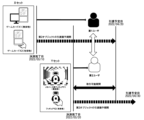
- FIG. 19 is a diagram for explaining the second embodiment.
- FIG. 19 shows an example in which an intangible game card X1 and a tangible real card X2 used in an application game are sold as a set.
- the first user can obtain a set of game card X1 and real card X2 by making a payment for the set of game card X1 and real card X2.
- the form of the object to be traded by the first user is as follows. - Only the first object is the subject of transaction. - A set of the first object and the second object is the object of the transaction. - Only the second object is the object of the transaction.
- the tradable period during which the first object and/or the second object can be traded is set as the period from the settlement of the payment of the price of the set until the scheduled delivery of the second object to the first user (hereinafter referred to as (described as a grace period for delivery).
- the delivery grace period from the first user's payment of the price for the set of game card X1 and real card X2 to the scheduled delivery date of the real card X2 to the first user is This is the transaction period during which transactions can be made with the second user using X1 and the real card X2 as transaction objects.
- FIG. 20 is a diagram showing an example of the overall configuration of an object trading system in the second embodiment.
- the object trading system includes a trading server 5 in addition to the first embodiment.
- the transaction server 5 is connectable to the network N and can communicate with the common user ID management server 1, object sales server 2, service providing server 3, and terminals 4a and 4b.
- the transaction server 5 is a server system configured to include one or more server devices, storage devices, and the like.
- the transaction server 5 does not need to be installed separately, and can be mixed with other servers in the cloud system. You can leave it there.
- the terminal 4a is a terminal operated by a first user
- the terminal 4b is a terminal operated by a second user.
- FIG. 21 is a block diagram showing an example of the functional configuration of the transaction server 5. As shown in FIG. As shown in FIG. 21, it includes a processing section 50, a communication section 51, and a storage section 52.
- the processing unit 50 comprehensively controls the operation of the common user ID management server 1 based on the programs and data stored in the storage unit 52.
- the functions of the processing unit 50 can be realized by, for example, a microprocessor such as a CPU or GPU, or an electronic component such as an ASIC or an IC memory.
- the processing section 50 includes a calculation section 500, an image generation section 501, and a communication control section 502 as main functional sections.
- the calculation unit 500 includes a transaction control unit 510.
- the transaction control unit 510 cooperates with the common user ID management server 1 to control object transactions between users. Specifically, the transaction control unit 510 performs processes such as registering objects to be traded by the user, managing a transaction period, applying for transactions from other users, and managing whether transactions are established or not.
- the transaction control unit 510 handles only the first object, only the second object, or a set of the first object and the second object, but it may handle only one of them. Furthermore, the transaction control unit 510 can handle both a transaction mode in which an object is exchanged with currency (coin) and a transaction mode in which objects are exchanged with each other.
- the transaction control unit 510 sets the transaction period from the date when the user applies for the transaction of the object to the scheduled delivery date of the second object.
- FIG. 22 is a diagram showing an example of the transaction management database 510.
- the transaction management database 510 is a database in which objects to be traded are registered.
- One record in the transaction management database 510 includes a field for the name of the object to be traded, a field for the object ID that identifies the object, a field for the transaction period of the object, available services for the object, and transaction conditions (currency). , exchange with other objects), and a field for the common user ID of the user who registered the transaction object.
- the transaction control unit 510 deletes records of objects for which transactions were completed during the transaction period.
- the transaction control unit 510 also refers to the transaction period field of the transaction management database 510 and deletes records of objects for which the transaction period has elapsed without a transaction being completed.
- the image generation unit 501 generates one screen in one frame time (for example, 1/60 seconds) based on the processing result of the calculation unit 500, and outputs an image signal of the generated screen.
- the functions of the image generation unit 101 include, for example, processors such as GPUs and digital signal processors (DSPs), programs such as video signal ICs and video codecs, IC memories for drawing frames such as frame buffers, and texture data development. This can be realized using IC memory, etc.
- the communication control unit 502 performs communication connection and data processing for data communication between the common user ID management server 1 and the terminal 4.
- the communication unit 51 connects to a communication line to realize communication.
- the functions of the communication unit 11 can be realized by, for example, a wireless communication device, a modem, a TA (terminal adapter), a wired communication cable jack, a control circuit, and the like.
- the storage unit 52 is realized by, for example, a RAM, a ROM, an IC memory such as a flash memory, a magnetic disk such as a hard disk, an optical disk such as a CD-ROM or a DVD, and stores system programs and function programs.
- a system program is a program for realizing the basic functions of a computer.
- the functional program is a program for causing the calculation unit 500 to function as the transaction control unit 510.
- the storage unit 12 stores a transaction management database 510.
- FIG. 23 is a sequence diagram of the operation of the second embodiment.
- the terminal 4a is the terminal of the first user, and the first user is the seller of the object (or the exchange source in the case of exchange).
- the terminal 4b is a terminal of a second user, and the second user is the buyer of the object (or the exchange destination in the case of exchange).
- the browser execution unit 410 of the terminal 4a sends a list of tradable owned objects to the transaction server 5, requesting a list of tradable objects among the objects owned by the first user.
- the tradable owned object list request includes the first user's common user ID and password.
- the common user ID and password of the first user are the common user ID "10001" and the password "25002".
- FIG. 24 is a flowchart of the transaction object registration process (Step 10) and the transactionable owned object list process (Step 11).
- the transaction control unit 510 of the transaction server 5 When the transaction control unit 510 of the transaction server 5 receives the tradable object list request (Step 700), it transfers the tradable owned object information including the common user ID and password included in the tradable owned object list request to the common user ID. The information is sent to the management server 1 (Step 701). In this example, tradable owned object information including the common user ID "10001" and the password "25002" is transmitted to the common user ID management server 1.
- the common user ID management unit 101 of the common user ID management server 1 When the common user ID management unit 101 of the common user ID management server 1 receives the tradable owned object information (Step 800), it uses the common user ID database 121 to store the common user ID and password included in the tradable owned object information. and authenticate (Step 801, Step 802).
- the objects to be authenticated are the common user ID "10001" and the password "25002", authentication can be performed by referring to the common user ID database 121 shown in FIG. 4.
- the common user ID management unit 101 acquires information on tradable objects from the player object management database 122 corresponding to the common user ID (Step 803).
- the tradable object is one for which the second object is in the delivery grace period. That is, the second object is an object before the scheduled delivery date. For example, if the date on which the tradable owned object information was received is March 15, 2022, when referring to the player object management database 122 of the common user ID "10001" in FIG. 4, the scheduled delivery date is March 15, 2022.
- the objects before the date are "'X series' character X" and character Y.
- the common user ID management unit 101 acquires the object name, object ID, usable service name, availability, scheduled delivery date, and delivery completion date for "X series character X" and character Y. Then, these pieces of information are used as usable owned object information. The common user ID management unit 101 transmits the usable owned object information to the transaction server 5 (Step 804).
- the transaction control unit 510 of the transaction server 5 receives the usable owned object information (Step 702).
- the transaction control unit 510 uses the available owned object information to generate a tradable owned object list screen corresponding to the common user ID, and sends it to the terminal 4a (Step 703).
- the transaction control unit 510 sets the period from the reception date of the available owned object information to the scheduled delivery date of the second object as a transaction period in which the transaction is possible.
- FIG. 25 is a diagram showing an example of a screen displayed on the terminal 4a. According to FIG. 25, as of March 15, 2022, a list of objects that can be traded by the first user is displayed.
- the first user selects an object to be traded from the tradable owned object list screen.
- "X Series Character X" is selected and the button on the transaction conditions screen is pressed.
- the browser execution unit 410 of the terminal 4a transmits a transaction conditions screen request.
- the transaction control unit 510 of the transaction server 5 When the transaction control unit 510 of the transaction server 5 receives the transaction conditions screen request (Step 704), it transmits the transaction conditions screen to the terminal 4a (Step 705).
- the browser execution unit 410 of the terminal 4 receives the transaction conditions screen and displays the transaction conditions screen. According to FIG. 25, it is possible to select the type of object to be traded (first object only, second object only, first object and second object) and enter transaction conditions (exchange with currency or object). It looks like this. In this example, the first user selects the first object and the second object (application game card X1 and real card It is assumed that the button has been pressed. The browser execution unit 410 of the terminal 4a transmits the transaction conditions to the transaction server 5 when the transaction condition registration button is pressed.
- the transaction control unit 510 of the transaction server 5 When the transaction control unit 510 of the transaction server 5 receives the transaction conditions (Step 706), it registers the transaction conditions in the transaction management database 510 (Step 707). In this example, as shown in the transaction management database 510 of FIG. 22, information regarding the object "'X series' character X" is registered. Thereby, the first user can register the object to be traded in the transaction server 5.
- the browser execution unit 410 of the terminal 4b transmits a transaction target object list request to the transaction server 5.
- FIG. 26 is a flowchart of transaction processing (Step 12).
- the transaction control unit 510 of the transaction server 5 receives a request for a list of objects to be traded (Step 900), it acquires information on objects that can currently be traded from the transaction management database 510, and generates a list of objects to be traded (Step 901). Then, the transaction control unit 510 transmits the transaction target object list screen to the terminal 4b.
- the browser execution unit 410 of the terminal 4b receives the transaction target object list screen and displays the transaction target object list screen.
- FIG. 27 is an example of a transaction screen displayed on the terminal 4b.
- the transaction target object list screen in FIG. 27 displays a list of two transaction target objects currently registered in the transaction management database 510.
- the second user selects an object for which he/she wishes to apply for a transaction from among the transaction objects displayed on the transaction object list screen, and presses a button on the transaction application screen.
- the browser execution unit 410 of the terminal 4b transmits a transaction application screen request including identification information for identifying the selected object to the transaction server 5.
- the second user has selected "X series" character A.
- the transaction control unit 510 of the transaction server 5 When the transaction control unit 510 of the transaction server 5 receives the transaction application screen request (Step 903), it transmits the transaction application screen of the selected object to the terminal 4b (Step 904).
- the terminal 4b receives the transaction application screen and displays the transaction application screen.
- the transaction application screen in FIG. 27 displays input fields for the second user's common user ID and password.
- the second user inputs the second user's common user ID and password, and presses the transaction application button.
- the terminal 4b transmits the transaction application to the transaction server 5.
- the transaction application includes the second user's common user ID and password.
- the common user ID and password of the second user are the common user ID "10002" and the password "avn51".
- the transaction control unit 510 of the transaction server 5 When the transaction control unit 510 of the transaction server 5 receives the transaction application (Step 905), it transmits a negotiation application screen regarding the object for which the transaction application has been made to the terminal 4a (Step 906).
- the browser execution unit 410 of the terminal 4a receives the negotiation application screen and displays the negotiation application screen.
- FIG. 28 is an example of a negotiation application screen displayed on the terminal 4a.
- the negotiation application screen in FIG. 28 displays the user name of the negotiation partner, object information to be traded, and buttons for acceptance and refusal.
- the first user decides whether to accept or reject the transaction regarding the transaction target object displayed on the negotiation application screen. To approve the transaction of the object to be traded, press the accept button. If you do not approve the transaction of the object to be traded, press the disapprove button.
- the browser execution unit 410 of the terminal 4a transmits information on transaction approval or transaction non-acceptance corresponding to the selected button to the transaction server 5.
- the transaction control unit 510 of the transaction server 5 When the transaction control unit 510 of the transaction server 5 receives the transaction approval information (Step 907), it transmits the transaction information to the common user ID management server 1 (Step 908).
- the transaction information includes the first user's common user ID and password, the second user's common user ID and password, the object ID to be traded, and exchange conditions.
- the common user ID "10001" and password "25002" of the first user, the common user ID "10002" and password “avn51" of the second user, and the object IDs "X101" and "X102" are exchanged. Includes the condition "150 coins”.
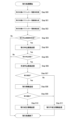
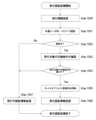
- FIG. 29 is a flowchart of the transaction authentication process (Step 13).
- the common user ID management unit 101 of the common user ID management server 1 receives the transaction information (Step 1000), it authenticates the common user ID and password (Step 1001).
- the common user ID and password to be authenticated are the common user ID "10001" and password "25002" of the first user, and the common user ID "10002” and password "avn51" of the second user.
- These common user IDs and passwords are authenticated with reference to the common user ID database 121.
- the second user's common user ID "10002” and password "avn51” can be authenticated.
- the common user ID management unit 101 confirms the exchange conditions for the transaction object (Step 1003).
- the exchange condition for the transaction is a payment of "150 coins" from the second user to the first user. Therefore, the common user ID management unit 101 checks whether the balance of the number of coins owned by the second user with the common user ID "10002" in the common user ID database 121 is "150 coins" or more.
- the common user ID management unit 101 updates the player object management database 122 (Step 1005).
- FIG. 30 is a diagram showing an example of the common user ID management table 120 after the transaction.
- the common user ID management unit 101 subtracts the exchange condition "150 coins” from the coins "500 coins” owned by the second user (common user ID "10002") in the common user ID database 121, and Update the coins you own to "350 coins”. Further, the common user ID management unit 101 controls the service use of the application game card X1 of the object "X series character X" in the player object management database 122 of the first user (common user ID "10001"). "Not possible” (impossible) and delete the scheduled delivery date of real card X2.
- the common user ID management unit 101 stores records of the application game card X1 and the real card X2 of the object "X series character X" in the player object management database 122 of the second user (common user ID "10002"). is added, the use of the service for application game card X1 is set as “allowed”, and "March 20, 2022" is written as the scheduled delivery date for real card X2. As a result, a transaction for the object "X series character X" is established between the first user and the second user.
- the second user can use the application game card X1, which is the first object, in the game "X series”. Further, the object delivery procedure unit 213 executes a delivery procedure for the second object, the real card X2, to the second user on "March 20, 2022.”
- the common user ID management unit 101 updates the player object management database 122, and when the transaction is completed, transmits the transaction authentication information to the transaction server 5 (Step 1006).
- Step 1002 if the common user ID and password cannot be authenticated (Step 1002), or if the exchange conditions for the transaction target are not satisfied (Step 1004), the common user ID management unit 101 sends the transaction non-authentication information to the transaction server. 5 (Step 1007).
- the transaction control unit 510 of the transaction server 5 Upon receiving the transaction authentication information (Step 909), the transaction control unit 510 of the transaction server 5 transmits transaction completion information to the terminals 4a and 4b (Step 910). On the other hand, upon receiving the transaction failure information (Step 909), the transaction control unit 510 of the transaction server 5 transmits transaction failure information to the terminals 4a and 4b (Step 910).
- the first user can exchange the acquired object for currency or other objects.
- the second user can acquire the object from the first user, can use the acquired first object for services, and can also own the second object.
- the second embodiment prevents the asset value of the object from decreasing by setting the tradable period of the object within the period from the settlement of the payment for the object to the scheduled delivery date of the second object. You can trade without. Further, since the transaction is performed before the second object is delivered to the user, there is no risk of default in that the second object is not delivered by the trading partner after the transaction is completed.
- FIG. 31 is a diagram for explaining a modification of the second embodiment.
- the first user purchases X set of the first object's game card X1 and the second object's game card X2 on March 10, 2022 (payment completion date), and the second object The scheduled delivery date of game card X2 is April 20, 2022.
- the second user purchases Y set of the first object figure Y1 and the second object figure Y2 on March 20, 2022 (payment completion date), and the scheduled delivery date of the second object figure Y2 is is April 30, 2022.
- the transaction possible period is March 2022, which is the second user's payment completion date.
- the period is from April 20, 2022 to April 20, 2022, which is the scheduled delivery date of the second object game card X2.
- the seller who sells the set must set the scheduled delivery date of each set in advance, such as, for example, what month and day is the schedule for simultaneous delivery of product A. It is thought that there are many cases where this is the case. Therefore, when the user's transaction condition is an exchange of objects including the second object, the transaction control unit 510 of the transaction server 5 acquires the scheduled delivery date of each second object to be exchanged from the sales object data 220. and determine whether a trading period can be set. For example, if the first user wants to trade the acquired X set and exchange it with the Y set, if the date on which the first user registers the transaction request is before the scheduled delivery date of the second object of the Y set. , the period from the date when the first user registers a transaction request to the scheduled delivery date of the second object of the Y set is set as a transaction period during which transactions can be made.
- the exchange transaction of objects including the second tangible object can be performed without reducing the value of the second tangible object, and the second object can be exchanged for both users.
- Accidents such as non-delivery can be prevented and transactions can be carried out safely.
- ⁇ Modification 2 of the second embodiment> When a transaction is completed and the first object is transferred to another user, the original user may be using the first object for a game service or the like until the transfer.
- the first object is used in a game or the like, character information (for example, level) associated with the first object in the game increases. Therefore, at the time of transfer, the character information (for example, level) associated with the first object in the game may have increased from its initial value, and the value of the first object in the game may have increased.
- the value acquired by the first object up to the time of transfer may be inherited by the other user. good.
- information about the first object held by the service providing server 3, for example, information recorded in the object database 320 is applied to the first object at the transfer destination.
- Value information may be attached to an object.
- it is the rarity of the game card.
- the higher the rarity the higher the value of the game card. Therefore, the user may wish to exchange the acquired object with an object that is equivalent (same or equivalent) in value to the acquired object. It is also necessary to prevent disadvantages to users caused by incorrect selection of exchange targets due to mistake. Therefore, in the third modification of the second embodiment, in a transaction for exchanging objects, only objects whose value information is equivalent can be exchanged. That is, an example of equivalent exchange of objects will be explained.
- the transaction control unit 510 of the transaction server 5 Upon receiving the transaction conditions screen request, the transaction control unit 510 of the transaction server 5 acquires value information of the object to be traded (object to be traded). The value information of each object is registered in advance in the sales object database 220 of the object sales server 2. Then, the transaction control unit 510 of the transaction server 5 acquires value information of the object to be traded from the sales object database 220. Further, the transaction control unit 510 acquires, from the sales object database 220, the name and object ID of an object having value information equivalent (same or equivalent) to the value information of the acquired object to be traded. Then, the transaction control unit 510 transmits the transaction conditions screen of the transaction target object including the acquired object name and object ID to the first user's terminal 4a. Note that the transaction server 5 may have a database similar to the sales object database 220.
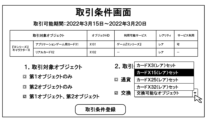
- FIG. 32 is a diagram showing an example of a transaction conditions screen in Modification 3 of the second embodiment.
- a combo box is displayed for selecting exchange with an object as a transaction condition.
- a list of objects with the same value as the object to be traded is displayed.
- the rarity of the trading object "X Series Character X” is "rare”
- the objects that can be exchanged with the set of that object are card (rare) set and card X32 (rare) set.
- the rarity is the same as the transaction condition, it is not necessarily limited to the same rarity, and the condition can be set to a range equivalent to the rarity of the object to be traded, for example, to the upper and lower rarities. You can spread it out.
- an exchangeable object may be selected based on the respective value information.
- value information is set for a pair of the first object and the second object, exchangeable objects may be selected based on the value information of the pair.
- the first user can select the object to be exchanged by selecting the object to be exchanged from the list in the combo box.
- the browser execution unit 410 of the terminal 4a transmits the transaction conditions including the object ID desired for exchange to the transaction server 5.
- the transaction control unit 510 of the transaction server 5 Upon receiving the transaction conditions, the transaction control unit 510 of the transaction server 5 registers the transaction conditions in the transaction management database 510.
- the transaction conditions registered in the transaction management database 510 are equivalent exchanges with objects that are equivalent (same or equivalent) to the value of the object to be traded, and objects that are significantly different in value from the object to be traded will not be subject to exchange. do not have.
- a payment means that settles the payment for a first object that is an intangible object and a second object that is a tangible object that can be used in a predetermined service; at least one of the first object and the second object within a delivery grace period during which the delivery of the second object to the first user is postponed on the condition that the payment of the price is completed; transaction control means for enabling and controlling transactions between the first user and the second user;
- the first object and the second object are objects related to the same character or mutually related characters, Object trading system described in Appendix 2.
- the first object and the second object include the same pattern information; Object trading system described in Appendix 3.
- the transaction control means transfers the first object to the second user on the condition that a transaction for the first object is completed between the first user and the second user within the delivery grace period.
- Object trading system according to any one of appendices 1 to 4.
- the transaction control means is configured to transfer the first object to the first object on the condition that a transaction for the first object and the second object is completed between the first user and the second user within the delivery grace period. control to be able to provide the second object to the second user, and control to be able to deliver the second object to the second user; Object trading system according to any one of appendices 1 to 4.
- the transaction control means transfers the second object to the second user on the condition that a transaction for the second object is completed between the first user and the second user within the delivery grace period. to control delivery to the Object trading system according to any one of appendices 1 to 4.
- the transaction control means enables and controls a transaction between the first user and the second user to exchange a first object of the first user and a first object of the second user.
- the object trading system according to any one of Supplementary Notes 1 to 7.
- the transaction control means is configured to control transactions between the first user and the second user, such as a pair of a first object and a second object of the first user and a pair of a first object and a second object of the second user. control, allowing transactions to be exchanged with the The object trading system according to any one of Supplementary Notes 1 to 7.
- the transaction control means may perform the transaction control means on the condition that the value information of the first object or the second object of the first user is equivalent to the value information of the first object or the second object of the first user. Control enables a transaction between a first user and the second user to exchange a first object or a second object of the first user and a first object or a second object of the second user.
- Object trading system according to appendix 8 or appendix 9.
- the transaction control means is configured to control transactions between the first user and the second user, such as a pair of a first object and a second object of the first user and a pair of a first object and a second object of the second user. and the exchanging transaction period of the pair of the first object and the second object of the first user and the settlement date of the payment of the price of the pair of the first object and the second object of the second user. The earlier of the scheduled delivery date of the second object to the first user and the scheduled delivery date of the second object to the second user from the later of the settlement date of the payment of the price. Set the period until the scheduled date, Object trading system according to appendix 9 or appendix 10.
- the transaction control means controls the transaction between the first user and the second user so that the transaction can be conducted using a currency that can be used for payment of the price.
- Object trading system according to any one of appendices 1 to 8.
- the transaction control means includes list presentation means capable of presenting a list of tradeable objects of the first user to the second user.
- Object trading system according to any one of appendices 1 to 12.
- the delivery of the second object to the first user is a delivery procedure of the second object to the first user
- the delivery grace period is the period from the completion of the payment of the price to the completion of the delivery procedure
- the service providing means controls so that a service using the first object can be provided after the delivery of the second object is completed.
- Object trading system according to appendix 16.
- list presenting means capable of presenting a list of the first objects associated with the user identifier of the first user;
- the object trading system according to any one of attachments 15 to 17.
- the list includes status information of delivery procedures for the second object, Object trading system according to appendix 18.
- the delivery grace period starts after the first object is provided by the providing means, Object trading system according to appendix 20.
- a payment means that can be used in a predetermined service and that settles the payment for a pair of a first object that is an intangible object and a second object that is a tangible object; During a predetermined tradable period, between the first user who has settled the payment of the price of the group and the second user who has settled the payment of the price of the group, the group of the first user and the second user have settled the payment of the price of the group.
- transaction control means for enabling and controlling a transaction for exchanging with a pair of two users; Equipped with The transaction control means sets the predetermined tradable period to the settlement date of the payment for the pair of the first object and the second object of the first user and the first object and the second object of the second user. from the later of the settlement date of the payment of the set price, the scheduled delivery date of the second object to the first user, and the scheduled delivery date of the second object to the second user. Set the period up to the earliest scheduled delivery date of Object trading system.
- a payment means that settles the payment for a first object that is an intangible object and a second object that is a tangible object that can be used in a predetermined service; at least one of the first object and the second object within a delivery grace period during which the delivery of the second object to the first user is postponed on the condition that the payment of the price is completed; transaction control means for enabling and controlling transactions between the first user and the second user;
- An information processing device comprising:
- a payment means that settles the payment for a first object that is an intangible object and a second object that is a tangible object that can be used in a predetermined service; at least one of the first object and the second object within a delivery grace period during which the delivery of the second object to the first user is postponed on the condition that the payment of the price is completed; transaction control means for controlling transactions between the first user and the second user; A program that makes a computer function as
- the computer is Settle payment for a first object that is an intangible object and a second object that is a tangible object that can be used in a predetermined service; at least one of the first object and the second object within a delivery grace period during which the delivery of the second object to the first user is postponed on the condition that the payment of the price is completed; enabling control of transactions between the first user and the second user; Object trading method.
Landscapes
- Business, Economics & Management (AREA)
- Accounting & Taxation (AREA)
- General Physics & Mathematics (AREA)
- Finance (AREA)
- Theoretical Computer Science (AREA)
- Engineering & Computer Science (AREA)
- Strategic Management (AREA)
- Physics & Mathematics (AREA)
- General Business, Economics & Management (AREA)
- Economics (AREA)
- Marketing (AREA)
- Tourism & Hospitality (AREA)
- Development Economics (AREA)
- Health & Medical Sciences (AREA)
- General Health & Medical Sciences (AREA)
- Human Resources & Organizations (AREA)
- Primary Health Care (AREA)
- Management, Administration, Business Operations System, And Electronic Commerce (AREA)
Applications Claiming Priority (2)
| Application Number | Priority Date | Filing Date | Title |
|---|---|---|---|
| JP2022-039247 | 2022-03-14 | ||
| JP2022039247A JP7383744B2 (ja) | 2022-03-14 | 2022-03-14 | オブジェクト取引システム、情報処理装置、プログラム及びオブジェクト取引方法 |
Publications (1)
| Publication Number | Publication Date |
|---|---|
| WO2023176121A1 true WO2023176121A1 (ja) | 2023-09-21 |
Family
ID=88022727
Family Applications (1)
| Application Number | Title | Priority Date | Filing Date |
|---|---|---|---|
| PCT/JP2023/000848 Ceased WO2023176121A1 (ja) | 2022-03-14 | 2023-01-13 | オブジェクト取引システム、情報処理装置、プログラム及びオブジェクト取引方法 |
Country Status (2)
| Country | Link |
|---|---|
| JP (2) | JP7383744B2 (enExample) |
| WO (1) | WO2023176121A1 (enExample) |
Cited By (1)
| Publication number | Priority date | Publication date | Assignee | Title |
|---|---|---|---|---|
| US20250013997A1 (en) * | 2023-07-03 | 2025-01-09 | Visa International Service Association | Central payment system for periodic merchant settlement |
Citations (3)
| Publication number | Priority date | Publication date | Assignee | Title |
|---|---|---|---|---|
| JP2002169980A (ja) * | 2000-12-01 | 2002-06-14 | Bandai Co Ltd | 販売提供システム、販売物、端末装置およびサーバ装置 |
| JP2005321675A (ja) * | 2004-05-11 | 2005-11-17 | Taisho:Kk | 仮想キャラクターゲームを用いた広告システム |
| JP2020526372A (ja) * | 2017-07-22 | 2020-08-31 | ナイアンティック, インコーポレイテッドNiantic,Inc. | 並行現実ゲーム内の活動を用いたプレイヤーの現実世界位置の検証 |
-
2022
- 2022-03-14 JP JP2022039247A patent/JP7383744B2/ja active Active
-
2023
- 2023-01-13 WO PCT/JP2023/000848 patent/WO2023176121A1/ja not_active Ceased
- 2023-11-07 JP JP2023190428A patent/JP2024010190A/ja active Pending
Patent Citations (3)
| Publication number | Priority date | Publication date | Assignee | Title |
|---|---|---|---|---|
| JP2002169980A (ja) * | 2000-12-01 | 2002-06-14 | Bandai Co Ltd | 販売提供システム、販売物、端末装置およびサーバ装置 |
| JP2005321675A (ja) * | 2004-05-11 | 2005-11-17 | Taisho:Kk | 仮想キャラクターゲームを用いた広告システム |
| JP2020526372A (ja) * | 2017-07-22 | 2020-08-31 | ナイアンティック, インコーポレイテッドNiantic,Inc. | 並行現実ゲーム内の活動を用いたプレイヤーの現実世界位置の検証 |
Non-Patent Citations (4)
| Title |
|---|
| ANONYMOUS: "How do I cancel an order and get a refund? Explaining how to deal with each payment method and status! - BASE U - Learn the know-how for opening, managing, and attracting customers to an online shop", 6 September 2020 (2020-09-06), XP093090193, Retrieved from the Internet <URL:https://baseu.jp/6553> * |
| ANONYMOUS: "How to use low-ticket e-tickets and apps. Thorough explanation of SMS authentication, cancellation, distribution, transfer, model change, etc. | Go on a selfish trip in the world", 11 April 2021 (2021-04-11), XP093090184, Retrieved from the Internet <URL:https://uni-voyage.com/law-ticket-apli/> * |
| ANONYMOUS: "KPP CLUB", 26 October 2021 (2021-10-26), XP093090164, Retrieved from the Internet <URL:https://kyary.net/diary/339700> * |
| ANONYMOUS: "Mapple Link, a guidebook app that allows you to share offline maps and multiple people, is extremely convenient for overseas travel! - IT girl Chi's web log", 27 November 2016 (2016-11-27), XP093090187, Retrieved from the Internet <URL:https://i-chihiro93115.hatenablog.com/entry/2016/11/27/160359> * |
Cited By (1)
| Publication number | Priority date | Publication date | Assignee | Title |
|---|---|---|---|---|
| US20250013997A1 (en) * | 2023-07-03 | 2025-01-09 | Visa International Service Association | Central payment system for periodic merchant settlement |
Also Published As
| Publication number | Publication date |
|---|---|
| JP2024010190A (ja) | 2024-01-23 |
| JP2023133964A (ja) | 2023-09-27 |
| JP7383744B2 (ja) | 2023-11-20 |
Similar Documents
| Publication | Publication Date | Title |
|---|---|---|
| JP7033352B1 (ja) | アート作品取引システム、アート作品取引方法、およびアート作品取引管理装置 | |
| CN101681483B (zh) | 包括非金融选项的在线权限的安全转移 | |
| CN101218600B (zh) | 用于安全转移在线特权的系统 | |
| US8799168B2 (en) | Secure transfer of online privileges including non-financial options | |
| US20090061993A1 (en) | Machine for providing and controlling game | |
| JP2023049989A (ja) | 情報管理システムおよび情報管理方法 | |
| JP7383744B2 (ja) | オブジェクト取引システム、情報処理装置、プログラム及びオブジェクト取引方法 | |
| JP2023131097A (ja) | 情報処理装置、情報処理方法、およびプログラム | |
| JP7441254B2 (ja) | オブジェクト提供システム、情報処理装置、プログラム及びオブジェクト提供方法 | |
| JP2024055874A (ja) | アイテムの取引を管理するためのシステム、方法、及びプログラム | |
| KR20160062291A (ko) | 게임 플랫폼 서버 및 이를 이용한 화폐 거래 서비스 방법 | |
| JP2025033216A (ja) | 情報処理装置、情報処理方法、プログラム、およびシステム | |
| JP2020107151A (ja) | 情報処理方法、プログラム、及び情報処理装置 | |
| JP7096936B1 (ja) | 情報処理方法 | |
| JP2022055940A (ja) | 支払システム、情報提供方法、ならびに、プログラム | |
| JP2021184185A (ja) | 情報処理方法、情報処理装置、プログラム、及び情報処理端末 | |
| JP2021068266A (ja) | プログラム及び情報処理装置 | |
| JP7408006B1 (ja) | 情報管理装置、アプリケーションプログラム、情報管理方法、およびプログラム | |
| JP7747687B2 (ja) | プログラム、端末、及び管理装置 | |
| JP2020057130A (ja) | 集客システム及び集客プログラム | |
| WO2023181596A1 (ja) | オブジェクト交換システム、情報処理装置、及びプログラム | |
| JP2024082198A (ja) | 取引システム、取引方法及び取引プログラム | |
| JP2025170073A (ja) | プログラム、自動販売機システム、方法、及び自動販売機 | |
| JP2023087753A (ja) | デジタルコンテンツ提供システム | |
| JP2001256363A (ja) | 募集システム、募集方法 |
Legal Events
| Date | Code | Title | Description |
|---|---|---|---|
| 121 | Ep: the epo has been informed by wipo that ep was designated in this application |
Ref document number: 23770084 Country of ref document: EP Kind code of ref document: A1 |
|
| NENP | Non-entry into the national phase |
Ref country code: DE |
|
| 122 | Ep: pct application non-entry in european phase |
Ref document number: 23770084 Country of ref document: EP Kind code of ref document: A1 |