WO2023148811A1 - 空気調和システムおよび空気調和装置 - Google Patents
空気調和システムおよび空気調和装置 Download PDFInfo
- Publication number
- WO2023148811A1 WO2023148811A1 PCT/JP2022/003804 JP2022003804W WO2023148811A1 WO 2023148811 A1 WO2023148811 A1 WO 2023148811A1 JP 2022003804 W JP2022003804 W JP 2022003804W WO 2023148811 A1 WO2023148811 A1 WO 2023148811A1
- Authority
- WO
- WIPO (PCT)
- Prior art keywords
- software
- air conditioner
- memory
- air conditioning
- program
- Prior art date
- Legal status (The legal status is an assumption and is not a legal conclusion. Google has not performed a legal analysis and makes no representation as to the accuracy of the status listed.)
- Ceased
Links
Images








Classifications
-
- F—MECHANICAL ENGINEERING; LIGHTING; HEATING; WEAPONS; BLASTING
- F24—HEATING; RANGES; VENTILATING
- F24F—AIR-CONDITIONING; AIR-HUMIDIFICATION; VENTILATION; USE OF AIR CURRENTS FOR SCREENING
- F24F11/00—Control or safety arrangements
- F24F11/50—Control or safety arrangements characterised by user interfaces or communication
-
- G—PHYSICS
- G06—COMPUTING OR CALCULATING; COUNTING
- G06F—ELECTRIC DIGITAL DATA PROCESSING
- G06F8/00—Arrangements for software engineering
- G06F8/60—Software deployment
- G06F8/65—Updates
- G06F8/656—Updates while running
-
- G—PHYSICS
- G06—COMPUTING OR CALCULATING; COUNTING
- G06F—ELECTRIC DIGITAL DATA PROCESSING
- G06F8/00—Arrangements for software engineering
- G06F8/60—Software deployment
- G06F8/65—Updates
- G06F8/658—Incremental updates; Differential updates
Definitions
- the present disclosure relates to air conditioning systems and air conditioners.
- an air conditioning system that includes a server that stores update software and an air conditioner that updates control software with the update software received from the server.
- Patent Document 1 International Publication No. 2017/199331 discloses a server storing update software for an air conditioner, a wireless adapter that receives the update software from the server, and a wireless adapter that receives the update software.
- An air conditioning system is described that includes an air conditioner that updates software stored in memory with updating software.
- a remote device such as a server collectively distributes update software for updating the software of the air conditioner to the air conditioner, and the air conditioner receives the received update software and distributes it to the user in use. Separately from the software, it was temporarily stored in memory.
- the present disclosure aims to reduce the memory capacity required for the air conditioner and shorten the update time when updating the software of the air conditioner.
- An air conditioning system includes a first air conditioner and a server that distributes air conditioning software to the first air conditioner.
- the first air conditioner has a first processor that executes air conditioning software and a first memory that stores the air conditioning software. and basic software for managing jobs of a plurality of application software, and the server stores first update data necessary for the first air conditioner to update one of the plurality of application software to the first air conditioner, and the first processor updates the corresponding application software in the first memory using the basic software based on the first update data.
- An air conditioner includes a first processor that executes air conditioning software and a first memory that stores air conditioning software.
- the air conditioning software includes a plurality of application software for realizing a plurality of functions provided by the air conditioner, and basic software for managing jobs of the plurality of application software.
- the first processor is a server that distributes the air conditioning software. communicable, the first processor, when receiving from the server first update data required to update one of the plurality of application software, updates the basic software based on the first update data; is used to update the corresponding application software in the first memory.
- FIG. 1 is a diagram showing the overall configuration of an air conditioning system according to Embodiment 1;
- FIG. FIG. 2 is a diagram showing part of data contained in a database constructed in a storage device;
- FIG. It is a figure which shows the outline
- 4 is a flowchart showing an overview of the flow of updating air conditioning software;
- FIG. 10 is a flow chart showing the flow of processing for searching for properties that have installed air conditioners in which updated air conditioning software is stored when air conditioning software is updated on the cloud.
- FIG. 10 is a flow chart showing a flow of processing for determining whether or not distribution of target air-conditioning software is permitted in an air conditioner when air-conditioning software is updated on the cloud.
- FIG. 4 is a flow chart showing the flow of processing for updating the application program of the air conditioner with the application program updated on the cloud.
- 4 is a flow chart showing the flow of processing for updating the basic program of the air conditioner with the updated basic program on the cloud.
- 4 is a flow chart showing the flow of processing for updating the basic program of the air conditioner with the updated basic program on the cloud.
- FIG. 10 is a block diagram showing a specific example of processing for changing an entry point in the flowcharts of FIGS. 8 and 9; FIG. It is a figure which shows the property data registered into the database.
- FIG. 4 is a diagram showing a specific example of a procedure for an air conditioner to calculate priorities.
- FIG. 4 is a block diagram for explaining a procedure for a server to create an estimation model using a learning device; FIG.
- FIG. 10 is a block diagram for explaining a procedure for estimating the priority of application program usage by the server using a learned estimation model;
- FIG. 10 is a flow chart showing a procedure for registering first data and a property ID of a new property in a database when an air conditioner is installed in the new property;
- FIG. 10 is a flowchart for explaining a procedure for creating a learned estimation model;
- FIG. 4 is a flowchart for explaining a procedure for determining priority of application software recommended for an air conditioner; It is a figure showing the whole air-conditioning system composition as a modification.
- FIG. 7 is a flowchart for explaining a modification related to FIG. 6;
- FIG. 10 is a block diagram for explaining a procedure for estimating the priority of application program usage by the server using a learned estimation model;
- FIG. 10 is a flow chart showing a procedure for registering first data and a property ID of a new property in a database when an air conditioner is installed in the new property;
- FIG. 10 is
- FIG. 1 is a diagram showing the overall configuration of an air conditioning system 1 according to Embodiment 1.
- the air conditioning system 1 includes a remote control system 3 and air conditioners 200A, 200B, .
- Each of the air conditioners 200A, 200B, . . . has a similar hardware configuration.
- the hardware configuration of the air conditioners 200A, 200B, . . . may not be completely the same.
- the number of indoor units or outdoor units included in the air conditioner 200A may differ from the number of indoor units or outdoor units included in the air conditioner 200B.
- FIG. 1 shows two properties 300A and 300B as representative examples. In the following, the properties 300A, 300B, .
- the number of properties 300 is not limited to two.
- the remote control system 3 may be connected to air conditioners 200 installed in each of a large number of properties 300 .
- the property 300 means the place where the air conditioner 200 is installed.
- the remote control system 3 includes a terminal device 10, terminal devices 20A, 20B, . . . , a cloud 30, and a wide area network 60.
- Cloud 30 is composed of server 100 and storage device 50 .
- the server 100 performs various functions of the remote control system 3 using the database constructed in the storage device 50 .
- the cloud 30 is communicably connected to the terminal device 10, the terminal devices 20A, 20B, . . . , and the air conditioners 200A, 200B, .
- the terminal device 10 is operated by, for example, a developer of the air conditioner 200 .
- the terminal devices 20A, 20B, . . . are operated by respective users of the air conditioners 200A, 200B, .
- the terminal device 20A is operated by the user of the air conditioner 200A installed in the property 300A.
- the terminal device 20B is operated by the user of the air conditioner 200B installed in the property 300B.
- 20 A of terminal devices are installed in property 300A, for example.
- the terminal device 20B is installed at the property 300B, for example.
- the terminal device 20A may be installed at a location other than the property 300A.
- the terminal device 20 is configured by, for example, a personal computer.
- the terminal device 20 may be configured by a mobile terminal such as a smart phone.
- the air conditioner 200 includes a management device 201, an indoor unit 202, and an outdoor unit 203.
- the management device 201 includes a processor 211 functioning as a control unit and a memory 212 storing various programs.
- Management device 201 controls air conditioner 200 based on air conditioning software installed in air conditioner 200 .
- Each of the indoor unit 202 and the outdoor unit 203 includes an air conditioning component such as a heat exchanger.
- the management device 201 may be included.
- FIG. 2 is a diagram showing part of the data contained in the database 51 constructed in the storage device 50. As shown in FIG. As shown in FIG. 2, at least master data 52 and model identification data 53 are registered in the database 51 .
- the master data 52 includes a software group configured for each model lineup of the air conditioner 200 and version information of each software included in the software group.
- the model specifying data includes the model of the air conditioner 200 for each property 300A, 300B, and the type and version information of the software installed in each of the air conditioners 200A, 200B, and so on.
- the developer of the air conditioner 200 upgrades any of the plurality of air conditioning software
- the upgraded air conditioning software is uploaded to the cloud 30 .
- the person in charge of the developer can upload updated air conditioning software to the cloud 30 by operating the terminal device 10 .
- the upgraded air conditioning software is newly registered in the master data 52 of the database 51 .
- the server 100 can identify the model of the air conditioner 200, the type of installed software, and the software version for each property 300 by referring to the database 51 constructed in the storage device 50.
- the server 100 transmits data for updating the air conditioning software to the air conditioners 200 of the properties 300 in which the corresponding air conditioning software is installed.
- the target air conditioner 200 can update the air conditioning software to the latest state.
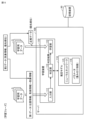
- FIG. 3 is a diagram showing an overview of the software configuration and hardware configuration of the air conditioner 200.
- the air conditioner 200 includes air conditioning software 210 as a software configuration and a hardware device 240 as a hardware configuration.
- Air-conditioning software 210 is stored, for example, in memory 212 of management device 201 .
- the hardware device 240 includes a temperature sensor 241 that detects the temperature of the refrigerant flowing through the refrigerant circuit, a pressure sensor 242 that detects the pressure of the refrigerant flowing through the refrigerant circuit, and external temperature and humidity.
- a temperature/humidity sensor 243 that controls the temperature and humidity, a compressor 244 that discharges high-temperature and high-pressure refrigerant to the refrigerant circuit, a fan 245 that convects air near the heat exchanger, and a valve 246 such as an expansion valve that adjusts the pressure of the refrigerant.
- a temperature sensor 241 that detects the temperature of the refrigerant flowing through the refrigerant circuit
- a pressure sensor 242 that detects the pressure of the refrigerant flowing through the refrigerant circuit
- external temperature and humidity external temperature and humidity.
- a temperature/humidity sensor 243 that controls the temperature and humidity
- a compressor 244 that discharges high-temperature and high-pressure ref
- the management device 201 controls the air conditioner 200 according to the air conditioning software 210. Detection values of the temperature sensor 241, the pressure sensor 242, and the temperature/humidity sensor 243 are input to the management device 201 (see FIG. 1). Management device 201 controls the operating frequency of compressor 244 and the degree of opening of valve 246 in consideration of the values detected by temperature sensor 241 and pressure sensor 242 .
- the basic software section 220 includes a job control section 222 , a data management section 223 , a communication section 224 , a device driver 225 and a job scheduler 226 .
- the job schedule 226 describes a job execution procedure.
- the device driver 225 controls the job schedule 226 and the hardware device 240.
- the communication unit 224 performs data communication with the wide area network 60 to which the air conditioner 200 is connected.
- the data management section 223 manages the input/output information of the device driver 225 and exchanges data with the program of the application software section 230 .
- the data management unit 223 manages commands from the job control unit 222 and also manages the states of various programs.
- the job schedule 226 describes program priorities, program execution conditions, and program stop conditions.
- the job control unit 222 outputs execution instructions and stop instructions for various programs based on the priority of those programs, the conditions for executing the programs, and the conditions for stopping the programs.
- the various programs include various programs of the basic software section 220 and various programs of the application software section 230 .
- the job control unit 222 monitors commands received from the communication unit 224 and the status of various programs held by the data management unit 223 in order to determine job schedule conditions.
- the application program 231 of the application software section 230 implements various functions of the air conditioner 200 .
- Each of the plurality of application programs 231 operates independently without being aware of competition among the application programs 231 .
- the application program 231 is a highly flexible program designed by the designer individually declaring the functions and purposes of the air conditioner 200 on the program and defining the input, arithmetic algorithm, and output on the program. be.
- the application software section 230 is composed of a group of programs that describe control algorithms that implement the functions of the air conditioner 200 .
- the program group is composed of individual program units such as an operation control program 231A, a device protection control program 231B, a defrosting control program 231C, and the like, for example. Execution of each program creates program control states of start, run, and stop.
- the operation control program 231A inputs the data of the communication unit 224, the detection value of the temperature sensor 241, and the detection value of the pressure sensor 242, performs calculation, and obtains the control values of the compressor 244, the fan 245, and the valve 246. Output.
- the device protection control program 231B and the defrost control program 231C also input the detection value of the temperature sensor 241 and the detection value of the pressure sensor 242, perform calculations, and operate the compressor 244, the fan 245, and the valve 246. Output the control value.
- the programs constituting the job control unit 222, the data management unit 223, the communication unit 224, the device driver 225, and the job schedule 226 of the basic software unit 220 are referred to as "basic programs (basic software). 221”.
- Various application programs 231 may be processed in parallel according to instructions from the job control unit 222 . Various application programs 231 may share the same data at the same time. Data that needs to be shared is managed by the data management unit 223 .
- the operation control program 231A determines the value to be output to the compressor 244, the fan 245, and the valve 246 based on the detection value of the temperature sensor 241, the detection value of the pressure sensor 242, and the indoor set temperature received by the communication unit 224. Calculate. By executing the operation control program 231A in this manner, operation in the normal operation mode (cooling operation or heating operation) is realized.
- the application software section 230 needs to execute the device protection control program 231B in order to switch the operation mode from the normal operation mode to the abnormal mode.
- the information of the temperature sensor 241 and the pressure sensor 242 may be shared between the operation control program 231A and the device protection control program 231B via the data management unit 223.
- Output values to compressor 244 , fan 245 , and valve 246 may also be shared by multiple application programs 231 in application software section 230 via data management section 223 . These output values are notified to the device driver 225 according to the priority described in the job schedule 226.
- the basic software section 220 is composed of basic programs 221 spanning various application programs 231 in the application software section 230 .
- the application programs 231 belonging to the application software section 230 each independently output calculation results. Therefore, when each application program 231 simultaneously outputs the calculation results to the actuators such as the compressor 244, the fan 245, and the valve 246, competition occurs.
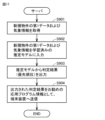
- FIG. 4 is a flowchart outlining the flow of updating the air conditioning software 210 . This flowchart is executed by the air conditioning system 1 .
- the air-conditioning software 210 is updated in three steps: generation of update, determination of whether update is possible, and update processing, as shown in FIG.
- the object to be updated is the basic program 221 constituting the basic software section 220 or the application program 231 in the application software section 230 . Data required for updating is distributed from the server 100 of the cloud 30 to the air conditioner 200 .
- the updated application program 231 is delivered to the air conditioner 200 .
- difference data required for updating may be distributed to the air conditioner 200 instead of the application program 231 itself. Therefore, the update data distributed from the server 100 to the air conditioner 200 may be the program (basic program or application program) itself, and data including the contents necessary for updating the target program (for example, difference data).
- the basic software section 220 updates only the application program 231 required for updating, rather than updating the entire application software section 230. Therefore, the minimum update unit is one application program 231 .
- the air conditioner 200 updates the basic program 221 of the basic software section 220 .
- Step S100 is determined by the server 100 .
- Server 100 determines that updating of air-conditioning software 210 is necessary when any update program constituting air-conditioning software 210 is registered in storage device 50 . More specifically, server 100 determines that updating of air-conditioning software 210 is necessary when any update program constituting air-conditioning software 210 is registered in master data 52 of database 51 .
- step S100 If it is determined in step S100 that updating is unnecessary, the process based on this flowchart ends.
- step S100 it is determined whether or not the air conditioning software 210 can be updated in the air conditioner 200 (step S200).
- step S200 if the remaining capacity of the memory 212 of the air conditioner 200 is less than the capacity required for updating the air conditioning software 210, it is determined in step S200 that the air conditioning software 210 cannot be updated. This determination is performed in air conditioner 200 or server 100, for example.
- the air conditioner 200 can determine step S200.
- the server 100 can determine step S200.
- step S200 If it is determined in step S200 that the update is not possible, the processing based on this flowchart ends. Note that if the remaining capacity of the memory 212 of the air conditioner 200 is less than the capacity required for updating the air conditioning software 210, the server 100 notifies the terminal device 20 corresponding to the air conditioner 200 of the lack of capacity. good.
- the data in the memory 212 of the air conditioner 200 may be arranged by operating the terminal device 20 by the user.
- the air conditioner 200 When the remaining capacity of the memory 212 of the air conditioner 200 is less than the capacity required for updating the air conditioning software 210, the air conditioner 200 automatically organizes the data in the memory 212 and then downloads the update program from the server 100. It may operate to receive.
- air conditioner 200 deletes the application program and then Updates may be received from server 100 .
- the air conditioner 200 can execute the update process according to the schedule after writing the schedule for executing the update process using the update program in the job schedule 226 .
- Step S400 the air conditioning software 210 of the air conditioner 200 is updated (step S400).
- Step S ⁇ b>400 is executed by server 100 and air conditioner 200 . That is, the server 100 distributes the air conditioning software 210 to be updated to the air conditioner 200 .
- the air conditioner 200 updates the target air conditioning software 210 using the received air conditioning software 210 .
- FIG. 5 and 6 relate to updating the application software section 230
- FIG. 7 relates to updating the basic software section 220.
- FIG. 5 is a flow chart showing the flow of processing for searching for properties 300 installed with air conditioners 200 storing updated air conditioning software 210 when air conditioning software 210 is updated on cloud 30. .
- the processing based on this flowchart is executed by the air conditioning system 1 .
- server 100 determines whether air conditioning software 210 has been updated on cloud 30 (step S102).
- the basic program 221 and the application program 231 can be updated individually.
- the application program 231 there are a plurality of types such as an operation control program 231A, a device protection control program 231B, a defrosting control program 231C, .
- step S102 it is determined whether any of those programs have been updated on the cloud 30.
- FIG. 1 it is determined whether any of those programs have been updated on the cloud 30.
- step S102 If it is determined in step S102 that the air conditioning software 210 has not been updated, the processing based on this flowchart ends.
- the server 100 searches for the target property 300 (step S104).
- the property 300 searched here is the property 300 that has installed the air conditioner 200 including the program corresponding to the updated air conditioning software 210 .
- the basic program 221 is assigned a different ID for each model of the air conditioner 200 .
- Different IDs are assigned to the application programs 231 according to their types. Therefore, for example, different IDs are assigned to the operation control program 231A, the device protection control program 231B, the defrosting control program 231C, and so on.
- the ID of the basic program 221 and the ID of the application program 231 of the air conditioner 200 are registered for each property 300A, 300B.
- the server 100 uses the database 51 to search for an air conditioner 200 in which a program with an ID matching the ID of the updated air conditioning software 210 is installed. Further, the server 100 uses the database 51 to search for the property 300 that has installed the air conditioner 200 found as a result of the search.
- the server 100 selects an air conditioner 200 that has a free area for writing the update program, from among the air conditioners 200 installed in the property 300 found by the search (step S106). For example, the server 100 receives the size of the free space from the air conditioner 200 installed in the property 300 found by the search. Thereby, the server 100 can determine whether or not there is an empty area in which the update program is written in the air conditioner 200 .
- the server 100 notifies the terminal device 20 corresponding to the property 300 in which the selected air conditioner 200 is installed that the update has occurred (step S108). As a result, one or a plurality of terminal devices 20 are notified of the occurrence of the update according to the number of properties 300 in which the air conditioners 200 to be updated are installed.
- the server 100 determines whether the air conditioning software 210 to be updated is the application program 231 (step S110). If the air conditioning software 210 to be updated is not the application program 231, the process proceeds to step S114. If the air-conditioning software 210 to be updated is the application program 231, the server 100 notifies the terminal device 20 corresponding to the property 300 not selected in step S106 that the application program 231 can be newly installed. (step S112).
- one or more terminal devices 20 that have received the notification of step S108 or step S112 from the server 100 notify that the air conditioning software 210 will be updated or that the application program 231 can be newly installed. It is displayed on the display 40 (step S114).
- the user who understands that the update of the air conditioning software 210 will occur due to the display on the display 40 determines whether or not to permit the update of the air conditioning software 210 .
- the user who understands from the display on the display 40 that the new application program 231 can be installed determines whether or not to permit the installation of the new application program 231 .
- the terminal device 20 accepts an operation indicating permission to update the air conditioning software 210 (basic program 221 or application program 231) or newly install the application program 231 (step S116).
- step S116 when the user's operation is detected, the terminal device 20 selects the air conditioner 200 to update the air conditioning software 210 or the air conditioner 200 to newly install the application program 231 from the cloud 30.
- the server 100 is notified (step S120). This completes the processing based on this flowchart.
- step S120 the server 100 can identify to which of the plurality of air conditioners 200 the update program should be distributed.
- step S116 if no user operation is detected (when an operation that does not permit distribution is detected), server 100 is not notified of the air conditioner 200 to update or newly install the program. As a result, the update program is not distributed to the air conditioner 200 in question.
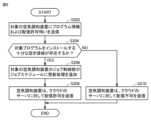
- FIG. 6 is a flowchart showing a flow of processing for determining whether or not distribution of target air-conditioning software 210 is permitted in air conditioner 200 when air-conditioning software 210 is updated on cloud 30. .
- the server 100 transmits program information and a distribution permission request to the target air conditioner 200 (step S202).
- the target air conditioner 200 is the air conditioner 200 for which the server 100 has received the notification in step S120 of FIG. Therefore, the process of step S202 is performed for one or more air conditioners 200.
- the program information includes the ID, program capacity, and version information of the air conditioning software 210 to be distributed (either the basic program 221 or a plurality of application programs 231).
- the air conditioner 200 that has received the program information and the request for permission to distribute determines whether there is sufficient free space for installing the program to be distributed (step S204). More specifically, the management device 201 of the air conditioner 200 determines whether or not the memory 212 has sufficient free space for installing the distribution target program.
- the air conditioner 200 adds update processing to the job schedule 226 (step S206).
- the update process is added to the job schedule 226 by the management device 201 of the air conditioner 200.
- the update process is a process of updating either the existing basic program 221 or multiple application programs 231 included in the air conditioning software 210 .
- the update process is a process of installing a new application program 231 .
- the air conditioner 200 returns a delivery permission to the server 100 of the cloud 30 (step S208).
- Server 100 that has received the distribution permission determines YES in step S402 of FIG. 7, which will be described later.
- step S204 determines NO in step S204, it returns a delivery impossibility to the server 100 of the cloud 30 (step S210), and ends the processing based on this flowchart.
- the server 100 that has received the disapproval of delivery determines NO in step S402 of FIG. 7, which will be described later.
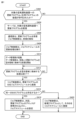
- FIG. 7 is a flow chart showing the flow of processing for updating the application program 231 of the air conditioner 200 with the application program 231 updated on the cloud 30 .
- program means any one of the plurality of application programs 231 .
- the server 100 determines whether updating of the update program (application program 231) to the target air conditioner 200 is permitted (step S402). If the update of the program of the target air conditioner 200 is not permitted, the processing based on this flowchart ends. When the update of the program of the target air conditioner 200 is permitted, the server 100 distributes the update program to the target air conditioner 200 (step S404).
- the communication unit 224 of the target air conditioner 200 receives the distributed update program, and the job control unit 222 detects the reception (step S406). Job control unit 222 recognizes that the received data is an update program. The job control unit 222 executes update processing of the job schedule 226 (step S408). The update process activates the data management unit 223 . The data management unit 223 starts processing to store the received update program in the free space of the memory 212 (step S410).
- step S412 the data management unit 223 determines whether or not the process of storing the update program in the free space has ended.
- the data management unit 223 repeats the process of step S412 until the process of storing the update program in the free space is completed.
- the job control unit 222 searches the job schedule 226 for the ID of the update program (step S414). (step S416).
- step S408 the job control unit 222 changes the entry point of the job schedule 226 so that the updated program will be activated the next time the program with that ID is activated.
- the program (application program 231) with that ID is called next time, the updated program is activated.
- the data management unit 223 may delete the pre-update program from the memory 212 when the post-update program is activated.
- FIG. 10 is a block diagram showing a specific example of processing for changing the entry point in the flowcharts of FIGS. 8 and 9.
- FIG. FIG. 10 shows the relationship between job schedule 226 and program area 213 .
- a program area 213 is provided in the memory 212 .
- the program area 213 has a free area 214 that can store update programs.
- program means the basic program 221.
- the server 100 determines whether distribution of the update program (basic program 221) of the target air conditioner 200 is permitted (step S602). If the update of the program of the target air conditioner 200 is not permitted, the processing based on this flowchart ends. When the update of the program of the target air conditioner 200 is permitted, the server 100 distributes the update program to the target air conditioner 200 (step S604).
- the communication unit 224 of the target air conditioner 200 receives the distributed update program, and the job control unit 222 detects the reception (step S606).
- Job control unit 222 recognizes that the received data is an update program.
- the job control unit 222 executes update processing of the job schedule 226 (step S608).
- the update process activates the data management unit 223 .
- the data management unit 223 starts processing to store the received update program in the free area 214 of the program area 213 in units of program modules (step S610).
- Each of the plurality of program modules constitutes a job control section 222, a data management section 223, a communication section 224, a device driver 225, and the like of the basic software section 220.
- FIG. 10 shows a state in which the update program modules (1) to (3) are stored in the empty area 214 of the program area 213.
- FIG. The program area 213 also stores the currently used old program modules (1) to (3) before update.
- update program modules (1) to (3) are sequentially stored in empty area 214.
- step S612 determines whether there is an update program module that has been completely stored in the free space 214 (step S612). Although step S610 is continuously executed, if there is no update program module that has been completely stored in the free area 214, the process proceeds to step S618. If there is an update program module that has been completely stored in the free space 214, the job control unit 222 searches the job schedule 226 for a program module with the same ID as that of the update program module (step S614).
- the job control unit 222 changes the entry point of the program module corresponding to the ID in the job schedule 226 from the old module to the new module (step S616).
- Step S618 is determined for the program module whose entry point has been changed in step S616. If the entry point has already been changed from the pre-update program module to the post-update program module, the pre-update program module can be deleted. However, when the pre-update program module is operating, it is necessary to delete the pre-update program module after the operation is completed.
- step S618 the data management unit 223 deletes the pre-update program module from the program area 213 (step S620). However, if determined as YES in step S618, the process proceeds to step S622 without executing the process of step S620. In step S622, the job control unit 222 determines whether the process of storing all update program modules in the free area 214 has been completed. If the process of storing all update program modules in the free space 214 has not been completed, the process returns to step S610.
- the data management unit 223 deletes all pre-update program modules from the program area 213, except for the program module corresponding to the job control unit 222. It is determined whether or not (step S624). If all the pre-update program modules have not been deleted from the program area 213 except for the program module corresponding to the job control unit 222, the process returns to step S618. The reason why the program modules corresponding to the job control unit 222 are excluded in the determination in step S624 is that the job control unit 222 executes the main control of this flowchart.
- step S622 the process of returning from step S622 to step S610 and the process of returning from step S624 to step S618 are repeatedly executed. processing is performed for all program modules. As a result, except for the program module corresponding to the job control unit 222, all the program modules before updating are deleted. At this time, a determination of YES is made in step S624.
- the air conditioner 200 performs a process of sequentially storing the update program in the free area 214, a process of changing the entry point for execution of the update program each time the update program is stored in the free area, and a process of changing the entry point.
- the process of sequentially deleting old program modules that have already been deleted may be executed in parallel.
- step S624 If the determination in step S624 is YES, the update program module (old program module) corresponding to job control unit 222 is initialized, and the job schedule of the pre-update program module (old program module) is inherited (step S626). ).
- step S628 the update program module corresponding to the job control unit 222 is restarted by restarting the job control unit 222 (step S628).
- step S630 the data management unit 223 deletes the pre-update program module from the program area 213 (step S632). As a result, the program module corresponding to the job control section 222 is completely updated. All the processing for updating the basic program 221 is thus completed.
- the job control unit 222 sequentially stores each of the plurality of program modules in the memory 212 (step S610).
- the job control unit 222 executes the second program module (for example, the program module corresponding to the communication unit 224) when the first program module (for example, the program module corresponding to the device driver 225) is completely stored in the memory 212. If storage in memory 212 is not complete, the first program module is used to update the first program module portion of the corresponding basic software in memory 212 (steps S612-S616).
- the job control unit 222 is a job module used to update the basic program 221.
- air conditioner 200 updates the module part of job control unit 222 last (step S624).
- update processing is executed in units of programs that are required for updating. Therefore, it is possible to shorten the update time of the programs compared to updating all the programs constituting the air conditioning software 210 at once.
- the memory capacity required for the air conditioner can be reduced and the amount of communication between the server 100 and the air conditioner 200 can be reduced. can be reduced.
- the basic software unit 220 is responsible for the updating process for each application program 231 . Therefore, the operation of the air conditioner 200 can be continued without shutting off the power of the air conditioner 200 while the application program 231 is being updated.
- the application program 231 is divided into a plurality of functional units that implement each of the plurality of functions provided by the air conditioner 200 .
- This allows the user to selectively install the required application program 231 into the air conditioner 200 .
- the program capacity required for the air conditioner 200 can be reduced.
- the basic software unit 220 since the basic software unit 220 is responsible for updating the application program 231, there is no need to turn off the power when updating the program. Therefore, the state variables stored in the volatile memory or the like are not erased by updating the program.
- the air conditioning software 210 is stored in the memory 212 of the management device 201 .
- a controller equivalent to the management device 201 may be provided for the indoor unit 202 or the outdoor unit 203, and the air conditioning software 210 may be stored in the memory of the controller.
- the indoor unit 202 or the outdoor unit 203 may be configured to include the management device 201 .
- the basic software section 220 includes a program module corresponding to the job control section 222, a program module corresponding to the communication section 224, a program module corresponding to the device driver 225, and the like.
- the job control unit 222 manages update processing of these program modules other than the job control unit 222 .
- the job control unit 222 updates these program modules module by module.
- the air conditioner 200 initializes and restarts the update program module corresponding to the job control unit 222 (steps S626 and S628). Terminate the update of the basic program. Therefore, according to the present embodiment, the basic program can be updated only by restarting the program module corresponding to the job control unit 222 among the program modules constituting the basic program.
- FIG. 11 is a diagram showing property data 54 registered in the database 51. As shown in FIG.
- the property data 54 includes data for specifying the environment of each property 300A, 300B, . . . .
- the remote control system 3 including the server 100 can provide the air conditioning software 210 according to the environmental characteristics of the property 300 through machine learning using the property data 54 .
- Property data 54 are registered in the database 51 for each property 300A, property 300B, .
- Property data 54 is composed of first data and second data.
- the first data is data that indicates almost permanent and persistent characteristics of the property 300, and includes, for example, location information and climate information.
- the position information is composed of latitude and longitude indicating the position of the property 300 .
- the climate information consists of information such as whether the property 300 is located in a relatively warm region or in a cold region.
- the first data is registered in the database 51 by the developer of the air conditioner 200 when the air conditioner 200 is installed in the new property 300 .
- the person in charge of the developer may use the terminal device 10 to register the first data in the database 51 .
- the second data is data that may change depending on the season and time zone, and includes, for example, the priority of the application program 231 and weather information near the property 300.
- the priority is information calculated based on the usage status of various application programs 231 that the air conditioner 200 has.
- the weather information is information including the outdoor temperature and humidity of the property 300 .
- the outside air temperature and humidity of the property 300 are measured by the temperature/humidity sensor 243 (see FIG. 3) of the air conditioner 200 .
- the priority and weather information are calculated for each fixed period in the air conditioners 200A, 200B, . . .
- the air conditioners 200A, 200B, . . . transmit the property IDs to the server 100 together with the information.
- the server 100 registers the received date and time information, priority order, and weather information in the database 51 as second data for each property ID of the air conditioner 200 .
- the server 100 can grasp which of the various application programs 231 possessed by the air conditioner 200 has the highest usage frequency and which has the lowest usage frequency. .
- the server 100 can identify the application programs 231 that are used very infrequently and the application programs 231 that are not used by referring to the priority information.
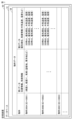
- FIG. 12 is a diagram showing a specific example of the procedure by which the air conditioner 200 calculates the priority.
- the air conditioner 200 has first to fourth programs as the application programs 231 .
- the air conditioner 200 counts the number of program uses each time each of the first to fourth programs is used. In the example shown in FIG. 12, the number of times of use of the fourth program is the largest, and the number of times of use of the first program is zero.
- the air conditioner 200 calculates the usage frequency based on the number of times of use and the specified period when the specified period has passed. For example, the frequency of use can be calculated by "number of times of use/prescribed period". As a result, the usage frequency of each program is calculated. Also, as shown in FIG. 12, the priority of using the first to fourth programs is calculated.
- the priority is calculated by the air conditioning software 210. More specifically, the air-conditioning software 210 periodically measures the number of uses of various application programs 231 of the application software section 230 . The air conditioning software 210 obtains the frequency of use by dividing the number of times of use by the unit time. The air-conditioning software 210 prioritizes the various application programs 231 used by the air-conditioning software 210 by ranking the usage frequencies. This priority is also referred to as "function priority".
- FIG. 13 is a block diagram for explaining a procedure for server 100 to create estimation model 114 using learning device 110 .
- server 100 includes learning device 110 and estimation model 114 .
- Learning device 110 and estimation model 114 are implemented by processor 101 and memory 102 of server 100 .
- estimation model 114 is implemented by memory 102 of server 100 .
- Learning device 110 and estimation model 114 may be implemented using part of the storage area of storage device 50 .
- the learning device 110 includes an input unit 111, a determination unit 112, and a learning unit 113.
- Estimation model 114 includes neural network 115 and parameters 116 .
- the estimation model 114 uses a neural network 115 to perform deep learning.
- Parameters 116 include weighting factors and the like used in calculations by neural network 115 .
- Estimation model 114 is learned by learning device 110 .
- the estimation model 114 is trained by the learning device 110 so as to estimate the priority of utilization of the application program 231 of the air conditioner 200 .
- a supervised learning algorithm is used to make the estimation model 114 learn.
- the learning device 110 makes the estimation model 114 learn by supervised learning using a large amount of learning data 5 .
- the learning data 5 is composed of first data and second data registered in the database 51 . First data and second data are registered in the database 51 for each property 300 (see FIG. 11).
- the learning device 110 uses the first data and second data registered for each property 300 as one set of learning data 5 .
- property data 54 shown in FIG. 11 (first data of property 300A, second data of date and time information A1 of property 300A), (first data of property 300A, second data of date and time information A2 of property 300A ), (first data of property 300A, second data of date and time information A3 of property 300A) ..., (first data of property 300B, second data of date and time information B1 of property 300B), (first data of property 300B , second data of date and time information B2 of property 300B), (first data of property 300B, second data of date and time information B3 of property 300B) .
- the input unit 111 of the learning device 110 receives the first data (location information, climate information) and the weather information, which is part of the second data, out of the set of learning data 5 .
- the priority of the second data is input as correct data to the learning unit 113 of the learning device 110 .
- the determination unit 112 determines the priority based on the learning data 5 and the estimation model 114 input to the input unit 111 and outputs the determination result to the learning unit 113 .
- the learning unit 113 makes the estimation model 114 learn based on the determination result obtained by the determination unit 112 and the correct data. Specifically, learning unit 113 causes estimation model 114 to learn by adjusting parameters 116 (for example, weighting coefficients) so that the determination result obtained by estimation model 114 approaches correct data.
- FIG. 14 is a block diagram for explaining the procedure by which server 100 estimates the priority of use of application program 231 using trained estimation model 114 .
- the server 100 can use the learned estimation model 114 to output the priority for the air conditioner 200 ⁇ /b>C newly installed in the new property 301 .
- the server 100 includes a determination device 120 and an estimation model 114 .
- Determination device 120 and estimation model 114 are implemented by processor 101 and memory 102 of server 100 .
- the determination device 120 includes an input unit 121 , a processing unit 122 and an output unit 123 .
- the input unit 121 receives information on the property 300 whose priority order recommended by the determination device 120 is to be checked. For example, if you want to check the priority order for the air conditioner 200C newly installed in the new property 301, the first data (position information, climate information) of the new property 301 and the current weather of the new property 301 Information (outside air temperature, humidity) is input to the input unit 121 .
- the first data of the new property 301 is registered in the database 51 by the developer of the air conditioner 200 when the air conditioner 200 is installed in the new property 300 .
- First data registered in the database 51 is input to the input unit 121 .
- the weather information is input to the input unit 121 from the air conditioner 200C installed in the new property 301 via the wide area network 60, for example.
- a user may input the weather information to the input unit 121 using the terminal device 20C corresponding to the new property 301 .
- the processing unit 122 determines priority based on the first data and weather information input to the input unit 121 and the estimation model 114, and outputs the determination result to the output unit 123.
- the output unit 123 outputs the determination result to the outside of the determination device 120 .
- the server 100 transmits the determination result to the terminal device 20C.
- the terminal device 20C displays the priority on the display 40 as a recommended application program based on the determination result.
- the user can set the priority of the application programs 231 to be introduced into the air conditioner 200C.
- the user can also specify the application programs 231 that are considered unnecessary to be installed from the priority displayed on the display 40 .
- the terminal device 20C may be provided with a function for the user to rearrange the priorities.
- the terminal device 20C may have a function of transmitting the determined priority to the server 100 when the user's operation to determine the priority is detected.
- the server 100 may have a function of setting the application program 231 of the air conditioner 200C according to the priority when receiving the determined priority from the terminal device 20C.
- the remote control system 3 including the server 100
- the property data of the new property 301 is input to the learned estimation model 114, and applied.
- Various application programs 231 to be introduced into the software section 230 can be recommended.
- the learned estimation model 114 may be placed inside the air conditioner 200 .
- the learning device 110 may also use the number of times of use of the application program 231 shown in FIG. 12 as learning data to perform learning for estimating the priority.
- the air conditioner 200 ⁇ /b>C in the new property 301 may input data indicating the number of times each application program 231 is used to the learned estimation model 114 when performing a test run.
- the air conditioner 200C can use the output results of the trained estimation model 114 placed in the air conditioner 200C or the server 100 to set more appropriate priorities for the application programs 231. Thereby, the air conditioner 200C (the job control unit 222 and the data management unit 223) can update its own job schedule 226 to an appropriate schedule.
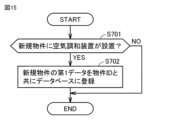
- FIG. 15 is a flowchart showing a procedure for registering the first data and the property ID of the new property 301 in the database 51 when the air conditioner 200C is installed in the new property 301.
- the server 100 determines whether or not the air conditioner 200C is installed in the new property 301 (step S701).
- the server 100 determines that the air conditioner 200C is installed in the new property 301 when receiving a property ID that has not been registered in the database 51 from the air conditioner 200C. In this case, the server 100 registers the first data of the new property 301 together with the property ID in the database 51 (step S702). If NO is determined in step S701, the process based on this flowchart ends without executing the process of step S702.
- FIG. 16 is a flowchart for explaining the procedure for creating the learned estimation model 114.
- FIG. Here, the processing of the air conditioners 200 installed in each of the plurality of properties 300 and the processing of the server 100 will be collectively described.
- the air conditioner 200 determines that the timer T has timed a specified time (step S801).
- the prescribed time is a time interval for calculating the priority of application program 231 and weather information in air conditioner 200 .
- the air conditioner 200 calculates the usage frequency of the application programs 231 for each type of application program 231 (step S802).
- the air conditioner 200 creates a priority order for the application programs 231 based on the calculated usage frequency (step S803).
- the priority information created here includes the usage frequency of each application program 231 .
- the air conditioner 200 measures the outside air temperature and humidity using the temperature/humidity sensor 243 (step S804).
- the air conditioner 200 transmits the property ID and second data (including weather information and priority) to the server 100 (step S805). After that, the air conditioner 200 restarts the timer T (step S806) and ends the processing based on this flowchart.
- the server 100 waits until it receives the second data (step S811). Eventually, one of the air conditioners 200 transmits the second data together with the property ID to the server 100 .
- the server 100 registers the received second data in the database 51 by property ID (step S812).
- server 100 executes learning processing using the first data and second data registered in database 51 (step S813), and updates estimation model 114 (step S814). This completes the processing based on this flowchart.
- FIG. 17 is a flowchart for explaining the procedure for determining the priority of application programs 231 recommended for the air conditioner 200C.
- the server 100 acquires the first data and weather information of the new property 301 (step S901).
- the server 100 inputs the first data and weather information of the new property 301 to the learned estimation model 114 (step S902).
- the server 100 outputs the determination result (priority) from the estimation model 114 (step S903).
- the server 100 transmits the output determination result as recommended application program information to the terminal device 20C (step S904), and ends the processing based on this flowchart.
- the determination device 120 by using the determination device 120, only the application programs 231 corresponding to the functions desired to be used locally (each property 300) are selected according to the frequency of use of the application programs 231. can be installed in the air conditioner 200.
- unused application programs 231 can be eliminated from memory 212 of air conditioner 200 .
- the free space for data in the memory 212 can be increased.
- the estimation model 114 by learning the estimation model 114 from local information (each property 300) and program usage frequency (or number of times of use), appropriate priority data considering the characteristics of each property 300 can be obtained.
- a learning model capable of outputting is formed. This makes it possible to recommend to the user which function should be applied to the air conditioner 200 ⁇ /b>C of the new property 301 .
- the priority can be automatically applied to the air conditioner 200C.
- the determination device 120 it becomes unnecessary for a person to select the application program 231 to be applied to the air conditioner 200C, and as a result, it is possible to prevent human error in determination. Therefore, according to the present embodiment, optimal control based on machine learning can be applied to the air conditioning system 1 .
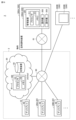
- FIG. 18 is a diagram showing the overall configuration of the air conditioning system 2 as a modified example. As shown in FIG. 18 , the air conditioner 200 is connected to the remote control system 3 via the local network 61 inside the property 300 .
- the air-conditioning system 2 is the same as the air-conditioning system 1 except that a premises network 61 is formed within the property 300 . Therefore, the description of the air conditioning system 2 will not be repeated here.
- FIG. 19 is a flowchart for explaining a modification related to FIG. In this modification, steps S2111 to S2115 are added to the flowchart shown in FIG.
- step S204 if there is not enough free space in the memory 212 to install the target program, the low-priority application program 231 is deleted from the memory 212 to secure free space. do. Detailed descriptions of steps S202, S204, S206, S208, and S210 will not be repeated here.
- the air conditioner 200 determines in step S204 that there is not enough free space for installing the target program in the memory 212, it selects the lowest priority application program 231 from the memory 212 (step S2111).
- the application program 231 selected in step S2111 is assumed to be application program X.
- FIG. Priority is determined, for example, by frequency of use.
- the air conditioner 200 updates the usage count for each application program each time the application program 231 is used.
- the air conditioner 200 determines the frequency of use based on the number of times of use.
- the air conditioner 200 notifies the user that the application program X will be deleted (step S2112). For example, the air conditioner 200 transmits information indicating that the application program X is to be deleted to the terminal device 20 of the user.
- the air conditioner 200 receives a user's instruction regarding deletion of the application program X (step S2113).
- This instruction is transmitted from the user's terminal device 20, for example.
- the air conditioner 200 determines whether the user permits deletion of the application program X (step S2114). If the user does not permit deletion of application program X, air conditioner 200 proceeds to step S210. When the user permits deletion of application program X, air conditioner 200 deletes application program X from memory 212 (step S2115). Next, the air conditioner 200 executes the process of step S208. As a result, permission to distribute the target program is returned from the air conditioner 200 to the server 100 . As a result, the target program is distributed to the air conditioning apparatus 200 with the free space in the memory 212 secured.
- the present disclosure is an air conditioning system (1) comprising an air conditioner (200) and a server (100) communicating with the air conditioner, the air conditioner having a memory storing air conditioning software (212), and a processor (211) that executes air conditioning software in a memory.
- basic software (221) for managing software jobs and the server distributes first update data necessary for the processor to update one of the plurality of application software to the air conditioner (step S404), the processor updates the corresponding application software in the memory using the basic software based on the first update data (step S418).
- the server distributes new application software that is not stored in the memory to the air conditioner (step S112, step S114, step S404), and the processor stores the distributed new application software in the memory. , a new function realized by the new application software is added to the air conditioner (step S420).
- the server distributes the second update data required to update the basic software to the air conditioner (step S604), and the processor updates the data in the memory based on the second update data. update the corresponding basic software (FIGS. 8 and 9).
- the basic software includes a plurality of modules (222-226), and the processor updates the corresponding basic software in the memory for each of the plurality of modules based on the second update data (step S616).
- the plurality of modules includes the job control unit 222 ), the processor sequentially stores each of the plurality of modules in the memory (step S610), and when the storage in the memory of the first module is completed, the processor stores the module in the memory of the second module. If not, the first module is used to update the first module's portion of the corresponding base software in memory (steps S612-S616).
- the plurality of modules includes a job module (job control unit 222) used to update the corresponding basic software in memory, and the processor updates the corresponding basic software in memory for each of the plurality of modules. If so, the job module portion of the basic software is updated last (step S624).
- job module job control unit 222 used to update the corresponding basic software in memory
- processor updates the corresponding basic software in memory for each of the plurality of modules. If so, the job module portion of the basic software is updated last (step S624).
- the air conditioning system further comprises a terminal device (20) that communicates with the server, and the server notifies the terminal device that one of the plurality of application software can be updated (step S108). obtains permission from the terminal device to update one of the plurality of application software, and then distributes the first update data to the air conditioner (step S120).
- the air conditioning system is provided with a determination device (120) that determines the priority order in which each of the plurality of application software is used in the air conditioner. Priorities are determined based on climate information, weather information, and an estimation model including a neural network, and the priority determination results are output (step S903).
- the server includes a determination device (Fig. 14).
- the estimation model estimates the location of the location where the air conditioner is located based on learning data including location information, climate information, weather information, and priority of the location where the air conditioner is located. It is learned to determine priority from information, climate information, and weather information (Fig. 13).
- the air conditioner When the capacity of the memory is insufficient, the air conditioner deletes low-priority application software among the multiple application software stored in the memory, and then deletes the corresponding application software in the memory. Update (steps S2111 to S2115).
- the present disclosure is an air conditioner capable of communicating with a server, comprising a memory storing air conditioning software and a processor executing the air conditioning software stored in the memory, the air conditioning software
- the processor includes a plurality of application software for realizing a plurality of functions to be provided, respectively, and basic software for managing jobs of the plurality of application software.
- the basic software is used to update the corresponding application software in the memory based on the first update data.
Landscapes
- Engineering & Computer Science (AREA)
- General Engineering & Computer Science (AREA)
- Software Systems (AREA)
- Theoretical Computer Science (AREA)
- Computer Security & Cryptography (AREA)
- Physics & Mathematics (AREA)
- General Physics & Mathematics (AREA)
- Human Computer Interaction (AREA)
- Chemical & Material Sciences (AREA)
- Combustion & Propulsion (AREA)
- Mechanical Engineering (AREA)
- Air Conditioning Control Device (AREA)
Priority Applications (2)
| Application Number | Priority Date | Filing Date | Title |
|---|---|---|---|
| PCT/JP2022/003804 WO2023148811A1 (ja) | 2022-02-01 | 2022-02-01 | 空気調和システムおよび空気調和装置 |
| JP2023578215A JP7675865B2 (ja) | 2022-02-01 | 2022-02-01 | 空気調和システムおよび空気調和装置 |
Applications Claiming Priority (1)
| Application Number | Priority Date | Filing Date | Title |
|---|---|---|---|
| PCT/JP2022/003804 WO2023148811A1 (ja) | 2022-02-01 | 2022-02-01 | 空気調和システムおよび空気調和装置 |
Publications (1)
| Publication Number | Publication Date |
|---|---|
| WO2023148811A1 true WO2023148811A1 (ja) | 2023-08-10 |
Family
ID=87553328
Family Applications (1)
| Application Number | Title | Priority Date | Filing Date |
|---|---|---|---|
| PCT/JP2022/003804 Ceased WO2023148811A1 (ja) | 2022-02-01 | 2022-02-01 | 空気調和システムおよび空気調和装置 |
Country Status (2)
| Country | Link |
|---|---|
| JP (1) | JP7675865B2 (https=) |
| WO (1) | WO2023148811A1 (https=) |
Citations (4)
| Publication number | Priority date | Publication date | Assignee | Title |
|---|---|---|---|---|
| JP2002073426A (ja) * | 2000-09-05 | 2002-03-12 | Sanyo Electric Co Ltd | フラッシュメモリの書換え制御方法 |
| JP2005100428A (ja) * | 2004-10-12 | 2005-04-14 | Fujitsu Ltd | 無線端末装置及び該装置へのソフトウェア供給装置 |
| JP2013049194A (ja) * | 2011-08-31 | 2013-03-14 | Kyocera Document Solutions Inc | 画像形成装置、画像形成システム |
| WO2021149191A1 (ja) * | 2020-01-22 | 2021-07-29 | 三菱電機株式会社 | 制御プログラムを更新するサービスシステム、サーバ装置及びサーバ装置における制御プログラム更新方法 |
-
2022
- 2022-02-01 WO PCT/JP2022/003804 patent/WO2023148811A1/ja not_active Ceased
- 2022-02-01 JP JP2023578215A patent/JP7675865B2/ja active Active
Patent Citations (4)
| Publication number | Priority date | Publication date | Assignee | Title |
|---|---|---|---|---|
| JP2002073426A (ja) * | 2000-09-05 | 2002-03-12 | Sanyo Electric Co Ltd | フラッシュメモリの書換え制御方法 |
| JP2005100428A (ja) * | 2004-10-12 | 2005-04-14 | Fujitsu Ltd | 無線端末装置及び該装置へのソフトウェア供給装置 |
| JP2013049194A (ja) * | 2011-08-31 | 2013-03-14 | Kyocera Document Solutions Inc | 画像形成装置、画像形成システム |
| WO2021149191A1 (ja) * | 2020-01-22 | 2021-07-29 | 三菱電機株式会社 | 制御プログラムを更新するサービスシステム、サーバ装置及びサーバ装置における制御プログラム更新方法 |
Also Published As
| Publication number | Publication date |
|---|---|
| JPWO2023148811A1 (https=) | 2023-08-10 |
| JP7675865B2 (ja) | 2025-05-13 |
Similar Documents
| Publication | Publication Date | Title |
|---|---|---|
| JP2020020531A (ja) | 空気調和機のレコメンド処理を実行するサーバおよびレコメンド処理システム | |
| JP4346584B2 (ja) | デマンド制御装置およびプログラム | |
| AU2019357534B2 (en) | Air conditioner, data transmission method, and air conditioning system | |
| EP1729223A2 (en) | Demand control apparatus, electric power consumption prediction method, and program therefor | |
| US20040193548A1 (en) | HVAC control using different access levels | |
| JP2019019988A (ja) | 空調運転条件作成装置、空調運転条件作成方法、プログラム、および空調システム | |
| CA3040117C (en) | Operating an hvac system based on predicted indoor air temperature | |
| KR20200043781A (ko) | 관람객 수와 환경 변화를 고려한 전시홀 에너지 관리 시스템 | |
| AU2017422574B2 (en) | Operation control device, air conditioning system, operation control method, and operation control program | |
| JP6937261B2 (ja) | 空調制御装置、空調制御方法及びコンピュータプログラム | |
| JP2019138542A (ja) | 空調制御装置、空調制御システム、空調制御方法、及び、プログラム | |
| CN110296854A (zh) | 用于hvac系统舒适度破坏预报的预测系统和方法 | |
| WO2023148811A1 (ja) | 空気調和システムおよび空気調和装置 | |
| JP7521631B2 (ja) | 空気調和機及び空気調和システム | |
| CN111373206A (zh) | 空调控制装置、空调系统、空调控制方法以及程序 | |
| CN112379766A (zh) | 数据处理方法、装置、非易失性存储介质和处理器 | |
| JP5205183B2 (ja) | 統合制御システム、統合制御方法、統合制御装置及び統合制御プログラム | |
| JP5279617B2 (ja) | 統合管理システム、統合管理方法、統合管理装置及び統合管理プログラム | |
| JP2020009004A (ja) | 空調制御システム、集中制御装置、方法及びプログラム | |
| JPWO2019030896A1 (ja) | プログラム更新方法、室外機及び管理装置 | |
| CN115614920B (zh) | 用于控制电子膨胀阀的方法及装置、空调、存储介质 | |
| KR102002076B1 (ko) | 자원 할당 알고리즘 기반 IoT 분산 처리 시스템 및 방법 | |
| KR101275551B1 (ko) | 공기 조화 시스템 및 그 동작방법 | |
| JP2021071243A (ja) | 空気調和システム及び空気調和機 | |
| US20250052443A1 (en) | Air conditioner and air conditioning system |
Legal Events
| Date | Code | Title | Description |
|---|---|---|---|
| 121 | Ep: the epo has been informed by wipo that ep was designated in this application |
Ref document number: 22924724 Country of ref document: EP Kind code of ref document: A1 |
|
| WWE | Wipo information: entry into national phase |
Ref document number: 2023578215 Country of ref document: JP |
|
| NENP | Non-entry into the national phase |
Ref country code: DE |
|
| 122 | Ep: pct application non-entry in european phase |
Ref document number: 22924724 Country of ref document: EP Kind code of ref document: A1 |