WO2023145663A1 - 溶媒和物及び溶媒和物の製造方法 - Google Patents
溶媒和物及び溶媒和物の製造方法 Download PDFInfo
- Publication number
- WO2023145663A1 WO2023145663A1 PCT/JP2023/001808 JP2023001808W WO2023145663A1 WO 2023145663 A1 WO2023145663 A1 WO 2023145663A1 JP 2023001808 W JP2023001808 W JP 2023001808W WO 2023145663 A1 WO2023145663 A1 WO 2023145663A1
- Authority
- WO
- WIPO (PCT)
- Prior art keywords
- compound
- group
- solvate
- atoms
- general formula
- Prior art date
- Legal status (The legal status is an assumption and is not a legal conclusion. Google has not performed a legal analysis and makes no representation as to the accuracy of the status listed.)
- Ceased
Links
Images


Classifications
-
- B—PERFORMING OPERATIONS; TRANSPORTING
- B01—PHYSICAL OR CHEMICAL PROCESSES OR APPARATUS IN GENERAL
- B01D—SEPARATION
- B01D9/00—Crystallisation
- B01D9/005—Selection of auxiliary, e.g. for control of crystallisation nuclei, of crystal growth, of adherence to walls; Arrangements for introduction thereof
-
- C—CHEMISTRY; METALLURGY
- C07—ORGANIC CHEMISTRY
- C07D—HETEROCYCLIC COMPOUNDS
- C07D241/00—Heterocyclic compounds containing 1,4-diazine or hydrogenated 1,4-diazine rings
- C07D241/36—Heterocyclic compounds containing 1,4-diazine or hydrogenated 1,4-diazine rings condensed with carbocyclic rings or ring systems
- C07D241/38—Heterocyclic compounds containing 1,4-diazine or hydrogenated 1,4-diazine rings condensed with carbocyclic rings or ring systems with only hydrogen or carbon atoms directly attached to the ring nitrogen atoms
-
- B—PERFORMING OPERATIONS; TRANSPORTING
- B01—PHYSICAL OR CHEMICAL PROCESSES OR APPARATUS IN GENERAL
- B01D—SEPARATION
- B01D15/00—Separating processes involving the treatment of liquids with solid sorbents; Apparatus therefor
- B01D15/08—Selective adsorption, e.g. chromatography
-
- C—CHEMISTRY; METALLURGY
- C07—ORGANIC CHEMISTRY
- C07D—HETEROCYCLIC COMPOUNDS
- C07D221/00—Heterocyclic compounds containing six-membered rings having one nitrogen atom as the only ring hetero atom, not provided for by groups C07D211/00 - C07D219/00
- C07D221/02—Heterocyclic compounds containing six-membered rings having one nitrogen atom as the only ring hetero atom, not provided for by groups C07D211/00 - C07D219/00 condensed with carbocyclic rings or ring systems
- C07D221/04—Ortho- or peri-condensed ring systems
- C07D221/18—Ring systems of four or more rings
-
- B—PERFORMING OPERATIONS; TRANSPORTING
- B01—PHYSICAL OR CHEMICAL PROCESSES OR APPARATUS IN GENERAL
- B01D—SEPARATION
- B01D9/00—Crystallisation
- B01D2009/0086—Processes or apparatus therefor
- B01D2009/009—Separation of organic compounds by selective or extractive crystallisation with the aid of auxiliary substances forming complex or molecular compounds, e.g. with ureum, thioureum or metal salts
- B01D2009/0095—Separation of organic compounds by selective or extractive crystallisation with the aid of auxiliary substances forming complex or molecular compounds, e.g. with ureum, thioureum or metal salts with the aid of other complex forming substances than ureum, thioureum or metal salts
Definitions
- the present invention relates to a solvate and a method for producing the solvate.
- glass materials have been used for optical members of imaging modules such as cameras, video cameras, mobile phones with cameras, videophones, and door phones with cameras.
- Glass materials have optical properties suitable for optical members of imaging modules, can be imparted with desired optical properties, and are excellent in environmental resistance.
- glass materials are not easy to reduce in weight and size, and are inferior in workability and productivity.
- cured resin products can be mass-produced and are excellent in workability. Therefore, against the background of recent miniaturization of imaging modules, cured resin products are used as optical members to replace glass materials. It's like
- miniaturization of imaging modules there is also a demand for miniaturization of their optical components.
- miniaturization of optical members causes a problem of chromatic aberration. Therefore, in an optical member using a resin cured product, it has been studied to correct the chromatic aberration by adjusting the Abbe number to be small with the monomers or additives of the curable composition.
- Patent Document 1 a polycarbonate resin containing a structural unit having a heteroatom-containing skeleton similar to a diphenylfluorene skeleton has a sufficiently small Abbe number and high anomalous dispersion (high ⁇ g, F value). It is disclosed that a molded article having Further, Patent Document 2 describes a solvate of a bisphenol compound having a heteroatom-containing skeleton similar to a diphenylfluorene skeleton with a solvent containing a specific organic compound containing a nitrogen atom. According to Patent Document 2, when the purity of the raw material compound is high, the light transmittance of the cured product is high and is preferable as an optical member such as a lens. It is disclosed to be increased to ⁇ 98.9%.
- a diol compound having a heteroatom-containing skeleton similar to a diphenylfluorene skeleton is required to have low hygroscopicity.
- An object of the present invention is to provide a solvate suitable as a raw material compound for resins constituting optical members such as lenses, and a method for producing the same.
- a solvate of compound (A) represented by the following general formula (1) contains a cyclic ether compound (B) having carbon atoms, oxygen atoms and hydrogen atoms as constituent atoms, A solvate wherein the ratio of said compound (B) is 0.05 to 2.0 mol per 1 mol of said compound (A).
- X and Y represent an oxygen atom, a sulfur atom, a nitrogen atom or a carbon atom. However, at least one of X and Y represents a nitrogen atom.
- L 1 and L 2 each represent an alkylene group having 2 to 4 carbon atoms.
- R 3 to R 6 represent substituents.
- q, r and v are integers from 0 to 4;
- v is an integer of 2 to 4
- multiple R 5 's are not linked together to form a ring.
- ⁇ 4> A method for producing the solvate according to any one of ⁇ 1> to ⁇ 3>, A method for producing a solvate, comprising crystallizing said compound (A) from a solution in which said compound (A) is dissolved in a solvent containing said compound (B).
- ⁇ 5> A solution in which the compound (A) is dissolved in a solvent containing the compound (B) is subjected to an impurity adsorption treatment step using an adsorbent, and then the compound (A) is crystallized. , the method for producing the solvate according to ⁇ 4>.
- ⁇ 6> ⁇ 4> or ⁇ 5> which comprises reacting a bisphenol compound represented by the following general formula (1S) with a cyclic carbonate compound in the presence of a basic compound to produce the compound (A); Process for the preparation of the described solvates.
- R 3 to R 6 , X to Z, q, r, v and w are synonymous with R 3 to R 6 , X to Z, q, r, v and w in general formula (1) above. is.
- substituents, etc. when there are a plurality of substituents or connecting groups (hereinafter referred to as substituents, etc.) indicated by a specific symbol or formula, or when a plurality of substituents, etc. are defined at the same time, there is no particular notice.
- substituents, etc. may be the same or different from each other (regardless of the presence or absence of the expression "independently", the respective substituents, etc. may be the same or different from each other). This also applies to the number of substituents and the like.
- substituents and the like when a plurality of substituents and the like are close to each other (especially when they are adjacent), they may be linked together to form a ring unless otherwise specified.
- rings such as alicyclic rings, aromatic rings, and heterocyclic rings may be condensed to form condensed rings.
- the double bond may be either E-type or Z-type, or a mixture thereof, unless otherwise specified.
- the stereochemistry of such asymmetric carbon atoms is independently (R)-form or It can take either of the (S) forms.
- the compounds may be mixtures of stereoisomers, such as optical isomers or diastereoisomers, or may be racemates.
- the expression of a compound is meant to include those in which a part of the structure is changed within a range that does not impair the effects of the present invention.
- compounds that are not specified as substituted or unsubstituted are meant to have optional substituents within a range that does not impair the effects of the present invention.
- substituents the same applies to linking groups and rings
- substitution or unsubstitution is not specified in the present invention
- the meaning that the group may have any substituent as long as the desired effect is not impaired. is.
- the term "alkyl group” is meant to include both unsubstituted alkyl groups and substituted alkyl groups.
- this number of carbon atoms means the number of carbon atoms in the entire group unless otherwise specified in the present invention or this specification.
- this group when this group is in the form of further having a substituent, it means the total number of carbon atoms including this substituent.
- a numerical range represented by “to” means a range including the numerical values before and after “to” as lower and upper limits.
- “(meth)acrylate” represents either one or both of acrylate and methacrylate
- “(meth)acryloyl” represents either one or both of acryloyl and methacryloyl
- “(meth)acrylic acid” is Represents either one or both of acrylic acid and methacrylic acid.
- a monomer is distinguished from an oligomer and a polymer and refers to a compound having a weight average molecular weight of 1000 or less.
- each component such as the compound (A) represented by the general formula (1), the cyclic ether compound (B), and the solvent other than the cyclic ether compound (B) may be used alone. More than one species may be mixed and used.
- the alkyl group means a linear or branched alkyl group.
- the number of carbon atoms in the alkyl group is preferably 1-20, more preferably 1-12, and even more preferably 1-6.
- alkyl groups include methyl, ethyl, propyl, isopropyl, butyl, isobutyl, sec-butyl, tert-butyl, pentyl, 1-methylbutyl, 3-methylbutyl and hexyl groups.
- 1-methylpentyl group 4-methylpentyl group, heptyl group, 1-methylhexyl group, 5-methylhexyl group, 2-ethylhexyl group, octyl group, 1-methylheptyl group, nonyl group, 1-methyloctyl group , decyl group, undecyl group, dodecyl group, tridecyl group, tetradecyl group, pentadecyl group, hexadecyl group, heptadecyl group, octadecyl group, nonadecyl group, eicosyl group, etc.
- alkyl groups in groups containing alkyl groups (alkoxy groups, alkoxycarbonyl groups, acyl groups, acyloxy groups, etc.). That is, the above description of the alkyl group applies to the alkyl group in the alkylcarbonyloxy group for the acyl group, and to the alkyl group in the alkylcarbonyloxy group for the acyloxy group.
- the alkyl group may have a substituent such as a halogen atom or a hydroxy group, and examples of the alkyl group having such a substituent include a halogenated alkyl group and a hydroxyalkyl group.
- the alkenyl group is preferably an alkenyl group having 2 to 6 carbon atoms, and examples thereof include a vinyl group and an allyl group.
- the alkylene group includes a group obtained by removing one hydrogen atom bonded to a terminal carbon atom from the above alkyl group, and may be a straight-chain alkylene group or a branched alkylene group. good. Examples include ethylene group, propylene group, butylene group and the like.
- isopropylene structures In the present invention, structures represented by the following notation indicate isopropylene structures.
- This isopropylene structure may be either of two structural isomers in which a methyl group is bonded to one of the carbon atoms constituting the ethylene group, or these structural isomers may be mixed.
- the structure represented by the following notation indicates a butane-1,2-diyl structure (1,2-butylene structure).
- This butane-1,2-diyl structure (1,2-butylene structure) may be any of two structural isomers in which an ethyl group is bonded to one of the carbon atoms constituting the ethylene group, These structural isomers may be mixed.
- a cycloalkyl group represents a monovalent group obtained by removing one arbitrary hydrogen atom from a cycloalkane.
- the cycloalkyl group is preferably a cycloalkyl group having 3 to 10 carbon atoms, such as a cyclobutyl group, a cyclopentyl group and a cyclohexyl group.
- an aryl group represents a monovalent group obtained by removing one arbitrary hydrogen atom from an aromatic hydrocarbon ring.
- the aryl group is preferably an aryl group having 6 to 14 carbon atoms, examples of which include a phenyl group, 1-naphthyl group, 2-naphthyl group, 1-anthracenyl group, 2-anthracenyl group, 9-anthracenyl group, 1- phenanthryl group, 2-phenanthryl group, 3-phenanthryl group, 4-phenanthryl group, 9-phenanthryl group and the like.
- a phenyl group is preferred.
- a heteroaryl group represents a monovalent group obtained by removing one arbitrary hydrogen atom from an aromatic heterocycle.
- Heteroaromatic ring means an aromatic ring formed by carbon atoms and heteroatoms. Heteroatoms include oxygen, nitrogen and sulfur atoms.
- the aromatic heterocyclic ring may be a single ring or a condensed ring, and the number of atoms constituting the ring is preferably 5-20, more preferably 5-14. Although the number of heteroatoms in the atoms constituting the ring is not particularly limited, it is preferably 1-3, more preferably 1-2.
- heteroaryl groups include furyl, thienyl, pyrrolyl, imidazolyl, isothiazolyl, isoxazolyl, pyridyl, pyrazinyl, quinolyl, benzofuranyl (preferably 2-benzofuranyl), benzothiazolyl ( 2-benzothiazolyl group is preferred), benzoxazolyl group (preferably 2-benzoxazolyl group), and the like.
- an alkenyl group, an alkylene group, a cycloalkyl group, an aryl group, a heteroaryl group, an alkoxy group, an alkoxycarbonyl group, and an acyl group may have a substituent similarly to the alkyl group.
- Substituents which may be present include, for example, a halogen atom, an acyloxy group, a cyano group and the like.
- halogen atoms include fluorine atoms, chlorine atoms, bromine atoms, and iodine atoms.
- the solvate of the present invention can be obtained as a solvate in which the diol compound (A) represented by the general formula (1) is sufficiently suppressed in hygroscopicity.
- the solvate of the present invention also satisfies the desired levels of purity and colorability.
- this By using this as a raw material compound, it is possible to provide resins or curable monomers constituting optical members such as lenses as high-quality, high-purity, low-coloring monomers, and to increase the light transmittance of cured products. can.
- the solvate of the present invention having sufficiently suppressed hygroscopicity can be produced with high purity and high yield.
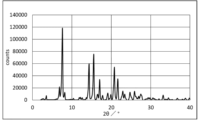
- FIG. 1 shows an X-ray diffraction pattern of crude crystal c1a of unsolvated compound c1 in Comparative Example 1.
- FIG. 1 shows an X-ray diffraction pattern of crude crystal c1b of unsolvated compound c1 in Comparative Example 2.
- FIG. 1 shows an X-ray diffraction pattern of solvate crystal 1 of compound c1 using THF (tetrahydrofuran) as a solvent, obtained in Example 1.
- THF tetrahydrofuran
- the solvate of the present invention is a solvate of compound (A) represented by general formula (1) below (hereinafter also referred to as "compound (A)"), and is represented by general formula (1) below. and a solvent containing the cyclic ether compound (B) described later.
- the compound (A) represented by the general formula (1) and the cyclic ether compound (B) may be one kind or two or more kinds, but usually one kind. .
- the compound represented by the general formula (1) is a solvate with a solvent containing a cyclic ether compound (B) having carbon atoms, oxygen atoms and hydrogen atoms as constituent atoms, It has been found that the hygroscopicity of the compound represented by the general formula (1), which is not solvated, can be sufficiently suppressed. Also, the solvate of the present invention is a highly pure compound with little coloration. In the present invention, the term "solvate” typically means that a solvent containing the cyclic ether compound (B) is incorporated into the crystalline form of compound (A), which is different from crystals consisting of compound (A) alone.
- the state or shape of the solvate of the present invention is not particularly limited.
- the solvates of the invention are preferably crystalline.
- Solvates do not include compounds in which compound (A) is simply mixed with a solvent and the solvent can be removed by a solvent removal operation.
- the solvent removal operation may be any operation commonly performed, for example, at 40 to 150° C., preferably 60 to 120° C., under reduced pressure (1.0 ⁇ 10 3 to 1.0 ⁇ 10 ⁇ 1 Pa).
- the solvent can be removed by drying for 1 to 24 hours.
- the solvate of the present invention contains the ether cyclic compound (B) as a solvent in a ratio of 0.05 to 2.0 mol per 1 mol of compound (A).
- the solvent constituting the solvate is a cyclic ether compound (B) having carbon atoms, oxygen atoms and hydrogen atoms as constituent atoms (hereinafter also referred to as "compound (B)").
- compound (B) does not contain atoms other than carbon atoms, oxygen atoms and hydrogen atoms as constituent atoms.
- the cyclic ether skeleton in the compound (B) is preferably a 5- to 7-membered ring, more preferably a 5- or 6-membered ring.
- the number of oxygen atoms contained in the cyclic ether skeleton in the compound (B) is preferably 1 or 2, more preferably 1.
- the substituent that may be present on the cyclic ether skeleton of the compound (B) include preferably an alkyl group or a hydroxy group, and more preferably an alkyl group.
- the alkyl group includes, for example, a branched or linear alkyl group having 1 to 5 carbon atoms, preferably a branched or linear alkyl group having 1 to 3 carbon atoms, more preferably a methyl group or an ethyl group, methyl groups are more preferred.
- Examples of the compound (B) include a tetrahydrofuran compound, a tetrahydropyran compound, a dioxane compound, or a dioxolane compound.
- a tetrahydrofuran compound, a tetrahydropyran compound, or a dioxane compound is preferable.
- a tetrahydrofuran compound is more preferable from the viewpoint of enhancement.
- the molecular weight of the compound (B) is preferably 160 or less, more preferably 140 or less, and even more preferably 120 or less. A lower limit of 55 or more is practical.
- the compound (B) include tetrahydrofuran (THF), 2-methyltetrahydrofuran, 2,5-dimethyltetrahydrofuran, 2,2,5,5-tetramethyltetrahydrofuran, tetrahydrofuran compounds such as tetrahydrofurfuryl alcohol; Tetrahydropyran compounds such as pyran and 4-methyltetrahydropyran; Dioxane compounds such as 1,4-dioxane, 1,3-dioxane and 4-methyl-1,3-dioxane; 1,3-dioxolane and 2-methyl-1 , 3-dioxolane and other dioxolane compounds.
- THF tetrahydrofuran
- 2-methyltetrahydrofuran 2,5-dimethyltetrahydrofuran
- 2,2,5,5-tetramethyltetrahydrofuran tetrahydrofuran compounds
- tetrahydrofuran compounds such as
- tetrahydrofuran 1,4-dioxane or 4-methyltetrahydropyran is preferred, and tetrahydrofuran is more preferred.
- the ratio of compound (B) in the solvate of the present invention is 0.05 to 2.0 mol per 1 mol of compound (A) represented by general formula (1) described below.
- the preferred range varies depending on the type of each compound and is not particularly limited, but the ratio of compound (B) per mol of compound (A) represented by general formula (1) described later is 0.10 to 1.0. mol is preferred, 0.20 to 0.80 mol is more preferred, and 0.30 to 0.50 mol is even more preferred.
- the solvent in the solvate of the present invention may contain an organic compound having no cyclic ether structure in addition to the compound (B).
- the organic compound having no cyclic ether structure include organic compounds that are liquid at room temperature and are generally used as solvents, and are not particularly limited. Specific examples include the description of the solvent (solvent) in the production method (a1) described below.
- the proportion of the compound (B) in the solvent constituting the solvate of the present invention may be, for example, 1.0% by mass or more, preferably 2.5% by mass or more, and 4.0% by mass or more. more preferred.
- the upper limit is not particularly limited, and may be 100% by mass.
- the solvate of the present invention is a solvate of a diol compound (compound (A)) represented by the following general formula (1).
- X and Y represent an oxygen atom, a sulfur atom, a nitrogen atom or a carbon atom. However, at least one of X and Y represents a nitrogen atom.
- the carbon atoms to which R6 is not bonded may be bonded to hydrogen atoms to form CH.
- L 1 and L 2 each represent an alkylene group having 2 to 4 carbon atoms.
- the description of the above-mentioned alkylene group can be applied to the alkylene group.
- L 1 and L 2 are preferably an alkylene group having 2 or 3 carbon atoms, more preferably an ethylene group. From the viewpoint that production by the production method (a1) described later is possible and the purity and transmittance can be further improved, L 1 and L 2 are —O— and —OH in general formula (1).
- the number of atoms in the linking portion is preferably 2 or 3, more preferably 2.
- L 1 and L 2 having 2 atoms in the portion connecting —O— and —OH examples include ethylene group, propane-1,2-diyl group (1,2-propylene group), butane- A 1,2-diyl group (1,2-butylene group) can be mentioned.
- R 3 to R 6 represent substituents.
- q, r and v are integers from 0 to 4;
- v is an integer of 2 to 4, multiple R 5 's are not linked together to form a ring.
- X and Y above are preferably nitrogen atoms or carbon atoms, more preferably both X and Y are nitrogen atoms.
- Z represents an atomic group selected from carbon atoms and heteroatoms.
- Preferred heteroatoms that can constitute Z include an oxygen atom, a sulfur atom and a nitrogen atom.
- Z is preferably an atomic group containing at least a carbon atom and selected from carbon atoms and heteroatoms, and more preferably an atomic group consisting of carbon atoms.
- Substituents that can be taken as the above R 3 to R 6 are not particularly limited, but examples include halogen atoms, alkyl groups, alkenyl groups, acyl groups, acyloxy groups, alkoxycarbonyl groups, hydroxy groups, alkoxy groups, aryl groups, Heteroaryl groups, cycloalkyl groups, cyano groups and the like can be mentioned.
- Substituents that can be taken as R 3 to R 6 are halogen atoms, alkyl groups, alkenyl groups, acyl groups, acyloxy groups, alkoxycarbonyl groups, alkoxy groups, aryl groups, heteroaryl groups, cycloalkyl groups or cyano groups. is preferably a halogen atom, an alkyl group, an acyloxy group (alkylcarbonyloxy group), an alkoxy group, an aryl group or a cyano group, a halogen atom, an alkyl group having 1 to 5 carbon atoms, or 2 to 6 carbon atoms.
- acyloxy group alkylcarbonyloxy group having 2 to 6 carbon atoms
- alkoxy group having 1 to 5 carbon atoms
- a phenyl group or a cyano group a halogen atom
- a methyl group an acetyloxy group, a methoxy group
- a phenyl group or a cyano group is particularly preferred.
- R 3 and R 4 are preferably a methyl group or a methoxy group.
- a plurality of R3 's or a plurality of R4 's may each form a ring, in which case they may form a condensed ring with the substituted ring.
- R5 is preferably a halogen atom, a methyl group or a methoxy group.
- R6 is preferably a halogen atom, a methyl group, an acetyloxy group, a methoxy group, a phenyl group or a cyano group, more preferably a phenyl group or a cyano group.
- the substituents that can be used as R 3 to R 6 are preferably not polymerizable groups.
- a polymerizable group means a group containing any one of a vinylidene structure, an oxirane structure and an oxetane structure.
- the above q, r and v are preferably integers of 0 to 3, more preferably integers of 0 to 2, and even more preferably 0.
- the w is preferably an integer of 0 to 5, more preferably an integer of 0 to 3, even more preferably an integer of 0 to 2, and particularly preferably 2.
- a plurality of R 3 may be bonded together to form a ring, but it is preferred that a plurality of R 3 are not bonded together to form a ring.
- r is an integer of 2 to 4
- multiple R4 's may be bonded together to form a ring, but multiple R4 's are preferably not bonded together to form a ring.
- v is an integer of 2 to 4
- multiple R 5s are not connected to each other to form a ring.
- a plurality of R 6 may combine with each other to form a ring.
- the condensed ring may further have a substituent, and in this case, the substituents exemplified as R 6 can be exemplified as preferable substituents, and halogen atoms, alkyl groups, acyl groups, acyloxy groups, alkoxy A carbonyl group, a hydroxy group, an alkoxy group or a cyano group is preferred, a halogen atom, an alkyl group or an acyloxy group is more preferred, and a halogen atom, a methyl group or an acetyloxy group is even more preferred.
- the number of rings forming this condensed ring is It is preferably 4 or less, more preferably 3 or less, and even more preferably 2.
- the condensed ring exhibits aromaticity. Although it may or may not be shown, it is preferably an aromatic ring.
- the compound (A) represented by the above general formula (1) is preferably a compound represented by the following general formula (2).
- L 1 , L 2 , R 3 to R 5 , q, r and v are respectively L 1 , L 2 , R 3 to R 5 , q, r and v in the above general formula (1).
- R8 represents a substituent. t is an integer from 0 to 4;
- R8 is preferably a halogen atom, a methoxycarbonyl group, a methyl group or a methoxy group, more preferably a halogen atom or a methyl group, even more preferably a methyl group.
- t is preferably an integer of 0-2.
- v is more preferably 0 and t is 1 or 2
- v is 0 and t is more preferably 2.
- the substitution position of R 8 when t is 1 is preferably the 6-position or 7-position of the formed quinoxaline ring
- the substitution position of R 8 when t is 2 is the 6-position of the formed quinoxaline ring. and 7-position are preferred.
- the compound (A) represented by the general formula (1) can be produced by a conventional method.
- the following production method (a1) or (a2) can be mentioned, and from the viewpoint of obtaining a compound (A) with higher purity and more suppressed coloring, the production method (a1) is the above general formula (1).
- the compound (A) can be produced by reacting a bisphenol compound represented by the following general formula (1S) with a cyclic carbonate compound in the presence of a basic compound.
- R 3 to R 6 , X to Z, q, r, v and w are synonymous with R 3 to R 6 , X to Z, q, r, v and w in general formula (1) above. is.
- cyclic carbonate compound an aliphatic cyclic carbonate compound is preferable, and examples thereof include ethylene carbonate, propylene carbonate, trimethylene carbonate, 1,2-butylene carbonate (4-ethyl-1,3-dioxolan-2-one), and the like. can be used, with ethylene carbonate being preferred.
- the amount of the cyclic carbonate compound used is preferably 2.0 to 10.0 mol, more preferably 2.5 to 8.0 mol, per 1 mol of the compound represented by the general formula (1S). More preferably 3.0 to 6.0 mol.
- Examples of the basic compound include carbonates, hydrogen carbonates, hydroxides, organic bases, and the like.
- Examples of the carbonates include potassium carbonate, sodium carbonate, lithium carbonate, and cesium carbonate.
- Examples of the above-mentioned hydrogencarbonates include potassium hydrogencarbonate, sodium hydrogencarbonate, lithium hydrogencarbonate, and cesium hydrogencarbonate.
- Examples of the hydroxides include sodium hydroxide, potassium hydroxide, lithium hydroxide and the like.
- Examples of the organic bases include triethylamine, dimethylaminopyridine, triphenylphosphine, tetramethylammonium bromide, tetramethylammonium chloride and the like.
- potassium carbonate or sodium carbonate is preferably used from the viewpoint of ease of handling.
- the above basic compounds may be used alone, or two or more of them may be mixed and used as necessary.
- the amount of the basic compound used is preferably 0.01 to 1.0 mol, more preferably 0.03 to 0.8 mol, per 1 mol of the compound represented by the general formula (1S). 0.05 to 0.6 mol is more preferred.
- the above reaction can be carried out in the presence of a solvent (solvent) or in the absence of a solvent. Above all, the reaction is preferably carried out in the presence of a solvent (in a solvent) from the viewpoint of improving handling properties and producing the compound (A) in a high yield.
- a solvent a known solvent can be used, and it is appropriately selected according to the type of the bisphenol compound represented by the general formula (1S) or the compound (A) represented by the general formula (1).
- amide solvents such as N,N-dimethylformamide, N,N-dimethylacetamide, N-methylpyrrolidone, N-ethylpyrrolidone; ethyl acetate, butyl acetate, isobutyl acetate, etc.
- ketone solvents such as acetone, methyl ethyl ket
- amide solvents are preferable from the viewpoint of solubility.
- the solvent may be used singly or in combination of two or more (in the form of a mixed solvent), and the cyclic ether compound (B) may be used in combination.
- the reaction conditions for the above reaction are not particularly limited, for example, the reaction temperature is preferably 60 to 160°C, more preferably 80 to 140°C.
- the reaction time is preferably 1 to 24 hours, more preferably 2 to 12 hours.
- L 1 , L 2 , R 3 to R 6 , X to Z, q, r, v and w are L 1 , L 2 , R 3 to R 6 and X in general formula (1) above.
- ⁇ is synonymous with Z, q, r, v and w.
- the above condensation reaction is preferably carried out in a solvent containing an acid catalyst and a thiol compound.
- the acid catalyst include p-toluenesulfonic acid, methanesulfonic acid, hydrochloric acid and concentrated sulfuric acid.
- the thiol compound alkyl mercaptans such as methyl mercaptan, ethyl mercaptan, n-lauryl mercaptan and dodecanethiol, and mercaptocarboxylic acids such as mercaptopropionic acid, thioglycolic acid and mercaptobenzoic acid can be used. can.
- the solvent (solvent) that can be used can apply the description of the solvent in the production method (a1).
- the solvent may be used singly or in combination of two or more (in the form of a mixed solvent), and the cyclic ether compound (B) may be used in combination.
- the reaction conditions for the above reaction are not particularly limited, for example, the reaction temperature is preferably 60 to 160°C, more preferably 80 to 140°C.
- the reaction time is preferably 1 to 24 hours, more preferably 2 to 12 hours.
- the solvate of the present invention is preferably produced by a crystallization method. That is, by crystallizing the compound (A) from a solution in which the compound (A) is dissolved in a solvent containing the compound (B) (hereinafter referred to as "solution of compound (A)") , preferably to prepare the solvates of the present invention.
- the method for crystallization of compound (A) is not particularly limited, but for example, addition of a poor solvent for compound (A) and/or solution of compound (A) to the solution of compound (A) By cooling the solution, the solubility of compound (A) in the solution is lowered, crystals are precipitated, and the crystals are separated by filtration. Even when the solvate of the present invention cannot be obtained as a crystal, it can be obtained as an amorphous solvate by the above crystallization method. The same can be applied to the description of the method for producing the solvate below.
- reaction solution the reaction solution obtained by the production method (a1) or (a2) (hereinafter referred to as “reaction solution”) may be used as it is, and may be subjected to liquid separation treatment and/or Alternatively, the liquid after the adsorption treatment (hereinafter referred to as “treatment liquid”) may be used. Further, crude crystals of the compound (A) may be precipitated once from the reaction solution or the treatment solution, and then the crude crystals may be dissolved in a solvent containing the compound (B). Solvents that can be used for dissolving the crude crystals are the same as the solvents (solvents) exemplified in the production methods (a1) and (a2) above.
- the compound (B) is preferably used in a proportion of 0.10 parts by mass or more per 1 part by mass of the theoretical yield of the compound (A).
- the upper limit of the compound (B) is not particularly limited, but it is preferably used in a proportion of 20 parts by mass or less per 1 part by mass of the theoretical yield of the compound (A).
- organic solvents include, for example, aliphatic acyclic hydrocarbons, aliphatic cyclic hydrocarbons, alcohols, chain ketones and the like. Specifically, hexane, heptane, etc. as aliphatic acyclic hydrocarbons, cyclopentane, cyclohexane, cycloheptane, etc. as aliphatic cyclic hydrocarbons, and methanol, ethanol, 1-propanol, 2-propanol as alcohols.
- the solvate of the present invention can be prepared by heating a mixture containing the compound (A), the compound (B), and optionally another organic solvent to a temperature of usually 40°C or higher, preferably 50°C or higher to obtain the compound ( A) is dissolved to prepare a solution of compound (A) (dissolving step), and then a poor solvent is added to compound (A) and/or crystals are formed by cooling the solution of compound (A). It can be produced by filtering off the precipitated material.
- the upper limit of the heating temperature in the heating for dissolving the compound (A) is not particularly limited as long as the solvate of the present invention can be obtained, and the compound (A), the compound (B) and, if necessary, It can be appropriately adjusted according to other organic solvents that may be used.
- adsorbent examples include inorganic adsorbents such as zeolite, alumina, silica gel, activated clay, diatomaceous earth, and activated carbon; organic adsorbents such as adsorption synthetic resins and ion exchange resins; may be used, or two or more thereof may be used in combination.
- examples of commercially available inorganic adsorbents include Galleon Earth (manufactured by Mizusawa Chemical Industry Co., Ltd.), Activated Carbon Taiko S, K, and P (manufactured by Futamura Chemical Industry Co., Ltd.), Activated Carbon Shirasagi A, M, and C, all of which are trade names.
- Examples of the above synthetic resins for adsorption include, for example, Diaion HP10, HP30, HP2MG, Sepabeads SP70, SP700, SP825, and SP850 (manufactured by Mitsubishi Chemical Corporation), Amberlite XAD4, XAD7HP, XAD16HP, and XAD1180 (organo Co., Ltd.), KS, KH (manufactured by Ajinomoto Fine-Techno Co., Inc.), and the like.
- Examples of the ion exchange resins include, for example, Diaion PK208, PK216, PA306, PA312, WK10, WK20, CR11 (all of which are trade names).
- the adsorption method using such an adsorbent is not particularly limited, and the adsorbent may be added directly to the solution of the compound (A) and stirred, followed by separation, or in a column (adsorption tower) packed with an adsorbent. A solution of the compound (A) may be passed through.
- the compound (A) represented by the general formula (1) utilizes a hydroxy group in its structure to form a side chain having a polymerizable group (a group containing any one of a vinylidene structure, an oxirane structure and an oxetane structure). It is useful as an intermediate for the production of curable monomers.
- a curable monomer can be obtained by an esterification reaction between the compound (A) represented by the general formula (1) and a (meth)acrylic acid monomer.
- a cured product of a composition containing a curable monomer derived from a compound represented by general formula (1) is preferably used for optical members such as lenses. can be done.
- the compound (A) represented by the general formula (1) can be used as it is as one component of a curable composition for producing an optical member such as a lens.
- a polycarbonate resin can be produced by the method described in International Publication No. 2017/146022.
- the compound (A) represented by the general formula (1) is a solvate with a solvent containing the cyclic ether compound (B), and has sufficiently suppressed hygroscopicity, and Since it can be obtained as a solvate that satisfies the desired levels of purity and colorability, it is possible to provide resins or curable monomers constituting optical members such as lenses with high quality, high purity, and low coloration.
- Intermediate Ac1 was synthesized in a similar manner to paragraph [0080] of Japanese Patent No. 6712633.
- Intermediate Ac2 was then synthesized in the same manner as in paragraph [0083] of Japanese Patent No. 6712633.
- 200 g of intermediate Ac2, 176 g of ethylene carbonate, 34.6 g of potassium carbonate, and 176 g of N,N-dimethylacetamide were weighed into a 2 L three-necked flask equipped with a condenser and reacted in an oil bath at 130° C. for 3 hours. rice field. After the reaction, the mixture was cooled to 80° C.
- Precipitated crystals were collected by filtration, recrystallized with a mixed solvent of ethyl acetate and hexane, and collected by filtration. The crystals were vacuum-dried at 100° C. to obtain 160 g of crude crystals c1b of compound c1. 1 H-NMR measurement (400 MHz, DMSO-d 6 ) was performed, and the content of both ethyl acetate and hexane was less than 1 mol when compound c1 was 100 mol.
- Example 1 20 g of crude crystals c1a and 140 mL of tetrahydrofuran (THF) were added to a 1 L three-necked flask equipped with a condenser, and the crude crystals were dissolved by stirring at 60° C. for 1 hour. Next, 1.0 g of activated carbon Shirasagi A (trade name, manufactured by Osaka Gas Chemicals Co., Ltd.) and 2.0 g of Kyoward 700SEN-S (trade name, manufactured by Kyowa Chemical Industry Co., Ltd.) were added as adsorbents. After stirring for an hour, the adsorbent was filtered off by celite filtration.
- activated carbon Shirasagi A trade name, manufactured by Osaka Gas Chemicals Co., Ltd.
- Kyoward 700SEN-S trade name, manufactured by Kyowa Chemical Industry Co., Ltd.
- Example 2 16.5 g of solvate crystals 2 of compound c1 and 1,4-dioxane were obtained in the same manner as in Example 1 except that THF was changed to 1,4-dioxane.
- 1 H-NMR measurement (400 MHz, DMSO-d 6 ) of solvate crystal 2 revealed that 1,4-dioxane was 40 mol per 100 mol of compound c1.
- Example 3 18.5 g of solvate crystals 3 of compound c1 and 4-methyltetrahydropyran were obtained in the same manner as in Example 1 except that THF was changed to 4-methyltetrahydropyran.
- 1 H-NMR measurement (400 MHz, DMSO-d 6 ) of solvate crystal 3 revealed that 4-methyltetrahydropyran was 50 mol per 100 mol of compound c1.
- Example 4 18.4 g of solvated crystals 4 of compound c1 and THF in the same manner as in Example 1, except that in Example 1 above, the adsorption treatment of impurities using activated carbon Shirasagi A and Kyoward 700SEN-S was not performed. Obtained. 1 H-NMR measurement (400 MHz, DMSO-d 6 ) of solvated crystal 4 revealed that THF was 41 mol when compound c1 was 100 mol.
- Example 5 In Example 1 above, the same as Example 1 except that the crude crystal c1a was changed to the crude crystal c1b, and Kyoward 700SEN-S used as the adsorbent was changed to Kyoward 500SN (trade name, manufactured by Kyowa Chemical Industry Co., Ltd.). As a result, 17.0 g of solvated crystals 5 of compound c1 and THF were obtained. 1 H-NMR measurement (400 MHz, DMSO-d 6 ) of the solvated crystal 5 revealed that THF was 35 mol when compound c1 was 100 mol.
- Example 6 17.5 g of solvated crystals 6 of compound c1 and THF were obtained in the same manner as in Example 5, except that the impurity adsorption treatment using activated carbon Shirasagi A and Kyoward 500SN was not performed. . 1 H-NMR measurement (400 MHz, DMSO-d 6 ) of the solvated crystal 5 revealed that THF was 35 mol when compound c1 was 100 mol.
- Example 7 15.5 g of solvate crystal 7 of compound c3 and THF was obtained in the same manner as in Example 1 except that crude crystal c1a was changed to crude crystal c3.
- 1 H-NMR measurement (400 MHz, DMSO-d 6 ) of the solvate crystal 7 revealed that THF was 33 mol when compound c3 was 100 mol.
- Example 8 Solvation of compound c1 and THF in the same manner as in Example 1 except that the solvent for dissolving the crude crystals c1a in Example 1 was changed from 140 mL of THF to a mixed solvent of 30 mL of THF and 70 mL of N,N-dimethylacetamide. 13.9 g of crystals 8 were obtained. 1 H-NMR measurement (400 MHz, DMSO-d 6 ) of the solvated crystal 8 revealed that THF was 25 mol when compound c1 was 100 mol.
- Example 9 17.3 g of solvate crystals 9 of compound c1 and THF were obtained in the same manner as in Example 1 except that 40 mL of water was used as the poor solvent instead of 15 mL of hexane. 1 H-NMR measurement (400 MHz, DMSO-d 6 ) of the solvate crystal 9 revealed that THF was 14 mol when compound c1 was 100 mol.
- (B)/(A) indicates the molar ratio of cyclic ether compound (B) in the solvent constituting the solvate to compound (A). Since the crude crystals c1a, c1b and c3 in Comparative Examples 1 to 3 are not solvated, the solvent constituting the solvate and the column (B)/(A) are indicated by "-". A "-" in the adsorbent column indicates that the impurity was not adsorbed using an adsorbent.
- both compound c1 of Examples 1-6, 8 and 9 (solvate crystals 1-6, 8 and 9) and compound c3 of Example 7 (solvate crystal 7) have a purity of 99 0% or more and a transmittance of 98.0% or more, satisfying the desired high purity and low colorability.
- XRD measurement powder X-ray diffraction (XRD) measurement was performed under the following measurement conditions.
- XRD apparatus a known apparatus can be used.
- the measurement can be performed using the device name of SmartLab manufactured by Rigaku Corporation, D8 Discover manufactured by Bruker, Empyrean manufactured by Malvern Panalytical, etc. can.
Landscapes
- Chemical & Material Sciences (AREA)
- Organic Chemistry (AREA)
- Chemical Kinetics & Catalysis (AREA)
- Analytical Chemistry (AREA)
- Crystallography & Structural Chemistry (AREA)
- Heterocyclic Carbon Compounds Containing A Hetero Ring Having Oxygen Or Sulfur (AREA)
Priority Applications (4)
| Application Number | Priority Date | Filing Date | Title |
|---|---|---|---|
| KR1020247018766A KR102960670B1 (ko) | 2022-01-28 | 2023-01-20 | 용매화물 및 용매화물의 제조 방법 |
| JP2023576885A JPWO2023145663A1 (https=) | 2022-01-28 | 2023-01-20 | |
| CN202380015164.9A CN118401499A (zh) | 2022-01-28 | 2023-01-20 | 溶剂化物及溶剂化物的制造方法 |
| US18/741,024 US20250381500A1 (en) | 2022-01-28 | 2024-06-12 | Solvate and method of manufacturing solvate |
Applications Claiming Priority (2)
| Application Number | Priority Date | Filing Date | Title |
|---|---|---|---|
| JP2022-011665 | 2022-01-28 | ||
| JP2022011665 | 2022-01-28 |
Related Child Applications (1)
| Application Number | Title | Priority Date | Filing Date |
|---|---|---|---|
| US18/741,024 Continuation US20250381500A1 (en) | 2022-01-28 | 2024-06-12 | Solvate and method of manufacturing solvate |
Publications (1)
| Publication Number | Publication Date |
|---|---|
| WO2023145663A1 true WO2023145663A1 (ja) | 2023-08-03 |
Family
ID=87471901
Family Applications (1)
| Application Number | Title | Priority Date | Filing Date |
|---|---|---|---|
| PCT/JP2023/001808 Ceased WO2023145663A1 (ja) | 2022-01-28 | 2023-01-20 | 溶媒和物及び溶媒和物の製造方法 |
Country Status (4)
| Country | Link |
|---|---|
| US (1) | US20250381500A1 (https=) |
| JP (1) | JPWO2023145663A1 (https=) |
| CN (1) | CN118401499A (https=) |
| WO (1) | WO2023145663A1 (https=) |
Citations (5)
| Publication number | Priority date | Publication date | Assignee | Title |
|---|---|---|---|---|
| WO2017115649A1 (ja) * | 2015-12-28 | 2017-07-06 | 富士フイルム株式会社 | 化合物、硬化性組成物、硬化物、光学部材及びレンズ |
| WO2017146022A1 (ja) * | 2016-02-23 | 2017-08-31 | 富士フイルム株式会社 | ポリカーボネート樹脂、成形体、光学部材及びレンズ |
| WO2018168233A1 (ja) * | 2017-03-15 | 2018-09-20 | 富士フイルム株式会社 | 硬化性組成物、硬化物、光学部材及びレンズ |
| WO2019035461A1 (ja) * | 2017-08-18 | 2019-02-21 | 富士フイルム株式会社 | 化合物、硬化性組成物、硬化物、光学部材及びレンズ |
| WO2020184649A1 (ja) * | 2019-03-13 | 2020-09-17 | 富士フイルム株式会社 | 溶媒和物及び溶媒和物の製造方法 |
-
2023
- 2023-01-20 CN CN202380015164.9A patent/CN118401499A/zh active Pending
- 2023-01-20 JP JP2023576885A patent/JPWO2023145663A1/ja active Pending
- 2023-01-20 WO PCT/JP2023/001808 patent/WO2023145663A1/ja not_active Ceased
-
2024
- 2024-06-12 US US18/741,024 patent/US20250381500A1/en active Pending
Patent Citations (5)
| Publication number | Priority date | Publication date | Assignee | Title |
|---|---|---|---|---|
| WO2017115649A1 (ja) * | 2015-12-28 | 2017-07-06 | 富士フイルム株式会社 | 化合物、硬化性組成物、硬化物、光学部材及びレンズ |
| WO2017146022A1 (ja) * | 2016-02-23 | 2017-08-31 | 富士フイルム株式会社 | ポリカーボネート樹脂、成形体、光学部材及びレンズ |
| WO2018168233A1 (ja) * | 2017-03-15 | 2018-09-20 | 富士フイルム株式会社 | 硬化性組成物、硬化物、光学部材及びレンズ |
| WO2019035461A1 (ja) * | 2017-08-18 | 2019-02-21 | 富士フイルム株式会社 | 化合物、硬化性組成物、硬化物、光学部材及びレンズ |
| WO2020184649A1 (ja) * | 2019-03-13 | 2020-09-17 | 富士フイルム株式会社 | 溶媒和物及び溶媒和物の製造方法 |
Also Published As
| Publication number | Publication date |
|---|---|
| US20250381500A1 (en) | 2025-12-18 |
| KR20240096720A (ko) | 2024-06-26 |
| JPWO2023145663A1 (https=) | 2023-08-03 |
| CN118401499A (zh) | 2024-07-26 |
Similar Documents
| Publication | Publication Date | Title |
|---|---|---|
| JP6083901B2 (ja) | ビナフタレン化合物の製造方法 | |
| EP3848357B1 (en) | Reactive benzotriazole uv absorber and use thereof | |
| KR20190009309A (ko) | 플루오렌 골격을 갖는 알코올 화합물의 제조 방법 | |
| KR101114585B1 (ko) | 아다만테인 유도체 및 그의 제조방법 | |
| WO2023145663A1 (ja) | 溶媒和物及び溶媒和物の製造方法 | |
| KR102960670B1 (ko) | 용매화물 및 용매화물의 제조 방법 | |
| CN108586205B (zh) | 无络合残留溶剂的9,9-双(6-羟基萘-2-基)芴晶体的制备 | |
| JP7252315B2 (ja) | 溶媒和物及び溶媒和物の製造方法 | |
| US20230131316A1 (en) | Processes and intermediates for the preparations of carboprost and carboprost tromethamine, and carboprost tromethamine prepared therefrom | |
| CN111072450B (zh) | 一种烯丙醇类衍生物的合成方法 | |
| JP5403485B2 (ja) | 1,4−ジヒドロアントラセン−9,10−ジエーテル化合物及びその製造法 | |
| CN114163371A (zh) | 一种美罗培南侧链光学异构体及其制备方法和应用、美罗培南侧链杂质的检测方法 | |
| KR20220044684A (ko) | 살리실아민 아세테이트 제조방법 | |
| JP4832019B2 (ja) | 環状カーボネート骨格を含む多環式エステル | |
| CN114315863B (zh) | 一种法罗培南钠的制备方法 | |
| WO2026017006A1 (en) | Methods for production of smtp-7 and intermediates used in the methods | |
| JP6705548B1 (ja) | 重合性液晶化合物の製造方法 | |
| CN114805122B (zh) | 一种酯化反应的方法 | |
| KR20260008745A (ko) | 비스[1-메틸-1-(4-히드록시알콕시-3-알킬페닐)에틸]벤젠 화합물 및 그의 제조방법, 결정 및 그의 제조방법 | |
| EP3053908A1 (en) | METHOD FOR PRODUCING alpha-HALOGENOACETOPHENON COMPOUND, AND alpha-BROMOACETOPHENON COMPOUND | |
| JP2005314383A (ja) | アダマンタン誘導体及びその製造方法 | |
| KR102604613B1 (ko) | 라타노프로스틴 부노드의 제조 방법, 및 그의 중간체, 및 그를 포함하는 조성물 | |
| HK1123802B (en) | Method of producing 3-o-alkyl-5,6-o-(1-methylethylidene)-l-ascorbic acid and method of producing 5,6-o-(1-methylethylidene)-l-ascorbic acid | |
| JP2015017077A (ja) | 尿素化合物の製造方法 | |
| HK1123802A1 (en) | Method of producing 3-o-alkyl-5,6-o-(1-methylethylidene)-l-ascorbic acid and method of producing 5,6-o-(1-methylethylidene)-l-ascorbic acid |
Legal Events
| Date | Code | Title | Description |
|---|---|---|---|
| 121 | Ep: the epo has been informed by wipo that ep was designated in this application |
Ref document number: 23746875 Country of ref document: EP Kind code of ref document: A1 |
|
| ENP | Entry into the national phase |
Ref document number: 2023576885 Country of ref document: JP Kind code of ref document: A |
|
| WWE | Wipo information: entry into national phase |
Ref document number: 1020247018766 Country of ref document: KR |
|
| WWE | Wipo information: entry into national phase |
Ref document number: 202380015164.9 Country of ref document: CN |
|
| NENP | Non-entry into the national phase |
Ref country code: DE |
|
| 122 | Ep: pct application non-entry in european phase |
Ref document number: 23746875 Country of ref document: EP Kind code of ref document: A1 |