WO2023145544A1 - 化成品及び炭化物の製造方法 - Google Patents
化成品及び炭化物の製造方法 Download PDFInfo
- Publication number
- WO2023145544A1 WO2023145544A1 PCT/JP2023/001222 JP2023001222W WO2023145544A1 WO 2023145544 A1 WO2023145544 A1 WO 2023145544A1 JP 2023001222 W JP2023001222 W JP 2023001222W WO 2023145544 A1 WO2023145544 A1 WO 2023145544A1
- Authority
- WO
- WIPO (PCT)
- Prior art keywords
- mass
- oil
- pyrolysis
- hydrocracking
- gas
- Prior art date
- Legal status (The legal status is an assumption and is not a legal conclusion. Google has not performed a legal analysis and makes no representation as to the accuracy of the status listed.)
- Ceased
Links
Images
Classifications
-
- C—CHEMISTRY; METALLURGY
- C01—INORGANIC CHEMISTRY
- C01B—NON-METALLIC ELEMENTS; COMPOUNDS THEREOF; METALLOIDS OR COMPOUNDS THEREOF NOT COVERED BY SUBCLASS C01C
- C01B32/00—Carbon; Compounds thereof
- C01B32/90—Carbides
-
- C—CHEMISTRY; METALLURGY
- C10—PETROLEUM, GAS OR COKE INDUSTRIES; TECHNICAL GASES CONTAINING CARBON MONOXIDE; FUELS; LUBRICANTS; PEAT
- C10G—CRACKING HYDROCARBON OILS; PRODUCTION OF LIQUID HYDROCARBON MIXTURES, e.g. BY DESTRUCTIVE HYDROGENATION, OLIGOMERISATION, POLYMERISATION; RECOVERY OF HYDROCARBON OILS FROM OIL-SHALE, OIL-SAND, OR GASES; REFINING MIXTURES MAINLY CONSISTING OF HYDROCARBONS; REFORMING OF NAPHTHA; MINERAL WAXES
- C10G9/00—Thermal non-catalytic cracking, in the absence of hydrogen, of hydrocarbon oils
- C10G9/34—Thermal non-catalytic cracking, in the absence of hydrogen, of hydrocarbon oils by direct contact with inert preheated fluids, e.g. with molten metals or salts
- C10G9/36—Thermal non-catalytic cracking, in the absence of hydrogen, of hydrocarbon oils by direct contact with inert preheated fluids, e.g. with molten metals or salts with heated gases or vapours
-
- B—PERFORMING OPERATIONS; TRANSPORTING
- B01—PHYSICAL OR CHEMICAL PROCESSES OR APPARATUS IN GENERAL
- B01J—CHEMICAL OR PHYSICAL PROCESSES, e.g. CATALYSIS OR COLLOID CHEMISTRY; THEIR RELEVANT APPARATUS
- B01J21/00—Catalysts comprising the elements, oxides, or hydroxides of magnesium, boron, aluminium, carbon, silicon, titanium, zirconium, or hafnium
- B01J21/12—Silica and alumina
-
- B—PERFORMING OPERATIONS; TRANSPORTING
- B01—PHYSICAL OR CHEMICAL PROCESSES OR APPARATUS IN GENERAL
- B01J—CHEMICAL OR PHYSICAL PROCESSES, e.g. CATALYSIS OR COLLOID CHEMISTRY; THEIR RELEVANT APPARATUS
- B01J23/00—Catalysts comprising metals or metal oxides or hydroxides, not provided for in group B01J21/00
- B01J23/70—Catalysts comprising metals or metal oxides or hydroxides, not provided for in group B01J21/00 of the iron group metals or copper
- B01J23/76—Catalysts comprising metals or metal oxides or hydroxides, not provided for in group B01J21/00 of the iron group metals or copper combined with metals, oxides or hydroxides provided for in groups B01J23/02 - B01J23/36
- B01J23/84—Catalysts comprising metals or metal oxides or hydroxides, not provided for in group B01J21/00 of the iron group metals or copper combined with metals, oxides or hydroxides provided for in groups B01J23/02 - B01J23/36 with arsenic, antimony, bismuth, vanadium, niobium, tantalum, polonium, chromium, molybdenum, tungsten, manganese, technetium or rhenium
- B01J23/85—Chromium, molybdenum or tungsten
- B01J23/88—Molybdenum
- B01J23/883—Molybdenum and nickel
-
- B—PERFORMING OPERATIONS; TRANSPORTING
- B01—PHYSICAL OR CHEMICAL PROCESSES OR APPARATUS IN GENERAL
- B01J—CHEMICAL OR PHYSICAL PROCESSES, e.g. CATALYSIS OR COLLOID CHEMISTRY; THEIR RELEVANT APPARATUS
- B01J23/00—Catalysts comprising metals or metal oxides or hydroxides, not provided for in group B01J21/00
- B01J23/70—Catalysts comprising metals or metal oxides or hydroxides, not provided for in group B01J21/00 of the iron group metals or copper
- B01J23/76—Catalysts comprising metals or metal oxides or hydroxides, not provided for in group B01J21/00 of the iron group metals or copper combined with metals, oxides or hydroxides provided for in groups B01J23/02 - B01J23/36
- B01J23/84—Catalysts comprising metals or metal oxides or hydroxides, not provided for in group B01J21/00 of the iron group metals or copper combined with metals, oxides or hydroxides provided for in groups B01J23/02 - B01J23/36 with arsenic, antimony, bismuth, vanadium, niobium, tantalum, polonium, chromium, molybdenum, tungsten, manganese, technetium or rhenium
- B01J23/85—Chromium, molybdenum or tungsten
- B01J23/888—Tungsten
-
- B—PERFORMING OPERATIONS; TRANSPORTING
- B01—PHYSICAL OR CHEMICAL PROCESSES OR APPARATUS IN GENERAL
- B01J—CHEMICAL OR PHYSICAL PROCESSES, e.g. CATALYSIS OR COLLOID CHEMISTRY; THEIR RELEVANT APPARATUS
- B01J37/00—Processes, in general, for preparing catalysts; Processes, in general, for activation of catalysts
- B01J37/02—Impregnation, coating or precipitation
- B01J37/0201—Impregnation
- B01J37/0213—Preparation of the impregnating solution
-
- B—PERFORMING OPERATIONS; TRANSPORTING
- B01—PHYSICAL OR CHEMICAL PROCESSES OR APPARATUS IN GENERAL
- B01J—CHEMICAL OR PHYSICAL PROCESSES, e.g. CATALYSIS OR COLLOID CHEMISTRY; THEIR RELEVANT APPARATUS
- B01J37/00—Processes, in general, for preparing catalysts; Processes, in general, for activation of catalysts
- B01J37/02—Impregnation, coating or precipitation
- B01J37/0236—Drying, e.g. preparing a suspension, adding a soluble salt and drying
-
- B—PERFORMING OPERATIONS; TRANSPORTING
- B01—PHYSICAL OR CHEMICAL PROCESSES OR APPARATUS IN GENERAL
- B01J—CHEMICAL OR PHYSICAL PROCESSES, e.g. CATALYSIS OR COLLOID CHEMISTRY; THEIR RELEVANT APPARATUS
- B01J37/00—Processes, in general, for preparing catalysts; Processes, in general, for activation of catalysts
- B01J37/08—Heat treatment
-
- C—CHEMISTRY; METALLURGY
- C08—ORGANIC MACROMOLECULAR COMPOUNDS; THEIR PREPARATION OR CHEMICAL WORKING-UP; COMPOSITIONS BASED THEREON
- C08J—WORKING-UP; GENERAL PROCESSES OF COMPOUNDING; AFTER-TREATMENT NOT COVERED BY SUBCLASSES C08B, C08C, C08F, C08G or C08H
- C08J11/00—Recovery or working-up of waste materials
- C08J11/04—Recovery or working-up of waste materials of polymers
- C08J11/10—Recovery or working-up of waste materials of polymers by chemically breaking down the molecular chains of polymers or breaking of crosslinks, e.g. devulcanisation
- C08J11/12—Recovery or working-up of waste materials of polymers by chemically breaking down the molecular chains of polymers or breaking of crosslinks, e.g. devulcanisation by dry-heat treatment only
-
- C—CHEMISTRY; METALLURGY
- C10—PETROLEUM, GAS OR COKE INDUSTRIES; TECHNICAL GASES CONTAINING CARBON MONOXIDE; FUELS; LUBRICANTS; PEAT
- C10B—DESTRUCTIVE DISTILLATION OF CARBONACEOUS MATERIALS FOR PRODUCTION OF GAS, COKE, TAR, OR SIMILAR MATERIALS
- C10B53/00—Destructive distillation, specially adapted for particular solid raw materials or solid raw materials in special form
- C10B53/07—Destructive distillation, specially adapted for particular solid raw materials or solid raw materials in special form of solid raw materials consisting of synthetic polymeric materials, e.g. tyres
-
- C—CHEMISTRY; METALLURGY
- C10—PETROLEUM, GAS OR COKE INDUSTRIES; TECHNICAL GASES CONTAINING CARBON MONOXIDE; FUELS; LUBRICANTS; PEAT
- C10G—CRACKING HYDROCARBON OILS; PRODUCTION OF LIQUID HYDROCARBON MIXTURES, e.g. BY DESTRUCTIVE HYDROGENATION, OLIGOMERISATION, POLYMERISATION; RECOVERY OF HYDROCARBON OILS FROM OIL-SHALE, OIL-SAND, OR GASES; REFINING MIXTURES MAINLY CONSISTING OF HYDROCARBONS; REFORMING OF NAPHTHA; MINERAL WAXES
- C10G1/00—Production of liquid hydrocarbon mixtures from oil-shale, oil-sand, or non-melting solid carbonaceous or similar materials, e.g. wood, coal
- C10G1/002—Production of liquid hydrocarbon mixtures from oil-shale, oil-sand, or non-melting solid carbonaceous or similar materials, e.g. wood, coal in combination with oil conversion- or refining processes
-
- C—CHEMISTRY; METALLURGY
- C10—PETROLEUM, GAS OR COKE INDUSTRIES; TECHNICAL GASES CONTAINING CARBON MONOXIDE; FUELS; LUBRICANTS; PEAT
- C10G—CRACKING HYDROCARBON OILS; PRODUCTION OF LIQUID HYDROCARBON MIXTURES, e.g. BY DESTRUCTIVE HYDROGENATION, OLIGOMERISATION, POLYMERISATION; RECOVERY OF HYDROCARBON OILS FROM OIL-SHALE, OIL-SAND, OR GASES; REFINING MIXTURES MAINLY CONSISTING OF HYDROCARBONS; REFORMING OF NAPHTHA; MINERAL WAXES
- C10G1/00—Production of liquid hydrocarbon mixtures from oil-shale, oil-sand, or non-melting solid carbonaceous or similar materials, e.g. wood, coal
- C10G1/10—Production of liquid hydrocarbon mixtures from oil-shale, oil-sand, or non-melting solid carbonaceous or similar materials, e.g. wood, coal from rubber or rubber waste
-
- C—CHEMISTRY; METALLURGY
- C10—PETROLEUM, GAS OR COKE INDUSTRIES; TECHNICAL GASES CONTAINING CARBON MONOXIDE; FUELS; LUBRICANTS; PEAT
- C10G—CRACKING HYDROCARBON OILS; PRODUCTION OF LIQUID HYDROCARBON MIXTURES, e.g. BY DESTRUCTIVE HYDROGENATION, OLIGOMERISATION, POLYMERISATION; RECOVERY OF HYDROCARBON OILS FROM OIL-SHALE, OIL-SAND, OR GASES; REFINING MIXTURES MAINLY CONSISTING OF HYDROCARBONS; REFORMING OF NAPHTHA; MINERAL WAXES
- C10G47/00—Cracking of hydrocarbon oils, in the presence of hydrogen or hydrogen- generating compounds, to obtain lower boiling fractions
-
- C—CHEMISTRY; METALLURGY
- C10—PETROLEUM, GAS OR COKE INDUSTRIES; TECHNICAL GASES CONTAINING CARBON MONOXIDE; FUELS; LUBRICANTS; PEAT
- C10G—CRACKING HYDROCARBON OILS; PRODUCTION OF LIQUID HYDROCARBON MIXTURES, e.g. BY DESTRUCTIVE HYDROGENATION, OLIGOMERISATION, POLYMERISATION; RECOVERY OF HYDROCARBON OILS FROM OIL-SHALE, OIL-SAND, OR GASES; REFINING MIXTURES MAINLY CONSISTING OF HYDROCARBONS; REFORMING OF NAPHTHA; MINERAL WAXES
- C10G69/00—Treatment of hydrocarbon oils by at least one hydrotreatment process and at least one other conversion process
- C10G69/02—Treatment of hydrocarbon oils by at least one hydrotreatment process and at least one other conversion process plural serial stages only
- C10G69/06—Treatment of hydrocarbon oils by at least one hydrotreatment process and at least one other conversion process plural serial stages only including at least one step of thermal cracking in the absence of hydrogen
-
- C—CHEMISTRY; METALLURGY
- C10—PETROLEUM, GAS OR COKE INDUSTRIES; TECHNICAL GASES CONTAINING CARBON MONOXIDE; FUELS; LUBRICANTS; PEAT
- C10G—CRACKING HYDROCARBON OILS; PRODUCTION OF LIQUID HYDROCARBON MIXTURES, e.g. BY DESTRUCTIVE HYDROGENATION, OLIGOMERISATION, POLYMERISATION; RECOVERY OF HYDROCARBON OILS FROM OIL-SHALE, OIL-SAND, OR GASES; REFINING MIXTURES MAINLY CONSISTING OF HYDROCARBONS; REFORMING OF NAPHTHA; MINERAL WAXES
- C10G2300/00—Aspects relating to hydrocarbon processing covered by groups C10G1/00 - C10G99/00
- C10G2300/10—Feedstock materials
- C10G2300/1003—Waste materials
-
- C—CHEMISTRY; METALLURGY
- C10—PETROLEUM, GAS OR COKE INDUSTRIES; TECHNICAL GASES CONTAINING CARBON MONOXIDE; FUELS; LUBRICANTS; PEAT
- C10G—CRACKING HYDROCARBON OILS; PRODUCTION OF LIQUID HYDROCARBON MIXTURES, e.g. BY DESTRUCTIVE HYDROGENATION, OLIGOMERISATION, POLYMERISATION; RECOVERY OF HYDROCARBON OILS FROM OIL-SHALE, OIL-SAND, OR GASES; REFINING MIXTURES MAINLY CONSISTING OF HYDROCARBONS; REFORMING OF NAPHTHA; MINERAL WAXES
- C10G2400/00—Products obtained by processes covered by groups C10G9/00 - C10G69/14
- C10G2400/20—C2-C4 olefins
-
- C—CHEMISTRY; METALLURGY
- C10—PETROLEUM, GAS OR COKE INDUSTRIES; TECHNICAL GASES CONTAINING CARBON MONOXIDE; FUELS; LUBRICANTS; PEAT
- C10G—CRACKING HYDROCARBON OILS; PRODUCTION OF LIQUID HYDROCARBON MIXTURES, e.g. BY DESTRUCTIVE HYDROGENATION, OLIGOMERISATION, POLYMERISATION; RECOVERY OF HYDROCARBON OILS FROM OIL-SHALE, OIL-SAND, OR GASES; REFINING MIXTURES MAINLY CONSISTING OF HYDROCARBONS; REFORMING OF NAPHTHA; MINERAL WAXES
- C10G2400/00—Products obtained by processes covered by groups C10G9/00 - C10G69/14
- C10G2400/30—Aromatics
Definitions
- Patent Document 1 In recent years, as a method of reusing waste materials such as waste tires, waste rubbers, and waste plastics, conversion to chemical products by thermal decomposition or the like has been studied (for example, Patent Document 1).
- An object of the present invention is to provide a novel chemical product and a method for producing a carbide that can efficiently produce a chemical product from waste tires and also efficiently obtain a carbide.
- the feedstock contains a low-boiling feedstock having a boiling point of 350°C or less and a high-boiling feedstock having a boiling point of more than 350°C, and the content of the high-boiling feedstock is the total amount of the feedstock. 15% by mass or more on a basis, A method for producing chemical products and carbides.
- the thermal decomposition temperature (the temperature of the high temperature gas) in the thermal decomposition step may be, for example, 750° C. or less, from the viewpoint of further improving the yield of the chemical product, so that the powdery carbide can be obtained more easily from the residue.
- the heavy fraction obtained in the steam cracking step is more suitable as a raw material for producing carbides (especially a raw material for producing carbon black). be.
- Thermal decomposition may be performed in the presence of a thermal decomposition catalyst or in the absence of a thermal decomposition catalyst.
- the thermal decomposition catalyst catalysts used in general petrochemical thermal decomposition can be used without particular limitation.
- the thermal decomposition catalyst may be an acidic catalyst or a basic catalyst.
- Acidic catalysts include, for example, catalysts containing aluminosilicates. Examples of aluminosilicates include smectite groups such as zeolite and montmorillonite. Examples of catalysts containing montmorillonite include clays and minerals such as activated clay, acid clay, and bentonite.
- carbonates such as sodium carbonate, can be used, for example.
- the sulfur content of the pyrolysis oil may be, for example, 10 mass ppm or more, 100 mass ppm or more, 500 mass ppm or more, or 1000 mass ppm or more.
- the sulfur is converted to gas components such as hydrogen sulfide by hydrogenation in the hydrocracking step, and can be easily separated from the liquid product. can be done.
- gas components such as hydrogen sulfide by hydrogenation in the hydrocracking step
- the chlorine content of the pyrolysis oil may be, for example, 10 mass ppm or more, 30 mass ppm or more, 50 mass ppm or more, or 100 mass ppm or more.
- the chlorine is converted to gas components such as hydrogen chloride by hydrogenation in the hydrocracking step, and can be easily separated from the liquid product. can be done.
- By supplying the liquid product in which the chlorine content is greatly reduced to the steam cracking process it is possible to easily obtain a high-purity chemical product (a chemical product containing less chlorine content).
- the pyrolysis step of the present embodiment by adopting the above-described pyrolysis conditions, the residual rubber component in the recovered charcoal is reduced, and the rubber additive, the resin additive, the coloring agent, and the It is possible to efficiently obtain a powdery charcoal that is suitable for use as an agent.
- the raw material oil in the hydrocracking step may contain thermally cracked oil, and may contain a part of the fraction obtained by fractionating the thermally cracked oil. Moreover, the raw material oil in the hydrocracking step may further contain components other than the thermally cracked oil, and the thermally cracked oil may be used as it is as the raw material oil.
- the feedstock in the hydrocracking step contains a low boiling point feedstock with a boiling point of 350°C or less and a high boiling point feedstock with a boiling point of over 350°C, and the content of the high boiling point feedstock is, for example, based on the total amount of the feedstock. is 15% by mass or more.
- the cracking conditions in the hydrocracking step it is possible to convert the high-boiling raw material into light components.
- the light fraction is a substance supplied as a raw material for producing a chemical product in the steam cracking process, which will be described later.
- the content of the high-boiling-point raw material in the raw material oil is determined from the viewpoint of further improving the yield of chemical products, and from the viewpoint that the heavy fraction obtained in the steam cracking process is more suitable as a raw material for producing carbides. is preferably 20% by mass or more, and may be 25% by mass or more, 30% by mass or more, or 35% by mass or more.
- the 90% distillation temperature of the raw material oil may be, for example, 350°C or higher, preferably 370°C or higher, more preferably 390°C or higher, still more preferably 400°C or higher, and 410°C or higher, 420°C or higher, 430°C or higher. °C or higher, 440 °C or higher, or 450 °C or higher. Also, the 90% distillation temperature of the raw material oil may be, for example, 650°C or lower, preferably 600°C or lower, and more preferably 550°C or lower.
- the hydrocracking step may be carried out using one type of hydrocracking catalyst, or may be carried out using a plurality of types of hydrocracking catalysts.
- a hydrocracking catalyst as a hydrocracking catalyst, a desulfurization/denitrogenation catalyst, a high-resolution catalyst, a low-resolution catalyst, and the like, which will be described later, can be used in appropriate combination.
- Examples of active metals possessed by desulfurization/denitrification catalysts include Ni, Mo, Co, W, and P.
- the desulfurization/denitrogenation catalyst may have one type of active metal, or may have two or more types.
- the desulfurization/denitrogenation catalyst preferably contains at least Ni, and contains Ni and Mo or W, from the viewpoint of easily realizing excellent hydrogenation ability and enabling more efficient desulfurization/denitrogenation. is more preferable.
- Active metals may be activated by a sulfurization treatment.
- the inclusion of Ni sulfides in particular makes it easier for the desulfurization/denitrogenation catalyst to achieve excellent hydrogenation performance.
- the carrier of the high-resolution catalyst is alumina, silica, silica-alumina, silica-alumina-phosphorus, silica-magnesia, alumina-silica-magnesia, It preferably contains alumina-silica-zirconia and the like.
- the carrier of the high-resolution catalyst may be crystalline or amorphous.
- the shape of the carrier of the high-resolution catalyst is not particularly limited, and may be, for example, spherical, cylindrical, three-lobed, or four-lobed.
- low-resolution catalyst supports include silica, silica-alumina, silica-alumina-phosphorus, silica-magnesia, alumina-silica-magnesia, alumina- It preferably contains silica-zirconia or the like.
- the carrier of the low-resolution catalyst may be crystalline or amorphous.
- the shape of the low-resolution catalyst support is not particularly limited, and may be, for example, spherical, cylindrical, three-lobed, four-lobed, or the like.
- a second gas component, a light component with a boiling point of 350°C or less, and a heavy component with a boiling point of over 350°C are obtained by hydrocracking the feedstock oil.
- the conditions for steam cracking are not particularly limited, and may be appropriately selected from known conditions adopted for steam cracking of ethane, naphtha, kerosene, and the like.
- the raw material for producing carbides obtained in the steam cracking process has a high aromatic content, it tends to be easy to obtain carbides (especially carbon black) with excellent production volume.
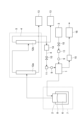
- the waste material S1 is supplied to the thermal decomposition unit 110, and the waste material S1 is thermally decomposed in the thermal decomposition unit 110.
- a first gas fraction S2, a pyrolysis oil S3, a mixture S4 of residues and metal fractions is produced.
- the first gas portion S2 may be discharged out of the system, or may be reused as oxygen-free gas in the thermal decomposition unit 110.
- the pyrolysis oil S3 is supplied to the hydrocracking unit 120 .
- the mixture S4 is supplied to the first separation unit 111 where it is separated into a residue portion S5 and a metal portion S6.
- the residue S5 is pulverized by the pulverization unit 112 and recovered as powdered carbide S7.
Landscapes
- Chemical & Material Sciences (AREA)
- Engineering & Computer Science (AREA)
- Organic Chemistry (AREA)
- Oil, Petroleum & Natural Gas (AREA)
- Chemical Kinetics & Catalysis (AREA)
- Materials Engineering (AREA)
- General Chemical & Material Sciences (AREA)
- Thermal Sciences (AREA)
- Physics & Mathematics (AREA)
- Life Sciences & Earth Sciences (AREA)
- Wood Science & Technology (AREA)
- Inorganic Chemistry (AREA)
- Health & Medical Sciences (AREA)
- Medicinal Chemistry (AREA)
- Polymers & Plastics (AREA)
- Sustainable Development (AREA)
- Production Of Liquid Hydrocarbon Mixture For Refining Petroleum (AREA)
- Coke Industry (AREA)
- Separation, Recovery Or Treatment Of Waste Materials Containing Plastics (AREA)
Priority Applications (3)
| Application Number | Priority Date | Filing Date | Title |
|---|---|---|---|
| EP23746758.4A EP4450597A4 (en) | 2022-01-27 | 2023-01-17 | PROCESS FOR THE PRODUCTION OF CHEMICALS AND CARBURES |
| CN202380018285.9A CN118613567A (zh) | 2022-01-27 | 2023-01-17 | 化学品及碳化物的制造方法 |
| US18/832,709 US12673872B2 (en) | 2022-01-27 | 2023-01-17 | Production method for chemical products and carbides |
Applications Claiming Priority (2)
| Application Number | Priority Date | Filing Date | Title |
|---|---|---|---|
| JP2022-010859 | 2022-01-27 | ||
| JP2022010859A JP7870171B2 (ja) | 2022-01-27 | 2022-01-27 | 化成品及び炭化物の製造方法 |
Publications (1)
| Publication Number | Publication Date |
|---|---|
| WO2023145544A1 true WO2023145544A1 (ja) | 2023-08-03 |
Family
ID=87471419
Family Applications (1)
| Application Number | Title | Priority Date | Filing Date |
|---|---|---|---|
| PCT/JP2023/001222 Ceased WO2023145544A1 (ja) | 2022-01-27 | 2023-01-17 | 化成品及び炭化物の製造方法 |
Country Status (6)
| Country | Link |
|---|---|
| US (1) | US12673872B2 (enExample) |
| EP (1) | EP4450597A4 (enExample) |
| JP (1) | JP7870171B2 (enExample) |
| CN (1) | CN118613567A (enExample) |
| TW (1) | TW202340435A (enExample) |
| WO (1) | WO2023145544A1 (enExample) |
Cited By (2)
| Publication number | Priority date | Publication date | Assignee | Title |
|---|---|---|---|---|
| WO2025023294A1 (ja) * | 2023-07-26 | 2025-01-30 | Eneos株式会社 | 化成品及び炭化物の製造方法並びに化成品の管理方法 |
| WO2026160306A1 (ja) * | 2025-01-23 | 2026-07-30 | Eneos株式会社 | 水素化処理油の製造方法 |
Families Citing this family (1)
| Publication number | Priority date | Publication date | Assignee | Title |
|---|---|---|---|---|
| JP7835460B2 (ja) * | 2024-07-16 | 2026-03-25 | 貞雄 青木 | SDGsリボリューション、三大同時リイクルシステム |
Citations (5)
| Publication number | Priority date | Publication date | Assignee | Title |
|---|---|---|---|---|
| JPS55500113A (enExample) * | 1978-02-15 | 1980-02-28 | ||
| JPS6134071A (ja) | 1984-07-26 | 1986-02-18 | Asahi Carbon Kk | ソフト系カ−ボンブラツク製造装置 |
| JP2003129066A (ja) * | 1993-04-03 | 2003-05-08 | Der Gruene Punkt Duales System Deutschland Ag | 使用済みのまたは廃物のプラスチックの処理方法 |
| JP2019533041A (ja) | 2016-09-22 | 2019-11-14 | サビック グローバル テクノロジーズ ベスローテン フェンノートシャップ | 熱分解、水添分解、水添脱アルキル化およびスチームクラッキングのステップを含む統合プロセス構成 |
| JP2020514298A (ja) * | 2017-01-05 | 2020-05-21 | サビック グローバル テクノロジーズ ベスローテン フェンノートシャップ | 廃棄プラスチックのプロピレンおよびクメンへの変換 |
Family Cites Families (8)
| Publication number | Priority date | Publication date | Assignee | Title |
|---|---|---|---|---|
| KR100675909B1 (ko) * | 2006-09-26 | 2007-02-02 | 주식회사 펄스에너지 | 합성수지 폐기물 열분해 유화 장치 및 방법 |
| WO2010137352A1 (ja) * | 2009-05-29 | 2010-12-02 | 株式会社ブリヂストン | 高分子系廃棄物の熱分解方法及び熱分解装置、炭化物の回収方法、並びに炭化物、該炭化物を含むゴム組成物及び該ゴム組成物を用いたタイヤ |
| TW201544204A (zh) * | 2014-05-20 | 2015-12-01 | Enrestec Inc | 廢輪胎商業化回收整合處理系統 |
| US12371626B2 (en) * | 2020-04-07 | 2025-07-29 | Totalenergies Onetech Belgium | Purification of waste plastic based oil with a high temperature hydroprocessing |
| CN112341843A (zh) * | 2020-11-09 | 2021-02-09 | 江西省永固新能源炭黑有限公司 | 一种废轮胎热解炭黑微氧化活化方法 |
| WO2022162298A1 (fr) * | 2021-01-29 | 2022-08-04 | Totalenergies Raffinage Chimie | Procede de purification d'une huile de pyrolyse en vue de sa valorisation par vapocraquage |
| CN113604239B (zh) * | 2021-08-26 | 2022-09-16 | 钢研晟华科技股份有限公司 | 一种废轮胎处理回收方法 |
| JP7870170B2 (ja) * | 2022-01-27 | 2026-06-04 | Eneos株式会社 | 化成品の製造方法 |
-
2022
- 2022-01-27 JP JP2022010859A patent/JP7870171B2/ja active Active
-
2023
- 2023-01-17 WO PCT/JP2023/001222 patent/WO2023145544A1/ja not_active Ceased
- 2023-01-17 EP EP23746758.4A patent/EP4450597A4/en active Pending
- 2023-01-17 CN CN202380018285.9A patent/CN118613567A/zh active Pending
- 2023-01-17 US US18/832,709 patent/US12673872B2/en active Active
- 2023-01-18 TW TW112102250A patent/TW202340435A/zh unknown
Patent Citations (5)
| Publication number | Priority date | Publication date | Assignee | Title |
|---|---|---|---|---|
| JPS55500113A (enExample) * | 1978-02-15 | 1980-02-28 | ||
| JPS6134071A (ja) | 1984-07-26 | 1986-02-18 | Asahi Carbon Kk | ソフト系カ−ボンブラツク製造装置 |
| JP2003129066A (ja) * | 1993-04-03 | 2003-05-08 | Der Gruene Punkt Duales System Deutschland Ag | 使用済みのまたは廃物のプラスチックの処理方法 |
| JP2019533041A (ja) | 2016-09-22 | 2019-11-14 | サビック グローバル テクノロジーズ ベスローテン フェンノートシャップ | 熱分解、水添分解、水添脱アルキル化およびスチームクラッキングのステップを含む統合プロセス構成 |
| JP2020514298A (ja) * | 2017-01-05 | 2020-05-21 | サビック グローバル テクノロジーズ ベスローテン フェンノートシャップ | 廃棄プラスチックのプロピレンおよびクメンへの変換 |
Non-Patent Citations (1)
| Title |
|---|
| See also references of EP4450597A4 |
Cited By (2)
| Publication number | Priority date | Publication date | Assignee | Title |
|---|---|---|---|---|
| WO2025023294A1 (ja) * | 2023-07-26 | 2025-01-30 | Eneos株式会社 | 化成品及び炭化物の製造方法並びに化成品の管理方法 |
| WO2026160306A1 (ja) * | 2025-01-23 | 2026-07-30 | Eneos株式会社 | 水素化処理油の製造方法 |
Also Published As
| Publication number | Publication date |
|---|---|
| US12673872B2 (en) | 2026-07-07 |
| CN118613567A (zh) | 2024-09-06 |
| JP2023109381A (ja) | 2023-08-08 |
| US20250091882A1 (en) | 2025-03-20 |
| EP4450597A4 (en) | 2025-12-10 |
| TW202340435A (zh) | 2023-10-16 |
| JP7870171B2 (ja) | 2026-06-04 |
| EP4450597A1 (en) | 2024-10-23 |
Similar Documents
| Publication | Publication Date | Title |
|---|---|---|
| WO2023145545A1 (ja) | 化成品の製造方法 | |
| CN111032833B (zh) | 使用再循环级间产物多级提质烃热解焦油 | |
| US12673872B2 (en) | Production method for chemical products and carbides | |
| JP5820890B2 (ja) | 芳香族化合物を含む留分から高付加価値の芳香族製品およびオレフィン製品を生産する方法 | |
| KR101503069B1 (ko) | 유동층 접촉 분해 공정의 경질 사이클 오일로부터 고부가 방향족 및 올레핀을 제조하는 방법 | |
| KR101800463B1 (ko) | 석유, 석탄 또는 나무에서 유래되는 탄화수소 유분으로부터 고부가 방향족 제품 및 경질 파라핀 제품을 제조하는 방법 | |
| RU2525470C2 (ru) | Каталитическая система и способ гидропереработки тяжелых масел | |
| US20140061096A1 (en) | Upgrading Hydrocarbon Pyrolysis Products by Hydroprocessing | |
| WO2013033590A2 (en) | Upgrading hydrocarbon pyrolysis products by hydroprocessing | |
| EP0175518B1 (en) | Process for the preparation of super needle coke | |
| WO2010147583A1 (en) | Removal of asphaltene contaminants from hydrocarbon streams using carbon based adsorbents | |
| WO2025023294A1 (ja) | 化成品及び炭化物の製造方法並びに化成品の管理方法 | |
| CN108102708B (zh) | 一种煤焦油生产针状焦的组合工艺方法 | |
| KR20110051473A (ko) | 방향족 화합물을 포함하는 유분으로부터 고부가 방향족 제품 및 올레핀 제품을 생산하는 방법 | |
| US4179355A (en) | Combination residual oil hydrodesulfurization and thermal cracking process | |
| US20150136652A1 (en) | Process for hydrotreating a coal tar stream | |
| GB2104544A (en) | Centre ring hydrogenation and hydrocracking of poly-nuclear aromatic compounds | |
| KR20190008287A (ko) | 원유의 석유화학제품으로의 전환 | |
| CN110964562A (zh) | 不同碳氢料的上流式加氢反应过程组合方法 | |
| CN118853233B (zh) | 一种煤焦油加工生产清洁燃料油的方法 | |
| JPH02153992A (ja) | 炭化水素系原料の水素化分解方法 | |
| CN110938461A (zh) | 一种含煤沥青的煤焦油的悬浮床加氢改质方法 | |
| CN110964561A (zh) | 高芳烃悬浮床加氢和溶剂法针状焦原料提取过程组合方法 | |
| WO2026160302A1 (ja) | 水素化処理油およびその製造方法 | |
| WO2025205967A1 (ja) | オレフィンの製造方法 |
Legal Events
| Date | Code | Title | Description |
|---|---|---|---|
| 121 | Ep: the epo has been informed by wipo that ep was designated in this application |
Ref document number: 23746758 Country of ref document: EP Kind code of ref document: A1 |
|
| WWE | Wipo information: entry into national phase |
Ref document number: 2023746758 Country of ref document: EP |
|
| ENP | Entry into the national phase |
Ref document number: 2023746758 Country of ref document: EP Effective date: 20240718 |
|
| WWE | Wipo information: entry into national phase |
Ref document number: 202380018285.9 Country of ref document: CN |
|
| WWE | Wipo information: entry into national phase |
Ref document number: 18832709 Country of ref document: US |
|
| NENP | Non-entry into the national phase |
Ref country code: DE |
|
| WWP | Wipo information: published in national office |
Ref document number: 18832709 Country of ref document: US |
|
| WWG | Wipo information: grant in national office |
Ref document number: 18832709 Country of ref document: US |