WO2023095927A1 - 制御装置、ロボット制御システム、及びロボット制御方法 - Google Patents
制御装置、ロボット制御システム、及びロボット制御方法 Download PDFInfo
- Publication number
- WO2023095927A1 WO2023095927A1 PCT/JP2022/044047 JP2022044047W WO2023095927A1 WO 2023095927 A1 WO2023095927 A1 WO 2023095927A1 JP 2022044047 W JP2022044047 W JP 2022044047W WO 2023095927 A1 WO2023095927 A1 WO 2023095927A1
- Authority
- WO
- WIPO (PCT)
- Prior art keywords
- gripping
- hand
- state
- unit
- control unit
- Prior art date
- Legal status (The legal status is an assumption and is not a legal conclusion. Google has not performed a legal analysis and makes no representation as to the accuracy of the status listed.)
- Ceased
Links
Images


Classifications
-
- B—PERFORMING OPERATIONS; TRANSPORTING
- B25—HAND TOOLS; PORTABLE POWER-DRIVEN TOOLS; MANIPULATORS
- B25J—MANIPULATORS; CHAMBERS PROVIDED WITH MANIPULATION DEVICES
- B25J15/00—Gripping heads and other end effectors
- B25J15/08—Gripping heads and other end effectors having finger members
-
- B—PERFORMING OPERATIONS; TRANSPORTING
- B25—HAND TOOLS; PORTABLE POWER-DRIVEN TOOLS; MANIPULATORS
- B25J—MANIPULATORS; CHAMBERS PROVIDED WITH MANIPULATION DEVICES
- B25J13/00—Controls for manipulators
- B25J13/08—Controls for manipulators by means of sensing devices, e.g. viewing or touching devices
-
- B—PERFORMING OPERATIONS; TRANSPORTING
- B25—HAND TOOLS; PORTABLE POWER-DRIVEN TOOLS; MANIPULATORS
- B25J—MANIPULATORS; CHAMBERS PROVIDED WITH MANIPULATION DEVICES
- B25J13/00—Controls for manipulators
- B25J13/08—Controls for manipulators by means of sensing devices, e.g. viewing or touching devices
- B25J13/081—Touching devices, e.g. pressure-sensitive
- B25J13/082—Grasping-force detectors
-
- B—PERFORMING OPERATIONS; TRANSPORTING
- B25—HAND TOOLS; PORTABLE POWER-DRIVEN TOOLS; MANIPULATORS
- B25J—MANIPULATORS; CHAMBERS PROVIDED WITH MANIPULATION DEVICES
- B25J13/00—Controls for manipulators
- B25J13/08—Controls for manipulators by means of sensing devices, e.g. viewing or touching devices
- B25J13/085—Force or torque sensors
-
- B—PERFORMING OPERATIONS; TRANSPORTING
- B25—HAND TOOLS; PORTABLE POWER-DRIVEN TOOLS; MANIPULATORS
- B25J—MANIPULATORS; CHAMBERS PROVIDED WITH MANIPULATION DEVICES
- B25J9/00—Program-controlled manipulators
- B25J9/16—Program controls
- B25J9/1612—Program controls characterised by the hand, wrist, grip control
-
- G—PHYSICS
- G05—CONTROLLING; REGULATING
- G05B—CONTROL OR REGULATING SYSTEMS IN GENERAL; FUNCTIONAL ELEMENTS OF SUCH SYSTEMS; MONITORING OR TESTING ARRANGEMENTS FOR SUCH SYSTEMS OR ELEMENTS
- G05B2219/00—Program-control systems
- G05B2219/30—Nc systems
- G05B2219/39—Robotics, robotics to robotics hand
- G05B2219/39505—Control of gripping, grasping, contacting force, force distribution
-
- G—PHYSICS
- G05—CONTROLLING; REGULATING
- G05B—CONTROL OR REGULATING SYSTEMS IN GENERAL; FUNCTIONAL ELEMENTS OF SUCH SYSTEMS; MONITORING OR TESTING ARRANGEMENTS FOR SUCH SYSTEMS OR ELEMENTS
- G05B2219/00—Program-control systems
- G05B2219/30—Nc systems
- G05B2219/39—Robotics, robotics to robotics hand
- G05B2219/39532—Gripping force sensor build into finger
Definitions
- the present disclosure relates to a control device, a robot control system, and a robot control method.
- a control device includes a hand control section that controls a hand section.
- the hand section is capable of gripping an object to be gripped, and has a plurality of sensors.
- the hand control unit can acquire gripping force information acting on the gripping object from the hand unit or moment information acting on the gripping object in the hand unit based on the outputs of the plurality of sensors. Configured.
- the hand control section estimates a gripping state of the gripping object by the hand section based on the gripping force information or the moment information.
- a robot control system includes the control device and a robot having a hand unit.
- a robot control method includes acquiring gripping force information acting on a gripped object from a hand or moment information acting on the gripped object in the hand.
- the robot control method includes estimating a gripping state of the gripping object by the hand based on the gripping force information or the moment information.
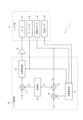
- FIG. 1 is a block diagram showing a configuration example of a robot control system according to an embodiment
- FIG. 3 is a block diagram showing a configuration example of a hand control section and a hand section
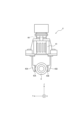
- FIG. FIG. 4 is a schematic diagram showing an example of a mode in which a hand section grips a gripping target
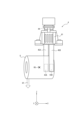
- 4 is a side view of FIG. 3
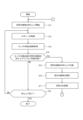
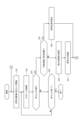
- FIG. 11 is a flow chart showing an example of a procedure corresponding to a gripping correction state
- FIG. FIG. 11 is a flow chart showing an example of a procedure for dealing with an abnormal gripping state
- FIG. FIG. 11 is a flow chart showing an example of a procedure for dealing with a grip-impossible state
- gripping When gripping is controlled based on the coefficient of friction, gripping may become unstable due to a decrease in the coefficient of friction between the hand and the workpiece due to deterioration of the hand over time. In addition, when gripping is controlled based on the magnitude of the force acting on the gripped object, gripping may become unstable due to a rotational moment acting on the gripped object. It is required to improve the stability of gripping by the robot.
- a robot control system 1 includes a robot 2 and a control device 70.
- the robot 2 has an arm 3 and a hand section 4 .
- Arm 3 may comprise joints and links.
- the hand part 4 is configured to be able to grip a gripping object 8 (see FIG. 3).
- a control device 70 of this embodiment includes a robot control section 10 and a hand control section 20 .
- the control device 70 may include at least the hand control section 20 .
- the robot control unit 10 operates the arm 3 of the robot 2 based on the information for controlling the operation of the robot 2 to move the hand unit 4 to the position of the object 8 to be grasped.
- the action of the hand unit 4 approaching the position of the grasped object 8 is also referred to as an approach action.
- the robot control unit 10 controls the approach operation of the hand unit 4 to the grasped object 8 .
- the hand control unit 20 controls the hand unit 4 and causes the hand unit 4 to grip the gripping object 8 .
- the robot control unit 10 and the hand control unit 20 may perform the operations described below, for example.
- the robot control unit 10 controls the arm 3 to move the hand unit 4 to a position where the object 8 to be grasped can be grasped.
- the hand control unit 20 determines a target position for gripping the gripping target object 8 and controls the hand unit 4 so that the gripping target object 8 is gripped after the hand unit 4 has moved to the gripping target object 8 .
- the robot control unit 10 controls the arm 3 so as to lift the hand unit 4 while the hand unit 4 is gripping the gripping object 8 , thereby lifting the gripping object 8 and moving the gripping object 8 . move to a point.
- the hand control unit 20 lowers the gripping force of the gripped object 8 in a state in which the lifted gripped object 8 has moved to the target point, separates the gripped object 8 from the hand unit 4, and places the gripped object 8 at the target point.
- the robot control unit 10 may generate and acquire information for controlling the motion of the robot 2 by itself.
- the robot control unit 10 may acquire information for controlling the motion of the robot 2 from an external device such as the information processing device 50 connected via the network 60 or not via the network 60 .
- the hand control unit 20 may generate and acquire information for controlling the operation of the hand unit 4 by itself.
- the hand control section 20 may acquire information for controlling the operation of the hand section 4 from the robot control section 10 .
- the robot control section 10 and the hand control section 20 may be configured integrally.
- the robot controller 10 may include at least one processor to provide control and processing power to perform various functions.
- the processor can execute programs that implement various functions of the robot controller 10 .
- a processor may be implemented as a single integrated circuit.
- An integrated circuit is also called an IC (Integrated Circuit).
- a processor may be implemented as a plurality of communicatively coupled integrated and discrete circuits. Processors may be implemented based on various other known technologies.
- the robot control unit 10 may include a storage unit.
- the storage unit may include an electromagnetic storage medium such as a magnetic disk, or may include a memory such as a semiconductor memory or a magnetic memory.
- the storage unit stores various information, programs executed by the robot control unit 10, and the like.
- the storage section may function as a work memory for the robot control section 10 . At least part of the storage unit may be configured separately from the robot control unit 10 .
- the hand control unit 20 includes a state estimation unit 21, a conversion unit 22, a position control unit 24, and adders 25, 26 and 27.
- the hand control unit 20 may be configured including at least one processor.
- the hand control section 20 may be configured including a storage section.
- the robot control unit 10 acquires image information from a camera or the like connected to the robot control unit 10, and executes image processing or the like for controlling the arm 3 of the robot 2 or recognizing the grasped object 8.
- the hand control unit 20 controls the hand unit 4 to grip the recognized gripping object 8, for example.
- the calculation load of the robot control section 10 and the calculation load of the hand control section 20 are different from each other.
- the robot control section 10 and the hand control section 20 may be configured separately.
- the robot control unit 10 may be configured as a computer installed on the main body of the robot 2 or at the foot of the arm 3 .
- the hand control unit 20 may be configured as a processor such as a CPU incorporated inside the hand unit 4 .
- the hand controller 20 may be configured identically or similarly to the robot controller 10 .
- the hand unit 4 includes a motor 41, an encoder 42, a contact force sensor 43, and a force sensor 44.
- the motor 41 is configured as a servo motor such as a stepping motor, for example, and controls the rotation angle based on a control signal.
- the encoder 42 detects the rotation angle of the motor 41 and outputs it to the hand control section 20 .
- the encoder 42 detects the position or orientation of the arm 3 or hand section 4 of the robot 2, or the velocity or acceleration.
- the hand section 4 may further include a motion sensor.
- a motion sensor may be installed at the joint of the arm 3 of the robot 2 .
- the encoder 42, contact force sensor 43 and force sensor 44 are also simply referred to as sensors.
- the hand section 4 has a plurality of sensors.
- the contact force sensor 43 and force sensor 44 will be described later.
- the hand section 4 has a plurality of fingers.
- the hand section 4 includes, for example, two fingers 45A and 45B.
- the hand unit 4 controls the distance between the two fingers 45A and 45B by driving the motor 41, and grips the gripping object 8 with the two fingers 45A and 45B.
- the hand unit 4 lifts the gripping object 8 in the Z-axis direction by moving in the positive direction of the Z-axis while gripping the gripping object 8 .
- the negative direction of the Z-axis corresponds to the direction in which the gravitational force acts on the object 8 to be grasped.
- the direction in which the gravitational force acts on the grasped object 8 is also referred to as the vertical direction.
- the finger 45A has a contact force sensor 43A at a portion that contacts the grasped object 8.
- the finger 45B has a contact force sensor 43B at a portion that contacts the grasped object 8 . That is, the contact force sensor 43 includes contact force sensors 43A and 43B.
- the contact force sensors 43A and 43B detect forces received from the grasped object 8 when the fingers 45A and 45B grasp the grasped object 8 .
- the force that the fingers 45A and 45B receive from the grasped object 8 is also called contact force.
- the contact force sensor 43 may be configured as a piezoelectric sensor, strain gauge, or the like.
- the contact force sensor 43 may be configured to detect forces in directions along multiple axes.
- the contact force sensor 43 may include a plurality of sensors corresponding to forces in a plurality of directions.
- the contact force information may be acquired based on not only the detection result of the contact force sensor 43 but also the detection result of a current sensor that detects the current flowing through the motor that drives the robot 2 .
- the hand part 4 has a force sensor 44 between the body part supporting the two fingers 45A and 45B and the arm 3 of the robot 2.
- the force sensor 44 can detect force or torque acting on the body portion via the two fingers 45A and 45B.
- the force sensor 44 can detect gripping forces applied to the hand portion 4 in the X-axis direction, the Y-axis direction, and the Z-axis direction as shown in FIG. Further, the force sensor 44 can detect moment forces acting on the hand portion 4 around the X axis, the Y axis, and the Z axis.
- FIG. 4 it is assumed that the two fingers 45A and 45B grip the gripped object 8 at a position shifted from the center of gravity 8G of the gripped object 8 in the positive direction of the X axis.
- a torque 8T around the Y-axis acts from the gripping object 8 to the fingers 45A and 45B.
- the torque 8T corresponds to the moment generated in the grasped object 8 due to the grasped object 8 being displaced from the center of gravity 8G.
- the torque 8T acts on the body portion via the two fingers 45A and 45B gripping the gripping object 8.
- the force sensor 44 detects torque acting on the body portion via the two fingers 45A and 45B.
- the force sensor 44 also detects the force in the negative direction of the Z axis, that is, the gravity acting on the grasped object 8 and the hand portion 4 .
- the force sensor 44 may be configured as a piezoelectric sensor, strain gauge, or the like.
- the force sensor 44 may include a plurality of sensors corresponding to forces or torques in a plurality of directions.
- the force sensor 44 may be installed not only on the hand unit 4 but also on the arm 3 of the robot 2 or the like.
- the hand control section 20 may acquire information representing the position of the hand section 4 based on information from at least one of a plurality of sensors including the encoder 42, the contact force sensor 43, the force sensor 44, and the like.
- Information representing the position of the hand unit 4 is also referred to as position information of the hand unit 4 .
- the position information of the hand unit 4 may include information on the position at which the gripping object 8 is gripped.
- the hand control unit 20 may control the hand unit 4 as described below.
- the hand control section 20 outputs a control signal for controlling the rotation angle of the motor 41 of the hand section 4 from the position control section 24 to the motor 41 of the hand section 4 .
- the hand control unit 20 outputs a control signal to the hand unit 4 via a driver 28 that amplifies the signal.
- the motor 41 controls the rotation angle based on the control signal.
- the encoder 42 detects the rotation angle of the motor 41 and outputs it to the position control section 24 and the state estimation section 21 of the hand control section 20 .
- the contact force sensor 43 detects the contact force when the fingers 45A and 45B contact the grasped object 8 and outputs it to the state estimator 21 and the adder 25 of the hand control unit 20.
- the contact force detected by the contact force sensor 43 while the hand unit 4 is gripping the gripping object 8 corresponds to the gripping force acting on the gripping object 8 from the hand unit 4 .
- Information representing the gripping force acting on the gripped object 8 from the hand unit 4 is also referred to as gripping force information.
- the hand control unit 20 acquires grip force information from the contact force sensor 43 .
- the force sensor 44 detects the torque acting on the fingers 45A and 45B and outputs it to the state estimation section 21 of the hand control section 20.
- the torque detected by the force sensor 44 while the hand portion 4 is gripping the gripping object 8 corresponds to the gripping force or moment acting on the gripping object 8 in the hand portion 4 .
- Information representing the gripping force acting on the gripped object 8 in the hand unit 4 is also referred to as gripping force information.
- the gripping force information includes gripping force information based on the output of the contact force sensor 43 and gripping force information based on the output of the force sensor 44 .
- the gripping force information of the contact force sensor 43 is the stress that the fingers of the hand portion 4 receive from the gripped object 8 .
- the gripping force information of the force sensor 44 is the stress that the main body of the hand unit 4 receives from the gripped object 8 .
- Information representing the moment acting on the grasped object 8 in the hand portion 4 is also referred to as moment information.
- the hand control unit 20 acquires grip force information or moment information from the force sensor 44 .
- the hand control unit 20 uses the state estimation unit 21 to estimate the state in which the hand unit 4 is gripping the gripping object 8 .
- a state in which the hand unit 4 is gripping the gripping target 8 is also referred to as a gripping state.
- the state estimation unit 21 estimates the gripping state based on the detection results of the rotation angle, contact force, and torque of the motor 41 .
- a normal gripping state corresponds to a state in which the hand unit 4 can normally grip the gripping object 8 .
- the gripping correction state corresponds to a state in which the gripping state needs to be corrected in order for the hand unit 4 to grip the gripping object 8 normally.
- the abnormal gripping state corresponds to a state in which the gripping state of the gripping object 8 by the hand unit 4 is abnormal.
- the gripping impossible state corresponds to a state in which the hand unit 4 is trying to grip the gripping target object 8 in a state in which the gripping target object 8 cannot be gripped.
- the state estimation unit 21 may estimate the gripping state based on the position information of the hand unit 4. For example, the state estimating unit 21 may acquire the gripping force information or the moment information even though the position of the hand unit 4 is within a predetermined range or the gripping position is within the tolerance range of the target gripping position. In this case, it can be estimated that the gripping correction state or the gripping abnormal state.
- the state estimation unit 21 may estimate that the grip state is the grip correction state. Specifically, when the contact force sensor 43 can detect the contact force to some extent, but the gripping force is smaller than the first gripping force threshold, it may be estimated that the gripping correction state is in effect.
- the grip correction state includes, for example, a state in which the gripped object 8 slips while the hand unit 4 is gripping the gripped object 8 . In other words, the gripping correction state corresponds to a state in which the gripping force, the gripping position, or the like can be corrected so that the gripped object 8 does not slip.
- the first gripping force threshold value may be set, for example, as a value that exceeds the negative tolerance range of the reference gripping force refT that serves as a reference.
- the contact force may drop below the first grip force threshold if the gripped object 8 slips off the fingers 45A or 45B or if the gripped object 8 is angled with respect to the fingers 45A or 45B.
- the reference gripping force refT may be determined for each gripped object 8 .
- the reference gripping force refT may be set by the user for each gripped object 8, for example.
- the reference gripping force refT may be set for each gripped object 8 and stored in the storage unit, or may be read from the storage unit according to the gripped object 8 .
- the robot control system 1 may have an input unit such as a keyboard, pointer, or touch panel that receives user input.
- the state estimation unit 21 may estimate that the gripping state is the gripping correction state when the rotational moment detected by the force sensor 44 is greater than or equal to the moment threshold while the gripping object 8 is being gripped. For example, when the moment about the Y axis or the moment about the X axis increases to a moment threshold or more, the state estimation unit 21 may estimate that the grip state is the grip correction state.
- the moment threshold may be set, for example, based on the shape or mass of the gripped object 8, or may be set based on the magnitude of torque assumed to occur when the gripped object 8 slips from the hand unit 4. you can Also, the moment threshold may be set by the user.
- the moment threshold value may be a set value held in advance in the storage unit.
- the robot control system 1 may have an input unit such as a keyboard, pointer, or touch panel that receives user input.
- the storage unit is not limited to the storage unit of the robot control unit 10 or the hand control unit 20, and may be a storage unit connected to the robot control unit 10 or the hand control unit 20 over a network.
- the state estimating section 21 may estimate the gripping state based on the force sensor 44 acting horizontally with the surface of the finger 45A or the finger 45B of the hand section 4 as the gripping force information. Specifically, in this embodiment, when the force in the X-axis direction shown in FIGS. 3 and 4 is detected, it may be estimated that the grip state is the grip correction state.
- the force in the X-axis direction corresponds to the force in the direction in which the grasped object 8 slides on the finger 45A or the finger 45B.
- the state estimating unit 21 divides the force (Fx) in the X-axis direction detected by the force sensor 44 by the mass (m) of the grasped object 8 (Fx/m), and obtains the X-axis force of the grasped object 8 . Calculated as axial force.
- the state estimating unit 21 determines whether the gripping object 8 is slipping on the finger 45A or the finger 45B. It may be determined that the gripping state is the gripping correction state.
- the predetermined threshold may be set to 0.1-100 m/s 2 , for example.
- the state estimation unit 21 may estimate whether the grip state is the grip correction state based on at least one condition.
- the state estimation unit 21 may estimate that the gripping state is the gripping correction state when at least one of two or more conditions is satisfied.
- the state estimation unit 21 may estimate that the gripping state is the gripping correction state when two or more conditions are satisfied at the same time.
- various states of the gripped object 8 can be flexibly dealt with. For example, based on the gripping force information and the moment information, it is possible to detect the drop of the gripped object 8 based on the moment information and control the gripping force so as to prevent the drop based on the gripping force information.
- the contact force sensor 43 and the force sensor 44 it is possible to flexibly deal with various states of the grasped object 8. For example, while the force sensor 44 detects the drop of the gripped object 8, the contact force sensor 43 can control the gripping force so as to prevent the drop.
- the state estimation unit 21 may acquire information representing the weight of the grasped object 8 based on information from at least one of a plurality of sensors including the encoder 42, the contact force sensor 43, the force sensor 44, and the like. Information representing the weight of the gripping object 8 is also referred to as weight information of the gripping object 8 . The state estimation unit 21 may estimate the gripping state based on the weight information.
- the state estimator 21 may estimate that the gripping state is an abnormal gripping state when the weight of the gripped object 8 (the force in the negative direction of the Z-axis) is equal to or less than a predetermined weight.
- the gripping abnormal state corresponds to, for example, a state in which the hand unit 4 cannot grip the gripping object 8 and drops it.
- the state estimating unit 21 estimates that the grasped object 8 has fallen from the hand unit 4 when the detection value of the sensor such as the contact force sensor 43 or the force sensor 44 is 0, and determines that the grasping state is an abnormal grasping state. It can be assumed that there is
- the state estimation unit 21 may estimate that the gripping state is the abnormal gripping state when the gripping force information is equal to or less than the second gripping force threshold.
- the second gripping force threshold may be set to a value smaller than the first gripping force threshold.
- the state estimation unit 21 continuously estimates that the gripping state is the abnormal gripping state a plurality of times, it estimates that the gripping state is the gripping impossible state.
- the state estimation unit 21 estimates that the gripping state is neither the gripping corrected state nor the gripping abnormal state, it estimates that the gripping state is the normal gripping state.
- the gripping state is the normal gripping state, the gripping operation of the hand unit 4 may be continued.
- the state estimating unit 21 determines whether the gripping state is the normal gripping state, the abnormal gripping state, or the gripping corrected state based on the information output by at least one of the plurality of sensors. It is estimated whether the state of The state estimation unit 21 outputs the estimation result of the gripping state to the robot control unit 10 .
- the robot control unit 10 or the hand control unit 20 stops the gripping operation by the hand unit 4 .
- the robot control unit 10 may correct the approach motion of the hand unit 4 toward the gripped object 8 and restart the gripping motion.
- the hand control unit 20 may correct the gripping mode and restart the gripping operation.
- the state estimating unit 21 When the state estimating unit 21 estimates that the gripping state is the corrected gripping state, the state estimating unit 21 adds the correction value Tx of the gripping force by the hand unit 4 to the adder so that the contact force is corrected according to the estimation result of the gripping state. 26.
- the state estimation unit 21 estimates that the grip state is the grip correction state, the grip force is corrected so as to increase the contact force acting on the grip object 8 from the finger 45A or the finger 45B of the hand unit 4.
- a value Tx may be set and output to adder 26 . That is, when the grip state is the grip correction state, the hand control unit 20 can correct the grip state of the hand unit 4 by the state estimation unit 21 .
- the adder 26 adds the gripping force correction value Tx and refT and outputs the result to the adder 25 .
- the adder 25 subtracts the detection result (Tm) of the contact force sensor 43 from the addition result of the grip force correction value Tx and refT, and outputs the result as ⁇ T to the conversion unit 22 .
- ⁇ T is the calculation result of Tx+refT ⁇ Tm, and represents the upper limit setting range of the reference gripping force refT.
- the gripping force correction value Tx is set so that the conversion unit 22 outputs the upper limit setting range ⁇ T of the reference gripping force refT or ⁇ Tx smaller than ⁇ T. to decide. Note that the conversion unit 22 can convert the grip force information into position information.
- the state estimation unit 21 may increase the reference gripping force refT by ⁇ Ta so that the gripping target 8 can be gripped at the next gripping opportunity. That is, the hand control unit 20 may cause the state estimation unit 21 to increase the value of the reference gripping force refT to be used at the next gripping opportunity.
- ⁇ Ta may be set to a value that satisfies the relationship ⁇ Tx ⁇ Ta ⁇ T.
- the conversion unit 22 converts ⁇ T into ⁇ X and outputs it to the adder 27 .
- ⁇ X represents a value by which the gripping position deviates from the control target.
- the conversion unit 22 may pass ⁇ X through a filter and output it to the adder 27 .
- the filter may include, for example, a low pass filter that cuts high frequency components for stability of the control system.
- the adder 27 adds ⁇ X and ref ⁇ and outputs the result to the position control section 24 .
- the addition result of ⁇ X and ref ⁇ represents the control target value of the rotation angle of the motor 41 .
- the position control unit 24 controls the motor 41 based on the detection result of the rotation angle of the motor 41 acquired from the encoder 42 and the control target value so that the rotation angle of the motor 41 approaches the control target value.
- ref ⁇ may be, for example, a value obtained by converting refT into a rotation angle.
- the hand control unit 20 controls the movement of the gripped object 8 from the hand unit 4 based on the outputs of a plurality of sensors including the encoder 42, the contact force sensor 43, the force sensor 44, and the like. and moment information acting on the gripping object 8 in the hand unit 4 can be obtained.
- the hand control unit 20 estimates the gripping state of the gripping object 8 by the hand unit 4 based on the gripping force information or the moment information.
- the hand control unit 20 can feed back outputs of sensors such as the contact force sensor 43 and the force sensor 44 to control the motor 41 .
- the robot control unit 10 according to the present embodiment can improve the stability of gripping by correcting the gripping force or correcting the gripping approach according to the gripping state.
- the hand control unit 20 subtracts the detection result (Tm) of the contact force sensor 43 from the addition result of the gripping force correction value Tx and refT, and then converts the result into ⁇ X. After converting the addition result of the correction value Tx of the gripping force and refT into ⁇ X, the hand control unit 20 converts the value indicating the current position of the hand unit 4 from the addition result of ⁇ X and ref ⁇ to the detection result of the encoder 42 ( ⁇ m) may be subtracted for position control.
- the hand unit uses, for example, a force Fz that the object receives in the direction of gravity (negative direction of the Z-axis), a force Fh in the gripping direction (the normal direction of the surface of the gripped object),
- the object may be gripped by controlling the hand so that the relationship ⁇ Fh>Fz is established between the coefficient of friction ⁇ between the fingers of the hand and the object to be gripped, which is obtained in advance.
- the hand unit is controlled so as to correct the value of Fh to a larger value to maintain the grip of the object.
- such a hand control unit controls the hand unit without changing the value of ⁇ obtained in advance, even if the coefficient of friction ⁇ decreases due to deterioration over time, the change in ⁇ is not considered.
- the control makes the grip unstable.
- such a hand control unit detects the value of Fz but controls the hand unit without considering the moment of rotation. A rotational moment acts on the object, and gripping becomes unstable due to control that does not consider the rotational moment.
- the robot control unit 10 can control the motor 41 in consideration of the torque, thereby improving the stability of gripping.
- the robot control unit 10 or the hand control unit 20 may execute a robot control method including procedures of flowcharts illustrated in FIGS.
- the robot control method may be implemented as a robot control program that is executed by a processor that constitutes the robot control unit 10 or the hand control unit 20 .
- the robot control program may be stored on a non-transitory computer-readable medium.
- the robot control unit 10 or the hand control unit 20 may cope with the case where the grip state of the robot 2 is the grip correction state by executing the procedure of the flowchart illustrated in FIG.
- the robot control unit 10 starts lifting the grasped object 8 (step S1).
- the robot control unit 10 and the hand control unit 20 control the robot 2 so that the robot 2 grips and lifts the gripping object 8 (step S2).
- the robot control unit 10 moves the hand unit 4 to the gripping target object 8 by controlling the arm 3 so that the hand unit 4 can grip the gripping target object 8 .
- the hand control unit 20 controls the hand unit 4 to grip the gripping target object 8 while the hand unit 4 has moved to the gripping target object 8 .
- the robot control unit 10 lifts the grasped object 8 by controlling the arm 3 so as to raise the hand unit 4 while the hand unit 4 grasps the grasped object 8 .
- the hand control unit 20 reduces the gripping force of the gripped object 8 in a state in which the lifted gripped object 8 has moved to the movement target, separates the gripped object 8 from the hand unit 4, and places the gripped object 8 on the movement target.
- the hand control section 20 acquires the detection result of the sensor such as the contact force sensor 43 or the force sensor 44 while the hand section 4 is lifting the grasped object 8 (step S3).
- the hand control unit 20 determines whether or not the condition of the gripping correction state is satisfied based on the detection result of the sensor (step S4). For example, when the moment about the X-axis or the moment about the Y-axis detected by the force sensor 44 is greater than or equal to the moment threshold value, the hand control unit 20 determines that the conditions for the gripping correction state are satisfied, and the gripping state changes to the gripping correction state. state. If both the moment about the X-axis and the moment about the Y-axis detected by the force sensor 44 are less than the moment threshold value, the hand control unit 20 determines whether the condition of the gripping correction state regarding the contact force or the like is satisfied. good.
- step S4 When the hand control unit 20 does not satisfy the conditions for the gripping correction state (step S4: NO), the process proceeds to step S6.
- step S4 When the condition of the gripping correction state is satisfied (step S4: YES), the hand control unit 20 determines the gripping force correction value Tx (step S5).
- the robot control unit 10 determines whether the lifting of the grasped object 8 has been completed (step S6). Specifically, the robot control unit 10 determines that the lifting of the gripped object 8 is completed when the gripped object 8 is placed at the target point after being lifted. When the lifting of the grasped object 8 is completed (step S6: YES), the robot control unit 10 ends execution of the procedure of the flowchart of FIG. When the lifting of the grasped object 8 is not completed (step S6: NO), the robot control unit 10 returns to the control procedure of the robot 2 in step S2.
- the robot control unit 10 or the hand control unit 20 may respond to the case where the gripping state of the robot 2 is in an abnormal gripping state by executing the procedure of the flowchart illustrated in FIG.
- the robot control unit 10 starts lifting the grasped object 8 (step S11).
- the robot control unit 10 and the hand control unit 20 control the robot 2 so that the robot 2 grips and lifts the gripping object 8 (step S12).
- the robot control section 10 and the hand control section 20 may control the robot 2 in the same or similar manner as the procedure of step S2 in FIG.
- the hand control unit 20 acquires the detection result of the sensor such as the contact force sensor 43 or the force sensor 44 while the hand unit 4 is lifting the grasped object 8 (step S13).
- the hand control unit 20 determines whether the detected value of the sensor is the value in the state in which the grasped object 8 is not lifted (step S14). In this embodiment, it is assumed that the value is 0 when the object to be grasped 8 is not lifted.
- step S14 When the detected value of the sensor is 0 (step S14: YES), the robot control unit 10 presumes that the grasped object 8 has fallen from the hand unit 4, and stops lifting the grasped object 8 (step S15). .
- the robot control unit 10 selects another object as the gripping object 8 (step S16).
- the robot control unit 10 changes the grasping force for lifting the selected grasped object 8 (step S17).
- the robot control unit 10 returns to the procedure of lifting the grasped object 8 in step S11 so that the grasped object 8 selected in the procedures of steps S16 and S17 is lifted with the changed grasping force.
- step S14 When the detected value of the sensor is not 0 (step S14: NO), the robot control unit 10 presumes that the grasped object 8 has been grasped, continues to lift the grasped object 8, and determines whether the lifting is completed. (step S18). When the lifting of the grasped object 8 is completed (step S18: YES), the robot control unit 10 ends execution of the procedure of the flowchart of FIG. When the lifting of the grasped object 8 is not completed (step S18: NO), the robot control unit 10 returns to the control procedure of the robot 2 in step S12.
- the robot control unit 10 or the hand control unit 20 may cope with the case where the gripping state of the robot 2 is the non-grippable state by executing the procedure of the flowchart illustrated in FIG.
- the robot control unit 10 starts lifting the grasped object 8 (step S21).
- the robot control unit 10 and the hand control unit 20 control the robot 2 so that the robot 2 grips and lifts the gripping object 8 (step S22).
- the robot control section 10 and the hand control section 20 may control the robot 2 in the same or similar manner as the procedure of step S2 in FIG.
- the robot control unit 10 determines whether the lifting of the grasped object 8 has been interrupted in the procedure of steps S13 to S15 in FIG. 6 (step S23). When the lifting of the grasped object 8 is not interrupted (step S23: NO), the robot control unit 10 continues lifting the grasped object 8 and determines whether the lifting is completed (step S24). When the lifting of the grasped object 8 is completed (step S24: YES), the robot control unit 10 ends execution of the procedure of the flowchart of FIG. When the lifting of the grasped object 8 is not completed (step S24: NO), the robot control unit 10 returns to the control procedure of the robot 2 in step S22.
- step S23 When the lifting of the gripped object 8 is interrupted (step S23: YES), the robot control unit 10 determines whether the number of interruptions is equal to or greater than a predetermined number (step S25). The robot control unit 10 selects another object as the gripping object 8 when the number of interruptions is not equal to or greater than the predetermined number of times (step S25: NO), that is, when the number of interruptions is less than the predetermined number of times. (Step S26) The robot control unit 10 changes the gripping force for lifting the selected gripped object 8 (Step S27). The robot control unit 10 returns to the procedure of lifting the grasped object 8 in step S21 so that the grasped object 8 selected in the procedures of steps S26 and S27 is lifted with the changed grasping force.
- step S25 When the number of interruptions is equal to or greater than the predetermined number (step S25: YES), the robot control unit 10 corrects the gripping position of the gripping object 8 (step S28). The robot control unit 10 returns to the procedure of lifting the gripped object 8 in step S21 so as to lift the gripped object 8 at the corrected gripping position.
- a robot control system 1 according to another embodiment will be described below.
- the hand control unit 20 may acquire the moment change amount as the moment information.
- the state estimating unit 21 of the hand control unit 20 may estimate that the grip state of the hand unit 4 is the grip correction state when the amount of change in moment is equal to or greater than the first moment threshold.
- the hand control unit 20 may correct the gripping force with which the hand unit 4 grips the gripping object 8 using the state estimation unit 21 .
- the hand control unit 20 may estimate that the gripping state is an abnormal gripping state by the state estimating unit 21 when the amount of change in the moment is equal to or greater than the second moment threshold.
- the second moment threshold may be set to a value greater than the first moment threshold.
- the hand control unit 20 may cause the state estimation unit 21 to increase the reference gripping force refT to be used at the next gripping opportunity.
- the hand control unit 20 may acquire the amount of increase in gripping force based on information from at least one of a plurality of sensors.
- the hand control unit 20 may estimate that the gripping state is the gripping correction state by the state estimating unit 21 when the amount of increase in the gripping force is larger than the predetermined amount of increase.
- the hand control unit 20 may correct the gripping force by the state estimating unit 21 so that the amount of increase in the gripping force is equal to or less than a predetermined amount of increase. By doing so, when the grasped object 8 is a flexible body, it is less likely to be destroyed by the hand unit 4 .
- the hand control section 20 may control the hand section 4 by setting the upper limit of the gripping force. By doing so, the grasped object 8 is less likely to be destroyed.
- the upper limit of the gripping force may be set as the sum of the minimum gripping force and an offset set according to the gripped object 8 .
- the offset may be set by user input, or may be set to a value obtained from an external environment such as a cloud computing environment.
- the offset may be set to the minimum gripping force multiplied by a predetermined factor.
- the predetermined coefficient may be set to 10%, for example.
- the hand control unit 20 permits the state estimation unit 21 to correct the gripping force when the amount of increase in the gripping force exceeds a predetermined amount of increase. good too. That is, when the gripping object 8 is a rigid body, the gripping force may be corrected beyond the upper limit.
- the hand control unit 20 can improve the operability or gripping stability of the hand unit 4 by permitting correction of the gripping force exceeding the upper limit when the gripping object 8 is a rigid body.
- the hand control unit 20 may recognize that the grasped object 8 is a rigid body based on the user's input.
- the hand control unit 20 determines whether the grasped object 8 is a rigid body based on the relationship between the grasping force when the grasped object 8 is grasped and the position of the finger 45A or 45B of the hand unit 4 by the state estimation unit 21. can be estimated.
- the hand control unit 20 may acquire a result of recognizing the grasped object 8 as a rigid body in recognition of the grasped object 8 by the robot control unit 10 .
- a model such as a machine learning model or an algorithm such as a rule-based recognition algorithm used by the robot control unit 10 to recognize the gripped object 8 is designed to output a result of recognizing whether the gripped object 8 is a rigid body. may be configured to
- the case where the gripping state is the gripping correction state corresponds to the case where the hand unit 4 slips when gripping the gripped object 8 .
- the object to be grasped 8 becomes slippery from the hand portion 4 due to the decrease in the frictional force of the fingers 45A or 45B of the hand portion 4 .
- deterioration such as a decrease in the frictional force of the finger 45A or 45B may occur.
- maintenance of the hand portion 4 is required.
- the robot control unit 10 may determine the maintenance timing of the hand unit 4 based on the estimation result of the gripping state of the hand unit 4 . For example, the robot control unit 10 determines that the gripping state of the hand unit 4 becomes the normal gripping state less than a predetermined ratio with respect to the number of times the hand unit 4 attempts to grip the gripping object 8 . It may be determined that maintenance of the unit 4 is required.
- a storage medium on which the program is recorded for example, an optical disc, Magneto-optical disk, CD-ROM, CD-R, CD-RW, magnetic tape, hard disk, memory card, etc.
- the program may be stored on a non-transitory computer-readable medium.
- the implementation form of the program is not limited to an application program such as an object code compiled by a compiler or a program code executed by an interpreter. good.
- the program may or may not be configured so that all processing is performed only in the CPU on the control board.
- the program may be configured to be partially or wholly executed by another processing unit mounted on an expansion board or expansion unit added to the board as required.
- X-axis, Y-axis, and Z-axis are provided for convenience of explanation and may be interchanged with each other.
- Configurations according to the present disclosure have been described using a Cartesian coordinate system formed by X, Y, and Z axes.
- the positional relationship of each configuration according to the present disclosure is not limited to an orthogonal relationship.
- robot control system 2 robot (3: arm) 4 hand unit (41: motor, 42: encoder, 43 (43A, 43B): contact force sensor, 44: force sensor, 45A, 45B: finger) 8 Gripping object (8G: center of gravity) 10 robot control unit 20 hand control unit (21: state estimation unit, 22: conversion unit, 24: position control unit, 25 to 27: adder) 28 drivers
Landscapes
- Engineering & Computer Science (AREA)
- Robotics (AREA)
- Mechanical Engineering (AREA)
- Human Computer Interaction (AREA)
- Health & Medical Sciences (AREA)
- General Health & Medical Sciences (AREA)
- Orthopedic Medicine & Surgery (AREA)
- Manipulator (AREA)
Priority Applications (4)
| Application Number | Priority Date | Filing Date | Title |
|---|---|---|---|
| JP2023563785A JPWO2023095927A1 (https=) | 2021-11-29 | 2022-11-29 | |
| EP22898709.5A EP4442410A4 (en) | 2021-11-29 | 2022-11-29 | CONTROL DEVICE, ROBOT CONTROL SYSTEM AND ROBOT CONTROL METHOD |
| US18/714,484 US20250196334A1 (en) | 2021-11-29 | 2022-11-29 | Control apparatus, robot control system, and method for controlling robot |
| CN202280078892.XA CN118354879A (zh) | 2021-11-29 | 2022-11-29 | 控制装置、机器人控制系统和用于控制机器人的方法 |
Applications Claiming Priority (2)
| Application Number | Priority Date | Filing Date | Title |
|---|---|---|---|
| JP2021-193652 | 2021-11-29 | ||
| JP2021193652 | 2021-11-29 |
Publications (1)
| Publication Number | Publication Date |
|---|---|
| WO2023095927A1 true WO2023095927A1 (ja) | 2023-06-01 |
Family
ID=86539773
Family Applications (1)
| Application Number | Title | Priority Date | Filing Date |
|---|---|---|---|
| PCT/JP2022/044047 Ceased WO2023095927A1 (ja) | 2021-11-29 | 2022-11-29 | 制御装置、ロボット制御システム、及びロボット制御方法 |
Country Status (5)
| Country | Link |
|---|---|
| US (1) | US20250196334A1 (https=) |
| EP (1) | EP4442410A4 (https=) |
| JP (1) | JPWO2023095927A1 (https=) |
| CN (1) | CN118354879A (https=) |
| WO (1) | WO2023095927A1 (https=) |
Citations (6)
| Publication number | Priority date | Publication date | Assignee | Title |
|---|---|---|---|---|
| JPH04310388A (ja) * | 1991-04-05 | 1992-11-02 | Mitsubishi Electric Corp | 物体把持装置および物体把持装置の制御方法 |
| JP2003305678A (ja) | 2002-04-11 | 2003-10-28 | Ricoh Co Ltd | ロボット及びロボットの制御方法 |
| JP2019181622A (ja) * | 2018-04-10 | 2019-10-24 | ファナック株式会社 | ハンド制御装置およびハンド制御システム |
| JP2019188561A (ja) * | 2018-04-27 | 2019-10-31 | 株式会社東芝 | 物品把持装置及び物品把持装置の制御装置 |
| JP2020040159A (ja) * | 2018-09-10 | 2020-03-19 | 株式会社東芝 | 情報処理装置、ピッキングロボットシステム、情報処理方法及び情報処理プログラム |
| WO2021141039A1 (ja) * | 2020-01-09 | 2021-07-15 | ファナック株式会社 | ワーク搬送システム |
Family Cites Families (5)
| Publication number | Priority date | Publication date | Assignee | Title |
|---|---|---|---|---|
| JP2004268160A (ja) * | 2003-03-05 | 2004-09-30 | Sharp Corp | ロボットハンドおよびその制御方法 |
| JP2011224695A (ja) * | 2010-04-19 | 2011-11-10 | Toyota Motor Corp | ロボットの把持制御システム及びロボット |
| JP5698789B2 (ja) * | 2013-04-18 | 2015-04-08 | ファナック株式会社 | ワークを搬送するロボットの制御装置 |
| JP6700726B2 (ja) * | 2015-11-06 | 2020-05-27 | キヤノン株式会社 | ロボット制御装置、ロボット制御方法、ロボット制御システムおよびコンピュータプログラム |
| JP6869802B2 (ja) * | 2017-05-11 | 2021-05-12 | Nissha株式会社 | 物体検出センサ |
-
2022
- 2022-11-29 CN CN202280078892.XA patent/CN118354879A/zh active Pending
- 2022-11-29 WO PCT/JP2022/044047 patent/WO2023095927A1/ja not_active Ceased
- 2022-11-29 US US18/714,484 patent/US20250196334A1/en active Pending
- 2022-11-29 JP JP2023563785A patent/JPWO2023095927A1/ja active Pending
- 2022-11-29 EP EP22898709.5A patent/EP4442410A4/en active Pending
Patent Citations (6)
| Publication number | Priority date | Publication date | Assignee | Title |
|---|---|---|---|---|
| JPH04310388A (ja) * | 1991-04-05 | 1992-11-02 | Mitsubishi Electric Corp | 物体把持装置および物体把持装置の制御方法 |
| JP2003305678A (ja) | 2002-04-11 | 2003-10-28 | Ricoh Co Ltd | ロボット及びロボットの制御方法 |
| JP2019181622A (ja) * | 2018-04-10 | 2019-10-24 | ファナック株式会社 | ハンド制御装置およびハンド制御システム |
| JP2019188561A (ja) * | 2018-04-27 | 2019-10-31 | 株式会社東芝 | 物品把持装置及び物品把持装置の制御装置 |
| JP2020040159A (ja) * | 2018-09-10 | 2020-03-19 | 株式会社東芝 | 情報処理装置、ピッキングロボットシステム、情報処理方法及び情報処理プログラム |
| WO2021141039A1 (ja) * | 2020-01-09 | 2021-07-15 | ファナック株式会社 | ワーク搬送システム |
Non-Patent Citations (1)
| Title |
|---|
| See also references of EP4442410A4 |
Also Published As
| Publication number | Publication date |
|---|---|
| EP4442410A4 (en) | 2026-02-25 |
| JPWO2023095927A1 (https=) | 2023-06-01 |
| US20250196334A1 (en) | 2025-06-19 |
| CN118354879A (zh) | 2024-07-16 |
| EP4442410A1 (en) | 2024-10-09 |
Similar Documents
| Publication | Publication Date | Title |
|---|---|---|
| US8260463B2 (en) | Robot system | |
| JP7206638B2 (ja) | ロボット、制御装置およびロボットの制御方法 | |
| US9492925B2 (en) | Robot controller, robot system, robot, robot control method, and program | |
| CN106393097B (zh) | 工业用机器人系统及其控制方法 | |
| JP6238021B2 (ja) | ロボット、ロボットの制御装置及び制御方法、並びに、ロボット用制御プログラム | |
| CN106003101B (zh) | 机器人控制装置以及机器人系统 | |
| US9682478B2 (en) | Safety monitoring device for robot gripping and carrying workpiece | |
| WO2008001713A1 (en) | Articulated robot and its control program | |
| JP6827381B2 (ja) | 滑り検出システム | |
| US11040449B2 (en) | Robot control system and method of controlling a robot | |
| EP3943257A1 (en) | Robot hand, robot hand control method, and program | |
| JP7225563B2 (ja) | ロボット、制御装置およびロボットの制御方法 | |
| JP7601137B2 (ja) | 制御方法、制御システム及びプログラム | |
| CN110919627B (zh) | 机器人的控制方法及控制装置 | |
| JPH10329071A (ja) | ロボットアームのインピーダンス制御装置 | |
| WO2023095927A1 (ja) | 制御装置、ロボット制御システム、及びロボット制御方法 | |
| JP7678135B2 (ja) | 制御装置、ロボット制御システム、及びロボット制御方法 | |
| JP2006321015A (ja) | ロボットハンド装置 | |
| CN117597219A (zh) | 机器人控制装置和机器人控制方法 | |
| US20250042045A1 (en) | Robot hand, robot, and robot control system | |
| WO2020250789A1 (ja) | 直接教示装置及び直接教示方法 | |
| JP2007105823A (ja) | マニピュレータの柔軟制御装置および柔軟制御方法 |
Legal Events
| Date | Code | Title | Description |
|---|---|---|---|
| 121 | Ep: the epo has been informed by wipo that ep was designated in this application |
Ref document number: 22898709 Country of ref document: EP Kind code of ref document: A1 |
|
| ENP | Entry into the national phase |
Ref document number: 2023563785 Country of ref document: JP Kind code of ref document: A |
|
| WWE | Wipo information: entry into national phase |
Ref document number: 202280078892.X Country of ref document: CN |
|
| WWE | Wipo information: entry into national phase |
Ref document number: 18714484 Country of ref document: US |
|
| NENP | Non-entry into the national phase |
Ref country code: DE |
|
| ENP | Entry into the national phase |
Ref document number: 2022898709 Country of ref document: EP Effective date: 20240701 |
|
| WWP | Wipo information: published in national office |
Ref document number: 18714484 Country of ref document: US |