WO2023017619A1 - 情報処理システム、情報処理方法、コンピュータプログラムおよび情報処理装置 - Google Patents
情報処理システム、情報処理方法、コンピュータプログラムおよび情報処理装置 Download PDFInfo
- Publication number
- WO2023017619A1 WO2023017619A1 PCT/JP2021/029832 JP2021029832W WO2023017619A1 WO 2023017619 A1 WO2023017619 A1 WO 2023017619A1 JP 2021029832 W JP2021029832 W JP 2021029832W WO 2023017619 A1 WO2023017619 A1 WO 2023017619A1
- Authority
- WO
- WIPO (PCT)
- Prior art keywords
- information
- information processing
- processing device
- user
- unit
- Prior art date
- Legal status (The legal status is an assumption and is not a legal conclusion. Google has not performed a legal analysis and makes no representation as to the accuracy of the status listed.)
- Ceased
Links
Images


Classifications
-
- A—HUMAN NECESSITIES
- A61—MEDICAL OR VETERINARY SCIENCE; HYGIENE
- A61B—DIAGNOSIS; SURGERY; IDENTIFICATION
- A61B5/00—Measuring for diagnostic purposes; Identification of persons
-
- A—HUMAN NECESSITIES
- A61—MEDICAL OR VETERINARY SCIENCE; HYGIENE
- A61B—DIAGNOSIS; SURGERY; IDENTIFICATION
- A61B5/00—Measuring for diagnostic purposes; Identification of persons
- A61B5/01—Measuring temperature of body parts ; Diagnostic temperature sensing, e.g. for malignant or inflamed tissue
-
- A—HUMAN NECESSITIES
- A61—MEDICAL OR VETERINARY SCIENCE; HYGIENE
- A61B—DIAGNOSIS; SURGERY; IDENTIFICATION
- A61B5/00—Measuring for diagnostic purposes; Identification of persons
- A61B5/02—Detecting, measuring or recording for evaluating the cardiovascular system, e.g. pulse, heart rate, blood pressure or blood flow
- A61B5/021—Measuring pressure in heart or blood vessels
-
- A—HUMAN NECESSITIES
- A61—MEDICAL OR VETERINARY SCIENCE; HYGIENE
- A61B—DIAGNOSIS; SURGERY; IDENTIFICATION
- A61B5/00—Measuring for diagnostic purposes; Identification of persons
- A61B5/02—Detecting, measuring or recording for evaluating the cardiovascular system, e.g. pulse, heart rate, blood pressure or blood flow
- A61B5/024—Measuring pulse rate or heart rate
-
- A—HUMAN NECESSITIES
- A61—MEDICAL OR VETERINARY SCIENCE; HYGIENE
- A61B—DIAGNOSIS; SURGERY; IDENTIFICATION
- A61B5/00—Measuring for diagnostic purposes; Identification of persons
- A61B5/08—Measuring devices for evaluating the respiratory organs
-
- A—HUMAN NECESSITIES
- A61—MEDICAL OR VETERINARY SCIENCE; HYGIENE
- A61B—DIAGNOSIS; SURGERY; IDENTIFICATION
- A61B5/00—Measuring for diagnostic purposes; Identification of persons
- A61B5/117—Identification of persons
- A61B5/1171—Identification of persons based on the shapes or appearances of their bodies or parts thereof
-
- A—HUMAN NECESSITIES
- A61—MEDICAL OR VETERINARY SCIENCE; HYGIENE
- A61B—DIAGNOSIS; SURGERY; IDENTIFICATION
- A61B5/00—Measuring for diagnostic purposes; Identification of persons
- A61B5/145—Measuring characteristics of blood in vivo, e.g. gas concentration or pH-value ; Measuring characteristics of body fluids or tissues, e.g. interstitial fluid or cerebral tissue
- A61B5/1455—Measuring characteristics of blood in vivo, e.g. gas concentration or pH-value ; Measuring characteristics of body fluids or tissues, e.g. interstitial fluid or cerebral tissue using optical sensors, e.g. spectral photometrical oximeters
-
- A—HUMAN NECESSITIES
- A61—MEDICAL OR VETERINARY SCIENCE; HYGIENE
- A61B—DIAGNOSIS; SURGERY; IDENTIFICATION
- A61B5/00—Measuring for diagnostic purposes; Identification of persons
- A61B5/16—Devices for psychotechnics; Testing reaction times ; Devices for evaluating the psychological state
- A61B5/18—Devices for psychotechnics; Testing reaction times ; Devices for evaluating the psychological state for vehicle drivers or machine operators
-
- A—HUMAN NECESSITIES
- A61—MEDICAL OR VETERINARY SCIENCE; HYGIENE
- A61B—DIAGNOSIS; SURGERY; IDENTIFICATION
- A61B5/00—Measuring for diagnostic purposes; Identification of persons
- A61B5/24—Detecting, measuring or recording bioelectric or biomagnetic signals of the body or parts thereof
- A61B5/316—Modalities, i.e. specific diagnostic methods
- A61B5/369—Electroencephalography [EEG]
-
- G—PHYSICS
- G08—SIGNALLING
- G08B—SIGNALLING SYSTEMS, e.g. PERSONAL CALLING SYSTEMS; ORDER TELEGRAPHS; ALARM SYSTEMS
- G08B21/00—Alarms responsive to a single specified undesired or abnormal condition and not otherwise provided for
- G08B21/18—Status alarms
Definitions
- the present invention relates to an information processing system, an information processing method, a computer program, and an information processing apparatus.
- the present invention relates to an information processing system and an information processing apparatus having an analysis unit as an AI platform.
- Biological information such as blood pressure and body temperature is important information for discovering abnormal health conditions.
- the mainstream method for obtaining these biological information was to wear a measuring device on the body and directly obtain the values.
- Patent Document 1 discloses a monitoring system using biological information
- Patent Document 2 discloses a disease prediction system using biological information.
- the biological information acquired by the measuring device was processed by an information processing device connected via the Internet.
- the above configuration has the problem that it cannot be used on devices that cannot connect to the Internet or in locations that cannot connect to the Internet.
- due to security problems there is a risk that measurement data of biometric information, which is personal information, and the analysis results thereof will be leaked.
- an object of the present disclosure is to provide technical improvements that solve or alleviate at least some of the above-described problems of the prior art.
- One of the more specific objects of the present disclosure is to provide an information processing system, information processing method, computer program, and information processing apparatus capable of analyzing a user's health condition even in an environment not connected to the Internet. to do.
- the information processing system of the present invention includes a storage unit that stores genome information of a user, a biometric information acquisition unit that acquires biometric information of the user, an image acquisition unit that acquires at least a facial image of the user, an environment an environmental information acquisition unit that acquires information; a display unit that displays at least a portion of the biological information acquired by the biological information acquisition unit; and at least a portion of the environmental information acquired by the environmental information acquisition unit; Based on the biological information acquired by the acquisition unit and the genome information stored in the storage unit, the first analysis unit that analyzes the user's health condition and the first analysis unit that serves as an AI platform. and a first information processing apparatus having a determination unit for determining whether or not there is an abnormality in the health condition, and an output unit for outputting the result of determination by the determination unit.
- the information processing system further includes a biometric information acquisition device connected to the first information processing device, and the biometric information acquisition unit can acquire the user's biometric information acquired by the biometric information acquisition device.
- the first information processing device is connected to a plurality of biological information acquisition devices, and the plurality of biological information acquisition devices are installed in rooms used by different users in a residential facility or a shared facility.
- the information acquisition unit can acquire the user's biometric information acquired by the biometric information acquisition device together with the user's identification number.
- the biometric information acquisition device can be embedded and installed in the walls and/or ceilings of residential facilities or shared facilities.
- the biometric information acquisition unit and/or biometric information acquisition device can acquire biometric information at a predetermined time or at predetermined time intervals.
- the biometric information acquisition unit and/or biometric information acquisition device can acquire the user's respiration, heart rate, and blood pressure without contact.
- the biometric information acquisition unit and/or biometric information acquisition device can acquire the user's brain waves through contact or non-contact.
- the biometric information acquisition unit and/or the biometric information acquisition device can acquire the user's body surface temperature without contact.
- the biometric information acquisition unit and/or biometric information acquisition device can acquire the user's blood sugar level in a contact or non-contact manner.
- the biometric information acquisition unit and/or biometric information acquisition device can acquire information through near-field communication with a vital measurement sensor embedded in a part of the user's body.
- the environment information acquisition unit can acquire at least one of temperature, humidity, atmospheric pressure, and oxygen concentration.
- the first analysis unit further analyzes the image of the user's face acquired by the image information acquisition unit to acquire complexion information and/or facial expression information,
- the user's health condition can be analyzed based on the biological information acquired by the information acquisition unit and the genome information stored in the storage unit.
- the first information processing device can further have a user identification unit that identifies the user based on the image of the user's face acquired by the image acquisition unit.
- the first information processing device can further have a communication unit capable of communicating with the outside only under specific conditions.
- the information processing system further includes a second information processing device connectable to the first information processing device via short-range wireless communication, and a third information processing device connectable to the second information processing device via an Internet line.
- the third information processing device includes a second analysis unit that analyzes the determination result obtained via the second information processing device and determines an action to be taken; and an execution unit that performs the determined action.
- the information processing system further comprises a fourth information processing device connectable to the third information processing device via an Internet line, and the action is output to the fourth information processing device by the output unit. It can be notice.
- the information processing system further comprises a fifth information processing device connectable to the third information processing device via an Internet line, and the action is transmission of an operation command to the fifth information processing device. can do.
- the third information processing device acquires health checkup data for which access has been permitted in advance, and the action is transmission of lifestyle improvement information according to the health checkup data to the second information processing device.
- the information processing system further comprises a second information processing device connectable to the first information processing device by short-range wireless communication, and a sixth information processing device connectable to the second information processing device by short-range wireless communication.
- An information processing device is provided, and a sixth information processing device is installed in a predetermined means of transportation, and the sixth information processing device acquires the user's biological information when moving, and converts the acquired biological information when moving.
- the biometric information during movement is sent to the first information processing device.
- the first information processing device can pass the acquired biological information at the time of movement to the first analysis unit.
- the information processing system further includes a second information processing device connectable to the first information processing device by short-range wireless communication, and a seventh information processing device connectable to the second information processing device by short-range wireless communication.
- an information processing device wherein the seventh information processing device includes predetermined transportation means, the seventh information processing device acquires the biological information of the user, and converts the acquired biological information at the time of movement into the second information; the second information processing device, when the second information processing device is within a short-range wireless communication range with the first information processing device, transmits the biometric information during movement to the first information processing device;
- the first information processing device can pass the acquired biological information to the first analysis unit.
- the first information processing device can use rechargeable batteries, one-time batteries, or new energy as power.
- the information processing method includes, in one or more computer processors, a biometric information acquisition step of acquiring biometric information of a user, an image acquisition step of acquiring at least a facial image of the user, and environment information.
- an environmental information obtaining step a display step of displaying at least a portion of the biological information obtained in the biological information obtaining step; and at least a portion of the environmental information obtained in the environmental information obtaining step; a first analysis step of analyzing the user's health condition based on the obtained biological information and the user's genome information stored in a predetermined storage unit; and the health condition analyzed in the first analysis step. and an output step of outputting the result of the determination in the determination step.
- a computer program provides one or more computer processors with a biometric information acquisition function that acquires biometric information of a user, an image acquisition function that acquires at least a face image of the user, and an environment that acquires environment information.
- a biometric information acquisition function that acquires biometric information of a user
- an image acquisition function that acquires at least a face image of the user
- an environment that acquires environment information.
- a first analysis function that analyzes the user's health condition based on the biological information obtained from the user and the user's genome information stored in a predetermined storage unit; and the health condition analyzed by the first analysis function. It is characterized by realizing a judgment function for judging whether or not there is an abnormality, and an output function for outputting
- the information processing device includes a storage unit that stores genome information of a user, a biometric information acquisition unit that acquires biometric information of the user, an image acquisition unit that acquires at least a face image of the user, an environment an environmental information acquisition unit that acquires information; a display unit that displays at least a portion of the biological information acquired by the biological information acquisition unit; and at least a portion of the environmental information acquired by the environmental information acquisition unit; Based on the biological information acquired by the acquisition unit and the genome information stored in the storage unit, the first analysis unit as an AI platform for analyzing the health condition of the user, and the analysis by the first analysis unit and an output unit for outputting the result of determination by the determination unit.
- an information processing system and an information processing method capable of analyzing a user's health condition based on the acquired biological information of the user and outputting the analysis result even without being connected to the Internet, A computer program and an information processing device can be provided.
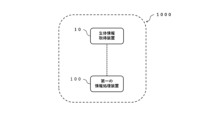
- FIG. 1 is a conceptual diagram showing an example of an image of an information processing system according to the present disclosure
- FIG. 1 is a configuration diagram showing an example of a hardware configuration of a first information processing device in the present disclosure
- FIG. 1 is a conceptual diagram showing an image of a first information processing device in the present disclosure
- FIG. 1 is a configuration diagram showing an example of a functional configuration of a first information processing device in the present disclosure
- FIG. 4 is a conceptual diagram showing an image of a screen displayed on the display of the first information processing device in the present disclosure
- FIG. 4 is a conceptual diagram showing another example of an image of an information processing system according to the present disclosure
- FIG. 11 is a configuration diagram showing an example of a functional configuration of a third information processing device in the present disclosure
- FIG. 4 is a configuration diagram showing another example of the functional configuration of the first information processing device in the present disclosure
- FIG. 2 is a flow diagram showing an example of the flow of an information processing method according to the present disclosure
- 1 is a circuit configuration diagram showing an example of a circuit configuration for realizing functions of a computer program according to the present disclosure
- FIG. 4 is a configuration diagram showing another example of the functional configuration of the first information processing device in the present disclosure
- FIG. 2 is a flow diagram showing an example of the flow of an information processing method according to the present disclosure
- 1 is a circuit configuration diagram showing an example of a circuit configuration for realizing functions of a computer program according to the present disclosure
- FIG. 1 shows an example of the system configuration of an information processing system according to the present disclosure.
- An information processing system 1000 includes a first information processing device 100 as shown in FIG.
- the information processing system 1000 may include the biological information acquisition device 10 connectable to the first information processing device 100, but the first information processing device 100 has the functions of the biological information acquisition device 10. may be Details of the biometric information acquisition device 10 will be described later.
- the first information processing device 100 can include a processor 101 , a memory 102 , a storage 103 , an input/output interface (input/output I/F) 104 and a communication interface (communication I/F) 105 . Each component is interconnected via a bus B.
- FIG. 1 A bus B.
- the first information processing apparatus 100 realizes the functions and methods described in this embodiment through cooperation of the processor 101, memory 102, storage 103, input/output I/F 104, and communication I/F 105. can do.
- the processor 101 executes functions and/or methods implemented by codes or instructions included in programs stored in the storage 103 .
- the processor 101 includes, for example, a central processing unit (CPU), MPU (Micro Processing Unit), GPU (Graphics Processing Unit), microprocessor, processor core, multiprocessor, ASIC (Application- Specific Integrated Circuit), FPGA (Field Programmable Gate Array), etc., implemented by logic circuits (hardware) and dedicated circuits formed in integrated circuits (IC (Integrated Circuit) chip, LSI (Large Scale Integration)), etc.
- IC Integrated Circuit
- LSI Large Scale Integration
- the memory 102 temporarily stores programs loaded from the storage 103 and provides a work area for the processor 101 .
- the memory 102 also temporarily stores various data generated while the processor 101 is executing the program.
- the memory 102 includes, for example, RAM (Random Access Memory), ROM (Read Only Memory), and the like.
- the storage 103 stores programs.
- the storage 103 includes, for example, a HDD (Hard Disk Drive), SSD (Solid State Drive), flash memory, and the like.
- the communication I/F 105 is implemented as hardware such as a network adapter, communication software, or a combination thereof, and transmits and receives various data via the network.
- the communication may be performed by wire or wirelessly, and any communication protocol may be used as long as mutual communication can be performed.
- Communication I/F 105 communicates with other information processing apparatuses via a network.
- Communication I/F 105 transmits various data to other information processing apparatuses according to instructions from processor 101 .
- Communication I/F 105 also receives various data transmitted from other information processing apparatuses and transmits the data to processor 101 .
- the input/output I/F 104 includes an input device for inputting various operations to the first information processing device 100 and an output device for outputting processing results processed by the first information processing device 100 .
- the input/output I/F 104 may be integrated with the input device and the output device, or may be separated into the input device and the output device.
- the input device is realized by any one or a combination of all types of devices that can receive input from the user and transmit information related to the input to the processor 101 .
- the input device includes, for example, hardware keys such as a touch panel, a touch display, and a keyboard, a pointing device such as a mouse, a camera (operation input via images), and a microphone (operation input by voice).
- the output device outputs the processing results processed by the processor 101 .
- the output device includes, for example, a touch panel, a speaker, and the like.
- the second information processing device 200 the third information processing device 300, the fourth information processing device 400, the fifth information processing device 500, the sixth information processing device, and the seventh information processing device described later
- a hardware configuration similar to that of the first information processing apparatus 100 can be used.
- FIG. 3 shows an image of the appearance of the first information processing device 100. As shown in FIG. 3
- the first information processing apparatus 100 is composed of a housing 106 and a display 107 provided in front of the housing 106 . Also, a camera 108 and a speaker 109 may be provided on the front of the housing 106 . Furthermore, the first information processing device 100 can include various sensors, a rechargeable battery, a power cable connection section, a SIM card insertion section, an SD card memory insertion section, a USB insertion section, and the like (not shown).
- the first information processing apparatus 100 includes a storage unit 110, a biological information acquisition unit 120, an image acquisition unit 130, an environment information acquisition unit 140, a display unit 150, a first analysis Assume that it has a unit 160 , a determination unit 170 and an output unit 180 .
- the storage unit 110 stores the user's genome information.
- the storage unit 110 may be the storage 103 that the first information processing device 100 has, or may be a recording medium (USB memory, SD card, etc.) removable from the first information processing device 100 .
- a recording medium USB memory, SD card, etc.
- Genomic information shall include, for example, data indicating the genetic tendency of the user's disease and constitution obtained by analyzing the saliva and blood collected from the user.
- the storage unit 110 stores basic information such as the user's address, name, age, etc., medical history information including the history of illnesses that the user has developed in the past, performance information including the user's daily breathing rate and heart rate, It may include contact information including anomaly history information regarding anomalies in the user's health condition and a list of watchers who notify the user's situation.
- the performance information registers the daily breathing rate and heart rate values included in the application from the user in advance, but after the first information processing apparatus 100 is started to be used, the measured normal data is stored. Save in chronological order so that changes over time can be retrieved.
- the biometric information acquisition unit 120 acquires the user's biometric information.
- the user's biological information is, for example, at least one of the user's blood pressure, pulse, respiration, consciousness, body temperature, blood oxygen concentration, etc. Of these, the three pieces of information, blood pressure, pulse, and respiration, are important parameters for analyzing the user's health condition.
- the biometric information acquisition unit 120 can acquire the biometric information from the user in a contactless manner.
- the biological information acquisition unit 120 has a transmission unit that emits microwaves and a reception unit that receives microwaves reflected by the user.
- the movement of the user can be detected from the phase difference caused by the Doppler effect between the irradiated microwave and the received microwave.
- the biological information acquisition unit 120 may further include a processing unit that detects time changes in the phase difference accompanying transmission and reception of microwaves and extracts frequency components from the time changes to determine the respiratory rate and heart rate. .
- microwaves are emitted from the transmitter at an irradiation angle of about 180°, and biological information can be detected within a distance range of about 10 m from the transmitter.
- the image acquisition unit 130 acquires at least an image of the face of the user.
- the image acquisition unit 130 acquires an image of the place where the first information processing device 100 is installed.
- An image acquisition unit 130 acquires an image using the camera 108 described above. Note that the image may be a still image or a moving image.
- the image acquisition unit 130 is locked on the control program so that it does not operate in normal times. It can also be controlled to be possible.
- the configuration may be such that the camera 108 is activated when the user shouts out loud.
- the environment information acquisition unit 140 acquires environment information.
- the environment information acquisition unit 140 acquires environment information of the space in which the first information processing device 100 is installed.
- the environmental information refers to information about the living space such as room temperature and humidity.
- the environment information acquisition unit 140 includes a temperature sensor and a humidity sensor.
- Other embodiments may include smoke sensors and gas leak detection sensors.
- the temperature sensor may be one using a thermistor, one using a resistance temperature detector, or another type.
- the humidity sensor may be one using polymer resistance, one using polymer capacitance, or other methods, but an electric sensor that can be extracted as an electric signal is used.
- Temperature sensors and humidity sensors can continuously measure the room temperature and room humidity. It is also possible to adopt a configuration in which the environment information is acquired automatically.
- a radio wave receiving sensor that receives standard radio waves with time and calendar information, and an atmospheric pressure sensor may also be provided. From these, it is possible to obtain environmental information such as time and weather.
- the display unit 150 displays at least part of the biological information acquired by the biological information acquiring unit 120 and at least part of the environmental information acquired by the environmental information acquiring unit 140.
- FIG. 5 shows an example of a display screen 151 displayed on the display 107 by the display unit 150, and the screen is provided with a biological information display column 152 and an environmental information display column 153.
- the biological information display column 152 displays numerical values and graphs of respiration, heart rate, and blood pressure, but is not limited to these.
- the environment information display column 153 displays the time and weather, but is not limited to these.
- the first analysis unit 160 analyzes the user's health condition based on the biometric information acquired by the biometric information acquisition unit 120 and the genome information stored in the storage unit 110 . That is, the first analysis unit 160 analyzes the health condition of the user using AI as an AI platform.
- the first analysis unit 160 has learning data of factors that are highly related to the onset of a specific disease, and the tendency before the onset of a disease that is highly likely to occur genetically in the user is reflected in the user's biometrics. Analyze what is found in the information.
- the determination unit 170 determines whether the health condition analyzed by the first analysis unit 160 is abnormal.
- the determination unit 170 first determines whether or not there is a first abnormality in the health condition.
- the first abnormality refers to a case where the numerical value of biological information exceeds a predetermined threshold regardless of genomic information.
- the first abnormality refers to a level at which the numerical value of the biometric information requires immediate medical examination.
- the determination unit 170 determines whether or not there is a second abnormality in the health condition.
- the second abnormality refers to a case where the numerical value of the biometric information is below a predetermined threshold, but the genome information shows a tendency before the onset of a disease that is likely to occur due to the user's genetics. .
- the second abnormality is that although the numerical value of the biometric information is not at a level that requires immediate medical examination, there is a tendency before the onset of a disease that is highly likely to develop due to the user's genetic information from the genomic information. shall refer to the visible level.
- the acquired biological information is determined to be normal data and stored in the storage unit 110 . Since the capacity of the storage unit 110 is limited, normal data may be converted into numerical values of spot data at fixed time intervals and stored so that the passage of time can be understood, or numerical values obtained by averaging section data at fixed time intervals. You may make it preserve
- the determination unit 170 may perform ranking according to the state of abnormality as a result of the above determination. For example, in one embodiment, there are three ranks: a normal level, a level that does not require emergency but requires confirmation (second abnormality), and an emergency level that requires urgent action (first abnormality).
- the output unit 180 outputs the result of determination by the determination unit 170 .
- output unit 180 outputs a predetermined warning sound and/or A warning display can be output.
- a predetermined warning sound is output from the speaker 109 of the first information processing device 100, and a predetermined warning display is displayed on the display 107 of the first information processing device 100.
- output unit 180 when the determination result of determination unit 170 determines that there is the first abnormality in the health condition, output unit 180 outputs warning sound and / Or it may be configured to output a warning display and further enable an emergency call. Details will be described later.
- Other devices can be information processing devices owned by the user's family, information processing devices owned by caregivers, and information processing devices owned by hospitals, fire departments, police, security companies, etc. Details will be described later.
- the output unit 180 outputs a predetermined notification sound or notification display from the first information processing device 100. be able to.
- the predetermined notification sound is output from the speaker 109 of the first information processing apparatus 100, and the predetermined notification display is displayed on the display 107 of the first information processing apparatus 100.
- the output unit 180 may display an icon corresponding to the rank determined by the determination unit 170 on the display 107 . It is preferable to change the shape and color of the icon so that the degree of urgency can be determined at a glance. For example, the normal level is displayed in green, the non-urgent level that requires confirmation is yellow, and the emergency level that requires urgent action is displayed in red, allowing the user to intuitively grasp the situation. .
- the ranking by the determination unit 170 may be performed for each of the biological information and the environmental information, and may be displayed on the display 107 by displaying icons for each. The user can easily determine what kind of abnormality has occurred.
- the first information processing device 100 itself holds the user's genome information and has the function of AI-analyzing the information, even in an environment not connected to the Internet (via a network) (Even if it runs standalone without a device), it is possible to analyze the user's health condition and output the analysis results.
- the information processing system 1000 in the present disclosure can further include a second information processing device 200 and a third information processing device 300 .
- the second information processing device 200 is connectable to the first information processing device 100 by short-range wireless communication.
- the second information processing device 200 is, for example, a device such as a smartphone or a tablet PC, and can be a device capable of communicating with the outside according to various communication standards.
- the hardware configuration of the second information processing device 200 is as described above.
- the first information processing device 100 and the second information processing device 200 can be connected using short-range wireless communication such as BLE (registered trademark).
- BLE registered trademark
- the third information processing device 300 can be connected to the second information processing device 200 via the Internet line.
- the third information processing device 300 can be a device such as a server that can communicate with the outside.
- the hardware configuration of the third information processing device 300 is as described above.
- the second information processing device 200 and the third information processing device 300 can be connected via an Internet line.
- the third information processing device 300 has a second analysis unit 310 and an execution unit 320, as shown in FIG.
- the second analysis unit 310 analyzes the determination result obtained from the first information processing device 100 via the second information processing device 200, and determines the action to be taken.
- the judgment result includes information that the health condition has the first abnormality, information that the health condition has the second abnormality, or information that there is no abnormality.
- the result analyzed by the second analysis unit 310 as an action to be handled can be different between when it is included and when it is included.
- the execution unit 320 executes actions based on the analysis results of the second analysis unit 310.
- the second analysis unit 310 cooperates with other devices connected to the Internet, Take necessary actions to maintain or improve the user's health.
- the information processing system 1000 in the present disclosure can further include a fourth information processing device 400 .
- the fourth information processing device 400 is a device that can be connected to the third information processing device 300 via the Internet line.
- the fourth information processing device 400 includes an information processing device owned by the user's family, an information processing device owned by the user's caregiver, and owned by the user's family hospital, nearby fire department, police, security company, etc. It is an information processing device.
- the action is notification of the result output by the output unit 180 to the fourth information processing device 400 .
- the second analysis unit 310 causes the fourth information processing device 400 to generate a warning sound and/or a warning display. Determines the action of outputting
- the information processing system 1000 can further include a fifth information processing device 500.
- the fifth information processing device 500 can be connected to the third information processing device 300 via the Internet line.
- the fifth information processing device 500 can be an IoT device around the user.
- Examples include air conditioners that can be connected to the Internet, automatic windows, electronic locks, humidifiers, dehumidifiers, electricity, aroma diffusers, speakers, and refrigerators.
- the action is transmission of an operation command to the fifth information processing device 500 .
- Examples of operation commands are turning the air conditioner on/off and adjusting the temperature.
- the third information processing device 300 further performs the fifth information processing according to the biometric information, the environmental information and/or the image information acquired from the first information processing device 100 by loving the second information processing device 200.
- the information processing device 500 may be controlled.
- the AI analysis of the second analysis unit 310 judges the complexion and facial expression to provide the optimum space, cooperates with the color of the light and the scent for relaxation, and provides music in cooperation with the speaker.
- advice may be sent to the second information processing apparatus 200 to the effect that it is better to operate a nearby equipment.
- the above action can be transmission of lifestyle improvement information to the second information processing device 200 .
- the third information processing device 300 can acquire pre-approved health checkup data. It is assumed that the lifestyle improvement information is generated according to the health checkup data.
- the lifestyle improvement information is specifically advice on eating habits, and recommended recipes can be sent.
- the information processing system 1000 can further include a biological information acquisition device 10 connected to the first information processing device 100.
- FIG. 1 the information processing system 1000 can further include a biological information acquisition device 10 connected to the first information processing device 100.
- the biological information acquisition device 10 is obtained by separating the functions of the biological information acquisition unit 120 as a separate device.
- the biometric information acquisition unit 120 acquires the user's biometric information acquired by the biometric information acquisition device 10 .
- the biometric information acquisition device 10 can automatically acquire vital information by embedding a sensor in the wall of the building, decorating it on the wall, or attaching it to the back of the wallpaper. It can be used in a variety of ways, such as
- Such a configuration can be adopted in facilities with multiple users, nursing homes, and the like.
- body temperature, blood pressure, pulse, and respiration can be automatically monitored in real time, so frequent measurements by nurses or administrators are not required.
- the main living space is often a single room, and the first information processing device 100 can be installed in one place to watch over the user.
- the living space is often divided into multiple rooms such as living rooms and bedrooms, and it is necessary to acquire biometric information in each room.
- the information processing system 1000 can include one parent device (first information processing device 100) and multiple child devices (biological information acquisition device 10). .
- the configuration of the parent device is the same as the configuration of the first information processing device 100 described above.
- the biometric information acquisition unit 120 of the first information processing device 100 acquires biometric information other than the biometric information acquired by the biometric information acquisition unit 120 of the first information processing device 100 itself and the environment information acquired by the environment information acquisition unit 140. Both biological information and environmental information transmitted from the information acquisition device 10 are managed, and the presence or absence of an abnormality is determined according to preset abnormality determination criteria.
- biometric information acquisition apparatuses 10 If there are a plurality of biometric information acquisition apparatuses 10, it may not be possible to identify from which slave device the transmitted biometric information and environmental information are transmitted. When information and environmental information are transmitted, they are transmitted in association with a unique ID number.
- the biometric information acquisition device 10 includes at least a biometric information acquisition unit and a communication unit. Since transmission of information from the child device to the parent device is performed using short-range wireless communication, the child device can be installed in any position within the range of wireless communication. If each room is equipped with a wired terminal inside the house, a wired connection may be used.
- the child device does not include elements corresponding to the analysis unit. This is because the parent device is configured to perform the analysis, which allows the child device to be made smaller.
- a child device installed in a place where privacy is particularly required such as a toilet or a bathroom, may be configured without the image acquisition unit.
- slave units having different configurations may be mixed depending on the location where the slave units are installed.
- the mounting location and shape may be changed according to the installation location. For example, a child device installed in the bedroom of a user who spends a long time in bed may be installed under the bed in order to acquire biometric information with high accuracy.
- the slave unit can be installed by embedding it in a wall or ceiling. According to these configurations, the device can be installed without making the user unnecessarily aware that the biometric information is being acquired, and without impairing the aesthetic appearance of the installation location.
- the biological information acquisition unit 120 and/or the biological information acquisition device 10 can acquire the user's respiration, heart rate, and blood pressure without contact.
- biometric information acquisition unit 120 and/or the biometric information acquisition device 10 can acquire the user's electroencephalogram with or without contact.
- the electroencephalogram can be obtained by a known electroencephalogram sensor. Also, the technique of measuring electroencephalograms in a non-contact manner may be realized by a known or future technique.
- biometric information acquisition unit 120 and/or the biometric information acquisition device 10 can acquire the user's body surface temperature in a non-contact manner.
- the body surface temperature can be obtained by a known thermosensor.
- biometric information acquisition unit 120 and/or the biometric information acquisition device 10 can acquire the user's blood sugar level in a contact or non-contact manner.
- the blood sugar level can be obtained by a known blood sugar sensor. Also, the technique of measuring the blood sugar level without contact may be realized by a known technique or a technique in the future.
- the biometric information acquisition unit 120 and/or the biometric information acquisition device 10 can acquire information through short-range communication with a vital measurement sensor embedded in a part of the user's body.
- the environment information acquisition unit 140 can acquire at least one of the temperature, humidity, atmospheric pressure, and oxygen concentration of the place where the first information processing device 100 is arranged.
- the value obtained by the barometric pressure sensor can be used to display the weather forecast.
- the environment information acquisition unit 140 may acquire the time. At this time, the time can be acquired by a radio wave reception sensor provided in the first information processing apparatus 100 . Note that the time set in the first information processing apparatus 100 may be used.
- All of these may be displayed on the display 107, or only the set items may be displayed. This setting may be made by the user.
- the environment information acquisition unit 140 may acquire values from a fire sensor or a voice sensor. These sensors may be provided by the first information processing apparatus 100, or may be obtained by another connectable apparatus.
- the first analysis unit 160 further analyzes the image of the user's face to acquire complexion information and/or facial expression information, and obtains the facial color information and/or facial expression information acquired by the The user's health condition can be analyzed based on the biological information and the genome information stored in the storage unit.
- Face color information and facial expression information are important judgment materials along with biological information, and it is possible to detect some diseases early by linking with genome analysis data.
- the fifth information processing device 500 can be operated based on such information.
- the first information processing device 100 can further have a user identification unit 190 .
- the user identification unit 190 identifies the user based on the image acquired by the image acquisition unit 130.
- the image acquired by the image acquisition unit 130 is used to analyze the user's facial expression and facial color, here, the image may be used to realize a face authentication function for identifying the user. can.
- Publicly known technology can be used for face recognition technology.
- the first information processing apparatus 100 in the present disclosure can further have a communication unit 195 as shown in FIG.
- the communication unit 195 allows the first information processing device 100 to communicate with an external device only under specific conditions.
- the specific condition refers to the case where the determination unit 170 determines that there is a first abnormality in the health condition.
- the first information processing device 100 can be provided with a wired LAN connection terminal and/or a wireless LAN card. Also, a terminal for inserting a SIM card may be provided so that communication is possible even when the Internet connection environment is not ready. By inserting the SIM card, it becomes possible to communicate with an external device via the wireless communication network of the mobile phone.
- the first information processing device 100 can directly contact the fourth information processing device 400 without going through the second information processing device 200 and/or the third information processing device 300. become.
- the information processing method includes, in one or more computer processors, biometric information acquisition step S120, image acquisition step S130, environment information acquisition step S140, display step S150, It is characterized by executing analysis step S160, determination step S170 and output step S180.
- biometric information acquisition step S120 the user's biometric information is acquired.
- biometric information acquisition step S120 can be executed by the biometric information acquisition unit 120 described above.
- the details of the biometric information acquisition unit 120 are as described above.
- an image of at least the face of the user is acquired.
- Such an image acquisition step S130 can be executed by the image acquisition unit 130 described above.
- the details of the image acquisition unit 130 are as described above.
- environment information acquisition step S140 environment information is acquired.
- the environment information acquisition step S140 can be executed by the environment information acquisition unit 140 described above.
- the details of the environment information acquisition unit 140 are as described above.
- the display step S150 at least part of the biometric information acquired in the biometric information acquisition step S120 and at least part of the environment information acquired in the environment information acquisition step S140 are displayed.
- the display step S150 can be performed by the display unit 150 described above. The details of the display unit 150 are as described above.
- the user's health condition is analyzed based on the biometric information acquired in the biometric information acquisition step S120 and the user's genome information stored in the predetermined storage unit.
- Such first analysis step S160 can be executed by the first analysis unit 160 described above. The details of the first analysis unit 160 are as described above.
- determination step S170 it is determined whether or not there is an abnormality in the health condition analyzed in the first analysis step S160. Such determination step S170 can be performed by the determination unit 170 described above. The details of the determination unit 170 are as described above.
- the output step S180 the result of the determination in the determination step S170 is output.
- the output step S180 can be performed by the output unit 180 described above. The details of the output unit 180 are as described above.
- the first information processing device itself holds the user's genome information and has the function of AI-analyzing the information, even in an environment not connected to the Internet, the user's health condition can be analyzed and the analysis results can be output.
- a computer program according to the present disclosure is characterized by causing one or more computer processors to implement a biological information acquisition function, an image acquisition function, an environmental information acquisition function, a display function, a first analysis function, a determination function, and an output function. do.
- the biometric information acquisition function acquires the user's biometric information.
- the image acquisition function acquires at least an image of the user's face.
- the environmental information acquisition function acquires environmental information.
- the display function displays at least part of the biometric information acquired by the biometric information acquisition function and at least part of the environmental information acquired by the environment information acquisition function.
- the first analysis function analyzes the user's health condition based on the biometric information acquired by the biometric information acquisition function and the user's genome information stored in a predetermined storage unit.
- the determination function determines whether there is an abnormality in the health condition analyzed by the first analysis function.
- the output function outputs the result of judgment by the judgment function.
- the biological information acquisition function, the image acquisition function, the environment information acquisition function, the display function, the first analysis function, the determination function, and the output function are the biometric information acquisition circuit 1120, the image acquisition circuit 1130, and the environment information acquisition circuit shown in FIG. 1140 , display circuit 1150 , first analysis circuit 1160 , determination circuit 1170 and output circuit 1180 .
- the biological information acquisition circuit 1120, the image acquisition circuit 1130, the environment information acquisition circuit 1140, the display circuit 1150, the first analysis circuit 1160, the determination circuit 1170, and the output circuit 1180 are the biological information acquisition unit 120 and the image acquisition unit 130 described above, respectively.
- the environment information acquisition unit 140 , the display unit 150 , the first analysis unit 160 , the determination unit 170 and the output unit 180 The details of each part are as described above.
- the first information processing device itself holds the user's genome information and has the function of AI-analyzing the acquired information, even in an environment not connected to the Internet, the user's It is possible to analyze the health condition and output the analysis result.
- electronic blood pressure monitors for home use can be broadly divided into the “upper arm type”, which measures blood pressure on the upper arm, and the “wrist type”, which measures blood pressure on the wrist.
- the "upper arm type” is divided into a type in which a cuff (arm band) is wrapped around the user's upper arm, and a type in which the arm is passed through a cylindrical cuff that is integrated with the sphygmomanometer body.
- the non-contact vital sensor which can acquire vital data just by being there without wearing anything on the body, can contribute to human health without interfering with daily life.
- Non-contact vital sensors include the following. ⁇ Respiration, heart rate, blood pressure (estimate) ⁇ Face recognition sensor ⁇ Identifies individuals by face recognition ⁇ Predicts state based on facial color and facial expression ⁇ Thermo sensor (body surface temperature) ⁇ EEG measurement (connected or non-contact type) ⁇ Diabetes test sensor
- a device programmed with an AI that analyzes the person's genome analysis data obtained in advance independently (standalone) even in an environment that is not connected to a network, and facial expressions and behavioral patterns (movements) a device that uses microwaves to acquire non-contact vital information (heart rate, respiration, blood pressure, body temperature, etc.), a device that can measure brain waves, a device that measures temperature with infrared rays, and a device that measures oxygen concentration.
- a server device a data processing system, a data processing method, and a program for acquiring a health condition with a device that displays the weather forecast and time, and notifying a method for improving lifestyle habits and the environment to a dedicated display device. can be done.
- the invention of the present disclosure detects a sign of a user's disease. Predicting disease by connecting to a network has problems such as leakage of measurement data for security, cannot be used in places without network connection, and is not useful for improving lifestyle habits rather than predicting disease.
- AI can optimize the health condition that requires improvement of lifestyle by performing automatic ventilation control, automatic lighting control, fragrance control, door control, etc. based on comprehensive judgment.
- genome analysis data whose identity has been confirmed in advance is read in cooperation with a single device through a dedicated application.
- AI can judge the accumulated data and control the comfortable environment in advance. For example, it is possible to optimize the health condition by performing automatic ventilation control, automatic lighting control, fragrance control, door control, etc. based on AI judgment.
- the information processing system of the present disclosure can be controlled in cooperation with smart homes in residential facilities or shared facilities.
- the information processing system of the present disclosure further includes a second information processing device connectable to the first information processing device by short-range wireless communication, and the second information processing device, A sixth information processing device connectable by short-range wireless communication can be provided.
- the sixth information processing device shall be installed in the prescribed means of transportation.
- the predetermined means of transportation can be a vehicle such as a bus or an airplane.
- the sixth information processing device acquires the user's biometric information when moving, transmits the acquired biometric information when moving to the second information processing device, and the second information processing device
- the biometric information during movement is transmitted to the first information processing device, and the first information processing device transmits the acquired biometric information during movement. It is characterized by passing the information to the first analysis unit.
- a passenger in a limited space on a means of transportation such as a bus or an airplane or a crew member for other purposes reads a dedicated application on the person's smartphone through the dedicated identification number identified by the device, Be able to do tics.
- the information processing system further includes a second information processing device connectable to the first information processing device by short-range wireless communication, and a short-range wireless communication with the second information processing device.
- a seventh information processing device connectable by communication can be provided.
- the seventh information processing device shall be equipped with a predetermined means of transportation.
- the seventh information processing device can be a mobile robot.
- the seventh information processing device acquires the user's biometric information and transmits the acquired biometric information at the time of movement to the second information processing device, and the second information processing device
- the biological information during movement is transmitted to the first information processing device, and the first information processing device performs the first analysis on the acquired biological information. It is characterized by passing it to the department.
- the robot can grasp the user's health condition while moving in a specific place.
- the notification method may include a function to notify a third party by connecting to an external AI through a dedicated app on the individual's smartphone, and a function to know the history of the acquired data.
- convenience can be enhanced by displaying the weather information and the time display on the display screen, which is one of the first things people want to know when they wake up every day.
- the surrounding environment can be made comfortable by linking with sensors that measure oxygen concentration and PM concentration.
- the information processing system 1000 in the present disclosure may be equipped with a rechargeable battery or one-time battery or new energy (solar battery, wind power, etc.), and may be able to take measurements anywhere.
- the information processing system 1000 may be able to acquire vital data at a residential facility or a shared facility in conjunction with a child device.
- the information processing system 1000 in the present disclosure is embedded in the wall or ceiling of a residential facility or facility, and is linked to each person's ID registered in advance so that the data of the person can be obtained in advance and the condition can be confirmed and notified. can be
- the information processing system 1000 may be provided with a function that allows a doctor to view data remotely, and may shorten the time required for the doctor to perform remote diagnosis using a camera.
- various sensors may be activated when a motion sensor detects a person.
- biometric information acquisition unit and/or the biometric information acquisition device can acquire biometric information at a predetermined time or at predetermined time intervals.
- an information processing device such as a computer or a mobile phone can be suitably used to function as the server device or the terminal device according to the above-described embodiments.
- Such an information processing device stores a program describing processing details for realizing each function of the server device or the terminal device according to the embodiment in the storage unit of the information processing device, and executes the program by the CPU of the information processing device. It can be realized by reading and executing.
- the method described in the embodiment can be executed by a computer (computer), for example, magnetic disk (floppy (registered trademark) disk, hard disk, etc.), optical disk (CD-ROM, DVD, MO, etc.), It can be stored in a recording medium such as a semiconductor memory (ROM, RAM, flash memory, etc.), or can be transmitted and distributed via a communication medium.
- the programs stored on the medium also include a setting program for configuring software means (including not only execution programs but also tables and data structures) to be executed by the computer.
- a computer that realizes this apparatus reads a program recorded on a recording medium, and optionally constructs software means by a setting program, and executes the above-described processes by controlling the operation of the software means.
- recording medium is not limited to those for distribution, and includes storage media such as magnetic disks and semiconductor memories provided inside computers or devices connected via a network.
- the storage unit may function, for example, as a main storage device, an auxiliary storage device, or a cache memory.
Landscapes
- Health & Medical Sciences (AREA)
- Life Sciences & Earth Sciences (AREA)
- Physics & Mathematics (AREA)
- Engineering & Computer Science (AREA)
- Medical Informatics (AREA)
- Pathology (AREA)
- Biomedical Technology (AREA)
- Heart & Thoracic Surgery (AREA)
- Molecular Biology (AREA)
- Surgery (AREA)
- Animal Behavior & Ethology (AREA)
- General Health & Medical Sciences (AREA)
- Public Health (AREA)
- Veterinary Medicine (AREA)
- Biophysics (AREA)
- Cardiology (AREA)
- Physiology (AREA)
- Psychology (AREA)
- Psychiatry (AREA)
- Child & Adolescent Psychology (AREA)
- Educational Technology (AREA)
- Optics & Photonics (AREA)
- Vascular Medicine (AREA)
- Business, Economics & Management (AREA)
- Emergency Management (AREA)
- Spectroscopy & Molecular Physics (AREA)
- General Physics & Mathematics (AREA)
- Developmental Disabilities (AREA)
- Pulmonology (AREA)
- Hospice & Palliative Care (AREA)
- Social Psychology (AREA)
- Measuring And Recording Apparatus For Diagnosis (AREA)
- Measurement Of The Respiration, Hearing Ability, Form, And Blood Characteristics Of Living Organisms (AREA)
- Measuring Pulse, Heart Rate, Blood Pressure Or Blood Flow (AREA)
- Measurement And Recording Of Electrical Phenomena And Electrical Characteristics Of The Living Body (AREA)
Priority Applications (3)
| Application Number | Priority Date | Filing Date | Title |
|---|---|---|---|
| PCT/JP2021/029832 WO2023017619A1 (ja) | 2021-08-13 | 2021-08-13 | 情報処理システム、情報処理方法、コンピュータプログラムおよび情報処理装置 |
| JP2021576447A JP7075162B1 (ja) | 2021-08-13 | 2021-08-13 | 情報処理システム、情報処理方法、コンピュータプログラムおよび情報処理装置 |
| JP2022071340A JP2023026307A (ja) | 2021-08-13 | 2022-04-25 | 情報処理システム、情報処理方法、コンピュータプログラムおよび情報処理装置 |
Applications Claiming Priority (1)
| Application Number | Priority Date | Filing Date | Title |
|---|---|---|---|
| PCT/JP2021/029832 WO2023017619A1 (ja) | 2021-08-13 | 2021-08-13 | 情報処理システム、情報処理方法、コンピュータプログラムおよび情報処理装置 |
Publications (1)
| Publication Number | Publication Date |
|---|---|
| WO2023017619A1 true WO2023017619A1 (ja) | 2023-02-16 |
Family
ID=81746680
Family Applications (1)
| Application Number | Title | Priority Date | Filing Date |
|---|---|---|---|
| PCT/JP2021/029832 Ceased WO2023017619A1 (ja) | 2021-08-13 | 2021-08-13 | 情報処理システム、情報処理方法、コンピュータプログラムおよび情報処理装置 |
Country Status (2)
| Country | Link |
|---|---|
| JP (2) | JP7075162B1 (https=) |
| WO (1) | WO2023017619A1 (https=) |
Cited By (1)
| Publication number | Priority date | Publication date | Assignee | Title |
|---|---|---|---|---|
| WO2024203258A1 (ja) * | 2023-03-24 | 2024-10-03 | 日東電工株式会社 | 管理システム、センサ |
Citations (8)
| Publication number | Priority date | Publication date | Assignee | Title |
|---|---|---|---|---|
| WO2014049984A1 (ja) * | 2012-09-28 | 2014-04-03 | パナソニック株式会社 | 生体情報取得端末、情報管理方法及び情報表示方法 |
| WO2015050174A1 (ja) * | 2013-10-01 | 2015-04-09 | 国立大学法人東北大学 | 健康情報処理装置、健康情報表示装置及び方法 |
| JP2016059759A (ja) * | 2014-09-22 | 2016-04-25 | 株式会社メディプリーム | 発病予知ネットワークシステム |
| JP2018086201A (ja) * | 2016-11-29 | 2018-06-07 | 株式会社メニコン | 健康管理型ペットロボット |
| JP2019093007A (ja) * | 2017-11-27 | 2019-06-20 | アイシン精機株式会社 | 認証端末 |
| JP2020126529A (ja) * | 2019-02-06 | 2020-08-20 | パナソニックIpマネジメント株式会社 | 救急情報処理システム、救急情報処理方法、プログラム |
| JP2020149150A (ja) * | 2019-03-11 | 2020-09-17 | 三菱電機株式会社 | 健康管理支援装置、健康管理支援システム、健康管理支援方法、および健康管理支援プログラム |
| JP2021077313A (ja) * | 2019-10-31 | 2021-05-20 | 安博 市村 | 健康状態予測システム、健康状態予測方法、及び、健康状態予測システム用のプログラム |
Family Cites Families (12)
| Publication number | Priority date | Publication date | Assignee | Title |
|---|---|---|---|---|
| JP2001344340A (ja) * | 2000-03-28 | 2001-12-14 | Daynet:Kk | 自動診察システム及び方法、その記憶媒体並びに緊急通信救助システム |
| JP2004157596A (ja) * | 2002-11-01 | 2004-06-03 | Junichi Ninomiya | 健康管理システム及び健康管理方法 |
| JP4441603B2 (ja) * | 2004-07-13 | 2010-03-31 | 株式会社エヌ・ティ・ティ・データ | リスク評価装置、及び、プログラム |
| JP2010231308A (ja) * | 2009-03-26 | 2010-10-14 | Olympus Corp | 生活習慣病予防装置および生活習慣病予防プログラム |
| US10646166B2 (en) * | 2012-03-23 | 2020-05-12 | National Institute Of Japan Science And Technology Agency | Personal genome information environment providing device, personal genome information environment providing method, and computer program product |
| JP5140775B2 (ja) * | 2012-06-14 | 2013-02-13 | 株式会社日立エンジニアリング・アンド・サービス | 熱中症検知システム |
| CN103690151A (zh) * | 2013-12-05 | 2014-04-02 | 青岛海尔软件有限公司 | 一种睡眠监控报警系统 |
| JP6703893B2 (ja) * | 2015-12-01 | 2020-06-03 | パナソニック インテレクチュアル プロパティ コーポレーション オブ アメリカPanasonic Intellectual Property Corporation of America | 体調推定装置、及び、体調推定システム |
| JPWO2018074576A1 (ja) * | 2016-10-21 | 2019-08-29 | Wvs株式会社 | 生体情報監視装置及びシステム |
| WO2019178446A1 (en) * | 2018-03-15 | 2019-09-19 | Facet Labs, Llc | Collaborative human edge node devices and related systems and methods |
| JP7286135B2 (ja) * | 2019-01-15 | 2023-06-05 | エア・ウォーター・バイオデザイン株式会社 | 血行情報算出装置、血行情報算出方法、及びプログラム |
| JP7568423B2 (ja) * | 2019-05-10 | 2024-10-16 | キヤノンメディカルシステムズ株式会社 | 診断支援装置 |
-
2021
- 2021-08-13 JP JP2021576447A patent/JP7075162B1/ja active Active
- 2021-08-13 WO PCT/JP2021/029832 patent/WO2023017619A1/ja not_active Ceased
-
2022
- 2022-04-25 JP JP2022071340A patent/JP2023026307A/ja active Pending
Patent Citations (8)
| Publication number | Priority date | Publication date | Assignee | Title |
|---|---|---|---|---|
| WO2014049984A1 (ja) * | 2012-09-28 | 2014-04-03 | パナソニック株式会社 | 生体情報取得端末、情報管理方法及び情報表示方法 |
| WO2015050174A1 (ja) * | 2013-10-01 | 2015-04-09 | 国立大学法人東北大学 | 健康情報処理装置、健康情報表示装置及び方法 |
| JP2016059759A (ja) * | 2014-09-22 | 2016-04-25 | 株式会社メディプリーム | 発病予知ネットワークシステム |
| JP2018086201A (ja) * | 2016-11-29 | 2018-06-07 | 株式会社メニコン | 健康管理型ペットロボット |
| JP2019093007A (ja) * | 2017-11-27 | 2019-06-20 | アイシン精機株式会社 | 認証端末 |
| JP2020126529A (ja) * | 2019-02-06 | 2020-08-20 | パナソニックIpマネジメント株式会社 | 救急情報処理システム、救急情報処理方法、プログラム |
| JP2020149150A (ja) * | 2019-03-11 | 2020-09-17 | 三菱電機株式会社 | 健康管理支援装置、健康管理支援システム、健康管理支援方法、および健康管理支援プログラム |
| JP2021077313A (ja) * | 2019-10-31 | 2021-05-20 | 安博 市村 | 健康状態予測システム、健康状態予測方法、及び、健康状態予測システム用のプログラム |
Cited By (1)
| Publication number | Priority date | Publication date | Assignee | Title |
|---|---|---|---|---|
| WO2024203258A1 (ja) * | 2023-03-24 | 2024-10-03 | 日東電工株式会社 | 管理システム、センサ |
Also Published As
| Publication number | Publication date |
|---|---|
| JPWO2023017619A1 (https=) | 2023-02-16 |
| JP7075162B1 (ja) | 2022-05-25 |
| JP2023026307A (ja) | 2023-02-24 |
Similar Documents
| Publication | Publication Date | Title |
|---|---|---|
| Gokalp et al. | Integrated telehealth and telecare for monitoring frail elderly with chronic disease | |
| CN107205698B (zh) | 用于监测人的日常生活的活动的系统和方法 | |
| US11540757B2 (en) | Assessing the functional ability of a person to perform a task | |
| Rhee et al. | Review of applications and user perceptions of smart home technology for health and environmental monitoring | |
| JP2013078567A (ja) | 遠隔健康監視データを提供するための方法および関連するシステム | |
| JP2020071621A (ja) | 監視方法、プログラム及び情報処理装置 | |
| Awsaj et al. | Real-Time Healthcare Monitoring and Treatment System Based Microcontroller with IoT | |
| CN108472022B (zh) | 痴呆症信息输出系统以及记录介质 | |
| Whig et al. | Ambient Intelligence health services using IoT | |
| Thomas et al. | Smart care spaces: pervasive sensing technologies for at–home care | |
| JP2022009084A (ja) | 認知機能予測システム及びプログラム | |
| JP7075162B1 (ja) | 情報処理システム、情報処理方法、コンピュータプログラムおよび情報処理装置 | |
| Wang et al. | An Intelligent and Privacy-Preserving Digital Twin Model for Aging-in-Place | |
| KR102441662B1 (ko) | 메타버스를 이용한 케어 플랫폼 서비스 시스템 및 그 제어 방법 | |
| Pang et al. | Smart Machine Learning-based IoT Health and Cough Monitoring System. | |
| Yang et al. | Creating a Safe Living Environment for the Elderly Using Smart Devices. | |
| US10736541B2 (en) | Monitoring liquid and/or food consumption of a person | |
| CN120260884A (zh) | 一种智慧病房的可视化方法以及系统 | |
| JP7844072B2 (ja) | 情報処理システム、情報処理方法およびコンピュータプログラム | |
| Wicaksono et al. | Application of smart home and smartwatch to assist elders in home care scenario | |
| Mani et al. | Transformative Potential IoT Sensor Frameworks for Real-Time Alzheimer's Detection and Monitoring in Elderly Populations | |
| WO2019156665A1 (en) | Methods and systems for locating patients in a facility | |
| JP7788624B2 (ja) | 異変検出システム、異変検出方法及びプログラム | |
| JP7251546B2 (ja) | レポート出力プログラム、レポート出力方法、およびレポート出力装置 | |
| JP7266792B2 (ja) | 情報処理システムおよびプログラム |
Legal Events
| Date | Code | Title | Description |
|---|---|---|---|
| ENP | Entry into the national phase |
Ref document number: 2021576447 Country of ref document: JP Kind code of ref document: A |
|
| 121 | Ep: the epo has been informed by wipo that ep was designated in this application |
Ref document number: 21953513 Country of ref document: EP Kind code of ref document: A1 |
|
| NENP | Non-entry into the national phase |
Ref country code: DE |
|
| 122 | Ep: pct application non-entry in european phase |
Ref document number: 21953513 Country of ref document: EP Kind code of ref document: A1 |