WO2022264927A1 - ゲーム装置及びプログラム - Google Patents
ゲーム装置及びプログラム Download PDFInfo
- Publication number
- WO2022264927A1 WO2022264927A1 PCT/JP2022/023386 JP2022023386W WO2022264927A1 WO 2022264927 A1 WO2022264927 A1 WO 2022264927A1 JP 2022023386 W JP2022023386 W JP 2022023386W WO 2022264927 A1 WO2022264927 A1 WO 2022264927A1
- Authority
- WO
- WIPO (PCT)
- Prior art keywords
- game
- operation input
- input
- game device
- training
- Prior art date
- Legal status (The legal status is an assumption and is not a legal conclusion. Google has not performed a legal analysis and makes no representation as to the accuracy of the status listed.)
- Ceased
Links
Images



Classifications
-
- A—HUMAN NECESSITIES
- A63—SPORTS; GAMES; AMUSEMENTS
- A63F—CARD, BOARD, OR ROULETTE GAMES; INDOOR GAMES USING SMALL MOVING PLAYING BODIES; VIDEO GAMES; GAMES NOT OTHERWISE PROVIDED FOR
- A63F13/00—Video games, i.e. games using an electronically generated display having two or more dimensions
- A63F13/80—Special adaptations for executing a specific game genre or game mode
- A63F13/825—Fostering virtual characters
-
- A—HUMAN NECESSITIES
- A63—SPORTS; GAMES; AMUSEMENTS
- A63F—CARD, BOARD, OR ROULETTE GAMES; INDOOR GAMES USING SMALL MOVING PLAYING BODIES; VIDEO GAMES; GAMES NOT OTHERWISE PROVIDED FOR
- A63F13/00—Video games, i.e. games using an electronically generated display having two or more dimensions
- A63F13/50—Controlling the output signals based on the game progress
- A63F13/53—Controlling the output signals based on the game progress involving additional visual information provided to the game scene, e.g. by overlay to simulate a head-up display [HUD] or displaying a laser sight in a shooting game
-
- A—HUMAN NECESSITIES
- A63—SPORTS; GAMES; AMUSEMENTS
- A63F—CARD, BOARD, OR ROULETTE GAMES; INDOOR GAMES USING SMALL MOVING PLAYING BODIES; VIDEO GAMES; GAMES NOT OTHERWISE PROVIDED FOR
- A63F13/00—Video games, i.e. games using an electronically generated display having two or more dimensions
- A63F13/40—Processing input control signals of video game devices, e.g. signals generated by the player or derived from the environment
- A63F13/42—Processing input control signals of video game devices, e.g. signals generated by the player or derived from the environment by mapping the input signals into game commands, e.g. mapping the displacement of a stylus on a touch screen to the steering angle of a virtual vehicle
-
- A—HUMAN NECESSITIES
- A63—SPORTS; GAMES; AMUSEMENTS
- A63F—CARD, BOARD, OR ROULETTE GAMES; INDOOR GAMES USING SMALL MOVING PLAYING BODIES; VIDEO GAMES; GAMES NOT OTHERWISE PROVIDED FOR
- A63F13/00—Video games, i.e. games using an electronically generated display having two or more dimensions
- A63F13/20—Input arrangements for video game devices
- A63F13/24—Constructional details thereof, e.g. game controllers with detachable joystick handles
-
- A—HUMAN NECESSITIES
- A63—SPORTS; GAMES; AMUSEMENTS
- A63F—CARD, BOARD, OR ROULETTE GAMES; INDOOR GAMES USING SMALL MOVING PLAYING BODIES; VIDEO GAMES; GAMES NOT OTHERWISE PROVIDED FOR
- A63F13/00—Video games, i.e. games using an electronically generated display having two or more dimensions
- A63F13/40—Processing input control signals of video game devices, e.g. signals generated by the player or derived from the environment
- A63F13/44—Processing input control signals of video game devices, e.g. signals generated by the player or derived from the environment involving timing of operations, e.g. performing an action within a time slot
-
- A—HUMAN NECESSITIES
- A63—SPORTS; GAMES; AMUSEMENTS
- A63F—CARD, BOARD, OR ROULETTE GAMES; INDOOR GAMES USING SMALL MOVING PLAYING BODIES; VIDEO GAMES; GAMES NOT OTHERWISE PROVIDED FOR
- A63F13/00—Video games, i.e. games using an electronically generated display having two or more dimensions
- A63F13/50—Controlling the output signals based on the game progress
- A63F13/52—Controlling the output signals based on the game progress involving aspects of the displayed game scene
-
- A—HUMAN NECESSITIES
- A63—SPORTS; GAMES; AMUSEMENTS
- A63F—CARD, BOARD, OR ROULETTE GAMES; INDOOR GAMES USING SMALL MOVING PLAYING BODIES; VIDEO GAMES; GAMES NOT OTHERWISE PROVIDED FOR
- A63F13/00—Video games, i.e. games using an electronically generated display having two or more dimensions
- A63F13/55—Controlling game characters or game objects based on the game progress
-
- A—HUMAN NECESSITIES
- A63—SPORTS; GAMES; AMUSEMENTS
- A63F—CARD, BOARD, OR ROULETTE GAMES; INDOOR GAMES USING SMALL MOVING PLAYING BODIES; VIDEO GAMES; GAMES NOT OTHERWISE PROVIDED FOR
- A63F13/00—Video games, i.e. games using an electronically generated display having two or more dimensions
- A63F13/55—Controlling game characters or game objects based on the game progress
- A63F13/58—Controlling game characters or game objects based on the game progress by computing conditions of game characters, e.g. stamina, strength, motivation or energy level
-
- A—HUMAN NECESSITIES
- A63—SPORTS; GAMES; AMUSEMENTS
- A63F—CARD, BOARD, OR ROULETTE GAMES; INDOOR GAMES USING SMALL MOVING PLAYING BODIES; VIDEO GAMES; GAMES NOT OTHERWISE PROVIDED FOR
- A63F13/00—Video games, i.e. games using an electronically generated display having two or more dimensions
- A63F13/20—Input arrangements for video game devices
- A63F13/21—Input arrangements for video game devices characterised by their sensors, purposes or types
- A63F13/211—Input arrangements for video game devices characterised by their sensors, purposes or types using inertial sensors, e.g. accelerometers or gyroscopes
-
- A—HUMAN NECESSITIES
- A63—SPORTS; GAMES; AMUSEMENTS
- A63F—CARD, BOARD, OR ROULETTE GAMES; INDOOR GAMES USING SMALL MOVING PLAYING BODIES; VIDEO GAMES; GAMES NOT OTHERWISE PROVIDED FOR
- A63F13/00—Video games, i.e. games using an electronically generated display having two or more dimensions
- A63F13/20—Input arrangements for video game devices
- A63F13/21—Input arrangements for video game devices characterised by their sensors, purposes or types
- A63F13/214—Input arrangements for video game devices characterised by their sensors, purposes or types for locating contacts on a surface, e.g. floor mats or touch pads
-
- A—HUMAN NECESSITIES
- A63—SPORTS; GAMES; AMUSEMENTS
- A63F—CARD, BOARD, OR ROULETTE GAMES; INDOOR GAMES USING SMALL MOVING PLAYING BODIES; VIDEO GAMES; GAMES NOT OTHERWISE PROVIDED FOR
- A63F13/00—Video games, i.e. games using an electronically generated display having two or more dimensions
- A63F13/20—Input arrangements for video game devices
- A63F13/21—Input arrangements for video game devices characterised by their sensors, purposes or types
- A63F13/215—Input arrangements for video game devices characterised by their sensors, purposes or types comprising means for detecting acoustic signals, e.g. using a microphone
Definitions
- the present invention relates to a game device and a program, and more particularly to a game device that executes an electronic game for raising characters.
- Patent Document 1 discloses a game device that executes a breeding game in which an affection level parameter for a character is updated in response to an operation input made in response to a randomly generated event, and the character's state changes based on the affection level. is disclosed.
- the game device described in Patent Document 1 is provided with physical operation buttons (operation members) as a user interface. had to do.
- a plurality of selection items (choices) displayed for each event are displayed in order to avoid a limited interest.
- the system selects and determines the appropriate item from among them, ensuring the diversity of operation inputs. For example, when three operation members are provided as in Patent Document 1, two of these operation members are assigned to change the selected item, and the remaining one operation member is assigned to determine the selected item. assigned to. Therefore, the appropriate operation input defined for each event requires selection of an appropriate selection item from among the plurality of selection items displayed for the event, and inputting determination for the selection item. rice field.
- a game device is a game device that executes processing related to a breeding game in which game elements are grown. Stages are defined, and the game device includes execution means for executing processing related to the training game, display means for displaying game elements, input means for receiving operation input related to training of the game elements, and training of the game elements.
- a management means for managing the stages, and when a condition for changing from the first raising stage to the second raising stage in the raising game is satisfied, among the growth states of the branch destination related to the second raising stage of the game element, , and determining means for determining one growth state according to the operation input related to training performed until the change condition is satisfied, wherein the operation input related to training is accompanied by the selection of the selection item related to training. includes a first manipulation input that does not
- FIG. 1 is a diagram exemplifying an external configuration of a game device 100 according to an embodiment of the present invention
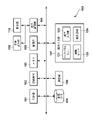
- FIG. 1 is a block diagram illustrating the functional configuration of a game device 100 according to an embodiment of the present invention
- FIG. 4 is a diagram for explaining how a touch input is accepted in the game device 100 according to the embodiment of the present invention
- FIG. 11 is a diagram exemplifying a non-selection operation input that can be accepted in relation to the breeding game according to the embodiment of the present invention
- 4 is a flow chart exemplifying a familiarity level change process executed by the game device 100 according to the embodiment of the present invention
- FIG. 2 is a diagram showing a data configuration example of character information used in the game device 100 according to the embodiment of the present invention.
- an operation input accompanied by selection of a selection item related to training and an operation input not accompanied by selection of a selection item related to training are performed for a breeding game to be executed.
- the present invention is applicable to any device capable of receiving at least the latter operation input.
- FIG. 1 is a diagram illustrating an external configuration of a game device 100 according to the present embodiment.
- the game device 100 includes a display unit 110 that displays a game screen relating to a breeding game, which will be described later, and a physical operation member 134 that receives operation input from the user.
- the display unit 110 is configured to be able to receive touch input, and includes a touch panel sensor 131 for detecting the touch input.
- the control unit 101 is, for example, a CPU, and controls the operation of each block included in the game device 100 . Specifically, the control unit 101 reads, for example, an operation program for each block recorded on the recording medium 102, develops it in the memory 103, and executes it, thereby controlling the operation of each block.
- the recording medium 102 is a recording device such as a non-volatile memory or an HDD that can permanently store data.
- the recording medium 102 stores, in addition to the operation program of each block of the game device 100, parameters required for the operation of each block, various drawing elements (images of characters and items, GUI, background image), or information such as an action decision program.
- the recording medium 102 is not limited to a recording device built into the game device 100, and may include an external recording device detachably attached to the game device 100, for example.
- the memory 103 is a storage device, such as a volatile memory, used for temporary data storage. The memory 103 is used not only as a development area for the operation program of each block, but also as a storage area for temporarily storing data output in the operation of each block.
- the element DB 104 manages information on various game elements in a breeding game in which a play experience is provided on the game device 100 .
- the training game of the present embodiment is game content for training characters, and the element DB 104 includes information (character information) on each of the characters that can be trained.
- character growth is expressed by sequentially changing the form (growth state) of a character to be trained (target character). It is assumed that it is managed by the DB 104 . That is, the breeding game provides a play experience related to breeding of one target character, and during the play experience, the game is executed with reference to different character information for each growth state.
- Character information managed for one growth state is associated with a growth state ID 701 that uniquely identifies the growth state, as shown in FIG. , parts information 703 specifying various parts sets (character images and parts images) used to form the appearance of the character according to the growth state, and actions, thinking tendencies, and tastes of the character related to the growth state. It may include defining personality information 704 .
- the element DB 104 may manage item information including the effects of items that can be used in the breeding game.
- the management unit 105 manages changes in the growth state of the target character.
- the breeding game of the present embodiment progresses while changing the growth state of the target character, but the transition of the growth state is not fixed.
- the growth state that transitions in the growth process changes according to the progress of the breeding game.
- a plurality of training stages are provided for one training of the target character, and the management unit 105 determines which growth state the target character will be in when the training stages are switched. .
- the growth state is determined based on whether or not the progress of the breeding game satisfies predetermined growth conditions for each growth state.
- the presentation control unit 106 controls presentation of various information to the user in the game device 100 .
- the game device 100 of the present embodiment is described as having a display unit 110 for displaying images (game screen, menu screen, etc.) and an audio output unit 120 for audio output as means for presenting various information to the user.
- means of information presentation are not limited to these, and needless to say, alternatives or additions such as vibration, lighting, and information transmission are possible.
- the presentation control unit 106 includes a drawing device such as a drawing chip, and performs predetermined drawing processing when generating a game screen to be displayed on the display unit 110 .
- the presentation control unit 105 generates a game screen according to the progress of the game while the game device 100 is not in the sleep state, and updates the display on the display unit 110 at a predetermined frequency.
- Various information related to the game is presented.
- a breeding game in which a play experience is provided on the game device 100 of the present embodiment, basically a game screen on which the target character is arranged is presented so that the user can grasp the state of the target character.
- the presentation control unit 106 reads from the recording medium 102 the drawing elements specified by the parts information 703 of the character information of the growth state based on the growth state of the target character at the time of display, develops them in the memory 103, This is used to draw the target character. Also, the presentation control unit 106 performs drawing control so that an appropriate background and items are appropriately arranged on the game screen, or a GUI is displayed, according to the progress of the game.
- the display unit 110 is built into the game device 100 and configured as an integrated display device such as an LCD.
- the display unit 110 may be a display device detachably connected to the outside of the game device 100 .
- the presentation control unit 106 also includes a circuit for outputting an audio signal such as a sound chip, and performs predetermined processing when generating audio to be output from the audio output unit 120 .
- the presentation control unit 106 determines audio data to be output from the audio data recorded in advance on the recording medium 102, for example, according to the progress of the game, and converts it into an electrical audio signal. (D/A conversion) and output to the audio output unit 120, audio presentation related to the breeding game is performed.
- the audio output unit 120 may be a predetermined speaker or the like, and outputs sound waves based on the input audio signal.
- the audio output unit 120 is described as built in the game device 100 like the display unit 110, but it may be detachably connected to the outside of the game device 100.
- the operation input unit 107 is a user interface of the game device 100 such as operation buttons. When the operation input unit 107 detects that the user has made an operation input, the operation input unit 107 transmits a control signal corresponding to the content of the operation to the control unit 101 .
- a touch input made on the display unit 110 can be performed.
- the motion sensor 133 detects, for example, the user's walking motion (the number of steps) performed while carrying the game device 100 as an operation input.
- the communication unit 108 is a communication interface that the game device 100 has. Although details are omitted in this embodiment, the game device 100 is configured to be capable of transmitting and receiving information by connecting to other game devices 100 and external devices such as other information communication terminals via the communication unit 108 .
- the breeding game is game content for training a target character as a game element according to the present invention, and presents a screen including a display of the target character as a basic game screen.
- the target character grows while transforming into a different growth state as the breeding stage advances, and the user can observe this state through the game screen.
- the “development stage” refers to the growth process (period) of the target character in the training game divided into multiple stages (egg stage (before birth), baby stage (infancy), kids stage (infancy), young stage). It is a concept that refers to each stage (adolescence), friend stage (adulthood), etc.), and progresses when conditions such as the elapsed time for training are met.
- the "growth state” is a concept that defines the seed form of the character in the breeding game, and the target character takes one of the growth states at each breeding stage. One or more types of growth states are defined for each breeding stage, and as described above, the management unit 105 manages the growth state of the target character according to the progress of the breeding game.
- the target character before the target character is born, it takes the form of one type of egg, but after birth (after hatching), it takes two types of forms according to the gender of the target character.
- growth states can be anything.
- the change from one training stage to the next training stage is provided with a branch that changes the growth state of the target character.
- by constructing such a configuration that the types of possible growth states are increased as the breeding stage progresses it is possible to increase the diversity and interest of the game.
- the determination of which growth state should be made when the condition for changing the breeding stage is satisfied is made according to the parameters that change according to the operation input related to the breeding. be.
- the management unit 105 manages predetermined parameters that change according to the operation input related to the training of the target character during the progress of the training game, and appropriately refers to the timing when the training stage is changed. More specifically, when the condition for changing from the first training stage to the second training stage is satisfied, the management unit 105 changes the status of the relevant training stage to reflect the operation inputs performed until the change condition is satisfied.
- one growth state corresponding to the parameter is determined from the growth states of the second training stage that can branch from the growth state of the target character in the first training stage.
- the predetermined parameters include the target character's "familiarity level” (with respect to the user) and the “history of training actions (care history)" performed by the user with respect to the target character. Operational inputs that cause changes and methods of updating parameters based on determinations of the operational inputs will be described in detail.
- Familiarity level is an index that indicates to what extent the user has performed actions related to raising the target character (training action). Alternatively, it is managed as a numerical value indicating how much affection the target character feels from the user.
- the familiarity degree is a positive numerical value added when the judgment result of the operation input related to the training action is good, and a 0 or negative numerical value is added when it is not good. Managed by the management unit 105 .
- the first operation input is an operation input (hereinafter referred to as a selection operation input) that accompanies the selection of a selection item related to the training action as the second operation input according to the present invention. More specifically, the selection operation input is performed by, after one or more selection items are presented, by the user selecting one of them and finalizing the selected selection item. Realized.
- the selection operation input is the state of the target character presented via the display unit 110 or the voice output unit 120 (the health state of the target character, the state of the environment (room) in which the target character is arranged, and the training state of the target character. ), and selects and executes a training action that is presumed to be suitable for the state from among executable actions (selection items).
- the selection operation input to the target character is: ⁇ Giving an item (selecting an item to be given from among owned items) ⁇ Instructing an action to be taken (selecting an action to be taken from among possible actions) • It may include the execution of actions for state changes (selection of actions to perform from among possible actions).
- the selection operation input is used, for example, to select and provide a menu such as rice or snacks when the target character is in a hungry state.
- the selection operation input is used, for example, to make the target character perform actions such as bathing and cleaning when the target character is dirty or the room is dirty.
- the selection operation input is used for executing medical treatment, for example, when the target character is in a sick state.
- the familiarity degree is increased or decreased depending on whether or not the selection operation input is for selecting a suitable breeding action. For example, whether or not the provided item was appropriate, whether or not the provided item matched the taste of the target character, whether or not the target character was in a suitable state by bathing, or whether or not the target character was in a suitable state by the treatment. Depending on whether the health condition of the character has improved or not, the affection level is increased or decreased (if the result is good, the affection level increases, and if the result is not good, the affection level decreases).
- the selection operation input is not limited to when the user voluntarily confirms the state of the target character and selects a breeding action. It is also adopted when selecting a training action for (care event).
- all of the selection operation inputs are operation inputs made with respect to the GUI (selection items) related to selection of training actions, and are positioned as operation inputs that indirectly act on the target character. Therefore, the selection operation input contributes to the diversity of the breeding game by enriching the types of selection items, but can make the user feel a gap between the target character and the target character from the viewpoint of training the target character.
- the selection operation input is not limited to input through an operation member such as a button provided with a physical shape such as the operation member 134 , and is detected through the touch panel sensor 131 .
- selection and confirmation of hierarchically provided selection items switching of selection items displayed by swipe operation (page feed), predetermined time of tap operation Continuation (long-pressing operation) may be configured to enable inputting of confirmation, etc.
- the selection operation input is controlled so as to execute a training action corresponding to the selection item or display subordinate selection items belonging to the selection item in response to the long press operation.
- the second operation input is the first operation input according to the present invention, an operation input that does not involve selection of a selection item related to training behavior (hereinafter referred to as non-selection operation input (referred to as More specifically, the non-selection operation input is a type of operation in which the reaction of the target character is directly presented without going through the selection item display ⁇ selection ⁇ confirmation operation such as the selection operation input described above for the breeding action. input.
- the non-selection operation input is used when executing training actions that require real-time performance, such as calling out to the target character and touching the target character. In other words, the non-selection operation input is used to provide an interactive breeding game playing experience that facilitates the user to develop a deeper attachment to the target character.
- the non-selective operation input since the non-selective operation input has the characteristic of acting directly on the target character, it is necessary to dynamically process the detected operation input and present the reaction of the target character. That is, compared to the selection operation input that presents the reaction of the target character by executing the processing corresponding to the selection item selected on the condition that the operation input for final confirmation is performed, the non-selection operation input is related to the processing. The amount of computation and power consumption may increase. For this reason, the game device 100 of the present embodiment is configured to receive the non-selection operation input only during the period in which the game device 100 transitions from the normal mode to the communication mode.
- the transition to the communication mode is started when a touch input is made to the area of the target character on the game screen.
- a game screen is presented in which the target character is in the room, as shown in FIG. 3(a).
- the target character responds to the operation input from the user (touch input on the area of the target character and voice input related to the first stage described later). is approaching and a game screen is presented in which they are facing each other.
- the face of the target character is changed so that the user can understand the subtleties of the target character when in the communication mode and to ensure the ease of touch input in some of the communication methods below. Transitions to a state in which the display is larger than when in normal mode.
- the facial expression of the target character is controlled according to the familiarity degree in order to express how much the target character feels affection from the user.
- the facial expression of the target character may be determined by comparing the familiarity level with a predetermined threshold during transition to the communication mode. That is, if the degree of familiarity (feeling attached) exceeds a predetermined threshold, the target character is controlled to show a gentle facial expression as shown in FIG. If not, the target character is controlled to show a cold expression as shown in FIG. 3(c).
- the communication mode of this embodiment accepts non-selection operation input in the following two stages in order to produce natural communication with the target character.
- the non-selection operation input accepted at the first stage is voice input via the voice input unit 132, and is detected only for a predetermined period (for example, 10 seconds). If any voice input is made during this period, it is assumed that the target character has been called out by the user, and the communication mode shifts to the second stage, and further non-selection operation input can be accepted. Determine. At this time, the display of the game screen changes from a bystander state as shown in FIG. 3A to a face-to-face state as shown in FIG.
- the transition is sequentially made so as to present an effect in which the target character approaches.
- the target character has not been called out by the user, and the communication mode ends, and the mode shifts to the normal mode.
- the method of communication with the target character is determined, and then the second stage is entered to receive the non-selection operation input of the corresponding type.
- a communication method related to the second stage there are a "patting mode" in which the target character is touched, and a "talking mode” in which the target character talks. Communication is performed based on motion input.
- the communication method may be determined by executing a lottery process to select one of them, or by the first non-selection operation input after the transition to the second stage is confirmed. may be performed according to the type of Alternatively, it may be performed by allowing the user to select which communication method to use for communication.
- the degree of familiarity is increased or decreased according to what kind of touch input the user has performed on the target character displayed face-to-face.
- the target character is enlarged and displayed, making it easier for the user to input various touch inputs for interacting with the target character.
- the game screen including the display of the target character in the face-to-face state is classified into four areas (A to D). identifies the contact action (cultivating action) performed on the target character, and controls the behavior of the target character and changes the familiarity level.
- non-selection operation inputs a series of touch inputs
- each non-selection operation input is defined by a series of touch inputs (transition of the area where the touch input is detected) intuitively corresponding to each operation content, and the corresponding non-selection operation input is When it is done, a corresponding effect display (change in the display mode of the target character) and increase/decrease in the familiarity level are performed.
- the breeding stage at which each non-selection operation input can be accepted is determined in order to express that the reactions to the user diversify as the target character grows.
- some non-selection operation inputs may be configured to limit acceptable timings.
- a non-selection operation for the support of going to bed or waking up before going to bed and before waking up for the target character. Enabled by input. Before going to bed and before waking up for the target character are determined by designating the time, and when the clock set in the game device 100 reaches the corresponding time, the corresponding non-selection operation input can be accepted. It may be controlled.
- a bedtime event accompanied by a pre-sleep effect will start on condition that the built-in clock reaches 8:00 p.m.
- it may be controlled to shift to a state in which non-selection operation input can be accepted.
- a notification that the target character is in a situation where it is difficult to fall asleep is started, and an appropriate non-selection operation input (touch input that goes back and forth between areas AB related to before going to bed in FIG. 5) is performed. , start to fall asleep, and gradually fall asleep.
- the number of inputs of the non-selection operation input required until falling asleep may be randomly determined in order to express the likeness of a living organism.
- the degree of familiarity may be changed on the condition that appropriate non-selection operation inputs are continuously performed from the start to the end of the sleep event (the target character falls asleep).
- a specific time-designated event such as before going to bed or before waking up
- a single corresponding non-selection operation input does not lead to a change in familiarity level, but a plurality of corresponding non-selection operation inputs are performed.
- the target character's likeness to a living creature may be expressed.
- non-selection operation input related to touch input is accepted by transition of touch input to four divided areas as in the present embodiment
- types of non-selection operation input that can be accepted for the target character are: Limited.
- the same type of non-selection operation input may be determined as an appropriate input for the "stroking mode" and the time designation event. That is, even with the same non-selection operation input, control may be performed so that the familiarity level is changed in different manners between the "stroking mode" and the time designation event.
- a text is presented as a message from the target character in accordance with the history of exercise inputs performed by the user while carrying the game device 100, increasing familiarity. More specifically, the information (the number of steps) taken by the user while carrying the game device 100 is stored in the memory 103.
- a process of presenting the message and increasing familiarity is performed.
- whether or not the condition for presenting the message is satisfied may be determined based on a history of the number of steps in a specific period, such as the number of steps detected on that day, instead of the cumulative number of steps.
- display control should be performed to end the "talking mode” (end the communication mode and shift to the normal mode) without changing the degree of familiarity. .
- non-selection operation input related to voice input is accepted in the first step
- non-selective operation input related to touch input or motion input is accepted in the second step.
- a selection operation input that is, a non-selection operation input of a type different from the first stage
- the implementation of the present invention is not limited to this.
- the type of non-selection operation input accepted in multiple stages of the communication mode is not limited to the mode, and the non-selection operation input accepted in the latter stage needs to be of a different type from the non-selection operation input accepted in the preceding stage. no.
- the familiarity level is changed directly according to the non-selective operation input (one stage) performed after the transition to the communication mode. It may be an aspect.
- the familiarity level of the target character with respect to the user is determined by two kinds of operations: selection operation input involving selection of selection items related to training and non-selection operation input involving selection of no selection item. Increases or decreases according to input.
- these operation inputs are not limited to whether or not they involve selection of selection items, and are handled differently in the breeding game in the following points. can be
- the user is presented with a selection item including a suitable breeding action for the state of the target character, while for the non-selection operation input, the user can grasp the input that increases the familiarity.
- the change in familiarity level caused by each type of non-selection operation input may be constant regardless of the growth state of the target character.
- a change in the familiarity level caused by the input of the selection operation is changed according to the growth state of the target character, depending on the taste (preference of the target character). It may be controlled to be different (for example, the degree of affection changes differently when accessory C is provided between growth states A and B).
- the breeding game of the present embodiment is configured such that there is a setting for the number of acceptable selection operation inputs related to training, but there is no setting for the number of acceptable non-selection operation inputs related to training.
- the user can be guided to positively perform the nurturing behavior related to the non-selection operation input in order to increase the familiarity.
- the non-selection operation input makes it easier to secure an opportunity to raise the familiarity level, it becomes easier to raise the target character to a desired familiarity level.
- the degree of familiarity has the aspect of indicating the user's degree of attachment to the target character and an index of whether the user is taking care of the target character, for example, in a situation where the degree of familiarity continues to be low, the user should be made aware of it.
- the target character disappears from the game device 100 (runs away from home).
- a threshold value 20, etc.
- the target character disappears from the game device 100 (runs away from home).
- Begin presentation of an effect (preparation for running away from home) for preparation the training game for the target character ends).
- a grace period of about one hour is allowed between the preparation for running away and the state of actually running away from home, and the user can cancel the preparation for running away by performing an operation input to deter the running away from the production. Configured.
- the non-selection operation input such as communication mode
- the consistency with the behavior of the target character may not be ensured, so the conditions for the occurrence of the runaway preparation production are satisfied. If so, it is controlled so that it cannot accept anything other than the selection operation input to keep it. That is, non-selection operation input is controlled to be unacceptable.
- the non-selection operation input related to breeding has been described above on the assumption that there is no limit to the number of times it can be accepted during the course of the breeding game. needless to say, does not apply.
- the breeding game of the present embodiment can accept non-selection operation inputs related to breeding without limitation when the target character is in a normal state other than preparing to run away from home or running away from home.
- the growth state of the target character in the changed breeding stage is determined. be. More specifically, for each of a plurality of types of growth states that can be branched for the post-change breeding stage, a range of familiarity required to grow to that growth state is defined. determines the growth state after the change according to which range the familiarity level is included at the time when the change condition is satisfied. In addition, in order to increase interest in raising the target character, the management unit 105 determines not only the degree of familiarity but also the success of the care event in the raising stage after a predetermined stage such as adulthood, which is the final raising stage. The post-change growth state may be determined further based on the history of training actions such as the number of times and the types of items provided.
- the breeding game includes a specific effect that is presented only when the degree of familiarity reaches the highest level. can be anything.
- the determination of the presentation of the specific effect may be made at each training stage, and if the player goes through a plurality of training stages while maintaining the highest degree of familiarity, the specific effect is presented for each training stage. may be performed.
- the specific effect may be, for example, giving a predetermined item in the breeding game such as a badge or icon, and by making it a collection element, it can be made to be an achievement goal during repeated game play, and the user can be more motivated. It can invite you to a highly interesting game play.
- the breeding game of the present embodiment is configured so that new characters can be trained sequentially using eggs obtained by marriage, childbirth, etc., and there are a plurality of types of characters that can be sequentially made into target characters.
- the game is configured so that repeated game play can be performed while changing the character to be trained). Therefore, the provision of the predetermined item may be provided so that different items are provided for each type of character that has been trained.
- control unit 101 determines which process caused the true attachment level change process to be executed.
- the control unit 101 shifts the process to S602 if it is determined that it has started based on the display processing of the selection items related to the training action, and moves the process to S604 if it has determined that it has been started based on the process for shifting to the communication mode. If it is determined that the process is started based on the process of generating the time-specified event, the process proceeds to S612.
- the control unit 101 determines whether a selection operation input for one selection item has been performed. If the control unit 101 determines that a selection operation input for one selection item has been performed, the processing moves to S603, and if it is determined that the selection operation has not been performed, the processing of this step is repeated. It should be noted that if the predetermined time-out period elapses without any selection item being selected, the control unit 101 completes the degree of attachment change processing. At this time, if the selection item display processing related to the breeding behavior that is the cause of the start is executed for an event that requires user operation input (selection of selection items), such as due to a care event, , the degree of closeness related to care failure may be reduced.
- the management unit 105 changes the familiarity level of the target character according to the selection item selected in S602, and completes the true familiarity level change process.
- the degree of familiarity may be changed by, for example, increasing the degree of familiarity by a predetermined value when a suitable selection item is selected by inputting a selection operation.
- the familiarity degree may be decreased by a predetermined value.
- whether or not the selected selection item is suitable is comprehensively determined not only by the situation of the target character but also by taking into consideration the corresponding personality information 704 such as the target character's tastes. It's okay.
- the control unit 101 determines in S604 whether or not reception of the non-selection operation input is the first stage. If the control unit 101 determines that the reception of the non-selection operation input is the first stage, the process proceeds to S605, and if it determines that the reception is the second stage or later, the process proceeds to S606.
- control unit 101 determines whether or not a non-selection operation input related to voice input has been performed. If the control unit 101 determines that a non-selection operation input related to voice input has been performed, the reception of the first-stage non-selection operation input is terminated and the process returns to S604. repeat the process. It should be noted that if a predetermined time-out period elapses without non-selection operation input, the management unit 105 reduces the attachment level and completes the attachment level change processing.
- control unit 101 determines whether or not the second-stage communication method is the "stroking mode". If the control unit 101 determines that the communication method related to the second stage is the "stroking mode", the process proceeds to S607, and if it determines that the communication method is the "talking mode", the process proceeds to S610. Transfer.
- control unit 101 determines whether or not a predetermined type of non-selection operation input has been performed for the “stroking mode”. If the control unit 101 determines that a predetermined type of non-selection operation input has been performed, the process proceeds to S608; otherwise, the process proceeds to S609.
- the management unit 105 under the control of the control unit 101, changes the familiarity level of the target character according to the type of non-selection operation input performed in S607.
- the degree of familiarity is changed based on a manner of changing the degree of familiarity determined for each type.
- control unit 101 determines whether the communication mode has ended. The termination of the communication mode may be performed, for example, in response to an operation input to the operation member 134 . If the control unit 101 determines that the communication mode has ended, the process of changing the degree of true attachment is completed, and if it determines that the communication mode has not ended, the process returns to S607.
- control unit 101 determines in S606 that the communication method related to the second stage is the “talk mode”, the control unit 101 determines in S610 that the number of steps to be counted in the motion input history meets the conditions related to message presentation. Determine whether or not the requirements are met. If the control unit 101 determines that the number of steps satisfies the conditions for presenting the message, it moves the process to S611;
- the management unit 105 changes the familiarity level of the target character according to the number of steps to be counted, and completes the true familiarity level change processing.
- the degree of familiarity may be changed by, for example, increasing the degree of familiarity by a predetermined value when a suitable selection item is selected by inputting a selection operation.
- the degree of attachment change processing the detailed explanation of the processing is omitted, but at this time, display control of the target character is performed so as to present a message according to the number of steps of the count logarithm.
- the control unit 101 determines in S612 whether or not a non-selection operation input of a type determined to be suitable for the event has been performed during a predetermined period. to judge. If the control unit 101 determines that a non-selection operation input of a type that is determined to be suitable for the time-designated event has been performed during the predetermined period, the processing moves to S613; to complete.
- control unit 101 determines whether or not the end condition of the time designation event (for example, falling asleep or waking up) is satisfied based on the non-selection operation input performed in S612. The determination in this step may be made, for example, based on the result of the executed lottery process. If the control unit 101 determines that the end condition of the time-designated event is satisfied, it moves the process to S614, and if it determines that it is not satisfied, it returns the process to S612.
- end condition of the time designation event for example, falling asleep or waking up
- the management unit 105 changes the familiarity level of the target character based on the achievement of the time-specified event, and completes the true familiarity level change process.
- the degree of affection may be changed by increasing it by a predetermined value.
- the game device of the present embodiment it is possible to execute a breeding game that makes it possible to train a character by intuitive operation input.
- the affection degree change process is started due to a process that requires a selection operation input or a non-selection operation input, but the affection degree change mode is limited to this. Needless to say, it is not something that can be done. That is, the familiarity level may be changed at a timing that does not require the user's operation input, depending on elements (environment, hunger), etc. that change with the passage of time in the breeding game. In other words, the modification of the familiarity level in the familiarity level changing process of FIG. 6 is limited to the one requiring an operation input related to training, and may include other change modes.
- a parameter called "friendship level" is introduced, and when the condition for changing the training stage is satisfied, the growth state of the change destination is determined based on the friendliness level. is not limited to this. That is, in the implementation of the present invention, when the condition for changing from the first training stage to the second training stage is satisfied, the target character is selected from the growth state of the branch destination related to the second training stage. It is only necessary to determine one growth state according to the operation input related to training performed until the change condition is satisfied, and it is possible without managing specific parameters that are changed based on the history of operation input. be.
- the present invention is not limited to the above embodiments, and various modifications and changes are possible within the scope of the invention without departing from the spirit and scope of the invention.
- the game device according to the present invention can also be realized by a program that causes one or more computers to function as the game device.
- the program can be provided/distributed by being recorded on a computer-readable recording medium or through an electric communication line.
- 100 game device, 101: control unit, 102: recording medium, 103: memory, 104: element DB, 105: management unit, 106: presentation control unit, 107: operation input unit, 108: communication unit, 110: display unit , 120: audio output unit, 131: touch panel sensor, 132: audio input unit, 133: movement sensor, 134: operation member
Landscapes
- Engineering & Computer Science (AREA)
- Multimedia (AREA)
- Human Computer Interaction (AREA)
- Physics & Mathematics (AREA)
- Optics & Photonics (AREA)
- Theoretical Computer Science (AREA)
- User Interface Of Digital Computer (AREA)
Applications Claiming Priority (2)
| Application Number | Priority Date | Filing Date | Title |
|---|---|---|---|
| JP2021-100427 | 2021-06-16 | ||
| JP2021100427A JP6991383B1 (ja) | 2021-06-16 | 2021-06-16 | ゲーム装置及びプログラム |
Publications (1)
| Publication Number | Publication Date |
|---|---|
| WO2022264927A1 true WO2022264927A1 (ja) | 2022-12-22 |
Family
ID=80185498
Family Applications (1)
| Application Number | Title | Priority Date | Filing Date |
|---|---|---|---|
| PCT/JP2022/023386 Ceased WO2022264927A1 (ja) | 2021-06-16 | 2022-06-09 | ゲーム装置及びプログラム |
Country Status (4)
| Country | Link |
|---|---|
| US (1) | US20230001298A1 (https=) |
| JP (2) | JP6991383B1 (https=) |
| CN (1) | CN115120965A (https=) |
| WO (1) | WO2022264927A1 (https=) |
Families Citing this family (5)
| Publication number | Priority date | Publication date | Assignee | Title |
|---|---|---|---|---|
| JP1743848S (https=) * | 2022-10-21 | 2023-05-11 | ||
| JP7822442B1 (ja) * | 2024-10-16 | 2026-03-02 | 株式会社バンダイ | 玩具 |
| JP7739580B1 (ja) * | 2024-12-27 | 2025-09-16 | 株式会社バンダイ | ゲーム装置及びプログラム |
| JP7738783B1 (ja) * | 2025-02-05 | 2025-09-12 | 株式会社バンダイ | プログラム、ゲーム装置、表示媒体及びゲームシステム |
| JP7738784B1 (ja) * | 2025-02-05 | 2025-09-12 | 株式会社バンダイ | プログラム及びゲーム装置 |
Citations (6)
| Publication number | Priority date | Publication date | Assignee | Title |
|---|---|---|---|---|
| JP2003033573A (ja) * | 2002-05-30 | 2003-02-04 | Bandai Co Ltd | ネットワークを利用した育成シミュレーション装置 |
| JP3124018U (ja) * | 2006-05-23 | 2006-08-03 | 株式会社ダイワ通商 | キャラクタ育成ゲームシステム |
| JP2007088900A (ja) * | 2005-09-22 | 2007-04-05 | Namco Bandai Games Inc | プログラム、情報記憶媒体及び電子機器 |
| JP2010214009A (ja) * | 2009-03-18 | 2010-09-30 | Fujitsu Ltd | 仮想ペット育成装置、仮想ペット育成方法、仮想ペット育成プログラム及び携帯端末装置 |
| WO2015034098A1 (ja) * | 2013-09-09 | 2015-03-12 | フィールズ株式会社 | ゲーム処理装置、ゲーム処理方法及びコンピュータプログラム |
| JP2020089529A (ja) * | 2018-12-05 | 2020-06-11 | トヨタ自動車株式会社 | 育成ゲームプログラムおよび育成ゲーム装置 |
Family Cites Families (6)
| Publication number | Priority date | Publication date | Assignee | Title |
|---|---|---|---|---|
| US6227966B1 (en) * | 1997-02-19 | 2001-05-08 | Kabushiki Kaisha Bandai | Simulation device for fostering a virtual creature |
| JPH10274921A (ja) * | 1997-03-31 | 1998-10-13 | Bandai Co Ltd | 生命体の育成シミュレーション装置 |
| WO2018012446A1 (ja) * | 2016-07-11 | 2018-01-18 | Groove X株式会社 | 活動量をコントロールされる自律行動型ロボット |
| WO2018012071A1 (ja) * | 2016-07-14 | 2018-01-18 | ソニー株式会社 | 情報処理システム、記録媒体及び情報処理方法 |
| JP7331349B2 (ja) * | 2018-02-13 | 2023-08-23 | カシオ計算機株式会社 | 会話出力システム、サーバ、会話出力方法及びプログラム |
| JP6879591B1 (ja) * | 2019-11-29 | 2021-06-02 | 株式会社コナミデジタルエンタテインメント | プログラム、ゲーム制御方法、ゲーム装置およびゲームシステム |
-
2021
- 2021-06-16 JP JP2021100427A patent/JP6991383B1/ja active Active
- 2021-12-07 JP JP2021198655A patent/JP2022191999A/ja active Pending
-
2022
- 2022-05-31 CN CN202210614107.XA patent/CN115120965A/zh active Pending
- 2022-06-09 US US17/806,178 patent/US20230001298A1/en not_active Abandoned
- 2022-06-09 WO PCT/JP2022/023386 patent/WO2022264927A1/ja not_active Ceased
Patent Citations (6)
| Publication number | Priority date | Publication date | Assignee | Title |
|---|---|---|---|---|
| JP2003033573A (ja) * | 2002-05-30 | 2003-02-04 | Bandai Co Ltd | ネットワークを利用した育成シミュレーション装置 |
| JP2007088900A (ja) * | 2005-09-22 | 2007-04-05 | Namco Bandai Games Inc | プログラム、情報記憶媒体及び電子機器 |
| JP3124018U (ja) * | 2006-05-23 | 2006-08-03 | 株式会社ダイワ通商 | キャラクタ育成ゲームシステム |
| JP2010214009A (ja) * | 2009-03-18 | 2010-09-30 | Fujitsu Ltd | 仮想ペット育成装置、仮想ペット育成方法、仮想ペット育成プログラム及び携帯端末装置 |
| WO2015034098A1 (ja) * | 2013-09-09 | 2015-03-12 | フィールズ株式会社 | ゲーム処理装置、ゲーム処理方法及びコンピュータプログラム |
| JP2020089529A (ja) * | 2018-12-05 | 2020-06-11 | トヨタ自動車株式会社 | 育成ゲームプログラムおよび育成ゲーム装置 |
Also Published As
| Publication number | Publication date |
|---|---|
| JP2022191912A (ja) | 2022-12-28 |
| JP6991383B1 (ja) | 2022-01-12 |
| US20230001298A1 (en) | 2023-01-05 |
| JP2022191999A (ja) | 2022-12-28 |
| CN115120965A (zh) | 2022-09-30 |
Similar Documents
| Publication | Publication Date | Title |
|---|---|---|
| WO2022264927A1 (ja) | ゲーム装置及びプログラム | |
| Marcotte | Queering control (lers) through reflective game design practices | |
| KR102320799B1 (ko) | 게임 장치, 프로그램 및 게임 시스템 | |
| CA2778067A1 (en) | Digital health care environment for implementing and monitoring patient health care for chronic diseases through configurable and interactive tasks | |
| WO1999033534A1 (en) | Breeding simulator | |
| US9827498B2 (en) | Dynamic gaming experience adjustments | |
| US20050220044A1 (en) | Method and apparatus for performing bringup simulation in a mobile terminal | |
| CN101754787A (zh) | 游戏装置、游戏控制方法、信息记录介质及程序 | |
| US11944908B2 (en) | Gamification of health awareness based on a wake-up time | |
| JP2002172270A (ja) | サイバー共同体を利用した玩具学習装置及びその駆動方法 | |
| WO1998041299A1 (en) | Portable game machine for simulating growth of virtual living creature | |
| Liang et al. | The role of relevance in shaping perceptions of sleep hygiene games among university students: mixed methods study | |
| WO2024177027A1 (ja) | ゲーム装置及びプログラム | |
| WO2023157606A1 (ja) | 情報処理装置、情報処理方法及びプログラム | |
| JP2020089772A (ja) | ゲームサーバ、プログラム、方法、ゲームシステムおよび情報処理端末 | |
| JP7721779B1 (ja) | ゲーム装置及びプログラム | |
| CN115702791A (zh) | 生理数据的处理方法、装置、可穿戴设备和可读存储介质 | |
| JP3359263B2 (ja) | 電子機器装置 | |
| JP2023111780A (ja) | プログラムおよび情報処理システム | |
| JP3047742U (ja) | 携帯用ゲーム装置 | |
| JP7739580B1 (ja) | ゲーム装置及びプログラム | |
| CN111078434A (zh) | 一种控制方法、装置及终端 | |
| JP3577490B2 (ja) | 仮想生命体の制御方法、ゲームプログラム及びゲーム装置 | |
| JP7177762B2 (ja) | ゲームシステム | |
| JP7494368B1 (ja) | ゲーム装置、プログラム及びゲームシステム |
Legal Events
| Date | Code | Title | Description |
|---|---|---|---|
| 121 | Ep: the epo has been informed by wipo that ep was designated in this application |
Ref document number: 22824917 Country of ref document: EP Kind code of ref document: A1 |
|
| NENP | Non-entry into the national phase |
Ref country code: DE |
|
| 122 | Ep: pct application non-entry in european phase |
Ref document number: 22824917 Country of ref document: EP Kind code of ref document: A1 |