WO2022260150A1 - 情報処理装置、プログラム及びデータ処理方法 - Google Patents
情報処理装置、プログラム及びデータ処理方法 Download PDFInfo
- Publication number
- WO2022260150A1 WO2022260150A1 PCT/JP2022/023375 JP2022023375W WO2022260150A1 WO 2022260150 A1 WO2022260150 A1 WO 2022260150A1 JP 2022023375 W JP2022023375 W JP 2022023375W WO 2022260150 A1 WO2022260150 A1 WO 2022260150A1
- Authority
- WO
- WIPO (PCT)
- Prior art keywords
- output
- task
- task execution
- execution unit
- information
- Prior art date
- Legal status (The legal status is an assumption and is not a legal conclusion. Google has not performed a legal analysis and makes no representation as to the accuracy of the status listed.)
- Ceased
Links
Images



Classifications
-
- G—PHYSICS
- G06—COMPUTING OR CALCULATING; COUNTING
- G06F—ELECTRIC DIGITAL DATA PROCESSING
- G06F9/00—Arrangements for program control, e.g. control units
- G06F9/06—Arrangements for program control, e.g. control units using stored programs, i.e. using an internal store of processing equipment to receive or retain programs
- G06F9/46—Multiprogramming arrangements
- G06F9/54—Interprogram communication
-
- G—PHYSICS
- G06—COMPUTING OR CALCULATING; COUNTING
- G06F—ELECTRIC DIGITAL DATA PROCESSING
- G06F9/00—Arrangements for program control, e.g. control units
- G06F9/06—Arrangements for program control, e.g. control units using stored programs, i.e. using an internal store of processing equipment to receive or retain programs
- G06F9/46—Multiprogramming arrangements
- G06F9/50—Allocation of resources, e.g. of the central processing unit [CPU]
- G06F9/5005—Allocation of resources, e.g. of the central processing unit [CPU] to service a request
- G06F9/5027—Allocation of resources, e.g. of the central processing unit [CPU] to service a request the resource being a machine, e.g. CPUs, Servers, Terminals
-
- G—PHYSICS
- G06—COMPUTING OR CALCULATING; COUNTING
- G06F—ELECTRIC DIGITAL DATA PROCESSING
- G06F9/00—Arrangements for program control, e.g. control units
- G06F9/06—Arrangements for program control, e.g. control units using stored programs, i.e. using an internal store of processing equipment to receive or retain programs
- G06F9/46—Multiprogramming arrangements
Definitions
- Patent Documents 1 to 4 describe this type of technology.
- the present invention has been made to solve the above problems, and its purpose is to facilitate the construction of a system that processes input data and outputs output data, and information that can realize a reduction in man-hours.
- An object of the present invention is to provide a processing device, a program, and a data processing method.
- An information processing apparatus includes a parameter holding unit that holds at least task information about a task to be executed on input data and connection destination information that indicates a connection destination from which input data is acquired; a plurality of task execution units that acquire input data by using task information and execute tasks on the input data to generate output data; and an output execution unit that acquires output data from the task execution units and outputs it to an external device. And prepare.
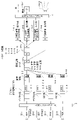
- FIG. 1 is a block diagram showing an information processing device, external inputs, and external outputs according to an embodiment of the present invention
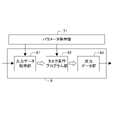
- FIG. 1 is a block diagram showing functions of an information processing apparatus according to an embodiment of the present invention
- FIG. 4 is a block diagram showing the configuration of a task execution unit according to the embodiment of the present invention
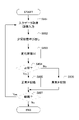
- FIG. Fig. 2 is a flow chart of tasks according to the first embodiment of the present invention
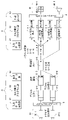
- 1 is a block diagram showing an information processing device, external inputs, and external outputs according to Embodiment 1 of the present invention;
- the information processing apparatus 1 As shown in FIG. 1, the information processing apparatus 1 according to the first embodiment is a computer having a processor 5, a ROM (Read Only Memory) 6, and a RAM (Random Access Memory) 7. As shown in FIG.
- the ROM 6 and RAM 7 are main storage devices of the information processing device 1 .
- the ROM 6 is a non-volatile memory exclusively used for reading data.
- the ROM 6 stores programs such as firmware.
- the ROM 6 also stores data and the like used when the processor 5 performs various processes.
- a RAM 7 is a memory used for reading and writing data.
- the RAM 7 is used as a work area or the like for storing data temporarily used when the processor 5 performs various processes.
- RAM 7 is typically volatile memory.
- the information processing device 1 receives data via the input interface 3 from a plurality of input units 30 such as the first input unit 30-1 and the second input unit 30-2. Via the output interface 4, the information processing apparatus 1 outputs data and/or signals from a plurality of output units 40 such as the first output unit 40-1 and the second output unit 40-2.
- the parameters stored in the RAM 7 are appropriately changed by the parameter changer 2 .
- the information processing apparatus 1 includes a plurality of task execution units 8 such as a first task execution unit 8-1, a second task execution unit 8-2, and a first task execution unit 8-2. has a plurality of output execution units 9 such as a second output execution unit 9-1 and a second output execution unit 9-2 as functional units.
- the task execution unit 8 and the output execution unit 9 are executed by the processor 5, ROM 6, and RAM 7 shown in FIG. 1, respectively.
- a plurality of task execution units 8 execute tasks without synchronizing with each other.
- the task execution unit 8 includes two types of task execution units 8. One is a task execution unit that acquires input data from the outside and generates output data, such as the first task execution unit 8-1 in FIG. The other is a task execution section that acquires output data generated by another task execution section as input data and executes another task, as shown in the third task execution section 8-3 in FIG. be.
- the information processing device 1 has a plurality of task execution units 8 that acquire input data from the outside and generate output data. As shown by the task execution unit 8-1 and the task execution unit 8-2 in FIG. 2, a plurality of task execution units 8 acquire input data from the outside and generate output data.
- each task execution section 8 acquires input data by an input data acquisition section 81 .
- the output data unit 83 outputs the execution result of the task.
- Connection destination information for acquiring input data and task information defining task execution conditions are held in the parameter holding unit 71, and the task execution program unit 82 executes tasks based on these connection destination information and task information. Run.
- connection destination information and task information may be described without particular distinction using the expression of parameter information.
- the third task execution unit 8-3 detects a difference from the normal state in the input image data as an abnormality, and records the abnormal state.
- an image is acquired as input data (step S801).
- the third task execution unit 8-3 acquires the image data stored in the output data unit 8-3 of the task execution unit 8-1, which will be described later with reference to FIG. is stored in the input data acquisition unit 81 of the task execution unit 8-3.
- step S802 the steady-state image stored in ROM 6 or RAM 7 is called (step S802).
- step S803 the image obtained in step 801 is compared with the image of the stationary body to extract the changed portion (step S803).
- step S804 it is determined whether the state is normal or abnormal (step S804). If normal, the normality is recorded in the output data section 83 of the third task execution section 8-3 (step S805). In the case of an abnormal state, the fact that it is abnormal is recorded in the output data section 83 of the third task execution section 8-3 (step S806). If the task is to be continued, the task flow returns to image input (step S801). If the task is not continued, the task ends (END).
- FIG. 5 As a first embodiment of the information processing apparatus according to the present invention, a system that has the third task execution unit 8-3 and detects an abnormal state will be described with reference to FIGS. 5 and 6.
- FIG. 5 As a first embodiment of the information processing apparatus according to the present invention, a system that has the third task execution unit 8-3 and detects an abnormal state will be described with reference to FIGS. 5 and 6.
- FIG. 5 As a first embodiment of the information processing apparatus according to the present invention, a system that has the third task execution unit 8-3 and detects an abnormal state will be described with reference to FIGS. 5 and 6.
- an input data acquisition section 81 for acquiring input data, a task execution program section 82, and an output execution section 9 having an external output section 93 are executed by the processor 5, ROM 6, and RAM 7. Similar to the task execution unit 8 , the output execution unit 9 has an input data acquisition unit 81 and a task execution program unit 82 . Unlike the task execution unit 8, the task execution unit 9 has an external output unit 93 that outputs signals to the outside. In FIG. 5, like the output execution unit 8, the output execution unit 9 is also shown only by a rectangular figure with no arrows.
- the input unit 30 has a first input unit 30-1 made up of an SDR (standard image resolution) analog camera and a second input unit 30-2 made up of an analog camera of SDR input as well.
- FIG. 5 shows a case where both the first input section 30-1 and the second input section 30-2 are normal.
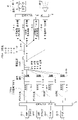
- FIG. 6 shows, as a first modification, a case where there is no abnormality in the first input section 30-1 and there is an abnormality in the second input section 30-2.
- the camera is monitoring the water level of the bridge and the river, and the bridge is damaged, or the water level is abnormally high.
- FIG. 1 A signal of the first input section 30-1 is acquired by the first task execution section 8-1 via the input interface 3.
- the first task execution unit 8-1 executes a task of converting an analog signal into a digital signal of SDR (DSDR) and outputting it.
- This output is written to the output data section 83, which is a storage area unique to the first task execution section 8-1.
- the memory or data storage address is directly referred to and acquired as input data.
- the signal of the second input unit 30-2 is acquired by the second task execution unit 8-2 via the input interface 3.
- the second task execution unit 8-2 executes a task of converting an analog signal into a digital signal of SDR (DSDR) and outputting it.
- This output is written to the output data section 83, which is a storage area unique to the second task execution section 8-2.
- the memory or data storage address is directly referred to and acquired as input data.
- the third task execution unit 8-3 acquires the output of the first task execution unit 8-1 according to the parameter information stored in the parameter holding unit 71, and executes the task according to the flowchart shown in FIG. to run.
- the third task execution unit 8-3 judges that there is no abnormality and is normal, and outputs information indicating that it is normal (step S805).
- This output is written to the output data section 83, which is a storage area unique to the third task execution section 8-3.
- the memory or data storage address is directly referred to and acquired as input data.
- the fourth task execution unit 8-4 acquires the output of the second task execution unit 8-2 according to the parameter information stored in the parameter holding unit 71, and executes the task according to the flowchart shown in FIG. to run.
- the fourth task execution unit 8-4 determines that there is no abnormality and is normal, and outputs information indicating normality (step S805). This output is written to the output data section 83, which is a storage area unique to the fourth task execution section 8-4.
- the memory or data storage address is directly referred to and acquired as input data.
- the fifth task execution unit 8-5 identifies the camera that detected the abnormality.
- the fifth task execution section 8-5 acquires the outputs of the third task execution section 8-3 and the fourth task execution section 8-4 according to the parameter information held in the parameter holding section 71.
- FIG. The parameter information is 3 if the output of the third task execution unit 8-3 indicates an abnormality, 4 if the output of the fourth task execution unit 8-4 indicates an abnormality, and If not, the fifth task execution unit outputs 0.
- the fifth task execution unit outputs 0 because there is no abnormality.
- This output is written to the output data section 83, which is a storage area unique to the fifth task execution section 8-5. When this output is acquired by another task execution unit 8, the memory or data storage address is directly referred to and acquired as input data.
- the sixth task execution unit 8-6 acquires the output of the fifth task execution unit 8-5 according to the parameter information stored in the parameter holding unit 71.
- the sixth task execution unit 8-6 outputs the processing number according to the parameter information stored in the parameter holding unit 71 based on the acquired information.
- A is output as the processing number
- if the input is 3, 3 is output as the processing number
- if the input is 4, 4 is output as the processing number.
- A is output according to the parameter information held by the parameter holding unit 71 .
- This output is written to the output data section 83, which is a storage area unique to the sixth task execution section 8-6.
- the memory or data storage address is directly referred to and acquired as input data.
- the parameter holding unit 71 associates the processing number A with the input 0 as parameter information. This linkage can be changed by the parameter changer 2 as appropriate.
- the output execution unit 9 has a first output execution unit 9-1 to a third output execution unit 9-3.
- the first output execution section 9-1 acquires the output of the task execution section 8-6 according to the parameter information held in the parameter holding section 71.
- FIG. When the acquired information is 3, the first output execution unit 9-1 outputs the output of the task execution unit 8-1, which is the input linked to 3, and when the acquired information is 4, The output of the task execution unit 8-2, which is the input linked to 4, is output, and if the acquired information is other than 3 and 4, no output is performed.
- the output of the task execution section 8-6 is A, there is no output from the first output execution section 9-1.
- the second output execution unit 9-2 acquires the output of the task execution unit 8-6 according to the parameter information held in the parameter holding unit 71.
- the second output execution unit acquires the output of the task execution unit 8-1 and the output of the task execution unit 8-2 linked to A, and synthesizes them.
- the images are captured by a camera, and are synthesized so that the images are arranged side by side. In cases other than A, there is no output.
- the output of the task execution section 8-1 and the output of the task execution section 8-2 are acquired, combined and output.
- the output of the task execution unit 8-1 is 1
- the output of the task execution unit 8-2 is 2
- the image is represented by a circled number 1 and a circled number 2 arranged side by side.
- the third output execution unit 9-3 acquires the output of the task execution unit 8-6 according to the parameter information held in the parameter holding unit 71.
- the third output execution unit acquires the output of the task execution unit 8-1 and the output of the task execution unit 8-2 linked to B, and holds them for 5 seconds. Switch and output every time.
- the video is captured by a camera, and the video is switched and output. In cases other than B, there is no output. In the first embodiment, since the acquired information is A, there is no output from the third output execution section 9-3.
- the fourth output execution unit 9-4 has a task of issuing an alarm, and outputs an alarm sound signal when there is an abnormality.
- the fourth output execution section 9-4 acquires the output of the task execution section 8-5 according to the parameter information held in the parameter holding section 71. FIG. When the acquired value is 0, no alarm sound signal is output, and when the acquired value is 1, the alarm sound signal is output.
- the acquired information is the output of the task execution unit 8-5 and is 0 as described above. Therefore, no alarm sound signal is output.
- the output section 40 has a first output section 40-1 and a second output section 40-2.
- the first output 40-1 is a monitor and the second output is a speaker.
- the first output section 40-1 is connected to the first output execution section 9-1, the second output execution section 9-2 and the third output execution section 9-3 via the main interface 4. .
- the output is output only from the second output execution section 9-2 as described above, and the first output section 40-1 displays the image from the second output execution section 9-2. In the first embodiment, a composite screen of the output of the task execution section 8-1 and the output of the execution section 8-2 is displayed.
- the third task execution unit 8-3 outputs information that there is no abnormality, that is, normal.
- the fourth task execution unit 8-4 outputs information that there is an abnormality. This output is written to the output data section 83 which is a storage area unique to each task execution section 8 . When this output is acquired by another task execution unit 8, the memory or data storage address is directly referred to and acquired as input data.
- the fifth task execution unit 8-5 identifies the camera that detected the abnormality.
- the fifth task execution section 8-5 acquires outputs from the third and fourth task execution sections 8 according to the parameters held in the parameter holding section 71.
- FIG. The fifth task execution unit 8-5 sets 3 as parameter information if the output of the third task execution unit 8-3 indicates an abnormality, and if the output of the fourth task execution unit 8-4 If an abnormality is indicated, 4 is output. In the first modification, 4 is output because the output of the fourth task execution unit 8-4 indicates an abnormality.
- This output is written to the output data section 83, which is a storage area unique to the fifth task execution section 8-5. When this output is acquired by another task execution unit 8, the memory or data storage address is directly referred to and acquired as input data.
- the sixth task execution unit 8-6 acquires the output of the fifth task execution unit 8-5 according to the parameter information stored in the parameter storage unit 71, and stores the acquired information in the parameter storage unit 71. Outputs the process number according to the saved parameter information. If the input is 0, then A is output as the processing number, if the input is 3, then 3 is output as the processing number, and if the input is 4, then 4 is output as the processing number. complies. Here, since the input is 4, the task execution unit 8-6 outputs 4 according to the parameter information held by the parameter holding unit 71. FIG. This output is written to the output data section 83, which is a storage area unique to the sixth task execution section 8-6. When this output is acquired by another task execution unit 8, the memory or data storage address is directly referenced, and the output of the sixth task execution unit 8-6 is acquired by the output execution unit 9 as input data. .
- the first output execution unit 9-1 acquires the output of the sixth task execution unit 8-6 according to the parameter information held in the parameter holding unit 71.
- the first output execution unit outputs the output of the task execution unit 8-1 which is the input linked to 3 when the acquired information is 3, and links to 4 when the acquired information is 4.
- the output of the task execution unit 8-2, which is the attached input, is output, and if the acquired information is other than the above, it is not output.
- the output of the task execution unit 8-2 since the output of the task execution unit 8-6 is 4, the output of the task execution unit 8-2, which is the input linked to 4, is output to the output interface 4 as a video signal.
- the second output execution unit 9-2 acquires the output of the task execution unit 8-6 according to the parameter information held in the parameter holding unit 71.
- the second output execution unit 9-2 acquires each output of the first task execution unit 8-1 and the second task execution unit 8-2 linked to A. and synthesize them for output. In cases other than A, there is no output.
- the first modification since the acquired information is 4, there is no output from the second output execution section 9-2.
- the third output execution unit 9-3 acquires the output of the task execution unit 8-6 according to the parameter information held in the parameter holding unit 71.
- the third output execution unit 9-3 outputs each output from the first task execution unit 8-1 and the second task execution unit 8-2 linked to B. It acquires and outputs these by switching them every 5 seconds. In cases other than B, there is no output.
- the acquired information since the acquired information is 4, there is no output from the third output execution section 9-3.
- a fourth output execution unit 9-4 outputs an alarm sound when there is an abnormality.
- the fourth output execution section acquires the output of the task execution section 8-5 according to the parameter information held in the parameter holding section 71. FIG. When the acquired information is 0, no alarm sound signal is output, and when the acquired information is other than 0, the alarm sound signal is output. The acquired information is 4 as described above. Therefore, an alarm sound signal is output from the fourth output execution section 9-4.
- the output section 40 has a first output section 40-1 and a second output section 40-2.
- the first output section 40-1 is a monitor. As described above, the output is output only from the first output execution section 9-1, and the first output section 40-1 displays the image from the first output execution section 9-1. Specifically, the first output section 40-1 outputs the video from the task execution section 8-2. In FIG. 6, the circled number 2 represents the output from the first output section 40-1.
- the speaker which is the second output unit 40-2, reproduces the alarm sound signal output from the fourth output execution unit 9-4, that is, sounds the alarm sound.
- the input unit 30 has two systems, first and second, but in the second embodiment, four systems, first to fourth, are shown in FIGS. and FIG. 8 . 5 and 6 are referred to as appropriate for comparison of the embodiments.
- the input unit 30 includes a first input unit 30-1 composed of a camera that captures images with analog SDR resolution, and a second input unit composed of a camera that captures images with analog SDR resolution as in the first input unit 30-1. 30-2. Further, the input unit 30 has a seventh input unit 30-7 made up of a 2K1K resolution digital camera and an eighth input unit 30-8 made up of a 4K2K resolution digital camera.
- the signal of the first input section 30-1 is acquired by the first task execution section 8-1 via the input interface 3, as in the first embodiment.
- the first task executing section 8-1 executes a task of converting an analog signal into a digital signal and outputting it.
- This output is written to the output data section 83, which is a storage area unique to the first task execution section 8-1.
- the memory or data storage address is directly referred to and acquired as input data.
- the signal of the second input section 30-2 is acquired by the second task execution section 8-2 via the input interface 3, as in the first embodiment.
- the second task execution section 8-2 executes a task of converting an analog signal into a digital signal and outputting it.
- This output is written to the output data section 83, which is a storage area unique to the second task execution section 8-2.
- the memory or data storage address is directly referred to and acquired as input data.
- the signal of the eighth input section 30-8 is obtained by the eighth task execution section 8-8 via the input interface 3.
- the eighth task execution unit 8-8 executes a task of converting a 4K2K digital signal into an SDR digital signal (DSDR) and outputting it.
- This output is written to the output data section 83, which is a storage area unique to the eighth task execution section 8-8.
- the memory or data storage address is directly referred to and acquired as input data.
- the task of the third task execution unit 8-3 obtains the output of the first task execution unit 8-1 according to the parameter information stored in the parameter holding unit 71, and executes the task according to the flowchart shown in FIG. to execute the task.
- the third task execution unit 8-3 judges that there is no abnormality and is normal, and outputs information indicating that it is normal (step S805).
- This output is written to the output data section 83, which is a storage area unique to the third task execution section 8-3.
- the memory or data storage address is directly referred to and acquired as input data.
- the fourth task execution section 8-4, the ninth task execution section 8-9, and the tenth task execution section differ only in parameter information, and the content or program itself differs from that of the third task execution section 8-4. is the same as 3.
- the fourth task execution unit 8-4 acquires the output of the second task execution unit 8-2
- the ninth task execution unit 8-9 acquires the output of the seventh task execution unit 8-7
- a tenth task execution unit 8-10 acquires the output of the eighth task execution unit 8-8.
- Each task executing section 8 executes a task according to the flowchart shown in FIG. When this output is acquired by another task execution section 8, the memory or data storage address is directly referred to and acquired by the other task execution section 8 as input data.
- the sixth task execution unit 8-6 acquires the output of the fifth task execution unit 8-5 according to the parameter information stored in the parameter storage unit 71, and stores the acquired information in the parameter storage unit 71. Outputs the process number according to the saved parameter information. According to the parameter information, the sixth task execution unit 8-6 outputs B as the processing number if the input is 0, outputs 3 as the processing number if the input is 3, and outputs 4 as the processing number if the input is 4. If the input is 9, 9 is output as the processing number, and if the input is 10, 10 is output as the processing number. Here, since the input is 0, the sixth task execution section 8-6 outputs B according to the parameter information held by the parameter holding section 71. FIG.
- This output is written to the output data section 83, which is a storage area unique to the sixth task execution section 8-6.
- the memory or data storage address is directly referenced, and the output of the sixth task execution unit 8-6 is acquired as input data.
- the first output execution unit 9-1 acquires the output of the sixth task execution unit 8-6 according to the parameter information held in the parameter holding unit 71. Only the parameter information differs from the first embodiment.
- the first output execution unit outputs the output of the task execution unit 8-1 which is the input linked to 3 when the acquired information is 3, and links to 4 when the acquired information is 4. If the acquired information is 9, the output of the task execution unit 8-7 that is the input linked to 9 is output, and the acquired When the information is 10, the output of the task execution unit 8-8, which is the input linked to 10, is output, and when the acquired information is other than the above, no output is performed.
- the output of the task execution section 8-6 is B, there is no output from the first output execution section 9-1.
- the second output execution unit 9-2 acquires the output of the task execution unit 8-6 according to the parameter information held in the parameter holding unit 71. Only the parameter information differs from the first embodiment.
- the second output execution unit 9-2 connects the first task execution unit 8-1, the second task execution unit 8-2, and the seventh task execution unit 8-2 linked to A.
- Each output from the task execution unit 8-7 and the eighth task execution unit 8-8 is acquired, and these are synthesized and output.
- the images are captured by four cameras, and the images are synthesized so that the images are aligned vertically and horizontally. If the acquired information is other than A, the second output execution section 9-2 does not output. In the second embodiment, since the acquired information is B, there is no output from the second output execution section 9-2.
- a fourth output execution unit 9-4 outputs an alarm sound when there is an abnormality.
- the fourth output execution section acquires the output of the task execution section 8-5 according to the parameter information held in the parameter holding section 71. FIG. When the acquired information is 0, no alarm sound signal is output, and when the acquired information is other than 0, the alarm sound signal is output. The acquired information is 0 as described above. Therefore, the alarm sound signal is not output from the fourth output execution section 9-4.
- the output section 40 has a first output section 40-1 and a second output section 40-2. This configuration is the same as that of the first embodiment.
- the first output 40-1 is a monitor and the second output is a speaker.
- the first output section 40-1 is connected via the output interface 4 to the first output execution section 9-1, the second output execution section 9-2, and the third output execution section 9-3. there is As described above, the output is output only from the third output execution section 9-3, and the first output section 40-1 displays the image from the third output execution section 9-3.
- each of the first task execution section 8-1, the second task execution section 8-2, the seventh task execution section 8-7, and the eighth task execution section 8-8 The output screen is switched every 5 seconds and projected.
- the third task execution unit, fourth task execution unit, and ninth task execution unit output information that there is no abnormality.
- the tenth task execution unit outputs information that there is an abnormality.
- This output is written to the output data section 83, which is a storage area unique to the fifth task execution section 8-5. When this output is acquired by another task execution unit 8, the memory or data storage address is directly referred to and acquired as input data.
- the fifth task execution unit 8-5 identifies the camera that detected the abnormality.
- the fifth task execution section 8-5 acquires outputs from the third, fourth, ninth, and tenth task execution sections 8 according to the parameters held in the parameter holding section 71.
- FIG. The parameter information is 3 if the output of the third task execution unit 8-3 indicates an abnormality, 4 if the output of the fourth task execution unit 8-4 indicates an abnormality, 9 if the output of the task execution unit 8-9 of 9 indicates an abnormality, 10 if the output of the tenth task execution unit 8-10 indicates an abnormality, and if there is no abnormality 0 is output to
- the fourth task execution section 8-5 outputs 9 because the output of the ninth task execution section 8-9 indicates an abnormality.
- This output is written to the output data section 83, which is a storage area unique to the fifth task execution section 8-5. When this output is acquired by another task execution unit 8, the memory or data storage address is directly referred to and acquired as input data.
- the sixth task execution unit 8-6 acquires the output of the fifth task execution unit 8-5 according to the parameter information stored in the parameter storage unit 71, and stores the acquired information in the parameter storage unit 71. Outputs the process number according to the saved parameter information. If the input is 0, the process number is B, if the input is 3, the process number is 3, if the input is 4, the process number is 4, if the input is 9, the process number is 9, if the input is 10
- the sixth task execution unit 8-6 complies with the parameter information that, for example, 10 is output as the processing number.
- the output data section 83 which is a storage area specific to the sixth task execution section 8-6, according to the parameter information held by the parameter holding section 71.
- FIG. When this output is acquired by another task execution unit 8, the memory or data storage address is directly referred to and acquired as input data.
- the output execution unit 9 has a first output execution unit 9-1 to a fourth output execution unit 9-4.
- the first output execution unit 9-1 acquires the output of the sixth task execution unit 8-6 according to the parameter information held in the parameter holding unit 71.
- the first output execution unit outputs the output of the task execution unit 8-1 which is the input linked to 3 when the acquired information is 3, and links to 4 when the acquired information is 4. If the acquired information is 9, the output of the task execution unit 8-7 that is the input linked to 9 is output, and the acquired When the information is 10, the output of the task execution unit 8-8, which is the input linked to 10, is output, and when the acquired information is other than the above, no output is performed.
- the output of the task execution unit 8-6 since the output of the task execution unit 8-6 is 9, the output of the task execution unit 8-7, which is the input linked to 9, is output to the output interface 4 as a video signal.
- the second output execution unit 9-2 acquires the output of the task execution unit 8-6 according to the parameter information held in the parameter holding unit 71.
- the second output execution unit 9-2 selects the first task execution unit 8-1, the second task execution unit 8-2, and the seventh task linked to A.
- Each output from the execution unit 8-7 and the eighth task execution unit 8-8 is acquired, and these are synthesized and output.
- the images are from four cameras, and the second output execution unit 9-2 synthesizes the images so that the images are aligned vertically and horizontally. In cases other than A, the second output execution unit 9-2 does not output.
- the acquired information since the acquired information is 9, there is no output from the second output execution section 9-2.
- the third output execution unit 9-3 acquires the output of the task execution unit 8-6 according to the parameter information held in the parameter holding unit 71.
- the third output execution unit 9-3 selects the first task execution unit 8-1, the second task execution unit 8-2, and the seventh task linked to B.
- Each output from the execution unit 8-7 and the eighth task execution unit 8-8 is acquired, and these are switched and output every 5 seconds.
- images are output from four cameras, and the images are switched and output. In cases other than B, there is no output.
- the acquired information since the acquired information is 9, there is no output from the third output execution section 9-3.
- a fourth output execution unit 9-4 outputs an alarm sound when there is an abnormality.
- the fourth output execution section acquires the output of the task execution section 8-5 according to the parameter information held in the parameter holding section 71.
- FIG. When the acquired information is 0, the alarm sound signal is not output, and when the acquired information is other than 0, the fourth output executing section 9-4 outputs the alarm sound signal.
- the acquired information is 9 as described above. Therefore, an alarm sound signal is output from the output execution section 9-4.
- the output section 40 has a first output section 40-1 and a second output section 40-2. This configuration is the same as that of the first embodiment.
- the first output 40-1 is a monitor and the second output is a speaker.
- the first output section 40-1 is connected via the output interface 4 to the first output execution section 9-1 to the third output execution section 9-3. As described above, the output is output only from the first output execution section 9-1, and the first output section 40-1 displays the image from the first output execution section 9-1. That is, the video signal from the seventh task execution section 8-7 is reproduced.
- the speaker of the second output unit 40-2 reproduces the alarm sound signal output from the fourth output execution unit 9-4, that is, sounds the alarm sound.
- the input unit 30 includes only two SDR analog type cameras.
- the only change is the addition of the task execution unit 8 that switches the high-definition digital signal to the SDR digital signal (DSDR).
- DSDR SDR digital signal
- a ninth task execution section and a tenth task execution section are provided as the task execution section 8 for detecting an abnormality.
- the content or program is the same as the task content or program of the third task execution section or the fourth task execution section in the first embodiment.
- the parameters held in the parameter holding section 71 are changed.
- data is acquired from only 8-3 and 8-4, but 8-9 and 8-10 are additionally changed.
- the task content or program of the fifth task execution section in the second embodiment is the same as the task content or program of the fifth task execution section in the first embodiment.
- parameters are changed for the sixth task execution unit.
- the information processing apparatus 1 also supports an increase in the number of cameras from two to four by changing the split screen display to switching display only by changing the parameters.
- the system can be improved by only changing the minimum changes, combining the same components, and changing the parameters held in the parameter holding unit 71. It is easy to construct and the man-hours are reduced.
- the information processing apparatus 1 according to the embodiment described above has the following effects.
- the information processing apparatus 1 includes a parameter holding unit 71 including at least task information about a task to be executed on input data and connection destination information indicating a connection destination from which input data is acquired, and acquires input data based on the connection destination information. , a plurality of task execution units 8 for executing tasks on input data based on task information to generate output data, and an output execution unit 9 for acquiring output data from the task execution units and outputting them to an external device. .
- Each task execution unit 8 only acquires input data according to the parameter information and executes the task, which simplifies the process. Even a complicated flow chart is realized by combining each task execution unit 8 with parameter information. Therefore, it is possible to facilitate the construction of a system for processing input data and outputting output data and to reduce man-hours.
- the plurality of task execution units 8 of the information processing apparatus 1 include a first task execution unit 8 that acquires input data from the outside and generates output data, and a first task execution unit 8 that receives the output data generated by the first task execution unit 8 as input data. and a task execution unit 8 on the same line that acquires as and executes another task.
- a plurality of task execution units 8 of the information processing apparatus 1 include a task execution unit 8 that acquires input data from the outside and generates output data, and a task execution unit 8 that acquires output data generated by the task execution unit as input data and executes another task. and a task execution unit 8 that executes
- the information processing apparatus 1 can be operated by changing only the first task execution unit 8 that acquires input data from the outside and generates output data, without changing the others. Function.
- a plurality of task execution units 8 of the information processing apparatus 1 are provided with a task execution unit 8 that acquires certain input data from the outside and generates output data corresponding to a plurality of input data, and a task execution unit 8 that acquires other input data from the outside. and a task execution unit 8 for generating output data.
- the information processing apparatus 1 functions without changing the others by changing only the task execution unit 8 related to the change content.
- the processing flow of the information processing device can be changed simply by changing the parameters with the parameter changer.
- Each task execution part will surely share information, and conflicts in processing between task execution parts can be avoided.
- a task to be executed by the task execution unit of the information processing device is selected from a plurality of preset tasks.
- a plurality of task execution units of an information processing device execute tasks without synchronizing with each other.
- each task execution unit is independent, asynchronous task execution can be achieved. Since it is asynchronous, timing deviation does not pose a problem, and stable information processing is realized.
- the information processing apparatus 1 illustrated a configuration including all functional units such as the parameter holding unit 71, the task execution unit 8, and the output execution unit 9.
- the information processing apparatus of the present invention may be configured by a system in which the functional units are distributed in the computer. Also, the configuration of the functional units of the information processing apparatus can be changed as appropriate, such as by omitting some of the functional units or adding other functional units.
- the series of processes described above can be executed by hardware or by software.
- a program constituting the software is installed in a computer or the like from a network or a recording medium.
- a recording medium containing such a program is not only constituted by a removable medium that is distributed separately from the main body of the device in order to provide the program to the user, but is also provided to the user in a state pre-installed in the main body of the device. It consists of a recording medium, etc.
- Removable media include, for example, magnetic disks (including floppy disks), optical disks, or magneto-optical disks.
- Optical discs are composed of, for example, CD-ROMs (Compact Disk-Read Only Memory), DVDs (Digital Versatile Disks), Blu-ray (registered trademark) Discs (Blu-ray Discs), and the like.
- the magneto-optical disk is composed of an MD (Mini-Disk) or the like.
- the recording medium provided to the user in a state of being pre-installed in the device main body is composed of, for example, a program memory, a hard disk, or the like in which the program is recorded.
Landscapes
- Engineering & Computer Science (AREA)
- Software Systems (AREA)
- Theoretical Computer Science (AREA)
- Physics & Mathematics (AREA)
- General Engineering & Computer Science (AREA)
- General Physics & Mathematics (AREA)
- Debugging And Monitoring (AREA)
Priority Applications (3)
| Application Number | Priority Date | Filing Date | Title |
|---|---|---|---|
| EP22820329.5A EP4354290A4 (en) | 2021-06-09 | 2022-06-09 | INFORMATION PROCESSING DEVICE, PROGRAM AND DATA PROCESSING METHOD |
| US18/568,583 US20240289169A1 (en) | 2021-06-09 | 2022-06-09 | Information processing device, program, and data processing method |
| JP2023527934A JP7825290B2 (ja) | 2021-06-09 | 2022-06-09 | 情報処理装置、プログラム及びデータ処理方法 |
Applications Claiming Priority (2)
| Application Number | Priority Date | Filing Date | Title |
|---|---|---|---|
| JP2021096721 | 2021-06-09 | ||
| JP2021-096721 | 2021-06-09 |
Publications (1)
| Publication Number | Publication Date |
|---|---|
| WO2022260150A1 true WO2022260150A1 (ja) | 2022-12-15 |
Family
ID=84425250
Family Applications (1)
| Application Number | Title | Priority Date | Filing Date |
|---|---|---|---|
| PCT/JP2022/023375 Ceased WO2022260150A1 (ja) | 2021-06-09 | 2022-06-09 | 情報処理装置、プログラム及びデータ処理方法 |
Country Status (4)
| Country | Link |
|---|---|
| US (1) | US20240289169A1 (https=) |
| EP (1) | EP4354290A4 (https=) |
| JP (1) | JP7825290B2 (https=) |
| WO (1) | WO2022260150A1 (https=) |
Citations (5)
| Publication number | Priority date | Publication date | Assignee | Title |
|---|---|---|---|---|
| JPH0756606A (ja) | 1993-08-19 | 1995-03-03 | Fujitsu Ltd | 計測監視制御装置の構築支援装置 |
| JP2002049418A (ja) | 2000-05-23 | 2002-02-15 | Toshiba Corp | 機器監視システムとその方法 |
| JP5284433B2 (ja) | 2011-09-14 | 2013-09-11 | 株式会社東芝 | プロセス監視・診断・支援装置 |
| JP2015018379A (ja) * | 2013-07-10 | 2015-01-29 | 国立大学法人 筑波大学 | プログラム、及び情報処理装置 |
| JP6236035B2 (ja) | 2015-06-12 | 2017-11-22 | 株式会社smart−FOA | 情報収集システム |
Family Cites Families (2)
| Publication number | Priority date | Publication date | Assignee | Title |
|---|---|---|---|---|
| JP2005165961A (ja) | 2003-12-05 | 2005-06-23 | Matsushita Electric Ind Co Ltd | 動的再構成論理回路装置、割込制御方法、及び、半導体集積回路 |
| JP5137434B2 (ja) * | 2007-03-28 | 2013-02-06 | 株式会社ソニー・コンピュータエンタテインメント | データ処理装置、分散処理システム、データ処理方法、及びデータ処理プログラム |
-
2022
- 2022-06-09 US US18/568,583 patent/US20240289169A1/en active Pending
- 2022-06-09 WO PCT/JP2022/023375 patent/WO2022260150A1/ja not_active Ceased
- 2022-06-09 EP EP22820329.5A patent/EP4354290A4/en active Pending
- 2022-06-09 JP JP2023527934A patent/JP7825290B2/ja active Active
Patent Citations (5)
| Publication number | Priority date | Publication date | Assignee | Title |
|---|---|---|---|---|
| JPH0756606A (ja) | 1993-08-19 | 1995-03-03 | Fujitsu Ltd | 計測監視制御装置の構築支援装置 |
| JP2002049418A (ja) | 2000-05-23 | 2002-02-15 | Toshiba Corp | 機器監視システムとその方法 |
| JP5284433B2 (ja) | 2011-09-14 | 2013-09-11 | 株式会社東芝 | プロセス監視・診断・支援装置 |
| JP2015018379A (ja) * | 2013-07-10 | 2015-01-29 | 国立大学法人 筑波大学 | プログラム、及び情報処理装置 |
| JP6236035B2 (ja) | 2015-06-12 | 2017-11-22 | 株式会社smart−FOA | 情報収集システム |
Non-Patent Citations (1)
| Title |
|---|
| See also references of EP4354290A4 |
Also Published As
| Publication number | Publication date |
|---|---|
| JPWO2022260150A1 (https=) | 2022-12-15 |
| US20240289169A1 (en) | 2024-08-29 |
| JP7825290B2 (ja) | 2026-03-06 |
| EP4354290A4 (en) | 2024-10-02 |
| EP4354290A1 (en) | 2024-04-17 |
Similar Documents
| Publication | Publication Date | Title |
|---|---|---|
| USRE44309E1 (en) | Method of displaying directory structure of recorded data | |
| KR20010007043A (ko) | 컴퓨터 시스템 내의 컨텐트 컴팩트 디스크 복사 방법 | |
| JPS6261170A (ja) | 画像処理システム | |
| JP3137486B2 (ja) | 多画面分割表示装置 | |
| KR20040076388A (ko) | 고밀도 광디스크의 그래픽 및 서브타이틀 데이터관리방법 | |
| WO2022260150A1 (ja) | 情報処理装置、プログラム及びデータ処理方法 | |
| JP4723051B2 (ja) | ディジタル画像データの記憶と取り出しの方法と装置 | |
| KR101484783B1 (ko) | 디지털 비디오 레코더와 하드디스크 관리방법 | |
| US20100201715A1 (en) | Method for controlling output of display unit and system enabling of the method | |
| CN101676870A (zh) | 计算机装置与其开机系统和开机方法 | |
| JP2004213709A (ja) | 映像記録装置および監視カメラシステム | |
| JP3402581B2 (ja) | データ復元装置 | |
| CN102057432B (zh) | 再现装置、集成电路以及再现方法 | |
| KR100205399B1 (ko) | 광 디스크의 기록 가능한 잔량을 표시하는 방법 | |
| JP4361417B2 (ja) | プレイリスト生成方法および装置 | |
| JP3116918B2 (ja) | 半導体集積回路のデバッグ装置およびデバッグ方法 | |
| KR101463275B1 (ko) | Hd-dvd 마크업의 증분 갱신 및 포맷 | |
| CN100530404C (zh) | 图像重放装置和重放方法 | |
| US20070147803A1 (en) | Image data recording apparatus, image data recording method, and program | |
| US8331770B2 (en) | Recording apparatus and method, recording medium, and program | |
| CN101331536A (zh) | 信号处理装置和光盘装置 | |
| WO2025173115A1 (ja) | 画像処理装置、画像処理方法およびプログラム | |
| JP4679234B2 (ja) | 動画記録装置 | |
| JP6465998B2 (ja) | 映像記録再生装置及び起動方法 | |
| JP2000134583A (ja) | 画像記録再生装置,電子カメラ,及び画像再生装置 |
Legal Events
| Date | Code | Title | Description |
|---|---|---|---|
| 121 | Ep: the epo has been informed by wipo that ep was designated in this application |
Ref document number: 22820329 Country of ref document: EP Kind code of ref document: A1 |
|
| WWE | Wipo information: entry into national phase |
Ref document number: 2023527934 Country of ref document: JP |
|
| WWE | Wipo information: entry into national phase |
Ref document number: 2022820329 Country of ref document: EP |
|
| NENP | Non-entry into the national phase |
Ref country code: DE |
|
| WWE | Wipo information: entry into national phase |
Ref document number: 18568583 Country of ref document: US |
|
| ENP | Entry into the national phase |
Ref document number: 2022820329 Country of ref document: EP Effective date: 20240109 |