WO2022201492A1 - サービス提供システム、サービス提供方法、及びプログラム - Google Patents
サービス提供システム、サービス提供方法、及びプログラム Download PDFInfo
- Publication number
- WO2022201492A1 WO2022201492A1 PCT/JP2021/012874 JP2021012874W WO2022201492A1 WO 2022201492 A1 WO2022201492 A1 WO 2022201492A1 JP 2021012874 W JP2021012874 W JP 2021012874W WO 2022201492 A1 WO2022201492 A1 WO 2022201492A1
- Authority
- WO
- WIPO (PCT)
- Prior art keywords
- location information
- service
- user
- providing system
- location
- Prior art date
- Legal status (The legal status is an assumption and is not a legal conclusion. Google has not performed a legal analysis and makes no representation as to the accuracy of the status listed.)
- Ceased
Links
Images







Classifications
-
- H—ELECTRICITY
- H04—ELECTRIC COMMUNICATION TECHNIQUE
- H04W—WIRELESS COMMUNICATION NETWORKS
- H04W4/00—Services specially adapted for wireless communication networks; Facilities therefor
- H04W4/02—Services making use of location information
-
- G—PHYSICS
- G06—COMPUTING OR CALCULATING; COUNTING
- G06Q—INFORMATION AND COMMUNICATION TECHNOLOGY [ICT] SPECIALLY ADAPTED FOR ADMINISTRATIVE, COMMERCIAL, FINANCIAL, MANAGERIAL OR SUPERVISORY PURPOSES; SYSTEMS OR METHODS SPECIALLY ADAPTED FOR ADMINISTRATIVE, COMMERCIAL, FINANCIAL, MANAGERIAL OR SUPERVISORY PURPOSES, NOT OTHERWISE PROVIDED FOR
- G06Q50/00—Information and communication technology [ICT] specially adapted for implementation of business processes of specific business sectors, e.g. utilities or tourism
- G06Q50/10—Services
-
- H—ELECTRICITY
- H04—ELECTRIC COMMUNICATION TECHNIQUE
- H04W—WIRELESS COMMUNICATION NETWORKS
- H04W4/00—Services specially adapted for wireless communication networks; Facilities therefor
- H04W4/02—Services making use of location information
- H04W4/029—Location-based management or tracking services
Definitions
- the present disclosure relates to a service providing system, a service providing method, and a program.
- Patent Literature 1 describes an application system that collectively manages user information using a data warehouse common to multiple services. This application system selects users who are likely to use the second service from users who do not use the second service based on the user's action history in the first service, and guides them to the second service. When the user uses the second service, the information of the first service registered in the data warehouse is referenced. If location information such as the user's home address is registered, the registered location information is used for the second service.
- One of the purposes of the present disclosure is to reduce input work for users who use services provided at designated locations.
- a service providing system includes first acquisition means for acquiring first location information registered by a user for a first service, and the user uses a second service provided at a specified location. determining means for determining whether or not to use the first location information as the second location information related to the specified location based on a predetermined condition; and based on the determination result of the determining means, and a second obtaining means for obtaining the second location information.
- FIG. 4 is a diagram showing an example of a procedure for a user to use a second service from an application of a first service
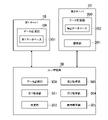
- FIG. 2 is a functional block diagram showing an example of functions realized by the service providing system
- FIG. It is a figure which shows the data storage example of a 1st database. It is a figure which shows the data storage example of a 2nd database.
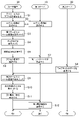
- FIG. 4 is a flow chart showing an example of processing executed in the service providing system
- FIG. 4 is a flow chart showing an example of processing executed in the service providing system
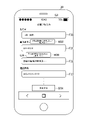
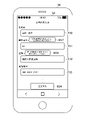
- FIG. 10 is a diagram showing an example of how the input screen prompts the user to input the remaining part of the second location information
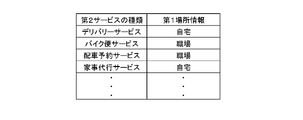
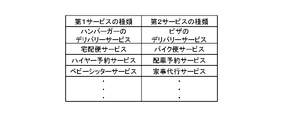
- FIG. 9 is a diagram showing an example of the relationship between the type of second service and the first location information to be diverted. It is a figure which shows an example of the relationship between the kind of 1st service which diverts 1st place information, and the kind of 2nd service.
- FIG. 8 is a diagram showing an example of the relationship between the provision time of the second service and the first place information to be diverted.
- FIG. 1 is a diagram showing an example of the overall configuration of a service providing system.
- the service providing system S includes a first server 10, a second server 20, and user terminals 30.
- Each of the first server 10, the second server 20, and the user terminal 30 can be connected to a network N such as the Internet.
- the service providing system S only needs to include at least one computer, and is not limited to the example in FIG.
- the first server 10 is a server computer for providing the first service to users.
- SNS Social Networking Service
- the first service is not limited to the example of this embodiment, and may be any service. Application examples of other services will be described in modified examples below. Although only one first server 10 is shown in FIG. 1, there may be multiple first servers 10 when multiple first services are provided.
- the first server 10 includes a control unit 11, a storage unit 12, and a communication unit 13.
- Control unit 11 includes at least one processor.
- the storage unit 12 includes a volatile memory such as RAM and a nonvolatile memory such as a hard disk.
- the communication unit 13 includes at least one of a communication interface for wired communication and a communication interface for wireless communication.
- the second server 20 is a server computer for providing the second service to the user.
- a food and drink delivery service will be described as an example of the second service.
- the second service is not limited to the example of this embodiment, and may be any service that is different from the first service. Application examples of other services will be described in modified examples below. Although only one second server 20 is shown in FIG. 1, a plurality of second servers 20 may exist when a plurality of second services are provided.
- the second server 20 includes a control unit 21, a storage unit 22, and a communication unit 23.
- Physical configurations of the control unit 21, the storage unit 22, and the communication unit 23 are the same as those of the control unit 11, the storage unit 12, and the communication unit 13, respectively.
- the user terminal 30 is a computer operated by a user.
- the user terminal 30 is a smartphone, tablet terminal, wearable terminal, or personal computer.
- the user terminal 30 includes a control section 31 , a storage section 32 , a communication section 33 , an operation section 34 , a display section 35 , a GPS receiver section 36 and an IC chip 37 .
- Physical configurations of the control unit 31, the storage unit 32, and the communication unit 33 are the same as those of the control unit 11, the storage unit 12, and the communication unit 13, respectively.
- the operation unit 34 is an input device such as a touch panel.
- the display unit 35 is a liquid crystal display or an organic EL display.
- GPS receiver 36 includes a receiver that receives signals from satellites. The GPS receiver 36 is used to acquire the current position of the user.
- the IC chip 37 may be any standard chip, for example, a FeliCa (registered trademark) chip or a so-called Type A or Type B chip in the contactless standard.
- At least one of the programs and data stored in each of the first server 10, the second server 20, and the user terminal 30 may be supplied via the network N.
- a reading unit for example, an optical disk drive or a memory card slot
- an external device and data input/output and/or an input/output eg, a USB port
- at least one of the program and data stored in the information storage medium may be supplied via at least one of the reading section and the input/output section.
- the user terminal 30 is installed with a first service application (hereinafter simply called an app).
- the apps of the first service are so-called super apps.
- the apps of the first service include apps of the second service, so-called mini-apps.
- FIG. 2 is a diagram showing an example of the home screen of the first service.
- the user can use the first service by selecting another user from the home screen G1 and sending a message to the user, or by adding the other user as a friend from the home screen G1.
- the home screen G1 displays icons I10 to I13 respectively representing a plurality of second services.
- Each of the icons I10 to I13 is the mini-app icon of the second service mentioned earlier.
- the second service indicated by each of the icons I10 to I13 is when a person or thing (for example, a food and drink delivery person, a package, a motorbike delivery person, a taxi, or a housekeeping staff) is sent to a designated place. service provided.
- a person or thing for example, a food and drink delivery person, a package, a motorbike delivery person, a taxi, or a housekeeping staff
- a case where the user uses the second service of "pizza delivery" indicated by the icon I10 will be taken as an example.
- FIG. 3 is a diagram showing an example of a procedure for a user to use the second service from the application of the first service.
- a dialog D18 for confirming use of the second service is displayed on the home screen G1.
- the dialog D18 displays an overview of the second service and links to each of the terms of use and privacy policy of the second service.
- the user can use his or her registration information registered in the first service when using the second service.
- the registration information is information about users registered at the time of membership registration for the first service or afterward.
- the registration information may be the user's name, zip code, address, phone number, or a combination of two or more thereof. These pieces of information correspond to the user's personal information, but information that is not personal information may correspond to the registration information.
- the registration information registered in the first service can be diverted to use the second service.
- the user can also turn off the button B19 so that the registration information registered for the first service is not diverted to the second service.
- the user selects the text T20 indicating that the use of the mini app of the second service is to be started the home screen G2 of the second service is displayed on the display unit 35.
- the home screen G2 of the present embodiment is a screen in which the home page of the second service displayed by the browser is inserted into the screen of the application of the first service.
- the home screen G2 is a so-called web view screen.
- This home page may be the same as a normal home page displayed from a normal browser, but in this embodiment, it is prepared for mini-applications. Therefore, the homepage displayed on the home screen G2 is partially different from the normal homepage.
- the input form for the user ID and password of the second service may not be displayed, or the button for logging in may not be displayed so that the user cannot log in to the second service.
- the user selects a product by displaying the product list screen from the home screen G2.
- the user designates the delivery destination of the product.
- the registration information registered in the first service is used, so the postal code and address of the user registered in the first service are used as the delivery address. For example, if the postal code and address of the home are registered in the first service, the postal code and address of the home are used as the delivery destination.
- the user may want the product to be delivered to a place outside the home, such as the workplace or a friend's house, instead of the home.
- a place outside the home such as the workplace or a friend's house
- the user must delete the misappropriated home postal code and address and re-enter the correct delivery address. so it takes time. This is the same when the postal code and address of a place other than the user's home are registered in the first service.
- the user terminal 30 acquires the current location information about the user's current location using the GPS receiving unit 36, and automatically inputs the zip code and address according to the current location information as the delivery destination.
- the current location information may result in incorrect automatic input of the postal code and address of another location. Therefore, in this embodiment, it is determined whether or not to reuse the user's postal code and address registered in the first service based on the current location information.
- the postal code of the user registered in the first service and the address are diverted to the input forms F31 and F32 of the input screen G3 for inputting the delivery destination and are automatically input (the state of the input screen G3A in FIG. 3). If the user's current location is far from the location (for example, home) indicated by the user's postal code and address registered in the first service, the user's current location is automatically entered in the input forms F31 and F32 of the input screen G3. (State of input screen G3B in FIG. 3).
- the input forms F30 and F33 of the input screen G3 other registered information such as the name and telephone number of the user registered in the first service is diverted and automatically input.
- the details of the product selected by the user and the information input on the input screen G3 are transmitted to the second server 20, and the order is confirmed.
- the second service provider specifies the zip code and address entered in the input forms F31 and F32 as the delivery destination, and delivers the product ordered by the user.
- the service providing system S of the present embodiment determines whether or not the postal code and address of the user registered for the first service are to be used for the second service, based on the current location information. As a result, the effort of the user who uses the second service provided at the specified location is reduced. The details of this technique are described below.
- FIG. 4 is a functional block diagram showing an example of functions realized by the service providing system S. As shown in FIG. 4
- the first server 10 implements a data storage unit 100 .
- the data storage unit 100 stores data necessary for providing the first service to the user.
- the data storage unit 100 stores a first database DB1.
- FIG. 5 is a diagram showing an example of data storage in the first database DB1.
- the first database DB1 is a database that stores information about users who have registered as members of the first service.
- the first database DB1 stores user IDs, passwords, names, postal codes, addresses, and telephone numbers. These pieces of information are examples of registration information.
- This record stores registration information such as a user ID.
- the registration information may be arbitrary information, and is not limited to the example in FIG.
- the first database DB1 also stores information that can identify the second service that the user has started using. For example, the service name that can uniquely identify the second service, the on/off state of the button B19, other settings in the second service, and the usage history of the second service are stored. However, in this embodiment, since the user uses the second service as a guest user, the registration information for the second service is not stored.
- the second server 20 implements a data storage unit 200 and a providing unit 201 .
- the data storage unit 200 stores data necessary for providing the second service to the user.
- the data storage unit 200 stores the second database DB2.
- the data storage unit 200 stores website data of the second service.
- FIG. 6 is a diagram showing a data storage example of the second database DB2.
- the second database DB2 is a database that stores detailed information on the second service provided to the user.
- FIG. 6 shows a data storage example of the second service of "pizza delivery" indicated by the icon I10.
- the second database DB2 stores an order ID, name, postal code, address, telephone number, and order details.
- an order ID that uniquely identifies this order is issued, and a record corresponding to this order is created in the second database DB2.
- This record stores an order ID as well as input information entered at the time of ordering.
- Each piece of information shown in FIG. 6 is an example of input information.
- the input information may be arbitrary information, and is not limited to the example in FIG. Processing after ordering is executed by the providing unit 201, which will be described later.
- the second service of this embodiment is a service that users can use as guest users without registering as members. Therefore, in the second service, a user ID that uniquely identifies the user in the second service is not issued. In the second service, there is also no database in which user registration information is stored. A user can use the second service without logging in to the second service.
- the second database DB2 stores information such as the user's zip code and address for a certain order, but this information is not used for the user's subsequent orders, and is valid only for this order. Information.
- the second service is not limited to the service that the user uses as a guest user.
- the second service may be a service that requires membership registration. In this case, when a certain user completes membership registration for the second service, a user ID that uniquely identifies this user is issued in the second service.
- the data storage unit 200 stores a database that stores information about users who have registered as members of the second service. In this database, registration information specified at the time of member registration is stored in a record corresponding to a user who has registered as a member, together with a user ID. A user's registration information for the second service overlaps in whole or part with the user's registration information for the first service.
- the providing unit 201 performs processing for providing the second service to the user based on the second location information. In this embodiment, the providing unit 201 performs processing for providing the second service to the user based on the second location information without registering the second location information in the second service.
- the second location information is information about the location specified for using the second service. This place is the destination (delivery destination or transfer destination) of the person or thing in the second service.
- This place is the destination (delivery destination or transfer destination) of the person or thing in the second service.
- the postal code and address designated on the input screen G3 correspond to the second location information. Therefore, the part describing the zip code and address specified on the input screen G3 (that is, the zip code and address stored in the second database DB2) can be read as second location information.
- the second location information is not limited to a postal code and address, as long as it can specify a location.
- the second location information may be only an address without including a zip code, or may be latitude/longitude information or coordinate information.
- To provide the second service is to provide (delivery or move) a person or thing in the second service to the location indicated by the second location information.
- a delivery person or staff corresponds to a person in the second service.
- goods, luggage, taxis, or motorcycles correspond to objects in the second service.
- To provide a person or thing to a place indicated by the second place information means to move the person or thing to the place indicated by the second place information.
- the providing unit 201 may execute the processing necessary to provide the second service. For example, when receiving an order from the user, the providing unit 201 creates a new record in the second database DB2 and stores the second location information and other information in association with the order ID. Further, for example, the providing unit 201 notifies the second place information to a person who visits the place indicated by the second place information. Also, for example, the providing unit 201 notifies a person who prepares an item to be provided at the location indicated by the second location information of information that can identify the item.
- the user terminal 30 implements a data storage unit 300 , a first acquisition unit 301 , a determination unit 302 , a second acquisition unit 303 , a third acquisition unit 304 , and a display control unit 305 .
- Data storage unit 300 is realized mainly by storage unit 32 .
- Other functions are realized mainly by the control unit 31 .
- the data storage unit 300 stores data required to provide each of the first service and the second service to the user.
- the data storage unit 300 stores the application of the first service.
- the application of the second service is included in the application of the first service. app
- 2 and 3 may be displayed as browser screens instead of application screens.
- a first acquisition unit 301 acquires first location information registered by a user for a first service.
- the zip code and address registered in the first service correspond to the first location information. Therefore, the part describing the zip code and address registered in the first service (that is, the zip code and address stored in the first database DB1) can be read as the first location information.
- the first location information is not limited to a postal code and address, as long as it can identify a location.
- the first location information may be only an address without including a zip code, or may be latitude/longitude information or coordinate information.
- the first acquisition unit 301 transmits the user ID of the user who intends to use the second service to the first server 10, and requests acquisition of the first location information.
- the first server 10 refers to the first database DB1 and transmits the postal code and address associated with this user ID to the user terminal 30 as first location information.
- the first acquisition unit 301 acquires the postal code and address transmitted from the first server 10 as first location information.
- the determination unit 302 determines whether the first location information is used as the second location information related to the designated location based on a predetermined condition. determine whether or not This condition is a criterion for determining whether or not the first location information is to be used.
- the condition regarding the user's current position is taken as an example, but various conditions can be used as in modified examples described later.
- Appropriating the first location information means acquiring all or part of the first location information as all or part of the second location information without the user manually inputting all or part of the second location information. That is.
- the automatic input of the postal code and address in the input forms F31 and F32 corresponds to the use of the first location information.
- the diversion method is not limited to the example of this embodiment. For example, automatically setting the second location information and displaying it on the screen without automatic input to the input forms F31 and F32 may correspond to diversion. Alternatively, for example, storing the automatically set second location information in the second database DB2 without displaying the screen may correspond to diversion.
- the determination unit 302 determines that the first location information is used when the conditions are satisfied, and does not determine that the first location information is used when the conditions are not satisfied. Depending on how the conditions are defined, the determination unit 302 may determine that the first location information should be used when the conditions are not satisfied, and may not determine that the first location information should be used when the conditions are satisfied. .
- the determination unit 302 determines whether or not the conditions are satisfied based on the current location information acquired by the third acquisition unit 304, which will be described later. determine whether For this reason, whether or not the conditions of the present embodiment are satisfied depends on the current position information.
- the current position information may include the reliability of the current position, and the determination unit 302 may determine whether the conditions are satisfied by determining whether the reliability is equal to or greater than a threshold.
- the determination unit 302 determines to use the first location information when the reliability is equal to or greater than the threshold, and does not determine to use the first location information when the reliability is less than the threshold.
- This threshold value may be a fixed value or a variable value according to the user's current position or the like.
- Reliability is an index that indicates the reliability of the current location. Reliability can also be called accuracy.
- the reliability may be an index according to the method of obtaining the current position.
- the current position information is acquired using the GPS receiver 36, so the GPS signal strength corresponds to reliability. The stronger the GPS signal strength, the higher the reliability.
- the reliability acquisition method itself may be any method that can measure the reliability of GPS, and various known methods can be used.
- the signal strength of the wireless communication corresponds to reliability.
- the stronger the signal strength of wireless communication the higher the reliability.
- some can identify the current position within a narrow range such as Bluetooth (registered trademark), while others can only identify the current position within a wide range, such as mobile base stations.
- the type of wireless communication used to obtain the current location information may correspond to the reliability. The narrower the above range, the higher the reliability because the position can be pinpointed.
- the determination unit 302 determines whether the condition is satisfied by determining whether the current position is near the location indicated by the first location information.
- the vicinity of the location indicated by the first location information is an area whose distance from the location indicated by the first location information is less than the threshold.
- the determination unit 302 calculates the distance between the location indicated by the first location information and the current location indicated by the current location information.
- the determination unit 302 determines to use the first location information when the distance is less than the threshold, and does not determine to use the first location information when the distance is equal to or greater than the threshold.
- This threshold value may be a fixed value or a variable value according to the user's current position or the like.
- a second acquisition unit 303 acquires second location information based on the determination result of the determination unit 302 .
- the second obtaining unit 303 obtains the second location information by using the first location information when it is determined that the first location information is to be used. That is, the second acquisition unit 303 acquires all or part of the first location information as all or part of the second location information. For example, the postal code and address indicated by the first location information are used and automatically entered in the input forms F31 and F32.
- the second location information derived from the first location information may be modifiable by the user.
- the second acquisition unit 303 acquires the second location information based on the current location information. For example, the zip code and address corresponding to the current location information are automatically entered in the input forms F31 and F32. As for the method itself for converting the current location information into a postal code and address, various methods such as querying a known server can be used. Note that, when it is determined not to use the first location information, the second acquisition unit 303 may acquire the second location information input by the user without using the current location information.
- the third acquisition unit 304 acquires current location information regarding the current location of the user.
- the third acquisition unit 304 uses the GPS reception unit 36 to acquire the current location information.
- the third acquisition unit 304 acquires the current location information by a method using an access point such as Bluetooth (registered trademark) or Wi-Fi (registered trademark), a method using a mobile base station, or a combination thereof. You may In addition, for example, GNSS other than GPS may be used.
- the display control unit 305 causes the display unit 35 to display the screens of FIGS. 2 and 3 based on the application of the first service.
- the second service is provided within the application of the first service. Therefore, based on the application of the first service, the second service is provided based on the second location information that is obtained by diverting the first location information. to display the input screen G3.
- the display control unit 305 automatically inputs the zip code and address in the input forms F31 and F32 and displays the input screen G3.
- FIGS. 7 and 8 are flow diagrams showing an example of processing executed in the service providing system S.
- FIG. The processes shown in FIGS. 7 and 8 are executed by each of the control units 11, 21 and 31 operating according to the programs stored in the storage units 12, 22 and 32, respectively.
- the processing in FIGS. 7 and 8 is an example of processing executed by the functional blocks in FIG.
- the user terminal 30 activates the first service application stored in the storage unit 32 (S1).
- the processing of the user terminal 30 described below is executed as the processing of the application of the first service.
- login processing for the first service is executed between the first server 10 and the user terminal 30 (S2).
- the user may be requested to enter a user ID and password, or the login process may be executed based on the authentication information stored in the storage unit 32 without the user entering them.
- the user terminal 30 causes the display unit 25 to display the home screen G1 of the first service (S3).
- the user terminal 30 displays the dialog D on the home screen G1 (S4).
- processing when the icon I10 is selected will be described.
- the user terminal 30 transmits to the first server 10 a start notification indicating that use of the second service is to be started (S5), and transmits to the second server 20 the second An access request is sent to access the website of the service (S6).
- the first server 10 updates the first database DB1 so that the user can identify that the second service has started (S7).
- the second server 10 upon receiving the access request, transmits the website data of the second service (S8).
- the user terminal 30 Upon receiving the website data from the second server 10, the user terminal 30 causes the display unit 25 to display the home screen G2 of the second service as a web view within the application of the first service (S9). Processing when the user turns on the button B19 will be described below. When the user turns off the button B19, the processing of S10 to S15 described later may not be executed and the processing of S16 may be executed, or the second location information is manually input without executing the processing of S16. may be
- the user terminal 30 accepts input of order details by the user (S10).
- the user terminal 30 requests the first location information of the user from the first server 10 (S11).
- the first server 10 acquires the user's first location information based on the first database DB1 and transmits it to the user terminal 30 (S12).
- the user terminal 30 receives the user's first location information from the first server 10 (S13).
- the user terminal 30 acquires current location information based on the GPS receiver 36 (S14).
- the user terminal 30 determines whether or not to use the first location information based on the current location information (S15).
- the user terminal 30 uses the first location information by determining whether the distance between the location indicated by the current location information and the location indicated by the first location information is less than a threshold. determine whether or not to
- the user terminal 30 acquires the second location information by using the first location information, and displays the input screen G3 on the display unit 35 (S16). ).
- the input screen G3 displayed in S16 is in the state of the input screen G3A in FIG.
- the postal code and address acquired as the first location information are automatically entered in the input forms F31 and F32.
- the user terminal 30 acquires the second location information based on the current location information and displays the input screen G3 on the display unit 35 (S17).
- the input screen G3 displayed in S17 is in the state of the input screen G3B in FIG.
- the first location information is not automatically entered into the input forms F31 and F32, but the current position information is automatically entered after being converted into a postal code and address.
- the current position information is latitude and longitude information, various known methods can be used for the conversion method itself into postal code and address.
- the current position information is other coordinate information, it is assumed that conversion data that defines the relationship between the coordinates, postal code, and address is prepared in advance. This conversion data may be used to convert the current location information into a postal code and address.
- the user terminal 30 transmits an order confirmation request for confirming the user's order to the second server 20 (S18).
- This request includes the order details input by the user and each information input on the input screen G3.
- the second server 20 executes processing for providing the second service to the user (S19), and ends this processing.
- the second server 20 issues an order ID that uniquely identifies the user's order, and creates a new record in the second database DB2.
- the second server 20 stores the order ID and the like in the created record.
- the second service provider refers to the information stored in the second database DB2 and delivers the product ordered by the user to the location indicated by the second location information.
- the service providing system S of the present embodiment determines whether or not to use the first location information as the second location information based on predetermined conditions.
- the service providing system S acquires the second location information based on this determination result.
- the first location information is used when the first location information should be used, and the user does not need to input the first to second location information, thereby reducing the user's input effort.
- the first location information is not used, and it is possible to prevent the user from deleting the second location information and then re-entering the second location information. It can save you time. Also, it is possible to prevent the second service from being provided at the wrong place.
- the service providing system S determines whether or not to divert the first location information by determining whether or not a predetermined condition is satisfied based on the current location information regarding the user's current location. Whether or not the first location information should be diverted may differ depending on the user's current position. You can avoid diversion when you shouldn't. Therefore, it is possible to effectively reduce the user's input effort according to the user's current position.
- the service providing system S determines whether a predetermined condition is satisfied by determining whether the reliability of the user's current location is equal to or greater than a threshold. If the reliability of the user's current position is high, the second location information may be acquired based on this current position, so the user's input effort can be effectively reduced. If the reliability of the user's current location is low, and the second location information is acquired based on this current location, there is a possibility that the second location information is acquired incorrectly. can be prevented from being provided.
- the service providing system S determines whether a predetermined condition is satisfied by determining whether the current position is near the location indicated by the first location information. If the user is near the location indicated by the first location information, there is a high probability that the user wants the second service to be provided at this location. It can effectively reduce the time and effort of inputting. If there is no user near the location indicated by the first location information, there is a high probability that the user does not want to provide the second service to this location. can be effectively reduced, and the second service can be prevented from being provided in the wrong place.
- the service providing system S uses the first location information to acquire the second location information.
- the service providing system S determines not to use the first location information, it acquires the second location information based on the current location information.
- the user does not have to input the second location information, so the user's input effort can be reduced.
- the second location information is acquired based on the current location information, the user does not need to input the second location information from 1, so the user's input work can be reduced. Even if the current location information is slightly incorrect, the city, town, and village are often correct, and only the address at the end needs to be corrected, thus reducing the user's input effort.
- the service providing system S provides a second service that the user can use as a guest user without registering as a member. This saves the user the trouble of registering as a member. In addition, since the user's registration information is not registered in the second service, the risk of leakage of the user's registration information can be reduced.
- the service providing system S causes the application of the first service to display the screen of the second service based on the first location information used as the second location information.
- FIG. 9 is a functional block diagram in a modified example. As shown in FIG. 9, in the modified example described below, a registration unit 202, a confirmation unit 306, an input control unit 307, a reception unit 308, and a fourth acquisition unit 309 are implemented. Registration unit 202 is implemented mainly by control unit 21 . Each of the confirmation unit 306 , the input control unit 307 , the reception unit 308 , and the fourth acquisition unit 309 is implemented mainly by the control unit 31 .
- the service providing system S may include a confirmation unit 306 that prompts the user for confirmation when the second location information is acquired based on the current location information.
- a confirmation unit 306 that prompts the user for confirmation when the second location information is acquired based on the current location information.
- Verification may be performed in any number of ways.
- FIG. 10 is a diagram showing an example of how the user is prompted to confirm on the input screen G3.
- the confirmation unit 306 displays messages M35 and M36 prompting the user to confirm on the input screen G3 when the current location information is acquired as the second location information.
- the confirmation unit 306 can also change the color of the input forms F31 and F32, and change the color of the zip code and address automatically entered in the input forms F31 and F32. Confirmation may be done by Any display that is different from normal may be performed.
- the second location information when the second location information is acquired based on the current location information, the information up to the municipality may be accurate, but the information after the street address may be inaccurate. Even if the street address is correct, it is not possible to specify the room number in the case of an apartment complex. For this reason, when the second location information is acquired based on the current location information, the service providing system S, in the input forms F31 and F32 in which a part of the second location information is automatically An input control unit 307 may be included to prompt the user for input of the remaining portion.
- FIG. 11 is a diagram showing an example of how the user is prompted to enter the rest of the second location information on the input screen G3.
- the input control unit 307 automatically inputs the postal code corresponding to the current location information up to a predetermined number of digits into the input form F31, and prompts the user to enter the rest of the postal code. good too.
- the input control unit 307 may automatically input the part of the address up to the municipality into the input form F32 based on the current position information, and prompt the user to input the subsequent part. In this modification, a case will be described in which the input control unit 307 displays messages M37 and M38 prompting the remaining portion on the input screen G3. You may be prompted for the rest.
- a plurality of pieces of first location information may be registered for one user.
- Each of the plurality of pieces of first location information indicates a location different from each other.
- At least one record in which a certain user ID is associated with a plurality of pieces of first location information exists in the first database DB1. For example, if a user has registered the postal codes and addresses of his home, work, parent's home, and friend's home, four pieces of first location information are registered for this user. It is not necessary for all users to register multiple pieces of first location information with the first service, and at least one user may register multiple pieces of first location information with the first service.
- the determination unit 302 determines to reuse the first location information of the location closest to the current location indicated by the current location information among the plurality of pieces of first location information, and determines not to reuse other first location information.
- the determination unit 302 calculates the distance from the current position indicated by the current position information for each piece of first location information.
- the determination unit 302 determines that the first location information with the shortest distance is to be used, and determines not to use the second and subsequent first location information with the shortest distance.
- the modification (3) it is determined that the first location information of the location closest to the current location indicated by the current location information among the plurality of pieces of first location information is to be used, and other first location information is not to be used. judge. This makes it possible to use the most suitable first location information according to the user's current position.
- the case where the user uses the second service as a guest user has been described, but in the second service, the user may be registered as a member.
- the user selects the text T20 of the dialog D18 of FIG. may record the registration information of the second service.
- the registration information of the second service may be stored in the first database DB1.
- the service providing system S of the modification (4) includes a registration unit that registers the modified second location information in the second service when the second location information acquired based on the current location information is modified by the user. 202. For example, when the user corrects the postal code and address used in the input forms F31 and F32 of the input screen G3 of FIG. You may register as this user's registration information. This registration information is used when the user uses the second service from the next time onward. It should be noted that the modified second location information may be used as the user's usage history from the next time onwards without registering as a member of the second service.
- the modified second location information is registered in the second service so that the user can However, when using the second service from the next time onwards, it is possible to reduce the trouble of inputting information.
- the determination unit 302 determines whether or not to divert the first location information by determining whether or not the conditions are satisfied based on the user's usage history in the first service. good too.
- the usage history stores at least one of the number of times the first location information is used in the first service and the date and time of use.
- the usage history is updated when the user designates the first location information to send some kind of message or order some kind of product. It is assumed that the usage history is stored in the first database DB1.
- the determination unit 302 determines to reuse the first location information when the number of times of use of the first location information is equal to or greater than the threshold, and uses the first location information when the number of times of use of the first location information is less than the threshold. It is determined not to be diverted. Further, for example, the determination unit 302 determines to use the first location information when the elapsed time since the first location information was used is less than the threshold, and when the elapsed time is equal to or greater than the threshold, the determination unit 302 determines that the first location information is used. It is determined that the information will not be used.
- the determining unit 302 determines that the most used first location information in the first service is to be used, and the second and subsequent locations are used. It is determined not to divert the first location information used for . Further, for example, the determination unit 302 determines to divert the first location information used or registered most recently in the first service, and determines not to divert the first location information used or registered earlier.
- the modification (5) it is determined whether or not the first location information is to be diverted by determining whether or not the conditions are satisfied based on the user's usage history in the first service. As a result, the first location information that the user normally uses can be used.
- the determining unit 302 determines the first location information among the plurality of pieces of first location information based on the type of the second service. It may be determined that one location information is used and that other first location information is not used.
- the type of service may be any information that can classify the content of the service, such as the type of business of the service provider.
- FIG. 12 is a diagram showing an example of the relationship between the type of the second service and the first location information to be used.
- the data indicating this relationship may be in any format and is stored in data storage unit 100 or data storage unit 300 .
- the first location information is not limited to home and work, and any other type of first location information can exist. For example, there may be types such as parents' homes or friends' homes, or other types. It is assumed that the first database DB1 also stores information identifying the type to which each piece of first location information belongs.
- the determination unit 302 determines that the first location information of the user's home is used. is determined not to be diverted. If the type of the second service is the second type (in the example of FIG. 12, the motorcycle delivery service or the vehicle dispatch reservation service), the determining unit 302 determines that the first location information of the user's office is used. It is determined that the first location information of the home is not used. In this way, the determination unit 302 determines to divert the first location information of the type associated with the type of the second service, and determines not to divert other types of first location information.
- the type of the second service is the first type (the delivery service or the housekeeping service in the example of FIG. 12)
- the determining unit 302 determines that the first location information of the user's office is used. It is determined that the first location information of the home is not used. In this way, the determination unit 302 determines to divert the first location information of the type associated with the type of the second service, and determines not to divert other types of first location information.
- the determination unit 302 may determine the first location information to be diverted based on the user's use of the third service.
- the third service is a service different from the first service and the second service. In this modified example, the case where the third service is an insurance application service will be described, but the third service may be of any type.
- the determination unit 302 determines to divert the first location information used in the third service, and determines not to divert the first location information not used in the third service. It is assumed that which first location information is used in the third service is stored in the first database DB1 or another database.
- the modified example (6) it is determined to divert the first location information determined based on the type of the second service among the plurality of pieces of first location information, and it is determined not to divert the other first location information. This makes it possible to use the optimum first location information in consideration of the type of the second service.
- the first location information used by the user in the third service can be diverted.
- a plurality of first services may be provided to the user.
- the user terminal 30 has an application installed for each of the plurality of first services.
- each of the plurality of first services includes mini-apps of the second service. Therefore, the second service is available from any first service.
- First location information is registered for each of the plurality of first services. Therefore, the first database DB1 as described in the embodiment exists for each first service.
- FIG. 13 is a diagram showing an example of the relationship between the type of the first service that uses the first location information and the type of the second service.
- the data indicating this relationship may be in any format and is stored in data storage unit 100 or data storage unit 300 .
- the determination unit 302 determines to use the first location information registered in the first service determined based on the type of the second service among the plurality of first services, and determines not to use other first location information. do.
- the determining unit 302 determines that the first location information registered in the first service of the type associated with the second service type is to be diverted, and the first location information registered in the other type of first service is to be diverted. Decide not to.
- the determination unit 302 determines that the first location information registered in the first service, which is the hamburger delivery service, associated with the second service, which is the pizza delivery service, is to be used. It is determined that the first location information registered in is not used. The same is true for other examples, and the determination unit 302 determines that the first location information registered in the first service of the same industry as the second service selected by the user from among the plurality of first services is to be used, It may be determined not to divert the first location information registered in another first service.
- the modification (7) it is determined that the first location information registered in the first service determined based on the type of the second service among the plurality of first services is to be diverted, and other first location information is used. It is determined not to be diverted. This makes it possible to use the optimum first location information in consideration of the type of the second service.
- the service providing system S of Modification (8) includes a fourth acquisition unit 309 that acquires the provision time at which the second service is provided at the specified location.
- the determination unit 302 determines whether or not to divert the first place information by determining whether or not the conditions are satisfied based on the provision time.
- the provision time is the time (delivery time or visit time) at which the person or thing is provided to the location indicated by the second location information.
- the provision time may be a pinpoint time indicating a certain point in time, or may be a time having a certain length.
- the provision time is a date and time, a time zone, or a day of the week.
- the provision time may be specified by the user from the input screen G3 or another screen, or may be automatically determined in the service providing system S.
- the fourth acquisition unit 309 acquires the provision time designated by the user or the automatically determined provision time.
- the provision time is also stored in the second database DB2 of this modified example.
- FIG. 14 is a diagram showing an example of the relationship between the provision time of the second service and the first place information to be diverted.
- the data indicating this relationship may be in any format and is stored in data storage unit 100 or data storage unit 300 .
- this modified example a case will be described in which the first location information of the user's home and the first location information of the user's workplace are registered in the first service.
- the user may want the office to provide the second service during the daytime hours, and the user may want the home to provide the second service during the evening hours. Therefore, if the provision time is during the daytime, the determination unit 302 determines that the first place information of the workplace should be used, and not the first place information of the home. The determination unit 302 determines that the first location information of the home is to be diverted and the first location information of the workplace is not to be diverted if the provision time is in the evening time zone. The same is true for other provision times, and the determination unit 302 determines to divert the type of first location information associated with the provision time of the second service, and determines not to divert other types of first location information. do it.
- whether or not the first location information is diverted by determining whether a predetermined condition is satisfied based on the provision time at which the second service is provided at the designated location. determine whether or not This makes it possible to use the most suitable first place information according to the provision time of the second service.
- the registration information is registered in the second service, if the user logs in to the second service, it indicates the intention to use this registration information. , it may be determined whether or not to divert the first location information by determining whether or not the conditions are satisfied based on the user's login to the second service.
- the determination unit 302 determines to use the first location information when the user does not log in to the second service, and does not determine to use the first location information when the user logs in to the second service.
- modification (9) it is determined whether or not the first location information is to be used by determining whether or not the conditions are satisfied based on the user's login to the second service.
- each of the first service and the second service is not limited to the example of the embodiment.
- Each of the first service and the second service may be any service, such as an electronic payment service, an electronic commerce service, a restaurant reservation service, a travel reservation service, a ticket reservation service, a financial service, an insurance service, and a content delivery service. It may be a service, a cleaning service, or a pick-up service.
- the first service may be a service that serves as a source of diversion of the first location information
- the second service may be a service that serves as a destination of diversion of the first location information. Since a provider may provide multiple services, the provider of the first service and the provider of the second service need not be different and may be the same. However, the second service shall be a service in which some person or thing is provided at a real-world location.
- the first service may be the electronic payment service
- the second service may be a service other than the electronic payment service.
- payment for the second service may be performed using the first service. It is assumed that the user has registered information on payment methods in the first database DB1.
- the first service can use any settlement means, such as credit cards, debit cards, electronic money, electronic cash, points, virtual currency, bank accounts, or wallets.
- information stored in the IC chip 37 may be referred to.
- the application of the first service may not be an application called a super application
- the application of the second service may not be an application called a mini application.
- the application of the first service and the application of the second service may be separate applications.
- each function may be realized by the first server 10 or the second server 20 .
- Each function may be realized by a computer other than the first server 10 and the user terminal 30, or may be shared by a plurality of computers.
Landscapes
- Engineering & Computer Science (AREA)
- Computer Networks & Wireless Communication (AREA)
- Signal Processing (AREA)
- Business, Economics & Management (AREA)
- Tourism & Hospitality (AREA)
- Health & Medical Sciences (AREA)
- Economics (AREA)
- General Health & Medical Sciences (AREA)
- Human Resources & Organizations (AREA)
- Marketing (AREA)
- Primary Health Care (AREA)
- Strategic Management (AREA)
- Physics & Mathematics (AREA)
- General Business, Economics & Management (AREA)
- General Physics & Mathematics (AREA)
- Theoretical Computer Science (AREA)
- Management, Administration, Business Operations System, And Electronic Commerce (AREA)
- Telephonic Communication Services (AREA)
Abstract
Description
本開示に係るサービス提供システムの実施形態の一例を説明する。図1は、サービス提供システムの全体構成の一例を示す図である。図1に示すように、サービス提供システムSは、第1サーバ10、第2サーバ20、及びユーザ端末30を含む。第1サーバ10、第2サーバ20、及びユーザ端末30の各々は、インターネット等のネットワークNに接続可能である。サービス提供システムSは、少なくとも1つのコンピュータを含めばよく、図1の例に限られない。
本実施形態では、ユーザは、第1サービスの会員登録を済ませているが、まだ第2サービスを利用していないものとする。ユーザ端末30には、第1サービスのアプリケーション(以降、単にアプリ)がインストールされている。例えば、第1サービスのアプリは、いわゆるスーパーアプリである。第1サービスのアプリは、いわゆるミニアプリと呼ばれる第2サービスのアプリを含む。第1サービスのアプリが起動すると、第1サービスのホーム画面が表示部35に表示される。
図4は、サービス提供システムSで実現される機能の一例を示す機能ブロック図である。
図4に示すように、第1サーバ10では、データ記憶部100が実現される。データ記憶部100は、ユーザに第1サービスを提供するために必要なデータを記憶する。例えば、データ記憶部100は、第1データベースDB1を記憶する。
図4に示すように、第2サーバ20では、データ記憶部200と、提供部201と、が実現される。
データ記憶部200は、ユーザに第2サービスを提供するために必要なデータを記憶する。例えば、データ記憶部200は、第2データベースDB2を記憶する。他にも例えば、データ記憶部200は、第2サービスのウェブサイトのデータを記憶する。
提供部201は、第2場所情報に基づいて、ユーザに第2サービスを提供するための処理を実行する。本実施形態では、提供部201は、第2サービスに第2場所情報を登録せずに、第2場所情報に基づいて、ユーザに第2サービスを提供するための処理を実行する。
図4に示すように、ユーザ端末30では、データ記憶部300、第1取得部301、判定部302、第2取得部303、第3取得部304、及び表示制御部305が実現される。データ記憶部300は、記憶部32を主として実現される。他の各機能は、制御部31を主として実現される。
データ記憶部300は、ユーザに第1サービス及び第2サービスの各々を提供するために必要なデータを記憶する。例えば、データ記憶部300は、第1サービスのアプリを記憶する。本実施形態では、第2サービスのアプリは第1サービスのアプリに含まれている場合を説明するが、第1サービスのアプリとは別に、第2サービスのアプリ(ミニアプリではない第2サービスのアプリ)が存在してもよい。なお、図2及び図3の各画面は、アプリの画面としてではなく、ブラウザの画面として表示されてもよい。
第1取得部301は、ユーザが第1サービスに登録した第1場所情報を取得する。本実施形態では、第1サービスに登録された郵便番号及び住所が第1場所情報に相当する場合を説明する。このため、第1サービスに登録された郵便番号及び住所(即ち、第1データベースDB1に格納された郵便番号及び住所)について説明している箇所は、第1場所情報と読み替えることができる。第1場所情報は、場所を特定可能な情報であればよく、郵便番号及び住所に限られない。例えば、第1場所情報は、郵便番号を含まずに住所だけであってもよいし、緯度経度情報又は座標情報であってもよい。
判定部302は、指定された場所に提供される第2サービスをユーザが利用する場合に、所定の条件に基づいて、指定された場所に関する第2場所情報として、第1場所情報を流用するか否かを判定する。この条件は、第1場所情報を流用するか否かの判定基準となる条件である。本実施形態では、ユーザの現在位置に関する条件を例に挙げるが、後述の変形例のように、種々の条件を用いることができる。
第2取得部303は、判定部302の判定結果に基づいて、第2場所情報を取得する。第2取得部303は、第1場所情報を流用すると判定された場合には、第1場所情報を流用して第2場所情報を取得する。即ち、第2取得部303は、第1場所情報の全部又は一部を、第2場所情報の全部又は一部として取得する。例えば、第1場所情報が示す郵便番号及び住所が流用されて、入力フォームF31,F32に自動入力される。第1場所情報が流用された第2場所情報は、ユーザが修正可能であってよい。
第3取得部304は、ユーザの現在位置に関する現在位置情報を取得する。本実施形態では、第3取得部304は、GPS受信部36を利用して現在位置情報を取得する場合を例に挙げるが、現在位置の取得方法自体は、公知の種々の手法を利用可能である。例えば、第3取得部304は、Bluetooth(登録商標)又はWi-Fi(登録商標)等のアクセスポイントを利用する方法、携帯基地局を利用する方法、又はこれらの組み合わせによって、現在位置情報を取得してもよい。他にも例えば、GPS以外のGNSSが利用されてもよい。
表示制御部305は、第1サービスのアプリに基づいて、図2及び図3の各画面を表示部35に表示させる。本実施形態では、第2サービスは、第1サービスのアプリ内で提供されるので、第1サービスのアプリに基づいて、第1場所情報が流用された第2場所情報に基づいて、第2サービスの入力画面G3を表示させる。例えば、表示制御部305は、入力フォームF31,F32に郵便番号及び住所を自動入力して入力画面G3を表示させる。
図7及び図8は、サービス提供システムSで実行される処理の一例を示すフロー図である。図7及び図8に示す処理は、制御部11,21,31の各々が記憶部12,22,32の各々に記憶されたプログラムに従って動作することによって実行される。図7及び図8の処理は、図4の機能ブロックにより実行される処理の一例である。
なお、本開示は、以上に説明した実施の形態に限定されるものではない。本開示の趣旨を逸脱しない範囲で、適宜変更可能である。
Claims (19)
- ユーザが第1サービスに登録した第1場所情報を取得する第1取得手段と、
指定された場所に提供される第2サービスを前記ユーザが利用する場合に、所定の条件に基づいて、前記指定された場所に関する第2場所情報として、前記第1場所情報を流用するか否かを判定する判定手段と、
前記判定手段の判定結果に基づいて、前記第2場所情報を取得する第2取得手段と、
を含むサービス提供システム。 - 前記サービス提供システムは、前記ユーザの現在位置に関する現在位置情報を取得する第3取得手段を更に含み、
前記判定手段は、前記現在位置情報に基づいて、前記条件が満たされるか否かを判定することによって、前記第1場所情報を流用するか否かを判定する、
請求項1に記載のサービス提供システム。 - 前記現在位置情報は、前記現在位置の信頼度を含み、
前記判定手段は、前記信頼度が閾値以上であるか否かを判定することによって、前記条件が満たされるか否かを判定する、
請求項2に記載のサービス提供システム。 - 前記判定手段は、前記第1場所情報が示す場所付近に前記現在位置があるか否かを判定することによって、前記条件が満たされるか否かを判定する、
請求項2又は3に記載のサービス提供システム。 - 前記第2取得手段は、前記第1場所情報を流用すると判定された場合には、前記第1場所情報を流用して前記第2場所情報を取得し、前記第1場所情報を流用しないと判定された場合には、前記現在位置情報に基づいて前記第2場所情報を取得する、
請求項2~4の何れかに記載のサービス提供システム。 - 前記サービス提供システムは、前記現在位置情報に基づいて前記第2場所情報が取得された場合には、前記ユーザに確認を促す確認手段、
を更に含む請求項5に記載のサービス提供システム。 - 前記サービス提供システムは、前記現在位置情報に基づいて前記第2場所情報が取得された場合に、前記第2場所情報の一部が自動入力された入力フォームに対する、前記第2場所情報の残りの部分の入力を前記ユーザに促す入力制御手段、
を更に含む請求項5又は6に記載のサービス提供システム。 - 前記第1サービスには、前記ユーザの複数の前記第1場所情報が登録されており、
前記判定手段は、前記複数の第1場所情報のうち、前記現在位置情報が示す前記現在位置から最も近い場所の前記第1場所情報を流用すると判定し、他の前記第1場所情報を流用しないと判定する、
請求項2~7の何れかに記載のサービス提供システム。 - 前記サービス提供システムは、前記現在位置情報に基づいて取得された前記第2場所情報が前記ユーザにより修正された場合に、修正後の前記第2場所情報を前記第2サービスに登録する登録手段、
を更に含む請求項2~7の何れかに記載のサービス提供システム。 - 前記判定手段は、前記第1サービスにおける前記ユーザの利用履歴に基づいて、前記条件が満たされるか否かを判定することによって、前記第1場所情報を流用するか否かを判定する、
請求項1~9の何れかに記載のサービス提供システム。 - 前記第1サービスには、前記ユーザの複数の前記第1場所情報が登録されており、
前記判定手段は、前記複数の第1場所情報のうち、前記第2サービスの種類に基づいて定まる前記第1場所情報を流用すると判定し、他の前記第1場所情報を流用しないと判定する、
請求項1~10の何れかに記載のサービス提供システム。 - 前記判定手段は、前記ユーザによる第3サービスの利用に基づいて、流用する前記第1場所情報を判定する、
請求項11に記載のサービス提供システム。 - 複数の前記第1サービスの各々に、前記第1場所情報が登録されており、
前記判定手段は、前記複数の第1サービスのうち、前記第2サービスの種類に基づいて定まる前記第1サービスに登録された前記第1場所情報を流用すると判定し、他の前記第1場所情報を流用しないと判定する、
請求項1~12の何れかに記載のサービス提供システム。 - 前記サービス提供システムは、前記指定された場所に前記第2サービスが提供される提供時間を取得する第4取得手段を更に含み、
前記判定手段は、前記提供時間に基づいて、前記条件が満たされるか否かを判定することによって、前記第1場所情報を流用するか否かを判定する、
請求項1~13の何れかに記載のサービス提供システム。 - 前記判定手段は、前記ユーザによる前記第2サービスへのログインに基づいて、前記条件が満たされるか否かを判定することによって、前記第1場所情報を流用するか否かを判定する、
請求項1~14の何れかに記載のサービス提供システム。 - 前記第2サービスは、前記ユーザが会員登録をせずにゲストユーザとして利用可能なサービスであり、
前記サービス提供システムは、前記第2サービスに前記第2場所情報を登録せずに、前記第2場所情報に基づいて、前記ユーザに前記第2サービスを提供するための処理を実行する提供手段、
を更に含む請求項1~15の何れかに記載のサービス提供システム。 - 前記ユーザのユーザ端末には、前記第1サービスを利用するためのアプリケーションがインストールされており、
前記第2サービスは、前記第1サービスの前記アプリケーション内で提供され、
前記ユーザ端末は、前記第1サービスの前記アプリケーションに基づいて、前記第1場所情報が流用された前記第2場所情報に基づいて、前記第2サービスの画面を表示させる、
請求項16に記載のサービス提供システム。 - ユーザが第1サービスに登録した第1場所情報を取得する第1取得ステップと、
指定された場所に提供される第2サービスを前記ユーザが利用する場合に、所定の条件に基づいて、前記指定された場所に関する第2場所情報として、前記第1場所情報を流用するか否かを判定する判定ステップと、
前記判定ステップの判定結果に基づいて、前記第2場所情報を取得する第2取得ステップと、
を含むサービス提供方法。 - ユーザが第1サービスに登録した第1場所情報を取得する第1取得手段、
指定された場所に提供される第2サービスを前記ユーザが利用する場合に、所定の条件に基づいて、前記指定された場所に関する第2場所情報として、前記第1場所情報を流用するか否かを判定する判定手段、
前記判定手段の判定結果に基づいて、前記第2場所情報を取得する第2取得手段、
としてコンピュータを機能させるためのプログラム。
Priority Applications (3)
| Application Number | Priority Date | Filing Date | Title |
|---|---|---|---|
| US17/784,092 US12432522B2 (en) | 2021-03-26 | 2021-03-26 | Service providing system, service providing method and program |
| JP2022531020A JP7318131B2 (ja) | 2021-03-26 | 2021-03-26 | サービス提供システム、サービス提供方法、及びプログラム |
| PCT/JP2021/012874 WO2022201492A1 (ja) | 2021-03-26 | 2021-03-26 | サービス提供システム、サービス提供方法、及びプログラム |
Applications Claiming Priority (1)
| Application Number | Priority Date | Filing Date | Title |
|---|---|---|---|
| PCT/JP2021/012874 WO2022201492A1 (ja) | 2021-03-26 | 2021-03-26 | サービス提供システム、サービス提供方法、及びプログラム |
Publications (1)
| Publication Number | Publication Date |
|---|---|
| WO2022201492A1 true WO2022201492A1 (ja) | 2022-09-29 |
Family
ID=83396701
Family Applications (1)
| Application Number | Title | Priority Date | Filing Date |
|---|---|---|---|
| PCT/JP2021/012874 Ceased WO2022201492A1 (ja) | 2021-03-26 | 2021-03-26 | サービス提供システム、サービス提供方法、及びプログラム |
Country Status (3)
| Country | Link |
|---|---|
| US (1) | US12432522B2 (ja) |
| JP (1) | JP7318131B2 (ja) |
| WO (1) | WO2022201492A1 (ja) |
Cited By (1)
| Publication number | Priority date | Publication date | Assignee | Title |
|---|---|---|---|---|
| JP2025021324A (ja) * | 2023-07-31 | 2025-02-13 | アスエネ株式会社 | 温室効果ガス排出量管理方法 |
Citations (3)
| Publication number | Priority date | Publication date | Assignee | Title |
|---|---|---|---|---|
| JP2001283021A (ja) * | 2000-03-28 | 2001-10-12 | Sky Think System Kk | 商品配達の注文システム及びその方法 |
| JP2002245368A (ja) * | 2001-02-15 | 2002-08-30 | Nippon Telegr & Teleph Corp <Ntt> | 商品配達サービス方法及びそのシステム |
| JP2007153618A (ja) * | 2005-11-09 | 2007-06-21 | Yamato Transport Co Ltd | 運送情報の処理方法 |
Family Cites Families (8)
| Publication number | Priority date | Publication date | Assignee | Title |
|---|---|---|---|---|
| JPWO2009057215A1 (ja) * | 2007-11-01 | 2011-03-10 | 株式会社ネイキッドテクノロジー | 情報取得方法、情報取得システム及び情報取得プログラム |
| CN103369462A (zh) * | 2012-04-11 | 2013-10-23 | 腾讯科技(深圳)有限公司 | 一种基于lbs的提醒信息输出方法及系统 |
| CN103686591B (zh) * | 2012-09-06 | 2015-07-29 | 腾讯科技(深圳)有限公司 | 获取位置信息的方法和系统 |
| US9922325B2 (en) * | 2012-11-09 | 2018-03-20 | Paypal, Inc. | Receipt retrieval based on location |
| KR101556537B1 (ko) * | 2013-05-21 | 2015-10-02 | 팅크웨어(주) | 전자 기기, 서버, 전자 기기의 제어 방법 및 위치 정보 제공 방법 |
| KR20170016693A (ko) * | 2015-08-04 | 2017-02-14 | 삼성전자주식회사 | 전자 장치 및 전자 장치의 서비스 제공 방법 |
| JP7100974B2 (ja) * | 2016-12-16 | 2022-07-14 | Line株式会社 | ユーザ間の品物伝達を、メッセンジャを利用してサポートする方法およびシステム |
| CN107087017B (zh) | 2017-03-09 | 2020-02-21 | 阿里巴巴集团控股有限公司 | 一种业务引流的方法和装置 |
-
2021
- 2021-03-26 US US17/784,092 patent/US12432522B2/en active Active
- 2021-03-26 JP JP2022531020A patent/JP7318131B2/ja active Active
- 2021-03-26 WO PCT/JP2021/012874 patent/WO2022201492A1/ja not_active Ceased
Patent Citations (3)
| Publication number | Priority date | Publication date | Assignee | Title |
|---|---|---|---|---|
| JP2001283021A (ja) * | 2000-03-28 | 2001-10-12 | Sky Think System Kk | 商品配達の注文システム及びその方法 |
| JP2002245368A (ja) * | 2001-02-15 | 2002-08-30 | Nippon Telegr & Teleph Corp <Ntt> | 商品配達サービス方法及びそのシステム |
| JP2007153618A (ja) * | 2005-11-09 | 2007-06-21 | Yamato Transport Co Ltd | 運送情報の処理方法 |
Cited By (2)
| Publication number | Priority date | Publication date | Assignee | Title |
|---|---|---|---|---|
| JP2025021324A (ja) * | 2023-07-31 | 2025-02-13 | アスエネ株式会社 | 温室効果ガス排出量管理方法 |
| JP7747343B2 (ja) | 2023-07-31 | 2025-10-01 | アスエネ株式会社 | 温室効果ガス排出量管理方法 |
Also Published As
| Publication number | Publication date |
|---|---|
| JPWO2022201492A1 (ja) | 2022-09-29 |
| US12432522B2 (en) | 2025-09-30 |
| JP7318131B2 (ja) | 2023-07-31 |
| US20240267702A1 (en) | 2024-08-08 |
Similar Documents
| Publication | Publication Date | Title |
|---|---|---|
| US10204335B1 (en) | Proximity-based mobile device payments | |
| US20170032350A1 (en) | Bill Payment System and Method | |
| JP6056119B2 (ja) | 情報処理装置、情報処理方法及びプログラム | |
| AU2023251464A1 (en) | Bill splitting system | |
| WO2019199411A1 (en) | System, method, and computer program product for conducting a payment transaction involving payment on delivery | |
| US11468508B2 (en) | Capturable code for automatically formatting and addressing a text message to apply for an offer | |
| US20230004951A1 (en) | Providing a buy now pay later product to a credit account holder | |
| KR20140070571A (ko) | 사회적 근접 지불 | |
| US20090119183A1 (en) | Method and System For Service Provider Access | |
| KR20200139225A (ko) | 생성 방법, 프로그램, 정보처리 장치 | |
| CN112204598A (zh) | 认证方法、程序、终端 | |
| US20180293314A1 (en) | Systems and methods for generating location profiles based on verified user input | |
| US10586231B2 (en) | Receipt retrieval based on location | |
| US11393054B1 (en) | Mobile wallets with packaged travel services | |
| US20190378124A1 (en) | Anonymous Mobile Payment And Order Delivery System | |
| US20240272965A1 (en) | System and method for triggering an event in response to a point-of-sale transaction | |
| JP6138975B2 (ja) | クーポン発行装置、クーポン発行システム、クーポン発行方法およびプログラム | |
| JP7318131B2 (ja) | サービス提供システム、サービス提供方法、及びプログラム | |
| WO2023180879A1 (en) | Facilitating merchant in creating merchant account after receiving payment or payment request from customer or automatically creating merchant account | |
| KR20120087594A (ko) | 위치기반 상품, 및 서비스 중개 시스템 | |
| JP5869615B2 (ja) | クーポン発行装置、クーポン発行システム、クーポン発行方法およびプログラム | |
| JP7645940B2 (ja) | 決済システム、決済方法、及びプログラム | |
| US20170331820A1 (en) | Method for connecting a mobile terminal with a server of a service provider via an operator platform | |
| JP7549053B2 (ja) | アイコン処理装置、アイコン処理方法、及びアイコン処理プログラム | |
| US20250272751A1 (en) | Relational database management systems of data structures facilitating file management and data retrieval |
Legal Events
| Date | Code | Title | Description |
|---|---|---|---|
| ENP | Entry into the national phase |
Ref document number: 2022531020 Country of ref document: JP Kind code of ref document: A |
|
| 121 | Ep: the epo has been informed by wipo that ep was designated in this application |
Ref document number: 21933097 Country of ref document: EP Kind code of ref document: A1 |
|
| NENP | Non-entry into the national phase |
Ref country code: DE |
|
| 122 | Ep: pct application non-entry in european phase |
Ref document number: 21933097 Country of ref document: EP Kind code of ref document: A1 |
|
| WWG | Wipo information: grant in national office |
Ref document number: 17784092 Country of ref document: US |