WO2022196430A1 - 硬化性組成物ならびにこれを用いた硬化被膜、物品および被膜形成方法 - Google Patents
硬化性組成物ならびにこれを用いた硬化被膜、物品および被膜形成方法 Download PDFInfo
- Publication number
- WO2022196430A1 WO2022196430A1 PCT/JP2022/009959 JP2022009959W WO2022196430A1 WO 2022196430 A1 WO2022196430 A1 WO 2022196430A1 JP 2022009959 W JP2022009959 W JP 2022009959W WO 2022196430 A1 WO2022196430 A1 WO 2022196430A1
- Authority
- WO
- WIPO (PCT)
- Prior art keywords
- group
- component
- curable composition
- compound
- carbon atoms
- Prior art date
- Legal status (The legal status is an assumption and is not a legal conclusion. Google has not performed a legal analysis and makes no representation as to the accuracy of the status listed.)
- Ceased
Links
Images
Classifications
-
- C—CHEMISTRY; METALLURGY
- C08—ORGANIC MACROMOLECULAR COMPOUNDS; THEIR PREPARATION OR CHEMICAL WORKING-UP; COMPOSITIONS BASED THEREON
- C08L—COMPOSITIONS OF MACROMOLECULAR COMPOUNDS
- C08L83/00—Compositions of macromolecular compounds obtained by reactions forming in the main chain of the macromolecule a linkage containing silicon with or without sulfur, nitrogen, oxygen or carbon only; Compositions of derivatives of such polymers
- C08L83/14—Compositions of macromolecular compounds obtained by reactions forming in the main chain of the macromolecule a linkage containing silicon with or without sulfur, nitrogen, oxygen or carbon only; Compositions of derivatives of such polymers in which at least two but not all the silicon atoms are connected by linkages other than oxygen atoms
-
- C—CHEMISTRY; METALLURGY
- C08—ORGANIC MACROMOLECULAR COMPOUNDS; THEIR PREPARATION OR CHEMICAL WORKING-UP; COMPOSITIONS BASED THEREON
- C08G—MACROMOLECULAR COMPOUNDS OBTAINED OTHERWISE THAN BY REACTIONS ONLY INVOLVING UNSATURATED CARBON-TO-CARBON BONDS
- C08G77/00—Macromolecular compounds obtained by reactions forming a linkage containing silicon with or without sulfur, nitrogen, oxygen or carbon in the main chain of the macromolecule
- C08G77/48—Macromolecular compounds obtained by reactions forming a linkage containing silicon with or without sulfur, nitrogen, oxygen or carbon in the main chain of the macromolecule in which at least two but not all the silicon atoms are connected by linkages other than oxygen atoms
- C08G77/54—Nitrogen-containing linkages
-
- C—CHEMISTRY; METALLURGY
- C08—ORGANIC MACROMOLECULAR COMPOUNDS; THEIR PREPARATION OR CHEMICAL WORKING-UP; COMPOSITIONS BASED THEREON
- C08G—MACROMOLECULAR COMPOUNDS OBTAINED OTHERWISE THAN BY REACTIONS ONLY INVOLVING UNSATURATED CARBON-TO-CARBON BONDS
- C08G77/00—Macromolecular compounds obtained by reactions forming a linkage containing silicon with or without sulfur, nitrogen, oxygen or carbon in the main chain of the macromolecule
- C08G77/04—Polysiloxanes
- C08G77/06—Preparatory processes
- C08G77/08—Preparatory processes characterised by the catalysts used
-
- C—CHEMISTRY; METALLURGY
- C08—ORGANIC MACROMOLECULAR COMPOUNDS; THEIR PREPARATION OR CHEMICAL WORKING-UP; COMPOSITIONS BASED THEREON
- C08G—MACROMOLECULAR COMPOUNDS OBTAINED OTHERWISE THAN BY REACTIONS ONLY INVOLVING UNSATURATED CARBON-TO-CARBON BONDS
- C08G77/00—Macromolecular compounds obtained by reactions forming a linkage containing silicon with or without sulfur, nitrogen, oxygen or carbon in the main chain of the macromolecule
- C08G77/04—Polysiloxanes
- C08G77/14—Polysiloxanes containing silicon bound to oxygen-containing groups
- C08G77/16—Polysiloxanes containing silicon bound to oxygen-containing groups to hydroxy groups
-
- C—CHEMISTRY; METALLURGY
- C08—ORGANIC MACROMOLECULAR COMPOUNDS; THEIR PREPARATION OR CHEMICAL WORKING-UP; COMPOSITIONS BASED THEREON
- C08G—MACROMOLECULAR COMPOUNDS OBTAINED OTHERWISE THAN BY REACTIONS ONLY INVOLVING UNSATURATED CARBON-TO-CARBON BONDS
- C08G77/00—Macromolecular compounds obtained by reactions forming a linkage containing silicon with or without sulfur, nitrogen, oxygen or carbon in the main chain of the macromolecule
- C08G77/04—Polysiloxanes
- C08G77/14—Polysiloxanes containing silicon bound to oxygen-containing groups
- C08G77/18—Polysiloxanes containing silicon bound to oxygen-containing groups to alkoxy or aryloxy groups
-
- C—CHEMISTRY; METALLURGY
- C08—ORGANIC MACROMOLECULAR COMPOUNDS; THEIR PREPARATION OR CHEMICAL WORKING-UP; COMPOSITIONS BASED THEREON
- C08G—MACROMOLECULAR COMPOUNDS OBTAINED OTHERWISE THAN BY REACTIONS ONLY INVOLVING UNSATURATED CARBON-TO-CARBON BONDS
- C08G77/00—Macromolecular compounds obtained by reactions forming a linkage containing silicon with or without sulfur, nitrogen, oxygen or carbon in the main chain of the macromolecule
- C08G77/04—Polysiloxanes
- C08G77/22—Polysiloxanes containing silicon bound to organic groups containing atoms other than carbon, hydrogen and oxygen
- C08G77/26—Polysiloxanes containing silicon bound to organic groups containing atoms other than carbon, hydrogen and oxygen nitrogen-containing groups
-
- C—CHEMISTRY; METALLURGY
- C08—ORGANIC MACROMOLECULAR COMPOUNDS; THEIR PREPARATION OR CHEMICAL WORKING-UP; COMPOSITIONS BASED THEREON
- C08G—MACROMOLECULAR COMPOUNDS OBTAINED OTHERWISE THAN BY REACTIONS ONLY INVOLVING UNSATURATED CARBON-TO-CARBON BONDS
- C08G77/00—Macromolecular compounds obtained by reactions forming a linkage containing silicon with or without sulfur, nitrogen, oxygen or carbon in the main chain of the macromolecule
- C08G77/04—Polysiloxanes
- C08G77/22—Polysiloxanes containing silicon bound to organic groups containing atoms other than carbon, hydrogen and oxygen
- C08G77/28—Polysiloxanes containing silicon bound to organic groups containing atoms other than carbon, hydrogen and oxygen sulfur-containing groups
-
- C—CHEMISTRY; METALLURGY
- C08—ORGANIC MACROMOLECULAR COMPOUNDS; THEIR PREPARATION OR CHEMICAL WORKING-UP; COMPOSITIONS BASED THEREON
- C08K—Use of inorganic or non-macromolecular organic substances as compounding ingredients
- C08K3/00—Use of inorganic substances as compounding ingredients
- C08K3/01—Use of inorganic substances as compounding ingredients characterized by their specific function
- C08K3/011—Crosslinking or vulcanising agents, e.g. accelerators
-
- C—CHEMISTRY; METALLURGY
- C08—ORGANIC MACROMOLECULAR COMPOUNDS; THEIR PREPARATION OR CHEMICAL WORKING-UP; COMPOSITIONS BASED THEREON
- C08K—Use of inorganic or non-macromolecular organic substances as compounding ingredients
- C08K5/00—Use of organic ingredients
- C08K5/54—Silicon-containing compounds
- C08K5/541—Silicon-containing compounds containing oxygen
- C08K5/5415—Silicon-containing compounds containing oxygen containing at least one Si—O bond
- C08K5/5419—Silicon-containing compounds containing oxygen containing at least one Si—O bond containing at least one Si—C bond
-
- C—CHEMISTRY; METALLURGY
- C08—ORGANIC MACROMOLECULAR COMPOUNDS; THEIR PREPARATION OR CHEMICAL WORKING-UP; COMPOSITIONS BASED THEREON
- C08L—COMPOSITIONS OF MACROMOLECULAR COMPOUNDS
- C08L83/00—Compositions of macromolecular compounds obtained by reactions forming in the main chain of the macromolecule a linkage containing silicon with or without sulfur, nitrogen, oxygen or carbon only; Compositions of derivatives of such polymers
- C08L83/04—Polysiloxanes
-
- C—CHEMISTRY; METALLURGY
- C09—DYES; PAINTS; POLISHES; NATURAL RESINS; ADHESIVES; COMPOSITIONS NOT OTHERWISE PROVIDED FOR; APPLICATIONS OF MATERIALS NOT OTHERWISE PROVIDED FOR
- C09D—COATING COMPOSITIONS, e.g. PAINTS, VARNISHES OR LACQUERS; FILLING PASTES; CHEMICAL PAINT OR INK REMOVERS; INKS; CORRECTING FLUIDS; WOODSTAINS; PASTES OR SOLIDS FOR COLOURING OR PRINTING; USE OF MATERIALS THEREFOR
- C09D183/00—Coating compositions based on macromolecular compounds obtained by reactions forming in the main chain of the macromolecule a linkage containing silicon, with or without sulfur, nitrogen, oxygen, or carbon only; Coating compositions based on derivatives of such polymers
- C09D183/04—Polysiloxanes
-
- C—CHEMISTRY; METALLURGY
- C09—DYES; PAINTS; POLISHES; NATURAL RESINS; ADHESIVES; COMPOSITIONS NOT OTHERWISE PROVIDED FOR; APPLICATIONS OF MATERIALS NOT OTHERWISE PROVIDED FOR
- C09D—COATING COMPOSITIONS, e.g. PAINTS, VARNISHES OR LACQUERS; FILLING PASTES; CHEMICAL PAINT OR INK REMOVERS; INKS; CORRECTING FLUIDS; WOODSTAINS; PASTES OR SOLIDS FOR COLOURING OR PRINTING; USE OF MATERIALS THEREFOR
- C09D183/00—Coating compositions based on macromolecular compounds obtained by reactions forming in the main chain of the macromolecule a linkage containing silicon, with or without sulfur, nitrogen, oxygen, or carbon only; Coating compositions based on derivatives of such polymers
- C09D183/14—Coating compositions based on macromolecular compounds obtained by reactions forming in the main chain of the macromolecule a linkage containing silicon, with or without sulfur, nitrogen, oxygen, or carbon only; Coating compositions based on derivatives of such polymers in which at least two but not all the silicon atoms are connected by linkages other than oxygen atoms
Definitions
- the present invention relates to a curable composition capable of forming a cured film having excellent water repellency and sliding properties, a cured film using the same, an article, and a method of forming a film.
- curable compositions were applied and applied to painted steel plates of automobile bodies.
- Japanese Unexamined Patent Application Publication No. 2014-139301 discloses a curable composition containing a polysilazane compound as a main component and having excellent water repellency and slideability.
- the present invention has been made in view of the above circumstances, and it is an object of the present invention to provide a curable composition capable of forming a coating film having excellent water repellency and sliding properties, and also having excellent coating stability in the initial stage of application. do. Another object of the present invention is to provide a cured film, an article, and a method of forming a film using the curable composition.
- the inventors of the present invention have found that the curable composition described in detail below can form a coating film having excellent water repellency and slideability, and also has excellent coating stability during the initial stage of application. and completed the present invention.
- the component (A) contains structural units a to d represented by formula (1), and the molar ratio a:b:c:d of each structural unit is 5 to 15:1 to 3:6 to 10:0. .5 to 1.5, the curable composition.
- R 1 represents an unsubstituted monovalent alkyl group having 3 to 10 carbon atoms
- R 2 and R 3 each independently represent an unsubstituted monovalent alkyl group having 1 to 6 carbon atoms.
- R 1 represents an unsubstituted monovalent alkyl group having 3 to 10 carbon atoms
- R 2 and R 3 each independently represent an unsubstituted monovalent alkyl group having 1 to 6 carbon atoms.
- n is an integer of 30 to 100.
- m of the component (A) is 0; The curable composition according to .
- R 1 of component (A) is an unsubstituted monovalent alkyl group having 4 to 8 carbon atoms; or 2.
- the component (B) has a kinematic viscosity at 25° C. of 1 to 500 mm 2 /s. ⁇ 3.
- the curable composition according to any one of .
- the component (B) contains a silicone compound having at its end one or more functional groups selected from the group consisting of a dialkoxysilyl group, a trialkoxysilyl group, a silanol group and a carbinol group.
- a silicone compound having at its end one or more functional groups selected from the group consisting of a dialkoxysilyl group, a trialkoxysilyl group, a silanol group and a carbinol group.
- the component (C) is the group consisting of an organic tin compound, an organic titanium compound, an organic aluminum compound, an aluminum salt compound, an organic zinc compound, an organic zirconium compound, an inorganic acid compound, an organic acid compound, an inorganic base compound, and an organic base compound. 6. Contains one or more compounds selected from; The curable composition according to .
- the component (D) is an aromatic hydrocarbon solvent or an aliphatic hydrocarbon solvent.
- the curable composition is used to form a coating on the surface of a substrate selected from metals, glasses, ceramics, plastics, fibers, steel plates, and armored steel plates.
- a substrate selected from metals, glasses, ceramics, plastics, fibers, steel plates, and armored steel plates.
- the curable composition according to any one of .
- a method for forming a coating comprising applying the curable composition according to any one of 1 to a substrate surface and curing the composition on the substrate.
- X to Y is used to include the numerical values (X and Y) described before and after it as lower and upper limits, and means “X or more and Y or less”.
- Concentration and % represent mass concentration and mass %, respectively, unless otherwise specified, and ratios are mass ratios unless otherwise specified.
- operations and measurements of physical properties and the like are performed under the conditions of room temperature (20 to 25° C.)/relative humidity of 40 to 55% RH.
- a and/or B is meant to include each of A, B and combinations thereof.
- curable composition The curable composition according to one aspect of the present invention (hereinafter also referred to as “curable composition” or simply “composition”) has a weight average molecular weight of 3,000 to 10,000 and a number average molecular weight of 2 ,000 to 8,000, and a silicone compound (B) having a hydrolyzable silyl group or hydroxyl group, wherein the component (A) is represented by formula (1).
- the molar ratio a:b:c:d of each structural unit is 5-15:1-3:6-10:0.5-1.5.
- R 1 represents an unsubstituted monovalent alkyl group having 3 to 10 carbon atoms
- R 2 and R 3 each independently represent an unsubstituted monovalent alkyl group having 1 to 6 carbon atoms.
- R 1 represents an unsubstituted monovalent alkyl group having 3 to 10 carbon atoms
- R 2 and R 3 each independently represent an unsubstituted monovalent alkyl group having 1 to 6 carbon atoms.
- n is an integer of 30 to 100.
- the curable composition contains components (A) and (B), which will be detailed below.
- the curable composition according to the present invention can form a coating film having excellent water repellency and slideability, and further has excellent coating stability at the initial stage of application.
- Component (A) contained in the curable composition of the present invention is a polysiloxazan compound having a weight average molecular weight of 3,000 to 10,000 and a number average molecular weight of 2,000 to 8,000. , including structural units a to d represented by the following formula (1), and the molar ratio a:b:c:d of each structural unit is 5 to 15:1 to 3:6 to 10:0.5 to 1.5.
- Component (A) is a polysiloxazane having structural units represented by the average compositional formula with suffixes a to d, as shown by the following formula (1) (average compositional formula (1)): is a compound.
- formula (1) average compositional formula (1): is a compound.
- polysiloxazan compound means a compound having both Si--N bonds and Si--O bonds.
- the compound generally undergoes a hydrolysis reaction with moisture present in the air, and the nitrogen atoms in the molecule are eliminated to produce ammonia, which acts as a catalyst and further promotes the reaction, resulting in a three-dimensional Si It is known that -O bonds are formed.
- a "polysilazane compound” is a compound having a plurality of Si—N bonds. A compound having a —N bond is called a “polysilazane compound”.
- structural units with suffixes a to d are bound by a silazane bond ( ⁇ Si—NH—Si ⁇ ). That is, silicon atoms contained in each structural unit are bonded to each other via silazane bonds.
- the structural units a to d are described in this order, but the order in which the structural units are combined is not limited to this order, and the structural units to be combined are also represented by the formula It is not limited to the description of (1).
- all structural units a need not be bonded to structural unit b via silazane bonds, and may be bonded to any of structural units b to d via the above bonds.
- R 1 represents an unsubstituted monovalent alkyl group having 3 to 10 carbon atoms
- R 2 and R 3 each independently represent an unsubstituted monovalent alkyl group having 1 to 6 carbon atoms.
- R 1 represents an unsubstituted monovalent alkyl group having 3 to 10 carbon atoms
- R 2 and R 3 each independently represent an unsubstituted monovalent alkyl group having 1 to 6 carbon atoms.
- n is an integer of 30 to 100.
- Examples of the unsubstituted monovalent alkyl group having 3 to 10 carbon atoms as R 1 include linear, branched or cyclic alkyl groups. Examples of these include n-propyl, n-butyl, n-pentyl, n-hexyl, n-heptyl, n-octyl, n-nonyl, n-decyl and isopropyl groups.
- R 1 is preferably an unsubstituted monovalent alkyl group having 4 to 8 carbon atoms, more preferably an unsubstituted monovalent alkyl group having 5 to 7 carbon atoms, particularly preferably , an unsubstituted linear or branched alkyl group having 5 to 7 carbon atoms, most preferably an unsubstituted linear or branched alkyl group having 6 carbon atoms.
- R 2 and R 3 may be the same or different.
- unsubstituted monovalent alkyl groups having 1 to 6 carbon atoms as R 2 and R 3 include linear, branched or cyclic alkyl groups (with the proviso that the branched and cyclic alkyl groups have 3 carbon atoms). to 6). Examples of these include, for example, methyl, ethyl, n-propyl, n-butyl, n-pentyl, n-hexyl, isopropyl, isobutyl, cyclohexyl groups and the like. In addition to these, among the specific examples of the above-mentioned unsubstituted monovalent alkyl groups having 3 to 10 carbon atoms, alkyl groups having 3 to 6 carbon atoms are similarly exemplified.
- R 2 and R 3 are preferably unsubstituted monovalent alkyl groups having 1 to 3 carbon atoms, more preferably 1 or 2 carbon atoms.
- n is particularly preferably 0 from the viewpoint of excellent film stability in the initial stage of construction. Further, n is more preferably an integer of 33-80, particularly preferably an integer of 35-60, and most preferably an integer of 38-45.
- the content ratio of each structural unit a to d (molar ratio of each structural unit a to d (a:b:c:d)) is 5 to 15:1 to 3:6-10:0.5-1.5.
- the content ratio of structural unit d is preferably 0.5.
- the molar ratio (a:b:c:d) of each structural unit a to d is preferably 5 to 15:1 to 3:6 to 10, assuming that the content ratio of the structural unit d is 0.5. : 0.5, more preferably 7.5-12.5: 1.5-2.5: 7-9: 0.5.
- the molar ratio (a:b:c:d) of each structural unit a to d is preferably 10 to 30:2 to 6:12 to 20:1, more preferably 15 to 25:3. ⁇ 5:14 to 18:1. Within the above range, it is possible to form a coating excellent in water repellency and slideability, and to obtain a curable composition excellent in coating stability in the initial stage of application.
- the content ratio of each structural unit a to d is preferably 5 to 15:1 to 3:6 to 10:1, more preferably 7-13:1-3:6-10:1.
- the content ratio of each structural unit a to d (molar ratio (a:b:c:d) of each structural unit a to d) can be measured by GC/MS. Moreover, the content ratio can be controlled by adjusting the amount of the compound used as the raw material of the component (A) within an appropriate range.
- component (A) may further contain structural units other than the above structural units a to d.
- component (A) is composed only of the above structural units a to d. preferably.
- the component (A) contains structural units a to d represented by the above formula (1) in a specific ratio, has a weight average molecular weight of 3,000 to 10,000, and has a number average molecular weight of 2,000. 000 to 8,000 polysiloxazan compounds.
- the weight average molecular weight of the polysiloxazan compound as component (A) is more preferably 3,500 to 8,000, still more preferably 4,000 to 7,000, and particularly preferably 4,500 to 7,000. 6,000.
- "weight average molecular weight” means the weight average molecular weight (Mw) of polystyrene conversion measured by the gel permeation chromatography (GPC).
- the number average molecular weight of the polysiloxazan compound as component (A) is more preferably 2,100 to 7,000, still more preferably 2,200 to 6,000, and particularly preferably 2 , 300 to 5,000.
- the term "number average molecular weight” refers to a polystyrene equivalent number average molecular weight (Mn) measured by gel permeation chromatography (GPC).
- the polydispersity (Mw/Mn) of the polysiloxazan compound as component (A) is preferably from 1.10 to 5.00, more preferably from 1.20 to 3.00. 50 to 2.50 is particularly preferred.
- the polydispersity (Mw/Mn) is calculated by dividing the weight average molecular weight (Mw) by the number average molecular weight (Mn) measured by the above method.
- polysiloxazane (1) having structural units a to d represented by formula (1) (average compositional formula (1)) as component (A)
- a manufacturing method will be described.
- the alkoxysilyl group-containing polysiloxazan compound of the present invention is, for example, an unsaturated bond (ethylenic (unsaturated bond)-containing polysiloxazane compound (hereinafter referred to as "unsaturated bond-containing polysiloxazane compound (8)") as a starting material.
- R 1 and n are synonymous with R 1 and n in formula (1), respectively.
- the content ratio of each structural unit a, b' and d (molar ratio of each structural unit a, b' and d (a:b':d)) is 5 to 15:1 to 16 : preferably 0.5 to 1.5.
- the content ratio of structural unit d is preferably 0.5.
- the molar ratio (a:b':d) of each structural unit a, b' and d is preferably 5 to 15:7 to 13:0 when the content ratio of the structural unit d is 0.5. .5, more preferably 7.5-12.5:8.5-11.5:0.5. That is, the molar ratio (a:b':d) of each structural unit a, b' and d is preferably 10-30:14-26:1, more preferably 15-25:17-23. :1.
- the content ratio of each structural unit a, b' and d is 5 to 15:7 as another preferred form. 13:0.5 to 1.5, more preferably 5 to 15:7 to 13:1, particularly preferably 7 to 13:7 to 13:1.
- the polystyrene-equivalent weight-average molecular weight of these unsaturated bond-containing polysiloxazanes (8) measured by GPC is not particularly limited, but is preferably 1,000 to 8,000.
- the unsaturated bond-containing polysiloxazan compound (8) is composed of, for example, both terminal OH-modified silicone oil represented by the following formula (4) (hereinafter referred to as both terminal OH-modified silicone oil (4)) and formula (5) (hereinafter referred to as the chlorosilane compound (5)), and then the chlorosilane compound represented by the formula (7) (hereinafter referred to as the chlorosilane compound (7)) is added, and ammonia is introduced therein. It can be obtained by carrying out ammonolysis polymerization.
- R 1 and n are synonymous with R 1 and n in formula (1), respectively.
- the both-terminal OH-modified silicone oil (4) has a kinematic viscosity at 25° C. of preferably 20 to 5,000 mm 2 /s, more preferably 30 to 1,500 mm 2 /s, particularly preferably 50 to 100 mm 2 . /s. Note that the kinematic viscosity and n in the formula (4) are correlated. 13 ⁇ n ⁇ 300 when ⁇ 1,500 mm 2 /s.
- the "kinematic viscosity" can be measured according to JIS K2283:2000, and the kinematic viscosity values in this specification are values measured by an Ubbelohde viscometer.
- chlorosilane compound (5) examples include n-propyltrichlorosilane, n-hexyltrichlorosilane, cyclohexyltrichlorosilane, n-octyltrichlorosilane, n-nonyltrichlorosilane and n-decyltrichlorosilane.
- the mixing ratio of the both-ends OH-modified silicone oil (4) and the chlorosilane compound (5) is not particularly limited.
- the amount of the chlorosilane compound (5) is preferably 5 to 30 mol, more preferably 5 to 20 mol, even more preferably 7 to 15 mol, particularly preferably 8 to 12 mol, per 1 mol of the OH group substance. be. That is, the amount of the chlorosilane compound (5) to be added is preferably 10 to 60 mol, more preferably 10 to 40 mol, and still more preferably 14 to 30 mol, per 1 mol of both-terminal OH-modified silicone oil (4). and particularly preferably 16 to 24 mol.
- chlorosilane compound (7) examples include unsaturated bond-containing alkyldichlorosilane compounds such as methylvinyldichlorosilane.
- the amount (used amount) of the chlorosilane compound (7) is not particularly limited, but it is preferably 0.3 to 10 mol, more preferably 0.5 to 5 mol, more preferably 0.5 to 5 mol, per 1 mol of the chlorosilane compound (5). It is preferably 0.8 to 3 mol, particularly preferably 0.9 to 1.5 mol.
- solvents include hydrocarbon solvents such as pentane, hexane, cyclohexane, isooctane, benzene, toluene, and xylene; ether solvents such as diethyl ether, tetrahydrofuran, 4-methyltetrahydropyran, cyclopentyl methyl ether, dioxane, and dipropylene glycol dimethyl ether. These solvents may be used singly or in combination of two or more. If the solvent remains after the synthesis of component (A), it will be treated as component (D), which will be described later.
- hydrocarbon solvents such as pentane, hexane, cyclohexane, isooctane, benzene, toluene, and xylene
- ether solvents such as diethyl ether, tetrahydrofuran, 4-methyltetrahydropyran, cyclopentyl methyl ether,
- Ammonolysis polymerization can also shorten the reaction time by adding a catalyst.
- catalysts include Bronsted acids such as methanesulfonic acid, benzenesulfonic acid, dodecylbenzenesulfonic acid, trifluoromethanesulfonic acid, acetic acid, propionic acid, benzoic acid and trifluoroacetic acid.
- the amount of the catalyst added is not particularly limited, but from the viewpoint of the effect of adding the catalyst or suppression of side reactions, it is preferably 0.001 to 0.1 mol, more preferably 0.005, per 1 mol of the chlorosilane compound (5). ⁇ 0.1 mol.
- reaction temperature is not particularly limited, it is preferably -85 to 100°C, more preferably -78 to 50°C, and still more preferably -10 to 20°C from the viewpoint of the sublimation or reaction rate of ammonium chloride.
- the reaction time is preferably 30 minutes to 24 hours, more preferably 3 hours to 15 hours, from the viewpoint of reaction rate or suppression of side reactions.
- the atmosphere for the reaction is not particularly limited, but an inert gas atmosphere such as nitrogen or argon is preferable in order to avoid hydrolysis of the raw materials.
- the unsaturated bond-containing polysiloxazane compound (8) can be recovered by removing the by-produced ammonium chloride from the reaction solution after the completion of the reaction and, if necessary, removing the solvent. Filtration is preferred as a method for removing ammonium chloride.
- the polysiloxazan compound (1) is produced from the unsaturated bond-containing polysiloxazan compound (8) thus obtained.
- a mercapto group-containing silane compound represented by the following formula (9) hereinafter referred to as a mercapto group-containing silane compound (9)
- a radical generator for generating radicals.
- a mercapto group-containing silane compound (9) is added to an unsaturated bond-containing polysiloxazane compound (8) in the presence of a radical generator to introduce an alkoxysilyl group to produce a polysiloxazane compound (1). how to do this.
- R 2 and R 3 and m are synonymous with R 2 and R 3 and m in formula (1), respectively.
- mercapto group-containing silane compound (9) examples include mercaptoalkyltrialkoxysilane compounds such as mercaptopropyltrimethoxysilane; and mercaptoalkylalkyldialkoxysilane compounds such as mercaptopropylmethyldimethoxysilane.
- a radical generator is used in the addition reaction between the unsaturated bond-containing polysiloxazane compound (8) and the mercapto group-containing silane compound (9).
- this radical generator include organic peroxides such as tert-butyl hydroperoxide, di-tert-butyl peroxide, and benzoyl peroxide; azo compounds such as ronitrile); and the like, and azo compounds are particularly preferred.
- the amount of the radical generator used is not particularly limited, but from the viewpoint of productivity, 0.00001 to 0.2 mol per 1 mol of the unsaturated bond contained in the unsaturated bond-containing polysiloxazane compound (8). It is preferably 0.0001 to 0.1 mol, and particularly preferably 0.001 to 0.01 mol.
- the blending ratio of the unsaturated bond-containing polysiloxazan compound (8) and the mercapto group-containing silane compound (9) is not particularly limited, but from the viewpoint of usefulness and reactivity of the product,
- the mercapto group-containing silane compound (9) is preferably 0.1 to 1.5 mol, more preferably 0.15 to 1.2 mol, more preferably 0.1 to 1.5 mol, per 1 mol of the unsaturated bond contained in the Southern compound (8). 2 to 1.0 mol is even more preferred, and 0.3 to 0.9 mol is particularly preferred.
- reaction temperature for the above addition reaction is not particularly limited, it is preferably 0 to 200°C, more preferably 20 to 150°C, from the viewpoint of avoiding unwanted side reactions.
- the reaction time is also not particularly limited, but from the viewpoint of avoiding unwanted side reactions, it is preferably 1 to 40 hours, more preferably 1 to 20 hours.
- the above addition reaction is preferably carried out in an atmosphere of an inert gas such as nitrogen or argon in order to prevent hydrolysis of the mercapto group-containing silane compound (9).
- solvents include aliphatic hydrocarbon solvents having 5 to 20 carbon atoms such as pentane, hexane, cyclohexane, heptane, octane, nonane, decane, isooctane and isododecane; 10 aromatic hydrocarbon solvents; ether solvents such as diethyl ether, tetrahydrofuran, dioxane, dipropylene glycol dimethyl ether; ester solvents such as ethyl acetate and butyl acetate; acetonitrile, N,N-dimethylformamide, N-methylpyrrolidone aprotic polar solvents such as; These solvents may be used singly or in combination of two or more. Especially when using an azo compound as a catalyst, toluene and xylene are preferable from the viewpoint of the solubility of
- the both-terminal OH-modified silicone oil represented by the above formula (4) and the chlorosilane compound represented by the formula (5) are mixed at a molar ratio of 1:10 to 60 (both ends OH-modified silicone oil (4): Chlorosilane compound (5)) is added; 0.3 to 10 mol of the chlorosilane compound represented by the formula (7) is further added to 1 mol of the chlorosilane compound (5), and ammonia is added.
- Component (B) contained in the curable composition of the present invention is a silicone compound having a hydrolyzable silyl group or hydroxyl group (--OH).
- the "hydrolyzable silyl group” refers to a silicon atom to which 1 to 3 hydrolyzable groups are bonded, and the hydrolyzable groups include, for example, halogen atoms (fluorine atom, chlorine atom , bromine atom, iodine atom), an alkoxy group, an acyloxide group, a ketoximate group, an alkenyloxide group, and the like.
- the hydrolyzable group is particularly preferably an alkoxy group from the viewpoint of good compatibility with the above component (A) and good film stability in the initial stage of application.
- a silyl group that is, the component (B) preferably contains an alkoxysilyl group as the hydrolyzable silyl group.
- the alkoxysilyl group contained in the component (B) includes a monoalkoxysilyl group, a dialkoxysilyl group, and a trialkoxysilyl group.
- a trialkoxysilyl group is preferred, and a trialkoxysilyl group is particularly preferred.
- the alkoxy group contained in the alkoxysilyl group is preferably an alkoxy group having 1 to 20 carbon atoms.
- the alkoxy group may be straight-chain or branched, and preferably straight-chain alkoxy groups having 1 to 20 carbon atoms or branched alkoxy groups having 3 to 20 carbon atoms.
- methoxy group, ethoxy group, propoxy group isopropoxy group, butoxy group, pentyloxy group, hexyloxy group, heptyloxy group, octyloxy group, nonyloxy group, decyloxy group, undecyloxy group, dodecyloxy group, tri decyloxy group, tetradecyloxy group, pentadecyloxy group, hexadecyloxy group, heptadecyloxy group, octadecyloxy group, 2-ethylhexyloxy group, 3-ethylpentyloxy group and the like.
- a straight chain alkoxy group having 1 to 5 carbon atoms or a branched alkoxy group having 3 to 5 carbon atoms is preferable, and a straight chain alkoxy group having 1 to 3 carbon atoms is more preferable.
- preferred monoalkoxysilyl groups include dimethylmethoxysilyl, dimethylethoxysilyl, and dimethylpropoxysilyl groups
- preferred dialkoxysilyl groups include methyldimethoxysilyl, methyldiethoxysilyl, and methyldimethoxysilyl.
- a propoxysilyl group and the like can be mentioned
- preferred trialkoxysilyl groups include a trimethoxysilyl group, a triethoxysilyl group, a tripropoxysilyl group and the like.
- an alkoxysilyl group having a methoxy group is preferred, and a trimethoxysilyl group is particularly preferred, from the viewpoint of high reactivity and ability to form a film easily.
- the hydroxyl group (--OH) contained in component (B) may be directly bonded to the silicon atom, or may be bonded to the silicon atom via an organic group. That is, the hydroxyl groups contained in the component (B) may be contained in the form of silanol groups, or may be contained in the form of carbinol groups.
- the term "carbinol group” means a group having a hydroxyl group linked to an organic group.
- the silicone compound as component (B) should contain either a hydrolyzable silyl group or a hydroxyl group, and may contain both of them.
- the position of the hydrolyzable silyl group or hydroxyl group in the molecular chain of component (B) is not particularly limited and may be a terminal, a side chain, or the like, but is preferably terminal.
- Component (B) is particularly preferably a silicone compound having a hydrolyzable silyl group or hydroxyl group at one or both ends, and most preferably a silicone compound having a hydrolyzable silyl group or hydroxyl group at both ends. .
- the (B) component is preferably a silicone compound having a hydroxyl group from the viewpoint that a curable composition with excellent film stability in the initial stage of application can be obtained. That is, component (B) is preferably a silicone compound having a silanol group and/or a carbinol group from the viewpoint of film stability in the initial stage of application. From the same point of view, the component (B) is preferably a silicone compound having a silanol group and/or a carbinol group represented by formula (11) or formula (12), which will be detailed below. Moreover, the carbinol group is preferably present at one or both ends of the silicone compound, most preferably at both ends.
- component (B) is preferably a silicone compound having a carbinol group represented by the following formula (11) at one or both ends.
- component (B) is preferably a silicone compound having a carbinol group represented by the following formula (12) at one or both ends.
- the carbinol groups represented by the following formula (12) contained in the component (B) are present at both terminals because the sliding properties can be improved.
- the component (B) preferably has a kinematic viscosity at 25° C. of 1 to 500 mm 2 /s, more preferably 5 to 400 mm 2 /s, still more preferably 10 to 200 mm 2 /s, Especially preferably 10 to 60 mm 2 /s, most preferably 30 to 45 mm 2 /s.
- a kinematic viscosity at 25° C. 1 to 500 mm 2 /s, more preferably 5 to 400 mm 2 /s, still more preferably 10 to 200 mm 2 /s, Especially preferably 10 to 60 mm 2 /s, most preferably 30 to 45 mm 2 /s.
- the component (B) is not particularly limited as long as it is a silicone compound having a silicone skeleton and a hydrolyzable silyl group or hydroxyl group.
- Examples of such component (B) include straight-chain silicone compounds represented by formula (10), and silicon atoms bonded two- or three-dimensionally via oxygen atoms.
- Examples include silicone compounds (silicone oligomers) having a structure (branched chain structure or network structure).
- sicone oligomer refers to the partial hydrolysis of a trifunctional alkoxysilyl compound or the like with an acid, a base, or a known catalyst such as an organic tin compound or an organic titanium compound, followed by dealcoholization condensation ( In this specification, it refers to a silicone compound obtained by partial hydrolytic condensation.
- the terms “silicone compound” and “silicone oligomer” are used almost interchangeably, but in this specification, they are distinguished from straight-chain silicone compounds such as those represented by the following formula (10).
- a silicone compound having a branched chain structure and/or a network structure is sometimes referred to as a "silicone oligomer.”
- silicone oligomer refers to a polymer in which two or more monomer units are repeated, and the upper limit of the number of monomer units is preferably 100 or less.
- R 4 to R 9 each independently represent an alkyl group having 1 to 20 carbon atoms, a cycloalkyl group having 3 to 20 carbon atoms, an aryl group having 6 to 20 carbon atoms, an aryl group having 6 to 20 carbon atoms, represents an alkoxy group having up to 20 carbon atoms or a halogen atom
- X 1 and X 2 each independently represent an alkyl group having 1 to 20 carbon atoms, a cycloalkyl group having 3 to 20 carbon atoms, or an aryl group having 6 to 20 carbon atoms.
- n represents a group, an alkoxy group having 1 to 20 carbon atoms, a hydroxyl group, a carbinol group, or a halogen atom, and at least one of X 1 and X 2 is an alkoxy group, a hydroxyl group, or a carbinol group.
- B is 5 to 850.
- R 4 to R 9 may be the same or different.
- R 4 to R 9 are each independently preferably an alkyl group having 1 to 20 carbon atoms or an alkoxy group having 1 to 20 carbon atoms, and an alkyl group having 1 to 5 carbon atoms or an alkoxy group having 1 to 5 carbon atoms. A group is more preferable, and an alkyl group having 1 to 5 carbon atoms is particularly preferable.
- X 1 and X 2 may be the same or different.
- X 1 and X 2 are each independently preferably an alkyl group having 1 to 20 carbon atoms, an alkoxy group having 1 to 20 carbon atoms, a hydroxyl group, or a carbinol group.
- at least one of X 1 and X 2 is an alkoxy group, a hydroxyl group, or a carbinol group, and more preferably an alkoxy group or a carbinol group.
- both X 1 and X 2 are each independently an alkoxy group having 1 to 20 carbon atoms, a hydroxyl group, or a carbinol group. Furthermore, from the viewpoint of improving sliding performance, X 1 and X 2 are each independently preferably an alkoxy group having 1 to 20 carbon atoms or a carbinol group, more preferably a carbinol group. . Furthermore, X 1 and X 2 are preferably the same.
- n B represents the number of repeating units represented by the formula: -Si(R 6 )(R 7 )-O-, preferably 10-700.
- the silicone compound represented by formula (10) preferably has a kinematic viscosity at 25° C. of 1 to 500 mm 2 /s, more preferably 5 to 400 mm 2 /s, still more preferably 10 to 200 mm 2 . /s, particularly preferably 10 to 60 mm 2 /s, most preferably 30 to 45 mm 2 /s.
- the alkyl group having 1 to 20 carbon atoms in formula (10) may be either linear or branched, but is preferably a linear or branched alkyl group having 1 to 20 carbon atoms or 3 to 20 carbon atoms. is mentioned. Specifically, methyl group, ethyl group, n-propyl group, isopropyl group, n-butyl group, isobutyl group, sec-butyl group, tert-butyl group, n-pentyl group, isopentyl group, tert-pentyl group, neopentyl group, 1,2-dimethylpropyl group, n-hexyl group, isohexyl group, 1,3-dimethylbutyl group, 1-isopropylpropyl group, 1,2-dimethylbutyl group, n-heptyl group, 1,4- dimethylpentyl group, 3-ethylpentyl group, 2-methyl-1-isopropy
- the alkyl groups as R 4 to R 9 are each independently preferably a linear or branched alkyl group having 1 to 5 carbon atoms, and a linear alkyl group having 1 to 3 carbon atoms. Alkyl groups are more preferred.
- the alkyl groups for X 1 and X 2 are each independently preferably a linear or branched alkyl group having 1 to 5 carbon atoms, and a linear alkyl group having 1 to 3 carbon atoms. groups are more preferred.
- the cycloalkyl group having 3 to 20 carbon atoms in formula (10) includes a cyclopropyl group, a cyclobutyl group, a cyclopentyl group, a cyclohexyl group and the like.
- Examples of the aryl group having 6 to 20 carbon atoms in formula (10) include a phenyl group, a naphthyl group, a biphenyl group, a fluorenyl group, an anthryl group, a pyrenyl group, an azulenyl group, an acenaphthylenyl group, and a terphenyl group.
- alkoxy group having 1 to 20 carbon atoms in formula (10) are the same as the specific examples of the alkoxy group contained in the above-described alkoxysilyl group.
- the alkoxy groups as X 1 and X 2 are each independently preferably a straight-chain or branched alkoxy group having 1 to 5 carbon atoms, and a straight-chain alkoxy group having 1 to 3 carbon atoms. Alkoxy groups are more preferred.
- the alkoxy groups as R 4 to R 9 are each independently preferably a straight-chain or branched alkoxy group having 1 to 5 carbon atoms, and a straight-chain alkoxy group having 1 to 3 carbon atoms. groups are more preferred.
- the halogen atom in formula (10) includes a fluorine atom, a chlorine atom, a bromine atom, an iodine atom, and the like.
- Examples of the carbinol group in formula (10) include an organic group represented by —CH 2 —OH, an organic group partially having a —CH 2 —OH structure, and the like.
- Examples of organic groups having a —CH 2 —OH structure in part include organic groups represented by the following formulas (11) and (12). Therefore, one preferable mode is a mode in which at least one of X 1 and X 2 in the above formula (10) is a carbinol group represented by the following formula (11) or (12).
- the silicone compound represented by Formula (10) may contain one of these substituents, or may contain a plurality of them.
- R 10 , R 11 and R 12 each independently represent an alkylene group having 1 to 20 carbon atoms or an oxyalkylene group having 1 to 20 carbon atoms, and R 13 is a carbon number represents an alkyl group of 1 to 20.
- R 10 , R 11 and R 12 may be the same or different.
- the alkylene group having 1 to 20 carbon atoms as R 10 , R 11 and R 12 may be linear or branched, preferably linear having 1 to 20 carbon atoms or 3 to 20 carbon atoms. and a branched alkylene group. Specific examples include a methylene group, ethylene group, trimethylene group, tetramethylene group, propylene group, ethylethylene group, pentamethylene group, hexamethylene group, heptamethylene group, octamethylene group and the like.
- a straight chain alkylene group having 1 to 5 carbon atoms or a branched alkylene group having 3 to 5 carbon atoms is preferable, and a straight chain alkylene group having 1 to 3 carbon atoms is more preferable.
- the oxyalkylene group having 1 to 20 carbon atoms may be either linear or branched, and preferably a linear or branched oxyalkylene group having 1 to 20 carbon atoms or 3 to 20 carbon atoms. mentioned. Specifically, oxymethylene group (--OCH 2 --), oxyethylene group (--OCH 2 CH 2 --), oxypropylene group (--OCH(CH 3 )CH 2 --), oxytrimethylene group (--OCH 2 CH 2 CH 2 —), oxybutylene group (—OCH 2 CH 2 CH 2 CH 2 —), and the like. Among these, straight-chain or branched oxyalkylene groups having 1 to 5 carbon atoms are preferred, and straight-chain oxyalkylene groups having 1 to 3 carbon atoms are more preferred.
- the above-mentioned "oxyalkylene group” includes, in addition to the divalent substituent of the above structure (-O-(C1-C20 alkylene unit)-), the formula: -(C1-C10 alkylene unit (1))- It includes an alkyleneoxyalkylene group (an alkyleneoxyalkylene group having 2 to 20 carbon atoms) represented by O--(C1-C10 alkylene unit (2))--.
- the "C1-C10 alkylene unit (1)” is the silicon atom in formula (10) or the hydroxyl group in formula (11)
- the "C1-C10 alkylene unit (2)” is the silicon atom in formula (11).
- the number of carbon atoms contained in the alkylene units (1) and (2) may be the same or different, but preferably different.
- alkylene units (1) and (2) are the same as the specific examples having 10 or less carbon atoms among the specific examples of the alkylene group having 1 to 20 carbon atoms as R 10 and the like. be done. Among these, straight chain alkylene groups having 1 to 5 carbon atoms or branched alkylene groups having 3 to 5 carbon atoms are preferred, and the alkylene units (1) and (2) are straight chain alkylene groups having 1 to 4 carbon atoms. more preferred.
- alkyl group having 1 to 20 carbon atoms as R 13 are the same as the specific examples of the alkyl group having 1 to 20 carbon atoms in formula (10). Among them, straight-chain or branched-chain alkyl groups having 1 to 5 carbon atoms are preferable, and straight-chain alkyl groups having 1 to 3 carbon atoms are more preferable.
- R 10 is an alkyleneoxyalkylene group having 2 to 20 carbon atoms
- R 11 and R 12 are each independently a linear chain having 1 to 5 carbon atoms or a branched chain having 3 to 5 carbon atoms
- R 13 is preferably a linear or branched alkyl group having 1 to 5 carbon atoms or 3 to 5 carbon atoms.
- R 10 is an alkyleneoxyalkylene group represented by the formula: -(straight-chain alkylene group having 1 to 4 carbon atoms)-O-(straight-chain alkylene group having 1 to 4 carbon atoms)-, R 11 and R 12 are each independently a straight-chain alkylene group having 1 to 3 carbon atoms, and R 13 is more preferably a straight-chain alkyl group having 1 to 3 carbon atoms.
- R 14 and R 15 each independently represent an alkylene group having 1 to 10 carbon atoms.
- R 14 and R 15 may be the same or different.
- Specific examples of the alkylene group having 1 to 10 carbon atoms for R 14 and R 15 are the same as the specific examples of the alkylene group having 1 to 10 carbon atoms in formula (11). Among them, a straight chain alkylene group having 1 to 8 carbon atoms or a branched alkylene group having 3 to 5 carbon atoms is preferable, and a straight chain alkylene group having 1 to 5 carbon atoms is more preferable.
- At least one of X 1 and X 2 in the above formula (10) is preferably a carbinol group represented by the above formula (11). Further, from the viewpoint of improving water repellency and sliding property, it is preferable that at least one of X 1 and X 2 in the above formula (10) is a carbinol group represented by the above formula (12). .
- both X 1 and X 2 are preferably carbinol groups represented by the above formula (12) because they can improve slipping properties.
- R 10 in the above formula (11) and R 14 in the above formula (12) are each bonded to the silicon atom in the formula (10).
- silicone compounds having an alkoxy group represented by formula (10) include X-40-2090 (manufactured by Shin-Etsu Chemical Co., Ltd.).
- silicone oligomers having an alkoxy group include KR-500 (manufactured by Shin-Etsu Chemical Co., Ltd.).
- silicone compounds having a hydroxyl group include KF-9701 (manufactured by Shin-Etsu Chemical Co., Ltd.), XC96-C7123 (manufactured by Momentive Performance Materials Japan LLC), and the like, and silicone compounds having a carbinol group.
- Examples thereof include X-22-160AS, X-22-170BX, and X-22-176DX (manufactured by Shin-Etsu Chemical Co., Ltd.). These may be used alone or in combination of multiple types. In addition, when 2 or more types are used together, content of (B) component points out a total amount.
- the content of the component (B) in the curable composition according to the present invention (when two or more components are used as the component (B), the total amount) is 0 per 100 parts by mass of the component (A). It is preferably in the range of 1 to 500 parts by mass, more preferably in the range of 0.5 to 400 parts by mass, particularly preferably in the range of 1 to 300 parts by mass, and in the range of 30 to 80 parts by mass. and most desirable. When the content of component (B) is within this range, it is possible to form a coating film having excellent water repellency and slideability, and to obtain a curable composition having excellent coating stability in the initial stage of application.
- the curable composition of the present invention preferably further contains a catalyst as component (C).
- a catalyst as component (C).
- the hydrolyzable functional groups contained in the component (A) or (B) are allowed to react with moisture in the air to promote the condensation reaction. be able to. Therefore, when the curable composition further contains the component (C), the formation of a cured film can be promoted.
- component (C) examples include organic tin compounds, organic titanium compounds, organic aluminum compounds, organic zinc compounds, organic zirconium compounds, inorganic acid compounds, organic acid compounds, inorganic base compounds, organic base compounds, and the like. That is, component (C) consists of an organic tin compound, an organic titanium compound, an organic aluminum compound, an aluminum salt compound, an organic zinc compound, an organic zirconium compound, an inorganic acid compound, an organic acid compound, an inorganic base compound, and an organic base compound. Preferably, it contains one or more compounds selected from the group.
- organic titanium compounds, organic aluminum compounds, inorganic acid compounds and organic base compounds are preferred, organic titanium compounds and organic aluminum compounds are particularly preferred, and organic titanium compounds are most preferred. These may be used alone or in combination of multiple types.
- organotin compounds examples include dibutyltin dilaurate, dibutyltin dioctate, dibutyltin diacetate, dioctyltin dilaurate, dioctyltin dioctate, dioctyltin diacetate, dibutyltin bisacetylacetate, dioctyltin bisacetyllaurate, and the like. can be done.
- titanium chelate compounds such as titanium acetylacetonate, titanium-1,3-propanedioxybis(ethylacetoacetate), titanium ethylacetoacetate; tertiary amyl titanate, tetratertiary butyl titanate. , titanium-1,3-propanedioxybis(ethylacetoacetate), tetrastearyl titanate, tetraoctyl titanate, tetra-normal-butyl titanate, tetraisopropyl titanate, and other titanium alkoxide compounds.
- organoaluminum compounds examples include aluminum methoxybis(ethylacetoacetate), aluminum methoxybis(acetylacetonate), aluminum ethoxybis(ethylacetoacetate), aluminum ethoxybis(acetylacetonate), aluminum isopropoxybis( ethylacetoacetate), aluminum isopropoxybis(methylacetoacetate), aluminum isopropoxybis(t-butylacetoacetate), aluminum butoxybis(ethylacetoacetate), aluminum dimethoxy(ethylacetoacetate), aluminum dimethoxy(acetylacetonate) ), aluminum diethoxy (ethylacetoacetate), aluminum diethoxy (acetylacetonate), aluminum diisopropoxy (ethylacetoacetate), aluminum diisopropoxy (methylacetoacetate), aluminum tris (ethylacetoacetate), aluminum tris aluminum chelate compounds such as (acetylacetonate); aluminum alkoxide compounds such as aluminum trimethoxide
- organic zinc compound examples include zinc octoate, zinc 2-ethylhexanoate, zinc triacetylacetonate, zinc-2-ethylhexoate, zinc naphthenate, and zinc stearate.
- the organic zirconium compounds include zirconium tetraacetylacetonate, zirconium tributoxyacetylacetonate, zirconium dibutoxydiacetylacetonate, zirconium tetra-normal propoxide, zirconium tetraisopropoxide, zirconium tetra-normal butoxide, zirconium acylate, Examples include zirconium tributoxysterate, zirconium octoate, zirconium (2-ethylhexoate), and the like.
- Examples of the inorganic acid compound include hydrochloric acid, phosphoric acid, sulfuric acid, and hydrofluoric acid.
- Examples of the organic acid compound include p-toluenesulfonic acid, oxalic acid, citric acid, and acetic acid.
- ammonia, sodium hydroxide, magnesium hydroxide, etc. can be illustrated as said inorganic base compound.
- the organic base compound trimethylamine, triethylamine, tributylamine, 1,5-diazabicyclo[4.3.0]nonene-5 (DBN), 1,8-diazabicyclo[5.4.0]undecene-7 (DBU) and the like.
- These catalysts may be used singly or in combination.
- Examples of commercially available organic titanium compounds include Orgatics (registered trademark) TA-8, TA-21, TA-23, TA-30, TC-100, TC-401, TC-710 (Matsumoto Fine Chemical Co., Ltd. (manufactured by Shin-Etsu Chemical Co., Ltd.), D-20, D-25, DX-175 (manufactured by Shin-Etsu Chemical Co., Ltd.).
- Examples of commercially available organoaluminum compounds include DX-9740 and CAT-AC (manufactured by Shin-Etsu Chemical Co., Ltd.).
- Examples of inorganic acid compounds include D-220 and X-40-2309A (manufactured by Shin-Etsu Chemical Co., Ltd.).
- the addition amount of the component (C) in the curable composition according to the present invention is not particularly limited, but for example, the above (A ) is preferably 0.01 to 50 parts by mass, more preferably 0.03 to 30 parts by mass, and particularly preferably 1 to 10 parts by mass, per 100 parts by mass of the component.
- the above (A ) is preferably 0.01 to 50 parts by mass, more preferably 0.03 to 30 parts by mass, and particularly preferably 1 to 10 parts by mass, per 100 parts by mass of the component.
- the curable composition of the present invention may further contain an organic solvent as component (D).
- the organic solvent means a solvent capable of dissolving or uniformly dispersing the components (A) and (B) contained in the curable composition.
- Component (D) is not particularly limited, but for example aromatic hydrocarbon solvents such as benzene, toluene and xylene; aliphatic hydrocarbon solvents such as paraffin solvents, isoparaffin solvents and cycloparaffin solvents; Alcohol solvents having 2 or more carbon atoms such as ethanol, 1-propanol, 2-propanol, 1-butanol, 2-butanol and tert-butanol; ketone solvents such as acetone and methyl ethyl ketone; methyl acetate, ethyl acetate and propyl acetate.
- aromatic hydrocarbon solvents such as benzene, toluene and xylene
- aliphatic hydrocarbon solvents such as paraffin solvents, isoparaffin solvents and cycloparaffin solvents
- Alcohol solvents having 2 or more carbon atoms such as ethanol, 1-propanol, 2-propanol, 1-butanol, 2-butano
- halogen solvents such as dichloromethane, chloroform, tetrachloroethane and chlorobenzene
- ether solvents such as ethyl ether and THF
- paraffinic solvent examples include n-hexane and n-heptane.
- isoparaffinic solvent examples include isononane, isohexane, isooctane, and isododecane.
- cycloparaffinic solvent examples include: Cyclohexane, methylcyclohexane and the like can be mentioned.
- organic solvents may be used alone or in combination.
- aromatic hydrocarbon solvents aliphatic hydrocarbon solvents, etc.
- aromatic hydrocarbon solvents aliphatic hydrocarbon solvents, etc.
- isoparaffin solvent is preferred, more preferred is an aliphatic hydrocarbon solvent, and particularly preferred is an isoparaffin solvent.
- organic solvents as component (D) are not particularly limited, but examples include Exsol D30, D40 (manufactured by TonenGeneral Sekiyu K.K.), Kyowasol (registered trademark) C-800, C-600M, C -900 (manufactured by HK Neochem Co., Ltd.), Isopar E (registered trademark) (manufactured by Maruzen Yuka Shoji Co., Ltd.), Naphthesol (registered trademark) 160, 200, 220 (JXTG Energy Co., Ltd.), IP Solvent 1620 (Idemitsu Kosan Co., Ltd.) manufactured by the company).
- the amount of the component (D) added in the present invention (content: when two or more components are used as the component (D), the total amount thereof) is 200 to 15 parts per 100 parts by mass of the component (A). ,000 parts by mass, more preferably 500 to 10,000 parts by mass, still more preferably 800 to 9,000 parts by mass, particularly preferably 1,200 to 8,500 parts by mass. range, most preferably 3,000 to 5,000 parts by weight.
- the addition amount of the component (D) is in the range of 1,200 to 8,500 parts by mass with respect to 100 parts by mass of the component (A). Excellent for
- the curable composition according to the present invention may further contain optional additive components within a range that does not impair its properties.
- optional additive components such as anti-aging agents, anti-rust agents, anti-mold agents, colorants, surfactants, rheology modifiers, ultraviolet absorbers, fluorescent agents, abrasives, fragrances, fillers, etc. can be selected.
- the curable composition of the invention can be produced by a conventionally known method.
- the curable composition according to the present invention can be obtained by weighing predetermined amounts of components (A) and (B) and other optional components and mixing them using a mixing means such as a mixer. can be done.
- the mixing conditions are not particularly limited, but the mixing temperature is preferably 10 to 70°C, more preferably 20 to 50°C, particularly preferably room temperature (25°C), and the mixing time is preferably 0.1 to 5°C. time, more preferably 30 minutes to 3 hours, particularly preferably around 60 minutes.
- the method for forming a coating film from the curable composition of the present invention is not particularly limited, and includes, for example, the following methods. First, fibers such as a brush, sponge, and waste cloth are impregnated with an appropriate amount of the curable composition of the present invention, and then spread over the substrate surface by hand (coating step). Then, the components (A) and (B) react to form a coating (cured coating) of the curable composition (reaction step). At this time, when the curable composition further contains the component (C), the reaction is accelerated by the component (C), and the coating of the curable composition is formed more efficiently.
- fibers such as a brush, sponge, and waste cloth are impregnated with an appropriate amount of the curable composition of the present invention, and then spread over the substrate surface by hand (coating step). Then, the components (A) and (B) react to form a coating (cured coating) of the curable composition (reaction step). At this time, when the curable composition further contains the component (C), the reaction is accelerated
- another aspect of the present invention provides a method of forming a film, comprising applying the curable composition to a substrate surface and curing the composition on the substrate surface.
- the curable composition of the present invention when the curable composition further contains the component (D), the curable composition of the present invention is impregnated in an appropriate amount into the fiber, and after spreading it on the substrate surface by hand, it is dried naturally and dried in a dryer. It is preferable to volatilize the component (D) by drying using a drying method or the like (drying step). That is, the film forming method according to another aspect of the present invention further comprises drying the organic solvent as the component (D) after applying the curable composition containing the component (D) to the substrate surface. preferable.
- the surface to be coated may be finished by wiping (wiping off excess curable composition) with another dry cloth or microfiber waste (finishing step ). That is, the film forming method according to another aspect of the present invention further includes wiping off the coated surface after applying the curable composition to the substrate surface (wiping off the excess curable composition). and preferred.
- a cured film obtained by curing the curable composition obtained by curing the curable composition.
- a cured film formed using the curable composition has excellent water repellency and slideability, and also has good film stability in the initial stage of application.
- the thickness of the coating (cured coating) of the curable composition of the present invention is not particularly limited, but is preferably 0.01 to 500 ⁇ m, more preferably 0.1 to 300 ⁇ m, and still more preferably 0.1 to 300 ⁇ m. It ranges from 5 to 100 ⁇ m.
- the thickness of the coating film of the curable composition is appropriately adjusted so that the thickness of the coating film when dried is within the above range.
- the base materials include metals, glass, ceramics, plastics, fibers, etc. Among them, metals, glass, plastics, etc. are preferable.
- Specific examples of the metal include rod-shaped, spherical, and plate-shaped metal members. Further, the metal may be specifically a steel plate (unpainted metal steel plate) or an exterior steel plate (painted steel plate).
- the curable composition of the present invention is suitably used to form a coating on the surface of substrates selected from the group consisting of metals, glasses, ceramics, plastics, fibers, steel plates, and exterior steel plates. More preferably, the curable composition of the present invention is used to form a coating on the surface of a substrate selected from the group consisting of plastic, steel plate, and armored steel plate.
- plastic examples include (meth)acrylic resin, polycarbonate, polybutylene terephthalate, polyphenylene sulfide, polyethylene terephthalate, polyethylene naphthalate, acrylonitrile-butadiene-styrene resin, styrene-methacrylic resin, polystyrene, polyethylene, polypropylene, polyvinyl chloride, and polyester. , polyurethane, and the like.
- the curable composition of the present invention includes steel plate (unpainted metal steel plate), painted steel plate (painted steel plate), (meth)acrylic resin, polycarbonate, polybutylene terephthalate, polyethylene terephthalate, polyphenylene sulfide, polyethylene, It is preferable from the viewpoint that a cured film having excellent adhesion to polypropylene, styrene-methacrylic resin, etc. can be formed.
- the term "(meth)acryl” includes both acryl and methacryl.
- Main uses of the curable composition of the present invention include, for example, automobiles, motorcycles, bicycles, construction machinery, agricultural machinery, aircraft, railroad vehicles, ships, roofs and exterior walls of buildings, window glass, bridge girders, and road traffic signs. , traffic lights, signboards, vending machines, solar panels, etc., which are installed outdoors for a long period of time.
- it is suitably used as an antifouling coating agent for automobiles, two-wheeled vehicles, bicycles, construction machinery, agricultural machinery, aircraft, railway vehicles and ships.
- Antifouling coating agent applications for automobiles include, for example, coating agents for vehicles, headlamps, aluminum wheels, seats, and interior parts.
- an article on which a cured film obtained by curing the curable composition is formed examples include automobiles, two-wheeled vehicles, bicycles, railway vehicles, solar panels, vending machines, and buildings. That is, according to another aspect of the present invention, there is also provided an article having a cured coating obtained by curing the curable composition, the article being an automobile, a motorcycle, a bicycle, a railroad vehicle, a solar panel, an automobile It is selected from the group consisting of vending machines and buildings.
- composition 1 of polysiloxazane 1 An isoparaffin solvent (manufactured by Idemitsu Kosan Co., Ltd., IP Solvent 1620, the same applies hereinafter) was added to the resulting polysiloxazane 1 to replace the solvent and adjust the non-volatile content to 50%.
- This is referred to as composition 1 of polysiloxazane 1.
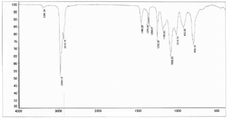
- peaks derived from the Si—N—Si structure (932 cm ⁇ 1 , 1,190 cm ⁇ 1 ) and peaks derived from the Si—O—Si (1,092 cm ⁇ 1 ) and a peak derived from NH (3,391 cm ⁇ 1 ) were observed.
- GPC analysis supported the production of the desired polysiloxazane 1 having a weight average molecular weight of 5,300 and a number average molecular weight of 2,600.
- An IR spectrum is shown in FIG.
- A1 Containing structural units a to d represented by formula (1), the molar ratio of the structural units a:b:c:d is 18:4:16:1, m is 0 and n is 40 , R 1 is an n-hexyl group, R 2 is a methyl group, a weight average molecular weight of 5,300, and a number average molecular weight of 2,600.
- a composition dissolved and diluted with IP Solvent 1620 manufactured by the company (solid content: 20% by mass).
- A'1 An organic polysilazane compound (KiON (registered trademark) HTA1500 slow cure manufactured by AZ Electronic Materials Co., Ltd.) with an active ingredient (solid content) of 100%.
- B1 A silicone compound (silicone oligomer) having a kinematic viscosity of 25 mm 2 /s at 25° C. and having methoxy groups at both ends and a side chain (manufactured by Shin-Etsu Chemical Co., Ltd., KR-500).
- B2 Kinematic viscosity at 25° C. is 14 mm 2 /s
- R 4 , R 5 , R 8 and R 9 in formula (10) are each methoxy groups
- R 6 and R 7 are each methyl groups.
- X 1 and X 2 are each a methoxy group silicone compound (manufactured by Shin-Etsu Chemical Co., Ltd., X-40-2090)
- B3 A silicone compound ( Shin - Etsu Chemical Co., Ltd. Co., Ltd., KF-9701)
- B4 Kinematic viscosity at 25° C.
- R 4 to R 9 in formula (10) are each methyl groups
- X 1 and X 2 are each —CH 2 CH 2 CH 2 OCH 2 Silicone compound having a carbinol group represented by CH 2 OH (manufactured by Shin-Etsu Chemical Co., Ltd., X-22-160AS) B5: Kinematic viscosity at 25° C.
- each of R 4 to R 9 in formula (10) is a methyl group
- one of X 1 and X 2 is —CH 2 CH 2 CH 2 OCH 2 CH 2 OH
- the rest of X 1 and X 2 are methyl groups (that is, one end is —CH 2 CH 2 CH 2 OCH 2 CH 2 OH is a carbinol group represented by the other end is a methyl group)
- a silicone compound manufactured by Shin-Etsu Chemical Co., Ltd., X-22-170BX
- each of R 4 to R 9 in formula (10) is a methyl group
- one of X 1 and X 2 is represented by formula (11). and the rest of X 1 and X 2 are methyl groups (where R 10 in formula (11) is —CH 2 CH 2 CH 2 OCH 2 — and R 11 and R 12 are both CH 2 , and R 13 is represented by —CH 2 CH 3 ), a silicone compound (manufactured by Shin-Etsu Chemical Co., Ltd., X-22-176DX) B7: A silicone compound having a kinematic viscosity at 25° C.
- B′1 A silicone compound having a kinematic viscosity at 25° C. of 55 mm 2 /s, wherein R 4 to R 9 in formula (10) are each methyl groups, and X 1 and X 2 are each amino groups.
- C Component>
- C1 Organic titanium compound (manufactured by Shin-Etsu Chemical Co., Ltd., D-25)
- C2 Aluminum chelate compound (manufactured by Shin-Etsu Chemical Co., Ltd., DX-9740)
- D1 Isoparaffin-based solvent containing isododecane (Maruzen Petrochemical Co., Ltd., Markasol R)
- D2 Isoparaffin-based solvent (manufactured by Idemitsu Kosan Co., Ltd., IP Solvent 1620).
- the curable composition of the present invention preferably has a water contact angle of 97 degrees or more, more preferably 99 degrees or more.
- the upper limit is not particularly limited, but is 150 degrees or less.
- a desirable sliding angle for the curable composition of the present invention is 20 degrees or less, more preferably 18 degrees or less.
- the lower limit is not particularly limited, but is 5 degrees or more.
- the curable composition according to the present invention can form a film having excellent water repellency and slip-off properties, and has excellent film stability in the initial stage of application.
- Comparative Example 1 in Table 1 is a curable composition excluding (not including) the component (B) of the present invention.
- Comparative Example 2 is a curable composition using an organic polysilazane compound that is not the component (A) of the present invention, but it can be seen that the curable composition is inferior in terms of sliding angle.
- Comparative Example 3 is a curable composition using a both-terminal amino-modified reactive silicone compound that is not the component (B) of the present invention. It can be seen that the angle is inferior.
- the present invention it is possible to provide a curable composition that can form a coating film with excellent water repellency and sliding properties, and also has excellent coating stability in the initial stage of application. Therefore, the present invention is industrially useful because it can be used as a curable composition in the field of automobiles and the like.
Landscapes
- Chemical & Material Sciences (AREA)
- Chemical Kinetics & Catalysis (AREA)
- Organic Chemistry (AREA)
- Health & Medical Sciences (AREA)
- Medicinal Chemistry (AREA)
- Polymers & Plastics (AREA)
- Life Sciences & Earth Sciences (AREA)
- Engineering & Computer Science (AREA)
- Materials Engineering (AREA)
- Wood Science & Technology (AREA)
- Silicon Polymers (AREA)
- Paints Or Removers (AREA)
Priority Applications (6)
| Application Number | Priority Date | Filing Date | Title |
|---|---|---|---|
| BR112023017594A BR112023017594A2 (pt) | 2021-03-17 | 2022-03-08 | Composição curável e revestimento curado, artigo e método para a formação do revestimento empregando o mesmo |
| CA3212684A CA3212684A1 (en) | 2021-03-17 | 2022-03-08 | Curable composition, and cured coating, article, and method for forming coating using the same |
| EP22771182.7A EP4310150A4 (en) | 2021-03-17 | 2022-03-08 | CURABLE COMPOSITION, AND CURED COATING FILM, ARTICLE AND METHOD FOR FORMING COATING FILM USING SAID COMPOSITION |
| KR1020237029188A KR20230156323A (ko) | 2021-03-17 | 2022-03-08 | 경화성 조성물 그리고 이를 이용한 경화 피막, 물품 및 피막 형성 방법 |
| JP2023506991A JPWO2022196430A1 (https=) | 2021-03-17 | 2022-03-08 | |
| US18/549,777 US20240209157A1 (en) | 2021-03-17 | 2022-03-08 | Curable composition, and cured coating, article, and method for forming coating using the same |
Applications Claiming Priority (2)
| Application Number | Priority Date | Filing Date | Title |
|---|---|---|---|
| JP2021043634 | 2021-03-17 | ||
| JP2021-043634 | 2021-03-17 |
Publications (1)
| Publication Number | Publication Date |
|---|---|
| WO2022196430A1 true WO2022196430A1 (ja) | 2022-09-22 |
Family
ID=83320500
Family Applications (1)
| Application Number | Title | Priority Date | Filing Date |
|---|---|---|---|
| PCT/JP2022/009959 Ceased WO2022196430A1 (ja) | 2021-03-17 | 2022-03-08 | 硬化性組成物ならびにこれを用いた硬化被膜、物品および被膜形成方法 |
Country Status (7)
| Country | Link |
|---|---|
| US (1) | US20240209157A1 (https=) |
| EP (1) | EP4310150A4 (https=) |
| JP (1) | JPWO2022196430A1 (https=) |
| KR (1) | KR20230156323A (https=) |
| BR (1) | BR112023017594A2 (https=) |
| CA (1) | CA3212684A1 (https=) |
| WO (1) | WO2022196430A1 (https=) |
Citations (6)
| Publication number | Priority date | Publication date | Assignee | Title |
|---|---|---|---|---|
| JPS60221470A (ja) * | 1984-04-17 | 1985-11-06 | Shin Etsu Chem Co Ltd | 硬化皮膜形成剤 |
| JP2014139301A (ja) | 2012-12-20 | 2014-07-31 | Soft99 Corporation | コーティング剤 |
| JP2016117881A (ja) * | 2014-12-19 | 2016-06-30 | 三星エスディアイ株式会社Samsung SDI Co., Ltd. | シリカ系膜形成用組成物、シリカ系膜の製造方法および前記シリカ系膜を含む電子素子 |
| JP2018534400A (ja) * | 2015-10-30 | 2018-11-22 | アーゼッド・エレクトロニック・マテリアルズ(ルクセンブルグ)ソシエテ・ア・レスポンサビリテ・リミテ | シラザン−シロキサンコポリマーを製造する方法、およびそのコポリマーの使用 |
| JP2021043634A (ja) | 2019-09-10 | 2021-03-18 | 日本電気株式会社 | 情報処理装置、方法、およびプログラム |
| JP2021055052A (ja) * | 2019-09-27 | 2021-04-08 | 信越化学工業株式会社 | アルコキシシリル基を有するポリシロキサザン化合物およびその製造方法、並びにこれを含む組成物および硬化物 |
Family Cites Families (4)
| Publication number | Priority date | Publication date | Assignee | Title |
|---|---|---|---|---|
| JP2020501361A (ja) * | 2016-12-02 | 2020-01-16 | メルク パテント ゲゼルシャフト ミット ベシュレンクテル ハフツングMerck Patent Gesellschaft mit beschraenkter Haftung | 架橋性ポリマー組成物から光電子デバイスを調製する方法 |
| JP6269875B2 (ja) * | 2017-03-09 | 2018-01-31 | 信越化学工業株式会社 | 有機ケイ素化合物およびその製造方法 |
| JP7119332B2 (ja) * | 2017-10-18 | 2022-08-17 | 信越化学工業株式会社 | ポリシラザン化合物を用いた撥水処理剤および撥水処理方法 |
| WO2019131641A1 (ja) * | 2017-12-26 | 2019-07-04 | 株式会社スリーボンド | 被膜形成組成物 |
-
2022
- 2022-03-08 US US18/549,777 patent/US20240209157A1/en active Pending
- 2022-03-08 WO PCT/JP2022/009959 patent/WO2022196430A1/ja not_active Ceased
- 2022-03-08 CA CA3212684A patent/CA3212684A1/en active Pending
- 2022-03-08 JP JP2023506991A patent/JPWO2022196430A1/ja active Pending
- 2022-03-08 BR BR112023017594A patent/BR112023017594A2/pt unknown
- 2022-03-08 EP EP22771182.7A patent/EP4310150A4/en active Pending
- 2022-03-08 KR KR1020237029188A patent/KR20230156323A/ko active Pending
Patent Citations (6)
| Publication number | Priority date | Publication date | Assignee | Title |
|---|---|---|---|---|
| JPS60221470A (ja) * | 1984-04-17 | 1985-11-06 | Shin Etsu Chem Co Ltd | 硬化皮膜形成剤 |
| JP2014139301A (ja) | 2012-12-20 | 2014-07-31 | Soft99 Corporation | コーティング剤 |
| JP2016117881A (ja) * | 2014-12-19 | 2016-06-30 | 三星エスディアイ株式会社Samsung SDI Co., Ltd. | シリカ系膜形成用組成物、シリカ系膜の製造方法および前記シリカ系膜を含む電子素子 |
| JP2018534400A (ja) * | 2015-10-30 | 2018-11-22 | アーゼッド・エレクトロニック・マテリアルズ(ルクセンブルグ)ソシエテ・ア・レスポンサビリテ・リミテ | シラザン−シロキサンコポリマーを製造する方法、およびそのコポリマーの使用 |
| JP2021043634A (ja) | 2019-09-10 | 2021-03-18 | 日本電気株式会社 | 情報処理装置、方法、およびプログラム |
| JP2021055052A (ja) * | 2019-09-27 | 2021-04-08 | 信越化学工業株式会社 | アルコキシシリル基を有するポリシロキサザン化合物およびその製造方法、並びにこれを含む組成物および硬化物 |
Also Published As
| Publication number | Publication date |
|---|---|
| CA3212684A1 (en) | 2022-09-22 |
| BR112023017594A2 (pt) | 2023-10-10 |
| KR20230156323A (ko) | 2023-11-14 |
| EP4310150A4 (en) | 2025-03-05 |
| US20240209157A1 (en) | 2024-06-27 |
| JPWO2022196430A1 (https=) | 2022-09-22 |
| EP4310150A1 (en) | 2024-01-24 |
Similar Documents
| Publication | Publication Date | Title |
|---|---|---|
| DK2922893T3 (en) | MOISTURIZING COMPOSITIONS, METHOD OF PREPARING IT AND USING IT | |
| CN101210028B (zh) | 有机硅化合物及其在可交联组合物中的应用 | |
| EP3594220B1 (en) | Organosilicon compound and method for producing same | |
| JP3389338B2 (ja) | 加水分解性官能基含有オルガノポリシロキサンの製造方法及び硬化性樹脂組成物 | |
| CN115485326B (zh) | 官能化硅石颗粒及其用途 | |
| KR102138758B1 (ko) | 산 무수물기 함유 오르가노실록산 및 그의 제조 방법 | |
| JP2025028263A (ja) | 硬化物の製造方法 | |
| CN110382594B (zh) | 含有聚氧化烯基的有机硅化合物及其制造方法 | |
| WO2022196430A1 (ja) | 硬化性組成物ならびにこれを用いた硬化被膜、物品および被膜形成方法 | |
| JP2000086765A (ja) | 有機ケイ素組成物 | |
| KR20100100583A (ko) | 유기실리콘 조성물들 및 그 제조 방법 | |
| CN111607091A (zh) | 有机硅化合物、其制备方法和固化性组合物 | |
| TWI820328B (zh) | 含烷氧矽基之有機矽氮烷化合物與其製造方法及包含其之組成物與硬化物 | |
| EP4155339B1 (en) | Organopolysiloxane and composition containing same | |
| CN120641515A (zh) | 涂料组合物、其制造方法和被覆物品 | |
| US20150299540A1 (en) | Specific aminoalkyl-functional alkoxysiloxane oligomer mixtures, process for production thereof and use thereof | |
| JP7753407B2 (ja) | 1,3-ジオキソランコポリマー単位をベースとするオルガニルオキシシリル末端ポリマー | |
| WO2017154405A1 (ja) | 有機ケイ素化合物およびその製造方法 | |
| WO2012055027A1 (en) | Coating composition comprising surfactant-containing organosilicon and functionalized silane and methods of making thereof |
Legal Events
| Date | Code | Title | Description |
|---|---|---|---|
| 121 | Ep: the epo has been informed by wipo that ep was designated in this application |
Ref document number: 22771182 Country of ref document: EP Kind code of ref document: A1 |
|
| WWE | Wipo information: entry into national phase |
Ref document number: 2023506991 Country of ref document: JP |
|
| WWE | Wipo information: entry into national phase |
Ref document number: 12023552409 Country of ref document: PH |
|
| WWE | Wipo information: entry into national phase |
Ref document number: 3212684 Country of ref document: CA |
|
| WWE | Wipo information: entry into national phase |
Ref document number: 18549777 Country of ref document: US |
|
| REG | Reference to national code |
Ref country code: BR Ref legal event code: B01A Ref document number: 112023017594 Country of ref document: BR |
|
| WWE | Wipo information: entry into national phase |
Ref document number: 202347061853 Country of ref document: IN |
|
| ENP | Entry into the national phase |
Ref document number: 112023017594 Country of ref document: BR Kind code of ref document: A2 Effective date: 20230830 |
|
| WWE | Wipo information: entry into national phase |
Ref document number: 2022771182 Country of ref document: EP |
|
| NENP | Non-entry into the national phase |
Ref country code: DE |
|
| ENP | Entry into the national phase |
Ref document number: 2022771182 Country of ref document: EP Effective date: 20231017 |
|
| WWE | Wipo information: entry into national phase |
Ref document number: 11202306744W Country of ref document: SG |