WO2022196307A1 - 乗物の乗員識別装置 - Google Patents
乗物の乗員識別装置 Download PDFInfo
- Publication number
- WO2022196307A1 WO2022196307A1 PCT/JP2022/008076 JP2022008076W WO2022196307A1 WO 2022196307 A1 WO2022196307 A1 WO 2022196307A1 JP 2022008076 W JP2022008076 W JP 2022008076W WO 2022196307 A1 WO2022196307 A1 WO 2022196307A1
- Authority
- WO
- WIPO (PCT)
- Prior art keywords
- driver
- vehicle
- helmet
- information
- communication
- Prior art date
- Legal status (The legal status is an assumption and is not a legal conclusion. Google has not performed a legal analysis and makes no representation as to the accuracy of the status listed.)
- Ceased
Links
Images

Classifications
-
- B—PERFORMING OPERATIONS; TRANSPORTING
- B60—VEHICLES IN GENERAL
- B60K—ARRANGEMENT OR MOUNTING OF PROPULSION UNITS OR OF TRANSMISSIONS IN VEHICLES; ARRANGEMENT OR MOUNTING OF PLURAL DIVERSE PRIME-MOVERS IN VEHICLES; AUXILIARY DRIVES FOR VEHICLES; INSTRUMENTATION OR DASHBOARDS FOR VEHICLES; ARRANGEMENTS IN CONNECTION WITH COOLING, AIR INTAKE, GAS EXHAUST OR FUEL SUPPLY OF PROPULSION UNITS IN VEHICLES
- B60K28/00—Safety devices for propulsion-unit control, specially adapted for, or arranged in, vehicles, e.g. preventing fuel supply or ignition in the event of potentially dangerous conditions
- B60K28/02—Safety devices for propulsion-unit control, specially adapted for, or arranged in, vehicles, e.g. preventing fuel supply or ignition in the event of potentially dangerous conditions responsive to conditions relating to the driver
- B60K28/06—Safety devices for propulsion-unit control, specially adapted for, or arranged in, vehicles, e.g. preventing fuel supply or ignition in the event of potentially dangerous conditions responsive to conditions relating to the driver responsive to incapacity of driver
-
- B—PERFORMING OPERATIONS; TRANSPORTING
- B60—VEHICLES IN GENERAL
- B60R—VEHICLES, VEHICLE FITTINGS, OR VEHICLE PARTS, NOT OTHERWISE PROVIDED FOR
- B60R25/00—Fittings or systems for preventing or indicating unauthorised use or theft of vehicles
- B60R25/20—Means to switch the anti-theft system on or off
- B60R25/25—Means to switch the anti-theft system on or off using biometry
-
- B—PERFORMING OPERATIONS; TRANSPORTING
- B62—LAND VEHICLES FOR TRAVELLING OTHERWISE THAN ON RAILS
- B62H—CYCLE STANDS; SUPPORTS OR HOLDERS FOR PARKING OR STORING CYCLES; APPLIANCES PREVENTING OR INDICATING UNAUTHORIZED USE OR THEFT OF CYCLES; LOCKS INTEGRAL WITH CYCLES; DEVICES FOR LEARNING TO RIDE CYCLES
- B62H5/00—Appliances preventing or indicating unauthorised use or theft of cycles; Locks integral with cycles
-
- B—PERFORMING OPERATIONS; TRANSPORTING
- B62—LAND VEHICLES FOR TRAVELLING OTHERWISE THAN ON RAILS
- B62H—CYCLE STANDS; SUPPORTS OR HOLDERS FOR PARKING OR STORING CYCLES; APPLIANCES PREVENTING OR INDICATING UNAUTHORIZED USE OR THEFT OF CYCLES; LOCKS INTEGRAL WITH CYCLES; DEVICES FOR LEARNING TO RIDE CYCLES
- B62H5/00—Appliances preventing or indicating unauthorised use or theft of cycles; Locks integral with cycles
- B62H5/08—Appliances preventing or indicating unauthorised use or theft of cycles; Locks integral with cycles preventing the drive
-
- B—PERFORMING OPERATIONS; TRANSPORTING
- B62—LAND VEHICLES FOR TRAVELLING OTHERWISE THAN ON RAILS
- B62J—CYCLE SADDLES OR SEATS; AUXILIARY DEVICES OR ACCESSORIES SPECIALLY ADAPTED TO CYCLES AND NOT OTHERWISE PROVIDED FOR, e.g. ARTICLE CARRIERS OR CYCLE PROTECTORS
- B62J27/00—Safety equipment
-
- B—PERFORMING OPERATIONS; TRANSPORTING
- B62—LAND VEHICLES FOR TRAVELLING OTHERWISE THAN ON RAILS
- B62J—CYCLE SADDLES OR SEATS; AUXILIARY DEVICES OR ACCESSORIES SPECIALLY ADAPTED TO CYCLES AND NOT OTHERWISE PROVIDED FOR, e.g. ARTICLE CARRIERS OR CYCLE PROTECTORS
- B62J45/00—Electrical equipment arrangements specially adapted for use as accessories on cycles, not otherwise provided for
-
- B—PERFORMING OPERATIONS; TRANSPORTING
- B62—LAND VEHICLES FOR TRAVELLING OTHERWISE THAN ON RAILS
- B62J—CYCLE SADDLES OR SEATS; AUXILIARY DEVICES OR ACCESSORIES SPECIALLY ADAPTED TO CYCLES AND NOT OTHERWISE PROVIDED FOR, e.g. ARTICLE CARRIERS OR CYCLE PROTECTORS
- B62J45/00—Electrical equipment arrangements specially adapted for use as accessories on cycles, not otherwise provided for
- B62J45/40—Sensor arrangements; Mounting thereof
- B62J45/41—Sensor arrangements; Mounting thereof characterised by the type of sensor
Definitions
- the present invention relates to vehicle occupant identification devices.
- This application claims priority based on Japanese Patent Application No. 2021-041422 filed in Japan on March 15, 2021, the content of which is incorporated herein.
- Patent Document 1 a technology in which a helmet worn by an occupant has a built-in breathalyzer checker. Also, there is known a technique of checking the drunkenness of a passenger at an arbitrary timing during driving (for example, see Patent Document 2).
- an object of the present invention is to provide an occupant identification device for a vehicle that can identify the driver even when there are a plurality of occupants.
- a first aspect of the present invention is an occupant identification device for a vehicle (1) in which an occupant (J) wears a helmet (H) and rides, detecting the behavior of the helmet (H). and a driver authentication means (38b) for authenticating the driver (J1) of the vehicle (1), wherein a plurality of occupants (J) each wears the helmet (H).
- the driver authentication means (38b) compares the behavior information of each of the plurality of helmets (H) with each other, and accelerates or decelerates the movement of the vehicle (1).
- Behavior information that satisfies at least one of the conditions that the response speed of the behavior to the vehicle (1) is relatively fast or the behavior to the acceleration/deceleration of the movement of the vehicle (1) is relatively small.
- the behavior information of the helmet (H1) worn by the person (J1) is recognized as behavioral information, and the driver (J1) of the vehicle (1) is authenticated based on this recognition.
- the driver of the vehicle can be authenticated even when multiple passengers board the vehicle.
- This authentication is performed based on the result of detecting the behavior of the helmet worn by each passenger and comparing the behavior information of each helmet. That is, the driver and the fellow passenger usually behave differently with respect to the acceleration and deceleration of the movement of the vehicle. Specifically, the driver has a relatively high response speed and small behavior. On the other hand, the fellow passenger has a relatively slow response speed and large behavior. Therefore, one of the behavior information of the helmets of the plurality of occupants can be recognized as the behavior information of the helmet worn by the driver. That is, the driver's behavior information satisfies at least one of the conditions that the response speed of the behavior is relatively fast or the behavior is relatively small. Therefore, it becomes possible to authenticate the driver of the vehicle from among a plurality of occupants. This can prevent erroneous detection and impersonation of the driver.
- a second aspect of the present invention is an occupant identification device for a vehicle (1) in which an occupant (J) wears a helmet (H) and rides, in which the driver (J1) is in front and the fellow passenger (J2) is in front in the longitudinal direction of the vehicle. ) is arranged behind the seat (6) side by side, and is arranged forward of the seat (6) in the longitudinal direction of the vehicle, and is capable of communicating with a first communication section (18a) provided on the helmet (H).
- the driver authentication means (38b) communicates with the second communication unit (36a) and the first communication unit of each of the plurality of helmets (H). (18a) is detected and compared, and the driver (J1) of the vehicle (1) hits the first communication unit (18a) relatively close to the second communication unit (36a).
- the first communication part (18a) of the helmet (H1) is certified, and based on this certification, the driver (J1) of the vehicle (1) is authenticated.
- the driver of the vehicle can be authenticated even when multiple passengers board the vehicle.
- This authentication is based on the communication distance between the first communication means of the helmet worn by each occupant and the second communication means of the vehicle. That is, when the driver sits in the front and the fellow passengers sit in the back, the positions of the helmets of the occupants differ in the front-rear direction. That is, the first communication means of the driver's helmet is arranged closer to the second communication means in front of the seat than the first communication means of the passenger's helmet. Therefore, among the first communication means of the helmets of the plurality of occupants, the first communication means relatively close to the second communication means can be recognized as the first communication means of the helmet worn by the driver. Therefore, it becomes possible to authenticate the driver of the vehicle from among a plurality of occupants. This can prevent erroneous detection and impersonation of the driver.
- a third aspect of the present invention is an occupant identification device for a vehicle (1) in which an occupant (J) wears a helmet (H) and rides, in which the driver (J1) is in front and the fellow passenger (J2) is in front in the longitudinal direction of the vehicle. ) are arranged behind the seat (6) and are arranged behind the seat (6) in the longitudinal direction of the vehicle, and can communicate with a first communication section (18a) provided on the helmet (H).
- the driver authentication means (38b) communicates with the second communication unit (36a) and the first communication unit of each of the plurality of helmets (H). (18a) is detected and compared, and the driver (J1) of the vehicle (1) hits the first communication unit (18a) relatively far from the second communication unit (36a).
- the first communication part (18a) of the helmet (H1) is certified, and based on this certification, the driver (J1) of the vehicle (1) is authenticated.
- the driver of the vehicle can be authenticated even when multiple passengers board the vehicle.
- This authentication is based on the communication distance between the first communication means of the helmet worn by each occupant and the second communication means of the vehicle. That is, when the driver sits in the front and the fellow passengers sit in the back, the positions of the helmets of the occupants differ in the front-rear direction. That is, the first communication means of the driver's helmet is arranged farther from the second communication means behind the seat than the first communication means of the passenger's helmet. Therefore, among the first communication means of the helmets of the plurality of occupants, the first communication means relatively far from the second communication means can be recognized as the first communication means of the helmet worn by the driver. Therefore, it becomes possible to authenticate the driver of the vehicle from among a plurality of occupants. This can prevent erroneous detection and impersonation of the driver.
- an exhalation sensor (14) for detecting an alcohol concentration in exhaled breath of the occupant (J) wearing the helmet (H) is provided, and detection information of the alcohol concentration can be obtained from the exhalation sensor (14). Yes, and if the breath alcohol concentration of the driver (J1) authenticated by the driver authentication means (38b) is equal to or higher than a predetermined reference value, driving of the prime mover of the vehicle (1) may be prohibited. .
- the detection information of the breath sensor on the helmet worn by the driver is acquired. This makes it possible to detect the alcohol concentration in the breath of the driver. As a result, the driver can be checked for alcohol at an arbitrary timing, such as when the movement of the vehicle is stopped, even after the prime mover has started. Therefore, it is possible to prevent erroneous detection and spoofing of the driver and check the alcohol of the driver. This makes it possible to avoid driving the vehicle under the influence of alcohol.
- an information providing device (16) that provides information to the occupant (J) wearing the helmet (H) is provided, and the information can be supplied to the information providing device (16).
- the information provided to the driver (J1) authenticated by the passenger authentication means (38b) and the information provided to the other passenger (J2) may be different from each other.
- the driver of the vehicle is authenticated from among the multiple occupants based on the communication status between the helmets of the multiple occupants and the vehicle.
- different information can be supplied to the information providing device for the helmet worn by the driver and the information providing device for the helmets worn by the other occupants. That is, for example, the driver can be provided with information necessary while driving the vehicle, such as navigation information and traffic information, in addition to information such as the speed of the vehicle.
- entertainment information such as the Internet and movies can be provided to other passengers. Therefore, the marketability of the vehicle can be improved.
- an occupant identification device for a vehicle that can identify the driver even when there are multiple occupants.
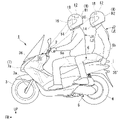
- FIG. 1 is a left side view of a motorcycle according to an embodiment of the present invention
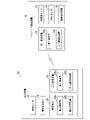
- FIG. It is a block diagram showing the important part of the vehicle communication system of the embodiment.
- Fig. 2 is a left side view of the two-wheeled motor vehicle;
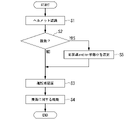
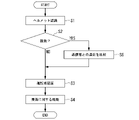
- 4 is a flowchart showing an example of processing up to driver authentication of the helmet communication system; It is a flowchart which shows the modification of the process up to driver
- FIG. 1 shows a scooter type motorcycle (saddle type vehicle) 1 as an example of a vehicle according to an embodiment.
- the motorcycle 1 includes front wheels (steered wheels) 3 that are steered by a bar handle 2 and rear wheels (driving wheels) 4 that are driven by a swing-type power unit 5 .
- the power unit 5 integrally includes a prime mover such as an engine and a transmission device for transmitting the output of the prime mover to the rear wheels 4 .
- the power unit 5 includes at least one of an engine (internal combustion engine) and an electric motor as a prime mover.
- the steering system parts include a bar handle 2, left and right front forks 3a and front wheels 3.
- the steering system parts are supported by a head pipe 7a at the front end of the vehicle body frame 7 so as to be steerable.
- a front portion of the power unit 5 is supported by a front-rear intermediate portion of the vehicle body frame 7 so as to be vertically swingable.
- a seat 6 on which an occupant J sits is arranged behind the bar handle 2. As shown in FIG.
- the seat 6 includes a front seating portion 6a on which the driver J1 sits and a rear seating portion 6b on which the rear fellow passenger J2 sits.
- the motorcycle 1 of the embodiment constitutes an occupant identification system capable of identifying the driver J1 and the rear passenger J2.
- the passenger identification system cooperates with helmets H (helmet H1 of driver J1 and helmet H2 of rear passenger J2) worn by each of the passengers J (driver J1 and rear passenger J2).
- the helmet mounting device 10 mounted on the helmet H of the embodiment will be described below.
- the helmet-mounted device 10 includes, for example, an acceleration sensor 12, an exhalation sensor 14, an information providing device 16, and a first communication device 18.
- Each element of the helmet-mounted device 10 is wired or wirelessly connected so as to be able to communicate information.
- the helmet-mounted device 10 may include configurations other than those shown in the drawings.
- the acceleration sensor 12 is arranged (built-in) inside the top of the head of the helmet H, for example.
- the acceleration sensor 12 detects the acceleration component of the movement of the helmet H.
- the acceleration sensor 12 is arranged close to the crown of the occupant J's body (upper body), which is the tip of the body (upper body). This arrangement makes it easy to detect the acceleration of the movement of the passenger J's body.
- the detection information of the acceleration sensor 12 is transmitted to the control device 38 of the in-vehicle device 30, which will be described later, by wireless communication, for example.
- the acceleration sensor 12 is not limited to the top of the helmet H, and may be placed anywhere on the cap body.
- the breath sensor 14 is arranged inside the chin guard of the helmet H, for example.
- the breath sensor 14 detects the alcohol concentration in the occupant J's breath. This makes it possible to detect that the occupant J is under the influence of alcohol.
- the breath sensor 14 is arranged at a position facing the occupant J's mouth. This arrangement makes it easy to detect the alcohol concentration in the occupant J's breath.
- the information detected by the breath sensor 14 is transmitted to the control device 38 of the in-vehicle device 30, which will be described later, by, for example, wireless communication.
- the exhalation sensor 14 is preferably arranged at a position close to the mouth of the occupant J, not limited to the chin guard. That is, the breath sensor 14 may be arranged in an interior portion such as a cheek pad, or may be arranged integrally with a microphone mounted on the helmet H, for example.
- the breath sensor 14 outputs a measured value indicating the alcohol concentration in the breath of the occupant J.
- the measured value output by the breath sensor 14 is input to the drive control section 38 a of the control device 38 of the in-vehicle device 30 .
- the drive control unit 38a prohibits driving of the prime mover of the motorcycle 1 when the input detection information (measured value of alcohol concentration) is equal to or higher than the reference value.
- the reference value for example, a reference value for driving under the influence of alcohol can be used.
- the motorcycle 1 detects the alcohol concentration in breath of the driver J1 at arbitrary timing such as when the vehicle is stopped, for example. At this time, if an alcohol concentration equal to or higher than the specified value is detected in the breath of the driver J1, the drive control unit 38a performs the following actions. That is, the drive control unit 38a stops the engine, or prohibits starting the engine if the engine is stopped. When the engine is restarted, the alcohol check of the driver J1 is performed again. After confirming that the alcohol concentration in breath of the driver J1 is less than the specified value, the drive control unit 38a enables restarting of the engine.
- the information providing device 16 includes, for example, a display (HUD (Head-Up Display), etc.), a speaker, and the like.
- the information providing device 16 provides various types of information to the occupant J using images, sounds, and the like.
- the information providing device 16 provides information obtained from the information generating device 34 of the in-vehicle device 30 to the occupant J through sight, hearing, and the like.
- the first communication device 18 performs the following correspondence by wireless communication with the in-vehicle device 30 . That is, each detection information from the acceleration sensor 12 and the breath sensor 14 is transmitted to the in-vehicle device 30 . It also receives information from the in-vehicle device 30 and outputs it to the information providing device 16 .
- the first communication device 18 includes a first communication section 18a and a first communication control section 18b.
- the first communication unit 18a is a transmitter/receiver having one or more transmitting/receiving antennas.
- the first communication section 18a is controlled by the first communication control section 18b.
- the first communication control unit 18b controls transmission of data by the first communication unit 18a and reception of data from the outside.
- the first communication control unit 18b is implemented by a hardware processor such as a CPU (Central Processing Unit) executing a program (software).
- the first communication control unit 18b performs the following controls. That is, the first communication unit 18a transmits a communication request to the communication partner (in-vehicle device 30). Also, it communicates with the communication partner based on the communication permission received from the first communication unit 18a.
- the in-vehicle device 30 mounted on the motorcycle 1 of the embodiment will be described.
- the in-vehicle device 30 includes a vehicle sensor 32 , an information generation device 34 , a second communication device 36 and a control device 38 .
- Each element of the in-vehicle device 30 is wired or wirelessly connected so as to be able to communicate information.
- the in-vehicle device 30 may include a configuration other than the configuration shown in the drawing.
- Vehicle sensors 32 include, for example, a vehicle speed sensor, an acceleration sensor, an accelerator opening sensor, a brake operation amount sensor, a steering angle sensor, and the like.
- the vehicle sensor 32 may also include, for example, an object recognition device such as a camera, radar device, and LIDAR (Light Detection and Ranging).
- object recognition device such as a camera, radar device, and LIDAR (Light Detection and Ranging).
- the camera is, for example, a digital camera using a solid-state imaging device such as CCD (Charge Coupled Device) or CMOS (Complementary Metal Oxide Semiconductor).
- the camera may be a stereo camera.
- a camera is attached to an arbitrary portion of the motorcycle 1 .
- the radar device radiates radio waves such as millimeter waves around the motorcycle 1 and detects radio waves (reflected waves) reflected by objects.
- a radar device detects at least the position (distance and bearing) of an object.
- the radar device is attached to any location on the motorcycle 1 .
- the LIDAR irradiates light (or electromagnetic waves with wavelengths close to light) around the motorcycle 1 and measures scattered light. LIDAR detects the distance to an object based on the time from light emission to light reception.
- the irradiated light is, for example, pulsed laser light.
- the LIDAR is attached to any location on the motorcycle 1 .
- the object recognition device recognizes the position, type, speed, etc. of objects. This recognition is based on detection results obtained by some or all of the cameras, radar devices, and LIDAR described above. For example, the object recognition device detects the positional relationship including the distance between the motorcycle 1 and other vehicles existing around the motorcycle 1, the traveling lane of the motorcycle 1, the adjacent lane, the merging lane, etc., and the presence or absence of traffic signals and pedestrian crossings. etc., the situation around the motorcycle 1 is recognized. The object recognition device can also recognize dynamic relationships, such as the relative speed between the motorcycle 1 and other vehicles, from transitions in detection values of various sensors.
- the object recognition device outputs the recognition result to the control device 38.
- the object recognition device may also function as a passenger monitoring device that monitors the movement (behavior) of the passenger J (the driver J1 and the rear passenger J2). That is, the object recognition device may include, for example, an inward facing camera for capturing the movement (behavior) of the helmet H of the occupant J.
- the object recognition device may output a recognition result regarding the movement of the occupant J to the control device 38 .
- the acceleration sensor (behavior sensor) 12 may be removed from the helmet-mounted device 10 .
- the information generation device 34 has a memory such as a HDD (Hard Disk Drive), flash memory, EEPROM (Electrically Erasable Programmable Read Only Memory), ROM (Read Only Memory), or RAM (Random Access Memory).
- the memory stores programs to be read and executed by the processor and other various information (data).
- the information generation device 34 transmits various types of information generated based on the vehicle sensor 32 to the surroundings (in particular, the helmet-mounted device 10) at predetermined intervals.
- the information generator 34 may transmit navigation and GPS information, audio and video information.
- the information generation device 34 may include an operation input unit such as a touch panel.
- the second communication device 36 performs the following correspondence by wireless communication with the first communication device 18 of the helmet-mounted device 10 . That is, each detection information can be received from the acceleration sensor 12 and the breath sensor 14 to the control device 38 . Also, various information from the information generating device 34 can be transmitted to the information providing device 16 .
- the second communication device 36 includes a second communication section 36 a and a second communication control device 38 .
- the second communication unit 36a is a transceiver equipped with one or more transmission/reception antennas, similar to the first communication unit 18a.
- the second communication section 36a is controlled by the second communication control section 36b.
- the communication control unit controls transmission of data by the second communication unit 36a and reception of data from the outside.
- the second communication control unit 36b is implemented by a hardware processor such as a CPU (Central Processing Unit) executing a program (software).
- the second communication control unit 36b performs the following controls. That is, the second communication unit 36a receives a communication request from the communication partner (the helmet-mounted device 10). Also, it performs control for communicating with the communication partner based on the communication permission transmitted from the second communication unit 36a.
- the control device 38 is composed of, for example, a single or a plurality of ECUs (Electronic Control Units).
- the control device 38 may be at least partially realized by cooperation of software and hardware.
- the control device 38 includes a drive control section 38a and a driver authentication section 38b.
- the drive control unit 38a is a device for applying a driving force or the like to the motorcycle 1 so that the motorcycle 1 can be driven.
- the drive control unit 38a controls, for example, a traveling drive device.
- the traveling drive device outputs traveling driving force for causing the motorcycle 1 to travel to drive wheels.
- the drive control unit 38a may control a braking device that generates a braking force for decelerating and stopping the motorcycle 1 .
- the drive control unit 38 a may control a steering device that generates a steering force for steering the motorcycle 1 .
- the drive control unit 38a prohibits the drive of the prime mover according to the information detected by the breath sensor 14 of the helmet H1 worn by the driver J1 of the motorcycle 1. That is, when the breath sensor 14 of the driver J1 detects an alcohol concentration equal to or higher than a specified value in the breath of the passenger J, control is performed to prohibit the motor of the motorcycle 1 from being driven.
- the driver authentication unit 38b authenticates the driver J1 of the motorcycle 1.
- the in-vehicle device 30 may communicate with multiple helmet-mounted devices 10 at the same time.
- the driver authentication unit 38b performs the following processing to identify which helmet mounted device 10 belongs to the driver J1. That is, the driver authentication unit 38b compares the behavior information of each of the multiple helmets H, for example. This identifies which behavior information is the behavior information of the helmet H1 of the driver J1.
- the in-vehicle device 30 communicates with the plurality of helmet mounted devices 10 at the same time.
- the driver authentication unit 38b of the control device 38 authenticates the driver J1 in the following procedure. That is, the driver authentication unit 38b of the control device 38 compares the behavior information of each of the plurality of helmets H with each other.
- the driver authentication unit 38b authenticates one of the plurality of pieces of behavior information as the behavior information of the helmet H1 worn by the driver J1 of the motorcycle 1.
- FIG. In other words, the behavior information of the driver has a relatively high speed of response to the acceleration/deceleration of the motion of the motorcycle 1 .
- the behavior information of the driver the behavior with respect to the acceleration/deceleration of the movement of the motorcycle 1 is relatively small. Therefore, the behavior information that satisfies at least one of the conditions that the response speed of the behavior is fast or the behavior is small is recognized as the behavior information of the driver J1. Based on this certification, the driver authentication unit 38b authenticates the driver J1 of the motorcycle 1.
- motorcycle 1 performs the following actions regarding the alcohol check (drinking check) of driver J1. That is, the motorcycle 1 takes into account the possibility of impersonation of the driver J1 and the possibility of drinking alcohol while driving or resting. Therefore, even after the engine start is permitted, the alcohol check is performed when the vehicle is stopped, such as when waiting for a traffic light.
- the control device 38 may erroneously detect the driver J1 or miss impersonation.
- the occupant identification device of the motorcycle 1 in the embodiment includes an acceleration sensor (helmet behavior detection means) 12 that detects the behavior of the helmet H. Based on the information detected by the acceleration sensor 12 (behavior information of the helmet H), the passenger identification device authenticates the driver J1.
- an acceleration sensor helmet behavior detection means 12 that detects the behavior of the helmet H. Based on the information detected by the acceleration sensor 12 (behavior information of the helmet H), the passenger identification device authenticates the driver J1.
- the in-vehicle device 30 establishes communication with one helmet-mounted device 10 .
- this helmet-mounted device 10 is certified as being worn by the driver J1 (in other words, the driver J1 is authenticated).
- the vehicle-mounted device 30 establishes communication with a plurality of helmet-mounted devices 10 . That is, the in-vehicle device 30 receives detection information (in particular, behavior information of the helmet H) transmitted from a plurality of helmet-mounted devices 10 .
- a driver authentication unit 38b of the control device 38 compares detection information from the plurality of helmet-mounted devices 10 with each other. As a result, any one of the plurality of helmet-mounted devices 10 is recognized as being worn by the driver J1. Based on this certification, the driver authentication unit 38b authenticates the driver J1.
- the driver authentication unit 38b compares and determines detection information from multiple helmet-mounted devices 10 as follows. That is, the driver authentication unit 38b selects the following behavior information from among the detection information (behavior information of the helmet H) from the plurality of helmet-mounted devices 10. That is, behavior information that satisfies at least one of the following conditions is selected.
- the condition is that the response speed of the behavior to the acceleration/deceleration of the motion of the motorcycle 1 is relatively fast, or that the behavior to the acceleration/deceleration of the motion of the motorcycle 1 is relatively small.
- the driver authentication unit 38b authenticates the behavior information selected as described above as relating to the driver J1.
- step S1 the control device 38 performs the following processing. That is, the presence of the helmet H, that is, the presence of the occupant J is recognized based on the communication with the communication partner (helmet-mounted device 10) (step S1). Next, the control device 38 determines whether or not there are a plurality of helmets H (passengers J) (step S2). If NO in step S2 (passenger J is alone), the process proceeds to step S3. In step S3, the driver authentication unit 38b of the control device 38 authenticates the occupant J with whom communication has been established as the driver J1. After that, in step S4, functions (alcohol check, provision of information, etc.) for the passenger J are performed.
- step S5 the driver authentication unit 38b of the control device 38 selects the detection information of the driver J1. This selection is made by comparing detection information received from a plurality of helmet-mounted devices 10 with each other. Specifically, in the embodiment, as described above, the following behavior information is selected from the detection information (behavior information of the helmet H) from the multiple helmet-mounted devices 10 . That is, behavior information that satisfies at least one of the following conditions is selected. The condition is that the response speed of the behavior to the acceleration/deceleration of the motion of the motorcycle 1 is relatively fast, or that the behavior to the acceleration/deceleration of the motion of the motorcycle 1 is relatively small.
- the selected behavior information is certified as detection information of the driver J1. Based on this certification, the driver authentication unit 38b authenticates the driver J1 (step S3). After that, in step S4, functions (alcohol check, provision of information, etc.) for the passenger J are performed.
- the vehicle occupant identification device in the above embodiment is the occupant identification device for the motorcycle 1 on which the rider J wears the helmet H and rides.
- the occupant identification device includes an acceleration sensor 12 that detects the behavior of the helmet H, and a driver authentication section 38b that authenticates the driver J1 of the motorcycle 1.
- the driver authentication unit 38b compares the behavior information of the plurality of helmets H with each other.
- the driver authentication unit 38b certifies one of the plurality of pieces of behavior information as the behavior information of the helmet H1 worn by the driver J1 of the motorcycle 1.
- the driver J1 of the motorcycle 1 can be authenticated even when a plurality of riders J are riding the motorcycle 1.
- This authentication is performed based on the result of detecting the behavior of the helmet H worn by each occupant J and comparing the behavior information of each helmet H with each other. That is, the driver J1 and the rear passenger J2 usually behave differently with respect to acceleration and deceleration of the movement of the motorcycle 1 .
- the driver J1 has a relatively fast response speed and small behavior.
- the rear passenger J2 has a relatively slow response speed and a large behavior. Therefore, one of the behavior information of the helmets H of the occupants J can be recognized as the behavior information of the helmet H1 worn by the driver J1.
- the behavior information of the driver J1 satisfies at least one of the conditions that the response speed of the behavior is relatively fast or the behavior is relatively small. Therefore, the driver J1 of the motorcycle 1 can be authenticated from among a plurality of occupants J. As a result, erroneous detection and impersonation of the driver J1 can be suppressed.
- the vehicle occupant identification device includes a drive control unit 38a for controlling the driving of the prime mover of the motorcycle 1, and a helmet H that detects the alcohol concentration in breath of the occupant J wearing the helmet H. and an exhalation sensor 14 that The drive control unit 38a can acquire the alcohol concentration detection information from the breath sensor 14 through communication between the first communication unit 18a and the second communication unit 36a.
- the drive control unit 38a prohibits the drive of the prime mover when the breath alcohol concentration of the driver J1 authenticated by the driver authentication unit 38b is equal to or higher than a predetermined reference value.
- the detection information of the breath sensor 14 of the helmet H1 worn by the driver J1 is acquired. This makes it possible to detect the breath alcohol concentration of the driver J1.
- the alcohol check of the driver J1 can be performed at an arbitrary timing such as when the movement of the motorcycle 1 is stopped even after the engine has started. Therefore, erroneous detection and spoofing of the driver J1 can be suppressed, and the alcohol check of the driver J1 can be reliably performed. This makes it possible to avoid driving the motorcycle 1 under the influence of alcohol.
- the occupant identification device of the vehicle includes an information generating device 34 for generating information to be provided to the occupant J, and an information providing device 16 provided on the helmet H for providing the information to the occupant J wearing the helmet H. And prepare.
- the information generating device 34 can supply the information to the information providing device 16 through communication between the first communication unit 18a and the second communication unit 36a.
- the information generation device 34 makes the information provided to the driver J1 authenticated by the driver authentication unit 38b and the information provided to other passengers J different from each other.
- the driver J1 of the motorcycle 1 is authenticated among the passengers J based on the communication status between the helmets H of the passengers J and the motorcycle 1.
- different information can be supplied to the information providing device 16 for the helmet H1 worn by the driver J1 and the information providing device 16 for the helmet H worn by the other passenger J (the rear passenger J2).
- the driver J1 can be provided with information necessary for driving the motorcycle 1, such as navigation information and traffic information.
- other occupants J can be provided with entertainment information such as the Internet and movies. Therefore, the marketability of the motorcycle 1 can be improved.
- the control device 38 authenticates the driver J1
- the in-vehicle position of the second communication unit 36a of the in-vehicle device 30 is defined.
- the distance between the second communication section 36a and the first communication section 18a of the helmet-mounted device 10 enables authentication of the driver J1.
- the same reference numerals are assigned to other configurations that are the same as those of the above-described embodiment, and detailed description thereof will be omitted.
- the second communication unit 36a of the in-vehicle device 30 is mounted forward of the seat 6 .
- the second communication portion 36a is attached to, for example, the steering wheel 2 or the front portion of the body frame 7 (head pipe 7a, etc.).
- the driver authentication section 38b of the control device 38 performs the following actions. That is, the driver authentication unit 38b detects the distances between the first communication units 18a of the plurality of helmet-mounted devices 10 and the second communication unit 36a on the vehicle side and compares them with each other.
- the driver authentication unit 38b selects the first communication unit 18a relatively close to the second communication unit 36a.
- the driver authentication unit 38b authenticates the selected first communication unit 18a as one worn by the driver J1 (in other words, authenticates the driver J1).
- processing when the control device 38 authenticates the driver J1 will be described with reference to the flowchart of FIG.
- This process is also repeatedly executed at a predetermined cycle when the power is ON (the main switch of the motorcycle 1 is ON), as in the flowchart of FIG.
- the flowchart of FIG. 5 differs from the flowchart of FIG. 4 in that step S5 is replaced with step S6, and other steps S1 to S4 are the same as in FIG.
- step S6 the driver authentication unit 38b of the control device 38 selects the driver J1. This selection is made by comparing detection information received from a plurality of helmet-mounted devices 10 with each other. Specifically, in this modification, as described above, the distances between the first communication units 18a of the plurality of helmet-mounted devices 10 and the second communication unit 36a on the vehicle side are detected and compared with each other. The driver authentication unit 38b selects the first communication unit 18a relatively close to the second communication unit 36a. The driver authentication unit 38b authenticates the selected first communication unit 18a as being worn by the driver J1. Based on this authorization, the driver authentication unit 38b authenticates the driver J1, and performs functions for the passenger J (alcohol check, information provision, etc.) in step S4.
- the occupant identification device for a vehicle in the modification includes a seat 6 on which the driver J1 sits in front and the rear fellow passenger J2 sits side by side in the longitudinal direction of the vehicle. and a second communication unit 36a arranged in front of the helmet H and capable of communicating with the first communication unit 18a provided on the helmet H;
- the driver authentication unit 38b communicates with the second communication unit 36a and the first The distance to one communication unit 18a is detected and compared.
- the driver authentication unit 38b selects the first communication unit 18a relatively close to the second communication unit 36a.
- the driver authentication unit 38b authenticates the selected first communication unit 18a as the first communication unit 18a of the helmet H1 worn by the driver J1 of the motorcycle 1. Based on this certification, the driver J1 of the motorcycle 1 is authenticated.
- the driver J1 of the motorcycle 1 can be authenticated even when a plurality of riders J are riding the motorcycle 1.
- This authentication is performed based on the communication distance between the first communication section 18a of the helmet H worn by each passenger J and the second communication section 36a of the motorcycle 1.
- FIG. That is, when the driver J1 sits in front and the rear fellow passenger J2 sits side by side on the seat 6, the positions of the helmets H of the passengers J differ in the front-rear direction. That is, the first communication portion 18a of the helmet H1 of the driver J1 is arranged closer to the second communication portion 36a in front of the seat 6 than the first communication portion 18a of the helmet H2 of the rear passenger J2.
- the first communication portion 18a relatively close to the second communication portion 36a is used as the first communication portion 18a of the helmet H1 worn by the driver J1.
- the driver J1 of the motorcycle 1 can be authenticated from among a plurality of occupants J. As a result, erroneous detection and impersonation of the driver J1 can be suppressed.
- the second communication unit 36a of the in-vehicle device 30 is arranged behind the seat 6, unlike the modification described above.
- the second communication portion 36a is attached to, for example, a rear cowl or a seat frame (indicated by reference numeral 36a' in FIG. 3).
- the driver authentication unit 38b when there are a plurality of riders J on the motorcycle 1 (the driver J1 and the rear passenger J2), the driver authentication unit 38b performs the following actions. That is, the driver authentication unit 38b detects and compares the distances between the first communication units 18a of the plurality of helmet-mounted devices 10 and the second communication unit 36a' on the vehicle side. The driver authentication unit 38b selects the first communication unit 18a that is relatively far from the second communication unit 36a'. The driver authentication unit 38b authenticates the selected first communication unit 18a as one worn by the driver J1 (in other words, authenticates the driver J1).
- step S6 the driver authentication unit 38b of the control device 38 selects the driver J1. This selection is made by comparing detection information received from a plurality of helmet-mounted devices 10 with each other. Specifically, in the embodiment, as described above, the distances between the first communication units 18a of the plurality of helmet-mounted devices 10 and the second communication unit 36a' on the vehicle side are detected and compared with each other. The driver authentication unit 38b selects the first communication unit 18a relatively far from the second communication unit 36a'.
- the driver authentication unit 38b authenticates the selected first communication unit 18a as being worn by the driver J1. Based on this certification, the driver authentication unit 38b authenticates the driver J1. After that, in step S4, functions (alcohol check, provision of information, etc.) for the passenger J are performed.
- the vehicle occupant identification device in the second modification includes the seat 6 on which the driver J1 sits in front and the rear fellow passenger J2 sits in the back in the longitudinal direction of the vehicle.
- a second communication unit 36a arranged at the rear in the longitudinal direction of the vehicle and capable of communicating with the first communication unit 18a provided on the helmet H;
- a driver authentication unit 38b for authenticating the driver J1 of the motorcycle 1; Prepare.
- the driver authentication unit 38b communicates with the second communication unit 36a and the first The distance to one communication unit 18a is detected and compared.
- the driver authentication unit 38b selects the first communication unit 18a that is relatively far from the second communication unit 36a.
- the driver authentication unit 38b authenticates the selected first communication unit 18a as the first communication unit 18a of the helmet H1 worn by the driver J1 of the motorcycle 1. Based on this certification, the driver J1 of the motorcycle 1 is authenticated.
- the driver J1 of the motorcycle 1 can be authenticated even when a plurality of riders J are riding the motorcycle 1.
- This authentication is performed based on the communication distance between the first communication section 18a of the helmet H worn by each passenger J and the second communication section 36a of the motorcycle 1.
- FIG. That is, when the driver J1 sits in front and the rear fellow passenger J2 sits side by side on the seat 6, the positions of the helmets H of the passengers J differ in the front-rear direction. That is, the first communication portion 18a of the helmet H1 of the driver J1 is arranged farther from the second communication portion 36a behind the seat 6 than the first communication portion 18a of the helmet H2 of the rear passenger J2.
- the first communication portion 18a relatively far from the second communication portion 36a is replaced with the first communication portion 18a of the helmet H1 worn by the driver J1.
- the driver J1 of the motorcycle 1 can be authenticated from among a plurality of occupants J. As a result, erroneous detection and impersonation of the driver J1 can be suppressed.
- the present invention is not limited to the above embodiments.
- the present invention may be applied not only to motorcycles (including motorized bicycles and scooter-type vehicles) but also to various straddle-type vehicles.
- Straddle-type vehicles include all vehicles in which the driver straddles the vehicle body, including vehicles with three wheels (including vehicles with one front wheel and two rear wheels, as well as vehicles with two front wheels and one rear wheel) and four-wheel vehicles.
- the present invention is not limited to being applied to a saddle-ride type vehicle, and may be applied to a passenger car having a passenger compartment.
- the present invention is not limited to being applied to vehicles, and may be applied to various vehicles such as various transportation equipment such as aircraft and ships, construction machinery and industrial machinery.
- the configuration in the above embodiment is an example of the present invention, and various modifications, such as replacing the constituent elements of the embodiment with known constituent elements, are possible without departing from the gist of the present invention.
Landscapes
- Engineering & Computer Science (AREA)
- Mechanical Engineering (AREA)
- Human Computer Interaction (AREA)
- Chemical & Material Sciences (AREA)
- Combustion & Propulsion (AREA)
- Transportation (AREA)
- Auxiliary Drives, Propulsion Controls, And Safety Devices (AREA)
- Control Of Driving Devices And Active Controlling Of Vehicle (AREA)
- Traffic Control Systems (AREA)
Abstract
この乗物の乗員識別装置は、乗員(J)がヘルメット(H)を被って乗る乗物(1)の乗員識別装置であって、前記ヘルメット(H)の挙動を検知するヘルメット挙動検知手段(12)と、前記乗物(1)の運転者(J1)を認証する運転者認証手段(38b)と、を備え、複数の乗員(J)がそれぞれ前記ヘルメット(H)を被って前記乗物(1)に乗った場合、前記運転者認証手段(38b)は、複数の前記ヘルメット(H)の各々の挙動情報を相互に比較し、前記乗物(1)の動きの加減速に対する挙動の応答速度が相対的に速いもの、または前記乗物(1)の動きの加減速に対する挙動が相対的に小さいもの、という条件の少なくとも一方を満たす挙動情報を、前記乗物(1)の運転者(J1)が被るヘルメット(H1)の挙動情報として認定し、この認定に基づき、前記乗物(1)の運転者(J1)を認証する。
Description
本発明は、乗物の乗員識別装置に関する。
本願は、2021年3月15日に、日本に出願された特願2021-041422号に基づき優先権を主張し、その内容をここに援用する。
本願は、2021年3月15日に、日本に出願された特願2021-041422号に基づき優先権を主張し、その内容をここに援用する。
従来、車両に関し、乗員が被るヘルメットに飲酒チェッカーを内蔵した技術(例えば、特許文献1参照)が知られている。また、走行時の任意のタイミングで乗員の飲酒状況を確認する技術(例えば、特許文献2参照)が知られている。
ところで、上記前者の技術において、複数の乗員が乗車した場合、何れの乗員が運転者であるか識別する必要がある。すなわち、運転者の他に同乗者がいると、複数のヘルメットが互いに接近して存在する。このことから、車両とヘルメットとの通信において、運転者と同乗者とを誤検知する虞がある。また、前記誤検知を利用した運転者のなりすましが発生する虞もある。このような誤検知およびなりすましを防ぐために、運転者と同乗者とを識別可能とする手法が要望される。
そこで本発明は、複数の乗員がいる場合にも運転者を識別可能とする乗物の乗員識別装置を提供することを目的とする。
上記課題の解決手段として、本発明の第一の態様は、乗員(J)がヘルメット(H)を被って乗る乗物(1)の乗員識別装置であって、前記ヘルメット(H)の挙動を検知するヘルメット挙動検知手段(12)と、前記乗物(1)の運転者(J1)を認証する運転者認証手段(38b)と、を備え、複数の乗員(J)がそれぞれ前記ヘルメット(H)を被って前記乗物(1)に乗った場合、前記運転者認証手段(38b)は、複数の前記ヘルメット(H)の各々の挙動情報を相互に比較し、前記乗物(1)の動きの加減速に対する挙動の応答速度が相対的に速いもの、または前記乗物(1)の動きの加減速に対する挙動が相対的に小さいもの、という条件の少なくとも一方を満たす挙動情報を、前記乗物(1)の運転者(J1)が被るヘルメット(H1)の挙動情報として認定し、この認定に基づき、前記乗物(1)の運転者(J1)を認証する。
この構成によれば、複数の乗員が乗物に乗った場合でも、乗物の運転者を認証することができる。この認証は、各乗員が被るヘルメットの挙動を検知するとともに、各ヘルメットの挙動情報同士を比較した結果に基づきなされる。すなわち、運転者と同乗者とでは、通常、乗物の動きの加減速に対する挙動が異なる。具体的に、運転者は相対的に挙動の応答速度が速くかつ挙動が小さい。一方、同乗者は相対的に挙動の応答速度が遅くかつ挙動が大きい。このため、複数の乗員のヘルメットの挙動情報の内の一つを、運転者が被るヘルメットの挙動情報として認定することができる。すなわち、運転者の挙動情報は、相対的に挙動の応答速度が速いか挙動が小さいという条件の少なくとも一方を満たす。したがって、複数の乗員の中から乗物の運転者を認証可能となる。これにより、運転者の誤検出およびなりすましを抑止することができる。
本発明の第二の態様は、乗員(J)がヘルメット(H)を被って乗る乗物(1)の乗員識別装置であって、乗物前後方向で運転者(J1)が前、同乗者(J2)が後に並んで着座するシート(6)と、前記シート(6)よりも前記乗物前後方向の前方に配置され、前記ヘルメット(H)に設けられた第一通信部(18a)と通信可能な第二通信部(36a)と、前記乗物(1)の運転者(J1)を認証する運転者認証手段(38b)と、を備え、運転者(J1)および同乗者(J2)がそれぞれ前記ヘルメット(H)を被って前記乗物(1)に乗った場合、前記運転者認証手段(38b)は、前記第二通信部(36a)と複数の前記ヘルメット(H)の各々の前記第一通信部(18a)との距離を検知して比較し、相対的に前記第二通信部(36a)に近い前記第一通信部(18a)を、前記乗物(1)の運転者(J1)が被ったヘルメット(H1)の第一通信部(18a)として認定し、この認定に基づき、前記乗物(1)の運転者(J1)を認証する。
この構成によれば、複数の乗員が乗物に乗った場合でも、乗物の運転者を認証することができる。この認証は、各乗員が被ったヘルメットの第一通信手段と乗物の第二通信手段との通信距離に基づきなされる。すなわち、運転者が前、同乗者が後に並んでシートに着座した場合、各乗員のヘルメットの位置は前後方向で異なる。すなわち、運転者のヘルメットの第一通信手段は、同乗者のヘルメットの第一通信手段よりも、シート前方の第二通信手段に近付いて配置される。このため、複数の乗員のヘルメットの第一通信手段の内、相対的に第二通信手段に近い第一通信手段を、運転者が被ったヘルメットの第一通信手段として認定することができる。したがって、複数の乗員の中から乗物の運転者を認証可能となる。これにより、運転者の誤検出およびなりすましを抑止することができる。
本発明の第三の態様は、乗員(J)がヘルメット(H)を被って乗る乗物(1)の乗員識別装置であって、乗物前後方向で運転者(J1)が前、同乗者(J2)が後に並んで着座するシート(6)と、前記シート(6)よりも前記乗物前後方向の後方に配置され、前記ヘルメット(H)に設けられた第一通信部(18a)と通信可能な第二通信部(36a)と、前記乗物(1)の運転者(J1)を認証する運転者認証手段(38b)と、を備え、運転者(J1)および同乗者(J2)がそれぞれ前記ヘルメット(H)を被って前記乗物(1)に乗った場合、前記運転者認証手段(38b)は、前記第二通信部(36a)と複数の前記ヘルメット(H)の各々の前記第一通信部(18a)との距離を検知して比較し、相対的に前記第二通信部(36a)から遠い前記第一通信部(18a)を、前記乗物(1)の運転者(J1)が被ったヘルメット(H1)の第一通信部(18a)として認定し、この認定に基づき、前記乗物(1)の運転者(J1)を認証する。
この構成によれば、複数の乗員が乗物に乗った場合でも、乗物の運転者を認証することができる。この認証は、各乗員が被ったヘルメットの第一通信手段と乗物の第二通信手段との通信距離に基づきなされる。すなわち、運転者が前、同乗者が後に並んでシートに着座した場合、各乗員のヘルメットの位置は前後方向で異なる。すなわち、運転者のヘルメットの第一通信手段は、同乗者のヘルメットの第一通信手段よりも、シート後方の第二通信手段から遠ざかって配置される。このため、複数の乗員のヘルメットの第一通信手段の内、相対的に第二通信手段から遠い第一通信手段を、運転者が被ったヘルメットの第一通信手段として認定することができる。したがって、複数の乗員の中から乗物の運転者を認証可能となる。これにより、運転者の誤検出およびなりすましを抑止することができる。
上記態様において、前記ヘルメット(H)を被った乗員(J)の呼気中のアルコール濃度を検出する呼気センサ(14)を備え、前記呼気センサ(14)から前記アルコール濃度の検出情報を取得可能であり、前記運転者認証手段(38b)が認証した運転者(J1)の呼気中のアルコール濃度が、予め定めた基準値以上の場合、前記乗物(1)の原動機の駆動を禁止してもよい。
この構成によれば、複数の乗員の中から乗物の運転者を認証した上で、運転者が被ったヘルメットの呼気センサの検出情報を取得する。これにより、運転者の呼気中のアルコール濃度を検出することができる。これにより、原動機の始動後にも、乗物の動きを停止したとき等の任意のタイミングで、運転者のアルコールチェックを行うことができる。したがって、運転者の誤検出およびなりすましを抑止して運転者のアルコールチェックを行うことができる。これにより、乗物の酒気帯び運転を回避することができる。
上記態様において、前記ヘルメット(H)を被った乗員(J)に情報を提供する情報提供装置(16)を備え、前記情報提供装置(16)に対して前記情報を供給可能であり、前記運転者認証手段(38b)が認証した運転者(J1)に提供する情報と、他の乗員(J2)に提供する情報と、を互いに異ならせてもよい。
この構成によれば、複数の乗員のヘルメットと乗物との間の通信状況等に基づき、複数の乗員の中から乗物の運転者を認証する。その上で、運転者が被ったヘルメットの情報提供装置と、他の乗員が被ったヘルメットの情報提供装置とに、互いに異なる情報を供給することができる。すなわち、例えば運転者には、乗物の速度等の情報に加え、ナビ情報および交通情報等、乗物の運転中に必要な情報を提供することができる。また、他の乗員には、インターネットおよび映画等の娯楽情報等を提供することができる。このため、当該乗物の商品性を向上させることができる。
本発明によれば、複数の乗員がいる場合にも運転者を識別可能とする乗物の乗員識別装置を提供することができる。
以下、本発明の実施形態について図面を参照して説明する。なお、以下の説明における前後左右等の向きは、特に記載が無ければ以下に説明する車両における向きと同一とする。以下の説明に用いる図中適所には、車両前方を示す矢印FR、車両上方を示す矢印UP、が示されている。
図1は、実施形態の車両の一例として、スクータ型の自動二輪車(鞍乗り型車両)1を示している。自動二輪車1は、バーハンドル2によって操舵される前輪(操舵輪)3と、スイング式のパワーユニット5によって駆動される後輪(駆動輪)4と、を備えている。
パワーユニット5は、エンジン等の原動機と、原動機の出力を後輪4に伝達する伝動装置と、を一体に有している。パワーユニット5は、原動機として、エンジン(内燃機関)および電気モータの少なくとも一方を備えている。
パワーユニット5は、エンジン等の原動機と、原動機の出力を後輪4に伝達する伝動装置と、を一体に有している。パワーユニット5は、原動機として、エンジン(内燃機関)および電気モータの少なくとも一方を備えている。
ステアリング系部品は、バーハンドル2、左右フロントフォーク3aおよび前輪3を含む。ステアリング系部品は、車体フレーム7の前端部のヘッドパイプ7aに操向可能に支持されている。パワーユニット5の前部は、車体フレーム7の前後中間部に上下揺動可能に支持されている。
図2、図3を併せて参照し、バーハンドル2の後方には、乗員Jが着座するシート6が配置されている。シート6は、運転者J1が着座する前着座部6aと、後部同乗者J2が着座する後着座部6bと、を備えている。
図2、図3を併せて参照し、バーハンドル2の後方には、乗員Jが着座するシート6が配置されている。シート6は、運転者J1が着座する前着座部6aと、後部同乗者J2が着座する後着座部6bと、を備えている。
実施形態の自動二輪車1は、運転者J1と後部同乗者J2とを識別可能な乗員識別システムを構成している。乗員識別システムは、乗員J(運転者J1および後部同乗者J2)の各々が被るヘルメットH(運転者J1のヘルメットH1および後部同乗者J2のヘルメットH2)と協働する。
以下、実施形態のヘルメットHに搭載されるヘルメット搭載装置10について説明する。
ヘルメット搭載装置10は、例えば、加速度センサ12と、呼気センサ14と、情報提供装置16と、第一通信装置18と、を備えている。ヘルメット搭載装置10の各要素は、有線又は無線で情報通信可能に接続されている。ヘルメット搭載装置10には、図に示す構成以外の構成が含まれてもよい。
ヘルメット搭載装置10は、例えば、加速度センサ12と、呼気センサ14と、情報提供装置16と、第一通信装置18と、を備えている。ヘルメット搭載装置10の各要素は、有線又は無線で情報通信可能に接続されている。ヘルメット搭載装置10には、図に示す構成以外の構成が含まれてもよい。
加速度センサ12は、例えば、ヘルメットHの頭頂部の内側に配置(内蔵)されている。加速度センサ12は、ヘルメットHの動きの加速度成分を検出する。これにより、ヘルメットHの動き(挙動)を検知し、もって乗員Jの身体の動き(挙動)を検知可能とする。加速度センサ12は、乗員Jの身体(上半身)の動きの先端部である頭頂部に近接して配置される。この配置により、乗員Jの身体の動きの加速度を検出しやすい。加速度センサ12の検出情報は、例えば無線通信によって、後述する車載装置30の制御装置38に送信される。加速度センサ12は、ヘルメットHの頭頂部に限らず、帽体の何れの場所に配置してもよい。
呼気センサ14は、例えば、ヘルメットHのチンガードの内側に配置されている。呼気センサ14は、乗員Jの呼気中のアルコール濃度を検出する。これにより、乗員Jの酒気帯びを検知可能とする。呼気センサ14は、乗員Jの口元に対向する位置に配置される。この配置により、乗員Jの呼気中のアルコール濃度を検出しやすい。呼気センサ14の検出情報は、例えば無線通信によって、後述する車載装置30の制御装置38に送信される。呼気センサ14は、チンガードに限らず、乗員Jの口元に近い位置に配置されるとよい。すなわち、呼気センサ14は、例えば、チークパッド等の内装部分に配置されたり、ヘルメットHに搭載したマイクに一体的に配置されたりしてもよい。
呼気センサ14は、乗員Jの呼気中のアルコール濃度を示す測定値を出力する。呼気センサ14が出力した測定値は、車載装置30の制御装置38の駆動制御部38aに入力される。駆動制御部38aは、入力された検出情報(アルコール濃度の測定値)が基準値以上の場合は、自動二輪車1の原動機の駆動を禁止する。基準値としては、例えば酒気帯び運転の基準値が挙げられる。
自動二輪車1は、例えば、車両停止時等の任意のタイミングで、運転者J1の呼気中のアルコール濃度を検出する。このとき、運転者J1の呼気中に規定値以上のアルコール濃度が検出された場合には、駆動制御部38aは、以下の対応を行う。すなわち、駆動制御部38aは、エンジンを停止させたり、エンジン停止中であればエンジンの始動を禁止する。エンジンの再始動時には、再び運転者J1のアルコールチェックを行う。運転者J1の呼気中のアルコール濃度が規定値未満であることを確認した後、駆動制御部38aは、エンジンの再始動を可能とする。
エンジンに代わり電気モータを原動機とする車両の場合、運転者J1の呼気中に規定値以上のアルコール濃度が検出された場合には、以下の対応を行う。すなわち、例えば、モータ駆動システムの電源をオフにする。エンジン車両および電動車両の何れにしても、運転者J1の呼気中に規定値以上のアルコール濃度が検出された場合には、原動機の駆動を禁止する。
エンジンに代わり電気モータを原動機とする車両の場合、運転者J1の呼気中に規定値以上のアルコール濃度が検出された場合には、以下の対応を行う。すなわち、例えば、モータ駆動システムの電源をオフにする。エンジン車両および電動車両の何れにしても、運転者J1の呼気中に規定値以上のアルコール濃度が検出された場合には、原動機の駆動を禁止する。
情報提供装置16は、例えば、ディスプレイ(HUD(Head-Up Display)等)およびスピーカ等を含む。情報提供装置16は、画像および音声等によって乗員Jに種々情報を提供する。情報提供装置16は、車載装置30の情報生成装置34から得た情報を、乗員Jに対して視覚及び聴覚等を介して提供する。
第一通信装置18は、車載装置30との無線通信によって、以下の対応を行う。すなわち、加速度センサ12および呼気センサ14からの各検出情報を車載装置30に送信する。また、車載装置30から情報を受信して情報提供装置16に出力する。
第一通信装置18は、車載装置30との無線通信によって、以下の対応を行う。すなわち、加速度センサ12および呼気センサ14からの各検出情報を車載装置30に送信する。また、車載装置30から情報を受信して情報提供装置16に出力する。
第一通信装置18は、第一通信部18aと、第一通信制御部18bと、を備える。
第一通信部18aは、一または複数の送受信アンテナを備える送受信機である。第一通信部18aは、第一通信制御部18bによって制御される。第一通信制御部18bは、第一通信部18aによるデータの送信および外部からのデータの受信に関する制御を行う。第一通信制御部18bは、例えばCPU(Central Processing Unit)等のハードウェアプロセッサがプログラム(ソフトウェア)を実行することにより実現される。例えば、第一通信制御部18bは、以下の制御を行う。すなわち、通信相手(車載装置30)に対する通信要求を第一通信部18aから送信させる。また、第一通信部18aより受信された通信許可に基づいて通信相手と通信を行う。
第一通信部18aは、一または複数の送受信アンテナを備える送受信機である。第一通信部18aは、第一通信制御部18bによって制御される。第一通信制御部18bは、第一通信部18aによるデータの送信および外部からのデータの受信に関する制御を行う。第一通信制御部18bは、例えばCPU(Central Processing Unit)等のハードウェアプロセッサがプログラム(ソフトウェア)を実行することにより実現される。例えば、第一通信制御部18bは、以下の制御を行う。すなわち、通信相手(車載装置30)に対する通信要求を第一通信部18aから送信させる。また、第一通信部18aより受信された通信許可に基づいて通信相手と通信を行う。
次に、実施形態の自動二輪車1に搭載される車載装置30について説明する。
車載装置30は、車両センサ32と、情報生成装置34と、第二通信装置36と、制御装置38と、を備えている。車載装置30の各要素は、有線又は無線で情報通信可能に接続されている。車載装置30には、図に示す構成以外の構成が含まれてもよい。
車載装置30は、車両センサ32と、情報生成装置34と、第二通信装置36と、制御装置38と、を備えている。車載装置30の各要素は、有線又は無線で情報通信可能に接続されている。車載装置30には、図に示す構成以外の構成が含まれてもよい。
車両センサ32は、例えば、車速センサ、加速度センサ、アクセル開度センサ、ブレーキ操作量センサ、操舵角センサ等を含む。
また、車両センサ32は、例えば、カメラ、レーダ装置、LIDAR(Light Detection and Ranging)等の物体認識装置を含んでもよい。
また、車両センサ32は、例えば、カメラ、レーダ装置、LIDAR(Light Detection and Ranging)等の物体認識装置を含んでもよい。
カメラは、例えば、CCD(Charge Coupled Device)、CMOS(Complementary Metal Oxide Semiconductor)等の固体撮像素子を利用したデジタルカメラである。カメラは、ステレオカメラであってもよい。カメラは、自動二輪車1の任意の箇所に取り付けられる。
レーダ装置は、自動二輪車1の周辺にミリ波などの電波を放射すると共に、物体によって反射された電波(反射波)を検出する。レーダ装置は、少なくとも物体の位置(距離および方位)を検出する。レーダ装置は、自動二輪車1の任意の箇所に取り付けられる。
LIDARは、自動二輪車1の周辺に光(或いは光に近い波長の電磁波)を照射し、散乱光を測定する。LIDARは、発光から受光までの時間に基づいて、対象までの距離を検出する。照射される光は、例えば、パルス状のレーザー光である。LIDARは、自動二輪車1の任意の箇所に取り付けられる。
レーダ装置は、自動二輪車1の周辺にミリ波などの電波を放射すると共に、物体によって反射された電波(反射波)を検出する。レーダ装置は、少なくとも物体の位置(距離および方位)を検出する。レーダ装置は、自動二輪車1の任意の箇所に取り付けられる。
LIDARは、自動二輪車1の周辺に光(或いは光に近い波長の電磁波)を照射し、散乱光を測定する。LIDARは、発光から受光までの時間に基づいて、対象までの距離を検出する。照射される光は、例えば、パルス状のレーザー光である。LIDARは、自動二輪車1の任意の箇所に取り付けられる。
物体認識装置は、物体の位置、種類、速度などを認識する。この認識は、上述したカメラ、レーダ装置、およびLIDARのうち一部または全部による検出結果に基づきなされる。物体認識装置は、例えば、自動二輪車1と自動二輪車1周辺に存在する他車両との車間距離を含む位置関係、自動二輪車1の走行車線、隣接車線、合流車線等、ならびに信号および横断歩道の有無等、自動二輪車1周辺の状況を認識する。また、物体認識装置は、各種センサの検出値の推移から、自動二輪車1と他車両との相対速度等の動的な関係も認識可能である。
物体認識装置は、認識結果を制御装置38に出力する。また、物体認識装置は、乗員J(運転者J1および後部同乗者J2)の動き(挙動)を監視する乗員監視装置として機能してもよい。すなわち、物体認識装置は、例えば、乗員JのヘルメットHの動き(挙動)を撮像するための内向きカメラを備えてもよい。物体認識装置は、乗員Jの動きに関する認識結果を制御装置38に出力してもよい。この場合、ヘルメット搭載装置10から加速度センサ(挙動センサ)12を無くしてもよい。
情報生成装置34は、HDD(Hard Disk Drive)、フラッシュメモリ、EEPROM(Electrically Erasable Programmable Read Only Memory)、ROM(Read Only Memory)、またはRAM(Random Access Memory)等のメモリを有する。メモリには、プロセッサによって読み出されて実行されるプログラム、その他各種情報(データ)が格納されている。情報生成装置34は、車両センサ32に基づき生成した各種情報等を、所定周期で周囲(特にヘルメット搭載装置10)に送信する。情報生成装置34は、ナビゲーションおよびGPSに係る情報、オーディオおよび映像に係る情報、を送信してもよい。情報生成装置34は、タッチパネル等の操作入力部を備えてもよい。
第二通信装置36は、ヘルメット搭載装置10の第一通信装置18との無線通信によって、以下の対応を行う。すなわち、加速度センサ12および呼気センサ14から制御装置38へ各検出情報を受信可能とする。また、情報生成装置34からの各種情報を情報提供装置16に送信可能とする。
第二通信装置36は、第二通信部36aと、第二通信制御装置38と、を備える。
第二通信装置36は、第二通信部36aと、第二通信制御装置38と、を備える。
第二通信部36aは、第一通信部18aと同様、一または複数の送受信アンテナを備える送受信機である。第二通信部36aは、第二通信制御部36bによって制御される。通信制御部は、第二通信部36aによるデータの送信および外部からのデータの受信に関する制御を行う。第二通信制御部36bは、例えばCPU(Central Processing Unit)等のハードウェアプロセッサがプログラム(ソフトウェア)を実行することにより実現される。例えば、第二通信制御部36bは、以下の制御を行う。すなわち、通信相手(ヘルメット搭載装置10)からの通信要求を第二通信部36aから受信させる。また、第二通信部36aより送信した通信許可に基づいて通信相手と通信を行うための制御を行う。
制御装置38は、例えば、単一または複数のECU(Electronic Control Unit)で構成される。制御装置38は、少なくとも一部がソフトウェアとハードウェアとの協働によって実現されてもよい。
制御装置38は、駆動制御部38aと、運転者認証部38bと、を備える。
制御装置38は、駆動制御部38aと、運転者認証部38bと、を備える。
駆動制御部38aは、自動二輪車1に駆動力等を与えて自動二輪車1を運転可能とするための装置である。駆動制御部38aは、例えば、走行駆動装置を制御する。走行駆動装置は、自動二輪車1を走行させるための走行駆動力を駆動輪に出力する。駆動制御部38aは、自動二輪車1を減速、停止させるための制動力を発生させるブレーキ装置を制御してもよい。駆動制御部38aは、自動二輪車1を操舵するための操舵力を発生させるステアリング装置を制御してもよい。
駆動制御部38aは、自動二輪車1の運転者J1が被るヘルメットH1の呼気センサ14の検出情報に応じて、原動機の駆動を禁止する。すなわち、運転者J1の呼気センサ14により、乗員Jの呼気中に規定値以上のアルコール濃度が検出された場合には、自動二輪車1の原動機の駆動を禁止する制御を行う。
運転者認証部38bは、自動二輪車1の運転者J1を認証する。車載装置30は、同時に複数のヘルメット搭載装置10と通信することがある。この場合、運転者認証部38bは、何れのヘルメット搭載装置10が運転者J1のものかを識別するために、以下の処理を行う。すなわち、運転者認証部38bは、例えば複数のヘルメットHの各々の挙動情報を相互に比較する。これにより、何れの挙動情報が運転者J1のヘルメットH1の挙動情報であるかを識別する。
自動二輪車1に複数の乗員J(運転者J1および後部同乗者J2)が乗車した場合、車載装置30は、同時に複数のヘルメット搭載装置10と通信する。このとき、制御装置38の運転者認証部38bは、以下の手順で運転者J1を認証する。
すなわち、制御装置38の運転者認証部38bは、複数のヘルメットHの各々の挙動情報を相互に比較する。運転者認証部38bは、複数の挙動情報の内の一つを、自動二輪車1の運転者J1が被るヘルメットH1の挙動情報として認定する。すなわち、運転者の挙動情報は、自動二輪車1の動きの加減速に対する挙動の応答速度が相対的に速い。または、運転者の挙動情報は、自動二輪車1の動きの加減速に対する挙動が相対的に小さい。このため、挙動の応答速度が速いか挙動が小さいという条件の少なくとも一方を満たす挙動情報を、運転者J1の挙動情報として認定する。この認定に基づき、運転者認証部38bが自動二輪車1の運転者J1を認証する。
すなわち、制御装置38の運転者認証部38bは、複数のヘルメットHの各々の挙動情報を相互に比較する。運転者認証部38bは、複数の挙動情報の内の一つを、自動二輪車1の運転者J1が被るヘルメットH1の挙動情報として認定する。すなわち、運転者の挙動情報は、自動二輪車1の動きの加減速に対する挙動の応答速度が相対的に速い。または、運転者の挙動情報は、自動二輪車1の動きの加減速に対する挙動が相対的に小さい。このため、挙動の応答速度が速いか挙動が小さいという条件の少なくとも一方を満たす挙動情報を、運転者J1の挙動情報として認定する。この認定に基づき、運転者認証部38bが自動二輪車1の運転者J1を認証する。
自動二輪車1は、運転者J1のアルコールチェック(飲酒チェック)について、以下の対応を行う。すなわち、自動二輪車1は、運転者J1のなりすましの可能性、ならびに運転中および休憩中の飲酒の可能性を考慮した対応を行う。このため、エンジン始動を許可した後も、例えば信号待ち等の停車タイミングでアルコールチェックを行う。
ヘルメットH1との通信によって運転者J1を認証する場合、運転者J1と同じ機能を有するヘルメットH2を被った後部同乗者J2がいることがある。この場合、制御装置38は、運転者J1を誤検知したり、なりすましを見逃す可能性がある。
例えば乗用車の場合、運転席にカメラを設置して運転者を撮影、認証することが考えられる。すなわち、撮影した画像と予め登録されている顔の画像とを照合し、運転者が本人であるかの認証を行う運転者監視装置を搭載することが考えられる。しかし、自動二輪車1のような小型車両では、大掛かりなシステムでは搭載が困難である。そもそも、ヘルメットH越しに乗員Jの顔を撮像することが困難である。
実施形態における自動二輪車1の乗員識別装置は、ヘルメットHの挙動を検知する加速度センサ(ヘルメット挙動検知手段)12を備える。この加速度センサ12の検出情報(ヘルメットHの挙動情報)を基に、乗員識別装置が運転者J1の認証を行う。
自動二輪車1の乗員Jが一人の場合、車載装置30は、一つのヘルメット搭載装置10と通信が成立する。これにより、このヘルメット搭載装置10を運転者J1が着用するものとして認定する(換言すれば、運転者J1を認証する)。
一方、自動二輪車1の乗員Jが複数(運転者J1および後部同乗者J2の二人)の場合、車載装置30は、複数のヘルメット搭載装置10と通信が成立する。すなわち、車載装置30は、複数のヘルメット搭載装置10から送信された検出情報(特にヘルメットHの挙動情報)を受信する。制御装置38の運転者認証部38bは、複数のヘルメット搭載装置10からの検出情報を相互に比較する。これにより、複数のヘルメット搭載装置10の何れか一つを、運転者J1が着用するものとして認定する。この認定に基づき、運転者認証部38bは、運転者J1を認証する。
運転者認証部38bは、複数のヘルメット搭載装置10からの検出情報を以下のように比較、判定する。すなわち、運転者認証部38bは、複数のヘルメット搭載装置10からの検出情報(ヘルメットHの挙動情報)の内、以下の挙動情報を選定する。すなわち、以下条件の少なくとも一方を満たす挙動情報を選定する。その条件とは、自動二輪車1の動きの加減速に対する挙動の応答速度が相対的に速いもの、または自動二輪車1の動きの加減速に対する挙動が相対的に小さいもの、という条件である。運転者認証部38bは、前述のように選定した挙動情報を、運転者J1に係るものとして認定する。
制御装置38が運転者J1を認証する際の処理について、図4のフローチャートを参照して説明する。この処理は、電源がON(自動二輪車1のメインスイッチがON)の場合に所定の周期で繰り返し実行される。
自動二輪車1のメインスイッチがオン状態(電源オン状態)になると、まず、制御装置38は、以下の処理を行う。すなわち、通信相手(ヘルメット搭載装置10)との通信に基づき、ヘルメットHの存在すなわち乗員Jの存在を認識する(ステップS1)。
次に、制御装置38は、ヘルメットH(乗員J)が複数存在するか否かを判定する(ステップS2)。ステップS2でNO(乗員Jが一人)の場合、ステップS3に移行する。ステップS3では、制御装置38の運転者認証部38bにおいて、通信が成立した乗員Jを運転者J1として認証する。その後、ステップS4で乗員Jに対する機能(アルコールチェックおよび情報提供等)を行う。
次に、制御装置38は、ヘルメットH(乗員J)が複数存在するか否かを判定する(ステップS2)。ステップS2でNO(乗員Jが一人)の場合、ステップS3に移行する。ステップS3では、制御装置38の運転者認証部38bにおいて、通信が成立した乗員Jを運転者J1として認証する。その後、ステップS4で乗員Jに対する機能(アルコールチェックおよび情報提供等)を行う。
ステップS2でYES(乗員Jが複数)の場合、ステップS5に移行する。ステップS5では、制御装置38の運転者認証部38bにおいて、運転者J1の検出情報を選定する。この選定は、複数のヘルメット搭載装置10から受信した検出情報を相互に比較してなされる。具体的に、実施形態では、前述したように、複数のヘルメット搭載装置10からの検出情報(ヘルメットHの挙動情報)の内、以下の挙動情報を選定する。すなわち、以下条件の少なくとも一方を満たす挙動情報を選定する。その条件とは、自動二輪車1の動きの加減速に対する挙動の応答速度が相対的に速いもの、または自動二輪車1の動きの加減速に対する挙動が相対的に小さいもの、という条件である。選定した挙動情報は、運転者J1の検出情報として認定される。この認定に基づき、運転者認証部38bが運転者J1を認証する(ステップS3)。その後、ステップS4で乗員Jに対する機能(アルコールチェックおよび情報提供等)を行う。
以上説明したように、上記実施形態における乗物の乗員識別装置は、乗員JがヘルメットHを被って乗る自動二輪車1の乗員識別装置である。乗員識別装置は、前記ヘルメットHの挙動を検知する加速度センサ12と、前記自動二輪車1の運転者J1を認証する運転者認証部38bと、を備える。複数の乗員Jがそれぞれ前記ヘルメットHを被って前記自動二輪車1に乗った場合、前記運転者認証部38bは、複数の前記ヘルメットHの各々の挙動情報を相互に比較する。前記運転者認証部38bは、複数の挙動情報の一つを、前記自動二輪車1の運転者J1が被るヘルメットH1の挙動情報として認定する。すなわち、前記自動二輪車1の動きの加減速に対する挙動の応答速度が相対的に速いもの、または前記自動二輪車1の動きの加減速に対する挙動が相対的に小さいもの、という条件の少なくとも一方を満たす挙動情報を認定する。この認定に基づき、前記自動二輪車1の運転者J1を認証する。
この構成によれば、複数の乗員Jが自動二輪車1に乗った場合でも、自動二輪車1の運転者J1を認証することができる。この認証は、各乗員Jが被るヘルメットHの挙動を検知するとともに、各ヘルメットHの挙動情報同士を比較した結果に基づきなされる。すなわち、運転者J1と後部同乗者J2とでは、通常、自動二輪車1の動きの加減速に対する挙動が異なる。具体的に、運転者J1は相対的に挙動の応答速度が速くかつ挙動が小さい。一方、後部同乗者J2は相対的に挙動の応答速度が遅くかつ挙動が大きい。このため、複数の乗員JのヘルメットHの挙動情報の内の一つを、運転者J1が被るヘルメットH1の挙動情報として認定することができる。すなわち、運転者J1の挙動情報は、相対的に挙動の応答速度が速いか挙動が小さいという条件の少なくとも一方を満たす。したがって、複数の乗員Jの中から自動二輪車1の運転者J1を認証可能となる。これにより、運転者J1の誤検出およびなりすましを抑止することができる。
また、上記乗物の乗員識別装置は、前記自動二輪車1の原動機の駆動を制御する駆動制御部38aと、前記ヘルメットHに設けられて前記ヘルメットHを被った乗員Jの呼気中のアルコール濃度を検出する呼気センサ14と、を備える。前記駆動制御部38aは、第一通信部18aと第二通信部36aとの通信によって、前記呼気センサ14から、前記アルコール濃度の検出情報を取得可能である。前記駆動制御部38aは、前記運転者認証部38bが認証した運転者J1の呼気中のアルコール濃度が、予め定めた基準値以上の場合、前記原動機の駆動を禁止する。
この構成によれば、複数の乗員Jの中から自動二輪車1の運転者J1を認証した上で、運転者J1が被ったヘルメットH1の呼気センサ14の検出情報を取得する。これにより、運転者J1の呼気中のアルコール濃度を検出することができる。これにより、原動機の始動後にも、自動二輪車1の動きを停止したとき等の任意のタイミングで、運転者J1のアルコールチェックを行うことができる。したがって、運転者J1の誤検出およびなりすましを抑止し、運転者J1のアルコールチェックを確実に行うことができる。これにより、自動二輪車1の酒気帯び運転を回避することができる。
また、上記乗物の乗員識別装置は、乗員Jに提供する情報を生成する情報生成装置34と、前記ヘルメットHに設けられてこのヘルメットHを被った乗員Jに前記情報を提供する情報提供装置16と、を備える。前記情報生成装置34は、第一通信部18aと第二通信部36aとの通信によって、前記情報提供装置16に対し、前記情報を供給可能である。前記情報生成装置34は、前記運転者認証部38bが認証した運転者J1に提供する情報と、他の乗員Jに提供する情報と、を互いに異ならせる。
この構成によれば、複数の乗員JのヘルメットHと自動二輪車1との間の通信状況等に基づき、複数の乗員Jの中から自動二輪車1の運転者J1を認証する。その上で、運転者J1が被ったヘルメットH1の情報提供装置16と、他の乗員J(後部同乗者J2)が被ったヘルメットHの情報提供装置16とに、互いに異なる情報を供給することができる。すなわち、例えば運転者J1には、自動二輪車1の速度等の情報に加え、ナビ情報および交通情報等、自動二輪車1の運転中に必要な情報を提供することができる。また、他の乗員J(後部同乗者J2)には、インターネットおよび映画等の娯楽情報等を提供することができる。このため、当該自動二輪車1の商品性を向上させることができる。
次に、制御装置38が運転者J1を認証する手法の変形例について説明する。
この変形例では、車載装置30の第二通信部36aの車載位置を規定する。この第二通信部36aとヘルメット搭載装置10の第一通信部18aとの距離によって、運転者J1を認証可能とする。その他の、前記実施形態と同一構成には同一符号を付して詳細説明は省略する。
この変形例では、車載装置30の第二通信部36aの車載位置を規定する。この第二通信部36aとヘルメット搭載装置10の第一通信部18aとの距離によって、運転者J1を認証可能とする。その他の、前記実施形態と同一構成には同一符号を付して詳細説明は省略する。
この変形例では、車載装置30の第二通信部36aは、シート6よりも前方に搭載される。第二通信部36aは、例えば、ハンドル2又は車体フレーム7の前部(ヘッドパイプ7a等)に取り付けられる。
この変形例において、自動二輪車1の乗員Jが複数(運転者J1および後部同乗者J2の二人)の場合、制御装置38の運転者認証部38bは、以下の対応を行う。すなわち、運転者認証部38bは、複数のヘルメット搭載装置10の各第一通信部18aと車両側の第二通信部36aとの距離を検知して相互に比較する。運転者認証部38bは、相対的に第二通信部36aに近い第一通信部18aを選定する。運転者認証部38bは、選定した第一通信部18aを運転者J1が着用するものとして認定する(換言すれば、運転者J1を認証する)。
この変形例において、自動二輪車1の乗員Jが複数(運転者J1および後部同乗者J2の二人)の場合、制御装置38の運転者認証部38bは、以下の対応を行う。すなわち、運転者認証部38bは、複数のヘルメット搭載装置10の各第一通信部18aと車両側の第二通信部36aとの距離を検知して相互に比較する。運転者認証部38bは、相対的に第二通信部36aに近い第一通信部18aを選定する。運転者認証部38bは、選定した第一通信部18aを運転者J1が着用するものとして認定する(換言すれば、運転者J1を認証する)。
上記変形例において、制御装置38が運転者J1を認証する際の処理について、図5のフローチャートを参照して説明する。この処理も、図4のフローチャートと同様、電源がON(自動二輪車1のメインスイッチがON)の場合に所定の周期で繰り返し実行される。
図5のフローチャートは、図4のフローチャートに対し、ステップS5をステップS6に入れ替えた点で異なり、他のステップS1~S4は図4と共通とする。
図5のフローチャートは、図4のフローチャートに対し、ステップS5をステップS6に入れ替えた点で異なり、他のステップS1~S4は図4と共通とする。
すなわち、ステップS2でYES(乗員Jが複数)の場合、ステップS6に移行する。ステップS6では、制御装置38の運転者認証部38bにおいて、運転者J1を選定する。この選定は、複数のヘルメット搭載装置10から受信した検出情報を相互に比較してなされる。具体的に、この変形例では、前述したように、複数のヘルメット搭載装置10の各第一通信部18aと車両側の第二通信部36aとの距離を検知して相互に比較する。運転者認証部38bは、相対的に第二通信部36aに近い第一通信部18aを選定する。運転者認証部38bは、選定した第一通信部18aを運転者J1が着用するものとして認定する。この認定に基づき、運転者認証部38bが運転者J1を認証し、ステップS4で乗員Jに対する機能(アルコールチェックおよび情報提供等)を行う。
以上説明したように、上記変形例における乗物の乗員識別装置は、車両前後方向で運転者J1が前、後部同乗者J2が後に並んで着座するシート6と、前記シート6よりも前記車両前後方向の前方に配置され、前記ヘルメットHに設けられた第一通信部18aと通信可能な第二通信部36aと、前記自動二輪車1の運転者J1を認証する運転者認証部38bと、を備える。運転者J1および後部同乗者J2がそれぞれ前記ヘルメットHを被って前記自動二輪車1に乗った場合、前記運転者認証部38bは、前記第二通信部36aと複数の前記ヘルメットHの各々の前記第一通信部18aとの距離を検知して比較する。前記運転者認証部38bは、相対的に前記第二通信部36aに近い前記第一通信部18aを選定する。運転者認証部38bは、選定した第一通信部18aを、前記自動二輪車1の運転者J1が被ったヘルメットH1の第一通信部18aとして認定する。この認定に基づき、前記自動二輪車1の運転者J1を認証する。
この構成によれば、複数の乗員Jが自動二輪車1に乗った場合でも、自動二輪車1の運転者J1を認証することができる。この認証は、各乗員Jが被ったヘルメットHの第一通信部18aと自動二輪車1の第二通信部36aとの通信距離に基づきなされる。すなわち、運転者J1が前、後部同乗者J2が後に並んでシート6に着座した場合、各乗員JのヘルメットHの位置は前後方向で異なる。すなわち、運転者J1のヘルメットH1の第一通信部18aは、後部同乗者J2のヘルメットH2の第一通信部18aよりも、シート6前方の第二通信部36aに近付いて配置される。このため、複数の乗員JのヘルメットHの第一通信部18aの内、相対的に第二通信部36aに近い第一通信部18aを、運転者J1が被ったヘルメットH1の第一通信部18aとして認定することができる。したがって、複数の乗員Jの中から自動二輪車1の運転者J1を認証可能となる。これにより、運転者J1の誤検出およびなりすましを抑止することができる。
次に、制御装置38が運転者J1を認証する手法の第二の変形例について説明する。
第二の変形例では、前述の変形例に対し、車載装置30の第二通信部36aがシート6よりも後方に配置される。第二通信部36aは、例えば、リヤカウルまたはシートフレーム等に取り付けられる(図3中符号36a’で示す)。
第二の変形例では、前述の変形例に対し、車載装置30の第二通信部36aがシート6よりも後方に配置される。第二通信部36aは、例えば、リヤカウルまたはシートフレーム等に取り付けられる(図3中符号36a’で示す)。
第二の変形例において、自動二輪車1の乗員Jが複数(運転者J1および後部同乗者J2の二人)の場合、運転者認証部38bは、以下の対応を行う。すなわち、運転者認証部38bは、複数のヘルメット搭載装置10の各第一通信部18aと車両側の第二通信部36a’との距離を検知して相互に比較する。運転者認証部38bは、相対的に第二通信部36a’から遠い第一通信部18aを選定する。運転者認証部38bは、選定した第一通信部18aを運転者J1が着用するものとして認定する(換言すれば、運転者J1を認証する)。
前述の変形例において、制御装置38が運転者J1を認証する際の処理については、図5のフローチャートと同様である。
すなわち、ステップS2でYES(乗員Jが複数)の場合、ステップS6に移行する。ステップS6では、制御装置38の運転者認証部38bにおいて、運転者J1を選定する。この選定は、複数のヘルメット搭載装置10から受信した検出情報を相互に比較してなされる。具体的に、実施形態では、前述したように、複数のヘルメット搭載装置10の各第一通信部18aと車両側の第二通信部36a’との距離を検知して相互に比較する。運転者認証部38bは、相対的に第二通信部36a’から遠い第一通信部18aを選定する。運転者認証部38bは、選定した第一通信部18aを運転者J1が着用するものとして認定する。この認定に基づき、運転者認証部38bが運転者J1を認証する。その後、ステップS4で乗員Jに対する機能(アルコールチェックおよび情報提供等)を行う。
すなわち、ステップS2でYES(乗員Jが複数)の場合、ステップS6に移行する。ステップS6では、制御装置38の運転者認証部38bにおいて、運転者J1を選定する。この選定は、複数のヘルメット搭載装置10から受信した検出情報を相互に比較してなされる。具体的に、実施形態では、前述したように、複数のヘルメット搭載装置10の各第一通信部18aと車両側の第二通信部36a’との距離を検知して相互に比較する。運転者認証部38bは、相対的に第二通信部36a’から遠い第一通信部18aを選定する。運転者認証部38bは、選定した第一通信部18aを運転者J1が着用するものとして認定する。この認定に基づき、運転者認証部38bが運転者J1を認証する。その後、ステップS4で乗員Jに対する機能(アルコールチェックおよび情報提供等)を行う。
以上説明したように、上記第二の変形例における乗物の乗員識別装置は、車両前後方向で運転者J1が前、後部同乗者J2が後に並んで着座するシート6と、前記シート6よりも前記車両前後方向の後方に配置され、前記ヘルメットHに設けられた第一通信部18aと通信可能な第二通信部36aと、前記自動二輪車1の運転者J1を認証する運転者認証部38bと、を備える。運転者J1および後部同乗者J2がそれぞれ前記ヘルメットHを被って前記自動二輪車1に乗った場合、前記運転者認証部38bは、前記第二通信部36aと複数の前記ヘルメットHの各々の前記第一通信部18aとの距離を検知して比較する。前記運転者認証部38bは、相対的に前記第二通信部36aから遠い前記第一通信部18aを選定する。運転者認証部38bは、選定した第一通信部18aを、前記自動二輪車1の運転者J1が被ったヘルメットH1の第一通信部18aとして認定する。この認定に基づき、前記自動二輪車1の運転者J1を認証する。
この構成によれば、複数の乗員Jが自動二輪車1に乗った場合でも、自動二輪車1の運転者J1を認証することができる。この認証は、各乗員Jが被ったヘルメットHの第一通信部18aと自動二輪車1の第二通信部36aとの通信距離に基づきなされる。すなわち、運転者J1が前、後部同乗者J2が後に並んでシート6に着座した場合、各乗員JのヘルメットHの位置は前後方向で異なる。すなわち、運転者J1のヘルメットH1の第一通信部18aは、後部同乗者J2のヘルメットH2の第一通信部18aよりも、シート6後方の第二通信部36aから遠ざかって配置される。このため、複数の乗員JのヘルメットHの第一通信部18aの内、相対的に第二通信部36aから遠い第一通信部18aを、運転者J1が被ったヘルメットH1の第一通信部18aとして認定することができる。したがって、複数の乗員Jの中から自動二輪車1の運転者J1を認証可能となる。これにより、運転者J1の誤検出およびなりすましを抑止することができる。
なお、本発明は上記実施形態に限られるものではない。例えば、本発明は、自動二輪車(原動機付自転車及びスクータ型車両を含む)への適用に限らず、種々の鞍乗り型車両に適用してもよい。鞍乗り型車両には、運転者が車体を跨いで乗車する車両全般が含まれ、三輪(前一輪かつ後二輪の他に、前二輪かつ後一輪の車両も含む)又は四輪の車両も含まれる。
また、本発明は、鞍乗り型車両への適用に限らず、車室を有する乗用車等に適用してもよい。さらに、本発明は、車両への適用に限らず、航空機および船舶等の種々輸送機器、ならびに建設機械および産業機械等、様々な乗物に適用してもよい。
そして、上記実施形態における構成は本発明の一例であり、実施形態の構成要素を周知の構成要素に置き換える等、本発明の要旨を逸脱しない範囲で種々の変更が可能である。
また、本発明は、鞍乗り型車両への適用に限らず、車室を有する乗用車等に適用してもよい。さらに、本発明は、車両への適用に限らず、航空機および船舶等の種々輸送機器、ならびに建設機械および産業機械等、様々な乗物に適用してもよい。
そして、上記実施形態における構成は本発明の一例であり、実施形態の構成要素を周知の構成要素に置き換える等、本発明の要旨を逸脱しない範囲で種々の変更が可能である。
1 自動二輪車(乗物)
6 シート
12 加速度センサ(ヘルメット挙動検知手段)
14 呼気センサ
16 情報提供装置(情報提供手段)
18a 第一通信部
34 情報生成装置(情報生成手段)
36a,36a’ 第二通信部
38a 駆動制御部(駆動制御手段)
38b 運転者認証部(運転者認証手段)
H,H1,H2 ヘルメット
J 乗員
J1 運転者
J2 後部同乗者(同乗者、他の乗員)
6 シート
12 加速度センサ(ヘルメット挙動検知手段)
14 呼気センサ
16 情報提供装置(情報提供手段)
18a 第一通信部
34 情報生成装置(情報生成手段)
36a,36a’ 第二通信部
38a 駆動制御部(駆動制御手段)
38b 運転者認証部(運転者認証手段)
H,H1,H2 ヘルメット
J 乗員
J1 運転者
J2 後部同乗者(同乗者、他の乗員)
Claims (5)
- 乗員(J)がヘルメット(H)を被って乗る乗物(1)の乗員識別装置であって、
前記ヘルメット(H)の挙動を検知するヘルメット挙動検知手段(12)と、
前記乗物(1)の運転者(J1)を認証する運転者認証手段(38b)と、を備え、
複数の乗員(J)がそれぞれ前記ヘルメット(H)を被って前記乗物(1)に乗った場合、
前記運転者認証手段(38b)は、
複数の前記ヘルメット(H)の各々の挙動情報を相互に比較し、前記乗物(1)の動きの加減速に対する挙動の応答速度が相対的に速いもの、または前記乗物(1)の動きの加減速に対する挙動が相対的に小さいもの、という条件の少なくとも一方を満たす挙動情報を、前記乗物(1)の運転者(J1)が被るヘルメット(H1)の挙動情報として認定し、この認定に基づき、前記乗物(1)の運転者(J1)を認証する乗物の乗員識別装置。 - 乗員(J)がヘルメット(H)を被って乗る乗物(1)の乗員識別装置であって、
乗物前後方向で運転者(J1)が前、同乗者(J2)が後に並んで着座するシート(6)と、
前記シート(6)よりも前記乗物前後方向の前方に配置され、前記ヘルメット(H)に設けられた第一通信部(18a)と通信可能な第二通信部(36a)と、
前記乗物(1)の運転者(J1)を認証する運転者認証手段(38b)と、を備え
運転者(J1)および同乗者(J2)がそれぞれ前記ヘルメット(H)を被って前記乗物(1)に乗った場合、
前記運転者認証手段(38b)は、
前記第二通信部(36a)と複数の前記ヘルメット(H)の各々の前記第一通信部(18a)との距離を検知して比較し、相対的に前記第二通信部(36a)に近い前記第一通信部(18a)を、前記乗物(1)の運転者(J1)が被ったヘルメット(H1)の第一通信部(18a)として認定し、この認定に基づき、前記乗物(1)の運転者(J1)を認証する乗物の乗員識別装置。 - 乗員(J)がヘルメット(H)を被って乗る乗物(1)の乗員識別装置であって、
乗物前後方向で運転者(J1)が前、同乗者(J2)が後に並んで着座するシート(6)と、
前記シート(6)よりも前記乗物前後方向の後方に配置され、前記ヘルメット(H)に設けられた第一通信部(18a)と通信可能な第二通信部(36a)と、
前記乗物(1)の運転者(J1)を認証する運転者認証手段(38b)と、を備え
運転者(J1)および同乗者(J2)がそれぞれ前記ヘルメット(H)を被って前記乗物(1)に乗った場合、
前記運転者認証手段(38b)は、
前記第二通信部(36a)と複数の前記ヘルメット(H)の各々の前記第一通信部(18a)との距離を検知して比較し、相対的に前記第二通信部(36a)から遠い前記第一通信部(18a)を、前記乗物(1)の運転者(J1)が被ったヘルメット(H1)の第一通信部(18a)として認定し、この認定に基づき、前記乗物(1)の運転者(J1)を認証する乗物の乗員識別装置。 - 前記ヘルメット(H)を被った乗員(J)の呼気中のアルコール濃度を検出する呼気センサ(14)を備え、前記呼気センサ(14)から前記アルコール濃度の検出情報を取得可能であり、
前記運転者認証手段(38b)が認証した運転者(J1)の呼気中のアルコール濃度が、予め定めた基準値以上の場合、前記乗物(1)の原動機の駆動を禁止する請求項1から3の何れか一項に記載の乗物の乗員識別装置。 - 前記ヘルメット(H)を被った乗員(J)に情報を提供する情報提供装置(16)を備え、前記情報提供装置(16)に対して前記情報を供給可能であり、
前記運転者認証手段(38b)が認証した運転者(J1)に提供する情報と、他の乗員(J2)に提供する情報と、を互いに異ならせる請求項1から4の何れか一項に記載の乗物の乗員識別装置。
Priority Applications (1)
| Application Number | Priority Date | Filing Date | Title |
|---|---|---|---|
| JP2023506923A JP7434662B2 (ja) | 2021-03-15 | 2022-02-25 | 乗物の乗員識別装置 |
Applications Claiming Priority (2)
| Application Number | Priority Date | Filing Date | Title |
|---|---|---|---|
| JP2021041422 | 2021-03-15 | ||
| JP2021-041422 | 2021-03-15 |
Publications (1)
| Publication Number | Publication Date |
|---|---|
| WO2022196307A1 true WO2022196307A1 (ja) | 2022-09-22 |
Family
ID=83321267
Family Applications (1)
| Application Number | Title | Priority Date | Filing Date |
|---|---|---|---|
| PCT/JP2022/008076 Ceased WO2022196307A1 (ja) | 2021-03-15 | 2022-02-25 | 乗物の乗員識別装置 |
Country Status (2)
| Country | Link |
|---|---|
| JP (1) | JP7434662B2 (ja) |
| WO (1) | WO2022196307A1 (ja) |
Citations (3)
| Publication number | Priority date | Publication date | Assignee | Title |
|---|---|---|---|---|
| JP2008232940A (ja) * | 2007-03-22 | 2008-10-02 | Denso Corp | オートバイ用情報提供装置 |
| JP6534430B2 (ja) * | 2017-09-29 | 2019-06-26 | 本田技研工業株式会社 | 鞍乗り型車両 |
| JP2020117843A (ja) * | 2019-01-28 | 2020-08-06 | ロベルト・ボッシュ・ゲゼルシャフト・ミト・ベシュレンクテル・ハフツングRobert Bosch Gmbh | 制御装置及び制御方法 |
-
2022
- 2022-02-25 WO PCT/JP2022/008076 patent/WO2022196307A1/ja not_active Ceased
- 2022-02-25 JP JP2023506923A patent/JP7434662B2/ja active Active
Patent Citations (3)
| Publication number | Priority date | Publication date | Assignee | Title |
|---|---|---|---|---|
| JP2008232940A (ja) * | 2007-03-22 | 2008-10-02 | Denso Corp | オートバイ用情報提供装置 |
| JP6534430B2 (ja) * | 2017-09-29 | 2019-06-26 | 本田技研工業株式会社 | 鞍乗り型車両 |
| JP2020117843A (ja) * | 2019-01-28 | 2020-08-06 | ロベルト・ボッシュ・ゲゼルシャフト・ミト・ベシュレンクテル・ハフツングRobert Bosch Gmbh | 制御装置及び制御方法 |
Also Published As
| Publication number | Publication date |
|---|---|
| JPWO2022196307A1 (ja) | 2022-09-22 |
| JP7434662B2 (ja) | 2024-02-20 |
Similar Documents
| Publication | Publication Date | Title |
|---|---|---|
| Payalan et al. | Towards next-generation vehicles featuring the vehicle intelligence | |
| JP6675493B2 (ja) | 判定装置、撮像装置、運転者確認システム、移動体及び判定方法 | |
| CN107200018B (zh) | 驾驶辅助装置及其控制方法 | |
| JP7361477B2 (ja) | 車両の乗員監視装置、および交通システム | |
| EP2402226B1 (en) | Computer based system and method for providing a driver assist information | |
| KR101853396B1 (ko) | 차량 내 휴대 기기를 제어하는 장치 및 방법 | |
| US20170156000A1 (en) | Vehicle with ear piece to provide audio safety | |
| EP2892020A1 (en) | Continuous identity monitoring for classifying driving data for driving performance analysis | |
| JP7531400B2 (ja) | 鞍乗型車両のライダー支援システムのための処理装置及び処理方法、鞍乗型車両のライダー支援システム、及び、鞍乗型車両 | |
| JP2021107215A (ja) | インテリジェントヘルメット用の装置及び警告システム | |
| CN109606515B (zh) | 跨骑式车辆 | |
| JP7377880B2 (ja) | モータサイクルの動作の制御装置及び制御方法 | |
| JP7364592B2 (ja) | 鞍乗型車両の警告システムのための処理装置及び処理方法、鞍乗型車両の警告システム、及び、鞍乗型車両 | |
| JP2015107798A (ja) | 二輪車のドライバの転倒を検知する方法および装置 | |
| CN112550283A (zh) | 车辆控制系统 | |
| WO2020115638A1 (ja) | 鞍乗型車両のライダー支援システムのための処理装置及び処理方法、鞍乗型車両のライダー支援システム、及び、鞍乗型車両 | |
| KR102163317B1 (ko) | 차량의 제어 방법 | |
| JP2020167607A (ja) | 自動車用演算システム及び受信データの処理方法 | |
| JP7636171B2 (ja) | 制御装置及び制御方法 | |
| JP7434662B2 (ja) | 乗物の乗員識別装置 | |
| JP7624790B2 (ja) | 車両のわき見監視装置 | |
| JP2020090203A (ja) | 鞍乗型車両の警告システムのための処理装置及び処理方法、鞍乗型車両の警告システム、及び、鞍乗型車両 | |
| CN116056957A (zh) | 一种用于安全装备实时检测和警示的安全系统和方法 | |
| WO2022190276A1 (ja) | 車両及び防犯システム | |
| TWI914957B (zh) | 事故的通報系統及通報方法 |
Legal Events
| Date | Code | Title | Description |
|---|---|---|---|
| 121 | Ep: the epo has been informed by wipo that ep was designated in this application |
Ref document number: 22771062 Country of ref document: EP Kind code of ref document: A1 |
|
| ENP | Entry into the national phase |
Ref document number: 2023506923 Country of ref document: JP Kind code of ref document: A |
|
| NENP | Non-entry into the national phase |
Ref country code: DE |
|
| 122 | Ep: pct application non-entry in european phase |
Ref document number: 22771062 Country of ref document: EP Kind code of ref document: A1 |