WO2022195945A1 - 試験方法および線虫試験用プレート - Google Patents
試験方法および線虫試験用プレート Download PDFInfo
- Publication number
- WO2022195945A1 WO2022195945A1 PCT/JP2021/039211 JP2021039211W WO2022195945A1 WO 2022195945 A1 WO2022195945 A1 WO 2022195945A1 JP 2021039211 W JP2021039211 W JP 2021039211W WO 2022195945 A1 WO2022195945 A1 WO 2022195945A1
- Authority
- WO
- WIPO (PCT)
- Prior art keywords
- nematode
- plate
- liquid
- test
- nematodes
- Prior art date
- Legal status (The legal status is an assumption and is not a legal conclusion. Google has not performed a legal analysis and makes no representation as to the accuracy of the status listed.)
- Ceased
Links
Images



Classifications
-
- G—PHYSICS
- G01—MEASURING; TESTING
- G01N—INVESTIGATING OR ANALYSING MATERIALS BY DETERMINING THEIR CHEMICAL OR PHYSICAL PROPERTIES
- G01N33/00—Investigating or analysing materials by specific methods not covered by groups G01N1/00 - G01N31/00
- G01N33/48—Biological material, e.g. blood, urine; Haemocytometers
Definitions
- the present invention relates to test methods and nematode test plates.
- Patent Literatures 1 and 2 disclose human cancer examination methods using nematodes.
- This examination method is a chemotaxis test method that focuses on a kind of chemotaxis (chemotaxis) in which nematodes are attracted to the urine of cancer patients.
- cancer screening tests based on the nematode chemotaxis test method have been put to practical use, and most of the testing process has already been automated.
- nematode liquid a liquid containing nematodes
- nematode liquid a liquid containing nematodes
- the nematodes swim in the nematode fluid and remain in the droplet even after the nematode fluid has fallen onto the nematode test plate.
- the test is started by absorbing the liquid component of the nematode liquid with a paper wiper with high water absorption or drying it naturally and letting the nematode that can no longer swim crawl out onto the nematode test plate. .
- the conventional operation of releasing nematodes onto nematode test plates has not been fully automated and must be manually performed by humans, which incurs labor costs.
- the conventional operation of releasing nematodes onto a nematode test plate has problems in terms of test stability and cost.
- the present invention has been made in view of the above problems, and its object is to provide a test method that can control the movement start position of nematodes in a test using nematodes and is not affected by human operation. That is.
- a test method is a test method using a nematode, wherein a supply unit provided on a nematode test plate contains the nematode.
- a supply step of supplying a worm liquid, and a drying step of drying the nematode liquid after supply to allow movement of the nematode on the nematode test plate, wherein the supply unit includes the nematode It is a test method that has been processed to suppress the spread of insect fluid.
- the nematode test plate comprises a container and a solid phase formed in the container, the solid phase is capable of moving nematodes on its surface,
- the solid phase is provided with a supply part that is a part to which the nematode liquid containing the nematode is supplied, and the supply part is processed to suppress the spread of the nematode liquid, nematode test It is a plate for
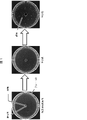
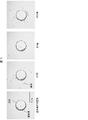
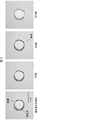
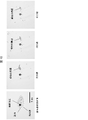
- Example 2 it is a diagram showing the results of successive observations of the state of the supply unit that supplied nematodes to the nematode test plate A1 in one embodiment of the present invention.
- Example 2 it is a diagram showing the results of successive observations of the state of the supply unit that supplied nematodes to the nematode test plate B1 in one embodiment of the present invention.
- Example 2 it is a diagram showing the results of successive observations of the appearance of the supply unit that supplied nematodes to the nematode test plate C1 in one embodiment of the present invention.
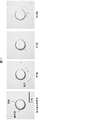
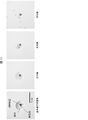
- Example 3 it is a diagram showing the results of successive observations of the state of the supply unit that supplied nematodes to the nematode test plate D1 in one embodiment of the present invention.
- Example 3 it is a diagram showing the results of successive observations of the state of the supply unit that supplied nematodes to the nematode test plate E1 in one embodiment of the present invention.
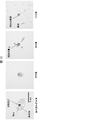
- Example 3 it is a diagram showing the results of successive observations of the state of the supply unit that supplied nematodes to the nematode test plate F1 in one embodiment of the present invention. It is a figure which shows the result of having continuously observed the state of the supply part which supplied the nematode to the conventional nematode test plate D2 in the comparative example 1. It is a figure which shows the result of having continuously observed the state of the supply part which supplied the nematode to the conventional nematode test plate E2 in the comparative example 1. It is a figure which shows the result of having continuously observed the state of the supply part which supplied the nematode to the conventional nematode test plate F2 in the comparative example 1.
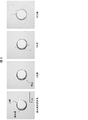
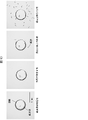
- Example 4 it is a diagram showing the results of successive observations of the appearance of the supply unit that supplied nematodes to the nematode test plate D1 in one embodiment of the present invention.
- Example 4 it is a diagram showing the results of successive observations of the state of the supply unit that supplies nematodes to a conventional nematode test plate D2 by a conventional method. It is a figure which shows the result of having done the chemotaxis test of the nematode with respect to the water-soluble substance using the nematode test plate A1 in one Embodiment of this invention in Example 5. It is a figure which shows the result of having done the chemotaxis test of the nematode with respect to the water-soluble substance using the conventional nematode test plate A2 in Example 5.
- the test method using nematodes is a nematode test plate (hereinafter sometimes simply referred to as "plate") provided on a supply unit provided on the nematode solution containing nematodes and a drying step to dry the nematode liquid after feeding to allow movement of the nematodes on the plate.
- the supply part is processed to suppress the spread of the nematode liquid.
- the nematodes supplied by the nematode liquid become movable when the liquid component of the nematode liquid dries in the drying process, and are released onto the plate.
- the supply part is processed to suppress the spread of the nematode liquid, preventing the nematode liquid from spreading until the liquid dries, and keeping the nematodes within a predetermined range. can be done. This allows the timing of nematode release to be controlled.
- release refers to drying of the liquid components of the supplied nematode liquid and crawling of the nematodes onto the plate.
- dry means that the liquid components in the nematode liquid are removed until the nematodes can move freely on the plate, typically the liquid component is 80% or more. It refers to the removed state.
- the test using nematodes is not particularly limited, it may be a test using nematode chemotaxis, for example, a test to examine positive chemotaxis that is attracted to a specific concentration of NaCl, cancer patients Chemotaxis tests, such as tests that test positive chemotaxis of attraction to urine and tests that test negative chemotaxis of escape from specific concentrations of diacetyl, and temperature taxis that test chemotaxis to specific temperatures (thermotaxis) test.
- a test using nematode chemotaxis for example, a test to examine positive chemotaxis that is attracted to a specific concentration of NaCl, cancer patients
- Chemotaxis tests such as tests that test positive chemotaxis of attraction to urine and tests that test negative chemotaxis of escape from specific concentrations of diacetyl, and temperature taxis that test chemotaxis to specific temperatures (thermotaxis) test.
- Nematode Nematodes in the present invention include animals belonging to the taxonomic phylum Nematoda (hereinafter simply referred to as “nematoda”) and animals belonging to the phylum Nematoda (hereinafter simply referred to as “nematoda”) .) are both intended. Among the animals included in these, there is no particular limitation as long as they are terrestrial or semi-terrestrial and can move on a solid phase.
- Nematodes include nonparasitic nematodes (or free-living nematodes), plant parasitic nematodes, insect parasitic nematodes, insect parasitic nematodes, and parasitic nematodes such as mammals. is mentioned.
- Non-parasitic nematodes include, for example, Caenorhabditis elegans (hereinafter sometimes referred to as "C. elegans”), Aphelenchus avenae, Caenorhabditis angaria), Caenorhabditis brenneri, Caenorhabditis briggsae, Caenorhabditis japonica, Caenorhabditis remanei, and Pristinchus pacificus ( Pristionchus pacificus).
- Caenorhabditis elegans hereinafter sometimes referred to as "C. elegans”
- Aphelenchus avenae hereinafter sometimes referred to as "C. elegans”
- Caenorhabditis angaria Caenorhabditis angaria
- Caenorhabditis brenneri Caenorhabditis briggsae
- Plant parasitic nematodes include, for example, Meloidogyne incognita, Meloidogyne arenaria, Meloidogyne javanica, Meloidogyne hapla, Heterodera glycines, potato cyst nematode (Globodera rostochiensis), Globodera pallida, Pratylenchus penetrans, Pratylenchus coffeae, Pratylenchus vulnus, Ditylenchus dipsaci, Inesin Aphelenchoides besseyi, Anguina tritici, Ditylenchus detractor, Aphelenchoides ritzemabosi, Longidorus spp., Xiphinema index, Aphelenchoides fragariae), Pineapple Negusa nematode (Pratylenchus brachyurus), Caenorhabditis inopinata (Caenorhab
- Insect parasitic nematodes include, for example, Sphaerularia bombi, Sphaerularia vespae, Hexamermis zuimyshi, Steinernema carpocapsae, Steinernema kushidai ), Iotonchium ungulatum, Iotonchium californicum, Iotonchium cateniforme, Iotonchium laccariae, Iotonchium russulae, Cenorhabditis auriculariae ( Caenorhabditis auriculariae), and Bursaphelenchus tadamiensis.
- opportunistic nematodes such as insects include Caenorhabditis japonica, Pristionchus pacificus, Bursaphelenchus xylophilus, Bursaphelenchus conicaudatus, Taranoza nematode (Bursaphelenchus luxuriosae), Teratorhabditis synpapillata, Caenorhabditis briggsae, and Caenorhabditis remanei.
- Cenoorhabditis japonica, Pristinchus pacificus, Cenoorhabditis brigsae, and Cenoorhabditis lemanei are treated like free-living nematodes (non-parasitic nematodes) in the laboratory. .
- Parasitic nematodes such as mammals include Strongyloides, filariae, roundworms (ascaris), Anisakis, whipworms, hookworms, jawworms, and trichinella (trichenia).
- S. anura parasitic strongyloides
- S. carinii S. amphibiophilus
- S. bufonis S. physali
- S. spiralis S. prokopici
- S. mascomai reptilian lizard parasitic strongyloides
- reptilian serpentine strongyloides such as S. ophidiae, S. mirzai, S. gulae, and S. serpentis
- aviary stork strongyloides such as S.
- S. cubaensis, S. ardeae, and S. herodiae Avioptera parasitic strongyloides (such as S. avium, S. oswaldoi, and S. pavonis), Anatal parasitic strongyloides (such as S. avium, S. oswaldoi, and S. pavonis) S.minimum, etc.), Avioptera parasitic strongyloides (S. turkmenica, etc.), Avian passerine parasitic strongyloides (S. quiscali Barus, etc.), Mammary net marsupial strongyloides (e.g., S.
- mammalian reticulocortic strongyloidiasis S. nasua, S. felis, S. mustelorum, S. erschowi, S. planiceps, S. puttori, S. martis, S. vulpis, S. tumefasciens, S. lutrae, and S. procyonis
- mammalian net length Proboscis strongyloides such as S. elephantis
- mammalian reticulodactyl strongyloides such as S. westeri
- mammalian reticulodactyloid strongyloides S.
- S. stercoralis, S. fuelleborni and S. fuelleborni kellyi are so-called human strongyloides that parasitize humans. Humans can also be parasitized by S. procyonis, a raccoon strongyloidiasis, and S. ransomi, a swine strongyloidiasis.
- Filariae include Dirofilaria immitis, Wuchereria bancrofti, Loa loa, Onchocerca volvulus, and Brugia malayi. be done.
- Targets include Toxocara canis and Toxocara cati.
- Anisakis examples include Anisakis pegreffii, Anisakis simplex sense stricto, and the so-called Anisakis type I and Anisakis physeteris of Anisakis simplex C (Anisakis simplex C), and Psudoterranova decipiens.
- Targets for whipworms include the human whipworm (Trichuris trichiura).
- Targets for hookworms include Ancylostoma duodenale, Necator americanus, and Ancylostoma caninum.
- Gnathostoma nipponicum, Gnathostoma spinigerum, Gnathostoma hispidum, and Gnathostoma doloresi .
- Trichinella britovi, Trichinella spiralis, Trichinella nativa, Trichinella nelsoni, and Trichinella pseudospiralis are targets.
- Mammal parasitic nematodes other than the above include Capillaria philippinensis and Capillaria aerophila (also called hairy nematodes), and oriental eye worms (Thelazia callipaeda) are targeted.
- wireworms and the like can be mentioned as nematodes.
- Examples of wire bugs include Gordius robustus, Gordius ogatai, Pseudogordius tanganykae, and Chordodes japonensis.
- an arbitrary number of nematodes are supplied to the plate by supplying a nematode liquid containing nematodes to the supply part of the plate.
- the supply method is not particularly limited as long as it does not affect the test.
- a pipette or the like may be used to supply an arbitrary amount (volume) of the nematode liquid to the supply unit.
- C. elegans is used as the nematode. Examples of conditions when targeting C.
- elegans but are not limited thereto, and arbitrary conditions such as the size of the plate and the amount (volume) of the nematode liquid are determined by the body of the target nematode Adjustment may be made in light of the size, characteristics, and the like.
- nematode populations may occur upon nematode release.
- a population of nematodes means that nematodes aggregate to form a massive population, and occurs mainly when the population density of nematodes is high. Nematode colonies may not resolve, and even if they do resolve, it may take tens of minutes to several hours, which may affect the performance of the test and the accuracy of the test performed.
- the number of nematode individuals contained in the nematode liquid, the type of liquid used in the nematode liquid, and the amount (volume) of the nematode liquid may be changed as appropriate according to the test conditions and test content.
- the number of nematode populations contained in the nematode liquid can be adjusted appropriately according to the type of nematode and the size of the container.
- C. elegans as a type of nematode.
- the number of adults is preferably 200 or less from the viewpoint of conducting the test appropriately.
- C.I. When using elegans and using a circular container with an inner diameter of about 8.2 cm as the plate, the number of adults is preferably 500 or less.
- the population density of the nematode solution to be used may be appropriately adjusted in consideration of the nematode population suitable for the test.
- the liquid used for the nematode liquid is not particularly limited, but the extremely high learning and memory ability of nematodes may cause conditioning to a specific taste or smell contained in the liquid, which may affect subsequent tests. , should be selected according to the purpose of the test.
- buffer solutions and ultrapure water that are commonly used in nematode tests may be used.
- a buffer solution that has a moisturizing effect on nematodes it is preferable to use a known wash buffer that contains gelatin that has a moisturizing effect and is used for washing nematodes. can be done.
- the nematodes may be washed with any liquid.
- the liquid for washing the nematodes is not particularly limited, but it may cause conditioning to the specific taste or odor contained in the liquid, which may affect the subsequent test, so it should be selected according to the purpose of the test.
- buffer solutions and ultrapure water that are commonly used in nematode tests may be used.
- a wash buffer is preferable, and it is preferable to avoid a liquid with a high salt concentration that may promote dehydration, such as a liquid with a higher salt concentration than physiological saline.
- the amount (volume) of the nematode liquid supplied to the supply unit is not particularly limited as long as it does not affect the test.
- the amount of nematode liquid affects the drying time, which will be described later. For example, when other conditions are the same, the less amount of nematode liquid, the shorter the time required for the drying process. Further, if the amount of the nematode liquid is the same, the larger the population of nematodes contained in the nematode liquid, the shorter the time required for the drying process.
- the amount of nematode liquid and nematode population density may be determined by considering the time of the drying process.
- the amount (volume) of the nematode liquid to be supplied to the supply unit may be determined by referring to the size of the container and, if a recess, which will be detailed later, is provided, the volume of the recess, etc.
- the amount of nematode liquid to be supplied is 1 ⁇ L or more.
- the volume may be 50 ⁇ L or less, and more preferably 2 ⁇ L or more and 30 ⁇ L or less.
- the amount (volume) of the nematode liquid to be supplied to the supply unit affects the drying process time, it may be determined with reference to the drying process time.
- 30 mL or less of solid medium is injected into a circular plastic dish with an inner diameter of about 8.4 cm, and a plate with one recess is used as an example. I will explain the relationship with the time until it is completed.
- the amount (volume) of the nematode liquid supplied to the supply unit is preferably 3 ⁇ L or less, and may be 2 ⁇ L or less. more preferred.
- the amount (volume) of the nematode liquid supplied to the supply unit may be 20 ⁇ L or more.
- the nematode liquid to be supplied is within this range, it takes time to dry the nematode liquid, and it is possible to sufficiently lengthen the time until the nematodes are released.
- the plate is provided with a feed section for feeding the nematode liquid in the feeding step.
- the supply part is processed to prevent the nematode liquid from spreading.
- the movement start position of the nematode can be sufficiently controlled by the processing that suppresses the spread of the nematode fluid. Specific embodiments are not limited as long as the processing suppresses the spread of the nematode liquid. and so on.
- the case where the solid phase is a solid medium will be described. For details of the solid phase, see [Nematode test plate] described later.
- the provision of a concave portion for the supply portion will be described. Since the nematode fluid can be retained inside the supply part by forming the recess, the spread of the nematode fluid can be suppressed. In addition, when the nematodes overlap in the recess and form a mass group, nematodes crawl out to the solid medium surface in order from the nematode close to the opening on the solid medium surface side of the recess, so when nematodes are released groups can be dissolved. Therefore, even if a massive cluster of nematodes occurs, it is possible to prevent the state of the cluster from persisting by providing the concave portion.
- the recess is formed to extend from the surface of the solid medium toward the bottom of the solid medium.
- the depth of the recess is not particularly limited as long as it is within the range where the effect of the recess can be obtained. For example, it may or may not reach the bottom surface of the solid medium.
- the shape of the recess when viewed from the opening side is not particularly limited, but the ease of observation when observing the nematode in the recess with an upright microscope, and the nematode after the liquid component of the nematode liquid has dried From the viewpoint of ease of crawling up onto the surface of the solid medium, the opening of the recess preferably has the same shape as the bottom surface of the recess or a shape wider than the bottom surface.
- the method of forming the recess is not particularly limited.
- a method of hollowing out a solid medium to form a recess and a method of injecting a solid medium into a container preliminarily provided with a structure for forming a recess to form a recess can be used.
- the volume of the recess is not particularly limited.
- the volume of the recess depends on the thickness of the solid medium.
- a solid medium having one cylindrical recess with an inner diameter of 5 mm (bottom surface area is about 0.2 cm 2 ) in a circular plastic dish with a bottom surface inner diameter of about 8.4 cm and a bottom surface area of about 55 cm 2 . may be formed.
- the recess may penetrate the solid medium, and the container may be exposed on the bottom surface of the recess.
- the bottom surface of the container is hydrophobic, a portion thereof is exposed in the recess, and the supplied nematode liquid is in contact with the hydrophobic portion, thereby accelerating the drying of the nematode liquid.
- hydrophobicity refers to the property of repelling nematode fluid.
- the contact angle between the dropped nematode liquid and the hydrophobic surface in contact with the nematode liquid is 50 degrees or more, preferably 75 degrees or more, and more preferably 90 degrees or more.
- the nematode liquid supplied (dropped) to the bottom surface of the recess spreads over the whole because the bottom surface of the recess is hydrophobic, and then quickly moves to the outer periphery of the bottom surface of the recess, First, the center of the bottom surface of the recess becomes dry. Therefore, it is possible to efficiently move the nematode liquid to the outer peripheral portion of the bottom surface of the recess, which follows the inner wall of the recess, which is the line of movement for the nematodes to crawl up the surface of the solid medium. Thereby, the nematodes can be suitably supplied to the surface of the solid medium.
- the bottom surface of the recess may be processed to be hydrophobic by making the entire container hydrophobic. Since the nematode fluid is repelled by the hydrophobic portion because the bottom surface of the recess is hydrophobic, the nematode fluid can be rapidly moved from the center of the bottom surface of the recess to the outer periphery of the bottom surface of the recess.
- the material of the container is preferably a material that does not absorb or permeate liquid.
- plastic, glass, silicone resin such as polydimethylsiloxane (PDMS), etc., or metal such as aluminum can be selected.
- a similar effect can also be obtained by applying a hydrophobic material such as a water-repellent polymer to the bottom surface of the recess instead of exposing the container portion made of a hydrophobic material on the bottom surface of the recess.
- a hydrophobic material such as a water-repellent polymer
- it may be applied not only to the bottom surface but also to the inner wall (side surface) side of the concave portion.
- the processing to make the surface of the supply portion hydrophobic is not particularly limited.
- a hydrophobic sheet of any material and shape may be placed on a plate, and the sheet may be used as a supply portion.
- the inner wall of the recess connecting the bottom surface of the recess and the opening may be water absorbent. Since the inner wall of the recess is water-absorbent, the nematode liquid is absorbed into the solid medium, so that the nematode liquid in the recess can be dried quickly.
- water absorbency refers to the property of a solid medium to absorb liquid components (not limited to water) of nematode fluid.
- the solid medium absorbs 40% or more, preferably 50% or more, more preferably 70% or more of the liquid components of the nematode liquid within about 30 minutes from the supply of the nematode liquid.
- the bottom surface of the recess may be hydrophobic, and the inner wall of the recess may be water absorbent.
- the nematode fluid is preferably moved to the periphery of the bottom surface of the recess. For this reason, the nematode liquid is more preferably absorbed by the inner wall of the recess, so that the drying process can be shortened.
- the method of making the inner wall of the concave portion water absorbent is not particularly limited.
- the solid medium may be hollowed out to form recesses to make the inner walls water absorbent.
- By hollowing out the solid medium to form a recess fine holes formed inside as the solid medium solidifies are exposed on the inner wall of the recess, and the function of the exposed hole makes the inner wall of the recess absorb water.
- the concave portion is formed by a method of hollowing out a solid medium.
- the surface of the inner wall of the recess becomes rough and the area of the inner wall of the recess increases. It is presumed that by hollowing out and forming recesses in this way, the area capable of absorbing liquid components of the nematode liquid and the number of fine holes are increased. Therefore, it is preferable to form the concave portion by hollowing it out.
- the area of the inner wall of the recess is not particularly limited, but from the viewpoint of increasing the water absorption of the nematode liquid on the inner wall of the recess, it is preferably 0.1 cm 2 or more and 4 cm 2 or less, and 0.2 cm 2 or more and 2 cm. It is more preferably 2 or less.
- the area of the inner wall of the water-absorbing concave portion the higher the water-absorbing property.
- drying of the nematode liquid is suppressed for reasons such as an increase in humidity in the plate and thus in the recess.
- the time required for drying the nematode liquid depends on the size and shape of the plate, the size, shape and number of recesses, the amount (volume) of the nematode liquid, the amount (volume) of the solid medium, and the nematode population density. Affected by various conditions. Therefore, the area of the inner wall of the recess may be appropriately selected with reference to the above range and other conditions.
- the depth of the recess is preferably 0.1 cm or more and 1 cm or less, and more preferably 0.14 cm or more and 0.6 cm or less.
- the depth of the recess is not less than the lower limit, the area of the inner wall of the recess can be kept within a sufficient range, so that the inner wall of the recess can maintain sufficient water absorbency.
- the upper limit of the depth of the recesses it is possible to shorten the distance for the nematodes to crawl out of the recesses and to control the humidity in the recesses within a suitable range. Therefore, the time until the nematodes are released can be shortened.
- the depth of the recess may be set low.
- the distance from the bottom surface of the recess to the surface of the solid medium is shortened, and the number of nematodes stacked along the inner wall from the bottom of the recess toward the opening on the surface of the solid medium can be limited. You can control the size.
- the release of the nematodes becomes smoother. For example, when the depth of the recess is 0.17 cm or more and 0.25 cm or less, nematode release can be started within 3 minutes after supplying the nematode liquid.
- the amount (volume) of the solid medium may be changed as appropriate depending on the method for preparing the solid medium, the size of the container, and the conditions of the drying process described below.
- the amount of the solid medium will be described below, taking as an example a solid medium that has been solidified by pouring it into a container and left overnight in a highly airtight storage container at room temperature, in the case where the supply portion is a recess. Since the water content of the solid medium changes depending on the storage time after solidification, the conditions of the supply step and the drying step described later may be adjusted according to the state of the solid medium.
- the amount (volume) of the solid medium is not particularly limited as long as the nematode liquid supplied to the recess is not overflowing on the surface of the solid medium in principle, and it is within the range where the test can be suitably performed.
- the amount of the solid medium is preferably 40% or less of the volume of the container.
- the lower limit is not particularly set, if it is 10% or more, the nematode liquid will not overflow into the solid medium, and it is within the range where the test can be performed.
- the amount of the solid medium is about 10 mL to 30 mL, that is, the thickness is 0.4 cm. It may be about 2 cm to 0.6 cm.
- the amount of solid medium should be about 3 mL to 10 mL, ie, the thickness should be about 0.14 cm to 0.5 cm.
- the depth of the recesses is the same as the thickness of the solid medium, and depends on the amount (volume) of the solid medium. You may adjust it so that it is inside.
- the amount (volume) of the solid medium may be 20% or less of the volume of the container.
- using a solid medium within the range will reduce the liquid component of the nematode liquid compared to using a solid medium with a larger amount than this range. Faster drying speed. Therefore, when the time required for the drying process is desired to be relatively short, a solid medium within this range can be suitably used.
- "relatively short time required for the drying process” means that the time required for the drying process is typically within 25 minutes.
- the amount of solid medium is about 10 mL, that is, the thickness is from 0.2 cm to It may be about 0.4 cm.
- the amount of solid culture medium should be about 3 mL, ie, about 0.15 cm in thickness.
- the amount (volume) of the solid medium may be 40% or more of the volume of the container. Although there is no upper limit to the amount of the solid medium, it is preferably 50% or less of the volume of the container from the viewpoint of ease of testing.
- the drying speed of the liquid component of the nematode liquid becomes slower than when using a solid medium in an amount smaller than this range. Therefore, a solid medium within this range can be suitably used when the time required for the drying step is desired to be relatively long.
- "a relatively long time required for the drying process” typically means that the time required for the drying process is 60 minutes or more and 180 minutes or less.
- the nematodes used in the test may be starved and may not be suitable for normal tests, but in tests using starved nematodes, more than 180 minutes It is also possible to choose a drying that takes a very long time.
- the number, shape, size, and position of the feeder there are no particular restrictions on the number, shape, size, and position of the feeder, and the conditions may be changed as appropriate according to the type and number of nematodes used, the type and number of test subjects, and the purpose of the test. Just do it.
- the number of feeds can be, for example, 1, 2, 3, 4, 5, or 6 or more.
- the shape of the supply portion may be, for example, a circular shape, a rectangular shape, a polygonal shape, or the like when the supply portion is cut in the horizontal direction.
- the size of the supply part is sufficiently smaller than the size of the plate.
- the total area of the openings of the recess on the plate surface side may be approximately 2% or less, more preferably 0.4% or less, of the surface of the solid medium.
- the position of the supply portion is typically near the center of the plate, but is not particularly limited, and may be determined according to the purpose and contents of the test.
- the size of the container used for the nematode test plate is not particularly limited as long as the size is suitable for the test.
- the inner diameter of the bottom surface of the container is preferably 3.0 cm or more and 15.0 cm or less
- the height (inner height) is preferably 0.5 cm or more and 3 cm or less. 0 cm or less, and a height (inner height) of 1 cm or more and 1.5 cm or less.
- the internal dimensions are length (typically short side) 3 cm or more and 30 cm or less, width (typically long side) 3 cm or more and 30 cm or less, and height 0.5 cm or more and 3 cm.
- the volume of the container is preferably 3.6 cm 3 or more and 2700 cm 3 or less, and preferably 19.5 cm 3 or more and 565 cm 3 or less.
- the drying step after the supply step, by drying the nematode liquid supplied on the plate in the supply step, a step of releasing the nematodes on the plate.
- the drying method in the drying step is not particularly limited as long as it does not affect the execution of the test or its accuracy. Drying methods include, for example, natural drying including evaporation of the nematode liquid and absorption by a solid medium, and a method of removing at least part of the liquid component of the nematode liquid by a method other than natural drying, and a combination thereof.
- the nematode fluid may be dried using a vacuum cleaner.
- the process of removing at least part of the liquid component of the nematode liquid by a method other than natural drying is hereinafter referred to as "removal process”. That is, the drying step may include the removing step.
- the drying speed of the nematode liquid depends on the shape and size of the plate, the presence or absence of a cover to cover the plate, the shape, size and number of the supply unit, the amount (volume) of the nematode liquid dropped, and the solid It varies depending on conditions such as the amount (volume) of the phase.
- the conditions may be appropriately adjusted so that the drying process can be performed appropriately.
- the drying rate can vary depending on the humidity of the surrounding atmosphere.
- the time required for the drying process may be changed as appropriate depending on the test, and is not particularly limited.
- the drying step may be 2 minutes or more and 25 minutes or less.
- the conditions may be adjusted so that the drying process is 0 seconds or more and less than 2 minutes, so that the nematodes can be released immediately after the supply.
- the conditions may be set such that the drying process is 1 minute or more and 90 minutes or less, and the nematodes may be released onto the surface of the solid medium after a certain period of time has passed since the nematode liquid was supplied.
- the plate In the drying process and subsequent tests, the plate may be covered and left to stand.
- the drying step may further include a removal step of removing at least part of the liquid component from the nematode liquid at least once by a method other than natural drying after the nematode liquid is supplied. This process reduces the amount (volume) of the nematode liquid to be naturally dried, so the time required for the entire drying process can be shortened, and the nematodes can be released immediately after the nematode liquid is supplied.
- the amount of nematode liquid removed by the removal process is not particularly limited.
- the amount (volume) of the nematode liquid dried by natural drying may be 1 ⁇ L or less.
- the method of removing the liquid component is not particularly limited as long as it is a method that does not allow odors such as human fingers and samples to adhere to the nematode test plate.
- the nematode fluid may be removed by aspirating the fluid component with a pipette.
- a tip with a hole diameter that does not aspirate nematodes should be used.
- the nematode is C. elegans.
- the number of removal steps is not particularly limited.
- the removing step may be performed only once, or may be performed multiple times until the liquid component of the nematode liquid is dried.
- the timing of performing the removal step is not particularly limited.
- the removal step may be performed a plurality of times in succession immediately after the supply step, or the second and subsequent removal steps may be performed after an interval of time after the first removal step.
- a nematode test plate comprises a container and a solid phase formed in the container, the solid phase having a surface on which nematodes can move, and , A supply part, which is a part to which the nematode liquid containing nematodes is supplied, is provided, and the supply part is processed to suppress the spread of the nematode liquid.
- solid phase refers to a solid layer formed in a container, and is not particularly limited as long as nematodes can move on its surface.
- layers are envisaged that contain water and thus have a wet surface.
- Solid layers include, as non-limiting examples, gels formed from agar, agarose, gelatin and konjac, etc., gelling agents or thickening stabilizers such as pectin, guar gum, carrageenan and xanthan gum are added to the liquid. gels and the like formed by From the viewpoint of ensuring smooth movement of nematodes on the solid medium surface, a solid medium solidified or gelled with agar or the like is preferable.
- solid media that are solidified or gelled with naturally-derived raw materials such as agar are preferred.
- the solid medium is preferably tasteless and odorless so as not to affect the test using the nematode test plate.
- Solid media can also be supplemented with sulfur sources, phosphates, and trace minerals.
- sulfur sources phosphates, and trace minerals.
- MgSO4 magnesium sulfate
- KH2PO4 potassium dihydrogen phosphate
- K2HPO4 dipotassium hydrogen phosphate
- CaCl2 calcium chloride
- the solid phase can be, for example, a gelled or solidified biological medium. In this specification, for convenience of explanation, the solid phase will be described as an example of a solid medium obtained by solidifying or gelling a biological medium with agar or the like, but the solid phase is not limited to this.
- the durometer hardness of the solid medium is preferably 5 or more, more preferably 8 or more, even more preferably 15 or more.
- the durometer hardness is preferably 5 or more, more preferably 8 or more, even more preferably 15 or more.
- nematodes swimming in the liquid phase in contact with the solid medium such as droplets on the surface of the solid medium and liquid components of the nematode liquid in the recesses, enter the solid medium. can prevent you from doing it.
- the durometer hardness is 8 or more, it is possible to prevent nematodes used in a stress-free state such as starvation from entering the inside of the solid medium.
- the solid medium does not easily evaporate, or that the solid medium itself does not easily dry naturally.
- An example of is konnyaku.
- solid media such as agar and gelatin that are relatively easy to dry naturally, cover the plate and seal it with tape, or store it in a sealed case to prevent it from drying out. .
- the solid phase may be formed as a layer on the surface of which nematodes can move, and another layer (lower layer) may be formed below the layer.
- another layer lower layer
- the surface layer adopt a layer suitable for the movement of nematodes and the diffusion of the test substance described later, etc.
- the lower layer a layer suitable for suppressing the invasion of nematodes into the interior and the diffusion of the test substance. can be adopted.
- it when setting it as two layers, it is not restricted to the combination of the layer of such a property. Moreover, it is good also as three or more layers.
- the bottom surface of the container has sufficient visible light/ultraviolet light transmittance for observation under a microscope.
- the bottom surface of the container preferably has a transmittance of 70% or more, more preferably 80% or more, and even more preferably 90% or more for light having a wavelength of 360 nm to 860 nm.
- the transmittance of light with a wavelength of 860 nm to 1500 nm is preferably 70% or more, more preferably 80% or more, and even more preferably 90% or more.
- the base material may be a material that does not emit autofluorescence or emits little autofluorescence. A container using such a base material can be suitably used for fluorescence observation.
- plastics with excellent light transmittance and low autofluorescence include polyester such as polyethylene terephthalate (PET), polymethyl methacrylate (PMMA), polycarbonate (PC), and cycloolefin polymer. (COP) and epoxy resins.
- PET polyethylene terephthalate
- PMMA polymethyl methacrylate
- PC polycarbonate
- COP cycloolefin polymer.
- epoxy resins epoxy resins.
- the shape of the container typically the inner shape of the container, can be, for example, circular, rectangular and square.
- the shape of a container intends the shape when a container is seen from above.
- the shape and size of the container should be It is preferable to have a shape and size that match the sample stage.
- the plate may further include a cover separate from the plate that is used in combination with the plate during testing.
- the cover is used to maintain uniform conditions within the plate during testing.
- natural drying of the solid medium and drying of the nematode fluid can be suppressed, and humidity inside the plate can be maintained, making it possible to maintain a constant test environment.
- a hydrophobic tape or the like may be used to cover the edge of the cover and fix it to the outer periphery of the plate for sealing.
- the cover is preferably designed so that the plate can be observed under a microscope even with the cover on. That is, the cover preferably has sufficient visible light/ultraviolet light transmittance for observation under a microscope.
- the cover preferably has a transmittance of 70% or more, more preferably 80% or more, and even more preferably 90% or more for light having a wavelength of 360 nm to 860 nm.
- the transmittance of light with a wavelength of 860 nm to 1500 nm is preferably 70% or more, more preferably 80% or more, and even more preferably 90% or more.
- the base material may be a material that does not emit autofluorescence or emits little autofluorescence. A cover using such a base material can be suitably used for fluorescence observation.
- the test object for the chemotaxis test is supplied to any position on the nematode test plate.
- the test substance for the chemotaxis test is a case in which the test substance itself diffuses into the gas phase and becomes an odorant, or a substance contained in the test substance is released from the test substance into the gas phase, There are cases where the substance becomes an odorant, and where a water-soluble substance permeates and diffuses into the solid medium of the plate.
- the test article may be dropped or applied to an arbitrary position.
- the type, amount (volume), temperature, and supply timing of the solvent to be tested are not particularly limited, and may be changed as appropriate depending on the content of the test.
- all solvent types, amounts, temperatures and injection timings are supplied in the same manner as the test, except that the test is not included.
- test article and control article are supplied. Each may be supplied so as to be symmetrical with respect to the center of the nematode test plate.
- the nematode test plate for the chemotaxis test may be treated to control the release or diffusion rate of the odorant. By controlling the release or diffusion rate of odorants, it is possible to optimize the odor detection sensitivity of nematodes.
- the space inside the nematode test plate is saturated with the odorant released from the test object, or the density of the odorant adhered to the surface of the solid medium becomes higher than the density gradient is maintained. Insect chemotaxis studies become difficult. In order to prevent this, it is possible to adjust the timing of supplying the test substance or add a drug that reduces the rate of molecule jumping out to the test solution of the test substance.
- the odorant is a substance that is difficult to vaporize
- a drug that serves as a sensitizer is added to the test solution of the test subject.
- the same amount of the same drug as the test solution is added to the standard solution that serves as the control.
- a conventionally known substance that has an effect of suppressing vaporization can be used.
- a drug serving as a sensitizer a conventionally known substance having a gas diffusion action can be used. With these, it is possible to control the diffusion amount, speed and range of the odorant to be tested, and to control the odor detection sensitivity of nematodes. Being able to control the rate of odorant release or diffusion allows optimizing (especially minimizing) the size of nematode test plates.
- the test method in this embodiment can control the release timing of nematodes more strictly than conventional test methods. Furthermore, since there are few operations by the tester and the operation is simple, there is little dependence on the technique of the tester. Therefore, the test method has higher precision than the conventional one.
- the nematode test plate of this embodiment is processed to suppress the spread of the nematode liquid in the supply part.
- the nematodes can be retained in the supply section until an arbitrary timing. Therefore, nematodes can be prevented from spreading on the plate at the start of the test.
- the nematode test plate of the present embodiment enables a more rigorous test.
- the test method according to this aspect 1 is a test method using nematodes, a supply step of supplying a nematode liquid containing the nematode to a supply unit provided on a nematode test plate, and after supply A drying step of drying the nematode liquid to allow the nematode liquid to move on the nematode test plate, and the supply unit is processed to suppress the spread of the nematode liquid.
- the processing is to form a recess in the supply portion.
- the nematode liquid is preferably held in the supply part in the supply step.
- the processing is to make the supply part hydrophobic.
- the nematode liquid is preferably held in the supply part in the supply step.
- the drying step includes removing at least part of the liquid component from the nematode liquid after supplying the nematode liquid by a method other than natural drying. It further comprises a one-time removal step. With this configuration, it is possible to shorten the drying process and release the nematodes immediately after the nematode liquid is supplied.
- the nematode test plate according to this aspect 5 comprises a container and a solid phase formed in the container, the solid phase on which nematodes can move on the surface, and the solid phase, A supply unit is provided to which the nematode fluid containing the nematode is supplied, and the supply unit is subjected to a process that suppresses spreading of the nematode fluid.
- the nematode liquid can be retained in the supply unit, so even when nematodes are released by natural drying, it is possible to adjust the timing.
- the processing is to form a recess in the supply portion. With this configuration, it is possible to more preferably hold the nematode fluid in the supply unit.
- the container is exposed on the bottom surface of the recess. With this configuration, it is possible to more preferably hold the nematode liquid in the recess.
- the material of the container is plastic, glass, silicone resin, or metal.
- the processing is to make the surface of the supply part hydrophobic. With this configuration, it is possible to suppress the spread of the nematode fluid.
- the inner walls of the recesses are water absorbent. With this configuration, the drying process can be shortened.
- the bottom surface of the recess is hydrophobic. With this configuration, the drying process can be shortened.
- C. elegans was used as the nematode. Each test was performed using elegans.
- two types of commercially available circular plastic dishes of different sizes were used as containers for nematode test plates. Two types of circular plastic dishes were used, one with a bottom surface inner diameter of about 5.2 cm and the other with a bottom surface inner diameter of about 8.4 cm. The volume of a circular plastic dish with an inner diameter of about 8.4 cm is about 3.9 times that of the dish with an inner diameter of about 5.2 cm.
- a solid medium mainly composed of agar was prepared in a container and used as a nematode test plate.
- a solid medium was prepared by dissolving 20 g of agar powder in 993 mL of ultrapure water, autoclaved, and then adding 1 M MgSO 4 (1 mL), 1 M potassium phosphate (pH 6.0, 5 mL), and 1 M CaCl 2 (1 mL). , and stirred to prepare 1 L.
- a recess was made by hollowing out the solid medium to serve as a feeding part. The recess thus prepared was a cylindrical recess with an inner diameter of 5 mm centered on the center of the solid culture medium.
- Table 1 shows the details of the nematode test plate used in the examples. Below, the names of the nematode test plates shown in Table 1 are used for explanation.
- a wash buffer containing adult nematodes washed with a buffer solution was used.
- the wash buffer was prepared by dissolving 0.5 g of gelatin powder in 993 mL of ultrapure water, autoclaved, and then adding 1 M MgSO 4 (1 mL), 1 M potassium phosphate (pH 6.0, 5 mL), and 1 M CaCl 2 (1 mL). Add and stir to make 1 L. In each example shown below, it was cooled to 20° C., which is the optimum temperature for nematodes (C. elegans), and used for nematode washing and nematode liquid.
- Example 1 Examination of nematode supply process
- a plate A1 in which 3 mL of solid medium is injected and one recess is formed in the center and a plate A2′ prepared in the same manner as plate A2 and plate A2 in which 3 mL of solid medium is similarly injected but which is not provided with a recess.
- the nematode release by the nematode supply process of the present invention and the conventionally known nematode supply process was observed over time.
- the nematode liquid is sucked out with a pipette, and approximately 150 adult worms are placed in the supply portions of each of the plates A1, A2 and A2', that is, the depressions in the plate A1 and the center of the plates in the plates A2 and A2'. 20 ⁇ L of the nematode liquid containing was dropped and supplied. In plate A1, nematodes were released by a drying process using a method of air-drying the liquid component of the supplied nematode liquid.
- the liquid component of the supplied nematode liquid is wiped with a paper wiper, which is a conventionally known method, and in plate A2', the liquid component of the supplied nematode liquid is dried by natural drying. Nematodes were released by a drying process using the method. Immediately after nematode supply, the entire plate A1, plate A2 and plate A2' were imaged from the bottom surface using an image scanner to observe how the nematodes diffused on the solid medium surface.
- FIG. 1 shows an image of plate A2 immediately after nematode supply and 2 minutes after wiping nematode liquid.
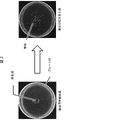
- images of plate A2' immediately after and 60 minutes after the nematode liquid was supplied are shown in order from the left in FIG.
- the shape of the nematode liquid hardly changed for at least 60 minutes, indicating that the drying of the nematode liquid did not proceed sufficiently to release the nematodes. Recognize.
- the scale bar in the figure is 5 mm, and the same applies to the following images of the supply section.
- the plate B2 and the plate C2 having no recess were used to perform the same test as the plate A2'.
- Plate B2 was a plate into which 5 mL more of the same solid medium as plate A2' was injected than plate A2'
- plate C2 was a plate into which 10 mL more of the same solid medium as plate A2' was injected than plate A2'.
- Tests with plate B2 and plate C2 gave the same results as plate A2'. That is, the shape of the nematode fluid did not change substantially for at least 60 minutes, and the nematode fluid did not dry sufficiently to release the nematodes.
- Example 2 Examination of the amount (volume) of the solid medium 1] Using plate A1 and plate B1 and plate C1, which are the same as plate A1 except that the amount of solid medium was 5 mL and 10 mL, respectively, the effect of different amounts of solid medium on the drying process was investigated.
- the liquid component of the supplied nematode liquid was dried using a method of natural drying. First, the nematode liquid was sucked out with a pipette, and 3 ⁇ L of the nematode liquid containing approximately 50 adult worms was dropped and supplied to the depressions of each plate. For 40 minutes every 20 seconds immediately after the supply, an image of about 1.4 cm square centered on the recess was taken from above using a digital camera attached to the microscope, and the nematode diffusion on the surface of the solid medium was observed.
- nematode release was completed in about 30 minutes on plate C1.
- nematode release started after 3 minutes, and although the nematode liquid was dried, it took longer than plate B1 to complete the nematode release.
- the thickness of the solid medium that is, the depth of the recess is twice that of the plate B1
- a plurality of nematodes that are in a state of being overlapped on the bottom surface of the recess due to drying climb up the inner wall of the recess to form the solid medium. Extra time required to crawl to the surface was thought to be involved.
- a nematode liquid containing approximately 50 adult worms was added to a cylindrical recess with a diameter of 5 mm provided in a plate in which a solid medium was injected in an amount of 10% or more and 40% or less of the container volume. It was found that when 3 ⁇ L of the solid medium was added dropwise and the method of air drying was used as the drying process, the nematode release was completed within 30 minutes immediately after the supply regardless of the amount of the solid medium.
- Example 2 Effect of amount (volume) of nematode liquid
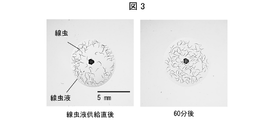
- the nematode release was completed in 20 minutes as shown in FIG.
- 20 ⁇ L of the nematode liquid was supplied to the plate A1
- the drying process was the same as in Example 2
- 15 minutes had elapsed after supplying the nematode liquid to the recesses as shown in FIG.
- the nematode liquid did not sufficiently dry, and it took about 90 minutes for all the nematodes in the depressions to crawl out onto the surface of the solid medium.
- Example 2 Compared with the results of Example 2, in which the release of nematodes is completed in about 20 minutes after supplying nematodes, it is clear that the time from supply to release of nematodes is longer. From this result, it is clear that the timing of nematode release can be controlled by adjusting the amount of the nematode liquid when the natural drying method is used as the drying process.
- Example 3 Examination of the amount (volume) of the solid medium 2] 10 mL, 20 mL and 30 mL of the solid medium were injected into a circular plastic dish with a diameter of about 8.4 cm to prepare plates with depressions, respectively, which were referred to as plate D1, plate E1 and plate F1. Plate D1, plate E1 and plate F1 were supplied with the nematode liquid to investigate the effect of the amount of solid medium and the size of the container on the drying process using the air drying method. First, the nematode liquid was supplied in the same manner as in Example 2, and the diffusion of nematodes on the surface of the solid medium was imaged and observed.
- FIG. 7, FIG. 8 and FIG. 9 show the results of continuous observation of the depressions of plate D1, plate E1 and plate F1.
- the images at the time when all the nematodes were released from the depressions are shown in order from the left, immediately after the nematode liquid was supplied, 3 minutes later, and 6 minutes later.
- the nematodes remained as means and clusters near the point of supply (black dots). Moreover, as shown in FIG. 11, when the plate E2 was used, the nematode liquid was not sufficiently dried even after 30 minutes had passed since the supply.
- Example 3 the test conditions were the same as in this comparative example, except that the recess was provided. diffused. From the above, it is clear that the nematode test plate according to one embodiment of the present invention provided with recesses is extremely effective in favorably releasing nematodes during the drying process.
- Example 4 Examination of drying process including removal process
- plate D1 and plate D2 the effect of aspirating liquid components of the nematode liquid with a pipette in the drying process, that is, the effect of the removal process was examined.
- the nematode liquid is aspirated with a pipette, and 3 ⁇ L of nematode liquid containing approximately 100 adult worms is dropped into the supply portions of plates D1 and D2, that is, the recess in plate D1 and the center of the plate in plate D2. and supplied.
- nematodes were released by a conventional method, ie, a method of wiping off liquid components of the supplied nematode liquid with a paper wiper.
- the area around the supply part was imaged from above for 2 minutes every 20 seconds to observe how the nematodes spread on the surface of the solid medium.
- FIG. 13 and FIG. 14 show the results of successive observations of the nematode fluid-supplying portions of plates D1 and D2.
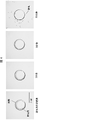
- FIG. 13 the images immediately after supplying the nematode liquid (supplying step), immediately after removing the liquid component of the nematode liquid (removing step), 20 seconds later, and 2 minutes later are shown in order from the left.
- FIG. 14 the images immediately after supplying the nematode liquid, immediately after wiping off the liquid component, 20 seconds and 2 minutes after are shown in order from the left.
- the drying step includes the removal step of sucking the liquid component immediately after the nematode liquid is supplied
- the nematodes swimming in the nematode liquid immediately begin to climb the inner wall of the recess and fill the inner wall of the recess. I did my best. After 20 seconds, several nematodes among them reached the surface of the solid medium, and after 2 minutes, most of the nematodes crawled out and spread on the surface of the solid medium.
- FIG. 14 in the nematode release by the conventional method of wiping the liquid component with a paper wiper, the nematodes began to move immediately after wiping, and after 2 minutes spread on the solid medium surface.
- the time required for nematode release and the manner in which nematodes diffuse on the solid medium surface of the present invention with the concave portion as the supply part were the same as in the conventional method of wiping off liquid components using a paper wiper shown in FIG. That is, it is clear that about 100 nematodes can be released in an extremely short time of 2 minutes. In addition, unlike the conventional method of natural drying shown in Comparative Example 1, it is clear that the nematodes are not gathered together and stay in the vicinity of the supply part for a long time, and are suitably released.
- Example 5 Chemotaxis test for water-soluble substances using nematode supply process and drying process
- NaCl sodium chloride
- a chemotaxis test of nematodes to water-soluble substances was performed.
- plate A1 and plate A2 used in Example 1 were prepared, and a plug containing a high concentration of the test substance NaCl was placed on the surface of the solid medium at about 2 cm from the center of the plate toward the left. was left (NaCl spot).
- the plugs were allowed to stand overnight on the surface of the solid medium in order to allow NaCl to diffuse from the plugs into the solid medium and form a concentration gradient, and then removed.
- the plug used for forming the NaCl concentration gradient was a solid medium having the same composition as the solid medium of the plates A1 and A2 except that NaCl was added so that the final molar concentration was 100 mM. It is hollowed out in a cylindrical shape.
- a point-symmetrical position located about 2 cm to the right from the center was used as a control spot. Then, one drop of 0.5 M sodium azide, which is a kind of anesthetic, was added to each of the two spots. The plates were covered and left undisturbed until the dropped liquid dried or permeated the solid media of plates A1 and A2. After that, 3 ⁇ L of a nematode liquid containing approximately 100 nematodes was dropped and supplied to the recess located in the center of the plate A1 and the center of the plate A2.
- the plates A1 and A2 were covered and sealed with tape, left to stand in a light-shielded environment for at least 1 hour, and dried using a natural drying method.
- the entire plate A1 and plate A2 were then imaged from the bottom surface using an image scanner.
- the area of the plate surface side opening of the recess of the plate A1 is sufficiently small as about 0.9% of the surface area of the solid medium, and does not interfere with the test, suitably suppressing the spread of the nematode liquid, and the nematode It is clear that the movement start position can be controlled.
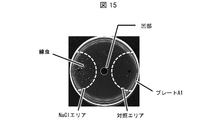
- FIG. 15 shows an example of the test results when using the plate A1
- FIG. 16 shows an example of the test results when using the plate A2.
- a concentric NaCl area centered on the NaCl spot and a concentric control area centered on the control spot were provided on the plate, and nematodes migrating to each area were observed. Observed.
- Each area was set according to a conventionally known nematode chemotaxis test method.
- nematodes were attracted to the NaCl area using either plate A1 or plate A2.
- plate A1 it was found that almost all nematodes migrate to the NaCl area, enabling more accurate testing.
- the present invention can be used for test methods using nematodes.
Landscapes
- Life Sciences & Earth Sciences (AREA)
- Health & Medical Sciences (AREA)
- Chemical & Material Sciences (AREA)
- Engineering & Computer Science (AREA)
- Food Science & Technology (AREA)
- Analytical Chemistry (AREA)
- Urology & Nephrology (AREA)
- Hematology (AREA)
- Biomedical Technology (AREA)
- Medicinal Chemistry (AREA)
- Physics & Mathematics (AREA)
- Molecular Biology (AREA)
- Biochemistry (AREA)
- General Health & Medical Sciences (AREA)
- General Physics & Mathematics (AREA)
- Immunology (AREA)
- Pathology (AREA)
- Investigating Or Analysing Biological Materials (AREA)
- Agricultural Chemicals And Associated Chemicals (AREA)
Priority Applications (1)
| Application Number | Priority Date | Filing Date | Title |
|---|---|---|---|
| JP2022514816A JP7301436B2 (ja) | 2021-03-19 | 2021-10-25 | 試験方法および線虫試験用プレート |
Applications Claiming Priority (2)
| Application Number | Priority Date | Filing Date | Title |
|---|---|---|---|
| JP2021046605 | 2021-03-19 | ||
| JP2021-046605 | 2021-03-19 |
Publications (1)
| Publication Number | Publication Date |
|---|---|
| WO2022195945A1 true WO2022195945A1 (ja) | 2022-09-22 |
Family
ID=83320252
Family Applications (1)
| Application Number | Title | Priority Date | Filing Date |
|---|---|---|---|
| PCT/JP2021/039211 Ceased WO2022195945A1 (ja) | 2021-03-19 | 2021-10-25 | 試験方法および線虫試験用プレート |
Country Status (2)
| Country | Link |
|---|---|
| JP (1) | JP7301436B2 (cg-RX-API-DMAC7.html) |
| WO (1) | WO2022195945A1 (cg-RX-API-DMAC7.html) |
Citations (8)
| Publication number | Priority date | Publication date | Assignee | Title |
|---|---|---|---|---|
| US20160016169A1 (en) * | 2013-03-05 | 2016-01-21 | Board Of Regents, The University Of Texas System | Microfluidic devices for the rapid and automated processing of sample populations |
| WO2016147268A1 (ja) * | 2015-03-13 | 2016-09-22 | 株式会社日立製作所 | 癌検査システム及び癌検査方法 |
| WO2017094066A1 (ja) * | 2015-11-30 | 2017-06-08 | 株式会社日立製作所 | 癌検査システム及び癌検査評価方法 |
| JP2018025432A (ja) * | 2016-08-09 | 2018-02-15 | 株式会社日立製作所 | バッファ吸取装置及びがん解析システム |
| WO2018047959A1 (ja) * | 2016-09-12 | 2018-03-15 | 株式会社Hirotsuバイオサイエンス | 線虫の嗅覚に基づく匂い物質に対する走性行動の評価方法、並びに該評価方法に用いるシャーレおよび行動評価系 |
| JP2018165705A (ja) * | 2017-03-28 | 2018-10-25 | 株式会社プロジェクトセブン | 検査キット |
| WO2019225633A1 (ja) * | 2018-05-24 | 2019-11-28 | 国立研究開発法人量子科学技術研究開発機構 | 生物試料用マイクロチップ、カバー、生物試料封入キットおよび方法 |
| WO2020218501A1 (ja) * | 2019-04-25 | 2020-10-29 | 国立研究開発法人量子科学技術研究開発機構 | 線虫トラップ用プレート、およびその利用 |
-
2021
- 2021-10-25 JP JP2022514816A patent/JP7301436B2/ja active Active
- 2021-10-25 WO PCT/JP2021/039211 patent/WO2022195945A1/ja not_active Ceased
Patent Citations (8)
| Publication number | Priority date | Publication date | Assignee | Title |
|---|---|---|---|---|
| US20160016169A1 (en) * | 2013-03-05 | 2016-01-21 | Board Of Regents, The University Of Texas System | Microfluidic devices for the rapid and automated processing of sample populations |
| WO2016147268A1 (ja) * | 2015-03-13 | 2016-09-22 | 株式会社日立製作所 | 癌検査システム及び癌検査方法 |
| WO2017094066A1 (ja) * | 2015-11-30 | 2017-06-08 | 株式会社日立製作所 | 癌検査システム及び癌検査評価方法 |
| JP2018025432A (ja) * | 2016-08-09 | 2018-02-15 | 株式会社日立製作所 | バッファ吸取装置及びがん解析システム |
| WO2018047959A1 (ja) * | 2016-09-12 | 2018-03-15 | 株式会社Hirotsuバイオサイエンス | 線虫の嗅覚に基づく匂い物質に対する走性行動の評価方法、並びに該評価方法に用いるシャーレおよび行動評価系 |
| JP2018165705A (ja) * | 2017-03-28 | 2018-10-25 | 株式会社プロジェクトセブン | 検査キット |
| WO2019225633A1 (ja) * | 2018-05-24 | 2019-11-28 | 国立研究開発法人量子科学技術研究開発機構 | 生物試料用マイクロチップ、カバー、生物試料封入キットおよび方法 |
| WO2020218501A1 (ja) * | 2019-04-25 | 2020-10-29 | 国立研究開発法人量子科学技術研究開発機構 | 線虫トラップ用プレート、およびその利用 |
Also Published As
| Publication number | Publication date |
|---|---|
| JPWO2022195945A1 (cg-RX-API-DMAC7.html) | 2022-09-22 |
| JP7301436B2 (ja) | 2023-07-03 |
Similar Documents
| Publication | Publication Date | Title |
|---|---|---|
| JP7229582B2 (ja) | 線虫トラップ用プレート、およびその利用 | |
| Metscher | MicroCT for comparative morphology: simple staining methods allow high-contrast 3D imaging of diverse non-mineralized animal tissues | |
| JP5967528B2 (ja) | 生物材料を透明化する方法および生物材料用透明化処理キット | |
| Weber et al. | Multilayer mounting for long-term light sheet microscopy of zebrafish | |
| Sewell | Utilization of lipids during early development of the sea urchin Evechinus chloroticus | |
| Hanson et al. | The effect of some selected pesticides on the growth and reproduction of fresh water Oreochromis niloticus, Chrysicthys nigrodigitatus and Clarias gariepinus | |
| JP6750021B2 (ja) | 線虫の嗅覚に基づく匂い物質に対する走性行動の評価方法、並びに該評価方法に用いるシャーレおよび行動評価系 | |
| JP7301436B2 (ja) | 試験方法および線虫試験用プレート | |
| Jung et al. | Development of a rapid and effective method for preparing delicate dinoflagellates for scanning electron microscopy | |
| Weil et al. | Preparing individual Drosophila egg chambers for live imaging | |
| Millán et al. | Helminth parasites of the Eurasian badger (Meles meles L.) in the Basque Country (Spain) | |
| Fabbrocini et al. | Computerized sperm motility analysis in toxicity bioassays: a new approach to pore water quality assessment | |
| Lewis | The penetration of cuticle by insecticides | |
| Santoro et al. | The discharge of in situ nematocysts of the acontia of Aiptasia mutabilis is a Ca2+-induced response | |
| Li et al. | Bile acids drive chemotaxis of Clonorchis sinensis juveniles to the bile duct | |
| Ramirez-Esquivel et al. | Techniques for investigating the anatomy of the ant visual system | |
| Williams et al. | Adapting techniques for calcium imaging in muscles of adult Brugia malayi | |
| US20240410879A1 (en) | Nematode-sealed capsule, method for producing nematode-sealed capsule, and use of nematode-sealed capsule | |
| Rossi et al. | Transepithelial transport of P-glycoprotein substrate by the Malpighian tubules of the desert locust | |
| DePasquale | Tyrosine phosphatase inhibitor triggers rodlet cell discharge in sunfish scale epidermis cultures | |
| Pennati et al. | Immunohistochemical analysis of adhesive papillae of Clavelina lepadiformis (Müller, 1776) and Clavelina phlegraea (Salfi, 1929)(Tunicata, Ascidiacea) | |
| Arai et al. | Differences in organochlorine accumulation accompanying life history in the catadromous eel Anguilla japonica and the marine eel Conger myriaster | |
| JPWO2023106318A5 (cg-RX-API-DMAC7.html) | ||
| Saini et al. | Histopathological Diagnosis of Parasitic Diseases | |
| Choi et al. | Comparative morphology of the zona radiata in oocytes of Korean bitterlings from the genera Rhodeus, and Acheilognathus (Cyprinidae) |
Legal Events
| Date | Code | Title | Description |
|---|---|---|---|
| ENP | Entry into the national phase |
Ref document number: 2022514816 Country of ref document: JP Kind code of ref document: A |
|
| 121 | Ep: the epo has been informed by wipo that ep was designated in this application |
Ref document number: 21931688 Country of ref document: EP Kind code of ref document: A1 |
|
| NENP | Non-entry into the national phase |
Ref country code: DE |
|
| 122 | Ep: pct application non-entry in european phase |
Ref document number: 21931688 Country of ref document: EP Kind code of ref document: A1 |