WO2022181610A1 - アリトールからd-アルロースを製造する微生物およびそれを用いるd-アルロースの製造方法 - Google Patents
アリトールからd-アルロースを製造する微生物およびそれを用いるd-アルロースの製造方法 Download PDFInfo
- Publication number
- WO2022181610A1 WO2022181610A1 PCT/JP2022/007239 JP2022007239W WO2022181610A1 WO 2022181610 A1 WO2022181610 A1 WO 2022181610A1 JP 2022007239 W JP2022007239 W JP 2022007239W WO 2022181610 A1 WO2022181610 A1 WO 2022181610A1
- Authority
- WO
- WIPO (PCT)
- Prior art keywords
- strain
- allitol
- burkholderia
- allulose
- buttiauxella
- Prior art date
- Legal status (The legal status is an assumption and is not a legal conclusion. Google has not performed a legal analysis and makes no representation as to the accuracy of the status listed.)
- Ceased
Links
Images
Classifications
-
- C—CHEMISTRY; METALLURGY
- C12—BIOCHEMISTRY; BEER; SPIRITS; WINE; VINEGAR; MICROBIOLOGY; ENZYMOLOGY; MUTATION OR GENETIC ENGINEERING
- C12N—MICROORGANISMS OR ENZYMES; COMPOSITIONS THEREOF; PROPAGATING, PRESERVING, OR MAINTAINING MICROORGANISMS; MUTATION OR GENETIC ENGINEERING; CULTURE MEDIA
- C12N1/00—Microorganisms; Compositions thereof; Processes of propagating, maintaining or preserving microorganisms or compositions thereof; Processes of preparing or isolating a composition containing a microorganism; Culture media therefor
- C12N1/20—Bacteria; Culture media therefor
-
- C—CHEMISTRY; METALLURGY
- C12—BIOCHEMISTRY; BEER; SPIRITS; WINE; VINEGAR; MICROBIOLOGY; ENZYMOLOGY; MUTATION OR GENETIC ENGINEERING
- C12P—FERMENTATION OR ENZYME-USING PROCESSES TO SYNTHESISE A DESIRED CHEMICAL COMPOUND OR COMPOSITION OR TO SEPARATE OPTICAL ISOMERS FROM A RACEMIC MIXTURE
- C12P19/00—Preparation of compounds containing saccharide radicals
- C12P19/02—Monosaccharides
Definitions
- the present invention relates to a microorganism capable of producing D-allulose from allitol, and a method for producing D-allulose from allitol using the microorganism.
- reduced starch syrup and reduced palatinose are known as sugar-based sweeteners classified as sugar alcohols. Reduced palatinose does not cause tooth decay and is a low-calorie sweetener.
- Sugar alcohols have various uses, and sugar alcohols having 6 carbon atoms such as sorbitol and mannitol are used for various purposes.
- D-sorbitol which is produced from D-glucose by hydrogenation, is used in many applications such as cosmetics and sweeteners.
- talitol, allitol, iditol, etc. are sugar alcohols (rare sugar alcohols) that rarely exist in nature, but are expected to be used in foods, cosmetics, pharmaceuticals, chemicals, agricultural chemicals, plant growth regulators, etc. sugar. Looking at these examples, sugar alcohols of carbon 6 are expected to be developed into many uses, and research has been started.
- Allitol is a monosaccharide classified as a sugar alcohol, and is a rare sugar alcohol that hardly exists in nature.
- Non-Patent Documents 1 and 2 a biological method has been reported in which microorganisms are used to oxidize and convert allitol to D-allulose. Only two strains have been reported as microorganisms capable of producing D-allulose from allitol.
- An object of the present invention is to provide a novel microorganism that produces D-allulose from allitol.
- the present invention provides a biological method for oxidizing and converting allitol to D-allulose, which is reported to have various useful functions, using the microorganism, as a method for effectively utilizing allitol as a resource.
- the task is to provide
- the present inventors extensively screened microorganisms capable of producing D-allulose from allitol by searching a soil library for microorganisms with high oxidizing activity for allitol.
- the present invention was completed by finding and identifying a microorganism that produces D-allulose at a high yield from among them.
- microorganisms that can produce D-allulose from allitol when brought into contact with an aqueous solution containing allitol.
- it belongs to the genus Burkholderia, the genus Enterobacter, the genus Agrobacterium, the genus Buttiauxella, and the genus Lelliottia, and has the ability to produce D-allulose from allitol.
- a bacterium was searched for, and it was confirmed that this bacterium produces D-allulose in high yield.
- the present invention relates to a novel microorganism capable of producing D-allulose from allitol, and also to a method for producing D-allulose from allitol using the microorganism.
- Burkholderia the genus Enterobacter, the genus Agrobacterium, the genus Buttiauxella, and the genus Lelliottia, and relates to a method using a bacterium having the ability to produce D-allulose from allitol.
- the microorganism has the ability to convert D-talitol that may be mixed in the process of producing allitol by reducing D-allulose with hydrogen under high temperature and pressure under a metal catalyst. Preferably not.
- the present invention relates to the following methods (1) to (6) for producing D-allulose from allitol.
- a microorganism selected from the group consisting of bacteria belonging to the genus Burkholderia, Enterobacter, Agrobacterium, Buttiauxella, and Lelliottia A method for producing D-allulose from raw material allitol, using a microorganism capable of producing D-allulose from allitol.
- the microorganism does not have the ability to convert D-talitol.
- the microorganism is Burkholderia lata, Burkholderia multivorans, Burkholderia diffusa, Enterobacter hormaechei, Enterobacter solibacter ), Agrobacterium pusense, Buttiauxella brennerae, Butiauxella sp. (Buttiauxella sp.) and Lelliottia jeotgali bacterial species.
- the present invention also relates to the following (7) and (8) microorganisms capable of producing D-allulose from allitol, and (9) a culture capable of producing D-allulose from allitol.
- a microorganism capable of producing D-allulose from allitol selected from the group consisting of the bacterial species Buttiauxella sp. and Lelliottia jeotgali.
- microorganism according to (7) above which is selected from (9) A culture comprising the microorganism described in (7) or (8) above and a medium and capable of producing D-allulose from allitol.
- a novel microorganism capable of producing D-allulose from allitol can be provided, and it is possible not only to recycle allyltol that is no longer needed, but also to promote reuse activities for effective recycling of resources. can.
- D-allulose, for which various useful functions have been reported can be easily and inexpensively produced by a biological method using allitol, whose useful functions have not yet been elucidated, as a starting material.
- the method of the present invention for producing D-allulose using the oxidation reaction of bacteria is an environmentally friendly method. Since it can be produced by an oxidation reaction using , it is a more economical method than the enzymatic reaction method, and it is a method that can efficiently produce D-allulose from allitol, which could not be realized by organic chemical methods.
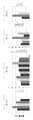
- FIG. 4 is a diagram showing the relative values of the amount of conversion from allitol to D-allulose by each microorganism under secondary screening conditions A to D.
- the present inventors used a soil library to search for microorganisms capable of producing D-allulose from allitol upon contact with an aqueous solution containing allitol.
- the microorganism capable of producing D-allulose from allitol of the present invention may be any microorganism capable of producing D-allulose in contact with an aqueous solution containing allitol. ), the genus Enterobacter, the genus Agrobacterium, the genus Buttiauxella, and the genus Lelliottia, or a bacterium belonging to the genus Lelliottia, or a mutant strain thereof, for producing D-allulose from allitol Microorganisms are preferred.
- bacteria of the genus Burkholderia having the ability to produce D-allulose from allitol can be used as long as they have the ability.
- Bacterial species of the genus Burkholderia that have that ability include, for example, Burkholderia lata, Burkholderia multivorans, Burkholderia diffusa, and the like.
- Burkholderia rata Y534-1 3 strains
- Burkholderia rata U459-1-1 1 strain
- Burkholderia martevorans Y488-4 4 strains
- Burkholderia rata Y488-4 4 strains
- Burkholderia malteivorans Y555-2d 2 strains
- Burkholderia diffusa Y452-1 3 strains were established in Kisarazu City, Chiba Prefecture on February 16, 2021.
- each strain was internationally deposited on February 1, 2022 under the accession numbers NITE BP-03413, NITE BP-03410, NITE BP-03412, NITE BP-03408, NITE BP-03414, and NITE BP-03411. .
- Bacteria belonging to the genus Enterobacter having the ability to produce D-allulose from allitol can be used as long as the bacteria belonging to the genus Enterobacter have the ability.
- Bacterial species of the genus Enterobacter having that ability include, for example, Enterobacter hormaechei, Enterobacter soli, and the like.
- bacteria belonging to the genus Agrobacterium, the genus Buttiauxella, and the genus Leliotia which have the ability to produce D-allulose from allitol, are bacteria of the genus Agrobacterium, the genus Buttiauxella, and the genus Leliotia can be used if Bacterial species of the genera Agrobacterium, Butiauxella, and Reliotheia that have that ability include, for example, Agrobacterium pusense, Buttiauxella brennerae, Butiauxella sp. (Buttiauxella sp.) and Lelliottia jeotgali.
- Butiauchera brenerae BCr16-1-3 strain, Butiauxera sp. BCr16-1-1 strain, Reliotheia Geogari NH309-4 strain, Reliotheia Geogari Ou92-1-1 strain, and Reliotheia Geogari T33-1 strain were each released on February 16, 2021 at 2-5 Kazusa Kamatari, Kisarazu City, Chiba Prefecture. Deposited at the National Institute of Technology and Evaluation Patent Microorganisms Depositary Center located in -8 and received as receipt numbers NITE AP-03404, NITE AP-03403, NITE AP-03406, NITE AP-03407, and NITE AP-03409 respectively was done.
- each strain was deposited on April 30, 2021 under accession numbers NITE P-03404, NITE P-03403, NITE P-03406, NITE P-03407, and NITE P-03409, respectively. Furthermore, each strain was internationally deposited on February 1, 2022 under the accession numbers NITE BP-03404, NITE BP-03403, NITE BP-03406, NITE BP-03407, and NITE BP-03409.
- these bacteria are first cultured in a normal nutrient medium, preferably under aerobic conditions such as shaking and aeration stirring to grow them. During cultivation or using the obtained viable cells, allitol in the aqueous solution is converted to D-allulose, and the produced D-allulose is collected.
- the bacteria used for oxidizing D-allulose can utilize it in the culture medium.
- Burkholderia lata Y534-1 3 strains
- Burkholderia lata U459-1-1 1 strain
- Burkholderia multivorans Y488-4 4 strains
- Burkholderia multivorans S332-4 1 strain
- Burkholderia multivorans Y555-2d 2 strains
- Burkholderia diffusa Y452-1 3 strains
- Enterobacter hormaechei strain BCr11-1 Enterobacter hormaechei strain BCr11-2
- Enterobacter soli BDr27-1 strain Agrobacterium Agrobacterium 1 Braceni5-1 Caprenu5 strain
- BCr16-1-1 strain Lelliottia jeotgali strain NH309-4, Lelliottia jeotgali Ou92-1-1 strain, and Lelliottia jeotgali T33 strain selected from , a culture capable of producing D-allulose from allitol, comprising a medium and a microorganism that selectively produces D-allulose from allitol.
- a culture capable of producing D-allulose from allitol comprising a medium and a microorganism that selectively produces D-allulose from allitol.
- live cells separated from the culture medium and dried cells live cells separated from the culture medium and dried cells.
- a nutrient medium preferably a liquid medium, containing nutrients required by these bacteria, such as a carbon source, a nitrogen source, inorganic salts, yeast extract, etc.
- Bacteria are inoculated and cultured under aerobic conditions at a temperature of 20-40° C. for 1-10 days.
- the viable cells obtained by such a culture method are brought into contact with an aqueous solution containing allitol, preferably under predetermined conditions such as shaking, aeration and agitation, and injection of oxygen to convert allitol into D-allulose.
- an aqueous solution containing allitol preferably under predetermined conditions such as shaking, aeration and agitation, and injection of oxygen to convert allitol into D-allulose.
- the aqueous solution containing D-allulose produced and accumulated by the various methods described above is separated from insoluble matter such as bacterial cells by an appropriate separation method such as centrifugation and filtration, and collected.
- the resulting D-allulose aqueous solution can be purified, for example, by a method such as treatment with activated carbon or treatment with an ion-exchange resin, if necessary, and concentrated to obtain a syrup-like or crystalline D-allulose product. .
- D-allulose can be obtained with a maximum yield of 20 w/w% with respect to allitol as a raw material, so it is suitable as an industrial production method.
- D-allulose can be supplied in large quantities at low cost.
- Conditions A and C Cells cultured at 30°C on TSB agar medium were suspended in 0.5% allitol solution under condition A and in 10% allitol solution under condition C, and shaken at 30°C for 24 hours. , was evaluated using HPLC for the conversion of allitol to D-allulose.
- Conditions B and D Each microorganism was planted in a yeast extract liquid medium containing 10% allitol under condition B and 5% allitol under condition D, and cultured with shaking at 30°C for 24 hours. was evaluated using HPLC.
- the reference numbers of the 15 highly active strains are A06, A12, A17, A29, A39, A54, A90, A173, A201, A324, A325, A335, A354, A355, A358, and the control low-active strain
- the numbers are A44, A119, A162, A219, A322, A363 and A419.
- FIG. 1 shows the qualitative evaluation results of the strains obtained as these highly active strains and the low-active strains used as controls. Relative activity in % is shown.
- condition B and condition C screening A335 Agrobacterium pusense BCr15-1 strain
- condition D screen A201 Lelliottia jeotgali Ou92-1-1 strain was the most active strain.
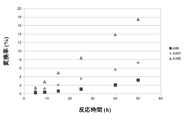
- Each strain was cultured at 30 ° C. in a yeast extract liquid medium, washed with a phosphate buffer, and added to a solution of 10% allitol and phosphate buffer (pH 7.0) with a turbidity of 20. and shaken at 30° C., and aliquots of the reaction were taken at 5, 9, 15, 25, 40, and 50 hours.
- Each reaction solution was centrifuged to remove the cells, desalted and filtered, and the product was confirmed by HPLC to evaluate the conversion of allitol to D-allulose.
- allitol and D-allulose were separated and quantified by HPLC using a GL-C611 column.
- the present invention facilitates the production of D-allulose from allitol by a biological method using the novel microorganism of the present invention, which was difficult to obtain at a predetermined ratio by conventional organic chemical techniques. It establishes the method. Therefore, the method of the present invention is suitable as a biological production method for D-allulose, and the novel microorganism of the present invention is useful as a microorganism used in that method.
Landscapes
- Chemical & Material Sciences (AREA)
- Life Sciences & Earth Sciences (AREA)
- Engineering & Computer Science (AREA)
- Organic Chemistry (AREA)
- Health & Medical Sciences (AREA)
- Zoology (AREA)
- Wood Science & Technology (AREA)
- Genetics & Genomics (AREA)
- Biotechnology (AREA)
- Bioinformatics & Cheminformatics (AREA)
- General Engineering & Computer Science (AREA)
- Microbiology (AREA)
- Biochemistry (AREA)
- General Health & Medical Sciences (AREA)
- Biomedical Technology (AREA)
- Virology (AREA)
- Tropical Medicine & Parasitology (AREA)
- Medicinal Chemistry (AREA)
- Chemical Kinetics & Catalysis (AREA)
- General Chemical & Material Sciences (AREA)
- Micro-Organisms Or Cultivation Processes Thereof (AREA)
Priority Applications (1)
| Application Number | Priority Date | Filing Date | Title |
|---|---|---|---|
| JP2023502437A JPWO2022181610A1 (https=) | 2021-02-26 | 2022-02-22 |
Applications Claiming Priority (2)
| Application Number | Priority Date | Filing Date | Title |
|---|---|---|---|
| JP2021-030793 | 2021-02-26 | ||
| JP2021030793 | 2021-02-26 |
Publications (1)
| Publication Number | Publication Date |
|---|---|
| WO2022181610A1 true WO2022181610A1 (ja) | 2022-09-01 |
Family
ID=83048180
Family Applications (1)
| Application Number | Title | Priority Date | Filing Date |
|---|---|---|---|
| PCT/JP2022/007239 Ceased WO2022181610A1 (ja) | 2021-02-26 | 2022-02-22 | アリトールからd-アルロースを製造する微生物およびそれを用いるd-アルロースの製造方法 |
Country Status (2)
| Country | Link |
|---|---|
| JP (1) | JPWO2022181610A1 (https=) |
| WO (1) | WO2022181610A1 (https=) |
Citations (2)
| Publication number | Priority date | Publication date | Assignee | Title |
|---|---|---|---|---|
| JPH0856659A (ja) * | 1994-08-20 | 1996-03-05 | Hayashibara Biochem Lab Inc | リビトール脱水素酵素とその製造方法並びに用途 |
| WO2008062570A1 (en) * | 2006-11-20 | 2008-05-29 | National University Corporation Kagawa University | Microorganism capable of producing deoxy polyol dehydrogenase and utilization of the same |
-
2022
- 2022-02-22 JP JP2023502437A patent/JPWO2022181610A1/ja active Pending
- 2022-02-22 WO PCT/JP2022/007239 patent/WO2022181610A1/ja not_active Ceased
Patent Citations (2)
| Publication number | Priority date | Publication date | Assignee | Title |
|---|---|---|---|---|
| JPH0856659A (ja) * | 1994-08-20 | 1996-03-05 | Hayashibara Biochem Lab Inc | リビトール脱水素酵素とその製造方法並びに用途 |
| WO2008062570A1 (en) * | 2006-11-20 | 2008-05-29 | National University Corporation Kagawa University | Microorganism capable of producing deoxy polyol dehydrogenase and utilization of the same |
Non-Patent Citations (3)
| Title |
|---|
| LU FUZHI; XU WEI; ZHANG WENLI; GUANG CUIE; MU WANMENG: "Polyol dehydrogenases: intermediate role in the bioconversion of rare sugars and alcohols", APPLIED MICROBIOLOGY AND BIOTECHNOLOGY, SPRINGER BERLIN HEIDELBERG, BERLIN/HEIDELBERG, vol. 103, no. 16, 2 July 2019 (2019-07-02), Berlin/Heidelberg, pages 6473 - 6481, XP036847529, ISSN: 0175-7598, DOI: 10.1007/s00253-019-09980-z * |
| POONPERM, W. TAKATA, G. ANDO, Y. SAHACHAISAREE, V. LUMYONG, P. LUMYONG, S. IZUMORI, K.: "Efficient conversion of allitol to d-psicose by Bacillus pallidus Y25", JOURNAL OF BIOSCIENCE AND BIOENGINEERING, ELSEVIER, AMSTERDAM, NL, vol. 103, no. 3, 1 March 2007 (2007-03-01), NL , pages 282 - 285, XP022028175, ISSN: 1389-1723, DOI: 10.1263/jbb.103.282 * |
| PUSHPAKIRAN GULLAPALLI, TAKATA GORO, POONPERM WAYOON, RAO DEVENDAR, MORIMOTO KENJI, AKIMITSU KAZUYA, TAJIMA SHIGEYUKI, IZUMORI KEN: "Bioproduction of D-Psicose from Allitol with Enterobacter aerogenes IK7: A New Frontier in Rare Ketose Production", BIOSCIENCE, BIOTECHNOLOGY, AND BIOCHEMISTRY, JAPAN SOCIETY FOR BIOSCIENCE, BIOTECHNOLOGY, AND AGROCHEMISTRY, JP, vol. 71, no. 12, 1 January 2007 (2007-01-01), JP , pages 3048 - 3054, XP055354147, ISSN: 0916-8451, DOI: 10.1271/bbb.70450 * |
Also Published As
| Publication number | Publication date |
|---|---|
| JPWO2022181610A1 (https=) | 2022-09-01 |
Similar Documents
| Publication | Publication Date | Title |
|---|---|---|
| Mostafa et al. | Magnetite/graphene oxide nano-composite for enhancement of hydrogen production from gelatinaceous wastewater | |
| CA2653028C (en) | Method for the enzymatic production of 2-hydroxy-2-methyl carboxylic acids | |
| Jianlong et al. | Production of citric acid from molasses integrated with in-situ product separation by ion-exchange resin adsorption | |
| Zeng et al. | Non-sterilized fermentative co-production of poly (γ-glutamic acid) and fibrinolytic enzyme by a thermophilic Bacillus subtilis GXA-28 | |
| Colak et al. | The use of raw cheese whey and olive oil mill wastewater for rhamnolipid production by recombinant Pseudomonas aeruginosa | |
| CN101679936B (zh) | 通过葡糖醛酸发酵来制造葡糖醛酸的方法 | |
| Chandani et al. | Production of polyhydroxybutyrate (biopolymer) by Bacillus tequilensis NCS-3 isolated from municipal waste areas of Silchar, Assam | |
| Saha et al. | Isolation and identification of amylolytic bacteria from garbage and garden soil | |
| JP7197086B2 (ja) | D-アルロースからアリトールおよびd-タリトールを製造する微生物およびそれを用いるアリトールおよびd-タリトールの製造方法 | |
| WO2022181610A1 (ja) | アリトールからd-アルロースを製造する微生物およびそれを用いるd-アルロースの製造方法 | |
| Al-Deresawi | Isolation and characterization of fermenting bacterial isolates from vinegar industry waste in local markets of Wasit Province | |
| CN114606278B (zh) | 一种利用甲基杆菌催化合成2,5-呋喃二甲酸的方法 | |
| KR102688445B1 (ko) | 신규 미생물 바실러스 서브틸리스 ijk1-4 균주 및 이의 용도 | |
| JP2579595B2 (ja) | 新規微生物および該微生物を用いた2,6−ナフタレンジカルボン酸の製造法 | |
| KR100549404B1 (ko) | 엔도설판의 분해에 유용한 클레브시엘라 옥시토카 ke-8균주 | |
| KR100235935B1 (ko) | 유기성 폐기물과 석회질을 이용한 저공해 제설제 및 이의 제조방법 | |
| Zusfahair et al. | Amylase from bacillus thuringiensis isolated from tapioca waste: isolation, partial purification and characterization | |
| El-Refai et al. | Application of multi-factorial experimental designs for optimization of biotin production by a Rhizopus nigricans strain | |
| CN101448949B (zh) | 酶促制备2-羟基-2-甲基羧酸的方法 | |
| CN103834600A (zh) | 一种催化合成丙烯酰胺的光敏性腈水合酶菌株的发酵方法 | |
| JP2715260B2 (ja) | 新規緑藻類、新規酵母および該緑藻類又は該酵母を用いた2,6−ナフタレンジカルボン酸の製造法 | |
| Balamurugan et al. | Isolation and Identification of Amylase Producing Bacteria from Mangrove Sediment, Vellar Estuary, Parangipettai. | |
| John et al. | Genome shuffling: A new trend in improved bacterial production of lactic acid | |
| Lefaida et al. | Diversity of actinobacteria in eastern Algeria's hot springs: insights into their amylase, protease and lipase production | |
| KR101239178B1 (ko) | 푸마르산 고생산성 변이 균주, 이의 제조 방법 및 이를 이용한 푸마르산의 생산 방법 |
Legal Events
| Date | Code | Title | Description |
|---|---|---|---|
| 121 | Ep: the epo has been informed by wipo that ep was designated in this application |
Ref document number: 22759646 Country of ref document: EP Kind code of ref document: A1 |
|
| ENP | Entry into the national phase |
Ref document number: 2023502437 Country of ref document: JP Kind code of ref document: A |
|
| NENP | Non-entry into the national phase |
Ref country code: DE |
|
| 122 | Ep: pct application non-entry in european phase |
Ref document number: 22759646 Country of ref document: EP Kind code of ref document: A1 |