WO2022176553A1 - 電池容器用鋼箔及びそれにより製造されるパウチ型電池容器 - Google Patents
電池容器用鋼箔及びそれにより製造されるパウチ型電池容器 Download PDFInfo
- Publication number
- WO2022176553A1 WO2022176553A1 PCT/JP2022/003010 JP2022003010W WO2022176553A1 WO 2022176553 A1 WO2022176553 A1 WO 2022176553A1 JP 2022003010 W JP2022003010 W JP 2022003010W WO 2022176553 A1 WO2022176553 A1 WO 2022176553A1
- Authority
- WO
- WIPO (PCT)
- Prior art keywords
- steel foil
- battery container
- battery
- weight
- base material
- Prior art date
- Legal status (The legal status is an assumption and is not a legal conclusion. Google has not performed a legal analysis and makes no representation as to the accuracy of the status listed.)
- Ceased
Links
Images
Classifications
-
- B—PERFORMING OPERATIONS; TRANSPORTING
- B21—MECHANICAL METAL-WORKING WITHOUT ESSENTIALLY REMOVING MATERIAL; PUNCHING METAL
- B21B—ROLLING OF METAL
- B21B1/00—Metal-rolling methods or mills for making semi-finished products of solid or profiled cross-section; Sequence of operations in milling trains; Layout of rolling-mill plant, e.g. grouping of stands; Succession of passes or of sectional pass alternations
- B21B1/40—Metal-rolling methods or mills for making semi-finished products of solid or profiled cross-section; Sequence of operations in milling trains; Layout of rolling-mill plant, e.g. grouping of stands; Succession of passes or of sectional pass alternations for rolling foils which present special problems, e.g. because of thinness
-
- B—PERFORMING OPERATIONS; TRANSPORTING
- B32—LAYERED PRODUCTS
- B32B—LAYERED PRODUCTS, i.e. PRODUCTS BUILT-UP OF STRATA OF FLAT OR NON-FLAT, e.g. CELLULAR OR HONEYCOMB, FORM
- B32B15/00—Layered products comprising a layer of metal
- B32B15/01—Layered products comprising a layer of metal all layers being exclusively metallic
- B32B15/013—Layered products comprising a layer of metal all layers being exclusively metallic one layer being formed of an iron alloy or steel, another layer being formed of a metal other than iron or aluminium
-
- C—CHEMISTRY; METALLURGY
- C21—METALLURGY OF IRON
- C21D—MODIFYING THE PHYSICAL STRUCTURE OF FERROUS METALS; GENERAL DEVICES FOR HEAT TREATMENT OF FERROUS OR NON-FERROUS METALS OR ALLOYS; MAKING METAL MALLEABLE, e.g. BY DECARBURISATION OR TEMPERING
- C21D6/00—Heat treatment of ferrous alloys
- C21D6/005—Heat treatment of ferrous alloys containing Mn
-
- C—CHEMISTRY; METALLURGY
- C21—METALLURGY OF IRON
- C21D—MODIFYING THE PHYSICAL STRUCTURE OF FERROUS METALS; GENERAL DEVICES FOR HEAT TREATMENT OF FERROUS OR NON-FERROUS METALS OR ALLOYS; MAKING METAL MALLEABLE, e.g. BY DECARBURISATION OR TEMPERING
- C21D6/00—Heat treatment of ferrous alloys
- C21D6/008—Heat treatment of ferrous alloys containing Si
-
- C—CHEMISTRY; METALLURGY
- C21—METALLURGY OF IRON
- C21D—MODIFYING THE PHYSICAL STRUCTURE OF FERROUS METALS; GENERAL DEVICES FOR HEAT TREATMENT OF FERROUS OR NON-FERROUS METALS OR ALLOYS; MAKING METAL MALLEABLE, e.g. BY DECARBURISATION OR TEMPERING
- C21D8/00—Modifying the physical properties of ferrous metals or ferrous alloys by deformation combined with, or followed by, heat treatment
- C21D8/02—Modifying the physical properties of ferrous metals or ferrous alloys by deformation combined with, or followed by, heat treatment during manufacturing of plates or strips
- C21D8/0221—Modifying the physical properties of ferrous metals or ferrous alloys by deformation combined with, or followed by, heat treatment during manufacturing of plates or strips characterised by the working steps
- C21D8/0236—Cold rolling
-
- C—CHEMISTRY; METALLURGY
- C21—METALLURGY OF IRON
- C21D—MODIFYING THE PHYSICAL STRUCTURE OF FERROUS METALS; GENERAL DEVICES FOR HEAT TREATMENT OF FERROUS OR NON-FERROUS METALS OR ALLOYS; MAKING METAL MALLEABLE, e.g. BY DECARBURISATION OR TEMPERING
- C21D8/00—Modifying the physical properties of ferrous metals or ferrous alloys by deformation combined with, or followed by, heat treatment
- C21D8/02—Modifying the physical properties of ferrous metals or ferrous alloys by deformation combined with, or followed by, heat treatment during manufacturing of plates or strips
- C21D8/0278—Modifying the physical properties of ferrous metals or ferrous alloys by deformation combined with, or followed by, heat treatment during manufacturing of plates or strips involving a particular surface treatment
-
- C—CHEMISTRY; METALLURGY
- C21—METALLURGY OF IRON
- C21D—MODIFYING THE PHYSICAL STRUCTURE OF FERROUS METALS; GENERAL DEVICES FOR HEAT TREATMENT OF FERROUS OR NON-FERROUS METALS OR ALLOYS; MAKING METAL MALLEABLE, e.g. BY DECARBURISATION OR TEMPERING
- C21D9/00—Heat treatment, e.g. annealing, hardening, quenching or tempering, adapted for particular articles; Furnaces therefor
- C21D9/46—Heat treatment, e.g. annealing, hardening, quenching or tempering, adapted for particular articles; Furnaces therefor for sheet metals
-
- C—CHEMISTRY; METALLURGY
- C22—METALLURGY; FERROUS OR NON-FERROUS ALLOYS; TREATMENT OF ALLOYS OR NON-FERROUS METALS
- C22C—ALLOYS
- C22C38/00—Ferrous alloys, e.g. steel alloys
- C22C38/002—Ferrous alloys, e.g. steel alloys containing In, Mg, or other elements not provided for in one single group C22C38/001 - C22C38/60
-
- C—CHEMISTRY; METALLURGY
- C22—METALLURGY; FERROUS OR NON-FERROUS ALLOYS; TREATMENT OF ALLOYS OR NON-FERROUS METALS
- C22C—ALLOYS
- C22C38/00—Ferrous alloys, e.g. steel alloys
- C22C38/004—Very low carbon steels, i.e. having a carbon content of less than 0,01%
-
- C—CHEMISTRY; METALLURGY
- C22—METALLURGY; FERROUS OR NON-FERROUS ALLOYS; TREATMENT OF ALLOYS OR NON-FERROUS METALS
- C22C—ALLOYS
- C22C38/00—Ferrous alloys, e.g. steel alloys
- C22C38/008—Ferrous alloys, e.g. steel alloys containing tin
-
- C—CHEMISTRY; METALLURGY
- C22—METALLURGY; FERROUS OR NON-FERROUS ALLOYS; TREATMENT OF ALLOYS OR NON-FERROUS METALS
- C22C—ALLOYS
- C22C38/00—Ferrous alloys, e.g. steel alloys
- C22C38/02—Ferrous alloys, e.g. steel alloys containing silicon
-
- C—CHEMISTRY; METALLURGY
- C22—METALLURGY; FERROUS OR NON-FERROUS ALLOYS; TREATMENT OF ALLOYS OR NON-FERROUS METALS
- C22C—ALLOYS
- C22C38/00—Ferrous alloys, e.g. steel alloys
- C22C38/04—Ferrous alloys, e.g. steel alloys containing manganese
-
- C—CHEMISTRY; METALLURGY
- C22—METALLURGY; FERROUS OR NON-FERROUS ALLOYS; TREATMENT OF ALLOYS OR NON-FERROUS METALS
- C22C—ALLOYS
- C22C38/00—Ferrous alloys, e.g. steel alloys
- C22C38/06—Ferrous alloys, e.g. steel alloys containing aluminium
-
- C—CHEMISTRY; METALLURGY
- C22—METALLURGY; FERROUS OR NON-FERROUS ALLOYS; TREATMENT OF ALLOYS OR NON-FERROUS METALS
- C22C—ALLOYS
- C22C38/00—Ferrous alloys, e.g. steel alloys
- C22C38/08—Ferrous alloys, e.g. steel alloys containing nickel
-
- C—CHEMISTRY; METALLURGY
- C22—METALLURGY; FERROUS OR NON-FERROUS ALLOYS; TREATMENT OF ALLOYS OR NON-FERROUS METALS
- C22C—ALLOYS
- C22C38/00—Ferrous alloys, e.g. steel alloys
- C22C38/12—Ferrous alloys, e.g. steel alloys containing tungsten, tantalum, molybdenum, vanadium, or niobium
-
- C—CHEMISTRY; METALLURGY
- C22—METALLURGY; FERROUS OR NON-FERROUS ALLOYS; TREATMENT OF ALLOYS OR NON-FERROUS METALS
- C22C—ALLOYS
- C22C38/00—Ferrous alloys, e.g. steel alloys
- C22C38/14—Ferrous alloys, e.g. steel alloys containing titanium or zirconium
-
- C—CHEMISTRY; METALLURGY
- C22—METALLURGY; FERROUS OR NON-FERROUS ALLOYS; TREATMENT OF ALLOYS OR NON-FERROUS METALS
- C22C—ALLOYS
- C22C38/00—Ferrous alloys, e.g. steel alloys
- C22C38/16—Ferrous alloys, e.g. steel alloys containing copper
-
- C—CHEMISTRY; METALLURGY
- C22—METALLURGY; FERROUS OR NON-FERROUS ALLOYS; TREATMENT OF ALLOYS OR NON-FERROUS METALS
- C22C—ALLOYS
- C22C38/00—Ferrous alloys, e.g. steel alloys
- C22C38/18—Ferrous alloys, e.g. steel alloys containing chromium
-
- C—CHEMISTRY; METALLURGY
- C25—ELECTROLYTIC OR ELECTROPHORETIC PROCESSES; APPARATUS THEREFOR
- C25D—PROCESSES FOR THE ELECTROLYTIC OR ELECTROPHORETIC PRODUCTION OF COATINGS; ELECTROFORMING; APPARATUS THEREFOR
- C25D5/00—Electroplating characterised by the process; Pretreatment or after-treatment of workpieces
- C25D5/34—Pretreatment of metallic surfaces to be electroplated
- C25D5/36—Pretreatment of metallic surfaces to be electroplated of iron or steel
-
- C—CHEMISTRY; METALLURGY
- C25—ELECTROLYTIC OR ELECTROPHORETIC PROCESSES; APPARATUS THEREFOR
- C25D—PROCESSES FOR THE ELECTROLYTIC OR ELECTROPHORETIC PRODUCTION OF COATINGS; ELECTROFORMING; APPARATUS THEREFOR
- C25D7/00—Electroplating characterised by the article coated
- C25D7/06—Wires; Strips; Foils
- C25D7/0614—Strips or foils
-
- H—ELECTRICITY
- H01—ELECTRIC ELEMENTS
- H01M—PROCESSES OR MEANS, e.g. BATTERIES, FOR THE DIRECT CONVERSION OF CHEMICAL ENERGY INTO ELECTRICAL ENERGY
- H01M50/00—Constructional details or processes of manufacture of the non-active parts of electrochemical cells other than fuel cells, e.g. hybrid cells
- H01M50/10—Primary casings; Jackets or wrappings
-
- H—ELECTRICITY
- H01—ELECTRIC ELEMENTS
- H01M—PROCESSES OR MEANS, e.g. BATTERIES, FOR THE DIRECT CONVERSION OF CHEMICAL ENERGY INTO ELECTRICAL ENERGY
- H01M50/00—Constructional details or processes of manufacture of the non-active parts of electrochemical cells other than fuel cells, e.g. hybrid cells
- H01M50/10—Primary casings; Jackets or wrappings
- H01M50/102—Primary casings; Jackets or wrappings characterised by their shape or physical structure
- H01M50/105—Pouches or flexible bags
-
- H—ELECTRICITY
- H01—ELECTRIC ELEMENTS
- H01M—PROCESSES OR MEANS, e.g. BATTERIES, FOR THE DIRECT CONVERSION OF CHEMICAL ENERGY INTO ELECTRICAL ENERGY
- H01M50/00—Constructional details or processes of manufacture of the non-active parts of electrochemical cells other than fuel cells, e.g. hybrid cells
- H01M50/10—Primary casings; Jackets or wrappings
- H01M50/116—Primary casings; Jackets or wrappings characterised by the material
- H01M50/117—Inorganic material
- H01M50/119—Metals
-
- H—ELECTRICITY
- H01—ELECTRIC ELEMENTS
- H01M—PROCESSES OR MEANS, e.g. BATTERIES, FOR THE DIRECT CONVERSION OF CHEMICAL ENERGY INTO ELECTRICAL ENERGY
- H01M50/00—Constructional details or processes of manufacture of the non-active parts of electrochemical cells other than fuel cells, e.g. hybrid cells
- H01M50/10—Primary casings; Jackets or wrappings
- H01M50/116—Primary casings; Jackets or wrappings characterised by the material
- H01M50/121—Organic material
-
- H—ELECTRICITY
- H01—ELECTRIC ELEMENTS
- H01M—PROCESSES OR MEANS, e.g. BATTERIES, FOR THE DIRECT CONVERSION OF CHEMICAL ENERGY INTO ELECTRICAL ENERGY
- H01M50/00—Constructional details or processes of manufacture of the non-active parts of electrochemical cells other than fuel cells, e.g. hybrid cells
- H01M50/10—Primary casings; Jackets or wrappings
- H01M50/116—Primary casings; Jackets or wrappings characterised by the material
- H01M50/124—Primary casings; Jackets or wrappings characterised by the material having a layered structure
-
- H—ELECTRICITY
- H01—ELECTRIC ELEMENTS
- H01M—PROCESSES OR MEANS, e.g. BATTERIES, FOR THE DIRECT CONVERSION OF CHEMICAL ENERGY INTO ELECTRICAL ENERGY
- H01M50/00—Constructional details or processes of manufacture of the non-active parts of electrochemical cells other than fuel cells, e.g. hybrid cells
- H01M50/10—Primary casings; Jackets or wrappings
- H01M50/116—Primary casings; Jackets or wrappings characterised by the material
- H01M50/124—Primary casings; Jackets or wrappings characterised by the material having a layered structure
- H01M50/1245—Primary casings; Jackets or wrappings characterised by the material having a layered structure characterised by the external coating on the casing
-
- H—ELECTRICITY
- H01—ELECTRIC ELEMENTS
- H01M—PROCESSES OR MEANS, e.g. BATTERIES, FOR THE DIRECT CONVERSION OF CHEMICAL ENERGY INTO ELECTRICAL ENERGY
- H01M50/00—Constructional details or processes of manufacture of the non-active parts of electrochemical cells other than fuel cells, e.g. hybrid cells
- H01M50/10—Primary casings; Jackets or wrappings
- H01M50/116—Primary casings; Jackets or wrappings characterised by the material
- H01M50/124—Primary casings; Jackets or wrappings characterised by the material having a layered structure
- H01M50/126—Primary casings; Jackets or wrappings characterised by the material having a layered structure comprising three or more layers
-
- H—ELECTRICITY
- H01—ELECTRIC ELEMENTS
- H01M—PROCESSES OR MEANS, e.g. BATTERIES, FOR THE DIRECT CONVERSION OF CHEMICAL ENERGY INTO ELECTRICAL ENERGY
- H01M50/00—Constructional details or processes of manufacture of the non-active parts of electrochemical cells other than fuel cells, e.g. hybrid cells
- H01M50/10—Primary casings; Jackets or wrappings
- H01M50/116—Primary casings; Jackets or wrappings characterised by the material
- H01M50/124—Primary casings; Jackets or wrappings characterised by the material having a layered structure
- H01M50/126—Primary casings; Jackets or wrappings characterised by the material having a layered structure comprising three or more layers
- H01M50/128—Primary casings; Jackets or wrappings characterised by the material having a layered structure comprising three or more layers with two or more layers of only inorganic material
-
- H—ELECTRICITY
- H01—ELECTRIC ELEMENTS
- H01M—PROCESSES OR MEANS, e.g. BATTERIES, FOR THE DIRECT CONVERSION OF CHEMICAL ENERGY INTO ELECTRICAL ENERGY
- H01M50/00—Constructional details or processes of manufacture of the non-active parts of electrochemical cells other than fuel cells, e.g. hybrid cells
- H01M50/10—Primary casings; Jackets or wrappings
- H01M50/116—Primary casings; Jackets or wrappings characterised by the material
- H01M50/124—Primary casings; Jackets or wrappings characterised by the material having a layered structure
- H01M50/126—Primary casings; Jackets or wrappings characterised by the material having a layered structure comprising three or more layers
- H01M50/129—Primary casings; Jackets or wrappings characterised by the material having a layered structure comprising three or more layers with two or more layers of only organic material
-
- H—ELECTRICITY
- H01—ELECTRIC ELEMENTS
- H01M—PROCESSES OR MEANS, e.g. BATTERIES, FOR THE DIRECT CONVERSION OF CHEMICAL ENERGY INTO ELECTRICAL ENERGY
- H01M50/00—Constructional details or processes of manufacture of the non-active parts of electrochemical cells other than fuel cells, e.g. hybrid cells
- H01M50/10—Primary casings; Jackets or wrappings
- H01M50/131—Primary casings; Jackets or wrappings characterised by physical properties, e.g. gas permeability, size or heat resistance
-
- H—ELECTRICITY
- H01—ELECTRIC ELEMENTS
- H01M—PROCESSES OR MEANS, e.g. BATTERIES, FOR THE DIRECT CONVERSION OF CHEMICAL ENERGY INTO ELECTRICAL ENERGY
- H01M50/00—Constructional details or processes of manufacture of the non-active parts of electrochemical cells other than fuel cells, e.g. hybrid cells
- H01M50/10—Primary casings; Jackets or wrappings
- H01M50/131—Primary casings; Jackets or wrappings characterised by physical properties, e.g. gas permeability, size or heat resistance
- H01M50/133—Thickness
-
- H—ELECTRICITY
- H01—ELECTRIC ELEMENTS
- H01M—PROCESSES OR MEANS, e.g. BATTERIES, FOR THE DIRECT CONVERSION OF CHEMICAL ENERGY INTO ELECTRICAL ENERGY
- H01M50/00—Constructional details or processes of manufacture of the non-active parts of electrochemical cells other than fuel cells, e.g. hybrid cells
- H01M50/10—Primary casings; Jackets or wrappings
- H01M50/14—Primary casings; Jackets or wrappings for protecting against damage caused by external factors
- H01M50/145—Primary casings; Jackets or wrappings for protecting against damage caused by external factors for protecting against corrosion
-
- C—CHEMISTRY; METALLURGY
- C21—METALLURGY OF IRON
- C21D—MODIFYING THE PHYSICAL STRUCTURE OF FERROUS METALS; GENERAL DEVICES FOR HEAT TREATMENT OF FERROUS OR NON-FERROUS METALS OR ALLOYS; MAKING METAL MALLEABLE, e.g. BY DECARBURISATION OR TEMPERING
- C21D1/00—General methods or devices for heat treatment, e.g. annealing, hardening, quenching or tempering
- C21D1/26—Methods of annealing
-
- C—CHEMISTRY; METALLURGY
- C21—METALLURGY OF IRON
- C21D—MODIFYING THE PHYSICAL STRUCTURE OF FERROUS METALS; GENERAL DEVICES FOR HEAT TREATMENT OF FERROUS OR NON-FERROUS METALS OR ALLOYS; MAKING METAL MALLEABLE, e.g. BY DECARBURISATION OR TEMPERING
- C21D8/00—Modifying the physical properties of ferrous metals or ferrous alloys by deformation combined with, or followed by, heat treatment
- C21D8/02—Modifying the physical properties of ferrous metals or ferrous alloys by deformation combined with, or followed by, heat treatment during manufacturing of plates or strips
-
- C—CHEMISTRY; METALLURGY
- C21—METALLURGY OF IRON
- C21D—MODIFYING THE PHYSICAL STRUCTURE OF FERROUS METALS; GENERAL DEVICES FOR HEAT TREATMENT OF FERROUS OR NON-FERROUS METALS OR ALLOYS; MAKING METAL MALLEABLE, e.g. BY DECARBURISATION OR TEMPERING
- C21D8/00—Modifying the physical properties of ferrous metals or ferrous alloys by deformation combined with, or followed by, heat treatment
- C21D8/02—Modifying the physical properties of ferrous metals or ferrous alloys by deformation combined with, or followed by, heat treatment during manufacturing of plates or strips
- C21D8/0247—Modifying the physical properties of ferrous metals or ferrous alloys by deformation combined with, or followed by, heat treatment during manufacturing of plates or strips characterised by the heat treatment
-
- C—CHEMISTRY; METALLURGY
- C25—ELECTROLYTIC OR ELECTROPHORETIC PROCESSES; APPARATUS THEREFOR
- C25D—PROCESSES FOR THE ELECTROLYTIC OR ELECTROPHORETIC PRODUCTION OF COATINGS; ELECTROFORMING; APPARATUS THEREFOR
- C25D3/00—Electroplating: Baths therefor
- C25D3/02—Electroplating: Baths therefor from solutions
- C25D3/12—Electroplating: Baths therefor from solutions of nickel or cobalt
-
- C—CHEMISTRY; METALLURGY
- C25—ELECTROLYTIC OR ELECTROPHORETIC PROCESSES; APPARATUS THEREFOR
- C25D—PROCESSES FOR THE ELECTROLYTIC OR ELECTROPHORETIC PRODUCTION OF COATINGS; ELECTROFORMING; APPARATUS THEREFOR
- C25D5/00—Electroplating characterised by the process; Pretreatment or after-treatment of workpieces
- C25D5/48—After-treatment of electroplated surfaces
- C25D5/50—After-treatment of electroplated surfaces by heat-treatment
-
- Y—GENERAL TAGGING OF NEW TECHNOLOGICAL DEVELOPMENTS; GENERAL TAGGING OF CROSS-SECTIONAL TECHNOLOGIES SPANNING OVER SEVERAL SECTIONS OF THE IPC; TECHNICAL SUBJECTS COVERED BY FORMER USPC CROSS-REFERENCE ART COLLECTIONS [XRACs] AND DIGESTS
- Y02—TECHNOLOGIES OR APPLICATIONS FOR MITIGATION OR ADAPTATION AGAINST CLIMATE CHANGE
- Y02E—REDUCTION OF GREENHOUSE GAS [GHG] EMISSIONS, RELATED TO ENERGY GENERATION, TRANSMISSION OR DISTRIBUTION
- Y02E60/00—Enabling technologies; Technologies with a potential or indirect contribution to GHG emissions mitigation
- Y02E60/10—Energy storage using batteries
Definitions
- the present invention relates to a battery container steel foil suitable as a battery container such as a lithium ion secondary battery, and a pouch-type battery container manufactured using it.
- LiB Lithium-ion secondary batteries
- Such lithium ion secondary batteries are mainly classified into a pouch type and a metal can type.
- a pouch type As the exterior material of the pouch-type LiB, a bag-shaped laminated material composed of a metal foil and a resin film is generally used.
- the pouch-type LiB has advantages such as light weight, high heat dissipation due to thin battery thickness, and freedom to design the battery shape according to the shape of the device.
- Patent Literature 1 discloses a technique of housing electrodes and the like in a pouch using a laminated metal plate obtained by coating a thin metal plate with a resin. Moreover, according to this Patent Document 1, it is mentioned that iron or an alloy of iron is used as the metal foil core material.
- Patent Documents 2 and 3 a rolled metal plate having a thickness of 200 ⁇ m or less is used, and the surface of the rolled metal plate is subjected to rolling and heat treatment after Ni plating is applied to the surface of the rolled metal plate.
- a technique for forming a diffusion alloy layer containing Ni and Fe has been disclosed. Polyolefin resin is sometimes formed on the rolled metal plate in order to improve corrosion resistance to electrolytic solutions and the like. It is mentioned that the adhesion is improved.
- Patent Document 4 in order to manufacture a battery can having corrosion resistance to a strong alkaline electrolyte, the contents of carbon, manganese, phosphorus, etc. contained in the steel plate are specified, and a nickel-iron alloy layer is formed on the inner surface.
- a battery can is disclosed in which a bright nickel layer is formed via a matte or semi-bright nickel layer.
- the secondary batteries that can be mounted on the vehicles and electronic devices described above are required to have high capacity as well as high output.
- an increase in the weight of the battery itself immediately leads to a deterioration in fuel efficiency.
- An object of the present invention is to solve the above-described problems as an example, and for example, a steel foil for a battery container that can suppress cracking of the base material even when molding is performed using a metal plate for battery applications, and the same.
- An object of the present invention is to provide a pouch-type battery container manufactured using the method.
- the present disclosure aims to solve this problem, and includes a steel foil for a battery container having excellent content resistance against a non-aqueous electrolyte filled inside the container, and a pouch-type battery container manufactured using the same. intended to provide
- the steel foil for a battery container in one embodiment of the present invention has (1) a maximum value of the maximum principal strain of uniaxial deformation of 0.25 or more and a maximum of The value is 0.1 or more.
- (3) the maximum value of the maximum principal strain of the uniaxial deformation is 0.45 or more and the maximum value of the maximum principal strain of the plane strain deformation is 0.2 or more. is preferred.
- the thickness of the substrate is preferably 10 to 200 ⁇ m.
- the maximum value of the maximum principal strain in equibiaxial deformation is preferably 0.2 or more.
- the base material has a C content of 0.15% by weight or less, a Si content of 0.5% by weight or less, and a Mn content of 1.0% by weight or less; It is preferable that the P content is 0.05% by weight or less and the S content is 0.02% by weight or less.
- the C content in the base material is 0.05% by weight or less.
- the Nb content in the base material is 0.05% by weight or less or the Ti content is 0.1% by weight or less.
- the surface treatment layer is a Ni plating layer of 0.5 to 50.0 g/m 2 or a Ni plating layer of 0.05 to 10.0 g/m 2 Any one of the Cr plating layers is preferable.
- a pouch-type battery container according to an embodiment of the present invention is provided by (11) heat-sealing the steel foil for a battery container according to any one of (1) to (10) above. It is characterized by being obtained by In (11) above, (12) the pouch-type battery container is preferably for non-aqueous batteries.
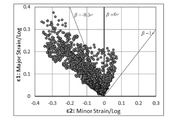
- FIG. 2 is a schematic diagram showing the strain distribution of the steel foil 10 for battery containers according to this embodiment.
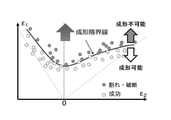
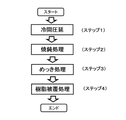
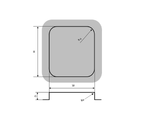
- FIG. 2 is a schematic diagram showing forming limit lines of the steel foil 10 for battery containers according to the present embodiment. It is a figure which shows an example of the manufacturing process of the steel foil 10 for battery containers concerning this embodiment. It is a figure which shows an example of the shape of the battery container concerning this embodiment.
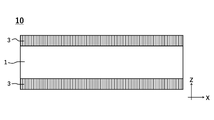
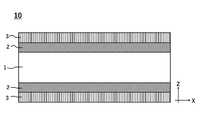
- the steel foil 10 for battery containers of this embodiment will be described below with reference to FIG. 1, for convenience, the thickness direction of the battery container steel foil 10 is defined as the Z direction, and the rolling direction of the battery container steel foil 10 is defined as the X direction.
- these directional definitions do not limit the scope of the invention.
- a steel foil 10 for a battery container according to this embodiment has a base material 1 made of steel foil as shown in FIG.
- the substrate 1 include various steel foils applicable as substrates of battery containers.
- low carbon aluminum killed steel carbon content 0.01 to 0.15% by weight
- ultra-low carbon steel with carbon content of 0.003% by weight or less or ultra-low carbon steel with Ti or Nb added.
- the steel foil 10 for a battery container according to the present embodiment has a maximum value of the maximum principal strain of uniaxial deformation of 0.25 or more and a maximum value of the maximum principal strain of plane strain deformation of 0.1 or more. characterized by The above features will be described below.
- An object of the present invention is to provide a steel foil from which a battery container can be manufactured by applying processing such as deep drawing. Furthermore, when manufacturing a battery container having a recessed portion by rectangular drawing, it is possible to reduce the radius of curvature of both Rc at the four corners of the recessed portion and Rp between the side wall and the bottom surface of the recessed portion as much as possible.
- An object of the present invention is to provide a steel foil for a battery container that is suitable for use. This is based on the viewpoint of increasing the area where the electrodes are arranged in the obtained battery container and further reducing the dead space in the battery.
- the above problems can be solved by defining the strain in consideration of the deformation mode during forming in the steel foil for battery containers. Specifically, by specifying the maximum value of the maximum principal strain of uniaxial deformation and the maximum value of the maximum principal strain of plane strain deformation of the steel foil for battery containers, when processing such as deep drawing is performed, It was found that it is possible to manufacture a suitable electric container by suppressing the occurrence of cracks and the like.
- the present inventors conducted a detailed study of rectangular tube drawing, which is typically used as an exterior material for pouch-type LiBs. As a result, it was found that in this molding method, the deformation mode differs at each part during molding.
- FIG. 2(a) is a diagram showing an example of strain distribution in which the strain in the obtained compact is plotted. It has been shown that there are many areas of plane strain deformation and uniaxial deformation in the square tube drawn body. Based on these observation results, the present inventors considered that improvement of plane strain deformation and uniaxial deformability could improve deep drawing formability such as rectangular tube drawing.
- the present inventors also observed changes in the forming limit line (FIG. 2(b)) due to the difference in steel type by repeating the above-described forming while changing the steel type of the base material 1 to be used.
- the forming limit line and the formable region change depending on the carbon content in the steel and the difference in heat treatment conditions after steel foil rolling.
- the vertical axis is the maximum principal strain ( ⁇ 1)
- the horizontal axis is the minimum principal strain ( ⁇ 2)
- the in-plane strain ratio ⁇ is ⁇ 2/ ⁇ 1
- -0.5 ⁇ ⁇ ⁇ 0 is the uniaxial deformation region
- 0 ⁇ ⁇ ⁇ 1 is the biaxial deformation region.
- each of the radius of curvature Rc of the four corners, the radius of curvature Rp between the side wall of the recess and the bottom surface of the recess, and the depth D of the recess may be set to a certain condition or more. , is preferable because it can be molded without cracking.
- the maximum value of the maximum principal strain of uniaxial deformation is 0.45 or more
- the maximum value of the maximum principal strain of plane strain deformation is 0.2 or more. is more preferable from the viewpoint of
- the thickness of the substrate 1 is preferably 10-200 ⁇ m, more preferably 25-100 ⁇ m. If the thickness is less than 10 ⁇ m, the quality tends to be unstable, such as the occurrence of pinholes in the cold rolling process or the unstable thickness gradient. In addition, cracks may occur in the molding process, and the intended effect of the present application may not be obtained. On the other hand, if the thickness exceeds 200 ⁇ m, the purpose of reducing the weight of the battery container may not be achieved.
- C 0.0001 to 0.15% by weight
- C is an element that increases the strength of the base material 1 . If the C content is excessive, the strength increases too much and the rollability deteriorates, so the upper limit of the C content is made 0.15% by weight.
- the lower limit of the C content is not particularly limited, but considering the cost, the lower limit of the C content is set to 0.0001% by weight.
- the content of C is more preferably 0.0005 to 0.05% by weight, more preferably 0.001 to 0.01% by weight.
- Si is an element that increases the strength of the base material 1 . If the Si content is excessive, the strength increases too much and the rollability deteriorates, so the upper limit of the Si content is made 0.5% by weight.
- the lower limit of the Si content is not particularly limited, but considering the cost, the lower limit of the Si content is set to 0.001% by weight. Incidentally, the content of Si is more preferably 0.001 to 0.02% by weight.
- Mn is an element that increases the strength of the base material 1 . If the Mn content is excessive, the strength increases too much and the rollability deteriorates, so the upper limit of the Mn content is made 1.0% by weight.
- the lower limit of the Mn content is not particularly limited, but considering the cost, the lower limit of the Mn content is set to 0.01% by weight.
- the content of Mn is more preferably 0.01 to 0.5% by weight.
- P is an element that increases the strength of the base material 1 . If the P content is excessive, the strength increases too much and the rollability deteriorates, so the upper limit of the P content is made 0.05% by weight.
- the lower limit of the P content is not particularly limited, but considering the cost, the lower limit of the P content is set to 0.001% by weight.
- the P content is more preferably 0.001 to 0.02% by weight.
- S is an element that reduces the corrosion resistance of the substrate 1 . Therefore, the smaller the content of S, the better. In particular, if the S content exceeds 0.02% by weight, the deterioration of the corrosion resistance becomes remarkable, so the upper limit of the S content is made 0.02% by weight.
- the lower limit of the S content is not particularly limited, but considering the cost, the lower limit of the S content is set to 0.0001% by weight.
- the S content is more preferably 0.001 to 0.01% by weight.
- Al 0.0005 to 0.20% by weight
- Al is added as a deoxidizing element of the base material 1, for example.
- the Al content is preferably 0.0005% by weight or more.
- the upper limit of the content of Al is made 0.20% by weight.
- the lower limit of the Al content is not particularly limited, but considering the cost, the lower limit of the Al content is set to 0.0005% by weight.
- the Al content is more preferably 0.001 to 0.10%.
- N is an element that reduces the workability of the substrate 1 . Therefore, the smaller the content of N, the better. In particular, when the N content exceeds 0.0040% by weight, the workability is significantly deteriorated, so the upper limit of the N content is made 0.0040% by weight.
- the lower limit of the N content is not particularly limited, but considering the cost, the lower limit of the N content is set to 0.0001% by weight.
- the N content is more preferably 0.001 to 0.0040% by weight.
- the main element in the remainder of the base material 1 is Fe, and the others are impurities that are unavoidably mixed during manufacturing.
- Ti, Nb, B, Cu, Ni, Sn, and Cr may be contained as additional components.
- Ti and Nb have the effect of fixing C and N in the base material 1 as carbides and nitrides and improving the workability of the base material 1 . Therefore, when the C content is in the range of 0.001 to 0.01% by weight, Ti: 0.01 to 0.1% by weight, Nb: 0.001 to 0.05% by weight, one or You may contain 2 types.
- the base material 1 according to the present embodiment is more preferably a steel sheet containing less than 10.5% Cr.
- the base material 1 according to the present embodiment has at least one of the following properties by being annealed after cold rolling.
- the temperature and time required for annealing the base material 1 are 5 to 15 hours when performed at 500 ° C. to less than 750 ° C., and 5 hours when performed at 750 to 900 ° C. seconds to 30 minutes. More preferably, it is 6 to 10 hours when carried out at 600°C to less than 750°C, and 10 seconds to 5 minutes when carried out at 750°C to 900°C.
- the tensile strength of the substrate 1 is preferably 260-700 MPa. If the tensile strength is less than 260 MPa, there is a problem that when used as a battery container, it is deformed by an external force and cracks and holes are generated, resulting in leakage of electrolyte. Also, if the tensile strength exceeds 700 MPa, the workability becomes poor.
- the tensile strength of the substrate 1 is more preferably 270-650 MPa. When more workability is required, it is more preferably 280 to 450 MPa.
- the tensile strength of the base material 1 is a numerical value obtained according to the "metal material tensile test method" described in JIS Z2241.
- the elongation of the substrate 1 according to this embodiment is preferably 5 to 55%. This is because if the elongation of the base material 1 is less than 5%, the workability at the corners (corners) is poor, and cracks may occur during processing. Moreover, if the elongation exceeds 55%, high temperature and long time are required as the annealing conditions for exhibiting such properties, resulting in poor productivity.
- the elongation of the base material 1 is more preferably 15-55%, more preferably 20-50%.
- the elongation of the substrate 1 is obtained according to "20: Elongation at break (%) A measurement formula (7)" of "Metal material tensile test method" described in JIS Z2241. Numeric value.
- the elongation of the substrate 1 is preferably 20% or more, more preferably 30% or more, from the viewpoint of suppressing cracking of the substrate 1 during molding and peeling of the resin film from the substrate 1. It is still desirable that
- a surface treatment layer 2 (hereinafter also referred to as a plating layer) is formed on at least one side of the base material 1 described above.
- the surface on which the surface treatment layer 2 is formed is preferably the inner surface side of the battery container.
- the surface of the battery container steel foil 10 that is the outer surface of the battery container is also the same as the surface that is the inner surface, or at least one layer of The same surface treatment layer 2 may be formed.
- the surface treatment layer 2 is preferably a plated layer formed by electroplating.
- the surface treatment layer 2 include a Cr plating layer, and Ni alloy plating such as a Ni plating layer and an Fe—Ni alloy plating layer. Also, a plurality of these plating layers may be provided. For example, after forming a Ni plating layer on the substrate 1, a Cr plating layer may be formed.
- the plating layer as described above on at least one surface of the base material 1, for example, it is possible to improve adhesion with a resin film further formed on the plating layer. Further, even if the resin film is damaged, the corrosion resistance to the electrolytic solution can be ensured.
- the surface treatment layer 2 of the present embodiment may be formed, for example, after the base material 1 is annealed after cold rolling, or may be formed after the base material 1 is cold rolled and before annealing. It is also possible to Among these, when the Ni plating is applied before the substrate 1 is annealed, an Fe—Ni diffusion layer may be formed by the heat treatment. At this time, an Fe—Ni diffusion layer may be formed between the Ni plating layer and the substrate 1, or iron (Fe) of the substrate 1 diffuses throughout the Ni plating layer, and the substrate 1 An Fe—Ni diffusion layer may be formed directly on the . As the conditions for the heat treatment, the same temperature and time as those for the annealing of the base material 1 described above can be set in a suitable range.
- the surface treatment layer 2 is formed on both surfaces of the substrate 1 in FIG. 1(b), the surface treatment layer 2 may be formed at least on the inner surface side of the battery container. Alternatively, different types of surface treatment layers 2 (electroplating layers) may be formed on both sides of the substrate 1 .
- an electroplating layer (first electroplating layer) containing at least one of a Ni plating layer and a Cr plating layer is formed on the surface of the base material 1 that is the inner surface side of the battery container, and the battery container is formed.
- the electroplating layer containing a Zn plating layer or a Zn alloy plating layer as a sacrificial anticorrosive layer preferably has a plating amount of Zn of, for example, 3 to 30 g/m 2 , more preferably 5 to 25 g/m 2 . More preferably, it is the amount of plating.
- Zn plating dissolves in the electrolyte, it cannot be used for the inner surface, which is always in contact with the battery container.
- Zn-plated as described above Zn preferentially dissolves at the end face, preventing corrosion of the iron base material. This is effective because it can be suppressed, thereby preventing leakage of the electrolytic solution.
- Ni plating When Ni plating is applied to the base material 1 as the surface treatment layer 2, the cold-rolled metal plate is electrolytically degreased and pickled by a normal method, and then, for example, the following Ni plating bath is used. be able to.
- a nickel sulfate bath called a Watt bath is mainly used, but a sulfamic acid bath, a borofluoride bath, a chloride bath, and the like may also be used.
- Nickel sulfate 200-350g/l Nickel chloride: 20-60g/l Boric acid: 10-50g/l pH: 1.5-5.0
- Ni plating as the surface treatment layer 2 formed on the base material 1 is formed using not only pure Ni but also an alloy containing Ni such as a Ni—Co alloy and an Fe—Ni alloy. It can be anything. That is, in this specification, unless otherwise specified, the term “Ni-plated layer” includes "a layer composed only of Ni” and "a layer composed of an alloy containing Ni". The "layer composed of an alloy containing Ni” may be a "diffusion layer in which Ni and a metal element other than Ni are mutually diffused", or a "diffusion layer in which Ni and a metal element other than Ni are both electrodeposited. It may be an alloy plating layer.
- Cr-plated layer includes “a layer composed only of Cr” as well as a “layer composed of an alloy containing Cr".
- the "layer composed of an alloy containing Cr” may be a “diffusion layer in which Cr and a metal element other than Cr are mutually diffused", or a “layer in which both Cr and a metal element other than Cr are electrodeposited.” It may be an alloy plating layer.
- Cr-plated layer further includes so-called chromate treatment to form hydrated chromium oxide on the surface to be treated.
- the case where the surface treatment layer contains metal elements other than Ni and Cr can also be understood in the same manner as above.
- the surface treatment layer 2 is any one of a Ni plating layer composed only of Ni, an Fe—Ni diffusion layer in which Fe is diffused, and an Fe—Ni alloy plating layer in which both Fe and Ni are electrodeposited. may contain.
- the phrase "consisting only of Ni” means having only Ni as a metallic element, and includes substances derived from additives in the plating bath or 0.5% that is unavoidably mixed in the process of forming the plating. Impurities such as less than 1% carbon and less than 0.05% sulfur are acceptable.
- the Ni plating as the surface treatment layer 2 of the present embodiment is preferably Ni plating with a plating amount of 0.5 to 50.0 g/m 2 . If the amount of Ni plating is less than 0.5 g/m 2 , the coating of the surface is insufficient and the exposure of the base material is extremely increased, resulting in insufficient content resistance. On the other hand, when the amount of Ni plating exceeds 50.0 g/m 2 , the thickness of the plating layer increases, and the thickness of the battery container steel foil 10 also increases, leading to an increase in weight. In addition, an increase in the plating treatment time and the amount of plating causes problems such as deterioration of productivity and an increase in manufacturing cost.
- an Fe—Ni diffusion layer can be formed.
- the Fe—Ni diffusion layer preferably has a thickness of 0.2 ⁇ m or more and 3.0 ⁇ m or less. Note that the thickness of the Fe—Ni diffusion layer is determined, for example, using a high-frequency glow discharge emission spectrometer, starting from the time when the Fe intensity becomes 10% of its saturation value, and the Ni intensity is at its maximum value. , the measurement time until the intensity reaches 10% of the maximum value is calculated, and it can be obtained based on the calculated measurement time.
- the cold-rolled metal plate is electrolytically degreased and pickled by a conventional method, and then, for example, the following Cr plating bath is used. be able to.
- CrO 3 30-200g/l NaF: 1-10g/l pH: 1.0 or less
- the Cr plating as the surface treatment layer 2 preferably has a plating amount of 0.05 to 10.0 g/m 2 . If the amount of Cr plating is less than 0.05 g/m 2 , the coating of the surface is insufficient and the exposure of the base material 1 is extremely increased, resulting in insufficient content resistance. On the other hand, if the amount of Cr plating exceeds 10.0 g/m 2 , problems such as an increase in weight, a deterioration in productivity, and an increase in manufacturing cost will occur as described above.
- metal Cr and Cr hydrated oxide (CrOx) can be calculated by, for example, the following method.
- step 1 the total amount of Cr in the Cr plating applied to the substrate is measured.
- step 2 the Cr-plated base material is subjected to dissolution treatment with a high-temperature alkali to dissolve Cr hydrated oxide, and the amount of Cr remaining in the base material is measured as the amount of metallic Cr.
- the value measured for the substrate on which the surface treatment layer is formed has a maximum principal strain of uniaxial deformation of 0.25 or more, and a maximum principal strain of plane strain deformation The maximum value of 0.1 or more shall be satisfied.
- the tensile strength and elongation of the base material having the surface treatment layer preferably satisfy the above preferred ranges.
- At least one surface of the battery container steel foil 10 according to the present embodiment may be covered with the thermoplastic resin layer 3, which is preferably provided at least on the inner surface side of the battery container.
- the thermoplastic resin layer 3 may be formed on the surface treatment layer 2 described above.
- the steel foil 10 for battery containers may be configured as a laminated plate in which the surface treatment layer 2 is covered with the thermoplastic resin layer 3 (FIG. 1(b)), or the surface treatment layer 2 may be The structure may be such that the surface treatment layer 2 and the thermoplastic resin layer 3 are not provided.
- the base material 1 may be covered with a thermoplastic resin layer 3 without the surface treatment layer 2 (FIG. 1(a)).
- thermoplastic resin layer 3 is 10-100 ⁇ m, more preferably 10-50 ⁇ m.
- the material for the thermoplastic resin layer 3 of this embodiment include polyolefin resin, polyester resin, and polyamide resin.
- the polyolefin-based resin, polyester-based resin, or polyamide resin preferably coats both surfaces of the battery container steel foil 10 .
- one surface (the inner surface of the battery can) of the battery container steel foil 10 is preferably coated with a polyolefin resin (especially polypropylene resin).
- polypropylene resins various polypropylene resins such as random propylene resins, homopropylene resins, and block propylene resins may be used in a single layer, or these may be laminated to form a multilayer.
- a known additive may be added to the polypropylene resin.
- additives include, for example, a low-crystalline ethylene-butene copolymer, a low-crystalline propylene-butene copolymer, a terpolymer composed of a ternary copolymer of ethylene, butene and propylene, silica, zeolite, Examples include anti-blocking agents such as acrylic resin beads and fatty acid amide-based slip agents.
- slip agents for improving the physical stability of the material
- antioxidants may be added as the additives described above.
- the other surface (the outer surface side of the battery can) of the battery container steel foil 10 is preferably coated with any one of polyester resin, polyamide resin, and polyolefin resin.
- polyester resin it is preferable to coat with polyethylene terephthalate.
- the polyester resin other than polyethylene terephthalate, for example, polybutylene terephthalate, polyethylene naphthalate, polybutylene naphthalate, etc. can be used.
- Modified resins such as urethane-modified polyester resins, acrylic-modified polyester resins, and epoxy-modified polyester resins may also be used.
- the thickness of the resin covering one surface (for example, the inner surface of the battery can) and the thickness of the resin covering the other surface (for example, the outer surface of the battery can) of the battery container steel foil 10 are required.
- the thickness of both sides may be the same or different depending on the corrosion resistance and workability of the material.
- this polyester resin it is preferable that this polyester resin is non-oriented.
- the other surface of the battery container steel foil 10 is not limited to the polyester resin (polyethylene terephthalate) described above, and both surfaces of the battery container steel foil 10 may be coated with polypropylene resin. good.
- both surfaces of the battery container steel foil 10 may be coated with a polyester resin.
- thermoplastic resin layer 3 may be in the form of covering the battery container steel foil 10 via a known adhesive.
- known adhesives include acid-modified polyolefin resins, epoxy resins, acrylic resins, urethane resins, silicon resins, polyisobutylene resins, fluorine resins, and inorganic adhesives such as water glass.
- the thermoplastic resin layer 3 may be formed by laminating a film, or the material resin of the thermoplastic resin layer 3 that has been melted by heating is passed through a slit having an extrusion width of an extruder to form a film.
- An extrusion lamination method may be used in which the substrate is extruded into a shape and directly laminated on the base material 1 or the surface treatment layer 2 .
- whether or not the film is stretched is not particularly limited. For example, it may be a non-stretched film, a uniaxially stretched film, or a biaxially stretched film.
- a steel plate is prepared and cold rolled by putting the steel plate into a rolling mill (step 1). This forms a cold-rolled steel foil (substrate 1) with a thickness of 10-200 ⁇ m. This cold rolling may be carried out in multiple steps as required, and heat treatment may be carried out in between.
- the obtained base material 1 is subjected to annealing treatment (step 2).
- the temperature and time of the substrate 1 in the annealing treatment are 5 to 15 hours when performed at 500 to less than 750°C, and 5 seconds to 30 minutes when performed at 750 to 900°C. More preferably, it is 6 to 10 hours when carried out at 600°C to less than 750°C, and 10 seconds to 5 minutes when carried out at 750°C to 900°C.
- the substrate 1 is surface-treated (plated) to form a surface-treated layer 2 (electroplating) containing at least one of a Ni-plated layer and a Cr-plated layer on at least one surface of the substrate 1.
- plating layer is formed (step 3).
- this step 3 is not an essential step in the method of manufacturing the steel foil 10 for a battery container of this embodiment, and may be omitted as appropriate.
- the surface treatment layer 2 (electroplating layer) formed in step 3 for example, a Ni plating layer has a plating amount of 0.5 to 50.0 g/m 2 , and a Cr plating layer has a plating amount of 0. 0.05 to 10.0 g/m 2 is preferred.
- the annealing in step 2 may be performed after the surface treatment layer 2 is formed. Further, after the surface treatment layer 2 is formed after the annealing in step 2, heat treatment (diffusion treatment) may be further performed with the aim of improving workability, for example. As for the heat treatment conditions at this time, the same conditions as the annealing conditions described in step 2 can be used. If the rolling process of step 1 is performed after the plating treatment, cracks may occur on the surface of the plated film, which may reduce adhesion and corrosion resistance, which is not preferable.
- the base material 1 after step 2 or the base material 1 after steps 2 and 3 has either a tensile strength of 260 to 700 MPa or an elongation of 5 to 55%. preferably.
- step 4 the base material 1 on which the surface treatment layer 2 is formed is coated with the thermoplastic resin layer 3 described above to a thickness of about 10 to 50 ⁇ m (resin coating process). Note that this step 4 is not an essential step in the method of manufacturing the steel foil 10 for a battery container of the present embodiment, and may be omitted as appropriate unless a laminated plate (surface-treated steel foil) is configured.
- thermoplastic resin layer 3 As a method for forming the thermoplastic resin layer 3, it is preferable to form it at least on the inner surface side of the battery container in the base material 1. Film lamination or extrusion lamination may be used. The temperature of the substrate 1 when the thermoplastic resin layer 3 is coated is adjusted to normal temperature to 280° C., preferably 250° C. or less, depending on the mode of lamination, for example.
- the battery container steel foil 10 can be obtained after steps 1 to 4 as described above.
- the battery container of the present embodiment manufactured from the battery container steel foil 10 will be described.
- the battery container of this embodiment is manufactured by subjecting the steel foil 10 for a battery container described above to processing such as draw forming and heat sealing.
- the battery container of the present embodiment has a so-called pouch shape manufactured by rectangular drawing. More specifically, the battery container steel foil 10 is subjected to a drawing process (such as deep drawing) to form the battery container steel foil 10 into a container shape as shown in FIG.
- the shape of the container of this embodiment has a depth in which corners with a radius of curvature Rc (because they are corners in the circumferential direction, they are called Rc) are formed at the four corners so that a rectangular electrode plate can be accommodated. It has a rectangular concave portion D. Further, the sidewall of the recess and the bottom of the recess are connected by a radius of curvature Rp (referred to as Rp because it is defined by the R of the punch).
- Rp radius of curvature
- the corners R of the four corners of the concave portion described above are equal, but these Rc and Rp may have different values.
- the reason why the steel foil 10 for a battery container of the present embodiment is very effective for the shape of the battery container having such curvature radii Rc and Rp and depth D will be described in detail below.
- the radii of curvature of both Rc and Rp are made as small as possible from the viewpoint of widening the area where the electrodes are arranged and further reducing the dead space in the battery.
- the value of such radius of curvature Rp is preferably 3 mm or less, more preferably 1.5 mm or less, still more preferably 1.0 mm or less.
- the value of the radius of curvature Rc varies depending on the application and battery size, but is preferably less than 10 mm, more preferably 8 mm or less, and even more preferably 3 mm or less.
- the depth D is preferably 5 mm or more, more preferably 6 mm or more, and 10 mm or more.
- Rp desired curvature radius
- the present inventors diligently studied the relationship between the desired curvature radius Rp and the depth D, and found that the steel foil 10 for battery containers is processed under the above conditions in order to increase the capacity. In some cases, it resulted in problems with moldability and content resistance after molding (resistance to electrolytic solution).
- the first issue is that cracks tend to occur during molding.
- the specific gravity is larger than that of a conventional aluminum base material. It is necessary to reduce the thickness of 1.
- the thickness of the steel foil used as the base material 1 is reduced in this way, the base material 1 is likely to crack.
- the second issue is the content resistance after molding (resistance to electrolyte).
- the resin film may crack. Therefore, even if a crack or the like should occur, the surface of the base material 1 needs to be in a form that is difficult to dissolve.
- the maximum value of the maximum principal strain of uniaxial deformation of the steel foil for battery containers is set to 0.25 or more, and the plane It has been found that by setting the maximum value of the maximum principal strain of strain deformation to 0.1 or more, cracking can be suppressed even when drawing is performed under severe working conditions as described above.
- the second problem by forming a surface treatment layer on at least one side of the steel foil for battery containers, even if the resin film is damaged, the base material is eluted into the electrolyte. It has been found that it is possible to suppress the collapse.
- the surface treatment layer is a surface treatment layer (electroplating layer) containing at least one of a Ni plating layer of 0.5 g/m 2 or more and a Cr plating layer of 0.05 g/m 2 or more
- a surface treatment layer electroroplating layer
- the steel foil 10 for battery container of the present embodiment can also be applied as a lid member of the battery container used for sealing.
- the lid member which is a constituent member of such a battery container, may have a housing space similar to that of the battery container main body shown in FIG. 4, or may be used as a flat plate.
- the coating resins on the facing surfaces of the battery container main body and the lid member are of the same type, such as polypropylene resins or polyester resins.
- the sealing method described above is only an example, and the sealing method is not limited to this. For example, a known adhesive may be used.
- the battery container obtained in this embodiment is formed using the steel foil 10 for a battery container of this embodiment described above, alkaline batteries, nickel-metal hydride batteries, nickel-cadmium batteries, lithium-ion batteries, etc. It can be suitably used as a battery container for various primary batteries or secondary batteries.
- the battery container of the present embodiment is excellent in electrolyte resistance as described above, it can be suitably used for a non-aqueous battery containing an organic solvent electrolyte as a content.
- a cold-rolled plate (thickness 50 ⁇ m) of low carbon steel having the chemical composition shown below was prepared.
- the maximum principal strain in uniaxial deformation and the maximum principal strain in plane strain deformation were measured by the method described above. These maximum principal strains were measured using a non-contact three-dimensional strain/displacement measurement system (ARAMIS) manufactured by GOM. Using a sample that has been previously coated with a random pattern by spraying or the like, triangulation is performed by continuously photographing the state of deformation with two cameras, and the process of change in the random pattern is obtained as 3D positional information. , the maximum principal strain ( ⁇ 1) in the plate surface immediately before fracture and the minimum principal strain ( ⁇ 2) orthogonal thereto were measured. Uniaxial deformation was performed by a tensile test using a JIS No.
- ARAMIS non-contact three-dimensional strain/displacement measurement system
- thermoplastic resin layer 3 a polyethylene film having a thickness of 50 ⁇ m (trade name “Daiwa Protac P-563B” manufactured by Daiwa Kasei Co., Ltd.) was prepared. Then, both sides of the base material 1 were coated with the polyethylene film.
- Example 2 The same procedure as in Example 1 was carried out except for the matters described below.
- a cold-rolled plate (thickness: 50 ⁇ m) of ultra-low carbon steel having the chemical composition shown below was prepared as a steel foil serving as the base material 1 .
- the prepared steel foil was annealed at 670° C. for 8 hours to obtain a substrate 1 having the following properties.
- Example 3 The same procedure as in Example 1 was carried out except for the matters described below.
- a steel foil serving as the base material a cold-rolled plate (thickness: 80 ⁇ m) of ultra-low carbon steel having the chemical composition shown below was prepared.
- the maximum principal strain in uniaxial deformation and the maximum principal strain in plane strain deformation were measured in the same manner as in Example 1.
- the maximum value of the maximum principal strain in the uniaxial deformation of the substrate 1 of this example was 0.65.
- the maximum value of the maximum principal strain in the plane strain deformation of the substrate 1 was 0.30.
- Example 4 The same substrate as in Example 3 was used, and the same procedure as in Example 3 was performed except for the items described below. That is, the prepared steel foil was annealed at 640° C. for 8 hours to obtain the base material 1 having the following properties. ⁇ Tensile strength (TS): 332 MPa ⁇ Elongation (EL): 39.0%
- TS melting point
- EL ⁇ Elongation
- the maximum principal strain in uniaxial deformation and the maximum principal strain in plane strain deformation were measured in the same manner as in Example 1, respectively.
- the maximum value of the maximum principal strain in the uniaxial deformation of the base material 1 of this example was 0.62.
- the maximum value of the maximum principal strain in the plane strain deformation of the substrate 1 was 0.30.
- Example 5 The same procedure as in Example 4 was carried out except that the steel foil used as the base material 1 was a cold-rolled plate of ultra-low carbon steel with a thickness of 50 ⁇ m.
- the maximum principal strain in uniaxial deformation and the maximum principal strain in plane strain deformation were measured in the same manner as in Example 1, respectively.
- the maximum value of the maximum principal strain in the uniaxial deformation of the substrate 1 of this example was 0.63.
- the maximum value of the maximum principal strain in the plane strain deformation of the substrate 1 was 0.31.
- Example 6> Using the same cold-rolled plate of ultra-low carbon steel as in Example 5 as the base material 1, the surface treatment layer 2 was formed by the following procedure. (Formation of surface treatment layer 2) After subjecting the base material 1 to electrolytic degreasing and pickling by immersing in sulfuric acid, electroplating was performed under the following conditions to form a surface treatment layer 2 (electrolytic Ni plating layer) was formed.
- the conditions for forming the Ni plating layer were as follows. (Conditions for forming Ni plating layer) Bath composition: nickel sulfate, nickel chloride, boric acid, pit inhibitor pH: 4.3 Bath temperature: 55°C Current density: 10A/ dm2
- the maximum principal strain in uniaxial deformation and the maximum principal strain in plane strain deformation were measured in the same manner as in Example 1 for the substrate 1 on which the surface treatment layer 2 obtained above was formed.
- the maximum value of the maximum principal strain in the uniaxial deformation of the substrate 1 having the surface treatment layer 2 of this example was 0.62.
- the maximum value of the maximum principal strain in the plane strain deformation of the substrate 1 on which the surface treatment layer 2 was formed was 0.30.
- both surfaces of the substrate 1 on which the surface treatment layer 2 was formed were coated with the thermoplastic resin layers 3, and then moldability was evaluated.
- Example 7 A substrate 1 having a surface treatment layer 2 having the following characteristics was obtained in the same manner as in Example 6, except that the heat treatment was performed at 800° C. for 30 seconds.
- EL ⁇ Elongation
- the maximum principal strain in uniaxial deformation and the maximum principal strain in plane strain deformation were measured in the same manner as in Example 1 for the substrate 1 on which the surface treatment layer 2 obtained above was formed.
- the maximum value of the maximum principal strain in the uniaxial deformation of the substrate 1 having the surface treatment layer 2 of this example was 0.62.
- the maximum value of the maximum principal strain in plane strain deformation of the substrate 1 on which the surface treatment layer 2 was formed was 0.31.
- Example 8> A base material 1 having a surface treatment layer 2 having the following properties was obtained in the same manner as in Example 6, except that the heat treatment conditions were 820° C. for 10 seconds. ⁇ Tensile strength (TS): 325 MPa ⁇ Elongation (EL): 30.2% The maximum principal strain in uniaxial deformation and the maximum principal strain in plane strain deformation were measured in the same manner as in Example 1 for the substrate 1 on which the surface treatment layer 2 obtained above was formed. As a result of the measurement, the maximum value of the maximum principal strain in the uniaxial deformation of the substrate 1 having the surface treatment layer 2 of this example was 0.52. Similarly, the maximum value of the maximum principal strain in plane strain deformation of the substrate 1 on which the surface treatment layer 2 was formed was 0.26.
- Example 9 A substrate 1 having a surface treatment layer 2 having the following properties was obtained in the same manner as in Example 6, except that the heat treatment conditions were 850° C. for 10 seconds.
- ⁇ Elongation (EL): 30.7% The maximum principal strain in uniaxial deformation and the maximum principal strain in plane strain deformation were measured in the same manner as in Example 1 for the substrate 1 on which the surface treatment layer 2 obtained above was formed.
- the maximum value of the maximum principal strain in uniaxial deformation of the base material 1 having the surface treatment layer 2 of this example was 0.54.
- the maximum value of the maximum principal strain in plane strain deformation of the substrate 1 on which the surface treatment layer 2 was formed was 0.28.
- Example 1 The same substrate as in Example 2 above was used. The same procedure as in Example 2 was carried out except for the matters described below. That is, the prepared steel foil was annealed at 560° C. for 8 hours to obtain the base material 1 having the following properties. ⁇ Tensile strength (TS): 385 MPa ⁇ Elongation (EL): 20.6%
- TS melting point
- EL ⁇ Elongation
- the maximum principal strain in uniaxial deformation and the maximum principal strain in plane strain deformation were measured in the same manner as in Example 1, respectively. As a result of the measurement, the maximum value of the maximum principal strain in the uniaxial deformation of the base material 1 of this example was 0.19. Similarly, the maximum value of the maximum principal strain in the plane strain deformation of the substrate 1 was 0.16.
- Example 2 The same substrate as in Example 2 above was used. The same procedure as in Example 2 was carried out except for the matters described below. That is, the prepared steel foil was annealed at 640° C. for 8 hours to obtain the base material 1 having the following properties. ⁇ Tensile strength (TS): 373 MPa ⁇ Elongation (EL): 16.8%
- TS melting strength
- EL ⁇ Elongation
- the maximum principal strain in uniaxial deformation and the maximum principal strain in plane strain deformation were measured in the same manner as in Example 1, respectively. As a result of the measurement, the maximum value of the maximum principal strain in the uniaxial deformation of the substrate 1 of this example was 0.17. Similarly, the maximum value of the maximum principal strain in the plane strain deformation of the substrate 1 was 0.13.
- Table 2 shows the material specifications and moldability evaluation of each sample used in Examples 1 to 9 and Comparative Examples 1 and 2 described above.
- Example 1 the battery container steel foil 10 coated with the thermoplastic resin layer 3 was subjected to severe drawing with a radius of curvature of a predetermined value or less. It was found that the occurrence was suppressed. These results also indicate that sufficient content resistance can be obtained when used as a non-aqueous battery container. On the other hand, in Comparative Examples 1 and 2, if draw forming with a small radius of curvature is applied in manufacturing the battery container, cracks may occur, and sufficient content resistance may not be obtained when used as a non-aqueous battery container. be.
- the steel foil for battery containers of the present invention can exhibit sufficient moldability and resistance to contents as containers for non-aqueous batteries such as lithium ion secondary batteries, and can be applied to a wide range of industries that use batteries. is possible.
Landscapes
- Chemical & Material Sciences (AREA)
- Engineering & Computer Science (AREA)
- Materials Engineering (AREA)
- Metallurgy (AREA)
- Organic Chemistry (AREA)
- Mechanical Engineering (AREA)
- Chemical Kinetics & Catalysis (AREA)
- Electrochemistry (AREA)
- General Chemical & Material Sciences (AREA)
- Physics & Mathematics (AREA)
- Crystallography & Structural Chemistry (AREA)
- Thermal Sciences (AREA)
- Inorganic Chemistry (AREA)
- Sealing Battery Cases Or Jackets (AREA)
Priority Applications (4)
| Application Number | Priority Date | Filing Date | Title |
|---|---|---|---|
| CN202280014095.5A CN116868419A (zh) | 2021-02-19 | 2022-01-27 | 电池容器用钢箔和由其制造的袋型电池容器 |
| US18/546,447 US20240120581A1 (en) | 2021-02-19 | 2022-01-27 | Steel foil for battery containers and pouch battery container produced from the same |
| KR1020237019271A KR20230148807A (ko) | 2021-02-19 | 2022-01-27 | 전지 용기용 강박 및 그것에 의해 제조되는 파우치형 전지 용기 |
| EP22755877.2A EP4296384A4 (en) | 2021-02-19 | 2022-01-27 | STEEL FOIL FOR BATTERY CONTAINERS AND BAG BATTERY CONTAINERS MADE THEREFROM |
Applications Claiming Priority (2)
| Application Number | Priority Date | Filing Date | Title |
|---|---|---|---|
| JP2021025726A JP7840638B2 (ja) | 2021-02-19 | 2021-02-19 | 電池容器用鋼箔及びそれにより製造されるパウチ型電池容器 |
| JP2021-025726 | 2021-02-19 |
Publications (1)
| Publication Number | Publication Date |
|---|---|
| WO2022176553A1 true WO2022176553A1 (ja) | 2022-08-25 |
Family
ID=82931596
Family Applications (1)
| Application Number | Title | Priority Date | Filing Date |
|---|---|---|---|
| PCT/JP2022/003010 Ceased WO2022176553A1 (ja) | 2021-02-19 | 2022-01-27 | 電池容器用鋼箔及びそれにより製造されるパウチ型電池容器 |
Country Status (6)
| Country | Link |
|---|---|
| US (1) | US20240120581A1 (https=) |
| EP (1) | EP4296384A4 (https=) |
| JP (2) | JP7840638B2 (https=) |
| KR (1) | KR20230148807A (https=) |
| CN (1) | CN116868419A (https=) |
| WO (1) | WO2022176553A1 (https=) |
Families Citing this family (2)
| Publication number | Priority date | Publication date | Assignee | Title |
|---|---|---|---|---|
| CN120936749A (zh) * | 2023-03-22 | 2025-11-11 | 日本制铁株式会社 | Sn-Zn系合金镀覆钢材、电池壳体和燃料箱 |
| EP4545670A3 (en) * | 2023-10-23 | 2026-03-04 | Samsung SDI Co., Ltd. | Steel sheet for battery cases and battery case using the same |
Citations (10)
| Publication number | Priority date | Publication date | Assignee | Title |
|---|---|---|---|---|
| JP2001202932A (ja) | 2000-01-18 | 2001-07-27 | Yuasa Corp | 密閉形電池用パッケージ及び密閉形電池 |
| JP2005078894A (ja) | 2003-08-29 | 2005-03-24 | Matsushita Electric Ind Co Ltd | 電池缶およびその製造方法ならびに電池 |
| WO2013002356A1 (ja) * | 2011-06-30 | 2013-01-03 | 東洋鋼鈑株式会社 | 表面処理鋼板、燃料パイプおよび電池缶 |
| WO2014208697A1 (ja) * | 2013-06-26 | 2014-12-31 | 新日鐵住金株式会社 | 金属板の曲げ破断判定方法、プログラム及び記憶媒体 |
| WO2016013572A1 (ja) | 2014-07-22 | 2016-01-28 | 新日鐵住金株式会社 | 蓄電デバイス容器用鋼箔、蓄電デバイス用容器及び蓄電デバイス、並びに蓄電デバイス容器用鋼箔の製造方法 |
| WO2016013575A1 (ja) | 2014-07-22 | 2016-01-28 | 新日鐵住金株式会社 | 蓄電デバイス容器用鋼箔、蓄電デバイス用容器及び蓄電デバイス、並びに蓄電デバイス容器用鋼箔の製造方法 |
| WO2017179492A1 (ja) * | 2016-04-13 | 2017-10-19 | 東洋鋼鈑株式会社 | 電池容器用金属板およびこの電池容器用金属板の製造方法 |
| JP2019072861A (ja) * | 2017-10-12 | 2019-05-16 | 新日鐵住金株式会社 | 金属板、管状成形品、およびプレス成形品 |
| WO2019198820A1 (ja) * | 2018-04-13 | 2019-10-17 | 日本製鉄株式会社 | Ni拡散めっき鋼板及びNi拡散めっき鋼板の製造方法 |
| WO2020045627A1 (ja) * | 2018-08-31 | 2020-03-05 | 東洋鋼鈑株式会社 | 電池容器用金属板およびこの電池容器用金属板の製造方法 |
Family Cites Families (7)
| Publication number | Priority date | Publication date | Assignee | Title |
|---|---|---|---|---|
| TW445663B (en) * | 1998-07-24 | 2001-07-11 | Toyo Kohan Co Ltd | A method of surface treatment for a battery container, a surface treated steel sheet for a battery container, a battery container and a battery using thereof |
| US6426163B1 (en) * | 1999-12-21 | 2002-07-30 | Alcatel | Electrochemical cell |
| JP5546571B2 (ja) * | 2012-03-29 | 2014-07-09 | Jx日鉱日石金属株式会社 | 銅箔、銅張積層体、フレキシブル配線板及び立体成型体 |
| KR101599166B1 (ko) * | 2012-04-19 | 2016-03-02 | 신닛테츠스미킨 카부시키카이샤 | 강박 및 그 제조 방법 |
| KR20140108214A (ko) * | 2012-04-19 | 2014-09-05 | 신닛테츠스미킨 카부시키카이샤 | 강박 및 그 제조 방법 |
| KR102121674B1 (ko) * | 2015-08-17 | 2020-06-10 | 닛테츠 케미컬 앤드 머티리얼 가부시키가이샤 | 오스테나이트계 스테인리스 강박 |
| US20170208680A1 (en) * | 2016-01-15 | 2017-07-20 | Jx Nippon Mining & Metals Corporation | Copper Foil, Copper-Clad Laminate Board, Method For Producing Printed Wiring Board, Method For Producing Electronic Apparauts, Method For Producing Transmission Channel, And Method For Producing Antenna |
-
2021
- 2021-02-19 JP JP2021025726A patent/JP7840638B2/ja active Active
-
2022
- 2022-01-27 KR KR1020237019271A patent/KR20230148807A/ko active Pending
- 2022-01-27 WO PCT/JP2022/003010 patent/WO2022176553A1/ja not_active Ceased
- 2022-01-27 EP EP22755877.2A patent/EP4296384A4/en active Pending
- 2022-01-27 CN CN202280014095.5A patent/CN116868419A/zh active Pending
- 2022-01-27 US US18/546,447 patent/US20240120581A1/en active Pending
-
2025
- 2025-06-05 JP JP2025093940A patent/JP2025116242A/ja active Pending
Patent Citations (10)
| Publication number | Priority date | Publication date | Assignee | Title |
|---|---|---|---|---|
| JP2001202932A (ja) | 2000-01-18 | 2001-07-27 | Yuasa Corp | 密閉形電池用パッケージ及び密閉形電池 |
| JP2005078894A (ja) | 2003-08-29 | 2005-03-24 | Matsushita Electric Ind Co Ltd | 電池缶およびその製造方法ならびに電池 |
| WO2013002356A1 (ja) * | 2011-06-30 | 2013-01-03 | 東洋鋼鈑株式会社 | 表面処理鋼板、燃料パイプおよび電池缶 |
| WO2014208697A1 (ja) * | 2013-06-26 | 2014-12-31 | 新日鐵住金株式会社 | 金属板の曲げ破断判定方法、プログラム及び記憶媒体 |
| WO2016013572A1 (ja) | 2014-07-22 | 2016-01-28 | 新日鐵住金株式会社 | 蓄電デバイス容器用鋼箔、蓄電デバイス用容器及び蓄電デバイス、並びに蓄電デバイス容器用鋼箔の製造方法 |
| WO2016013575A1 (ja) | 2014-07-22 | 2016-01-28 | 新日鐵住金株式会社 | 蓄電デバイス容器用鋼箔、蓄電デバイス用容器及び蓄電デバイス、並びに蓄電デバイス容器用鋼箔の製造方法 |
| WO2017179492A1 (ja) * | 2016-04-13 | 2017-10-19 | 東洋鋼鈑株式会社 | 電池容器用金属板およびこの電池容器用金属板の製造方法 |
| JP2019072861A (ja) * | 2017-10-12 | 2019-05-16 | 新日鐵住金株式会社 | 金属板、管状成形品、およびプレス成形品 |
| WO2019198820A1 (ja) * | 2018-04-13 | 2019-10-17 | 日本製鉄株式会社 | Ni拡散めっき鋼板及びNi拡散めっき鋼板の製造方法 |
| WO2020045627A1 (ja) * | 2018-08-31 | 2020-03-05 | 東洋鋼鈑株式会社 | 電池容器用金属板およびこの電池容器用金属板の製造方法 |
Non-Patent Citations (1)
| Title |
|---|
| See also references of EP4296384A4 |
Also Published As
| Publication number | Publication date |
|---|---|
| KR20230148807A (ko) | 2023-10-25 |
| EP4296384A1 (en) | 2023-12-27 |
| JP2022127529A (ja) | 2022-08-31 |
| JP2025116242A (ja) | 2025-08-07 |
| US20240120581A1 (en) | 2024-04-11 |
| JP7840638B2 (ja) | 2026-04-06 |
| EP4296384A4 (en) | 2025-01-15 |
| CN116868419A (zh) | 2023-10-10 |
Similar Documents
| Publication | Publication Date | Title |
|---|---|---|
| JP2025116242A (ja) | 電池容器用鋼箔及びそれにより製造されるパウチ型電池容器 | |
| KR102366582B1 (ko) | 축전 디바이스 용기용 강박, 축전 디바이스용 용기 및 축전 디바이스, 및 축전 디바이스 용기용 강박의 제조 방법 | |
| KR102872693B1 (ko) | 전지 용기용 금속판 및 이 전지 용기용 금속판의 제조 방법 | |
| US10418601B2 (en) | Steel foil for power storage device container, power storage device container, power storage device, and manufacturing method of steel foil for power storage device container | |
| US20160308174A1 (en) | Packaging material for cell | |
| KR102323071B1 (ko) | 전지 용기용 금속판 및 이 전지 용기용 금속판의 제조방법 | |
| JP2005022336A (ja) | 成形性に優れた包装用材料及びそれを用いて成形された包装容器 | |
| JP5566214B2 (ja) | 蓄電デバイス容器用ステンレス箔及びその製造方法 | |
| CN108352463A (zh) | 电池用包装材料、电池、电池用包装材料的制造方法和铝合金箔 | |
| EP4084029A1 (en) | Exterior material for electrical storage device, method for manufacturing same, and electrical storage device | |
| KR102486559B1 (ko) | 전지용 집전체 및 전지 | |
| EP3982436A1 (en) | Case for batteries and method for producing same | |
| KR20240024792A (ko) | 축전 디바이스용 외장재, 그 제조 방법, 및 축전 디바이스 | |
| US11909054B2 (en) | Aluminum pouch film for secondary battery, and manufacturing method therefor | |
| JP7741460B1 (ja) | 電池ケース | |
| KR102537677B1 (ko) | 핀홀 제거층이 구비된 셀 타입 전지 파우치용 적층 구조체 및 이를 이용한 파우치형 이차전지 | |
| JP2006326879A (ja) | 樹脂被覆金属板、該樹脂被覆金属板を備える電池用筐体、及び、該筐体を備える電池 | |
| WO2026071265A1 (ja) | 蓄電デバイス用外装材、その製造方法、及び蓄電デバイス | |
| WO2004093220A1 (ja) | 電池ケース用表面処理鋼板及び電池ケース | |
| KR20240027004A (ko) | 축전 디바이스용 외장재, 그 제조 방법, 및 축전 디바이스 |
Legal Events
| Date | Code | Title | Description |
|---|---|---|---|
| 121 | Ep: the epo has been informed by wipo that ep was designated in this application |
Ref document number: 22755877 Country of ref document: EP Kind code of ref document: A1 |
|
| WWE | Wipo information: entry into national phase |
Ref document number: 202280014095.5 Country of ref document: CN |
|
| WWE | Wipo information: entry into national phase |
Ref document number: 18546447 Country of ref document: US |
|
| WWE | Wipo information: entry into national phase |
Ref document number: 2022755877 Country of ref document: EP |
|
| NENP | Non-entry into the national phase |
Ref country code: DE |
|
| ENP | Entry into the national phase |
Ref document number: 2022755877 Country of ref document: EP Effective date: 20230919 |