WO2022176151A1 - 人検出装置、電気機器、人検出方法、及び人検出システム - Google Patents
人検出装置、電気機器、人検出方法、及び人検出システム Download PDFInfo
- Publication number
- WO2022176151A1 WO2022176151A1 PCT/JP2021/006303 JP2021006303W WO2022176151A1 WO 2022176151 A1 WO2022176151 A1 WO 2022176151A1 JP 2021006303 W JP2021006303 W JP 2021006303W WO 2022176151 A1 WO2022176151 A1 WO 2022176151A1
- Authority
- WO
- WIPO (PCT)
- Prior art keywords
- temperature
- threshold
- thermal image
- background
- person
- Prior art date
- Legal status (The legal status is an assumption and is not a legal conclusion. Google has not performed a legal analysis and makes no representation as to the accuracy of the status listed.)
- Ceased
Links
Images





Classifications
-
- F—MECHANICAL ENGINEERING; LIGHTING; HEATING; WEAPONS; BLASTING
- F24—HEATING; RANGES; VENTILATING
- F24F—AIR-CONDITIONING; AIR-HUMIDIFICATION; VENTILATION; USE OF AIR CURRENTS FOR SCREENING
- F24F11/00—Control or safety arrangements
- F24F11/62—Control or safety arrangements characterised by the type of control or by internal processing, e.g. using fuzzy logic, adaptive control or estimation of values
-
- G—PHYSICS
- G01—MEASURING; TESTING
- G01J—MEASUREMENT OF INTENSITY, VELOCITY, SPECTRAL CONTENT, POLARISATION, PHASE OR PULSE CHARACTERISTICS OF INFRARED, VISIBLE OR ULTRAVIOLET LIGHT; COLORIMETRY; RADIATION PYROMETRY
- G01J5/00—Radiation pyrometry, e.g. infrared or optical thermometry
- G01J5/48—Thermography; Techniques using wholly visual means
-
- G—PHYSICS
- G01—MEASURING; TESTING
- G01V—GEOPHYSICS; GRAVITATIONAL MEASUREMENTS; DETECTING MASSES OR OBJECTS; TAGS
- G01V8/00—Prospecting or detecting by optical means
- G01V8/10—Detecting, e.g. by using light barriers
-
- G—PHYSICS
- G08—SIGNALLING
- G08B—SIGNALLING SYSTEMS, e.g. PERSONAL CALLING SYSTEMS; ORDER TELEGRAPHS; ALARM SYSTEMS
- G08B13/00—Burglar, theft or intruder alarms
- G08B13/18—Actuation by interference with heat, light, or radiation of shorter wavelength; Actuation by intruding sources of heat, light, or radiation of shorter wavelength
- G08B13/181—Actuation by interference with heat, light, or radiation of shorter wavelength; Actuation by intruding sources of heat, light, or radiation of shorter wavelength using active radiation detection systems
Definitions
- the present disclosure relates to a human detection device, an electrical device, a human detection method, and a human detection system that detect the presence or absence of people in space.
- Patent Literature 1 discloses an infrared detection device that compares the amount of received infrared light with a threshold to determine the presence or absence of a person. Further, the infrared detection device of Patent Literature 1 is configured to prevent erroneous detection by changing the threshold for comparison with the amount of infrared light based on the average value of the temperature distribution in the space.
- Patent Document 1 when changing the threshold based on the average value of the temperature distribution, it may not be possible to set an appropriate threshold if there is variation in the temperature of the space where people are present. For example, if there is a local high-temperature region, the average value of the temperature distribution will be high, and the threshold will be changed to a high value. In this case, even if a person is present, the amount of detected infrared light does not exceed the threshold, and the person cannot be detected. Also, when there is a local low temperature region, the average value of the temperature distribution becomes low, and the threshold is changed to be low. In this case, an object other than a person is erroneously detected as a person even though there is no person.
- the present disclosure is intended to solve the problems described above, and aims to improve the accuracy of human detection in a human detection device, an electrical device, a human detection method, and a human detection system.
- a human detection device includes a storage device that stores a background thermal image of a space, and a processing device that detects the presence or absence of a person in the space.
- An image is created, and a difference thermal image is created that includes the difference temperature, which is the difference between the current temperature in the current thermal image and the background temperature in the background thermal image, and one of the horizontal and vertical axes is the background temperature and the other is the difference temperature.
- a scatter diagram is created by plotting points corresponding to the background temperature and the difference temperature, a threshold is determined based on the scatter diagram, and the difference temperature is compared with the threshold to detect the presence or absence of a person.
- An electrical device includes the human detection device described above, a temperature sensor that acquires space temperature information, and a control device that performs control according to the presence or absence of a person detected by the human detection device.
- a human detection method is a human detection method for detecting the presence or absence of a person in a space, comprising: creating a current thermal image based on current temperature information of the space; creating a differential thermal image including a differential temperature that is a difference from the background temperature in the background thermal image stored in the background thermal image stored in the background temperature and the differential temperature, with one of the horizontal and vertical axes being the background temperature and the other being the differential temperature creating a scatter diagram plotting points corresponding to , determining a threshold value based on the scatter diagram, and comparing the difference temperature with the threshold value to detect the presence or absence of a person.
- a human detection system includes a storage device that stores a background thermal image of a space, a current thermal image creation unit that creates a current thermal image based on current temperature information of the space, and a current temperature and background in the current thermal image.
- a differential thermal image creating unit that creates a differential thermal image including a differential temperature that is a difference from the background temperature in the thermal image;
- a scatter diagram creation unit that creates a scatter diagram in which corresponding points are plotted, a threshold determination unit that determines a threshold value based on the scatter diagram, and a determination unit that detects the presence or absence of a person by comparing the difference temperature with the threshold value.
- the threshold is determined based on a scatter diagram in which points corresponding to the difference temperature and the background temperature are plotted. Even if there is variation, the accuracy of human detection can be improved.
- FIG. 1 is a diagram showing an installation example of an air conditioner according to Embodiment 1.
- FIG. 1 is a block diagram showing a schematic configuration of an air conditioner according to Embodiment 1;
- FIG. 3 is a functional block diagram of a human detection unit according to Embodiment 1;
- FIG. 4 is an example of a current thermal image according to Embodiment 1.
- FIG. 4 is an example of a background thermal image according to Embodiment 1.
- FIG. 4 is an example of a differential thermal image according to Embodiment 1.
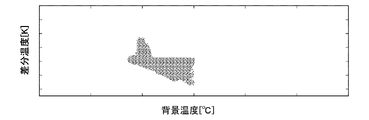
- FIG. 4 is an example of a scatter diagram according to Embodiment 1.
- FIG. 4 is a flow chart showing a human detection method according to Embodiment 1.
- FIG. 4 is a flow chart showing threshold value determination processing according to Embodiment 1.
- FIG. 4 is a simplified scatter diagram according to Embodiment 1;
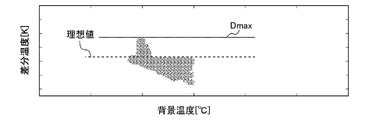
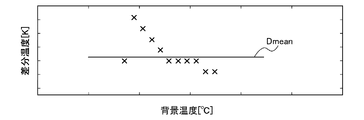
- FIG. FIG. 4 is a diagram for explaining a body threshold value ThB and a head threshold value ThH according to Embodiment 1; It is the figure which extracted the maximum difference temperature for every background temperature from FIG.
- FIG. 10 is an example of a scatter diagram according to Embodiment 2.
- FIG. 9 is a flowchart showing a human detection method according to Embodiment 2; 14 is a flow chart showing threshold value determination processing in Embodiment 3.
- FIG. FIG. 11 is a block diagram showing a schematic configuration of a human detection system according to Embodiment 4;
- FIG. 1 is a diagram showing an installation example of an air conditioner 100 according to Embodiment 1.
- FIG. 1 an example will be described in which air conditioner 100 has the function of a person detection device that detects the presence or absence of person 300 in air-conditioned space 200 .
- an air conditioner 100 according to the present embodiment is an indoor unit of a room air conditioner installed on a wall of a space 200 to be air-conditioned.
- the air conditioner 100 includes a housing 7 forming an outer shell.
- a blowout port 71 for blowing out conditioned air is provided at the bottom of the housing 7 .
- the air conditioner 100 also includes a temperature sensor 1 that acquires temperature information of the air-conditioned space 200 , and performs air conditioning control based on the information acquired by the temperature sensor 1 .
- the temperature sensor 1 is provided so as to protrude downward from the housing 7 .
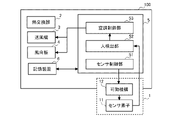
- FIG. 2 is a block diagram showing a schematic configuration of the air conditioner 100 according to Embodiment 1.
- the air conditioner 100 includes a temperature sensor 1 , a heat exchanger 2 , a fan 3 , a wind direction plate 4 , a control device 5 and a storage device 6 .
- the temperature sensor 1 is an infrared sensor such as a thermopile sensor that can measure the temperature of an object without contact.
- the temperature sensor 1 includes a sensor element 11 and a movable mechanism 12 that moves the sensor element 11 .
- the sensor element 11 is an infrared light receiving element.
- the temperature sensor 1 of this embodiment includes a plurality of sensor elements 11 arranged in one or more rows in the vertical direction.
- the movable mechanism 12 is, for example, a motor, and moves the plurality of sensor elements 11 in the horizontal direction.
- the plurality of sensor elements 11 scan the air-conditioned space 200 by the movable mechanism 12 and acquire temperature information of the air-conditioned space 200 . Temperature information acquired by the plurality of sensor elements 11 is transmitted to the control device 5 .
- the configuration of the temperature sensor 1 is not limited to the above.
- a plurality of sensor elements 11 arranged in one or more rows in the horizontal direction may be vertically moved by the movable mechanism 12 to scan the air-conditioned space 200 to obtain temperature information.
- the temperature sensor 1 may include a plurality of sensor elements 11 that are arranged two-dimensionally or three-dimensionally in the vertical direction and the horizontal direction, and acquire the temperature information of the air-conditioned space 200 all at once without moving.
- the movable mechanism 12 can be omitted.
- the temperature sensor 1 may be provided with a wide-angle lens such as a fisheye lens.
- the heat exchanger 2 is a fin-and-tube heat exchanger that exchanges heat between the refrigerant flowing inside and the air in the air-conditioned space 200 .
- the heat exchanger 2 functions as a condenser during heating operation, and functions as an evaporator during cooling operation.
- the blower 3 is a cross-flow fan that sends air to the heat exchanger 2 and supplies the air that has passed through the heat exchanger 2 from the outlet 71 to the air-conditioned space 200 .
- the wind direction plate 4 is provided at the outlet 71 and adjusts the vertical and horizontal directions of the air blown out from the outlet 71 .
- the control device 5 is composed of dedicated hardware such as ASIC or FPGA, or a processing device such as a CPU that executes programs stored in the storage device 6, or both.
- the control device 5 has a sensor control unit 51, a human detection unit 52, and an air conditioning control unit 53 as functional units. Each functional unit is realized by executing a program by the control device 5, or realized by a dedicated processing circuit.
- the sensor control unit 51 controls driving of the movable mechanism 12 of the temperature sensor 1, and moves the plurality of sensor elements 11 in the horizontal direction.
- the human detection unit 52 detects the presence or absence of people in the air-conditioned space 200 based on the temperature information acquired by the temperature sensor 1 .
- the air conditioning control unit 53 controls the operation of the blower 3 based on the setting information of the air conditioner 100 set by the user, the temperature in the air-conditioned space 200, the presence or absence of a person in the air-conditioned space 200, and the position of the person. At least one of the rotation speed and the angle of the wind direction plate 4 is controlled.
- the temperature in the air-conditioned space 200 may be detected by the temperature sensor 1 or may be detected by another temperature sensor (not shown) provided in the housing 7 .
- the storage device 6 is, for example, non-volatile or volatile semiconductor memory such as RAM, ROM, flash memory, EPROM, EEPROM.
- the storage device 6 stores setting information and control information of the air conditioner 100, as well as thermal images and various parameters used for human detection.
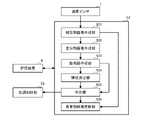
- FIG. 3 is a functional block diagram of the human detection unit 52 according to the first embodiment.
- the human detection unit 52 includes, as functional units, a current thermal image generation unit 521, a differential thermal image generation unit 522, a scatter diagram generation unit 523, a threshold determination unit 524, and a determination unit 525. , and a background thermal image updater 526 .
- Each functional unit is realized by executing a program by the control device 5, or realized by a dedicated processing circuit.
- a current thermal image creating unit 521 creates a current thermal image of the air-conditioned space 200 based on current temperature information detected by the plurality of sensor elements 11 .
- FIG. 4 is an example of a current thermal image according to the first embodiment.
- the current thermal image is a two-dimensional thermal image showing the current temperature distribution in the air-conditioned space 200 .
- the pixel value of each coordinate of the current thermal image indicates the current temperature of the position in the air-conditioned space 200 corresponding to each coordinate. In the example of FIG. 4, the high-temperature portions are shown lightly, and the low-temperature portions are shown dark.
- the differential thermal image creating unit 522 creates a differential thermal image showing the difference between the current thermal image and the background thermal image.
- the differential thermal image contains the differential temperature, which is the difference between the current temperature of the current thermal image and the background temperature of the background thermal image, as the pixel value of each coordinate.
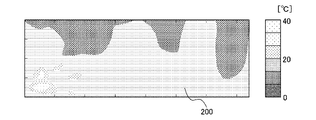
- FIG. 5 is an example of a background thermal image according to Embodiment 1.
- FIG. A background thermal image is a thermal image that does not include a person and is stored in the storage device 6 .
- the pixel value of each coordinate of the background thermal image indicates the background temperature of the position in the air-conditioned space 200 corresponding to each coordinate.
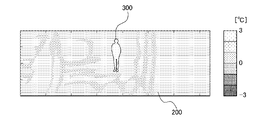
- 6 is an example of a differential thermal image according to Embodiment 1.
- FIG. The pixel value of each coordinate of the differential thermal image indicates the differential temperature of the position in the air-conditioned space 200 corresponding to each coordinate. In the example of FIG. 6, the portions where the temperature difference is high are shown light and the portions where the temperature difference is low are shown dark.
- the scatter diagram creation unit 523 creates a scatter diagram with the background temperature on the horizontal axis and the difference temperature on the vertical axis. Specifically, the scatter diagram creation unit 523 plots points corresponding to the background temperature of the background thermal image and the differential temperature of the differential thermal image on the same coordinates, with the horizontal axis being the background temperature and the vertical axis being the difference temperature. , to create a scatter diagram by performing this for the background temperature and differential temperature of all the coordinates of the background thermal image and the differential thermal image. Each plot included in the scatter diagram has coordinate information in the background thermal image and differential thermal image from which it was acquired. As a result, it can be understood which coordinate data of the background thermal image and the difference thermal image are plotted in the scatter diagram.
- 7 is an example of a scatter diagram according to Embodiment 1.
- FIG. The scatter diagram creation unit 523 may create a scatter diagram with the difference temperature on the horizontal axis and the background temperature on the vertical axis.
- the threshold determination unit 524 determines the threshold used for human detection determination based on the scatter diagram created by the scatter diagram creation unit 523 .
- Threshold determination section 524 of the present embodiment determines body threshold ThB and head threshold ThH as thresholds.
- the body threshold ThB and the head threshold ThH are temperatures. A method for determining the threshold will be described in detail later.
- the threshold determination unit 524 transmits the determined threshold to the determination unit 525 .
- the determination unit 525 compares the difference temperature in the differential thermal image with the threshold determined by the threshold determination unit 524, and determines whether or not there is a person in the air-conditioned space 200. Specifically, the determination unit 525 compares the difference temperature at each coordinate in the differential thermal image with a threshold, and determines that the pixel at the coordinate is a pixel of a person when the difference temperature is equal to or greater than the threshold. On the other hand, if the difference temperature is less than the threshold, the pixel at the coordinates is determined to be a non-human pixel. The determination unit 525 makes this determination for all the coordinates of the difference thermal image. Then, when the number of pixels determined to be a person is within a preset appropriate range, it is determined that there is a person in the air-conditioned space 200 . A determination result by the determination unit 525 is transmitted to the air conditioning control unit 53 .
- the background thermal image update unit 526 updates the background thermal image stored in the storage device 6 using the current thermal image. Specifically, the background thermal image updating unit 526 maintains the current background temperature for the background temperatures corresponding to the coordinates of the pixels of the person among the background temperatures included in the background thermal image, and changes the The background temperature corresponding to the coordinates of the pixels in the current thermal image is replaced with the current temperature corresponding to the coordinates of the current thermal image.
- the updated background thermal image is stored in the storage device 6 and used for the next human detection.
- FIG. 8 is a flowchart showing the human detection method according to Embodiment 1.
- the temperature sensor 1 acquires temperature information of the air-conditioned space 200 at preset time intervals, and transmits the temperature information to the human detection unit 52 . Every time temperature information is received from the temperature sensor 1, the human detection unit 52 performs the human detection method shown in FIG.
- the current thermal image creating unit 521 creates a current thermal image based on the current temperature information of the air-conditioned space 200 acquired by the temperature sensor 1 (S1). Then, the differential thermal image creation unit 522 creates a differential thermal image based on the current thermal image and the background thermal image (S2). Then, the scatter diagram creating unit 523 creates a scatter diagram based on the differential thermal image and the background thermal image (S3).
- FIG. 9 is a flowchart showing threshold determination processing according to the first embodiment.
- the threshold determining unit 524 acquires the minimum value Dmin and the maximum value Dmax from the scatter diagram created by the scatter diagram creating unit 523 (S41).
- FIG. 10 is a simplified scatter diagram in the first embodiment.
- the threshold determining unit 524 sets the minimum value of the difference temperatures in the plot of the scatter diagram as the minimum value Dmin. Note that the threshold determining unit 524 may set the average value, the median value, or the mode value of the lower several percent of the difference temperatures plotted in the scatter diagram as the minimum value Dmin. In addition, the threshold determining unit 524 sets the maximum value of the temperature difference plotted in the scatter diagram as the maximum value Dmax. Note that the threshold determining unit 524 may set the average value, the median value, or the mode value of the top several percent of the difference temperatures plotted in the scatter diagram as the maximum value Dmax.
- the threshold determination unit 524 determines whether the minimum value Dmin is greater than the minimum threshold Thmin (S42).
- the minimum threshold Thmin is a conceivable minimum threshold obtained by experiments or the like, and is stored in the storage device 6 in advance. If the minimum value Dmin is equal to or less than the minimum threshold Thmin (S42: NO), the threshold determination unit 524 determines the body threshold ThB based on the scatter diagram.
- FIG. 11 is a diagram for explaining the body threshold ThB and the head threshold ThH in Embodiment 1.
- FIG. 11 is a diagram for explaining the body threshold ThB and the head threshold ThH in Embodiment 1.
- FIG. 11 According to experiments, when the scatter diagram shown in FIG. 11 is obtained, it is known that the plots projecting upward, that is, the plots above the dotted line in FIG. 11 correspond to people. That is, when performing human detection, the difference temperature located on the dotted line is the ideal value of the threshold. For example, if the threshold is above the ideal value, parts of a person, such as feet, will not be detected as a person. On the other hand, when the threshold is below the ideal value, non-human objects are detected as humans.
- the threshold determining unit 524 of the present embodiment determines the ideal value indicated by the dotted line in FIG. 11 as the body threshold ThB (S43). Experiments have shown that the ideal value is close to the median value of the maximum difference temperature for each background temperature, or close to the mode value of the maximum difference temperature for each background temperature. Therefore, the threshold determination unit 524 determines the body threshold ThB so that the body threshold ThB is a value within an allowable range including the median or mode of the maximum difference temperatures for each background temperature. The allowable range is ⁇ 0.5°C.
- Bd is the body constant and is a value greater than 0.
- the body constant Bd is obtained by experiments and stored in the storage device 6 in advance. Experiments have shown that the mean value Dmean lies below the ideal value. Therefore, by adding the body constant Bd to the average value Dmean, the body threshold ThB close to the ideal value can be obtained.
- the body constant Bd is obtained based on the difference between the ideal value and the average value Dmean by conducting experiments in various environments and creating a plurality of scatter diagrams.
- the threshold determination unit 524 determines whether or not the calculated body threshold ThB is smaller than the minimum threshold Thmin (S44). Then, if the body threshold ThB is smaller than the minimum threshold Thmin (S44: YES), the threshold determination unit 524 sets the body threshold ThB to the minimum threshold Thmin (S45).
- the threshold determination unit 524 determines the head threshold ThH based on the scatter diagram. A person's head temperature is higher than the body temperature. Therefore, it is desirable to set the head threshold ThH between the ideal value shown in FIG. 11 and the maximum value Dmax. Therefore, in the present embodiment, the threshold determination unit 524 determines the head threshold ThH to be a value between the body threshold ThB and the maximum value Dmax (S46).
- Hd is a head coefficient, which is a value greater than 0 and less than 1.
- the head coefficient Hd is obtained by experiments and stored in the storage device 6 in advance.
- the head coefficient Hd is obtained by conducting experiments in various environments, creating a plurality of scatter diagrams, and comparing them with the actual head position.
- step S42 if the minimum value Dmin is greater than the minimum threshold Thmin (S42: YES), the threshold determination unit 524 sets the body threshold ThB and the head threshold ThH to the minimum threshold Thmin (S47). If the minimum temperature difference Dmin is greater than the minimum threshold Thmin, it is considered that the current thermal image contains an abnormality due to some factor. Therefore, in this case, the threshold determining unit 524 sets the body threshold ThB and the head threshold ThH as the minimum threshold Thmin so that the person is not detected. After obtaining the body threshold value ThB and the head threshold value ThH, the threshold determination unit 524 ends this process and proceeds to step S5 in FIG.
- step S5 the determination unit 525 determines whether or not the differential temperature at one coordinate of the differential thermal image is greater than the body threshold ThB (S5).
- the determination unit 525 determines that the pixel at the coordinates is not a person, and proceeds to step S9.
- the determination unit 525 determines whether the differential temperature is greater than the body threshold ThB (S5: YES). Then, if the difference temperature is greater than the head threshold ThH (S6: YES), the determination unit 525 determines that the pixel at the coordinates is a head pixel indicating a person's head (S7). If the difference temperature is equal to or lower than the head threshold value ThH (S6: NO), the determination unit 525 determines that the pixel at the coordinates is a body pixel representing a human body (S8).
- the determining unit 525 determines whether or not the difference temperatures of all the coordinates of the differential thermal image have been compared with the body threshold ThB (S9). If the difference temperature of all the coordinates of the difference thermal image has not been determined (S9: NO), the process returns to step S5. On the other hand, if the difference temperature of all the coordinates of the differential thermal image has been determined (S9: YES), the determination unit 525 determines the number of pixels determined to be head pixels and the number of pixels determined to be body pixels. It is determined whether or not the sum of the numbers is within an appropriate range (S10).
- the appropriate range is a range having a lower limit ⁇ and an upper limit ⁇ . The lower limit value ⁇ and the upper limit value ⁇ are obtained by experiments or the like and stored in the storage device 6 in advance.
- the determination unit 525 determines that there is no person in the air-conditioned space 200 (S11).
- the determination unit 525 determines that a person is present on a pixel-by-pixel basis, an object whose total number of pixels is larger or smaller than the size of a person is determined not to be a person.
- the determination unit 525 determines that there is a person in the air-conditioned space 200 (S12).
- the determination result by the determination unit 525 is transmitted to the air conditioning control unit 53.
- the air conditioning control unit 53 controls the rotation speed of the blower 3 or the angle of the wind direction plate 4 according to the presence or absence of a person received from the human detection unit 52 .
- the human detection unit 52 or the air-conditioning control unit 53 may identify the position of the person in the air-conditioned space 200 by associating the coordinates of pixels determined to be human with the position of the air-conditioned space 200 .
- the human detection unit 52 or the air conditioning control unit 53 estimates the positions of the head and body of the person from the coordinates of the pixels determined to be the human body and the coordinates of the pixels determined to be the head, and determines the posture of the person. may be specified.
- the background thermal image updating unit 526 updates the background thermal image stored in the storage device 6 (S13).
- the current background temperature is maintained as it is for the background temperature corresponding to the pixel coordinates of the person, and the background temperature for the coordinates other than the human pixel is the current temperature. Replaced by the current temperature at the corresponding coordinates in the image.
- the pixels of a person here are pixels determined to be the body or pixels determined to be the head by the determination unit 525 .
- the threshold value is determined based on the scatter diagram plotting the points corresponding to the difference temperature and the background temperature, if the environment of the air-conditioned space 200 is special and the temperature distribution varies, However, the probability of missing a person and the probability of erroneously detecting something other than a person are reduced. As a result, the detection accuracy of people in the air-conditioned space 200 can be improved. As a result, air conditioning control can be appropriately executed based on the presence or absence of people, and comfort and energy saving can be improved.
- the position of the person's head and the position of the body can be grasped by making a determination using the body threshold value ThB and the head threshold value ThH.
- ThB body threshold value
- ThH head threshold value
- one threshold is automatically determined for all coordinates of the differential thermal image from the scatter diagram, and the presence or absence of a person is detected by comparing the threshold with the differential temperature. Therefore, the processing can be simplified and the memory capacity required for the processing can be reduced as compared with the case where the threshold corresponding to the background temperature is determined for each background temperature and compared. As a result, the cost of the air conditioner 100 can be reduced.
- Embodiment 2 differs from Embodiment 1 in the operation of the background thermal image updating unit 526 of the control device 5 .
- the configuration and control of the air conditioner 100 other than those described below are the same as in the first embodiment.
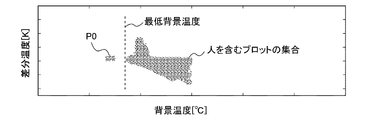
- FIG. 13 is an example of a scatter diagram according to the second embodiment.
- the current temperature at the coordinates of the current thermal image corresponding to the coordinates of another set of plots P0 is updated as the background temperature at the corresponding coordinates of the background thermal image.
- the background thermal image update unit 526 of the present embodiment updates the background thermal image so as to suppress the influence of another set P0 of plots.
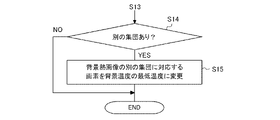
- FIG. 14 is a flow chart showing a human detection method according to the second embodiment. Steps S1 to S13 of the human detection method of this embodiment are the same as those of the first embodiment.
- the background thermal image update unit 526 first updates the background thermal image using the current thermal image (S13). Then, the background thermal image updating unit 526 determines whether there is another set of plots having a temperature lower than the lowest background temperature of the set of plots including a person in the scatter diagram created by the scatter diagram creation unit 523. It judges (S14).
- the background thermal image updating unit 526 updates the background temperature of the coordinates of the background thermal image corresponding to the coordinates of the other set of plots to the set of plots including the person. is updated to the lowest background temperature (S15). Specifically, the background thermal image update unit 526 acquires coordinate information of plots included in another set of plots. In addition, the background thermal image updater 526 obtains the lowest background temperature in the set of plots including the person. Then, the background thermal image update unit 526 replaces all the background temperatures of the coordinates of the background thermal image corresponding to the acquired coordinates with the acquired lowest temperature, and stores them in the storage device 6 .
- the background thermal image update unit 526 updates the background temperature of the background thermal image in the plot caused by the sudden change, thereby reducing the effect of the sudden change. human detection accuracy can be maintained.
- Embodiment 3 A third embodiment will be described.
- the third embodiment differs from the first embodiment in the operation of the threshold determining unit 524 of the control device 5 .
- the configuration and control of the air conditioner 100 other than those described below are the same as in the first embodiment.
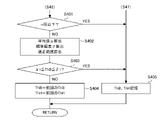
- FIG. 15 is a flow chart showing threshold determination processing in the third embodiment.
- the threshold determination unit 524 performs the processes of steps S41 to S47 in FIG. 9, similarly to the first embodiment, to obtain the body threshold ThB and the head threshold ThH. Then, when the body threshold value ThB and the head threshold value ThH are obtained in step S47, the threshold determination unit 524 stores the obtained body threshold value ThB and head threshold value ThH in the storage device 6 (S405), and ends this processing. do.
- the threshold determination unit 524 determines whether or not the number of threshold acquisition times is n or less (S401).
- n is an arbitrary number of 2 or more. It is assumed that the threshold acquisition count is counted after the operation of the air conditioner 100 is started, and is reset to 0 when the operation is stopped.
- the threshold determination unit 524 stores the determined body threshold ThB and head threshold ThH in the storage device 6 (S405), and terminates this process. .
- the threshold determination unit 524 calculates the average value ⁇ , the standard deviation ⁇ , and the appropriate range of the body threshold ThB (S402).
- the average value ⁇ of body threshold values ThB is the average value of a plurality of body threshold values ThB acquired in the past and stored in the storage device 6 .
- the standard deviation ⁇ of the body threshold ThB is the standard deviation of a plurality of body thresholds ThB obtained in the past and stored in the storage device 6 .
- the appropriate range is a range having the following lower limit value ⁇ 1 and upper limit value ⁇ 1. In determining the appropriate range, other statistical values such as the median value or the mode value of a plurality of body threshold values ThB obtained in the past and stored in the storage device 6 may be used instead of the average value ⁇ .
- m is a value greater than 0 and is preset and stored in the storage device 6 .
- Lower limit value ⁇ 1 ⁇ -m ⁇ ⁇
- Upper limit value ⁇ 1 ⁇ + m ⁇ ⁇
- the threshold determining unit 524 determines whether or not the body threshold ThB obtained this time is within the appropriate range (S403). Specifically, the threshold determining unit 524 determines whether the body threshold ThB obtained this time is equal to or greater than the lower limit value ⁇ 1 of the appropriate range and less than the upper limit value ⁇ 1. If the body threshold value ThB obtained this time is within the appropriate range (S403: YES), the body threshold value ThB and the head threshold value ThH that have been obtained are stored in the storage device 6 (S405), and this processing is terminated. do.
- the body threshold value ThB obtained this time is not within the appropriate range (S403: NO)
- the body threshold value ThB is set as the previous body threshold value ThB
- the head threshold value ThH is set as the previous head threshold value ThH (S404), and stored. This processing ends without storing in the device 6 .
- the present embodiment it is possible to exclude the threshold when a sudden temperature rise such as solar radiation is detected, thereby further improving the human detection accuracy.
- Embodiment 4 differs from Embodiment 1 in that a human detection device and a temperature sensor are provided separately from air conditioner 100 .
- FIG. 16 is a block diagram showing a schematic configuration of a human detection system according to Embodiment 4.
- the human detection system of the present embodiment has a configuration in which an air conditioner 100A, a human detection device 50, and a temperature sensor 1A are individually provided.
- the control device 5A of the air conditioner 100A includes an air conditioning control unit 53 and a communication unit 54 as functional units.
- the communication unit 54 wirelessly communicates with the human detection device 50 and the temperature sensor 1A.
- the air-conditioning control unit 53 receives information regarding the presence or absence of a person in the air-conditioned space 200 from the human detection device 50 via the communication unit 54, and controls the blower 3 and the wind direction plate 4 based on the received information.
- Other configurations of the air conditioner 100A are the same as those of the first embodiment.
- the human detection device 50 is an information terminal device such as a PC or a smartphone, and includes a processing device 501 and a storage device 6A.
- the processing device 501 is a CPU that executes programs stored in the storage device 6 .
- the processing device 501 has, as functional units, a human detection unit 52 and a communication unit 54A. Each functional unit is implemented by the processing device 501 executing a program, or by a dedicated processing circuit.
- the human detection unit 52 has the same functions as in the first to third embodiments.
- the communication unit 54A performs wireless communication with the air conditioner 100 and the temperature sensor 1A.
- the communication unit 54A receives temperature information in the air-conditioned space 200 from the temperature sensor 1A and transmits the temperature information to the human detection unit 52 .
- the communication unit 54A also transmits the information regarding the presence or absence of a person acquired by the person detection unit 52 to the air conditioner 100A.
- the temperature sensor 1A includes a sensor element 11, a movable mechanism 12 that moves the sensor element 11, and a control device 5B.
- the sensor element 11 and movable mechanism 12 have the same configurations and functions as in the first embodiment.
- the control device 5B is composed of dedicated hardware such as an ASIC or FPGA, a processing device such as a CPU that executes a program stored in a storage device (not shown), or both.
- the control device 5B has, as functional units, a sensor control unit 51 and a communication unit 54B. Each functional unit is realized by executing a program by control device 5B, or by a dedicated processing circuit.
- the sensor control unit 51 has the same functions as in the first embodiment.
- the communication unit 54B performs wireless communication with the air conditioner 100A and the human detection device 50 .
- the communication unit 54B receives instructions from the air conditioner 100A and transmits the instructions to the sensor control unit 51 .
- the communication unit 54B also transmits the temperature information of the air-conditioned space 200 acquired by the sensor element 11 to the human detection device 50 .
- the same effect as in the first to third embodiments can be obtained.
- the configuration of the human detection system is not limited to the example of FIG. 16, and various modifications are possible.
- the air conditioner 100A may be configured to include the temperature sensor 1A, and only the human detection device 50 may be configured separately.
- the air conditioner 100A may be configured to include the human detection device 50, and only the temperature sensor 1A may be configured separately.
- a current thermal image creating unit 521 a difference thermal image creating unit 522, a scatter diagram creating unit 523, a threshold determining unit 524, a determining unit 525, and a background thermal image updating unit 526 in the human detecting unit 52. At least one of them may be implemented by an individual processing device.
- the air conditioner 100 in the above embodiment is not limited to an indoor unit of a room air conditioner, and may be an indoor unit of a packaged air conditioner installed on the ceiling of the space 200 to be air-conditioned.
- the thermal image created by the person detection unit 52 is a plan view of the person viewed from above, comparison with the difference temperature may be performed using only the head threshold value ThH.
- human detection is performed by the human detection unit 52 in the above embodiment, and control is performed based on the presence or absence of a person. may be performed.
- the determination unit 525 of the human detection unit 52 in the above embodiment determines that a person is present when the sum of the number of head pixels and the number of body pixels is within a preset appropriate range. , but not limited to. For example, when there are only body pixels and no head pixels, when the number of body pixels is less than the threshold, when the number of head pixels is less than the threshold, when the ratio of the number of body pixels to the number of head pixels is not within the appropriate range, etc. Alternatively, it may be determined that the object is not a person.
- the determination unit 525 of the human detection unit 52 in the above embodiment determines the presence or absence of a person by comparing the difference temperature in the differential thermal image with the threshold value. You can judge. Specifically, in the scatter diagram, the determining unit 525 sets the pixels corresponding to the plots with the difference temperature equal to or greater than the body threshold ThB and less than the head threshold ThH as the body pixels, and the plots with the difference temperature equal to or greater than the head threshold ThH. may be used as the number of leading pixels. Then, the determination unit 525 determines that the subject is a person when the sum of the number of head pixels and the number of body pixels is within a preset appropriate range, as in the above embodiment. In addition, since each plot of the scatter diagram has coordinate information, the determination unit 525 can also determine the position and posture of a person from the coordinate information of body pixels and head pixels.
- the threshold determination unit 524 of the human detection unit 52 in the above embodiment is configured to determine one threshold for one current thermal image, it is not limited to this.
- the threshold determining unit 524 may use the average value, median value, or mode value of a plurality of previously stored threshold values as the newly created threshold value for the current thermal image.
- the threshold determination unit 524 may determine a plurality of thresholds according to the position of the air-conditioned space 200 . Generally, in the air-conditioned space 200, the farther away from the temperature sensor 1, the more the thermal energy reaching the temperature sensor 1 is attenuated. Therefore, a threshold corresponding to the distance from the temperature sensor 1 may be provided. For example, the threshold determination unit 524 may divide the current thermal image into a first area on the front side and a second area on the back side and determine separate thresholds.
- the threshold determination unit 524 sets the body constant Bd in the equation (1) to two types: a first body constant Bd 1 corresponding to the first area and a second body constant Bd 2 corresponding to the second area. set. It is assumed that the first body constant Bd1 is greater than the second body constant Bd2. Further, the threshold determination unit 524 uses the first body constant Bd 1 and the second body constant Bd 2 to determine the first body threshold ThB 1 corresponding to the first area and the second body threshold ThB corresponding to the second area. 2 is determined. If the coordinates of the difference temperature are in the first area on the front side, the determination unit 525 performs the comparison using the first body threshold value ThB1, and if the coordinates of the difference temperature are in the second area on the back side. performs comparison using the second body threshold ThB2 to determine the presence or absence of a person. This further improves the human detection accuracy.
- the threshold determination unit 524 may further determine threshold values for detecting limbs. Also in this case, the human detection accuracy can be further improved.
Landscapes
- Physics & Mathematics (AREA)
- General Physics & Mathematics (AREA)
- Engineering & Computer Science (AREA)
- Signal Processing (AREA)
- Geophysics (AREA)
- General Life Sciences & Earth Sciences (AREA)
- Fuzzy Systems (AREA)
- Mathematical Physics (AREA)
- Life Sciences & Earth Sciences (AREA)
- Chemical & Material Sciences (AREA)
- Combustion & Propulsion (AREA)
- Mechanical Engineering (AREA)
- General Engineering & Computer Science (AREA)
- Spectroscopy & Molecular Physics (AREA)
- Air Conditioning Control Device (AREA)
- Geophysics And Detection Of Objects (AREA)
Abstract
空間の背景熱画像を記憶する記憶装置と、空間における人の有無を検出する処理装置と、を備える人検出装置であり、処理装置は、空間の現在の温度情報に基づき現在熱画像を作成し、現在熱画像における現在温度と背景熱画像における背景温度との差である差分温度を含む差分熱画像を作成し、横軸及び縦軸の一方を背景温度、他方を差分温度とし、背景温度と差分温度に対応する点をプロットした散布図を作成し、散布図に基づき、閾値を決定し、差分温度と閾値とを比較して、人の有無を検出する。
Description
本開示は、空間における人の有無を検出する人検出装置、電気機器、人検出方法、人検出システムに関するものである。
従来、赤外線センサを用いて室内の人の有無を検出する方法が知られている。例えば、特許文献1には、受信した赤外線光量と閾値とを比較して、人の有無を判定する赤外線検知装置が開示されている。また、特許文献1の赤外線検知装置では、空間の温度分布の平均値に基づいて、赤外線光量と比較する閾値を変更することで、誤検知を防止する構成となっている。
しかしながら、特許文献1に開示されるように、温度分布の平均値に基づいて閾値を変更する場合、人がいる空間の温度にばらつきがあると、適切な閾値を設定できないことがある。例えば、局所的に高温の領域がある場合、温度分布の平均値が高くなり、閾値が高く変更されてしまう。この場合は、人がいるにもかかわらず、検知される赤外線光量が閾値以上とならず、人を検出できなくなってしまう。また、局所的に低温の領域がある場合は、温度分布の平均値が低くなり、閾値が低く変更されてしまう。この場合は、人がいないにもかかわらず、人以外のものを人と誤検出してしまう。
本開示は、上記のような課題を解決するためのものであり、人検出装置、電気機器、人検出方法、及び人検出システムにおける人の検出精度を向上させることを目的とする。
本開示に係る人検出装置は、空間の背景熱画像を記憶する記憶装置と、空間における人の有無を検出する処理装置と、を備え、処理装置は、空間の現在の温度情報に基づき現在熱画像を作成し、現在熱画像における現在温度と背景熱画像における背景温度との差である差分温度を含む差分熱画像を作成し、横軸及び縦軸の一方を背景温度、他方を差分温度とし、背景温度と差分温度に対応する点をプロットした散布図を作成し、散布図に基づき、閾値を決定し、差分温度と閾値とを比較して、人の有無を検出するものである。
本開示に係る電気機器は、上記の人検出装置と、空間の温度情報を取得する温度センサと、人検出装置が検出した人の有無に応じた制御を行う制御装置と、を備えるものである。
本開示に係る人検出方法は、空間における人の有無を検出する人検出方法であって、空間の現在の温度情報に基づき現在熱画像を作成するステップと、現在熱画像における現在温度と記憶装置に記憶される背景熱画像における背景温度との差である差分温度を含む差分熱画像を作成するステップと、横軸及び縦軸の一方を背景温度、他方を差分温度とし、背景温度と差分温度に対応する点をプロットした散布図を作成するステップと、散布図に基づき、閾値を決定するステップと、差分温度と閾値とを比較して、人の有無を検出するステップと、を含む。
本開示に係る人検出システムは、空間の背景熱画像を記憶する記憶装置と、空間の現在の温度情報に基づき現在熱画像を作成する現在熱画像作成部と、現在熱画像における現在温度と背景熱画像における背景温度との差である差分温度を含む差分熱画像を作成する差分熱画像作成部と、横軸及び縦軸の一方を背景温度、他方を差分温度とし、背景温度と差分温度に対応する点をプロットした散布図を作成する散布図作成部と、散布図に基づき、閾値を決定する閾値決定部と、差分温度と閾値とを比較して、人の有無を検出する判定部と、を備える。
本開示に係る電気機器は、上記の人検出装置と、空間の温度情報を取得する温度センサと、人検出装置が検出した人の有無に応じた制御を行う制御装置と、を備えるものである。
本開示に係る人検出方法は、空間における人の有無を検出する人検出方法であって、空間の現在の温度情報に基づき現在熱画像を作成するステップと、現在熱画像における現在温度と記憶装置に記憶される背景熱画像における背景温度との差である差分温度を含む差分熱画像を作成するステップと、横軸及び縦軸の一方を背景温度、他方を差分温度とし、背景温度と差分温度に対応する点をプロットした散布図を作成するステップと、散布図に基づき、閾値を決定するステップと、差分温度と閾値とを比較して、人の有無を検出するステップと、を含む。
本開示に係る人検出システムは、空間の背景熱画像を記憶する記憶装置と、空間の現在の温度情報に基づき現在熱画像を作成する現在熱画像作成部と、現在熱画像における現在温度と背景熱画像における背景温度との差である差分温度を含む差分熱画像を作成する差分熱画像作成部と、横軸及び縦軸の一方を背景温度、他方を差分温度とし、背景温度と差分温度に対応する点をプロットした散布図を作成する散布図作成部と、散布図に基づき、閾値を決定する閾値決定部と、差分温度と閾値とを比較して、人の有無を検出する判定部と、を備える。
本開示の人検出装置、電気機器、人検出方法、及び人検出システムによれば、差分温度と背景温度に対応する点をプロットした散布図に基づいて閾値を決定するため、空間の温度分布にばらつきがある場合でも、人の検知精度を向上させることができる。
以下、図面を参照して、本開示の実施の形態について説明する。なお、各図中、同一または相当する部分には、同一符号を付して、その説明を適宜省略または簡略化する。また、各図に記載の構成について、その形状、大きさ及び配置等は、本開示の範囲内で適宜変更することができる。
実施の形態1.
図1は、実施の形態1係る空気調和機100の設置例を示す図である。本実施の形態では、空気調和機100が空調対象空間200内の人300の有無を検出する人検出装置の機能を有する場合を例に説明する。図1に示すように、本実施の形態の空気調和機100は、空調対象空間200の壁に設置されるルームエアコンの室内機である。空気調和機100は、外郭を構成する筐体7を備える。筐体7の下部には、空調空気を吹き出すための吹出し口71が設けられる。また、空気調和機100は、空調対象空間200の温度情報を取得する温度センサ1を備え、温度センサ1が取得した情報に基づいて空調制御を行う。温度センサ1は、筐体7から下方に突出して設けられる。
図1は、実施の形態1係る空気調和機100の設置例を示す図である。本実施の形態では、空気調和機100が空調対象空間200内の人300の有無を検出する人検出装置の機能を有する場合を例に説明する。図1に示すように、本実施の形態の空気調和機100は、空調対象空間200の壁に設置されるルームエアコンの室内機である。空気調和機100は、外郭を構成する筐体7を備える。筐体7の下部には、空調空気を吹き出すための吹出し口71が設けられる。また、空気調和機100は、空調対象空間200の温度情報を取得する温度センサ1を備え、温度センサ1が取得した情報に基づいて空調制御を行う。温度センサ1は、筐体7から下方に突出して設けられる。
図2は、実施の形態1に係る空気調和機100の概略構成を示すブロック図である。図2に示すように、空気調和機100は、温度センサ1と、熱交換器2と、送風機3と、風向板4と、制御装置5と、記憶装置6とを備える。
温度センサ1は、対象物の温度を非接触で測定できるサーモパイルセンサなどの赤外線センサである。温度センサ1は、センサ素子11と、センサ素子11を移動させる可動機構12と、を備える。センサ素子11は、赤外線受光素子である。本実施の形態の温度センサ1は、上下方向に一列または複数列に配列された複数のセンサ素子11を備える。可動機構12は、例えばモータであり、複数のセンサ素子11を左右方向に移動させる。複数のセンサ素子11は、可動機構12によって空調対象空間200を走査し、空調対象空間200の温度情報を取得する。複数のセンサ素子11により取得された温度情報は、制御装置5に送信される。
なお、温度センサ1の構成は、上記に限定されるものではい。例えば、左右方向に一列または複数列に配列された複数のセンサ素子11を、可動機構12により上下方向に移動させ、空調対象空間200を走査して、温度情報を取得してもよい。または、温度センサ1は、上下方向及び左右方向に平面または立体的に配列された複数のセンサ素子11を備え、移動することなく空調対象空間200の温度情報を一度に取得してもよい。この場合は、可動機構12を省略することができる。また、温度センサ1は、魚眼レンズなどの広角レンズを備えてもよい。
熱交換器2は、内部を流通する冷媒と空調対象空間200内の空気との熱交換を行うフィンアンドチューブ型熱交換器である。熱交換器2は、暖房運転時には凝縮器として機能し、冷房運転時には蒸発器として機能する。
送風機3は、熱交換器2に空気を送り、熱交換器2を通過した空気を吹出し口71から空調対象空間200に供給するクロスフローファンである。
風向板4は、吹出し口71に設けられ、吹出し口71から吹き出される空気の上下方向及び左右方向の風向きを調節する。
制御装置5は、ASICまたはFPGAなどの専用のハードウェア、または記憶装置6に格納されるプログラムを実行するCPU等の処理装置、もしくはその両方で構成される。制御装置5は、機能部として、センサ制御部51と、人検出部52と、空調制御部53と、を有する。各機能部は、制御装置5がプログラムを実行することにより実現されるか、または専用の処理回路により実現される。
センサ制御部51は、温度センサ1の可動機構12の駆動を制御し、複数のセンサ素子11を左右方向に移動させる。
人検出部52は、温度センサ1により取得された温度情報に基づいて、空調対象空間200内の人の有無を検出する。
空調制御部53は、使用者により設定された空気調和機100の設定情報、空調対象空間200内の温度、ならびに空調対象空間200内の人の有無及び人の位置などに基づいて、送風機3の回転数及び風向板4の角度の少なくとも何れか一方を制御する。空調対象空間200内の温度は、温度センサ1によって検出されてもよいし、筐体7に設けられた図示しない別の温度センサによって検出されてもよい。
記憶装置6は、例えば、RAM、ROM、フラッシュメモリ、EPROM、EEPROM等の不揮発性または揮発性の半導体メモリである。記憶装置6は、空気調和機100の設定情報、制御情報、ならびに人検出に用いられる熱画像及び各種パラメータなどを記憶する。
図3は、実施の形態1に係る人検出部52の機能ブロック図である。図3に示すように、人検出部52は、機能部として、現在熱画像作成部521と、差分熱画像作成部522と、散布図作成部523と、閾値決定部524と、判定部525と、背景熱画像更新部526と、を有する。各機能部は、制御装置5がプログラムを実行することにより実現されるか、または専用の処理回路により実現される。
現在熱画像作成部521は、複数のセンサ素子11により検出された現在の温度情報に基づき、空調対象空間200の現在熱画像を作成する。図4は、実施の形態1における現在熱画像の一例である。現在熱画像は、空調対象空間200における現在の温度分布を示す二次元の熱画像である。現在熱画像の各座標の画素値は、各座標に対応する空調対象空間200内の位置の現在温度を示している。図4の例では、温度が高い部分が薄く、温度が低い部分が濃く示されている。
差分熱画像作成部522は、現在熱画像と背景熱画像との差分を示す差分熱画像を作成する。差分熱画像は、現在熱画像の現在温度と背景熱画像の背景温度との差である差分温度を各座標の画素値として含む。
図5は、実施の形態1における背景熱画像の一例である。背景熱画像は、人を含まない熱画像であり、記憶装置6に記憶されている。背景熱画像の各座標の画素値は、各座標に対応する空調対象空間200内の位置の背景温度を示している。図6は、実施の形態1における差分熱画像の一例である。差分熱画像の各座標の画素値は、各座標に対応する空調対象空間200内の位置の差分温度を示している。図6の例では、差分温度が高い部分が薄く、低い部分が濃く示されている。
散布図作成部523は、横軸を背景温度、縦軸を差分温度とした散布図を作成する。具体的には、散布図作成部523は、横軸を背景温度、縦軸を差分温度として、同一座標の背景熱画像の背景温度と、差分熱画像の差分温度とに対応する点をプロットし、これを背景熱画像及び差分熱画像の全座標の背景温度と差分温度に対して行うことで散布図を作成する。散布図に含まれる各プロットは、取得元の背景熱画像及び差分熱画像における座標情報を有している。これにより、散布図のプロットが背景熱画像及び差分熱画像のどの座標のデータであるかがわかる。図7は、実施の形態1における散布図の一例である。なお、散布図作成部523は、横軸を差分温度、縦軸を背景温度とした散布図を作成してもよい。
閾値決定部524は、散布図作成部523により作成された散布図に基づいて、人検出の判定に用いられる閾値を決定する。本実施の形態の閾値決定部524は、閾値として、体閾値ThBと頭閾値ThHとを決定する。体閾値ThBと頭閾値ThHは、温度である。閾値の決定方法については、後ほど詳述する。閾値決定部524は、決定した閾値を判定部525に送信する。
判定部525は、差分熱画像における差分温度と、閾値決定部524により決定された閾値とを比較し、空調対象空間200における人の有無を判定する。具体的には、判定部525は、差分熱画像における各座標の差分温度と閾値とを比較し、差分温度が閾値以上の場合は、当該座標の画素は、人の画素であると判断する。一方、差分温度が閾値未満の場合は、当該座標の画素は、人以外の画素であると判断する。判定部525は、この判断を差分熱画像の全座標に対して行う。そして、人と判断された画素の数が予め設定された適正範囲内である場合、空調対象空間200に人がいると判定する。判定部525による判定結果は、空調制御部53に送信される。
背景熱画像更新部526は、現在熱画像を用いて記憶装置6に記憶される背景熱画像を更新する。具体的には、背景熱画像更新部526は、背景熱画像に含まれる背景温度のうち、人の画素の座標に対応する背景温度については、現在の背景温度をそのまま維持し、人の画素以外の画素の座標に対応する背景温度については、現在熱画像の対応する座標の現在温度に置き換える。更新された背景熱画像は、記憶装置6に記憶され、次回の人検出に用いられる。
図8は、実施の形態1における人検出方法を示すフローチャートである。空気調和機100の運転中、温度センサ1は、予め設定された時間間隔で空調対象空間200の温度情報を取得し、人検出部52に送信する。人検出部52は、温度センサ1からの温度情報を受信する毎に、図8に示す人検出方法を実施し、空調対象空間200における人の有無を検出する。
図8に示すように、まず、現在熱画像作成部521が、温度センサ1により取得された空調対象空間200の現在の温度情報に基づき、現在熱画像を作成する(S1)。そして、差分熱画像作成部522が、現在熱画像と背景熱画像とに基づいて、差分熱画像を作成する(S2)。そして、散布図作成部523が、差分熱画像と背景熱画像とに基づいて、散布図を作成する(S3)。
続いて、閾値決定部524により、閾値を決定する閾値決定処理が行われる(S4)。図9は、実施の形態1における閾値決定処理を示すフローチャートである。本処理では、まず、閾値決定部524が、散布図作成部523により作成された散布図から、最小値Dminと、最大値Dmaxとを取得する(S41)。
図10は、実施の形態1における散布図を簡素化した図である。閾値決定部524は、散布図のプロットにおける差分温度の最小値を最小値Dminとする。なお、閾値決定部524は、散布図のプロットにおける差分温度の下位数%の平均値、中央値または最頻値を最小値Dminとしてもよい。また、閾値決定部524は、散布図のプロットにおける差分温度の最大値を最大値Dmaxとする。なお、閾値決定部524は、散布図のプロットにおける差分温度の上位数%の平均値、中央値または最頻値を最大値Dmaxとしてもよい。
図9に戻って、閾値決定部524は、最小値Dminが最小閾値Thminより大きいか否かを判断する(S42)。最小閾値Thminは、実験等により求められた、想定され得る閾値の最小値であり、予め記憶装置6に記憶される。最小値Dminが最小閾値Thmin以下の場合(S42:NO)、閾値決定部524は、散布図に基づき体閾値ThBを決定する。
図11は、実施の形態1における体閾値ThBと頭閾値ThHとを説明する図である。実験によると、図11に示す散布図が得られた場合、上側に突出しているプロット、すなわち図11の点線よりも上のプロットが人に相当することがわかっている。すなわち、人検出を行う場合は、この点線に位置する差分温度が閾値の理想値となる。例えば、閾値が理想値よりも上にあると、足などの人の一部が人として検出されなくなってしまう。一方、閾値が理想値よりも下にあると、人ではないものが人として検出されてしまう。
そのため、本実施の形態の閾値決定部524は、図11に点線で示される理想値を体閾値ThBに決定する(S43)。実験によると、理想値は、背景温度ごとの最大差分温度の中央値に近い値、又は背景温度ごとの最大差分温度の最頻値に近い値となることがわかっている。そのため、閾値決定部524は、体閾値ThBが、背景温度ごとの最大差分温度の中央値又は最頻値を含む許容範囲内の値となるよう、体閾値ThBを決定する。なお、許容範囲は±0.5℃である。
閾値決定部524は、任意の統計値及び式を用いて体閾値ThBを決定することができる。その一例を説明する。まず、閾値決定部524は、背景温度ごとの最大差分温度を求める。図12は、図10から背景温度ごとの最大差分温度を抽出した図である。閾値決定部524は、背景温度ごとの最大差分温度の平均値を求め、平均値Dmeanとする。そして、閾値決定部下記の式(1)により、体閾値ThBを算出する。
ThB=Dmean+Bd ・・・ (1)
ThB=Dmean+Bd ・・・ (1)
ここで、Bdは体定数であり、0より大きい値である。体定数Bdは、実験により求められ、予め記憶装置6に記憶される。実験によると、平均値Dmeanは、理想値よりも下に位置することがわかっている。そのため、平均値Dmeanに体定数Bdを加算することで、理想値に近い体閾値ThBを求めることができる。体定数Bdは、様々な環境における実験を行って複数の散布図を作成し、理想値と平均値Dmeanとの差に基づき求められる。
図9に戻って、閾値決定部524は、算出された体閾値ThBが最小閾値Thminよりも小さいか否かを判断する(S44)。そして、体閾値ThBが最小閾値Thminよりも小さい場合(S44:YES)、閾値決定部524は、体閾値ThBに最小閾値Thminを設定する(S45)。
体閾値ThBが最小閾値Thmin以上の場合(S44:NO)、またはステップS45で体閾値ThBを再設定した後、閾値決定部524は、散布図に基づき頭閾値ThHを決定する。人の頭の温度は、体の温度よりも高い。そのため、頭閾値ThHは、図11に示す理想値と、最大値Dmaxとの間に設定することが望ましい。そこで、本実施の形態では、閾値決定部524は、頭閾値ThHを、体閾値ThBと最大値Dmaxとの間の値に決定する(S46)。
閾値決定部524は、任意の統計値及び式を用いて頭閾値ThHを決定することができる。その一例として、閾値決定部524は、下記の式(2)により、頭閾値ThHを算出する。
ThH=ThB+(Dmax-Dmean)×Hd ・・・ (2)
ここで、Hdは頭係数であり、0より大きく1より小さい値である。頭係数Hdは、実験により求められ、予め記憶装置6に記憶される。頭係数Hdは、様々な環境における実験を行って複数の散布図を作成し、実際の頭の位置との比較により求められる。
ThH=ThB+(Dmax-Dmean)×Hd ・・・ (2)
ここで、Hdは頭係数であり、0より大きく1より小さい値である。頭係数Hdは、実験により求められ、予め記憶装置6に記憶される。頭係数Hdは、様々な環境における実験を行って複数の散布図を作成し、実際の頭の位置との比較により求められる。
図9に戻って、ステップS42において、最小値Dminが最小閾値Thminより大きい場合(S42:YES)、閾値決定部524は、体閾値ThB及び頭閾値ThHに最小閾値Thminを設定する(S47)。差分温度の最小値Dminが最小閾値Thminより大きい場合は、何らかの要因により現在熱画像が異常を含んでいると考えられる。そのため、この場合、閾値決定部524は、体閾値ThB及び頭閾値ThHを最小閾値Thminとし、人が検出されないようにする。閾値決定部524は、体閾値ThB及び頭閾値ThHを求めると、本処理を終了し、図8のステップS5へ移行する。
ステップS5において、判定部525は、差分熱画像の一の座標における差分温度が体閾値ThBより大きいか否かを判断する(S5)。ここで、差分温度が体閾値ThB以下の場合(S5:NO)、判定部525は、当該座標の画素は人ではないと判定し、ステップS9に移行する。
一方、差分温度が体閾値ThBより大きい場合(S5:YES)、判定部525は、差分温度が頭閾値ThHより大きいか否かを判断する(S6)。そして、差分温度が頭閾値ThHより大きい場合(S6:YES)、判定部525は、当該座標の画素は、人の頭を示す頭画素であると判定する(S7)。また、差分温度が頭閾値ThH以下の場合(S6:NO)、判定部525は、当該座標の画素は、人の体を示す体画素であると判定する(S8)。
そして、判定部525は、差分熱画像の全ての座標の差分温度に対して、体閾値ThBとの比較を行ったか否かを判断する(S9)。差分熱画像の全ての座標の差分温度に対して判定を行っていない場合は(S9:NO)、ステップS5に戻る。一方、差分熱画像の全ての座標の差分温度に対して判定を行った場合は(S9:YES)、判定部525は、頭画素と判定された画素の数と体画素と判定された画素の数との合計が適正範囲内にあるか否かを判断する(S10)。適正範囲は、下限値α及び上限値βを有する範囲である。下限値α及び上限値βは、実験等により求められ、予め記憶装置6に記憶される。
頭画素の数と体画素の数の合計が適正範囲内にない場合、すなわち、頭画素の数と体画素の数の合計が下限値α未満である場合、または上限値βより多い場合(S10:NO)、判定部525は、空調対象空間200に人がいないと判定する(S11)。ここでは、判定部525によって、画素単位では人と判定された場合も、画素の合計が人の大きさよりも大きいもの、または小さいものは人でないと判断される。
一方、頭画素の数と体画素の数の合計が適正範囲内にある場合、すなわち、頭画素の数と体画素の数の合計が下限値α以上であって、且つ上限値β以下である場合は(S10:YES)、判定部525は、空調対象空間200に人がいると判定する(S12)。
判定部525による判定結果は、空調制御部53に送信される。空調制御部53は、人検出部52から受信した人の有無に応じて、送風機3の回転数または風向板4の角度を制御する。なお、人検出部52または空調制御部53は、人と判定された画素の座標と、空調対象空間200の位置とを対応させ、空調対象空間200における人の位置を特定してもよい。また、人検出部52または空調制御部53は、人の体と判定された画素の座標、及び頭と判定された画素の座標から、人の頭と体の位置を推定し、人の姿勢を特定してもよい。
判定部525による人の有無の判定後、背景熱画像更新部526は、記憶装置6に記憶される背景熱画像を更新する(S13)。ここでは、背景熱画像に含まれる背景温度のうち、人の画素の座標に対応する背景温度については、現在の背景温度がそのまま維持され、人の画素以外の座標の背景温度については、現在熱画像の対応する座標の現在温度に置き換えられる。ここでいう人の画素は、判定部525により、体と判定された画素、または頭と判定された画素である。
以上のように、本実施の形態では、差分温度と背景温度に対応する点をプロットした散布図に基づいて閾値を決定するため、空調対象空間200の環境が特殊で温度分布にばらつきがある場合でも、人を見逃す確率及び人以外のものを誤検知する確率が低くなる。その結果、空調対象空間200における人の検知精度を向上させることができる。これにより、人の有無に基づいた空調制御を適正に実行することができ、快適性及び省エネ性を向上させることができる。
また、本実施の形態によると、体閾値ThBと頭閾値ThHとを用いて判定を行うことで、人の頭の位置と、体の位置とを把握できる。これにより、空気調和機100において、人に合った頭寒足熱状態を作ることが容易になり、知的生産性の向上、及び健康増進または健康維持を実現することができる。
さらに、本実施の形態では、散布図から差分熱画像の全座標に対する1つの閾値を自動的に決定し、当該閾と差分温度とを比較することで、人の有無を検出している。そのため、背景温度毎に、背景温度に応じた閾値を決定して比較を行う場合に比べて、処理が簡素化できるとともに、処理に必要なメモリ容量も削減することができる。その結果、空気調和機100のコストダウンを実現することができる。
実施の形態2.
実施の形態2について説明する。実施の形態2は、制御装置5の背景熱画像更新部526の動作において、実施の形態1と相違する。以下に説明する以外の空気調和機100の構成及び制御については、実施の形態1と同じである。
実施の形態2について説明する。実施の形態2は、制御装置5の背景熱画像更新部526の動作において、実施の形態1と相違する。以下に説明する以外の空気調和機100の構成及び制御については、実施の形態1と同じである。
図13は、実施の形態2における散布図の一例である。図13に示すように、散布図を作成したときに、人を含むプロットの集合の背景温度の最低温度より低い温度の別のプロットの集合P0があることがある。このプロットの集合P0は、室内の温度急変などにより発生したものと考えられる。実施の形態1では、人が検出された場合、別のプロットの集合P0の座標に対応する現在熱画像の座標の現在温度が、背景熱画像の対応する座標の背景温度として更新される。その結果、次に人検出方法を実施する場合に、適切な差分熱画像及び散布図を作成することができず、人検出精度が低下してしまう恐れがある。そこで、本実施の形態の背景熱画像更新部526は、別のプロットの集合P0の影響を抑制するよう背景熱画像を更新する。
図14は、実施の形態2における人検出方法を示すフローチャートである。本実施の形態の人検出方法のステップS1~ステップS13は、実施の形態1と同じである。背景熱画像更新部526は、まず、現在熱画像を用いて背景熱画像を更新する(S13)。そして、背景熱画像更新部526は、散布図作成部523により作成された散布図において、人を含むプロットの集合の背景温度の最低温度より低い温度の別のプロットの集合があるか否かを判断する(S14)。
そして、別のプロットの集合がない場合(S14:NO)、本処理を終了する。一方、別のプロットの集合がある場合(S14:YES)、背景熱画像更新部526は、別のプロットの集合の座標に対応する背景熱画像の座標の背景温度を、人を含むプロットの集合の背景温度の最低温度に更新する(S15)。具体的には、背景熱画像更新部526は、別のプロットの集合に含まれるプロットの座標情報を取得する。また、背景熱画像更新部526は、人を含むプロットの集合における背景温度の最低温度を取得する。そして、背景熱画像更新部526は、取得した座標に対応する背景熱画像の座標の背景温度を、全て取得した最低温度に置き換え、記憶装置6に記憶する。
本実施の形態によると、室内の温度急変などが生じた場合にも、背景熱画像更新部526により、急変に起因するプロットにおける背景熱画像の背景温度を更新することで、急変の影響を低減させ、人の検出精度を維持することができる。
実施の形態3.
実施の形態3について説明する。実施の形態3では、制御装置5の閾値決定部524の動作において、実施の形態1と相違する。以下に説明する以外の空気調和機100の構成及び制御については、実施の形態1と同じである。
実施の形態3について説明する。実施の形態3では、制御装置5の閾値決定部524の動作において、実施の形態1と相違する。以下に説明する以外の空気調和機100の構成及び制御については、実施の形態1と同じである。
図15は、実施の形態3における閾値決定処理を示すフローチャートである。本実施の形態の閾値決定処理では、まず閾値決定部524は、実施の形態1と同様に図9のステップS41~S47の処理を実施し、体閾値ThBと頭閾値ThHを求める。そして、ステップS47にて体閾値ThBと頭閾値ThHを求めた場合、閾値決定部524は、求めた体閾値ThBと頭閾値ThHとを記憶装置6に記憶して(S405)、本処理を終了する。
また、ステップS46にて頭閾値ThHを求めた場合、閾値決定部524は、閾値の取得回数がn回以下であるか否かを判断する(S401)。ここで、nは2以上の任意の数である。閾値の取得回数は、空気調和機100の運転が開始されてからカウントされ、停止されたときに0にリセットされるものとする。
閾値の取得回数がn回以下である場合(S401:YES)、閾値決定部524は、求めた体閾値ThBと頭閾値ThHとを記憶装置6に記憶して(S405)、本処理を終了する。一方、閾値の取得回数がn回以下でない場合(S401:NO)、閾値決定部524は、体閾値ThBの平均値μと、標準偏差σと、適正範囲とを算出する(S402)。
体閾値ThBの平均値μは、過去に取得し記憶装置6に記憶された複数の体閾値ThBの平均値である。体閾値ThBの標準偏差σは、過去に取得し記憶装置6に記憶された複数の体閾値ThBの標準偏差である。適正範囲は、下記の下限値α1及び上限値β1を有する範囲である。なお、適正範囲を求めるにあたり、平均値μに替えて、過去に取得し記憶装置6に記憶された複数の体閾値ThBの中央値または最頻値など、他の統計値を用いてもよい。mは、0より大きい値であり、予め設定され、記憶装置6に記憶される。
下限値α1=μ-m×σ
上限値β1=μ+m×σ
下限値α1=μ-m×σ
上限値β1=μ+m×σ
そして、閾値決定部524は、今回求めた体閾値ThBが、適正範囲内に入っているか否かを判断する(S403)。具体的には、閾値決定部524は、今回求めた体閾値ThBが、適正範囲の下限値α1以上であって、上限値β1未満であるか否かを判断する。そして、今回求めた体閾値ThBが、適正範囲内に入っている場合(S403:YES)、求めた体閾値ThBと頭閾値ThHとを記憶装置6に記憶して(S405)、本処理を終了する。
一方、今回求めた体閾値ThBが、適正範囲内に入っていない場合(S403:NO)、体閾値ThBを前回の体閾値ThBとし、頭閾値ThHを前回の頭閾値ThHとし(S404)、記憶装置6に記憶することなく、本処理を終了する。
本実施の形態によると、日射など突発的な温度上昇が検出された場合の閾値を除外することができ、人の検出精度をさらに向上させることができる。
実施の形態4.
実施の形態4について説明する。実施の形態4は、空気調和機100と別体で人検出装置及び温度センサを設ける点において、実施の形態1と相違する。
実施の形態4について説明する。実施の形態4は、空気調和機100と別体で人検出装置及び温度センサを設ける点において、実施の形態1と相違する。
図16は、実施の形態4に係る人検出システムの概略構成を示すブロック図である。図16に示すように、本実施の形態の人検出システムは、空気調和機100Aと、人検出装置50と、温度センサ1Aとを、それぞれ個別に設けた構成となっている。
空気調和機100Aの制御装置5Aは、機能部として、空調制御部53と通信部54とを備える。通信部54は、人検出装置50及び温度センサ1Aと無線通信を行う。空調制御部53は、通信部54を介して人検出装置50から、空調対象空間200における人の有無に関する情報を受信し、受信した情報に基づいて送風機3及び風向板4を制御する。空気調和機100Aのその他の構成は、実施の形態1と同じである。
人検出装置50は、PCまたはスマートフォンなどの情報端末装置であり、処理装置501と、記憶装置6Aとを備える。処理装置501は、記憶装置6に格納されるプログラムを実行するCPUである。処理装置501は、機能部として、人検出部52と、通信部54Aと、を有する。各機能部は、処理装置501がプログラムを実行することにより実現されるか、または専用の処理回路により実現される。人検出部52は、実施の形態1~3と同じ機能を有する。通信部54Aは、空気調和機100及び温度センサ1Aと無線通信を行う。通信部54Aは、温度センサ1Aから空調対象空間200内の温度情報を受信し、人検出部52へ送信する。また、通信部54Aは、人検出部52により取得された人の有無に関する情報を、空気調和機100Aへ送信する。
温度センサ1Aは、センサ素子11と、センサ素子11を移動させる可動機構12と、制御装置5Bと、を備える。センサ素子11及び可動機構12は、実施の形態1と同じ構成及び機能を有する。制御装置5Bは、ASICまたはFPGAなどの専用のハードウェア、または図示しない記憶装置に格納されるプログラムを実行するCPU等の処理装置、もしくはその両方で構成される。制御装置5Bは、機能部として、センサ制御部51と、通信部54Bと、を有する。各機能部は、制御装置5Bがプログラムを実行することにより実現されるか、または専用の処理回路により実現される。
センサ制御部51は、実施の形態1と同じ機能を有する。通信部54Bは、空気調和機100A及び人検出装置50と無線通信を行う。通信部54Bは、空気調和機100Aからの指示を受信し、センサ制御部51に送信する。また、通信部54Bは、センサ素子11により取得された空調対象空間200の温度情報を人検出装置50へ送信する。
本実施の形態においても、実施の形態1~3と同様の効果を得ることができる。なお、人検出システムの構成は、図16の例に限定されるものではなく、様々な変形が可能である。例えば、空気調和機100Aが温度センサ1Aを備える構成とし、人検出装置50のみを別体で構成してもよい。または、空気調和機100Aが人検出装置50を備える構成とし、温度センサ1Aのみを別体で構成してもよい。
さらに、人検出部52における現在熱画像作成部521と、差分熱画像作成部522と、散布図作成部523と、閾値決定部524と、判定部525と、背景熱画像更新部526と、の少なくとも1つを個別の処理装置で実現する構成としてもよい。
以上が実施の形態の説明であるが、本開示は、上記の実施の形態に限定されるものではなく、本開示の主旨を逸脱しない範囲で種々に変形することが可能である。例えば、上記実施の形態における空気調和機100は、ルームエアコンの室内機に限定されるものではなく、空調対象空間200の天井に設置されるパッケージエアコンの室内機であってもよい。この場合、人検出部52により作成される熱画像は、人を上から見た平面図となるため、頭閾値ThHのみを用いて差分温度との比較を行ってもよい。また、空気調和機以外にも、除湿器、加湿器、または空気清浄機などの電気機器の制御装置において、上記実施の形態における人検出部52による人検出を行い、人の有無に基づいて制御を行ってもよい。
また、上記実施の形態における人検出部52の判定部525は、頭画素の数と体画素の数との合計が、予め設定された適正範囲内である場合に、人であると判定したが、これに限定されるものではない。例えば、体画素のみで頭画素がない場合、体画素の数が閾値よりも少ない場合、または頭画素の数が閾値よりも少ない場合、体画素数と頭画素数の割合が適正範囲でない場合などに、人ではないと判定してもよい。
また、上記実施の形態における人検出部52の判定部525は、差分熱画像における差分温度と閾値とを比較して人の有無を判定したが、散布図におけるプロットに基づいて、人の有無を判定してもよい。具体的には、判定部525は、散布図において、差分温度が体閾値ThB以上であって、且つ頭閾値ThH未満のプロットに対応する画素を体画素とし、差分温度が頭閾値ThH以上のプロットに対応する画素を頭画素数としてもよい。そして、判定部525は、上記実施の形態と同様に、頭画素の数と体画素の数との合計が、予め設定された適正範囲内である場合に、人であると判定する。また、散布図の各プロットは座標情報を有しているため、判定部525は、体画素と頭画素の座標情報から、人の位置及び姿勢を判定することもできる。
さらに、上記実施の形態における人検出部52の閾値決定部524は、1つの現在熱画像に対して、1つの閾値を決定する構成としたが、これに限定されるものではない。例えば、閾値決定部524は、過去に記憶した複数の閾値の平均値、中央値または最頻値を、新たに作成した現在熱画像の閾値としてもよい。
また、閾値決定部524は、空調対象空間200の位置に応じて複数の閾値を決定してもよい。一般的に、空調対象空間200において、温度センサ1から遠くなるほど、温度センサ1に届く熱エネルギーは減衰する。そのため、温度センサ1からの距離に応じた閾値を設けてもよい。例えば、閾値決定部524は、現在熱画像を手前側の第1エリアと奥側の第2エリアとに分けて別々の閾値を決定してもよい。
具体的には、閾値決定部524は、式(1)における体定数Bdを、第1エリアに対応する第1体定数Bd1と第2エリアに対応する第2体定数Bd2との2種類設定する。第1体定数Bd1は、第2体定数Bd2よりも大きいものとする。また、閾値決定部524は、第1体定数Bd1と第2体定数Bd2とを用いて、第1エリアに対応する第1体閾値ThB1と第2エリアに対応する第2体閾値ThB2を決定する。そして、判定部525は、差分温度の座標が手前側の第1エリアにある場合は、第1体閾値ThB1を用いて比較を行い、差分温度の座標が奥側の第2エリアにある場合は、第2体閾値ThB2を用いて比較を行って、人の有無を判定する。これにより、人の検出精度がさらに向上する。
さらに、人は頭と手足とでは頭の温度の方が高い。また、人が衣服を着用すると、手足よりも衣服を着用している体の温度が低くなる。そこで、閾値決定部524は、頭閾値ThH、体閾値ThBに加え、手足を検出するための閾値をさらに決定してもよい。この場合も、人の検出精度をさらに向上させることができる。
1、1A 温度センサ、2 熱交換器、3 送風機、4 風向板、5、5A、5B 制御装置、6、6A 記憶装置、7 筐体、11 センサ素子、12 可動機構、50 人検出装置、51 センサ制御部、52 人検出部、53 空調制御部、54、54A、54B 通信部、71 吹出し口、100、100A 空気調和機、200 空調対象空間、300 人、501 処理装置、521 現在熱画像作成部、522 差分熱画像作成部、523 散布図作成部、524 閾値決定部、525 判定部、526 背景熱画像更新部。
Claims (10)
- 空間の背景熱画像を記憶する記憶装置と、
前記空間における人の有無を検出する処理装置と、を備え、
前記処理装置は、
前記空間の現在の温度情報に基づき現在熱画像を作成し、
前記現在熱画像における現在温度と前記背景熱画像における背景温度との差である差分温度を含む差分熱画像を作成し、
横軸及び縦軸の一方を前記背景温度、他方を前記差分温度とし、前記背景温度と前記差分温度に対応する点をプロットした散布図を作成し、
前記散布図に基づき、閾値を決定し、
前記差分温度と前記閾値とを比較して、前記人の有無を検出する人検出装置。 - 前記閾値は、体閾値を含み、
前記処理装置は、
前記体閾値を、前記散布図における前記背景温度ごとの最大差分温度の中央値を含む許容範囲内の値となるよう決定し、
前記差分温度が前記体閾値以上の場合、前記差分温度に対応する画素が前記人の体であると判断する請求項1に記載の人検出装置。 - 前記閾値は、頭閾値を含み、
前記処理装置は、
前記頭閾値を、前記体閾値と前記散布図における前記差分温度の最大値との間の値となるよう決定し、
前記差分温度が前記頭閾値以上の場合、前記差分温度に対応する画素が前記人の頭であると判断する請求項2に記載の人検出装置。 - 前記記憶装置は、最小閾値を記憶するものであり、
前記処理装置は、前記体閾値が、前記最小閾値より小さい場合、前記体閾値を前記最小閾値とする請求項2または3に記載の人検出装置。 - 前記処理装置は、前記散布図における前記差分温度の最小値が、前記最小閾値より大きい場合、前記体閾値を前記最小閾値とする請求項4に記載の人検出装置。
- 前記処理装置は、前記散布図において、前記人を含むプロットの集合の背景温度の最低温度より低い温度の別のプロットの集合がある場合、前記別のプロットの集団の座標に対応する背景熱画像の座標の背景温度を、前記人を含むプロットの集合の背景温度の前記最低温度に変更する請求項1~5の何れか一項に記載の人検出装置。
- 前記記憶装置は、過去の複数の前記閾値を記憶するものであり、
前記処理装置は、記憶した複数の前記閾値の平均値、中央値、または標準偏差に基づいて、前記閾値を決定する請求項1~6の何れか一項に記載の人検出装置。 - 請求項1~7の何れか一項に記載の人検出装置と、
前記空間の前記温度情報を取得する温度センサと、
前記人検出装置が検出した人の有無に応じた制御を行う制御装置と、を備える電気機器。 - 空間における人の有無を検出する人検出方法であって、
前記空間の現在の温度情報に基づき現在熱画像を作成するステップと、
前記現在熱画像における現在温度と記憶装置に記憶される背景熱画像における背景温度との差である差分温度を含む差分熱画像を作成するステップと、
横軸及び縦軸の一方を前記背景温度、他方を前記差分温度とし、前記背景温度と前記差分温度に対応する点をプロットした散布図を作成するステップと、
前記散布図に基づき、閾値を決定するステップと、
前記差分温度と前記閾値とを比較して、人の有無を検出するステップと、を含む人検出方法。 - 空間の背景熱画像を記憶する記憶装置と、
前記空間の現在の温度情報に基づき現在熱画像を作成する現在熱画像作成部と、
前記現在熱画像における現在温度と前記背景熱画像における背景温度との差である差分温度を含む差分熱画像を作成する差分熱画像作成部と、
横軸及び縦軸の一方を前記背景温度、他方を前記差分温度とし、前記背景温度と前記差分温度に対応する点をプロットした散布図を作成する散布図作成部と、
前記散布図に基づき、閾値を決定する閾値決定部と、
前記差分温度と前記閾値とを比較して、人の有無を検出する判定部と、を備える人検出システム。
Priority Applications (2)
| Application Number | Priority Date | Filing Date | Title |
|---|---|---|---|
| PCT/JP2021/006303 WO2022176151A1 (ja) | 2021-02-19 | 2021-02-19 | 人検出装置、電気機器、人検出方法、及び人検出システム |
| JP2023500452A JP7418652B2 (ja) | 2021-02-19 | 2021-02-19 | 人検出装置、電気機器、人検出方法、及び人検出システム |
Applications Claiming Priority (1)
| Application Number | Priority Date | Filing Date | Title |
|---|---|---|---|
| PCT/JP2021/006303 WO2022176151A1 (ja) | 2021-02-19 | 2021-02-19 | 人検出装置、電気機器、人検出方法、及び人検出システム |
Publications (1)
| Publication Number | Publication Date |
|---|---|
| WO2022176151A1 true WO2022176151A1 (ja) | 2022-08-25 |
Family
ID=82930388
Family Applications (1)
| Application Number | Title | Priority Date | Filing Date |
|---|---|---|---|
| PCT/JP2021/006303 Ceased WO2022176151A1 (ja) | 2021-02-19 | 2021-02-19 | 人検出装置、電気機器、人検出方法、及び人検出システム |
Country Status (2)
| Country | Link |
|---|---|
| JP (1) | JP7418652B2 (ja) |
| WO (1) | WO2022176151A1 (ja) |
Cited By (2)
| Publication number | Priority date | Publication date | Assignee | Title |
|---|---|---|---|---|
| WO2024052973A1 (ja) * | 2022-09-06 | 2024-03-14 | 日本電信電話株式会社 | 背景更新装置、方法及びプログラム |
| JPWO2024052974A1 (ja) * | 2022-09-06 | 2024-03-14 |
Citations (4)
| Publication number | Priority date | Publication date | Assignee | Title |
|---|---|---|---|---|
| JP2008299516A (ja) * | 2007-05-30 | 2008-12-11 | Secom Co Ltd | 移動物体検知装置 |
| JP2012194121A (ja) * | 2011-03-17 | 2012-10-11 | Panasonic Corp | 物体検出装置 |
| WO2017029762A1 (ja) * | 2015-08-20 | 2017-02-23 | 三菱電機株式会社 | 空気調和機 |
| CN110631706A (zh) * | 2018-06-22 | 2019-12-31 | 杭州海康威视数字技术股份有限公司 | 红外图像的校正方法、装置及存储介质 |
-
2021
- 2021-02-19 WO PCT/JP2021/006303 patent/WO2022176151A1/ja not_active Ceased
- 2021-02-19 JP JP2023500452A patent/JP7418652B2/ja active Active
Patent Citations (4)
| Publication number | Priority date | Publication date | Assignee | Title |
|---|---|---|---|---|
| JP2008299516A (ja) * | 2007-05-30 | 2008-12-11 | Secom Co Ltd | 移動物体検知装置 |
| JP2012194121A (ja) * | 2011-03-17 | 2012-10-11 | Panasonic Corp | 物体検出装置 |
| WO2017029762A1 (ja) * | 2015-08-20 | 2017-02-23 | 三菱電機株式会社 | 空気調和機 |
| CN110631706A (zh) * | 2018-06-22 | 2019-12-31 | 杭州海康威视数字技术股份有限公司 | 红外图像的校正方法、装置及存储介质 |
Cited By (6)
| Publication number | Priority date | Publication date | Assignee | Title |
|---|---|---|---|---|
| WO2024052973A1 (ja) * | 2022-09-06 | 2024-03-14 | 日本電信電話株式会社 | 背景更新装置、方法及びプログラム |
| JPWO2024052974A1 (ja) * | 2022-09-06 | 2024-03-14 | ||
| WO2024052974A1 (ja) * | 2022-09-06 | 2024-03-14 | 日本電信電話株式会社 | 背景更新装置、方法及びプログラム |
| JPWO2024052973A1 (ja) * | 2022-09-06 | 2024-03-14 | ||
| JP7768412B2 (ja) | 2022-09-06 | 2025-11-12 | Ntt株式会社 | 背景更新装置、方法及びプログラム |
| JP7772240B2 (ja) | 2022-09-06 | 2025-11-18 | Ntt株式会社 | 背景更新装置、方法及びプログラム |
Also Published As
| Publication number | Publication date |
|---|---|
| JPWO2022176151A1 (ja) | 2022-08-25 |
| JP7418652B2 (ja) | 2024-01-19 |
Similar Documents
| Publication | Publication Date | Title |
|---|---|---|
| CN103471213B (zh) | 空调机和空调机的控制方法 | |
| CN103673089B (zh) | 空气调节机 | |
| JP6335425B2 (ja) | 空気調和機 | |
| US20200333033A1 (en) | Air-conditioning control device | |
| CN104422085B (zh) | 空气调节机 | |
| CN109477655B (zh) | 空调机 | |
| CN105485855B (zh) | 空调送风控制方法及装置 | |
| CN103673090A (zh) | 空气调节器 | |
| JP7172394B2 (ja) | 空気調和装置及び生体情報解析システム | |
| JP7418652B2 (ja) | 人検出装置、電気機器、人検出方法、及び人検出システム | |
| JPWO2017029762A1 (ja) | 空気調和機 | |
| CN105465966A (zh) | 空调送风控制方法及装置 | |
| JP2017048929A (ja) | 空気調和機 | |
| JP6815178B2 (ja) | 空気調和機および空調制御方法 | |
| CN102575866A (zh) | 空气调节机 | |
| JP5879220B2 (ja) | 空気調和機 | |
| CN102575865A (zh) | 空气调节机 | |
| JP5317839B2 (ja) | 空気調和機 | |
| CN117249536A (zh) | 空调及其控制方法 | |
| US20150001307A1 (en) | Heat quantity displaying device and method | |
| EP4160105A1 (en) | Environment control system | |
| JPWO2018211592A1 (ja) | 空気調和システム | |
| JP6953753B2 (ja) | 空調機システム | |
| JP7527363B2 (ja) | 制御システム、設備機器システム及び設備機器の制御方法 | |
| JPWO2021038696A1 (ja) | 空気調和装置 |
Legal Events
| Date | Code | Title | Description |
|---|---|---|---|
| 121 | Ep: the epo has been informed by wipo that ep was designated in this application |
Ref document number: 21926584 Country of ref document: EP Kind code of ref document: A1 |
|
| ENP | Entry into the national phase |
Ref document number: 2023500452 Country of ref document: JP Kind code of ref document: A |
|
| NENP | Non-entry into the national phase |
Ref country code: DE |
|
| 122 | Ep: pct application non-entry in european phase |
Ref document number: 21926584 Country of ref document: EP Kind code of ref document: A1 |