WO2022168952A1 - 新規プレニル化酵素 - Google Patents
新規プレニル化酵素 Download PDFInfo
- Publication number
- WO2022168952A1 WO2022168952A1 PCT/JP2022/004501 JP2022004501W WO2022168952A1 WO 2022168952 A1 WO2022168952 A1 WO 2022168952A1 JP 2022004501 W JP2022004501 W JP 2022004501W WO 2022168952 A1 WO2022168952 A1 WO 2022168952A1
- Authority
- WO
- WIPO (PCT)
- Prior art keywords
- arginine
- amino acid
- residue
- peptide
- acid sequence
- Prior art date
- Legal status (The legal status is an assumption and is not a legal conclusion. Google has not performed a legal analysis and makes no representation as to the accuracy of the status listed.)
- Ceased
Links
Images



Classifications
-
- C—CHEMISTRY; METALLURGY
- C12—BIOCHEMISTRY; BEER; SPIRITS; WINE; VINEGAR; MICROBIOLOGY; ENZYMOLOGY; MUTATION OR GENETIC ENGINEERING
- C12N—MICROORGANISMS OR ENZYMES; COMPOSITIONS THEREOF; PROPAGATING, PRESERVING, OR MAINTAINING MICROORGANISMS; MUTATION OR GENETIC ENGINEERING; CULTURE MEDIA
- C12N15/00—Mutation or genetic engineering; DNA or RNA concerning genetic engineering, vectors, e.g. plasmids, or their isolation, preparation or purification; Use of hosts therefor
- C12N15/09—Recombinant DNA-technology
- C12N15/63—Introduction of foreign genetic material using vectors; Vectors; Use of hosts therefor; Regulation of expression
-
- C—CHEMISTRY; METALLURGY
- C12—BIOCHEMISTRY; BEER; SPIRITS; WINE; VINEGAR; MICROBIOLOGY; ENZYMOLOGY; MUTATION OR GENETIC ENGINEERING
- C12N—MICROORGANISMS OR ENZYMES; COMPOSITIONS THEREOF; PROPAGATING, PRESERVING, OR MAINTAINING MICROORGANISMS; MUTATION OR GENETIC ENGINEERING; CULTURE MEDIA
- C12N9/00—Enzymes; Proenzymes; Compositions thereof; Processes for preparing, activating, inhibiting, separating or purifying enzymes
- C12N9/10—Transferases (2.)
-
- C—CHEMISTRY; METALLURGY
- C12—BIOCHEMISTRY; BEER; SPIRITS; WINE; VINEGAR; MICROBIOLOGY; ENZYMOLOGY; MUTATION OR GENETIC ENGINEERING
- C12P—FERMENTATION OR ENZYME-USING PROCESSES TO SYNTHESISE A DESIRED CHEMICAL COMPOUND OR COMPOSITION OR TO SEPARATE OPTICAL ISOMERS FROM A RACEMIC MIXTURE
- C12P13/00—Preparation of nitrogen-containing organic compounds
- C12P13/04—Alpha- or beta- amino acids
- C12P13/10—Citrulline; Arginine; Ornithine
-
- C—CHEMISTRY; METALLURGY
- C40—COMBINATORIAL TECHNOLOGY
- C40B—COMBINATORIAL CHEMISTRY; LIBRARIES, e.g. CHEMICAL LIBRARIES
- C40B40/00—Libraries per se, e.g. arrays, mixtures
- C40B40/04—Libraries containing only organic compounds
- C40B40/10—Libraries containing peptides or polypeptides, or derivatives thereof
Definitions
- the present invention relates to prenylation-modifying enzymes for peptides and amino acids, substrates for the enzymes, and the like. Specifically, the present invention relates to an enzyme that transfers a prenyl group to an arginine residue or an arginine analogue residue in a peptide, or to an arginine or an arginine analogue, and a peptide that can be used as a substrate for the enzyme.
- Cyanobactins peptide compounds produced by blue-green algae, often show regioselective prenylation modification.
- a plurality of prenyltransferases have been discovered so far (Patent Document 1, Non-Patent Documents 1 to 3), and all of them exhibit high regioselectivity and tolerant substrate selectivity in vitro. Since these act on cyclic peptides, they are useful as diversity creation tools in the final stage of synthesis.
- the prenylation sites of these enzymes are limited to the side chains of tryptophan, tyrosine, serine, and threonine residues and the N- and C-termini of linear peptides, which creates limited structural diversity. .
- the present inventors have found a novel enzyme that transfers a prenyl group to an arginine residue in a peptide and a peptide that can be used as a substrate for this enzyme in cyanobacteria. , have completed the present invention.
- the present invention provides: (1) An enzyme that transfers a prenyl group to an arginine residue or an arginine analogue residue, or an arginine or an arginine analogue in a peptide containing the following amino acid sequence: (a) the amino acid sequence of SEQ ID NO: 1; (b) an amino acid sequence having 58% or more identity to the amino acid sequence of SEQ ID NO: 1, or (c) deletion or substitution of 1 to several amino acid residues in the amino acid sequence shown in SEQ ID NO: 1 , inserted or added amino acid sequence.
- nucleic acid comprising the following nucleotide sequence: (a) a nucleotide sequence encoding the amino acid sequence of SEQ ID NO: 1; (b) a nucleotide sequence encoding an amino acid sequence having 58% or more identity to the amino acid sequence of SEQ ID NO: 1; (c) a nucleotide sequence encoding an amino acid sequence in which one to several amino acid residues are deleted, substituted, inserted or added in the amino acid sequence shown in SEQ ID NO: 1, or (d) the amino acid shown in SEQ ID NO: 1 A base sequence that hybridizes under stringent conditions to a base sequence complementary to the base sequence encoding the sequence.
- a method for producing an enzyme that transfers a prenyl group to an arginine residue or an arginine analogue residue in a peptide, or an arginine or an arginine analogue comprising the following steps: (a) introducing the nucleic acid according to (2) or the vector according to (4) into a cell; (b) culturing the cells obtained in step (a); and (c) arginine residues or arginine analogue residues, or arginine or arginine analogues in peptides from the culture obtained in step (b). Obtaining an enzyme that prenylates the body.
- a proline residue is adjacent to an arginine residue or an arginine analogue residue, and the proline residue is bound via its carboxyl group to the amino group of the arginine residue or the arginine analogue residue; (6) or (7).
- the enzyme contains an amino acid sequence in which the 167th amino acid residue from the N-terminus of the amino acid sequence shown in SEQ ID NO: 1 is an amino acid residue other than histidine, or the amino acid sequence shown in SEQ ID NO: 1 Any one of (6) to (8), which comprises an amino acid sequence in which the amino acid residue corresponding to the 167th amino acid residue from the N-terminus is an amino acid residue other than histidine, and the prenylation is monoprenylation The method described in . (10) The method according to item (9), wherein the amino acid other than histidine is alanine.
- an arginine residue or an arginine analogue comprising allowing the enzyme of claim 1 or 3 to act on a peptide containing an arginine residue or an arginine analogue residue, or a compound library containing arginine or an arginine analogue;
- a proline residue is adjacent to an arginine residue or an arginine analogue residue, and the proline residue is bound to the amino group of the arginine residue or the arginine analogue residue through its carboxyl group; (11) or (12).
- the enzyme contains an amino acid sequence in which the 167th amino acid residue from the N-terminus of the amino acid sequence shown in SEQ ID NO: 1 is an amino acid residue other than histidine, or the amino acid sequence shown in SEQ ID NO: 1 Any one of (11) to (13), which comprises an amino acid sequence in which the amino acid residue corresponding to the 167th amino acid residue from the N-terminus is an amino acid residue other than histidine, and the prenylation is monoprenylation The method described in . (15) The method according to item (14), wherein the amino acid other than histidine is alanine.
- an enzyme that transfers a prenyl group to an arginine residue or arginine analogue residue in a peptide, or to arginine or an arginine analogue.
- the enzymes can be used to create peptides and amino acids with diverse structures and functions.
- the present invention provides peptides that can be used as substrates for the enzyme.
- the enzyme can act on various peptides and amino acids to create new prenylated peptides and prenylated amino acids with diverse structures and functions.
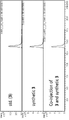
- FIG. 1 shows LC-MS charts of algicyclamide C (3) isolated from Microcystis aeruginosa NIE-88 (upper), chemically synthesized algicyclamide C (3) (middle), and a mixture of both (lower). It is a figure which compared.
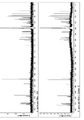
- FIG. 2 is a diagram comparing 1 H NMR charts of Argicyclamide C (3) isolated from Microcystis aeruginosa NIE-88 (upper) and chemically synthesized Argicyclamide C (3) (lower).
- FIG. 3 is a diagram comparing 13 C NMR charts of Argicyclamide C (3) isolated from Microcystis aeruginosa NIE-88 (upper) and chemically synthesized Argicyclamide C (3) (lower).
- FIG. 2 is a diagram comparing 1 H NMR charts of Argicyclamide C (3) isolated from Microcystis aeruginosa NIE-88 (upper) and chemically synthesized Argicyclamide C (3) (low
- FIG. 4 is a reverse-phase HPLC chart showing the time-dependent changes (0 to 120 minutes) of substrates and products in the conversion reaction of algicyclamide C (3) to algicyclamide A (1) by the enzyme (AgcF) of the present invention.
- Boiled AgcF is a chart of the reaction product using the enzyme of the present invention heat-inactivated before the reaction.
- 1 (std) is a chart of algicyclamide A (1) standard
- 2 (std) is a chart of algicyclamide B (2) standard
- 3 (std) is a chart of algicyclamide C (3) standard.
- FIG. 5 shows the ratio of monoprenylated and bisprenylated forms produced by prenylation reaction by allowing AgcF to act on a cyclic peptide in which each amino acid residue contained in the sequence of algicyclamide C is substituted with alanine. shows the results of examining The scheme in the figure shows the progress of the prenylation reaction of Argicyclamide C with AgcF.
- FIG. 6 shows an HPLC chart of the monoprenylation reaction of Argicyclamide C by AgcF_H167A. The scheme in the figure shows the monoprenylation reaction of Argicyclamide C by AgcF_H167A.
- FIG. 7A shows the UPLC chromatogram of the prenylation reaction of the substrate cyc [MEYPLSLRYPG] by the AgcF homolog recombinant UHCC0183PT (monitoring UV absorbance at 210 nm).
- i indicates a chromatogram of a reaction solution containing recombinant UHCC0183PT.
- ii is the chromatogram of the reaction without recombinant UHCC0183PT.
- FIG. 7B shows the results of UPLC-MS analysis (positive mode) of the reaction mixture containing UHCC0183PT.
- i indicates the extracted ion chromatogram at m/z 1443.0 corresponding to the bisprenylated form.
- ii shows the extracted ion chromatogram at m/z 1375.0 corresponding to the monoprenylated form.
- iii shows the extracted ion chromatogram at m/z 1307.0 corresponding to the substrate.
- the present invention provides an enzyme that transfers a prenyl group to an arginine residue or an arginine analogue residue, or an arginine or an arginine analogue, in a peptide.
- the enzyme is (a) the amino acid sequence of SEQ ID NO: 1; (b) an amino acid sequence having 58% or more identity to the amino acid sequence of SEQ ID NO: 1, or (c) deletion or substitution of 1 to several amino acid residues in the amino acid sequence shown in SEQ ID NO: 1 , including inserted or added amino acid sequences.
- the enzyme of the present invention uses peptides containing arginine or arginine analogues, or arginine or arginine analogues (prenyl group acceptors) and prenyl group-containing compounds (prenyl group donors) as substrates, and arginine residues in peptides or It catalyzes the transfer of a prenyl group to an arginine analogue residue, or to arginine or an arginine analogue.
- the enzyme of the present invention transfers a prenyl group to the side chain nitrogen atom of an arginine residue or arginine analogue residue in a peptide, or to the nitrogen atom of arginine or an arginine analogue (however, the above nitrogen atom does not constitute a peptide bond).
- the prenyl group acceptor contains multiple nitrogen atoms to which a prenyl group can be bonded, the prenyl group may be transferred to one of them, or the prenyl group may be transferred to two or more of them.
- a prenyl group may be bound to one nitrogen of the guanidine of the arginine residue, and two prenyl groups may be bound to the two nitrogens. groups may be attached.
- the structure of the prenyl group acceptor peptide is not particularly limited, and may be linear, branched or cyclic.
- the peptide may be a peptide in which a linear peptide and a cyclic peptide are bound.
- the peptide is a cyclic peptide.
- Peptides may be naturally occurring peptides or artificially created peptides.
- the size of the peptide is not particularly limited, and may consist of, for example, several amino acids, several tens of amino acids, or a larger size.
- a peptide may be an oligopeptide, polypeptide or protein.
- the enzymes of the invention can be used to prenylate oligopeptides, polypeptides and proteins.
- arginine residue or arginine analogue residue may be present at any position in the peptide. Arginine residues or arginine analogue residues may be present at the N-terminus, C-terminus, or both of the peptide, and may be internal to the peptide.
- the proline residue is preferably adjacent to an arginine residue or an arginine analogue residue.
- a proline residue is adjacent to an arginine residue or arginine analogue residue by binding the proline residue through its carboxyl group to the amino group of the arginine residue or arginine analogue residue.
- Preferred peptides for prenylation by the enzymes of the invention are cyclic peptides in which proline residues are flanked by arginine or arginine analogue residues in the manner described above.
- Amino acids that constitute peptides are usually amino acids that constitute proteins and are in the L-form, but they may be amino acids that do not constitute proteins, or may be in the D-form.
- the amino acids that make up the peptide may be ⁇ -alanine, ⁇ -aminobutyric acid, ⁇ -aminocaproic acid, etc., and may also be alkylated, halogenated, esterified, aminated, carboxylated, nitrated, sulfonated, etc. It may be an amino acid that has been modified with a modified, phosphorylated, acetylated, glycosylated, lipidated, etc., or known protective group. Peptides containing these modified amino acids can be obtained by known methods.
- Amino acid bonds in peptides are usually peptide bonds, but may contain other bonds such as ester bonds, and may have spacers such as methylene groups between amino acid residues.
- the enzyme of the present invention can also use arginine or an arginine analogue as a prenyl group acceptor.
- arginine analogues include derivatives of arginine, amino acids having similar structures to arginine, and derivatives thereof.
- derivatives include modifications such as alkylation, halogenation, esterification, amination, carboxylation, nitration, sulfonation, phosphorylation, acetylation, glycosylation, lipidation, etc. It may be a compound.
- the derivative may be one to which a known protecting group is attached. Derivatives are not limited to the above examples. Arginine analogs can be obtained by known methods.
- analogs of arginine include, but are not limited to, ornithine, citrulline, and argininosuccinic acid, and derivatives thereof. The above comments also apply to analogue residues of arginine in peptides.
- the prenyl group transferred by the enzyme of the present invention may be any prenyl group, such as dimethylallyl, geranyl, farnesyl, geranylgeranyl, geranylfarnesyl, hexaprenyl, octaprenyl, decaprenyl. etc., but not limited to these.
- the size of the prenyl group transferred by the enzyme of the present invention preferably has 20 carbon atoms or less, more preferably 15 carbon atoms or less.
- prenyl group-containing compound is not particularly limited, and may be any type of compound.
- prenyl group-containing compounds include, but are not limited to, dimethylallyl diphosphate (DMAPP), geranyl diphosphate (GPP), farnesyl diphosphate (FPP), and the like.
- the enzyme of the present invention is a novel enzyme in that it transfers a prenyl group to an arginine residue or arginine analogue residue in a peptide, or to arginine or an arginine analogue.
- the enzyme of the present invention is useful as a peptide modification tool for creating new peptides with diverse structures and functions that have been impossible with conventional enzymes.
- the enzyme of the present invention may be derived from any organism.
- the enzymes of the invention are preferably of bacterial, more preferably cyanobacterial origin.
- Enzymes of the present invention may be derived from cyanobacteria such as, for example, the genera Microcystis, Aphanizomenon, and Dolichospermum.
- the enzyme of the invention may be, for example, one comprising the amino acid sequence shown in SEQ ID NO: 1 (AgcF).
- the enzyme of the present invention can include its mutants.
- the enzyme of the present invention includes the enzyme of the present invention and variants thereof.
- a mutant of the enzyme of the present invention may contain a mutant sequence of the amino acid sequence shown in SEQ ID NO: 1.
- the mutant of the enzyme of the present invention is 50% or more, for example, 58% or more, 60% or more, 70% or more, 80% or more, 90% or more, 92% or more of the amino acid sequence shown in SEQ ID NO: 1 , may include amino acid sequences with greater than 94%, greater than 96% or greater than 98% identity.
- the identity of amino acid sequences can be examined using known means such as FASTA search and BLAST search.
- the mutant of the enzyme of the present invention has one to several tens, preferably one to several amino acid residues deleted, substituted, inserted or added in the amino acid sequence shown in SEQ ID NO: 1. May contain sequences.
- the number of amino acid residues to be deleted, substituted, inserted or added in SEQ ID NO: 1 is not limited to 1 to several, but 1 to several tens, preferably 1 to 40, more preferably may be 1 to 20, more preferably 1 to several. Dozens may be, for example, 20, 30, 40, 50, 60, 70, 80, 90, or any number between these values. Several may be, for example, 2, 3, 4, 5, 6, 7, 8 or 9.
- Deletions, substitutions, insertions or additions of amino acid residues in protein amino acid sequences are known to those skilled in the art.
- site-directed mutagenesis or known chemical techniques may be used to create deletions, substitutions, insertions or additions of amino acid residues in the amino acid sequences of the enzymes of the invention.
- substitutions between homologous amino acids are preferred.
- Cognate amino acids are known to those of skill in the art. Conservative amino acid substitutions are also preferred.
- conservative amino acid substitutions include: substitutions between Phe, Trp, Tyr when the substituted amino acid is an aromatic amino acid, when the substituted amino acid is a hydrophobic amino acid for substitutions between Leu, Ile, and Val; substitutions between Gln and Asn when the amino acid to be substituted is a polar amino acid; Lys when the amino acid to be substituted is a basic amino acid; Substitution between Arg and His, substitution between Asp and Glu when the amino acid to be substituted is an acidic amino acid, substitution between Ser and Thr when the amino acid to be substituted is an amino acid having a hydroxyl group replacement.
- mutants of the enzyme of the present invention include amino acid sequences shown in SEQ ID NO: 1 from the N-terminus of the 67th glycine, the 133rd glycine, the 219th cysteine, the 267th cysteine, and the 289th leucine. Enzymes are included that contain amino acid sequences in which the corresponding amino acid residues are the same as, their cognate amino acids, or amino acids with conservative amino acid substitutions therefrom.
- the amino acid sequence of such a mutant enzyme is 50% or more, for example, 58% or more, 60% or more, 70% or more, 80% or more, 90% or more of the amino acid sequence shown in SEQ ID NO: 1, 92% or greater, 94% or greater, 96% or greater or 98% or greater identity.
- preferred variants of the enzyme of the present invention include the 67th glycine, 133rd glycine, 219th cysteine, 267th cysteine and 289th cysteine from the N-terminal side of the amino acid sequence shown in SEQ ID NO: 1.
- the amino acid residue corresponding to the th leucine is glycine, glycine or alanine, cysteine, cysteine, and leucine, respectively, and 58% or more, 60% or more, 70% or more, and 80% of the amino acid sequence shown in SEQ ID NO: 1 % or greater, 90% or greater, 92% or greater, 94% or greater, 96% or greater or 98% or greater amino acid sequences, including, but not limited to, such enzymes.
- the "corresponding amino acid residue" in the amino acid sequence of the mutant enzyme can be found by considering the position counted from the N-terminus and the neighboring amino acid sequences, structural prediction by computer, and the like.
- the mutant of the enzyme of the present invention may be naturally derived, or may be artificially produced using, for example, genetic engineering techniques.
- Variants of the enzymes of the invention may be derived from any organism.
- the variants of the enzymes of the invention are preferably of bacterial, more preferably cyanobacterial origin.
- Variants of the enzymes of the invention may be derived from cyanobacteria such as, for example, the genera Microcystis, Aphanizomenon, Dolichospermum.
- variants of the enzyme of the present invention include, but are not limited to, AgcF homologues UHCC0183PT and PCC9443PT.
- the amino acid sequence of UHCC0183PT is shown in SEQ ID NO:6, and the nucleotide sequence of the gene encoding it is shown in SEQ ID NO:7.
- the amino acid sequence of PCC9443PT is shown in SEQ ID NO:9, and the nucleotide sequence of the gene encoding it is shown in SEQ ID NO:10.
- the amino acid sequence of UHCC0183PT (SEQ ID NO:6) has 59.86% identity to the amino acid sequence of AgcF (SEQ ID NO:1).
- the amino acid sequence of PCC9443PT (SEQ ID NO:9) has 58.54% identity to the amino acid sequence of AgcF (SEQ ID NO:1).
- the enzyme of the present invention can be obtained using a known method.
- AgcF may be obtained by cloning the AgcF gene using PCR, ligating it into an expression vector, introducing the expression vector into host cells, and culturing the host cells. Mutations of the enzymes of the invention can also be obtained using known methods.
- AgcF variants may be obtained by cloning AgcF homologues or orthologs, ligating into an expression vector, introducing the expression vector into host cells, and culturing the host cells.
- An AgcF homolog may be obtained by synthesizing a gene with reference to the published sequence of the AgcF homolog, introducing it into a host cell, and culturing the host cell.
- AgcF mutants can also be obtained by modifying the base sequence of the gene encoding AgcF using a known method such as site-directed mutagenesis, introducing the modified gene into host cells, and culturing the host cells. good.
- Mutants of the enzyme of the present invention may be obtained by chemical methods such as chemical synthesis and chemical modification.
- the mutant of the enzyme of the present invention may contain non-proteinogenic amino acids, D-form amino acids, modified amino acids, and the like.
- An enzyme comprising an amino acid sequence in which the 167th amino acid residue from the N-terminus of the amino acid sequence shown in SEQ ID NO: 1 is a histidine residue, or an enzyme containing an amino acid sequence at the 167th amino acid residue from the N-terminus of the amino acid sequence shown in SEQ ID NO: 1
- Bisprenylation of arginine or arginine analogue residues, or arginine or arginine analogues in peptides is enhanced when enzymes containing amino acid sequences in which the corresponding amino acid residue is a histidine residue are used.
- An enzyme comprising an amino acid sequence in which the 167th amino acid residue from the N-terminus of the amino acid sequence shown in SEQ ID NO: 1 is an amino acid residue other than histidine, or the 167th amino acid from the N-terminus of the amino acid sequence shown in SEQ ID NO: 1
- Bisprenylation of an arginine residue or an arginine analogue residue in a peptide is inhibited and monoprenylation is inhibited when an enzyme containing an amino acid sequence in which the amino acid residue corresponding to the residue is an amino acid residue other than histidine is used.
- amino acid residues other than histidine include, but are not limited to, alanine residues.
- the prenyl group transfer activity can be measured by a known method.
- the enzyme of the present invention is added to a reaction solution containing a peptide containing an arginine residue and a compound containing a prenyl group, and the unit amount of the enzyme and the amount of prenylated peptide produced per unit time are determined by the prenylation of the enzyme of the present invention. It may also be used as an indicator of group transfer activity. Confirmation of production of the prenylated peptide and measurement of the production amount can be performed using known means and methods such as NMR, MS, HPLC and LC-MS.
- the present invention provides the following nucleotide sequence: (a) a nucleotide sequence encoding the amino acid sequence of SEQ ID NO: 1; (b) a nucleotide sequence encoding an amino acid sequence having 58% or more identity to the amino acid sequence of SEQ ID NO: 1; (c) a nucleotide sequence encoding an amino acid sequence in which one to several tens, preferably one to several amino acid residues are deleted, substituted, inserted or added in the amino acid sequence shown in SEQ ID NO: 1, or (d ) Providing a nucleic acid comprising a nucleotide sequence that hybridizes under stringent conditions to a nucleotide sequence complementary to the nucleotide sequence encoding the amino acid sequence shown in SEQ ID NO:1.
- amino acid sequences are as explained above.
- the number of amino acid residues to be deleted, substituted, inserted or added is also as described above.
- Stringent conditions include, for example: in a buffer containing 0.25 M Na 2 HPO 4 , pH 7.2, 7% SDS, 1 mM EDTA, 1 ⁇ Denhardt's solution at a temperature of 60 to 68° C., preferably 65° C., more preferably 68° C. Hybridize for 16 to 24 hours, then in a buffer containing 20 mM Na 2 HPO 4 , pH 7.2, 1% SDS, 1 mM EDTA at a temperature of 60 to 68°C, preferably 65°C, more preferably 68°C.
- nucleic acids can include the DNAs described, DNAs complementary to the DNAs, and RNAs complementary to these DNAs.
- a nucleotide sequence includes a degenerate sequence that encodes the desired amino acid sequence.
- the present invention in another aspect, (e) the nucleotide sequence shown in SEQ ID NO: 2, or (f) a nucleotide sequence complementary to the nucleotide sequence shown in SEQ ID NO: 2, to provide a nucleic acid comprising a nucleotide sequence that hybridizes under stringent conditions. .
- the base sequence (e) above is an example of the base sequence (a) that encodes the amino acid sequence shown in SEQ ID NO: 1.
- the nucleotide sequence (f) above is an example of a nucleotide sequence (d) that hybridizes under stringent conditions to a nucleotide sequence complementary to the nucleotide sequence encoding the amino acid sequence shown in SEQ ID NO:1.
- nucleic acids can be obtained by methods known to those skilled in the art.
- Said nucleic acid may be obtained by cloning the gene encoding the enzyme of the invention or its homologue or ortholog. Cloning techniques are known to those of skill in the art.
- the source of the nucleic acid is not particularly limited, but is preferably bacteria, more preferably blue-green algae.
- examples of the cyanobacteria from which the nucleic acid is derived include, but are not limited to, cyanobacteria belonging to the genera Microcystis, Aphanizomenon, and Dolichospermum.
- the above nucleic acid may be obtained by artificial synthesis.
- the present invention provides an enzyme encoded by the above nucleic acid that transfers a prenyl group to an arginine residue or an arginine analogue residue, or an arginine or arginine analogue residue in a peptide. .
- the present invention provides a vector containing the above nucleic acid.
- An expression vector is preferred as the vector.
- Various expression vectors are known and can be appropriately selected and used. Methods for incorporating the DNA of the present invention into vectors are also known.
- the above nucleic acid encodes the enzyme of the present invention.
- the vector contains the nucleic acid. Therefore, the enzyme of the present invention can be produced by genetic engineering using the above nucleic acid or vector.
- the present invention provides a method for producing an enzyme that transfers a prenyl group to an arginine residue or arginine analogue residue in a peptide, or arginine or an arginine analogue.
- the method comprises the following steps: (a) introducing said nucleic acid or said vector into a cell; (b) culturing the cells obtained in step (a), and (c) from the culture obtained in step (b), an arginine residue or an arginine analog residue, or arginine or arginine in the peptide Obtaining an enzyme that transfers a prenyl group to an analogue.
- the nucleic acid may be incorporated into an expression vector, introduced into cells, and the enzyme of the present invention obtained by culturing the cells.
- the enzyme of the present invention may be obtained from a culture obtained by introducing the nucleic acid or the vector into cells using a known method such as the PEG method, electroporation, or particle gun method, and culturing the cells. good.
- the cells used in the above method are not particularly limited, and may be microbial cells such as bacteria, yeast, filamentous fungi, and actinomycetes, plant cells, animal cells, and insect cells.
- Preferred cells for use in this method include, but are not limited to, microbial cells such as E. coli and Bacillus subtilis.
- Cell culture can be performed by a known method. Selection of cells and culture conditions is routine for those of skill in the art.
- the cells are disrupted by known means such as ultrasonic waves, mills, homogenizers, etc. to obtain an extract, and then subjected to known means such as ammonium sulfate precipitation and chromatography.
- the enzyme of the present invention can be obtained from the extract.
- the enzyme of the present invention can be obtained by subjecting the culture medium to known means such as ammonium sulfate precipitation and chromatography.
- the enzyme of the present invention may be obtained by extraction and purification from organisms such as bacteria, preferably cyanobacteria of the genus Microcystis, Aphanizomenon, and Dolichospermum.
- organisms such as bacteria, preferably cyanobacteria of the genus Microcystis, Aphanizomenon, and Dolichospermum.
- Known enzyme purification means and methods such as cell disruption, ammonium sulfate precipitation, and chromatography can be used.
- the present invention provides the following (i) and (ii): (i) peptides containing arginine residues or arginine analogue residues, or arginine or arginine analogues (prenyl group receptors) (ii) prenyl group-containing compound (prenyl group donor) Provided is a method for producing a peptide in which an arginine residue or an arginine analogue residue is prenylated, or a prenylated arginine or an arginine analogue, comprising allowing the enzyme of the present invention to act on .
- Peptides containing arginine residues or arginine analogues, arginine or arginine analogues, prenyl group-containing compounds, and prenyl groups contained in the compounds are as described above.
- a peptide in which an arginine residue or an arginine analogue residue is prenylated, or a prenyl modified arginine or arginine analogs can be obtained.
- Incubation conditions can be appropriately determined by those skilled in the art according to the properties and amount of the enzyme, the type and concentration of the substrate, and the like. Suitable conditions include, for example, room temperature to 37° C., pH 6 to 9, and reaction conditions for several hours, but are not limited to these conditions.
- the enzyme of the present invention may be immobilized on a carrier and used.
- Peptides in which arginine residues or arginine analogue residues are prenylated, or prenylated arginine or arginine analogues can be purified and isolated from the reaction solution using known techniques such as various chromatography. .
- prenylated compounds can be confirmed by known means. For example, confirmation may be performed by analyzing the reaction mixture using high performance liquid chromatography (HPLC). Mass spectroscopy may be used to confirm the molecular weight of the product when the prenyl group acceptor is prenylated. NMR may be used to further determine the structure of the product. Product confirmation is preferably performed by comparison with a standard preparation of the prenylated compound.
- the preparation of the prenylated compound may be a commercial product, one obtained by chemical synthesis, or one isolated from nature.
- the present invention provides an arginine residue or an arginine analogue comprising allowing the enzyme of the present invention to act on a peptide containing an arginine residue or an arginine analogue residue, or a compound library containing arginine or an arginine analogue.
- Peptides containing arginine residues or arginine analogue residues, or compound libraries containing arginine or arginine analogues can be obtained by known methods using arginine or arginine analogues as part of the starting material. Such known methods include, but are not limited to, combinatorial-split synthesis methods, peptide array methods, bead display methods, phage display methods, and the like.
- a method for producing a compound library is preferably a cyclic peptide.
- the proline residue is preferably adjacent to an arginine residue or an arginine analogue residue.
- a proline residue is adjacent to an arginine residue or arginine analogue residue by binding the proline residue through its carboxyl group to the amino group of the arginine residue or arginine analogue residue.
- the preferred peptide is a cyclic peptide, , in which proline residues are flanked by arginine or arginine analog residues in the manner described above.
- a method for producing a compound library is an enzyme containing an amino acid sequence in which the 167th amino acid residue from the N-terminus of the amino acid sequence shown in SEQ ID NO: 1 is a histidine residue, or the 167th amino acid residue from the N-terminus of the amino acid sequence shown in SEQ ID NO: 1 It is preferred to use an enzyme comprising an amino acid sequence in which the amino acid residue corresponding to the group is a histidine residue.
- an enzyme comprising an amino acid sequence in which the 167th amino acid residue from the N-terminus of the amino acid sequence shown in SEQ ID NO: 1 is an amino acid residue other than histidine, or the 167th from the N-terminus of the amino acid sequence shown in SEQ ID NO: 1 It is preferred to use an enzyme comprising an amino acid sequence in which the amino acid residue corresponding to the amino acid residue of is an amino acid residue other than histidine.
- amino acid residues other than histidine include, but are not limited to, alanine residues.
- amino acid residue corresponding to the 167th amino acid residue from the N-terminus of the amino acid sequence shown in SEQ ID NO: 1 in AgcF homolog UHCC0183PT is the 49th glutamic acid residue from the N-terminus of the amino acid sequence shown in SEQ ID NO: 6.
- amino acid residue corresponding to the 167th amino acid residue from the N-terminus of the amino acid sequence shown in SEQ ID NO: 1 in AgcF homolog PCC9443PTT is the 49th glutamic acid residue from the N-terminus of the amino acid sequence shown in SEQ ID NO: 9. is the base.
- a method of causing the enzyme of the present invention to act on a peptide containing an arginine residue or an arginine analogue residue, or a compound library containing arginine or an arginine analogue is a peptide in which an arginine residue or an arginine analogue residue is prenylated.
- it may be according to the method described for the method for producing prenylated arginine or arginine analogues.
- the present invention provides, in another aspect, a compound of formula (I): (I) [wherein R 1 is hydrogen or a prenyl group and R 2 is hydrogen or a prenyl group] to provide a compound represented by
- the compound of formula (I) in which R 1 and R 2 are both hydrogen is algicyclamide C (see Examples).
- Argicyclamide C was isolated and identified from Microcystis aeruginosa NIE-88, which is a blue-green algae, and is a compound that can be used as a substrate for the enzyme of the present invention.
- This compound may be obtained from Microcystis aeruginosa NIE-88, or may be obtained by a known synthesis method (chemical synthesis method, enzymatic synthesis method, etc.).
- a compound of formula (I) in which either one of R 1 and R 2 is a prenyl group is a monoprenylated compound.
- Compounds of formula (I) in which both R 1 and R 2 are prenyl groups are bisprenylated.
- These monoprenylated forms and bisprenylated forms may be obtained by allowing the enzyme of the present invention to act on the compound represented by formula (I) in which both R 1 and R 2 are hydrogen, or may be obtained by a known synthetic method ( chemical synthesis method, enzymatic synthesis method, etc.).
- the present invention provides, in another aspect, a compound of formula (II): (II) [wherein R 1 is hydrogen or a prenyl group and R 2 is hydrogen or a prenyl group] to provide a compound represented by
- a compound of formula (II) in which either one of R 1 and R 2 is a prenyl group is a monoprenylated compound.
- Compounds of formula (II) in which both R 1 and R 2 are prenyl groups are bisprenylated.
- These monoprenylated forms and bisprenylated forms may be obtained by allowing the enzyme of the present invention to act on the compound represented by formula (II) in which both R 1 and R 2 are hydrogen, or may be obtained by a known synthetic method ( chemical synthesis method, enzymatic synthesis method, etc.).
- the present invention provides, in another aspect, a compound of formula (III): (III) [wherein R 1 is hydrogen or a prenyl group and R 2 is hydrogen or a prenyl group] to provide a compound represented by
- a compound of formula (III) in which either one of R 1 and R 2 is a prenyl group is a monoprenylated compound.
- Compounds of formula (III) in which both R 1 and R 2 are prenyl groups are bisprenylated.
- These monoprenylated forms and bisprenylated forms may be obtained by allowing the enzyme of the present invention to act on the compound represented by formula (III) in which both R 1 and R 2 are hydrogen, or may be obtained by a known synthetic method ( chemical synthesis method, enzymatic synthesis method, etc.).
- the present invention provides, in another aspect, a compound of formula (IV): (IV) [wherein R 1 is hydrogen or a prenyl group and R 2 is hydrogen or a prenyl group] to provide a compound represented by
- a compound of formula (IV) in which either one of R 1 and R 2 is a prenyl group is a monoprenylated compound.
- Compounds of formula (IV) in which both R 1 and R 2 are prenyl groups are bisprenylated.
- These monoprenylated forms and bisprenylated forms may be obtained by allowing the enzyme of the present invention to act on the compound represented by formula (IV) in which both R 1 and R 2 are hydrogen, or may be obtained by a known synthetic method ( chemical synthesis method, enzymatic synthesis method, etc.).
- High performance liquid chromatography was performed using a Shimadzu HPLC system equipped with an LC-20AD intelligent pump.
- LC-MS experiments were performed using an amaZon SL-NPC (Bruker Daltonics). Fragmentation of precursor ions was performed with an amaZon SL-NPC at an amplitude of 1.0 V using helium gas.
- Plasmid extraction was performed using the GenElute TM Plasmid Miniprep Kit (Sigma).
- Microcystis aeruginosa NIES-88 culture, DNA extraction, and genome sequencing Microcystis aeruginosa NIES-88 was obtained from the National Institute for Environmental Studies. Microcystis aeruginosa NIES-88 was cultured in BG-11 medium with aeration (filtered air, 0.3 L/min) at 25° C. under 250 ⁇ E/m 2 s1 illumination with 12 L:12 D cycles. After 4-5 weeks of culture, cells were harvested by continuous flow centrifugation (10000 rpm). First, macromolecular DNA was extracted by crushing frozen cells using a mortar and pestle.
- the cell powder was then dissolved in CTAB buffer (3% CTAB, 1.4 M NaCl, 0.2% ⁇ -mercaptoethanol, 20 mM EDTA, 100 mM Tris pH 8, RNase A) and incubated at 50°C for 30 minutes. After that, 750 ⁇ L of chloroform was added, gently inverted, and centrifuged at 15000 rpm for 5 minutes. The resulting top layer was slowly transferred to a centrifuge tube containing 200 ⁇ L of isopropanol. After the appearance of white filaments (precipitated DNA), the precipitated DNA was collected and used for genomic sequencing.
- CTAB buffer 3% CTAB, 1.4 M NaCl, 0.2% ⁇ -mercaptoethanol, 20 mM EDTA, 100 mM Tris pH 8, RNase A
- AgcF-F cgcggatcccatatgttgaaaagcaacaaaag
- AgcF-R ccggaattcctagagcagataatatagattgagattc (SEQ ID NO: 4) was used to amplify a DNA fragment encoding the enzyme of the present invention (referred to as AgcF) from the genomic DNA of Microcystis aeruginosa NIES-88 using KOD One (registered trademark) PCR Master Mix (TOYOBO).
- a DNA fragment encoding AgcF was inserted into the multiple cloning site of pUC19 using BamHI and EcoRI to obtain AgcF-pUC19. After confirming the sequence, the AgcF insert fragment was ligated into the NdeI and EcoRI sites of pCold-II to obtain AgcF-pCold-II.
- AgcF gene expression was induced by adding IPTG to a final concentration of 0.1 mM and the cells were cultured overnight at 16°C. Cells were collected by centrifugation (3500 ⁇ g, 10 minutes) and disrupted with an ultrasonic homogenizer. After removing debris by centrifugation (17000 ⁇ g, 10 min), the fraction containing soluble protein was applied to a Ni-NTA affinity column (Merck Millipore). The column was washed with washing buffer and eluted with washing buffer containing 500 mM imidazole. The column was connected to an Amicon Ultra 0.5 mL filter (Merck Millipore). The concentration of the resulting protein solution was measured using a Bio-Rad protein assay kit. The amino acid sequence of the obtained recombinant AgcF is shown in SEQ ID NO:5.
- Fmoc-L-Ile-2-chlorotrityl resin S2 was swollen in CH 2 Cl 2 for 2 hours and subjected to 7 cycles [Fmoc-L-Phe-OH, Fmoc-L-Val-OH, Fmoc-L-Arg(Pbf)-OH, Fmoc-L-Pro-OH , Fmoc-L-Pro-OH, Fmoc-L-Leu-OH, Fmoc-L-Val-OH] were subjected to a solid-phase peptide synthesis protocol (steps 1-4 below) to obtain resin-bound octapeptide S3. Obtained.
- Step 1 The Fmoc group of the solid phase supported peptide was removed by using a 20% piperidine/DMF solution (10 min, room temperature).
- Step 2 The resin in the reaction vessel was washed with DMF (x3) and CH2Cl2 ( x3).
- Step 3 To a solution of F-moc protected building block (4 eq) was added DIC (4 eq) in NMP and Oxyma (4 eq in DMF). After 2-3 minutes of preactivation, the mixture was poured into the reaction vessel. The resulting mixture was stirred for 30 minutes.
- Step 4 The resin in the reaction vessel was washed with DMF ( x3) and CH2Cl2 ( x3).
- Reactions contained the following: 50 mM Tris-HCl (pH 8.0), 200 ⁇ M algicyclamide C, 1 mM DMAPP, 1 mM dithiothreitol, 500 mM NaCl, 50 mM MgCl 2 .
- Recombinant AgcF was added to the reaction solution and the reaction was carried out at 37°C for 2 hours. The reaction solution was sampled over time and analyzed by reverse phase HPLC.
- Figure 4 shows the evolution of substrates and reaction products. Consumption of substrate 3 and production of bis-prenylated product 1 were confirmed with the passage of reaction time. Formation of the mono-prenylated product 2 was also confirmed in the first half of the reaction (5 to 30 minutes). Only the substrate 3 peak was seen when the reaction was performed with AgcF that had been heat-inactivated prior to the reaction. These results confirmed that the prenyl group was indeed transferred to the arginine residue of 3 by AgcF to produce 1.
- AgcF acts twice on arginine residues in peptides.
- it is a novel enzyme that catalyzes bisprenylation of arginine residues.
- AgcF does not catalyze the prenylation of lysine, serine, threonine, tryptophan, and tyrosine residues in peptides (data not shown). Therefore, more detailed substrate selectivity of AgcF was studied. In this experiment, the selectivity for sequences other than arginine in the substrate peptide was investigated.
- a cyclic peptide was synthesized in which each amino acid residue contained in the sequence of algicyclamide C was replaced with alanine, and each peptide was reacted under the same conditions as in (7).
- the results are shown in FIG. Bisprenylation proceeded predominantly for most of the substrates, and the production of the intermediate monoprenyl form was also confirmed. However, the progress of the reaction was not observed only when the proline located next to arginine was replaced with alanine.
- the substrate was eluted at 4.7 minutes, the monoprenylated form at 5.3 minutes, and the bisprenylated form at 5.9 minutes.
- the results of UPLC-MS analysis in FIG. 7B confirmed that each peak in the UPLC chromatogram was derived from the substrate, monoprenylated form, and bisprenylated form.
- the present invention is useful in fields such as drug discovery and production of functional peptides.
- SEQ ID NO: 1 shows the amino acid sequence of AgcF (wild type).
- SEQ ID NO: 2 shows the base sequence of the gene encoding AgcF (wild type).
- SEQ ID NO: 3 shows the nucleotide sequence of a forward primer for amplifying a DNA fragment encoding AgcF.
- SEQ ID NO: 4 shows the nucleotide sequence of a reverse primer for amplifying a DNA fragment encoding AgcF.
- SEQ ID NO:5 shows the amino acid sequence of recombinant AgcF.
- SEQ ID NO: 6 shows the amino acid sequence of UHCC0183PT (wild type).
- SEQ ID NO: 7 shows the base sequence of the gene encoding UHCC0183PT (wild type).
- SEQ ID NO:8 shows the amino acid sequence of recombinant UHCC0183PT.
- SEQ ID NO: 9 shows the amino acid sequence of PCC9443PT (wild type).
- SEQ ID NO: 10 shows the nucleotide sequence of the gene encoding PCC9443PT (wild type).
- SEQ ID NO: 11 shows the amino acid sequence of recombinant PCC9443PT.
Landscapes
- Chemical & Material Sciences (AREA)
- Life Sciences & Earth Sciences (AREA)
- Health & Medical Sciences (AREA)
- Organic Chemistry (AREA)
- Engineering & Computer Science (AREA)
- Genetics & Genomics (AREA)
- Zoology (AREA)
- Wood Science & Technology (AREA)
- Bioinformatics & Cheminformatics (AREA)
- General Engineering & Computer Science (AREA)
- Biotechnology (AREA)
- Biochemistry (AREA)
- General Health & Medical Sciences (AREA)
- Microbiology (AREA)
- Molecular Biology (AREA)
- Biomedical Technology (AREA)
- Medicinal Chemistry (AREA)
- Chemical Kinetics & Catalysis (AREA)
- General Chemical & Material Sciences (AREA)
- Physics & Mathematics (AREA)
- Biophysics (AREA)
- Plant Pathology (AREA)
- Enzymes And Modification Thereof (AREA)
Priority Applications (1)
| Application Number | Priority Date | Filing Date | Title |
|---|---|---|---|
| JP2022579623A JPWO2022168952A1 (https=) | 2021-02-05 | 2022-02-04 |
Applications Claiming Priority (2)
| Application Number | Priority Date | Filing Date | Title |
|---|---|---|---|
| JP2021017504 | 2021-02-05 | ||
| JP2021-017504 | 2021-02-05 |
Publications (1)
| Publication Number | Publication Date |
|---|---|
| WO2022168952A1 true WO2022168952A1 (ja) | 2022-08-11 |
Family
ID=82741593
Family Applications (1)
| Application Number | Title | Priority Date | Filing Date |
|---|---|---|---|
| PCT/JP2022/004501 Ceased WO2022168952A1 (ja) | 2021-02-05 | 2022-02-04 | 新規プレニル化酵素 |
Country Status (2)
| Country | Link |
|---|---|
| JP (1) | JPWO2022168952A1 (https=) |
| WO (1) | WO2022168952A1 (https=) |
Citations (1)
| Publication number | Priority date | Publication date | Assignee | Title |
|---|---|---|---|---|
| WO2020080490A1 (ja) * | 2018-10-17 | 2020-04-23 | 国立大学法人東京大学 | ペプチドライブラリーの製造方法 |
-
2022
- 2022-02-04 JP JP2022579623A patent/JPWO2022168952A1/ja active Pending
- 2022-02-04 WO PCT/JP2022/004501 patent/WO2022168952A1/ja not_active Ceased
Patent Citations (1)
| Publication number | Priority date | Publication date | Assignee | Title |
|---|---|---|---|---|
| WO2020080490A1 (ja) * | 2018-10-17 | 2020-04-23 | 国立大学法人東京大学 | ペプチドライブラリーの製造方法 |
Non-Patent Citations (4)
| Title |
|---|
| DATABASE UniProtKB/TrEMBL Uniprot; ANONYMOUS : "SubName: Full=Uncharacterized protein {ECO:0000313|EMBL:KXS89939.1};", XP055956481 * |
| OKADA MASAHIRO, SUGITA TOMOTOSHI, AKITA KOHEI, NAKASHIMA YU, TIAN TIAN, LI CHANG, MORI TAKAHIRO, ABE IKURO: "Stereospecific prenylation of tryptophan by a cyanobacterial post-translational modification enzyme", ORGANIC & BIOMOLECULAR CHEMISTRY, ROYAL SOCIETY OF CHEMISTRY, vol. 14, no. 40, 28 October 2016 (2016-10-28), pages 9639 - 9644, XP055956490, ISSN: 1477-0520, DOI: 10.1039/C6OB01759B * |
| PARAJULI ANIRUDRA, KWAK DANIEL H., DALPONTE LUCA, LEIKOSKI NIINA, GALICA TOMAS, UMEOBIKA UGOCHUKWU, TREMBLEAU LAURENT, BENT ANDREW: "A Unique Tryptophan C-Prenyltransferase from the Kawaguchipeptin Biosynthetic Pathway", ANGEWANDTE CHEMIE INTERNATIONAL EDITION, VERLAG CHEMIE, vol. 55, no. 11, 7 March 2016 (2016-03-07), pages 3596 - 3599, XP055956487, ISSN: 1433-7851, DOI: 10.1002/anie.201509920 * |
| PHAN CHIN-SOON, MATSUDA KENICHI, BALLOO NANDANI, FUJITA KEI, WAKIMOTO TOSHIYUKI, OKINO TATSUFUMI: "Argicyclamides A–C Unveil Enzymatic Basis for Guanidine Bis-prenylation", JOURNAL OF THE AMERICAN CHEMICAL SOCIETY, AMERICAN CHEMICAL SOCIETY, vol. 143, no. 27, 14 July 2021 (2021-07-14), pages 10083 - 10087, XP055956492, ISSN: 0002-7863, DOI: 10.1021/jacs.1c05732 * |
Also Published As
| Publication number | Publication date |
|---|---|
| JPWO2022168952A1 (https=) | 2022-08-11 |
Similar Documents
| Publication | Publication Date | Title |
|---|---|---|
| WO2003091429A1 (en) | Antimicrobial polypeptide and utizliation thereof | |
| JP2011139667A (ja) | プロリンおよびβ−アラニンをN末端に有するジペプチド、及びその環化ジペプチドの酵素合成法 | |
| JP6430250B2 (ja) | グリセリマイシン及びメチルグリセリマイシンの生合成のための遺伝子クラスター | |
| CN116640819B (zh) | α-氨基酸脂酰基转移酶的制备方法及其在二肽合成上的应用 | |
| Okada et al. | Stereospecific prenylation of tryptophan by a cyanobacterial post-translational modification enzyme | |
| EP2550290B1 (en) | Method of modifying a specific lysine | |
| CN116622795A (zh) | L-氨基酸连接酶的制备方法及其在二肽合成上的应用 | |
| US20110091942A1 (en) | Process for production of cis-4-hydroxy-l-proline | |
| JP2001199997A (ja) | 細胞透過性キャリアペプチド | |
| Kino et al. | Dipeptide synthesis by L-amino acid ligase from Ralstonia solanacearum | |
| CN116162133A (zh) | 除皱短肽及其制备方法 | |
| US20100279334A1 (en) | Cyclodipeptide synthases (cdss) and their use in the synthesis of linear dipeptides | |
| EP0258203B1 (en) | Novel substrate peptides | |
| WO2022168952A1 (ja) | 新規プレニル化酵素 | |
| CA1305287C (en) | Inhibitor peptides | |
| Yamaji et al. | Cyclothialidine analogs, novel DNA gyrase inhibitors | |
| JP2007319063A (ja) | ジペプチドの製造方法 | |
| EP3792349A1 (en) | Peptide macrocyclase | |
| US20250084127A1 (en) | Efficient chemo-enzymatic synthesis method for cyclic peptide | |
| JP2011239686A (ja) | ペプチド及びペプチド誘導体の製造方法 | |
| WO2023048262A1 (ja) | 酵素を用いたペプチドライゲーション | |
| Krzyzaniak et al. | Specific induction of Z-DNA conformation by a nuclear localization signal peptide of lupin glutaminyl tRNA synthetase | |
| CA2189674A1 (en) | Peptides inhibiting phospholipase c | |
| WO2025238876A1 (ja) | 非天然型イチュリンファミリーリポペプチド合成酵素複合体 | |
| WO2024214767A1 (ja) | ペプチドライゲーション活性を有するポリペプチド及びその利用 |
Legal Events
| Date | Code | Title | Description |
|---|---|---|---|
| 121 | Ep: the epo has been informed by wipo that ep was designated in this application |
Ref document number: 22749823 Country of ref document: EP Kind code of ref document: A1 |
|
| WWE | Wipo information: entry into national phase |
Ref document number: 2022579623 Country of ref document: JP |
|
| NENP | Non-entry into the national phase |
Ref country code: DE |
|
| 122 | Ep: pct application non-entry in european phase |
Ref document number: 22749823 Country of ref document: EP Kind code of ref document: A1 |